The right preparation can turn an interview into an opportunity to showcase your expertise. This guide to Sustainability Management and Reporting interview questions is your ultimate resource, providing key insights and tips to help you ace your responses and stand out as a top candidate.
Questions Asked in Sustainability Management and Reporting Interview
Q 1. Explain the GRI Standards and their application in sustainability reporting.
The Global Reporting Initiative (GRI) Standards are the world’s most widely used standards for sustainability reporting. They provide a common framework for organizations to disclose their economic, environmental, and social performance. Think of them as a standardized recipe for creating a sustainability report – ensuring consistency and comparability across different companies.
Application involves identifying relevant standards based on the organization’s material issues (more on this later). This means selecting the specific GRI indicators that best reflect the organization’s impacts and performance in key areas like greenhouse gas emissions, water usage, labor practices, and human rights. The organization then collects data, analyzes it against those indicators, and presents its findings transparently in a report. For example, a clothing retailer might use GRI standards to report on their supply chain’s environmental impacts (e.g., water pollution, carbon emissions from textile manufacturing), their labor practices in factories, and their efforts in ethical sourcing.
- Benefits: Enhanced transparency, improved stakeholder engagement, better risk management, access to sustainable finance.
- Limitations: Can be complex to implement; requires significant data collection and analysis; not legally mandated in many jurisdictions, making adoption voluntary.
Q 2. Describe the difference between a materiality assessment and a stakeholder engagement process.
While both materiality assessment and stakeholder engagement are crucial for effective sustainability reporting, they serve different purposes.
A materiality assessment identifies the environmental, social, and governance (ESG) issues most relevant to an organization’s business strategy and its long-term value creation. It’s essentially a prioritization exercise. Think of it as figuring out what aspects of your business operations have the biggest impact – both positive and negative – on your stakeholders and your bottom line. This process often involves analyzing various data sources like financial statements, industry reports, and internal assessments. A company may discover that its carbon footprint, its labor relations, and product safety are its most material ESG factors.
Stakeholder engagement is a process of actively listening to and understanding the concerns, expectations, and perspectives of all stakeholders affected by the organization’s operations. This includes employees, customers, investors, suppliers, local communities, and NGOs. It’s about having open dialogue and considering different viewpoints. For example, a mining company will engage with local communities to address concerns about water contamination and land use, which will then inform its materiality assessment.
In essence, the materiality assessment determines what to report on (the most significant issues), while stakeholder engagement informs how to report on those issues (taking into account stakeholder perspectives).
Q 3. How would you measure and report on Scope 1, Scope 2, and Scope 3 greenhouse gas emissions?
Measuring and reporting on greenhouse gas (GHG) emissions involves categorizing them into three scopes defined by the Greenhouse Gas Protocol:
- Scope 1: Direct emissions – These are emissions from sources owned or controlled by the organization. Examples include emissions from company-owned vehicles, on-site energy generation, and fugitive emissions from refrigerants.
- Scope 2: Indirect emissions from energy consumption – These are emissions associated with the generation of purchased energy consumed by the organization (e.g., electricity, heat). Think of the power plant burning fossil fuels to generate electricity that powers your office building.
- Scope 3: Other indirect emissions – This is the most complex category, encompassing all other indirect emissions not included in scope 2. These emissions occur in the organization’s value chain and are often the largest source of an organization’s GHG footprint. Examples include emissions from business travel, transportation of goods, employee commuting, waste generated in operations, and emissions from purchased goods and services.
Measuring and Reporting: This typically involves using emission factors (data that quantifies the amount of GHG emissions per unit of activity) and activity data (e.g., amount of electricity consumed, fuel used). Data is collected through various methods, including meter readings, purchase records, and emission factor databases like those provided by the EPA. Specific methodologies like carbon footprinting software is often employed to collect and analyze data.
The results are then reported in a standardized format, often in tonnes of carbon dioxide equivalent (tCO2e) to allow for comparison across different GHGs. Reporting may also include a description of the methodology used and any assumptions made. A final report may also include information on emission reduction targets and plans.
Q 4. What are the key performance indicators (KPIs) for a successful sustainability program?
Key Performance Indicators (KPIs) for a successful sustainability program vary depending on the organization’s context and strategic goals but generally fall under the environmental, social, and governance (ESG) categories. Here are some examples:
- Environmental: GHG emissions (Scope 1, 2, and 3), energy consumption, water usage, waste generation, recycling rates, renewable energy use.
- Social: Employee satisfaction, diversity and inclusion metrics, employee turnover, community engagement initiatives, supplier code of conduct compliance, human rights violations (or lack thereof).
- Governance: Board diversity, sustainability governance structure, ethics and compliance programs, transparency and reporting practices, stakeholder engagement, risk management regarding ESG factors.
For a successful program, it’s critical to select KPIs that are: Specific, Measurable, Achievable, Relevant, and Time-bound (SMART). Regular monitoring and reporting against these KPIs will help organizations track progress, identify areas for improvement, and demonstrate their commitment to sustainability.
Furthermore, the selection of these KPIs should directly reflect the organization’s material issues identified through the materiality assessment and stakeholder engagement processes mentioned earlier.
Q 5. How do you ensure the accuracy and reliability of sustainability data?
Ensuring the accuracy and reliability of sustainability data is paramount. It requires a robust data management system and a strong focus on data quality throughout the entire process. This involves several key steps:
- Data Collection Methodologies: Using standardized methodologies and reliable sources to collect data. This includes defining clear data collection protocols, using appropriate tools and technologies, and implementing data validation checks.
- Data Verification and Validation: Implementing internal and potentially external verification processes to confirm the accuracy and completeness of the data. This may involve data reconciliation with other systems and independent audits.
- Data Quality Management System: Establishing a system to manage data quality throughout its lifecycle, including data entry, storage, analysis, and reporting. This often involves establishing roles, responsibilities, and processes for data quality management.
- Transparency and Disclosure: Clearly describing data collection methods, limitations, and assumptions in the sustainability report to ensure transparency and allow for scrutiny by stakeholders. This builds trust and enhances the credibility of the report.
- Use of Technology: Utilizing software and tools specifically designed for sustainability reporting, which can streamline data collection, analysis, and reporting, improving efficiency and reducing the risk of errors.
Ultimately, accuracy and reliability depend on a culture of data integrity throughout the organization, demanding rigorous attention to detail and a commitment to quality at every step.
Q 6. What is the significance of the Sustainable Development Goals (SDGs) in corporate sustainability?
The Sustainable Development Goals (SDGs), adopted by the United Nations in 2015, are a set of 17 interconnected global goals designed to be a blueprint to achieve a better and more sustainable future for all by 2030. These goals address a wide range of social, economic, and environmental challenges, such as poverty, hunger, health, education, climate change, gender equality, and peace.
For corporations, the SDGs provide a valuable framework for integrating sustainability into their core business strategies. They offer a common language and a shared understanding of global sustainability priorities. Companies can align their sustainability efforts with relevant SDGs, setting targets and measuring progress against specific goals. For example, a company aiming to reduce its environmental impact might focus on SDG 13 (Climate Action) and SDG 7 (Affordable and Clean Energy).
Significance: Aligning with SDGs helps organizations enhance their reputation, attract investors, improve stakeholder relations, and contribute to the global effort in achieving a more sustainable world. It fosters innovation, creates new business opportunities, and promotes a more responsible and ethical approach to business operations. Companies increasingly incorporate SDG progress into their integrated reporting, demonstrating their commitment and impact to investors and other stakeholders.
Q 7. Explain the concept of lifecycle assessment (LCA) and its relevance to sustainability.
A lifecycle assessment (LCA) is a comprehensive analysis of the environmental impacts of a product, process, or service throughout its entire life cycle – from raw material extraction to end-of-life disposal. It’s like examining the environmental footprint of a product’s journey from cradle to grave.
Stages of an LCA typically include:
- Goal and Scope Definition: Defining the purpose of the LCA and setting the boundaries of the assessment (which processes and impacts will be included).
- Inventory Analysis: Quantifying the inputs and outputs of the product’s life cycle, including resource consumption, energy use, and emissions.
- Impact Assessment: Evaluating the environmental impacts of the inputs and outputs, considering factors like climate change, ozone depletion, acidification, and ecotoxicity.
- Interpretation: Analyzing the results to identify the main environmental hotspots and suggesting potential improvements.
Relevance to Sustainability: LCA helps organizations identify and address environmental impacts throughout their value chain. This enables them to make informed decisions about product design, material selection, manufacturing processes, and end-of-life management to minimize environmental harm. For instance, a company might use LCA to identify which packaging material has the lowest environmental impact or to design a product with greater recyclability. LCA data is increasingly used in sustainability reporting to showcase efforts to reduce a product’s environmental footprint.
Q 8. Describe your experience with various sustainability reporting frameworks (e.g., SASB, TCFD).
My experience encompasses a wide range of sustainability reporting frameworks, including the Sustainability Accounting Standards Board (SASB), the Task Force on Climate-related Financial Disclosures (TCFD), and the Global Reporting Initiative (GRI). I’ve worked extensively with SASB standards, helping organizations identify industry-specific material sustainability issues and incorporating them into their financial reporting. For example, I assisted a manufacturing company in assessing their materiality around water usage and waste generation, aligning their disclosures with SASB’s standards for the industrial sector. With TCFD, I’ve guided companies through the process of identifying and assessing climate-related risks and opportunities, including scenario planning and the development of climate-related financial targets. This often involves integrating climate-related data into enterprise risk management frameworks. Finally, my experience with GRI standards focuses on creating comprehensive sustainability reports covering a broader range of ESG (Environmental, Social, and Governance) factors, ensuring alignment with international best practices and assisting with the enhancement of a company’s reporting’s credibility and comparability.
- SASB: Focuses on financially material sustainability issues specific to industries.
- TCFD: Emphasizes climate-related financial risks and opportunities.
- GRI: Provides a comprehensive framework for broader ESG reporting.
Q 9. How do you identify and mitigate sustainability risks within an organization?
Identifying and mitigating sustainability risks requires a systematic approach. I typically start with a materiality assessment, a process that identifies the environmental, social, and governance (ESG) issues most significant to the organization’s long-term value creation. This involves considering both internal factors (operations, supply chain) and external factors (regulatory changes, stakeholder expectations). For example, a fashion retailer might identify issues like water pollution from textile manufacturing (environmental), labor practices in their supply chain (social), and reputational damage from unethical sourcing (governance). Once material issues are identified, we assess the likelihood and potential impact of associated risks, using tools like risk matrices. Mitigation strategies are then developed, tailored to each risk, encompassing preventative measures, risk transfer (insurance), and contingency planning. A crucial element is embedding sustainability considerations into the organization’s overall risk management process, ensuring consistent monitoring and reporting on progress.
For instance, addressing the water pollution risk in our fashion retailer example could involve partnering with suppliers committed to sustainable water management practices, investing in wastewater treatment technologies, and publicly communicating the progress made towards water reduction targets.
Q 10. What is your experience with sustainability data management and software tools?
My experience includes managing sustainability data using a range of software tools, from specialized ESG data management platforms like Sustainalytics and CDP to more general-purpose business intelligence (BI) tools like Tableau and Power BI. I’m proficient in data collection, cleaning, analysis, and reporting, often using these platforms to create dashboards visualizing key sustainability metrics. I understand the importance of data quality and have implemented processes to ensure the accuracy and reliability of the data used for reporting. This involves establishing clear data collection protocols, performing regular data validation checks, and ensuring data consistency across different sources and systems. In addition to these tools, I’m adept at using spreadsheet software (like Excel) for data manipulation and analysis when needed.
Q 11. How would you develop a sustainability strategy aligned with the organization’s business goals?
Developing a sustainability strategy requires a deep understanding of the organization’s business goals and the broader context of sustainability challenges and opportunities. I use a structured approach involving the following steps:
- Materiality Assessment: Identifying the most significant ESG issues for the organization, as discussed earlier.
- Strategic Alignment: Connecting sustainability goals with the organization’s overall business strategy, ensuring alignment with its mission, vision, and financial objectives. For instance, a company aiming for growth in renewable energy could link its sustainability initiatives with its market expansion goals.
- Target Setting: Establishing measurable, achievable, relevant, and time-bound (SMART) targets for key sustainability indicators. This could involve setting targets for reducing greenhouse gas emissions, improving water efficiency, or enhancing diversity and inclusion.
- Action Planning: Developing specific initiatives and programs to achieve these targets, allocating resources, and assigning responsibilities.
- Implementation and Monitoring: Implementing the strategy, tracking progress against targets, and making adjustments as needed. Regular reporting is crucial to track performance and to demonstrate accountability.
Throughout this process, I emphasize collaboration across different departments, ensuring buy-in and ownership from all stakeholders. The strategy should be dynamic and adaptable, responsive to emerging trends and evolving stakeholder expectations.
Q 12. How do you ensure transparency and accountability in sustainability reporting?
Transparency and accountability in sustainability reporting are paramount. I ensure this through several key practices: First, using robust data collection and verification processes to guarantee the accuracy and reliability of reported information, often incorporating third-party assurance where appropriate. Second, clearly communicating the reporting boundaries, methodologies, and assumptions used. This involves providing detailed explanations of the metrics employed and the data sources utilized, allowing for scrutiny and validation by external stakeholders. Third, employing a clear and concise reporting style, using visualizations and plain language to make the information easily understandable. Finally, I regularly review the reporting process to identify areas for improvement, incorporate feedback from stakeholders, and ensure compliance with relevant standards and regulations.
For instance, publicly disclosing the methodology used to calculate carbon emissions and the scope of the emissions inventory is crucial for transparency. Further, providing links to data sources, and undergoing external verification, strengthens the credibility of the reported data.
Q 13. Describe your approach to stakeholder engagement in sustainability initiatives.
My approach to stakeholder engagement is collaborative and iterative. I believe in actively seeking input from a diverse range of stakeholders, including employees, customers, suppliers, investors, communities, and NGOs. I use various methods for engagement, such as surveys, workshops, focus groups, and one-on-one meetings. The type of engagement method chosen depends on the specific context and the goals of the initiative. For example, when engaging with employees, I might use internal communication channels and employee surveys to gather feedback. For external stakeholders, I might use public consultations or online forums. It’s essential to actively listen to stakeholder concerns and address them appropriately. Regular dialogue and feedback mechanisms are vital to building trust and ensuring sustainability initiatives are aligned with broader societal expectations. Importantly, I document and track stakeholder interactions, demonstrating a commitment to responsiveness and accountability.
Q 14. How do you measure the effectiveness of sustainability programs and initiatives?
Measuring the effectiveness of sustainability programs involves setting clear, measurable targets from the outset, as discussed earlier. This allows us to track progress against those targets over time. We use key performance indicators (KPIs) relevant to specific initiatives. For example, to measure the effectiveness of a carbon reduction program, we might track greenhouse gas emissions intensity, energy consumption, and renewable energy usage. The choice of KPIs is critical and should align with the organization’s specific goals and the material sustainability issues identified in the materiality assessment. Beyond quantitative metrics, qualitative measures, such as stakeholder feedback surveys or employee engagement scores, can provide valuable insights into the broader impacts of sustainability programs. Regular reporting and analysis of these data points enable us to assess the program’s success, identify areas needing improvement, and inform future strategic decisions. Furthermore, benchmarking against industry peers and best practices can help determine the program’s relative effectiveness and identify opportunities for continuous improvement.
Q 15. How would you handle a situation where sustainability goals conflict with business objectives?
Sustainability goals and business objectives sometimes appear at odds. Imagine a company aiming for significant cost reduction, which might conflict with investing in sustainable practices like renewable energy, which initially has higher upfront costs. The key is to find a synergistic approach, not a zero-sum game.
My approach involves:
- Long-term Vision: Framing sustainability not as an expense, but as a long-term investment leading to cost savings, improved reputation, and enhanced access to capital. For example, energy efficiency upgrades reduce operational costs while lowering carbon footprint.
- Materiality Assessment: Identifying the most significant sustainability issues impacting the business and stakeholders, prioritizing those most closely aligned with business objectives. This helps focus efforts and resources.
- Innovative Solutions: Exploring innovative solutions that simultaneously achieve sustainability goals and improve business performance. This might involve partnering with companies offering sustainable technologies or adopting circular economy principles.
- Transparency and Communication: Open communication with stakeholders, explaining the trade-offs and demonstrating the value of integrating sustainability into the core business strategy. This builds trust and ensures buy-in.
- Metrics and Measurement: Establishing clear metrics and regular reporting to track progress against both sustainability and business objectives, demonstrating the value proposition and allowing for course correction.
Ultimately, the goal is to demonstrate that sustainability is not just ‘doing good,’ but also ‘doing well’ financially.
Career Expert Tips:
- Ace those interviews! Prepare effectively by reviewing the Top 50 Most Common Interview Questions on ResumeGemini.
- Navigate your job search with confidence! Explore a wide range of Career Tips on ResumeGemini. Learn about common challenges and recommendations to overcome them.
- Craft the perfect resume! Master the Art of Resume Writing with ResumeGemini’s guide. Showcase your unique qualifications and achievements effectively.
- Don’t miss out on holiday savings! Build your dream resume with ResumeGemini’s ATS optimized templates.
Q 16. Explain your understanding of carbon neutrality and net-zero strategies.
Carbon neutrality and net-zero are closely related but distinct concepts. Both aim to eliminate or offset greenhouse gas emissions, but they differ in their scope and timeframe.
Carbon neutrality refers to balancing CO2 emissions by reducing them within the company’s direct control (Scope 1 and 2 emissions) and offsetting remaining emissions through verified carbon offset projects (like reforestation or renewable energy). The focus is on achieving a balance in a specific period, often annually.
Net-zero goes further, aiming to achieve a balance across all scopes (1, 2, and 3 emissions – which include the entire value chain), encompassing a broader impact and often involving a long-term target, such as reaching net-zero by 2050. It requires significant reductions in emissions through operational changes and supply chain decarbonization alongside carbon offsetting.
For example, a company achieving carbon neutrality might reduce its direct emissions and offset the remaining portion. A company aiming for net-zero would additionally work with its suppliers to reduce emissions across its entire supply chain.
Q 17. What are the key challenges in implementing a circular economy model?
Implementing a circular economy model, which aims to minimize waste and maximize resource utilization, faces several significant challenges:
- Technological Limitations: Recycling and remanufacturing technologies aren’t always available or cost-effective for all materials.
- Infrastructure Gaps: Lack of proper waste management infrastructure and collection systems hinders effective material recovery and reuse.
- Consumer Behavior: Changing consumer habits to prioritize reusable and recyclable products and participate in closed-loop systems is crucial, but requires significant education and behavioral change.
- Supply Chain Complexity: Tracking materials throughout the supply chain and ensuring traceability and transparency is complex and requires collaboration across multiple stakeholders.
- Economic Viability: The upfront investment in circular economy models can be significant, requiring careful economic analysis and potentially government incentives or support.
- Regulation and Policy: Clear and consistent regulatory frameworks and policies are necessary to promote the adoption of circular economy principles and level the playing field.
Overcoming these challenges requires collaboration between businesses, governments, and consumers to develop and implement innovative solutions, invest in infrastructure, and foster a culture of sustainability.
Q 18. What are your thoughts on the role of technology in advancing sustainability?
Technology plays a crucial role in advancing sustainability across various aspects. It provides tools for monitoring, measuring, and improving environmental and social performance.
- Monitoring and Measurement: Sensors, IoT devices, and remote sensing technologies provide real-time data on energy consumption, waste generation, and emissions, enabling efficient resource management and identifying areas for improvement.
- Process Optimization: AI and machine learning can optimize production processes, reduce waste, and improve energy efficiency. For example, optimizing logistics routes can significantly lower transportation emissions.
- Renewable Energy: Advancements in renewable energy technologies (solar, wind, geothermal) are making clean energy more affordable and accessible.
- Sustainable Materials: Technological innovation is driving the development of new bio-based and recycled materials, reducing reliance on virgin resources.
- Supply Chain Transparency: Blockchain technology can enhance transparency and traceability throughout the supply chain, helping to identify and mitigate environmental and social risks.
However, the implementation of technology requires careful consideration of its environmental impact and ethical implications throughout its lifecycle. This includes responsible sourcing of materials and energy used in developing and deploying these technologies.
Q 19. Describe your experience with developing and presenting sustainability reports to stakeholders.
I have extensive experience in developing and presenting sustainability reports following GRI Standards. My process typically includes:
- Materiality Assessment: Identifying the key environmental, social, and governance (ESG) issues most relevant to our stakeholders and the business.
- Data Collection and Analysis: Gathering data from various sources, validating its accuracy, and conducting data analysis to identify trends and progress against targets.
- Report Writing and Design: Creating a clear, concise, and engaging report that effectively communicates our sustainability performance to stakeholders. I utilize visualizations and storytelling to make complex data accessible and compelling.
- Stakeholder Engagement: Actively engaging with stakeholders during the report development process to understand their needs and expectations. This ensures the report is relevant and addresses their concerns.
- Report Dissemination and Presentation: Ensuring the report is widely accessible through our website and other channels. I also present the report’s key findings and accomplishments directly to stakeholders through presentations and meetings.
A recent example involved presenting a report highlighting our company’s progress in reducing water consumption by 20% and achieving carbon neutrality in our manufacturing operations. The report was well-received by investors, customers, and employees alike, showcasing our commitment to sustainability.
Q 20. How would you respond to criticisms of a company’s sustainability performance?
Responding to criticisms of a company’s sustainability performance requires transparency, honesty, and a willingness to learn and improve. My approach involves:
- Acknowledge and Validate Concerns: Begin by acknowledging the criticisms and demonstrating that the company takes them seriously.
- Provide Context and Explanation: Offer a clear and factual explanation of the company’s sustainability strategy and performance, addressing the specific concerns raised. This might involve providing data, clarifying methodologies, or explaining challenges faced.
- Show Commitment to Improvement: Demonstrate a commitment to learning from the criticisms and improving future performance. This could include outlining plans for improvement, setting new targets, or taking corrective actions.
- Engage in Open Dialogue: Be open to a dialogue with critics and stakeholders, listen to their concerns, and respond in a timely and respectful manner.
- Transparency and Accountability: Commit to greater transparency in reporting and data disclosure, building trust and demonstrating accountability.
For example, if faced with criticism for inadequate waste recycling practices, I would acknowledge the shortfalls, outline plans to invest in improved waste management infrastructure, set measurable targets for recycling rates, and report progress regularly to stakeholders.
Q 21. Explain your understanding of the Task Force on Climate-related Financial Disclosures (TCFD).
The Task Force on Climate-related Financial Disclosures (TCFD) is a framework developed by the Financial Stability Board to encourage consistent and transparent climate-related financial disclosures by organizations. It aims to help companies better understand and manage the financial risks and opportunities associated with climate change.
The TCFD framework focuses on four key areas:
- Governance: How companies govern their climate-related risks and opportunities.
- Strategy: How companies identify, assess, and manage climate-related risks and opportunities in their strategies and business models.
- Risk Management: How companies integrate climate-related risks and opportunities into their overall risk management processes.
- Metrics and Targets: How companies measure and disclose their climate-related risks and opportunities, including emission targets and climate-related financial impacts.
The TCFD recommendations aren’t mandatory in most jurisdictions, but they are increasingly becoming the standard for climate-related reporting, particularly for publicly listed companies. Many investors and stakeholders now expect companies to disclose information aligned with the TCFD framework. Adopting the TCFD recommendations enhances transparency, builds investor confidence, and enables better decision-making related to climate change.
Q 22. How would you integrate sustainability into the supply chain?
Integrating sustainability into the supply chain requires a holistic approach, focusing on environmental and social responsibility throughout the entire product lifecycle, from raw material sourcing to end-of-life management. It’s not just about ticking boxes; it’s about fundamentally changing how we operate.
- Supplier Engagement: Collaborate with suppliers to assess their sustainability performance, setting clear expectations and targets for reducing their environmental footprint (e.g., carbon emissions, waste generation) and improving labor practices. This might involve implementing supplier codes of conduct and conducting regular audits.
- Sustainable Sourcing: Prioritize sourcing materials from responsible and certified sources (e.g., Forest Stewardship Council (FSC) certified wood, recycled materials). This ensures the materials used meet ethical and environmental standards.
- Transportation Optimization: Analyze and optimize logistics to reduce transportation emissions. This can include using more fuel-efficient vehicles, consolidating shipments, and exploring alternative transportation modes like rail or water.
- Waste Reduction and Recycling: Implement waste management programs throughout the supply chain, encouraging recycling, reducing waste, and promoting circular economy principles – keeping materials in use for as long as possible.
- Product Design for Sustainability: Design products with sustainability in mind from the outset, considering factors like material selection, durability, repairability, and recyclability. This reduces environmental impact throughout the product’s life.
For example, a clothing company might work with cotton farmers committed to sustainable farming practices, use recycled polyester in their fabrics, and implement a clothing take-back program to recycle or upcycle old garments.
Q 23. Describe your experience with sustainability audits and certifications.
I have extensive experience conducting and managing sustainability audits and supporting certification processes across various industries. My experience covers a range of standards including ISO 14001 (Environmental Management Systems), GRI (Global Reporting Initiative) standards, and various industry-specific certifications like LEED (Leadership in Energy and Environmental Design) for buildings or B Corp for businesses meeting high standards of social and environmental performance.
During audits, I meticulously assess an organization’s environmental performance against established criteria, identifying areas for improvement and recommending corrective actions. I focus on both the compliance aspect and the continuous improvement potential, helping organizations move beyond simply meeting minimum requirements to proactively manage their environmental and social impact.
For example, in a recent audit of a manufacturing facility, we identified significant energy waste and proposed several cost-effective improvements, leading to a 15% reduction in energy consumption and a positive ROI for the client. The process also involved supporting the client in preparing for and achieving ISO 14001 certification.
Q 24. What is your approach to setting and achieving ambitious sustainability targets?
Setting and achieving ambitious sustainability targets requires a structured approach, combining data-driven analysis with a clear strategic vision. It’s not enough to simply set a goal; you need a roadmap to get there.
- Materiality Assessment: Identify the most significant environmental and social impacts of the organization, using stakeholder engagement and data analysis to prioritize areas for action. This helps focus efforts where they will have the greatest impact.
- Baseline Data Collection: Establish a clear baseline measurement for key performance indicators (KPIs) related to the chosen targets. This could include things like carbon emissions, water consumption, waste generation, and employee well-being metrics.
- Target Setting: Set ambitious yet achievable targets, using the Science Based Targets initiative (SBTi) methodology as a guide where applicable. Targets should be specific, measurable, achievable, relevant, and time-bound (SMART).
- Action Planning: Develop a detailed action plan outlining the steps needed to achieve the targets, including timelines, responsibilities, and resource allocation.
- Monitoring and Reporting: Regularly monitor progress against targets, making adjustments to the action plan as needed. Transparent and regular reporting is crucial for accountability and stakeholder engagement.
For instance, a company might aim to reduce its carbon emissions by 50% by 2030, setting interim targets for each year and regularly tracking progress against its plan. Regular reviews and adjustments will ensure the plan remains effective and accounts for unforeseen challenges or opportunities.
Q 25. How familiar are you with the various types of environmental management systems (EMS)?
I am very familiar with various Environmental Management Systems (EMS). These systems provide a framework for organizations to manage their environmental impacts systematically and improve their environmental performance. Some of the most widely used EMS include:
- ISO 14001: The most globally recognized EMS standard, focusing on establishing, implementing, maintaining, and continually improving an environmental management system.
- EMAS (Eco-Management and Audit Scheme): A voluntary EU-wide scheme providing a framework for organizations to manage and improve their environmental performance. It’s often considered more stringent than ISO 14001.
- ISO 50001 (Energy Management Systems): Specifically focuses on improving energy efficiency and reducing energy consumption.
- OHSAS 18001 (Occupational Health and Safety Assessment Series): While not strictly an EMS, it’s closely related and addresses occupational health and safety risks, a crucial aspect of overall sustainability.
My experience encompasses implementing and auditing these systems in diverse organizational contexts, helping organizations align their operations with best practices and achieve certification.
Q 26. What are some emerging trends in sustainability and reporting?
Several emerging trends are reshaping the sustainability landscape and reporting practices. These include:
- Increased Focus on Scope 3 Emissions: Companies are increasingly prioritizing the measurement and reduction of Scope 3 emissions (those from their value chain, outside their direct control). This requires greater collaboration with suppliers and deeper engagement across the supply chain.
- Growing Demand for ESG (Environmental, Social, and Governance) Reporting: Investors and stakeholders are increasingly demanding comprehensive ESG reporting, moving beyond traditional financial metrics to assess the overall sustainability performance of businesses. This includes social and governance factors, not just environmental ones.
- Rise of Sustainability-Linked Finance: More financial institutions are incorporating sustainability criteria into lending and investment decisions, creating incentives for companies to improve their environmental and social performance.
- Emphasis on Transparency and Traceability: There’s a growing demand for greater transparency and traceability throughout supply chains, enabled by technologies like blockchain and digital traceability systems.
- Integration of Sustainability into Business Strategy: Sustainability is no longer viewed as a separate function but is increasingly integrated into core business strategy and decision-making processes.
These trends underscore the increasing importance of proactive sustainability management and robust, transparent reporting as a key driver of business success.
Q 27. How would you build a strong sustainability culture within an organization?
Building a strong sustainability culture requires a multi-faceted approach that goes beyond simply implementing policies. It involves fostering a shared understanding and commitment to sustainability throughout the organization.
- Leadership Commitment: Top management must visibly champion sustainability, integrating it into the organization’s overall strategy and demonstrating a clear commitment to its goals.
- Employee Engagement: Engage employees at all levels in sustainability initiatives. This can involve creating internal sustainability teams, organizing training programs, and providing opportunities for employees to contribute ideas and participate in sustainability projects.
- Communication and Transparency: Communicate regularly about sustainability progress, challenges, and successes. Transparency builds trust and keeps everyone informed.
- Incentives and Recognition: Reward and recognize employees for their contributions to sustainability initiatives. This could involve financial bonuses, awards, or public acknowledgement.
- Continuous Improvement: Establish a culture of continuous improvement, encouraging employees to identify new ways to reduce the environmental and social impact of the organization’s operations.
Imagine a company that regularly celebrates sustainability achievements in its internal communications, provides training on sustainable practices, and actively seeks employee input on new sustainability initiatives. This creates a more engaged and committed workforce, strengthening the overall sustainability culture.
Q 28. Describe a time you had to make a difficult decision related to sustainability.
In a previous role, we faced a difficult decision regarding a new product launch. The product had the potential for significant market success, but its manufacturing process involved the use of a chemical with potential long-term environmental consequences, although it met all existing regulations.
After thorough analysis considering both the potential financial benefits and environmental risks, we decided to delay the launch and invest in research and development of a more sustainable alternative manufacturing process. While this resulted in a short-term financial setback, it demonstrated our commitment to our sustainability principles and ultimately reinforced our brand reputation and attracted new customers and investors who valued our long-term approach.
This decision highlighted the importance of balancing short-term financial goals with long-term sustainability objectives. It was a difficult decision, but ultimately the right one for the company’s long-term value and ethical responsibility.
Key Topics to Learn for Sustainability Management and Reporting Interview
- Materiality Assessment & Prioritization: Understanding how to identify and prioritize key environmental and social issues relevant to an organization, aligning them with business strategy.
- Sustainability Reporting Frameworks (GRI, SASB, TCFD, SDGs): Familiarity with common reporting standards and their application in practice, including data collection and assurance processes.
- Environmental, Social, and Governance (ESG) Performance Measurement: Developing and implementing key performance indicators (KPIs) to track progress towards sustainability goals and report on performance transparently.
- Stakeholder Engagement & Communication: Strategies for engaging with diverse stakeholders (investors, employees, communities) to understand their concerns and build consensus around sustainability initiatives.
- Life Cycle Assessment (LCA) & Carbon Footprint Analysis: Practical application of LCA to assess the environmental impact of products or services and techniques for reducing carbon emissions.
- Sustainable Supply Chain Management: Strategies for integrating sustainability principles throughout the supply chain, including sourcing, manufacturing, and distribution.
- Climate Change Risk Management & Adaptation: Understanding the physical and transition risks of climate change and strategies for mitigation and adaptation.
- Data Management & Technology for Sustainability: Utilizing software and databases to collect, analyze, and report sustainability data efficiently and accurately.
- Sustainability Strategy Development & Implementation: Developing a comprehensive sustainability strategy aligned with business objectives and embedding it into organizational processes.
- Regulatory Compliance & Disclosure Requirements: Understanding relevant environmental, social, and governance regulations and reporting requirements.
Next Steps
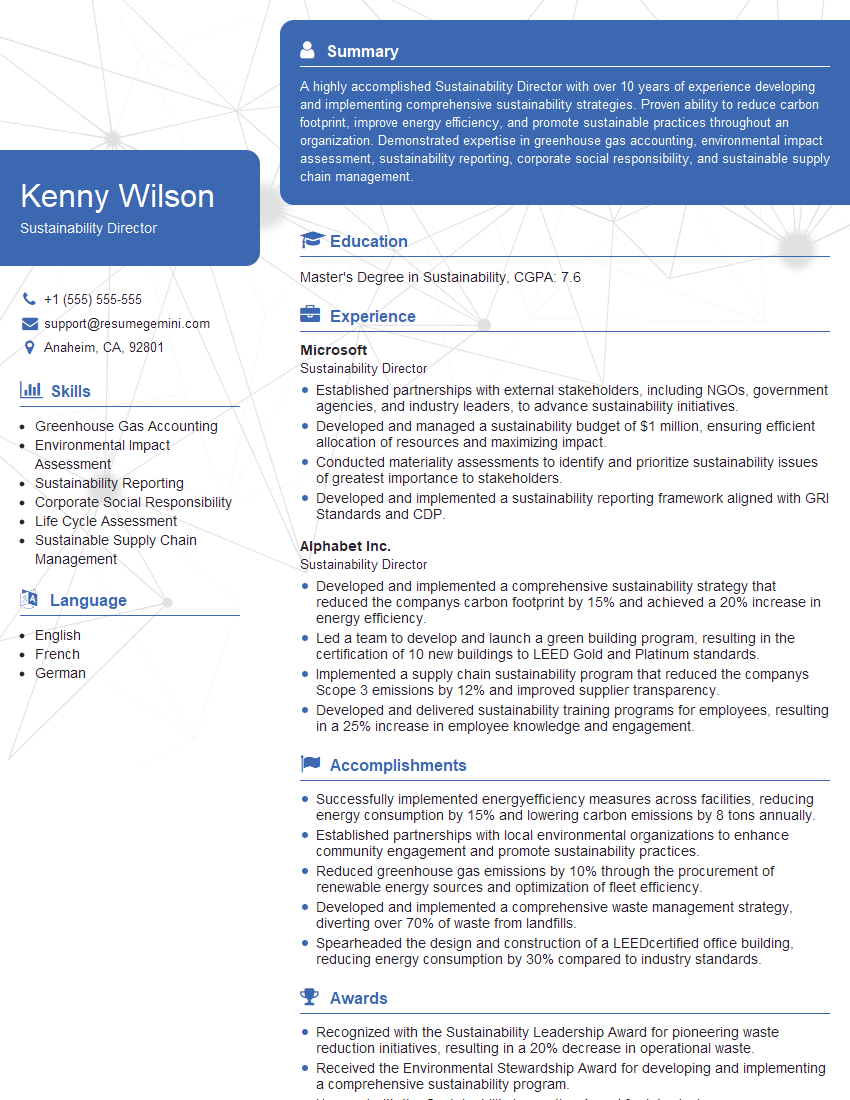
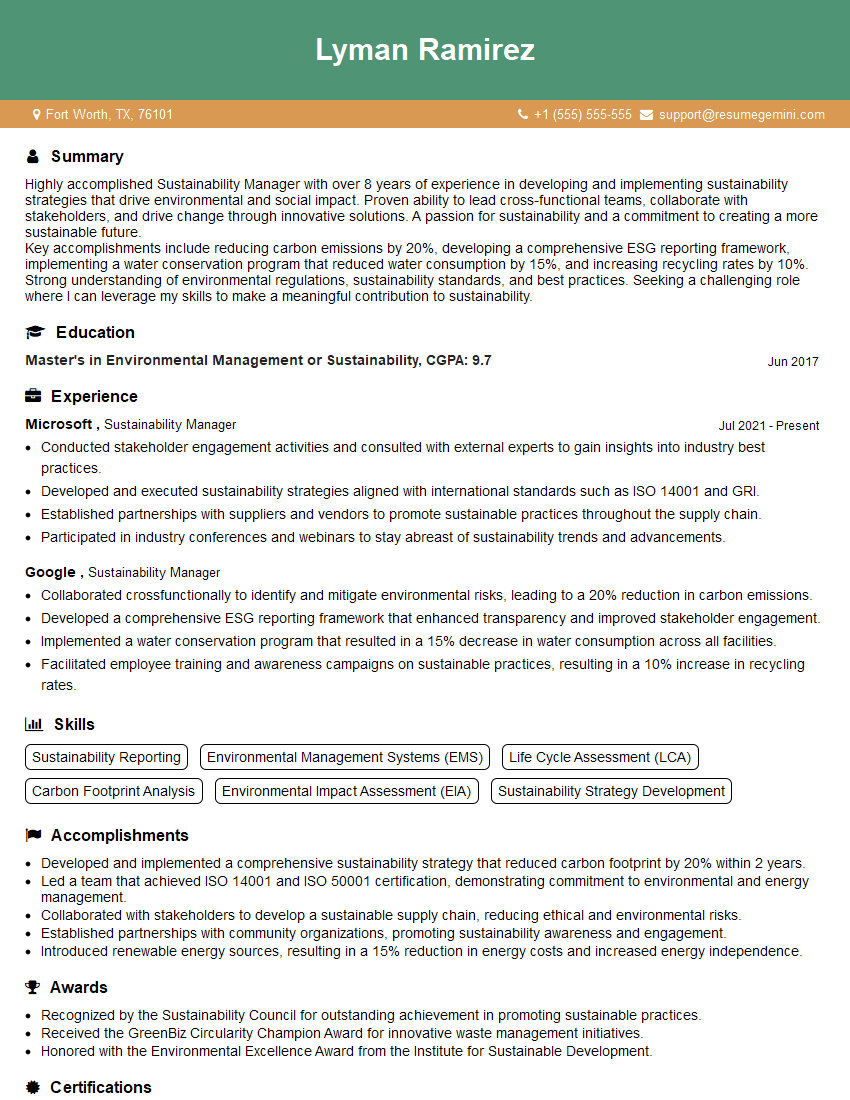
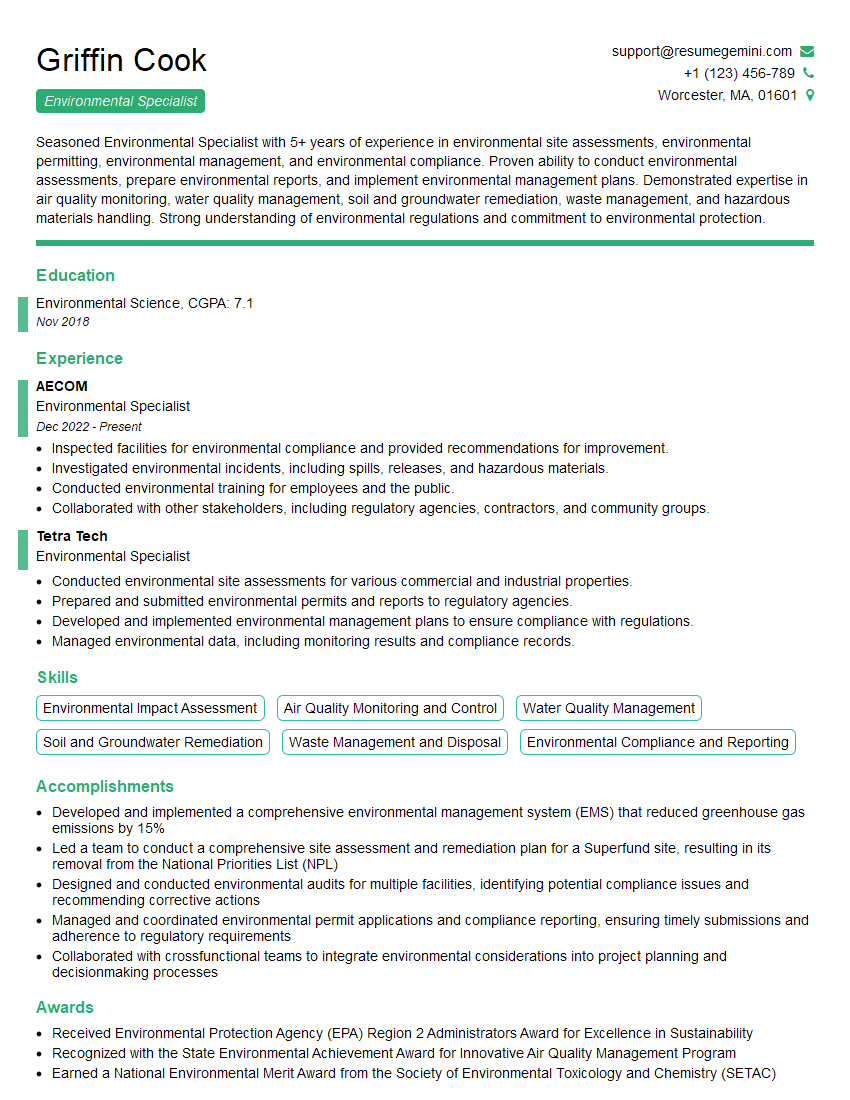
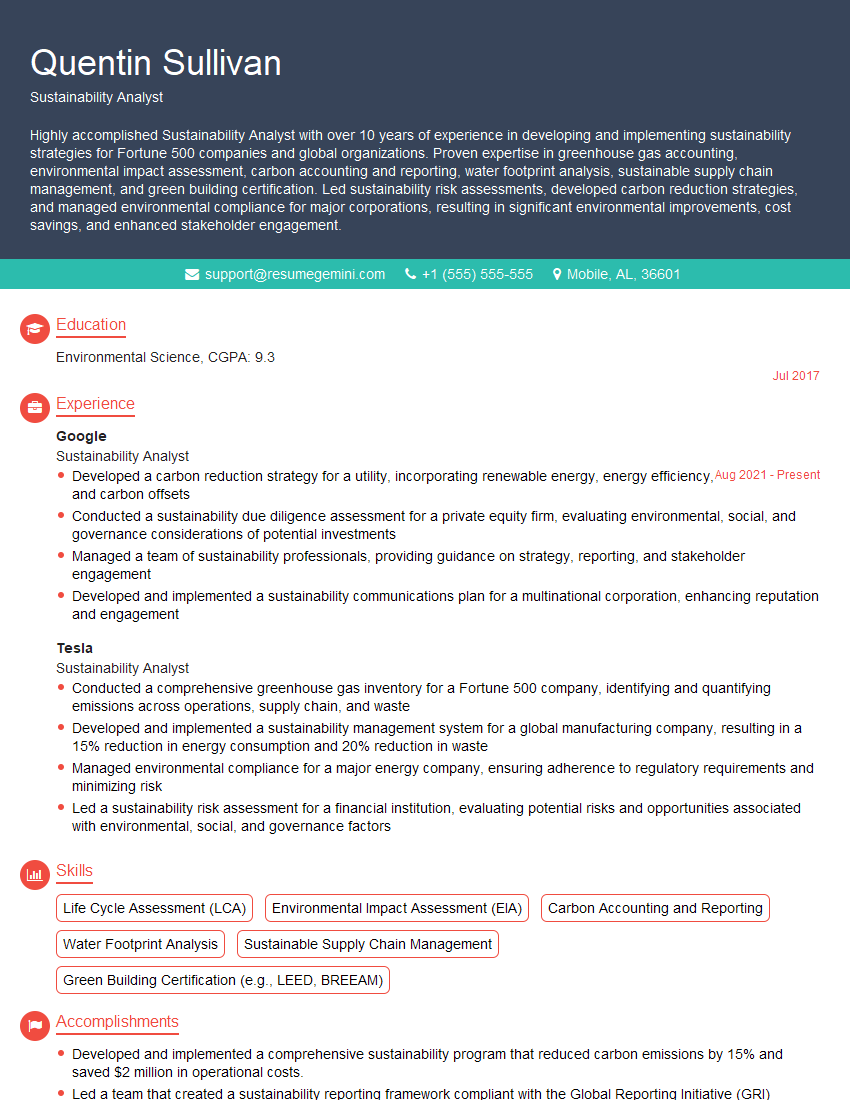
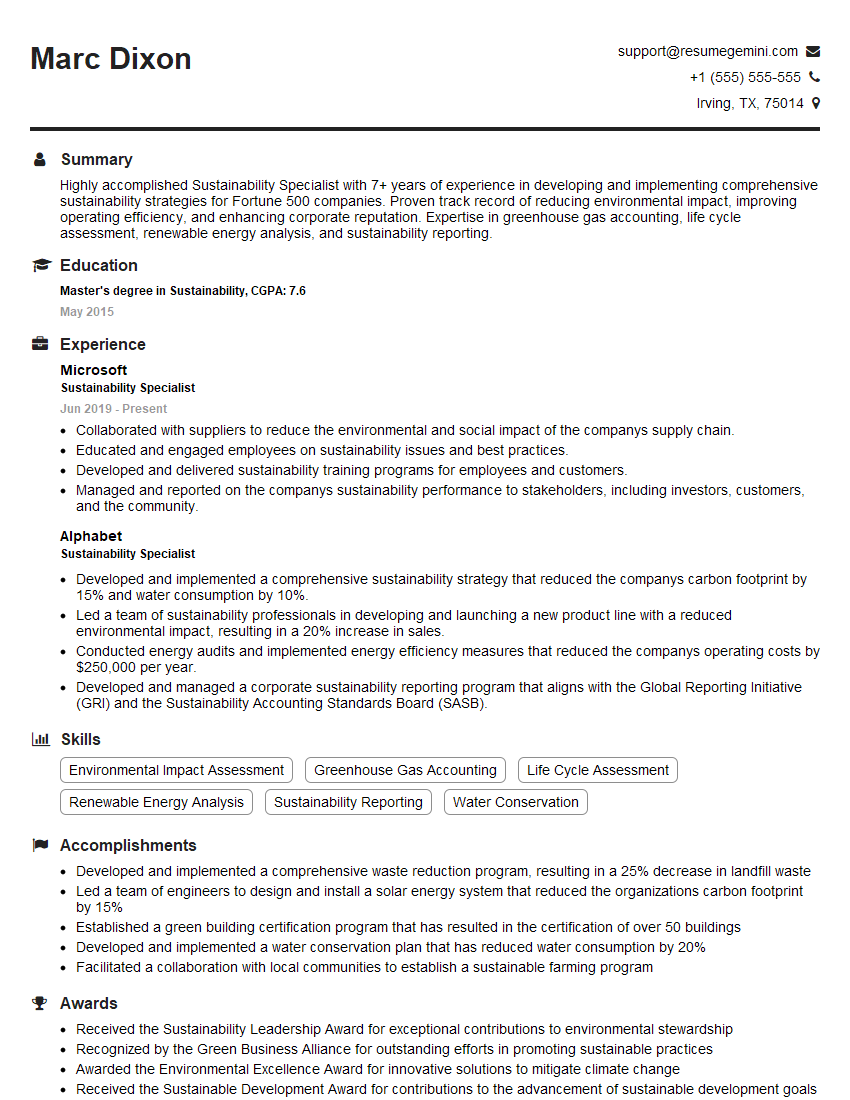
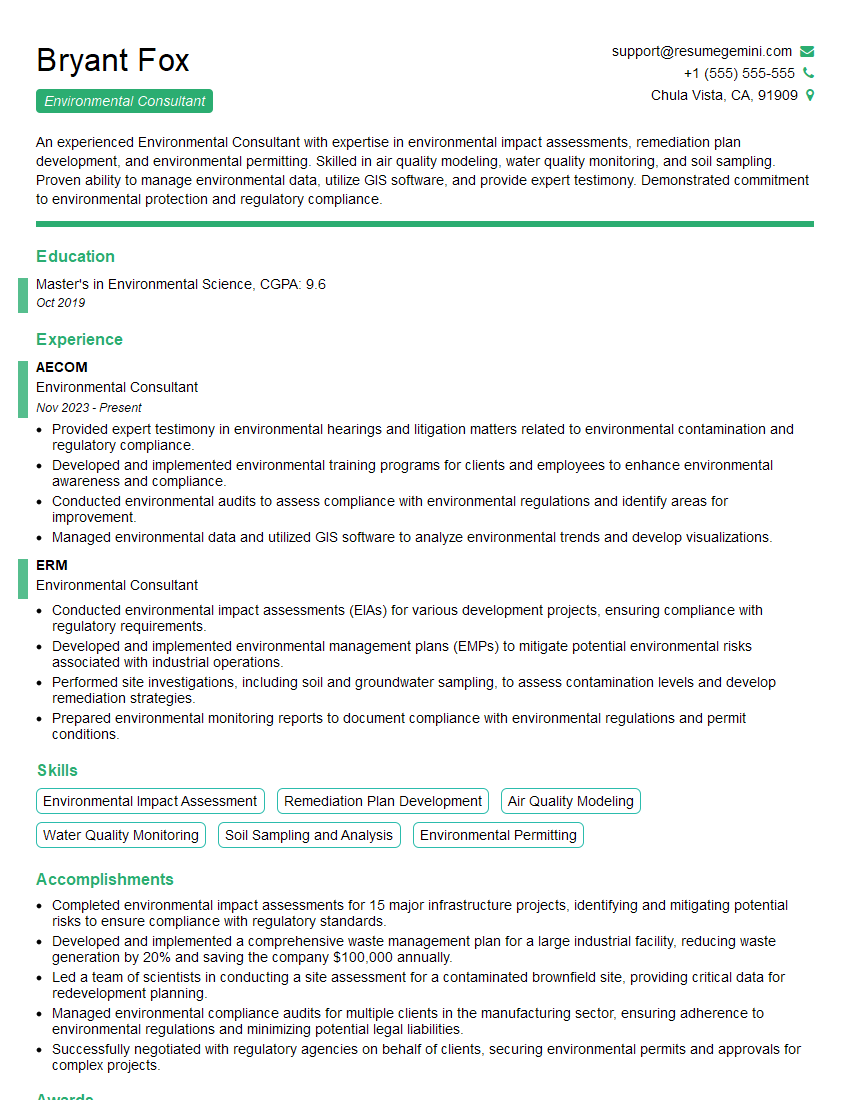
Mastering Sustainability Management and Reporting is crucial for a thriving career in today’s increasingly conscious business world. Proficiency in these areas significantly enhances your marketability and opens doors to impactful roles with leading organizations. To maximize your job prospects, building an ATS-friendly resume is essential. This ensures your qualifications are effectively highlighted to recruiters and applicant tracking systems. We highly recommend using ResumeGemini to craft a compelling and professional resume that showcases your skills and experience effectively. Examples of resumes tailored specifically to Sustainability Management and Reporting are available to help guide your process. Invest in your future – invest in a strong resume.

Explore more articles
Users Rating of Our Blogs
Share Your Experience
We value your feedback! Please rate our content and share your thoughts (optional).
What Readers Say About Our Blog
Very informative content, great job.
good