Interviews are opportunities to demonstrate your expertise, and this guide is here to help you shine. Explore the essential Swim Conditioning interview questions that employers frequently ask, paired with strategies for crafting responses that set you apart from the competition.
Questions Asked in Swim Conditioning Interview
Q 1. Explain the difference between aerobic and anaerobic swim training.
Aerobic and anaerobic swim training differ fundamentally in how the body produces energy. Aerobic training utilizes oxygen to break down fuel (carbohydrates and fats) for sustained energy production. Think of a long-distance race – your body efficiently uses oxygen to power your muscles for an extended period. Anaerobic training, conversely, occurs when oxygen supply is insufficient, relying on the rapid breakdown of glucose for short bursts of high-intensity effort. Imagine a 50-meter sprint – you’re working intensely, producing energy without enough oxygen to sustain it.
- Aerobic: Low to moderate intensity, longer duration (e.g., distance swimming, steady-state sets). Improves cardiovascular fitness, endurance, and fat burning.
- Anaerobic: High intensity, short duration (e.g., sprints, interval training). Improves power, speed, and muscle strength. Results in lactic acid buildup.
In a well-rounded training program, both are crucial. Aerobic training builds the base, while anaerobic training develops speed and power.
Q 2. Describe the principles of periodization in swim conditioning.
Periodization in swim conditioning is like creating a strategic roadmap for the season. It involves systematically varying the intensity, volume, and type of training over time to optimize performance and prevent overtraining. Think of it as a wave – starting low, building to a peak, and then gradually tapering down.
- Macrocycle: The entire training year, encompassing different phases. Example: A year leading up to a national championship.
- Mesocycle: A smaller period, usually 4-8 weeks, focused on specific training goals within the macrocycle. Example: A block of training focused on improving endurance.
- Microcycle: A weekly or daily plan that addresses immediate training targets. Example: A week focusing on speed work, followed by a recovery week.
Each phase has a specific purpose: Preparation (base building), Competition (peak performance), and Transition (active recovery).
Q 3. What are the key components of a comprehensive swim conditioning program?
A comprehensive swim conditioning program needs several key components to be truly effective:
- Strength and Conditioning: Dryland training, including strength training (weights, resistance bands), plyometrics (jump training), and core work, builds strength and power directly transferable to swimming.
- Technique Training: Focus on proper body position, stroke mechanics, and efficiency, making each stroke more powerful and less energy-consuming. This often involves video analysis and drills.
- Endurance Training: Long swims at moderate intensity build aerobic capacity, crucial for longer races. Think steady-state sets.
- Speed and Interval Training: Short, high-intensity intervals improve speed and anaerobic capacity. Example: 25-meter sprints with short rest periods.
- Flexibility and Recovery: Stretching, yoga, and adequate rest are vital for injury prevention and muscle recovery.
- Nutrition and Hydration: Proper fueling supports energy levels and muscle repair. Adequate hydration is essential for performance and overall health.
These elements work synergistically, leading to holistic swimmer development.
Q 4. How do you assess a swimmer’s current fitness level?
Assessing a swimmer’s fitness level requires a multi-faceted approach:
- Swim Tests: Time trials over various distances (e.g., 50m, 100m, 400m freestyle) to establish baseline speed and endurance.
- Physiological Testing: Measuring maximal oxygen uptake (VO2 max) in a controlled environment indicates aerobic capacity. Lactate threshold testing helps determine the highest sustainable workload before excessive lactic acid buildup.
- Body Composition Analysis: Assessing body fat percentage and lean muscle mass reveals overall physical condition and potential for improvement.
- Movement Assessment: Analyzing stroke technique via video analysis identifies weaknesses and areas for improvement in form and efficiency.
- Questionnaires and Interviews: Gathering information on training history, injury history, and current goals provides valuable context.
The combination of these methods gives a holistic picture of the swimmer’s current capabilities and areas for focus.
Q 5. How would you design a training plan for a beginner swimmer?
A beginner swimmer’s training plan should prioritize building a strong foundation in technique and endurance, avoiding early overtraining. Focus should be on:
- Water Acclimation: Initial sessions should focus on getting comfortable in the water, building confidence and basic water skills.
- Basic Stroke Technique: Focus on mastering freestyle (front crawl) with proper body position, arm movements, and breathing. Drills are extremely useful here.
- Endurance Development: Gradually increase swim distance and time spent in the water at a comfortable pace. Avoid pushing too hard too soon.
- Flexibility and Core Strength: Incorporate stretching and simple core exercises to improve body control and prevent injury. Think basic planks and stretches.
- Consistent Practice: Regular sessions (2-3 times a week) are key to seeing improvement.
A sample week might include: 2 x 30-minute sessions of freestyle with drills, focusing on proper technique and building endurance. Gradually increase duration and intensity over weeks.
Q 6. How would you design a training plan for an elite swimmer?
Training an elite swimmer demands highly individualized planning based on their specific strengths, weaknesses, and competition schedule. It involves:
- High-Volume Training: Significant time spent swimming, often 10+ hours per week. This includes many different sets of high-intensity and low-intensity work.
- Advanced Interval Training: Intense interval sets, varying distances and rest intervals, to optimize speed and endurance. This will often utilize pacing targets and specific time goals for each set.
- Specialized Drills and Technique Work: Fine-tuning stroke technique to minimize energy expenditure and maximize efficiency. This may involve using different equipment to improve specific aspects of their technique.
- Strength and Conditioning: A highly specific and advanced strength and conditioning program aimed at power development. This may include plyometrics, weight training and more advanced strength training techniques.
- Scientific Monitoring and Data Analysis: Careful tracking of training data (heart rate, distance, time, pace) using wearable technology and performance analysis to optimize the plan continually.
- Strategic Periodization: A detailed periodization plan precisely timed to peak performance for major competitions.
An example training week might involve 12-15 hours of swimming, split between endurance, speed, strength, and technique sessions, complemented by strength and conditioning work.
Q 7. What are the common injuries associated with swimming, and how can they be prevented?
Swimming, while a low-impact sport, can lead to several common injuries:
- Shoulder Injuries: Rotator cuff tendinitis, impingement syndrome are prevalent due to repetitive arm movements. Prevention involves proper warm-up, strength training, and maintaining good stroke technique.
- Knee Injuries: Patellofemoral pain syndrome (runner’s knee) can occur from kicking. Strengthening quads and hamstrings and addressing any biomechanical issues in kicking technique can help.
- Back Injuries: Spinal muscle strains result from poor posture or improper body position. Core strengthening, maintaining correct posture in and out of the water, and proper technique prevent this.
- Swimmer’s Ear (Otitis Externa): Infection of the outer ear canal from water trapped inside. Proper ear drying after swims and using earplugs are crucial.
- Overuse Injuries: Tendinitis, bursitis, stress fractures can result from excessive training. Gradual increases in training load, adequate rest, and periodized planning are essential.
Prevention relies on proper warm-up and cool-down, maintaining good swimming form, strength training, flexibility exercises, and a well-structured training plan that includes adequate rest and recovery.
Q 8. Explain the importance of proper warm-up and cool-down routines.
Proper warm-up and cool-down routines are crucial for injury prevention, performance enhancement, and overall swimmer well-being. Think of it like preparing your car engine before a long drive and letting it cool down afterward – you wouldn’t just jump in and start flooring it, right?
A good warm-up gradually increases heart rate and body temperature, improving blood flow to muscles. This includes:
- General warm-up: 5-10 minutes of light cardio, like jogging or cycling.
- Dynamic stretching: Arm circles, leg swings, torso twists – focusing on movements that mimic swimming strokes.
- Stroke-specific drills: Short, easy repetitions of the strokes the swimmer will be focusing on.
The cool-down, equally important, helps gradually reduce heart rate and prevent muscle soreness. It involves:
- Easy swimming: 5-10 minutes of slow, relaxed swimming.
- Static stretching: Holding stretches for 20-30 seconds, targeting major muscle groups used in swimming (e.g., shoulders, back, hamstrings).
Ignoring these routines increases the risk of muscle pulls, strains, and other injuries, significantly hindering training progress and potentially ending a season prematurely. I’ve seen countless swimmers sidelined due to neglecting this vital aspect of training.
Q 9. How do you incorporate plyometrics into a swim conditioning program?
Plyometrics, or jump training, is fantastic for developing explosive power in swimming. While swimmers aren’t literally jumping in the water, the power generated during a plyometric exercise translates directly to the force needed for powerful starts, turns, and stroke technique. We incorporate it strategically.
Examples include:
- Box jumps: Jumping onto and off a box to develop leg power for starts.
- Depth jumps: Stepping off a slightly elevated platform and immediately jumping back up, improving reactive strength.
- Medicine ball throws: To build upper body power for pulls.
The key is to integrate plyometrics carefully. Overuse can lead to injuries. We start with low-intensity exercises and gradually increase the intensity and complexity as the swimmer’s strength and conditioning improve. We also ensure proper landing technique to minimize stress on joints.
Q 10. What is your experience with different training methods (e.g., interval training, tempo training)?
My experience encompasses a wide range of training methods tailored to individual needs and goals. Each method has its place and is not mutually exclusive.
- Interval training: This involves alternating high-intensity bursts with periods of rest or low-intensity work. It’s fantastic for improving speed, endurance, and anaerobic capacity. A typical example might be 8 x 100m at race pace with 20 seconds rest between each interval.
- Tempo training: This focuses on maintaining a consistent, challenging pace over a longer duration, building aerobic endurance and lactate threshold. An example could be 4 x 400m at a comfortably hard pace.
- Continuous training: This involves swimming at a steady pace for an extended period, enhancing aerobic capacity and overall endurance.
- Fartlek training: This involves varying the intensity spontaneously, mimicking the unpredictable nature of a race, enhancing speed and endurance adaptability. A session might include periods of high-speed bursts followed by easy swimming.
The choice depends on the swimmer’s training phase, goals (sprint, middle-distance, long-distance), and current fitness level. I often combine these methods for a comprehensive approach. For example, a sprint swimmer might use interval training heavily, while a distance swimmer will use more tempo and continuous training.
Q 11. How do you track and measure a swimmer’s progress?
Tracking progress involves a multifaceted approach beyond just race times. We use a combination of:
- Time trials: Regular time trials allow objective measurement of speed and endurance improvements.
- Distance tests: Assessing how far a swimmer can go in a specified time reveals improvements in endurance.
- Stroke analysis: Video recording and analysis of stroke technique identify areas for improvement. We use this to improve efficiency and reduce drag.
- Subjective feedback: Swimmer’s perception of effort and fatigue is also valuable. We frequently ask them about how they feel throughout training.
- Heart rate monitoring: Measuring heart rate during training provides insights into training intensity and cardiovascular fitness.
Combining these data points provides a comprehensive picture of the swimmer’s progress, enabling adjustments to the training program as needed.
Q 12. How do you adapt training programs for swimmers with different goals?
Training programs are highly individualized. I adapt programs based on the swimmer’s:
- Goals: A competitive swimmer aiming for a national title will have a very different program than a recreational swimmer aiming to improve fitness.
- Experience level: Beginners need a gradual progression, while experienced swimmers can handle higher intensity and volume.
- Strengths and weaknesses: We focus on enhancing strengths and addressing weaknesses in technique, strength, and endurance.
- Available training time: The program needs to be realistic and achievable within the swimmer’s schedule.
- Physical limitations: Any injuries or physical conditions must be considered to prevent further problems.
For example, a young swimmer new to competitive swimming would start with a foundation of basic stroke technique and endurance building, whereas an elite swimmer would focus on high-intensity interval training and highly specialized stroke technique refinement. The approach always remains flexible and adaptable to individual needs.
Q 13. Describe your experience with different stroke techniques.
I have extensive experience coaching all four competitive strokes (freestyle, backstroke, breaststroke, butterfly) and their variations. My focus goes beyond simply teaching the basic movements; it’s about understanding the biomechanics of each stroke and how to optimize them for maximum efficiency and speed. This includes:
- Body position: Maintaining a streamlined body position minimizes drag.
- Breathing technique: Efficient breathing is crucial to avoid fatigue and maintain rhythm.
- Arm and leg movements: Proper technique ensures powerful propulsion and reduces energy waste.
- Turns and starts: Efficient turns and starts are vital to shave off precious seconds in a race.
I’ve worked with swimmers of all levels, helping them refine their technique and achieve their best times. I regularly review videos and provide individualized feedback using a combination of drills, and adjustments to stroke mechanics.
Q 14. How do you motivate swimmers to achieve their goals?
Motivation is key to achieving goals. My approach involves building a strong swimmer-coach relationship based on trust and mutual respect. I use several strategies:
- Setting realistic goals: Goals should be challenging yet achievable to keep swimmers motivated.
- Positive reinforcement: Celebrating successes, both big and small, helps maintain enthusiasm.
- Providing constructive feedback: Honest and helpful feedback promotes improvement and addresses weaknesses.
- Creating a supportive team environment: Swimmers are motivated by their teammates’ support and encouragement. We emphasize teamwork.
- Tracking progress and celebrating milestones: Visualizing progress helps maintain motivation.
I believe in fostering a positive and encouraging environment where swimmers feel comfortable pushing themselves and celebrating their achievements. Seeing a swimmer improve and reach their goals is the most rewarding part of my job.
Q 15. How do you handle conflict or disagreements within a swim team?
Conflict resolution on a swim team requires a proactive and fair approach. I believe in fostering a positive team environment where open communication is encouraged. Disagreements are inevitable, especially when dealing with high-performance athletes striving for individual and team goals. My strategy involves:
- Open Dialogue: Creating a safe space for swimmers to voice concerns without fear of retribution. I often facilitate team meetings where issues can be addressed directly.
- Mediation: If conflicts arise, I act as a neutral mediator, helping individuals understand each other’s perspectives and find mutually acceptable solutions. This might involve one-on-one meetings to address specific concerns.
- Establishing Clear Expectations: From the start, I clearly outline team rules, expectations for conduct, and the process for resolving disagreements. This sets a foundation for respectful interactions.
- Fairness and Consistency: I ensure fair treatment of all team members, regardless of their skill level or seniority. Consistent application of rules minimizes misunderstandings and prevents favoritism.
- Focus on Shared Goals: I remind the team of their shared goals – success in competition and personal improvement. This helps refocus energy away from conflict and towards collaboration.
For example, if a disagreement arises regarding lane assignments, I would facilitate a discussion, perhaps offering a rotating schedule to ensure fairness and allow everyone equal access to the preferred lanes. The key is to prevent small conflicts from escalating into larger issues affecting team morale and performance.
Career Expert Tips:
- Ace those interviews! Prepare effectively by reviewing the Top 50 Most Common Interview Questions on ResumeGemini.
- Navigate your job search with confidence! Explore a wide range of Career Tips on ResumeGemini. Learn about common challenges and recommendations to overcome them.
- Craft the perfect resume! Master the Art of Resume Writing with ResumeGemini’s guide. Showcase your unique qualifications and achievements effectively.
- Don’t miss out on holiday savings! Build your dream resume with ResumeGemini’s ATS optimized templates.
Q 16. What is your approach to nutrition and hydration for swimmers?
Proper nutrition and hydration are cornerstones of effective swim conditioning. Swimmers expend significant energy, and replenishing fuel and fluids is crucial for performance, recovery, and injury prevention. My approach emphasizes:
- Balanced Diet: I encourage a diet rich in complex carbohydrates for sustained energy (think whole grains, fruits, vegetables), lean proteins for muscle repair (chicken, fish, beans), and healthy fats (avocado, nuts, seeds). I advise against processed foods, sugary drinks, and excessive saturated fats.
- Hydration Strategy: Swimmers should consistently hydrate throughout the day, not just during and after training. I recommend starting the day well-hydrated and continuing to drink water regularly, even when not thirsty. During intense training, electrolyte drinks can help replenish lost salts.
- Pre-Workout Fuel: A light, easily digestible meal or snack 1-2 hours before training provides sustained energy. This could be toast with banana, oatmeal, or a small fruit and yogurt.
- Post-Workout Recovery: Replenishing glycogen stores after training is critical. A meal or snack containing carbohydrates and protein within 30-60 minutes of finishing the workout is ideal.
- Individualized Plans: It’s crucial to tailor nutrition plans based on individual needs, considering factors like age, body weight, training intensity, and dietary preferences. Consulting a registered dietitian can be highly beneficial.
For example, I’ve helped a young swimmer struggling with fatigue by adjusting their diet to include more frequent, smaller meals throughout the day and ensuring adequate carbohydrate intake before and after training.
Q 17. How do you ensure the safety of swimmers during training sessions?
Safety is paramount in swim conditioning. My approach to ensuring swimmer safety incorporates multiple layers of precaution:
- Proper Warm-up and Cool-down: I insist on thorough warm-up exercises before each session to prepare muscles and prevent injuries, and cool-down exercises to promote recovery and reduce muscle soreness.
- Appropriate Skill Levels: I carefully assess each swimmer’s skill level and assign them to appropriate training groups. Swimmers are grouped according to their ability to ensure safety and prevent overexertion.
- Lifeguard Supervision: All training sessions, especially in open water, are supervised by qualified lifeguards. Their presence provides an immediate response in case of emergencies.
- Emergency Procedures: The team is well-versed in emergency procedures, including CPR and first aid. We regularly conduct drills to ensure everyone knows what to do in different scenarios.
- Safe Pool Environment: We ensure the pool environment is clean and free of hazards. This includes checking the pool deck for obstructions and ensuring that all equipment is in good working order.
- Weather Monitoring: For open water training, weather conditions are carefully monitored, and sessions are cancelled or adjusted as needed to prevent risks associated with storms or extreme temperatures.
For instance, if a swimmer experiences distress during training, the lifeguard’s immediate response, coupled with the team’s knowledge of emergency procedures, ensures swift and effective action.
Q 18. Describe your experience with different types of swimming equipment.
My experience encompasses a wide range of swimming equipment, understanding their application and limitations is crucial for effective conditioning.
- Kickboards and Pull Buoys: These are fundamental tools for isolating leg and arm movements, improving technique and strength. I use them to focus on specific aspects of the stroke.
- Paddles and Fins: Paddles increase resistance, strengthening arm muscles and enhancing stroke power. Fins improve leg propulsion and technique, promoting efficiency and speed. Their use requires careful monitoring to prevent injury.
- Snorkels and Tempo Trainers: Snorkels allow for better breathing technique practice without constantly lifting the head. Tempo trainers promote consistent stroke rate and rhythm, improving efficiency.
- Underwater Cameras and Video Analysis: These allow for detailed observation of stroke technique, identifying areas for improvement, and providing visual feedback to swimmers.
- Heart Rate Monitors and GPS Watches: These technological aids provide valuable data on training intensity, helping optimize workouts and prevent overtraining.
For example, I might use video analysis to show a swimmer how their hand entry is affecting their overall stroke efficiency. By identifying this through video, I can then prescribe targeted drills using paddles or pull buoys to correct it.
Q 19. How do you use technology to enhance swim conditioning (e.g., heart rate monitors, video analysis)?
Technology significantly enhances swim conditioning, providing objective data and personalized feedback. My approach involves:
- Heart Rate Monitors: These provide real-time data on training intensity, ensuring swimmers work within their target heart rate zones, maximizing the training effect while minimizing the risk of overtraining.
- GPS Watches and Wearable Sensors: These devices offer data on distance, pace, stroke rate, and even stroke power, which helps me create personalized training plans based on objective data.
- Video Analysis Software: Using software that allows frame-by-frame analysis of a swimmer’s technique, I can precisely identify weaknesses and provide corrective feedback. This is especially useful for improving stroke mechanics.
- Smartwatches and Fitness Apps: These apps provide comprehensive tracking of training data, allowing swimmers to monitor their progress and stay motivated. They also facilitate communication between the coach and swimmer, allowing for personalized adjustments to training plans.
- Data-Driven Decision Making: All this technology assists in creating data-driven training plans, enabling adjustments and improvements based on measurable metrics instead of relying solely on subjective observations.
For instance, if a swimmer’s heart rate consistently exceeds their target zone during a specific drill, we can modify the drill or reduce its duration to prevent overexertion.
Q 20. How do you adapt training plans based on weather conditions or pool availability?
Adaptability is key to successful swim conditioning. Unforeseen circumstances like weather changes or pool closures necessitate flexible training plans. My strategies include:
- Alternative Training Locations: If the pool is closed, I might arrange alternative training locations, such as a different pool or even land-based training sessions. Land-based exercises can maintain fitness and strength.
- Modified Workouts: In case of inclement weather affecting open water training, I may shorten the session or shift to a sheltered area. This ensures safety without completely halting progress.
- Flexibility in Scheduling: I maintain flexibility in the training schedule to accommodate weather delays or pool closures. This might involve rescheduling sessions or adjusting the training plan to utilize available time slots.
- Cross-Training: Incorporating activities like running, cycling, or strength training can help maintain fitness when pool access is limited. This ensures swimmers stay in shape even without swimming.
- Communication and Transparency: I communicate any necessary changes promptly to the team, ensuring everyone is informed and prepared. This builds trust and understanding.
For example, during a heatwave, I might shorten the training sessions and incorporate more frequent rest periods to prevent heatstroke. Similarly, if the pool is unexpectedly closed due to maintenance, I would immediately communicate this to the swimmers and suggest alternative training options, perhaps sending a tailored dryland workout plan.
Q 21. How would you create a swim conditioning program for a specific age group (e.g., children, adults, seniors)?
Creating a swim conditioning program requires careful consideration of age group, physical capabilities, and developmental stages.
- Children (8-12 years): The focus is on developing fundamental skills, water safety, and fostering a love for swimming. Training would incorporate games, drills, and shorter intervals, emphasizing technique over intense endurance.
- Adults (18-45 years): Programs for adults can be tailored to different fitness levels, from beginners to advanced. This might involve longer distances, higher intensity intervals, and a focus on achieving specific fitness goals, such as improving endurance, strength, or weight management.
- Seniors (55+ years): The program emphasizes low-impact exercises that improve cardiovascular health, flexibility, and strength. Longer warm-up and cool-down periods are incorporated, and modifications to drills are made to accommodate limitations.
For example, a program for senior swimmers might focus on shorter, more manageable distances, incorporating more rest intervals and emphasizing proper form and technique to prevent injuries. For children, games like underwater tag or relay races can make training fun and engaging while building essential skills. Adult programs could incorporate interval training to enhance cardiovascular fitness and strength training to improve muscle mass and overall fitness. The key is to adapt the intensity, duration, and type of exercises to meet the specific needs and capabilities of each age group.
Q 22. Explain the importance of flexibility and strength training for swimmers.
Flexibility and strength training are absolutely crucial for swimmers, forming the bedrock of injury prevention and performance enhancement. Think of a swimmer’s body like a finely tuned machine; without proper flexibility, the machine is stiff and prone to breakdowns (injuries). Without sufficient strength, the machine lacks power and efficiency.
Flexibility: Improves range of motion, reducing the risk of muscle strains and tears. For example, tight shoulder muscles can restrict a swimmer’s stroke, leading to less powerful pulls and increased risk of rotator cuff injuries. We address this with regular stretching focusing on the shoulders, back, hamstrings, and hips. Dynamic stretching before swims and static stretching after are key.
Strength Training: Builds the muscular power necessary for propulsion through the water. Stronger core muscles improve body position and reduce drag, while strong legs provide more powerful kicks. We incorporate exercises like squats, deadlifts, and plyometrics to develop this strength. It also improves overall stamina and endurance in the pool.
In essence, a balanced program integrates both aspects. A flexible, strong swimmer is a powerful, injury-resistant swimmer.
Q 23. Describe your understanding of the relationship between swimming and overall health and wellness.
Swimming is more than just a sport; it’s a holistic health and wellness activity. Its benefits extend far beyond the pool. It’s a fantastic full-body workout that strengthens the cardiovascular system, improves lung capacity, and enhances muscular endurance.
Cardiovascular Health: Swimming is an excellent cardiovascular exercise, improving heart health and reducing the risk of heart disease. The continuous movement challenges the heart and lungs, leading to better circulation and oxygen uptake.
Mental Wellness: The rhythmic nature of swimming can be incredibly meditative, reducing stress and improving mental clarity. The sense of accomplishment after a challenging swim session is also a mood booster.
Physical Fitness: It’s a low-impact exercise suitable for people of all ages and fitness levels. Because the water supports the body, it’s gentler on joints compared to running or other high-impact activities, making it ideal for rehabilitation and injury prevention.
In summary, swimming offers a comprehensive approach to health and wellness, benefitting both the physical and mental aspects of well-being. It is a sustainable and enjoyable way to maintain and improve overall health.
Q 24. How do you incorporate dryland training into your swim conditioning programs?
Dryland training is an essential component of any comprehensive swim conditioning program. It complements the in-water training by strengthening muscles that are crucial for swimming, improving flexibility, and enhancing overall fitness. We don’t just ‘add’ dryland; we strategically integrate it.
Strength Training: We focus on exercises that mimic the movements of swimming strokes. For instance, pull-ups, rows, and bench presses strengthen the muscles used in the arms and back during the pull phase. Squats and lunges build leg strength for powerful kicks.
Core Work: A strong core is vital for maintaining proper body position and generating power in the water. We incorporate exercises such as planks, Russian twists, and medicine ball throws to improve core strength and stability.
Plyometrics: These explosive exercises, such as box jumps and jump squats, enhance power and speed, which are directly transferable to swimming performance.
Flexibility and Mobility: Yoga and dynamic stretching routines are incorporated to maintain flexibility and range of motion, crucial for injury prevention and efficient movement in the water.
The frequency and intensity of dryland training are carefully adjusted based on the swimmer’s training schedule and goals. It’s a crucial component, not an afterthought.
Q 25. What are some common mistakes you see swimmers make, and how do you correct them?
Common mistakes among swimmers are often rooted in technique, and addressing them improves efficiency and injury prevention. Here are a few examples:
Improper Body Position: Many swimmers don’t maintain a streamlined, horizontal body position, increasing drag and reducing efficiency. We address this through drills focusing on core engagement and body rotation.
Inefficient Breathing: Lifting the head too high during breathing disrupts body alignment and creates drag. We teach proper breathing techniques where only the mouth breaks the surface and minimal lifting is done.
Weak Kick: A weak kick reduces propulsion, particularly in distance swimming. We incorporate kicking drills with emphasis on proper technique and range of motion. This might include using a kickboard, fins or resistance bands.
Overtraining: This leads to burnout, injury, and lack of improvement. We create personalized training schedules that balance intensity, volume, and rest. This often involves monitoring rest heart rates and overall performance indicators.
Corrections involve video analysis, individual feedback, and tailored drills to focus on correcting the specific error. We break down complex movements into smaller, manageable components, progressively building toward efficient and injury-free swimming.
Q 26. How do you communicate effectively with swimmers of varying skill levels?
Effective communication with swimmers of varying skill levels requires adaptation and empathy. It’s vital to connect with them on their individual levels.
Beginner Swimmers: I use simple, clear language, focusing on foundational techniques. Positive reinforcement and encouragement are key, ensuring they feel confident and comfortable.
Intermediate Swimmers: I focus on refining technique and introducing more challenging drills. I involve them in the goal-setting process to enhance motivation and accountability.
Advanced Swimmers: We collaborate on detailed training plans, focusing on individual strengths and weaknesses. I utilize more technical terminology and incorporate advanced training methodologies.
Regardless of the skill level, I prioritize active listening, clear explanations, and individualized feedback. Building a strong rapport with each swimmer fosters trust and increases their willingness to learn and improve. The ability to adapt my approach based on the swimmer’s needs and personality is crucial.
Q 27. How do you maintain updated knowledge and best practices in swim conditioning?
Staying updated on the latest advancements in swim conditioning is paramount. I actively engage in continuous professional development through several avenues:
Professional Conferences and Workshops: Attending conferences and workshops allows me to learn from leading experts in the field, network with colleagues, and explore cutting-edge research and techniques. This allows me to directly apply new knowledge.
Scientific Literature: I regularly review peer-reviewed journals and research publications to stay informed about the latest scientific findings related to swim training, physiology, and injury prevention. This provides evidence-based support for my methodologies.
Mentorship and Collaboration: I maintain connections with other coaches and experts, exchanging ideas and best practices. This collaborative approach ensures that I’m always learning and growing.
Continuous learning allows me to refine my coaching methods, ensuring that I provide the most effective and up-to-date training programs for my swimmers.
Q 28. What is your experience with athlete recovery strategies after intense swim training?
Post-intense training recovery is as crucial as the training itself. Neglecting this can lead to overtraining, injury, and impaired performance. My approach is multifaceted:
Active Recovery: Light swimming or other low-impact activities promote blood flow and reduce muscle soreness. A light jog or some cycling are good examples.
Nutrition: A balanced diet rich in protein, carbohydrates, and electrolytes is essential for muscle repair and replenishing energy stores. This usually includes a focus on lean protein and complex carbohydrates.
Hydration: Dehydration significantly impacts performance. I emphasize adequate fluid intake throughout the day, especially before, during, and after training.
Sleep: Sufficient sleep is critical for muscle repair and hormone regulation. I stress the importance of 7-9 hours of quality sleep per night.
Stretching and Foam Rolling: These help reduce muscle stiffness and improve flexibility. Targeted stretching specific to muscles used in swimming can greatly assist in recovery.
Massage Therapy: Depending on the intensity of training, massage can help to improve circulation, reduce inflammation and speed muscle recovery.
I personalize recovery strategies based on individual needs and training intensity. Effective recovery ensures swimmers are prepared for their next training session, leading to sustained improvement and a reduced risk of injury.
Key Topics to Learn for Swim Conditioning Interview
- Physiological Principles of Swim Training: Understanding energy systems (aerobic, anaerobic), lactate threshold, and the effects of training on cardiovascular fitness and muscular endurance.
- Training Program Design: Developing periodized training plans incorporating various training methods (interval training, tempo training, continuous training), considering factors like swimmer’s experience level, goals, and potential injury risk. Practical application: designing a sample training plan for a specific scenario (e.g., a beginner aiming to complete a triathlon).
- Stroke Technique Analysis and Correction: Identifying common stroke technique flaws (e.g., in freestyle, backstroke, breaststroke, butterfly) and applying corrective drills to improve efficiency and reduce injury risk. Practical application: Describing a method for analyzing a swimmer’s stroke and suggesting specific drills.
- Strength and Conditioning for Swimmers: Integrating dryland strength training to improve swimming performance. Understanding the importance of core strength, flexibility, and injury prevention.
- Nutrition and Recovery for Swimmers: The role of nutrition in optimizing training adaptations and recovery. Understanding hydration strategies, fueling for performance, and the importance of adequate rest.
- Exercise Physiology and Biomechanics in Swimming: Applying principles of biomechanics to optimize swimming technique. Understanding the interplay of muscle activation patterns and hydrodynamic forces.
- Monitoring and Evaluating Training Progress: Using various methods (e.g., heart rate monitoring, time trials, RPE scales) to track progress and make informed adjustments to training plans.
- Safety and Risk Management in Aquatic Environments: Understanding risk factors and implementing safety protocols during training sessions.
Next Steps
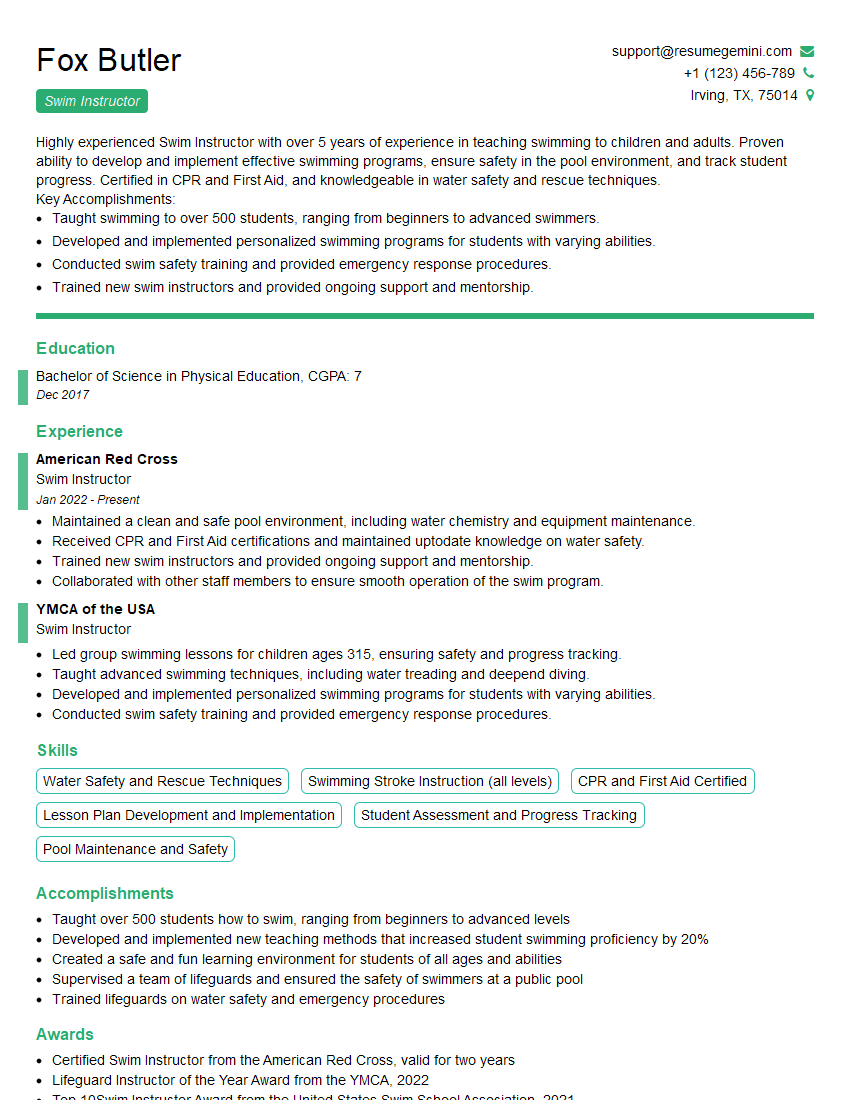
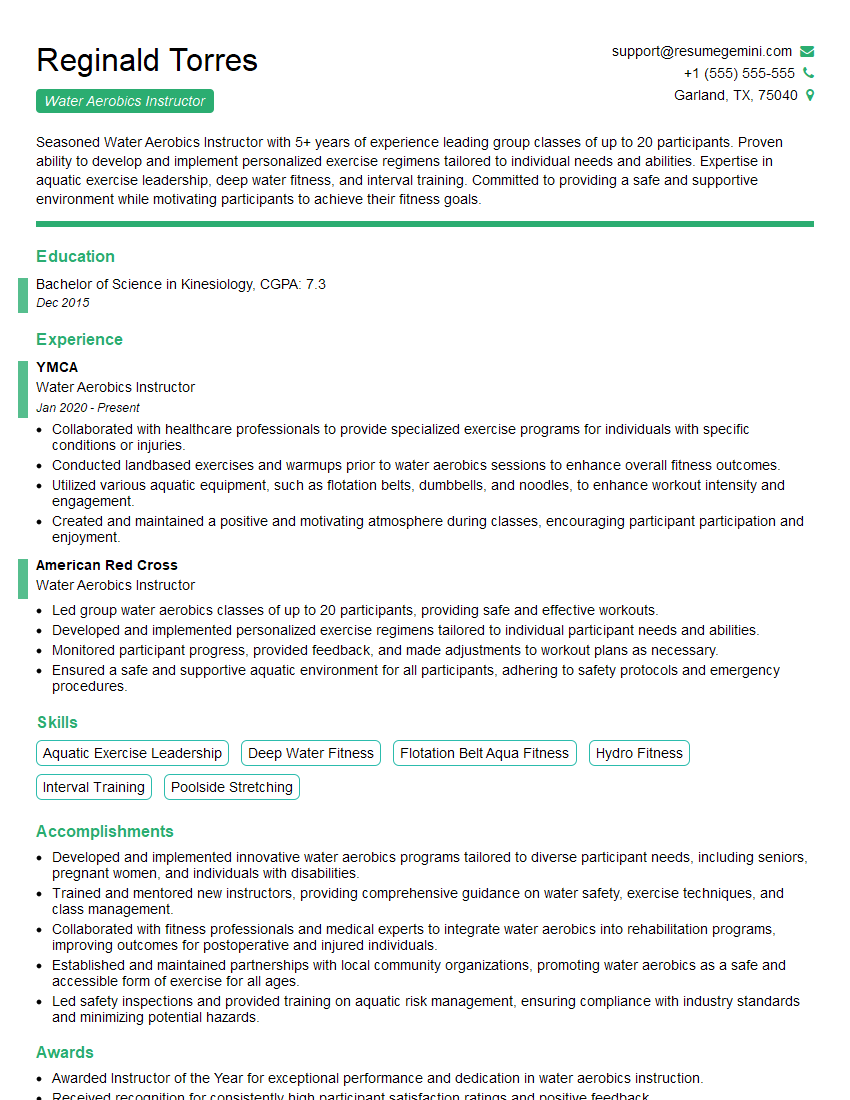
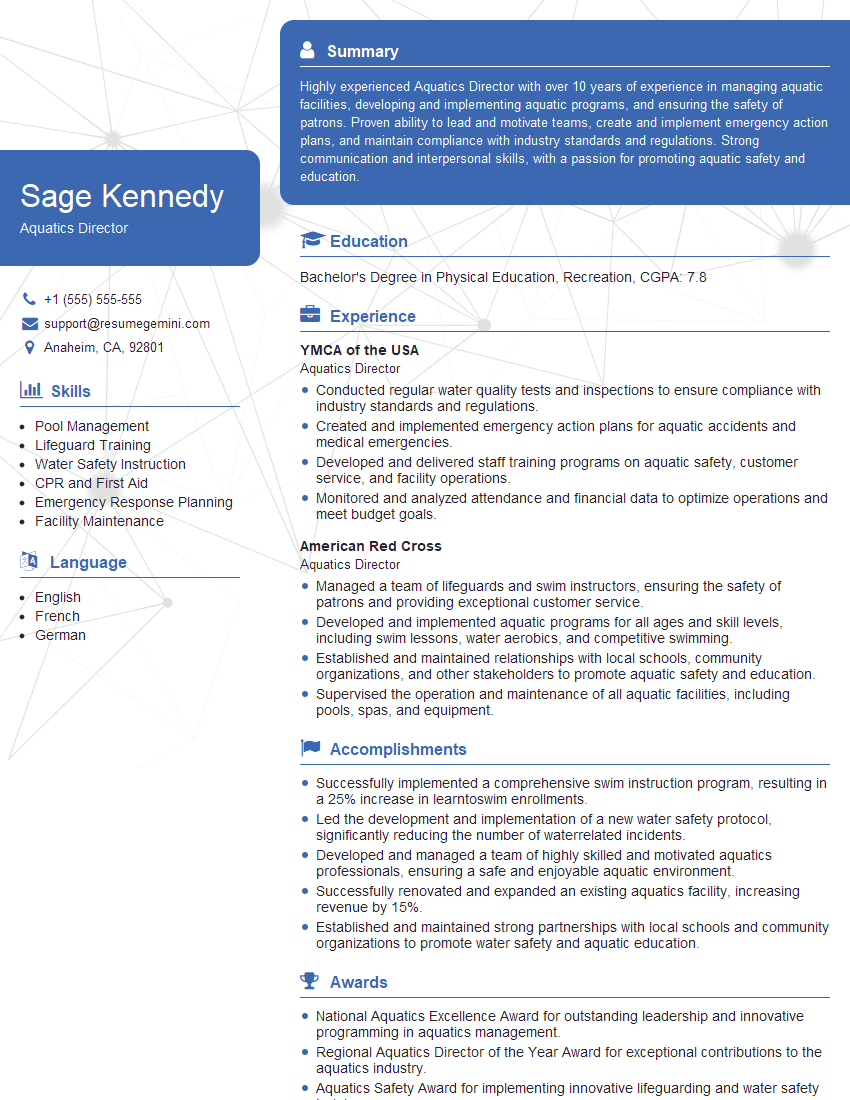
Mastering swim conditioning principles is crucial for career advancement in the fitness and aquatic coaching fields. A strong understanding of these concepts allows you to design effective training programs, improve athlete performance, and ensure a safe training environment. To significantly improve your job prospects, create an ATS-friendly resume that highlights your skills and experience. ResumeGemini is a trusted resource to help you build a professional and impactful resume. Examples of resumes tailored specifically to Swim Conditioning positions are available to help you get started.
Explore more articles
Users Rating of Our Blogs
Share Your Experience
We value your feedback! Please rate our content and share your thoughts (optional).
What Readers Say About Our Blog
good