Unlock your full potential by mastering the most common Swim Training Plan Development interview questions. This blog offers a deep dive into the critical topics, ensuring you’re not only prepared to answer but to excel. With these insights, you’ll approach your interview with clarity and confidence.
Questions Asked in Swim Training Plan Development Interview
Q 1. Explain your approach to periodization in swim training.
Periodization in swim training is the strategic planning of training phases to optimize performance and minimize the risk of injury or burnout. Think of it like building a house: you wouldn’t try to put on the roof before the foundation is laid. Similarly, we structure training into distinct phases, each with specific goals.
My approach typically involves a macrocycle (the entire training year), broken down into mesocycles (several weeks focusing on a particular aspect, like strength or speed), and finally microcycles (weekly training schedules).
A typical macrocycle might include a preparatory phase (building a base fitness level), a competitive phase (focused on peak performance for specific races), and a transition phase (active recovery and rest).
- Preparatory Phase: High volume, low intensity; focuses on building aerobic base and improving stroke technique.
- Competitive Phase: Higher intensity, with a gradual decrease in volume as the key competitions approach. We incorporate race-specific training and tapering.
- Transition Phase: Low volume, low intensity, with an emphasis on active recovery and injury prevention. This allows the body to recover fully before starting a new training cycle.
The specific design of these phases will vary depending on the swimmer’s individual needs, goals, and current fitness level.
Q 2. Describe your experience designing training plans for different competitive levels (e.g., beginner, intermediate, elite).
My experience spans a wide range of competitive levels, from beginners just learning to swim competitively to elite athletes aiming for national or international recognition. The key difference lies in the volume, intensity, and complexity of the training plans.
- Beginners: Focus on fundamental skills like proper stroke technique, building aerobic base, and developing a consistent training routine. We introduce basic interval training and drills gradually.
- Intermediate: Increase training volume and intensity. We incorporate more advanced interval training, tempo training, and strength and conditioning work. The focus shifts towards improving speed and endurance.
- Elite: Training is highly individualized, often involving detailed analysis of race performance, physiological testing, and advanced training techniques. These plans include sophisticated periodization schemes, incorporating specialized training blocks, and meticulous attention to recovery and nutrition.
For example, a beginner might swim three times a week for 30-45 minutes, while an elite swimmer might train twice a day for several hours.
Q 3. How do you assess a swimmer’s current fitness level and identify areas for improvement?
Assessing a swimmer’s fitness level requires a multi-faceted approach. It’s not just about how fast they can swim a certain distance.
My assessment includes:
- Swim Skill Assessment: Evaluating stroke technique, efficiency, and overall swimming ability.
- Fitness Testing: This could involve various tests, such as a maximal oxygen uptake (VO2 max) test to assess aerobic capacity, lactate threshold testing to determine their sustainable intensity, and critical speed tests to determine speed over various distances.
- Medical History and Physical Examination: Understanding any pre-existing conditions or injuries is vital for creating a safe and effective training plan.
- Training History: Understanding their past training experiences helps to gauge their current level and potential.
- Goal Setting: Discussions with the swimmer about their goals (e.g., specific competitions, time improvements) guide the development of a personalized training plan.
Areas for improvement are identified by comparing their test results to established norms and by analyzing their strengths and weaknesses during the swim skill assessment. This detailed approach ensures that the training plan focuses on their individual needs.
Q 4. What metrics do you use to monitor a swimmer’s progress and adjust training accordingly?
Monitoring progress and adjusting the training plan is an ongoing process. I use a variety of metrics, both subjective and objective:
- Training Logs: Detailed records of daily workouts, including sets, reps, distances, times, and perceived exertion.
- Performance Data: Race times, splits, and other relevant performance metrics from competitions and time trials.
- Physiological Data (if available): Heart rate, lactate levels, and other physiological data can provide insights into training stress and recovery.
- Subjective Feedback: Regular communication with the swimmer about their feelings, fatigue levels, and overall well-being is crucial for detecting early signs of overtraining or other issues.
- Video Analysis: Analyzing video recordings of the swimmer’s strokes helps identify areas for technical improvement.
Adjustments to the plan are made based on the trends observed in these metrics. For instance, if a swimmer consistently struggles to maintain pace during interval training, we might adjust the intervals or reduce the volume to ensure adequate recovery. Consistent monitoring and adjustments are key to optimizing training and preventing injuries.
Q 5. How do you incorporate strength and conditioning into a swim training plan?
Strength and conditioning are essential components of a comprehensive swim training plan. They improve power, strength, and stability, leading to improved swim performance and injury prevention.
Incorporating strength and conditioning involves:
- Dryland Training: This typically includes exercises focused on core strength, upper body strength (to improve power in the stroke), and lower body strength (for stability and explosiveness in the water). Examples include squats, push-ups, pull-ups, and core work such as planks.
- Plyometrics: Exercises focused on improving power and explosiveness, such as box jumps and medicine ball throws.
- Flexibility and Mobility Training: Important for preventing injuries and improving range of motion.
- Proper Programming: Strength training needs to be strategically planned and integrated with the swimming training to avoid excessive fatigue and injury. This often involves careful consideration of the timing and intensity of dryland sessions.
The specific exercises and program design would be tailored to the swimmer’s individual needs and the training phase. For example, during the preparatory phase, the focus might be on building a strong base of strength and endurance, while during the competitive phase, the focus might shift towards power and speed development.
Q 6. Explain your understanding of different training methods (e.g., interval training, tempo training, fartlek).
Different training methods target various physiological systems and are used strategically within a periodized training plan.
- Interval Training: Involves alternating periods of high-intensity work with periods of active recovery. This improves speed, power, and lactate threshold. Example: 8 x 100m at race pace with 20 seconds rest.
- Tempo Training: Sustained swimming at a comfortably hard pace for a longer duration. This improves aerobic capacity and endurance. Example: 30 minutes swimming at a tempo pace.
- Fartlek Training: Swedish for ‘speed play,’ this involves varying the intensity and pace of swimming randomly during a workout. It enhances cardiovascular fitness and improves the ability to handle changing demands during a race. Example: 30 minutes with intervals of high-intensity bursts interspersed with easy swimming.
- Continuous Training: Sustained swimming at a moderate intensity for an extended period. Improves aerobic base.
The choice of training method depends on the training phase, the swimmer’s goals, and their current fitness level. For instance, interval training is often used during the competitive phase to improve race-specific speed, while tempo training is more common during the preparatory phase to build aerobic base.
Q 7. How do you address overtraining in swimmers?
Overtraining is a serious issue that can lead to decreased performance, injury, and burnout. Recognizing the signs is crucial.
Signs of overtraining include:
- Persistent Fatigue: Feeling tired even after adequate rest.
- Decreased Performance: Slower race times and difficulty maintaining training pace.
- Increased Resting Heart Rate: The heart rate is higher than normal even when at rest.
- Muscle Soreness and Pain: Persistent muscle aches that don’t improve with rest.
- Irritability, Mood Swings, and Lack of Motivation: Mental fatigue and emotional changes.
- Frequent Illness: Increased susceptibility to infections.
Addressing overtraining involves:
- Reduced Training Volume and Intensity: A period of deloading or reduced training is necessary to allow the body to recover.
- Increased Rest and Recovery: Prioritizing sleep, proper nutrition, and stress management.
- Medical Evaluation: Consulting with a physician or sports medicine professional to rule out underlying medical conditions.
- Mental Health Support: Addressing any mental health issues that might be contributing to overtraining.
- Gradual Return to Training: After a recovery period, gradually increasing training volume and intensity to avoid relapse.
Prevention is key. This involves careful planning, monitoring of training load, adequate recovery, and paying close attention to the swimmer’s physical and mental well-being.
Q 8. How do you design a training plan to improve specific swimming strokes (e.g., freestyle, breaststroke, backstroke)?
Designing a training plan to improve specific swimming strokes requires a systematic approach focusing on technique, strength, and endurance. We start by assessing the swimmer’s current skill level, identifying weaknesses, and setting realistic goals. For instance, if a swimmer wants to improve their freestyle, we’d analyze their technique for flaws like improper body rotation or high elbow catch.
The plan then incorporates drills to address these weaknesses. For a high elbow catch issue, we might include drills like fingertip drag or fist drills. We’ll also incorporate sets focused on building strength (e.g., pull sets with various resistance tools) and endurance (e.g., longer continuous swimming sets). The plan is structured progressively, gradually increasing intensity and volume over time to prevent overtraining and maximize adaptation. For example, a beginner might start with two short swim sessions a week, gradually increasing to four longer sessions as their fitness improves. A similar approach is applied to breaststroke and backstroke, focusing on the specific technical aspects unique to each stroke.
- Assessment: Initial stroke analysis to identify technical weaknesses.
- Drill Incorporation: Targeted drills to correct flaws and build skill.
- Progressive Overload: Gradual increase in intensity and volume.
- Specific Goal Setting: Tailoring the plan to the swimmer’s goals (e.g., race time improvement).
Q 9. Describe your experience with creating training plans for different age groups.
My experience spans a wide range of age groups, from young children just learning to swim to competitive adults and masters swimmers. Training plans must be adapted to the developmental stage and physical capabilities of each age group. For example, young children require more emphasis on water acclimation and fundamental skills, incorporating fun games and shorter sessions to maintain engagement. Their training is geared towards developing proper technique and a love for swimming, rather than focusing on intense performance metrics.
Teenagers and adults can handle more intense training volumes and higher-intensity intervals. Training for competitive swimmers involves detailed analysis of their strengths and weaknesses, targeted training sets for specific race distances, and strategic tapering before competitions. With masters swimmers, the emphasis shifts towards maintaining fitness, injury prevention, and the enjoyment of swimming, while respecting the limitations that may come with age.
For instance, a 10-year-old might have a 30-minute training session focusing on stroke technique, while a competitive teenager might train for 2-3 hours a day, incorporating high-intensity intervals and long swims. A master’s swimmer might focus on longer swims at a moderate intensity, combined with active recovery and strength training to support joint health.
Q 10. How do you manage swimmer injuries and prevent future ones?
Managing swimmer injuries and preventing them is paramount. This begins with a thorough warm-up focusing on dynamic stretches and light cardio to prepare the muscles and joints. Proper technique is also critical, as improper form can lead to repetitive strain injuries. We use video analysis to identify and correct any technical flaws that might increase the risk of injury.
If an injury does occur, we take a conservative approach, prioritizing rest and recovery. This often involves reducing or modifying training volume and intensity. We might consult with physical therapists or other medical professionals to design a rehabilitation plan, focusing on restoring range of motion and strength. Once the swimmer is pain-free, we gradually reintroduce them to training, starting with low-intensity activities and slowly increasing the workload. This phased return approach helps prevent re-injury. Regular strength training, especially focusing on core strength, is vital for injury prevention, as is adequate rest and nutrition.
Q 11. How do you adapt swim training plans to accommodate individual swimmer needs and preferences?
Individualization is key. I start by thoroughly understanding each swimmer’s goals, training history, and any physical limitations. Some swimmers might prioritize endurance, while others might focus on speed. Some might have limited time availability, while others might have more flexibility. This information is crucial in crafting a personalized plan.
For instance, a swimmer training for a marathon swim will have a very different plan from one preparing for a sprint event. Similarly, a swimmer with limited time will have shorter, more intense workouts than one with more available time. We also consider personal preferences. Some swimmers prefer early morning training while others prefer evening sessions. We collaborate to adjust training times, frequency, and workout preferences to suit each individual’s lifestyle and capabilities.
This process involves ongoing communication and evaluation. We regularly monitor progress, make adjustments as needed, and maintain open communication to adapt to any changes in circumstances or swimmer feedback.
Q 12. How do you incorporate rest and recovery into a training plan?
Rest and recovery are as crucial as the training itself. Overtraining can lead to injury, burnout, and decreased performance. We incorporate rest days into the training schedule, allowing the body to repair and rebuild. The frequency and duration of rest depend on the swimmer’s training load and individual needs.
Active recovery is also important. This includes low-intensity activities like light swimming, walking, or cycling, which promotes blood flow and reduces muscle soreness without stressing the body. Sleep is another critical aspect of recovery. I advise my swimmers on the importance of getting adequate sleep to optimize recovery and performance.
We also incorporate periodization into the training plan. This involves structured cycles of high-intensity training followed by periods of reduced intensity, allowing for adequate recovery and adaptation. This is particularly important before and after competitions. The tapering phase before a major competition reduces training volume and intensity to ensure the swimmer is fresh and well-rested for the race.
Q 13. Explain your understanding of swimming biomechanics and how it informs your training approach.
A deep understanding of swimming biomechanics is fundamental. Biomechanics is the study of human movement, and applying it to swimming helps us understand how the body interacts with water to generate propulsion and efficiency. We analyze factors like body position, stroke technique, and the interaction between body parts and the water.
For example, understanding the importance of body rotation in freestyle allows us to design drills that specifically target this aspect of the stroke. We might use video analysis to assess a swimmer’s rotation and provide feedback on how to improve their technique. Understanding the role of the core in maintaining stability and generating power allows us to incorporate core strengthening exercises into the training plan. By analyzing how forces are generated and how water resistance affects movement, we can refine the swimmer’s technique to maximize propulsion and efficiency, minimizing energy expenditure.
This knowledge is essential for identifying and correcting technical flaws. A swimmer with a poor body position will generate more drag and less propulsion, and understanding the biomechanics helps us address these issues through targeted drills and technique refinements. This leads to increased speed, efficiency and injury prevention.
Q 14. How do you use technology (e.g., video analysis, heart rate monitors) to improve swimmer performance?
Technology plays a crucial role in enhancing swimmer performance. Video analysis allows for a detailed assessment of stroke technique, identifying areas for improvement that might be missed with the naked eye. We record swimmers during practice, analyzing their form frame-by-frame, providing specific feedback on body position, arm pull, kick, and other aspects of their technique. This allows for precise adjustments to improve efficiency and reduce drag.
Heart rate monitors provide valuable data on training intensity and recovery. We use this information to tailor the training load to ensure workouts are appropriately challenging but avoid overtraining. Pace clocks and underwater cameras are used to provide data on speed, distance, and stroke rate, helping us monitor progress and refine training strategies. Smartwatches and other wearable technology can provide further insights into sleep patterns, daily activity, and other data points relevant to a swimmer’s overall health and fitness.
All this data enables a more scientific and individualized training approach. The technology facilitates data-driven adjustments to training plans, leading to optimal improvements and maximizing the athlete’s potential.
Q 15. How do you communicate effectively with swimmers and parents/guardians?
Effective communication is the cornerstone of any successful coaching relationship. With swimmers, I prioritize clear, concise explanations of training goals and rationale. I use visual aids like whiteboard diagrams to illustrate drills and techniques, and I encourage questions throughout our sessions. Regular check-ins allow me to assess their understanding and address concerns promptly. With parents, I maintain open lines of communication through emails, phone calls, and regular progress reports. I focus on providing updates about their child’s performance, highlighting both successes and areas needing improvement. Transparency about training plans and modifications is crucial for building trust and collaboration.
For example, I might explain a challenging interval set by comparing it to a mountain climb: each interval is like a section of the climb, requiring varying levels of effort and rest to achieve the peak performance. This analogy makes the complex training plan more understandable and relatable for both the swimmer and parents.
Career Expert Tips:
- Ace those interviews! Prepare effectively by reviewing the Top 50 Most Common Interview Questions on ResumeGemini.
- Navigate your job search with confidence! Explore a wide range of Career Tips on ResumeGemini. Learn about common challenges and recommendations to overcome them.
- Craft the perfect resume! Master the Art of Resume Writing with ResumeGemini’s guide. Showcase your unique qualifications and achievements effectively.
- Don’t miss out on holiday savings! Build your dream resume with ResumeGemini’s ATS optimized templates.
Q 16. Describe your experience with different types of swimming pools (e.g., 25m, 50m, outdoor pools).
My experience spans various pool types, each presenting unique challenges and opportunities. In 25m pools, I focus on efficient turns and maximizing the shorter distance for high-intensity workouts. The shorter length is ideal for speed work and technique refinement. In 50m pools, the longer distance emphasizes endurance and pacing strategies. Open water swimming adds another layer of complexity, requiring adaptations for currents, water temperature, and navigating around other swimmers. I’ve adjusted training plans accordingly, incorporating specific drills and exercises to address these variations. For example, open-water swimmers benefit from sessions focusing on sighting and drafting, while 25m pool training might incorporate more intense, shorter intervals.
Q 17. How do you integrate nutrition and hydration into a swim training plan?
Nutrition and hydration are integral to a swimmer’s performance and recovery. I work with swimmers and their families to develop personalized nutrition plans tailored to their individual needs, training volume, and body composition. This involves educating them on proper fueling strategies before, during, and after workouts. Hydration is equally important; I emphasize consistent water intake throughout the day, especially during and after training. I recommend easily digestible carbohydrates before workouts and protein-rich meals afterward to aid muscle recovery. I also address concerns related to weight management, emphasizing healthy eating habits rather than restrictive diets.
For example, I might advise a swimmer to consume a light breakfast, a small carbohydrate snack before their workout, and a protein-rich meal with plenty of carbohydrates and fruits within an hour of finishing their training. Proper hydration is emphasized throughout this process.
Q 18. How do you handle conflicts or disagreements among swimmers or their parents?
Conflict resolution requires a calm, empathetic approach. When disagreements arise among swimmers or their parents, I facilitate open communication, encouraging everyone to express their concerns respectfully. I act as a mediator, helping to find common ground and solutions that are fair and conducive to a positive team environment. My goal is to foster mutual understanding and respect, emphasizing teamwork and shared goals. I address issues promptly and directly, avoiding escalation by focusing on collaborative problem-solving.
For instance, if two swimmers are competing for lane space, I’ll work with them to create a schedule that ensures fair access. If a parent disagrees with my training methods, I’ll explain my rationale clearly and invite them to share their concerns openly so we can find a solution together.
Q 19. Describe your experience working with athletes with disabilities.
My experience includes working with athletes with a range of disabilities. The key is to adapt training plans to accommodate individual needs and limitations. This might involve adjusting stroke techniques, incorporating assistive devices, or modifying workout intensity and duration. Collaboration with physical therapists, specialists, and the athlete themselves is crucial to develop a safe and effective program. Each athlete’s capabilities and limitations are unique and require a personalized approach, focusing on maximizing their potential within their physical constraints. The focus should always be on what they can achieve, building confidence and promoting participation.
Q 20. What is your approach to developing a swimmer’s mental toughness?
Developing mental toughness involves building resilience, focus, and self-belief. I use a multi-faceted approach. This includes setting challenging yet achievable goals, helping swimmers develop effective coping mechanisms for stress and setbacks, and fostering a positive mindset. I use visualization techniques, positive self-talk, and goal-setting exercises to help them build mental strength. I also help them learn from failures, seeing them as learning opportunities rather than insurmountable obstacles. This builds confidence and increases their resilience to overcome challenges. For example, we might use visualization exercises to help swimmers imagine themselves successfully executing a difficult race, building their confidence and mental preparation.
Q 21. How do you create a positive and supportive team environment?
Creating a positive and supportive team environment is crucial for success. I foster teamwork through collaborative training activities, encouraging swimmers to support and motivate each other. I celebrate both individual and team achievements to reinforce a sense of community and shared success. Open communication, respect, and inclusivity are emphasized. Creating a culture where everyone feels valued and respected is paramount. Team-building activities outside the pool, such as social events or volunteer work, can further strengthen the bond between team members. I actively monitor the dynamics within the team, addressing any negativity or bullying promptly and fairly.
Q 22. How do you measure the success of your swim training program?
Measuring the success of a swim training program goes beyond simply looking at race times. It’s a holistic assessment incorporating several key performance indicators (KPIs). We use a multi-faceted approach:
- Performance Improvement: This is the most obvious measure, tracking improvements in race times, splits, and overall performance across different distances and strokes. For example, a consistent reduction in 100m freestyle time over several weeks signifies success.
- Technical Proficiency: We analyze video recordings and provide feedback on stroke mechanics. Improvements in body position, stroke rate, and efficiency are crucial indicators. For instance, achieving a more streamlined body position reduces drag and improves speed.
- Strength and Conditioning Gains: We track strength improvements using dryland exercises (weights, plyometrics) and assess improvements in power, endurance and flexibility, all contributing to overall swim performance.
- Consistency and Attendance: Consistent participation demonstrates commitment and plays a significant role in achieving training goals. We also assess the swimmer’s adherence to the training plan.
- Swimmer Feedback: Open communication is key. Regular check-ins allow me to gauge the swimmer’s perceived exertion, identify any physical or mental barriers, and adjust the program accordingly.
By combining these elements, we gain a comprehensive picture of the program’s effectiveness and make data-driven adjustments as needed.
Q 23. Explain your understanding of the principles of training load management.
Training load management is crucial for maximizing performance and minimizing the risk of injury. It’s about carefully balancing the intensity, volume, and frequency of training over time. This is often represented by the ‘sweet spot’ of the training load, where the adaptation improves performance and the athlete still recovers effectively.
- Volume: The total amount of training (e.g., distance swum, sets, reps).
- Intensity: The effort level during training (e.g., percentage of maximum heart rate, perceived exertion).
- Frequency: How often training sessions are conducted per week.
- Recovery: Adequate rest and nutrition are essential for the body to adapt to the training stimulus. This includes active recovery (light swimming or stretching) and passive recovery (sleep).
I use various tools for load management, including training logs, heart rate monitors, and perceived exertion scales (like RPE – Rate of Perceived Exertion). A gradual increase in training load (periodization) allows the body to adapt without overtraining. Conversely, I decrease the training load during periods of fatigue or illness, preventing injury and burnout. Overtraining is often recognized by a decline in performance, increased fatigue, and mood changes.
Q 24. How do you design a training plan to address specific technique flaws?
Addressing specific technique flaws requires a structured approach that combines video analysis, drills, and personalized feedback.
- Identify Flaws: Video analysis is crucial. I record swimmers from different angles to pinpoint areas needing improvement. For example, a swimmer might have a poor body roll or inefficient pull.
- Design Drills: Specific drills target and correct the identified flaws. If a swimmer has a weak pull, I might incorporate drills focusing on single-arm pulls, fingertip drag, or catch-up drills.
- Progressive Overload: Gradually increase the difficulty of drills to challenge the swimmer and promote adaptation. For example, increase the distance of the drills or add resistance training in the water.
- Provide Feedback: Real-time feedback during drills is essential to ensure the swimmer understands the corrections needed and is executing them correctly. This often involves both verbal and visual cues.
- Monitor Progress: Regularly re-evaluate technique through video analysis and in-water observation to track improvements and make further adjustments.
For instance, if a swimmer’s pull is inefficient, I’d incorporate drills that focus on extending the pull phase and maintaining a high elbow position. The drills are gradually made harder, perhaps by adding a pull buoy or resistance band, to progressively overload the relevant muscles and movements until efficient execution becomes habitual. We will then track the performance and technique using video analysis.
Q 25. How do you use data to inform your coaching decisions?
Data plays a vital role in informing my coaching decisions. I utilize various data sources including:
- Training Logs: These provide a detailed record of each swimmer’s training, including distance, time, sets, reps, and perceived exertion. Trends in these data points highlight areas where adjustments may be beneficial.
- Heart Rate Monitors: These accurately measure the swimmer’s effort level during training, allowing for precise adjustments to intensity and pacing strategies. Data analysis helps avoid overtraining and ensure sufficient rest periods are incorporated.
- Video Analysis: Analyzing video footage allows me to track improvement in technique over time, helping me to identify persistent flaws and monitor the effectiveness of corrective drills.
- Race Results: Race times and splits are used to evaluate overall progress and to identify areas requiring attention. Analyzing split times between intervals or parts of races gives deeper insights into performance characteristics.
By combining these data sources, I can develop a comprehensive understanding of a swimmer’s progress, identify areas for improvement and adapt training accordingly. For example, if a swimmer consistently exhibits high heart rate during moderate-intensity training, this may suggest the need for increased rest and recovery.
Q 26. Describe your experience with different types of training equipment.
My experience with training equipment is extensive, encompassing a wide range of tools used to enhance training efficiency and effectiveness. I regularly incorporate:
- Pull Buoys: Used to isolate leg work and improve upper body technique.
- Kickboards: Used to focus on leg strength and technique.
- Hand Paddles: Increase upper body resistance, improving power and strength.
- Resistance Bands: Provide adjustable resistance for dryland and water exercises.
- Underwater Cameras: Used for detailed video analysis of technique, especially useful for identifying subtle flaws.
- Heart Rate Monitors and GPS Watches: For monitoring training intensity and workload.
- Finis Tempo Trainer Pro: This device is particularly useful for improving pacing and rhythm during swimming practice.
The selection of equipment is dependent upon the specific needs of the swimmer and the training goals. I select the equipment carefully to maximize effectiveness and minimize the risk of injury. For example, I would adjust the size of paddles to the swimmer’s arm strength. Moreover, I ensure all equipment is in good working order before using it. Proper equipment management is important to both safety and efficiency.
Q 27. How do you ensure the safety of swimmers during training?
Swimmer safety is my utmost priority. I implement several measures to ensure a safe training environment:
- Proper Warm-up and Cool-down: These are essential to prevent muscle strains and injuries.
- Appropriate Progression: Training load is increased gradually to avoid overtraining and injury.
- Supervision and Lifeguards: Sufficient supervision is provided especially for open water training sessions.
- Emergency Procedures: Clear emergency procedures are in place and all involved are familiar with them.
- Communication: Open communication between coach and swimmers helps in addressing any concerns or discomfort.
- Risk Assessment: A regular risk assessment evaluates training sites for potential hazards, such as water conditions, weather conditions, and equipment safety.
- Medical clearance: Before starting a program, I encourage swimmers to obtain medical clearance if necessary.
For example, in open water swimming, I will always have a support boat present to monitor the swimmers and have rescue equipment readily available. I also ensure the training environment is free of hazards like broken glass or debris.
Q 28. Describe your experience with designing and implementing a swim training program from scratch.
Designing and implementing a swim training program from scratch involves a systematic process:
- Needs Assessment: Understand the swimmer’s goals, current fitness level, training history, and any physical limitations. This might involve initial testing like a swim test to gauge their abilities and identify areas of focus.
- Goal Setting: Establish clear, measurable, achievable, relevant, and time-bound (SMART) goals. This might involve short-term and long-term goals to maintain motivation.
- Training Plan Development: Develop a detailed training plan incorporating principles of periodization, including macrocycles (yearly plans), mesocycles (monthly plans), and microcycles (weekly plans). I also incorporate the principles of progressive overload, specificity, and individualization.
- Equipment and Facilities: Secure access to necessary equipment and training facilities.
- Implementation and Monitoring: Regularly monitor the swimmer’s progress using the various data-tracking methods previously mentioned and adjust the plan as needed. This includes regular feedback sessions with the athlete to ensure they are comfortable with their training plan and adapting to its demands.
- Evaluation and Review: At the end of the program, evaluate the results against the established goals. This involves reviewing the data collected during the training period and assessing both quantitative and qualitative data.
For a competitive swimmer preparing for a major competition, the initial assessment may include 200m, 400m, and 1500m time trials. The training plan would then incorporate a progressive overload to enhance endurance leading up to the competition, with a gradual taper in the weeks immediately prior to the competition. Regular evaluation through time trials, and analysis of stroke technique ensure the training is efficient and effective.
Key Topics to Learn for Swim Training Plan Development Interview
- Understanding Training Principles: This includes mastering concepts like periodization (macrocycles, mesocycles, microcycles), progressive overload, specificity, individualization, and recovery strategies. Consider how these principles translate to practical swim training plans.
- Assessment and Goal Setting: Learn to effectively assess a swimmer’s current skill level, strengths, weaknesses, and goals. Discuss the process of collaboratively setting realistic and achievable training targets based on this assessment.
- Workout Design and Implementation: Explore the nuances of designing effective swim workouts encompassing various training methods (e.g., interval training, tempo training, distance training). Consider how to incorporate drills, technique work, and strength training components.
- Physiological Considerations: Gain a working knowledge of relevant physiological factors influencing swim performance, such as aerobic capacity, anaerobic capacity, lactate threshold, and muscle fiber type. Understand how training plans address these elements.
- Monitoring and Evaluation: Discuss the importance of tracking swimmer progress, analyzing data (e.g., times, heart rate, perceived exertion), and adapting training plans based on observed performance and feedback. Consider different methods of monitoring and their implications.
- Injury Prevention and Management: Understand common swim-related injuries and how to incorporate injury prevention strategies into training plans. Discuss how to adapt plans to accommodate injuries and facilitate recovery.
- Communication and Collaboration: Effective communication with swimmers, coaches, and other stakeholders is crucial. Explore strategies for clear and concise communication, active listening, and collaborative plan development.
Next Steps
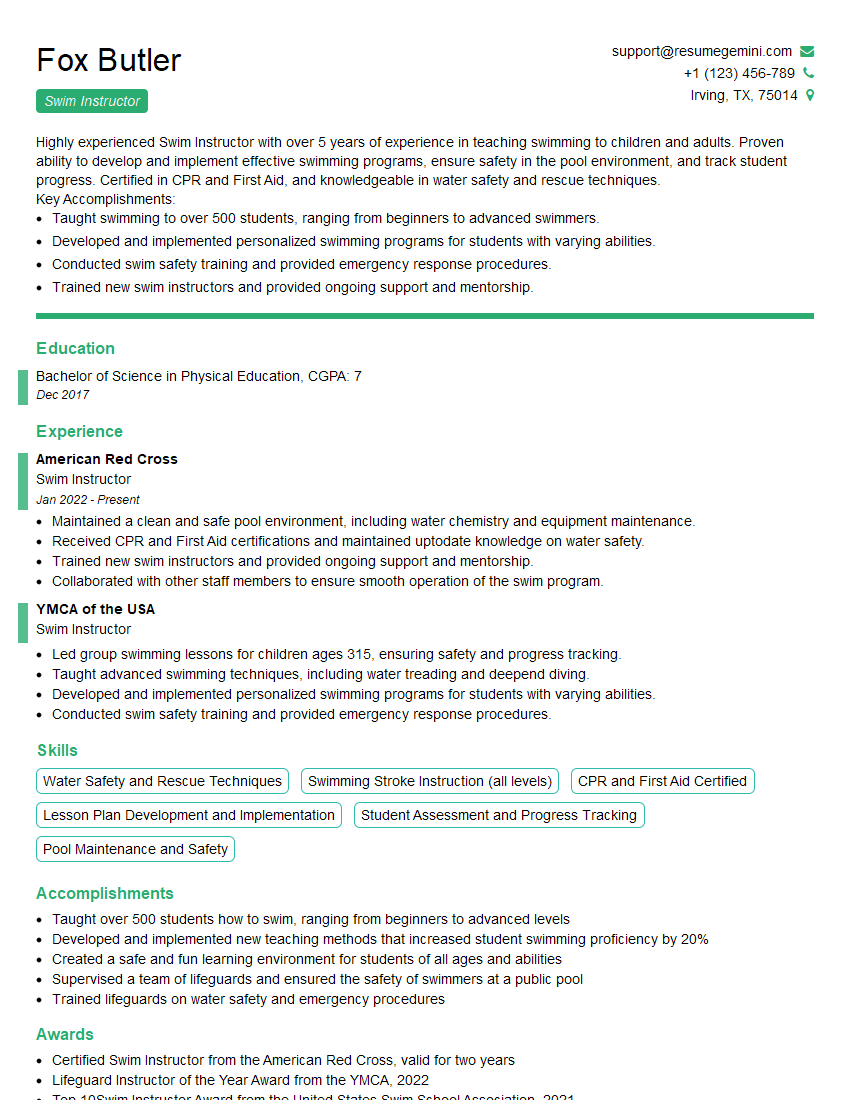
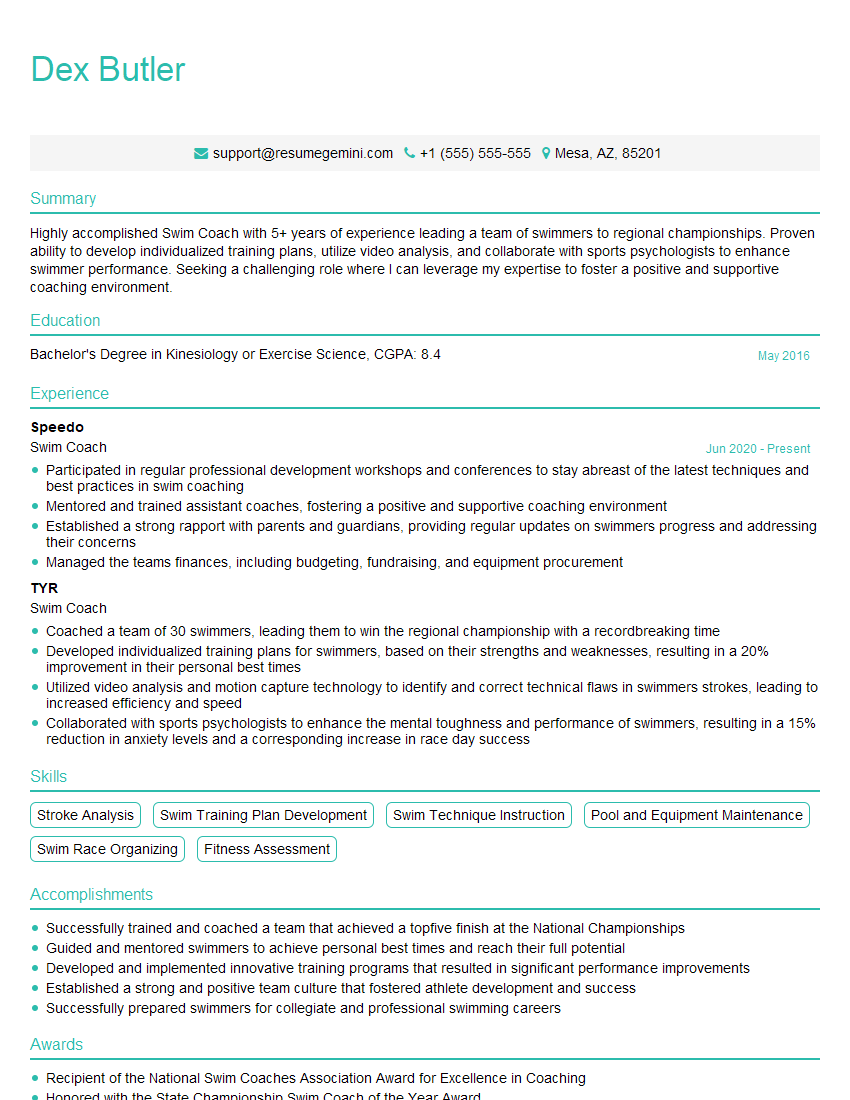
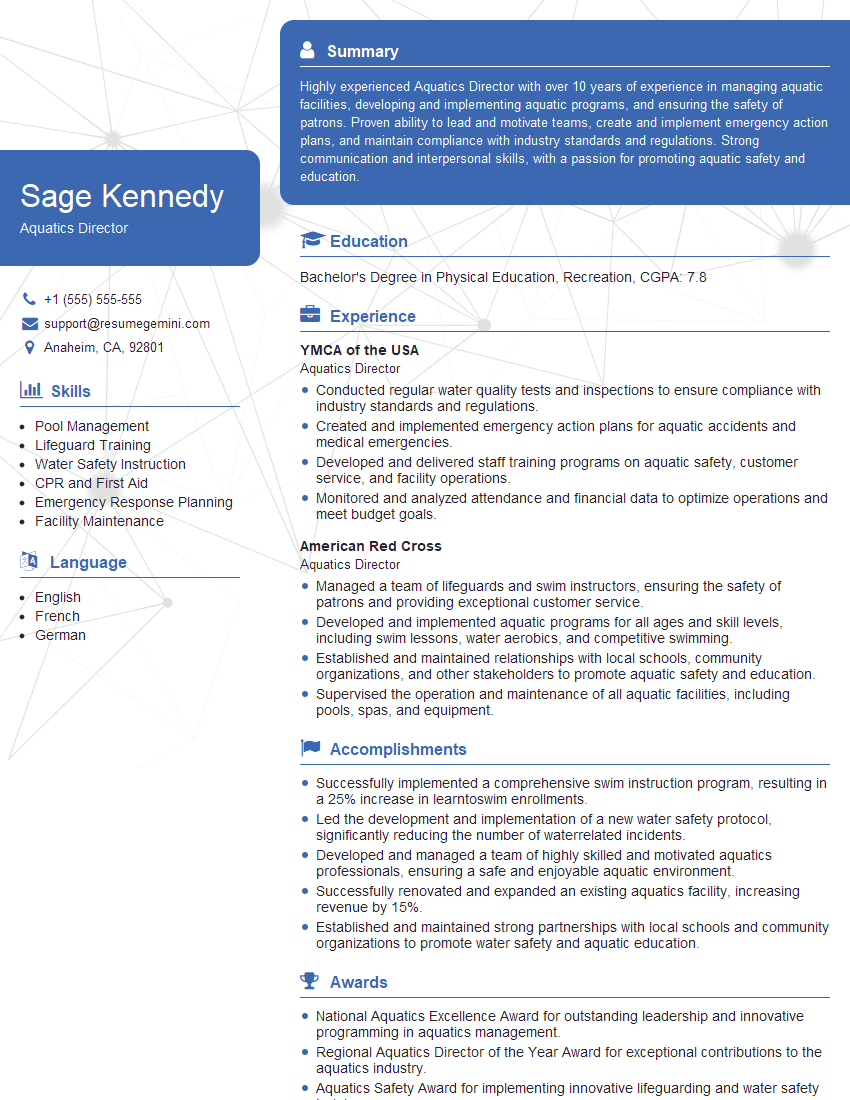
Mastering Swim Training Plan Development is vital for career advancement in the aquatic sports field, opening doors to diverse and rewarding opportunities. A strong resume is crucial for showcasing your expertise. Building an ATS-friendly resume is essential for getting your application noticed by recruiters. We highly recommend using ResumeGemini to craft a professional and impactful resume that highlights your unique skills and experience. ResumeGemini provides examples of resumes tailored to Swim Training Plan Development to help guide you. Invest time in creating a compelling document that effectively communicates your capabilities, and you’ll significantly increase your chances of securing your dream role.
Explore more articles
Users Rating of Our Blogs
Share Your Experience
We value your feedback! Please rate our content and share your thoughts (optional).
What Readers Say About Our Blog
Very informative content, great job.
good