The thought of an interview can be nerve-wracking, but the right preparation can make all the difference. Explore this comprehensive guide to Tactical Intelligence and Data Collection interview questions and gain the confidence you need to showcase your abilities and secure the role.
Questions Asked in Tactical Intelligence and Data Collection Interview
Q 1. Describe your experience with OSINT techniques and tools.
OSINT, or Open-Source Intelligence, involves collecting information from publicly available sources. My experience encompasses a wide range of techniques, from basic web searches to advanced data mining and social media analysis. I’m proficient in using tools like Maltego for link analysis, allowing me to map relationships between individuals, organizations, and events. I also utilize advanced search operators in Google, Bing, and other search engines to refine searches and uncover hidden information. Furthermore, I leverage social media monitoring tools to track conversations, identify key influencers, and analyze trends. My experience includes using tools like TweetDeck and Brand24 for this purpose. I understand the importance of verifying information obtained from OSINT sources, and I employ various techniques to confirm the accuracy and reliability of the data before incorporating it into intelligence reports.
For instance, I once used OSINT techniques to track the movements of a suspected arms trafficker. By analyzing publicly available flight data, social media posts, and news articles, I was able to build a timeline of his activities, identifying key locations and potential associates. This information was crucial in supporting a larger investigation.
Q 2. Explain the difference between HUMINT and SIGINT.
HUMINT, or Human Intelligence, refers to intelligence gathered from human sources, such as informants, spies, or defectors. SIGINT, or Signals Intelligence, involves intercepting and analyzing communications signals, like radio transmissions, phone calls, and internet traffic. The key difference lies in the source of the intelligence: HUMINT relies on people, while SIGINT relies on technology. HUMINT often provides deeper insights into motivations and intentions, whereas SIGINT provides a broader, but often more fragmented picture, depending on the intercepted communications. Think of it like this: HUMINT is like having an inside source who can give you the ‘why’, while SIGINT is like listening in on a conversation and piecing together the ‘what’. Both are vital, and often used in conjunction with each other for a more complete picture.
Q 3. How would you validate the credibility of an intelligence source?
Validating an intelligence source is crucial to ensure the accuracy and reliability of the information obtained. I use a multi-faceted approach that involves several steps. First, I assess the source’s motivation. Is this person providing information for personal gain, out of loyalty, or from a sense of civic duty? Their motivation significantly impacts their credibility. Second, I look for corroboration. Does the information align with other intelligence I’ve collected? Are there multiple, independent sources confirming the same information? Third, I consider the source’s track record. Has this source provided accurate information in the past? Fourth, I assess the source’s access to information. Does the source possess the means to know what they are claiming to know? Fifth, I consider the context and plausibility of the information. Does the information fit the known facts and make logical sense within that context? If there are inconsistencies or gaps, the validity is questionable.
For example, I once had a source who claimed to have insider knowledge about an upcoming terrorist attack. Before acting on this information, I cross-referenced it with other intelligence reports, open-source information, and the source’s past credibility. Only after confirming the information through multiple channels did I deem the information credible enough to be acted upon.
Q 4. Outline your process for analyzing large datasets for actionable intelligence.
Analyzing large datasets for actionable intelligence requires a systematic approach. I typically follow a process that involves several key steps. First, I define the specific intelligence requirements, clearly articulating what questions need to be answered. Second, I clean and preprocess the data, removing duplicates and inconsistencies. Third, I utilize data mining techniques and tools, employing algorithms that identify patterns, correlations, and anomalies within the data. Fourth, I employ visualization tools to represent the data effectively and to identify trends or significant connections that may not be apparent from raw data. I often use tools like Gephi and Tableau to do this. Fifth, I interpret the results, drawing meaningful conclusions and formulating actionable intelligence, focusing on identifying threats, opportunities, and vulnerabilities. Sixth, I validate findings, ensuring they are consistent with other intelligence and real-world events. Seventh, I disseminate the findings through the appropriate channels.
For example, in analyzing social media data related to a civil unrest, I might use sentiment analysis to gauge public opinion, identify key individuals driving the unrest, and forecast potential escalation points. This process allows for proactive risk management.
Q 5. Describe a time you had to analyze conflicting information to reach a conclusion.
During an investigation into a financial fraud case, I encountered conflicting information from two key witnesses. One witness claimed the suspect acted alone, while the other implicated a wider network of collaborators. To resolve this conflict, I carefully analyzed the credibility of each witness, considering their motivations, access to information, and past reliability. I cross-referenced their statements with other evidence, including financial records and communications data. Ultimately, I found inconsistencies in the testimony of the first witness, and corroboration of the second witness’s account from independent sources. This analysis helped me reach the conclusion that a wider network was involved in the fraud.
Q 6. How do you prioritize intelligence requirements in a fast-paced environment?
Prioritizing intelligence requirements in a fast-paced environment requires a clear understanding of the overall strategic goals and the potential impact of different intelligence needs. I utilize a risk-based approach, prioritizing requirements based on their urgency, likelihood, and potential consequences. I use a matrix to evaluate each requirement’s impact and likelihood, which helps with prioritization. Time-sensitive threats receive top priority, followed by those with high potential impact, even if less immediate. This ensures that the most crucial intelligence needs are addressed first, allowing for effective allocation of resources. Regular reassessment is critical in a dynamic environment, allowing for adjustments based on evolving circumstances.
Q 7. Explain your understanding of geospatial intelligence and its applications.
Geospatial intelligence (GEOINT) is intelligence derived from the exploitation and analysis of imagery and geospatial information. This includes satellite imagery, aerial photography, maps, and geographic data. GEOINT is crucial for understanding the physical environment and its impact on various situations, from military operations to disaster response. Applications are diverse; for example, GEOINT can be used to identify potential terrorist training camps, track the movement of troops, or assess the damage caused by a natural disaster. It allows for a visual understanding of the landscape and the placement of actors within it.
In a recent operation, GEOINT was instrumental in identifying a clandestine weapons facility hidden within a dense forest. By analyzing high-resolution satellite imagery, we were able to pinpoint the location of the facility and plan a successful raid.
Q 8. How familiar are you with various data visualization techniques used in intelligence analysis?
Data visualization is crucial in intelligence analysis for transforming raw data into actionable insights. Effective visualization allows analysts to quickly identify patterns, trends, and anomalies that might be missed in a spreadsheet or database. I’m proficient in a range of techniques, including:
- Network graphs: Illustrating relationships between individuals, organizations, or entities, particularly useful in identifying key players or potential threats within a network.
- Geographic Information Systems (GIS) mapping: Pinpointing locations of events, assets, or individuals on a map, showing spatial relationships and patterns. For example, visualizing the locations of terrorist attacks over time to identify potential patterns or hotspots.
- Timeline charts: Representing events chronologically to identify sequences of actions and establish cause-and-effect relationships. A timeline chart could track the movements of a suspected smuggler before an important operation.
- Sankey diagrams: Showing the flow of resources or information between different entities, allowing for the identification of bottlenecks or anomalies. For instance, it can highlight the movement of funds in a suspected money-laundering scheme.
- Heatmaps: Representing data density using color gradients, useful for identifying areas of high concentration. A heatmap might display the frequency of communication between different individuals, revealing key communication hubs.
My experience includes using these techniques with various software packages, including Tableau, ArcGIS, and specialized intelligence analysis platforms. I’m adept at choosing the most appropriate visualization method based on the specific data and analytical goals.
Q 9. Describe your experience with data mining and information extraction.
Data mining and information extraction are fundamental to my work. Data mining involves discovering patterns and insights from large datasets, while information extraction focuses on automatically identifying and extracting specific information from unstructured or semi-structured data. My experience includes:
- Using SQL and other querying languages: To extract specific information from databases, such as identifying individuals matching specific criteria from a database of known associates.
- Employing natural language processing (NLP) techniques: To analyze text data, such as news articles, social media posts, or intercepted communications, for key information and sentiment analysis. This is particularly important for open-source intelligence (OSINT) gathering.
- Applying machine learning algorithms: To automatically identify patterns and anomalies in large datasets, such as identifying suspicious financial transactions based on historical data.
For example, in a recent project, I used NLP techniques to analyze thousands of social media posts to identify potential threats to a critical infrastructure asset. The algorithm extracted keywords and sentiment, highlighting potential areas of concern that required further investigation.
Q 10. What are some ethical considerations in the collection and analysis of intelligence?
Ethical considerations are paramount in intelligence collection and analysis. They guide our actions and ensure we operate within legal and moral boundaries. Key ethical considerations include:
- Privacy: Respecting the privacy rights of individuals and ensuring that data collection and analysis methods comply with relevant laws and regulations. We must have a legal basis for accessing and processing personal information.
- Proportionality: Ensuring that the methods used are proportionate to the threat, and that the intrusion on privacy is justified by the need to protect national security or other legitimate interests.
- Accountability: Maintaining clear records of all data collection and analysis activities, and ensuring that individuals have the right to access and challenge information about themselves.
- Transparency: Being open and honest about the methods used and the information gathered, to the extent that national security permits. This builds trust and promotes accountability.
- Bias mitigation: Actively identifying and mitigating potential biases in data collection, analysis, and interpretation.
A failure to consider these ethical aspects can lead to significant legal, reputational, and ethical ramifications.
Q 11. How do you handle sensitive information and maintain confidentiality?
Handling sensitive information requires strict adherence to security protocols and best practices. My experience includes:
- Secure data handling: Utilizing encrypted systems and secure storage for all sensitive information. This includes password management, access control mechanisms, and secure data transfer protocols.
- Need-to-know basis: Limiting access to sensitive information only to those individuals who require it for their roles. This significantly reduces the risk of unauthorized disclosure.
- Data sanitization: Ensuring the complete removal of sensitive information from any discarded storage media or equipment.
- Compliance with security policies and regulations: Adhering to all applicable security policies and regulations, which includes regular security awareness training.
I treat all classified information with the utmost care and follow stringent procedures to ensure its confidentiality. I am accustomed to working within secure facilities and operating under strict guidelines.
Q 12. Explain your knowledge of different intelligence gathering methodologies.
Intelligence gathering employs a variety of methodologies, each with its strengths and weaknesses. My knowledge encompasses:
- Human Intelligence (HUMINT): Gathering information from human sources, such as informants, spies, and defectors. This requires strong interpersonal skills, relationship building, and the ability to assess the credibility of information provided.
- Signals Intelligence (SIGINT): Intercepting and analyzing communications signals, such as radio transmissions, satellite communications, and internet traffic. This involves technical expertise in signal processing and decryption.
- Imagery Intelligence (IMINT): Gathering information from imagery sources, such as satellite imagery, aerial photography, and video surveillance. This involves analyzing imagery for relevant information and using geographic information systems.
- Open-Source Intelligence (OSINT): Gathering information from publicly available sources, such as news reports, social media, and academic publications. This requires careful evaluation of the credibility and bias of different sources.
- Measurement and Signature Intelligence (MASINT): Gathering information from various technical sensors, such as radar, seismic, and acoustic sensors. This requires significant technical knowledge and expertise in sensor technologies.
The specific methodology used often depends on the nature of the target, the available resources, and the urgency of the situation.
Q 13. How do you assess the risk associated with different intelligence sources?
Assessing the risk associated with different intelligence sources is crucial for determining the reliability and validity of information. This involves considering several factors:
- Source credibility: Evaluating the track record, motivations, and potential biases of the source. A known unreliable source requires greater scrutiny.
- Data validity: Determining the accuracy and completeness of the information, potentially by corroborating it with information from other sources.
- Source vulnerability: Assessing the risk of compromise or manipulation of the source. A source operating in a hostile environment may be more vulnerable to detection or coercion.
- Information sensitivity: Considering the potential consequences of unauthorized disclosure of the information.
- Data provenance: Tracing the source of information to understand its handling, manipulation, or any potential corruption.
A risk assessment matrix, often customized for the specific context, can facilitate a structured evaluation and inform decisions regarding the use and weighting of different sources.
Q 14. How would you identify and mitigate biases in your analysis?
Bias in intelligence analysis can lead to inaccurate conclusions and flawed decision-making. Therefore, identifying and mitigating bias is critical. My approach involves:
- Awareness of cognitive biases: Recognizing common cognitive biases, such as confirmation bias (favoring information that confirms pre-existing beliefs) and anchoring bias (over-reliance on initial information).
- Multiple perspectives: Seeking input from diverse team members to challenge assumptions and identify potential blind spots. A team with varied backgrounds and experiences reduces the likelihood of groupthink.
- Data triangulation: Corroborating information from multiple independent sources to validate findings and identify inconsistencies. This approach increases confidence in the conclusions drawn from the analysis.
- Structured analytical techniques: Employing structured analytical techniques, such as the Analysis of Competing Hypotheses (ACH), to systematically evaluate alternative explanations and challenge assumptions.
- Regular self-reflection: Critically reviewing one’s own analytical process and biases, and actively working to reduce their impact.
By actively addressing these issues, I strive to ensure the objectivity and reliability of my analyses.
Q 15. Describe your experience with intelligence reporting and briefings.
My experience in intelligence reporting and briefings spans over [Number] years, encompassing diverse operational environments and threat landscapes. I’ve crafted numerous reports, from concise executive summaries to detailed analytical assessments, consistently ensuring accuracy, timeliness, and clarity. I’m adept at tailoring my communication style to the audience, whether presenting to senior leadership, technical specialists, or field operatives. For example, during my time at [Previous Organization], I led the reporting effort for a significant transnational crime investigation. We faced the challenge of synthesizing vast amounts of data from multiple sources, including surveillance footage, financial records, and human intelligence. My focus was on presenting the information in a clear, concise, and actionable manner, highlighting key findings and recommendations for next steps. The resulting briefings were instrumental in securing critical resources and ultimately leading to several successful arrests.
I’ve also had extensive experience in developing and delivering briefings, employing various visualization techniques to enhance understanding and retention. This includes using charts, maps, timelines, and interactive presentations to illustrate complex information. The goal is always to empower decision-makers with the information they need to act decisively and effectively.
Career Expert Tips:
- Ace those interviews! Prepare effectively by reviewing the Top 50 Most Common Interview Questions on ResumeGemini.
- Navigate your job search with confidence! Explore a wide range of Career Tips on ResumeGemini. Learn about common challenges and recommendations to overcome them.
- Craft the perfect resume! Master the Art of Resume Writing with ResumeGemini’s guide. Showcase your unique qualifications and achievements effectively.
- Don’t miss out on holiday savings! Build your dream resume with ResumeGemini’s ATS optimized templates.
Q 16. How do you stay current with the latest trends in intelligence technology and analysis?
Staying current in the dynamic field of intelligence technology and analysis requires a multi-faceted approach. I actively participate in professional development opportunities, attending conferences like [Conference Name] and [Conference Name], and engaging with online communities and forums dedicated to intelligence analysis. I regularly subscribe to relevant journals and publications such as [Publication Name] and [Publication Name], and maintain an active network of contacts within the intelligence community. Furthermore, I dedicate time to exploring new technologies and methodologies, often experimenting with open-source intelligence (OSINT) tools and techniques, such as analyzing social media trends and leveraging geospatial analysis software. Keeping abreast of advancements in artificial intelligence and machine learning, particularly their applications in predictive policing and threat forecasting, is also a key priority. For instance, recently I spent time researching the applications of natural language processing (NLP) in analyzing large volumes of unstructured text data, a skill which has proven invaluable in improving the efficiency and accuracy of my analysis.
Q 17. How do you manage and organize large volumes of intelligence data?
Managing and organizing large volumes of intelligence data requires a robust and systematic approach. I rely heavily on database management systems (DBMS) and data visualization tools to effectively structure and analyze information. My process generally involves several steps: First, I categorize and tag data based on its source, relevance, and type (e.g., HUMINT, SIGINT, OSINT). Then, I use relational databases, such as [Database System Name], or NoSQL databases like [Database System Name], depending on the nature of the data. These databases allow for efficient storage and retrieval of large datasets. For complex datasets, I utilize data mining and machine learning algorithms to identify patterns and anomalies. Data visualization is crucial for communicating insights; I use tools like [Visualization Tool Name] to create clear and concise visualizations that easily communicate findings to different audiences. For example, in one project I utilized a combination of a relational database and a geospatial visualization tool to map the movements of a suspected criminal network across multiple countries, revealing previously unseen patterns in their activities.
Q 18. Describe your experience working with different intelligence databases and systems.
My experience encompasses a broad range of intelligence databases and systems, including classified and unclassified platforms. I’m proficient in using [Database System Name] and [Database System Name] for structured data management, and familiar with various OSINT tools and platforms such as [Tool Name] and [Tool Name]. I understand the nuances of different data formats and am capable of integrating data from disparate sources, ensuring data integrity and accuracy. For example, during a counterterrorism operation, I successfully integrated data from a classified intelligence database with open-source information to corroborate key intelligence, which greatly enhanced the accuracy of our threat assessment.
Working with these systems also requires a keen understanding of data security and privacy protocols. I always adhere to strict guidelines to ensure the confidentiality and integrity of sensitive information.
Q 19. What is your experience with threat modeling and risk assessment?
Threat modeling and risk assessment are integral to my work. My approach is methodical, involving a combination of qualitative and quantitative analysis. First, I identify potential threats based on available intelligence and historical data. Then, I assess the likelihood and potential impact of each threat. I utilize various frameworks and methodologies, such as the STRIDE threat modeling approach, to systematically analyze vulnerabilities. Next, I develop mitigation strategies to reduce the likelihood and impact of identified threats, prioritizing based on risk levels. Finally, I regularly monitor and update the threat model based on new information and changes in the operational environment. For instance, in a recent project involving cybersecurity threat assessment, I employed a combination of vulnerability scanning tools and penetration testing to identify weaknesses in a client’s network infrastructure and developed comprehensive mitigation strategies to enhance their security posture.
Q 20. How would you respond to a critical intelligence failure?
Responding to a critical intelligence failure requires a calm, systematic approach. My first step would be to initiate a thorough after-action review (AAR) to identify the root causes of the failure. This includes reviewing all aspects of the intelligence process, from data collection and analysis to reporting and dissemination. The AAR would involve input from all relevant personnel. Based on the AAR findings, I would develop corrective actions to prevent future occurrences, including improvements to data collection methods, analytical techniques, and communication protocols. Transparency and accountability are crucial; I’d communicate the findings and corrective actions to relevant stakeholders, ensuring appropriate lessons learned are documented and disseminated throughout the organization. This process should focus not on assigning blame, but on identifying systemic weaknesses that need to be addressed.
Transparency and communication with relevant stakeholders are crucial throughout this process. The aim is to learn from the mistake and improve future intelligence operations.
Q 21. Describe your experience using analytical software or tools.
I’m proficient in using a variety of analytical software and tools, including [Software Name], [Software Name], and [Software Name]. These tools enable me to perform tasks such as data mining, statistical analysis, network analysis, and geospatial analysis. I’m also skilled in using programming languages like Python and R for data manipulation and analysis, allowing me to customize analytical processes and develop bespoke solutions. For example, I used Python to create a custom script to automate the extraction and analysis of data from a large, unstructured dataset. This automation greatly reduced the time required for analysis and increased the accuracy of our findings. Understanding the strengths and limitations of each tool is crucial, allowing for the selection of the most appropriate tool for a given task.
Q 22. What is your understanding of the intelligence cycle?
The intelligence cycle is a cyclical process used by intelligence agencies to collect, analyze, and disseminate information. Think of it as a continuous loop ensuring effective intelligence operations. It typically consists of five key phases:
- Planning and Direction: Identifying intelligence needs, setting priorities, and allocating resources. This involves understanding the overall strategic goals and defining specific intelligence requirements.
- Collection: Gathering raw information from various sources, such as human intelligence (HUMINT), signals intelligence (SIGINT), open-source intelligence (OSINT), and geospatial intelligence (GEOINT). This is where the bulk of the data acquisition happens.
- Processing: Raw data is transformed into usable intelligence. This involves cleaning, organizing, and analyzing the collected information. Think of this as refining a rough gem into a polished stone.
- Analysis and Production: Interpreting processed information to develop intelligence assessments, conclusions, and actionable insights. This phase involves drawing meaningful conclusions from the data and making sense of the puzzle.
- Dissemination: Sharing intelligence products with relevant decision-makers. This step ensures that the analyzed intelligence reaches the right audience at the right time to inform decisions.
Effective management of each phase is crucial for the success of the overall intelligence effort. A failure in one phase can compromise the entire cycle.
Q 23. How do you incorporate different types of intelligence to form a complete picture?
Forming a complete picture requires integrating different intelligence types – a process called ‘fusion.’ Imagine trying to solve a puzzle with only one type of piece; you’d only get part of the picture. By combining HUMINT (information from human sources), SIGINT (signals intelligence like intercepted communications), OSINT (open-source information from the internet), GEOINT (geospatial data from satellites and maps), and others, we create a more holistic understanding.
For example, let’s say we’re investigating a potential terrorist threat. SIGINT might reveal coded communications, hinting at an impending attack. HUMINT from an informant could provide details on the group’s planning and logistics. GEOINT could pinpoint their potential target location through satellite imagery. By fusing these various sources, we build a much clearer, more accurate, and actionable picture of the threat than any single source could provide. This fusion process involves careful cross-referencing, verification, and validation of data from multiple sources to minimize bias and increase confidence in the conclusions.
Q 24. Describe your experience with social network analysis in intelligence gathering.
Social network analysis (SNA) is an invaluable tool in intelligence gathering. It allows us to map relationships and identify key players within a network of individuals or organizations. I’ve used SNA to analyze online forums, social media platforms, and communication networks to uncover hidden connections and patterns.
For instance, in a counter-terrorism investigation, SNA can help identify the leaders and key members of a terrorist organization by examining their interactions and communication patterns on encrypted platforms. By visualizing these relationships as a network graph, we can identify influential figures, potential collaborators, and even predict future actions based on observed connections. Software like Gephi or specialized intelligence analysis platforms are frequently used for this purpose.
My experience includes developing SNA models to identify influential spreaders of disinformation campaigns and mapping the communication networks of criminal organizations to understand their operational structures and leadership.
Q 25. How would you approach the analysis of unstructured data, such as social media posts?
Analyzing unstructured data like social media posts requires a multi-faceted approach. Simple keyword searches are insufficient; a more sophisticated strategy is needed.
- Natural Language Processing (NLP): This involves using algorithms to understand the meaning and context of text data. Sentiment analysis, topic modeling, and named entity recognition are key NLP techniques that help identify emotional tone, recurring themes, and important people or places mentioned in social media posts.
- Machine Learning (ML): ML algorithms can be trained to identify patterns and anomalies in large datasets. This could help detect unusual activity or suspicious communication patterns that might indicate criminal behavior or a developing crisis.
- Data Visualization: Visualizing data using charts, graphs, and maps is crucial for identifying trends and relationships that might be missed when examining raw data. This allows for quicker identification of patterns and clusters.
- Human Review: While algorithms are helpful, human review is essential for interpreting nuanced information and adding contextual understanding. Algorithms can highlight suspicious content but a human analyst is needed to determine the significance and reliability of the findings.
Think of it as a detective’s work, where algorithms provide clues, but the detective’s expertise is needed to put those clues together and solve the case.
Q 26. How familiar are you with different encryption methods and techniques?
I am familiar with a wide range of encryption methods and techniques, both symmetric and asymmetric. Symmetric encryption uses the same key for both encryption and decryption (like AES), while asymmetric encryption uses separate keys (like RSA). My understanding encompasses various hashing algorithms (like SHA-256) used for data integrity and digital signatures.
In my work, understanding encryption is critical for several reasons. Firstly, it helps us understand how adversaries protect their communications. We need to be aware of common encryption methods to develop effective countermeasures. Secondly, we often handle sensitive data that requires robust encryption to protect it from unauthorized access. Finally, analyzing encrypted data can be a significant challenge, requiring specialized tools and expertise to break through security measures (when legally authorized and ethically appropriate).
Q 27. How would you determine the credibility of an anonymous source?
Determining the credibility of an anonymous source is a crucial yet challenging aspect of intelligence work. It requires a thorough assessment using multiple lines of corroboration. We can’t rely on a single source of information, especially if it’s anonymous.
- Source Track Record: If the source has provided information in the past, what was its accuracy and reliability? Past performance is a good indicator of future reliability.
- Method of Communication: How did the source communicate? The method used could reveal more about the source’s identity, motives, and level of risk-aversion.
- Information Corroboration: Does the information align with intelligence from other sources? Confirmation from independent sources significantly increases credibility.
- Motivation Analysis: What are the source’s potential motives for providing information? Are they seeking personal gain, revenge, or genuinely concerned about the threat? Understanding motives helps assess the bias in the information.
- Information Consistency: Does the information presented remain consistent over time, across multiple communications? Inconsistent information can be a sign of deception or misinformation.
Essentially, we build a case for the credibility of the information, not simply accepting it at face value. Each piece of information needs to be critically examined, compared, and cross-referenced to build a comprehensive picture of the reliability of the source and their information.
Key Topics to Learn for Tactical Intelligence and Data Collection Interview
- Intelligence Cycle: Understand the complete intelligence cycle – from planning and collection to analysis, dissemination, and feedback. Consider practical applications in diverse operational environments.
- Data Collection Methods: Explore various methods, including open-source intelligence (OSINT), human intelligence (HUMINT), signals intelligence (SIGINT), geospatial intelligence (GEOINT), and measurement and signature intelligence (MASINT). Analyze the strengths and limitations of each method and their appropriate applications.
- Data Analysis and Interpretation: Master techniques for analyzing large datasets, identifying patterns and anomalies, and drawing accurate conclusions. Practice interpreting data from multiple sources to form a cohesive intelligence picture.
- Threat Assessment and Risk Management: Learn to evaluate potential threats, assess risks, and develop effective mitigation strategies based on collected intelligence. Consider real-world scenarios and problem-solving approaches.
- Information Security and Handling: Understand protocols for handling sensitive information, ensuring data integrity and confidentiality, and complying with relevant regulations and security clearances.
- Technology and Tools: Familiarize yourself with commonly used software and tools for data collection, analysis, and visualization. Highlight your proficiency in relevant technologies during the interview.
- Ethical Considerations: Demonstrate a strong understanding of ethical implications related to intelligence gathering and data analysis, and the importance of adhering to legal and moral guidelines.
- Communication and Reporting: Practice concise and effective communication of intelligence findings to diverse audiences, tailoring your presentation to the needs of the recipient. Develop strong written and verbal reporting skills.
Next Steps
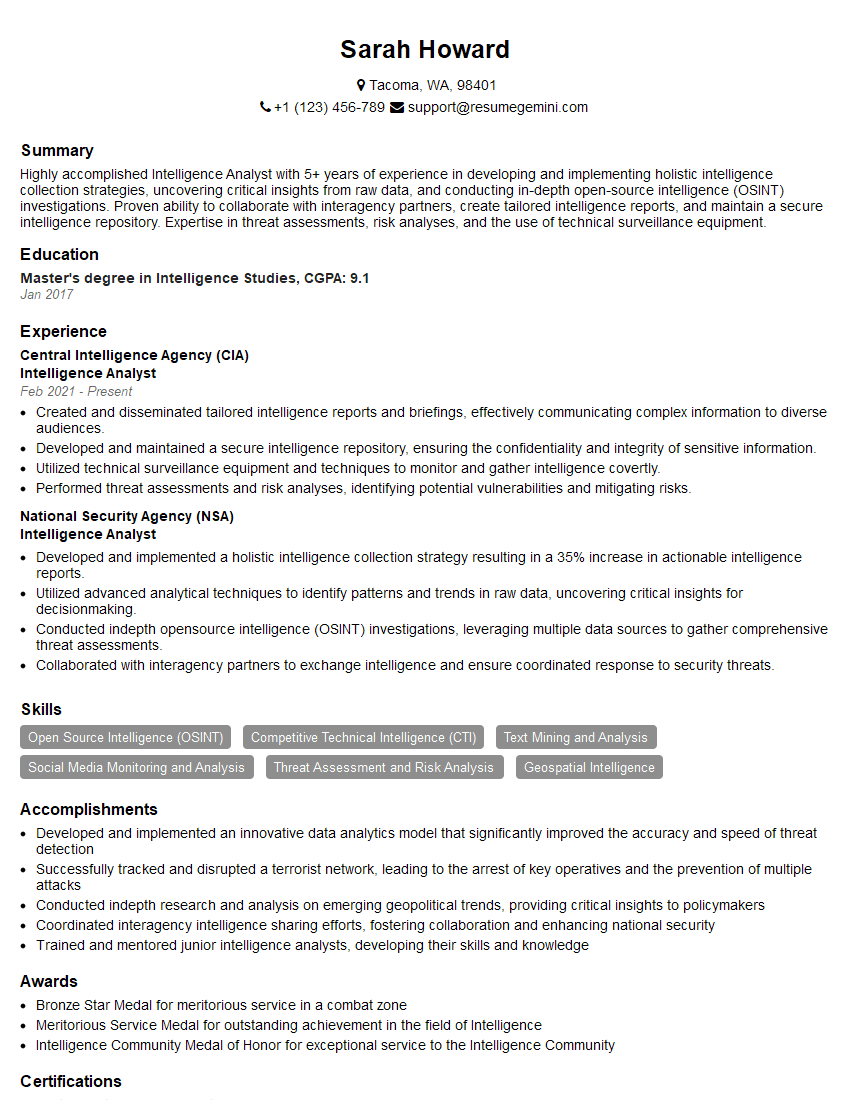
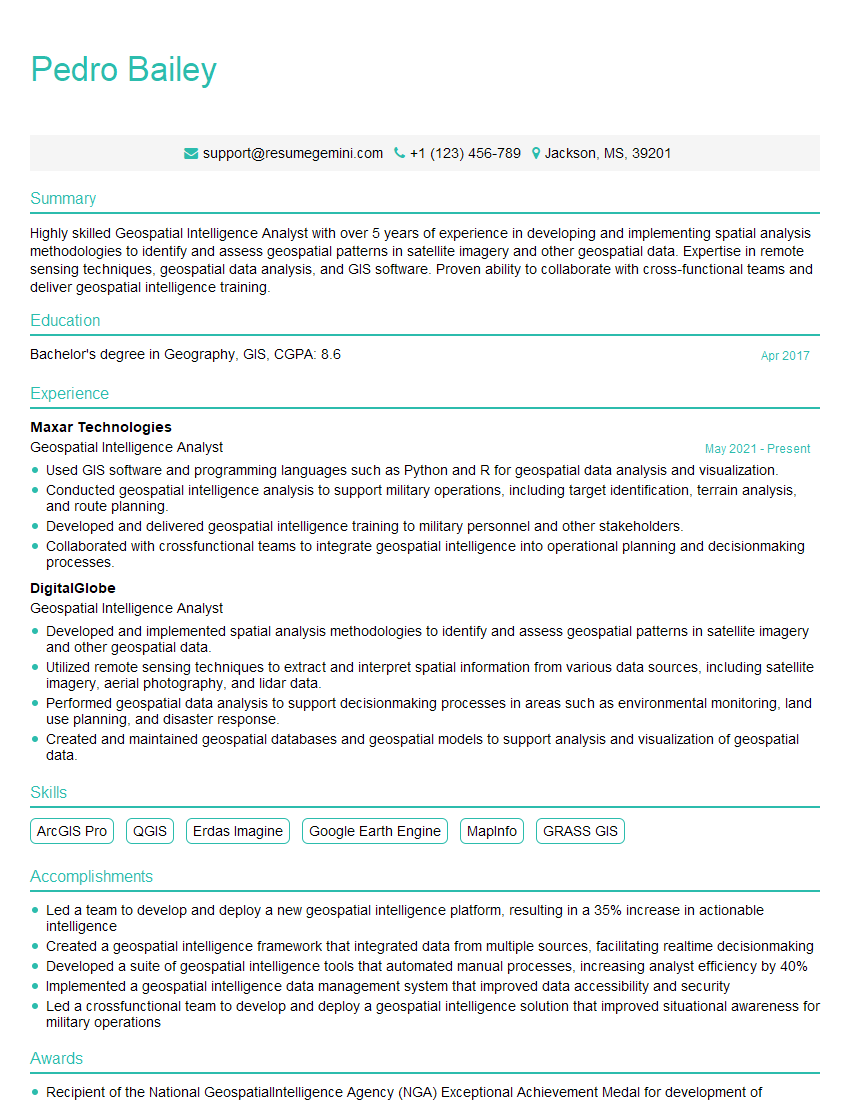
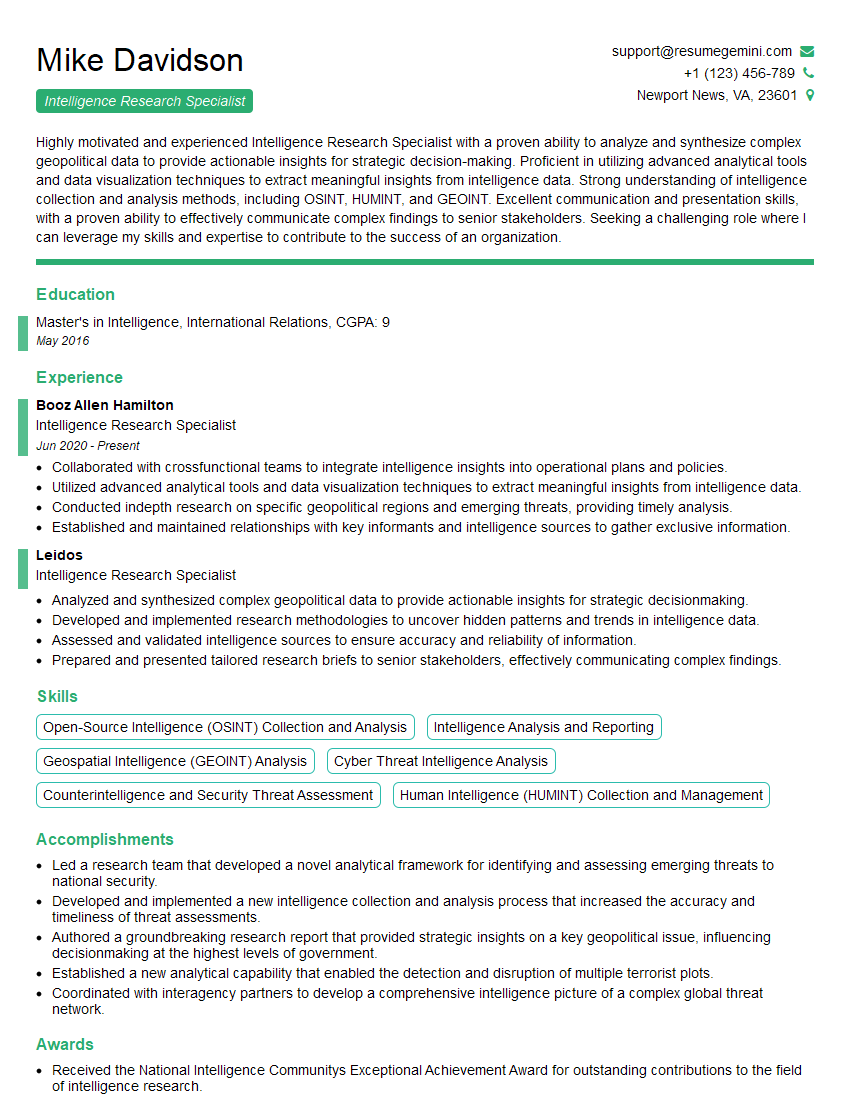
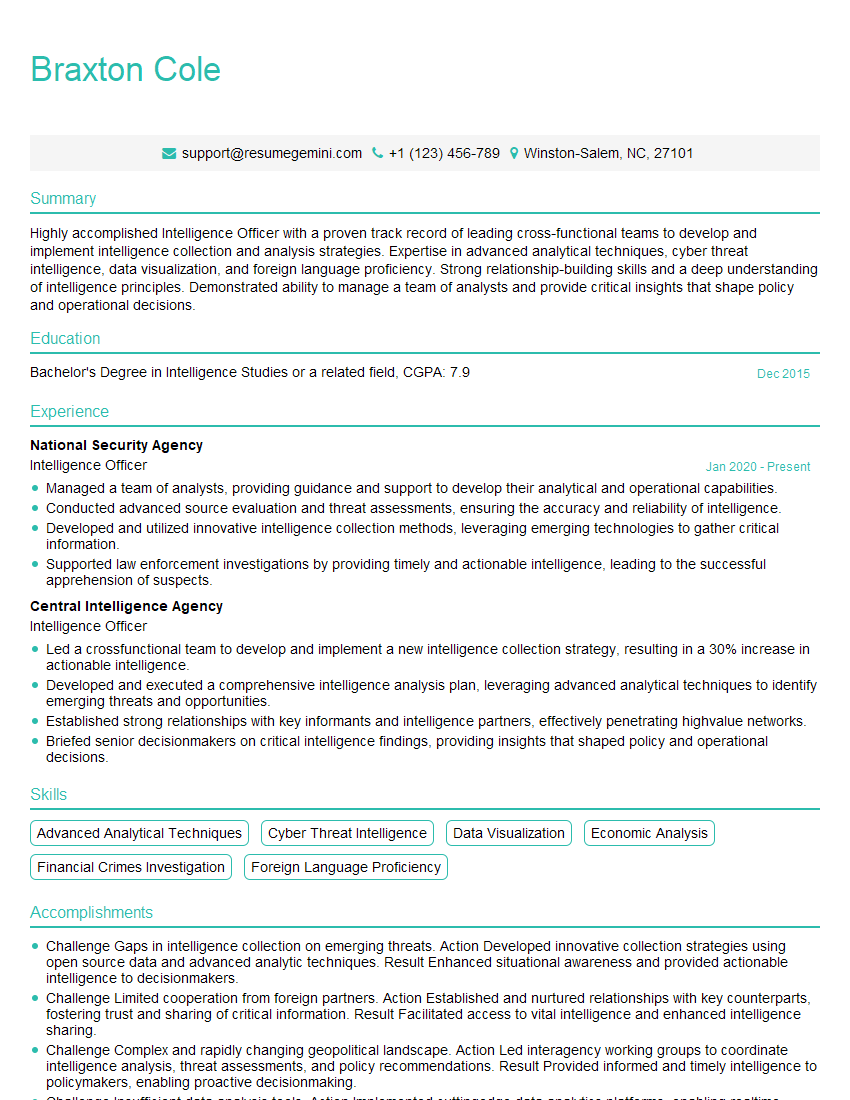
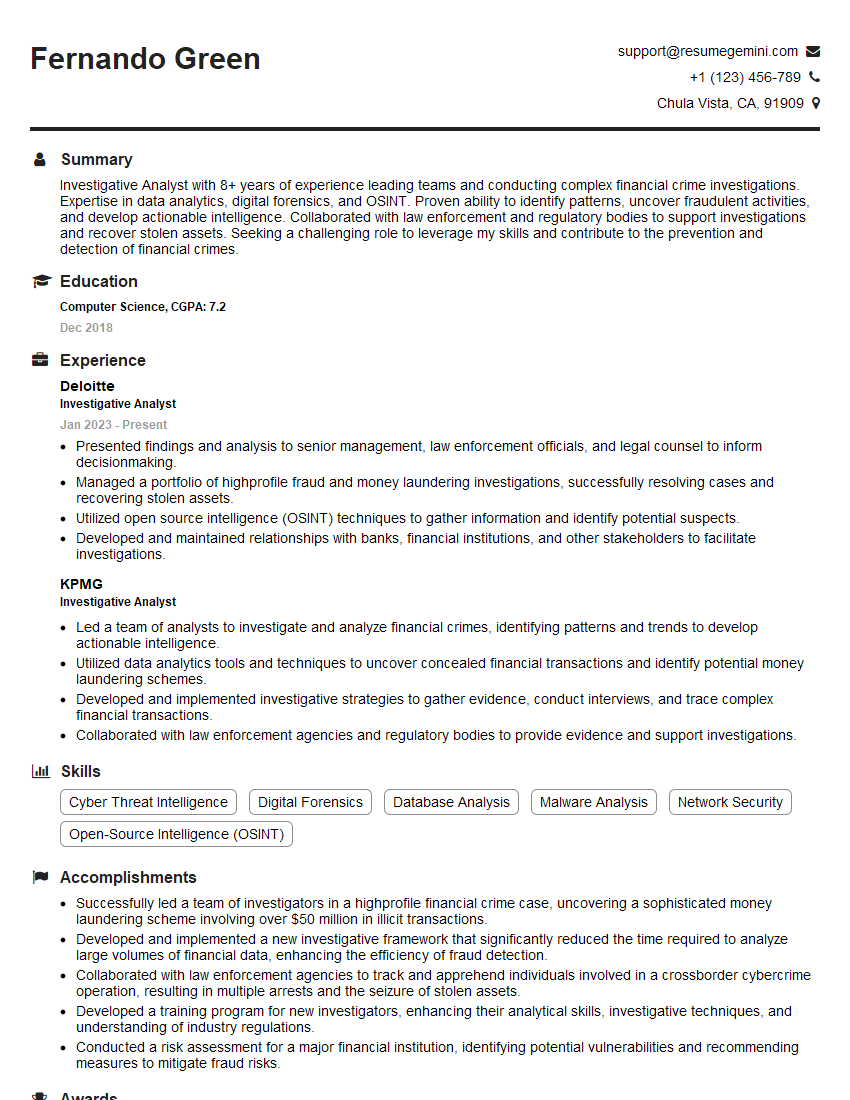
Mastering Tactical Intelligence and Data Collection opens doors to exciting and impactful careers, offering opportunities for professional growth and significant contributions. A strong resume is crucial for showcasing your skills and experience to potential employers. Building an ATS-friendly resume increases your chances of getting noticed by recruiters. We highly recommend using ResumeGemini to craft a compelling and effective resume that highlights your unique qualifications. ResumeGemini provides examples of resumes tailored to Tactical Intelligence and Data Collection to help you get started. Take the next step towards your dream career – build your best resume with ResumeGemini today!
Explore more articles
Users Rating of Our Blogs
Share Your Experience
We value your feedback! Please rate our content and share your thoughts (optional).
What Readers Say About Our Blog
Very informative content, great job.
good