Cracking a skill-specific interview, like one for Tank Car Loading, requires understanding the nuances of the role. In this blog, we present the questions you’re most likely to encounter, along with insights into how to answer them effectively. Let’s ensure you’re ready to make a strong impression.
Questions Asked in Tank Car Loading Interview
Q 1. Describe the different types of tank cars used for various products.
Tank cars are specialized railcars designed to transport liquids and gases in bulk. The type of tank car used depends heavily on the product’s properties – its corrosiveness, flammability, toxicity, and viscosity. Here are some common types:
- Pressure Tank Cars: These are used for transporting liquefied gases and volatile liquids that require pressurization to remain in liquid form. Think propane or butane – they need to be kept under pressure to prevent vaporization.
- Non-Pressure Tank Cars: These are designed for liquids that are relatively non-volatile and can be transported at atmospheric pressure. Examples include many petroleum products like crude oil or gasoline.
- Insulated Tank Cars: Used for products that need to maintain a specific temperature during transport, like cryogenic liquids (extremely low temperatures) or those sensitive to heat. Imagine transporting liquid nitrogen – maintaining its extremely cold temperature is critical.
- Specialized Tank Cars: There are many specialized designs for handling corrosive materials (stainless steel or special alloy construction), toxic substances (with enhanced safety features), or those needing specific internal coatings to prevent contamination.
The choice of tank car is crucial for safety and regulatory compliance. A mismatch could lead to product loss, environmental damage, or even catastrophic accidents.
Q 2. Explain the process of verifying the integrity of a tank car before loading.
Verifying tank car integrity is paramount before loading. This process involves a thorough visual inspection and often additional testing, depending on regulations and the product being transported. Here’s a typical sequence:
- Visual Inspection: Checking for any external damage like dents, leaks, corrosion, or missing components. This also includes examining the valves, fittings, and safety devices.
- Pressure Testing (for pressure cars): This involves pressurizing the tank car to verify its structural integrity and identify any leaks. The pressure used depends on the car’s design and the regulations for the product being loaded.
- Leak Detection: Specialized equipment may be used to detect even small leaks that might be missed during a visual inspection. This is especially crucial for hazardous materials.
- Documentation Review: Checking the tank car’s history, including previous inspections, repairs, and certifications. This ensures the car is fit for service.
Failure to adequately verify integrity could result in spills, environmental contamination, and safety hazards for personnel. It’s a critical step that is often legally mandated.
Q 3. What safety precautions are essential before commencing tank car loading?
Safety is the utmost priority during tank car loading. The following precautions are always implemented:
- Proper Personal Protective Equipment (PPE): This includes appropriate clothing, gloves, safety glasses, and respirators, depending on the product being handled.
- Grounding and Bonding: Preventing static electricity buildup, which is crucial for flammable materials, by grounding the tank car and the loading equipment to prevent sparks.
- Emergency Shut-off Systems: Ensuring readily available emergency shut-off valves and procedures are in place to quickly stop the loading process in case of an emergency.
- Ventilation: Adequate ventilation is essential to prevent the buildup of harmful vapors, especially in enclosed loading areas.
- Fire Prevention Measures: Having fire extinguishers and other fire-suppression equipment readily accessible.
- Clear Communication: Clear communication channels between loading personnel and other workers on site is critical.
- Lockout/Tagout Procedures: Preventing accidental activation of equipment during maintenance or repair.
Ignoring these precautions significantly increases the risk of accidents, injuries, and environmental damage. Safety procedures are meticulously followed and documented.
Q 4. How do you ensure accurate measurement and control of the loaded product?
Accurate measurement and control are essential for efficient and safe loading. This typically involves:
- Automated Metering Systems: Modern loading facilities often use automated systems to precisely measure and control the amount of product being loaded. These systems use flow meters and other sensors to monitor and record the loading process.
- Manual Gauging (for older systems): While less precise, manual gauging, which uses dipsticks or other methods to measure liquid levels, is sometimes used for verification.
- Overfill Prevention Systems: These systems automatically shut off the loading process when the tank car reaches its maximum capacity, preventing overfilling and potential spills.
- Data Logging and Reporting: All loading data, including the volume loaded, date, time, and other relevant parameters, are carefully recorded and documented for traceability and regulatory compliance.
Inaccurate measurements can lead to shortages, overfills, or even safety hazards. The emphasis is on precision and data integrity at every step.
Q 5. What are the procedures for handling different product viscosities?
Handling different product viscosities requires adjustments to the loading process to ensure efficient and safe transfer. High-viscosity products (thick liquids) flow slower than low-viscosity products (thin liquids). Here’s how we handle the variations:
- High-Viscosity Products: These often require higher pressures and potentially heating to reduce viscosity and facilitate flow. We utilize specialized pumps and heating systems designed for high-viscosity materials.
- Low-Viscosity Products: These are typically easier to load, but precautions are still necessary to prevent excessive flow rates which could cause turbulence and potential problems.
- Pump Selection: The type of pump used is crucial and depends on the viscosity. Positive displacement pumps are often preferred for high-viscosity fluids, while centrifugal pumps are suitable for low-viscosity fluids. The pump speed and pressure must be carefully controlled.
Mismatched pumping systems and strategies for different viscosities can lead to inefficient loading, equipment damage, or even product spoilage.
Q 6. Explain the role of vapor recovery systems in tank car loading.
Vapor recovery systems are critical in tank car loading, particularly for volatile liquids. These systems capture the vapors released during the loading process, preventing their release into the atmosphere. This is essential for environmental protection and worker safety.
The captured vapors are often recycled back into the storage tank, reducing product loss and emissions. The systems typically involve a vapor collection line connected to the tank car and a vapor processing unit that condenses or treats the vapors.
Implementing robust vapor recovery systems is crucial for compliance with environmental regulations and for reducing the environmental impact of tank car loading operations. It’s environmentally responsible and often mandated by law.
Q 7. Describe your experience with different loading methods (bottom loading, top loading).
I have extensive experience with both bottom loading and top loading methods. Bottom loading is generally preferred for its safety advantages, as it minimizes vapor release and reduces the risk of spills. Top loading is sometimes used for specific products or situations, but it carries higher safety risks.
- Bottom Loading: The product is pumped into the bottom of the tank car through a submerged pipe. This minimizes vapor release and splashing, resulting in a safer and more efficient loading process. It’s the standard for many hazardous materials.
- Top Loading: The product is loaded through a top opening on the tank car. While simpler in setup, it can lead to greater vapor release and a higher risk of spills if not carefully managed. It’s generally used for less volatile products or in situations where bottom loading is impractical.
My experience includes selecting the appropriate method based on the product properties, safety considerations, and site infrastructure. I have overseen numerous loading operations using both methods and am proficient in the safety procedures and equipment associated with each.
Q 8. How do you manage potential overfilling or underfilling issues?
Preventing overfilling or underfilling during tank car loading is crucial for safety and compliance. It involves a multi-pronged approach focusing on precise measurement and diligent monitoring.
We utilize calibrated loading arms and automated systems with digital displays showing the exact volume loaded. These systems are regularly checked and calibrated to ensure accuracy. Before loading, we verify the tank car’s capacity and the order details to confirm the correct quantity.
Visual checks are also essential; we observe the liquid level in the tank car through sight glasses to confirm the loading progress. For products with high expansion rates due to temperature changes, we implement compensation strategies to account for volume fluctuations, thereby preventing both overfilling and underfilling. In case of any discrepancy, the loading process is immediately stopped, and the issue is investigated thoroughly before resuming. For example, if the automated system malfunctions, we switch to manual measurement methods and double-check the readings. This process minimizes errors and guarantees the safe and accurate loading of each tank car.
Q 9. What are the regulations and standards you adhere to during tank car loading (e.g., DOT, OSHA)?
Tank car loading operations are strictly regulated to ensure safety and environmental protection. We adhere to several key regulations, including those from the Department of Transportation (DOT), Occupational Safety and Health Administration (OSHA), and Environmental Protection Agency (EPA). DOT regulations, specifically 49 CFR, dictate the safe handling, storage, and transportation of hazardous materials. This includes specific requirements for tank car design, testing, and loading procedures. OSHA standards focus on workplace safety, requiring appropriate personal protective equipment (PPE), emergency response plans, and employee training. EPA regulations address potential environmental impacts, dictating spill prevention and response procedures, waste disposal, and the proper handling of hazardous materials. We maintain meticulous records of our compliance with all relevant regulations and participate in regular audits to ensure our procedures are up-to-date and effective.
Q 10. How do you address emergencies or spills during tank car loading?
Emergency preparedness is paramount in tank car loading. We have detailed emergency response plans addressing various scenarios, from minor leaks to major spills. These plans outline roles and responsibilities for our personnel, including emergency contact information and procedures for containment and cleanup. Our facility is equipped with spill containment berms and emergency shut-off valves to quickly mitigate spills. We conduct regular emergency drills to ensure our team is well-trained and prepared. In the event of a spill, we immediately isolate the affected area, notify emergency services, and initiate the appropriate cleanup procedures following safety protocols. For example, we use specialized absorbent materials to soak up the spilled liquid and ensure proper disposal following EPA guidelines. Documentation of the entire incident is critical for future analysis and improvement of our safety procedures.
Q 11. Explain your understanding of pressure and vacuum relief systems in tank cars.
Pressure and vacuum relief systems are critical safety features in tank cars, designed to prevent catastrophic failures due to pressure buildup or vacuum formation. Pressure relief valves (PRVs) automatically release excess pressure within the tank car should the internal pressure exceed a predetermined limit, preventing potential tank rupture. Vacuum relief valves (VRVs) perform the opposite function, allowing air to enter the tank to prevent the formation of a dangerous vacuum, which can collapse the tank. These systems are crucial for the safe transportation of various liquids, especially those prone to expansion or vaporization. Regular inspections and testing of these valves are critical to ensure they function correctly. A malfunctioning PRV or VRV can lead to serious accidents and must be addressed promptly.
Q 12. How do you ensure compliance with the product’s specific handling requirements?
Ensuring compliance with a product’s specific handling requirements is a non-negotiable aspect of responsible tank car loading. Before loading, we thoroughly review the product’s Safety Data Sheet (SDS) to understand its unique properties, hazards, and required handling procedures. This includes factors like temperature sensitivity, flammability, reactivity, and toxicity. We adhere strictly to the specified loading temperature ranges, ensuring proper compatibility with the tank car material and preventing potential degradation or reactions. We also use appropriate loading procedures and PPE based on the specific risks of the product. For instance, if loading a flammable liquid, we use static grounding equipment and specialized PPE to prevent ignition hazards. Proper documentation of all handling procedures and compliance checks is maintained for traceability and audit purposes.
Q 13. Describe your experience with tank car cleaning and maintenance procedures.
Tank car cleaning and maintenance are vital for preventing contamination and ensuring the safe transportation of subsequent products. We follow strict cleaning protocols specific to the product previously loaded. This often involves multi-stage cleaning processes, including rinsing, washing with appropriate detergents, and steam cleaning or vapor degreasing depending on the residue. After cleaning, the tank car undergoes thorough inspection for residual material, ensuring complete removal of contaminants. We meticulously document all cleaning and maintenance activities to guarantee product purity and safety. Regular inspections and maintenance of the tank cars themselves are carried out, addressing potential leaks, corrosion, or damage to prevent future failures. This proactive maintenance approach reduces the risk of accidents and ensures compliance with regulations.
Q 14. What are the common causes of tank car loading delays, and how do you mitigate them?
Several factors can contribute to tank car loading delays. These include equipment malfunctions (loading arms, pumps, meters), insufficient personnel, paperwork delays, and unexpected product quality issues. To mitigate these delays, we implement a robust preventative maintenance schedule for all equipment. We maintain adequate staffing levels and cross-train personnel to handle various tasks effectively. We streamline the documentation process by using electronic systems and minimize paperwork. Strict quality control measures during the product receipt process help prevent unexpected delays caused by product quality issues. Furthermore, close communication with all stakeholders, including product suppliers and transportation companies, ensures that all parties are informed and prepared, reducing unforeseen complications. Proactive problem-solving and contingency planning are key to minimizing disruptions and ensuring efficient tank car loading operations.
Q 15. How do you ensure proper documentation and record-keeping throughout the loading process?
Proper documentation and record-keeping are paramount in tank car loading to ensure safety, regulatory compliance, and traceability. Think of it like a detailed recipe for a complex dish – every step must be documented precisely.
Our process begins with a pre-loading inspection checklist, meticulously documenting the tank car’s condition, including its identification number, pressure readings, and any visible damage. This information is digitally recorded in our system, creating a timestamped audit trail. During the loading process, we continuously monitor and record key parameters like flow rate, temperature, and pressure, ensuring they are within the specified limits. We also log the operator’s identity, the product being loaded, and any incidents or deviations. All relevant paperwork including manifests, shipping orders, and quality control certificates is electronically scanned and linked to the loading record. Post-loading, a final inspection is performed and documented, confirming the final product level, securing of valves, and overall integrity of the loaded tank car. This comprehensive approach ensures accountability and allows us to easily trace the entire loading process if needed, for auditing or investigation.
- Example: If a discrepancy arises, we can quickly identify the exact point of failure by reviewing the detailed chronological logs. For instance, we can pinpoint a pressure surge and investigate the root cause.
Career Expert Tips:
- Ace those interviews! Prepare effectively by reviewing the Top 50 Most Common Interview Questions on ResumeGemini.
- Navigate your job search with confidence! Explore a wide range of Career Tips on ResumeGemini. Learn about common challenges and recommendations to overcome them.
- Craft the perfect resume! Master the Art of Resume Writing with ResumeGemini’s guide. Showcase your unique qualifications and achievements effectively.
- Don’t miss out on holiday savings! Build your dream resume with ResumeGemini’s ATS optimized templates.
Q 16. Explain your experience with different types of tank car valves and fittings.
My experience encompasses a wide range of tank car valves and fittings, from traditional manually operated valves to automated systems with sophisticated pressure and flow controls. Understanding these different types is crucial for safe and efficient operations.
- Gate Valves: I’m proficient with various gate valves, including those with different types of seals, ensuring proper sealing and preventing leaks. I can effectively diagnose problems relating to their operation, such as sticking or leaks.
- Ball Valves: I’m adept at handling ball valves, which are popular due to their quick on/off operation. Regular inspections are important to ensure their full rotation and proper seating to prevent leakage.
- Butterfly Valves: While less common in certain applications, I also have experience with butterfly valves, understanding their role in regulating flow and their potential limitations for high-pressure applications.
- Fittings: I’m experienced with a variety of fittings, including flanges, unions, and adaptors, and know how to safely connect and disconnect them, taking into account material compatibility and pressure ratings. Improper fitting connections can lead to leaks or spills.
A thorough understanding of each valve’s functionality and limitations is vital for selecting the correct valve for the particular product and loading conditions. For instance, I’d use a ball valve for quick shutoff during emergencies but a gate valve for regulating flow in a slower, more precise process.
Q 17. How do you handle incompatible products in the loading process?
Incompatible products pose a significant safety risk, potentially leading to dangerous reactions, fires, or explosions. Think of it as mixing oil and water – it’s a recipe for disaster.
Strict procedures are followed to prevent this. We have dedicated loading bays and lines for different product groups, and rigorous cleaning protocols are implemented between different product loads to eliminate cross-contamination. This process includes thoroughly flushing the lines and tank car with appropriate solvents and conducting residue analysis to ensure no traces of previous material remain. A critical aspect is the comprehensive use of written procedures, cross-referencing the product compatibility chart, and obtaining approval from supervisors before starting any loading operation. Before every load, I meticulously review the loading instructions and cross-reference them with the tank car’s history to confirm compatibility. Any deviation is immediately reported to my supervisor.
- Example: If a tank car previously used for transporting flammable liquids needs to be loaded with a corrosive material, a thorough cleaning and inspection are performed before the load is initiated.
Q 18. Describe your proficiency in using loading automation systems.
I am proficient in using various loading automation systems, significantly enhancing loading speed, accuracy, and safety. These systems use Programmable Logic Controllers (PLCs) to manage parameters such as flow rate, pressure, and temperature, minimizing manual intervention and human error. Modern systems often include features like automatic valve control, automated pressure relief, and data logging systems.
My experience includes working with systems from major vendors and I’m comfortable troubleshooting system errors, performing routine maintenance, and ensuring the system aligns with safety and operational procedures. I can interpret the system’s operational data to monitor the loading process and alert supervisors if any critical parameters exceed their allowed limits.
- Example: If the flow rate deviates from the setpoint, the automation system will automatically adjust it within the permissible limits, alerting the operator if adjustments fall outside pre-set tolerances. This prevents over-filling or under-filling and ensures consistency.
Q 19. How do you interpret and respond to loading instructions and specifications?
Loading instructions and specifications act as the blueprint for a successful and safe loading operation. They contain critical information about the product, such as its properties, compatibility, and required loading parameters.
My interpretation process involves meticulously reviewing all documents, including shipping orders, product specifications, and tank car data sheets, to ensure complete understanding. I verify that the product being loaded matches the specification, checking for things like viscosity, temperature, and vapor pressure to ensure that the loading process remains within safe operating limits. If there are any discrepancies or ambiguities, I will clarify them with the appropriate personnel before commencing the load. For example, I might need to contact the shipper to confirm the product’s exact properties or consult with the engineering team for clarification on specific loading parameters.
- Example: If the instructions specify a maximum loading rate of 50 gallons per minute and a maximum pressure of 100 psi, I must adhere to these parameters precisely to ensure the process is conducted safely and does not exceed the tank car’s design limits.
Q 20. What are the potential hazards associated with tank car loading, and how do you mitigate them?
Tank car loading involves inherent hazards, including but not limited to: fires and explosions, toxic exposures, over-pressurization, and spills. It’s crucial to recognize and proactively mitigate these risks.
Mitigation strategies include rigorous adherence to safety protocols, regular equipment inspections, and comprehensive training. Before every load, we conduct pre-loading inspections, check for leaks and ensure the proper functioning of all safety equipment. Personal Protective Equipment (PPE), such as respirators, safety glasses, and flame-resistant clothing is mandatory. Emergency shutdown procedures are clearly defined and practiced regularly, and we work closely with emergency response teams to ensure immediate assistance is available if needed. The use of grounding and bonding equipment prevents the build-up of static electricity, a common ignition source for flammable products. We actively monitor loading parameters to prevent over-pressurization and carefully handle products with hazardous characteristics, following all appropriate safety protocols.
- Example: If a leak is detected, the loading process is immediately stopped, the area is evacuated, and emergency response teams are notified. We use leak detection systems and vapor monitors to detect leaks early, minimizing risk.
Q 21. Describe your experience with different types of pumps used for tank car loading.
My experience encompasses a variety of pumps used in tank car loading, each with its strengths and limitations. The choice of pump depends heavily on the product’s properties, the required flow rate, and the overall loading system.
- Centrifugal Pumps: These are commonly used for low-viscosity liquids and offer a high flow rate. They are relatively easy to maintain but might not be suitable for high-viscosity or abrasive materials.
- Positive Displacement Pumps: These are ideal for high-viscosity liquids and offer precise flow control. Different types, such as piston, gear, and lobe pumps are available, each tailored to specific viscosity ranges.
- Diaphragm Pumps: I’ve worked with diaphragm pumps, especially for materials that are abrasive or shear-sensitive. Their ability to handle solids in suspension makes them versatile.
Selecting the right pump is crucial to ensure safe and efficient loading. A mismatched pump can damage the product or cause equipment failure. For example, using a centrifugal pump for a highly viscous product might lead to insufficient flow rates or pump damage. Regular maintenance and pump performance monitoring are critical to prevent issues.
Q 22. How do you ensure the safety of personnel during tank car loading operations?
Ensuring personnel safety during tank car loading is paramount. It’s a multi-layered approach encompassing rigorous training, adherence to strict procedures, and the implementation of robust safety systems.
- Pre-loading Checks: Before any loading commences, a thorough inspection of the tank car, loading equipment, and surrounding area is mandatory. This includes checking for leaks, damaged valves, proper grounding, and clear access pathways.
- Personal Protective Equipment (PPE): Appropriate PPE is crucial, including safety glasses, gloves, respirators (depending on the product), and flame-resistant clothing. Employees must be trained on correct PPE usage and its limitations.
- Lockout/Tagout Procedures: To prevent accidental energy release, lockout/tagout procedures are strictly followed. This involves isolating and securing energy sources (electricity, hydraulics, pneumatics) to prevent unexpected startup during maintenance or repairs.
- Emergency Response Plan: A detailed emergency response plan must be in place, including procedures for spills, fires, or other incidents. Employees must be trained on emergency procedures and know the location of emergency equipment.
- Communication: Clear communication is key. Designated personnel must monitor loading operations and communicate any issues or concerns immediately to the loading supervisor.
For instance, during one operation, we noticed a slight leak in a valve. Immediate action was taken to isolate the line, repair the valve, and conduct a thorough leak check before resuming loading, ensuring the safety of everyone involved.
Q 23. Explain your understanding of the transportation regulations for hazardous materials in tank cars.
Transportation regulations for hazardous materials in tank cars are stringent and complex, primarily governed by agencies like the Department of Transportation (DOT) in the US and similar organizations internationally. These regulations cover various aspects, including:
- Proper Classification and Labeling: Hazardous materials must be accurately classified according to their properties (flammability, toxicity, corrosivity, etc.) and labeled accordingly to comply with DOT regulations (e.g., placards, shipping papers).
- Tank Car Specifications: Specific tank car designs and materials are mandated depending on the hazardous material being transported. This ensures the integrity and safety of the container during transit. For example, certain materials require specialized tank cars with features like pressure relief valves or insulation.
- Loading and Unloading Procedures: Strict procedures govern the safe loading and unloading of hazardous materials, including specific methods for venting, grounding, and preventing contamination.
- Emergency Response Information: Shipping papers must include detailed information for emergency responders, such as the material’s identity, properties, and handling procedures in case of an incident.
- Security Measures: Regulations may also dictate security measures to prevent theft or tampering with hazardous materials during transport.
Non-compliance can lead to severe penalties, including fines and legal action. Keeping abreast of these regulations is critical to maintaining safety and legality. We regularly participate in training and review updates to ensure ongoing compliance.
Q 24. How do you maintain accurate inventory control of loaded products?
Accurate inventory control during tank car loading is crucial for efficient operations and to prevent discrepancies. We use a combination of methods to achieve this:
- Automated Metering Systems: Modern loading systems often incorporate automated metering systems that precisely measure the volume of product loaded into each tank car. This data is automatically recorded and integrated with our inventory management system.
- Manual Gauging: In some cases, manual gauging with calibrated dipsticks or other instruments may be necessary, particularly for products with complex flow characteristics. This requires precise measurement and careful recording of the data.
- Inventory Management Software: Our company uses specialized software to track inventory levels in real-time, integrating data from automated and manual measurements. This provides a comprehensive overview of inventory levels at each stage of the loading process.
- Regular Reconciliation: We perform regular reconciliation of the loaded volume with the inventory records to identify and correct any discrepancies that might arise.
For example, if a discrepancy is discovered between the automated meter reading and the final inventory record, a thorough investigation is conducted to pinpoint the cause, whether it be a meter malfunction, human error, or a process issue. We continually refine our processes to minimize these discrepancies.
Q 25. What is your experience with the use of Personal Protective Equipment (PPE) during tank car loading?
The use of Personal Protective Equipment (PPE) is non-negotiable during tank car loading. Every employee involved in the operation is required to wear appropriate PPE based on the hazard assessment of the product being loaded. This includes:
- Safety Glasses or Goggles: To protect eyes from splashes or flying debris.
- Gloves: Chemical-resistant gloves are used to protect hands from contact with hazardous materials. The type of glove depends on the specific chemical being handled.
- Respirators: Depending on the material’s properties, respirators are used to prevent inhalation of hazardous vapors or dust. Specific respirator types are selected based on the material’s safety data sheet (SDS).
- Flame-Resistant Clothing: For operations involving flammable materials, flame-resistant clothing is mandatory to protect against fire hazards.
- Steel-toe Boots: To protect feet from falling objects or potential hazards.
Regular PPE inspections and training are crucial to ensure they are properly fitted, used, and maintained. We conduct regular safety training that includes practical demonstrations on correct PPE use and emphasize the importance of immediate reporting of any PPE damage or malfunction.
Q 26. Describe a situation where you had to troubleshoot a tank car loading problem.
During a loading operation, we encountered a situation where the product flow rate was significantly lower than expected. Initial troubleshooting involved checking the loading lines for blockages, verifying pump operation, and inspecting the tank car bottom valves.
After checking these elements and finding no issues, we turned our attention to pressure differentials within the loading system. We discovered that a pressure relief valve upstream had become partially clogged, causing the restriction and reduced flow rate. Once the valve was cleaned and properly functioning, the loading proceeded without further incident.
This incident highlighted the importance of systematic troubleshooting, starting with the most likely causes and progressively investigating less probable ones. It also underscored the importance of regularly scheduled maintenance and inspection of all loading equipment to minimize potential issues.
Q 27. How do you stay up-to-date on industry regulations and best practices?
Staying current with industry regulations and best practices is an ongoing process. We employ several strategies:
- Industry Publications and Websites: We subscribe to industry journals and actively monitor relevant websites for updates on regulations, safety procedures, and technological advancements.
- Professional Organizations: We actively participate in professional organizations related to tank car loading and hazardous materials handling. These organizations often host training sessions, conferences, and provide access to valuable resources.
- Regulatory Agency Updates: We directly monitor the websites of regulatory agencies like the DOT to obtain the latest updates on regulations and compliance requirements.
- Training Programs: We regularly participate in formal training programs provided by reputable organizations to ensure our personnel are knowledgeable about the most current safety practices and regulatory compliance.
This continuous learning approach ensures that our operations remain safe, efficient, and compliant with the latest standards. We view ongoing training and regulatory monitoring as an investment in safety and operational excellence.
Q 28. How would you handle a situation where a tank car shows signs of damage before loading?
If a tank car shows signs of damage before loading, the loading process is immediately halted. The damaged car is thoroughly inspected by qualified personnel to assess the extent of the damage and its implications for safety.
- Assessment of Damage: A detailed assessment is made to determine the nature and severity of the damage. This might involve looking for dents, cracks, corrosion, or other damage that could compromise the integrity of the tank car.
- Documentation: The damage is thoroughly documented, including photographic evidence and a written description of the damage location and extent.
- Repair or Rejection: Depending on the severity of the damage, the tank car may be repaired by qualified personnel before loading can resume. If the damage is too extensive or compromises structural integrity, the car will be rejected and taken out of service. A replacement tank car is then obtained.
- Reporting: The damage is reported to the appropriate authorities, depending on the severity and the regulations applicable.
This cautious approach prioritizes safety. Loading a damaged tank car could result in catastrophic failures, spills, or other safety incidents. The extra time spent on inspecting and evaluating the tank car’s condition before loading is a small price to pay for ensuring safety.
Key Topics to Learn for Tank Car Loading Interview
- Safety Regulations and Procedures: Understanding and applying relevant safety protocols, including OSHA regulations and company-specific safety guidelines. This includes emergency procedures and hazard recognition.
- Loading Procedures and Techniques: Mastering the practical aspects of loading tank cars, including proper connection procedures, pressure and flow rate management, and ensuring accurate product transfer.
- Product Knowledge: Familiarity with the properties of different products being loaded (e.g., viscosity, flammability, reactivity) and their impact on loading procedures. This includes understanding relevant SDS (Safety Data Sheets).
- Equipment Operation and Maintenance: Demonstrating knowledge of the equipment used in tank car loading, including pumps, meters, valves, and their routine maintenance requirements. Troubleshooting common equipment issues is crucial.
- Documentation and Record Keeping: Understanding the importance of accurate and complete documentation, including loading manifests, inspection reports, and incident reports. Maintaining compliant records is essential.
- Quality Control and Assurance: Knowing how to ensure the quality of the loading process, including product purity, preventing contamination, and meeting customer specifications.
- Problem-Solving and Troubleshooting: Ability to identify and resolve issues that may arise during the loading process, such as leaks, pressure fluctuations, or equipment malfunctions. Demonstrate methodical troubleshooting techniques.
Next Steps
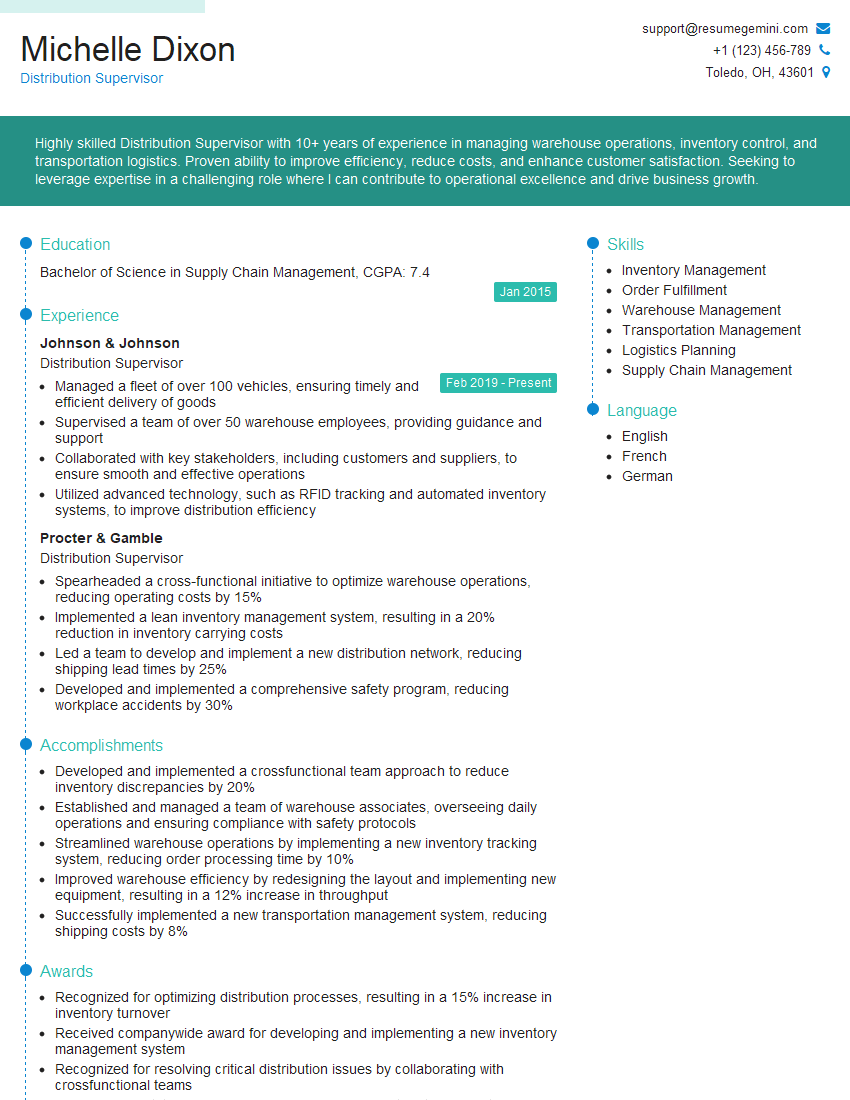
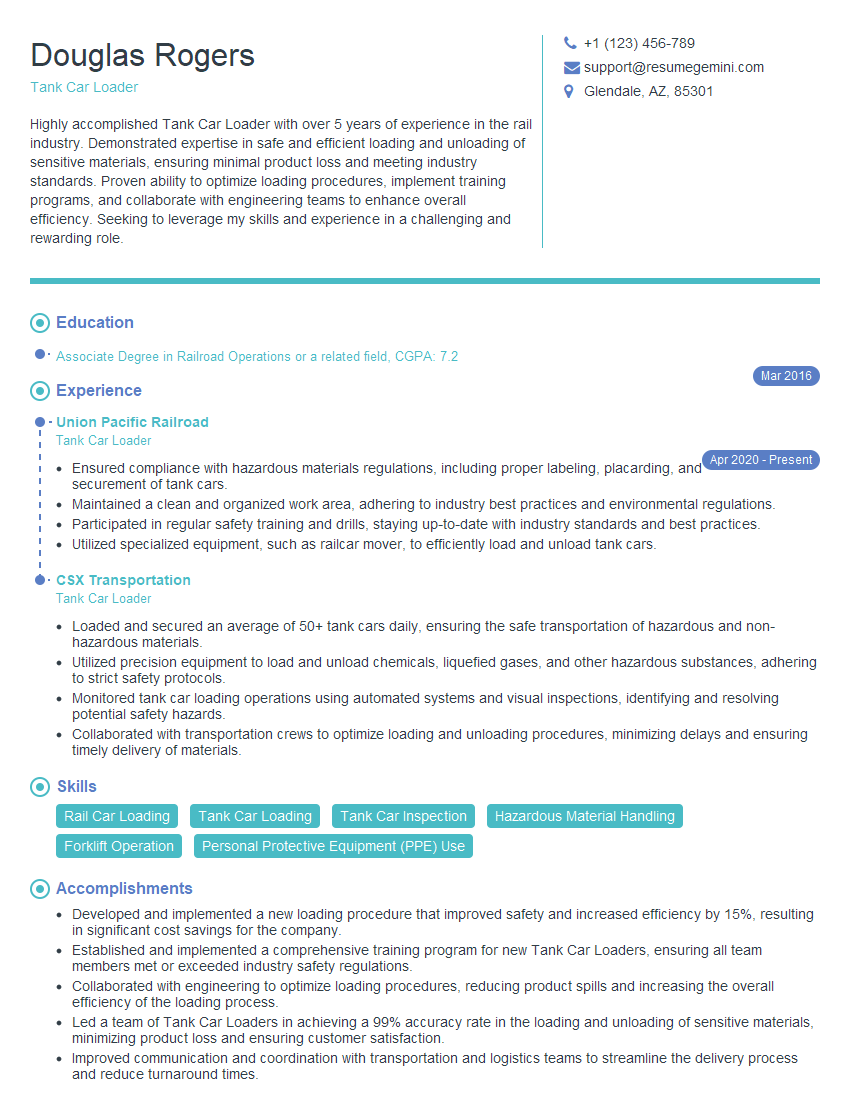
Mastering tank car loading opens doors to exciting career opportunities within the transportation and logistics industry, offering advancements into supervisory roles and specialized areas. To maximize your chances of securing your dream job, creating an ATS-friendly resume is paramount. ResumeGemini is a trusted resource that can help you build a compelling resume that highlights your skills and experience effectively. We provide examples of resumes tailored to the Tank Car Loading field to help guide you. Invest time in crafting a professional resume – it’s your first impression with potential employers.

Explore more articles
Users Rating of Our Blogs
Share Your Experience
We value your feedback! Please rate our content and share your thoughts (optional).
What Readers Say About Our Blog
Very informative content, great job.
good