The thought of an interview can be nerve-wracking, but the right preparation can make all the difference. Explore this comprehensive guide to Tasting and Analysis interview questions and gain the confidence you need to showcase your abilities and secure the role.
Questions Asked in Tasting and Analysis Interview
Q 1. Describe the difference between taste and flavor.
Taste and flavor are often used interchangeably, but they represent distinct sensory experiences. Taste refers to the sensations perceived by the taste buds on the tongue – specifically, sweet, sour, salty, bitter, and umami. These are the basic chemical reactions detected by our taste receptors. Flavor, on the other hand, is a much more complex and holistic sensory perception. It’s the combined effect of taste, smell (orthonasal and retronasal olfaction), texture (mouthfeel), and even temperature. Think about biting into an apple. The sweetness you detect is taste. The overall experience – the crispness, the aroma, the slightly tart notes – that’s flavor.
For instance, the taste of a perfectly ripe mango is predominantly sweet. However, its flavor profile is significantly richer, encompassing sweetness, acidity, a subtle floral aroma, and a smooth, creamy texture. This illustrates how flavor is a multifaceted sensory integration, far surpassing the simple detection of basic tastes.
Q 2. Explain the four basic tastes and any additional taste qualities.
The four basic tastes are sweet, sour, salty, and bitter. These tastes are detected by specific receptor cells on the tongue and are fundamental to our perception of food. Sweetness is often associated with carbohydrates, sourness with acids, saltiness with sodium ions, and bitterness with various compounds, many of which act as natural deterrents to consuming potentially harmful substances.
Beyond these four, there’s a fifth universally recognized taste: umami. Umami, often described as savory or meaty, is triggered by glutamate, an amino acid found in many protein-rich foods like meat, cheese, and mushrooms. While not as clearly defined, other taste qualities are sometimes discussed, such as fattiness (oleogustus) which is the sensation associated with long-chain fatty acids, and even metallic taste. These are areas of ongoing research in sensory science.
Q 3. What are the different types of sensory tests used in product development?
Sensory tests in product development are crucial for understanding consumer preferences and guiding formulation. Different tests cater to various objectives. Some common types include:
- Discrimination tests: These determine if a perceptible difference exists between two or more samples. Examples include triangle tests (identifying the odd sample out of three), duo-trio tests (comparing a reference sample to two others), and paired comparison tests (choosing which sample exhibits a greater intensity of a specific attribute).
- Descriptive tests: These aim to quantitatively profile the sensory attributes of a product. Trained panelists use standardized scales or descriptive vocabularies to characterize various aspects like aroma, taste, texture, and appearance. This provides a detailed sensory profile.
- Affective tests: These assess consumer preferences and acceptance. Methods include hedonic scaling (rating liking on a scale), ranking (ordering samples from most to least preferred), and preference mapping (visualizing consumer preferences).
- Threshold tests: These determine the minimum concentration of a stimulus that can be detected (detection threshold) or the minimum difference between two stimuli that can be discerned (difference threshold).
The choice of test depends heavily on the specific research question and the stage of product development. Early stages might utilize discrimination tests to compare prototypes, while later stages might use affective tests to gauge consumer acceptance before launch.
Q 4. How do you control for bias in sensory evaluation?
Controlling for bias is paramount in sensory evaluation. Several strategies are employed:
- Sample randomization: Samples are presented in a randomized order to prevent bias from sample presentation order.
- Blind testing: Panelists are unaware of the sample identity to prevent bias from brand recognition or prior expectations.
- Balanced designs: Statistical designs are utilized to ensure all samples are presented an equal number of times and in a balanced manner.
- Panelist selection and training: Selecting panelists with appropriate sensory acuity and providing thorough training minimizes individual biases and enhances the reliability of results. Training includes calibrating their responses and employing descriptive vocabulary.
- Controlled environment: Sensory tests are conducted in a controlled environment that minimizes distractions (e.g., quiet room with appropriate lighting and temperature) to enhance the focus of the panelists.
- Regular breaks: Panelists are given sufficient breaks to avoid palate fatigue.
By employing these rigorous protocols, we reduce the influence of extraneous factors and obtain data that accurately reflects product characteristics rather than panelists’ preconceptions.
Q 5. Explain the concept of a threshold test.
A threshold test aims to determine the minimum concentration of a stimulus that can be detected by a sensory panel. This involves presenting panelists with a series of samples with varying concentrations of the target compound (e.g., sweetness, saltiness, a specific aroma compound) and asking them to identify the presence or absence of the stimulus. There are two primary types:
- Detection threshold: The lowest concentration at which a stimulus can be detected (e.g., the minimum amount of sugar needed to detect sweetness in a solution).
- Difference threshold (just-noticeable difference or JND): The smallest difference between two stimuli that can be reliably detected (e.g., the minimum amount of sugar increase needed to perceive a change in sweetness).
Threshold tests are fundamental in areas like food formulation, where they help determine the minimum amount of an ingredient needed to provide a perceptible sensory attribute or measure the sensitivity of different groups of consumers. For example, a food manufacturer could use a threshold test to determine the minimum amount of salt required for consumers to perceive saltiness in a product, allowing them to reduce sodium content without compromising taste.
Q 6. Describe the difference between descriptive and affective sensory analysis.
Descriptive sensory analysis focuses on quantitatively characterizing the sensory attributes of a product. Trained panelists use standardized scales and vocabulary to describe specific sensory characteristics, like the intensity of sweetness, the aroma notes, the texture, and appearance. The goal is to create a detailed sensory profile of the product. This is useful for product development and quality control.
Affective sensory analysis, on the other hand, assesses consumer preferences and acceptance. It focuses on the overall liking and hedonic response of consumers towards the product. Methods include hedonic scaling (rating liking), preference tests, and acceptance tests. The objective here is to understand consumer perceptions and predict market success.
In essence, descriptive analysis describes *what* is present in a product, while affective analysis assesses *how much* people like it.
Q 7. How do you handle outlier data in sensory panels?
Outlier data points in sensory panels can significantly skew results and need careful handling. Several approaches exist:
- Identify the source: Investigate the potential cause of the outlier. This may involve checking for errors in data recording, examining the panelist’s performance, assessing whether the panelist was fatigued, or determining if there was a problem with the sample itself.
- Statistical analysis: Employ statistical methods like box plots or z-scores to identify outliers.
- Data transformation: Apply statistical transformations (e.g., logarithmic transformation) to reduce the impact of extreme values.
- Exclude the data point (with caution): Only exclude data after thorough investigation and justification. Simply removing outliers without a clear reason is problematic and should be avoided. A detailed explanation of the removal should be documented.
- Repeat testing: For suspected outliers, repeat the test with the same panelist or a different panel to confirm the data.
The decision on how to handle outliers should be based on a combination of statistical analysis and a careful review of the circumstances surrounding the data point. Transparency in data handling is crucial to maintain the integrity of the sensory evaluation study. Documenting all decisions about data inclusion or exclusion is a best practice.
Q 8. What are some common challenges in conducting sensory evaluations?
Conducting sensory evaluations presents several challenges, primarily stemming from the subjective nature of human perception. Inconsistencies in panelists’ responses are a major hurdle. This can arise from individual differences in taste sensitivity, personal preferences, and even their emotional state on a given day. For example, a panelist feeling unwell might rate the intensity of a flavor lower than usual. Another major challenge lies in controlling extraneous variables. Factors like the ambient temperature, lighting, and even background noise can subtly influence a panelist’s judgment. Imagine trying to assess the delicate aroma of a wine in a brightly lit, noisy room versus a quiet, dimly lit environment – the results would likely differ. Finally, ensuring panelists understand and consistently apply the evaluation criteria can be difficult. Clear instructions and thorough training are essential to minimize bias and ensure reliable results.
- Panelist Variability: Addressing this requires careful panel selection, extensive training, and using statistical techniques to account for individual differences.
- Environmental Control: This necessitates well-designed sensory booths with controlled lighting, temperature, and acoustics.
- Standardized Procedures: Developing and strictly adhering to standardized procedures for sample preparation, presentation, and data collection are vital.
Q 9. Explain the importance of statistical analysis in sensory data.
Statistical analysis is crucial in sensory data because it transforms subjective opinions into objective, reliable conclusions. Raw sensory data is inherently variable, reflecting the natural differences in perception among panelists. Statistical methods help us determine if observed differences between samples are genuinely significant or simply due to random variation. For instance, we might use ANOVA (Analysis of Variance) to compare the average scores of different products, or t-tests to compare two specific products. Further, statistical techniques like principal component analysis (PCA) can help us visualize the relationships between sensory attributes and identify patterns in the data. Without these analyses, interpreting sensory results would be unreliable and potentially misleading. Imagine trying to understand consumer preferences based solely on individual comments – it would be very difficult to draw any firm conclusions. Statistical analysis provides the framework for objective interpretation, allowing for data-driven decisions.
Q 10. What software are you familiar with for analyzing sensory data?
I’m proficient in several software packages used for sensory data analysis. These include FIZZ, XLSTAT, and Sensory Analysis Software. FIZZ, for example, offers a range of statistical tests tailored to sensory data, providing comprehensive analysis and visualization tools. XLSTAT is a powerful add-in for Microsoft Excel, making it easily accessible for basic statistical analyses. Sensory Analysis Software offers more specialized functionalities for designing experiments and managing large datasets. My experience encompasses using these tools for various analyses, including ANOVA, PCA, and cluster analysis. The choice of software often depends on the complexity of the study and the specific statistical needs.
Q 11. How do you maintain the integrity and calibration of sensory testing equipment?
Maintaining the integrity and calibration of sensory testing equipment is paramount to ensure the reliability of the data. This involves a multi-faceted approach. For example, with electronic equipment like texture analyzers, regular calibration against standardized weights and materials is vital. We use certified reference materials to ensure accuracy. Documentation of these calibrations is meticulously kept, including the date, time, and results of the checks. For glassware, we employ standard cleaning procedures to eliminate any residual flavors or aromas that could affect the sensory evaluation. This includes thorough washing, rinsing, and drying, often with specialized detergents designed to remove any traces of previous samples. Regular inspections of the equipment for any signs of wear and tear or damage are also crucial. A proactive approach to maintenance and calibration minimizes the risk of errors and ensures the consistent delivery of reliable sensory data.
Q 12. Describe your experience with different types of sensory booths and their purpose.
My experience includes working with a variety of sensory booths, each designed to minimize external influences and standardize the testing environment. I’ve utilized individual booths with controlled lighting and temperature, eliminating distractions and promoting focus. These are ideal for individual assessments where eliminating any cross-panelist influence is important. I’ve also worked in larger booths designed for group sessions, typically equipped with individual workstations, but allowing for some communication among panelists if necessary, for example when consensus-based evaluations are undertaken. The choice of booth depends on the specific sensory test being conducted and the desired level of environmental control. In some instances, simple cubicles suffice, while for more sensitive aroma evaluations, specialized booths with sophisticated air filtration and odor-control systems are required.
Q 13. How do you manage a sensory panel and ensure consistent performance?
Managing a sensory panel effectively requires careful planning and consistent oversight. First, panel recruitment involves selecting individuals with the necessary sensory acuity and a commitment to the task. Regular training sessions, including refresher courses, help maintain consistency. This training also covers the use of standardized scales and terminology, ensuring consistent interpretation of attributes. Ongoing monitoring of panelist performance is essential through the use of control samples and performance metrics. Identifying and addressing any inconsistencies or biases promptly is crucial for maintaining data reliability. I’ve found that open communication and feedback sessions create a positive and collaborative environment, fostering a sense of team cohesion and dedication. Furthermore, clear guidelines, including code of conduct and regular feedback sessions, ensure panelists feel valued and maintain engagement.
Q 14. How do you train panelists to accurately assess sensory attributes?
Training panelists for accurate sensory assessment is a crucial process. It starts with explaining the basic principles of sensory perception and the importance of objective evaluation. Then, we focus on developing their vocabulary, teaching them to precisely describe sensory attributes such as aroma, taste, texture, and appearance. This often involves using descriptive analysis methods and reference standards. For example, we might provide panelists with samples of different sweetness levels and ask them to describe each one, eventually guiding them toward using consistent terminology. We also conduct extensive practice sessions with a variety of samples, providing feedback and refining their descriptive skills. Regular calibration sessions, employing control samples and blind tests, ensure their consistency and accuracy over time. This ongoing training helps panelists differentiate subtle differences between products and minimizes individual bias, resulting in more reliable and reproducible data.
Q 15. Describe your experience in developing sensory profiling methods.
Developing sensory profiling methods involves creating a structured approach to systematically evaluate the sensory characteristics of a product. This isn’t just about taste; it encompasses all the senses – sight, smell, touch, taste, and even sound, depending on the product. My experience includes designing protocols using various methodologies like quantitative descriptive analysis (QDA), where trained panelists quantitatively score specific attributes; and free-choice profiling (FCP), where panelists freely describe the sensory perceptions without predefined attributes.
For example, in developing a sensory profile for a new type of coffee, I would first define the relevant attributes (aroma intensity, acidity, bitterness, body, aftertaste, etc.). Then, I would recruit and train a panel of judges to recognize and score these attributes using standardized scales (e.g., 1-9 scale for intensity). The training involves extensive sessions using reference samples and blind tastings. Finally, the data is analyzed statistically to identify significant differences between samples and to develop a sensory profile, essentially a fingerprint of the product’s sensory characteristics.
I’ve also worked on adapting existing methodologies for specific product types. For instance, when profiling a new textured food product, incorporating texture profile analysis (TPA) instrumentation is crucial alongside sensory evaluation to get a comprehensive understanding of the mouthfeel.
Career Expert Tips:
- Ace those interviews! Prepare effectively by reviewing the Top 50 Most Common Interview Questions on ResumeGemini.
- Navigate your job search with confidence! Explore a wide range of Career Tips on ResumeGemini. Learn about common challenges and recommendations to overcome them.
- Craft the perfect resume! Master the Art of Resume Writing with ResumeGemini’s guide. Showcase your unique qualifications and achievements effectively.
- Don’t miss out on holiday savings! Build your dream resume with ResumeGemini’s ATS optimized templates.
Q 16. Explain your experience with aroma and odor identification techniques.
Aroma and odor identification are critical in sensory analysis. My experience encompasses both instrumental and sensory techniques. Instrumental techniques like Gas Chromatography-Mass Spectrometry (GC-MS) provide objective chemical composition data, identifying individual volatile compounds contributing to the aroma. However, this doesn’t fully capture the human perception.
Sensory techniques, on the other hand, rely on trained panelists’ ability to identify and describe aromas. We often use aroma wheel tools (e.g., coffee aroma wheel, wine aroma wheel) as structured aids to guide panelists in describing complex aromas. They are valuable in capturing the overall sensory experience, which can be more nuanced than simply listing individual chemical compounds. For instance, a slight ‘green’ note might be difficult to pinpoint using GC-MS data alone, but a trained panelist can easily identify it. I have extensive experience in training panelists using various methods like triangle tests (to detect differences), duo-trio tests (to match samples), and ranking tests (to order samples by intensity).
Q 17. How do you determine the shelf life of a product based on sensory attributes?
Determining shelf life based on sensory attributes involves monitoring sensory changes over time. This is often done through accelerated shelf-life studies where products are stored under conditions that accelerate degradation (e.g., higher temperature and humidity).
At regular intervals, sensory panels evaluate the product, scoring attributes like appearance, aroma, flavor, and texture. We look for significant changes in these attributes that indicate deterioration. For instance, a significant decrease in aroma intensity, the appearance of off-flavors, or a change in texture might signal the end of the shelf life. The data is then analyzed using statistical methods (e.g., regression analysis) to predict the point where sensory attributes fall below an acceptable level. These data points are crucial for setting ‘best before’ or ‘use by’ dates, ensuring product quality and safety.
For example, in a project involving yogurt, we noticed a significant drop in the ‘creamy’ texture and a rise in ‘sour’ flavor after 14 days of storage at room temperature. This helped establish a 7-day shelf life under refrigeration to maintain the desired sensory profile.
Q 18. How do you correlate sensory data with instrumental measurements?
Correlating sensory data with instrumental measurements is crucial for a comprehensive understanding of product quality. Instrumental methods offer objective measurements of physical and chemical properties, while sensory data provides subjective human perception. The goal is to find relationships between the two.
For example, we might measure the color of a fruit juice using a spectrophotometer (instrumental) and simultaneously have a sensory panel score the ‘redness’ or ‘brightness’ of the color (sensory). Statistical analysis techniques like regression analysis or principal component analysis (PCA) help identify correlations between instrumental and sensory data. A strong correlation suggests that the instrumental measurement can effectively predict the sensory perception. This is valuable for quality control, as instrumental measurements are often faster and cheaper than sensory evaluations.
It’s important to remember that perfect correlations are rare. The relationship between instrumental and sensory data is often complex and influenced by various factors. However, even weak correlations can provide valuable insights into product quality and consumer acceptance.
Q 19. Explain the concept of sensory interaction.
Sensory interaction refers to the phenomenon where the perception of one sensory attribute is influenced by the presence of another. This is a crucial concept in sensory science, as it highlights the complexity of sensory experience. Our senses don’t operate in isolation; they interact and influence each other.
A classic example is the impact of aroma on taste. The same food might taste differently depending on its aroma. Similarly, the texture of a food can influence its perceived flavor. A creamy texture might enhance the sweetness of a dessert, while a rough texture could make it less appealing.
Understanding sensory interaction is essential for product development and optimization. For instance, modifying the texture of a food might enhance its perceived flavor, even without changing the actual chemical composition. Likewise, careful consideration of aroma and appearance can enhance the overall sensory experience.
Q 20. How do you handle conflicting sensory data from different panelists?
Conflicting sensory data from different panelists is a common challenge in sensory evaluation. It’s crucial to analyze the data carefully and identify potential sources of conflict. This isn’t necessarily a flaw; it highlights the inherent subjectivity in sensory perception.
My approach involves a multi-step process: First, I examine the data for outliers, panelists who consistently give scores significantly different from the rest of the panel. Sometimes, this indicates a misunderstanding of the instructions or an issue with the panelist’s sensory abilities.
Second, I analyze the data statistically to identify significant differences in scores. Techniques like ANOVA (Analysis of Variance) can help determine if these differences are statistically significant. If the differences aren’t significant, I might simply average the data. However, if significant differences exist, I would examine the data for patterns or reasons for the discrepancy. Retraining or removing outliers might be necessary. Finally, I might adjust data based on expert knowledge, or I will include the variability in the results to show the uncertainty.
Q 21. Describe your experience with different types of sensory scales.
Various sensory scales exist, each with strengths and weaknesses depending on the product and objective. My experience includes using different types extensively.
- Hedonic scales: These measure the liking or preference of a product, usually using a scale ranging from ‘dislike extremely’ to ‘like extremely’. They are effective for consumer acceptance testing.
- Category scales: These involve assigning a product to a predetermined category (e.g., ‘strong’, ‘medium’, ‘weak’). They are easy to use but lack the precision of other scales.
- Line scales: These use a continuous line, usually with labeled anchors at each end (e.g., ‘extremely sour’ to ‘extremely sweet’). They offer more precision than category scales.
- Numerical scales: These use numbers to rate attributes (e.g., 1-9 scale for intensity). They provide quantitative data that is easy to analyze statistically.
The choice of scale depends on the specific application. For instance, for a consumer test focused on preference, a hedonic scale might be most appropriate. For a detailed quantitative descriptive analysis, a numerical scale would be better. The key is to choose a scale that is appropriate for the product and the objectives of the study, ensuring it’s easy for panelists to understand and use.
Q 22. How do you evaluate the texture of a food product?
Evaluating food texture involves a multi-sensory approach, going beyond just the feel. We consider several aspects:
- Visual assessment: Observing the food’s appearance – is it smooth, rough, grainy, chunky? This gives a preliminary indication.
- Tactile assessment: This is the most crucial part. Using our fingers and tongue, we determine the firmness, consistency, and moisture content. We might describe it as crisp, chewy, tender, brittle, viscous, or smooth. Think of the difference between a perfectly ripe peach and a rock-hard pear.
- Oral assessment: Here, we consider the interaction between food and saliva. Does it break down easily? Is there a lingering feeling? How does it impact mouthfeel? For example, a creamy soup has a different mouthfeel than a crunchy granola bar.
- Instrumental texture analysis: While sensory evaluation is crucial, objective measurements using instruments like texture profile analysis (TPA) can provide quantitative data on parameters like hardness, adhesiveness, and springiness. This strengthens our sensory findings.
Combining all these aspects provides a comprehensive understanding of the food’s texture profile.
Q 23. Explain how you would design a sensory test for a new product.
Designing a sensory test involves a systematic approach. First, we need to clearly define the objective, such as comparing two product formulations or evaluating consumer preferences.
- Panelist selection: We need to recruit a panel of trained assessors or consumers depending on the test’s goal. For consumer testing, we’d use a larger, more diverse group. For expert panels, we need individuals with proven sensory acuity.
- Sample preparation: This is critical. Samples must be identical in presentation and temperature, to avoid bias. Randomized codes are assigned to blind the panelists.
- Test design: We’ll choose an appropriate test method – difference tests (triangle, duo-trio), descriptive analysis, affective tests (hedonic scaling). The choice depends on the objective and the complexity of the sensory attributes.
- Test environment: The testing environment needs to be controlled to minimize distractions. Individual booths with adequate lighting are essential.
- Data analysis: Statistical methods are used to analyze data, ensuring that findings are valid and reliable. This may involve ANOVA or other appropriate tests depending on the test type.
For example, if we’re evaluating the sweetness of a new yogurt, a hedonic scale (e.g., 1-9, where 9 is extremely sweet) would be suitable. If comparing two yogurts for sweetness differences, a paired comparison test would be more appropriate.
Q 24. How do you ensure the ethical and responsible conduct of sensory tests?
Ethical and responsible sensory testing is paramount. It centers around ensuring panelist well-being and data integrity.
- Informed consent: Panelists must be fully informed about the test’s purpose, procedures, and any potential risks (allergies, etc.) before participating. They must give their voluntary consent.
- Compensation and appreciation: Panelists deserve fair compensation for their time and effort. A simple thank-you is also crucial.
- Confidentiality: Panelist information should remain confidential, protecting their privacy.
- Avoiding bias: The test should be carefully designed to minimize bias, utilizing blind samples and appropriate statistical analysis to prevent flawed conclusions.
- Data integrity: All data should be accurately recorded and stored, ensuring that the data reflects reality without manipulation.
One critical aspect is adhering to guidelines from organizations like the ISO (International Organization for Standardization) to maintain the integrity of the sensory evaluation process.
Q 25. What are some examples of aroma compounds and their associated sensory perceptions?
Aroma compounds are volatile molecules that stimulate our olfactory receptors, leading to the perception of smell. The connection between chemical structure and perceived aroma is complex.
- Vanillin: This compound contributes to the characteristic aroma of vanilla. Its sweetness and warm, comforting smell is familiar to most.
- Citral: Found in citrus fruits, citral provides a fresh, zesty aroma. It’s responsible for the characteristic smell of lemons and limes.
- Isoamyl acetate: This ester gives bananas their characteristic fruity aroma. It’s also found in other fruits and contributes to their overall fragrance.
- Sulfur compounds: These can vary significantly. Some impart desirable aromas like in roasted onions or garlic, while others contribute to off-odors such as rotten eggs (hydrogen sulfide).
Understanding these relationships is key to flavor and aroma development in food products. Gas chromatography-mass spectrometry (GC-MS) is frequently used to identify and quantify specific aroma compounds.
Q 26. Describe your experience working within a Quality Management System (QMS) related to sensory evaluation.
In my previous role, our sensory evaluation program was fully integrated into our company’s ISO 9001-compliant Quality Management System (QMS). This meant adhering to strict procedures for every stage of the sensory process.
- Standard Operating Procedures (SOPs): We had detailed SOPs for every aspect, from panelist recruitment and training to test execution and data analysis. This ensured consistency and traceability.
- Documentation: All aspects were meticulously documented. This included panelist records, test protocols, sensory data, and any deviations from the established procedures. This allows for auditing and continuous improvement.
- Calibration and validation: Our sensory equipment (if any) and test methods were regularly calibrated and validated to ensure accuracy and reliability of our findings.
- Regular audits: Internal and external audits ensured compliance with the QMS, identifying areas for improvement in our sensory evaluation processes.
- Training: Ongoing training programs for sensory panelists maintained their skills and kept them updated on latest techniques and best practices.
Working within a well-defined QMS framework allowed us to generate reliable, reproducible, and defensible sensory data, which were critical in product development and quality control.
Q 27. How would you address a situation where sensory data does not align with consumer preference?
Discrepancies between sensory data and consumer preference can stem from several factors, requiring careful investigation.
- Test design limitations: The sensory test might not have accurately captured the relevant attributes that drive consumer preference. A redesign of the test might be necessary.
- Panelist selection bias: The sensory panel might not accurately represent the target consumer group. A broader consumer test would be required.
- Unidentified attributes: There might be an important attribute that hasn’t been evaluated in the sensory test. Further investigation into consumer perceptions may reveal this.
- Product factors: Something about the product’s presentation or other contextual elements could be influencing the consumer reaction (e.g., packaging, pricing, brand). This needs to be carefully examined.
A systematic approach involves revisiting the test methodology, analyzing the consumer data more deeply, and potentially conducting further research – such as consumer interviews – to understand the driving forces behind the discrepancy.
Q 28. How do you interpret and present sensory data effectively to stakeholders?
Effectively presenting sensory data hinges on clarity and visual communication.
- Data summarization: Raw data should be processed and summarized into meaningful statistics (means, standard deviations, etc.). Avoid overwhelming the audience with raw numbers.
- Visual aids: Use charts, graphs, and tables to present the key findings clearly. Bar charts are effective for comparing attributes across samples. Line graphs can show trends over time.
- Plain language: Avoid overly technical jargon. Present the findings in a way that is easily understandable to stakeholders, regardless of their background in sensory science.
- Focus on key takeaways: Highlight the most important findings and their implications for the product or process.
- Interactive presentations: If possible, use interactive elements to allow stakeholders to explore the data more thoroughly.
For instance, a simple bar chart showing the average hedonic scores for different product formulations helps stakeholders quickly grasp consumer preferences. A well-structured presentation makes complex data readily accessible and impactful.
Key Topics to Learn for Tasting and Analysis Interview
- Sensory Evaluation Fundamentals: Understand the principles of sensory perception (sight, smell, taste, touch), including the influence of psychological factors on perception.
- Flavor Chemistry: Explore the chemical compounds responsible for different tastes and aromas, and how they interact to create complex flavor profiles. Practical application: Analyzing the chemical composition of a sample to predict its sensory attributes.
- Sensory Testing Methodologies: Master various sensory testing methods (e.g., descriptive analysis, difference testing, preference testing) and their appropriate applications. Practical application: Designing and conducting a sensory evaluation experiment to compare two products.
- Data Analysis and Interpretation: Develop proficiency in statistical analysis techniques used to interpret sensory data, including descriptive statistics and ANOVA. Practical application: Analyzing sensory data to identify significant differences between samples or to create a flavor profile.
- Quality Control and Assurance: Learn how sensory evaluation contributes to quality control processes in the food and beverage industry. Practical application: Implementing a sensory evaluation program to ensure consistent product quality.
- Specific Product Knowledge: Depending on the role, familiarize yourself with the sensory characteristics of specific food or beverage categories (e.g., wine, beer, cheese, coffee). Practical application: Accurately describe the sensory attributes of a specific product and identify potential defects.
- Legal and Regulatory Aspects: Understand relevant regulations and standards related to food and beverage labeling and sensory evaluation.
Next Steps
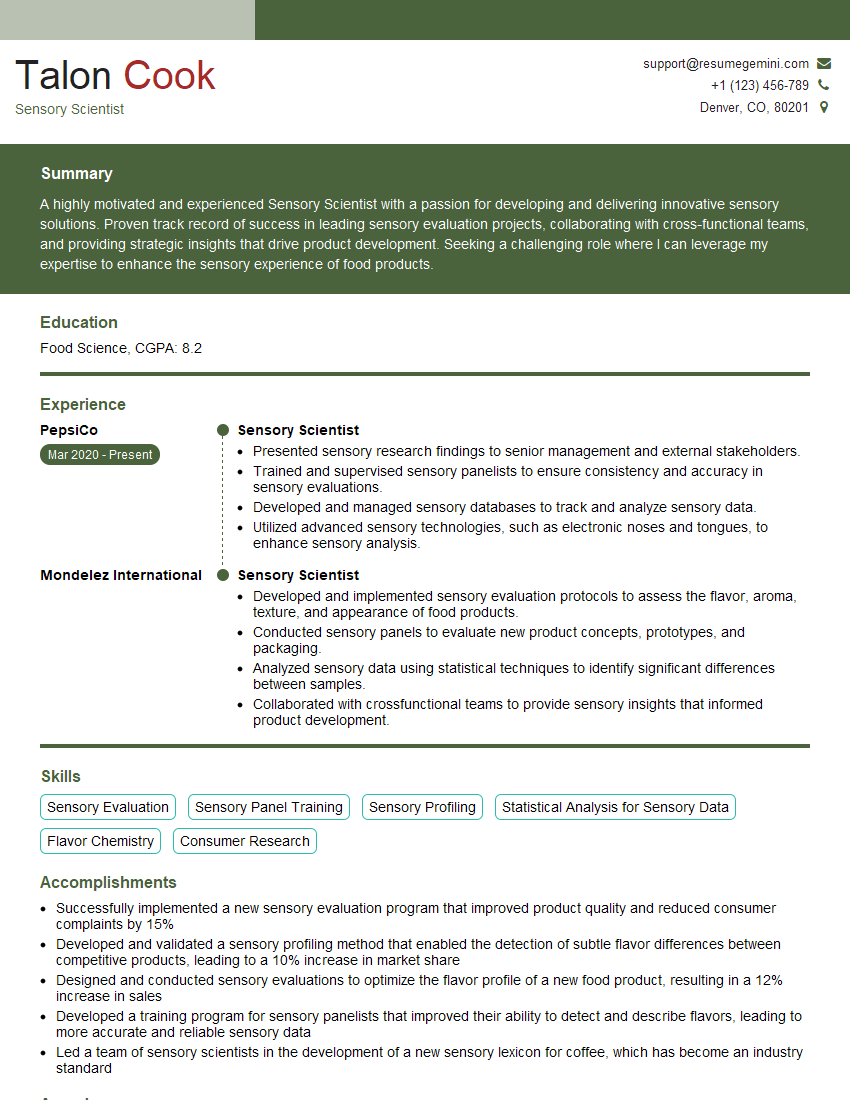
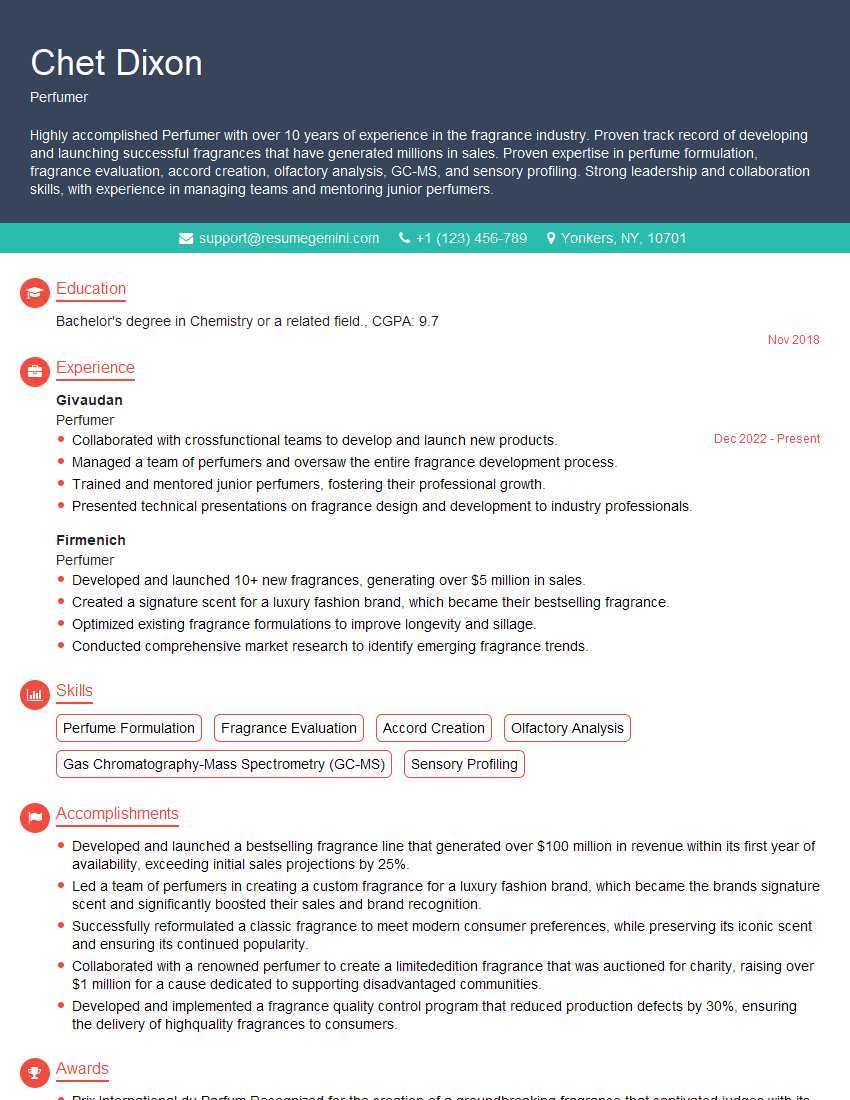
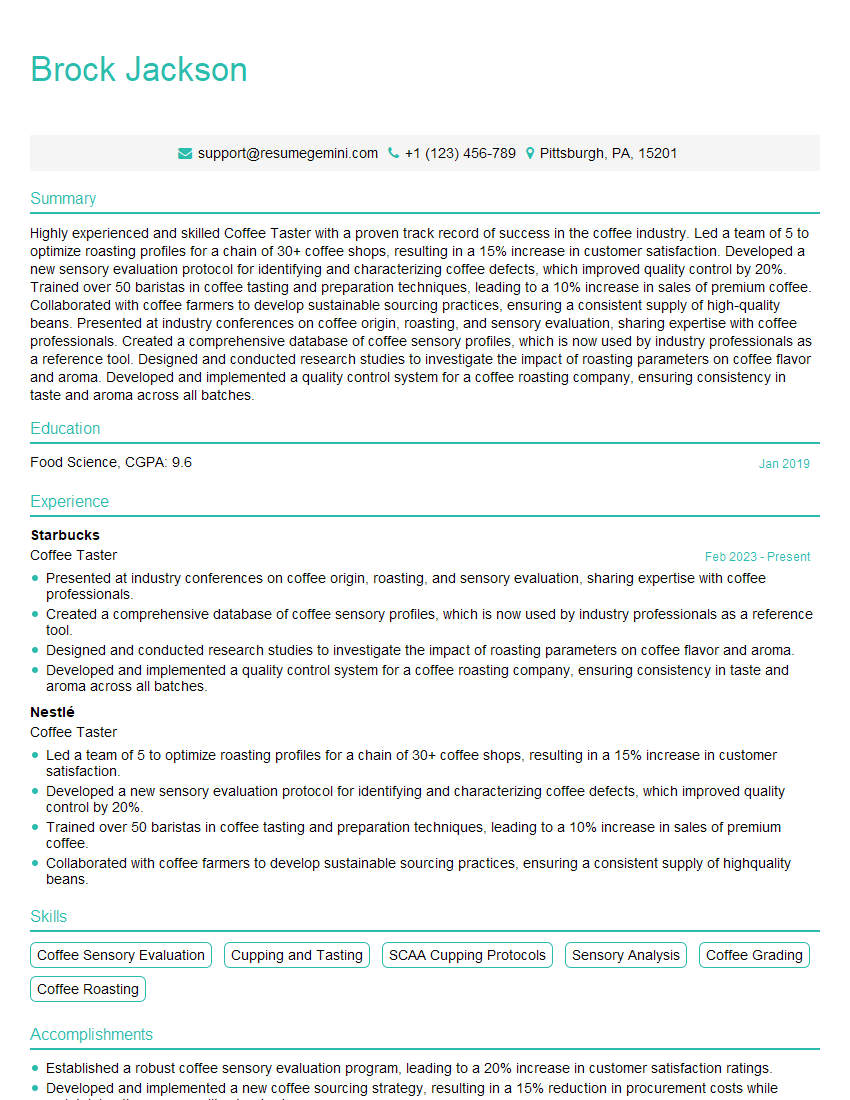
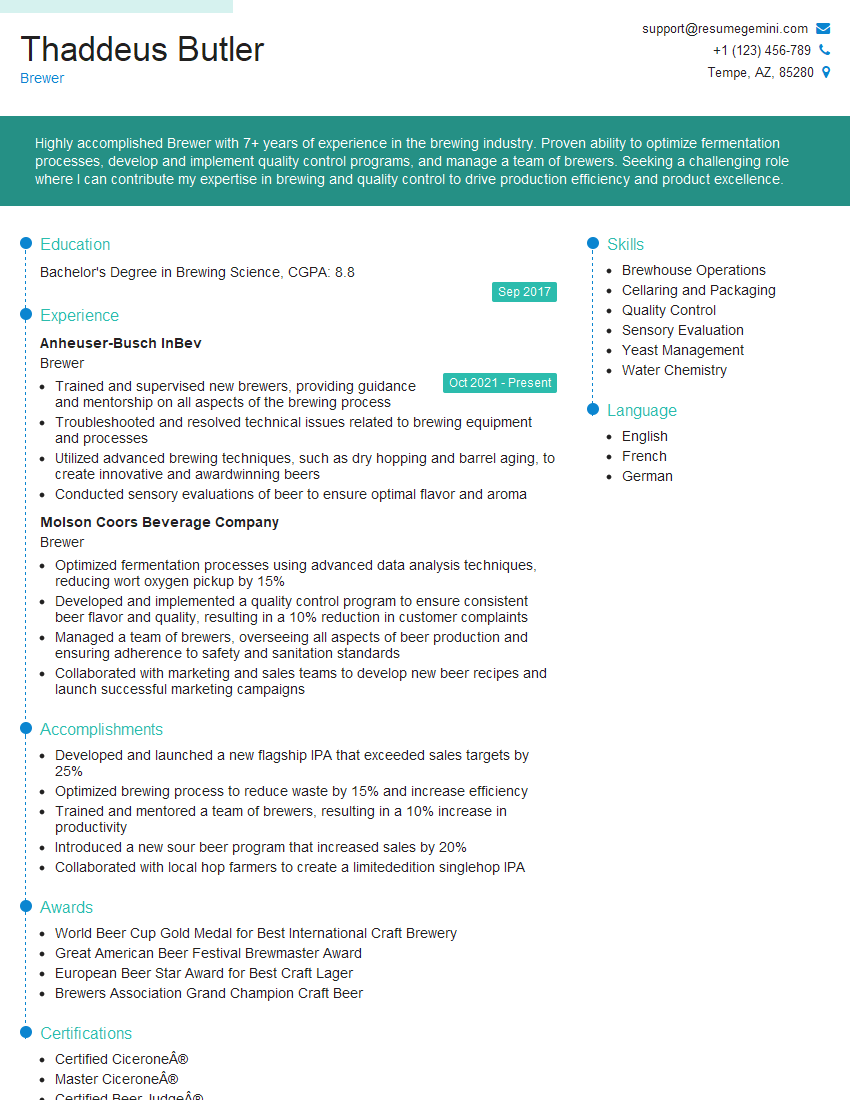
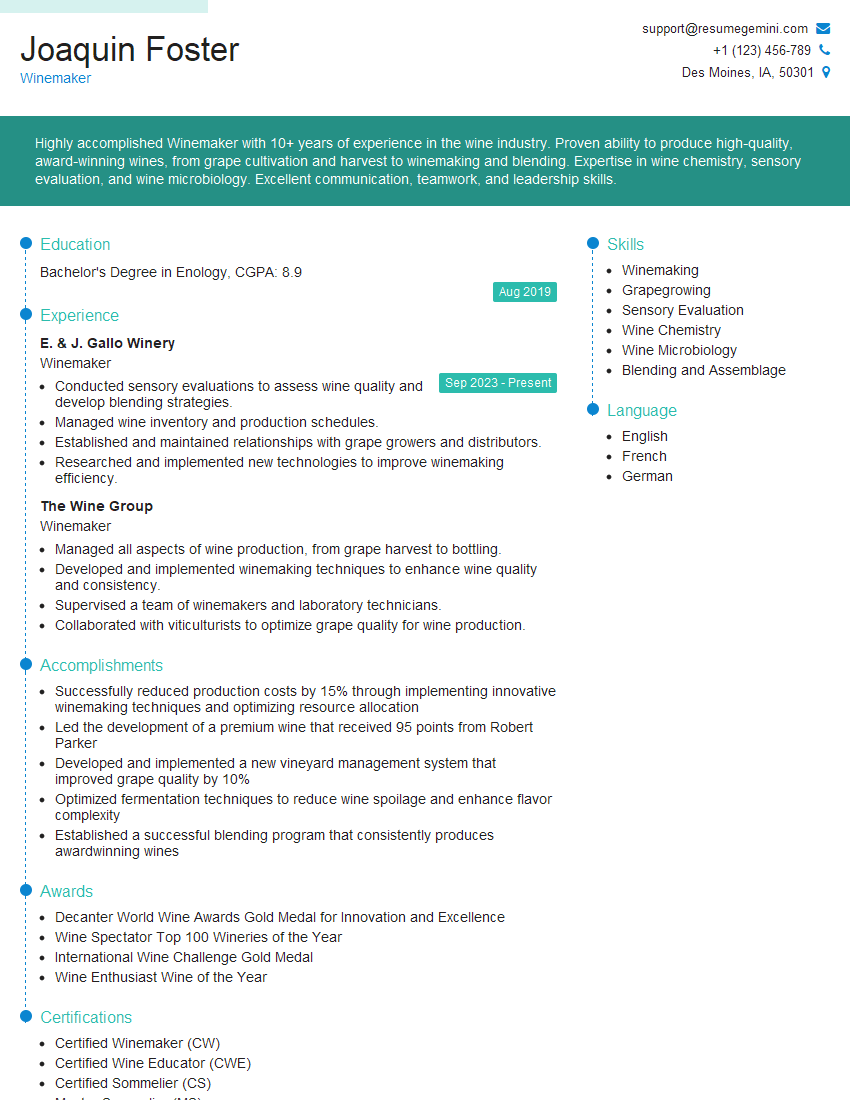
Mastering Tasting and Analysis skills opens doors to exciting career opportunities in the food and beverage industry, offering roles with increasing responsibility and higher earning potential. To maximize your job prospects, crafting a compelling and ATS-friendly resume is crucial. ResumeGemini can significantly enhance your resume-building experience, helping you create a professional document that highlights your skills and experience effectively. ResumeGemini provides examples of resumes tailored to Tasting and Analysis roles to guide you through the process.
Explore more articles
Users Rating of Our Blogs
Share Your Experience
We value your feedback! Please rate our content and share your thoughts (optional).
What Readers Say About Our Blog
Very informative content, great job.
good