Unlock your full potential by mastering the most common Telecommunications Regulatory Compliance Standards interview questions. This blog offers a deep dive into the critical topics, ensuring you’re not only prepared to answer but to excel. With these insights, you’ll approach your interview with clarity and confidence.
Questions Asked in Telecommunications Regulatory Compliance Standards Interview
Q 1. Explain the key differences between FCC and Ofcom regulations.
The Federal Communications Commission (FCC) in the United States and Ofcom (Office of Communications) in the United Kingdom are both telecommunications regulatory bodies, but they operate under different legal frameworks and prioritize different aspects of regulation. The key differences lie in their scope, enforcement mechanisms, and specific regulatory focuses.
- Geographic Scope: The FCC regulates communications within the United States, while Ofcom’s jurisdiction is limited to the United Kingdom.
- Regulatory Focus: While both address issues like spectrum allocation, consumer protection, and broadcasting, their emphasis differs. The FCC, for example, has a stronger focus on promoting competition in the market, often through antitrust actions. Ofcom, on the other hand, might place greater emphasis on media plurality and public service broadcasting.
- Enforcement: Both bodies have enforcement powers, including fines and sanctions for non-compliance. However, the specifics of enforcement procedures and penalties can vary significantly.
- Technological Emphasis: Both adapt to technological advancements, but their approaches might differ. For instance, the FCC’s approach to 5G deployment might differ from Ofcom’s in terms of spectrum allocation strategies and infrastructure requirements.
Imagine comparing two chefs: both make delicious food, but one specializes in Italian cuisine while the other excels in French pastries. They both follow food safety regulations, but their techniques and final products will differ based on their unique specializations. Similarly, while both the FCC and Ofcom regulate telecommunications, their approaches are tailored to their specific national contexts and regulatory priorities.
Q 2. Describe your experience with TR-069.
TR-069, or the CPE WAN Management Protocol, is a widely used protocol for remote management of customer premise equipment (CPE), such as routers and set-top boxes. My experience with TR-069 encompasses its implementation, troubleshooting, and security considerations. I’ve been involved in:
- Developing and implementing TR-069 solutions: This includes configuring servers, integrating with billing systems, and ensuring secure communication channels. I’ve worked with various CPE vendors and ensured interoperability.
- Troubleshooting TR-069 connectivity issues: This involves analyzing logs, identifying network problems, and resolving issues with device registration, provisioning, and firmware updates. I’m proficient in debugging protocols and network configuration.
- Addressing security concerns related to TR-069: Security is paramount, and I’ve implemented robust security measures like encryption and authentication to prevent unauthorized access and data breaches. This includes understanding and mitigating vulnerabilities like those highlighted in recent industry reports.
- Migration to newer protocols: The industry is moving towards more secure and modern alternatives to TR-069. I have practical experience exploring and evaluating such options and strategizing for a smooth transition.
For instance, I once helped a client resolve a widespread connectivity issue that stemmed from a misconfiguration in their TR-069 server’s authentication mechanism. By systematically analyzing the server logs and the CPE’s configuration, I identified the root cause and implemented a fix, preventing service disruption for thousands of customers. I’m confident in my ability to leverage my expertise in this area to contribute effectively to your team.
Q 3. What is your experience with the GDPR’s impact on telecommunications?
The General Data Protection Regulation (GDPR) has significantly impacted the telecommunications industry by strengthening data protection rights for individuals within the European Union. My experience involves understanding and implementing GDPR compliance in several aspects:
- Data Minimization and Purpose Limitation: Implementing strategies to collect only necessary customer data and using it solely for specified purposes. This includes reviewing data collection practices and ensuring transparency to customers.
- Data Subject Rights: Establishing processes for handling data subject access requests (DSARs), right to erasure (right to be forgotten), and data portability. This requires robust data management systems and well-defined procedures.
- Data Security: Implementing technical and organizational measures to safeguard customer data against unauthorized access, loss, or alteration. This covers aspects like encryption, access controls, and incident response planning.
- Data Breach Notification: Developing procedures to detect, investigate, and report data breaches to supervisory authorities and affected individuals within the mandated timeframe.
- Privacy by Design and Default: Designing systems and processes with privacy embedded from the outset, minimizing risks to customer data.
For example, I worked with a telecom company to update their customer data management system to meet GDPR requirements. This involved implementing robust access controls, enhancing data encryption protocols, and developing a streamlined process for handling DSARs. This project emphasized the importance of a proactive, not reactive, approach to compliance.
Q 4. How familiar are you with the California Consumer Privacy Act (CCPA)?
The California Consumer Privacy Act (CCPA), and its successor the California Privacy Rights Act (CPRA), grants California residents significant control over their personal information. My familiarity with the CCPA/CPRA includes:
- Understanding the definitions of personal information, sensitive personal information, and categories of personal information within the context of telecom data. This includes understanding how customer usage data, location data, and other information collected by telecom companies fall under the CCPA/CPRA.
- Knowledge of consumer rights, including the right to access, delete, and opt-out of the sale of personal information. This involves designing processes to handle consumer requests efficiently and securely.
- Familiarity with the obligations for businesses, such as providing clear and concise privacy notices, complying with data subject requests, and implementing appropriate security measures. This includes understanding the implications of penalties for non-compliance.
- Awareness of the specific requirements for handling children’s personal information.
In a practical context, I’d ensure that our company’s privacy policies accurately reflect the CCPA/CPRA requirements and our data collection practices. I’d also ensure that we have mechanisms in place to respond to customer requests for data access, deletion, and opt-out.
Q 5. What are the key compliance requirements for handling customer data in the telecom industry?
Handling customer data in the telecom industry requires adherence to a complex web of regulations, varying by jurisdiction. Key compliance requirements include:
- Data Minimization and Purpose Limitation: Only collect and retain data necessary for specific, legitimate purposes.
- Data Security: Implement robust security measures to protect data from unauthorized access, use, disclosure, alteration, or destruction. This includes encryption, access controls, and regular security audits.
- Transparency and Consent: Obtain informed consent from customers for data collection and use, providing clear and accessible privacy policies.
- Data Subject Rights: Respect customers’ rights to access, correct, delete, or port their data. This includes handling data subject access requests (DSARs) efficiently and securely.
- Data Breach Notification: Establish protocols to promptly detect, investigate, and report data breaches as required by applicable regulations (e.g., GDPR, CCPA/CPRA).
- Compliance with specific regulations: Adhere to all relevant regulations such as GDPR, CCPA/CPRA, and other regional or national laws, depending on the geographic location of your customers.
- Record Keeping: Maintain comprehensive records demonstrating compliance with data protection laws.
Failure to comply can result in significant penalties, reputational damage, and loss of customer trust. Therefore, a proactive and comprehensive approach to data protection is crucial.
Q 6. How would you handle a non-compliance issue discovered during an audit?
Discovering a non-compliance issue during an audit requires a prompt, thorough, and well-documented response. My approach would involve:
- Immediate Investigation: Thoroughly investigate the root cause of the non-compliance issue, identifying the extent of the problem and any affected data.
- Risk Assessment: Evaluate the potential risks associated with the non-compliance, including reputational damage, financial penalties, and legal ramifications.
- Remediation Plan: Develop a detailed remediation plan to address the non-compliance, including timelines and assigned responsibilities. This plan should be documented and approved by relevant stakeholders.
- Implementation: Implement the remediation plan, ensuring that all necessary corrective actions are taken.
- Verification: Verify that the corrective actions have been effective in resolving the non-compliance issue. This might involve conducting follow-up audits or assessments.
- Documentation: Maintain comprehensive documentation of the entire process, including the investigation, risk assessment, remediation plan, implementation, and verification.
- Reporting: Report the non-compliance issue and the remediation efforts to relevant regulatory bodies and stakeholders.
Transparency and proactive communication are key. I’d aim to promptly inform affected customers and stakeholders, demonstrating a commitment to resolving the issue and preventing future occurrences.
Q 7. Explain your understanding of spectrum licensing and allocation.
Spectrum licensing and allocation is the process by which governments regulate the use of radio frequencies. It’s crucial for preventing interference and ensuring efficient use of a limited resource. My understanding encompasses:
- Spectrum Allocation: Governments divide the radio frequency spectrum into different bands, allocating them to various services (e.g., mobile broadband, broadcasting, satellite communications). This allocation considers factors like technological capabilities and societal needs.
- Licensing: Entities seeking to use specific parts of the spectrum must obtain licenses from the relevant regulatory authority (e.g., FCC, Ofcom). Licenses specify the frequency bands, geographic area, and permitted usage. They can be auctioned or granted through other processes.
- Types of Licenses: There are various types of licenses, including exclusive licenses (granting sole use), shared licenses (permitting multiple users), and unlicensed bands (available for free use, but with limitations).
- International Coordination: International agreements and organizations (e.g., ITU) play a key role in harmonizing spectrum allocation across countries to avoid cross-border interference.
- Technological Advancements and Spectrum Efficiency: The ever-increasing demand for wireless services necessitates innovative approaches to spectrum management, including technologies that improve spectrum efficiency and new allocation strategies.
Imagine the radio spectrum as a highway with multiple lanes. Licensing and allocation are like assigning lanes to different vehicles (services) to prevent collisions (interference) and ensure that traffic flows smoothly. Efficient spectrum management is critical for maximizing the benefits of wireless technologies and enabling economic growth.
Q 8. Describe your experience with network security compliance standards (e.g., NIST).
My experience with network security compliance standards, particularly NIST (National Institute of Standards and Technology) frameworks, is extensive. I’ve been involved in implementing and auditing security controls aligned with NIST Cybersecurity Framework (CSF) and NIST Special Publications (SPs), such as SP 800-53. This includes designing secure network architectures, implementing access controls, managing vulnerabilities, and ensuring incident response capabilities. For example, in a previous role, I led a project to implement NIST CSF across our VoIP infrastructure, focusing on identifying and mitigating risks associated with data confidentiality, integrity, and availability. This involved risk assessments, gap analyses, the development of security policies, and ongoing monitoring and improvement activities. We mapped our existing controls to the NIST CSF functions, identifying areas for improvement and prioritizing remediation efforts based on risk level. This resulted in a significantly more secure and compliant VoIP system.
My experience extends beyond just implementation; I’ve also conducted numerous security audits, using NIST guidelines as a benchmark, to ensure compliance and identify areas needing improvement. This includes conducting vulnerability scans, penetration testing, and reviewing security logs to detect and respond to potential threats. This proactive approach not only ensures compliance but also strengthens the organization’s overall security posture.
Q 9. How do you ensure compliance with regulations regarding call recording and data retention?
Compliance with call recording and data retention regulations is crucial and varies significantly by jurisdiction. I ensure compliance by first identifying all applicable laws and regulations, which may include state and federal laws, as well as industry-specific requirements. For example, in the US, regulations like the Electronic Communications Privacy Act (ECPA) and state-specific laws govern call recording. These laws typically dictate who can be recorded, the need for consent, and data retention periods.
My approach involves several key steps:
- Policy Development: Creating clear and comprehensive policies outlining who can record calls, under what circumstances, how the recordings are stored, and how long they are retained. This also includes procedures for handling requests for access to call recordings.
- System Implementation: Implementing secure call recording systems that meet regulatory requirements, including features such as access control, encryption, and auditing capabilities. These systems must also allow for easy retrieval and destruction of recordings when required.
- Data Retention Management: Establishing a robust data retention policy that complies with all relevant legal requirements, and ensuring that recordings are automatically deleted after the specified retention period. This requires regular audits to ensure the policy is followed.
- Legal Review: Regularly reviewing and updating the policies and procedures in light of changes in regulations and best practices. Consultation with legal counsel is often essential.
I also ensure proper training for all personnel involved in call recording and data retention processes. This training focuses on the legal requirements, the company’s policies, and the proper procedures to follow. Regular audits ensure ongoing compliance.
Q 10. What is your experience with e911 compliance and requirements?
e911 (enhanced 911) compliance is critical for ensuring public safety. My experience encompasses understanding and implementing the various requirements depending on the location and type of service. Key aspects include accurate location information, session initiation protocol (SIP) trunking support, and appropriate notification methods.
Specifically, I’ve worked with different e911 solutions, including direct-to-PSAP (Public Safety Answering Point) solutions and those using third-party location providers. I understand the differences between phase 1, phase 2, and RAYBA (Regulatory Authority for the provision of 911 Access in specific region) e911 requirements. I’ve been responsible for ensuring accurate location data is provided to the PSAPs, verifying the accuracy of location information in our systems and implementing and testing failover mechanisms to maintain call routing during outages.
For instance, when transitioning a company to a new VoIP system, I oversaw the entire e911 compliance process. This involved selecting an e911 provider, integrating their service into the VoIP system, testing the system to ensure accurate location delivery, and developing documentation to prove compliance for regulatory audits.
Q 11. Explain your understanding of the process for obtaining and maintaining telecom licenses.
The process of obtaining and maintaining telecommunications licenses is complex and varies greatly depending on the jurisdiction (country, state, etc.) and the type of service offered (e.g., VoIP, wireless, fixed-line). It generally involves several key steps:
- Application: Submitting a comprehensive application to the relevant regulatory authority. This application typically requires detailed information about the company, its ownership, the proposed services, technical specifications, and financial capabilities.
- Technical Review: The regulatory authority will review the application, often involving technical evaluations to ensure the proposed network meets standards and will not cause harmful interference with existing services.
- Legal Review: Legal aspects are scrutinized, ensuring compliance with all relevant laws and regulations.
- Public Notice and Comment Period: In many jurisdictions, there is a public notice period where other parties can comment on the application.
- License Issuance: Upon successful completion of the review process, the regulatory authority issues a license that outlines the specific terms and conditions of operation.
- Ongoing Compliance: Maintaining a telecommunications license requires ongoing compliance with all applicable rules and regulations. This often includes periodic reporting and potential inspections by the regulatory authority.
Different jurisdictions have different licensing fees and processes. For example, obtaining a license in a highly regulated market like the EU can be a much more extensive process than in a less regulated market. I have experience navigating these varied processes in multiple regions.
Q 12. How familiar are you with industry best practices for data breach response and notification?
I am very familiar with industry best practices for data breach response and notification. These practices are crucial for minimizing the impact of a breach and maintaining regulatory compliance. My understanding covers the following key areas:
- Incident Response Plan: Developing and maintaining a comprehensive incident response plan that outlines the steps to be taken in the event of a data breach. This includes procedures for containment, eradication, recovery, and post-incident analysis.
- Notification Procedures: Understanding and adhering to notification requirements, which often involve notifying affected individuals and regulatory authorities within a specific timeframe. This timeframe depends on the jurisdiction and the nature of the breach.
- Forensic Investigation: Conducting a thorough forensic investigation to determine the scope and extent of the breach, identify the cause, and gather evidence for potential legal proceedings.
- Credit Monitoring & Identity Protection: Offering affected individuals credit monitoring and identity protection services where appropriate.
- Regulatory Reporting: Reporting the breach to relevant regulatory bodies, such as the Federal Trade Commission (FTC) in the US, as required by law.
- Communication Strategy: Developing a clear and concise communication strategy for notifying affected individuals and the public about the breach. This includes addressing concerns and providing helpful resources.
In a practical scenario, I’ve led several breach response teams, guiding the organization through each step of the process, minimizing damage, and ensuring compliance with all applicable regulations.
Q 13. Describe a situation where you had to interpret and apply complex regulatory requirements.
In a previous role, we faced a complex regulatory challenge involving the interpretation of regulations surrounding the use of VoIP technology for emergency calls in a specific region. The regulations were vaguely worded, leading to different interpretations among various stakeholders. Some interpreted the regulations to require certain features that were not explicitly mentioned, leading to significant cost and implementation complexities.
To address this, I developed a multi-step approach:
- Legal Consultation: We first engaged legal counsel specializing in telecommunications law to gain a clear understanding of the regulatory requirements.
- Regulatory Agency Interaction: We then contacted the regulatory agency directly to obtain clarification on the ambiguous aspects of the regulations.
- Industry Best Practices Review: We reviewed industry best practices and guidelines to identify common approaches to similar situations.
- Risk Assessment: We conducted a thorough risk assessment to evaluate the potential impact of different interpretations of the regulations.
- Solution Development: Based on the findings, we developed a solution that minimized costs while ensuring compliance with the regulatory interpretations provided by our legal counsel and the regulatory agency.
This situation highlighted the importance of proactive engagement with regulatory authorities and legal experts to navigate complex and ambiguous regulations. Our approach resulted in a compliant and efficient solution that avoided unnecessary expenses and potential legal challenges.
Q 14. How do you stay updated on changes in telecommunications regulations?
Staying updated on the ever-changing landscape of telecommunications regulations requires a multi-faceted approach. I utilize several methods to ensure I remain current:
- Subscription to Regulatory Updates: I subscribe to newsletters and publications from relevant regulatory bodies, such as the FCC (Federal Communications Commission) in the US, Ofcom in the UK, and similar organizations globally. These often provide alerts on new rules, proposed changes, and compliance deadlines.
- Industry Associations and Conferences: Active participation in industry associations and attending conferences allows for networking with colleagues and learning about emerging regulatory trends and best practices from experts in the field.
- Legal and Regulatory Databases: I utilize online legal and regulatory databases to access updated legal texts and case law relevant to telecommunications compliance.
- Professional Development: I regularly participate in professional development courses and workshops that focus on telecommunications law and regulatory compliance. This ensures my knowledge remains up-to-date and I’m aware of recent developments and emerging challenges.
- Monitoring News and Publications: Staying informed through trade publications and news sources focused on telecommunications helps to keep track of significant changes and announcements.
This comprehensive approach helps me anticipate changes and adjust our compliance strategies proactively, avoiding potential non-compliance issues.
Q 15. What are the key challenges in ensuring compliance with international telecom regulations?
Ensuring compliance with international telecom regulations presents a multifaceted challenge. The primary difficulty stems from the sheer diversity of regulations across different countries. What’s acceptable in one nation might be strictly prohibited in another, creating a complex regulatory landscape for multinational telecom companies.
Further complexities arise from:
- Conflicting Standards: Different countries may have varying technical standards, making interoperability difficult and requiring costly adaptations.
- Evolving Regulations: The telecom industry is dynamic, with regulations constantly evolving to address new technologies and security threats. Keeping up with these changes requires ongoing monitoring and adaptation.
- Jurisdictional Ambiguity: In the age of cloud computing and cross-border data flows, determining the applicable jurisdiction for specific activities can be challenging and lead to legal uncertainties.
- Data Privacy and Security: International data privacy regulations, like GDPR and CCPA, impose strict requirements on how telecom companies handle customer data, demanding robust security measures and transparent data processing practices.
- Enforcement Variations: The level of enforcement and penalties for non-compliance can differ significantly between countries, adding another layer of complexity to risk assessment.
Imagine a company launching a new 5G service. They’d need to ensure compliance with spectrum allocation rules, data privacy regulations, and security standards that can vary significantly between regions, potentially requiring separate compliance strategies for each market.
Career Expert Tips:
- Ace those interviews! Prepare effectively by reviewing the Top 50 Most Common Interview Questions on ResumeGemini.
- Navigate your job search with confidence! Explore a wide range of Career Tips on ResumeGemini. Learn about common challenges and recommendations to overcome them.
- Craft the perfect resume! Master the Art of Resume Writing with ResumeGemini’s guide. Showcase your unique qualifications and achievements effectively.
- Don’t miss out on holiday savings! Build your dream resume with ResumeGemini’s ATS optimized templates.
Q 16. Explain your experience with conducting compliance audits and assessments.
Throughout my career, I’ve conducted numerous compliance audits and assessments for telecom operators of varying sizes and across different geographical locations. My approach typically involves a phased process:
- Planning and Scoping: Defining the audit’s objective, scope, and timeframe, identifying relevant regulations and standards.
- Data Collection: Gathering evidence through document review, interviews with key personnel, and system testing. This may include reviewing network configurations, security policies, and customer data handling procedures.
- Analysis and Evaluation: Comparing gathered information against relevant regulations and standards, identifying gaps and potential risks.
- Reporting: Documenting findings, highlighting areas of non-compliance, and recommending corrective actions. This often includes a detailed report with specific recommendations and prioritized action items.
- Follow-up: Monitoring the implementation of corrective actions and conducting follow-up audits to ensure sustained compliance.
For instance, in one audit, we identified a vulnerability in a client’s network security that could have resulted in a significant data breach. Our report detailed the vulnerability, its potential impact, and recommended immediate mitigation steps, leading to successful remediation and improved security posture.
Q 17. Describe your process for developing and implementing a compliance program.
Developing and implementing a robust telecom compliance program requires a structured approach. I typically follow this framework:
- Risk Assessment: Identifying potential compliance risks based on applicable regulations, business activities, and technological infrastructure.
- Policy Development: Creating comprehensive policies and procedures that address identified risks and ensure adherence to regulations. This involves translating complex legal requirements into practical, actionable guidelines.
- Implementation: Rolling out the policies and procedures across the organization, providing necessary training, and establishing monitoring mechanisms.
- Monitoring and Evaluation: Regularly monitoring compliance through audits, self-assessments, and key performance indicators (KPIs). This allows for continuous improvement and adaptation to evolving regulations.
- Reporting and Remediation: Reporting on compliance status to senior management and stakeholders, addressing any identified non-compliance issues promptly and effectively. This often includes regular compliance reports with metrics demonstrating progress.
Think of it like building a house: The risk assessment is the blueprint, policies are the foundation, implementation is the construction, and monitoring is the ongoing maintenance. A strong compliance program needs all these elements working together.
Q 18. How do you measure the effectiveness of your compliance program?
Measuring the effectiveness of a compliance program requires a multi-faceted approach. Key metrics include:
- Number and Severity of Non-Compliance Issues: Tracking the number of identified non-compliance issues and their severity helps to gauge the program’s overall effectiveness.
- Time to Remediation: Measuring the time taken to address identified non-compliance issues highlights the efficiency of the remediation process.
- Employee Compliance Knowledge: Assessing employee understanding of compliance policies and procedures through training evaluations and assessments ensures program understanding.
- Audit Findings: The results of regular compliance audits provide valuable insights into the program’s effectiveness and areas needing improvement.
- Regulatory Interactions: Analyzing the frequency and nature of interactions with regulatory bodies provides a measure of the program’s ability to proactively manage regulatory scrutiny.
We also use data analytics to identify trends and patterns in compliance issues, enabling proactive measures and risk mitigation. For example, a significant increase in a particular type of non-compliance might indicate a weakness in our training program or a need for policy clarification.
Q 19. What is your experience with working with regulatory bodies?
I have extensive experience interacting with various regulatory bodies, including national telecom authorities and international organizations. This includes:
- Licensing and Authorization: Assisting organizations in obtaining necessary licenses and authorizations to operate in different jurisdictions.
- Compliance Reporting: Preparing and submitting accurate and timely compliance reports to regulatory bodies.
- Audits and Inspections: Cooperating fully with regulatory audits and inspections, addressing any findings promptly and effectively.
- Policy Engagement: Participating in industry consultations and providing input on proposed regulations, promoting a constructive dialogue with regulatory authorities.
- Dispute Resolution: Working collaboratively to resolve any disputes or disagreements with regulatory bodies, aiming for amicable solutions.
For example, I’ve successfully negotiated a revised licensing agreement with a national telecom authority, resulting in a more favorable regulatory framework for a client. Building strong relationships with regulatory bodies is crucial for navigating the complexities of telecom compliance.
Q 20. How do you balance compliance requirements with business objectives?
Balancing compliance requirements with business objectives is crucial for sustainable growth. It’s not a matter of choosing one over the other, but rather finding ways to integrate compliance into the business strategy.
This involves:
- Risk-Based Approach: Prioritizing compliance efforts based on the potential risk and impact of non-compliance. High-risk areas require more attention and resources.
- Cost-Benefit Analysis: Evaluating the costs associated with compliance initiatives against their potential benefits, including reducing fines, avoiding legal battles, and protecting reputation.
- Technology Integration: Leveraging technology to streamline compliance processes and reduce administrative burden. This might include automated compliance monitoring tools or data analytics platforms.
- Collaboration and Communication: Engaging different departments and stakeholders in the compliance process, fostering a culture of compliance throughout the organization.
Think of it like a car: Compliance is the safety belt—essential for the journey, even though it might seem like a constraint. Integrating it properly enhances the overall efficiency and security of the entire operation.
Q 21. Describe your experience with developing and delivering compliance training.
I have extensive experience in developing and delivering compliance training programs for telecom professionals. My approach focuses on creating engaging and effective training materials that cater to different learning styles:
- Needs Assessment: Identifying specific training needs through employee surveys, interviews, and analysis of compliance audit findings.
- Curriculum Development: Designing training modules that cover relevant regulations, policies, and procedures in a clear and concise manner.
- Delivery Methods: Utilizing a variety of training methods, including online courses, workshops, and interactive simulations, to keep the training engaging and relevant.
- Assessment and Evaluation: Assessing employee understanding through quizzes, tests, and practical exercises to measure training effectiveness.
- Ongoing Reinforcement: Providing regular updates and reinforcement through newsletters, briefings, and refresher courses to maintain compliance awareness.
In one project, we developed an interactive online training module on data privacy regulations that utilized gamification techniques, resulting in significantly improved knowledge retention and employee engagement. Effective training is critical for building a strong compliance culture.
Q 22. How do you ensure compliance with regulations regarding accessibility for individuals with disabilities?
Ensuring accessibility for individuals with disabilities in telecommunications is paramount and involves adhering to regulations like the Americans with Disabilities Act (ADA) in the US or the Equality Act 2010 in the UK. This means our systems must be usable by people with a wide range of disabilities, including visual, auditory, motor, and cognitive impairments.
We achieve this through several strategies:
- Providing alternative formats: Transcribing audio content into text, providing captions for videos, and offering audio descriptions for visual content. For example, our customer service phone system includes text-to-speech and speech-to-text options.
- Designing for keyboard navigation: Ensuring all interactive elements on our websites and applications can be navigated using only a keyboard, beneficial for users with motor impairments. We regularly conduct usability testing with assistive technology users to ensure keyboard accessibility.
- Using sufficient color contrast: Implementing sufficient color contrast between text and background to ensure readability for individuals with visual impairments. We use automated tools to check our website and app compliance against WCAG (Web Content Accessibility Guidelines) standards.
- Implementing clear and consistent navigation: Using logical and consistent navigation structures and clear labels to help all users, including those with cognitive disabilities, easily find information.
- Providing accessible customer support: Offering multiple communication channels, such as email, live chat, and accessible phone systems, to cater to different needs. We ensure our customer service representatives are trained to support customers with disabilities.
Regular audits and user feedback are crucial to guarantee ongoing compliance with accessibility standards.
Q 23. What is your experience with managing compliance risks?
My experience in managing compliance risks involves a proactive, multi-faceted approach. It’s not just about reacting to problems; it’s about anticipating them.
I’ve developed and implemented comprehensive compliance programs including:
- Risk assessments: Regularly identifying and assessing potential compliance risks across all our operations, encompassing legal, regulatory, and ethical considerations. This involves analyzing our processes, technologies, and partnerships to pinpoint vulnerabilities.
- Policy development and implementation: Creating clear, concise, and easily accessible policies and procedures that reflect the latest regulatory requirements and best practices. These policies are communicated to all staff through mandatory training.
- Monitoring and reporting: Establishing robust monitoring systems to track compliance performance, generating regular reports to highlight areas of strength and weakness. This allows us to identify issues early and take prompt corrective actions.
- Audits and inspections: Conducting regular internal audits and working with external auditors to verify compliance with relevant regulations. We use a risk-based approach, focusing our audits on high-risk areas.
- Corrective actions: Developing and implementing effective corrective action plans to address any identified compliance issues promptly and thoroughly. We document all corrective actions taken and their effectiveness.
For example, in a previous role, I spearheaded an initiative to update our data privacy policies and procedures in response to the GDPR, successfully navigating the complex regulatory landscape and ensuring complete compliance.
Q 24. How do you identify and assess potential compliance issues?
Identifying and assessing potential compliance issues requires a systematic and proactive approach. I use a combination of methods:
- Regulatory monitoring: Staying abreast of changes in telecommunications regulations through subscriptions to regulatory updates, industry publications, and participation in professional organizations. We use alerts and news feeds to track regulatory developments.
- Internal audits: Conducting regular internal audits to evaluate compliance with relevant regulations and internal policies. These audits cover various aspects of our operations, from network security to customer data privacy.
- Gap analysis: Comparing our current practices against regulatory requirements to identify any gaps or areas needing improvement. We document these gaps and develop action plans to address them.
- Risk assessments: Conducting regular risk assessments to identify potential compliance risks and prioritize them based on their likelihood and impact. This allows us to focus our resources on the most critical areas.
- Employee training: Providing regular compliance training to all employees to ensure they understand their responsibilities and can identify potential compliance issues. Training often includes interactive modules, scenario-based exercises, and quizzes.
- Third-party assessments: Assessing our vendors and partners to ensure they also comply with relevant regulations. We often include compliance clauses in our contracts.
For example, recently, a gap analysis revealed a weakness in our customer data retention policies. We immediately developed and implemented a revised policy in accordance with relevant data protection laws.
Q 25. Describe your experience with the use of compliance management software.
I have extensive experience utilizing compliance management software, including solutions like ServiceNow GRC, Archer, and MetricStream. These platforms provide essential tools for streamlining and enhancing our compliance processes.
My experience includes:
- Policy and procedure management: Using the software to centralize and manage our compliance policies and procedures, ensuring they are easily accessible and up-to-date.
- Risk assessment and management: Leveraging the software’s risk assessment capabilities to identify, analyze, and mitigate compliance risks effectively. This often involves using risk scoring matrices and automated workflows.
- Audit management: Utilizing the software to plan, execute, and document internal audits, simplifying the audit process and improving efficiency.
- Reporting and dashboards: Using the software to generate reports and dashboards providing a clear overview of our compliance performance. This helps to identify trends and areas for improvement.
- Workflow automation: Automating various compliance-related workflows, such as policy updates and corrective action requests. This reduces manual effort and increases consistency.
The software’s reporting features are particularly valuable for demonstrating our compliance efforts to regulatory bodies and stakeholders.
Q 26. What are your strategies for minimizing the financial impact of non-compliance?
Minimizing the financial impact of non-compliance is a top priority. My strategies focus on prevention and mitigation:
- Proactive compliance program: Implementing a robust compliance program that proactively identifies and addresses potential issues before they escalate into costly problems. This involves regular audits, employee training, and monitoring.
- Insurance: Securing appropriate insurance coverage to protect against potential financial losses resulting from non-compliance. This can include cyber liability insurance and directors & officers insurance.
- Effective risk management: Developing and implementing a comprehensive risk management framework to identify, assess, and mitigate compliance risks effectively. This often involves a cost-benefit analysis of implementing mitigation measures.
- Legal counsel: Engaging experienced legal counsel to provide guidance on compliance matters and to represent the company in case of legal disputes. This provides an invaluable layer of protection.
- Contingency planning: Developing contingency plans to address potential non-compliance events, including strategies for communication, remediation, and damage control. This reduces the financial damage if an issue occurs.
For instance, investing in robust cybersecurity measures, while an upfront cost, significantly reduces the potential financial impact of a data breach, far outweighing any potential fines or reputational damage.
Q 27. How do you ensure that your company’s telecom systems are secure and compliant?
Ensuring the security and compliance of our telecommunication systems is a critical aspect of our operations. This involves a multi-layered approach:
- Network security: Implementing robust network security measures, including firewalls, intrusion detection systems, and data encryption, to protect our systems from unauthorized access and cyber threats. We regularly update our security software and conduct penetration testing.
- Data protection: Implementing measures to protect customer data in compliance with relevant data protection regulations, such as GDPR and CCPA. This includes data encryption, access controls, and data loss prevention mechanisms.
- Access control: Implementing strong access control measures to restrict access to sensitive systems and data based on the principle of least privilege. We use multi-factor authentication wherever possible.
- Incident response plan: Developing and regularly testing an incident response plan to effectively manage and mitigate security incidents. This includes steps for identification, containment, eradication, recovery, and lessons learned.
- Regular security audits: Conducting regular security audits and vulnerability assessments to identify and address security weaknesses. We often use external penetration testing companies to provide an independent assessment.
- Compliance with industry standards: Adhering to relevant industry security standards and best practices, such as ISO 27001 and NIST Cybersecurity Framework.
Our security measures are reviewed and updated regularly to reflect the evolving threat landscape and regulatory requirements. For example, our recent migration to a cloud-based infrastructure included rigorous security audits and penetration tests to ensure compliance and security within the new environment.
Q 28. Explain your understanding of the implications of violating telecommunications regulations.
Violating telecommunications regulations can have serious implications, ranging from financial penalties to reputational damage and even criminal prosecution. The consequences vary depending on the severity and nature of the violation and the jurisdiction.
Potential implications include:
- Financial penalties: Significant fines imposed by regulatory bodies for non-compliance. The amount of the fine can be substantial, impacting profitability.
- Legal action: Lawsuits from customers or competitors alleging harm caused by non-compliance. This can lead to substantial financial losses.
- Reputational damage: Negative publicity and damage to the company’s reputation, leading to loss of customers and investors. This can be hard to recover from.
- License revocation: In some cases, regulatory bodies can revoke operating licenses, bringing operations to a standstill.
- Criminal charges: In serious cases, individuals or companies can face criminal charges, including imprisonment.
- Loss of business opportunities: Non-compliance can lead to exclusion from government contracts or industry partnerships.
It’s crucial to prioritize compliance not only to avoid these severe consequences but also to maintain trust with customers, stakeholders, and the wider community. A strong compliance program is an investment in the long-term success and sustainability of the business.
Key Topics to Learn for Telecommunications Regulatory Compliance Standards Interview
- Spectrum Allocation and Licensing: Understanding the principles of spectrum allocation, licensing procedures, and the implications of non-compliance. Consider practical examples of how different licensing models impact service providers.
- Privacy and Data Security Regulations: Deep dive into regulations like GDPR, CCPA, and industry-specific data protection standards. Explore real-world scenarios involving data breaches and their regulatory consequences.
- Network Security and Cybersecurity Compliance: Examine frameworks like NIST Cybersecurity Framework and industry best practices for securing telecommunications networks. Analyze case studies of successful and unsuccessful cybersecurity implementations.
- Interconnection and Number Portability: Learn about the regulatory frameworks governing interconnection agreements between telecommunication providers and the technical aspects of number portability. Consider the challenges and solutions related to interoperability.
- Call Recording and Monitoring Regulations: Understand the legal and ethical considerations surrounding call recording and monitoring, including consent requirements and data retention policies. Explore the practical implications of these regulations for call centers and other communication services.
- International Regulatory Frameworks: Gain familiarity with international regulatory bodies and treaties influencing global telecommunications compliance. Consider the complexities of navigating different regulatory environments.
- Emerging Technologies and Compliance: Explore the evolving regulatory landscape surrounding new technologies like 5G, IoT, and satellite communications. Analyze how existing frameworks adapt to these advancements and the potential for future regulatory challenges.
Next Steps
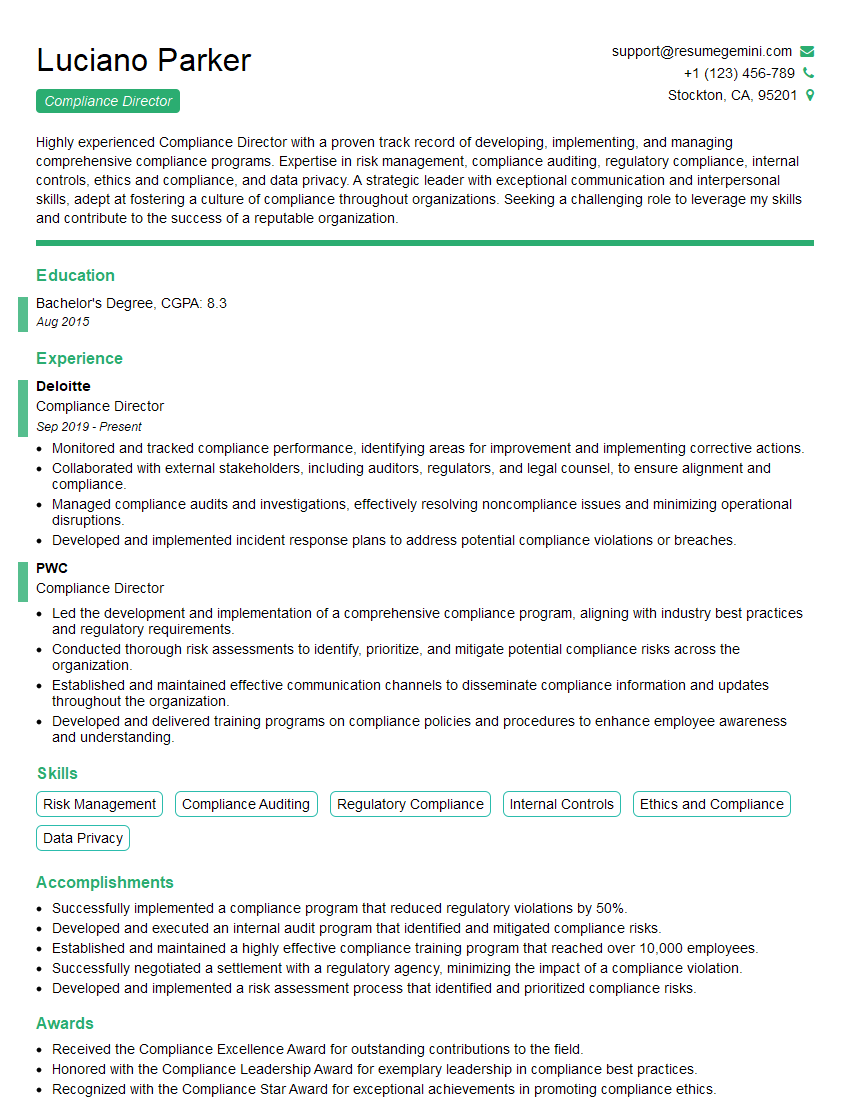
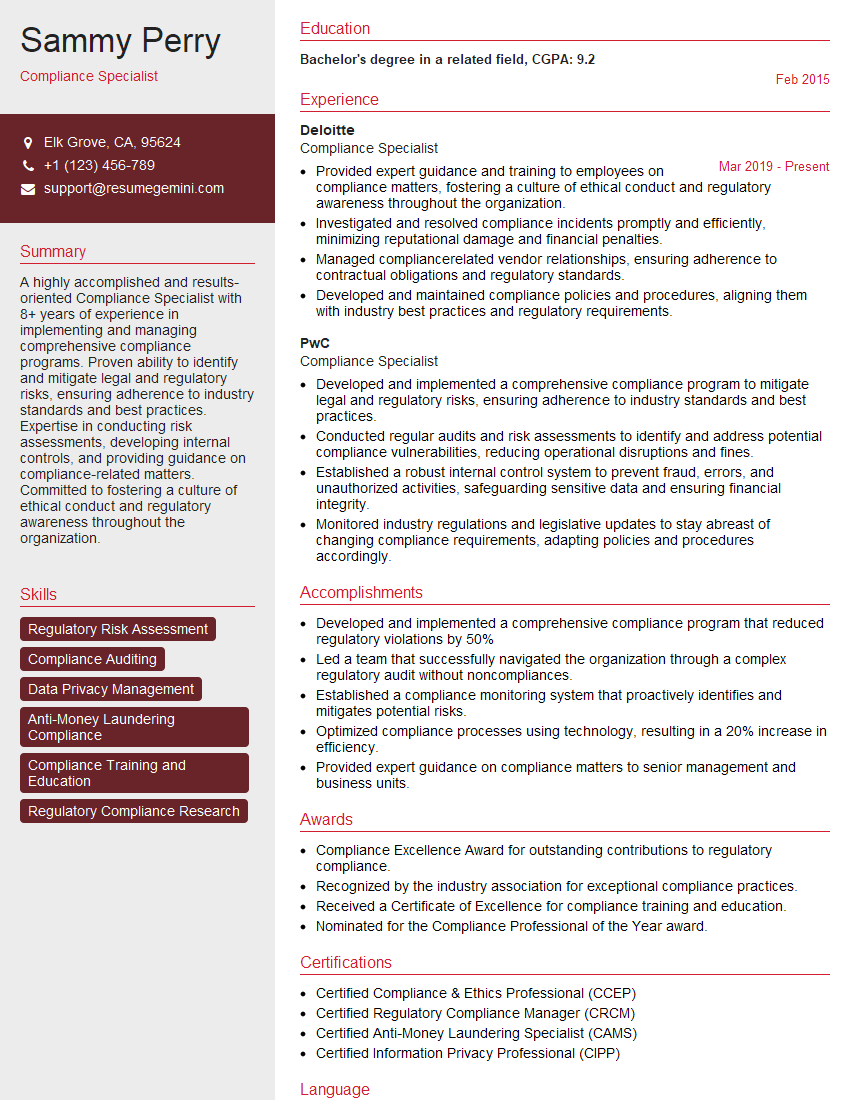
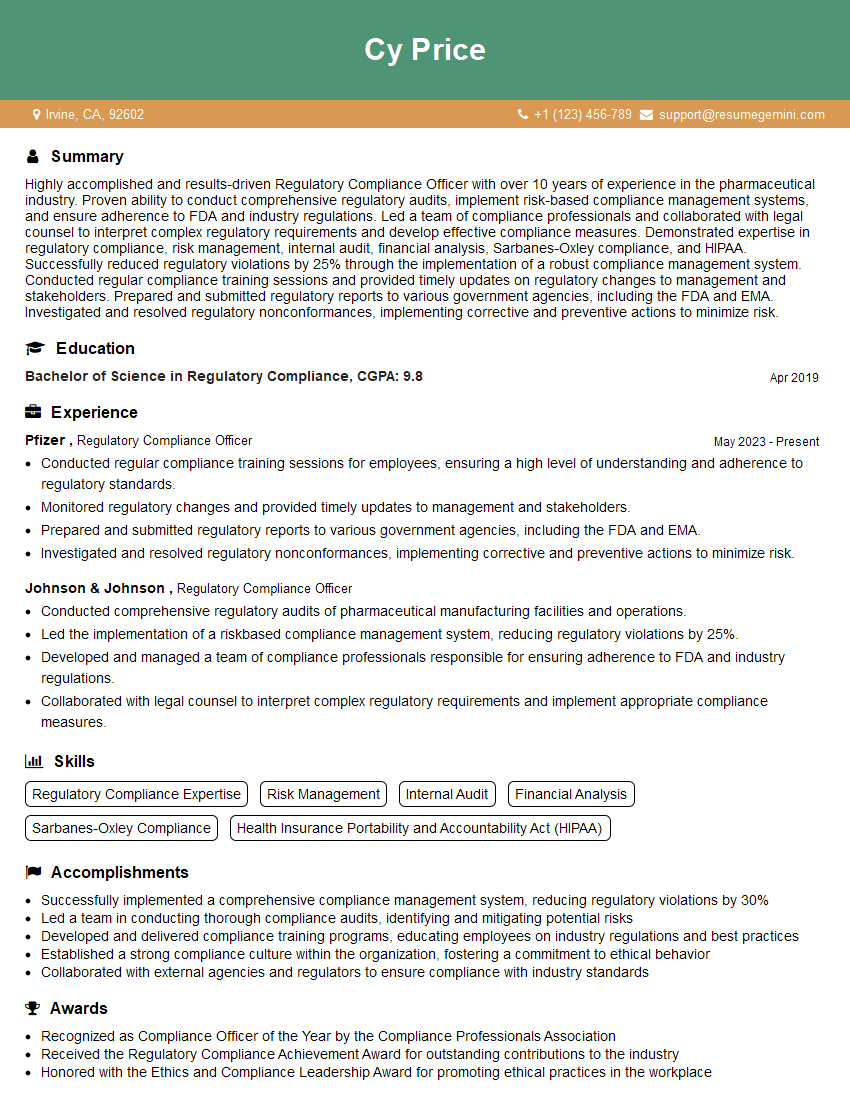
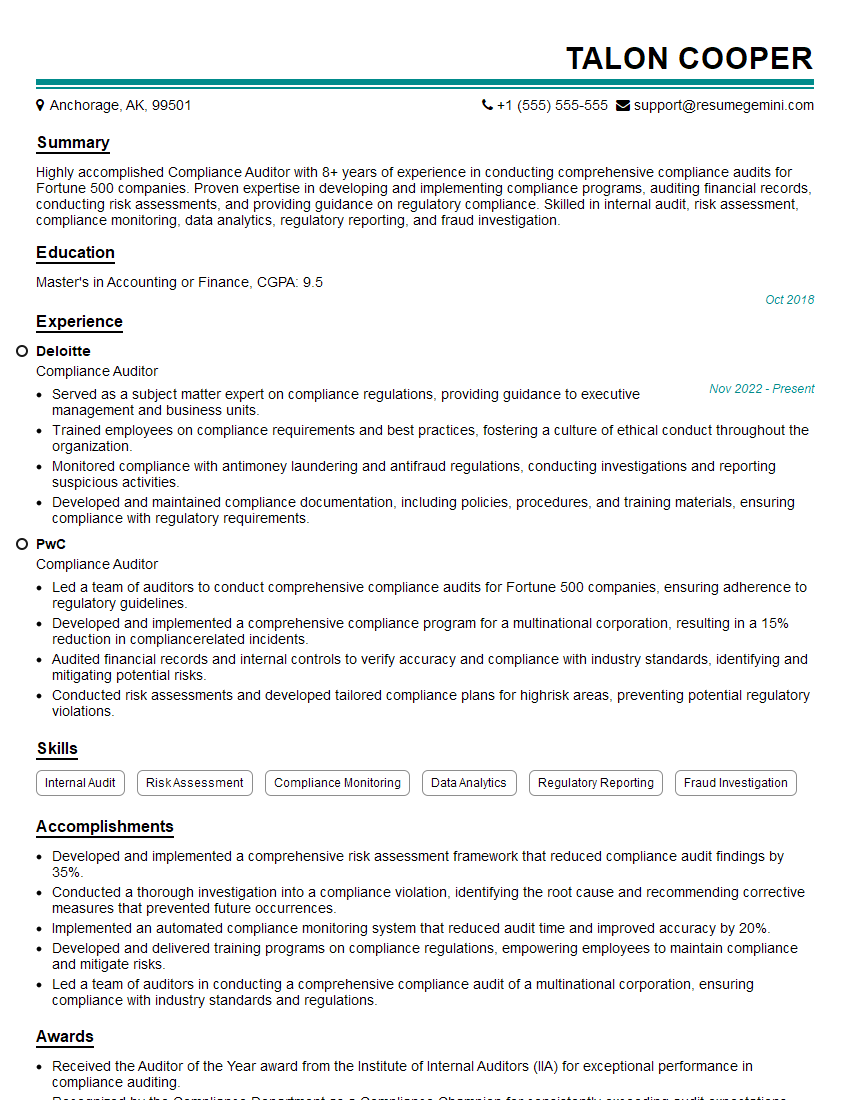
Mastering Telecommunications Regulatory Compliance Standards is crucial for career advancement in this rapidly evolving field. A strong understanding of these standards demonstrates your commitment to ethical practices and legal compliance, making you a highly valuable asset to any organization. To significantly enhance your job prospects, focus on creating an ATS-friendly resume that effectively showcases your expertise. ResumeGemini is a trusted resource to help you build a compelling and professional resume that highlights your skills and experience in this specialized area. Examples of resumes tailored to Telecommunications Regulatory Compliance Standards are available to guide your resume creation process.
Explore more articles
Users Rating of Our Blogs
Share Your Experience
We value your feedback! Please rate our content and share your thoughts (optional).
What Readers Say About Our Blog
Very informative content, great job.
good