Interviews are more than just a Q&A session—they’re a chance to prove your worth. This blog dives into essential Telephone Cable Termination interview questions and expert tips to help you align your answers with what hiring managers are looking for. Start preparing to shine!
Questions Asked in Telephone Cable Termination Interview
Q 1. Explain the process of terminating a twisted-pair cable.
Terminating a twisted-pair cable involves connecting the individual wires within the cable to a suitable interface, such as a telephone wall jack or a patch panel. This process ensures a reliable signal path for voice communication. The steps typically involve stripping the outer sheath, identifying the wires using their color codes, carefully crimping the wires onto the connector, and then testing the connection for proper functionality. Think of it like plugging a phone into the wall – the termination is the connection that allows the phone to function.
The process generally follows these steps: 1. Stripping the Outer Sheath: Carefully remove the outer protective layer of the cable, exposing the twisted pairs. 2. Identifying the Wires: Use the color code standard (discussed later) to identify each wire’s function. 3. Preparing the Connector: If using a modular connector (like an RJ11), ensure the connector is correctly oriented. 4. Crimping the Wires: Insert the wires into the connector according to the color code, and securely crimp the connector onto the wires using a crimping tool. 5. Testing the Connection: Test the connection using a telephone or a line tester to verify continuity and proper function.
Q 2. Describe the different types of telephone cable connectors.
Several types of connectors are used for terminating telephone cables, each with its specific application. The most common are:
- RJ11: This is the most prevalent connector for residential and small office telephone lines, typically with 2 or 4 conductors used for single or multiple lines.
- RJ14: Similar to RJ11, but can accommodate up to 6 conductors.
- RJ25 (RJ21): This larger connector provides termination for multiple lines. Often found in larger businesses or telephone switchboards.
- 66-block: These are punch-down blocks commonly used in telephone wiring closets. They provide a structured way to terminate multiple lines, providing easy access for testing and managing the wiring system.
The choice of connector depends on the number of lines being connected and the overall wiring infrastructure.
Q 3. What are the color codes for twisted-pair cables and their significance?
Color codes for twisted-pair telephone cables are standardized to ensure correct wiring and prevent signal errors. These color codes help technicians quickly and accurately identify the purpose of each wire pair. While variations exist, the most common standard uses color pairs. These pairs are usually twisted together to reduce electromagnetic interference (EMI).
- Red/Green: Often assigned to line 1.
- Black/Yellow: Often assigned to line 2.
- Blue/Orange: Often assigned to line 3 (less commonly used in residential setups).
- Brown/Slate: Used for additional lines or features.
The significance of the color codes is that they allow for easy identification and consistent wiring, regardless of the cable manufacturer or installation location. Incorrect wiring can lead to a loss of signal, noisy connections, or complete failure of the telephone system. It’s like using a color-coded map to connect the right points, ensuring the signal flows correctly.
Q 4. How do you identify and troubleshoot common telephone cable termination problems?
Troubleshooting telephone cable termination problems involves systematic investigation to pinpoint the source of the issue. Here’s a structured approach:
- Visual Inspection: Begin by visually inspecting the cable and connector for any obvious damage, such as broken wires, loose connections, or incorrect wiring.
- Continuity Test: Use a tone generator and probe to verify continuity between the cable’s ends. This will quickly indicate if there’s a break in the wire.
- Testing with a Telephone or Line Tester: A simple telephone can indicate a complete loss of signal, while a dedicated line tester can provide more detail, identifying open circuits, shorts, and other problems.
- Check Wiring at the Patch Panel or Wall Jack: Inspect the termination points at the patch panel or wall jack for proper connections and wiring according to the color code.
- Test Each Segment: If the problem exists in a longer cable run, test each segment individually to isolate the faulty section.
Remember, using the correct testing tools and a systematic approach will speed up your troubleshooting significantly. Often, a simple loose wire or a bad crimp is the culprit.
Q 5. What safety precautions should be taken when working with telephone cables?
Safety is paramount when working with telephone cables. Here are some essential precautions:
- Power Down: Always turn off any associated equipment (like telephone systems or network devices) before working on the cables. This prevents accidental electric shock.
- Proper Tools: Use only the appropriate tools – wire strippers, crimpers, and testers – to avoid cable damage or injury.
- Eye Protection: Wear safety glasses to protect your eyes from flying debris when cutting or stripping cables.
- Working Space: Keep your workspace clear and organized to prevent tripping or other accidents. Avoid working on unstable ladders or in awkward positions.
- Grounding: If working near energized equipment, ensure appropriate grounding measures are taken to prevent static electricity damage or electric shock.
Careful adherence to these safety guidelines minimizes the risk of injury and equipment damage.
Q 6. Explain the importance of proper cable labeling and documentation.
Proper cable labeling and documentation are crucial for efficient maintenance and troubleshooting. Without them, tracing cables and diagnosing faults becomes a time-consuming and challenging task. Imagine trying to find a specific cable in a dense wiring system without labels – a complete nightmare!
Good documentation should include:
- Cable identification numbers or labels: Clearly marked on the cable itself and at each termination point.
- Connection diagrams: Showing the path of each cable and its connections to equipment.
- Test results: Recording the results of continuity tests and other inspections.
- Dates of installation and any maintenance or repairs: To maintain a complete history of the cabling system.
Clear and accurate documentation is essential for quick and efficient fault diagnosis, maintenance, and future expansion of the telephone system.
Q 7. Describe the difference between shielded and unshielded twisted-pair cables.
The key difference between shielded and unshielded twisted-pair cables lies in their ability to resist electromagnetic interference (EMI). Unshielded twisted-pair (UTP) cables have no shielding around the wire pairs, making them susceptible to interference from external electromagnetic fields. Think of it like an open book – easily affected by external elements.
Shielded twisted-pair (STP) cables, on the other hand, include a metallic shield (usually foil or braid) around the twisted pairs. This shield acts as a barrier, preventing external electromagnetic fields from interfering with the signal. It’s like a book with a protective cover – shielding it from external damage.
STP cables are generally more expensive and more complex to install, but offer superior performance in environments with high levels of EMI, such as industrial settings or near high-powered electrical equipment. The choice between UTP and STP depends on the specific application and the level of EMI protection required.
Q 8. What is the purpose of a punch-down tool?
A punch-down tool is a specialized hand tool used to connect individual wires of a telephone cable to a termination block, such as a 66-block or Krone-type block. It’s essential for creating secure and reliable connections in telephone systems. Think of it like a tiny, precise hammer that inserts and crimps the wires into place. The tool features a sharp blade that cuts the wire to the correct length and a punch that firmly seats the wire into the terminal, ensuring a solid electrical connection.
Using a punch-down tool incorrectly can lead to loose connections, resulting in poor signal quality or complete failure. Different types of punch-down tools are available for various termination blocks. It’s important to select the appropriate tool for the specific type of block being used.
Q 9. How do you test the continuity of a telephone cable?
Testing the continuity of a telephone cable verifies that there’s a complete, unbroken electrical path between the ends of the cable. This is crucial to ensure proper signal transmission. A simple continuity tester, or even a multimeter set to the continuity function (often symbolized by a diode), is used for this purpose. The tester will beep or indicate continuity if the path is clear, or show no continuity if there’s a break in the wire.
To test, connect the probes of the continuity tester to the corresponding wire pairs at each end of the cable. Each pair should show continuity. If there’s no continuity on a pair, it indicates a break in that wire, short, or poor connection requiring repair or replacement of the affected segment. This process helps identify faulty cabling before installing it, avoiding potential problems down the line.
Q 10. Explain the concept of impedance matching in telephone cable termination.
Impedance matching in telephone cable termination ensures that the impedance (resistance to the flow of electrical signals) of the cable is matched to the impedance of the equipment it connects to, such as a telephone, PBX, or modem. A mismatch causes signal reflections, resulting in signal loss, distortion, and poor communication. It’s like ensuring that a garden hose has the right diameter and flow rate to match the water source and sprinkler head—a mismatch will lead to inefficient watering.
In telephone systems, the standard impedance is 600 ohms. Terminating the cable with components that have a 600-ohm impedance minimizes reflections, maximizing signal transfer. Achieving this requires choosing the correct terminators and ensuring that connections at both ends of the cable maintain this impedance. Incorrect impedance matching is a common cause of signal degradation and connectivity problems.
Q 11. What are the common causes of signal attenuation in telephone cables?
Signal attenuation in telephone cables, the weakening of the signal strength over distance, is caused by several factors:
- Resistance: The inherent resistance of the copper wire itself dissipates some signal energy as heat.
- Capacitance: The capacitance between the wires and their insulation causes some of the signal energy to be stored and then lost.
- Inductance: The magnetic field around the wires creates inductance, which also reduces signal strength.
- Skin effect: At higher frequencies, the signal current tends to flow on the outer surface of the conductor, increasing resistance.
- Cable damage: Physical damage like kinks, cuts, or water intrusion significantly increases attenuation.
Longer cables generally experience greater attenuation. The quality of the cable and the frequency of the signal also play a role. Proper cable selection and termination techniques help minimize these effects.
Q 12. How do you terminate a fiber optic cable?
Terminating a fiber optic cable requires specialized tools and techniques that are quite different from copper telephone cables. The process involves carefully cleaning the fiber, precisely cleaving the end to a perfect perpendicular surface, and then connecting it to a suitable connector (such as an SC, ST, or LC connector) using an epoxy or adhesive. The connector then plugs into a fiber optic transceiver or patch panel.
Precision is crucial. A poorly cleaved fiber end or improperly connected connector can result in significant signal loss. Special tools like fiber optic cleavers, polishing kits, and connectorizing tools are essential for proper termination. Often, specialized training is needed to ensure successful fiber optic cable termination.
Q 13. What are the differences between RJ-11, RJ-14, and RJ-45 connectors?
RJ-11, RJ-14, and RJ-45 are all registered jack (RJ) connectors used in telecommunications, but they differ in their pin configurations and applications:
- RJ-11: Typically used for single-line telephone connections. It has two or four conductors (two pairs) but only uses two in most standard applications.
- RJ-14: Designed for two telephone lines. It has six conductors (three pairs) but may only utilize two pairs depending on the application.
- RJ-45: Used for Ethernet and other high-speed data networks. It has eight conductors (four pairs) carrying data signals for networking equipment.
While they look similar, they are not interchangeable. Attempting to use an RJ-11 connector in an RJ-45 port, for example, will not work, and attempting to force it can cause damage.
Q 14. Describe different cable termination methods (e.g., Krone, 110-block).
Several methods exist for terminating telephone cables:
- Krone connectors: These are insulation displacement connectors (IDCs) where the wires are inserted into a block and a sharp blade cuts through the insulation, making contact with the copper wire to establish the connection. They are commonly used in telephone systems and are relatively easy to install and maintain.
- 110-block (or 66-block): Another type of IDC where wires are punched down into a block using a specialized punch-down tool. The 110-block requires a specific tool and offers a more reliable termination for large volumes of lines.
- Wire wrapping: Though less common today in telephone termination, it involves wrapping wires around terminals using a specialized tool; this method is used for creating durable connections in some specific applications.
- Crimp connectors: Used at the ends of wires to make a connection to equipment or another connector. These require crimping tools to ensure secure connections.
The choice of method depends on factors like the number of lines, application requirements, and available tools and expertise. Proper preparation of the wires, including stripping the insulation to the correct length, is critical for successful termination using any of these methods.
Q 15. How do you handle cable strain relief during termination?
Cable strain relief is crucial for the longevity and reliability of any telephone cable termination. Think of it like this: you wouldn’t want a loose wire dangling, susceptible to damage and breaks. Proper strain relief secures the cable, preventing stress on the connection points. This is achieved through several methods:
- Strain relief clamps: These secure the cable to the termination point, preventing pulling or bending forces from affecting the delicate connections within the termination block.
- Cable lacing and tying: Neatly bundling and securing the cable with appropriate ties reduces stress points and prevents the cable from being pulled or snagged.
- Proper cable routing: Avoiding sharp bends and ensuring the cable enters the termination point smoothly minimizes strain. Think of it like a gentle curve in a road, rather than a sharp turn.
- Use of appropriate connectors: Connectors designed for strain relief, such as those with integrated clamping mechanisms, offer built-in protection.
For example, in a large office building, improper strain relief on hundreds of telephone lines could lead to frequent disconnections and costly repairs. A well-executed strain relief strategy, however, ensures a stable and reliable network for years.
Career Expert Tips:
- Ace those interviews! Prepare effectively by reviewing the Top 50 Most Common Interview Questions on ResumeGemini.
- Navigate your job search with confidence! Explore a wide range of Career Tips on ResumeGemini. Learn about common challenges and recommendations to overcome them.
- Craft the perfect resume! Master the Art of Resume Writing with ResumeGemini’s guide. Showcase your unique qualifications and achievements effectively.
- Don’t miss out on holiday savings! Build your dream resume with ResumeGemini’s ATS optimized templates.
Q 16. What are the industry standards for telephone cable termination?
Industry standards for telephone cable termination vary depending on the specific application and geographical location, but some key standards and best practices are universally recognized. These often involve adherence to:
- TIA/EIA standards: These standards (like TIA-568) provide detailed specifications for cabling infrastructure, including wire gauges, termination techniques, and testing procedures. Following these standards ensures interoperability and compatibility with other equipment.
- National electrical codes (NEC): These codes define safety regulations for electrical installations, including the requirements for grounding and proper cable management in telephone systems.
- Manufacturer specifications: Always refer to the manufacturer’s instructions for specific connectors, termination blocks, and equipment. These instructions often include critical details regarding termination procedures.
Ignoring these standards can result in unreliable connections, safety hazards, and compatibility issues with other equipment. Consistency is key to ensuring a robust and stable telephone system.
Q 17. Explain the importance of grounding in telephone cable installations.
Grounding in telephone cable installations is paramount for safety and signal integrity. It serves as a crucial protective measure by:
- Protecting against lightning strikes: Grounding provides a low-impedance path for lightning currents to safely dissipate into the earth, preventing damage to equipment and potential harm to personnel. Think of it as a lightning rod for your telephone system.
- Reducing noise and interference: Grounding minimizes the impact of electromagnetic interference (EMI) and radio frequency interference (RFI), which can cause noise, distortion, and data corruption on telephone lines. A properly grounded system ensures cleaner signal transmission.
- Preventing electric shock: Grounding prevents dangerous voltages from appearing on the telephone equipment and lines, protecting users from potential electrocution.
A poorly grounded system can lead to erratic behavior, noisy lines, equipment damage, and, critically, safety risks. Therefore, proper grounding is a non-negotiable aspect of any responsible telephone cable installation.
Q 18. What tools and equipment are essential for telephone cable termination?
Essential tools and equipment for telephone cable termination vary depending on the specific job, but some common necessities include:
- Wire strippers and cutters: These are used to precisely remove the insulation from the cable without damaging the internal conductors.
- Punch-down tool: This tool is used to securely connect individual wires to termination blocks in a structured cabling system.
- Crimping tool: Used for securely attaching connectors to cables, ensuring a reliable connection.
- Cable tester: This verifies the proper functioning of the terminated cable and identifies any shorts, opens, or other faults.
- Multimeter: Used for measuring voltage, current, and resistance to troubleshoot connectivity problems.
- Safety glasses and gloves: Essential for protecting eyes and hands from sharp objects and potential electrical hazards.
Having the right tools ensures a clean, efficient, and safe termination process. Improper tools or techniques can lead to faulty connections, system instability, and potential safety hazards.
Q 19. How do you troubleshoot a noisy telephone line?
Troubleshooting a noisy telephone line is a systematic process. Here’s a step-by-step approach:
- Identify the type of noise: Is it crackling, humming, buzzing, or static? Different noises often indicate different problems.
- Check for loose connections: Inspect all connections at the termination points and along the cable route. A loose connection is a common source of noise.
- Inspect the cable for damage: Look for cuts, kinks, or other signs of physical damage. Damaged cable insulation can lead to noise and interference.
- Check for grounding issues: Ensure that the telephone system is properly grounded. Poor grounding is a significant source of noise and interference.
- Test the line with a cable tester: This will identify shorts, opens, or other faults in the cable.
- Check for EMI/RFI sources: Identify and eliminate or shield potential sources of electromagnetic or radio frequency interference near the telephone line.
- Verify the telephone equipment: Ensure that the telephone handsets, jacks, and other equipment are functioning correctly.
Using a methodical approach, one can usually isolate and resolve the cause of a noisy line. Often, a simple loose connection or grounding issue is to blame.
Q 20. What are the common types of cable faults?
Common types of telephone cable faults include:
- Open circuits: A break in the conductor, resulting in a complete loss of signal.
- Short circuits: An unintended connection between two conductors, resulting in signal loss or distortion.
- Ground faults: An unintentional connection between a conductor and ground, causing noise and safety hazards.
- Intermittent faults: Faults that occur sporadically, often due to loose connections or damaged insulation.
- Crosstalk: Unwanted signal coupling between adjacent pairs of wires in a cable.
- Attenuation: Signal weakening over distance, leading to reduced signal strength and poor voice quality.
These faults can be identified and often repaired through careful inspection, testing, and repair techniques. Prompt identification and resolution prevent further complications and downtime.
Q 21. Describe your experience with different types of cable installation environments.
My experience encompasses a wide range of cable installation environments, including:
- Office buildings: These typically involve structured cabling systems with numerous termination points and a need for careful cable management to maintain aesthetics and functionality. Challenges include navigating existing infrastructure and working around occupied spaces.
- Industrial settings: These often present more rugged conditions, requiring cables with enhanced protection against physical damage, chemicals, and extreme temperatures. Safety is paramount in these environments.
- Outdoor installations: Outdoor installations require cables designed for UV resistance, water ingress protection, and the ability to withstand extreme weather conditions. Proper grounding and lightning protection are critical here.
- Residential installations: These may range from simple single-line installations to more complex setups involving multiple handsets and accessories. Clear communication with clients and attention to detail are essential to ensure their satisfaction.
Adaptability and a thorough understanding of the specific requirements and challenges of each environment are crucial for successful installations. I always prioritize safety and code compliance in every setting.
Q 22. How do you manage your time effectively when performing cable terminations?
Effective time management during cable terminations is crucial for meeting deadlines and maintaining quality. My approach involves a three-pronged strategy: planning, prioritization, and execution.
Planning: Before starting any job, I carefully review the blueprints or schematics, calculating the time required for each step, including cable preparation, termination, testing, and documentation. This prevents unexpected delays.
Prioritization: I prioritize tasks based on urgency and complexity. For instance, critical connections for essential services are tackled first. This ensures smooth workflow and minimizes potential downtime.
Execution: I work methodically, breaking down complex terminations into smaller, manageable tasks. I also utilize time-saving techniques like pre-assembling components whenever possible. Regular breaks help maintain focus and prevent fatigue, leading to errors.
For example, on a recent large-scale project involving hundreds of terminations, meticulous planning allowed us to complete the project two days ahead of schedule, exceeding client expectations.
Q 23. Explain your experience working with different cable gauges.
Experience with various cable gauges is fundamental to successful telephone cable termination. Different gauges require different tools and techniques to ensure a secure and reliable connection. I’ve worked extensively with gauges ranging from 24 AWG (American Wire Gauge) for smaller, less demanding applications to 10 AWG for high-capacity trunk lines.
Smaller Gauges (24-22 AWG): These are commonly used for internal wiring and require precise handling to avoid damage. Specialized tools like small crimpers and strippers are essential.
Medium Gauges (20-18 AWG): These are frequently used in connecting telephone handsets and require more robust crimping tools.
Larger Gauges (16-10 AWG): These are used for higher-current applications and require specialized tools capable of handling thicker wires. The risk of damage during stripping and crimping is higher, therefore precision and experience are paramount.
Each gauge requires a specific crimping force and tool selection, which I determine based on manufacturer specifications. Improper crimping can lead to loose connections and signal degradation, leading to poor communication.
Q 24. Describe your approach to problem-solving when facing unexpected challenges during cable termination.
Unexpected challenges during cable termination are inevitable. My problem-solving approach is systematic and prioritizes safety and quality. I follow a structured process:
Identify the Problem: Thoroughly assess the situation, noting all relevant details such as the type of cable, the point of failure, and any visible damage.
Gather Information: Consult relevant documentation, including blueprints, specifications, and manufacturer guides.
Develop Solutions: Brainstorm potential solutions, considering their feasibility, cost, and impact on the overall system. This might involve rerouting cables, using alternative connectors, or contacting the manufacturer for technical support.
Implement Solution: Carefully implement the chosen solution, ensuring adherence to safety regulations and best practices.
Test and Verify: Test the connection thoroughly to ensure functionality and reliability. Document the entire process, including the problem, the solution, and the test results.
For instance, I once encountered a faulty connector that wasn’t immediately obvious. By systematically checking the continuity and voltage levels, I traced the problem to a loose internal connection within the connector itself and was able to resolve the issue by carefully resoldering it.
Q 25. How do you maintain your tools and equipment?
Proper tool and equipment maintenance is paramount for safety, efficiency, and high-quality work. My routine involves:
Regular Cleaning: After each use, I clean tools with appropriate solvents to remove debris and residue. This prevents corrosion and ensures the tools function correctly.
Inspection: I inspect tools for damage, wear and tear, and ensure proper calibration. Damaged tools are replaced or repaired immediately to prevent accidents or faulty terminations.
Proper Storage: I store tools in designated cases or racks to protect them from damage and ensure they’re readily available when needed.
Calibration: Crimping tools, in particular, require regular calibration to guarantee consistent crimping force, which directly affects the reliability of the connection.
Neglecting tool maintenance can lead to costly mistakes and safety hazards. A sharp blade on a wire stripper is just as crucial as a properly calibrated crimping tool.
Q 26. What are the key performance indicators (KPIs) for successful cable termination?
Key Performance Indicators (KPIs) for successful cable termination focus on speed, quality, and safety. These include:
Termination Time: The average time taken to complete a termination. This metric helps track efficiency and identify areas for improvement.
Error Rate: The number of faulty terminations per 100 terminations. A low error rate demonstrates precision and skill.
Testing Pass Rate: The percentage of terminations that pass quality testing. This confirms the reliability of the work.
Safety Incidents: The number of safety incidents per hour or project. This tracks adherence to safety protocols.
Customer Satisfaction: Feedback from clients on the quality and reliability of the cable terminations.
Tracking these KPIs provides valuable data to improve processes, identify training needs, and ultimately deliver high-quality and reliable service.
Q 27. How do you ensure the quality and reliability of your cable termination work?
Ensuring quality and reliability in cable termination requires meticulous attention to detail throughout the process. My approach involves:
Adherence to Standards: Strictly following industry standards, such as TIA/EIA standards for cabling, ensures the terminations meet required specifications.
Proper Cable Preparation: Precise stripping, cutting, and cleaning of cables is essential to prevent damage and ensure proper contact with connectors.
Correct Connector Selection: Choosing the right connector for the cable type and application is critical. Using the wrong connector can lead to failures.
Thorough Testing: Comprehensive testing using appropriate tools like continuity testers, tone generators, and time-domain reflectometers (TDRs) verifies that the connections are electrically sound and that signal integrity is maintained.
Documentation: Detailed documentation of every step of the process, including cable type, connector type, testing results, and any observations, is crucial for troubleshooting and future maintenance.
By consistently following these best practices, I contribute to reliable communication systems which are the backbone of our modern world.
Key Topics to Learn for Telephone Cable Termination Interview
- Understanding Cable Types: Familiarize yourself with various telephone cable types (e.g., twisted pair, fiber optic), their properties, and applications. Consider the differences in installation and termination techniques.
- Termination Techniques: Master the practical skills of terminating different cable types using appropriate tools and equipment. Understand the importance of proper grounding and shielding.
- Testing and Troubleshooting: Learn how to test cable continuity, signal strength, and identify common faults. Develop problem-solving skills to diagnose and rectify termination issues efficiently.
- Safety Procedures: Understand and adhere to all relevant safety regulations and best practices when working with telephone cables and termination equipment. This includes working at heights, proper use of tools, and electrical safety.
- Industry Standards and Codes: Become familiar with relevant industry standards and codes of practice related to telephone cable termination. Understanding these will demonstrate your commitment to professional standards.
- Network Topology and Design: Gain a basic understanding of how telephone cable termination fits within the broader context of a network. Knowing how different terminations impact network performance is valuable.
- Documentation and Reporting: Practice documenting your work clearly and accurately, including cable routing diagrams and testing results. This is crucial for efficient troubleshooting and maintenance.
Next Steps
Mastering Telephone Cable Termination opens doors to a variety of rewarding roles in telecommunications and networking. A strong understanding of these skills demonstrates your technical proficiency and attention to detail, making you a highly desirable candidate. To further enhance your job prospects, create an ATS-friendly resume that highlights your skills and experience effectively. ResumeGemini is a trusted resource that can help you build a professional and impactful resume, ensuring your application stands out. Examples of resumes tailored to Telephone Cable Termination are available to guide you through the process.
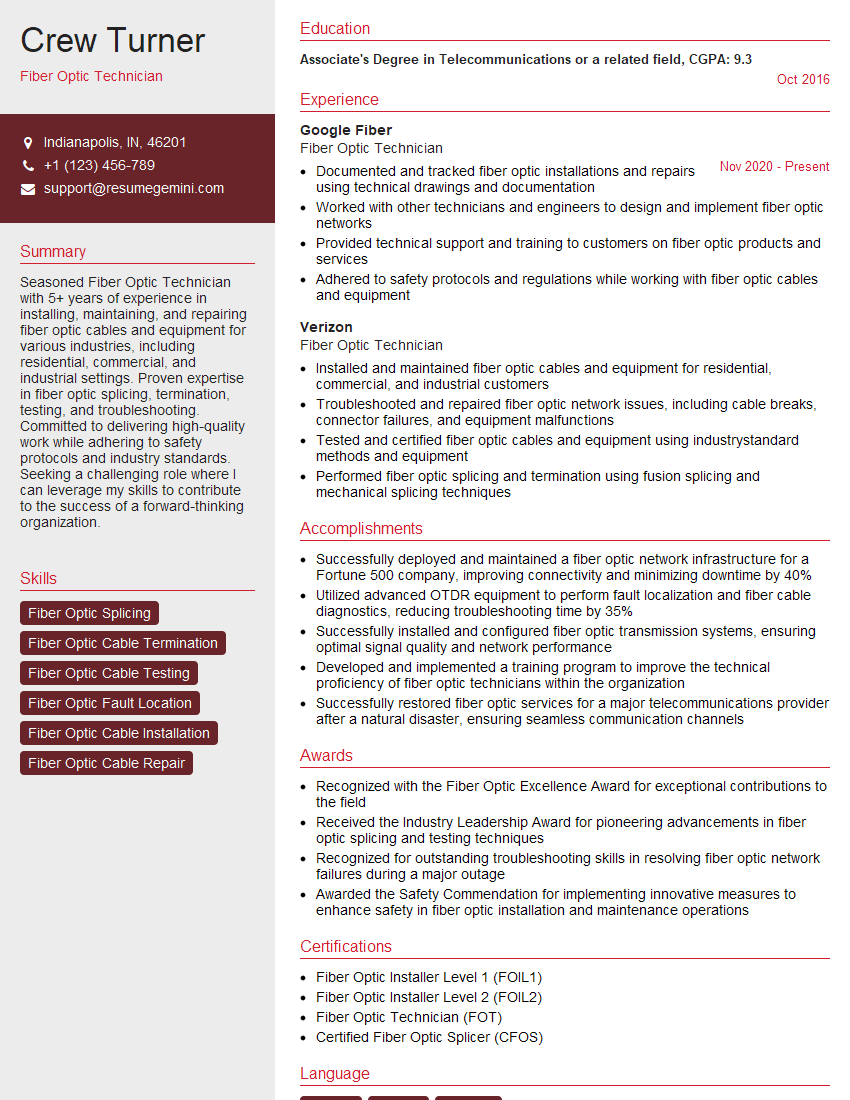
Fiber Optic Technician Resume Sample
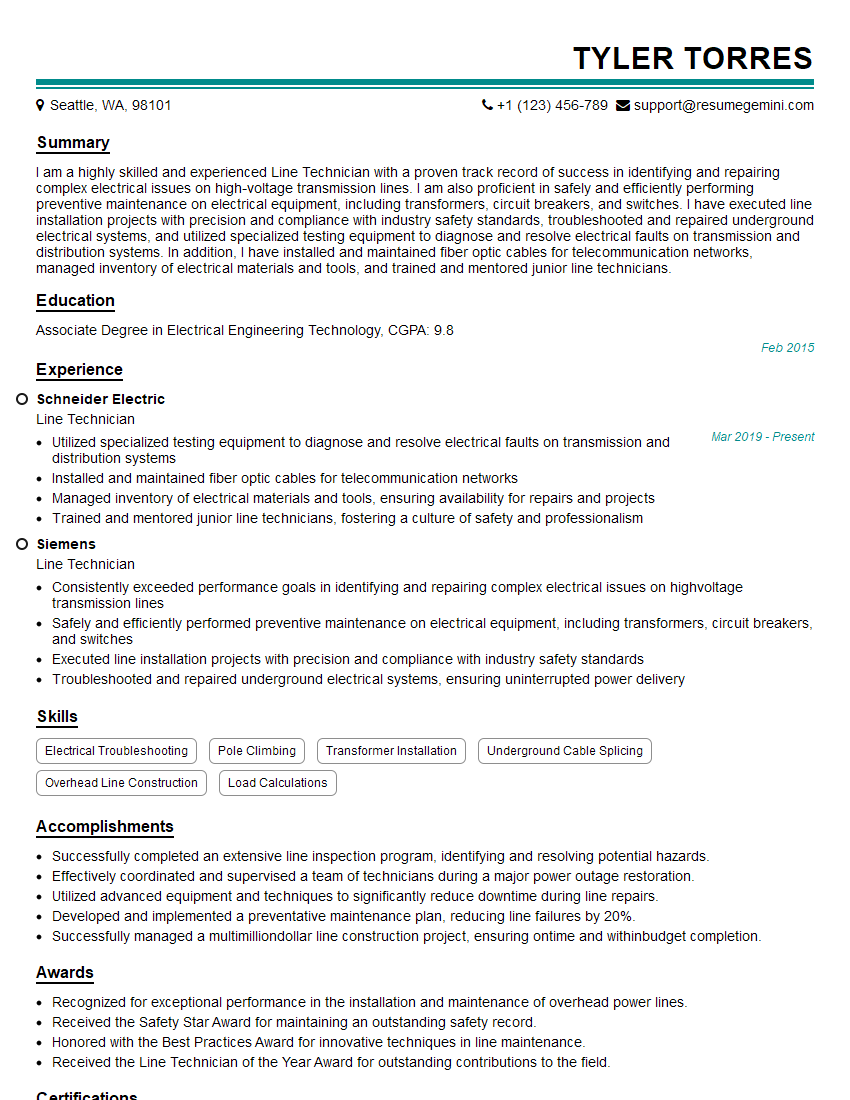
Line Technician Resume Sample
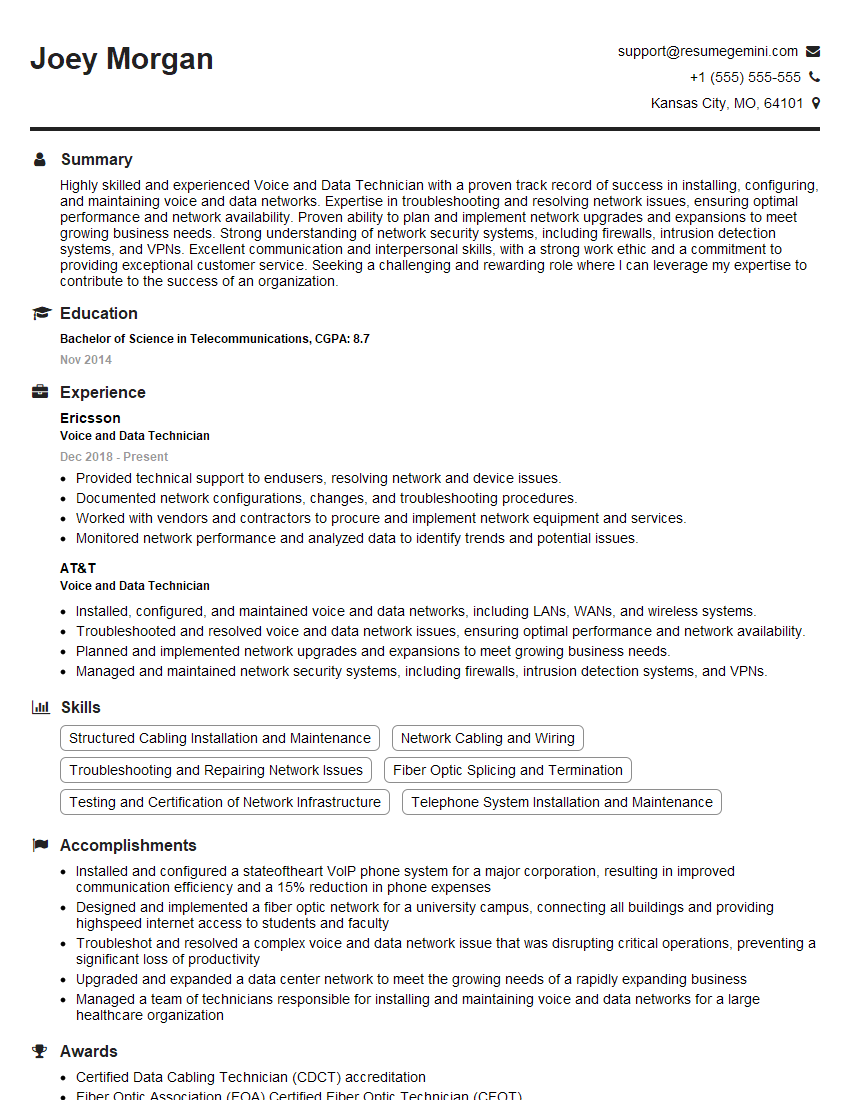
Voice and Data Technician Resume Sample
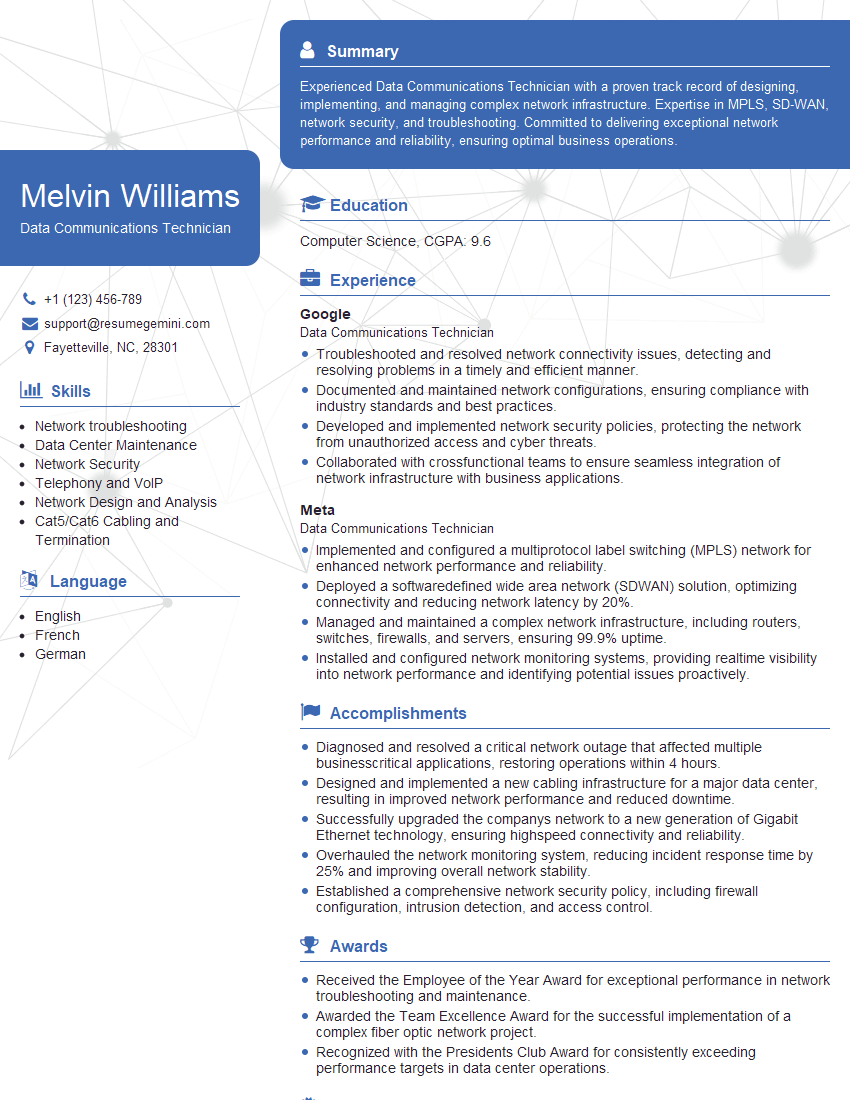
Data Communications Technician Resume Sample
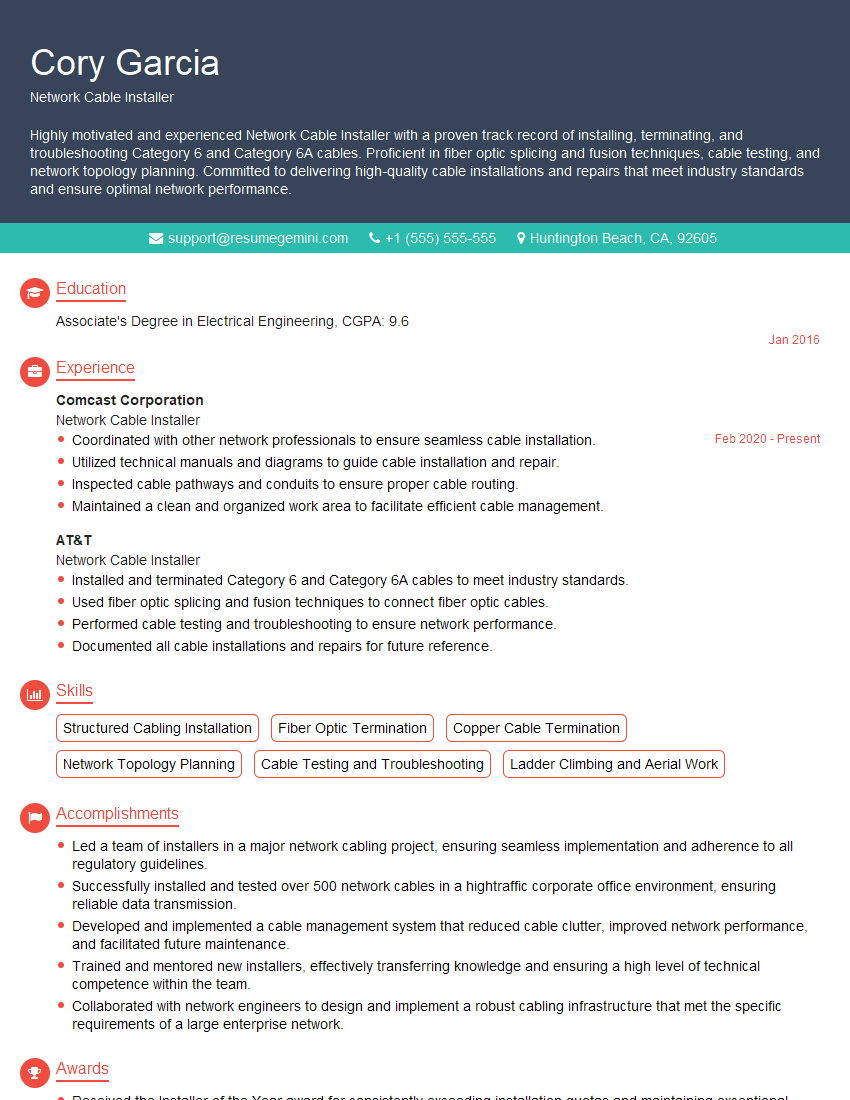
Network Cable Installer Resume Sample
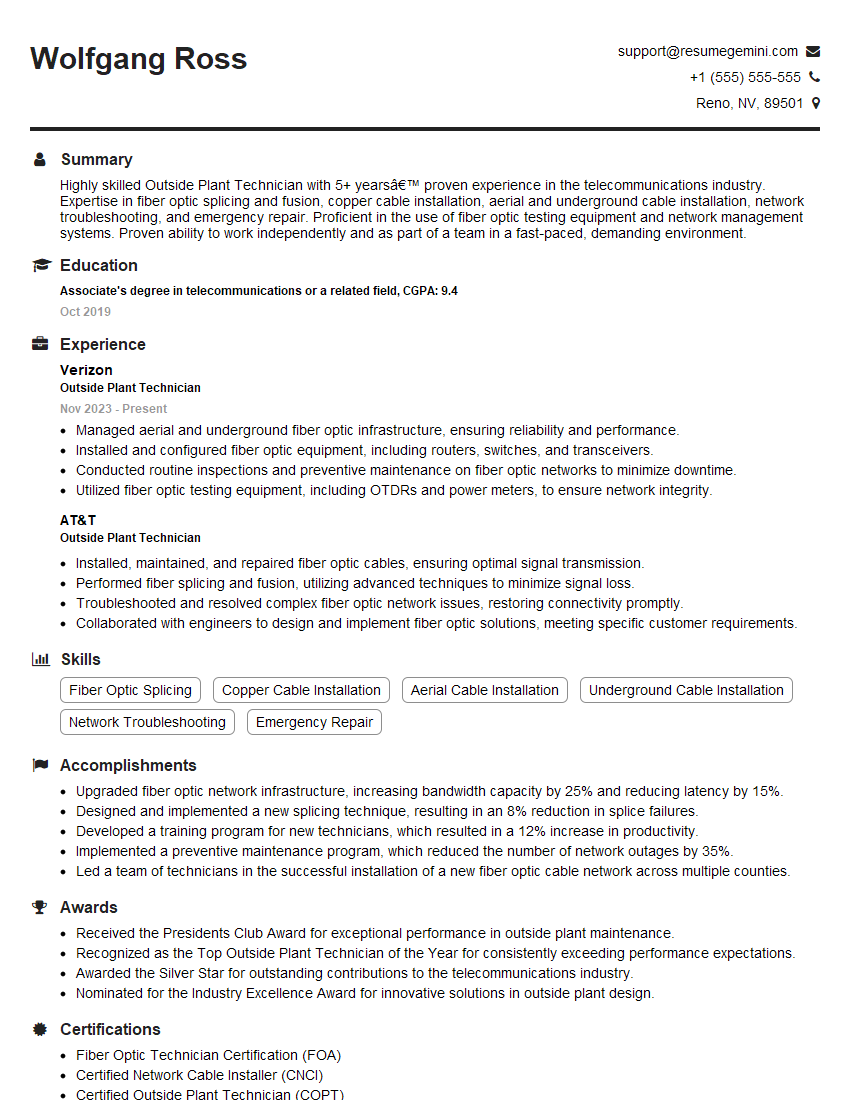
Outside Plant Technician Resume Sample
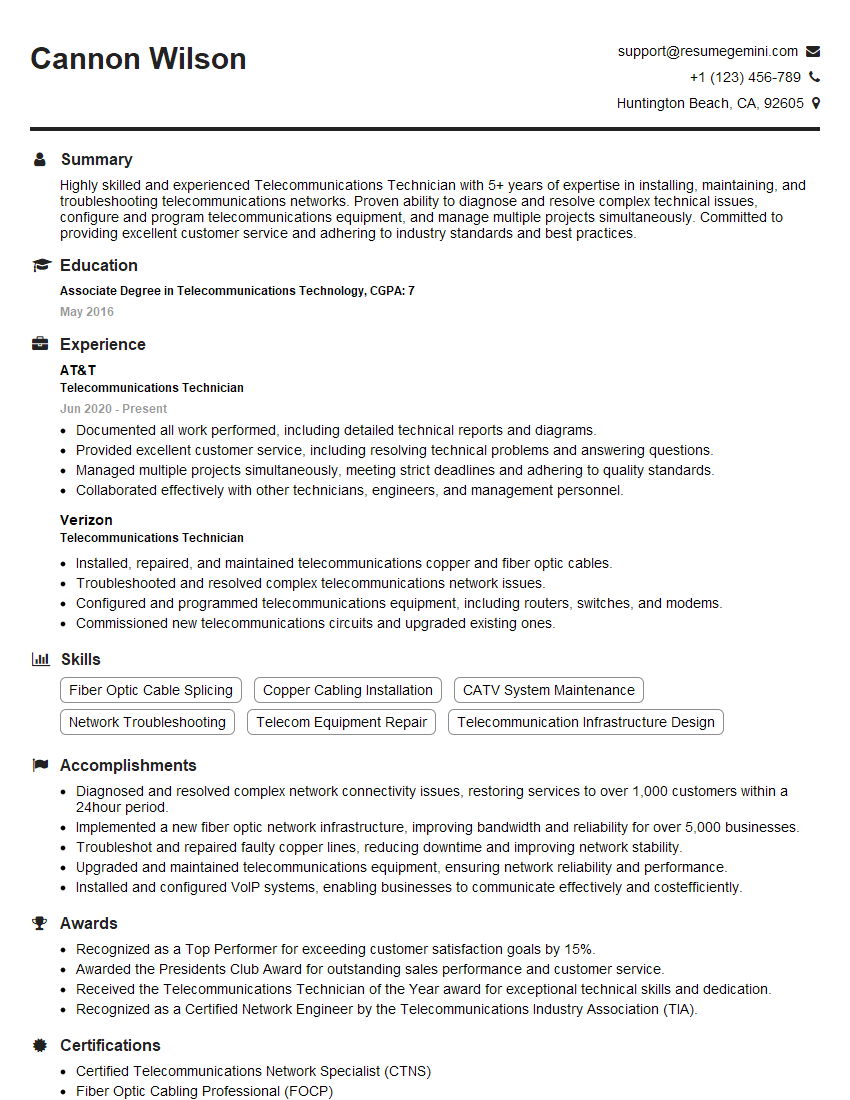
Telecommunications Technician Resume Sample

Cable Splicer Resume Sample
Explore more articles
Users Rating of Our Blogs
Share Your Experience
We value your feedback! Please rate our content and share your thoughts (optional).
What Readers Say About Our Blog
Very informative content, great job.
good