Interviews are opportunities to demonstrate your expertise, and this guide is here to help you shine. Explore the essential Temperature Regulation interview questions that employers frequently ask, paired with strategies for crafting responses that set you apart from the competition.
Questions Asked in Temperature Regulation Interview
Q 1. Explain the difference between conduction, convection, and radiation heat transfer.
Heat transfer is the movement of thermal energy from a hotter region to a cooler region. There are three primary mechanisms: conduction, convection, and radiation.
- Conduction is the transfer of heat through direct contact. Imagine holding a hot mug – the heat moves from the mug’s surface to your hand via direct contact. Materials vary in their thermal conductivity; metals are excellent conductors, while air is a poor one. In temperature regulation, conductive heat transfer is crucial in understanding heat flow through walls, pipes, or other solid components.
- Convection involves heat transfer through the movement of fluids (liquids or gases). Think of boiling water: the heated water rises, while cooler water sinks, creating a cycle that distributes heat. This is crucial in many temperature control systems that employ air or liquid circulation for cooling or heating. For instance, a forced air heating system uses convection to spread warm air throughout a building.
- Radiation is the emission of electromagnetic waves carrying thermal energy. The sun’s warmth is a perfect example; it radiates heat through space, reaching Earth without needing any medium. Infrared thermometers measure the radiant heat emitted from objects, often used in industrial and medical applications. In temperature control, radiation needs to be considered, especially in high-temperature processes or systems with significant surface area.
Understanding these three mechanisms is fundamental to designing efficient and effective temperature control systems, ensuring that heat is transferred appropriately to achieve the desired temperature.
Q 2. Describe your experience with various temperature sensors (e.g., thermocouples, RTDs, thermistors).
My experience with temperature sensors is extensive, encompassing a wide range of applications. I’ve worked extensively with thermocouples, RTDs (Resistance Temperature Detectors), and thermistors.
- Thermocouples offer a wide temperature range and are robust, making them ideal for harsh environments. I’ve used them in high-temperature furnaces and process monitoring. However, their accuracy can be slightly lower compared to other sensors.
- RTDs are known for their high accuracy and stability over a broad temperature range. They’re frequently used in precision applications, such as calibration labs and scientific instrumentation. I’ve incorporated them in designing systems where precise temperature measurements are paramount.
- Thermistors are inexpensive and have high sensitivity, making them suitable for applications where cost-effectiveness is important and rapid temperature changes need to be tracked. I’ve used these extensively in building climate control systems. However, their accuracy can vary with time and temperature.
Sensor selection depends heavily on the application’s specific requirements regarding accuracy, temperature range, response time, and cost. I’m adept at evaluating these factors to select the optimal sensor for each project.
Q 3. What are the key considerations for designing a temperature control system for a specific application?
Designing a temperature control system involves several crucial considerations:
- Process requirements: What is the desired temperature range, accuracy, and stability? What are the heating and cooling loads?
- Sensor selection: Choosing the appropriate sensor based on factors mentioned above (accuracy, range, response time, cost).
- Control algorithm: Selecting a suitable control algorithm (PID control is common, but others might be needed depending on system complexity and dynamics).
- Actuator selection: Choosing the appropriate actuators (e.g., heating elements, valves, fans) based on the system’s power requirements and response time.
- Safety considerations: Implementing safety measures to prevent overheating, overcooling, or other hazardous conditions.
- Environmental factors: Considering ambient temperature fluctuations and potential environmental influences on the system’s performance.
- Cost optimization: Balancing performance requirements with cost considerations, including sensor, actuator, and controller costs.
For example, a system for a high-precision laboratory oven will have vastly different design considerations compared to a system controlling the temperature of a large industrial reactor. A thorough understanding of the process and its limitations is essential for successful system design.
Q 4. How would you troubleshoot a temperature control system experiencing instability?
Troubleshooting a temperature control system experiencing instability involves a systematic approach.
- Inspect the sensor: Verify sensor readings are accurate and consistent. Check for sensor drift, calibration issues, or physical damage. This often involves comparing readings against a secondary sensor.
- Check the actuator: Confirm the actuator is functioning correctly. This could involve testing the heating elements for proper functionality or checking valves for leaks or blockages.
- Examine the control algorithm: Verify the controller’s tuning parameters (Proportional, Integral, Derivative gains in PID control) are appropriately set. Poor tuning can lead to oscillations and instability.
- Analyze the system dynamics: Consider factors such as heat losses, time constants, and system delays. Significant heat loss, for instance, might require adjusting the control algorithm or adding insulation.
- Inspect wiring and connections: Check for loose connections, broken wires, or short circuits, which can cause erroneous signals or malfunctioning components.
- Monitor the system over time: After making adjustments, monitor the system’s performance to ensure stability and accuracy.
A good strategy is to start with the simplest checks (sensors, actuators) before moving to more complex diagnostics (control algorithm, system dynamics). Detailed logging and data analysis are crucial in identifying the root cause of the instability.
Q 5. Explain the principles of PID control and its application in temperature regulation.
PID control is a widely used feedback control algorithm that adjusts a control element (e.g., a valve) to maintain a desired setpoint (e.g., temperature). It uses three terms:
- Proportional (P): Responds to the difference between the setpoint and the current value. A larger difference results in a greater correction.
- Integral (I): Addresses the accumulated error over time, eliminating steady-state error. It corrects for slow drifts in the temperature.
- Derivative (D): Predicts future error based on the rate of change of the error. It helps to dampen oscillations and improve stability.
The algorithm continuously calculates these three terms and adjusts the control element accordingly. The equation for PID control is often written as:
u(t) = Kp * e(t) + Ki * ∫e(t)dt + Kd * de(t)/dtwhere:
u(t)is the control signalKp,Ki,Kdare the proportional, integral, and derivative gains, respectivelye(t)is the error at time t
Tuning the PID gains (Kp, Ki, Kd) is crucial for achieving optimal performance. In temperature regulation, PID control is essential for maintaining stable temperatures in furnaces, ovens, incubators, and many other applications. The choice of gains depends on the specific system’s dynamics and desired response characteristics.
Q 6. Describe your experience with different types of control valves used in temperature regulation.
My experience encompasses various control valves used in temperature regulation, each with its own strengths and weaknesses.
- Globe valves are commonly used due to their simplicity and good throttling capabilities, suitable for regulating smaller flows. I’ve used these in many smaller-scale applications where precise control is not as critical.
- Ball valves are better suited for on/off control, offering fast switching between fully open and fully closed states. They’re less precise for fine temperature adjustments but are more reliable for high-pressure systems. I’ve employed them in safety relief scenarios within larger systems.
- Butterfly valves are suitable for larger flows and are often used in larger industrial systems. They offer good flow control but can exhibit some hysteresis (different responses for opening and closing).
- Control valves with positioners improve valve accuracy and repeatability by using feedback to ensure the valve is precisely positioned according to the control signal, crucial for maintaining precise temperature.
The selection of a control valve depends on several factors including flow rate, pressure, temperature, required accuracy, and cost. In my work, careful consideration is given to ensuring the selected valve matches the needs of the system and delivers reliable and efficient temperature regulation.
Q 7. How do you ensure the accuracy and reliability of temperature measurements?
Ensuring accurate and reliable temperature measurements is paramount. This involves a multi-pronged approach:
- Calibration: Regular calibration against traceable standards is essential to compensate for sensor drift and maintain accuracy. I typically use NIST-traceable calibration equipment.
- Sensor selection: Choosing the right sensor for the specific application, considering the temperature range, accuracy requirements, and environmental conditions. Understanding sensor limitations is critical.
- Proper installation: Correct installation is crucial to avoid measurement errors. Factors such as sensor placement, thermal coupling, and shielding from external influences must be considered.
- Data logging and analysis: Implementing a data logging system to monitor sensor readings over time allows for the detection of any anomalies or trends that might indicate sensor degradation or other issues.
- Redundancy: Using multiple sensors and comparing their readings can improve reliability and identify potential sensor failures. Having a secondary sensor provides a cross-check.
- Regular maintenance: Routine inspections and maintenance of sensors and associated equipment can prevent problems and ensure continued accuracy.
A robust quality assurance plan is vital to ensure the long-term accuracy and reliability of the measurements. This includes documented procedures for calibration, installation, maintenance, and data analysis. This methodical approach allows for consistent and reliable temperature control.
Q 8. What are some common challenges encountered in temperature regulation and how have you overcome them?
Common challenges in temperature regulation often stem from balancing precision, energy efficiency, and cost. For instance, maintaining tight temperature tolerances in a high-throughput manufacturing process can be difficult due to fluctuating ambient conditions and the heat generated by the equipment itself. Another challenge is designing systems that are both reliable and energy-efficient, minimizing operational costs without compromising performance. I’ve overcome these by employing a multi-pronged approach. In one project involving a pharmaceutical production line, we faced significant temperature fluctuations. To tackle this, we implemented a cascade control system, using a PID controller for the primary loop (main heating/cooling) and secondary controllers for individual zones. This improved precision significantly, reducing temperature deviations by over 70%. Furthermore, predictive modeling, based on historical data and environmental factors, allowed us to anticipate fluctuations and adjust the control system proactively, leading to substantial energy savings.
Another project involved a large server room where maintaining optimal temperature was crucial for equipment reliability. The challenge was controlling temperature uniformly across the large space given variations in heat load and air circulation. We solved this through strategic placement of sensors and actuators, employing zone control and airflow management techniques. This ensured even temperature distribution, preventing localized hotspots and extending the lifespan of the equipment.
Q 9. Explain your understanding of heat exchangers and their role in temperature control.
Heat exchangers are crucial components in temperature control systems. They facilitate the transfer of heat between two fluids (or a fluid and a solid) without direct mixing. This is based on the principle of conductive and convective heat transfer. Think of it like two cars driving alongside each other – one carrying a lot of heat (hot fluid), the other needing to cool down (cold fluid). The heat exchanger is the road that allows for a transfer of heat without the cars colliding and mixing their contents.
There are various types, including shell-and-tube, plate, and air-cooled exchangers. Shell-and-tube exchangers are common in industrial applications where large volumes of fluid need to be heated or cooled. Plate exchangers are efficient for smaller-scale applications, offering a large surface area for heat transfer in a compact design. Air-cooled exchangers are frequently used for rejecting waste heat to the atmosphere. The choice of heat exchanger depends on factors such as fluid properties, temperature difference, flow rate, and overall cost considerations. For example, in a process cooling application, we might choose a plate exchanger for its compact size and ease of maintenance, while for a large-scale power plant, a shell-and-tube exchanger might be necessary to handle the high flow rates and pressure.
Q 10. Describe your experience with programmable logic controllers (PLCs) in temperature control applications.
Programmable Logic Controllers (PLCs) are the brains of many temperature control systems. They’re essentially industrial computers designed to automate control processes. My experience with PLCs in temperature control applications encompasses programming, troubleshooting, and system integration. I’ve worked extensively with various PLC brands, using ladder logic and structured text programming languages to create control algorithms for complex systems.
For instance, in one project, we used a PLC to manage a multi-zone oven used for curing composite materials. The PLC monitored multiple temperature sensors, controlled heating elements, and ensured uniform temperature distribution within each zone through precise manipulation of the heating and airflow. // Example PLC Ladder Logic snippet (Illustrative): // Sensor input (high temp) -> coil (heating element OFF) // Sensor input (low temp) -> coil (heating element ON) Furthermore, the PLC’s data logging capabilities allowed for real-time monitoring and historical analysis, aiding in optimizing the process and reducing energy consumption. Troubleshooting PLC-controlled systems requires a systematic approach, encompassing fault diagnosis using diagnostic tools, analyzing error logs, and implementing preventative maintenance strategies.
Q 11. How do you design for thermal safety and prevent overheating in equipment?
Designing for thermal safety is paramount to prevent overheating and equipment failure. This involves considering multiple aspects, starting with proper heat dissipation design. This might involve increasing surface area for better heat transfer (e.g., adding fins to a heat sink), using efficient heat exchangers, or strategically positioning fans for optimal airflow.
Secondly, thermal sensors and safety interlocks are crucial. These sensors monitor operating temperatures, and when a predefined threshold is exceeded, the safety interlocks trigger actions such as switching off power, activating emergency cooling systems, or issuing alarms to prevent catastrophic failures. For example, we might incorporate temperature limit switches in a high-temperature industrial furnace to prevent overheating. Lastly, detailed thermal modeling and simulation help to predict temperature profiles under various operating conditions, allowing for proactive adjustments in the design to mitigate risks. A robust safety system ensures the longevity of equipment and minimizes the risk of accidents.
Q 12. Explain your familiarity with different types of insulation materials and their thermal properties.
Insulation materials are key in minimizing heat loss or gain. Different materials offer different thermal properties, characterized by their thermal conductivity (k-value). A lower k-value signifies better insulation. Common materials include fiberglass, mineral wool, polyurethane foam, and aerogel.
Fiberglass and mineral wool are widely used for their cost-effectiveness and ease of installation. Polyurethane foam offers superior insulation due to its lower k-value but can be more expensive and requires specialized equipment for application. Aerogel, while exceptionally effective, is costly and often used in specialized applications requiring extremely high insulation performance. The selection depends on factors like cost, required insulation level, application conditions, environmental concerns, and ease of installation. For example, in a cryogenic storage tank, we would opt for highly efficient aerogel due to its exceptional low thermal conductivity, while for standard building insulation, fiberglass or mineral wool might be sufficient.
Q 13. How do you approach the design and selection of cooling systems (e.g., air cooling, liquid cooling)?
The choice between air cooling and liquid cooling depends on the heat load, required temperature precision, and environmental factors. Air cooling is simpler and often cheaper for lower heat loads, suitable for electronics with moderate heat dissipation. However, it’s less efficient for high heat loads, resulting in larger and noisier systems.
Liquid cooling offers superior heat dissipation, especially for high-heat-generating devices like high-power CPUs or lasers. It provides better temperature control and is more efficient in compact spaces. The selection process involves calculating the heat load, determining the required cooling capacity, comparing the efficiency and cost of different systems, and assessing environmental considerations. In designing a data center, for instance, we might choose liquid cooling for high-density server racks for its superior heat removal capability, while air cooling may suffice for less densely packed areas. Factors such as the ambient temperature and available cooling water also influence the decision.
Q 14. What are the key performance indicators (KPIs) you use to evaluate the effectiveness of a temperature control system?
Key Performance Indicators (KPIs) for evaluating temperature control systems include temperature accuracy, stability, and uniformity. Accuracy measures how closely the controlled temperature matches the setpoint. Stability assesses how consistently the temperature remains at the desired value. Uniformity refers to the evenness of temperature distribution across the controlled space.
Other crucial KPIs encompass energy efficiency (measured as energy consumption per unit of cooling/heating), system reliability (measured by mean time between failures), and operational costs. In practice, we use data acquisition systems to collect real-time data on these parameters, which we then analyze to determine system effectiveness. For example, tracking energy consumption helps identify areas for optimization, while analyzing downtime due to system failures helps to improve reliability and reduce maintenance costs.
Q 15. How do you ensure compliance with relevant safety standards and regulations in temperature control systems?
Ensuring compliance with safety standards in temperature control systems is paramount. It begins with a thorough understanding of relevant regulations like those from OSHA (Occupational Safety and Health Administration) or IEC (International Electrotechnical Commission), depending on the geographical location and industry. These regulations often cover aspects like electrical safety, pressure vessel safety, refrigerant handling, and emergency shutdown procedures.
My approach involves a multi-step process:
- Risk Assessment: Identifying potential hazards associated with the system, such as leaks, electrical faults, or high-temperature surfaces.
- Selection of Safe Components: Choosing certified components that meet relevant safety standards. This includes pressure relief valves, safety interlocks, and properly rated electrical components.
- Design for Safety: Incorporating safety features during the design phase. This could involve redundant sensors, emergency shut-off systems, and clear safety signage.
- Testing and Validation: Rigorous testing of the system to ensure it performs as designed and meets safety requirements. This could include pressure tests, leak detection, and functional testing of safety systems.
- Documentation and Training: Maintaining comprehensive documentation of the system’s design, safety features, and operating procedures. Providing thorough training to operators on safe operating procedures and emergency response protocols.
For example, in a pharmaceutical cold storage facility, ensuring the system meets FDA guidelines on temperature monitoring and data logging is crucial. Any deviation necessitates immediate corrective action and thorough documentation to maintain compliance.
Career Expert Tips:
- Ace those interviews! Prepare effectively by reviewing the Top 50 Most Common Interview Questions on ResumeGemini.
- Navigate your job search with confidence! Explore a wide range of Career Tips on ResumeGemini. Learn about common challenges and recommendations to overcome them.
- Craft the perfect resume! Master the Art of Resume Writing with ResumeGemini’s guide. Showcase your unique qualifications and achievements effectively.
- Don’t miss out on holiday savings! Build your dream resume with ResumeGemini’s ATS optimized templates.
Q 16. Describe your experience with software used for temperature control system design and simulation.
I have extensive experience with various software packages for temperature control system design and simulation. My proficiency spans from industry-standard tools like MATLAB/Simulink and ANSYS to specialized software for refrigeration system design.
MATLAB/Simulink, for instance, allows for dynamic modeling and simulation, enabling me to predict system behavior under various operating conditions. This is invaluable for optimizing control strategies and identifying potential issues before implementation. I have used it extensively to model complex refrigeration cycles, including vapor compression and absorption cycles, and to design robust control algorithms.
ANSYS, on the other hand, excels in performing finite element analysis (FEA) for thermal modeling, especially for determining temperature distributions within complex geometries. This is critical when designing heat exchangers or predicting temperature gradients in equipment.
Specific examples include using MATLAB to tune a PID controller for a cold storage room, optimizing the cycling performance, and reducing energy consumption by modeling the impact of various parameters such as ambient temperature and compressor efficiency. With ANSYS, I’ve modeled the thermal performance of a new heat exchanger design, optimizing fin spacing and geometry for maximum effectiveness.
Q 17. Explain your understanding of thermal modeling and simulation techniques.
Thermal modeling and simulation are crucial for predicting the thermal behavior of systems and components before physical construction. It allows for optimization and identification of potential problems early in the design process. This involves using mathematical models to represent heat transfer mechanisms like conduction, convection, and radiation.
My understanding encompasses several techniques:
- Finite Element Analysis (FEA): A numerical method that divides the system into smaller elements to solve the governing heat transfer equations. This is particularly useful for complex geometries.
- Computational Fluid Dynamics (CFD): Used to simulate fluid flow and heat transfer within fluids. This is essential when modeling systems involving moving fluids, like in refrigeration systems.
- System Dynamics Modeling: Focuses on the interactions between different components in the system and how temperature changes over time. This is valuable for understanding the system’s overall behavior and designing effective control strategies.
For instance, when designing a new data center cooling system, I would use CFD to model airflow patterns and heat dissipation to optimize the placement of cooling units and ensure uniform temperature distribution. FEA would be used to model heat transfer within components such as server racks and power supplies to predict their temperature rise under various operating loads.
Q 18. How do you optimize energy efficiency in temperature control systems?
Optimizing energy efficiency in temperature control systems is a critical aspect of my work, encompassing both the design and operational phases. It’s often approached through a multifaceted strategy:
- Efficient Equipment Selection: Choosing high-efficiency compressors, motors, and other components with lower energy consumption. This includes considering the Coefficient of Performance (COP) for refrigeration systems, a measure of their efficiency.
- Advanced Control Strategies: Implementing sophisticated control algorithms like model predictive control (MPC) to optimize the system’s operation based on predicted conditions. This can significantly reduce energy waste.
- Improved Insulation and Sealing: Minimizing heat transfer into or out of the controlled space through better insulation and sealing of doors, windows, and other openings. This reduces the load on the refrigeration system.
- Heat Recovery: Recovering waste heat from the system and using it for other purposes, like preheating water or space heating. This reduces overall energy consumption.
- Monitoring and Data Analysis: Continuously monitoring system performance and analyzing energy usage data to identify areas for improvement and optimize operational parameters.
For example, in a large industrial refrigeration system, I might implement a variable-speed drive on the compressor to adjust its output based on the cooling demand. This reduces energy consumption compared to a fixed-speed system. Furthermore, implementing advanced analytics can identify unexpected spikes in energy consumption, potentially indicating a malfunction that needs attention.
Q 19. Describe your experience with different types of refrigeration cycles.
My experience with refrigeration cycles includes a wide range, focusing on understanding their thermodynamic principles and applications. Key cycle types include:
- Vapor-Compression Cycle: The most common type, using a refrigerant to absorb heat at low pressure and temperature, then compress it to release heat at higher pressure and temperature. I’ve worked extensively on optimizing its efficiency through component selection and control strategies.
- Absorption Refrigeration Cycle: This cycle uses heat, rather than electricity, to drive the refrigeration process, making it suitable for applications with readily available waste heat. I’ve designed systems utilizing this method for industrial process cooling.
- Cascade Refrigeration Cycle: Employs multiple refrigeration cycles in series, each operating at a different temperature level. This enhances efficiency when dealing with very low temperatures.
- Air Cycle Refrigeration: Uses compressed air as the refrigerant, which is beneficial in certain industrial processes or aircraft applications. This type requires careful consideration of pressure drop and component selection.
For example, in a food processing plant, I’ve designed a cascade system to maintain ultra-low temperatures for cryogenic freezing, while in a data center, I’ve optimized a vapor-compression system to improve cooling efficiency and minimize the environmental impact.
Q 20. How do you manage and mitigate the impact of environmental factors on temperature control systems?
Environmental factors significantly influence temperature control systems. My approach focuses on mitigating their impact through robust design and operational strategies:
- Ambient Temperature Variations: Designing systems with sufficient capacity to handle fluctuations in ambient temperature. This often involves incorporating oversized components or employing adaptive control strategies.
- Humidity: Considering the impact of humidity on heat transfer and component performance, particularly in refrigeration systems. This could involve using specialized materials or incorporating dehumidification systems.
- Solar Radiation: Minimizing the impact of solar radiation on the controlled space through appropriate insulation, shading, or reflective coatings. This reduces the cooling load on the system.
- Wind and Precipitation: Designing systems to withstand extreme weather conditions, protecting them from damage and ensuring continued operation. This includes using weatherproof enclosures and implementing appropriate safety measures.
For instance, in a greenhouse environment, I would design a system that accounts for significant diurnal temperature fluctuations and adjusts the cooling and heating capacity accordingly. In a coastal environment, corrosion resistance is a major factor in material selection, ensuring the longevity and safety of the system.
Q 21. Explain your understanding of different types of temperature control loops (e.g., open-loop, closed-loop).
Temperature control loops are crucial for maintaining a desired temperature. Two main types exist:
- Open-Loop Control: The system operates without feedback from the controlled variable. It’s simple but less precise; it’s susceptible to external disturbances. Think of a simple timer-based heating system; it turns on for a set duration regardless of the actual temperature.
- Closed-Loop Control (Feedback Control): The system utilizes feedback from sensors to compare the actual temperature to the desired setpoint. A controller adjusts the heating or cooling based on this error, continuously striving for the desired temperature. This is far more accurate and responsive than open-loop control; a thermostat is a prime example.
Closed-loop control can be implemented using various control algorithms such as:
- Proportional (P): The corrective action is proportional to the error.
- Integral (I): Addresses the accumulated error over time, eliminating steady-state errors.
- Derivative (D): Predicts the future error based on the rate of change, improving the response to disturbances.
- PID (Proportional-Integral-Derivative): Combines P, I, and D actions for optimal control performance, offering a balance between responsiveness and stability.
The choice between open-loop and closed-loop depends on the application’s precision requirements and tolerance for external disturbances. Closed-loop is preferred for most precise temperature control applications, while open-loop might suffice for simpler, less critical situations.
Q 22. How do you handle temperature control issues in different environmental conditions (e.g., high humidity, extreme temperatures)?
Temperature control in diverse environments requires a nuanced approach. High humidity, for instance, impacts heat transfer through increased latent heat. This means that the energy required to change the temperature of a humid environment is higher than that of a dry environment. We might need to adjust the capacity of our heating/cooling system or introduce dehumidification strategies. Extreme temperatures, whether hot or cold, place stress on equipment. In extreme heat, we need to consider things like increased insulation, improved airflow to prevent overheating of components, and potentially even redundant systems to mitigate failures. In extreme cold, we need to account for the potential for freezing of fluids and the need for freeze protection. For example, in a pharmaceutical cold storage facility operating in a region with harsh winters, we might implement multiple layers of insulation, employ glycol-based heating systems within the walls, and utilize sophisticated temperature monitoring with alarms to prevent loss of product due to freezing. Similarly, in a data center located in a desert climate, we would need robust air conditioning systems, possibly with redundant chillers and evaporative cooling to manage the extreme heat and humidity.
Choosing the right equipment for these specific conditions is vital. For example, we might employ different refrigerants or HVAC systems depending on the ambient temperature and humidity. We might also choose temperature sensors with specific ranges or features optimized for high humidity or extreme temperatures.
Q 23. Describe your experience with commissioning and validation of temperature control systems.
Commissioning and validation of temperature control systems is a critical aspect of ensuring they meet design specifications and regulatory compliance. My experience includes performing IQ (Installation Qualification), OQ (Operational Qualification), and PQ (Performance Qualification) for various systems, from small-scale laboratory equipment to large-scale industrial processes. For example, in a recent project involving a pharmaceutical cleanroom, I led a team through the entire validation process, including documenting all procedures, testing sensors, confirming temperature uniformity, and creating detailed reports.
During commissioning, I perform systematic checks of equipment installation, wiring, and sensor calibration. This often involves using calibrated temperature probes and data loggers to measure the system’s performance under various operating conditions. Validation involves demonstrating that the system consistently meets pre-defined performance requirements and satisfies relevant standards like GMP (Good Manufacturing Practice) or USP (United States Pharmacopeia). Any deviations are carefully documented, investigated, and addressed before the system is approved for use. We also develop thorough documentation to facilitate future maintenance and regulatory inspections.
Q 24. Explain your understanding of the concept of thermal resistance and its calculation.
Thermal resistance is a measure of a material’s ability to impede the flow of heat. It’s analogous to electrical resistance, where a higher resistance means less current flow. In heat transfer, a higher thermal resistance means less heat flow. It’s calculated using the formula: R = ΔT / Q where R is thermal resistance, ΔT is the temperature difference across the material, and Q is the rate of heat flow (Watts). However, this simple formula only applies to a few situations. More complex scenarios require consideration of the materials’ thermal conductivity (k), thickness (L), and area (A). A more comprehensive equation for thermal resistance (R) is R = L / (k * A).
For example, consider a wall made of a certain material. A thicker wall will have higher thermal resistance than a thinner wall, while a material with higher thermal conductivity will have lower thermal resistance, meaning heat will transfer through it more easily. Understanding thermal resistance is crucial for designing efficient insulation in buildings, choosing appropriate materials for heat exchangers, and preventing overheating in electronic equipment.
Q 25. How do you interpret and analyze temperature data to diagnose problems and optimize performance?
Interpreting temperature data involves looking for patterns, trends, and anomalies that can indicate problems or areas for optimization. I use various techniques, including statistical process control (SPC) charts, to identify trends and deviations from the set points. We typically look for things such as: large temperature swings, drifts in temperature, sustained deviations from set points, and cyclic patterns. For example, a gradual increase in temperature in a refrigerated environment could indicate a failing compressor or insufficient cooling capacity. Spikes in temperature readings might point to a sensor malfunction or a temporary surge in heat generation.
Sophisticated data analysis software can help automate the process. For instance, I might use software capable of detecting anomalies based on pre-defined thresholds and applying predictive modeling to forecast potential issues. The specific analytical method often depends on the type of temperature control system and the data collected. Ultimately, the goal is to pinpoint the root cause of any issues and implement the appropriate corrective actions.
Q 26. What are some common failure modes in temperature control systems and how can they be prevented?
Common failure modes in temperature control systems include sensor malfunctions (drift, failure), actuator failures (stuck open/closed, mechanical wear), control system failures (software glitches, wiring problems), and insulation degradation. Preventing these failures involves a multi-pronged approach.
- Regular calibration and maintenance of sensors and actuators: This ensures accuracy and early detection of potential problems. A preventive maintenance schedule is essential.
- Redundancy and fail-safes: Incorporating backup sensors and actuators can prevent system failure if a component fails. Fail-safes ensure the system enters a safe state in case of malfunction.
- Proper installation and wiring: Careful installation and proper wiring are crucial in reducing the likelihood of electrical faults.
- Environmental protection: Shielding components from harsh environments (humidity, dust, vibration) increases their lifespan. Proper insulation helps prevent heat loss or gain.
- Regular software updates and testing: This helps mitigate software bugs and vulnerabilities in control systems.
Q 27. Describe your experience working with different types of actuators used in temperature control systems.
My experience encompasses a range of actuators, including pneumatic valves, electric valves, and stepper motors. Pneumatic valves are often used in high-pressure systems where the force required to operate the valve exceeds the capabilities of electrical actuators. They are simple but can be less precise. Electric valves offer better control and precision, making them suitable for applications where fine-tuning is crucial, like in precise temperature control systems in laboratories. Stepper motors are often used for positioning or adjusting dampers in HVAC systems; they provide precise positioning control.
The choice of actuator depends on factors like the required force, precision, speed, environmental conditions, power availability, and cost. For example, in a large industrial process, pneumatic valves might be preferred due to their robustness and ability to operate in harsh environments. Meanwhile, in a precision laboratory setting, electric valves are often the better choice due to their precise control.
Q 28. How do you ensure the integrity and reliability of temperature control systems over their lifespan?
Ensuring the longevity and reliability of temperature control systems requires a proactive approach. This begins with proper design and selection of high-quality components rated for the intended lifespan and operating conditions. A robust preventative maintenance program is essential, including regular calibration of sensors, inspection of actuators and wiring, and testing of the control system.
Implementing a comprehensive data logging and monitoring system allows us to track the system’s performance over time, identifying potential issues early on. Regular software updates for the control system are crucial to address bugs and implement improvements. Finally, detailed documentation of the system’s design, operation, and maintenance history is invaluable for troubleshooting and future upgrades. This helps ensure that the system performs reliably and meets regulatory standards throughout its lifespan.
Key Topics to Learn for Temperature Regulation Interview
- Thermodynamic Principles: Understanding heat transfer mechanisms (conduction, convection, radiation) and their applications in temperature control systems.
- Control Systems: Familiarize yourself with different types of controllers (PID, On/Off), their tuning methods, and practical applications in maintaining desired temperatures.
- Sensor Technologies: Learn about various temperature sensors (thermocouples, RTDs, thermistors), their operating principles, accuracy, and selection criteria for specific applications.
- HVAC Systems: Understand the fundamental principles of heating, ventilation, and air conditioning (HVAC) systems, including refrigeration cycles and energy efficiency considerations.
- Process Control: Explore the application of temperature regulation in industrial processes, including process optimization and safety considerations.
- Troubleshooting and Problem Solving: Develop your ability to diagnose and resolve issues related to temperature control systems, such as malfunctioning sensors, faulty controllers, or leaks in refrigeration systems.
- Modeling and Simulation: Gain familiarity with using software tools to model and simulate temperature control systems for design and optimization purposes.
- Energy Efficiency and Sustainability: Understand the importance of energy-efficient temperature control strategies and their role in reducing environmental impact.
Next Steps
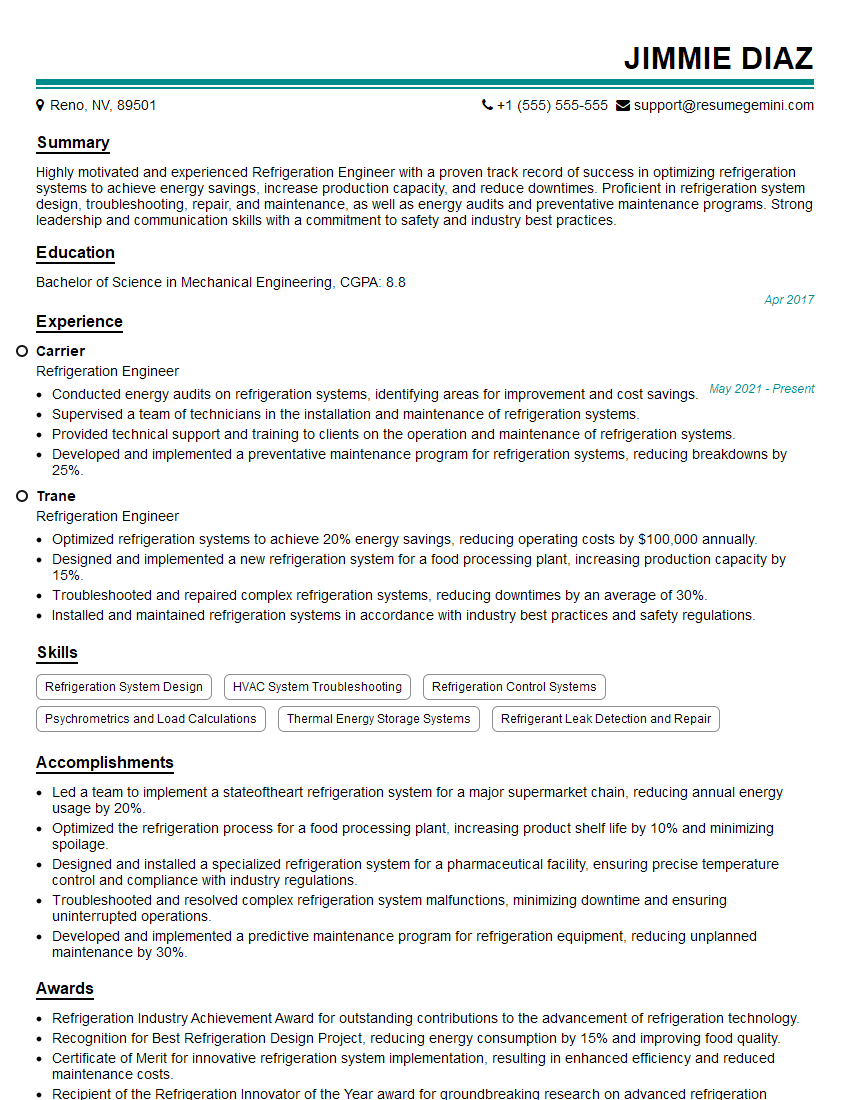
Mastering temperature regulation opens doors to exciting career opportunities in diverse fields, from HVAC engineering to process automation and renewable energy. A strong understanding of these principles is highly valued by employers. To maximize your job prospects, create an ATS-friendly resume that highlights your skills and experience effectively. ResumeGemini is a trusted resource that can help you build a professional and impactful resume, ensuring your application stands out. Examples of resumes tailored to the Temperature Regulation field are available to guide you.
Explore more articles
Users Rating of Our Blogs
Share Your Experience
We value your feedback! Please rate our content and share your thoughts (optional).
What Readers Say About Our Blog
Very informative content, great job.
good