Unlock your full potential by mastering the most common Test and Measurement Techniques interview questions. This blog offers a deep dive into the critical topics, ensuring you’re not only prepared to answer but to excel. With these insights, you’ll approach your interview with clarity and confidence.
Questions Asked in Test and Measurement Techniques Interview
Q 1. Explain the difference between accuracy and precision in measurement.
Accuracy and precision are two crucial concepts in measurement, often confused but distinctly different. Accuracy refers to how close a measurement is to the true value. Think of it like hitting the bullseye on a dartboard – the closer your dart is to the center, the more accurate your throw. Precision, on the other hand, refers to how close repeated measurements are to each other. This is like consistently hitting the same spot on the dartboard, even if that spot isn’t the bullseye. You can have high precision but low accuracy (consistently missing the bullseye by the same amount), high accuracy but low precision (hitting near the bullseye but inconsistently), or ideally, both high accuracy and high precision (consistently hitting the bullseye).
Example: Imagine measuring the length of a table. If the true length is 1 meter, a measurement of 1.02 meters is more accurate than a measurement of 0.95 meters. However, if you take multiple measurements and get 0.98m, 0.99m, and 1.00m, you’ve got better precision than if your measurements were 0.95m, 1.05m, and 0.90m.
Q 2. Describe various types of measurement errors and how to minimize them.
Measurement errors are unavoidable, but understanding their sources allows for minimization. They broadly fall into two categories: systematic and random errors.
- Systematic Errors: These are consistent, repeatable errors that introduce a bias into the measurements. They often stem from faulty equipment (e.g., a miscalibrated scale), environmental factors (e.g., temperature changes affecting a sensor’s output), or even the observer (e.g., parallax error when reading a meter). Minimizing systematic errors involves calibration, environmental control, proper technique, and using high-quality equipment.
- Random Errors: These are unpredictable, fluctuating errors that vary from one measurement to the next. They arise from various unpredictable sources, such as noise in a sensor signal or slight variations in the measurement process. Random errors can be minimized by averaging multiple measurements, using advanced signal processing techniques to filter out noise, and carefully controlling experimental conditions.
Example: In a temperature measurement, a systematic error might arise from a thermometer consistently reading 2°C higher than the actual temperature. A random error might arise from small, unpredictable fluctuations in the ambient temperature affecting the reading.
Minimization Strategies: Employing statistical methods, rigorous calibration procedures, proper experimental design, and error analysis are vital in minimizing both systematic and random errors and improving the overall quality of measurements.
Q 3. What are the key characteristics of a good measurement system?
A good measurement system should possess several key characteristics:
- Accuracy: As discussed earlier, it should provide measurements close to the true value.
- Precision: Repeated measurements should cluster tightly together.
- Sensitivity: It should be able to detect small changes in the measured quantity.
- Resolution: It should be able to distinguish between small increments of the measured quantity (the smallest change it can detect).
- Linearity: The output should be linearly proportional to the input over its operating range.
- Stability: It should provide consistent measurements over time.
- Reliability: It should function consistently and provide trustworthy results.
- Robustness: It should be resistant to environmental influences and misuse.
Example: A high-quality digital multimeter will exhibit all these characteristics, providing accurate and precise voltage, current, and resistance readings consistently over time, with high resolution and stability.
Q 4. Explain the concept of calibration and its importance.
Calibration is the process of comparing a measuring instrument’s output to a known standard to ensure its accuracy. It’s crucial for maintaining the integrity and reliability of measurements. A calibrated instrument provides confidence that the readings are within an acceptable range of the true values. Without regular calibration, measurement errors can accumulate, leading to inaccurate results and potentially costly consequences in various applications.
Importance: Calibration ensures traceability to national or international standards, validates the accuracy of measurements, reduces uncertainties, supports quality control and assurance, and ensures compliance with regulations and standards in many industries (e.g., healthcare, manufacturing).
Example: A laboratory scale used for weighing pharmaceuticals must be regularly calibrated against certified weights to ensure the accuracy of drug dosages. Failure to do so could have serious consequences.
Q 5. How do you select appropriate test equipment for a specific application?
Selecting appropriate test equipment involves carefully considering the specific application’s requirements. The key factors include:
- Measurement Parameter: What needs to be measured (voltage, current, temperature, pressure, etc.)?
- Measurement Range: What is the expected range of values?
- Accuracy and Precision Requirements: What level of accuracy and precision is necessary?
- Resolution: How fine a measurement is required?
- Environmental Conditions: What are the temperature, humidity, and other environmental factors?
- Safety: Are there any safety considerations (e.g., high voltage, hazardous materials)?
- Budget: What is the available budget?
Example: If you need to measure high-voltage signals in a noisy environment, you’ll need a high-voltage probe with good noise rejection capabilities. For precise temperature measurements in a cryogenic environment, a specialized cryogenic thermometer will be necessary.
A structured approach involving reviewing specifications, considering potential error sources, and comparing various instruments is crucial for informed decision-making.
Q 6. Describe your experience with different types of sensors and transducers.
My experience encompasses a wide range of sensors and transducers, including:
- Temperature Sensors: Thermocouples, RTDs (Resistance Temperature Detectors), thermistors, infrared sensors. I’ve worked with these extensively in various applications, from process control to environmental monitoring.
- Pressure Sensors: Piezoresistive, capacitive, and strain gauge-based pressure transducers. Experience includes using these in applications involving fluid dynamics, pressure testing, and HVAC systems.
- Strain Gauges: These have been utilized in numerous structural testing applications to measure deformation and stress.
- Optical Sensors: Photodiodes, phototransistors, and fiber optic sensors, employed in various light measurement and optical sensing applications.
- Accelerometers and Gyroscopes: Used in motion analysis and inertial navigation systems.
I’m proficient in selecting appropriate sensors based on the application requirements, understanding their limitations, calibrating them, and integrating them into measurement systems.
Q 7. What are some common data acquisition techniques?
Common data acquisition techniques involve several steps:
- Sensing: This involves using sensors and transducers to convert physical quantities into measurable electrical signals.
- Signal Conditioning: This step involves amplifying, filtering, and converting the signals to a suitable format for the data acquisition system (e.g., analog-to-digital conversion).
- Data Acquisition: This is the process of capturing and storing the conditioned signals using a data acquisition device (DAQ). DAQs can range from simple digital multimeters to sophisticated systems with multiple channels and high sampling rates.
- Data Processing and Analysis: This includes post-processing of acquired data using software tools to analyze trends, perform calculations, and create reports. This might involve filtering noise, performing calibrations, and applying statistical analysis techniques.
- Data Visualization: Presenting the acquired data in a clear and understandable manner using graphs, charts, and other visual representations.
Examples: Common data acquisition software packages include LabVIEW, MATLAB, and specialized software provided by DAQ manufacturers. Different techniques, such as scanning, multiplexing, and continuous sampling are used depending on the needs of the application.
Q 8. Explain signal conditioning and its purpose.
Signal conditioning is the process of modifying a measured signal to make it suitable for further processing or analysis. Think of it as preparing your ingredients before cooking – you wouldn’t just throw raw meat into a pan, would you? Similarly, raw sensor signals are often weak, noisy, or have an offset that needs adjustment. Signal conditioning aims to improve the signal-to-noise ratio (SNR), amplify the signal, filter out unwanted frequencies, and convert it into a compatible format for the measurement system.
Purpose: The primary purposes are:
- Amplification: Increasing the magnitude of a weak signal to a usable level.
- Filtering: Removing noise or unwanted frequencies (e.g., using a low-pass filter to eliminate high-frequency interference).
- Isolation: Preventing interference from affecting the signal by using techniques like isolation amplifiers.
- Level Shifting: Adjusting the DC level of the signal to a more convenient range (e.g., shifting a negative voltage to a positive range).
- Impedance Matching: Ensuring efficient power transfer between different parts of the system by matching their impedances.
- Linearization: Converting a non-linear signal into a linear one for easier analysis.
Example: In a strain gauge measurement, the output signal is incredibly small (millivolts). Signal conditioning involves amplifying this weak signal using an instrumentation amplifier and filtering out any high-frequency noise from the environment before sending it to a data acquisition system (DAQ) for recording and analysis.
Q 9. How do you handle noisy data in measurements?
Handling noisy data is crucial for accurate measurements. Noise can stem from various sources – environmental interference (electromagnetic fields), sensor limitations, or even the wiring itself. Several techniques can be employed to mitigate the impact of noisy data:
- Averaging: Taking multiple readings and calculating the average reduces the influence of random noise. This works best for uncorrelated noise.
- Filtering: Applying digital filters (like moving average, median, or Kalman filters) to smooth the data and remove high-frequency noise components. The choice of filter depends on the characteristics of the noise and the signal.
- Shielding and Grounding: Proper grounding and shielding of the measurement setup minimizes electromagnetic interference.
- Calibration: Regular calibration of the measurement equipment helps compensate for systematic errors and drift, distinguishing it from noise.
- Signal Conditioning: Techniques like using differential amplifiers minimize common-mode noise.
- Data Transformation: Transforming the data (e.g., using wavelet transforms) can enhance the signal-to-noise ratio and reveal hidden patterns.
Example: In a temperature measurement, if the sensor outputs fluctuating readings due to electromagnetic interference, a low-pass filter can be implemented in the signal conditioning stage to attenuate the high-frequency noise and provide a smoother temperature profile. Averaging multiple readings further helps stabilize the measurement.
Q 10. What are different methods for uncertainty analysis?
Uncertainty analysis quantifies the doubt associated with a measurement result. It’s essential for communicating the reliability of the findings. Several methods exist:
- Type A (Statistical): This method uses statistical analysis of multiple measurements to determine uncertainty. It’s ideal when multiple readings are available and the noise follows a known distribution (e.g., Gaussian).
- Type B (Non-statistical): This method relies on other sources of information – calibration certificates, manufacturer’s specifications, or engineering judgment – to estimate uncertainty. It’s used when only a few or no repeated measurements are available.
- Monte Carlo Simulation: This method uses random sampling to propagate uncertainties from various sources through a measurement model. It’s particularly useful for complex measurements with multiple contributing uncertainties.
- GUM (Guide to the Expression of Uncertainty in Measurement): This internationally accepted standard provides a framework for combining Type A and Type B uncertainties to calculate the overall uncertainty of a measurement.
Example: Measuring the resistance of a resistor using a multimeter. Type A uncertainty comes from multiple resistance readings, while Type B uncertainty might arise from the multimeter’s accuracy specifications and the temperature coefficient of the resistor. The GUM approach combines these to provide the overall uncertainty of the resistance measurement.
Q 11. Describe your experience with statistical process control (SPC).
Statistical Process Control (SPC) is a powerful set of tools used to monitor and control the variation in a process over time. My experience involves applying SPC techniques to identify and address process variations, preventing defects, and improving product quality.
I’ve utilized control charts (X-bar and R charts, p-charts, c-charts, etc.) to monitor key process parameters, identify assignable causes of variation (special causes), and differentiate them from common cause variation. This includes analyzing control chart patterns to detect trends, shifts, and unusual variations in the process. I have also used capability analysis (Cp, Cpk) to assess the ability of a process to meet specified requirements.
Example: In a manufacturing setting, I used X-bar and R charts to monitor the diameter of a machined part. By analyzing the chart, we identified a trend indicating gradual tool wear, enabling us to schedule preventative maintenance and prevent producing out-of-spec parts.
Q 12. Explain your familiarity with different types of test plans.
Test plans serve as a blueprint for the testing process. Different types cater to specific needs:
- Requirement-Based Test Plans: Verify that each requirement is thoroughly tested, ensuring complete functional coverage.
- Risk-Based Test Plans: Focus testing efforts on areas with higher potential risks, optimizing resource allocation.
- Performance Test Plans: Examine the system’s performance under various loads and conditions.
- Security Test Plans: Identify and mitigate security vulnerabilities.
- Regression Test Plans: Ensure that new changes or features haven’t introduced bugs or broken existing functionality.
- Usability Test Plans: Assess user experience and system usability.
My experience includes developing and implementing various test plans depending on the project requirements, always prioritizing the most critical aspects of the product under test.
Q 13. How do you develop a test strategy for a new product?
Developing a test strategy for a new product is a critical step that influences project success. It requires a holistic approach that considers many factors:
- Understand the Product: Thoroughly understand the product’s functionality, target audience, and technical specifications.
- Define Test Objectives: Clearly state what needs to be tested (e.g., functionality, performance, security).
- Identify Test Methods: Select suitable test methods (e.g., unit, integration, system, acceptance testing) based on the product’s complexity.
- Develop a Test Plan: Outline the scope, schedule, resources, and deliverables of the testing process.
- Select Test Tools: Choose appropriate tools for test management, automation, and execution.
- Risk Assessment: Identify and assess potential risks associated with the product and the testing process.
- Resource Allocation: Allocate resources (personnel, time, budget) effectively to ensure efficient testing.
- Test Environment Setup: Set up the necessary test environments to mimic real-world conditions.
- Test Execution and Reporting: Execute the test plan, record results, and generate comprehensive reports.
Throughout the process, iterative feedback and continuous improvement are vital. A well-defined test strategy minimizes risks, ensures timely product release, and helps produce a high-quality product.
Q 14. What are your experiences with test automation frameworks?
I have extensive experience with various test automation frameworks, including:
- Selenium: For web application testing, I’ve used Selenium to create automated tests covering various functionalities and user interactions.
- Appium: For mobile application testing, Appium allows me to automate tests across Android and iOS platforms.
- Cypress: A JavaScript-based framework known for its simplicity and speed, it is used for end-to-end testing.
- Robot Framework: A generic test automation framework that supports keyword-driven testing and integration with various libraries.
I’m proficient in developing and maintaining automated test scripts, implementing continuous integration and continuous delivery (CI/CD) pipelines, and utilizing testing methodologies like BDD (Behavior-Driven Development) and TDD (Test-Driven Development). I always prioritize creating robust, maintainable, and reusable automation frameworks to optimize testing efforts.
Example: In a recent project, I used Selenium and a CI/CD pipeline to automate regression tests for a web application. This ensured that new features didn’t inadvertently break existing functionality, significantly reducing testing time and improving product quality.
Q 15. Describe your experience with scripting languages used in test automation (e.g., Python, LabVIEW).
My experience with scripting languages in test automation centers primarily around Python and LabVIEW. Python’s versatility and extensive libraries like pytest, unittest, and requests make it ideal for automating a wide range of tests, from unit tests to integration and system tests. I’ve used it extensively to create automated scripts for testing embedded systems, interacting with hardware through serial ports and GPIB interfaces. For example, I developed a Python script to automate the testing of a power supply unit, validating its output voltage, current, and efficiency across different load conditions. LabVIEW, on the other hand, excels in instrument control and graphical programming, making it perfect for situations involving complex hardware setups and real-time data acquisition. I’ve leveraged LabVIEW to build automated test benches for high-speed data acquisition systems, integrating multiple instruments like oscilloscopes, signal generators, and data loggers. A specific example involved developing a LabVIEW application to test the performance of a high-frequency communication system, analyzing signal quality and timing parameters.
Career Expert Tips:
- Ace those interviews! Prepare effectively by reviewing the Top 50 Most Common Interview Questions on ResumeGemini.
- Navigate your job search with confidence! Explore a wide range of Career Tips on ResumeGemini. Learn about common challenges and recommendations to overcome them.
- Craft the perfect resume! Master the Art of Resume Writing with ResumeGemini’s guide. Showcase your unique qualifications and achievements effectively.
- Don’t miss out on holiday savings! Build your dream resume with ResumeGemini’s ATS optimized templates.
Q 16. How do you ensure traceability in your testing process?
Traceability in testing is crucial for ensuring that every requirement is adequately covered and that any issues found can be readily linked back to their source. I achieve this through a combination of strategies. First, I meticulously document all requirements, using a requirements management tool to link them to test cases. This provides a clear, auditable trail from the initial specification to the actual test execution. Second, I utilize a test management system that integrates with the requirements management tool, allowing for automated traceability reporting. This system tracks the execution status of each test case, highlighting any failures or inconsistencies. Third, I employ a rigorous naming convention for test cases and test artifacts, ensuring a clear link between test elements and associated requirements. For instance, a test case might be named `REQ-123_TC-001`, clearly indicating its linkage to requirement REQ-123. Finally, I regularly review the traceability matrix to identify any gaps or inconsistencies, ensuring complete coverage and a robust audit trail.
Q 17. Describe your experience with different types of test reports.
My experience encompasses various test report types, each tailored to a specific audience and purpose. For instance, summary reports provide a high-level overview of the testing process, including key metrics like pass/fail rates and overall test coverage. These reports are usually concise and focus on overall project health. Detailed reports, on the other hand, provide a comprehensive account of individual test cases, including detailed logs, screenshots, and error messages. These are invaluable for debugging and root cause analysis. Trend reports graphically represent test results over time, allowing for the identification of patterns and trends. These are extremely useful for assessing the effectiveness of testing processes and identifying potential areas for improvement. Finally, I often create defect reports, which document specific issues discovered during testing, including their severity, priority, and proposed solutions. The type of report generated is always determined by the specific requirements of the project and its stakeholders.
Q 18. How do you manage test data effectively?
Effective test data management is critical for reliable and repeatable testing. I typically employ a combination of techniques. First, I identify and categorize test data based on its type, sensitivity, and usage. This allows me to properly manage different data sets effectively. Second, I use test data generation tools to create realistic and representative test data sets, ensuring adequate coverage of various scenarios. Third, I utilize data masking techniques to protect sensitive information while still maintaining data integrity. I might use tools that replace sensitive data with synthetic values that still maintain the data structure. Fourth, I frequently use databases (like SQL) or spreadsheets to store and manage large amounts of test data, ensuring version control and traceability. This way, I can easily track changes and recover previous data versions if necessary. Finally, I always follow data governance policies and ensure data is handled according to regulatory requirements and organization security standards.
Q 19. What is your experience with debugging and troubleshooting test equipment?
Debugging and troubleshooting test equipment is a significant part of my role. My approach is systematic and follows these steps: First, I carefully review the error messages and logs generated by the equipment. This often provides a clue as to the problem’s source. Second, I visually inspect the equipment, checking for any obvious physical issues such as loose connections or damaged components. Third, I employ signal tracing techniques using oscilloscopes and logic analyzers to isolate the problem. This involves analyzing signals at different points in the circuit to pinpoint the location of the fault. Fourth, I consult the equipment’s documentation and calibration records. Many issues can be resolved by simply referencing the manufacturer’s specifications or troubleshooting guide. Fifth, if needed, I may involve specialists or equipment maintenance personnel to resolve complex hardware issues. A recent example involved troubleshooting a malfunctioning data acquisition system. Through signal tracing, I discovered a faulty connection in the signal path, which was quickly resolved after resoldering the connection.
Q 20. Explain your experience with different types of testing (e.g., functional, performance, stress).
My experience spans various testing types, each serving a unique purpose. Functional testing verifies that the system meets its specified requirements, ensuring all features work as designed. I’ve used this extensively to validate software functionalities. Performance testing assesses the system’s response time, scalability, and stability under various load conditions. For instance, I’ve conducted load testing on a web application to determine its capacity under peak user traffic. Stress testing pushes the system beyond its limits to identify its breaking point and assess its resilience under extreme conditions. This is often used to ensure system robustness. Unit testing verifies individual components of the system, ensuring each part works as expected in isolation. This is typically performed by developers, but I often review unit test results. Integration testing validates the interaction between different components, ensuring they work together seamlessly. Each type of testing plays a vital role in ensuring the quality and reliability of a system. I tailor my testing approach to the specific needs of each project.
Q 21. How do you handle conflicting requirements in testing?
Conflicting requirements are a common challenge in testing. My approach involves a structured process. First, I meticulously document all conflicting requirements, clearly outlining the discrepancies. Second, I prioritize the requirements based on their criticality and impact. This may involve discussions with stakeholders to determine the relative importance of conflicting requirements. Third, I develop test cases to verify each requirement independently, even if they conflict. This allows for a clear understanding of the impact of each requirement on the system. Fourth, I report the conflicts to the project management team, providing data-driven insights on the potential implications of each option. Fifth, I collaborate with stakeholders to resolve the conflicts, potentially suggesting compromises or trade-offs. For example, I once encountered conflicting requirements regarding the speed and accuracy of a data acquisition system. By clearly documenting the trade-offs and their impact, we were able to reach a consensus that prioritized accuracy over raw speed, leading to a more robust and reliable system.
Q 22. Explain your experience with risk assessment in testing.
Risk assessment in testing is crucial for identifying potential problems early and mitigating their impact. It involves systematically evaluating the likelihood and severity of risks that could affect the testing process or the quality of the product. This includes risks related to schedule slippage, budget overruns, insufficient testing coverage, and defects escaping into production.
In my experience, I utilize a structured approach. First, I brainstorm potential risks using techniques like SWOT analysis (Strengths, Weaknesses, Opportunities, Threats) and brainstorming sessions with the team. Then, I assess the likelihood and impact of each risk using a risk matrix. This matrix typically uses a scale (e.g., low, medium, high) for both likelihood and impact, allowing for prioritization.
For example, in a recent project involving a complex embedded system, we identified a high risk of integration issues due to the interaction of multiple hardware and software components. We mitigated this by implementing rigorous integration testing early in the development cycle, using automated tests wherever possible. We also established clear communication channels between hardware and software teams to facilitate early problem detection and resolution. Documenting all risks, mitigation strategies and their effectiveness is also a critical part of my process. This allows for continuous improvement and helps prepare for similar challenges in future projects.
Q 23. Describe your experience with test case design techniques.
Test case design is the process of creating specific instructions to execute tests and verify software functionality. I’m proficient in various techniques, including equivalence partitioning, boundary value analysis, decision table testing, state transition testing, and use case testing.
Equivalence partitioning divides input data into groups (partitions) that are expected to be treated similarly by the software. For example, if a system accepts ages between 0 and 120, I wouldn’t need to test every age; I’d test values from each partition: one under 0, one within the range (e.g., 30), one at the upper boundary (120), and one above the upper boundary (150).
Boundary value analysis focuses on testing values at the edges of valid input ranges. Continuing with the age example, I would thoroughly test ages 0, 1, 119, 120, -1, and 121. This often reveals errors related to how the system handles limits.
Decision table testing is particularly useful for systems with complex decision logic based on multiple conditions. The table clearly outlines all combinations of conditions and the expected system response for each, making sure all scenarios are tested.
Q 24. What software and tools are you familiar with for test and measurement?
My experience encompasses a wide range of software and tools. For test management, I’ve extensively used Jira and TestRail, leveraging their capabilities for test planning, execution, and reporting. For test automation, I’m proficient in Selenium (for web applications), Appium (for mobile applications), and Robot Framework (for acceptance testing). I’m also experienced with scripting languages such as Python and PowerShell to automate repetitive tasks and develop custom test scripts.
In terms of measurement tools, I’m comfortable using oscilloscopes, multimeters, logic analyzers, and spectrum analyzers for hardware testing, depending on the nature of the project. For software performance testing, I have used JMeter and LoadRunner. I also have experience using specialized tools like Vector CANalyzer for automotive testing or specialized network analyzers for telecom.
The choice of tool heavily depends on the project requirements and the nature of the system being tested. My ability lies in choosing the right tools for the job and effectively utilizing them to achieve testing goals.
Q 25. How do you ensure test coverage?
Ensuring test coverage is critical for delivering high-quality software. It’s about verifying that all aspects of the system have been adequately tested. I use several strategies to achieve this. Requirement Traceability Matrix (RTM) is a cornerstone – it maps requirements to test cases, ensuring that every requirement has corresponding test cases.
Code coverage tools, such as SonarQube or JaCoCo, provide insight into which parts of the code have been executed during testing. This helps identify areas with low coverage, prompting the creation of additional tests. Furthermore, I use techniques like risk-based testing to focus testing efforts on areas deemed most critical, where failures would have the greatest impact.
For example, in a recent project, the RTM highlighted a missing test case for a critical security feature. This was identified early, avoiding a potential security vulnerability. Code coverage analysis showed limited testing of certain database functions, leading us to add more comprehensive data-related tests. Using a combination of these approaches allows a holistic view of test coverage and continuous improvement.
Q 26. Explain your experience with root cause analysis for test failures.
Root cause analysis (RCA) is the systematic investigation of a failure to identify its underlying causes. My approach generally involves a structured methodology, often using the 5 Whys technique or a Fishbone diagram (Ishikawa diagram). The 5 Whys involves repeatedly asking “Why?” to drill down to the root cause. A Fishbone diagram visually organizes potential causes categorized by different contributing factors (e.g., people, processes, materials, environment).
For instance, if a test fails due to a database connection error, the 5 Whys might proceed as follows:
- Why did the test fail? Database connection error.
- Why was there a database connection error? Incorrect database credentials.
- Why were the credentials incorrect? Configuration file was updated incorrectly.
- Why was the configuration file updated incorrectly? Inadequate version control procedures.
- Why were version control procedures inadequate? Lack of training for developers.
The final root cause is identified as the lack of developer training. This allows for a targeted solution, such as providing additional training to prevent similar issues in the future. Documentation of the RCA process and corrective actions taken is essential for continuous improvement and knowledge sharing within the team.
Q 27. How do you prioritize testing activities?
Prioritizing testing activities is crucial for maximizing efficiency and ensuring that the most critical aspects of the system are tested first. I typically employ a risk-based approach, prioritizing tests that mitigate the highest risks. This involves considering factors such as the severity of potential failure, the likelihood of failure, and the business impact of a failure.
The MoSCoW method (Must have, Should have, Could have, Won’t have) is a useful technique for categorizing requirements and prioritizing associated tests. Must-have features are tested first, followed by should-have features, and so on.
In practice, I often create a prioritized test plan with detailed timelines, assigning resources and dependencies. This allows for clear tracking of progress and facilitates effective communication with stakeholders, keeping everyone informed about the testing progress and any potential roadblocks.
Q 28. Describe your experience working in a team environment on testing projects.
I thrive in team environments. Effective teamwork is paramount in testing, requiring collaboration, communication, and mutual respect. In my experience, I’ve worked in agile teams, contributing to sprint planning, daily stand-ups, sprint reviews, and retrospectives.
I am adept at coordinating with developers, product owners, and other stakeholders to ensure clear communication and alignment on testing goals. I actively participate in knowledge sharing, mentoring junior team members, and contributing to the overall improvement of testing processes. My ability to collaborate effectively, resolve conflicts constructively, and foster a positive team spirit significantly contributes to the success of testing projects.
For example, in a recent project, we faced a challenging deadline. Through effective collaboration and a coordinated effort, we successfully delivered the testing on time and to a high standard, showcasing the benefits of a well-functioning team. I believe in using communication platforms and tools effectively to ensure transparent and efficient collaboration. This can range from using project management tools to facilitate communication and tracking, to having regular team meetings to discuss progress and challenges. This helps build trust and efficiency within the testing team.
Key Topics to Learn for Test and Measurement Techniques Interview
- Data Acquisition: Understanding various data acquisition methods, including analog-to-digital conversion (ADC), sampling rates, and resolution. Consider practical applications like sensor integration and signal conditioning.
- Signal Processing: Mastering techniques like filtering (low-pass, high-pass, band-pass), signal averaging, and Fourier transforms. Explore their application in noise reduction and feature extraction from measured signals.
- Instrumentation: Familiarize yourself with common test and measurement instruments such as oscilloscopes, multimeters, spectrum analyzers, and function generators. Understand their capabilities and limitations.
- Calibration and Uncertainty: Grasp the principles of instrument calibration and the concept of measurement uncertainty. Practice calculating uncertainty propagation in complex measurement systems.
- Statistical Analysis: Learn to apply statistical methods to analyze measurement data, including hypothesis testing, regression analysis, and determining confidence intervals. This is crucial for drawing meaningful conclusions from experimental results.
- Specific Measurement Techniques: Depending on your target role, delve deeper into specific techniques like impedance measurement, power analysis, thermal analysis, or vibration analysis. Prepare examples of your experience using these techniques.
- Test Planning and Design: Understand the process of designing robust and efficient test plans, including defining test objectives, selecting appropriate instrumentation, and developing data analysis strategies.
- Error Analysis and Troubleshooting: Develop strong troubleshooting skills to identify and resolve issues in test setups and measurement data. Practice analyzing potential sources of error and implementing corrective actions.
Next Steps
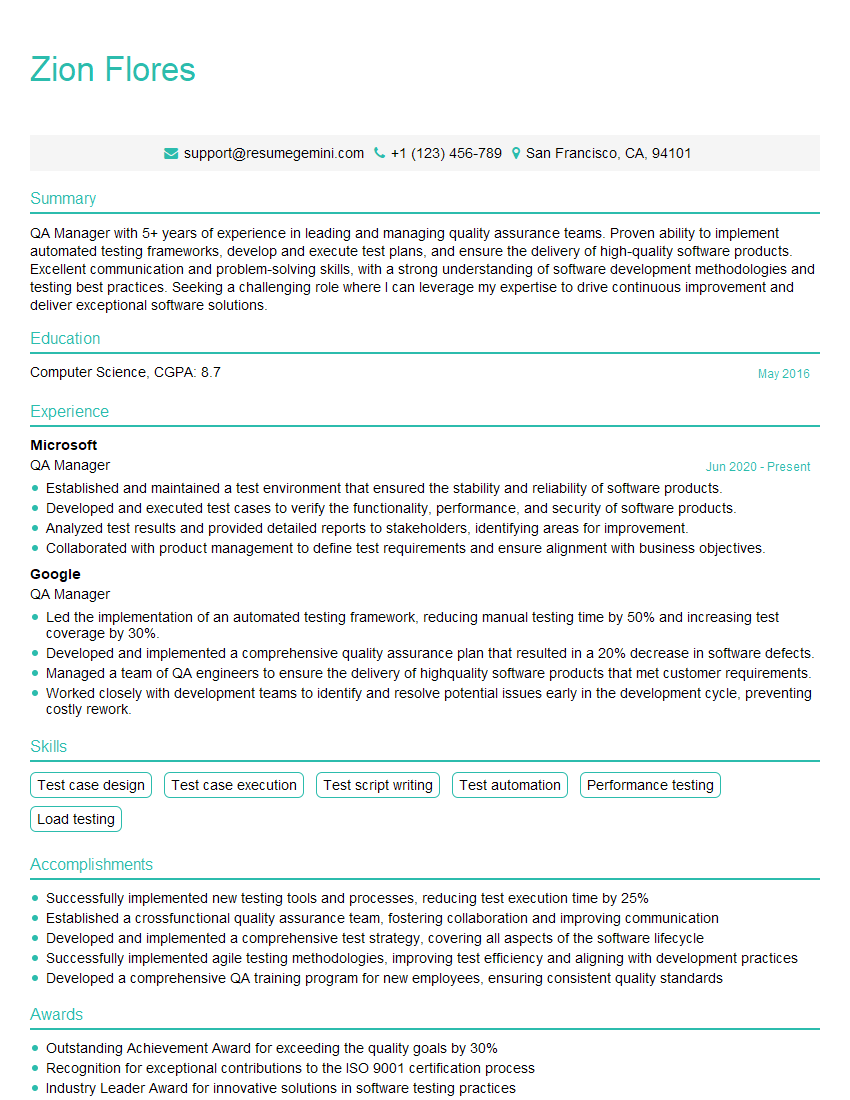
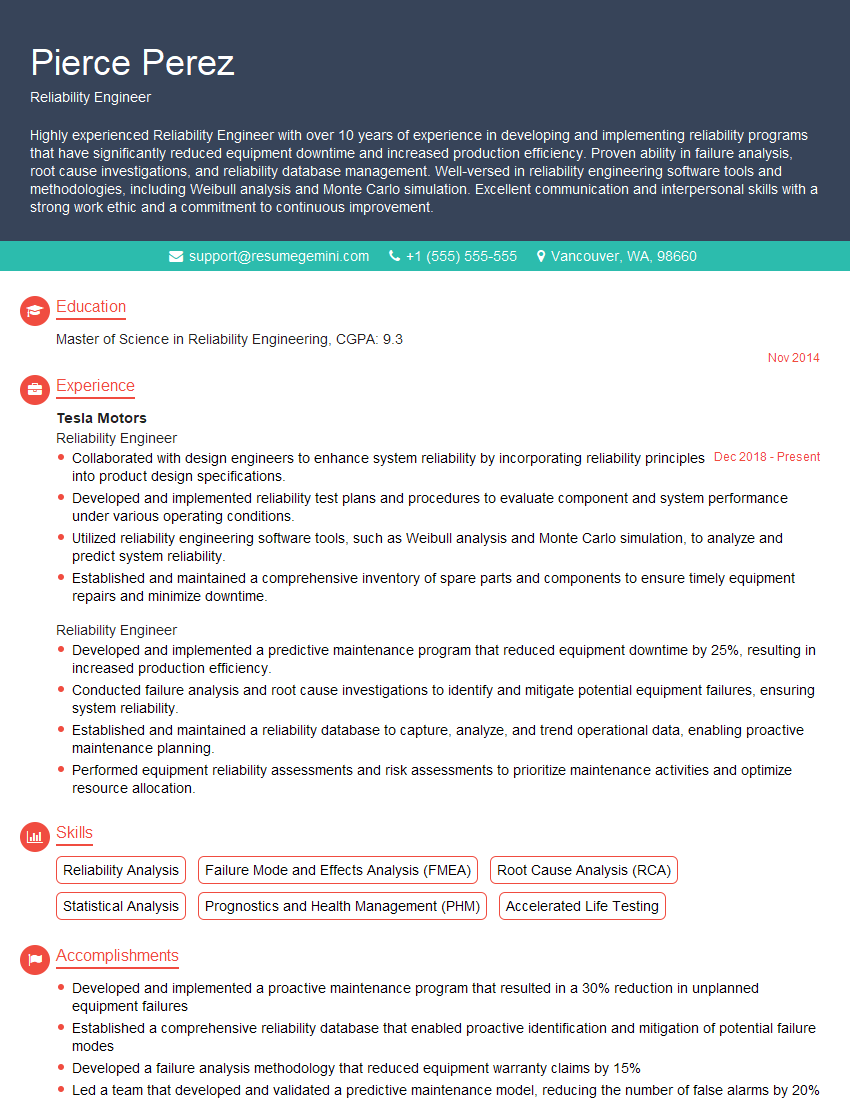
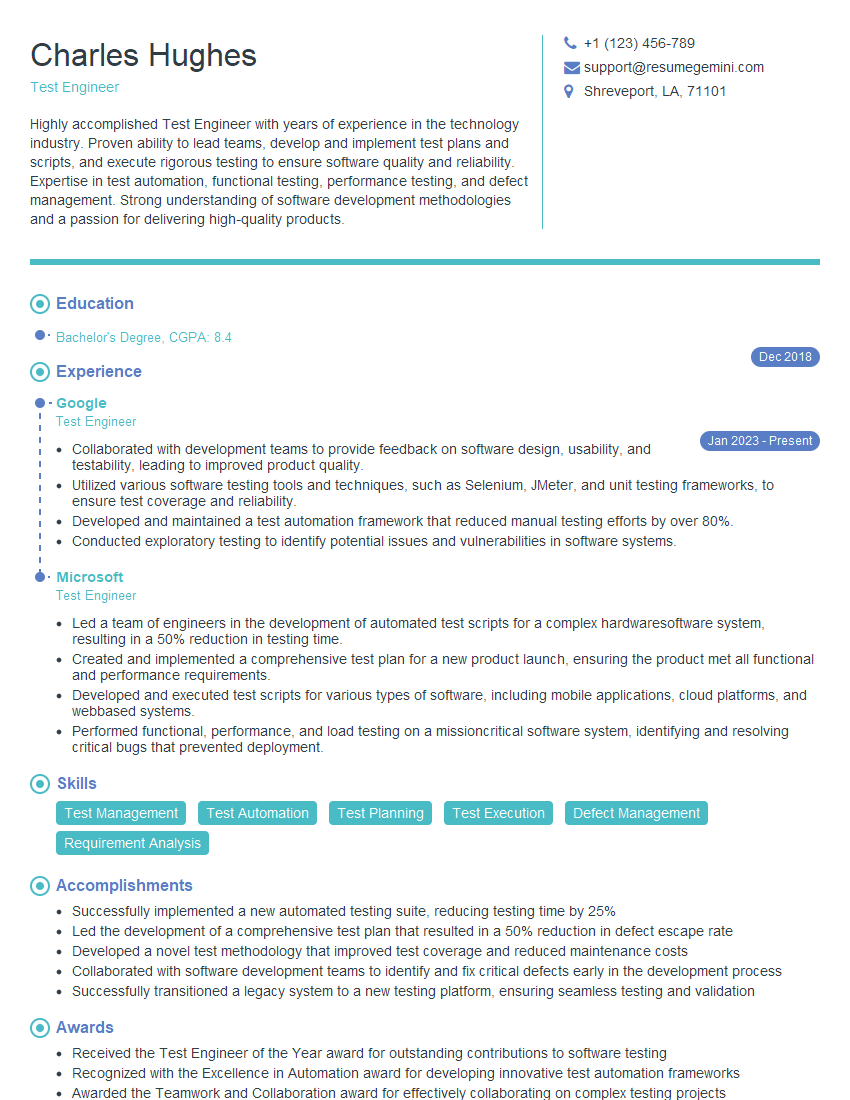
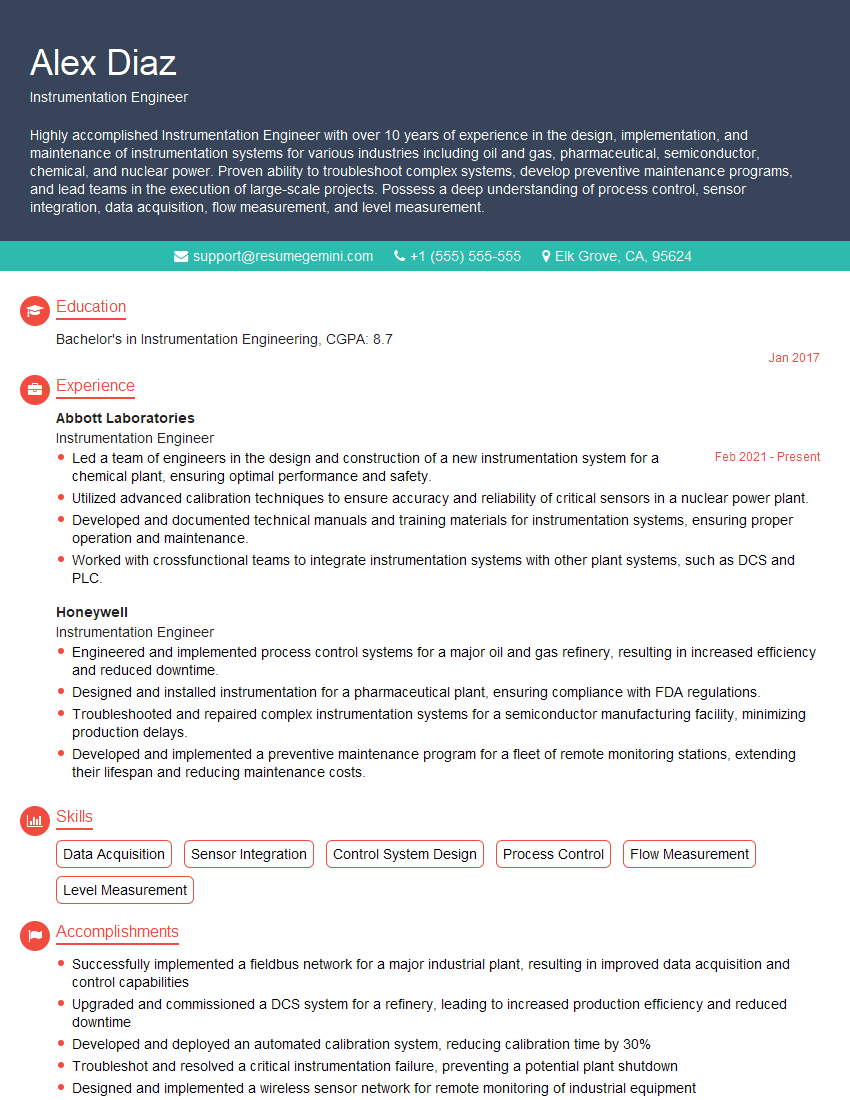
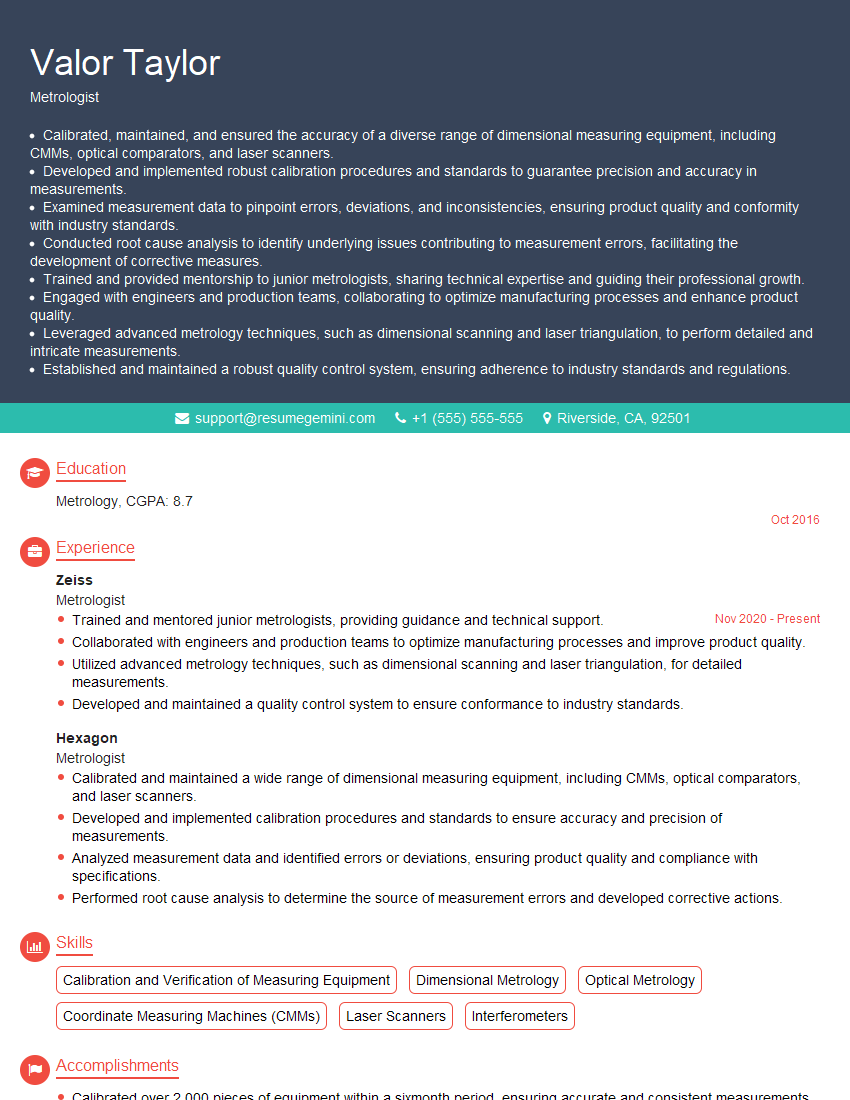
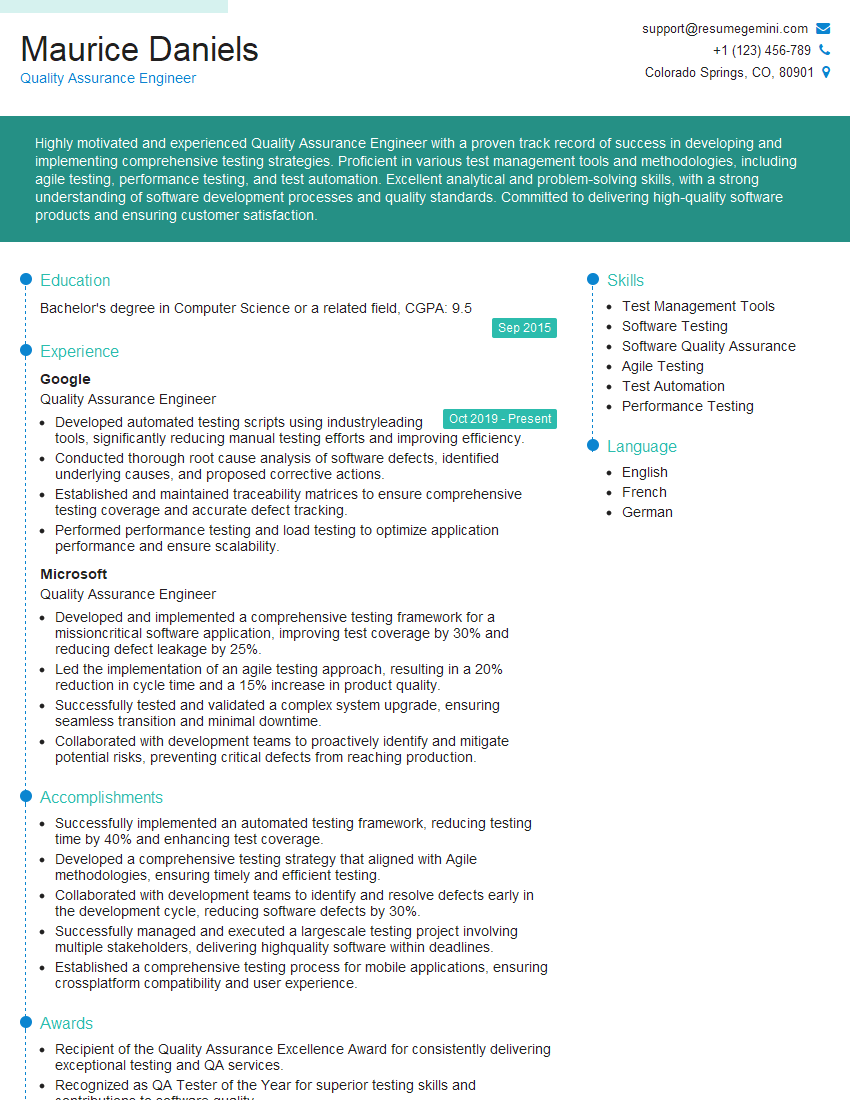
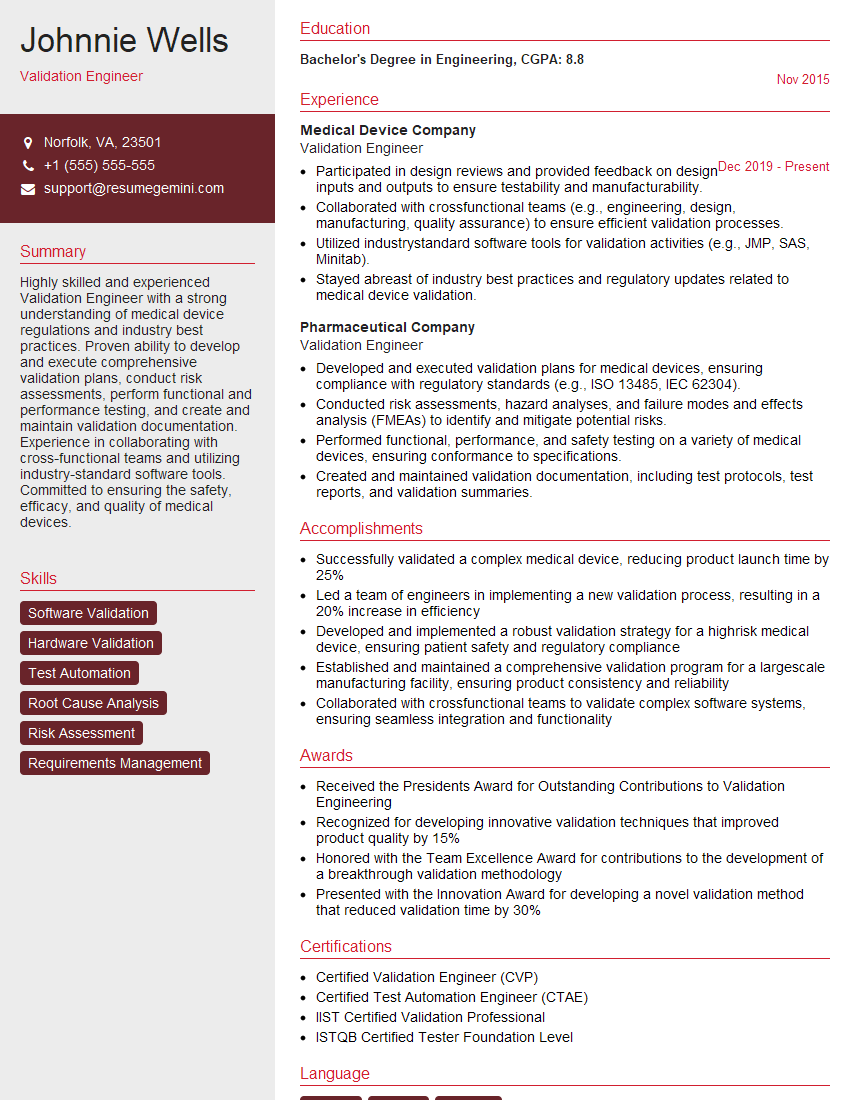
Mastering Test and Measurement Techniques is paramount for career advancement in engineering and related fields. A strong understanding of these techniques showcases your technical expertise and problem-solving abilities, making you a highly desirable candidate. To maximize your job prospects, creating a compelling and ATS-friendly resume is crucial. ResumeGemini offers a powerful platform to build a professional and effective resume that highlights your skills and experience. Take advantage of their resources and explore the examples of resumes tailored to Test and Measurement Techniques to enhance your application materials.
Explore more articles
Users Rating of Our Blogs
Share Your Experience
We value your feedback! Please rate our content and share your thoughts (optional).
What Readers Say About Our Blog
Very informative content, great job.
good