Preparation is the key to success in any interview. In this post, we’ll explore crucial Textile Machining interview questions and equip you with strategies to craft impactful answers. Whether you’re a beginner or a pro, these tips will elevate your preparation.
Questions Asked in Textile Machining Interview
Q 1. Explain the different types of weaving machines and their applications.
Weaving machines create fabrics by interlacing two sets of yarns—the warp (lengthwise) and weft (crosswise). Different machines cater to various fabric types and production scales.
- Shuttle Looms: These are the oldest type, using a shuttle to carry the weft yarn across the warp. They’re simple but slower and less efficient, best suited for small-scale production of high-quality, intricate fabrics like tapestry.
- Air-Jet Looms: These use compressed air to propel the weft yarn across the warp. They’re faster and more efficient than shuttle looms, ideal for medium-to-high volume production of various fabrics, including denim and upholstery.
- Rapier Looms: These employ grippers or rapiers to carry the weft yarn. They offer even higher speeds than air-jet looms and are versatile, producing a wide range of fabrics, from dress materials to technical textiles.
- Water-Jet Looms: Using jets of water to insert the weft, these are suitable for delicate yarns that might be damaged by other methods. They excel in producing high-quality fabrics with minimal yarn breakage.
- Projectile Looms: These propel a weft yarn projectile across the warp. Known for high speeds and efficiency, they are commonly used for producing heavy-duty fabrics.
The choice of loom depends heavily on the desired fabric type, production volume, yarn characteristics, and budget. For example, a high-end designer might choose a shuttle loom for its control over the intricate weaving patterns, whereas a mass producer of denim would opt for an air-jet or rapier loom for its speed and efficiency.
Q 2. Describe the process of setting up a knitting machine for a specific fabric.
Setting up a knitting machine involves a precise process ensuring the desired fabric structure and quality. It begins with selecting the correct needles based on the yarn type and desired stitch density. For example, finer yarns require finer needles. The gauge—the number of needles per inch—determines the fabric’s density and drape.
Next, the yarn is fed into the machine, ensuring consistent tension. This is crucial to prevent yarn breakage and maintain even stitch formation. Tension is usually adjusted via a dial or control panel and may require fine-tuning during the knitting process. We use a variety of yarn feeders depending on yarn type – some are suitable for delicate yarns and prevent breakage while others are for heavier and thicker yarns.
The knitting machine’s programming—often via computer software or punched cards (in older machines)—defines the stitch pattern. The stitch pattern is carefully selected to match the design and fabric requirements. For example, a simple stockinette stitch pattern differs significantly from a complex cable or lace pattern. Selecting the incorrect needle bed and the programming could lead to faulty knitting.
Before beginning production, a test swatch is knitted and inspected to verify the stitch structure, tension, and overall quality. Adjustments are made as needed before proceeding with large-scale production. Finally, appropriate finishing and quality control measures would need to be taken.
Q 3. How do you troubleshoot a malfunctioning dyeing machine?
Troubleshooting a malfunctioning dyeing machine requires a systematic approach. First, identify the specific problem: Is the dye not properly mixing? Is the temperature incorrect? Is there a leakage? This involves checking the temperature gauges, pumps, and sensors.
Let’s say the dye isn’t mixing properly. I would first check the pump’s functionality and inspect for clogs in the pipes. If the pump is functioning correctly, then I’d check the agitator, ensuring it’s turning at the correct speed. If there are issues with the pump or the agitator, then the solution involves troubleshooting the mechanics or replacing the parts accordingly. This could involve lubrication or replacement of worn-out components, and sometimes specialized technical assistance is required.
If the temperature isn’t correct, I’d check the heating element and thermostat. A faulty thermostat would necessitate replacement or recalibration. Leakages are usually due to worn seals or damaged pipes; they require repair or replacement.
Detailed maintenance logs help identify recurring issues and provide insights to predict potential failures. Regular cleaning and preventative maintenance are crucial to avoid such malfunctions.
Q 4. What are the common causes of yarn breakage in weaving?
Yarn breakage in weaving is a common problem that can significantly impact production efficiency and fabric quality. Several factors contribute to this issue.
- Low Yarn Strength: Weak or damaged yarns are more prone to breakage. This necessitates using high-quality yarns with appropriate strength for the weaving process.
- Incorrect Yarn Tension: Excessive tension causes stress on the yarn, increasing the likelihood of breakage. Proper tension control is vital throughout the weaving process.
- Machine Malfunction: Issues with the loom’s components, such as the heald shafts, reed, or shuttle, can lead to excessive friction or stress, causing yarn breakage. Regular maintenance and timely repairs are crucial.
- Knots and Imperfections: Knots or other imperfections in the yarn can easily snag on the loom’s components, causing breakage. Yarn quality control is paramount.
- Environmental Factors: High humidity or static electricity can also contribute to yarn breakage. Maintaining a controlled environment can help mitigate these issues.
Identifying the root cause requires careful observation and analysis. For instance, frequent breakage at the same point in the weaving process might indicate a problem with a specific loom component, while consistent breakage across multiple yarns suggests a yarn quality issue.
Q 5. Explain the importance of proper machine maintenance in textile manufacturing.
Proper machine maintenance is paramount in textile manufacturing for several reasons.
- Increased Productivity: Well-maintained machines operate efficiently, reducing downtime and increasing production output.
- Improved Fabric Quality: Regular maintenance ensures the machines function optimally, leading to consistent fabric quality and reduced defects.
- Reduced Costs: Preventative maintenance prevents major breakdowns, saving on costly repairs and replacements. Regular cleaning also reduces the chance of defects. For example, a broken needle can lead to fabric defects that have to be cut and wasted, increasing production costs.
- Enhanced Safety: Regular inspections and maintenance identify potential safety hazards, reducing the risk of accidents in the workplace.
- Extended Machine Lifespan: Proper maintenance significantly prolongs the lifespan of textile machinery, reducing the need for frequent replacements.
Think of it like maintaining your car. Regular servicing keeps it running smoothly, prevents major breakdowns, and extends its life. Similarly, regular maintenance of textile machinery is an investment that pays off in terms of efficiency, cost savings, and product quality.
Q 6. Describe your experience with different types of textile finishing machines.
My experience encompasses a range of textile finishing machines, each playing a crucial role in transforming raw fabric into a marketable product.
- Scouring Machines: These remove impurities like sizing agents from the fabric, preparing it for dyeing or other finishing processes. I’ve worked with both batch and continuous scouring machines, understanding their differences in efficiency and suitability for different fabric types. The efficiency of scouring depends heavily on factors such as temperature control and the quality of cleaning chemicals.
- Dyeing Machines: I’m familiar with various dyeing methods, including jet dyeing, pad dyeing, and piece dyeing, each suited for specific fabrics and dye types. I understand the crucial role of even dyeing and the importance of temperature and time control.
- Calenders: These machines impart various finishes to fabrics, such as smoothness, luster, or embossing, by passing them through rollers under pressure and heat. I’ve worked with several types of calenders, each having specific applications.
- Finishing Machines: This includes operations such as sanforizing (preventing shrinkage), mercerizing (enhancing luster), and coating (adding water-resistance or other properties). I’ve gained experience in managing and troubleshooting the various technologies behind these finishing processes.
The choice of finishing machine depends on the desired fabric properties and the overall production process. For instance, a high-count cotton fabric might require mercerizing for a superior luster, while a technical fabric may require a specific coating for functionality.
Q 7. How do you ensure the quality of the finished product during the manufacturing process?
Ensuring quality throughout the manufacturing process requires a multifaceted approach, starting from raw material inspection to final product testing.
- Raw Material Inspection: Thorough checks on the quality of yarns and other materials are crucial to eliminate defects from the outset. This includes checks for fiber content, strength, and evenness. Even small imperfections in the yarn can magnify into much larger issues as they progress through the manufacturing process.
- In-Process Quality Control: Regular checks at various stages of the manufacturing process help identify and rectify defects early on, minimizing waste and improving efficiency. For instance, intermediate fabric inspections help eliminate faulty parts early on.
- Machine Calibration and Maintenance: Properly calibrated and maintained machines ensure consistent production quality. Regular maintenance reduces the risk of defects caused by machine malfunctions.
- Final Product Inspection: A rigorous inspection of the finished product ensures it meets the required quality standards before it is shipped. This includes physical checks for defects like tears, holes, or stains, as well as checks for dimensional stability and color consistency.
- Statistical Process Control (SPC): Implementing SPC methods provides data-driven insights into the production process, helping identify trends and potential problems before they escalate.
A proactive approach, involving well-trained personnel and effective quality control measures, is crucial for delivering consistently high-quality products. Using quality control software can help document this entire process, making it easier to track issues and improve efficiency.
Q 8. What are the safety procedures you follow while operating textile machinery?
Safety is paramount in textile machining. My approach involves a multi-layered strategy encompassing pre-operational checks, adherence to standardized operating procedures, and constant vigilance. Before operating any machine, I meticulously inspect it for loose parts, damaged components, and proper guarding. I ensure all safety guards are in place and functioning correctly before starting the machine. This includes checking emergency stop buttons, light curtains, and interlocks.
During operation, I maintain a safe distance from moving parts and wear appropriate personal protective equipment (PPE), including safety glasses, hearing protection, and sturdy closed-toe shoes. I never attempt to adjust or repair machinery while it’s running. If a malfunction occurs, I immediately shut down the machine and report the issue to the supervisor before attempting any troubleshooting. Regular training and awareness of potential hazards are crucial; I actively participate in safety briefings and refresher courses to stay updated on best practices.
For example, during my time working with high-speed weaving machines, I always ensured the weft insertion mechanism was properly guarded to prevent accidental entanglement. This meticulous approach has helped maintain a safe working environment for myself and my colleagues, preventing injuries and ensuring smooth operations.
Q 9. Explain your experience with different types of textile fibers and their properties.
My experience encompasses a wide range of textile fibers, each with distinct properties affecting their processing and end-use applications. I’ve worked extensively with natural fibers like cotton (known for its softness and absorbency), wool (renowned for its warmth and elasticity), and silk (valued for its luxurious feel and drape), and synthetic fibers including polyester (strong, durable, and wrinkle-resistant), nylon (highly resilient and abrasion-resistant), and acrylic (soft, warm, and relatively inexpensive).
Understanding fiber properties is crucial for choosing appropriate machinery settings. For instance, the delicate nature of silk requires gentler processing parameters on spinning and weaving machines compared to the more robust polyester. The length of the fibers (staple length for cotton, filament length for silk) also dictates the type of spinning system needed. Furthermore, the fiber’s inherent properties influence the final fabric’s characteristics – for example, the absorbency of cotton makes it ideal for towels, while the strength of nylon makes it suitable for hosiery and ropes.
I’ve successfully adapted my techniques to handle blended fabrics, which often combine the desirable properties of different fibers. For example, a blend of cotton and polyester yields a fabric that is both comfortable and durable, requiring a nuanced approach during the finishing processes.
Q 10. How do you calculate the efficiency of a textile machine?
Calculating the efficiency of a textile machine involves comparing its actual output to its theoretical maximum output. It’s typically expressed as a percentage. The formula is quite straightforward:
Efficiency (%) = (Actual Output / Theoretical Output) x 100Actual output refers to the quantity of finished fabric produced within a specific timeframe (e.g., meters of fabric per hour). Theoretical output represents the maximum production capacity of the machine under ideal conditions, often determined by the machine’s specifications and speed settings.
Several factors can influence actual output and therefore efficiency, including machine downtime due to maintenance or repairs, raw material quality inconsistencies, operator skill, and the complexity of the fabric being produced. For example, a weaving machine may have a theoretical output of 100 meters per hour, but due to a yarn breakage, its actual output might be 90 meters per hour, resulting in an efficiency of 90%. Regular monitoring and analysis of efficiency metrics are crucial for identifying areas for improvement and optimizing production processes.
Q 11. Describe your experience with PLC programming in textile machinery.
I possess considerable experience in PLC (Programmable Logic Controller) programming for textile machinery. PLCs are essential for automating and controlling various aspects of textile manufacturing, from yarn feeding and tension control to fabric winding and quality inspection. My expertise encompasses developing and implementing PLC programs using ladder logic, structured text, and function block diagrams.
I’ve used PLCs to optimize machine parameters, such as speed, tension, and temperature, leading to improved product quality and increased production efficiency. For example, I developed a PLC program for a knitting machine that automatically adjusted the yarn feed rate based on real-time monitoring of yarn tension, reducing yarn breakage and improving fabric consistency. Another example involved implementing a fault-detection system using PLCs, which alerts operators to potential issues before they escalate into major production disruptions. I’m proficient in troubleshooting PLC programs, identifying and resolving malfunctions efficiently, minimizing downtime and production losses.
My experience also includes working with different PLC brands and communication protocols, ensuring compatibility and seamless integration within the overall automation system.
Q 12. How do you perform preventative maintenance on textile machinery?
Preventative maintenance is critical for ensuring the longevity and optimal performance of textile machinery. My approach is proactive, focusing on regular inspections, lubrication, and adjustments to prevent potential problems before they arise. This involves a detailed schedule based on the machine’s specifications and operational history.
The process typically begins with a visual inspection, checking for signs of wear and tear, loose connections, or leaks. This is followed by lubrication of moving parts using the manufacturer’s recommended lubricants. I meticulously clean the machine to remove lint, dust, and other debris that could affect performance. Adjustments such as tensioning mechanisms, timing belts, and sensor alignments are also performed regularly. I maintain detailed records of all maintenance activities, including dates, tasks performed, and any parts replaced. This allows for effective tracking and trend analysis to anticipate potential issues.
For example, I routinely lubricate the moving parts of a spinning frame to reduce friction and extend its operational lifespan. This proactive approach prevents breakdowns and ensures consistent yarn quality. The same principles apply to weaving machines, knitting machines, and other textile machinery—regular preventative maintenance translates directly to reduced downtime, improved productivity, and higher-quality output.
Q 13. What are the different types of fabric defects and their causes?
Fabric defects can significantly impact the quality and marketability of textiles. These defects can arise from various stages of the manufacturing process, from fiber preparation to finishing. They can be broadly categorized into structural defects and appearance defects.
- Structural Defects: These affect the fabric’s integrity and strength. Examples include broken ends (in woven fabrics), holes, mispicks (incorrect interlacing of warp and weft yarns), and slubs (thickened areas in yarns). Causes can be related to faulty yarn, improper machine settings, or mechanical failures.
- Appearance Defects: These don’t necessarily compromise structural integrity but negatively affect the fabric’s aesthetic appeal. Examples include shading (uneven color distribution), barre (periodic variation in color or density), bowing (uneven width), and sloughing (loss of surface fibers). Causes can be due to inconsistent dyeing processes, variations in yarn quality, or incorrect finishing techniques.
Identifying and diagnosing the root cause of fabric defects is essential for implementing corrective measures. This often requires analyzing the manufacturing process, inspecting the raw materials, and examining the machine settings. Understanding the relationship between defect types and their causes allows for proactive adjustments to the manufacturing process, leading to improved fabric quality and reduced waste.
Q 14. Explain your experience with different types of fabric testing equipment.
My experience includes using a variety of fabric testing equipment to assess the quality and performance of textiles. This ensures that the final product meets the required specifications and standards. The equipment I’ve worked with encompasses both physical and chemical testing methods.
Physical Testing Equipment: This includes tensile testers (measuring fabric strength and elongation), bursting strength testers (determining fabric resistance to pressure), abrasion testers (assessing fabric durability), and air permeability testers (measuring fabric breathability).
Chemical Testing Equipment: This involves colorfastness testers (evaluating the resistance of dyes to fading), pH meters (measuring fabric acidity or alkalinity), and flammability testers (assessing fabric safety).
I am proficient in interpreting the data obtained from these tests and using this information to improve manufacturing processes and ensure product consistency. For example, using tensile testing data, I can identify weaknesses in the fabric structure and adjust weaving parameters to increase strength. Similarly, colorfastness testing results help to optimize dyeing processes to achieve superior color retention.
Q 15. How do you manage downtime on textile machines?
Minimizing downtime on textile machinery is crucial for maintaining productivity and profitability. My approach is multifaceted and relies on proactive maintenance, rapid troubleshooting, and efficient repair strategies.
Proactive Maintenance: This involves a rigorous preventative maintenance schedule including regular lubrication, cleaning, and inspections of critical components. We use computerized maintenance management systems (CMMS) to track maintenance schedules and alert us to upcoming tasks, minimizing the chances of unexpected breakdowns. For instance, we’d schedule regular checks on the shuttle system in a weaving machine to prevent thread breakage and machine stops.
Rapid Troubleshooting: When a machine does malfunction, we employ a systematic approach to pinpoint the problem quickly. This starts with visual inspection, checking for obvious issues like broken parts or loose connections. Next, we consult machine manuals and diagnostic tools to isolate the fault. Experience helps greatly in recognizing common problems and their symptoms. A recent example involved a faulty sensor on a winding machine. By tracing the electrical signals and consulting the wiring diagram, I identified and replaced the defective sensor within an hour, minimizing production loss.
Efficient Repair: Once the problem is identified, we prioritize repairs using readily available spare parts. We maintain a well-stocked parts inventory to reduce downtime caused by ordering delays. Furthermore, we invest in training our technicians to handle repairs efficiently and accurately, ensuring that machines are brought back online as quickly as possible. A streamlined repair process, including clear communication channels with maintenance and operations, is key to success.
Career Expert Tips:
- Ace those interviews! Prepare effectively by reviewing the Top 50 Most Common Interview Questions on ResumeGemini.
- Navigate your job search with confidence! Explore a wide range of Career Tips on ResumeGemini. Learn about common challenges and recommendations to overcome them.
- Craft the perfect resume! Master the Art of Resume Writing with ResumeGemini’s guide. Showcase your unique qualifications and achievements effectively.
- Don’t miss out on holiday savings! Build your dream resume with ResumeGemini’s ATS optimized templates.
Q 16. What are your experience with different types of winding machines?
My experience encompasses a wide range of winding machines, from simple manual winders to highly automated high-speed systems. I’ve worked extensively with:
- Precision winders: These are used for creating precisely wound packages of yarn for subsequent processes. I’ve used them for various yarn types and counts, adjusting parameters such as winding tension, speed, and package shape to meet specific requirements.
- Automatic winders: These machines automate the winding process, significantly increasing efficiency and reducing labor costs. I’m proficient in programming and operating various automatic winders, including those with features like automatic doffing, yarn clearing, and package quality control.
- Cheese winders: These create cylindrical packages, ideal for certain weaving and knitting applications. I’m familiar with the intricacies of cheese winding, including adjusting parameters to ensure consistent package density and shape.
- Pirn winders: These are used for creating pirns, which are small, conical packages of yarn used in shuttle looms. My experience includes setting up and maintaining pirn winders, ensuring the consistent production of high-quality pirns.
I understand the importance of selecting the right winding machine for a given yarn type and application. For instance, delicate yarns require precision winders with gentle winding tension, while high-volume production necessitates the use of high-speed automatic winders.
Q 17. Describe your experience with different types of warping machines?
My experience with warping machines includes both traditional and modern systems. I’ve worked extensively with:
- Sectional warping machines: These machines are used to create a warp beam containing multiple sections of yarn, each wound at a controlled tension to ensure even fabric width. I am experienced in setting up and operating these machines, adjusting parameters like tension, speed, and section lengths to meet specific requirements.
- Beam warping machines: These machines wind the yarn directly onto a large warp beam. I have experience in adjusting the tension and speed to ensure even winding and minimize yarn breakage.
- Direct warping machines:These machines are used for weaving on narrow fabric looms or knitting, winding the yarn directly from the package onto the loom. I have extensive knowledge in setup, troubleshooting and maintenance.
- Computerized warping machines: Modern computerized warping machines offer advanced features such as automatic tension control, yarn clearing, and warp beam quality control. My experience includes programming and operating these machines and troubleshooting their software and hardware components.
Understanding the nuances of each warping machine type is critical. For example, sectional warping provides more control over individual yarn sections, minimizing the impact of yarn variations on fabric quality. Beam warping is more suitable for high-speed production, while direct warping excels in efficiency for smaller-scale operations.
Q 18. How do you adjust the tension on a weaving machine?
Adjusting tension on a weaving machine is critical for achieving the desired fabric quality and preventing yarn breakage. The specific method varies depending on the type of loom, but generally involves adjusting several components:
- Warp Tension: This is adjusted using warp beam brakes or let-off mechanisms. These mechanisms control the rate at which the warp yarns are unwound from the warp beam. The tension is usually adjusted through a series of levers or electronic controls and is crucial for preventing uneven fabric structure or yarn breakage. A correctly adjusted warp tension allows the shed to open and close properly, while maintaining a consistent yarn tension.
- Weft Tension: This is controlled by the weft insertion system. In shuttle looms, the shuttle tension is adjusted mechanically; in air-jet or rapier looms, it’s controlled electronically. Proper weft tension is crucial for proper weft insertion and to avoid slack or overly tight weft yarns, which can result in fabric defects.
- Fabric Take-Up: The fabric take-up mechanism controls the speed at which the finished fabric is wound onto the cloth beam. Balancing the warp and weft tension with the take-up speed is crucial for a consistent fabric structure.
Monitoring and fine-tuning these elements often involves using tension meters and observing the fabric’s appearance during weaving. Experience helps in judging the optimal tension settings for different yarn types and fabric structures.
Q 19. Explain the difference between weft and warp yarns.
Warp and weft yarns are the two fundamental components of woven fabric. They are oriented at right angles to each other, creating the fabric’s structure:
- Warp yarns: These are the lengthwise yarns in a woven fabric. They are wound onto a warp beam before weaving, providing the longitudinal strength and stability of the fabric. Think of the warp yarns as the ‘backbone’ of the fabric.
- Weft yarns: These are the crosswise yarns, interlaced with the warp yarns to create the fabric’s texture and structure. The weft yarns are inserted across the warp yarns during the weaving process and contribute to the fabric’s width and decorative qualities.
Understanding the distinction is important for fabric design and production. Different yarn types and constructions are used for warp and weft depending on the desired fabric properties. For example, a strong warp yarn might be used with a softer weft yarn for a sturdy but comfortable fabric.
Q 20. Describe the process of preparing yarn for weaving or knitting.
Yarn preparation for weaving or knitting is a crucial step to ensure high-quality fabric. It involves several key processes:
- Winding: Yarn is wound from its original package onto a more suitable form, like a cone, bobbin, or pirn, depending on the subsequent process (weaving or knitting).
- Sizing (for weaving): Warp yarns are often sized – coated with a starch or other sizing agent – to increase their strength and abrasion resistance during weaving. This is crucial to prevent yarn breakage.
- Warping: Warp yarns are wound onto a large beam to prepare for the weaving process. The tension must be carefully controlled during warping to prevent irregularities in the woven fabric.
- Cleaning: Removing impurities or neps (short, entangled fibers) from the yarn to improve the fabric’s appearance and reduce potential weaving problems.
- Splicing: Joining broken ends of yarn to ensure the yarn supply is continuous during weaving or knitting.
- Twisting: Yarn twisting is done to add strength and consistency to the yarn, which is then wound for knitting or weaving machines.
The specific preparation methods depend on the yarn type, the fabric structure, and the machinery used. For example, delicate yarns require gentler handling and may not require sizing, while stronger yarns for heavy fabrics might benefit from more robust sizing treatments. Careful attention to each step is essential to prevent defects and ensure consistent fabric quality.
Q 21. What are the different types of knitting structures?
Knitting structures are broadly categorized by the type of needle used (circular or flat) and the stitch patterns created. Some key types include:
- Plain Knit: The most basic structure, created by interlooping every row with the previous row. It’s stretchy and relatively simple to produce.
- Purl Knit: Similar to plain knit, but the needles interloop in the opposite direction, creating a different texture on the reverse side.
- Rib Knit: An alternating sequence of knit and purl stitches, creating a more structured and less stretchy fabric than plain knit. The rib structure can have various patterns, such as 1×1 rib (one knit stitch, one purl stitch), 2×2 rib, and so on.
- Interlock Knit: Created by two layers of interlocked fabric, it is very strong and less likely to curl. This structure is relatively more difficult to produce than other basic knitting structures.
- Double Knit: A double-layered fabric, created by knitting two layers simultaneously. It results in a thicker, warmer fabric, which is less likely to pill than single knit structures.
- Jacquard Knit: A complex knitting technique, used to create intricate patterns and designs in the fabric. This utilizes special computer-controlled knitting machines.
Understanding different knitting structures helps in choosing the appropriate structure based on the desired fabric properties (drape, stretch, durability). For example, a plain knit is ideal for stretchy garments, while a rib knit is suitable for more structured fabrics. Jacquard knit allows for highly creative designs.
Q 22. Explain the different types of dyeing processes.
Dyeing processes in textile manufacturing broadly fall into two categories: fiber dyeing and fabric dyeing. Fiber dyeing, as the name suggests, colors the fibers before they are spun into yarn. This results in exceptionally colorfast fabrics. Fabric dyeing, on the other hand, colors the already woven or knitted fabric. Let’s delve deeper into specific methods:
- Fiber Dyeing: This includes methods like solution dyeing (dyeing the fiber solution before spinning), stock dyeing (dyeing loose fibers), and top dyeing (dyeing the combed fibers).
- Fabric Dyeing: This encompasses a wider array of techniques.
- Piece Dyeing: This involves dyeing the entire piece of fabric after weaving or knitting. It’s cost-effective for smaller runs and allows for a wide range of colors and designs.
- Yarn Dyeing: The yarn is dyed before weaving. This method produces more consistent color across a fabric and is common in high-quality apparel.
- Garment Dyeing: The finished garment is dyed. This is often done for special effects and unique finishes.
- Reactive Dyeing: Reactive dyes form a chemical bond with the fibers, resulting in exceptionally colorfast fabrics. Common with cotton and other cellulosic fibers.
- Direct Dyeing: These dyes don’t chemically bond, making them less colorfast but simpler and more cost-effective.
The choice of dyeing process depends on factors such as fiber type, desired colorfastness, cost, and the final product’s requirements. For example, a high-end shirt might use yarn dyeing for even color, while a lower-cost item might use piece dyeing.
Q 23. How do you control the temperature and humidity in a textile manufacturing environment?
Controlling temperature and humidity in textile manufacturing is crucial for maintaining consistent product quality and preventing damage to materials. Fluctuations can lead to variations in dye uptake, shrinkage, and overall fabric properties. Several methods are employed:
- HVAC Systems: Sophisticated Heating, Ventilation, and Air Conditioning (HVAC) systems are the backbone of environmental control. These systems utilize sensors to monitor temperature and humidity levels and adjust accordingly. They are often zoned to allow for precise control in different areas of the facility.
- Dehumidifiers and Humidifiers: These machines actively remove or add moisture to the air, maintaining optimal humidity levels. The specific requirements vary depending on the process; weaving often requires lower humidity than dyeing.
- Insulation and Sealing: Proper insulation of the building and sealing of windows and doors minimizes external temperature fluctuations and reduces energy consumption.
- Process-Specific Controls: Individual machines like dyeing vats or finishing equipment often have their own built-in temperature and humidity control mechanisms.
In my experience, regularly scheduled maintenance of HVAC systems and regular calibration of sensors are essential for maintaining accurate control. I’ve found that a proactive approach, including predictive maintenance based on sensor data analysis, significantly reduces downtime and maintains consistent production quality.
Q 24. Describe your experience with different types of textile finishing processes.
Textile finishing processes enhance the fabric’s aesthetic appeal, performance characteristics, and durability. My experience encompasses a wide range of techniques:
- Desizing: Removing sizing agents from fabrics after weaving or knitting.
- Scouring: Cleaning the fabric to remove impurities and prepare it for subsequent processes.
- Bleaching: Whitening the fabric to create a brighter base for dyeing.
- Mercerization: Treating cotton fabrics to improve their luster, strength, and dye affinity.
- Calendering: Passing the fabric through rollers to improve its smoothness and luster.
- Sanforizing: Pre-shrinking the fabric to prevent shrinkage after washing.
- Water Repellency/Waterproof Treatments: Applying coatings to create water-resistant or waterproof properties.
- Flame Retardant Treatments: Applying treatments to reduce flammability for safety purposes.
During my time at [Previous Company Name], I was involved in optimizing the calendering process, reducing fabric defects by 15% through a meticulous review and adjustment of roller pressures and speeds. I also implemented a new water-repellent treatment which improved the performance of our outdoor apparel line.
Q 25. What are the environmental concerns associated with textile manufacturing?
The textile industry faces significant environmental concerns due to its high water and energy consumption, and the use of harmful chemicals. Key issues include:
- Water Pollution: Discharge of untreated wastewater containing dyes, chemicals, and heavy metals can severely pollute water bodies and harm aquatic life. This is a major concern.
- Energy Consumption: The industry is energy-intensive, particularly in processes like dyeing and finishing. Reducing energy consumption is crucial for lowering carbon emissions.
- Waste Generation: Textile manufacturing generates considerable waste, including fabric scraps, chemical residues, and packaging materials. Proper waste management and recycling are essential.
- Microplastic Pollution: The shedding of microplastics from synthetic fabrics during washing contributes to plastic pollution in oceans and waterways.
- Greenhouse Gas Emissions: The production and transportation of textiles contribute significantly to greenhouse gas emissions, contributing to climate change.
Addressing these concerns requires a multi-pronged approach including the adoption of cleaner production technologies, improved wastewater treatment, and responsible sourcing of raw materials.
Q 26. How do you ensure compliance with textile industry regulations?
Ensuring compliance with textile industry regulations is paramount. This involves understanding and adhering to various national and international standards related to:
- Environmental Regulations: Compliance with wastewater discharge limits, air emission standards, and waste management regulations is crucial. Regular monitoring and reporting are essential.
- Worker Safety: Maintaining a safe working environment for employees, including providing appropriate personal protective equipment (PPE) and adhering to safety protocols, is non-negotiable.
- Product Safety: Ensuring that finished products meet safety standards, such as those related to flammability, toxicity, and chemical content, is crucial for consumer protection. This often involves rigorous testing.
- Labeling Regulations: Accurate labeling of products with information regarding fiber content, care instructions, and country of origin is mandatory.
In my previous role, I implemented a comprehensive compliance program that included regular audits, employee training, and the establishment of robust record-keeping systems. This proactive approach ensured consistent compliance and minimized the risk of penalties or legal issues.
Q 27. Describe your experience with different types of textile CAD/CAM software.
My experience with textile CAD/CAM software spans several platforms, including [Software Name 1], [Software Name 2], and [Software Name 3]. These systems are vital for design, pattern making, and production planning. I’m proficient in using these tools to:
- Create and modify textile designs: Designing patterns, prints, and weaves digitally.
- Develop grading and marker making: Optimizing fabric utilization and minimizing waste.
- Generate production data: Creating detailed instructions for the cutting and sewing processes.
- Simulate fabric behavior: Predicting how fabrics will drape and behave in different applications.
I’ve used these tools to streamline design processes, reducing lead times and improving efficiency. For example, using [Software Name 2], I developed a system for automatically generating cutting layouts that reduced fabric waste by 10% at [Previous Company Name].
Q 28. Explain your experience with lean manufacturing principles in a textile environment.
Lean manufacturing principles, focusing on eliminating waste and maximizing efficiency, are highly applicable to textile manufacturing. My experience in implementing lean principles includes:
- Value Stream Mapping: Identifying and analyzing all the steps in a production process to identify areas of waste (e.g., excess inventory, unnecessary movement, waiting time).
- 5S Methodology: Implementing a system for workplace organization, cleanliness, and standardization to improve efficiency and safety (Sort, Set in Order, Shine, Standardize, Sustain).
- Kaizen Events: Participating in continuous improvement activities focusing on problem-solving and process optimization.
- Just-in-Time (JIT) Inventory: Minimizing inventory levels by ordering materials only when needed to reduce storage costs and waste.
At [Previous Company Name], I led a Kaizen event that focused on optimizing the dyeing process. By streamlining the workflow and reducing downtime, we achieved a 12% increase in production efficiency. The implementation of 5S principles also significantly improved workplace safety and reduced accidents.
Key Topics to Learn for Textile Machining Interview
- Yarn Manufacturing Processes: Understanding spinning systems (ring, rotor, air-jet), yarn properties, and quality control methods. This includes practical knowledge of troubleshooting common yarn defects.
- Fabric Formation Techniques: Knowledge of weaving (loom operation, fabric structures), knitting (different knitting techniques and machine types), and non-woven fabric production. Practical application focuses on understanding fabric properties and their relation to the chosen production method.
- Textile Machinery Operation and Maintenance: This involves familiarity with various machine components, their functions, troubleshooting procedures, and preventative maintenance techniques. Practical experience in maintaining and repairing machinery is highly valuable.
- Textile Finishing Processes: Understanding dyeing, printing, and other finishing treatments, their impact on fabric properties, and relevant machinery. Problem-solving here involves identifying and resolving issues related to color consistency, fabric hand feel, and finish durability.
- Quality Control and Testing: Familiarity with standard testing methods for yarn and fabric properties (strength, elongation, shrinkage). This also involves understanding statistical process control (SPC) techniques for maintaining quality standards.
- Textile Industry Trends and Technologies: Keeping abreast of advancements in textile machinery, automation, and sustainable practices is crucial. This showcases your commitment to professional development and adaptability.
Next Steps
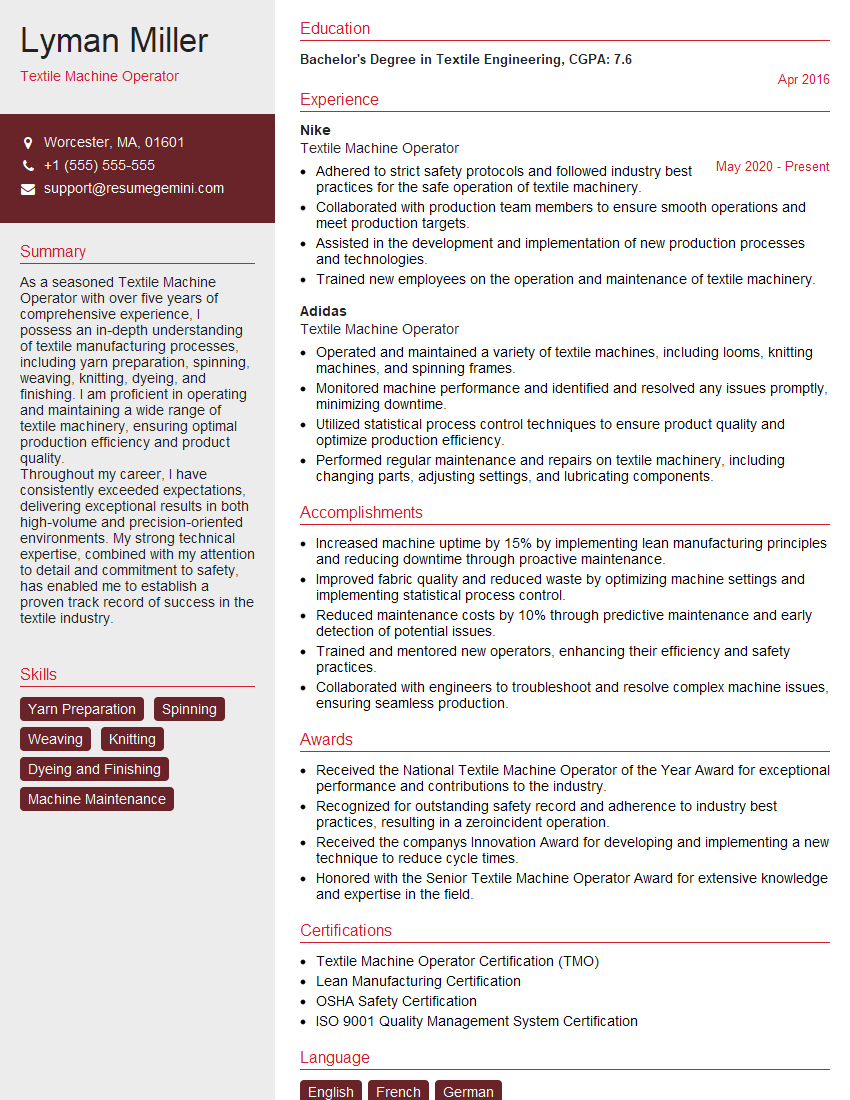
Mastering Textile Machining opens doors to exciting and rewarding careers within the textile industry, offering opportunities for specialization and advancement. A strong foundation in these key areas is essential for success. To significantly improve your job prospects, invest time in creating an ATS-friendly resume that highlights your skills and experience effectively. ResumeGemini is a trusted resource that can help you build a professional and impactful resume tailored to your unique qualifications. Examples of resumes specifically tailored to Textile Machining are available to guide you through the process.




Explore more articles
Users Rating of Our Blogs
Share Your Experience
We value your feedback! Please rate our content and share your thoughts (optional).
What Readers Say About Our Blog
Very informative content, great job.
good