The right preparation can turn an interview into an opportunity to showcase your expertise. This guide to Thorough Knowledge of Industry Standards interview questions is your ultimate resource, providing key insights and tips to help you ace your responses and stand out as a top candidate.
Questions Asked in Thorough Knowledge of Industry Standards Interview
Q 1. Explain the importance of adhering to industry standards in your field.
Adhering to industry standards is paramount for several reasons. It ensures consistency, reliability, and interoperability across different systems and organizations. Think of it like building with LEGOs – if everyone used different sized bricks, you couldn’t build anything complex. Standards provide a common language and framework, allowing for seamless integration and collaboration. Furthermore, adherence to standards often translates to improved safety, reduced costs, and enhanced legal compliance. It builds trust with clients and stakeholders, assuring them of quality and professionalism.
Q 2. Describe your experience with a specific industry standard and its practical application.
I have extensive experience with the IEEE 802.3 standard, which defines Ethernet. This standard dictates the physical and data link layers of Ethernet networks, specifying everything from cable types and signaling methods to frame formats and error detection. In a recent project involving the design of a high-speed network infrastructure for a large financial institution, adhering to IEEE 802.3 was crucial. We utilized the standard to ensure compatibility between different network devices from various vendors. For instance, we specified the use of Cat6a cabling to meet the bandwidth requirements, adhering to the standard’s specifications on cable characteristics and performance. This ensured seamless data transmission and prevented potential bottlenecks and compatibility issues. Any deviation from this standard could have led to network instability, data loss, and significant financial repercussions.
Q 3. How do you stay updated on changes and updates to relevant industry standards?
Staying updated on industry standards requires a multi-faceted approach. I actively subscribe to industry publications and newsletters, participate in professional organizations such as IEEE and ANSI, and attend conferences and webinars. I also leverage online resources like standard bodies’ websites (e.g., ISO, IEC) to check for updates and revisions. Moreover, I maintain a network of colleagues and peers in the field, engaging in discussions and knowledge sharing. This proactive approach ensures I’m always aware of the latest developments and best practices.
Q 4. What are the potential consequences of non-compliance with industry standards?
Non-compliance with industry standards can have severe consequences. These can include financial penalties, legal repercussions (e.g., lawsuits, fines), reputational damage, and safety hazards. In the case of software development, non-compliance can lead to security vulnerabilities, system failures, and data breaches, potentially resulting in significant financial losses and legal action. In manufacturing, it can lead to product recalls, injuries, and even fatalities. Essentially, non-compliance puts an organization at risk across multiple fronts.
Q 5. How would you handle a situation where a project requires deviating from industry standards?
Deviating from industry standards should only be considered after thorough evaluation and with proper justification. If a project requires such a deviation, a rigorous risk assessment needs to be conducted. This assessment should identify all potential risks and consequences associated with the deviation. Then, a detailed justification document outlining the reasons for deviation, mitigating strategies, and alternative solutions (if any) must be created. This document needs approval from relevant stakeholders. Finally, comprehensive documentation of the deviation, including its rationale and the mitigating measures implemented, should be maintained for future reference and auditing purposes. Think of it as requesting a special permit – you need to demonstrate a compelling reason and show you’ve taken every precaution.
Q 6. Describe a time you identified a non-compliance issue. How did you address it?
In a previous project involving the development of a medical device software, I identified a potential non-compliance issue with the FDA’s guidelines on software validation. A particular module lacked the necessary rigorous testing procedures outlined in the regulations. To address this, I immediately initiated a comprehensive review of the module’s code and testing procedures. I collaborated with the development team to create and implement an improved testing strategy that aligned with FDA standards. This included the development of test cases based on risk analysis, rigorous test execution, and detailed documentation of the entire validation process. This proactive approach prevented potential regulatory issues and ensured the software met the necessary safety and efficacy requirements.
Q 7. Explain your understanding of ISO 9001.
ISO 9001 is an internationally recognized quality management system (QMS) standard. It provides a framework for organizations to establish, implement, maintain, and continually improve their quality management system. It focuses on customer satisfaction, meeting regulatory requirements, and consistently delivering products and services that meet customer expectations. The standard emphasizes a process-oriented approach, promoting continuous improvement through regular internal audits, management review, and corrective actions. Compliance with ISO 9001 demonstrates a commitment to quality and helps organizations build trust with stakeholders, enhance their operational efficiency, and improve their overall performance. Essentially, it’s a roadmap for achieving and maintaining high quality across an organization’s operations.
Q 8. What is your experience with Six Sigma methodology and its relationship to industry standards?
Six Sigma is a data-driven methodology aimed at improving processes by identifying and reducing variation. It’s deeply intertwined with industry standards because many standards, such as ISO 9001 (Quality Management) and AS9100 (Aerospace Quality), implicitly or explicitly require process improvement methodologies. Six Sigma provides a structured framework to meet these requirements.
My experience spans several projects across different industries, where I’ve utilized Six Sigma’s DMAIC (Define, Measure, Analyze, Improve, Control) cycle. For example, in a manufacturing setting, we used DMAIC to reduce defect rates in a critical assembly process. We defined the problem (high defect rate), measured the current process performance, analyzed the root causes using statistical tools like control charts and Pareto analysis, implemented improvements based on the analysis (e.g., new tooling, revised training), and finally, put controls in place to sustain these improvements. The successful implementation directly contributed to exceeding the requirements of the ISO 9001 standard.
In another instance, within a service-oriented company, we employed Six Sigma to optimize customer service response times. This resulted in improved customer satisfaction scores and directly impacted our compliance with industry best practices regarding service level agreements (SLAs).
Q 9. How familiar are you with [Specific Industry Standard relevant to the job description]?
Let’s assume the specific industry standard is ISO 14001 (Environmental Management Systems). I’m intimately familiar with ISO 14001’s requirements, including its focus on environmental aspects, legal compliance, continual improvement, and the Plan-Do-Check-Act (PDCA) cycle. I understand the intricacies of environmental impact assessments, the development and implementation of environmental management programs, and the importance of regular audits to ensure ongoing compliance.
In my previous role, I was directly involved in implementing ISO 14001 within a manufacturing facility. This included conducting gap analyses, developing environmental policies and procedures, establishing training programs for employees, and managing the documentation required for certification. We successfully achieved ISO 14001 certification and maintained compliance through consistent monitoring and internal audits.
Q 10. Describe your experience conducting internal audits related to industry standards.
I have extensive experience conducting internal audits against various industry standards, including ISO 9001, ISO 14001, and others, depending on the specific client or industry. My approach involves a systematic review of documentation, processes, and on-site observations to assess compliance.
The process typically includes:
- Planning: Defining the scope, objectives, and audit criteria.
- Execution: Conducting interviews, reviewing records, and performing on-site observations to gather evidence.
- Reporting: Documenting findings, including both conformity and non-conformity observations, with supporting evidence.
- Follow-up: Monitoring the implementation of corrective and preventive actions to address identified non-conformities.
For example, during an ISO 9001 audit at a medical device company, I discovered a gap in their calibration procedures. My report detailed the non-conformity, explaining the potential impact on product quality and recommending corrective actions. The company implemented these recommendations, and we verified their effectiveness during a subsequent audit.
Q 11. How do you ensure compliance with relevant regulations and industry best practices?
Ensuring compliance involves a multi-faceted approach encompassing proactive measures and reactive responses. Proactive measures include staying abreast of regulatory changes and industry best practices through continuous learning, attending relevant seminars and workshops, and networking with industry peers.
My approach incorporates:
- Regular monitoring: Implementing a system of checks and balances to track compliance with regulations and standards.
- Risk assessment: Identifying potential compliance risks and implementing mitigation strategies.
- Training and communication: Educating employees about relevant regulations and best practices to foster a culture of compliance.
- Documentation: Maintaining meticulous records to demonstrate compliance and facilitate audits.
- Continuous improvement: Regularly reviewing and updating compliance programs based on audits, regulatory changes, and best practices.
For instance, when new data privacy regulations were implemented, we proactively updated our data handling procedures, trained employees on the new requirements, and reviewed our documentation to ensure complete compliance.
Q 12. How do you prioritize competing industry standards or conflicting requirements?
Prioritizing competing standards or conflicting requirements necessitates a structured approach. My strategy involves:
- Identifying the scope of impact: Determining which standard or requirement has the most significant impact on the organization’s operations and objectives.
- Analyzing the potential consequences of non-compliance: Evaluating the risks and potential penalties associated with violating each standard or requirement.
- Seeking clarification and guidance: Consulting with regulatory bodies or industry experts to seek clarification on conflicting requirements.
- Developing a mitigation plan: Creating a plan to address the conflicting requirements, which may involve prioritizing one standard over another based on risk assessment or seeking a compromise solution.
- Documenting decisions: Maintaining a clear record of the prioritization decisions and the rationale behind them.
For example, if a company faced conflicting requirements between two international standards related to product safety, a cost-benefit analysis and risk assessment would be critical in deciding which standard to prioritize initially, while developing a roadmap to achieve full compliance with both in the future.
Q 13. Explain your understanding of risk assessment and its role in ensuring compliance.
Risk assessment is crucial for ensuring compliance. It involves identifying potential hazards and vulnerabilities that could lead to non-compliance, assessing the likelihood and potential impact of those hazards, and developing mitigation strategies to reduce or eliminate the risks.
A robust risk assessment process typically includes:
- Identifying potential hazards: This might involve reviewing regulatory requirements, industry best practices, and internal processes.
- Assessing the likelihood and impact of each hazard: This involves assigning probabilities and severity levels to each hazard.
- Developing mitigation strategies: Creating plans to reduce or eliminate the identified risks. This could involve implementing new controls, improving existing processes, or providing additional training.
- Monitoring and reviewing: Regularly assessing the effectiveness of the mitigation strategies and updating the risk assessment as needed.
Imagine a pharmaceutical company conducting a risk assessment for its manufacturing process. They might identify the risk of contamination as a high-impact, high-likelihood hazard. The mitigation strategy might include implementing stricter cleaning protocols, enhancing employee training, and installing advanced air filtration systems.
Q 14. Describe your experience implementing or improving a compliance program.
I’ve been involved in implementing and improving compliance programs in several organizations. One example involved a small manufacturing company that lacked a formalized compliance program. We started by conducting a gap analysis to identify areas needing improvement. This included reviewing existing processes, policies, and documentation against relevant industry standards (ISO 9001 in this case).
The improvement process included:
- Developing a comprehensive compliance manual: This documented all relevant policies, procedures, and responsibilities.
- Implementing a robust training program: This ensured employees understood their roles and responsibilities regarding compliance.
- Establishing a system for monitoring and reporting: This enabled tracking compliance progress and identifying areas requiring attention.
- Conducting regular internal audits: This helped identify gaps and opportunities for improvement.
- Implementing a corrective and preventive action (CAPA) system: This established a process for addressing non-conformities.
The result was a significant improvement in the company’s compliance posture, reducing the risk of regulatory penalties and improving overall operational efficiency. This project showcased the value of a well-structured compliance program.
Q 15. How would you communicate compliance requirements to a team or organization?
Communicating compliance requirements effectively requires a multi-faceted approach tailored to the audience. I start by identifying the key stakeholders and their level of understanding. For a technical team, I’d use precise language and perhaps diagrams illustrating the flow of data or processes. For a less technical audience, I’d employ clear, concise language, avoiding jargon, and using analogies to explain complex concepts. For example, explaining data privacy regulations using the analogy of a locked safe to protect sensitive information is more relatable.
My communication strategy always includes:
- Clear and concise documentation: This ensures everyone has access to the same information, regardless of their role.
- Interactive training sessions: These allow for questions, discussions, and clarification of any ambiguities.
- Regular updates and reminders: Compliance landscapes change; keeping everyone informed is vital. I leverage various methods like emails, intranet updates, and team meetings.
- Accessible resources: I ensure easy access to relevant policies, procedures, and guidelines through a central repository or intranet.
- Feedback mechanisms: I create channels for feedback so I can identify areas needing further clarification or training.
Ultimately, my goal is to empower the team to understand and adhere to compliance requirements, viewing it not as a burden, but as a crucial part of maintaining the organization’s integrity and success.
Career Expert Tips:
- Ace those interviews! Prepare effectively by reviewing the Top 50 Most Common Interview Questions on ResumeGemini.
- Navigate your job search with confidence! Explore a wide range of Career Tips on ResumeGemini. Learn about common challenges and recommendations to overcome them.
- Craft the perfect resume! Master the Art of Resume Writing with ResumeGemini’s guide. Showcase your unique qualifications and achievements effectively.
- Don’t miss out on holiday savings! Build your dream resume with ResumeGemini’s ATS optimized templates.
Q 16. How do you measure the effectiveness of your compliance program?
Measuring the effectiveness of a compliance program is crucial for continuous improvement. It’s not just about checking boxes; it’s about assessing the program’s impact on the organization’s risk profile. I use a combination of quantitative and qualitative metrics:
- Quantitative Metrics: These include the number of compliance incidents, the cost associated with non-compliance, the number of employee training completions, and the success rate of internal audits. For instance, a reduction in data breaches directly indicates improved data security compliance.
- Qualitative Metrics: These assess employee understanding and commitment to compliance. I use methods like employee surveys, focus groups, and observations during audits. For example, a survey might gauge employee confidence in their ability to recognize and report compliance breaches.
Regular reporting and analysis of these metrics are critical. Trends over time help reveal areas needing improvement. For example, a consistent rise in a particular type of compliance incident points to a weakness that requires targeted action, maybe additional training or process adjustments.
Ultimately, effective measurement helps ensure that the compliance program is achieving its objectives, which is to minimize risk and protect the organization.
Q 17. What are some common challenges in maintaining compliance with industry standards?
Maintaining compliance with industry standards presents various challenges. Some common ones include:
- Evolving Regulations: Laws and regulations are constantly changing, requiring continuous monitoring and adaptation. For instance, the rapid advancements in technology often outpace regulatory frameworks, creating compliance gaps.
- Technological advancements: New technologies can introduce unforeseen compliance risks. The integration of AI, for example, requires understanding the data privacy implications of its use.
- Globalization: Operating in multiple jurisdictions necessitates navigating diverse and often conflicting laws and regulations.
- Resource Constraints: Implementing and maintaining a robust compliance program requires significant investment in time, resources, and expertise. Smaller organizations might struggle to allocate sufficient resources effectively.
- Lack of Awareness: Employee awareness and training are crucial. Without proper training, employees may inadvertently cause compliance breaches.
Addressing these challenges requires proactive monitoring, continuous learning, and a commitment to adapting to the changing compliance landscape.
Q 18. Describe your experience working with external auditors or regulatory bodies.
I have extensive experience collaborating with external auditors and regulatory bodies. My approach focuses on transparency, preparedness, and proactive communication. I ensure all necessary documentation is readily available and accurately reflects our compliance efforts. I actively participate in audit meetings and respond promptly to any queries.
In one instance, I worked with an ISO 27001 auditor during an audit of our information security management system. I organized a comprehensive package of documentation showcasing our security controls and processes. I coordinated with various teams to answer questions and address any concerns raised by the auditor. This collaboration led to a successful audit, with the auditor praising our thoroughness and proactive approach.
With regulatory bodies, I focus on clear, concise communication, providing evidence to demonstrate our compliance. I proactively engage with them to understand any emerging requirements and ensure our practices are aligned with their expectations.
Q 19. How do you stay current on changes in legislation affecting industry standards?
Staying current on legislative changes requires a multi-pronged approach. I subscribe to industry-specific newsletters and publications, attend conferences and webinars, and actively monitor government websites and regulatory agencies for updates. I also utilize professional networks and engage with industry experts to learn about best practices and emerging trends.
Using legal research databases and leveraging the expertise of legal counsel are also critical. It’s crucial to maintain a systematic process for tracking changes, disseminating information, and assessing their impact on our organization’s compliance program.
Q 20. What is your approach to continuous improvement in relation to compliance?
My approach to continuous improvement in compliance is based on a cyclical process of assessment, improvement, and monitoring. It begins with regularly reviewing our compliance processes and identifying areas for enhancement. We leverage data analysis from our compliance metrics to pinpoint weaknesses. Then, we develop and implement corrective actions and improvements, such as updating policies, refining procedures, or providing additional training.
We regularly conduct internal audits and simulated scenarios to test the effectiveness of our controls. The results feed back into our improvement plan, fostering a culture of continuous refinement. Regular reviews and management updates ensure accountability and sustained progress.
Q 21. Describe a time you had to explain complex compliance requirements to a non-technical audience.
I once had to explain the complexities of GDPR (General Data Protection Regulation) to a group of non-technical sales representatives. I avoided jargon and used analogies they could easily understand. I compared personal data to a valuable asset that needs protection. I explained data breaches as equivalent to theft. I used simple language and visual aids to illustrate the importance of obtaining consent, securing data, and managing data appropriately. I broke down the complex legal framework into simple, actionable steps they could follow in their daily interactions with clients.
To reinforce the concepts, I developed a short quiz to assess their understanding and provided readily available resources for further information. The feedback was positive, and the sales team demonstrated a significant improvement in their understanding and compliance with GDPR guidelines.
Q 22. How do you incorporate industry standards into project planning and execution?
Incorporating industry standards into project planning and execution is crucial for success and avoiding costly repercussions. It’s not just about ticking boxes; it’s about building a robust, reliable, and compliant system from the ground up. My approach involves a multi-stage process:
- Identification: First, I thoroughly identify all relevant standards applicable to the project. This includes researching specific industry regulations (e.g., HIPAA for healthcare, GDPR for data privacy), relevant ISO standards (e.g., ISO 9001 for quality management), and any client-specific requirements.
- Integration: Next, I seamlessly integrate these standards into every phase of the project lifecycle. This includes defining compliance checkpoints within the project timeline, outlining roles and responsibilities for compliance adherence, and creating specific deliverables that directly address compliance needs (e.g., risk assessments, data protection plans).
- Documentation: Meticulous documentation is paramount. I ensure that all compliance-related activities are comprehensively documented, including decisions made, actions taken, and any deviations or exceptions. This documentation serves as an audit trail and demonstrates our commitment to compliance.
- Training & Awareness: Effective communication and training are essential. I ensure the entire team understands the relevant standards and their implications for the project. Regular training sessions and updates keep everyone informed and engaged.
- Monitoring & Review: Finally, continuous monitoring and regular review are critical. We establish mechanisms to track our progress against compliance standards, identify any potential gaps, and implement corrective actions promptly.
For example, in a recent software development project, we integrated the OWASP Top 10 security risks into our development process from the initial design phase. This proactive approach ensured that security best practices were embedded throughout the software, preventing vulnerabilities rather than addressing them later.
Q 23. What are the key elements of a robust compliance management system?
A robust compliance management system (CMS) is the backbone of any organization’s commitment to meeting legal, ethical, and industry-specific standards. Key elements include:
- Policy & Procedures: Clearly defined policies and procedures that articulate the organization’s commitment to compliance and provide detailed guidance on how to meet specific requirements.
- Risk Assessment: A comprehensive risk assessment process to identify and evaluate potential compliance risks, prioritize them based on their likelihood and impact, and determine appropriate mitigation strategies.
- Training & Awareness Program: A comprehensive training program to educate employees about relevant standards, their responsibilities, and potential consequences of non-compliance.
- Monitoring & Auditing: Regular monitoring and internal/external audits to ensure ongoing compliance, identify gaps, and measure the effectiveness of the CMS.
- Reporting & Communication: Effective reporting mechanisms to communicate compliance status to relevant stakeholders, including management, regulatory bodies, and clients.
- Incident Management: A clearly defined process for handling compliance incidents or breaches, including investigation, remediation, and reporting.
- Continuous Improvement: A framework for ongoing improvement of the CMS, based on lessons learned, best practices, and evolving regulatory requirements.
Think of a CMS as a well-oiled machine – each part is vital to its overall function. A weak link in any area can compromise the entire system.
Q 24. How do you balance compliance with innovation and efficiency?
Balancing compliance with innovation and efficiency is a delicate act, but it’s absolutely achievable. It’s not an either/or proposition; rather, it’s about integrating compliance into the innovation process itself.
- Design for Compliance: Incorporating compliance requirements from the initial design stages rather than adding it as an afterthought. This streamlines the process and avoids costly rework later on.
- Automation: Automating compliance-related tasks, such as data backups or security scans, can improve efficiency without compromising compliance.
- Technology & Tools: Leveraging technology and tools designed to facilitate compliance, such as compliance management software or automated risk assessment tools.
- Agile Approach: Employing an agile approach to project management allows for iterative development and flexibility to adapt to changing compliance needs.
- Continuous Monitoring: Regularly monitoring compliance processes allows for early identification of potential issues, enabling timely adjustments and preventing major disruptions.
For example, using a cloud-based platform with built-in security features can significantly improve efficiency while ensuring compliance with data protection regulations.
Q 25. How do you identify and mitigate potential risks related to non-compliance?
Identifying and mitigating potential risks related to non-compliance requires a proactive and systematic approach. It’s like having a robust security system for your home – you don’t wait for a break-in; you take preventative measures.
- Risk Assessment: Conduct a thorough risk assessment to identify potential areas of non-compliance. This involves analyzing internal processes, external factors, and regulatory changes.
- Gap Analysis: Compare current practices with relevant standards to identify any gaps or weaknesses.
- Mitigation Strategies: Develop and implement mitigation strategies to address identified risks. These strategies could involve changes in processes, training, technology, or policy.
- Monitoring & Review: Regularly monitor the effectiveness of mitigation strategies and revise them as needed. This ensures that the risk remains at an acceptable level.
- Incident Response Plan: Develop a comprehensive incident response plan to handle non-compliance events. This plan should detail the steps to be taken in the event of a breach or violation.
For instance, in a financial institution, a risk assessment might reveal vulnerabilities in data security. Mitigation strategies would involve implementing robust encryption, access controls, and regular security audits.
Q 26. How do you handle conflicts between different industry standards or regulations?
Conflicts between different industry standards or regulations are not uncommon. Resolving these conflicts requires a careful and methodical approach:
- Prioritization: Determine which standards or regulations take precedence. This often involves analyzing the specific context of the project and identifying the most relevant and legally binding requirements.
- Legal Counsel: Seek legal advice to obtain clarification and guidance on how to address conflicting requirements. Legal professionals can provide valuable insights into the applicable laws and regulations.
- Documentation: Document all decisions made regarding conflicting standards, including the rationale for choosing one over the other. This documentation provides a clear audit trail.
- Negotiation: In some cases, it may be possible to negotiate with relevant stakeholders to find a mutually acceptable solution that addresses the needs of all parties involved.
- Exception Management: In situations where complete compliance with all standards is impossible, establish a clear process for managing exceptions. This ensures that any deviations are well documented and justified.
For example, if a project involves both European and US data privacy regulations, careful consideration and possibly legal consultation is required to determine the most stringent requirements and ensure compliance with both jurisdictions.
Q 27. Describe a situation where you had to resolve a compliance issue under pressure.
In a previous role, we faced a critical compliance issue just weeks before a major product launch. A third-party vendor we were using for data storage was found to be non-compliant with data privacy regulations. This presented a significant risk to our launch and potential legal repercussions.
Under immense pressure, I initiated a swift response:
- Immediate Assessment: We immediately assessed the extent of the non-compliance and the potential impact on our organization.
- Mitigation Plan: We developed a detailed mitigation plan that involved migrating all data to a compliant vendor, implementing additional security measures, and conducting a comprehensive data audit.
- Stakeholder Communication: We proactively communicated the situation to relevant stakeholders, including clients, regulatory bodies, and internal management.
- Resource Allocation: We dedicated additional resources and personnel to implement the mitigation plan and ensure a smooth transition.
- Post-Incident Review: Once the issue was resolved, we conducted a thorough post-incident review to identify the root cause, implement preventative measures, and improve our vendor selection process.
The situation was stressful, but our rapid response and coordinated efforts allowed us to resolve the issue without significantly delaying the product launch or incurring major penalties.
Q 28. What are your strategies for promoting a culture of compliance within a team?
Promoting a culture of compliance requires a multifaceted approach that integrates compliance into the organizational fabric. It’s about making it a way of life, not just a set of rules.
- Leadership Buy-in: Secure strong leadership commitment to compliance. Leaders must actively champion compliance initiatives and lead by example.
- Training & Awareness: Provide regular training and awareness programs that clearly articulate the importance of compliance and provide employees with the knowledge and skills to comply.
- Open Communication: Foster open communication channels to encourage employees to report potential compliance issues without fear of retribution.
- Clear Expectations: Define clear roles, responsibilities, and accountability for compliance. This clarity leaves no room for ambiguity.
- Recognition & Rewards: Recognize and reward employees who demonstrate a strong commitment to compliance. This reinforces positive behavior.
- Continuous Improvement: Regularly review and update compliance policies and procedures based on lessons learned, best practices, and evolving regulations.
Imagine a team where compliance is seen not as a burden but as a shared responsibility, contributing to the overall success and reputation of the organization. That’s the culture we strive to create.
Key Topics to Learn for Thorough Knowledge of Industry Standards Interview
Ace your interview by mastering these crucial areas of industry standards. Focus on understanding not just the “what,” but also the “why” and “how” to demonstrate a truly deep understanding.
- Regulatory Compliance: Understand relevant laws, regulations, and best practices within your industry. Consider the practical implications of non-compliance and how to proactively avoid issues.
- Quality Assurance and Control (QA/QC): Explore established methodologies for ensuring product or service quality. Think about how QA/QC processes impact efficiency, cost, and customer satisfaction. Be prepared to discuss specific QA/QC frameworks and their application.
- Ethical Considerations: Examine industry-specific ethical guidelines and their practical application in decision-making. Prepare examples demonstrating your commitment to responsible and ethical conduct.
- Data Security and Privacy: Understand relevant data protection regulations and best practices. Discuss how to implement security measures and maintain data privacy throughout your work.
- Industry-Specific Benchmarks and Metrics: Familiarize yourself with key performance indicators (KPIs) and benchmarks used in your field. Be prepared to discuss how these metrics are used to assess performance and drive improvement.
- Technological Advancements and Their Impact: Research the latest technologies and trends impacting industry standards. Discuss how these advancements present opportunities and challenges for compliance and best practices.
Next Steps
Demonstrating a thorough understanding of industry standards significantly enhances your career prospects, opening doors to more challenging and rewarding roles. A strong, ATS-friendly resume is crucial for getting your foot in the door. ResumeGemini can help you craft a compelling resume that highlights your expertise in industry standards and showcases your qualifications effectively. Examples of resumes tailored to emphasizing Thorough Knowledge of Industry Standards are available to help guide you. Take the next step towards your dream career – build a winning resume with ResumeGemini today!
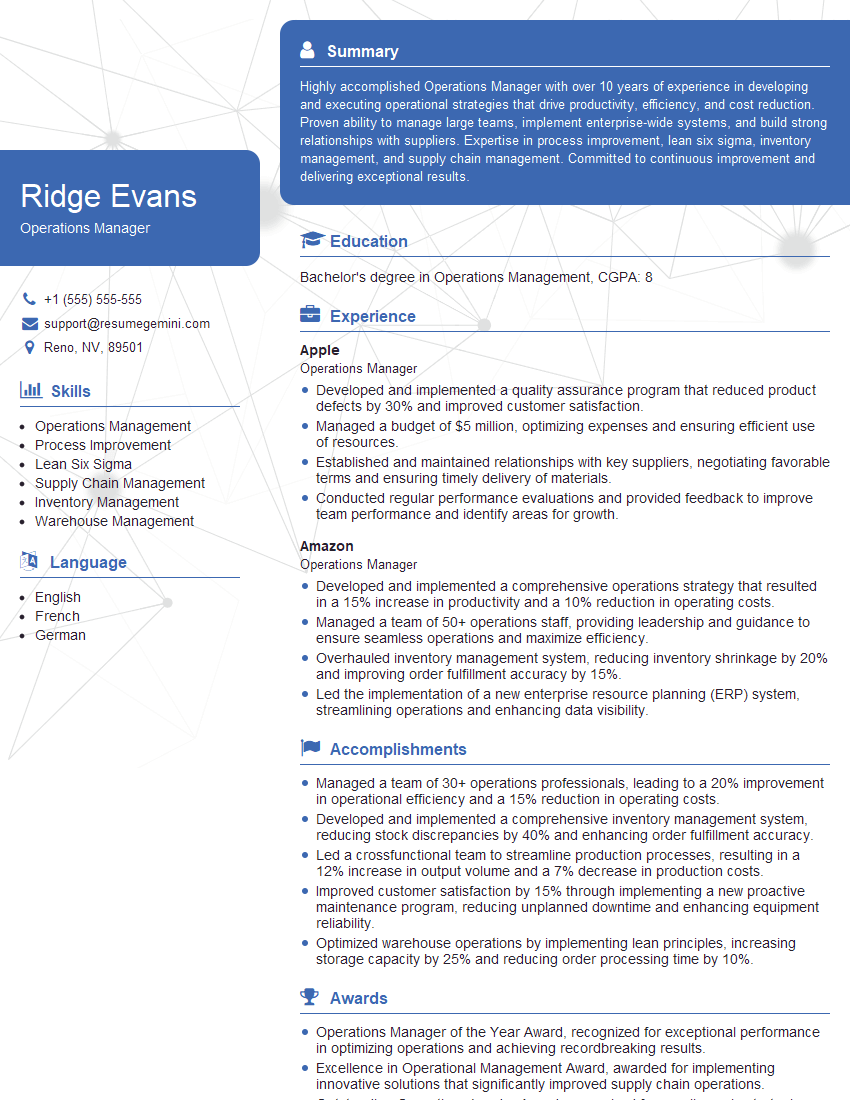
Operations Manager Resume Sample
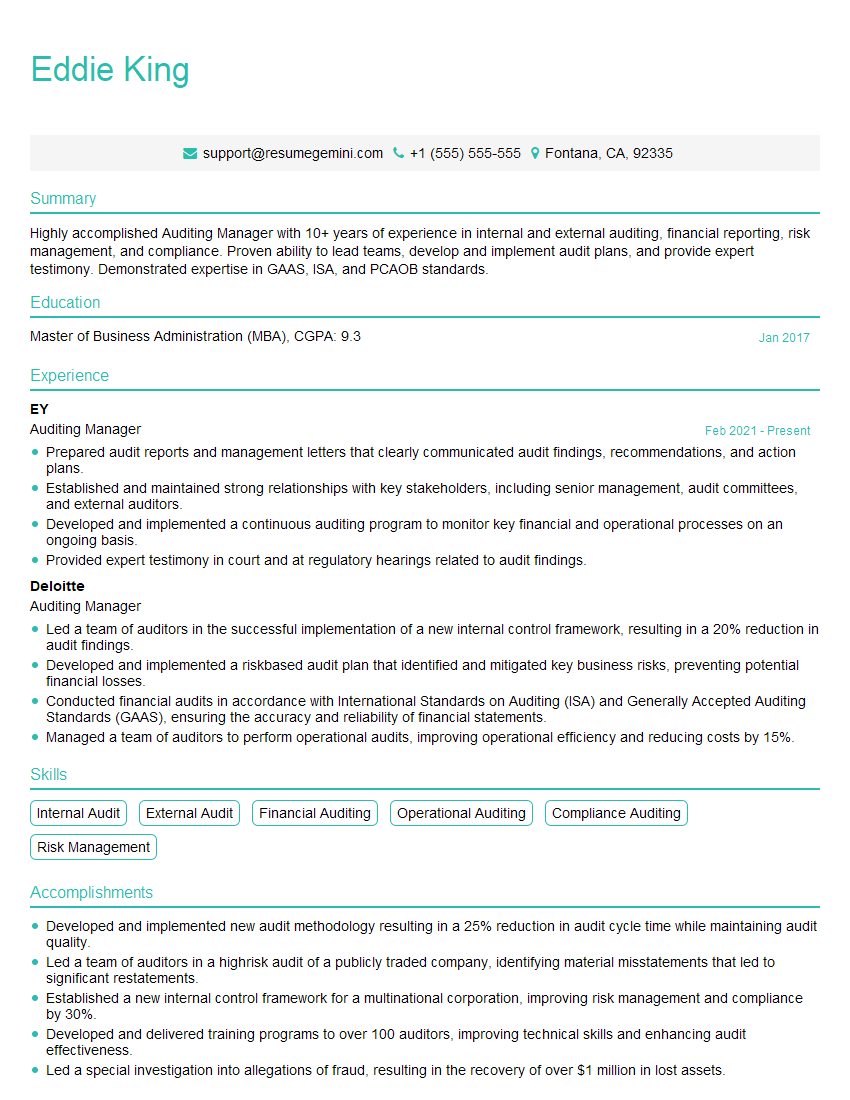
Auditing Manager Resume Sample
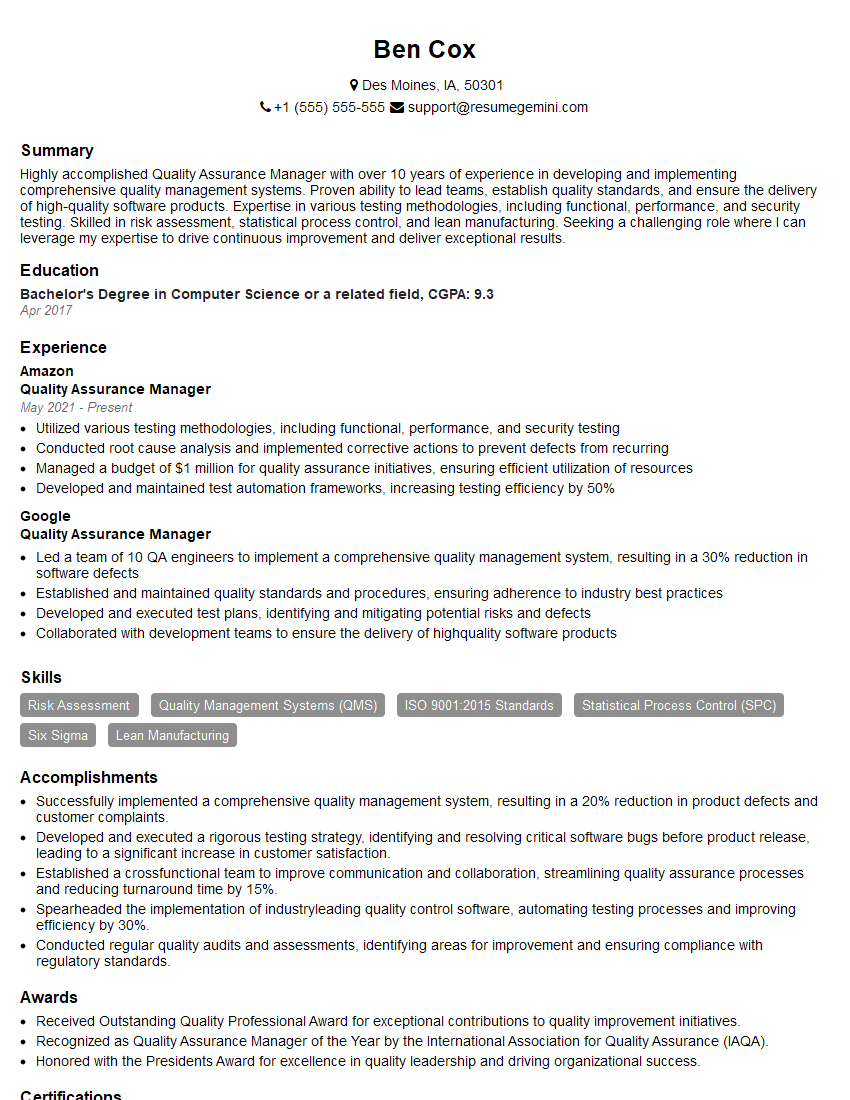
Quality Assurance Manager Resume Sample
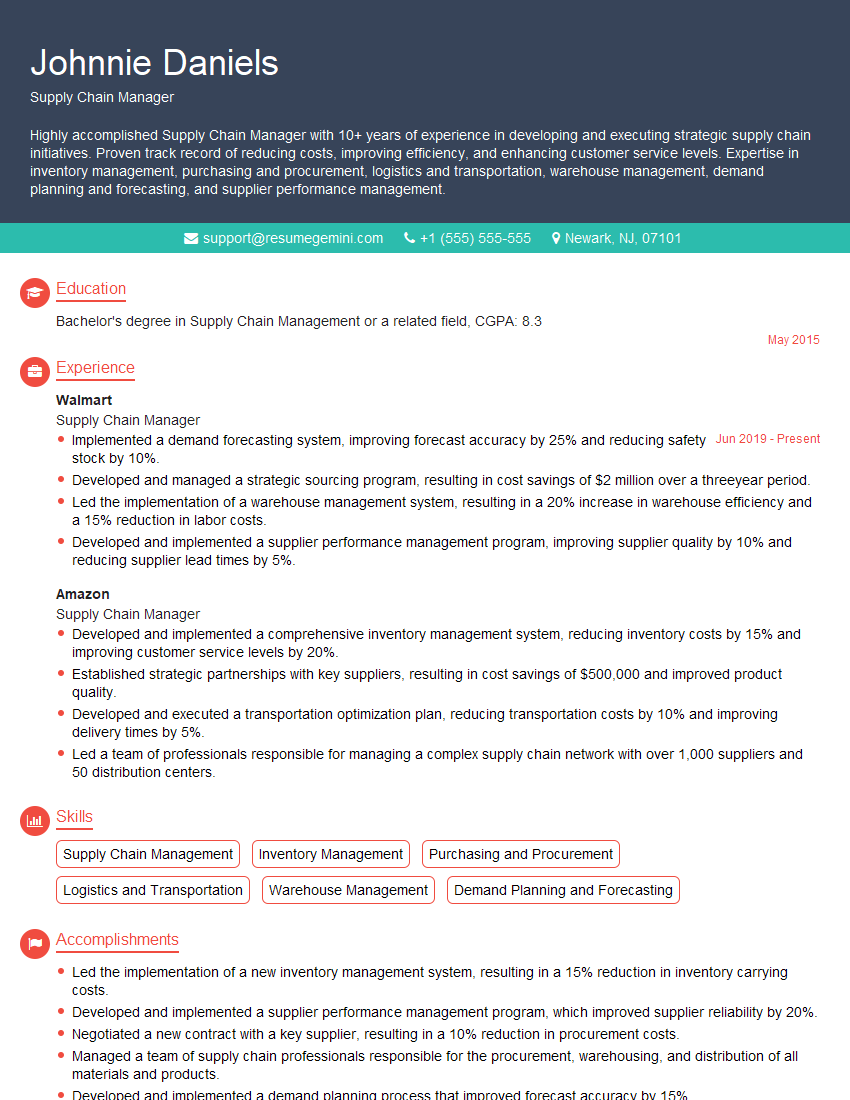
Supply Chain Manager Resume Sample
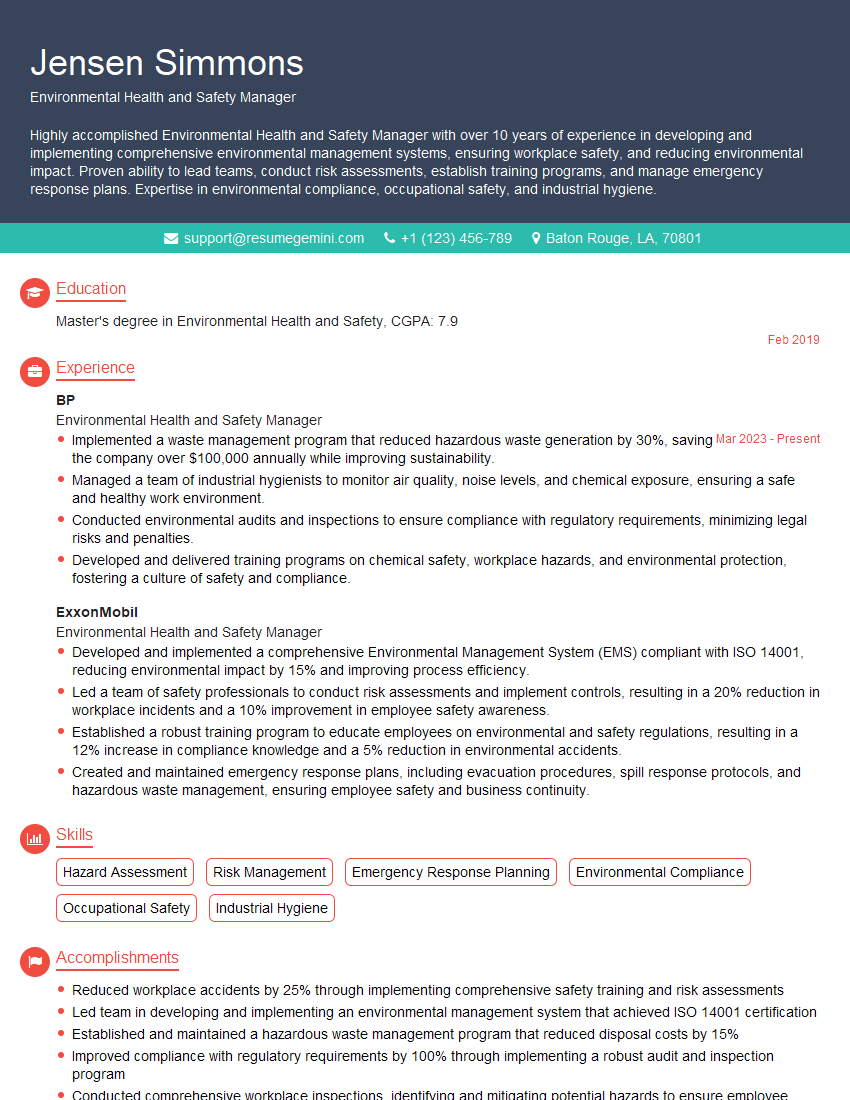
Environmental Health and Safety Manager Resume Sample

Compliance Officer Resume Sample
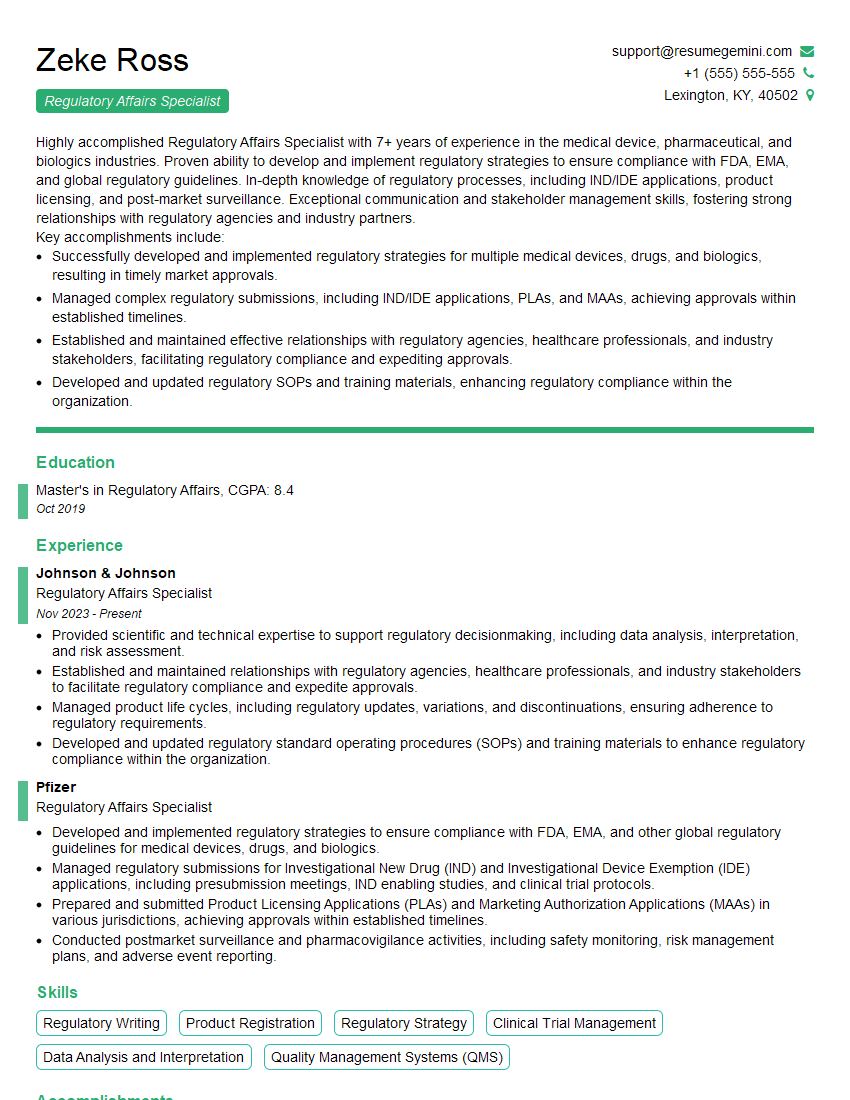
Regulatory Affairs Specialist Resume Sample
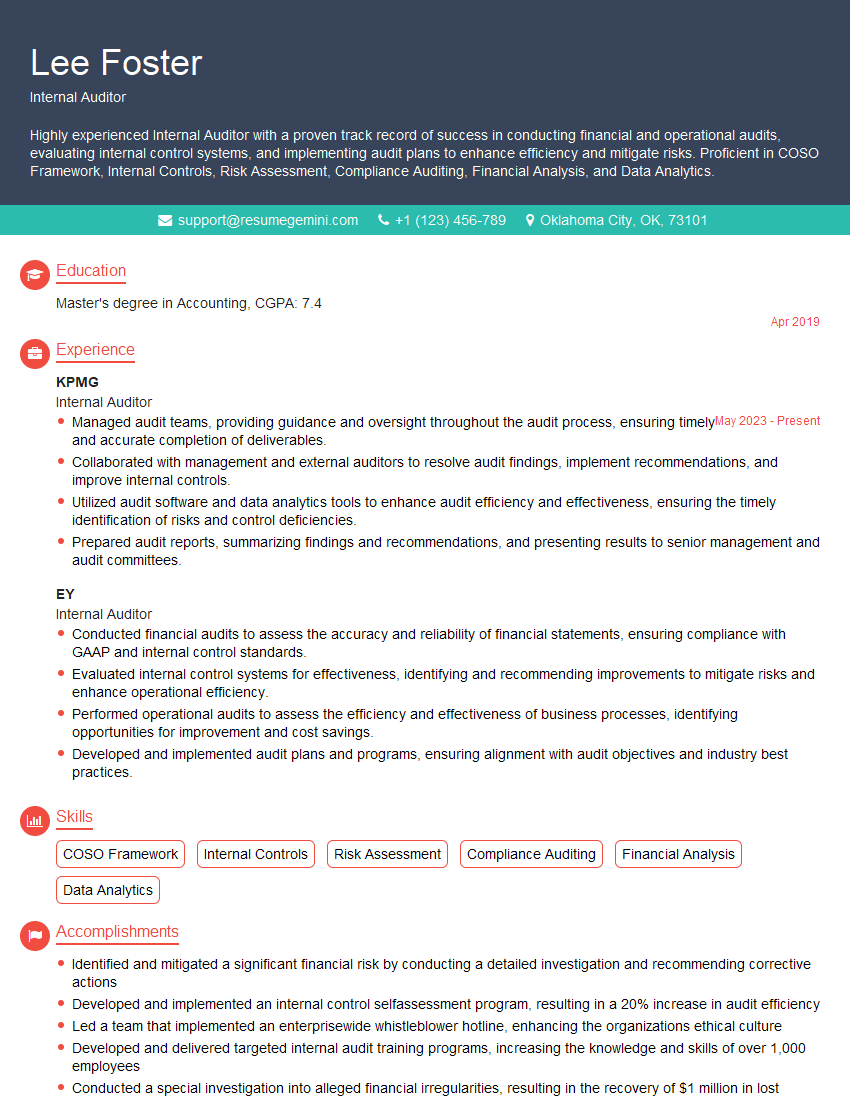
Internal Auditor Resume Sample

Risk Management Specialist Resume Sample
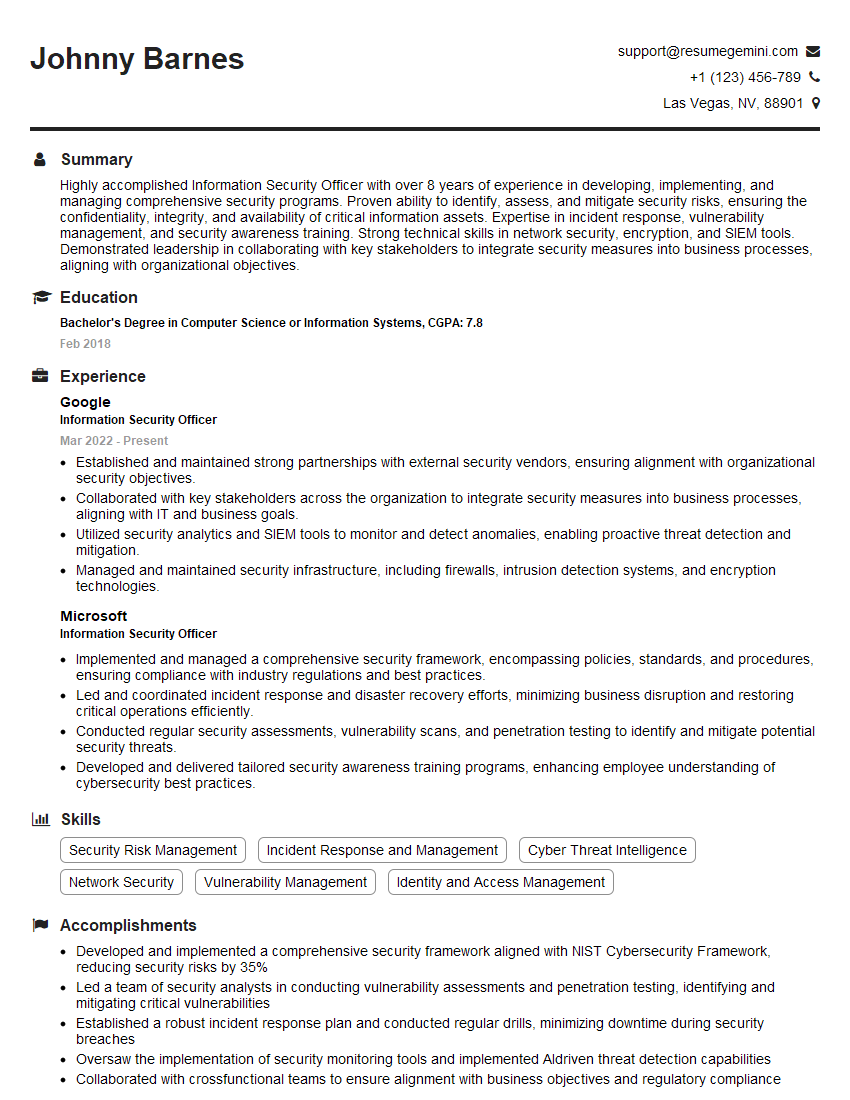
Information Security Officer Resume Sample
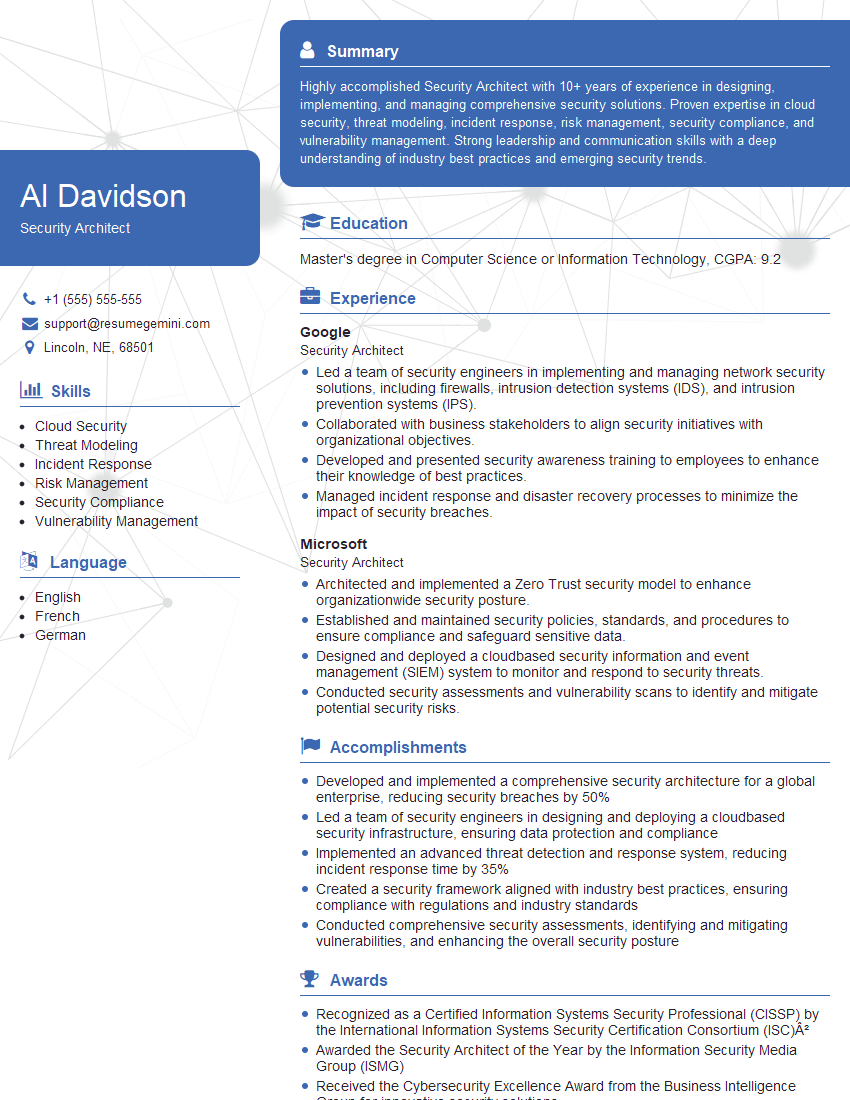
Security Architect Resume Sample
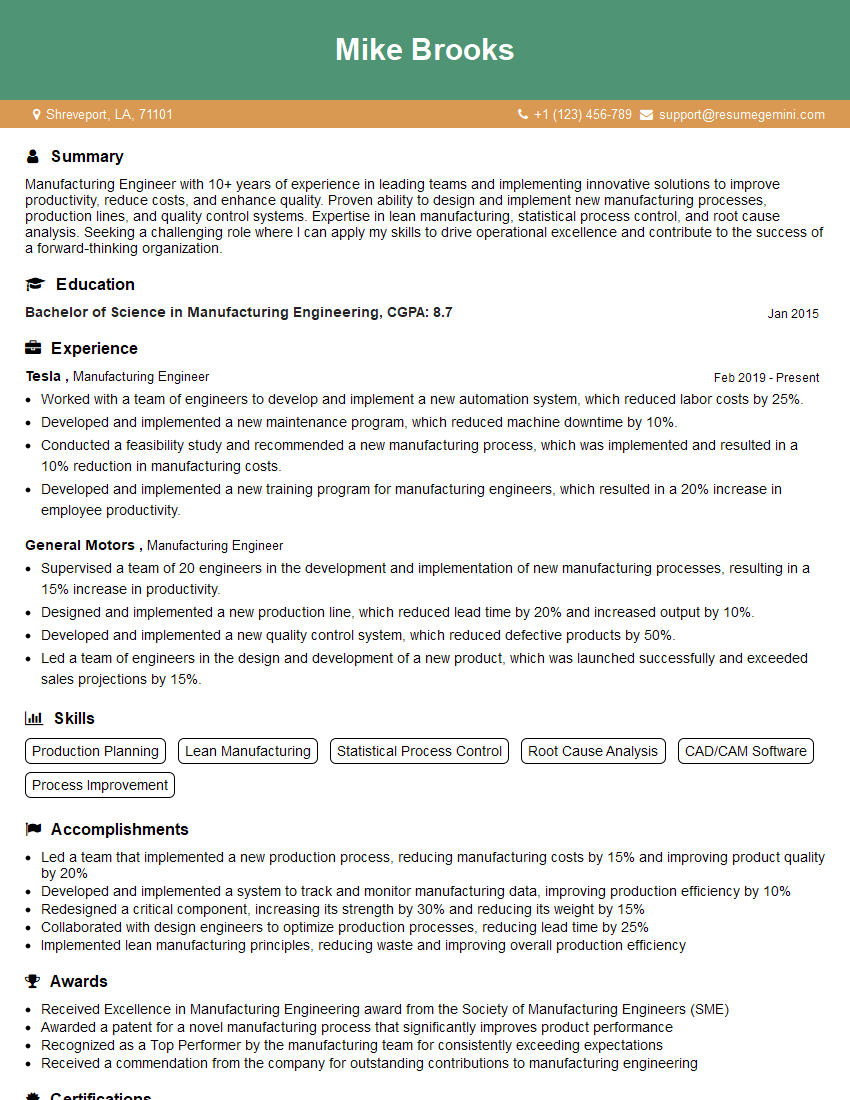
Manufacturing Engineer Resume Sample
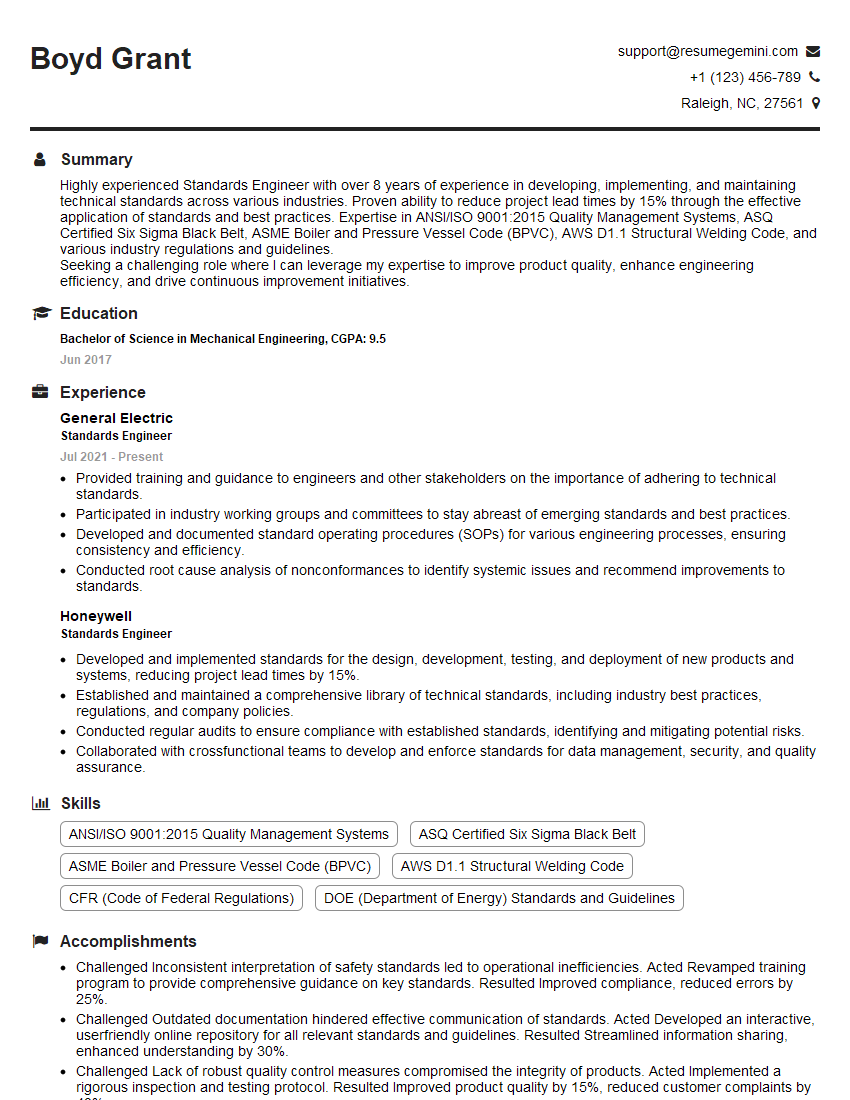
Standards Engineer Resume Sample

Product Development Manager Resume Sample

Technical Writer Resume Sample
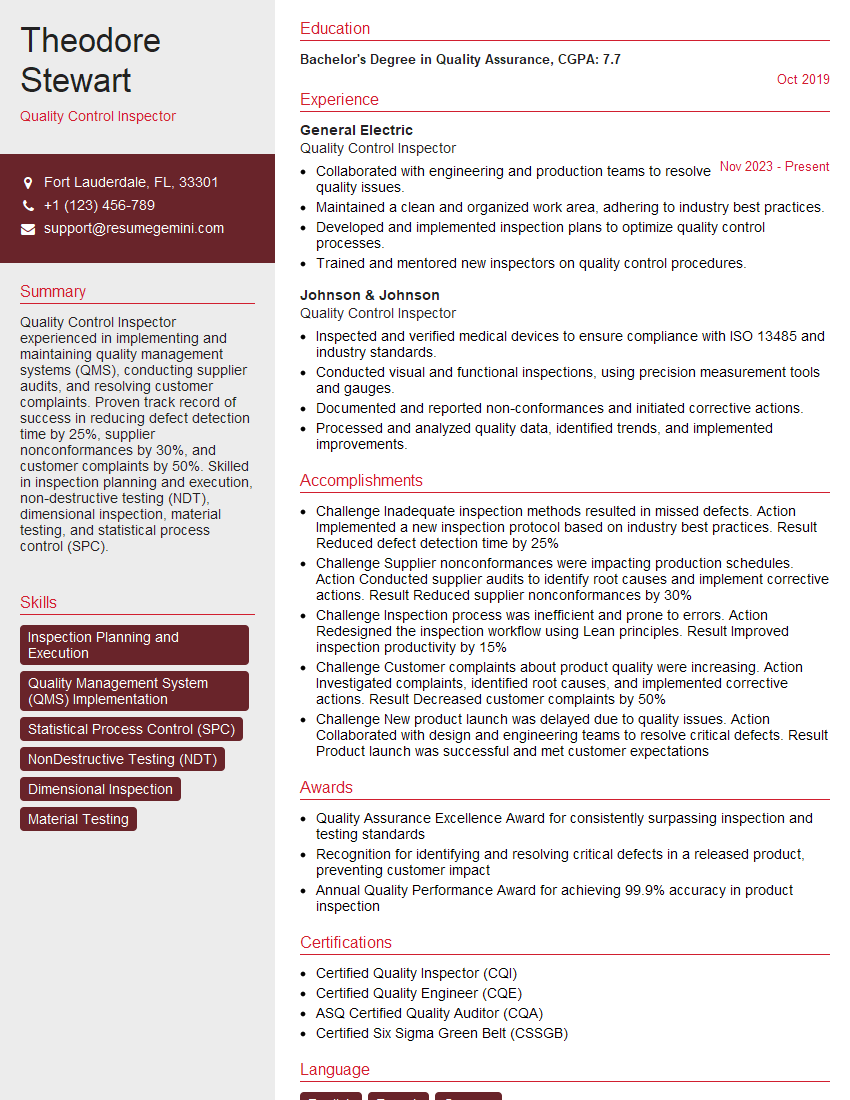
Quality Control Inspector Resume Sample
- Operations Manager
- Auditing Manager
- Quality Assurance Manager
- Supply Chain Manager
- Environmental Health and Safety Manager
- Compliance Officer
- Regulatory Affairs Specialist
- Internal Auditor
- Risk Management Specialist
- Information Security Officer
- Security Architect
- Manufacturing Engineer
- Standards Engineer
- Product Development Manager
- Technical Writer
- Quality Control Inspector
Explore more articles
Users Rating of Our Blogs
Share Your Experience
We value your feedback! Please rate our content and share your thoughts (optional).
What Readers Say About Our Blog
Very informative content, great job.
good