Feeling uncertain about what to expect in your upcoming interview? We’ve got you covered! This blog highlights the most important Thread and Needle Selection interview questions and provides actionable advice to help you stand out as the ideal candidate. Let’s pave the way for your success.
Questions Asked in Thread and Needle Selection Interview
Q 1. What factors determine the appropriate thread weight for a given fabric?
Choosing the right thread weight is crucial for achieving beautiful, durable stitches. Think of it like choosing the right rope for a specific task – a thin thread for delicate fabrics, a thicker one for sturdy materials. The ideal thread weight depends primarily on the fabric’s weight and weave. Heavier fabrics, like denim, require heavier threads to withstand stress, while lightweight fabrics like silk or chiffon need finer threads to avoid puckering or distortion. You can usually find weight recommendations on the thread spool itself, often expressed as a number (e.g., 40 weight, 60 weight). Lower numbers indicate heavier threads, while higher numbers signify finer threads. As a general guideline, match the thread weight to the fabric weight for optimal results. For example, a medium-weight cotton fabric would work well with a medium-weight thread (around 50 weight), whereas a heavy linen fabric might require a heavier thread (around 30 weight).
Consider the project too: A delicate embroidery project needs a finer thread than a strong seam on a pair of trousers.
Q 2. Explain the differences between cotton, polyester, and silk threads.
Cotton, polyester, and silk threads each offer unique properties influencing their suitability for different projects. Cotton threads are natural, breathable, and absorbent, making them ideal for everyday sewing, quilting, and crafts. However, they can be prone to shrinking and can weaken with excessive washing. Polyester threads are synthetic, durable, strong, and resistant to shrinking and stretching, suitable for high-stress applications and projects where durability is paramount. They maintain their color well and are resistant to many stains. However, they lack the natural softness of cotton and can sometimes feel a little stiff. Silk threads, luxurious and lustrous, lend elegance to fine sewing projects like couture garments or delicate embroidery. Their softness and sheen are unparalleled but they’re less durable and more prone to breakage than cotton or polyester.
Imagine making a delicate embroidered handkerchief: silk would be perfect for that fine detail and luxurious look. But for sewing durable jeans, a strong polyester thread is the way to go.
Q 3. How do you select a needle size based on fabric weight and type?
Needle selection is as critical as thread choice! The needle’s size should complement both the fabric’s weight and type. Heavier fabrics require stronger needles with larger eyes to accommodate thicker threads without causing excessive stress. Finer fabrics, conversely, need thinner needles to prevent holes or damage to the fabric. Needle sizes are typically numbered, with lower numbers indicating smaller needles and higher numbers indicating larger needles. For example, a size 8 needle would work well for fine silk, while a size 16 might be necessary for heavy denim. The fabric type also matters – knit fabrics need ballpoint needles, while woven fabrics often work well with sharp needles.
Think about sewing a delicate lace versus a thick wool coat. You wouldn’t use the same needle for both!
Q 4. What are the consequences of using the wrong needle size?
Using the wrong needle size can lead to several undesirable outcomes, significantly impacting stitch quality and fabric integrity. Using a needle that’s too small for the thread will cause the thread to break frequently, resulting in frustration and wasted time. Conversely, a needle that’s too large for the fabric can create unsightly holes and damage the fabric, leaving behind a messy finish. Using the wrong needle type for the fabric (e.g., using a sharp needle on a knit fabric) can lead to skipped stitches, snagging, or broken needles. This can also lead to damaging the fabric structure and result in irreparable damage. Matching needle and thread is a fundamental principle of quality sewing.
Q 5. Describe different needle types and their applications (e.g., sharps, ballpoint, jeans needles).
Various needle types cater to different fabrics and sewing tasks. Sharp needles are suited for woven fabrics like cotton, linen, and silk. Their sharp point cleanly pierces the fabric, resulting in neat stitches. Ballpoint needles are designed for knit fabrics such as jersey and interlock. Their rounded point slides between the loops of the fabric’s knit structure, preventing skipped stitches or fabric snagging. Jeans needles are heavy-duty needles with a strong point capable of penetrating thick denim or canvas. Their reinforced construction is designed to withstand the stress of these materials. Other specialized needles include embroidery needles (with a longer eye for thicker embroidery threads), stretch needles (similar to ballpoint but designed for high elasticity materials), and quilting needles (strong and short for high-speed piecing).
Q 6. How does thread tension affect stitch quality?
Thread tension plays a vital role in stitch quality. Proper thread tension ensures that the top and bottom threads interlock neatly, creating even, strong stitches. Uneven tension results in several problems. Too much top tension causes the stitches to pull towards the top of the fabric, creating puckering and distortion. Excessive bottom tension pulls the stitches towards the bottom, creating a similar effect. Balanced tension results in flat, even stitches that look professional and are securely fastened. Most sewing machines allow adjustments to the tension, often with a dial or screw. Learning how to adjust and maintain the right tension for different projects and fabrics is a skill that improves with practice and experience.
Q 7. How do you troubleshoot a broken needle?
Troubleshooting a broken needle begins with identifying the cause. Was the needle bent? Was the fabric too thick for the needle size? Was the thread tension too tight? After removing the broken needle carefully (using needle nose pliers, if necessary), inspect the machine’s needle plate for damage. If the needle plate is bent or damaged, this could have contributed to the needle breaking and needs to be replaced. It’s also important to inspect the needle’s shaft for any bends or imperfections, even small ones can cause breakage. Always use a needle appropriate for your fabric and thread. Once the cause is identified, replace the needle with a new one of the correct size and type, ensuring it is correctly inserted into the machine. Recheck the thread tension and proceed carefully with your sewing.
Q 8. What are the signs of a dull needle?
A dull needle is a common sewing problem that can lead to frustration and poor-quality stitches. Several signs indicate a needle needs replacing. Firstly, you might notice that the stitches are uneven or skipped. This happens because a blunt point can’t easily penetrate the fabric, resulting in inconsistent penetration. Secondly, you’ll likely experience increased thread breakage. A dull needle creates more friction, causing the thread to snap. Thirdly, the fabric itself might show signs of damage; you may see small holes or snags around the stitches, rather than clean, even stitches. Finally, you may also feel increased resistance while sewing—it simply feels harder to push the needle through the material. Think of it like trying to cut a piece of paper with a dull pair of scissors; it takes more effort and the result is less precise.
Q 9. How do you prevent thread breakage during sewing?
Preventing thread breakage involves a multifaceted approach focusing on both needle and thread selection, and sewing technique. First, ensure you’re using a sharp needle appropriate for your fabric type and thread weight. A dull needle increases friction and contributes significantly to breakage. Secondly, the correct thread tension is crucial. Too much tension puts immense stress on the thread, while too little can lead to skipped stitches and breakage. Your sewing machine’s tension dials should be adjusted based on the fabric and thread. Thirdly, avoid sharp turns and sudden jerks while sewing. Smooth, consistent movements reduce stress on the thread. Fourthly, always use a good quality thread appropriate for the project. Thin, weak threads are more prone to breakage. Fifthly, regularly inspect your machine’s thread path for any obstructions that could snag the thread and cause it to snap. Finally, maintaining a clean sewing space is important, preventing dust and lint from interfering with the smooth flow of thread. Imagine a perfectly tuned engine running smoothly versus one with clogged filters; consistent and smooth sewing operations prevent thread breakage.
Q 10. Explain the relationship between stitch length and fabric type.
The relationship between stitch length and fabric type is paramount for achieving a professional finish. Heavier fabrics like denim or canvas generally require longer stitches for strength and to avoid puckering. Shorter stitches, however, are often better suited for delicate fabrics like silk or chiffon, preventing damage and maintaining their drape. For example, a long stitch on silk would likely cause damage and holes, whereas a short stitch on denim might make it too stiff and inflexible. The ideal stitch length also depends on the project’s intended use and aesthetics. A garment meant for everyday wear may use slightly longer stitches for durability, while a finely detailed piece would require shorter, more delicate stitches. Think of building a house: you wouldn’t use the same-sized nails for the foundation as you would for finishing the trim.
Q 11. What are the advantages and disadvantages of using different thread materials?
Different thread materials offer varying advantages and disadvantages. Cotton thread is popular due to its strength, affordability, and wide color selection. However, it’s prone to shrinking and might not be ideal for all fabric types. Polyester thread is strong, colorfast, and resistant to shrinking and stretching, making it suitable for a variety of projects. However, it can sometimes appear slightly shiny. Silk thread produces a beautiful sheen and is suitable for delicate fabrics, yet its lower strength and higher cost limit its use. Nylon thread is strong and stretchy, ideal for projects requiring elasticity, but is not recommended for all machines. Ultimately, the best thread type depends on your specific project requirements and desired look. A heavy-duty project, for instance, would demand the strength of polyester or cotton, while a delicate garment might require the finer properties of silk thread.
Q 12. How do you identify the correct needle size from its marking?
Needle sizes are marked with numbers, indicating their diameter. Smaller numbers correspond to finer needles, while larger numbers represent thicker needles. For example, a size 6 needle is much finer than a size 16 needle. These numbers usually denote the size in points. The system isn’t universally standardized across brands, so it is always advisable to refer to a needle size chart provided by the manufacturer. These charts will outline the appropriate needle for various fabric types, thread weights, and sewing machine types. Ignoring this critical information can lead to damaged needles, broken threads, and ultimately, poor-quality stitching. Just as you wouldn’t use the same drill bit for drilling through wood and metal, understanding the correct needle size is essential for successful sewing.
Q 13. How does thread type influence the final look of a garment?
The thread type significantly influences the garment’s final look and feel. The choice of thread affects texture, sheen, and overall appearance. For instance, using a shiny polyester thread on a matte fabric might create an unexpected and potentially undesirable contrast. Conversely, a matte cotton thread on a similarly matte fabric will result in a unified appearance. The thread’s color also plays a critical role; choosing a contrasting thread can add visual interest, such as with decorative stitching, while a matching thread ensures a seamless blend. The thickness of the thread also influences the look. A finer thread will give cleaner, less prominent stitching, whereas thicker thread creates more noticeable, bolder stitches. Therefore, the thread type is not just a functional component; it’s an integral design element that can dramatically influence the garment’s aesthetics.
Q 14. Describe different types of thread finishes and their properties.
Thread finishes refer to the treatments applied to the thread’s surface, impacting its properties. Mercerized thread, for example, undergoes a treatment that enhances its luster, strength, and dye absorption. It creates a smoother, shinier finish. Waxed thread, common for hand-sewing, has a waxy coating to improve its strength and reduce friction. It’s easier to handle and less prone to breakage. Spun thread is made by twisting multiple fibers together, resulting in a more textured and slightly less smooth finish. Choosing the right finish depends on the project’s needs. A mercerized thread may be preferred for a garment requiring a high-sheen finish, while waxed thread is ideal for hand-sewing projects demanding minimal friction. The choice aligns directly with the desired aesthetic and functional properties of the final product.
Q 15. What are the best practices for storing needles and thread to maintain their quality?
Proper storage of needles and thread is crucial for maintaining their quality and extending their lifespan. Think of it like storing fine wine – you wouldn’t leave it in direct sunlight, would you? Similarly, needles and thread need protection from elements that can degrade them.
Needles: Store needles in their original cases or in a designated, airtight container. This prevents rust and damage from accidental bending or breakage. Avoid throwing them loosely into a drawer, as this can lead to dulling and potential injury. Keep them away from moisture and extreme temperatures.
Thread: Store thread in a cool, dry place, away from direct sunlight and heat sources. Sunlight can fade the color of thread and heat can weaken its fibers. Keep thread spools upright to prevent tangling. Consider using airtight containers or zip-lock bags to further protect against moisture and dust, particularly for delicate threads like silk or linen.
By following these simple steps, you can ensure your needles and threads remain in optimal condition, allowing you to create beautiful and durable projects.
Career Expert Tips:
- Ace those interviews! Prepare effectively by reviewing the Top 50 Most Common Interview Questions on ResumeGemini.
- Navigate your job search with confidence! Explore a wide range of Career Tips on ResumeGemini. Learn about common challenges and recommendations to overcome them.
- Craft the perfect resume! Master the Art of Resume Writing with ResumeGemini’s guide. Showcase your unique qualifications and achievements effectively.
- Don’t miss out on holiday savings! Build your dream resume with ResumeGemini’s ATS optimized templates.
Q 16. How do you determine if a thread is suitable for machine or hand sewing?
Choosing the right thread for machine or hand sewing depends primarily on the thread’s weight, fiber content, and its intended use. Imagine trying to sew heavy denim with fine embroidery thread – it simply wouldn’t work!
Machine Sewing: Machine sewing generally requires stronger, smoother threads that can withstand the tension and speed of the machine. Polyester, cotton, and rayon threads are common choices, with the specific weight dictated by the fabric. Heavier fabrics require heavier weight threads (e.g., 40wt for denim).
Hand Sewing: Hand sewing offers more flexibility in thread choice. Finer threads like 60wt or even 80wt cotton are great for delicate fabrics or embroidery. However, stronger threads are needed for heavier fabrics, such as canvas.
Always check the thread packaging for recommendations on suitability for machine or hand sewing. The package will specify the thread weight and fiber content. The manufacturer’s guidelines provide valuable insights into the thread’s ideal applications.
Q 17. What’s the difference between a universal needle and a stretch needle?
Universal and stretch needles differ significantly in their design and intended use, catering to distinct fabric types. A universal needle is like a general-purpose tool; a stretch needle, on the other hand, is specialized.
Universal Needles: These are the workhorses of sewing, suitable for a wide variety of woven fabrics like cotton, linen, and blends. Their point is sharp, enabling easy piercing of these fabrics. They are a good starting point for most sewing projects.
Stretch Needles: Designed specifically for knit fabrics and stretch materials (like jersey or spandex), stretch needles have a slightly rounded point and a larger eye. This prevents snagging or damaging delicate knit fibers. The rounded point allows for smooth penetration of the fabric without piercing the fibers, resulting in a cleaner stitch and reduced skipped stitches.
Using the wrong needle can lead to skipped stitches, broken needles, or damage to the fabric. Choosing the right needle is crucial for professional-quality results.
Q 18. How does thread color affect the overall aesthetic of the garment?
Thread color is far more than a simple aesthetic choice; it’s a fundamental element in garment design. Think about a navy blazer with bright yellow stitching – it’s a bold statement! The color of the thread can significantly impact the overall look and feel of a garment.
Complementary Colors: Matching thread color to the fabric creates a subtle, refined look. Using a color that complements the fabric can add visual interest without being overwhelming.
Contrasting Colors: Using a contrasting thread color can create a visually striking effect. This technique is frequently used for decorative stitching, topstitching, or embroidery.
Blending Colors: Blending thread colors with the fabric can result in a seamless, invisible seam. This is especially useful for creating a clean finish.
Careful consideration of thread color elevates a garment from ‘functional’ to ‘stylish’, demonstrating attention to detail and enhancing the overall aesthetic appeal.
Q 19. Explain the importance of using a proper needle-thread combination.
The importance of a proper needle-thread combination cannot be overstated. It’s the foundation of successful sewing. Using the wrong combination is like trying to drive a nail with a screwdriver – it’s inefficient and potentially damaging.
Needle Size: The needle size must be appropriate for the thread weight. Too small a needle for thick thread will break the needle, while too large a needle for thin thread will damage the thread and possibly create larger holes in the fabric.
Thread Type: The thread type should be compatible with both the needle type and the fabric. Using a heavy-duty thread with a fine needle is a recipe for disaster.
A mismatch can lead to a range of problems, from broken needles and skipped stitches to inconsistent tension and poor overall stitch quality. Always consult the needle and thread manufacturer’s recommendations to ensure compatibility.
Q 20. How do you address thread jamming in a sewing machine?
Thread jamming is a frustrating but common sewing machine problem. It’s often caused by a simple issue but can stem from various sources. Let’s address this systematically.
Inspect the Thread Path: Carefully trace the thread path from the spool to the needle. Look for any tangles, knots, or areas where the thread might be caught. Clear any obstructions.
Check the Bobbin: Ensure the bobbin is correctly wound and inserted. A poorly wound bobbin is a frequent culprit. Inspect the bobbin case for lint or debris.
Inspect the Needle: A bent or damaged needle is a common cause of thread jamming. Replace the needle if necessary.
Check the Tension: Improper tension settings can also cause jamming. Adjust the upper and lower tension dials to find the optimal balance. You should find guidance on proper tension adjustments in your machine’s manual.
Clean the Machine: Lint and debris in the machine can interfere with the thread path. Clean the machine using a brush and compressed air.
By systematically checking these points, you can usually identify and resolve the cause of thread jamming quickly and effectively.
Q 21. What are the common problems caused by incorrect needle selection?
Incorrect needle selection can lead to a cascade of problems that significantly affect the quality of your sewing. It’s like using the wrong tool for a job; the results won’t be optimal.
Broken Needles: Using a needle that’s too fine for the fabric or thread weight can lead to frequent needle breakage. Think of trying to sew thick canvas with a fine needle intended for silk – it’s a recipe for broken needles!
Skipped Stitches: An incorrect needle can cause the machine to skip stitches. This results in inconsistent stitching and a less durable garment.
Damaged Fabric: Using a needle that’s too sharp for a delicate fabric can damage the fabric, causing runs or holes. Conversely, a blunt needle can also lead to uneven stitches and fabric damage.
Poor Stitch Quality: Improper needle selection can lead to uneven stitches, inconsistent tension, and an overall poor aesthetic.
Always choose a needle that’s appropriate for the fabric type, thread weight, and your sewing machine. Consult your machine’s manual or the thread and needle manufacturer’s recommendations for guidance.
Q 22. How do you determine the correct needle for different sewing projects (e.g., quilting, leatherwork)?
Choosing the right needle is crucial for a successful sewing project. Think of it like choosing the right tool for a specific job – a tiny screwdriver won’t work for heavy-duty bolts! Needle selection depends primarily on the fabric type and the project’s demands. For example:
- Quilting: Requires a sharp needle that can penetrate multiple layers of fabric without breaking. A 70/10 (universal) or 80/12 (sharp) needle is typically ideal for quilting cotton. For heavier quilt layers or denser fabrics, you might consider a heavier needle like a 90/14.
- Leatherwork: Needs a strong, heavy-duty needle with a sharp point to pierce the thick material. Leather needles, often designated with a ‘L’ or a specific leatherwork number (e.g., 16/100), are designed with a triangular or wedge-shaped point to avoid tearing.
- Delicate fabrics like silk or chiffon: Require a very fine needle to prevent snagging or holes. A 60/8 or even a smaller size needle would be suitable.
- Denim or canvas: Need a strong needle that can handle the dense weave. A 90/14 or even a heavier-duty needle might be necessary.
Always consult the needle size chart provided by the needle manufacturer; they usually provide specific recommendations based on fabric weight and fiber type.
Q 23. How do you adjust needle tension based on thread and fabric type?
Adjusting needle tension is an art, akin to finding the perfect balance in a recipe. Incorrect tension leads to skipped stitches, broken threads, or puckered fabric. The ideal tension depends on the thread, fabric, and the sewing machine itself.
- Thread: Thicker threads require more tension; finer threads require less. For example, a heavy-duty upholstery thread will need significantly higher tension than embroidery floss.
- Fabric: Lightweight fabrics (like silk) often need less tension to avoid puckering. Heavier fabrics (like denim) require more tension to prevent skipped stitches. Consider the fabric’s weave as well; a tightly woven fabric might need more tension than a loosely woven one.
Start by setting your machine’s tension dial to the recommended setting for your fabric type. Test on a scrap of your fabric before sewing the actual project. If stitches are too loose, increase the tension; if they’re too tight, decrease it. Observe the stitches closely – a perfectly balanced tension produces uniform, even stitches on both the top and bottom of the fabric.
Q 24. Describe the different types of needle systems used in sewing machines.
Sewing machine needles are categorized into different systems, mainly differentiating by shank type (the part that fits into the machine). The most common systems include:
- 130/705 H-system (or H-shank): This is a standard system used by many household machines, offering a wide range of needle sizes and types.
- 15×1 (or low shank): Often found in older Singer and some vintage machines, this system’s needles have a shorter shank.
- Industrial needles: These are specialized for high-speed production and have different shanks and systems depending on the machine brand and model. Examples include the DBx1 needle system.
It’s crucial to use the correct needle system for your machine to ensure proper function and avoid damage to the machine or the needle.
Q 25. Explain how to identify damaged or defective needles and thread.
Identifying damaged or defective needles and thread is crucial for quality and safety. Think of it as a pre-flight check before taking off in an airplane. Damaged needles lead to broken threads, skipped stitches, and can even cause injury.
- Damaged Needles: Look for bent points, burrs (rough edges), or a dull point. Even a slightly bent needle can cause severe damage. A magnifying glass can help in inspecting for tiny defects.
- Defective Thread: Check for inconsistencies in thread thickness, knots, or fuzziness. Weak or damaged thread is prone to breakage, leading to frustration and wasted fabric. Inspect the spool thoroughly before use.
Always replace a needle if you suspect any damage, no matter how minor. A broken needle can cause serious injury. Similarly, using damaged thread will result in unsatisfactory stitching.
Q 26. What are the safety precautions involved in handling needles and thread?
Safety is paramount when handling needles and thread. These seemingly simple tools can cause serious injuries if handled carelessly. Here are some key safety precautions:
- Needle Storage: Keep needles in a designated needle case or container when not in use. Never leave needles lying around.
- Handling: Always use a thimble when hand-sewing to protect your fingers. Never attempt to catch a falling needle. Always handle needles with care.
- Disposal: Dispose of used needles safely in a designated sharps container – never throw them in the trash.
- Machine Operation: Always keep fingers clear of moving parts of the sewing machine.
Treat needles with respect. Following these simple safety measures will prevent accidents and injuries.
Q 27. How do you clean and maintain sewing machine needles?
Cleaning and maintaining sewing machine needles is vital for their longevity and your project’s success. Regular cleaning prevents damage, ensures smooth operation, and extends the needle’s life.
After each sewing session, gently wipe the needle with a soft cloth to remove lint and debris. You can use a sewing machine needle cleaner brush for more thorough cleaning. If the needle is significantly soiled, you can carefully wipe the needle with a slightly damp cloth. Remember to dry it thoroughly before reinstalling it. Never try to clean the needle while it’s in the machine. Always remove the needle from the machine before attempting to clean it.
Q 28. What is the significance of using high-quality thread and needles?
Using high-quality thread and needles is not just a matter of preference; it’s essential for achieving professional results and avoiding frustrating setbacks. Think of it as investing in premium ingredients for a culinary masterpiece.
- High-quality needles: Produce consistent, even stitches, reducing skipped stitches and fabric damage. They are made from stronger materials, more resistant to bending or breaking, and boast sharper points for clean penetration.
- High-quality thread: Offers better strength, durability, and colorfastness. This results in stronger, more attractive seams that last longer, reducing the chance of seam failure or thread breakage during use. It also creates a better overall look for the end product.
The small investment in high-quality needles and thread is significantly outweighed by the improved results, project longevity, and time saved in avoiding repairs and re-sewing caused by inferior materials.
Key Topics to Learn for Thread and Needle Selection Interview
- Understanding Fabric Types: Knowing the properties of different fabrics (e.g., cotton, silk, linen) and how they impact thread and needle choice is crucial. This includes understanding fiber content, weave structure, and drape.
- Needle Types and Sizes: Learn the various needle types (e.g., sharps, ballpoint, quilting) and their corresponding sizes. Understand how needle size relates to thread weight and fabric type to prevent skipped stitches or broken needles.
- Thread Types and Weights: Familiarize yourself with different thread types (e.g., cotton, polyester, silk) and their weights (e.g., measured in Tex or denier). Understand the relationship between thread weight, needle size, and fabric type for optimal stitching.
- Matching Thread and Needle to Project: This involves applying your knowledge of fabrics, needles, and threads to select the appropriate tools for specific sewing projects (e.g., garment construction, quilting, embroidery). Practice problem-solving to determine the best combination for various situations.
- Troubleshooting Common Issues: Learn to identify and solve problems like broken needles, skipped stitches, thread breakage, and uneven stitch length. This demonstrates practical experience and problem-solving skills.
- Safety Practices: Discuss safe handling procedures for needles and thread, including proper storage and disposal techniques.
Next Steps
Mastering thread and needle selection is vital for success in various sewing and textile-related roles. A strong understanding of these concepts demonstrates attention to detail, problem-solving abilities, and practical skills highly valued by employers. To maximize your job prospects, create an ATS-friendly resume that showcases your skills effectively. ResumeGemini is a trusted resource to help you build a professional and impactful resume. Examples of resumes tailored to Thread and Needle Selection expertise are provided to guide you. Take the next step toward your dream career by crafting a resume that highlights your capabilities.

Textile Engineer Resume Sample

Textile Designer Resume Sample

Apparel Designer Resume Sample
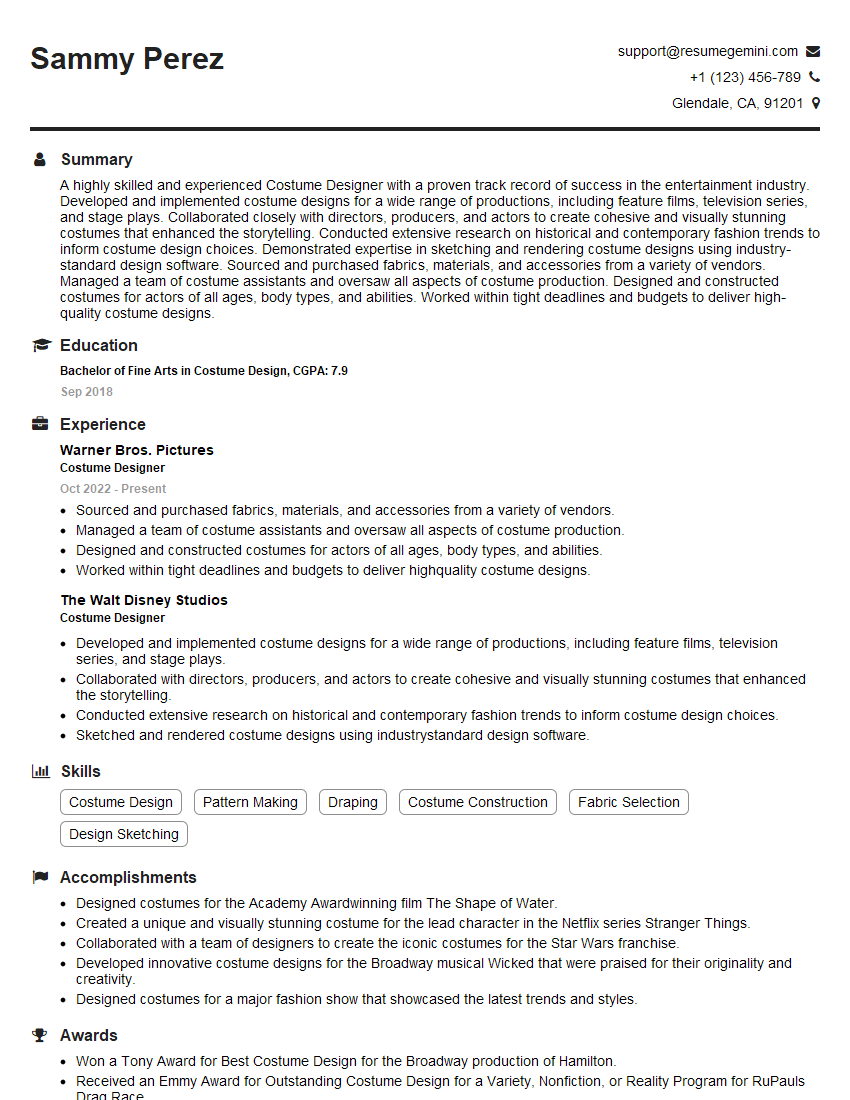
Costume Designer Resume Sample

Fashion Designer Resume Sample

Draper Resume Sample

Seamstress Resume Sample

Sewing Machine Operator Resume Sample
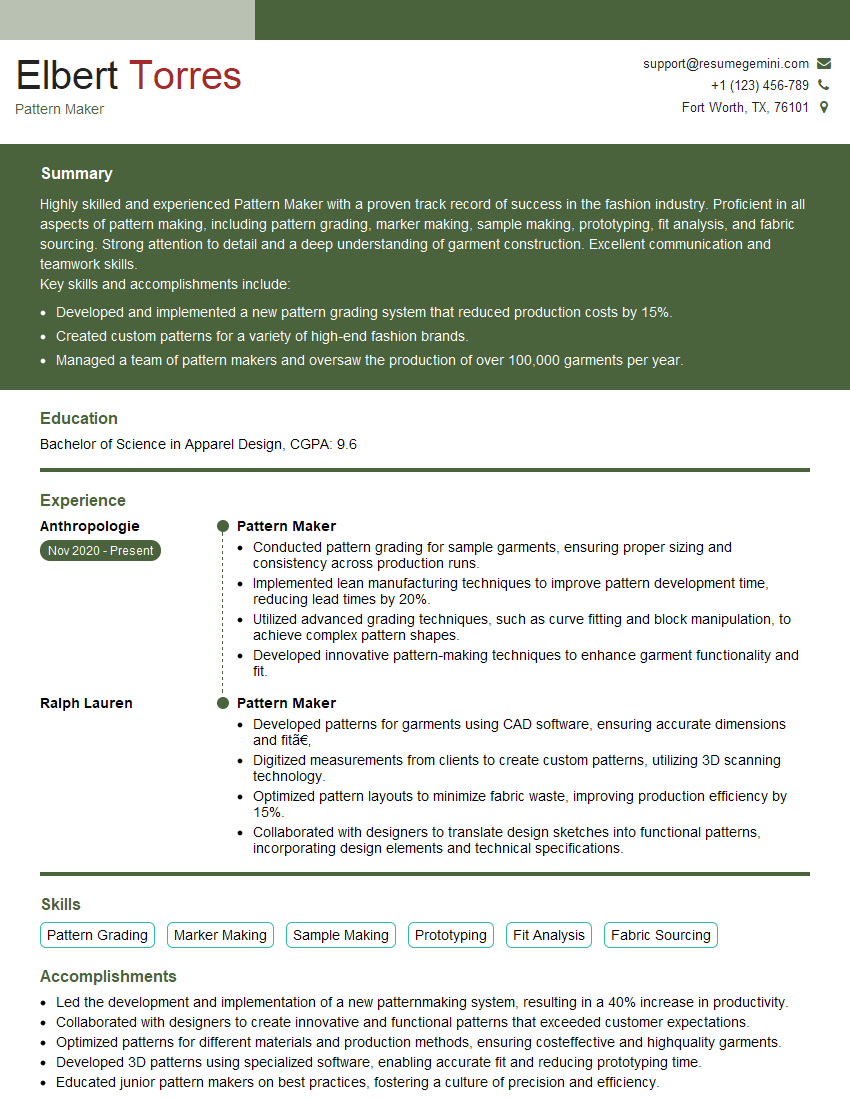
Pattern Maker Resume Sample

Stitcher Resume Sample
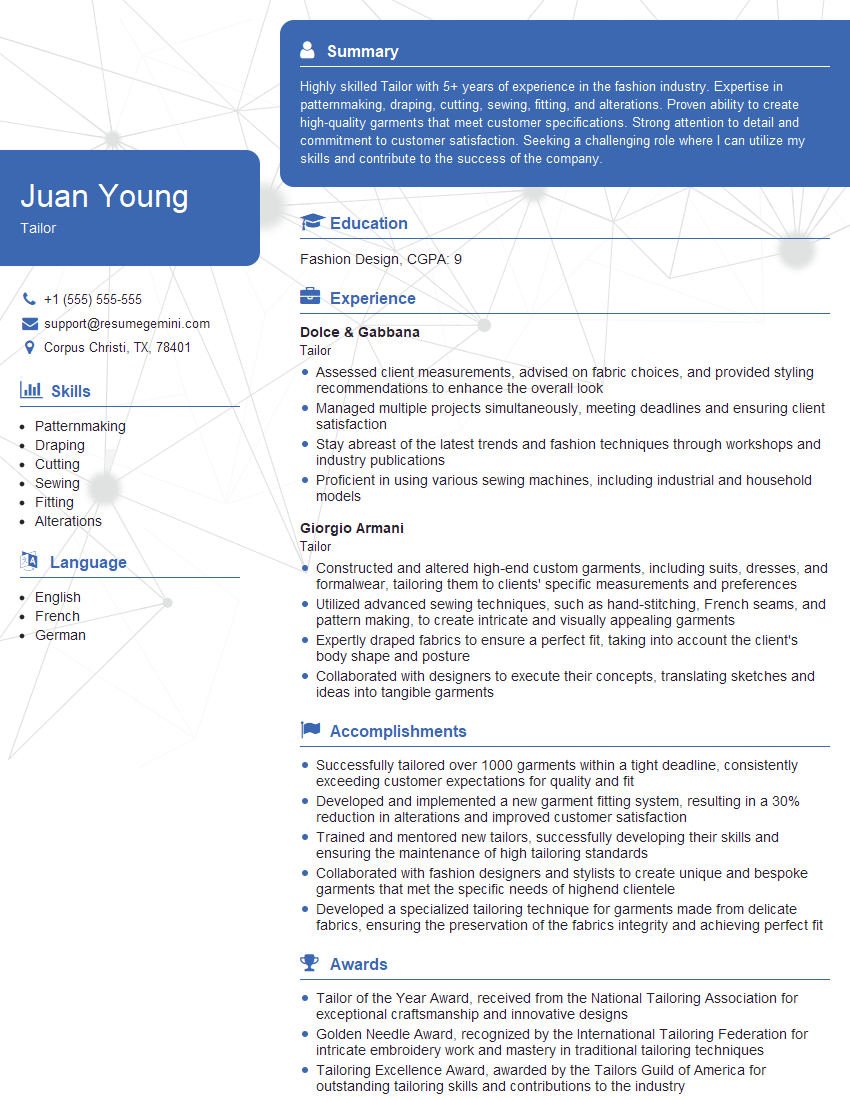
Tailor Resume Sample

Embroidery Specialist Resume Sample
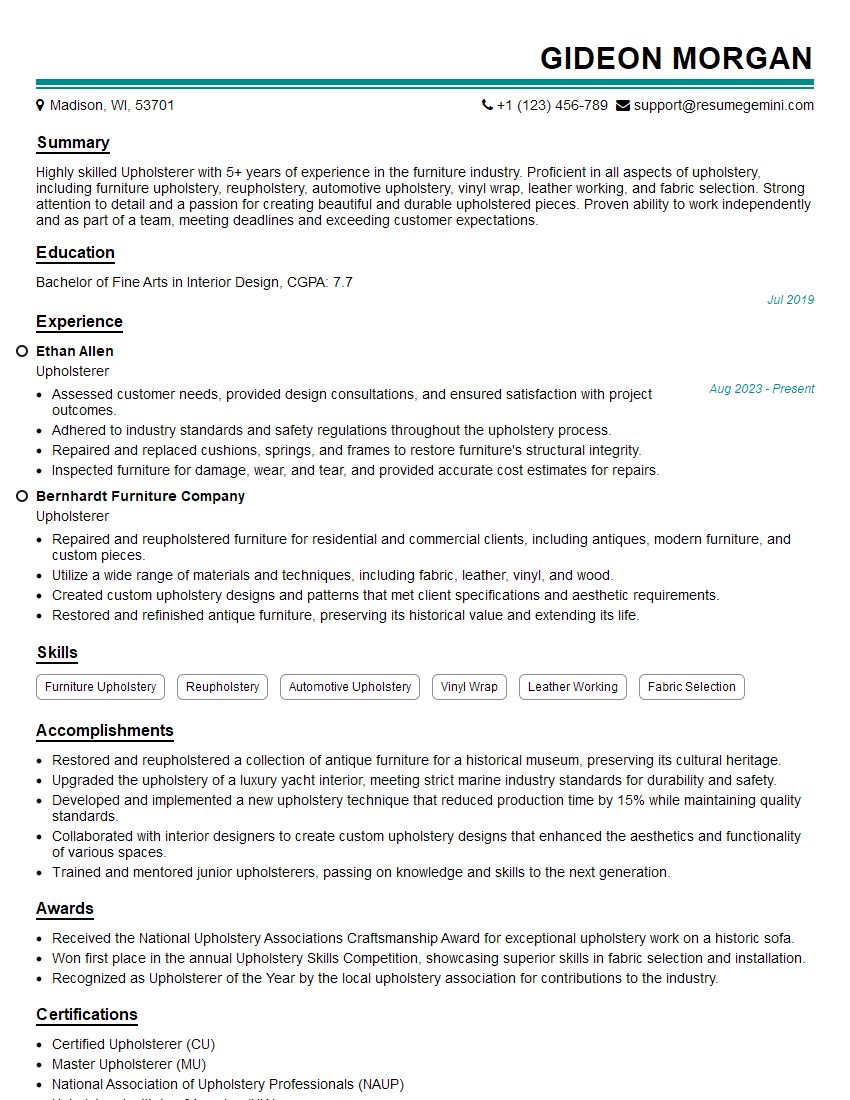
Upholsterer Resume Sample
Explore more articles
Users Rating of Our Blogs
Share Your Experience
We value your feedback! Please rate our content and share your thoughts (optional).
What Readers Say About Our Blog
Very informative content, great job.
good