Interviews are more than just a Q&A session—they’re a chance to prove your worth. This blog dives into essential Thread Painting interview questions and expert tips to help you align your answers with what hiring managers are looking for. Start preparing to shine!
Questions Asked in Thread Painting Interview
Q 1. Describe your experience with different thread types and their suitability for thread painting.
Thread selection is crucial in thread painting. The ideal thread depends on the desired effect and the fabric. I’ve worked extensively with various types, each offering unique properties.
Cotton threads: These are my go-to for most projects. They’re readily available, relatively inexpensive, and offer good color saturation. However, they can be prone to fraying, so careful stitching is essential. I often use them for background fills and detailed work where a softer look is desired.
Silk threads: These create a luxurious sheen and beautiful luminosity. They’re ideal for highlighting areas or adding subtle shimmer, but they are more delicate and can be more challenging to work with. I primarily use silk for fine details and areas where I want a high-quality, radiant finish.
Rayon threads: These offer a smooth, lustrous surface, sitting somewhere between cotton and silk in terms of sheen and durability. They’re a good all-around option and often used for blending and creating smooth gradients. I find rayon particularly effective for creating even coverage.
Metallic threads: These add sparkle and drama but require careful handling to avoid breakage. I use them sparingly, often to accentuate certain design elements or to add a touch of glamour.
Choosing the right thread is a matter of understanding your project’s aesthetic and the technical demands of the design. I often experiment with blending different thread types to achieve a unique texture and visual effect.
Q 2. Explain your process for transferring a design onto fabric for thread painting.
Transferring a design accurately is paramount. I utilize several methods, depending on the complexity and the fabric.
Tracing: For intricate designs, I use a lightbox to trace the design onto tracing paper. Then, I carefully transfer the tracing onto the fabric using a water-soluble fabric marker or by lightly pricking holes along the outline and dusting with chalk.
Printing: For simpler designs, I might print the design directly onto fabric using a fabric printer or by using iron-on transfer paper. This method is quicker for large-scale projects.
Freehand sketching: For more spontaneous work, I might sketch directly onto the fabric with a fabric pencil or chalk. This approach works best when I want to be more expressive and less constrained by a precise design.
Regardless of the method, I always pre-wash and iron the fabric to remove any wrinkles or creases that might interfere with the transfer process. Accuracy is key—taking time with this step ensures the final result is precise.
Q 3. What techniques do you use to achieve shading and depth in your thread painting?
Achieving depth and shading is where the artistry of thread painting truly shines. I combine several techniques to create realistic or stylized effects.
Layering: Building up layers of thread allows me to gradually darken or lighten areas, creating a sense of depth and volume. I might start with a light base color and gradually add darker shades to create shadows.
Variation in Stitch Density: Closely spaced stitches create a darker area, while more loosely spaced stitches create a lighter one. This subtle manipulation of stitch density is crucial for smooth transitions.
Color Blending: I often use two or more closely related colors to achieve a gradual transition between light and dark areas. The blending creates depth and smoothness, avoiding harsh lines.
Value Variation: Choosing different shades within a color family allows me to create a subtle range of values, adding depth to the piece without making it too busy. For example, instead of using only one shade of blue, I might use several, from light sky blue to deep midnight blue.
The interplay of these techniques allows for nuanced shading and dimensional effects that bring my thread paintings to life.
Q 4. How do you handle thread breakage during a complex thread painting project?
Thread breakage is inevitable, particularly in intricate pieces. I have a few strategies to handle it efficiently.
Prevention: Using high-quality threads, keeping my needles sharp, and maintaining consistent tension are crucial preventative measures. I also avoid tugging or pulling the threads unnecessarily.
Repairing Breaks: When breakage does occur, I carefully weave the broken ends back into the surrounding stitches, hiding the join as seamlessly as possible. A small embroidery needle is often helpful for this.
Planning Ahead: For extra-long thread runs, I might pre-plan the path of the thread, avoiding sharp turns or areas of high tension. I usually divide long lengths into shorter, manageable segments.
Working in Sections: For large projects, I work on sections to reduce the length of thread being used at any given time.
The key is to be methodical and patient. A little extra care goes a long way in preventing frustration caused by broken threads.
Q 5. Describe your experience with various embroidery stitches used in thread painting.
My thread painting incorporates a wide range of embroidery stitches, each chosen for its specific qualities.
Long and Short Stitch: This is fundamental for creating smooth shading and blending. By varying the length of the stitches, I can achieve a beautiful gradation of colors and tones.
Satin Stitch: Used for creating solid areas of color, this stitch provides a rich, even texture. I often employ it for larger blocks of color or for detailed shapes that need to be filled.
French Knots: These are invaluable for adding texture and dimension, often used to create tiny details or to simulate seeds, stamens, or other small elements.
Stem Stitch: Ideal for outlining shapes and creating stems or leaves, it offers a clean and consistent line. It’s a reliable stitch for adding definition.
Seed Stitch: A compact stitch that helps create textured fills. It’s useful for detailed areas or backgrounds.
My stitch selection is determined by the design’s needs—a delicate floral design might call for fine stitches like French knots, whereas a bolder landscape might require larger stitches like satin or long and short stitch.
Q 6. How do you maintain the tension of your threads while working on a large piece?
Maintaining consistent tension across a large piece requires careful planning and execution.
Using a Hoop or Frame: This is crucial for keeping the fabric taut. I usually opt for a larger embroidery hoop that comfortably accommodates the working area. Regular adjustments are essential as the fabric might loosen over time.
Working in Sections: I divide large pieces into manageable sections, working on one section at a time. This approach helps to maintain control over the tension and reduces the risk of stretching or warping the fabric.
Periodic Checking: I regularly check the tension of the fabric to ensure it remains even throughout the entire process. If I notice any significant loosening, I readjust the hoop or frame.
Proper Thread Management: Avoid excessively long threads, and manage your threads so that they don’t tangle or get caught in other stitches.
Consistency in tension is key to achieving a high-quality, professional finish. Neglecting tension can result in uneven stitches and distortion of the design.
Q 7. What are some common mistakes to avoid when thread painting, and how do you prevent them?
Several common mistakes can derail a thread painting project. Here are some I’ve encountered and how to avoid them:
Uneven Tension: This leads to uneven stitches and distorted designs. Using a hoop, maintaining consistent tension, and working in manageable sections will help.
Pulling Threads Too Tight: This can distort the fabric, create puckering, and snap the threads. Work with a gentle hand and let the fabric guide your stitches.
Using Dull Needles: Dull needles snag threads, making them more prone to breakage. Always use sharp needles appropriate for the thread type and fabric.
Poor Planning: Inadequate planning can lead to frustration and errors. Sketching the design, selecting appropriate threads, and planning stitch sequences helps create a smoother workflow.
Ignoring Fabric Preparation: Pre-washing and ironing the fabric before starting are essential steps. This avoids shrinkage and ensures the work is easier to handle.
Careful preparation and meticulous attention to detail go a long way in avoiding these issues. Proactive steps like these ensure a smoother, more successful outcome.
Q 8. Describe your approach to color mixing and selection in thread painting.
Color mixing and selection in thread painting is crucial for achieving the desired aesthetic. My approach is highly intuitive, yet grounded in understanding color theory. I begin by analyzing the overall mood and palette of the design. Is it a vibrant, joyful piece, or something more subdued and melancholic? This guides my initial color choices.
Then, I consider the interplay of colors. I might start with a dominant color, perhaps a deep teal for a seascape, and then introduce complementary colors like orange or warm browns for highlights and shadows. I often create a small swatch of colors before starting the painting itself, using different threads to check their interactions on the chosen fabric. This helps avoid unpleasant surprises during the main work.
For example, instead of relying solely on pre-mixed threads, I might blend a lighter blue with a darker one to achieve the exact shade I need for a specific area of the design, building depth and subtle variations. This careful consideration ensures a harmonious and visually appealing final product.
Q 9. How do you determine the appropriate amount of thread needed for a project?
Determining the thread quantity is a matter of both experience and planning. Before embarking on a project, I carefully sketch the design, analyzing the level of detail and complexity. A highly detailed design naturally demands more thread than a simple one. I also consider the thread weight; finer threads will obviously require more length to cover a given area compared to thicker ones.
For a more precise estimation, I often create a small test piece using a similar stitch density and thread weight as planned for the main project. This allows me to assess the thread consumption rate. Finally, I add a generous buffer to the initial estimation. It’s always better to have extra thread than to run short halfway through a project. Running out of a specific thread color can be disastrous, requiring substitutions that may not perfectly match and thus compromise the overall aesthetic.
Q 10. What methods do you use to preserve and protect finished thread painting pieces?
Preservation of finished thread paintings requires careful handling and storage. Once a piece is completed, I let it rest for a couple of days to allow the stitching to settle. Then, I use a soft brush to gently remove any loose threads or dust particles. It’s vital to be delicate to avoid damaging the stitching or fabric.
For long-term preservation, I recommend storing thread paintings in acid-free tissue paper and placing them in archival-quality storage boxes or folders. These boxes keep the pieces protected from light, dust, and humidity. For fabrics particularly prone to fading, I might consider using UV-protective glass or sleeves. Exposure to direct sunlight or harsh light can cause fading over time, especially with certain colored threads. Regular, gentle cleaning using the soft brush, and careful avoidance of harsh chemicals, can extend the lifespan of thread painting pieces considerably.
Q 11. Explain your understanding of different fabric types and their suitability for thread painting.
Fabric selection is pivotal for thread painting; different fabrics yield varied results. Linen, with its open weave and slightly textured surface, creates an excellent backdrop for thread painting, allowing the thread to rest beautifully on the surface. Cotton is a very popular choice; its smoother surface is easier for beginners to work on, while still providing good visibility of the stitches. Silk, while demanding more skill, provides a luxurious drape and adds a unique sheen that interacts wonderfully with the thread.
Heavier fabrics like canvas or denim can be used for bolder, more textured pieces, whereas delicate fabrics like chiffon would be far too fragile for most thread painting techniques. I advise considering the fabric’s weight, weave, and drape; these properties heavily influence the overall aesthetic of the finished artwork and the ease of working with it.
Q 12. How do you adapt your thread painting techniques for different fabric weights and textures?
Adapting techniques to different fabric weights and textures involves adjustments in needle selection, thread type, and stitching methods. For lightweight fabrics, I use fine needles and threads to prevent holes or damage. With heavier fabrics, I might use thicker needles and threads, and perhaps employ a denser stitching technique to ensure the threads lie flat and create a strong design. Stitch length is also adjusted; longer stitches might be more appropriate for heavier fabrics and shorter ones for lighter ones.
For example, when painting on a loosely woven fabric like linen, I might use a running stitch to achieve a smoother finish, taking care to avoid pulling the thread too tight. On denser fabrics like denim, I might opt for a backstitch or satin stitch for greater coverage and a more defined image. Each fabric dictates the appropriate approach.
Q 13. Describe your experience with free-motion thread painting.
Free-motion thread painting offers incredible creative freedom. It’s essentially drawing with thread using a free-motion sewing machine. My experience with this technique is extensive, and I find it particularly effective for achieving flowing, organic designs. The ability to move the fabric freely under the needle allows for expressive and dynamic lines that are hard to replicate with other embroidery methods.
Mastering free-motion requires practice and patience. It’s essential to develop a good understanding of the machine’s responsiveness and to learn to control the speed and pressure applied to the fabric. I frequently experiment with different thread weights, tension settings, and machine speeds to explore the vast range of textures and effects achievable with this method.
Q 14. How do you create texture and dimension in your thread painting designs?
Creating texture and dimension in thread painting relies on manipulating the thread itself and the stitching techniques. Varying thread weights is an effective way to add depth; thicker threads create a raised texture, while finer threads provide more subtle shading. The layering of different threads in various colors and weights also adds dimensionality. Experimenting with different stitch types also plays a significant role. For instance, satin stitches create smooth, filled areas, while French knots add little pops of texture.
Using several layers of stitching can create an illusion of depth. By changing the direction and density of the stitches in various parts of the design, I can create shadows and highlights to enhance the three-dimensional effect. I also explore techniques like couching, where thicker threads are laid down and secured with smaller stitches, which adds visible texture to the surface. The possibilities are endless, allowing for truly unique and visually engaging pieces.
Q 15. Describe your process for designing and creating your own thread painting patterns.
My thread painting pattern design process is a blend of inspiration and meticulous planning. It begins with brainstorming; I might sketch ideas on paper, gather inspiration from nature, textiles, or even abstract art. I then translate these initial concepts into more detailed sketches, focusing on the flow of lines, color palettes, and the overall composition. This is crucial because thread painting, unlike other forms of embroidery, relies heavily on the interplay of lines to create textures and shading. For example, if I’m designing a floral pattern, I’ll spend time studying the delicate curves of petals and the subtle variations in their shading before committing to a design. Next, I’ll choose my thread colors – this is often an iterative process, as I might try several combinations before settling on the perfect palette. Finally, I create a digital version of the design using software like Adobe Illustrator, allowing for precise adjustments and the ability to easily create variations or colorways.
For instance, for a recent project featuring a landscape, I began with a rough watercolor sketch to capture the mood. Then, I refined it digitally, using Illustrator to create clean lines and precisely define the areas for different thread colors. This digital format allows me to easily test different thread combinations before starting the actual painting.
Career Expert Tips:
- Ace those interviews! Prepare effectively by reviewing the Top 50 Most Common Interview Questions on ResumeGemini.
- Navigate your job search with confidence! Explore a wide range of Career Tips on ResumeGemini. Learn about common challenges and recommendations to overcome them.
- Craft the perfect resume! Master the Art of Resume Writing with ResumeGemini’s guide. Showcase your unique qualifications and achievements effectively.
- Don’t miss out on holiday savings! Build your dream resume with ResumeGemini’s ATS optimized templates.
Q 16. How do you manage your time effectively when working on multiple thread painting projects?
Managing multiple thread painting projects requires a structured approach. I use a project management system, often a simple spreadsheet, to track deadlines, materials, and progress on each project. I break down large projects into smaller, manageable tasks. This prevents feeling overwhelmed and allows me to focus my energy effectively. I prioritize projects based on deadlines and client needs. Time blocking is also essential. I allocate specific times for each project, ensuring I dedicate sufficient time to each stage of the process, from design and preparation to stitching and finishing. Finally, I try to avoid multitasking, focusing on one project at a time to maintain concentration and avoid errors.
For example, if I have a large commission and a smaller personal project, I’ll allocate mornings to the commission and afternoons to the smaller project, giving each appropriate time and attention. This structured approach ensures that every project is completed with the required level of detail and attention to quality.
Q 17. What software or tools do you use to design or plan your thread painting projects?
While thread painting is largely a hands-on craft, I find that digital tools significantly enhance the design and planning phases. I primarily use Adobe Illustrator for creating detailed, scalable patterns. Its vector capabilities allow for precise adjustments and effortless resizing without losing quality. This ensures consistency if I need to create multiples of the same design or adapt it to different sizes of fabric. I also use a simple image editing software for color experimentation, testing different thread color combinations on the digital version of my design. Finally, a basic spreadsheet helps me manage the materials inventory and track the progress of my different projects.
For instance, Illustrator’s ability to create seamless patterns is invaluable when working on repeating designs like borders or larger pieces where a pattern needs to repeat consistently across the fabric.
Q 18. Describe a situation where you had to troubleshoot a problem while thread painting. How did you solve it?
In one project, I encountered a significant color mismatch halfway through a complex piece. I’d chosen a thread that, under different lighting conditions in my studio, appeared drastically different from my design mockup. The result was a jarring color clash in the finished section. My solution involved carefully removing the mismatched threads (a painstaking but necessary step), and then creating a color correction by carefully blending in new threads that matched better with the rest of the piece. This involved using a gradation of colors to smoothly transition between the old and new sections, rather than a hard line. This experience taught me the importance of color consistency testing across different lighting and at different times of the day. I now always create small test pieces under various lighting to ensure accurate color reproduction.
Q 19. What is your preferred method for finishing the edges of a thread-painted piece?
My preferred method for finishing the edges of a thread-painted piece involves a combination of techniques depending on the piece and its intended use. For delicate pieces, I often use a delicate hand-stitched finish such as a blanket stitch, creating a subtle and decorative border. This protects the threads and presents a clean finish. For larger, more robust pieces, I might use a French seam to create a durable and professional edge. If the piece will be framed, I may simply use a backing fabric to finish the edges neatly, ensuring the threads are protected and the fabric lies flat within the frame. The key is to choose a finishing method that complements the overall aesthetic of the piece while ensuring longevity and a polished presentation.
Q 20. Explain your understanding of different thread painting styles and their characteristics.
Thread painting encompasses a variety of styles, each with its unique characteristics. Traditional styles often emphasize fine lines and delicate shading, resulting in intricate and highly detailed pieces. These pieces often feature motifs from nature or historical designs. Modern thread painting styles, in contrast, may incorporate bolder color choices, abstract designs, and mixed media elements. Free-form thread painting allows for spontaneous and expressive works, where lines and textures may be less precise but more dynamic. Some artists also use thread painting to create three-dimensional effects or incorporate other techniques such as beading or embroidery.
For example, a traditional piece might depict a meticulously rendered botanical illustration, while a modern piece might use bold geometric patterns and contrasting thread colors to create an abstract landscape. The free-form style, however, would likely display an emotive expression of lines that capture a specific feeling or idea, rather than a realistic depiction.
Q 21. How do you stay up-to-date with current trends and techniques in thread painting?
Staying current in the dynamic field of thread painting involves continuous learning and engagement with the community. I actively participate in online forums and groups dedicated to thread painting, connecting with other artists and sharing ideas. I attend workshops and classes whenever possible, both online and in person, to learn new techniques and expand my skillset. I also follow prominent thread painting artists on social media and explore their work for inspiration and insights. Regularly browsing online galleries and publications focused on textile arts keeps me informed about current trends and developments in related fields. This well-rounded approach ensures I remain at the forefront of innovation and creative expression in thread painting.
Q 22. How do you assess the quality of your own thread painting work?
Assessing the quality of my thread painting involves a multi-faceted approach. It’s not just about the visual appeal, but also the technical execution and the overall artistic impact. I begin by evaluating the evenness of the stitches – are they consistent in size and tension? Are there any loose threads or inconsistencies in the fabric’s surface? Then, I examine the color blending and shading. Do the colors transition smoothly? Does the piece accurately represent the intended design or concept? Finally, I consider the overall composition and visual harmony. Is the design balanced and pleasing to the eye? Does it evoke the desired emotion or message? For instance, I recently completed a portrait using a variety of thread colors and textures; I meticulously reviewed the shading around the subject’s eyes, ensuring a subtle gradation that conveyed depth and realism. This self-assessment process is continuous, and I frequently consult reference images and seek feedback from trusted peers to refine my critical eye.
Q 23. Describe your experience working with clients or collaborators on thread painting projects.
Collaborating with clients and other artists on thread painting projects is a rewarding experience that often leads to innovative outcomes. I find that the initial consultation is key; understanding the client’s vision and their preferences regarding color palettes, stitch types, and overall aesthetic is crucial. I then work collaboratively to refine the concept, offering my expertise in suggesting techniques and materials that will enhance the piece. For example, on one occasion, a client requested a design that involved intricate geometric patterns. Together we explored different thread textures and thread painting techniques, finally selecting a combination that provided the desired visual impact without compromising the structural integrity of the artwork. Open communication is essential to ensuring that the final product meets both the client’s expectations and my artistic standards.
Q 24. What are your strengths and weaknesses as a thread painter?
My strengths lie in my meticulous attention to detail and my ability to create realistic and evocative imagery using thread. I am proficient in various stitching techniques, allowing me to achieve diverse textures and effects. I’m also adept at color blending and managing complex designs. However, like any artist, I have areas for improvement. Time management can sometimes be a challenge, particularly on large-scale projects that demand a high level of precision. I am actively working to improve my efficiency by experimenting with different organizational strategies and by improving my ability to estimate project timelines accurately. Another area of development is broadening my knowledge of different art styles, further enriching my artistic expression in thread painting.
Q 25. What are your salary expectations for a thread painting position?
My salary expectations for a thread painting position depend heavily on factors such as the scope of the project, the client’s requirements, and the specific responsibilities involved. I base my pricing on the complexity of the design, the amount of time and materials needed, and my experience level. However, a reasonable starting point would be a range that reflects the market rate for artists with similar skills and experience while also reflecting the uniqueness and value of handmade, original artwork. It’s also important to consider whether the position is full-time or freelance, as this will influence the overall compensation structure.
Q 26. How would you handle constructive criticism of your thread painting work?
Constructive criticism is invaluable to my growth as an artist. I approach it with an open mind, focusing on understanding the specific points raised. I ask clarifying questions to ensure I fully grasp the feedback. For example, if someone comments on the color balance in a piece, I’ll inquire whether they feel certain colors are clashing or whether the overall palette is too saturated or muted. Then, I analyze the criticism in relation to my own assessment of the work, considering whether the feedback aligns with my self-evaluation or highlights areas I hadn’t noticed. I use this information to refine my techniques, improve my decision-making process, and enhance my future creations. Essentially, constructive criticism becomes a valuable learning opportunity.
Q 27. What are your career goals in the field of thread painting?
My career goals in the field of thread painting involve expanding my artistic repertoire, exploring new techniques, and increasing my visibility as a thread painter. I aim to develop a strong portfolio that showcases my diverse skills and abilities. I also plan to explore opportunities to teach workshops and share my knowledge with others. Ultimately, I want to establish myself as a recognized artist within the community, contributing to the growth and appreciation of thread painting as an art form. Long-term, I envision holding solo exhibitions and collaborating on larger-scale projects, potentially even creating pieces for public spaces or installations.
Q 28. Describe your approach to pricing your thread painting work.
My approach to pricing thread painting work is based on a combination of factors. The most significant factor is the complexity of the design. A highly detailed or intricate piece naturally demands more time and effort, thus warranting a higher price. The size of the artwork also plays a role, as larger pieces require more materials and time to complete. My experience level and reputation are factored in. Finally, the type of materials used influences the overall cost. For example, high-quality, specialty threads will naturally increase the project’s final cost. I’m transparent with clients throughout the pricing process, explaining the rationale behind the cost estimate and providing them with options to adjust the design based on their budget while maintaining the artistic integrity of the project.
Key Topics to Learn for Thread Painting Interview
- Understanding Thread Types and Properties: Explore different thread materials (e.g., cotton, silk, rayon), their textures, strengths, and suitability for various fabrics and painting techniques.
- Color Theory and Mixing: Master the principles of color harmony, contrast, and mixing to achieve desired shades and effects in your thread painting projects. Practice creating color palettes and understand how colors interact on fabric.
- Stitch Techniques and Applications: Familiarize yourself with a range of stitching techniques, from basic running stitches to more intricate patterns, and understand how each technique impacts the final painted effect. Consider the impact of stitch density and tension.
- Fabric Preparation and Care: Learn about preparing different fabrics for thread painting, including pre-treatments and appropriate stretching methods. Understand how to care for finished pieces to ensure longevity.
- Design and Composition: Develop your skills in creating visually appealing designs and compositions. Explore different approaches to transferring designs onto fabric and composing balanced and harmonious thread paintings.
- Troubleshooting and Problem-Solving: Practice identifying and resolving common issues that may arise during the thread painting process, such as uneven stitching, thread breakage, or color inconsistencies.
- Advanced Techniques and Styles: Explore different styles and techniques within thread painting, such as layering, shading, and using different types of threads to create texture and depth.
Next Steps
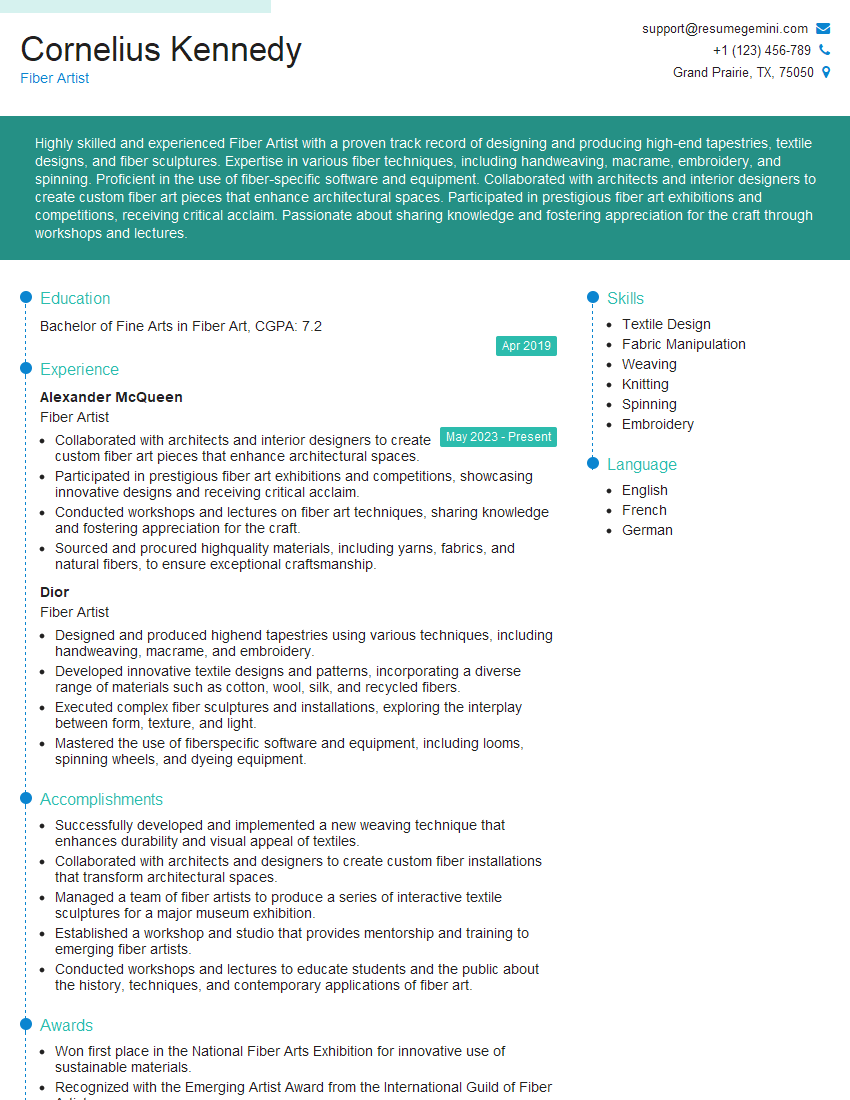
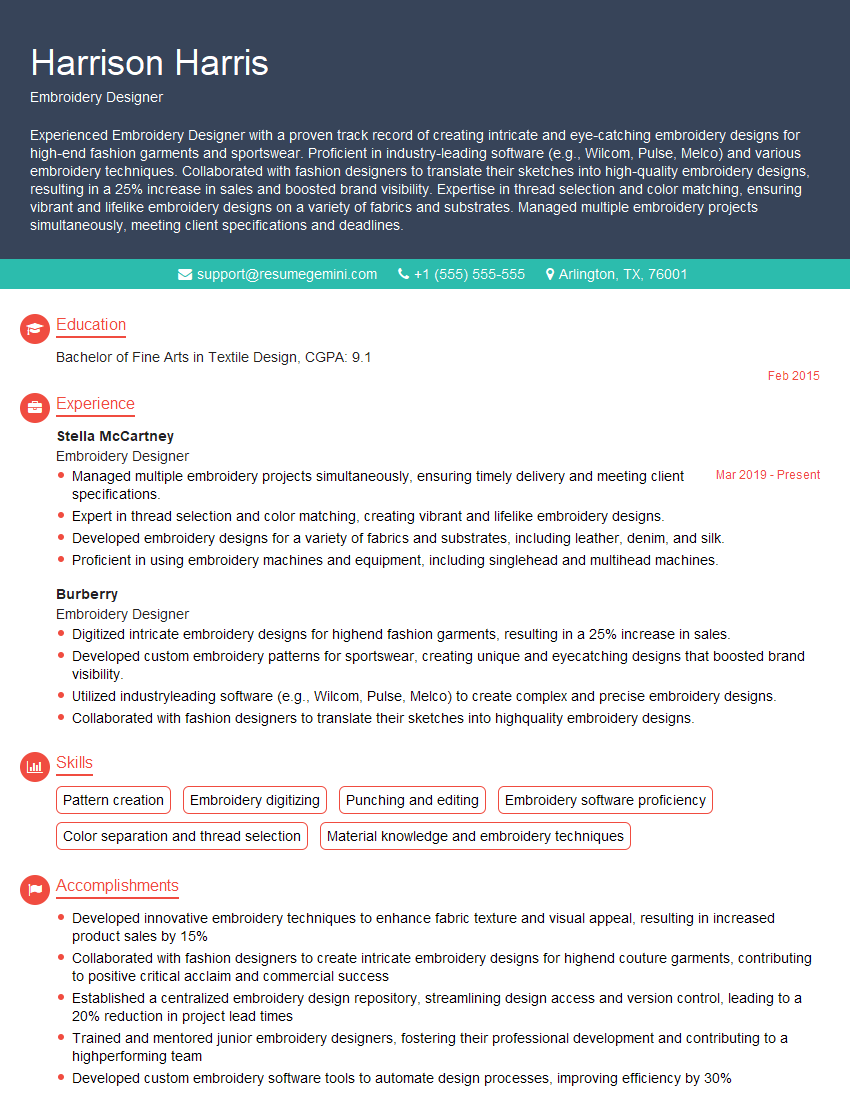
Mastering thread painting opens doors to exciting opportunities in textile art, fashion design, and craft-based businesses. To maximize your career prospects, it’s crucial to present your skills effectively. Creating an ATS-friendly resume is key to getting your application noticed by potential employers. Use ResumeGemini, a trusted resource, to build a professional and impactful resume that highlights your unique thread painting expertise. Examples of resumes tailored to the Thread Painting field are available to guide you.
Explore more articles
Users Rating of Our Blogs
Share Your Experience
We value your feedback! Please rate our content and share your thoughts (optional).
What Readers Say About Our Blog
Very informative content, great job.
good