Unlock your full potential by mastering the most common Threat Analysis and Intelligence interview questions. This blog offers a deep dive into the critical topics, ensuring you’re not only prepared to answer but to excel. With these insights, you’ll approach your interview with clarity and confidence.
Questions Asked in Threat Analysis and Intelligence Interview
Q 1. Explain the difference between threat intelligence and security information and event management (SIEM).
Threat intelligence and Security Information and Event Management (SIEM) are distinct but complementary security functions. Think of SIEM as your security monitoring system – it collects and analyzes logs from various sources within your organization to detect security events in real-time. It’s reactive. Threat intelligence, on the other hand, is proactive. It’s the process of gathering, analyzing, and disseminating information about potential threats to your organization, often from external sources. SIEM helps you respond to attacks, while threat intelligence helps you prevent them. For example, a SIEM might alert you to a suspicious login attempt. Threat intelligence might tell you that a particular type of malware is currently being used in targeted attacks against organizations like yours, enabling you to proactively patch vulnerabilities and enhance your defenses before an attack occurs.
Q 2. Describe the different types of threat intelligence (strategic, operational, tactical).
Threat intelligence is categorized into three main levels based on its scope and application:
- Strategic Threat Intelligence: This focuses on long-term trends and broad threats. It provides context for high-level strategic decision-making related to risk management. An example would be an assessment of the geopolitical landscape and its potential impact on your organization’s cybersecurity posture, such as assessing the increased risk of nation-state-sponsored cyberattacks during times of international tension.
- Operational Threat Intelligence: This provides insights into specific threats targeting your organization or industry. It helps inform tactical decisions about security controls and incident response. For instance, discovering a new zero-day exploit targeting a specific software application used within your organization would be operational threat intelligence.
- Tactical Threat Intelligence: This is the most granular level and focuses on immediate threats. It directly informs operational responses to current security incidents. A tactical example would be identifying a specific IP address actively attempting to breach your network, allowing for immediate blocking of that IP address.
Q 3. How do you assess the credibility of a threat intelligence source?
Assessing the credibility of a threat intelligence source is crucial. I use a multi-faceted approach:
- Source Reputation: Is the source known for accuracy and reliability? Do they have a strong track record? Established security companies, government agencies, and reputable research firms tend to be more reliable.
- Data Validation: Can the information be verified from multiple independent sources? Corroboration is key to improving confidence in the intelligence.
- Methodology: How was the intelligence gathered? Is the methodology sound and transparent? Understanding the data collection process helps assess its validity.
- Attribution: Is the source of the threat clearly identified? Attribution is often challenging but is crucial for understanding motivations and patterns.
- Timeliness: How current is the intelligence? Threat landscapes change rapidly, so the timeliness of the information is paramount.
In practice, I maintain a list of trusted sources and carefully evaluate any new source before incorporating its information into our threat intelligence program. I often cross-reference findings with multiple sources to ensure accuracy and completeness.
Q 4. What are the key components of a threat intelligence report?
A comprehensive threat intelligence report should include:
- Executive Summary: A concise overview of the threat, its potential impact, and recommended actions.
- Threat Description: Detailed information about the nature of the threat, including its type (malware, phishing, etc.), techniques used, and targets.
- Attribution: If possible, identifying the actor (individual, group, nation-state) behind the threat.
- Impact Assessment: Evaluating the potential impact of the threat on the organization, including financial, reputational, and operational consequences.
- Indicators of Compromise (IOCs): Specific technical details that can be used to detect the presence of the threat (e.g., malicious IP addresses, URLs, file hashes).
- Recommended Actions: Specific steps to mitigate the threat, including security controls to implement and incident response procedures.
- Appendix: Supporting data and evidence, such as raw intelligence data, technical analysis reports, and vulnerability details.
Q 5. Explain the STIX and TAXII standards and their importance in threat intelligence sharing.
STIX (Structured Threat Information eXpression) and TAXII (Trusted Automated eXchange of Intelligence Information) are crucial standards for threat intelligence sharing. STIX provides a standardized language and format for describing cyber threats and cyber threat information, allowing different organizations to easily share threat data regardless of their systems or platforms. TAXII defines a set of communication protocols for securely exchanging STIX data. Think of STIX as the common language, and TAXII as the secure delivery mechanism. Using these standards enables organizations to share intelligence seamlessly, improving overall security posture and reducing redundancy. For instance, a company experiencing a specific type of phishing attack could quickly share the STIX-formatted details via TAXII with its partners and industry peers, facilitating a faster and more coordinated response.
Q 6. Describe your experience with threat intelligence platforms and tools.
Throughout my career, I’ve worked extensively with several threat intelligence platforms and tools. These include both commercial solutions like (mention specific platforms without links, e.g., ‘ThreatConnect,’ ‘Anomali,’ ‘Recorded Future’) and open-source tools (e.g., ‘MISP’). My experience ranges from implementing and configuring these platforms to analyzing data, creating custom visualizations, and developing automated workflows for threat detection and response. I’m proficient in using these tools to collect, process, analyze, and disseminate threat intelligence, integrating them with our SIEM and other security systems to create a holistic security posture. For example, in a previous role, I developed a custom script using Python to automate the ingestion of threat intelligence feeds into our SIEM, significantly improving the speed and efficiency of our threat detection process.
Q 7. How do you prioritize threats based on their potential impact and likelihood?
Threat prioritization is crucial for efficient resource allocation. I typically use a risk-based approach incorporating both the likelihood and impact of a threat. This often involves a qualitative and quantitative assessment:
- Likelihood: How probable is it that this threat will occur? This assessment uses factors like the sophistication of the threat actor, the vulnerability’s prevalence, and historical attack data.
- Impact: What are the potential consequences if the threat is successful? This considers factors such as financial loss, reputational damage, operational disruption, legal penalties, and data loss.
I often employ a risk matrix that visually represents the likelihood and impact, enabling easy prioritization. Threats with high likelihood and high impact are prioritized first. A simple example might be a ransomware attack: If the likelihood is high due to an unpatched vulnerability and the impact is significant due to critical data being stored on affected systems, it receives the highest priority. This approach allows for efficient allocation of resources and focuses efforts on the most critical threats.
Q 8. How do you identify and analyze malware samples?
Analyzing malware involves a multi-stage process prioritizing safety. First, I’d use a sandbox environment – a virtual machine isolated from my network – to run the sample. This prevents it from infecting my systems. Then, I’d employ static analysis, examining the file’s metadata, headers, and code without executing it. This helps identify file types, packers, and potential suspicious patterns. For example, unusual strings or embedded URLs might indicate malicious intent. Following this, I’d perform dynamic analysis, running the sample in the sandbox and monitoring its behavior. This involves observing system calls, network connections, and registry modifications. Tools like Wireshark (for network traffic) and Process Monitor (for system activity) are crucial here. I’d also leverage disassemblers like IDA Pro or Ghidra to analyze the code at a lower level, identifying potentially harmful functions. Finally, I correlate all findings with known malware signatures and threat intelligence databases to categorize and understand the malware’s functionality and potential impact. A key aspect is meticulous documentation, recording every step and observation for later analysis and reporting.
Q 9. Explain the process of conducting a threat hunt.
Threat hunting is proactive; it’s searching for threats that haven’t yet triggered alerts. It begins with defining the scope: Are we looking for specific malware families, attack techniques, or compromises within a certain system? Next, I’d leverage threat intelligence to identify potential attack vectors and tactics. This may involve researching recent attacks targeting similar organizations or industries. Then, I’d use security information and event management (SIEM) tools and endpoint detection and response (EDR) solutions to query logs and search for suspicious activity. This might include unusual process creations, network connections to known malicious IPs, or access to sensitive files outside normal patterns. Hypothesis testing is key – forming assumptions about attacker behavior and then using data to validate or refute them. For example, if I suspect lateral movement, I’d look for unusual login attempts or access to shared resources. Finally, I’d document all findings, correlating them with the MITRE ATT&CK framework to better understand the attack lifecycle and identify gaps in our defenses. Successful threat hunting requires a blend of technical skills, creativity, and a deep understanding of attacker motivations.
Q 10. How do you use threat intelligence to inform security controls and defenses?
Threat intelligence is invaluable for enhancing security. I use it to proactively adjust security controls and defenses by first identifying the specific threats relevant to our organization and industry. For example, if threat intelligence indicates a rise in phishing attacks targeting our sector, I’d enhance employee security awareness training, and strengthen email filtering and anti-spoofing measures. Similarly, intelligence on newly discovered vulnerabilities would lead to prioritization of patching efforts, especially for critical systems. Knowing the tactics, techniques, and procedures (TTPs) used by adversaries allows us to configure intrusion detection systems (IDS) and intrusion prevention systems (IPS) to detect and block malicious activities more effectively. By incorporating intelligence-driven indicators of compromise (IOCs) into security monitoring tools, we enhance our ability to detect compromises early. The continuous integration of threat intelligence into our security architecture is a crucial component of a proactive and adaptive security posture.
Q 11. Describe your experience with vulnerability management and assessment.
My vulnerability management experience involves a cyclical process. First, I perform vulnerability assessments using automated scanners like Nessus or OpenVAS to identify potential weaknesses in systems and applications. Manual penetration testing is also conducted to confirm findings and explore potential exploits more deeply. The results are then prioritized based on risk factors like exploitability, impact, and criticality. Prioritization frameworks, like CVSS (Common Vulnerability Scoring System), guide this decision-making process. Following this, remediation efforts are coordinated with the appropriate IT teams. This includes patching vulnerable software, implementing security controls, and disabling unnecessary services. After remediation, validation is performed to ensure the vulnerabilities have been successfully mitigated. The entire cycle is then repeated regularly, keeping our systems continuously assessed and protected against emerging threats. I also work closely with developers to integrate security best practices into the software development lifecycle (SDLC) to reduce vulnerabilities at the source.
Q 12. How do you correlate security alerts and events to identify potential threats?
Correlating security alerts and events requires a systematic approach. I begin by using SIEM tools to aggregate logs from various sources – firewalls, IDS/IPS, servers, and endpoints. These tools allow me to search for patterns and relationships between seemingly disparate events. For example, a failed login attempt followed by a successful one from an unusual location might indicate a compromised account. I utilize various correlation techniques, such as temporal correlation (events occurring close together in time), spatial correlation (events originating from the same IP address or system), and contextual correlation (events sharing similar characteristics). Machine learning algorithms are increasingly valuable for automated correlation, identifying complex threat patterns that might be missed by human analysts. The goal is to reduce alert fatigue by focusing on high-fidelity alerts representing real threats and prioritize investigation accordingly. Effective correlation requires a deep understanding of normal system behavior and the ability to distinguish between benign events and malicious activities.
Q 13. Explain the MITRE ATT&CK framework and how it’s used in threat analysis.
The MITRE ATT&CK framework is a knowledge base of adversary tactics and techniques based on real-world observations. It provides a structured taxonomy for understanding attacker behavior, categorizing actions into stages like reconnaissance, exploitation, and exfiltration. It is invaluable in threat analysis because it allows us to map observed behaviors to known attack patterns. For example, if we detect an attacker using a specific technique (like credential dumping), we can use the framework to understand the broader context of the attack, predict subsequent actions, and identify potential mitigation strategies. The framework is constantly updated, reflecting the ever-evolving threat landscape. By using ATT&CK, we gain a common language for understanding and communicating about threats across different teams and organizations. It is useful for threat hunting, incident response, vulnerability management, and security awareness training, providing a structured approach to improving overall security posture.
Q 14. What are the common indicators of compromise (IOCs)?
Indicators of Compromise (IOCs) are artifacts that suggest a system may have been compromised. They can be numerous and vary widely. Common IOCs include:
- Malicious IP addresses: Addresses known to be involved in malicious activity.
- Malicious domains: Domains registered for phishing or malware distribution.
- Malicious URLs: Links leading to phishing sites or malware downloads.
- File hashes (MD5, SHA1, SHA256): Unique identifiers for specific files, used to detect known malware.
- Registry keys: Entries in the Windows registry added by malware.
- Process names: Unusual or suspicious processes running on a system.
- Network connections: Communication to unusual ports or IP addresses.
- Email addresses: Addresses used in phishing campaigns.
- Compromised credentials: Stolen usernames and passwords.
Q 15. How do you investigate a security incident?
Investigating a security incident is a systematic process that requires a methodical approach. Think of it like solving a complex puzzle where each piece of evidence contributes to the bigger picture. My process typically follows these steps:
- Preparation: This involves establishing a clear chain of custody for all evidence, activating the incident response plan, and assembling the investigation team.
- Identification: Determining the nature and scope of the incident. What systems are affected? What data is compromised? This often involves analyzing logs, network traffic, and security alerts.
- Containment: Isolating affected systems to prevent further damage. This might involve disconnecting compromised devices from the network or blocking malicious traffic.
- Eradication: Removing the threat. This could involve deleting malware, patching vulnerabilities, or resetting compromised accounts.
- Recovery: Restoring affected systems to a functional state. This often involves data recovery, system rebuilds, and restoring backups.
- Post-Incident Activity: This includes conducting a thorough post-mortem analysis to identify weaknesses in the security posture, update security policies and procedures, and educate staff on lessons learned. For example, if a phishing attack occurred, we would review employee training on identifying phishing attempts.
For instance, in a recent incident involving a ransomware attack, we immediately isolated the affected servers, collected forensic data, and identified the attack vector (a phishing email). We then worked to recover data from backups and implemented stronger security measures, including multi-factor authentication and enhanced employee security awareness training.
Career Expert Tips:
- Ace those interviews! Prepare effectively by reviewing the Top 50 Most Common Interview Questions on ResumeGemini.
- Navigate your job search with confidence! Explore a wide range of Career Tips on ResumeGemini. Learn about common challenges and recommendations to overcome them.
- Craft the perfect resume! Master the Art of Resume Writing with ResumeGemini’s guide. Showcase your unique qualifications and achievements effectively.
- Don’t miss out on holiday savings! Build your dream resume with ResumeGemini’s ATS optimized templates.
Q 16. What are some common attack vectors?
Attack vectors are the paths attackers use to gain unauthorized access to systems or networks. Think of them as the entry points to a fortress. Some common ones include:
- Phishing: Deceiving users into revealing sensitive information through deceptive emails, messages, or websites.
- Malware: Malicious software, such as viruses, worms, trojans, and ransomware, that can damage systems, steal data, or disrupt operations. A common example is a ransomware attack encrypting critical files.
- Exploiting Vulnerabilities: Taking advantage of known security flaws in software or hardware to gain unauthorized access. This often involves leveraging publicly known vulnerabilities before patches are applied.
- SQL Injection: Inserting malicious SQL code into input fields to manipulate database queries. This can allow attackers to steal, modify, or delete data.
- Denial-of-Service (DoS): Flooding a system or network with traffic to render it unavailable to legitimate users. This can be a simple attack or a highly sophisticated Distributed Denial-of-Service (DDoS) attack.
- Zero-Day Exploits: Attacking vulnerabilities that are unknown to the vendor and haven’t been patched yet.
- Social Engineering: Manipulating individuals into divulging confidential information or performing actions that compromise security. This can range from simple phone scams to highly sophisticated attacks.
Understanding these vectors allows us to implement appropriate security controls to mitigate the risk of attacks. For example, implementing strong spam filters can help reduce the effectiveness of phishing attacks.
Q 17. Describe your experience with incident response methodologies.
My experience with incident response methodologies aligns with established frameworks like NIST Cybersecurity Framework and SANS Institute’s incident response process. I’ve been involved in numerous incidents, ranging from simple malware infections to large-scale data breaches. I’m proficient in using various tools for forensic analysis, log analysis, and malware investigation.
My approach emphasizes speed, efficiency, and accuracy. I have experience in:
- Developing and maintaining incident response plans: Ensuring plans are up-to-date and effectively address potential threats.
- Conducting forensic investigations: Using specialized tools and techniques to collect and analyze evidence.
- Working with law enforcement: Coordinating investigations and reporting incidents as required.
- Communicating effectively with stakeholders: Keeping leadership and affected parties informed throughout the incident response process.
For example, in one case involving a data breach, I led a team that identified the source of the breach, contained the damage, recovered the compromised data, and implemented preventative measures. The process involved collaboration with legal counsel, public relations, and affected customers to ensure transparency and accountability.
Q 18. How do you stay up-to-date on emerging threats and vulnerabilities?
Staying current on emerging threats and vulnerabilities is crucial. This is an ongoing process, not a one-time task. My methods include:
- Subscription to threat intelligence feeds: Receiving regular updates from reputable sources such as security vendors, government agencies (e.g., CISA), and open-source intelligence (OSINT) communities.
- Monitoring security news and blogs: Staying abreast of breaking security news and analysis from trusted sources.
- Attending security conferences and webinars: Networking with peers and learning about new threats and technologies.
- Participating in online security communities: Engaging in discussions and sharing knowledge with other security professionals.
- Vulnerability scanning and penetration testing: Regularly assessing our own systems for vulnerabilities.
I also actively participate in vulnerability disclosure programs and utilize vulnerability databases (like the National Vulnerability Database) to ensure our defenses are ahead of emerging threats. Think of it like constantly updating a battle plan to counter new enemy strategies.
Q 19. What are your preferred methods for communicating threat intelligence findings?
Effective communication of threat intelligence is crucial for preparedness and response. My preferred methods depend on the audience and the nature of the information, but generally include:
- Structured reports: Providing concise, well-organized reports with clear executive summaries for leadership and detailed technical information for technical teams.
- Dashboards and visualizations: Using dashboards to present key indicators and trends in an easily digestible format.
- Automated alerts: Setting up automated alerts for critical events or high-priority threats.
- Briefings and presentations: Presenting findings to stakeholders in person or virtually.
- Collaboration tools: Using secure collaboration platforms to share information and coordinate responses.
Clarity, accuracy, and timeliness are paramount. For instance, in communicating a critical vulnerability, a concise email followed by a detailed technical report would be appropriate for different stakeholders.
Q 20. How do you handle conflicting threat intelligence from different sources?
Conflicting threat intelligence is common, especially with the diverse range of sources available. It requires careful analysis and triangulation. My approach involves:
- Source validation: Assessing the credibility and reliability of each source. Consider the reputation of the source, their methodology, and any potential biases.
- Data correlation: Comparing and contrasting information from multiple sources to identify consistent patterns and anomalies.
- Contextualization: Considering the context of the intelligence. The same information may have different implications depending on the organization and its environment.
- Prioritization: Focusing on intelligence that is most relevant and actionable for the organization.
- Documentation: Maintaining a clear record of the sources used and the reasoning behind the conclusions drawn.
For example, if one source reports a specific vulnerability as critical, while another downplays it, I would delve deeper, perhaps validating through independent research and assessing the risk based on our specific infrastructure and systems.
Q 21. Describe your experience with open-source intelligence (OSINT) gathering.
Open-source intelligence (OSINT) gathering is a valuable technique for gathering information from publicly available sources. I’m experienced in using various tools and techniques to collect, analyze, and interpret OSINT data. My approach is ethical and legal, always respecting privacy and copyright regulations.
My experience includes:
- Using search engines and social media: Identifying individuals, organizations, and trends relevant to threats and investigations.
- Analyzing publicly available data: Extracting valuable information from websites, forums, news articles, and other public sources.
- Using specialized OSINT tools: Employing tools to automate tasks like data collection and analysis, while adhering to ethical guidelines.
- Mapping relationships and networks: Identifying connections between individuals, organizations, and events to gain a clearer understanding of threat actors and their activities.
For instance, during an investigation of a potential cybercrime ring, OSINT allowed me to identify suspicious online activity, build profiles of potential suspects, and gather evidence to support our analysis. This helped us to correlate fragmented information and paint a more complete picture of the threat.
Q 22. How do you measure the effectiveness of threat intelligence efforts?
Measuring the effectiveness of threat intelligence is crucial for demonstrating its value and ensuring continuous improvement. We don’t just look at the number of reports generated; instead, we focus on impact. Key metrics include:
- Reduction in security incidents: Did the intelligence lead to a decrease in successful attacks or compromised systems? This is often measured by comparing incident rates before and after implementing the intelligence.
- Improved incident response time: Did the intelligence enable faster identification and response to security incidents, minimizing damage and downtime? We track Mean Time To Detect (MTTD) and Mean Time To Respond (MTTR).
- Enhanced threat awareness: Did the intelligence improve the organization’s overall understanding of its threat landscape? This can be measured through surveys, security awareness training effectiveness, or improved threat modeling.
- Cost savings: Did the intelligence prevent significant financial losses from data breaches, system downtime, or regulatory fines? This requires careful cost-benefit analysis.
- Accuracy of intelligence: How often did the intelligence accurately predict or identify threats? This requires regular validation and feedback loops.
For example, if our threat intelligence predicted a specific phishing campaign targeting our organization, and we subsequently blocked those emails, preventing a data breach that would have cost $1 million, that’s a clear demonstration of successful threat intelligence.
Q 23. Explain the concept of a kill chain and how it’s used in threat analysis.
The kill chain is a model that describes the stages of a cyberattack, from initial reconnaissance to achieving the attacker’s objective. Understanding the kill chain helps us anticipate and disrupt attacks at various points. The Lockheed Martin Cyber Kill Chain is a widely used model, typically consisting of the following stages:
- Reconnaissance: Attackers gather information about the target.
- Weaponization: Malicious code is developed and embedded within a delivery mechanism.
- Delivery: The weaponized payload is delivered to the target (e.g., email attachment, malicious link).
- Exploitation: The attacker exploits a vulnerability to gain access to the system.
- Installation: The attacker installs malware or establishes persistence.
- Command and Control: The attacker communicates with the compromised system.
- Actions on Objectives: The attacker achieves their goal (data exfiltration, system disruption, etc.).
Imagine a thief planning a robbery. Reconnaissance is casing the building; weaponization is preparing the tools; delivery is arriving at the scene; exploitation is picking the lock; installation is disabling alarms; command and control is their getaway plan; and actions on objectives is stealing the valuables. By understanding each stage, we can implement security controls to prevent or detect attacks at each point.
Q 24. What are some common techniques used in social engineering attacks?
Social engineering attacks manipulate human psychology to trick individuals into revealing sensitive information or performing actions that compromise security. Common techniques include:
- Phishing: Deceptive emails, messages, or websites that impersonate legitimate entities to obtain credentials or sensitive data. Example: An email claiming to be from your bank asking you to update your account details.
- Baiting: Offering something enticing (like a free gift card) to trick the victim into clicking a malicious link or downloading malware.
- Pretexting: Creating a false sense of urgency or legitimacy to manipulate the victim. Example: Someone posing as an IT support technician to gain remote access to a computer.
- Quid Pro Quo: Offering a service or favor in exchange for sensitive information. Example: A fake tech support company offering ‘free’ virus removal which requires access to your computer.
- Tailgating: Physically following an authorized person into a secure area without proper authorization. Example: Following someone through a security door without showing your own badge.
These attacks rely on human error, making security awareness training crucial for mitigating their risk.
Q 25. How do you determine the attribution of a cyberattack?
Attributing a cyberattack to a specific actor is often complex and challenging, requiring meticulous investigation. We use a combination of techniques:
- Technical analysis: Examining malware, network traffic, and system logs for indicators of compromise (IOCs) that can link the attack to known groups or individuals. This might involve analyzing code for unique signatures or identifying the infrastructure used by the attackers.
- Open-source intelligence (OSINT): Gathering information from publicly available sources (news reports, forums, social media) to identify potential attackers and their motives.
- Financial investigation: Tracing financial transactions related to the attack to identify potential sponsors or beneficiaries.
- Collaboration: Sharing information and collaborating with other organizations, law enforcement, and cybersecurity firms to build a more complete picture of the attack.
Attribution isn’t always possible, and sometimes it’s only possible to determine a nation-state or a specific type of threat actor rather than a concrete identity. High confidence attribution requires substantial evidence, often requiring a combination of all these techniques.
Q 26. Describe your experience with security automation and orchestration.
I have extensive experience with Security Automation and Orchestration (SAO) tools, including platforms like Splunk, IBM QRadar, and Palo Alto Networks Cortex XSOAR. My experience encompasses:
- Developing and implementing automated security workflows: I have built automated responses to security alerts, including malware remediation, incident containment, and user account lockout.
- Integrating various security tools: I have integrated SAO platforms with SIEMs, endpoint detection and response (EDR) solutions, and vulnerability scanners to create a cohesive security posture.
- Creating custom playbooks and integrations: I have developed custom playbooks for automating complex tasks, such as incident response processes or vulnerability remediation.
- Managing and monitoring SAO systems: I have experience monitoring system performance, ensuring high availability, and troubleshooting issues.
In a previous role, I automated the process of responding to phishing alerts, significantly reducing the time it took to investigate and remediate threats. This automated process saved the organization considerable time and resources and reduced the risk of successful attacks.
Q 27. How do you handle ethical considerations in threat intelligence gathering?
Ethical considerations are paramount in threat intelligence gathering. We must adhere to laws and regulations, such as data privacy laws (GDPR, CCPA), and respect individual rights. My approach includes:
- Legal compliance: Ensuring all intelligence gathering activities comply with applicable laws and regulations.
- Data privacy: Protecting the privacy of individuals by only collecting and using data that is necessary and relevant to legitimate security objectives.
- Transparency and accountability: Maintaining clear documentation of intelligence gathering processes and methods. Sharing intelligence responsibly and only with authorized personnel.
- Proportionality: Only collecting data necessary to address specific security threats. Avoiding excessive or indiscriminate collection.
- Avoiding unethical practices: Rejecting any form of malicious or illegal activity, such as hacking or unauthorized access to systems.
For instance, if I suspect a threat actor is using a particular online forum, I would only passively monitor public posts, never engaging in activities that could be construed as impersonation or intrusion.
Q 28. What are your salary expectations?
My salary expectations are in the range of $150,000 to $180,000 per year, commensurate with my experience and expertise in threat analysis and intelligence.
Key Topics to Learn for Threat Analysis and Intelligence Interview
- Threat Modeling: Understanding various threat modeling methodologies (STRIDE, PASTA, etc.) and their practical application in assessing vulnerabilities within systems and applications.
- Vulnerability Analysis: Identifying and assessing vulnerabilities using various tools and techniques; understanding the CVSS scoring system and its implications.
- Open Source Intelligence (OSINT) Gathering and Analysis: Methods for collecting and analyzing information from publicly available sources to build threat intelligence.
- Threat Intelligence Platforms and Tools: Familiarity with common threat intelligence platforms (e.g., MISP, TheHive) and their functionalities.
- Incident Response and Forensics: Understanding the incident response lifecycle and applying forensic techniques to investigate security incidents.
- Data Analysis and Visualization: Utilizing data analysis techniques and visualization tools to identify patterns and trends in threat data.
- Risk Assessment and Management: Conducting risk assessments, prioritizing threats, and developing mitigation strategies.
- Security Frameworks and Standards: Understanding relevant security frameworks (e.g., NIST Cybersecurity Framework) and standards (e.g., ISO 27001).
- Legal and Ethical Considerations: Awareness of legal and ethical implications related to threat intelligence gathering and analysis.
- Communication and Reporting: Effectively communicating findings and recommendations to both technical and non-technical audiences.
Next Steps
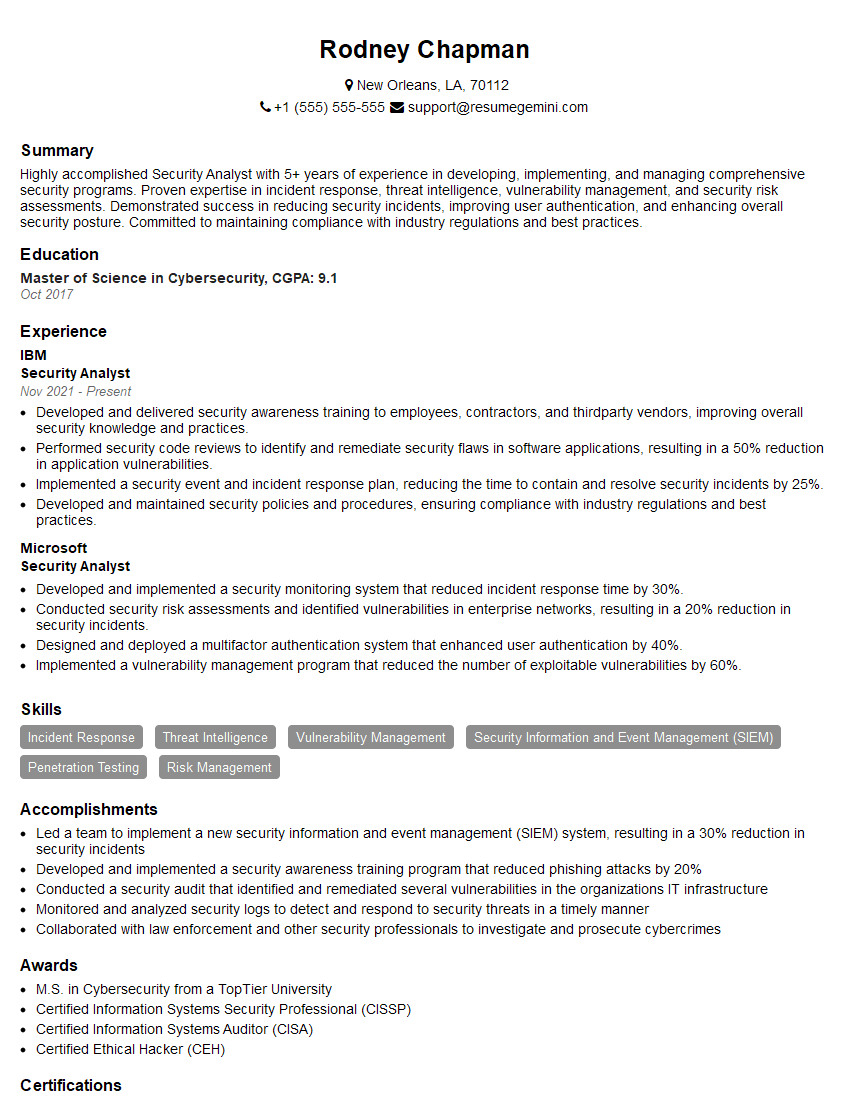
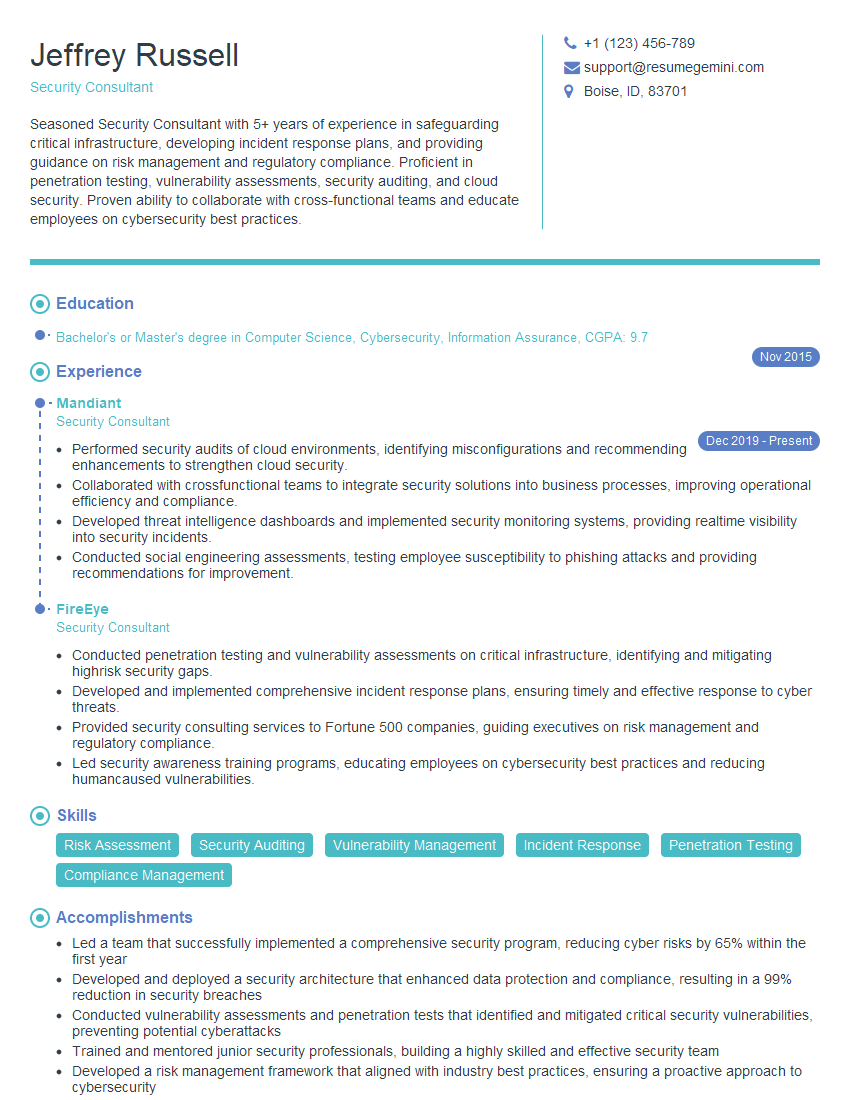
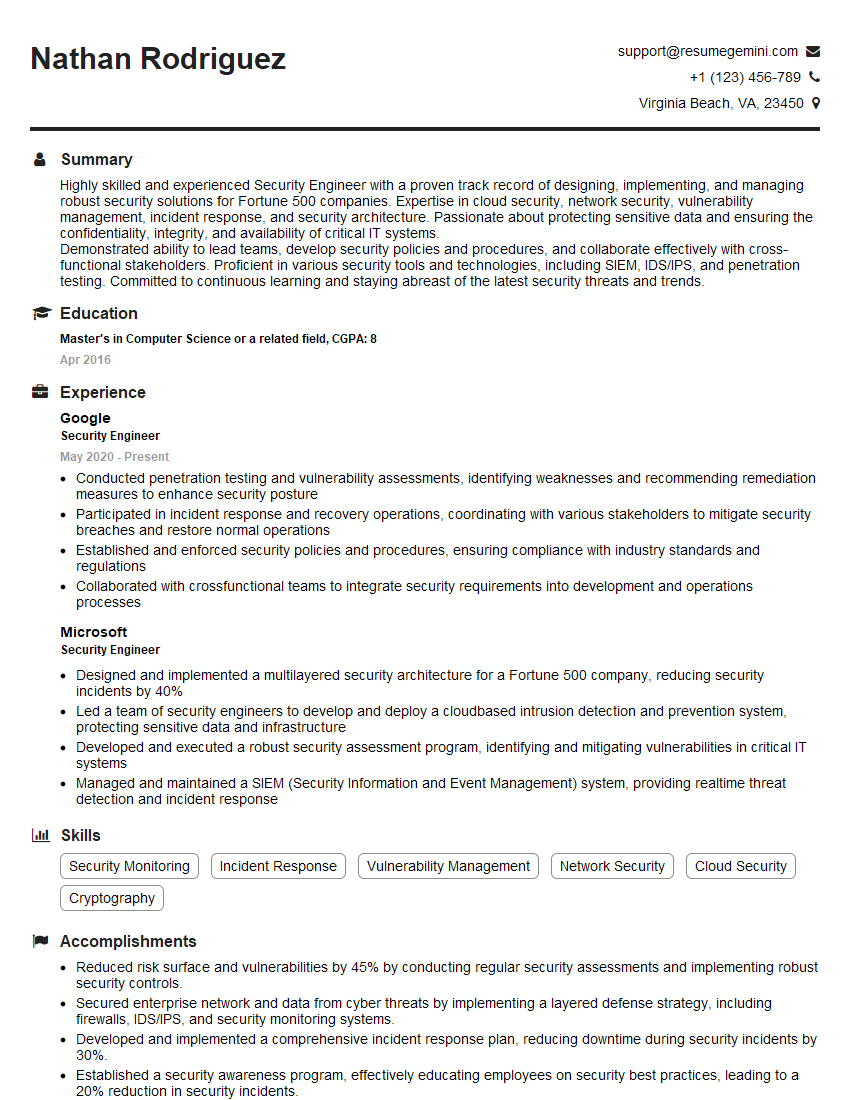
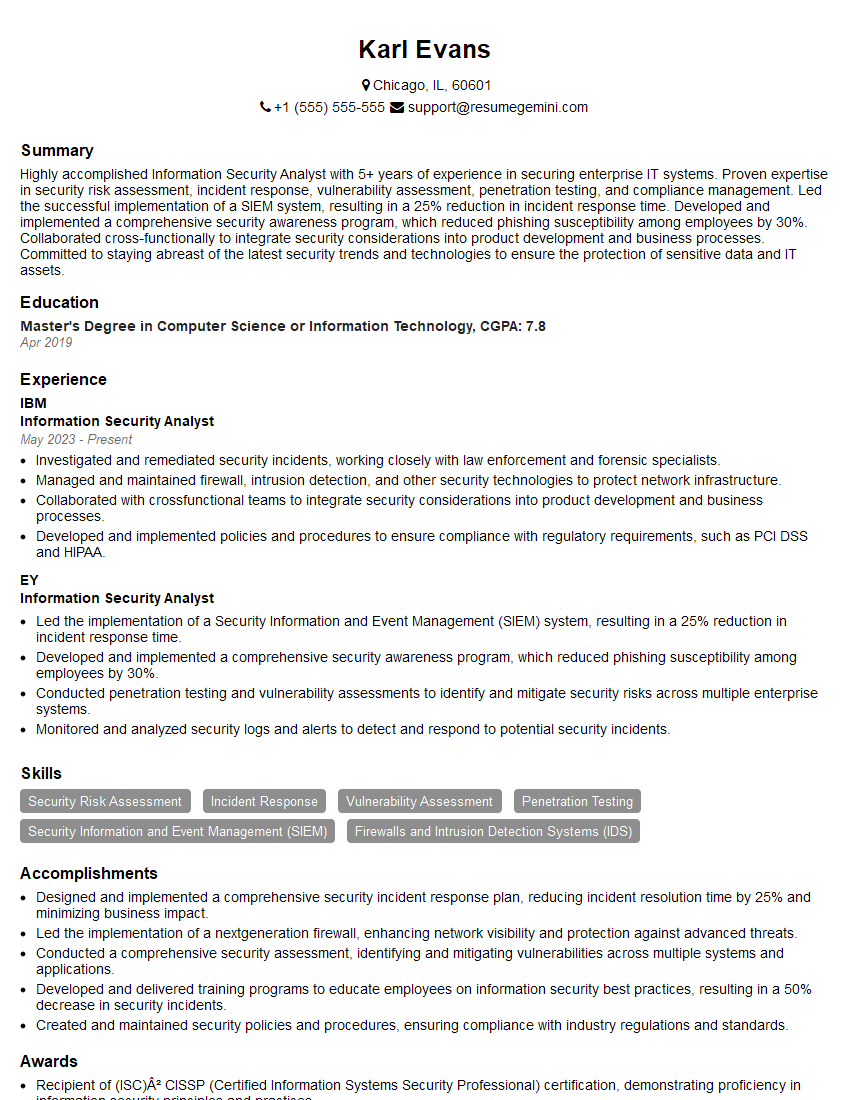
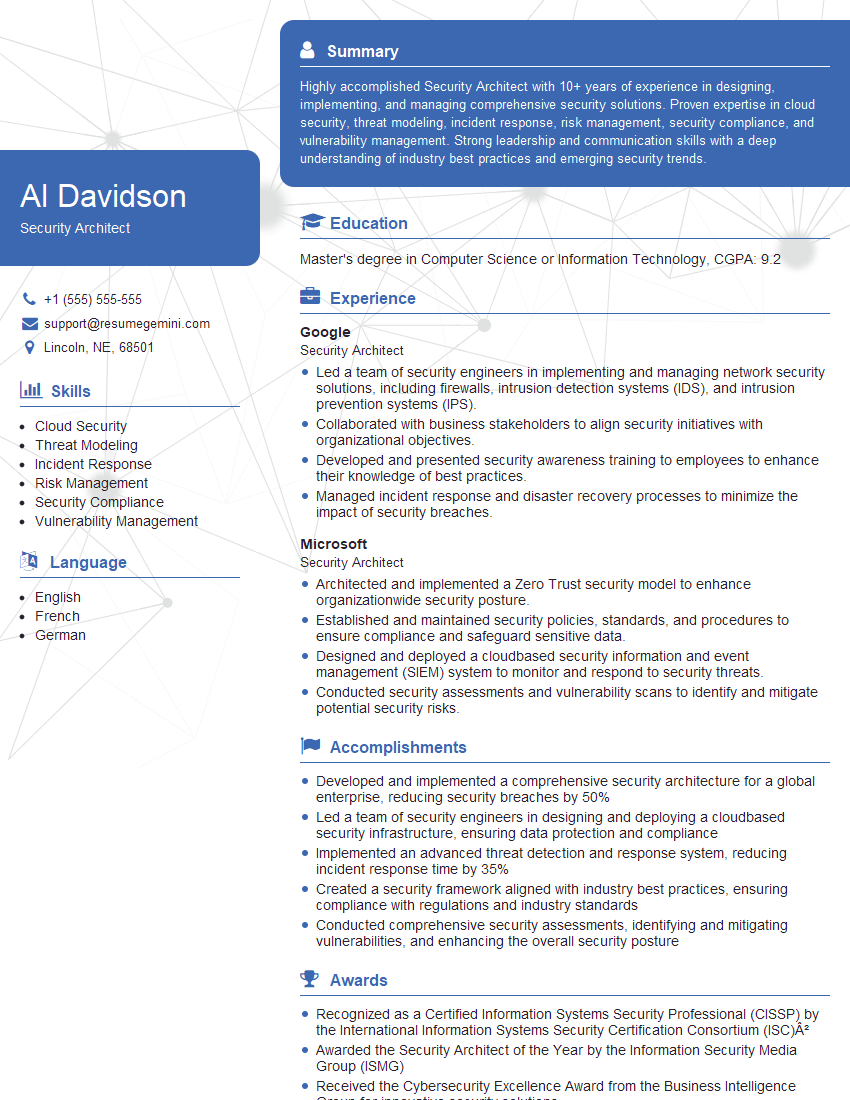
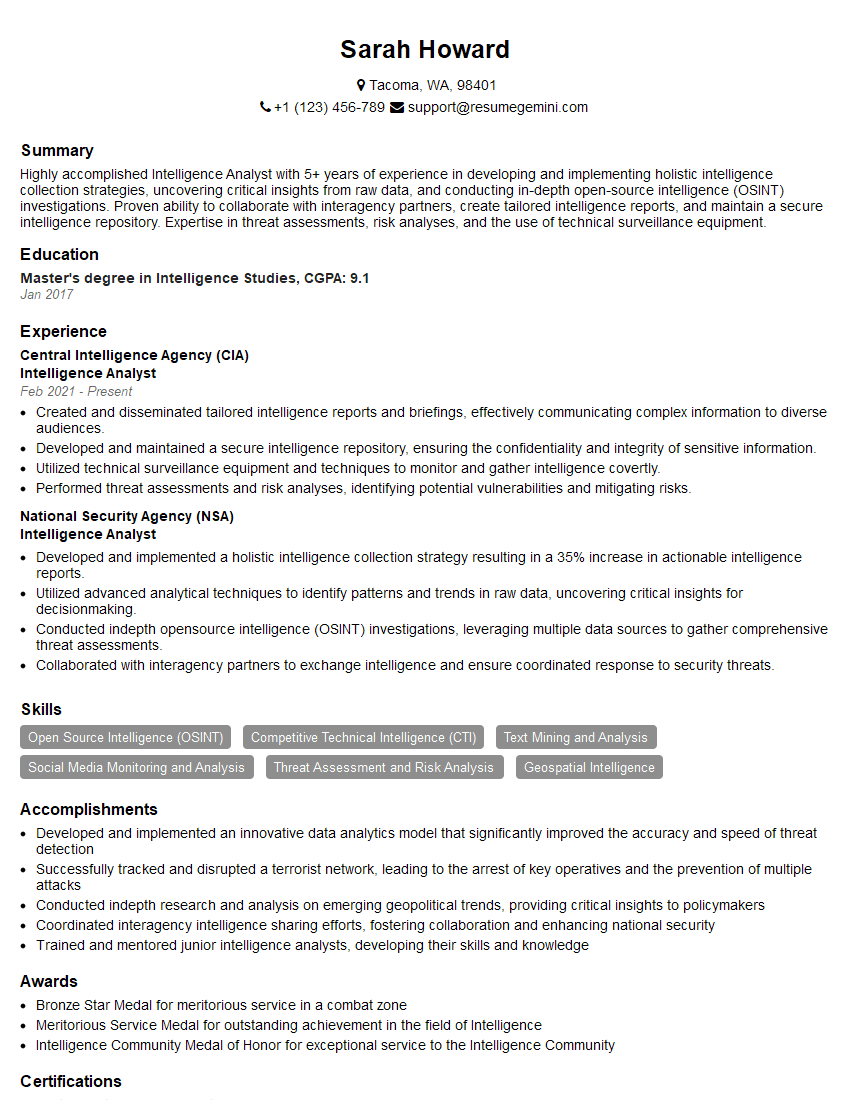
Mastering Threat Analysis and Intelligence opens doors to exciting and impactful careers in cybersecurity, offering significant growth potential and high demand. To maximize your job prospects, crafting a strong, ATS-friendly resume is crucial. ResumeGemini can help you build a professional and impactful resume tailored to the specific requirements of Threat Analysis and Intelligence roles. ResumeGemini provides examples of resumes designed for this field, allowing you to see best practices in action and create a document that truly showcases your skills and experience.
Explore more articles
Users Rating of Our Blogs
Share Your Experience
We value your feedback! Please rate our content and share your thoughts (optional).
What Readers Say About Our Blog
Very informative content, great job.
good