Unlock your full potential by mastering the most common Tidal Zone Navigation interview questions. This blog offers a deep dive into the critical topics, ensuring you’re not only prepared to answer but to excel. With these insights, you’ll approach your interview with clarity and confidence.
Questions Asked in Tidal Zone Navigation Interview
Q 1. Explain the concept of tidal currents and their predictability.
Tidal currents are the horizontal movement of water caused by the rise and fall of tides. Think of them as rivers in the ocean, constantly changing direction and speed. Their predictability relies heavily on understanding the astronomical forces driving the tides (the gravitational pull of the sun and moon) and the local bathymetry (the shape of the seabed). We can predict them with remarkable accuracy using sophisticated models that incorporate these factors, but local variations and unexpected weather events can introduce minor uncertainties. Essentially, we use harmonic analysis of past tidal data and complex computer models to create tidal current predictions. The accuracy of these predictions generally increases closer to the time of the event, but even with the best predictions, a margin of safety must always be included when planning navigation.
Q 2. Describe the different types of tidal patterns (e.g., diurnal, semidiurnal, mixed).
Tidal patterns are classified based on the number of high and low tides experienced in a day.
- Diurnal tides: One high and one low tide per day. These are relatively uncommon.
- Semidiurnal tides: Two high and two low tides per day, with approximately equal heights and time intervals between them. This is a common pattern in many areas.
- Mixed tides: Two high and two low tides per day, but with unequal heights and time intervals. This is the most prevalent tidal pattern globally, showing characteristics of both diurnal and semidiurnal tides.
Understanding the specific tidal pattern of a location is crucial for safe navigation, as it directly impacts the timing and magnitude of tidal currents and water depths.
Q 3. How do you interpret tidal information from nautical charts and tide tables?
Nautical charts provide information on depths and heights relative to a specific chart datum (usually mean lower low water). Tide tables provide the predicted heights of high and low waters for specific locations and times. To determine the actual water depth at a particular time, you must add the predicted height of the tide to the chart depth. For example, if a chart shows a depth of 5 meters at a particular location and the tide table shows a high water height of 2 meters, then the actual depth at high water would be 7 meters. Similarly, during navigation, you must constantly account for changing water depths by referring to the tide tables and the chart.
It’s vital to correctly identify the chart datum used on your nautical chart and ensure it aligns with the datum used in the tide tables. Inconsistencies here can lead to dangerous navigational errors.
Q 4. Explain the use of tidal stream atlases and their limitations.
Tidal stream atlases are specialized charts showing the predicted direction and speed of tidal currents at specific times and locations. They’re essential for planning voyages through areas with strong tidal currents, like narrow channels or straits. They’re typically presented as a series of maps, each representing a specific time interval. Think of them as weather maps but for ocean currents.
However, they have limitations: their predictions are based on models and historical data, so real-time conditions may vary due to weather, wind, or unforeseen events. They usually don’t incorporate other dynamic forces like wind or river outflow which can significantly influence the actual tidal stream. They also offer a snapshot in time and might not fully represent the rapid changes that can occur, particularly in complex coastal environments.
Q 5. What are the key factors influencing tidal range in a specific location?
The tidal range (the difference between high and low water) at a specific location is influenced by several key factors:
- The geometry of the coastline: Funnel-shaped bays or estuaries can amplify tidal ranges, creating exceptionally high and low tides (e.g., the Bay of Fundy).
- The shape and depth of the seabed: Shallow areas and constrictions can increase the friction on the tidal flow, resulting in a larger range.
- The astronomical alignment of the sun and moon: Spring tides (highest high and lowest low tides) occur during new and full moons due to the combined gravitational forces. Neap tides (smaller tidal ranges) happen during first and third quarter moons.
- The distance from the amphidromic point: Amphidromic points are points in the ocean with essentially no tidal range, acting as centers for tidal rotation around the ocean basin. The further a location is from the amphidromic point, generally the larger the tidal range.
Q 6. Describe the methods used to correct for tidal effects on position.
Tidal effects on position are corrected using various methods, primarily relying on accurate timekeeping and tide predictions. One common method uses tidal correction tables provided for specific locations or by applying tidal current vectors directly to the vessel’s calculated position. This involves calculating the distance and direction the vessel has drifted due to the current during a certain time period, then adjusting the position accordingly. Sophisticated navigation systems, such as those utilizing GPS, can automatically incorporate tidal corrections based on pre-programmed tidal models and real-time data.
Another method is to utilize the ‘no current’ position. In this method, you calculate a position ignoring the influence of the tidal current, then apply a calculated correction accounting for the effect of the current over the elapsed time. Crucially, accurate time is critical for any method, as the current’s influence changes over time.
Q 7. How do you account for tidal currents when planning a voyage?
Accounting for tidal currents during voyage planning is vital for safe and efficient navigation. This involves several steps:
- Consult tidal stream atlases and tide tables: Determine the predicted speed and direction of tidal currents along the planned route.
- Calculate the effect of currents on vessel speed and heading: You can use vector addition to account for the influence of the current on the vessel’s speed and heading. This will affect the arrival time and total distance traveled.
- Adjust course and speed as needed: To counteract the current and maintain the desired track, the navigator might need to adjust the vessel’s course and/or speed. Often, it’s better to allow more time and potentially travel a longer distance to account for uncertainties and safety.
- Factor in current changes over time: Remember that tidal currents are not static. Their speed and direction change over time, so consider these changes during voyage planning and monitor them carefully throughout the voyage.
- Use appropriate navigational equipment and software: Modern electronic chart display and information systems (ECDIS) can greatly assist with planning and executing tidal current compensation.
Failing to account for tidal currents can result in significant deviations from the planned route, delays in arrival, and even dangerous situations, particularly in areas with strong or unpredictable currents.
Q 8. What safety precautions should be taken when navigating in tidal waters?
Navigating tidal waters demands meticulous safety planning. Think of it like mountain climbing – proper preparation is key to a safe descent. Neglecting safety can lead to grounding, collisions, or even capsizing.
- Check weather forecasts meticulously: Strong winds, combined with tidal currents, can create extremely hazardous conditions. I always check multiple sources, including specialized marine weather services.
- Thorough chart work is paramount: Understand the tidal range, currents, and water depths along your planned route. This includes accounting for the predicted tide at various points throughout the journey. I usually plot my route hours in advance.
- Maintain constant situational awareness: Regularly scan the horizon, checking for other vessels and potential hazards. Radar and AIS (Automatic Identification System) are invaluable tools for this.
- Leave ample safety margins: Don’t cut it too close to shallows or obstructions. Always account for tidal variations which can significantly alter depths in short periods.
- Have proper safety equipment: This includes life jackets for everyone onboard, flares, a VHF radio, and an EPIRB (Emergency Position-Indicating Radio Beacon). Regular equipment checks are a vital part of my pre-departure routine.
- Plan for emergencies: Identify potential escape routes and safe havens in case of unexpected events, such as equipment failure or sudden changes in weather. This also involves knowing the local emergency services contact details.
Q 9. Explain the significance of understanding water depths and underwater hazards in tidal zones.
Understanding water depths and underwater hazards is absolutely critical in tidal zones because the water level changes dramatically throughout the tidal cycle. Imagine trying to drive across a desert with shifting dunes; it’s similar in principle, only the ‘dunes’ are water levels. A seemingly navigable channel at high tide could become a treacherous shoal at low tide.
- Water depths: Knowing the depth at all stages of the tide prevents grounding, which can cause significant damage to the vessel and potentially endanger lives. I always refer to charts, tide tables, and real-time depth information where available.
- Underwater hazards: These include rocks, wrecks, sandbars, and other obstructions that may be submerged at high tide but exposed at low tide. Ignoring these hazards can lead to damage or even loss of the vessel. The use of nautical charts clearly marking these hazards is mandatory, supplemented by echo sounders.
During a recent voyage through a notoriously shallow area, we relied heavily on our chart plotter showing real-time depth readings. It allowed us to safely navigate a complex channel with shifting sandbars, avoiding a potential grounding.
Q 10. How do you use electronic navigation systems (e.g., GPS, ECDIS) to navigate in tidal areas?
Electronic navigation systems are indispensable for safe and efficient tidal navigation. They provide real-time data that complements traditional chart work.
- GPS (Global Positioning System): Provides precise location information, allowing for accurate tracking of position and course. I use it to verify our position against our planned route, especially in areas with limited visibility.
- ECDIS (Electronic Chart Display and Information System): Displays electronic nautical charts, overlaying tidal information, currents, and other relevant data. This gives a dynamic view of the navigational situation, crucial in tidal areas. ECDIS allows for route planning that accounts for tidal changes and helps identify potential hazards.
- AIS (Automatic Identification System): Shows the positions of other vessels equipped with AIS, enhancing situational awareness and collision avoidance. Particularly useful in busy shipping lanes or areas with restricted visibility.
For instance, when transiting a narrow channel with strong tidal currents, I use the ECDIS to simulate different route options, considering the speed and direction of the current at various times. This ensures we select the safest and most efficient route.
Q 11. Describe your experience with using paper charts for tidal navigation.
While electronic systems are increasingly prevalent, paper charts still play a crucial role, especially as a backup. They offer a readily available reference point independent of electronic failures, which can be critical in an emergency.
My experience involves utilizing paper charts for pre-planning routes, carefully plotting courses and assessing tidal conditions using the chart’s tidal data sections and associated tide tables. I then overlay this information onto the electronic charts to create a comprehensive understanding. I find that the act of manually marking planned routes on a paper chart reinforces my understanding of the navigational picture, improving my situational awareness.
In areas with poor GPS reception or ECDIS malfunctions, paper charts serve as a vital fallback. This hands-on approach promotes a deeper understanding of the area’s geography and potential hazards.
Q 12. What are the challenges of navigating in restricted waters with strong tidal currents?
Navigating restricted waters with strong tidal currents presents unique challenges. These waters often combine confined spaces with powerful, unpredictable currents that can quickly push a vessel off course or into danger.
- Loss of maneuverability: Strong currents can overwhelm a vessel’s propulsion system, making it difficult to maintain steering and course. This can be amplified in narrow channels.
- Increased risk of collision: Limited space and strong currents increase the likelihood of collisions with other vessels, structures (like docks or bridges), or underwater hazards. Precise timing and navigational skills are essential.
- Difficulty in anchoring: Anchoring can be challenging in strong currents; the anchor might drag or fail to set properly. This requires careful assessment of the seabed conditions and current speed. Additional anchoring techniques may be required.
I recall a situation where I had to navigate a narrow, winding channel with extremely strong tidal currents. Careful planning, constant monitoring of the currents, and slow, deliberate maneuvering were critical to avoiding a collision with the channel walls.
Q 13. How do you manage risks associated with changing tidal conditions?
Managing risks associated with changing tidal conditions requires a proactive, layered approach. It’s not simply about reacting to changes; it’s about anticipating them and having contingency plans.
- Accurate tidal predictions: Using reliable tide tables and prediction services is crucial. I always cross-check information from multiple sources to ensure accuracy.
- Contingency planning: Develop alternative routes or safe havens in case tidal currents become stronger or water depths become shallower than anticipated. This involves understanding potential refuge points and their suitability at various tide levels.
- Regular monitoring: Continuously monitor tidal conditions using both electronic and paper charts, checking real-time data whenever possible.
- Adjusting speed and course: Alter speed and heading to compensate for the influence of currents. This might require using more engine power or adjusting the course to counter the effect of the current.
For example, if an unexpected strong current threatens to push us into a shallow area, I might decide to alter course to a safer path or seek a sheltered anchorage until the current weakens.
Q 14. Explain your understanding of slack water and its implications for navigation.
Slack water refers to the period of minimal or zero tidal current that occurs at the change of the tide – between high and low water. It’s a crucial time in tidal navigation. Think of it as a brief pause in the river’s flow.
Implications for navigation:
- Increased maneuverability: During slack water, the vessel’s handling is much easier due to the absence of strong currents. This is advantageous in challenging areas such as narrow channels or harbors.
- Reduced fuel consumption: Less power is required to maintain course and speed, saving fuel.
- Improved accuracy: Predictions and calculations for courses are more accurate during slack water because current influence is minimized.
- Better anchoring conditions: Anchoring is easier and more reliable in slack water.
However, the window of slack water is relatively short. It’s essential to time your passage through restricted waters to coincide with slack water. Misjudging this timing can lead to a difficult and potentially hazardous transit.
Q 15. How do you determine the set and drift of tidal currents?
Determining the set and drift of tidal currents involves understanding their direction and speed. The set refers to the direction the current is flowing, while the drift is its speed. We use a combination of methods to determine this.
Tidal Charts and Atlases: These are invaluable resources providing predicted current direction and speed at specific locations and times. They’re like maps, but for the sea’s currents, showing the ‘flow’ of the water.
Tidal Prediction Software: Sophisticated software programs utilize complex algorithms and real-time data to offer highly accurate predictions. I’ll discuss my experience with this in a later answer. Think of it as a GPS, but specifically for tidal currents.
Local Knowledge and Experience: Years of experience navigating specific areas allows one to develop an intuitive understanding of tidal patterns, incorporating factors not always present in charts or software predictions. This is experience-based knowledge, similar to a seasoned driver intuitively knowing their route.
Observations: Direct observation, such as watching floating debris or using a current meter, provides real-time data on the current’s behavior. It’s like checking the speedometer while driving.
Combining these methods gives a comprehensive picture. For instance, I might consult a tidal atlas for a general understanding, then use software for specific predictions, and finally, make adjustments based on my direct observations during the voyage.
Career Expert Tips:
- Ace those interviews! Prepare effectively by reviewing the Top 50 Most Common Interview Questions on ResumeGemini.
- Navigate your job search with confidence! Explore a wide range of Career Tips on ResumeGemini. Learn about common challenges and recommendations to overcome them.
- Craft the perfect resume! Master the Art of Resume Writing with ResumeGemini’s guide. Showcase your unique qualifications and achievements effectively.
- Don’t miss out on holiday savings! Build your dream resume with ResumeGemini’s ATS optimized templates.
Q 16. What are the common errors in tidal navigation and how can they be avoided?
Common errors in tidal navigation stem from a misunderstanding of tidal patterns or neglecting crucial information. Here are a few:
Incorrect Chart Datum: Using the wrong chart datum (the reference level for depths shown on the chart) can lead to grounding. Always double-check the chart’s datum and ensure it matches your depth sounder’s reference.
Ignoring Local Variations: Tidal currents aren’t uniform. Local topography, constrictions, and islands can significantly alter predicted currents. Relying solely on general predictions without considering local factors is a major mistake.
Over-reliance on Predictions: Predictions are just that – predictions. Unexpected weather events or unforeseen changes in the seabed can alter current patterns. It’s critical to maintain vigilance and adapt to changing conditions.
Failing to Account for Wind Effects: Wind can substantially impact surface currents, especially in shallow water. Ignoring its influence can lead to inaccurate estimations of the total current.
Poor Planning: Insufficient planning, including inadequate consideration of tidal windows (time periods suitable for navigation) can lead to delays or even dangerous situations.
Avoiding these errors involves meticulous planning, using multiple sources of information, constant monitoring, and flexibility in adapting to changing circumstances. Always have a backup plan and allow for contingencies.
Q 17. Describe your experience with using tidal prediction software.
I’ve extensively used several tidal prediction software packages, including TideWatch and MaxSea. These programs are essential tools, providing detailed predictions for currents, tides, and other relevant navigational data.
My experience involves not only inputting geographical coordinates and desired times to get predictions but also analyzing the output critically. I look for potential discrepancies between different prediction models and cross-reference the software’s data with published tidal charts. The software’s visualization capabilities are also vital – they allow me to see the predicted current vectors and understand their patterns spatially. For example, I recently used TideWatch to plan a transit through a narrow channel with strong tidal currents. The software’s 3D visualization helped me identify the optimal timing for the transit to minimize the impact of the currents.
However, it’s crucial to remember that software is a tool, not a substitute for judgment and experience. It’s just one piece of the puzzle that helps in making well informed decisions. Always verify the predictions with other data sources.
Q 18. How do you handle unexpected changes in tidal conditions during a voyage?
Unexpected changes in tidal conditions require immediate and decisive action. My approach is systematic:
Assess the Situation: Quickly determine the nature and magnitude of the change. This might involve comparing real-time observations (e.g., current speed and direction from floating debris or GPS) with my planned tidal predictions.
Consult Alternative Data Sources: If possible, refer to other sources of information (e.g., nearby navigational aids, weather reports, marine radio broadcasts) to confirm the changes and obtain additional information.
Adjust Course and Speed: Based on the assessment, I would adjust my course and speed to mitigate the impact of the changed conditions. This might involve altering my planned transit time or seeking a more sheltered route.
Increase Vigilance: Maintain heightened situational awareness and keep a close watch on surrounding vessels and potential hazards.
Communicate: In complex situations, I would communicate the changes to relevant authorities (e.g., coast guard) and other vessels in the vicinity.
For example, if I encounter unexpectedly strong currents, I might adjust my speed to maintain adequate headway and maneuverability. If the currents are heading directly against my intended route, I might consider a temporary delay or an alternative route.
Q 19. What is your experience with navigating in areas with significant tidal ranges?
I have significant experience navigating in areas with substantial tidal ranges, such as the Bay of Fundy and the Severn Estuary. These areas present unique challenges, especially concerning the speed and direction of currents.
Navigating in such environments demands meticulous planning, including a thorough understanding of the tidal cycle and the potential impact on vessel handling. Accurate tidal prediction software and charts are crucial. Additionally, local knowledge of specific hazards, such as strong currents around headlands or submerged obstructions exposed at low tide, is invaluable.
Experienced judgment is critical. For instance, in the Bay of Fundy, the difference between high and low tide can be over 15 meters. This means constantly monitoring the depth under the keel is essential, factoring in the vessel’s draft, the tidal range, and the predicted time of low water. Using a combination of charts, software, and local knowledge minimizes risk.
Q 20. Explain your understanding of the relationship between tidal currents and wind.
Tidal currents and wind interact in complex ways, affecting the overall current experienced by a vessel. The wind’s effect is more pronounced in shallower waters where the frictional influence of the seabed on the water column is stronger.
In essence, wind can either reinforce or oppose the existing tidal current. A strong wind blowing in the same direction as the tidal current will increase the effective current speed; while a wind blowing against the tidal current can reduce it or even cause a slack water period where the current is minimal.
For instance, a strong onshore wind in a coastal area might significantly amplify the incoming tidal current, making it stronger than predicted. Conversely, an offshore wind could lessen the outgoing current. Experienced navigators account for this interaction by assessing wind speed and direction alongside tidal predictions to get a better picture of the actual current to expect. Accurate weather forecasting plays a vital role here.
Q 21. How do you assess the impact of weather conditions on tidal navigation?
Weather conditions significantly impact tidal navigation, especially concerning wind and waves. Strong winds can generate substantial surface currents that superimpose on the tidal currents. Waves can make it difficult to maintain a precise course and can affect the accuracy of depth soundings. Heavy weather can also reduce visibility, making navigation even more challenging.
My approach to assessing this impact involves integrating weather forecasts into my navigation plan. I use multiple sources, including weather satellites, synoptic charts, and local forecasts. I consider the wind speed and direction, wave height and period, and visibility when planning my route and estimating the actual current experienced by my vessel.
For example, if a strong headwind is predicted during a transit through a narrow channel with known strong currents, I might delay the transit until the wind conditions improve. Or, I might adjust my planned transit time to coincide with a period of slack water to reduce the impact of both wind and tidal currents. Flexibility and situational awareness are paramount.
Q 22. Describe your experience with using various navigational tools and techniques in tidal areas.
My experience with tidal navigation encompasses a wide range of tools and techniques. I’m proficient in using traditional paper charts, specifically those emphasizing depth contours and tidal streams, alongside modern electronic charting systems (ECS) like those offered by Navionics or C-MAP. These ECS provide real-time data overlays including predicted tidal heights and currents, greatly enhancing situational awareness. I also utilize GPS receivers for precise positioning, coupled with depth sounders to constantly verify water depth against charted depths. Furthermore, I’m adept at using tide prediction tables and software for planning voyages well in advance, accounting for the dynamic nature of tidal changes. For instance, during a recent trip through the Bay of Fundy, known for its extreme tidal ranges, I meticulously compared the predicted tides from several sources to account for potential discrepancies and ensure safe navigation through shallow channels.
- Paper Charts: Essential for backup and understanding the broader navigational context.
- Electronic Charting Systems (ECS): Provide real-time data, including tidal streams and depth.
- GPS Receivers: Offer precise positioning information.
- Depth Sounders: Confirm water depth against charted data.
- Tide Prediction Tables & Software: Used for pre-voyage planning.
Q 23. How do you ensure the safety of passengers or crew during tidal navigation?
Ensuring passenger and crew safety during tidal navigation is paramount. My approach is multifaceted, prioritizing thorough pre-planning and constant vigilance. Before departure, I meticulously review the tidal predictions for the entire route, identifying potential hazards like strong currents, shallow areas exposed at low tide, or rapidly changing water depths. I brief the crew and passengers on the specifics of the tidal conditions and emergency procedures. During the voyage, I maintain constant situational awareness, carefully monitoring the vessel’s position relative to charted depths and predicted currents. We employ appropriate speed reductions in challenging areas and utilize multiple navigational tools for redundancy. We also maintain constant communication with shore-based authorities or other vessels when in areas with limited visibility or unpredictable tidal changes. For example, during a night transit through a narrow channel with strong ebb currents, we used radar to monitor the surrounding environment and reduced speed to a safe maneuvering speed to avoid potential groundings.
Q 24. What are your methods for verifying the accuracy of tidal information?
Verifying tidal information accuracy requires a multi-pronged approach. I routinely cross-reference predictions from multiple sources, including official government tide prediction services, reputable online platforms, and even local tide gauge readings if available. I also compare predicted tidal heights and currents with actual observations during the voyage, using depth sounders and GPS to check our position relative to charted depths and comparing observed current flow with predictions. Any significant discrepancies trigger a more in-depth investigation, potentially involving checking for errors in chart data or updating predictions based on observed reality. Consistency across multiple sources provides a higher degree of confidence in the tidal information used for navigation.
Q 25. Explain your experience in emergency procedures related to tidal navigation.
My experience with emergency procedures related to tidal navigation includes scenarios involving unexpected tidal changes, equipment failures, and grounding incidents. In such situations, a calm and decisive response is critical. I have developed detailed contingency plans, incorporating procedures for engine failure, grounding, loss of communication, and sudden shifts in tidal currents. These plans prioritize safety, including deploying emergency equipment, contacting emergency services, and taking appropriate action to prevent further complications. For instance, during a grounding incident in a shallow area, we used the vessel’s onboard equipment to assess the situation and carefully maneuvered the vessel off the obstruction during the period of high tide. Regular drills help to ensure that the crew is well-prepared for any eventuality.
Q 26. How would you respond to a navigational challenge caused by unexpected tidal currents?
Encountering unexpected tidal currents requires immediate adaptation and decisive action. My initial response involves a quick assessment of the situation, using all available navigational tools to determine the strength and direction of the unexpected current. I then adjust the vessel’s course and speed to counteract the effect of the current while maintaining a safe margin from any potential hazards. If necessary, I may seek shelter in a safer location, waiting for favorable tidal conditions. Communication with other vessels or shore-based authorities is also essential in sharing information and seeking assistance if needed. For example, a sudden increase in current strength might necessitate seeking shelter in a sheltered bay while waiting for the current to subside.
Q 27. Describe your understanding of regulations and guidelines related to tidal navigation.
My understanding of regulations and guidelines related to tidal navigation is comprehensive. I’m familiar with the International Regulations for Preventing Collisions at Sea (COLREGs), specifically concerning safe navigation in restricted visibility and congested waterways often found in tidal areas. I also adhere to all relevant national and local regulations concerning charting, reporting requirements, and navigational safety. This includes obtaining necessary permits, adhering to speed limits in specific areas, and maintaining appropriate lookout procedures. Staying informed about updates to regulations and guidelines is crucial for compliance and safe operation. For instance, local navigation rules in certain areas might restrict vessel traffic during periods of extreme tidal flows, demanding strict adherence for safe passage.
Q 28. Explain your experience with using specialized charts such as harbor charts or approach charts.
I have extensive experience using specialized charts, including harbor charts and approach charts. These charts provide highly detailed information relevant to specific locations, including critical features like detailed depths, navigational aids, restricted areas, and harbor layouts. Harbor charts are indispensable for navigating intricate waterways and docking procedures, while approach charts provide a broader perspective of the navigable area leading up to a port. I understand the nuances of chart symbology and utilize these charts in conjunction with other navigational tools to ensure safe and efficient transit. Understanding the difference between a large-scale harbor chart and a smaller-scale approach chart is essential for effective navigation, and for selecting the correct chart based on current location and actions.
Key Topics to Learn for Tidal Zone Navigation Interview
- Understanding Tidal Patterns: Learn to predict tidal heights and currents using tidal charts, harmonic analysis, and prediction models. This includes understanding the influence of lunar and solar cycles.
- Chart Interpretation and Navigation Techniques: Mastering the interpretation of nautical charts, specifically focusing on tidal information, depth contours, and safe navigation practices within tidal zones.
- Tidal Currents and their Impact on Vessel Maneuvering: Analyze the effects of tidal currents on vessel speed, course, and maneuvering, including considerations for different vessel types and sizes.
- Safety Procedures and Risk Mitigation in Tidal Environments: Understand the inherent risks associated with navigating tidal zones and the safety procedures to mitigate these risks, such as planning for slack water and avoiding hazardous areas.
- Navigation Instruments and Technologies: Become familiar with the use of electronic charting systems (ECS), GPS, and other navigational tools for accurate positioning and tidal information retrieval in tidal environments.
- Problem-Solving Scenarios: Practice applying your knowledge to real-world scenarios, such as calculating estimated time of arrival (ETA) considering tidal currents, planning safe routes through complex tidal areas, and responding to unexpected tidal changes.
- Legal and Regulatory Aspects: Familiarize yourself with relevant maritime regulations and guidelines pertaining to safe navigation practices in tidal zones.
Next Steps
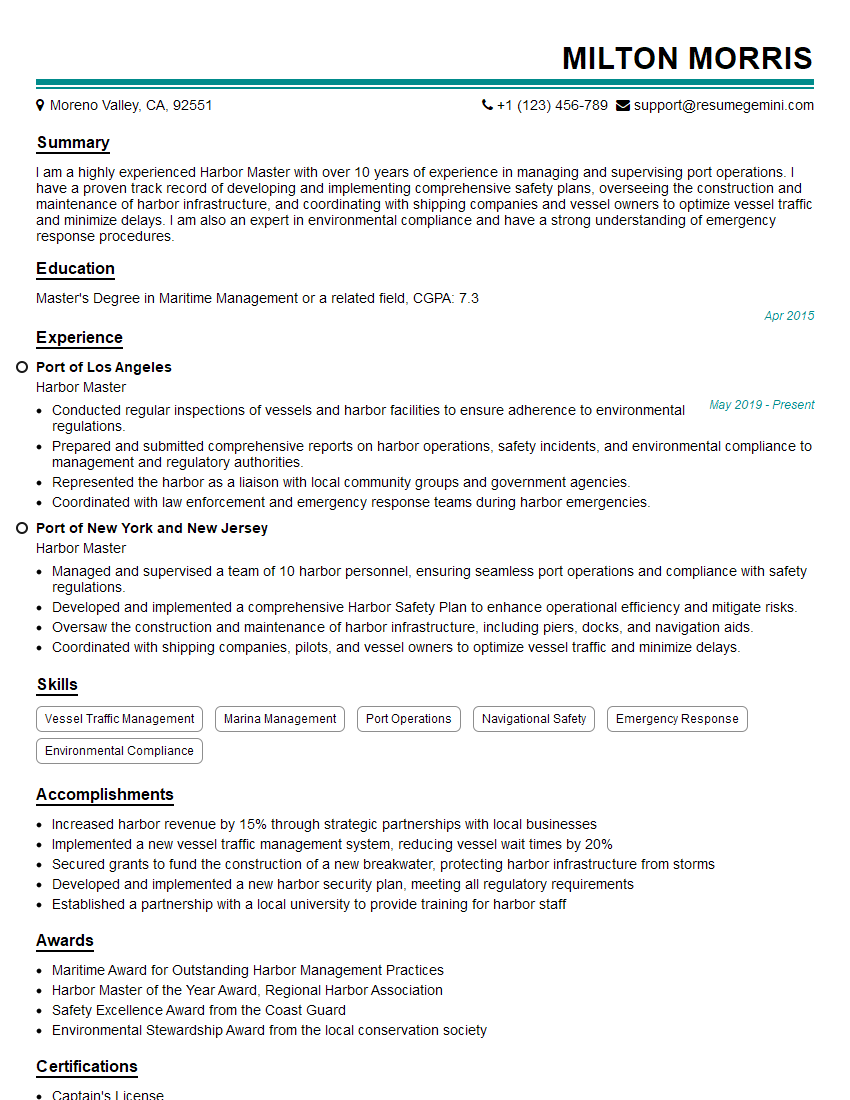
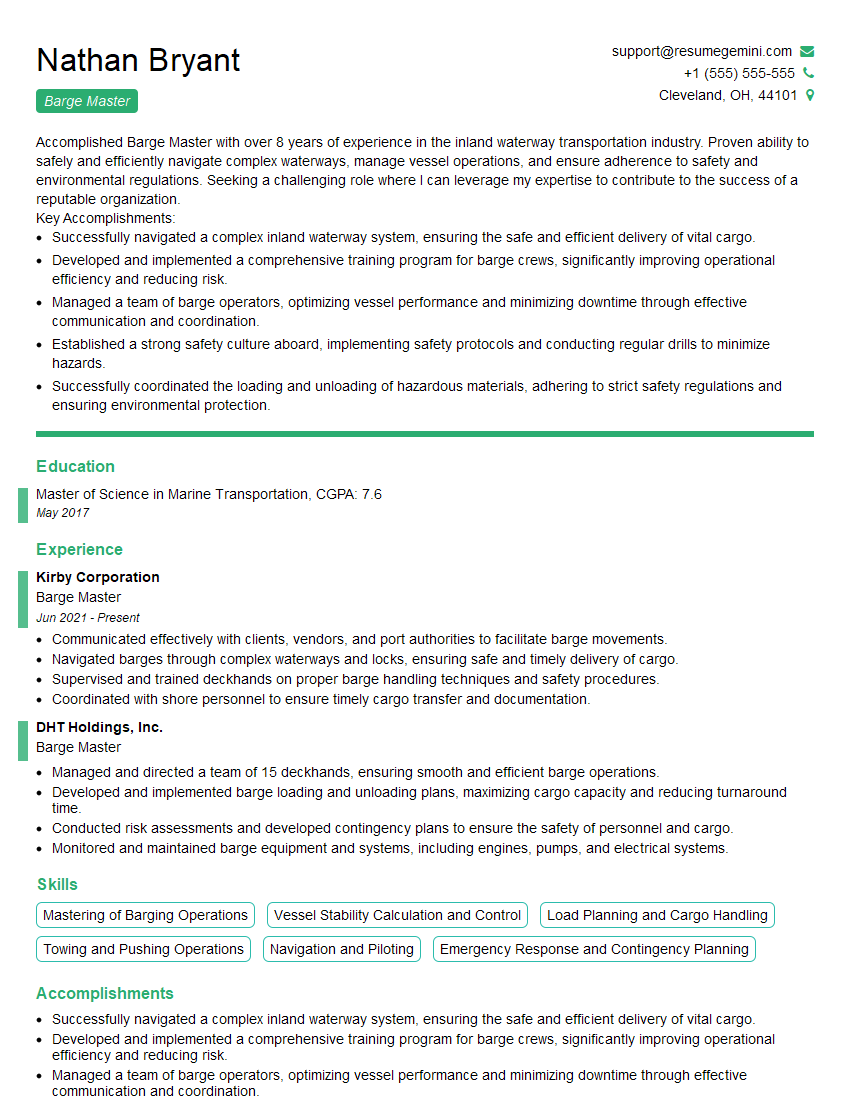
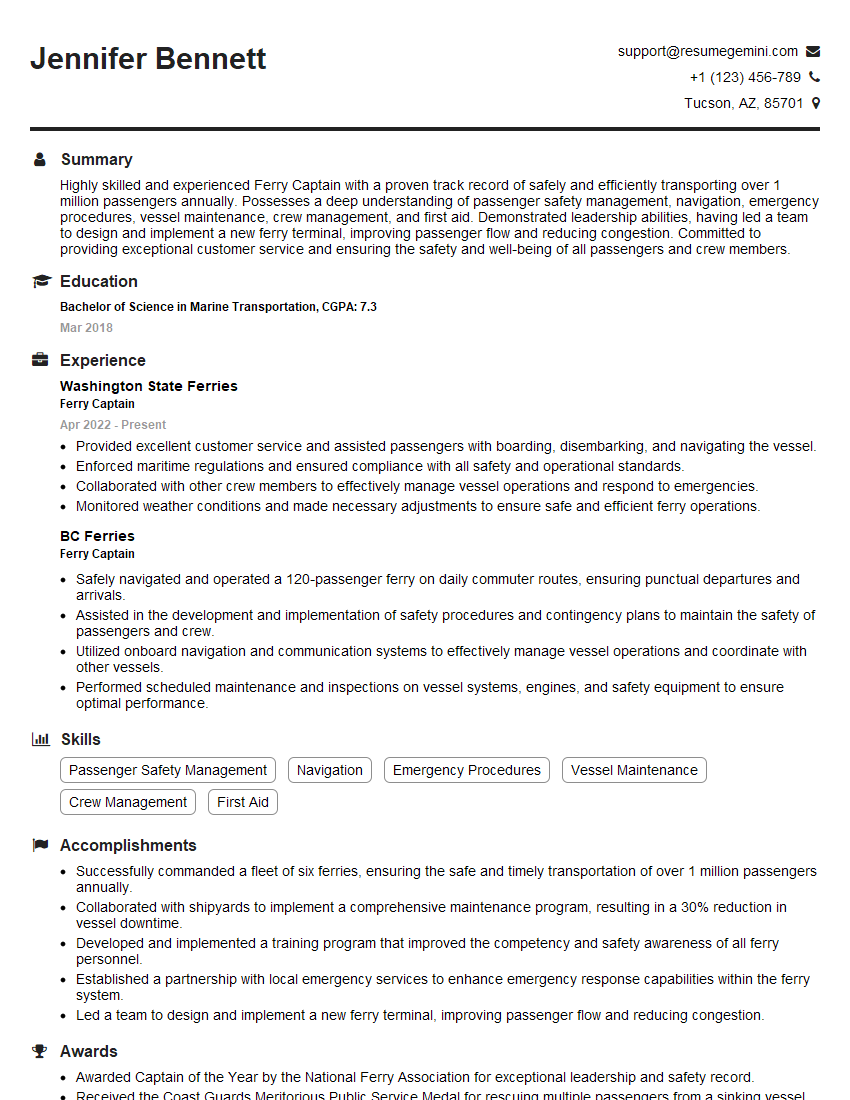
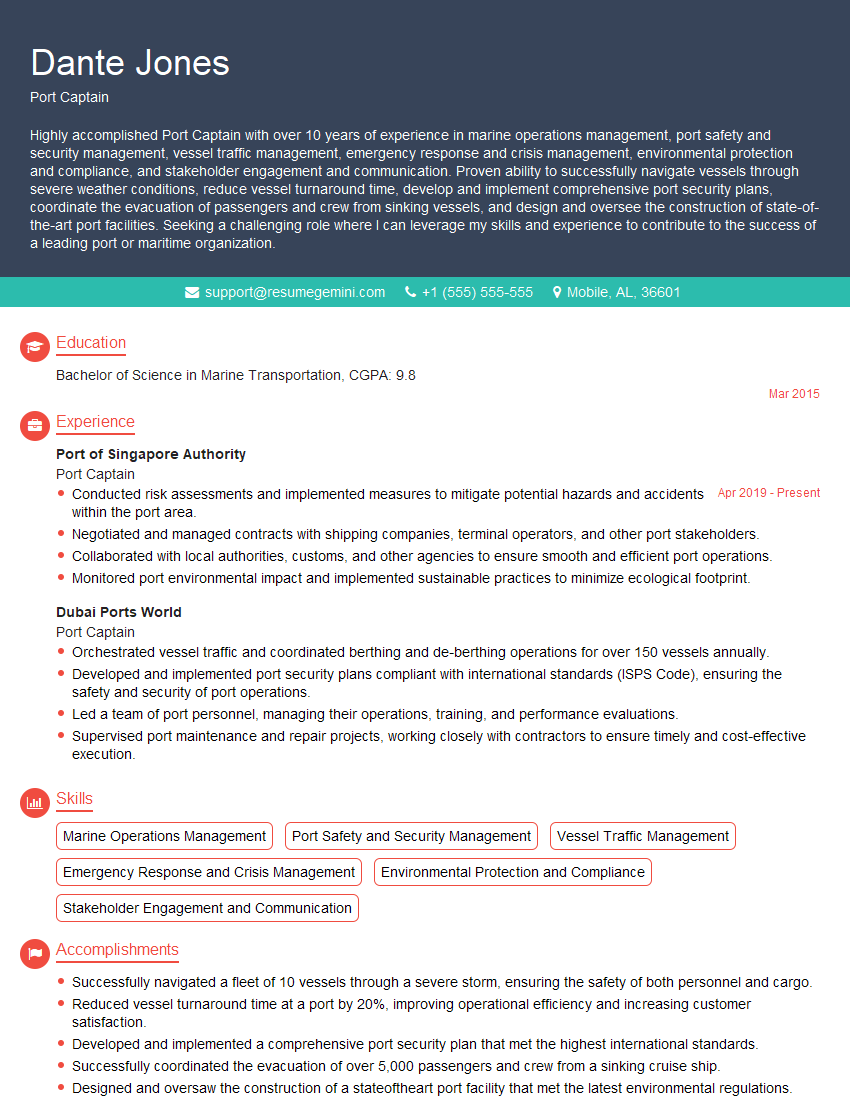
Mastering Tidal Zone Navigation is crucial for advancement in maritime careers, opening doors to specialized roles and higher responsibilities. A strong understanding of these concepts showcases your commitment to safety and operational efficiency, making you a highly desirable candidate. To further enhance your job prospects, crafting an ATS-friendly resume is essential. ResumeGemini is a trusted resource to help you build a professional and impactful resume that highlights your skills and experience effectively. Examples of resumes tailored to Tidal Zone Navigation are available to help guide you. Invest time in crafting a compelling resume – it’s your first impression on potential employers.
Explore more articles
Users Rating of Our Blogs
Share Your Experience
We value your feedback! Please rate our content and share your thoughts (optional).
What Readers Say About Our Blog
Very informative content, great job.
good