Every successful interview starts with knowing what to expect. In this blog, we’ll take you through the top Tie Column Installation interview questions, breaking them down with expert tips to help you deliver impactful answers. Step into your next interview fully prepared and ready to succeed.
Questions Asked in Tie Column Installation Interview
Q 1. Describe the different types of tie columns used in construction.
Tie columns, crucial in supporting structures, come in various types depending on material, load-bearing capacity, and application. Common types include:
- Steel Tie Columns: These are robust and commonly used for high-load applications. They offer excellent strength and can be easily fabricated to specific dimensions. Think of the steel supports you might see in large warehouses or industrial buildings.
- Concrete Tie Columns: These are often cast in place or precast. They’re durable and cost-effective, suitable for a wide range of applications, especially where fire resistance is a concern. Many residential and commercial buildings utilize concrete tie columns.
- Composite Tie Columns: These combine steel and concrete, leveraging the strengths of both materials. They’re highly efficient and can be tailored for specific structural needs. Modern high-rise buildings frequently incorporate this type.
- Timber Tie Columns (less common): While less common for major load-bearing, engineered timber columns can be used in certain applications, particularly in smaller structures or where aesthetics dictate wood as the primary material. These require careful treatment for durability.
The choice depends on factors like the overall building design, load requirements, budget, and aesthetic considerations. A structural engineer determines the appropriate type for a given project.
Q 2. Explain the process of installing a tie column, from planning to completion.
Installing a tie column is a multi-stage process requiring meticulous planning and execution:
- Planning and Design: This involves detailed structural calculations to determine the column’s size, material, and placement based on the building’s load-bearing requirements. Precise drawings and specifications are essential.
- Site Preparation: The area where the column will be installed needs to be properly prepared. This includes excavating, leveling, and ensuring a solid foundation. For example, ensuring sufficient depth for footings is critical.
- Column Placement: The column is carefully positioned according to the design plans. Accurate alignment and leveling are crucial at this stage, often requiring the use of surveying equipment.
- Foundation Work (if needed): Depending on the column type and soil conditions, a foundation might be required. This could involve pouring concrete footings or using prefabricated base plates.
- Column Erection: This involves lifting the column into its designated position. Cranes or other lifting equipment may be necessary. Temporary supports may be used to stabilize the column during the installation process.
- Securing and Anchoring: The column is firmly anchored to the foundation using appropriate fasteners like bolts or welding. The anchor design must be capable of transferring the column load safely.
- Inspection and Testing: A thorough inspection is conducted to verify alignment, stability, and the integrity of the connections. Testing may include load tests to ensure the column meets the design specifications. This is crucial for safety.
- Completion: Once inspection is complete, any finishing work such as surface treatment or coating is done. Protecting against corrosion is particularly important for steel columns.
Each step requires strict adherence to building codes and safety regulations. Ignoring any aspect can have serious consequences.
Q 3. What safety precautions are crucial during tie column installation?
Safety is paramount during tie column installation. Key precautions include:
- Hard Hats and Safety Glasses: These protect against falling objects.
- Safety Harness and Fall Protection: Essential when working at heights.
- Proper Lifting Equipment and Procedures: Using certified equipment and following safe lifting practices prevents accidents.
- Designated Work Areas and Signage: Restricting access to the work area protects both workers and the public.
- Regular Site Inspections: Identifying and addressing potential hazards promptly.
- Training and Competence: Workers must receive proper training on safe work practices specific to tie column installation.
- Emergency Response Plan: Having a clear plan in place to respond to any accidents.
Remember, safety isn’t just a suggestion; it’s a requirement. Cuts and injuries are costly in both time and money. Moreover, no project is worth risking a life or causing serious injury.
Q 4. How do you ensure the proper alignment and verticality of a tie column?
Ensuring proper alignment and verticality is critical for a tie column’s structural integrity. Methods include:
- Plumb Bobs: Used to establish a vertical reference line.
- Laser Levels: Provide a precise vertical reference plane across a wide area.
- Theodolites: High-precision instruments for accurate alignment and measurement.
- Alignment Pins and Templates: Guide the precise placement of the column during erection.
- Regular Monitoring and Adjustment: Continuously checking for deviations during installation and making adjustments as needed.
These tools, combined with experienced technicians, help ensure the column is perfectly aligned and vertical. Even minor deviations can lead to significant stress concentrations over time.
Q 5. What are the common challenges encountered during tie column installation, and how do you overcome them?
Challenges during tie column installation vary but often include:
- Difficult Site Conditions: Uneven ground, restricted access, or extreme weather can hinder the process. Solutions involve careful site preparation, specialized equipment, and contingency planning.
- Unexpected Obstacles: Encountering underground utilities or unforeseen obstructions requires adjustments to the installation plan. Detailed site surveys and careful excavation are essential.
- Precise Alignment Issues: Achieving perfect verticality and alignment can be challenging. Solutions include using advanced surveying equipment and experienced crews. Sometimes, minor adjustments are needed throughout the process.
- Connection Difficulties: Connecting the column to existing structures might be complex, particularly with older buildings. Precise measurements, specialized connectors, and engineering solutions are necessary. Welding or bolting need careful consideration.
Overcoming these challenges requires careful planning, problem-solving skills, and a flexible approach. Adaptability is key to a smooth process.
Q 6. Explain the importance of proper spacing and anchoring of tie columns.
Proper spacing and anchoring of tie columns are vital for ensuring the structural integrity and stability of the entire structure. Incorrect spacing can lead to uneven load distribution, causing structural weakness and potential failure. Inadequate anchoring leads to instability. Think of it like this: Imagine trying to support a shelf with only a few, widely-spaced brackets. It would be unstable. This is how tie columns interact to the building’s stability.
The design calculations dictate the optimal spacing and anchoring methods for a given scenario, considering factors like column size, load requirements, and the overall structural design. Proper spacing and anchoring ensure the load is distributed effectively among the columns, preventing stress concentrations and guaranteeing the structural integrity of the entire system.
Q 7. Describe different methods for connecting tie columns to existing structures.
Methods for connecting tie columns to existing structures depend on the materials of both the column and the structure, and the structural requirements. Common methods include:
- Bolting: High-strength bolts are used to create a strong and reliable connection. This is a widely used method suitable for various materials.
- Welding: Used for steel columns and steel structures, creating a very strong and permanent connection. The type of weld must match the needs of the materials.
- Grouting: High-strength grout fills gaps and ensures a solid connection between the column and the structure. Often used when precise alignment is critical.
- Anchoring Systems: Specialized anchoring systems are designed for specific situations, such as connecting to concrete or masonry structures. Embedded anchors are a common method.
- Base Plates: Wide base plates provide a larger surface area for distributing the load effectively and making secure connections. Often used for steel to concrete connections.
The choice of connection method depends on several factors, including load requirements, material compatibility, and the overall design of the structure. A structural engineer will specify the most appropriate method for each unique situation.
Q 8. How do you inspect a tie column for defects or damage?
Inspecting a tie column for defects involves a thorough visual examination and sometimes more involved testing. Think of it like a doctor’s checkup for your structure. We start with the basics, looking for obvious signs of damage.
- Visual Inspection: Look for cracks, spalling (chipping of concrete), or any signs of distress in the concrete itself. Check for misalignment or bowing of the column. Examine the connections to the surrounding structure for any looseness or damage. Pay close attention to the base and top of the column where stress concentrations are common.
- Sound Testing: A simple tap test can reveal potential internal voids or weaknesses. A hollow sound might indicate delamination or cracking within the concrete.
- Advanced Testing (if needed): For critical structures or when visual inspections reveal potential problems, more advanced techniques like ultrasonic testing or ground-penetrating radar may be used to identify internal defects more precisely.
For example, imagine a tie column supporting a balcony. A small crack might be easily missed, but over time, it could lead to structural failure. Regular inspections can catch these problems before they become major hazards.
Q 9. What are the relevant building codes and regulations for tie column installation?
Building codes and regulations governing tie column installation vary by location but generally align with overarching standards focusing on safety and structural integrity. Key codes include the International Building Code (IBC), American Concrete Institute (ACI) 318 (Building Code Requirements for Structural Concrete), and local amendments or specific requirements.
These codes specify requirements for:
- Design Loads: The column must be designed to withstand anticipated loads, considering live loads (people, furniture), dead loads (weight of the structure), and other potential forces like wind or seismic activity.
- Material Properties: The codes specify acceptable concrete strength (measured in psi or MPa), reinforcement requirements (type and quantity of steel rebar), and concrete mix design.
- Construction Tolerances: Acceptable deviations from the design dimensions and alignment are defined to ensure the column meets the intended structural function.
- Inspection and Testing: Regular inspection and testing procedures are outlined to ensure compliance throughout the construction process.
Ignoring these regulations can have serious consequences, from minor structural issues to complete collapse, highlighting the importance of adherence to these standards.
Q 10. How do you determine the appropriate size and type of tie column for a given project?
Determining the appropriate size and type of tie column is a crucial step, requiring engineering calculations and knowledge of relevant codes. It’s not a guesswork process!
The following factors influence this decision:
- Load Calculations: Engineers perform structural analysis to determine the loads the column must support. This considers the weight of the elements above it, live loads, and potential environmental loads.
- Column Height and Spacing: Longer columns require larger dimensions due to increased slenderness and the potential for buckling. The spacing between columns impacts load distribution.
- Material Strength: The chosen concrete compressive strength and the amount and type of reinforcement (rebar) directly impact the column’s capacity to resist loads. Stronger materials allow for smaller column dimensions.
- Architectural Considerations: Sometimes, architectural designs limit the available space for columns, influencing the selection of size and shape (e.g., rectangular, square, circular).
For instance, a tie column supporting a heavy roof section will necessitate larger dimensions and stronger reinforcement than one supporting a lightweight partition wall.
Q 11. Explain the role of formwork in tie column installation.
Formwork acts as a temporary mold for the concrete in tie column installation. Think of it as a customized container that shapes the concrete into the desired column dimensions. Its role is essential for achieving the correct shape, size, and surface finish of the column.
The key aspects of formwork include:
- Strength and Stability: The formwork must be strong enough to withstand the pressure exerted by the wet concrete during placement. It must also remain stable and plumb throughout the concrete pour.
- Tightness and Alignment: Precise alignment is crucial to ensure the column is straight and has the correct dimensions. Leaks should be avoided to maintain the integrity of the concrete.
- Surface Finish: The formwork material and its preparation significantly influence the final surface finish of the concrete. Smooth plywood usually produces a smooth finish, while rougher forms result in a textured surface.
- Ease of Removal: Once the concrete has cured sufficiently, the formwork must be easily removable without damaging the hardened concrete.
Using inadequate formwork can lead to misaligned columns, surface imperfections, or even structural damage. Proper formwork selection and construction is critical to a successful tie column installation.
Q 12. Describe the process of pouring concrete into tie column forms.
Pouring concrete into tie column forms is a carefully controlled process. It’s not just about dumping concrete; it’s about achieving a homogenous mix and avoiding voids or segregation.
The steps involved typically include:
- Preparation: Thoroughly inspect the formwork for any defects or leaks. Ensure that all necessary reinforcement (rebar) is accurately positioned within the formwork.
- Concrete Placement: Concrete is typically placed in layers, with each layer consolidated to eliminate air pockets. Methods of consolidation include using vibrators to remove trapped air bubbles.
- Consolidation: Proper consolidation is crucial to avoid honeycombing (voids in the concrete) which significantly weakens the column. Using a vibrator effectively removes air bubbles and ensures a dense concrete mix.
- Leveling: Each layer should be carefully leveled to avoid segregation of the mix components (cement, aggregates, water). Uneven layers can compromise structural integrity.
- Finishing: After the concrete has been placed, the surface may be finished with a trowel or other tools to achieve the desired surface texture.
Improper concrete placement can lead to weak spots, cracking, and structural failure. A smooth, controlled process ensures that the concrete fills the formwork completely and achieves the design strength and durability.
Q 13. How do you ensure the proper curing of concrete in tie columns?
Proper curing of concrete in tie columns is vital for achieving the designed strength and durability. It’s a crucial post-pour step that is often overlooked.
Curing involves maintaining the moisture and temperature of the concrete during the initial hydration period. This process helps the cement fully react, gaining strength and minimizing shrinkage cracks.
Methods of ensuring proper curing include:
- Water Curing: Keeping the concrete surfaces moist by spraying water, covering with wet burlap, or using curing compounds. This prevents rapid moisture loss, which can hinder strength development.
- Membrane Curing: Applying a curing membrane (liquid or sheet) to reduce moisture loss. This creates a barrier that retains moisture within the concrete.
- Steam Curing (for accelerated strength): For larger projects, steam curing may be used to accelerate strength gain. This involves exposing the concrete to controlled steam conditions.
- Temperature Control: Monitoring and controlling the temperature is crucial, especially in extreme hot or cold climates, to prevent rapid drying or frost damage.
Inadequate curing leads to lower strength, increased shrinkage cracking, and reduced durability. A well-cured tie column is essential for long-term structural performance.
Q 14. What are the signs of a poorly installed tie column?
Signs of a poorly installed tie column can range from subtle imperfections to major structural distress. It’s important to be vigilant and recognize these indicators.
Common signs include:
- Visible Cracks: Cracks in the concrete, particularly if they are extensive or show signs of widening, indicate potential structural problems.
- Misalignment or Bowing: A column that is noticeably out of plumb or bowed shows improper installation or inadequate formwork.
- Spalling or Surface Damage: Chipping or deterioration of the concrete surface may point to poor concrete quality or improper curing.
- Honeycombing or Voids: Visible voids or honeycombing in the concrete indicate inadequate consolidation during placement.
- Settlement or Differential Settlement: If the column settles unevenly, it suggests problems with the foundation or improper installation.
- Corrosion of Reinforcement: Visible rust stains or corrosion of rebar indicates problems with concrete cover or use of improper materials.
These problems can lead to long-term structural instability, and early detection is key to preventing catastrophic failure. Regular inspections and maintenance are critical for ensuring the safety and longevity of tie columns.
Q 15. What tools and equipment are necessary for tie column installation?
Tie column installation requires a range of specialized tools and equipment, depending on the project’s scale and complexity. Essential tools generally include:
- Excavation Equipment: This could range from hand tools for smaller projects to excavators and backhoes for larger-scale installations. The choice depends on the soil conditions and the size of the excavation required.
- Concrete Placement Equipment: Concrete pumps, chutes, and wheelbarrows are essential for efficiently placing the concrete mix into the column forms.
- Formwork: This includes prefabricated or custom-built forms made of timber, steel, or composite materials to shape the concrete column. Accurate formwork is crucial for achieving the desired dimensions and ensuring structural integrity.
- Reinforcing Steel Tools: These tools are necessary for bending, cutting, and placing the reinforcing steel bars (rebar) within the forms. This includes rebar cutters, benders, and ties.
- Concrete Finishing Tools: After pouring, tools like bull floats, hand floats, and trowels are used to create a smooth, level concrete surface.
- Vibration Equipment: Internal vibrators consolidate the concrete, removing air pockets and ensuring a dense, strong column. This is vital for preventing voids and honeycombing.
- Lifting Equipment: In some cases, cranes or other lifting equipment might be needed to position precast column sections or other heavy materials.
- Survey Equipment: Levels and measuring tapes are critical to ensure precise placement of the columns and accurate dimensions.
- Safety Equipment: Hard hats, safety glasses, gloves, and high-visibility vests are mandatory for all personnel involved in the installation.
For example, on a recent project involving the installation of several tie columns in a challenging rock-filled site, we utilized a mini-excavator for precise excavation, followed by steel formwork to ensure precise dimensions and a concrete pump for efficient concrete placement. The project’s success hinged on proper coordination of all equipment and personnel.
Career Expert Tips:
- Ace those interviews! Prepare effectively by reviewing the Top 50 Most Common Interview Questions on ResumeGemini.
- Navigate your job search with confidence! Explore a wide range of Career Tips on ResumeGemini. Learn about common challenges and recommendations to overcome them.
- Craft the perfect resume! Master the Art of Resume Writing with ResumeGemini’s guide. Showcase your unique qualifications and achievements effectively.
- Don’t miss out on holiday savings! Build your dream resume with ResumeGemini’s ATS optimized templates.
Q 16. How do you maintain quality control during tie column installation?
Maintaining quality control in tie column installation is paramount for structural integrity and safety. Our process involves a multi-faceted approach:
- Material Quality Control: We rigorously inspect all materials, including concrete mix design, strength testing of concrete samples (compressive strength testing), and verification of reinforcing steel specifications and dimensions. This ensures the materials meet the required standards.
- Formwork Inspection: Before concrete placement, a thorough inspection of the formwork ensures that it is plumb, level, and securely braced to withstand the concrete pressure during placement. Any defects are immediately corrected.
- Reinforcement Placement Inspection: Accurate placement of the reinforcing steel according to the design drawings is crucial. We use visual inspection, drawings and checklists to ensure that the correct amount and placement of rebar is followed.
- Concrete Placement Monitoring: During placement, we carefully monitor the process to ensure proper consolidation, preventing segregation or honeycombing. Regular use of internal vibrators and a thorough understanding of concrete properties ensure a dense and strong column.
- Curing Process Monitoring: Proper curing is essential for concrete strength development. We follow specific curing guidelines, including keeping the concrete moist and at the correct temperature for the specified duration.
- Regular Inspections: Throughout the process, regular inspections and quality checks are conducted at key stages. This proactive approach helps identify and correct potential issues early on.
- Documentation: Meticulous documentation of all procedures, including material certifications, inspection reports, and test results, ensures traceability and aids in troubleshooting if problems arise later.
In one project, a minor misalignment was detected during the formwork inspection. Immediate correction prevented a significant structural defect, demonstrating the importance of proactive quality control.
Q 17. Describe your experience with different types of concrete used in tie columns.
My experience encompasses various concrete types used in tie column installations, each chosen to suit specific project requirements. These include:
- Normal Strength Concrete (NSC): This is commonly used for tie columns with standard load requirements. Its affordability and readily available nature make it a popular choice.
- High-Strength Concrete (HSC): Used for tie columns subjected to high loads or demanding environmental conditions, HSC offers superior strength and durability. It often contains supplementary cementitious materials (SCMs).
- Self-Consolidating Concrete (SCC): SCC is ideal for complex formwork geometries and heavily reinforced sections, as it flows readily into place without the need for excessive vibration, reducing the risk of segregation.
- Fiber-Reinforced Concrete (FRC): FRC is beneficial for improving crack resistance and durability, enhancing the longevity of the tie column, especially in environments prone to cracking such as those subjected to seismic activity.
Selecting the appropriate concrete mix design involves considering factors like compressive strength, workability, durability requirements, and the project’s budget. For instance, in a recent high-rise building project, we opted for HSC due to the substantial load requirements on the tie columns, ensuring the structure’s stability and longevity.
Q 18. How do you handle unexpected issues or problems during installation?
Unexpected issues during tie column installation are inevitable. Our approach involves a systematic problem-solving strategy:
- Problem Identification and Assessment: The first step involves accurately identifying the issue and assessing its potential impact on the project’s timeline and structural integrity.
- Root Cause Analysis: We conduct a thorough investigation to determine the underlying cause of the problem, such as improper formwork, defective materials, or unforeseen site conditions.
- Solution Development: Based on the root cause analysis, we develop a suitable solution, considering various options and their potential implications.
- Implementation and Monitoring: The solution is implemented carefully, with close monitoring to ensure its effectiveness and to avoid further complications. This may involve additional testing or expert consultation.
- Documentation and Reporting: The entire process, from problem identification to resolution, is meticulously documented, providing valuable lessons learned for future projects.
For example, we encountered unforeseen bedrock during an excavation. We promptly adjusted the excavation plan, using specialized rock-breaking tools, and modified the foundation design accordingly to mitigate any risks and ensure the stability of the tie columns.
Q 19. What are the environmental considerations for tie column installation?
Environmental considerations are integral to tie column installation. We prioritize sustainability and minimize the impact on the surrounding environment through these measures:
- Waste Management: Careful planning and efficient material handling minimize construction waste. We prioritize recycling and responsible disposal of construction debris.
- Soil Erosion and Sediment Control: Appropriate measures, such as silt fences and erosion control blankets, are implemented to prevent soil erosion during excavation and construction activities.
- Water Management: We take steps to manage stormwater runoff and prevent contamination of nearby water bodies. This could involve using sediment basins or implementing other water management techniques.
- Noise Control: We minimize noise pollution by using quieter equipment where possible and adhering to noise level regulations.
- Air Quality: We monitor and control dust emissions during excavation and concrete mixing. This may involve using dust suppression techniques or employing dust extraction systems.
- Protection of Flora and Fauna: We take precautions to protect existing vegetation and wildlife during the construction process. This may involve establishing exclusion zones or implementing wildlife-friendly construction practices.
On one project near a sensitive wetland, we implemented a detailed environmental management plan that included measures to protect the wetland ecosystem. This ensured the project proceeded while minimizing its environmental footprint.
Q 20. Explain your understanding of load-bearing capacity in relation to tie columns.
The load-bearing capacity of a tie column is its ability to withstand and transfer vertical and lateral loads from the structure it supports. This capacity is determined by several factors:
- Concrete Strength: The compressive strength of the concrete is a primary determinant of the column’s load-bearing capacity.
- Reinforcement Design: The amount, type, and placement of reinforcing steel significantly influence the column’s ability to resist tensile stresses.
- Column Dimensions: The column’s cross-sectional area and length affect its capacity to bear loads. Larger cross sections and shorter lengths generally result in higher capacity.
- Support Conditions: The way the column is supported at its ends (fixed, hinged, etc.) impacts its load-bearing capacity.
- Design Codes and Standards: Tie column design adheres to specific building codes and standards which provide guidelines for determining safe load capacities and ensuring structural integrity.
We utilize engineering software and design calculations to determine the load-bearing capacity of a tie column, ensuring that it meets the project requirements and safety standards. For instance, we recently completed a structural analysis that showed a specific tie column design could safely bear 1,200 kN of vertical load and 500 kN of lateral load, well exceeding the anticipated loads from the structure it supports.
Q 21. How do you ensure the stability of a tie column during high winds or seismic activity?
Ensuring the stability of tie columns during high winds or seismic activity is critical. This is achieved through several design and construction considerations:
- Seismic Design: Tie columns in seismic zones are designed to withstand significant lateral forces. This involves incorporating ductility and shear strength into the design, using appropriate reinforcement details, and accounting for soil conditions.
- Wind Load Analysis: Wind load calculations determine the forces acting on the column during high winds. The design ensures the column can resist these forces without experiencing excessive deflection or failure.
- Proper Foundation Design: A stable foundation is crucial for transferring loads to the ground effectively, particularly during seismic events. The foundation’s design should consider soil conditions and the magnitude of anticipated forces.
- Connection Details: Secure connections between the tie column and the structure it supports are essential for transferring loads efficiently and maintaining stability.
- Material Selection: Using materials with high ductility and strength, such as high-strength concrete and well-designed reinforcement, enhances the column’s resistance to both wind and seismic forces.
In a recent project located in a high-wind area, we used high-strength concrete and detailed reinforcement placement to ensure the tie columns could withstand the anticipated wind loads. The design included detailed analysis of wind pressures and consideration of potential wind gusts to ensure safety.
Q 22. Describe your experience working with different types of soil conditions.
My experience spans a wide range of soil conditions, from dense clays and gravelly soils to loose sands and silts. Each soil type presents unique challenges during tie column installation. For instance, in dense clay, we often encounter difficulties in driving the columns to the required depth. Specialized equipment like vibratory hammers or air compressors might be necessary to overcome high soil resistance. Conversely, loose sands require careful consideration of potential settlement and lateral movement. We might employ techniques like pre-boring or using wider-based columns to improve stability in such conditions. Working with highly variable soil profiles requires a thorough geotechnical investigation beforehand to inform our installation strategy. This might involve soil sampling, laboratory testing, and analysis to determine the most suitable column type, length and installation method. In one project, encountering unexpected bedrock at a shallower depth than anticipated required us to adjust our installation plan on the fly and use shorter columns with modifications to the base to ensure stability.
For example, in a recent project involving the construction of a retaining wall on a sloped site with predominantly sandy soil, we employed helical piles as tie columns. The helical design allowed for excellent grip in the loose soil, and the ability to adjust the depth during installation ensured we achieved the required design capacity.
Q 23. How do you calculate the required number of tie columns for a given structure?
Calculating the required number of tie columns involves a multi-step process that combines structural analysis and geotechnical considerations. It’s not a simple formula, but rather a careful engineering judgment based on several factors. First, we must assess the overall stability of the structure and determine the lateral loads it will experience (e.g., from wind or earthquakes). Then, we conduct soil investigations to ascertain the bearing capacity of the soil and the potential for settlement. We use specialized software (I’ll detail that in a later answer) to model the soil-structure interaction and calculate the necessary resisting forces. The number of tie columns is determined based on distributing these forces effectively across the foundation.
Let’s say we’re working on a retaining wall: the height of the wall, the soil pressure behind it, and the overall dimensions will all influence the number of tie columns required. The spacing between columns needs to be considered too, as it affects the distribution of the lateral earth pressure. For large structures, I might use finite element analysis software to optimize the placement and number of tie columns for maximum efficiency.
Q 24. What are the long-term maintenance requirements for tie columns?
Long-term maintenance for tie columns primarily focuses on preventing corrosion and ensuring structural integrity. Regular visual inspections are crucial, looking for signs of damage, corrosion, or settlement. This includes checking the column’s surface for cracks, pitting, or rust. Any signs of deterioration should be reported immediately. In areas with high humidity or exposure to de-icing salts, more frequent inspections (possibly annually) are necessary. In coastal environments, cathodic protection systems might be implemented to mitigate corrosion. Protective coatings, like epoxy paints, can be applied at installation or as part of maintenance to prolong the life of the columns. If any signs of significant deterioration are found, appropriate repairs, including replacement if necessary, must be undertaken promptly. Regular documentation of inspections and any repairs made is essential for maintaining a reliable record.
Q 25. Describe your experience with working at heights during tie column installation.
Safety is paramount when working at heights during tie column installation. My experience includes rigorous adherence to all relevant safety regulations and the use of appropriate fall protection equipment. This invariably means harness systems, anchor points, and regularly inspected safety lines. Before commencing work at height, I always ensure a thorough risk assessment is completed and that all team members receive appropriate training and certification in working at heights. We use scaffolding, elevated work platforms, or other suitable access equipment where feasible, always prioritizing safer alternatives over risky practices. Communication is key, with designated spotters and clear communication protocols to minimize the risk of accidents. In one project, we implemented a system where the crane operator communicated with the workers on the ground and in the air via two-way radios to coordinate the lifting and placement of the tie columns effectively and safely.
Q 26. Explain your proficiency in using relevant software or technology for tie column design or installation.
I’m proficient in several software packages relevant to tie column design and installation. For structural analysis, I frequently use programs like SAP2000 and ETABS. These allow for detailed modeling of the structure and the soil-structure interaction, helping to determine the loads on the tie columns and their required capacity. For geotechnical analysis, I often utilize programs like PLAXIS and GeoStudio. These programs aid in assessing the bearing capacity of the soil and potential settlement, crucial factors in selecting appropriate column types and depths. Additionally, I am comfortable with project management software such as Primavera P6, used for scheduling and tracking progress during the tie column installation phase of a project. Finally, using CAD software for detailed drawings and designs of the columns and their foundations is part of my everyday workflow.
Q 27. How do you communicate effectively with other members of the construction team?
Effective communication is essential in construction. I prioritize clear, concise, and timely communication with all team members. I always use a collaborative approach, regularly holding pre-work meetings to discuss plans, address any concerns, and coordinate activities. During installation, clear communication with the crane operator and other ground crew members is vital for ensuring safe and efficient operation. I regularly provide updates to the project manager, keeping them informed of progress, any challenges encountered, and potential solutions. Open and honest communication builds trust and fosters a positive team environment. I use a mix of verbal communication, written reports, and digital tools (like project management software) to ensure everyone is on the same page.
Q 28. Describe a time you had to troubleshoot a problem during tie column installation.
During the installation of tie columns for a large retaining wall, we encountered unexpectedly hard, compacted soil at a particular location, which made it impossible for the planned hydraulic hammer to drive the column to the designated depth. The initial solution attempted was to use a larger hammer with increased driving force, but that only resulted in damage to the column itself. I then reassessed the situation and decided to switch our strategy. After conducting further testing, I proposed that we pre-bore a pilot hole using a smaller-diameter auger to reduce the resistance to penetration. Then, after installing temporary casing, we proceeded with the hydraulic hammer, successfully driving the column to the specified depth without damage. This incident highlighted the importance of adaptability, thorough investigation, and having a contingency plan in place to solve unforeseen problems. Detailed documentation of our solutions is shared with the project team as a way to foster continued learning and improvement of our practices.
Key Topics to Learn for Tie Column Installation Interview
- Understanding Tie Column Design: Explore different tie column types, their applications, and load-bearing capacities. Consider factors influencing design choices like building height, soil conditions, and structural requirements.
- Installation Procedures and Techniques: Master the step-by-step process of tie column installation, including excavation, foundation preparation, column placement, and grouting. Understand best practices for ensuring stability and longevity.
- Material Selection and Quality Control: Learn to identify appropriate materials for tie columns based on project specifications and environmental considerations. Understand quality control measures to ensure structural integrity.
- Safety Regulations and Procedures: Familiarize yourself with relevant safety regulations and protocols for tie column installation. Understand the importance of risk assessment and mitigation.
- Troubleshooting and Problem Solving: Develop your ability to identify and resolve common issues encountered during tie column installation, such as foundation settlement, material defects, and unforeseen site conditions. Practice analyzing problems and proposing solutions.
- Code Compliance and Documentation: Understand building codes and regulations related to tie column installation. Know how to properly document the installation process for future reference and compliance.
- Inspection and Maintenance: Learn about post-installation inspection procedures and long-term maintenance requirements for tie columns. Understand how to identify potential problems and implement preventative measures.
Next Steps
Mastering Tie Column Installation opens doors to exciting opportunities in structural engineering and construction. A strong understanding of these principles is highly valued by employers and significantly enhances your career prospects. To maximize your chances of landing your dream job, focus on creating an ATS-friendly resume that highlights your skills and experience effectively. ResumeGemini is a trusted resource that can help you build a professional and impactful resume. We offer examples of resumes tailored to Tie Column Installation to help guide you through the process. Take the next step towards your successful career today!
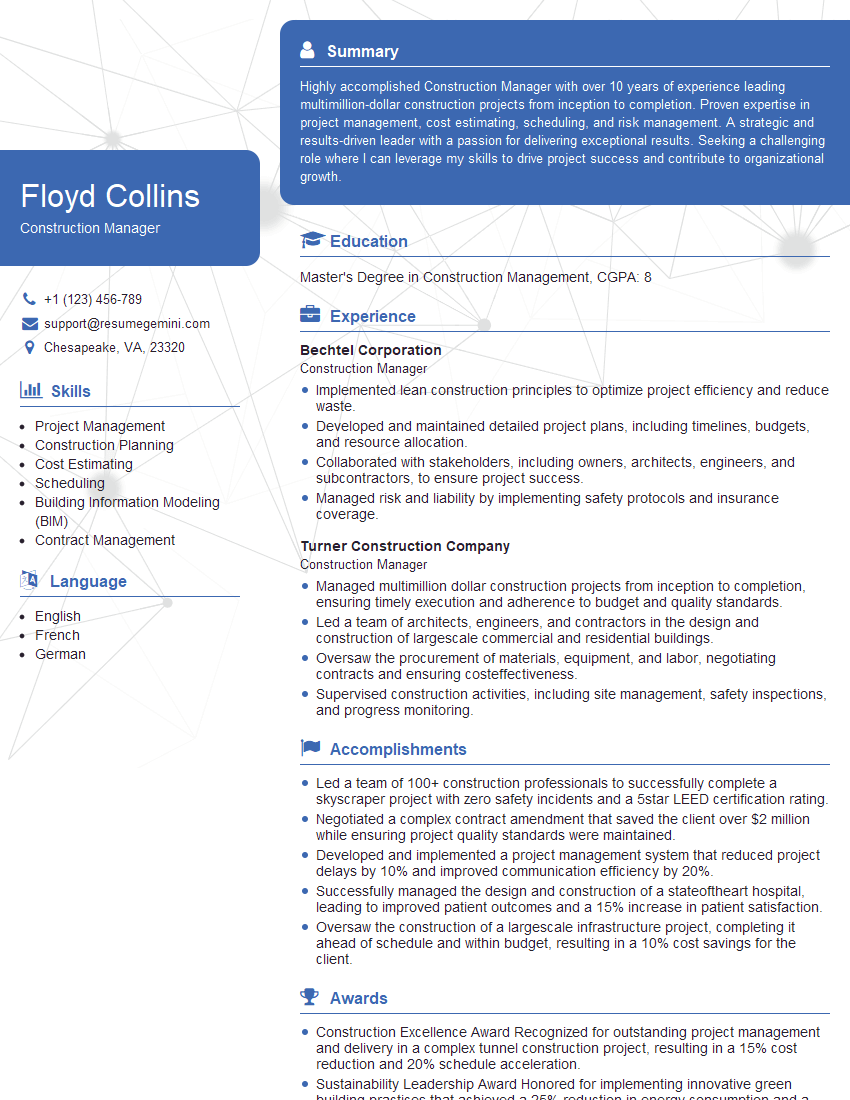
Construction Manager Resume Sample

Concrete Foreman Resume Sample

Construction Superintendent Resume Sample
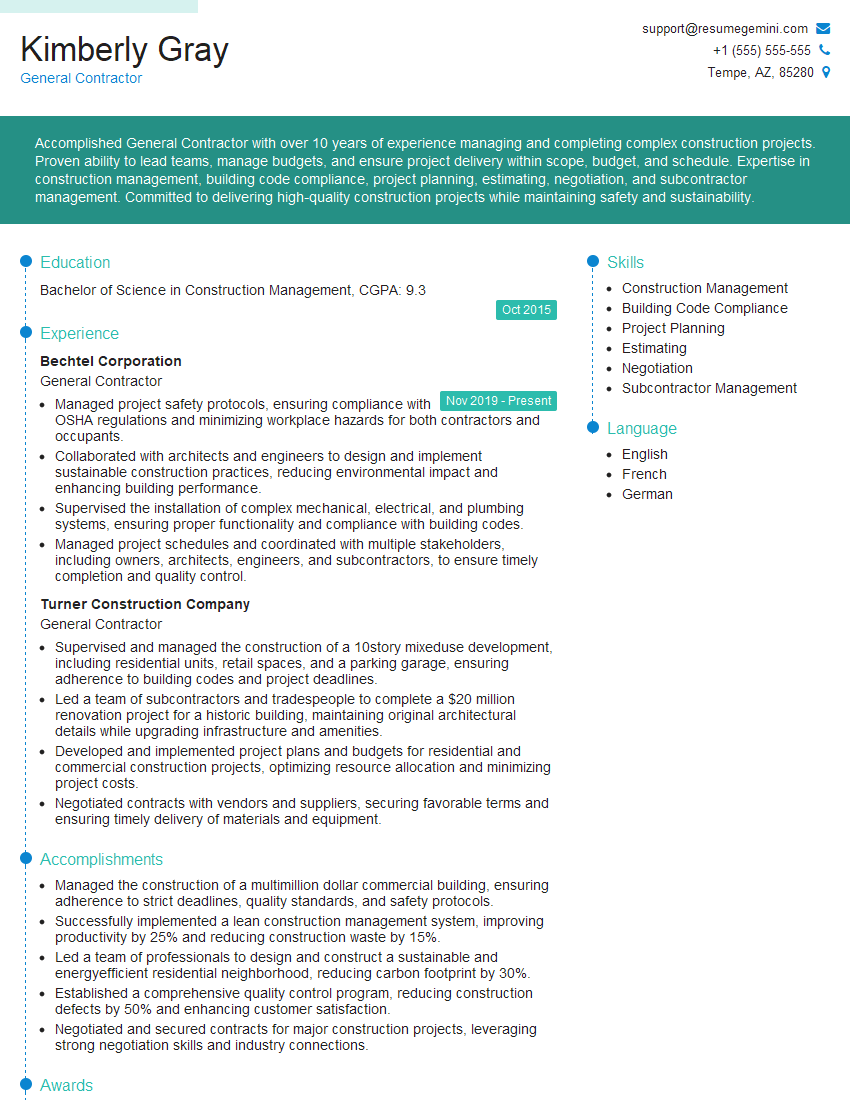
General Contractor Resume Sample

Project Superintendent Resume Sample

Project Engineer Resume Sample
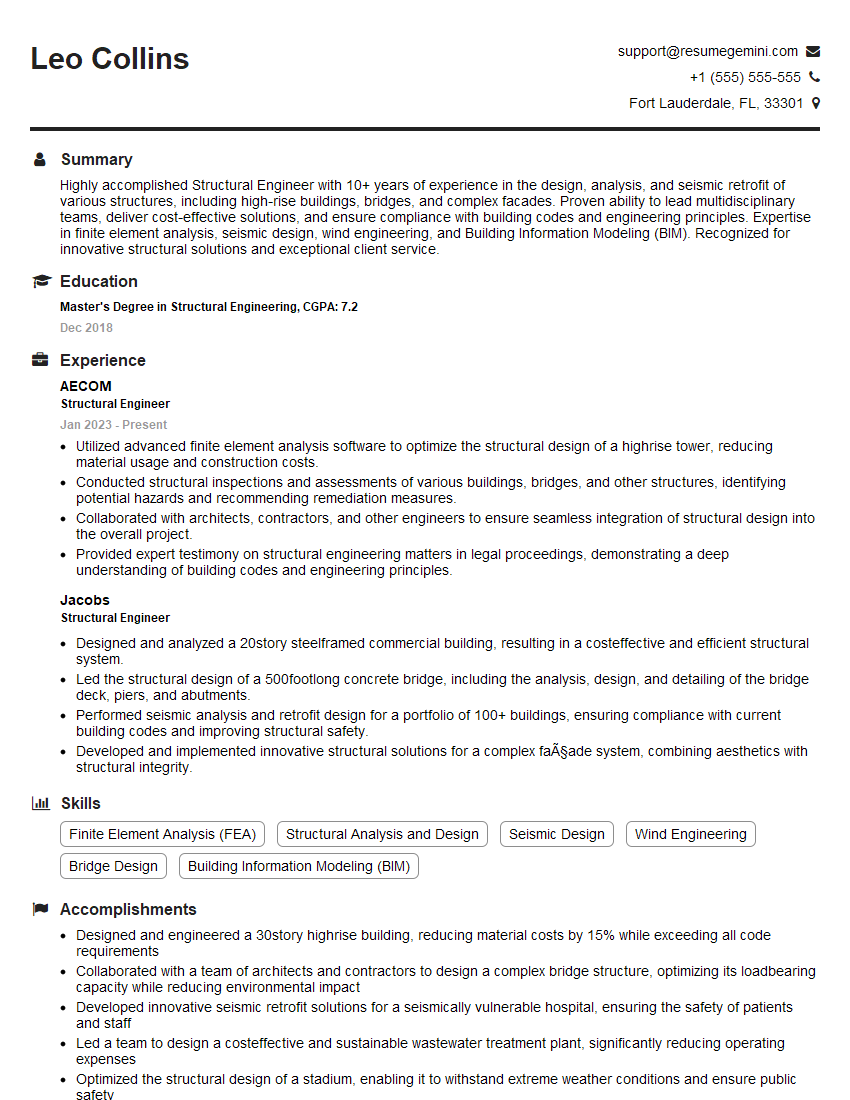
Structural Engineer Resume Sample
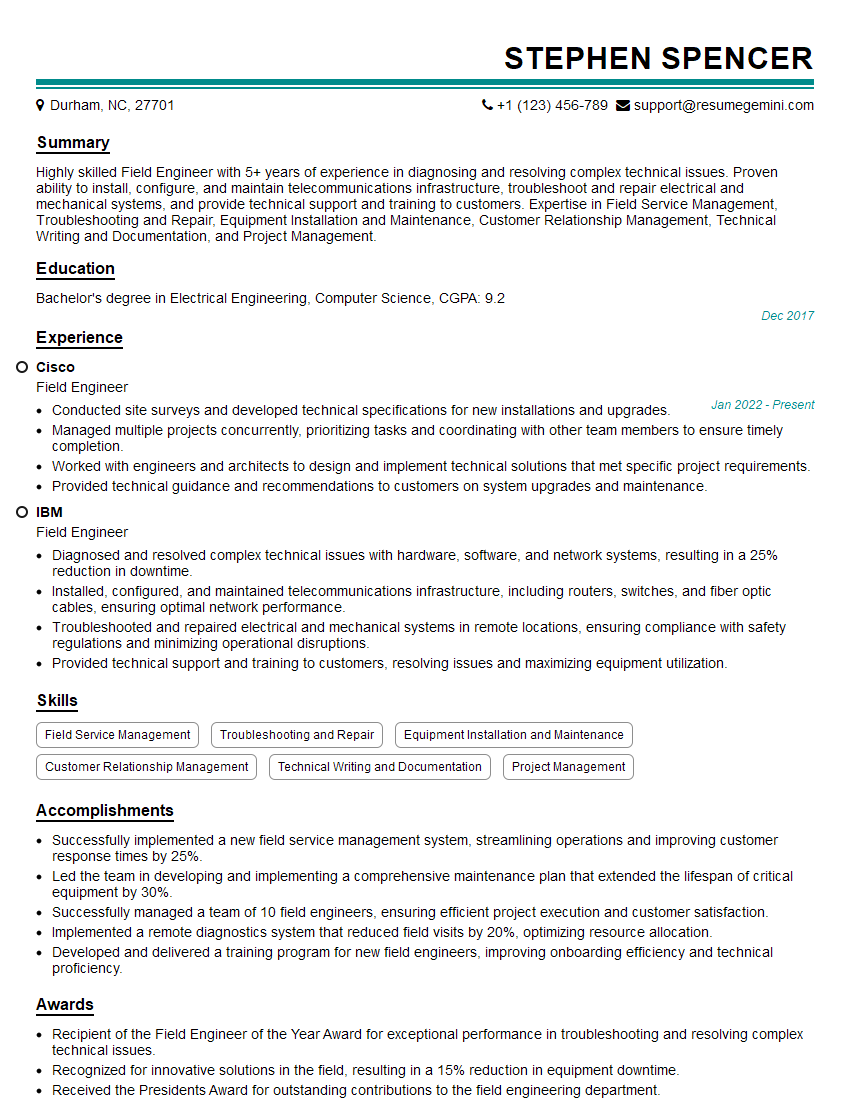
Field Engineer Resume Sample
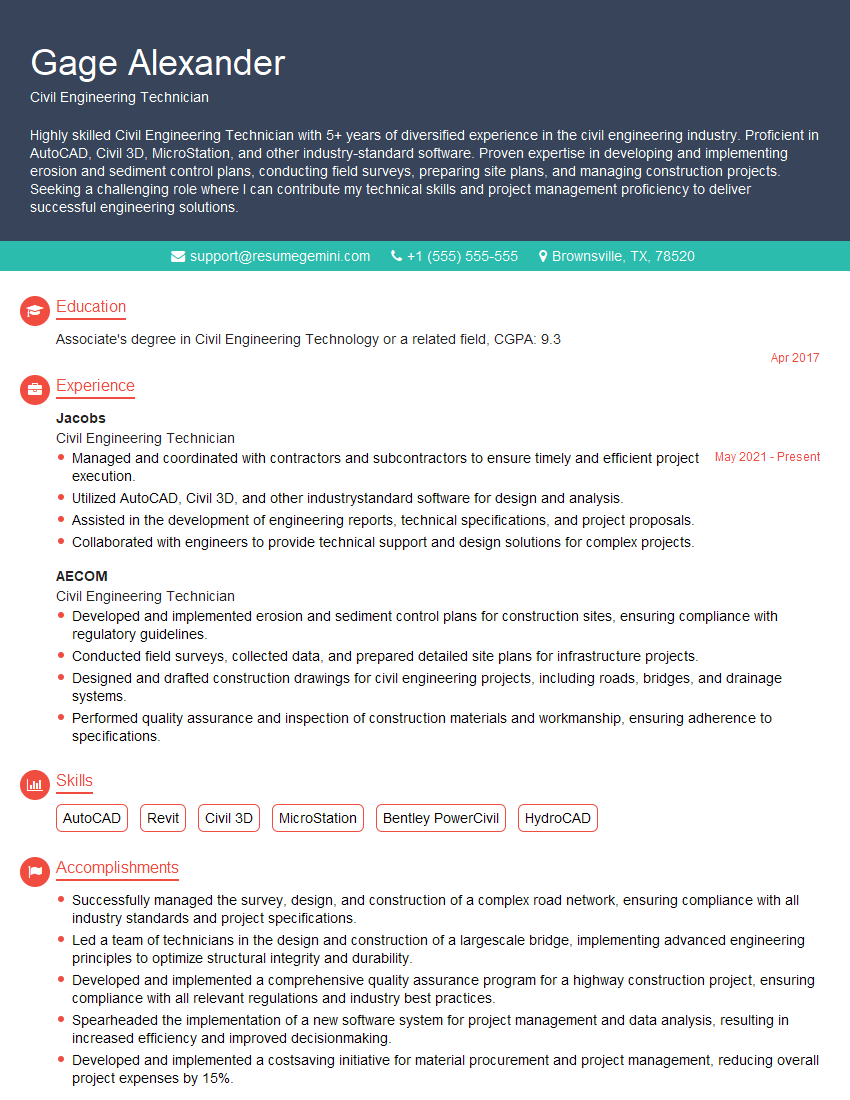
Civil Engineering Technician Resume Sample
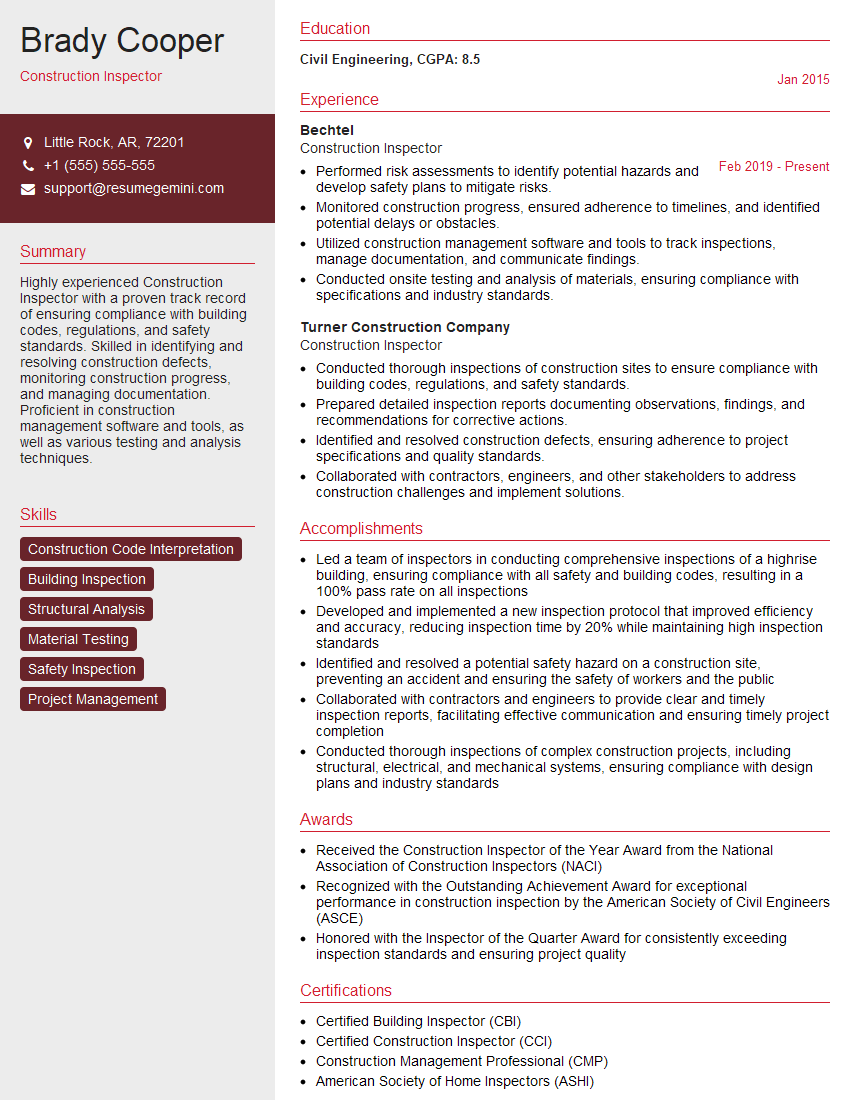
Construction Inspector Resume Sample
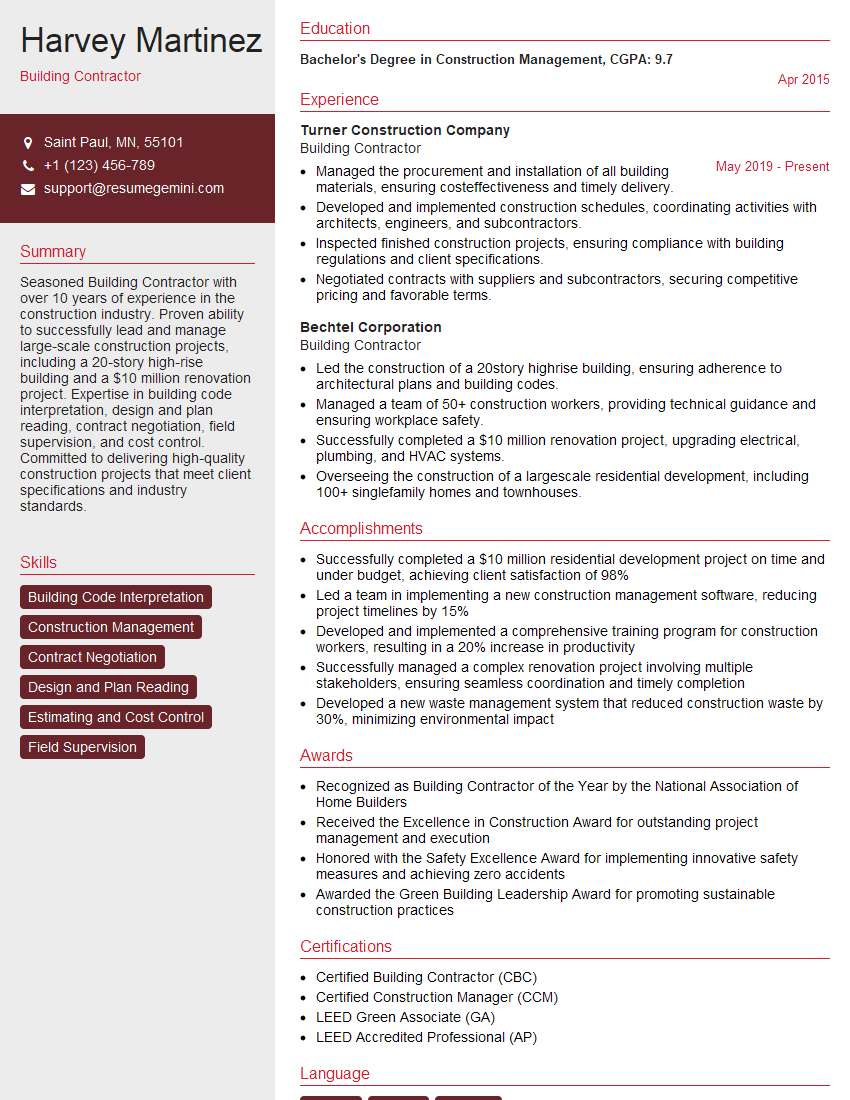
Building Contractor Resume Sample
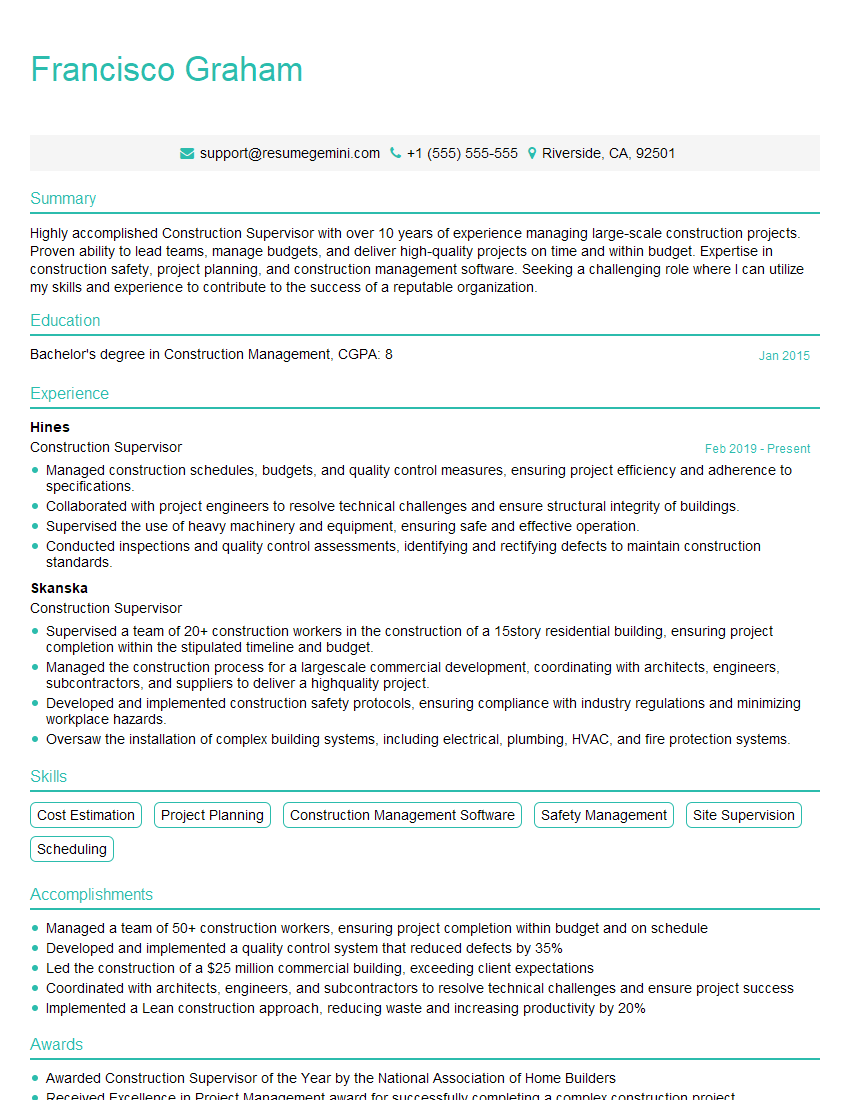
Construction Supervisor Resume Sample

General Foreman Resume Sample

Site Supervisor Resume Sample
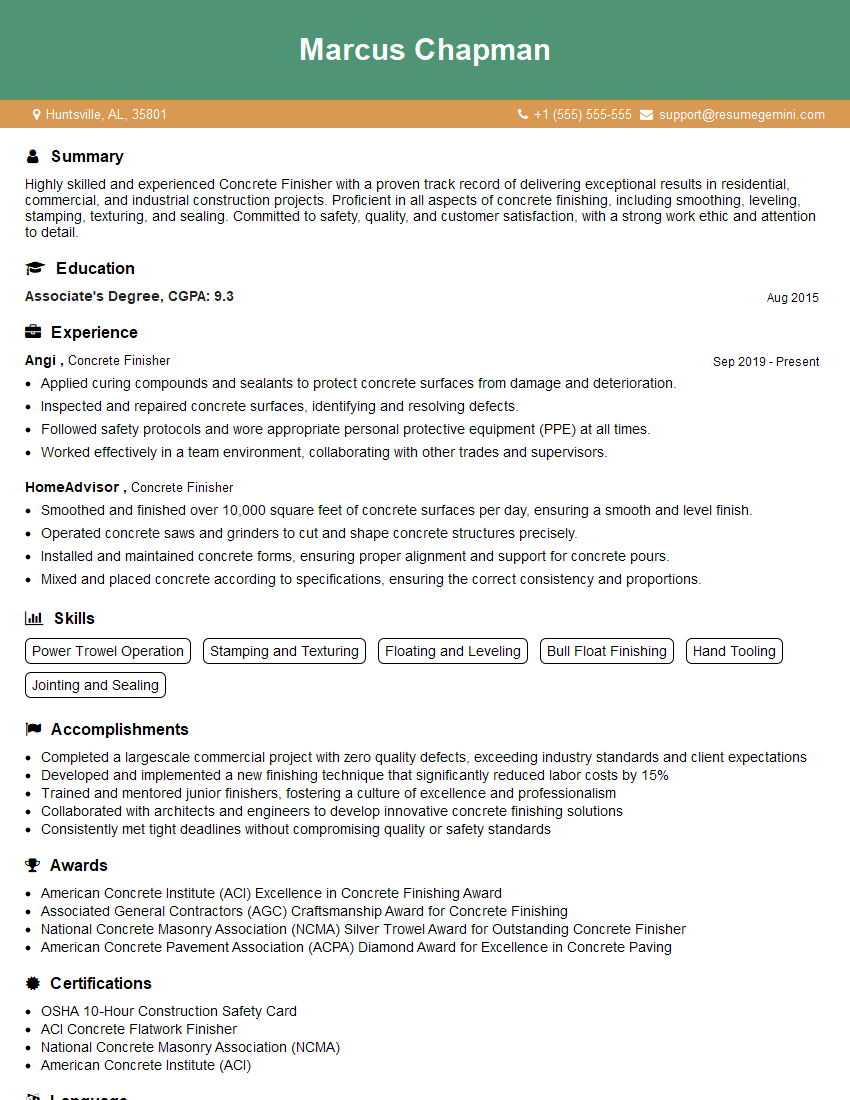
Concrete Finisher Resume Sample
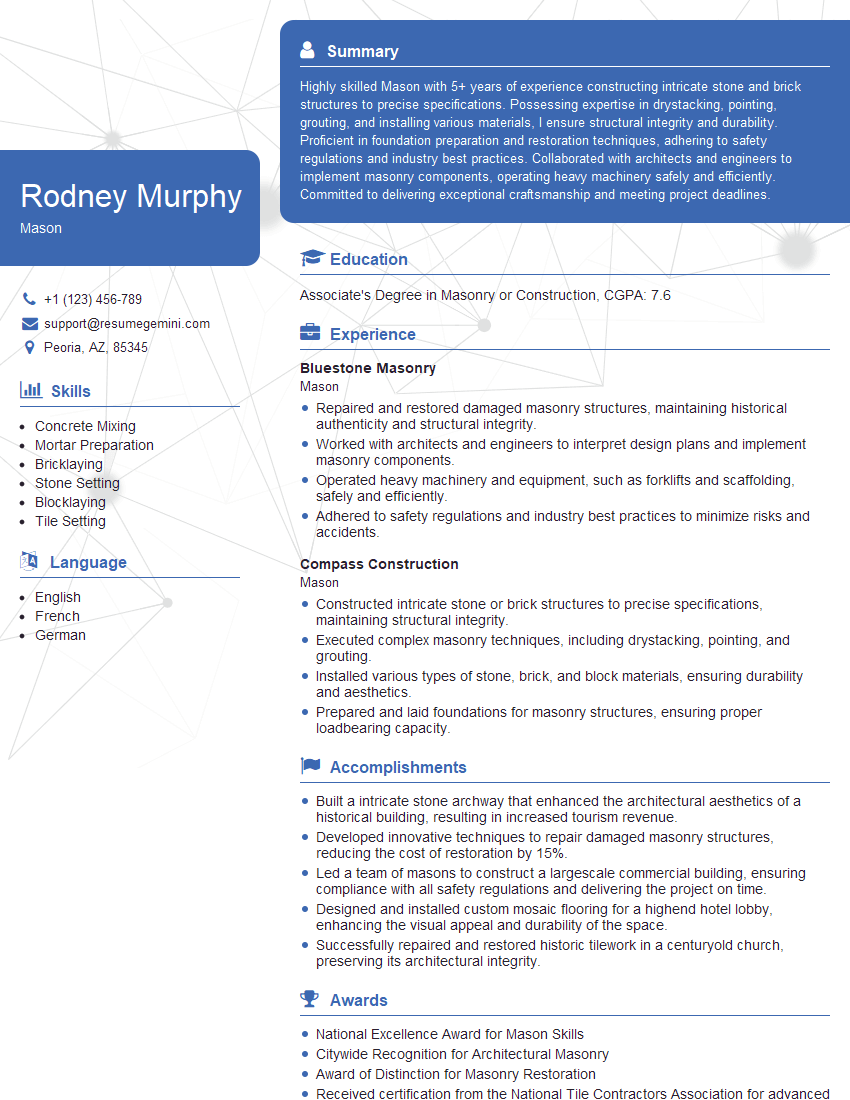
Mason Resume Sample
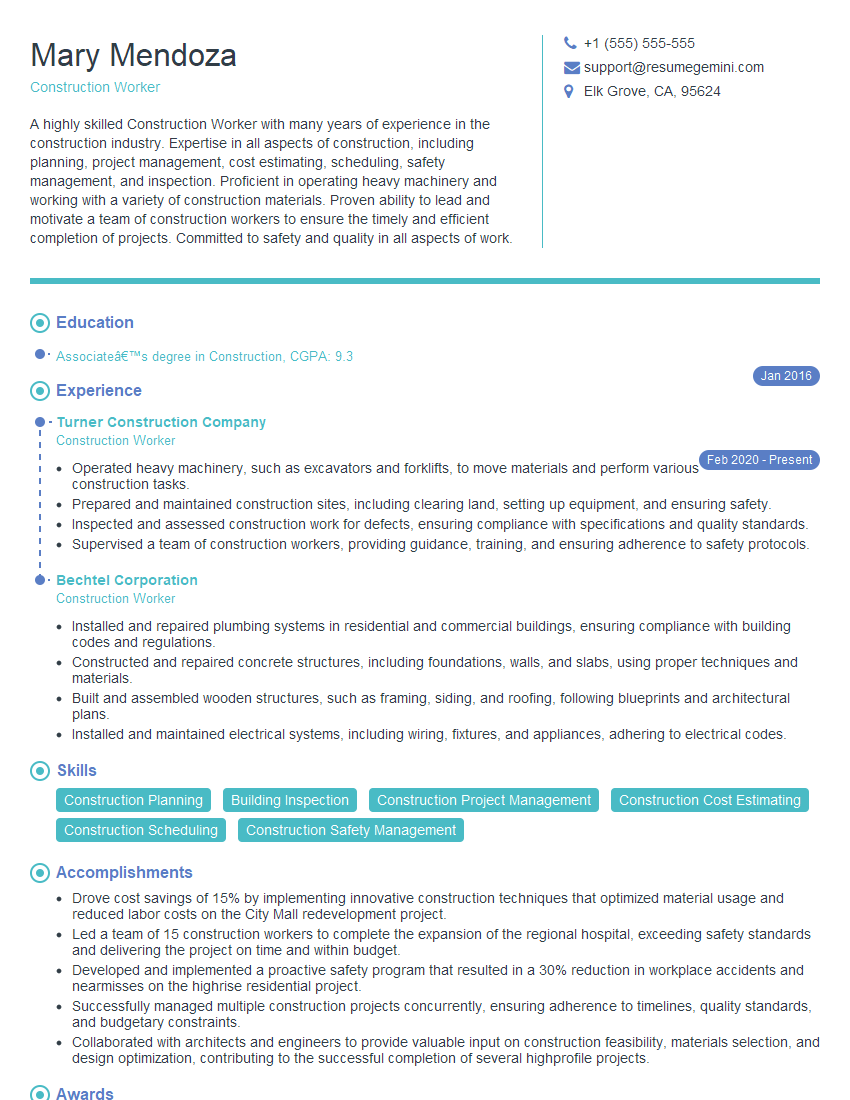
Construction Worker Resume Sample
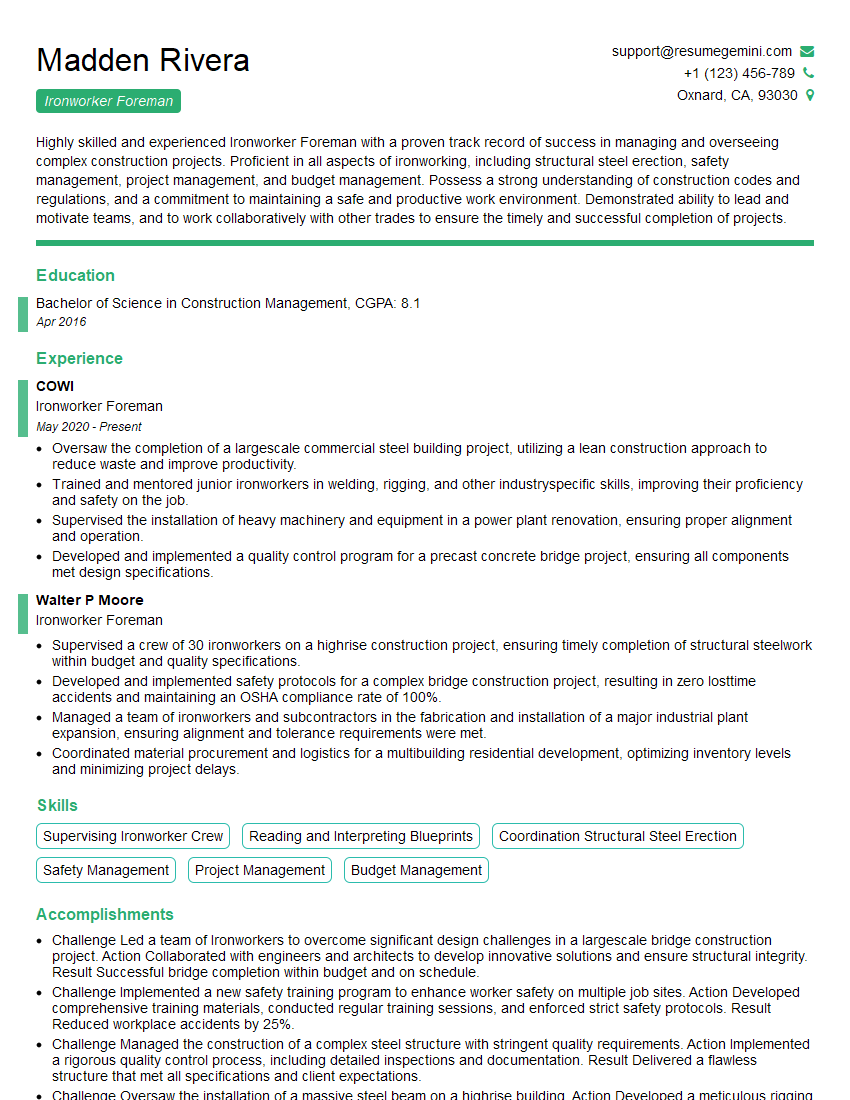
Ironworker Foreman Resume Sample
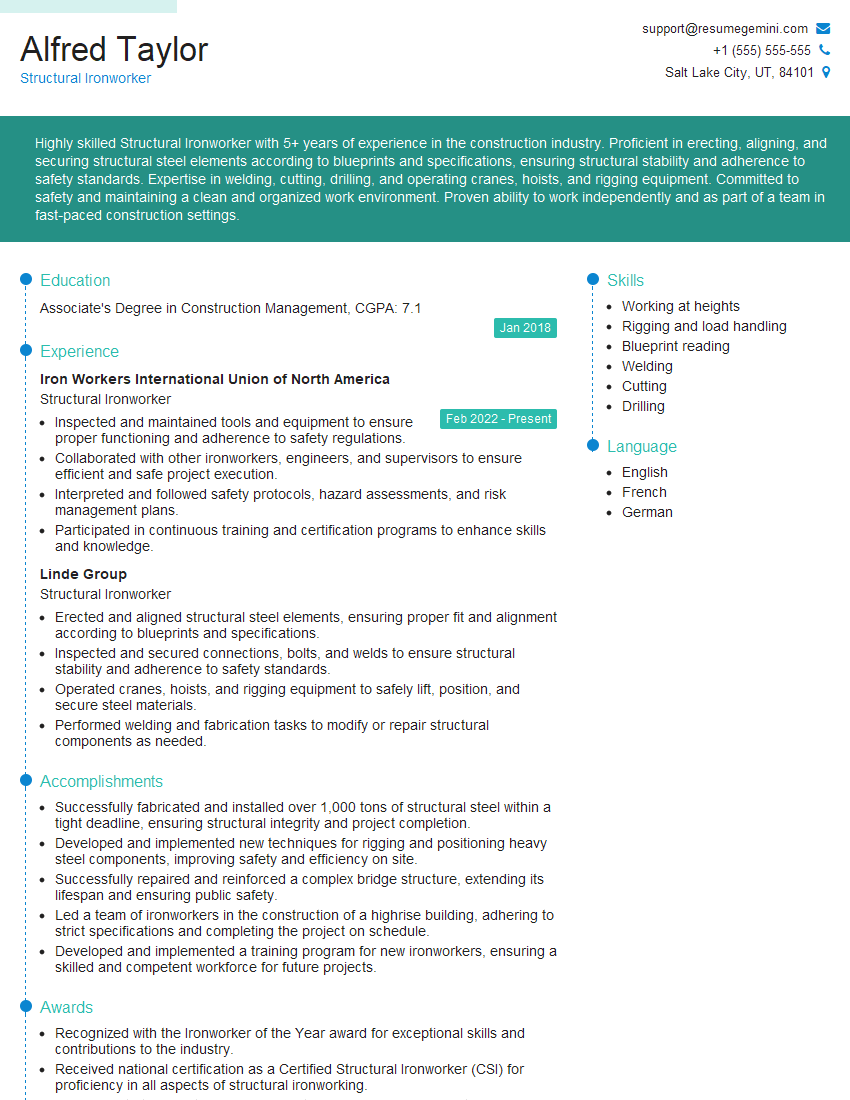
Structural Ironworker Resume Sample

Quality Control Inspector Resume Sample
- Construction Manager
- Concrete Foreman
- Construction Superintendent
- General Contractor
- Project Superintendent
- Project Engineer
- Structural Engineer
- Field Engineer
- Civil Engineering Technician
- Construction Inspector
- Building Contractor
- Construction Supervisor
- General Foreman
- Site Supervisor
- Concrete Finisher
- Mason
- Construction Worker
- Ironworker Foreman
- Structural Ironworker
- Quality Control Inspector
Explore more articles
Users Rating of Our Blogs
Share Your Experience
We value your feedback! Please rate our content and share your thoughts (optional).
What Readers Say About Our Blog
Very informative content, great job.
good