The right preparation can turn an interview into an opportunity to showcase your expertise. This guide to Tie Replacement interview questions is your ultimate resource, providing key insights and tips to help you ace your responses and stand out as a top candidate.
Questions Asked in Tie Replacement Interview
Q 1. Explain the process of visually inspecting a tie rod for wear and tear.
Visually inspecting tie rods for wear and tear is crucial for preventing accidents. You’re looking for signs of damage that could compromise steering control. Start by carefully examining the tie rod ends themselves.
- Look for cracks or pitting: These indicate metal fatigue and weakening of the rod.
- Check for boot damage: The rubber boot protects the internal components from dirt and moisture. Tears or missing boots expose these parts to contamination, leading to premature failure.
- Examine the threads: Look for any signs of bending, corrosion, or damage to the threads where the rod connects to the tie rod end. These are critical for proper connection and adjustment.
- Feel for play or looseness: Gently try to move the tie rod end at the connection points. Any excessive movement indicates wear and needs immediate attention. A small amount of play might be normal.
Remember to always inspect both inner and outer tie rod ends on both sides of the vehicle for a comprehensive assessment. If you find any of these issues, replacement is recommended to ensure safe vehicle operation.
Q 2. What tools are required for a typical tie rod replacement?
The tools needed for a tie rod replacement vary slightly depending on the vehicle, but generally include:
- Jack and jack stands: For safely lifting and supporting the vehicle.
- Wheel chocks: To prevent the vehicle from rolling.
- Lug wrench: To remove the wheels.
- Tie rod end puller: This specialized tool is essential for safely separating the tie rod end from the steering knuckle without damage.
- Wrench set: Various sizes are necessary to remove and install the tie rod and cotter pins.
- Torque wrench: This is crucial for tightening the tie rod to the correct specification, preventing damage and ensuring proper steering performance.
- Penetrating oil: Helps loosen corroded or seized parts.
- Measuring tape or ruler: For accurately determining the new tie rod length (if applicable, some are adjustable).
- Safety glasses and gloves: Always prioritize safety.
Q 3. Describe the procedure for disconnecting a tie rod end from the steering knuckle.
Disconnecting a tie rod end from the steering knuckle requires precision to avoid damage. This is where the tie rod end puller comes into play.
- Secure the vehicle: Properly lift and support the vehicle using a jack and jack stands. Ensure wheel chocks are in place.
- Remove the wheel: Use the lug wrench to remove the wheel for better access.
- Apply penetrating oil: Liberally apply penetrating oil to the tie rod end threads to loosen any corrosion.
- Position the tie rod end puller: Carefully attach the tie rod end puller according to the manufacturer’s instructions. Ensure it is securely clamped onto the tie rod end and steering knuckle.
- Slowly apply pressure: Gradually tighten the puller until the tie rod end separates from the knuckle. Avoid using excessive force, which could damage the parts.
- Remove the cotter pin and castle nut: Once separated, remove the cotter pin and carefully unscrew the castle nut. The cotter pin prevents the nut from loosening. Keep them safe for reassembly.
It’s important to note that some vehicles might require slightly different procedures, depending on the specific design. Always consult a repair manual specific to your vehicle model.
Q 4. How do you ensure proper alignment after tie rod replacement?
Ensuring proper alignment after a tie rod replacement is critical for safe and efficient driving. Improper alignment can lead to uneven tire wear, poor handling, and steering pull. This step usually requires specialized equipment and expertise.
After installing the new tie rod and tightening it to the correct torque specification, you must take the vehicle to a professional alignment shop. They will use a wheel alignment machine to measure the angles of the wheels and adjust them to the manufacturer’s specifications. This involves adjusting the tie rods as needed to achieve precise alignment. Neglecting this step could lead to serious problems.
Q 5. What are the safety precautions you take when working on tie rods?
Safety is paramount when working on tie rods. The steering system is crucial for vehicle control, and improper handling can lead to serious injury.
- Always use jack stands: Never rely solely on a jack to support the vehicle.
- Use wheel chocks: Prevents the vehicle from rolling during the repair.
- Wear safety glasses and gloves: Protects your eyes and hands from potential hazards.
- Follow the correct procedure: Never force parts or use improper tools, which could damage the system.
- Consult a repair manual: Familiarize yourself with the specific procedures for your vehicle.
- Never work under a vehicle without secure support: This is the most important rule for preventing serious injury.
If you are not comfortable performing this task, it’s always best to take your vehicle to a qualified mechanic.
Q 6. How do you determine the correct length for a replacement tie rod?
Determining the correct length for a replacement tie rod depends on the type of tie rod. Some are adjustable, others are fixed length.
For adjustable tie rods: Before removing the old tie rod, measure its length carefully using a measuring tape or ruler. Note the exact measurement, including any threads showing. This measurement should be used to guide the adjustment on the replacement tie rod. There will be markings on the adjustable tie rod to assist in setting the right length. Do not rely solely on the eye; use accurate measurements.
For non-adjustable tie rods: You’ll need to find the exact part number for your vehicle’s year, make, and model to ensure you receive the correct length tie rod. These are not adjustable and must be matched exactly to avoid alignment issues. Getting the wrong part is common cause for failure.
Always refer to your vehicle’s repair manual or consult a parts professional for assistance in selecting the correct tie rod.
Q 7. Explain the difference between inner and outer tie rod ends.
Inner and outer tie rod ends are both crucial components of the steering system, but their location and function differ slightly:
- Outer tie rod end: Located at the end of the tie rod, this connects to the steering knuckle. It directly affects the wheel’s turning angle.
- Inner tie rod end: Located closer to the steering gearbox, it connects to the steering linkage. It indirectly influences the wheel’s turning.
Think of it like a lever system: The outer tie rod end is the point where the force is applied (the wheel), and the inner tie rod end is the point of connection to the mechanism creating the force. Both are equally critical for correct steering, and failure of either can severely compromise steering control.
Q 8. Describe the symptoms of a worn or damaged tie rod.
Worn or damaged tie rods manifest in several ways, often impacting your vehicle’s steering and handling. Imagine the tie rod as a crucial link in a chain connecting your steering wheel to your wheels. If that link is weak, the entire system is compromised.
- Wandering or imprecise steering: The car might pull to one side, drift unpredictably, or require more effort to keep it going straight. This is often the first and most noticeable symptom.
- Uneven tire wear: A damaged tie rod can cause one tire to wear more rapidly than others due to improper alignment. This is a clear indication of underlying steering issues.
- Play or looseness in the steering: You might feel a ‘play’ or looseness in the steering wheel, particularly noticeable when maneuvering at low speeds. This is a sign of excessive movement in the tie rod joint.
- Knocking or clicking sounds: Worn tie rod ends can create a clicking or knocking sound, especially when turning the steering wheel or driving over bumps. This is often caused by the ball joint within the tie rod end becoming loose or damaged.
- Vibration in the steering wheel: A damaged tie rod can transmit vibrations from the road surface to the steering wheel, resulting in a noticeable shaking or vibration. This is particularly noticeable at higher speeds.
If you notice any of these symptoms, it’s crucial to have your vehicle inspected by a qualified mechanic as soon as possible. Driving with a faulty tie rod can be dangerous.
Q 9. What are the consequences of improper tie rod replacement?
Improper tie rod replacement can have severe consequences, potentially leading to dangerous driving conditions and costly repairs. Think of it like rebuilding a bridge with faulty materials – the consequences can be catastrophic.
- Loss of steering control: Incorrectly installed tie rods can result in complete loss of steering control, leading to accidents. Improper torque or alignment can cause the tie rod to separate from the steering knuckle or the rack.
- Premature tire wear: An incorrectly aligned front end will cause excessive and uneven tire wear, shortening their lifespan and increasing maintenance costs. This is due to improper alignment angles.
- Vehicle instability: A poorly installed tie rod will compromise the vehicle’s stability, making it difficult to handle, especially at higher speeds or during emergency maneuvers. This can increase the risk of skidding or rollovers.
- Further damage to steering components: Misaligned steering components can place stress on other parts of the steering system, causing premature wear and tear and ultimately leading to more expensive repairs down the line.
- Voiding warranties: Performing a repair improperly might void warranties on your vehicle’s steering system.
Proper installation is paramount, involving correct torque specifications, proper alignment, and the use of appropriate tools and techniques. Always refer to the vehicle’s service manual or consult with a qualified technician.
Q 10. How do you handle seized or corroded tie rod ends?
Dealing with seized or corroded tie rod ends requires patience and the right tools. Corrosion acts like glue, binding the parts together. We need to safely break that bond without damaging the surrounding components.
- Penetrating oil: The first step is to liberally apply a penetrating oil, like PB Blaster, to the affected area. Allow it to soak for several hours or even overnight to help loosen the corrosion.
- Heat: Carefully applying heat (using a heat gun or torch, but be cautious not to damage rubber components) can help expand the metal and break the corrosion bond. Always exercise extreme caution near flammable materials and use appropriate safety gear.
- Specialty tools: Tie rod end separators are designed to remove seized tie rod ends without damaging the components. These tools apply force to separate the tie rod end from the steering knuckle. Using the correct tools ensures a clean and precise removal.
- Cutting: In extreme cases, where the tie rod end is severely damaged or irretrievably seized, cutting may be necessary. This should only be done as a last resort and necessitates replacing the entire tie rod.
Remember safety first! Always wear appropriate safety glasses and gloves when working on seized components. If you’re unsure about any step, consult a professional mechanic.
Q 11. What are the common causes of tie rod failure?
Tie rod failure is usually a result of a combination of factors, often stemming from wear and tear and environmental conditions. Imagine it like the constant stress on a rope – eventually, it will break.
- Corrosion: Road salt and other environmental contaminants can cause significant corrosion, weakening the tie rod and its connections. This is especially prevalent in areas with harsh winters.
- Wear and tear: Regular use and stress on the tie rod, particularly during turning and maneuvering, can cause gradual wear and tear, ultimately leading to failure. This is a natural consequence of use.
- Impact damage: Hitting a pothole or curb can impart significant shock to the tie rod, potentially leading to damage or fracture. This is an example of sudden failure.
- Improper installation: Incorrect installation, such as using the wrong torque specifications or damaging the components during installation, can lead to early failure. Human error is a major factor in many failures.
- Lack of maintenance: Regular inspections and maintenance, including lubrication of tie rod ends, can extend the life of the tie rods. Neglecting maintenance invites premature failure.
Regular vehicle inspections are crucial to identifying potential issues before they cause serious problems. Prevention is far better than cure when it comes to tie rod failure.
Q 12. How do you verify the correct torque specification for tie rod end nuts?
Torque specifications for tie rod end nuts are critical for ensuring proper alignment and preventing premature failure. Using the wrong torque can lead to a loose connection or a damaged tie rod. Think of it like tightening a bolt – too loose, it’ll come undone; too tight, you’ll strip the threads.
The correct torque specification is always found in the vehicle’s repair manual. This manual provides detailed specifications for your particular make, model, and year. Never guess! Using a torque wrench calibrated to the correct specifications is crucial to ensure accurate tightening. Never rely on ‘feel’ – a torque wrench ensures consistency and accuracy.
Example: A particular vehicle might require 45 foot-pounds of torque on a specific tie rod end nut. Using a torque wrench to achieve this is non-negotiable. If the repair manual is missing, contacting a dealer or reputable repair shop is advisable. They will be able to provide you with the correct information.
Q 13. Describe the process of bleeding the power steering system after tie rod replacement.
Bleeding the power steering system after tie rod replacement is essential to remove any air bubbles that may have entered the system during the process. Air bubbles can restrict fluid flow and cause erratic steering. Imagine trying to pump water through a pipe with air bubbles – it won’t flow smoothly.
The bleeding procedure varies depending on the vehicle’s make and model. Consult the vehicle’s repair manual for detailed instructions. However, many systems require the following steps:
- Locate the bleeder valve: Typically found near the power steering pump or rack.
- Fill the power steering reservoir: Top off the reservoir to the correct level with the specified power steering fluid.
- Open the bleeder valve: Slowly open the bleeder valve while an assistant turns the steering wheel lock-to-lock several times. This helps circulate the fluid and remove trapped air.
- Close the bleeder valve: Once a steady stream of fluid, free of air bubbles, flows from the bleeder valve, close it tightly.
- Check fluid level: Top off the reservoir as needed and check for leaks.
If you encounter difficulty bleeding the system, consult the vehicle’s repair manual or seek professional assistance. An improperly bled system can affect steering performance and could potentially damage the power steering pump.
Q 14. How do you identify the correct replacement tie rod for a specific vehicle make and model?
Identifying the correct replacement tie rod is crucial for safety and proper vehicle function. Using an incorrect part can lead to misalignment, poor handling, and even accidents. Think of it like buying shoes – the wrong size won’t fit properly.
The most reliable way to identify the correct part is through your vehicle’s Vehicle Identification Number (VIN). Provide this number to a parts supplier. They can use the VIN to access a database containing the correct parts for your vehicle’s make, model, and year. This ensures you get a perfect fit.
Alternatively, you can use the vehicle’s make, model, year, and engine information to search online parts databases or catalogs. However, be very cautious using this method and verify the part’s compatibility before purchasing. Always check the specifications meticulously. Look for details such as thread size and length.
If unsure, it’s advisable to consult with a qualified mechanic or parts specialist to confirm that you have the correct replacement tie rod. Getting the wrong part can end up costing you more in the long run.
Q 15. What is the role of the tie rod in the vehicle’s steering system?
The tie rod is a critical component in a vehicle’s steering system. It connects the steering rack (or steering linkage in older systems) to the steering knuckle, which is attached to the wheel. Think of it like a crucial link in a chain. When you turn the steering wheel, the tie rod transmits that rotational movement into linear motion, causing the wheels to turn.
Essentially, the tie rod allows the steering rack’s movement to be translated into the turning of the wheels. Each wheel typically has two tie rods connected to it – an inner and an outer tie rod. The inner tie rod connects to the steering rack, while the outer tie rod connects the inner tie rod to the steering knuckle. These rods work together to precisely control the wheel angle.
Career Expert Tips:
- Ace those interviews! Prepare effectively by reviewing the Top 50 Most Common Interview Questions on ResumeGemini.
- Navigate your job search with confidence! Explore a wide range of Career Tips on ResumeGemini. Learn about common challenges and recommendations to overcome them.
- Craft the perfect resume! Master the Art of Resume Writing with ResumeGemini’s guide. Showcase your unique qualifications and achievements effectively.
- Don’t miss out on holiday savings! Build your dream resume with ResumeGemini’s ATS optimized templates.
Q 16. Explain the importance of using a torque wrench during tie rod replacement.
Using a torque wrench during tie rod replacement is absolutely paramount for safety and proper vehicle handling. The tie rod end must be tightened to the manufacturer’s specified torque. This is because the connections are critical for steering control. Over-tightening can easily strip the threads or damage the components, leading to premature failure. Under-tightening, on the other hand, will result in a loose connection, potentially causing dangerous play in the steering.
Imagine trying to steer a car with a wobbly wheel – that’s the risk of an improperly torqued tie rod. A torque wrench ensures precise tightening, eliminating guesswork and preventing these potentially disastrous outcomes. The correct torque specification for your specific vehicle can be found in the repair manual or online databases specific to vehicle make and model.
Q 17. What type of lubricant should be used on tie rod threads?
The appropriate lubricant for tie rod threads is a high-quality anti-seize compound. Never use regular grease. Anti-seize compound prevents corrosion and galling (metal-on-metal friction that damages threads) and allows for easier removal during future maintenance or repairs. Standard grease will attract dirt and grit, causing premature wear and potentially locking the threads in place.
A good anti-seize compound is specifically designed for this application, providing excellent protection against the elements and preventing seizing. Always ensure you’re using a product suitable for high-temperature and corrosive environments found under a vehicle.
Q 18. How do you dispose of used tie rods and other components responsibly?
Responsible disposal of used tie rods and other automotive components is crucial for environmental protection. Never simply discard them in the trash. Tie rods often contain metals that can contaminate the environment. The proper procedure is to take them to a local auto parts store, recycling center, or scrap metal yard that specializes in automotive recycling. Many will accept these parts for free or offer a small amount of compensation.
Some states and municipalities might have specific regulations regarding the disposal of automotive parts. It’s always advisable to check your local guidelines to ensure you are complying with all environmental regulations. Doing this helps contribute to sustainable practices within the automotive industry.
Q 19. What are the potential consequences of neglecting tie rod maintenance?
Neglecting tie rod maintenance can lead to several potentially dangerous consequences, directly impacting driver and passenger safety. Worn or damaged tie rods can cause excessive play in the steering, making it difficult or even impossible to control the vehicle’s direction. This might manifest as a loose or vague steering feel. This can lead to accidents, especially at higher speeds or in emergency maneuvers.
Further, a failing tie rod can cause uneven tire wear, reducing the lifespan of your tires and leading to potentially dangerous driving conditions. In extreme cases, a tie rod can completely fail, resulting in sudden and uncontrollable loss of steering. Regular inspections and timely replacement of worn tie rods are essential preventative measures.
Q 20. How do you troubleshoot a vehicle with a suspected tie rod problem?
Troubleshooting a vehicle with suspected tie rod problems often begins with a visual inspection. Look for any obvious signs of damage, such as bends, cracks, or excessive play in the tie rod ends. A simple way to check for play is to grab the tie rod end and try to move it. If you feel any significant movement, this could indicate a problem.
Next, a thorough road test is necessary. Pay close attention to steering feel and response. Excessive play or a vague feeling in the steering indicates a potential issue with the tie rods or other steering components. If the vehicle pulls to one side, it could point toward tie rod misalignment. If you find any issues during the inspection and road test, it’s best to take your vehicle to a qualified mechanic for a proper diagnosis and repair.
Q 21. Explain the relationship between tie rods and wheel alignment.
Tie rods and wheel alignment are inextricably linked. The tie rods are adjusted during a wheel alignment procedure to ensure the wheels are precisely pointed in the correct direction. Improperly adjusted tie rods will lead to inaccurate toe settings, resulting in poor handling, uneven tire wear, and potentially dangerous driving conditions. A misalignment can be subtle but can have significant impact on your vehicle’s ability to drive in a straight line, resulting in increased wear and tear on tires.
Therefore, during wheel alignment, a technician will adjust the tie rods to achieve the manufacturer’s recommended toe and camber settings, ensuring optimal steering responsiveness and handling. If the tie rods are damaged or worn, the alignment might not hold, even after adjustments.
Q 22. Describe the procedure for checking tie rod boot integrity.
Checking tie rod boot integrity is crucial for preventing premature failure of the tie rod end. A damaged boot allows contaminants like dirt, water, and grit to enter, leading to corrosion and premature wear of the internal components. The inspection process is straightforward but requires attention to detail.
- Visual Inspection: Carefully examine the entire boot for any signs of damage, including cracks, tears, cuts, bulges, or missing sections. Even small imperfections can compromise its effectiveness.
- Squeeze Test: Gently squeeze the boot to check for any softness or sponginess. This can indicate internal damage or lubricant leakage. A firm, intact boot should feel solid and resilient.
- Clamp Inspection: Check the clamps securing the boot to the tie rod end. Ensure they are properly tightened and show no signs of corrosion or damage. Loose clamps can allow the boot to slip off, rendering it useless.
- Lubricant Check (if accessible): In some cases, you can observe the lubricant inside the boot. Look for any discoloration, lack of lubricant, or presence of contaminants, all of which point towards a compromised boot.
Example: I once found a small, almost invisible crack in a tie rod boot during a routine inspection. Though seemingly insignificant, this tiny crack eventually led to significant damage and necessitated a premature tie rod replacement. This highlights the importance of thorough inspections.
Q 23. What are the different types of tie rod ends and their applications?
Tie rod ends come in several types, each suited to specific applications based on factors like vehicle weight, steering system design, and load requirements.
- Standard Tie Rod Ends: These are the most common type, utilizing a ball joint housed within a protective boot. They are suitable for a wide range of vehicles and applications.
- Heavy-Duty Tie Rod Ends: These are designed for heavier vehicles or applications with more significant stress, featuring reinforced components for increased durability and load-bearing capacity. Think heavy trucks or off-road vehicles.
- Adjustable Tie Rod Ends: These allow for fine-tuning of steering geometry during alignment procedures. They have a threaded component that permits length adjustment, making them essential for precise wheel alignment.
- Internally-Spaced Tie Rod Ends: Less common, these designs have the ball joint nestled within the tie rod itself, offering advantages in certain compact steering system designs.
Application Example: A standard tie rod end is perfectly adequate for a passenger car, while a heavy-duty version would be necessary for a large truck to withstand the increased forces imposed on the steering system.
Q 24. How do you interpret a wheel alignment report in relation to tie rod condition?
A wheel alignment report provides critical information about a vehicle’s steering geometry. By analyzing the report’s data, you can infer the condition of tie rods. Significant deviations from factory specifications often indicate problems.
- Toe: Excessive toe-in or toe-out can signal worn or damaged tie rod ends. This is especially true if the values are significantly different between the left and right sides.
- Camber: While not directly tied to tie rod condition, significant camber issues can sometimes indicate underlying problems in the suspension or steering system which might affect the tie rods indirectly.
- Caster: Similar to camber, caster issues might point towards problems that eventually impact tie rods.
Interpretation Example: If the alignment report shows significant toe-in on one side and toe-out on the other, it strongly suggests a problem with the tie rod ends, possibly stemming from wear and tear or damage.
Q 25. Explain the importance of using the correct specifications and parts.
Using the correct specifications and parts is paramount in ensuring safe and effective tie rod replacement. Incorrect parts can compromise the vehicle’s handling, stability, and overall safety.
- Part Number Verification: Always verify the part number against the vehicle’s specifications to ensure compatibility. Using incorrect components can lead to premature failure, poor alignment, and even accidents.
- Thread Pitch and Size: Incorrect thread pitch or size can prevent proper installation, leading to potential damage or even detachment of the tie rod end during operation.
- Material and Construction: Different tie rod ends are constructed from different materials, with varying strength and durability characteristics. Using inferior-quality parts can compromise the safety and lifespan of the system.
Consequences of Incorrect Parts: I once witnessed a case where incorrect tie rod ends were installed. The vehicle’s steering became loose and unpredictable, leading to a near-accident. This underscores the crucial importance of accurate part selection.
Q 26. Describe your experience with different types of steering systems and tie rod configurations.
My experience encompasses various steering system types and tie rod configurations. This includes working with rack and pinion systems (the most common type in modern vehicles), recirculating ball systems (found in older vehicles), and power steering systems (which can be combined with various steering system types).
Different steering systems have their own unique tie rod configurations, requiring specific knowledge of installation and alignment procedures. For example, rack and pinion systems often utilize inner and outer tie rods, while recirculating ball systems might have a different configuration altogether.
Example: I’ve worked on vehicles ranging from classic cars with recirculating ball systems to modern vehicles with electric power steering and rack and pinion systems, always adapting my approach to the specific configuration.
Q 27. Have you ever encountered a tie rod replacement that presented unusual challenges? How did you overcome them?
I once encountered a severely corroded tie rod end that was practically fused to the steering knuckle. Standard removal tools were ineffective due to the extent of the corrosion.
Overcoming the Challenge: I employed a combination of techniques: First, I liberally applied penetrating oil and allowed it to soak for several hours. Then, I used a combination of heat (carefully applied to avoid damage to surrounding components) and specialized extraction tools to gradually loosen the seized connection. This approach, coupled with patience and precision, finally allowed me to remove the damaged tie rod end without causing further harm.
Q 28. How do you stay updated on the latest techniques and best practices for tie rod replacement?
Staying current in this field is crucial. I utilize a multi-pronged approach to keep my knowledge sharp.
- Manufacturer Training: Attending manufacturer-sponsored training sessions on new vehicle technologies and repair procedures helps me stay abreast of the latest advancements.
- Industry Publications and Journals: I regularly review automotive repair journals and online resources that publish updates on best practices and new techniques.
- Online Courses and Webinars: Engaging with online learning platforms keeps me informed about emerging repair methods and technologies.
- Professional Networking: Participating in workshops and conferences, and networking with other mechanics allows me to learn from shared experiences and best practices.
Key Topics to Learn for Tie Replacement Interview
- Understanding Tie Replacement Systems: Explore the different types of tie replacement systems available, their functionalities, and their applications in various industries.
- Material Selection and Properties: Learn about the different materials used in tie replacement and how their properties (strength, durability, flexibility, etc.) influence the design and performance of the system.
- Design and Engineering Principles: Understand the fundamental engineering principles behind designing efficient and reliable tie replacement systems, including stress analysis, fatigue life, and failure modes.
- Installation and Maintenance Procedures: Familiarize yourself with the standard procedures for installing and maintaining tie replacement systems, including safety protocols and troubleshooting common issues.
- Cost-Benefit Analysis and Optimization: Learn how to evaluate the cost-effectiveness of different tie replacement solutions and optimize designs for maximum efficiency and minimal cost.
- Troubleshooting and Problem-Solving: Develop your ability to diagnose and solve problems related to tie replacement systems, including identifying root causes and implementing effective solutions.
- Industry Standards and Regulations: Become familiar with relevant industry standards, safety regulations, and best practices related to tie replacement in your specific field.
- Emerging Technologies and Trends: Research advancements in materials, techniques, and technologies related to tie replacement to showcase your awareness of industry innovations.
Next Steps
Mastering tie replacement knowledge significantly enhances your career prospects in engineering, manufacturing, and related fields. It demonstrates a strong understanding of practical applications and problem-solving skills highly valued by employers. To maximize your job search success, focus on creating an ATS-friendly resume that effectively highlights your skills and experience. ResumeGemini is a trusted resource to help you build a professional and impactful resume that catches the eye of recruiters. Examples of resumes tailored to Tie Replacement are available within ResumeGemini to guide you.
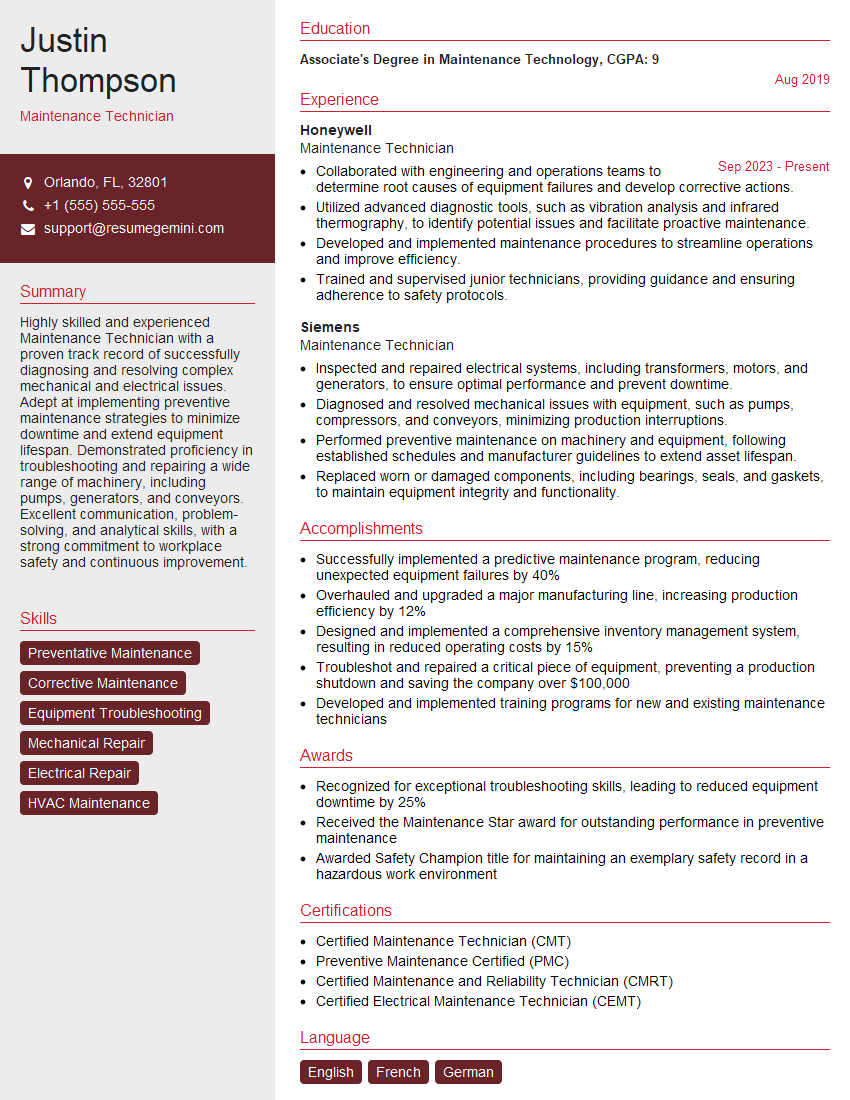
Maintenance Technician Resume Sample

Field Service Technician Resume Sample

Manufacturing Technician Resume Sample
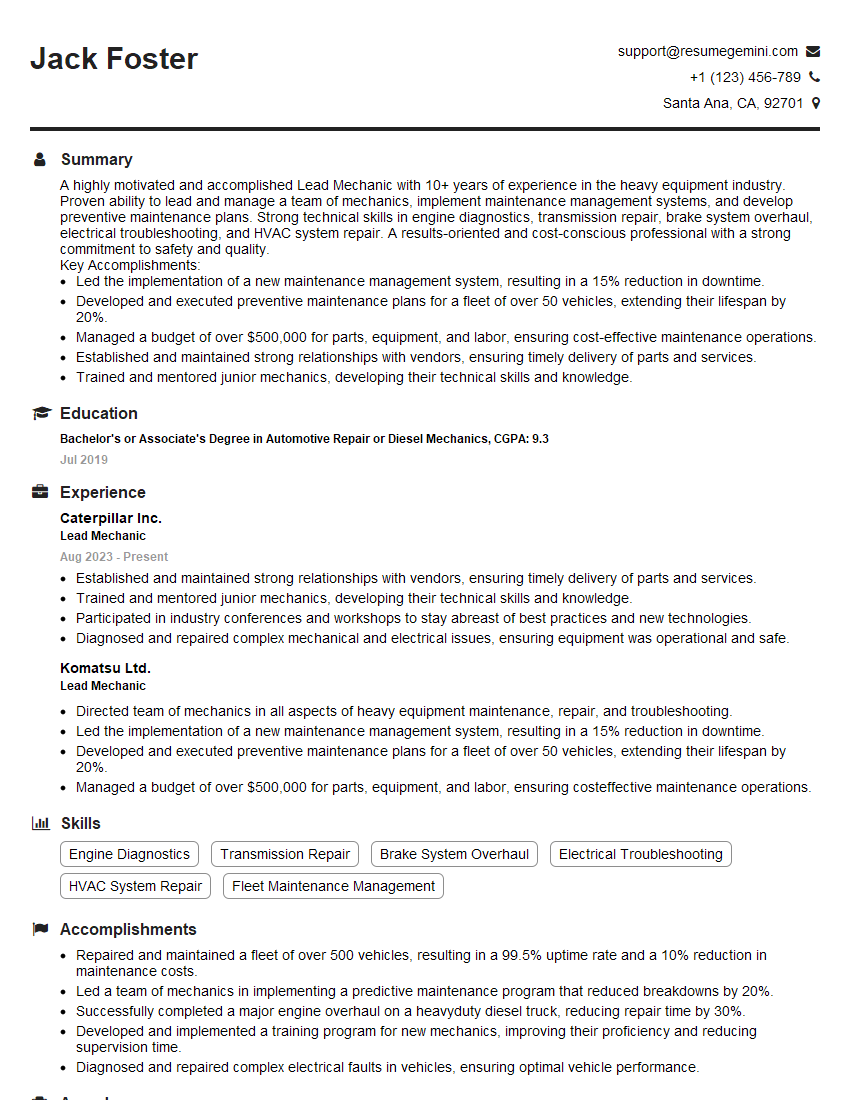
Lead Mechanic Resume Sample
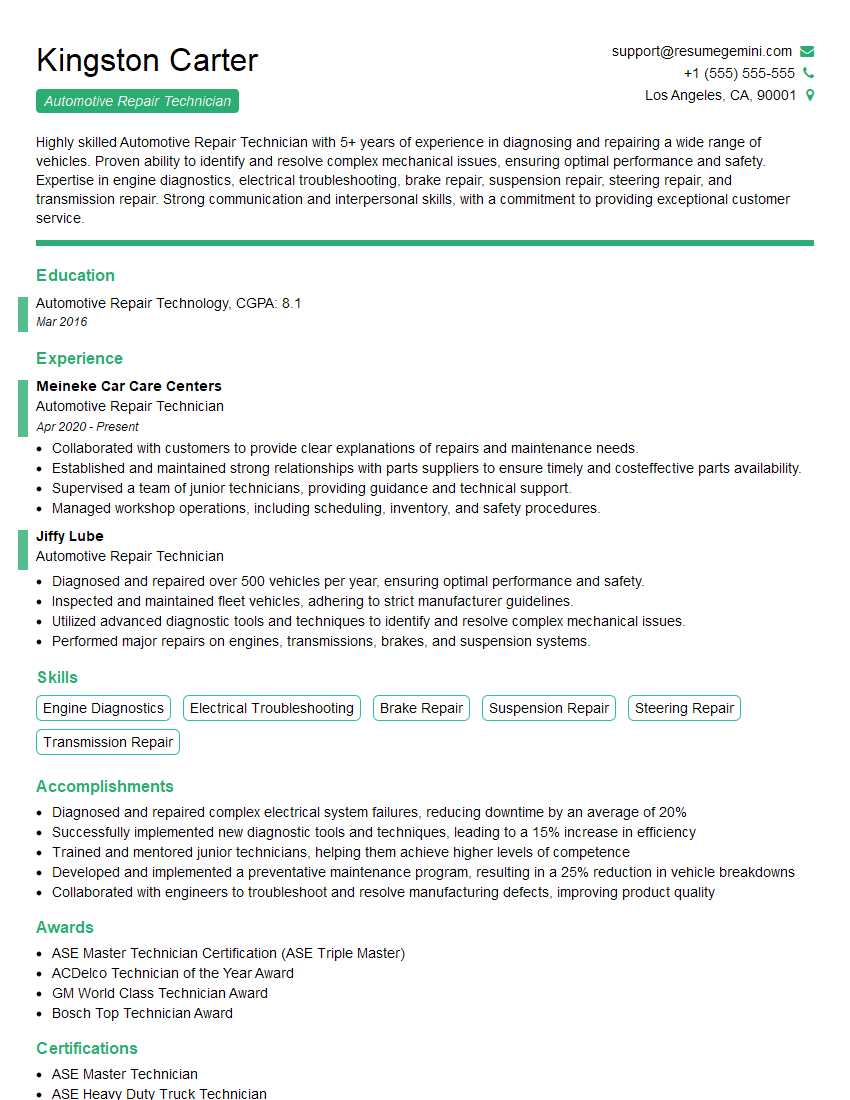
Automotive Repair Technician Resume Sample

Automotive Service Technician Resume Sample
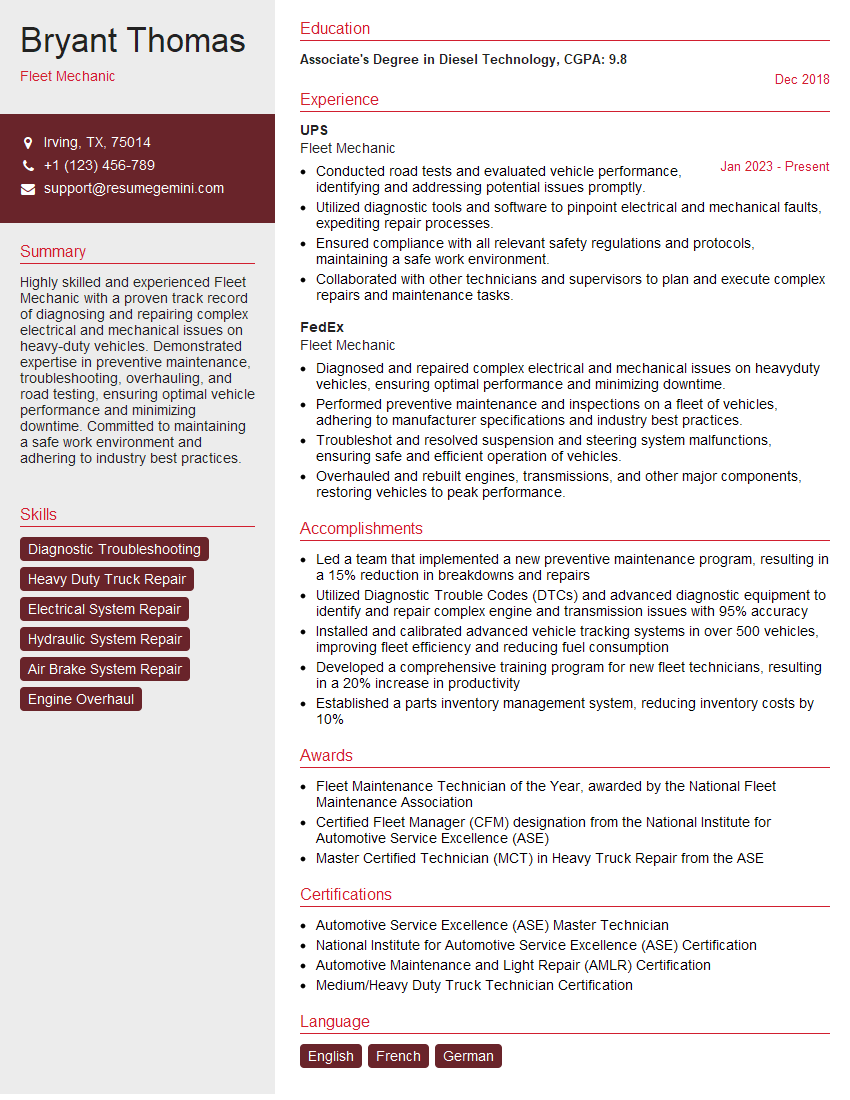
Fleet Mechanic Resume Sample
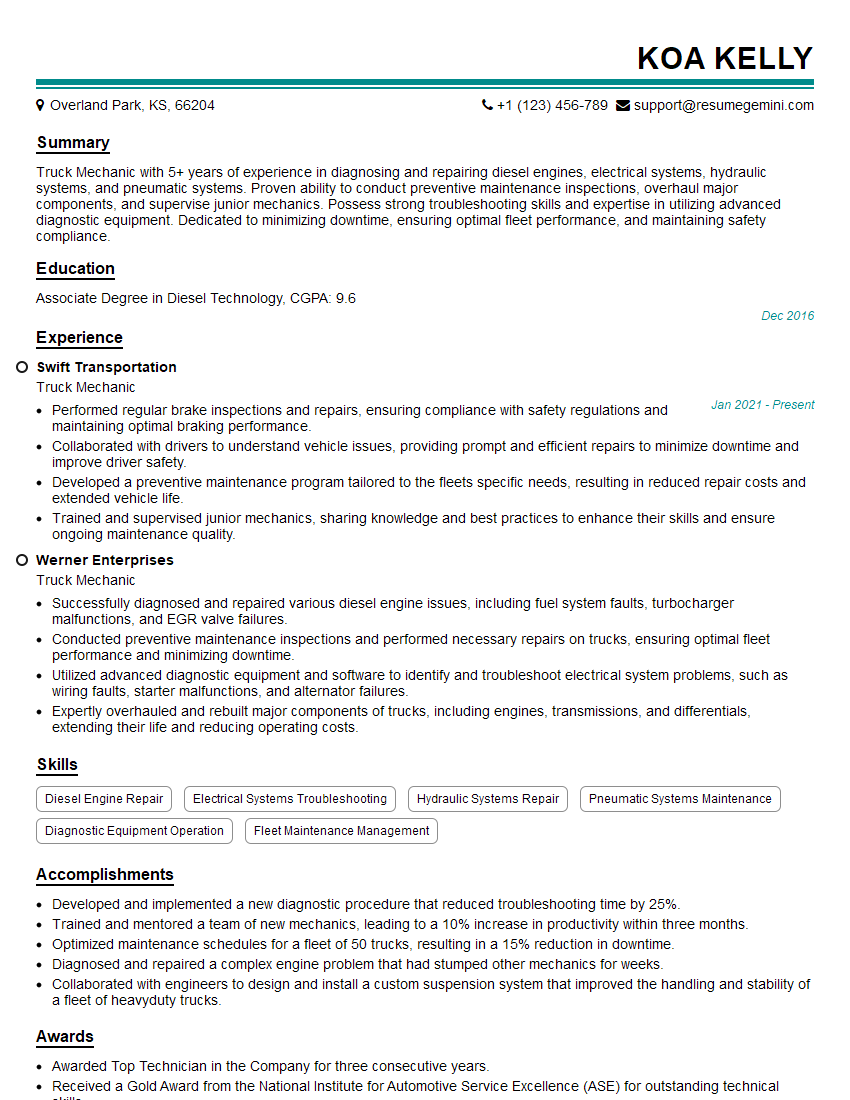
Truck Mechanic Resume Sample
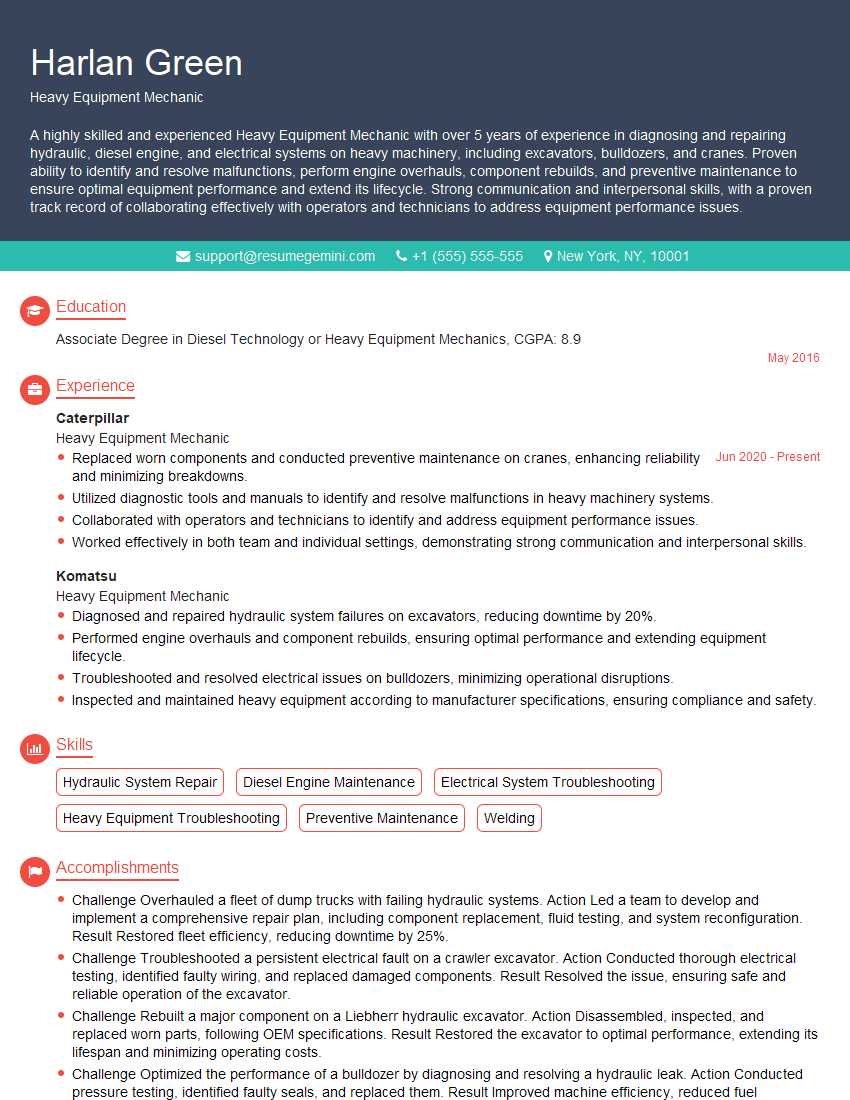
Heavy Equipment Mechanic Resume Sample

Master Mechanic Resume Sample
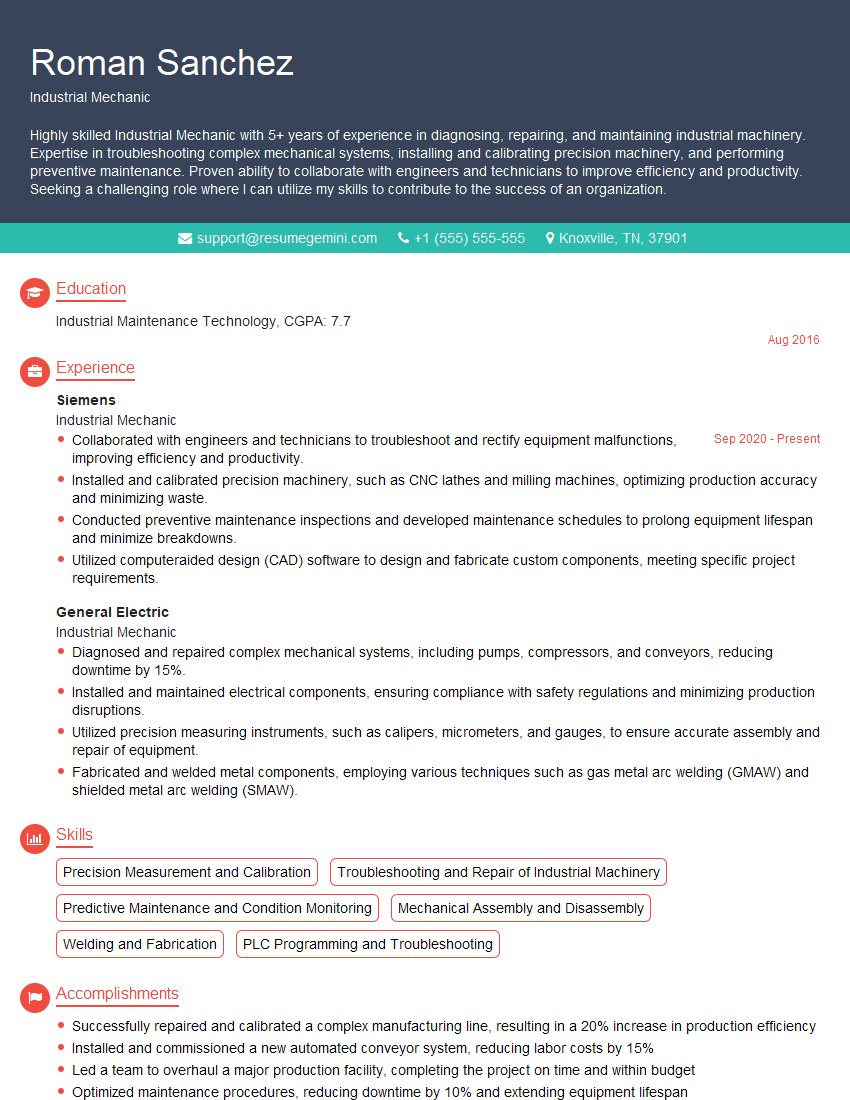
Industrial Mechanic Resume Sample

Quality Control Inspector Resume Sample
Explore more articles
Users Rating of Our Blogs
Share Your Experience
We value your feedback! Please rate our content and share your thoughts (optional).
What Readers Say About Our Blog
Very informative content, great job.
good