Are you ready to stand out in your next interview? Understanding and preparing for Tie Tamping Machine Operation interview questions is a game-changer. In this blog, we’ve compiled key questions and expert advice to help you showcase your skills with confidence and precision. Let’s get started on your journey to acing the interview.
Questions Asked in Tie Tamping Machine Operation Interview
Q 1. Describe the different types of tie tamping machines.
Tie tamping machines come in various types, primarily categorized by their power source and tamping method. The most common are:
- Hydraulic Tie Tamping Machines: These are widely used and rely on hydraulic power to drive the tamping heads. They offer a good balance of power and maneuverability. Think of them as the ‘workhorses’ of the industry.
- Pneumatic Tie Tamping Machines: These use compressed air to power the tamping mechanism. They are often lighter and more portable than hydraulic machines, suitable for smaller projects or less accessible areas. They are like the ‘smaller, more agile’ members of the team.
- Electric Tie Tamping Machines: These newer machines utilize electric motors, offering environmentally friendly operation and potentially reduced noise levels. They are the ‘eco-friendly’ choice, gaining popularity.
- Manually Operated Tie Tamping Machines: While less common in large-scale operations, these are smaller, simpler tools used for spot repairs or in situations where larger machines are impractical. These are like the ‘handyman’ tools for small fixes.
The choice of machine depends on factors like project size, track conditions, accessibility, and environmental concerns.
Q 2. Explain the process of tie tamping.
Tie tamping is the process of compacting the ballast (the crushed stone surrounding the railway ties) to ensure proper track alignment and stability. It’s like giving the track a solid foundation. The process typically involves these steps:
- Positioning: The machine is positioned alongside the track section requiring tamping.
- Lifting: The machine lifts the track slightly, using its lifting mechanisms.
- Tamping: The tamping heads, equipped with precisely controlled hammers or tampers, compact the ballast under and around the ties, eliminating voids and ensuring even support.
- Lowering: The machine carefully lowers the track back down onto the compacted ballast.
- Leveling: Some machines also incorporate leveling features to ensure the track is perfectly aligned and level.
The entire process is precisely controlled to avoid damaging the ties or track structure. Think of it like carefully packing sand around a foundation to ensure its stability.
Q 3. What are the safety procedures for operating a tie tamping machine?
Safety is paramount when operating a tie tamping machine. Key safety procedures include:
- Thorough Pre-Operational Inspection: Check all components for damage or wear before starting. This is crucial to prevent accidents.
- Proper Training and Certification: Operators must receive comprehensive training on machine operation and safety procedures. Only trained personnel are allowed to operate the equipment.
- Protective Gear: Always wear appropriate personal protective equipment (PPE), including safety glasses, hearing protection, gloves, and steel-toed boots.
- Clear Communication: Maintain clear communication with other workers on the track, using established safety protocols. This prevents collisions and ensures everyone is aware of the ongoing work.
- Emergency Shutdown Procedures: Understand and practice emergency shutdown procedures in case of malfunction or accident.
- Awareness of Surroundings: Be constantly aware of the surrounding environment and potential hazards. Observe speed limits, warning signs, and any other safety guidelines.
Following these procedures significantly reduces the risk of accidents and injuries during operation.
Q 4. How do you identify and address common problems encountered during operation?
Common problems encountered during tie tamping operations often involve mechanical issues or improper ballast conditions. Here’s how to address them:
- Hydraulic Leaks: Inspect hydraulic lines and fittings for leaks. Repair or replace damaged components immediately. Leaks are usually identified by visual inspection of the hydraulic lines.
- Malfunctioning Tamping Heads: Check for worn or damaged tamping heads and replace them as necessary. Damaged heads often lead to uneven tamping.
- Uneven Ballast: Assess ballast depth and distribution, correcting any inconsistencies. This may require additional ballast or removal of excess material. This is crucial for a smooth rail track.
- Track Misalignment: Use appropriate tools and techniques to realign the track, ensuring proper gauge and level. This is often identified through visual inspection or using a track gauge.
- Power Issues: Check power sources (hydraulic, pneumatic, or electric) for any faults. This will often require checking fuses, wiring, or the pressure of hydraulic fluid or air.
Regular maintenance and proactive problem-solving are crucial for efficient and safe tie tamping operations.
Q 5. What is the importance of proper ballast maintenance?
Proper ballast maintenance is crucial for maintaining track stability, ensuring safe train operation, and extending the lifespan of the railway infrastructure. Neglecting ballast maintenance can lead to track settlement, misalignment, and ultimately, derailments. Proper ballast ensures that the railway ties have a firm and even base.
Think of it as the foundation of a house: a poorly maintained foundation leads to structural issues. Similarly, poor ballast leads to instability in the railway tracks.
Q 6. Describe the different types of ballast used in track maintenance.
Various types of ballast are used in track maintenance, each with its own properties and advantages:
- Crushed Stone: The most common type, offering good drainage, strength, and durability. Different stone types are used depending on the local availability and the required strength.
- Gravel: Used in some areas but generally less durable than crushed stone, offering better drainage in some conditions.
- Recycled Ballast: Environmentally friendly option, using processed materials from older ballast, reducing the need for new material.
- Stabilized Ballast: Ballast mixed with stabilizing agents to improve its strength and longevity, often used in high-traffic areas.
The selection of ballast depends on factors like the climate, soil conditions, and traffic volume.
Q 7. What are the key performance indicators (KPIs) for tie tamping operations?
Key Performance Indicators (KPIs) for tie tamping operations focus on efficiency, quality, and safety:
- Tamping Rate: The number of ties tamped per hour or per day, reflecting operational efficiency.
- Track Alignment Accuracy: Measured using precise instruments, indicating the quality of the tamping work.
- Ballast Leveling Consistency: Assesses the uniformity of ballast compaction and track level across the tamped section.
- Downtime: The amount of time the machine is out of service due to maintenance or repairs. Less downtime means more productivity.
- Safety Incidents: Number of accidents or near-misses during operations, a critical indicator of safety performance.
- Cost per Tie Tampered: Total cost divided by the number of ties tamped, providing a measure of cost-effectiveness.
Regular monitoring of these KPIs is vital for optimizing operations and improving overall track maintenance efficiency and safety.
Q 8. How do you ensure the accuracy and efficiency of the tie tamping process?
Ensuring accuracy and efficiency in tie tamping hinges on a multi-pronged approach. It’s not just about the machine; it’s about the entire process, from preparation to post-tamping inspection.
- Proper Machine Setup: Before starting, carefully align the machine with the track, ensuring the tampers are positioned correctly relative to the ties. Incorrect alignment can lead to uneven tamping and potential damage.
- Consistent Tamping Pressure: Modern machines allow for precise control of tamping pressure. Regularly monitor the pressure gauges and make adjustments as needed to maintain consistency across all ties. Too much pressure can damage the ties, while too little leaves them insufficiently compacted.
- Regular Calibration and Maintenance: Preventative maintenance and regular calibration checks are crucial. A machine that’s not properly maintained won’t tamp accurately and consistently, potentially leading to future track problems. Think of it like a finely tuned instrument – regular maintenance keeps it playing perfectly.
- Experienced Operator: A skilled operator is essential. Their experience allows them to identify and correct issues before they become significant problems. They can anticipate potential issues based on the track condition and adjust the tamping process accordingly.
- Post-Tamping Inspection: After tamping, a thorough inspection ensures the work meets standards. This includes checking for alignment, proper tie seating, and the absence of any damage. This final check helps identify any issues that might have been missed during the tamping process.
For example, on a recent project, we noticed inconsistent tamping due to a slightly misaligned machine. By realigning and recalibrating the machine, we were able to achieve the required compaction levels and ensure the long-term stability of the track.
Q 9. Explain the role of the tamper’s lifting mechanism.
The lifting mechanism is the backbone of the tie tamping machine, responsible for raising and lowering the tampers. It’s a complex system typically involving hydraulic cylinders or a combination of hydraulics and mechanical linkages.
- Precise Positioning: The mechanism precisely positions the tampers above the ties, ensuring accurate and even tamping. Any imprecision here will result in uneven compaction.
- Controlled Movement: It allows for smooth and controlled movement of the tampers, preventing abrupt shocks that could damage the ties or the machine itself.
- Force Application: The lifting mechanism contributes to the force applied during tamping by supporting the weight of the tampers and ensuring they maintain contact with the ties throughout the process.
- Safety Features: Many modern systems incorporate safety features that prevent accidental lowering or other hazards.
Imagine it like a crane lifting a heavy load – it needs to be powerful, precise, and safe to operate. The lifting mechanism plays a similar vital role in the tie tamping machine.
Q 10. What are the limitations of a tie tamping machine?
Tie tamping machines, while highly efficient, are not without their limitations.
- Accessibility: They may struggle to access tight curves or areas with limited space. The machine’s size and turning radius can restrict its operation in certain environments.
- Ground Conditions: Extreme terrain such as soft ground or uneven ballast can impact the machine’s effectiveness and even cause damage.
- Weather Conditions: Adverse weather, such as heavy rain or snow, can make operation difficult or impossible. Wet ballast can significantly reduce tamping efficiency.
- Maintenance Requirements: They are complex machines requiring regular and meticulous maintenance. Neglecting maintenance can lead to downtime and reduced efficiency.
- Cost: Both the initial purchase cost and the ongoing maintenance expenses can be substantial.
For example, we once encountered difficulty tamping in a sharp curve due to the machine’s limited turning radius. We had to employ a smaller, more maneuverable machine to complete that section of the track.
Q 11. How do you maintain a tie tamping machine?
Maintaining a tie tamping machine is crucial for its longevity and operational efficiency. It involves a combination of regular inspections, preventative maintenance, and prompt repairs.
- Regular Lubrication: Regular lubrication of moving parts is essential to reduce friction and wear. This includes hydraulic cylinders, bearings, and other components.
- Fluid Level Checks: Hydraulic fluid levels must be checked and topped off regularly. Low fluid levels can lead to reduced performance and potential damage.
- Component Inspections: Regular visual inspections are critical to identify any signs of wear, damage, or leaks. This should include checking hoses, belts, and other critical components.
- Cleaning: Keeping the machine clean removes dirt and debris that can cause damage or impede its operation.
- Scheduled Maintenance: A detailed maintenance schedule should be followed, including tasks like filter changes, hydraulic system flushes, and more comprehensive inspections.
Think of it like a car – regular maintenance extends its lifespan and prevents costly repairs down the line. The same applies to tie tamping machines.
Q 12. What are the preventive maintenance checks for a tie tamping machine?
Preventive maintenance checks are the cornerstone of keeping a tie tamping machine in top condition. These checks should be performed before each use and as part of a regular maintenance schedule.
- Hydraulic System Check: Inspect fluid levels, check for leaks, and verify proper operation of hydraulic cylinders and pumps.
- Engine Check: Inspect oil levels, coolant levels, and check for any leaks or unusual noises.
- Electrical System Check: Inspect wiring, connectors, and controls for any damage or loose connections.
- Brake System Check: Verify proper function of the braking system.
- Tamper Condition: Check for wear and tear on the tampers themselves, replacing or repairing damaged components as needed.
- Safety System Check: Test all safety systems, such as emergency stops and warning lights.
By performing these routine checks, you can proactively identify and address potential problems before they escalate into costly repairs or dangerous malfunctions.
Q 13. Describe the components of a tie tamping machine and their functions.
A tie tamping machine is a complex piece of equipment with several key components working together.
- Chassis: The main frame of the machine, providing structural support for all other components.
- Engine: Provides the power for the machine’s operation. This could be a diesel engine or other suitable power source.
- Hydraulic System: The heart of the machine, providing the hydraulic power for lifting, lowering, and operating the tampers.
- Lifting Mechanism: Raises and lowers the tampers, ensuring accurate positioning above the ties.
- Tampers: The actual tamping elements, designed to compact the ballast around the ties.
- Control System: Allows the operator to control the machine’s functions and monitor its performance. This includes levers, buttons, and digital displays.
- Undercarriage: The wheels or tracks that allow the machine to move along the railway track.
Each component plays a crucial role, and any malfunction can significantly impact the efficiency and safety of the tamping operation. It’s a carefully orchestrated system working in harmony to achieve precise and efficient tie tamping.
Q 14. How do you perform a pre-operational inspection of a tie tamping machine?
A pre-operational inspection is a critical step before operating a tie tamping machine. It’s a systematic check to ensure the machine is safe and ready for use.
- Visual Inspection: Begin with a thorough visual inspection of the entire machine, checking for any obvious damage, leaks, or loose parts. Pay close attention to hoses, belts, and wiring.
- Fluid Level Checks: Check the levels of engine oil, hydraulic fluid, coolant, and fuel. Low levels should be addressed before operation.
- Hydraulic System Test: Test the hydraulic system by operating the lifting mechanism and checking for smooth and controlled movement. Listen for any unusual noises.
- Brake Test: Test the braking system to ensure it functions correctly.
- Engine Start-Up: Start the engine and let it run for a few minutes, checking for any unusual noises or vibrations.
- Safety System Check: Verify that all safety systems are functional, including emergency stops and warning lights.
A pre-operational inspection is not just a checklist; it’s a commitment to safety. A few extra minutes spent on this inspection can prevent serious accidents and costly repairs later on.
Q 15. What are the environmental considerations for tie tamping operations?
Environmental considerations in tie tamping are crucial for responsible railway maintenance. We must minimize noise pollution, which can be significant due to the machinery’s operation. This often involves working during off-peak hours and potentially utilizing noise-reduction techniques. We also need to manage dust and particulate matter generated during the tamping process. This can be addressed through water spraying during operation and careful cleanup afterward. Finally, we must be mindful of potential soil erosion and habitat disruption, requiring careful planning and restoration efforts in affected areas. For example, we might implement measures to prevent soil compaction beyond the immediate work area.
Minimizing environmental impact is not just about regulations; it’s about being good stewards of the environment and ensuring the long-term sustainability of our railway infrastructure.
Career Expert Tips:
- Ace those interviews! Prepare effectively by reviewing the Top 50 Most Common Interview Questions on ResumeGemini.
- Navigate your job search with confidence! Explore a wide range of Career Tips on ResumeGemini. Learn about common challenges and recommendations to overcome them.
- Craft the perfect resume! Master the Art of Resume Writing with ResumeGemini’s guide. Showcase your unique qualifications and achievements effectively.
- Don’t miss out on holiday savings! Build your dream resume with ResumeGemini’s ATS optimized templates.
Q 16. Explain the concept of track geometry and its relevance to tie tamping.
Track geometry refers to the precise alignment and level of the railway track. It encompasses several key parameters including track gauge (distance between rails), cross-level (difference in elevation between rails), alignment (straightness or curvature), and surface irregularities. Maintaining accurate track geometry is vital for safe and efficient train operation. Tie tamping directly impacts track geometry because it precisely adjusts the ballast (crushed stone) supporting the sleepers (ties), correcting irregularities and ensuring proper support for the rails. Poor track geometry leads to increased wear and tear on rolling stock, reduced speeds, and potentially derailments. Effective tie tamping contributes to a smooth, stable track, improving train dynamics and passenger comfort.
Think of it like building a sturdy foundation for a house. If the foundation is uneven, the whole house will suffer. Similarly, if the track geometry is poor, the train’s ride will be uncomfortable, and the track will deteriorate faster.
Q 17. How do you use the controls to adjust the tampers’ performance?
Modern tie tamping machines offer sophisticated control systems to adjust the tamping process. These controls typically allow for precise adjustments to the lifting height of the tamper heads, the tamping force applied, the speed of operation, and the number of lifts per tie. For example, I might reduce the tamping force in areas with softer ballast to avoid over-compaction, or increase the lifting height when dealing with large irregularities. The control panel usually features digital displays showing real-time operational parameters and diagnostic information, allowing for constant monitoring and fine-tuning. Experienced operators learn to use these controls intuitively, reacting to changes in track conditions in real-time. Safe and effective operation requires a good understanding of the machine’s capabilities and careful calibration based on the specific track conditions and the type of ballast used.
Q 18. What are the different modes of operation for a tie tamping machine?
Tie tamping machines offer several operational modes to adapt to different situations. These often include:
- Automatic Mode: The machine automatically tamp the ballast based on pre-set parameters and sensors that detect track irregularities. This is most efficient for long stretches of track requiring consistent tamping.
- Manual Mode: The operator has direct control over the tamping process, allowing for more precise adjustments in areas with complex problems or where higher precision is needed.
- Lift Mode: This mode is used for lifting and leveling ties without applying full tamping force, usually useful for initial lifting of poorly supported ties before full tamping.
- Shoulder Tamping Mode: This focuses on tamping the ballast around the edges of the ties to enhance lateral stability.
The choice of mode depends on the track’s condition and the specific tasks needed. A combination of modes may also be used within a single operation.
Q 19. How do you deal with unexpected issues or malfunctions during operation?
Unexpected issues can arise during tie tamping operations. These can range from minor problems like a malfunctioning sensor to more serious issues such as hydraulic leaks or mechanical breakdowns. My immediate response depends on the nature and severity of the issue. For minor issues like sensor errors, I’d first attempt troubleshooting using the machine’s diagnostic system and operator manuals. If a problem persists, I would consult experienced colleagues or contact maintenance support. For more significant malfunctions, safety is paramount. I would immediately shut down the machine, secure the area to prevent accidents, and inform the supervisor and maintenance crew.
For instance, if I noticed a significant hydraulic leak, I’d immediately stop the machine, activate safety mechanisms, and assess the severity of the leak before taking further steps. My experience allows me to prioritize effective problem-solving and safety measures.
Q 20. Describe the procedures for handling a breakdown or malfunction.
Procedures for handling breakdowns follow a structured approach. First, the machine must be safely shut down and isolated to prevent further damage or injuries. The exact steps depend on the type of machine and the specific problem. Next, a thorough assessment of the malfunction is crucial to determine the cause. This might involve visual inspection, diagnostic checks, or consultation with maintenance personnel. Once the problem is identified, appropriate repair steps are taken, either by the on-site crew if equipped and trained, or by waiting for specialized support. Comprehensive documentation of the breakdown, repair procedures, and any parts replaced is essential for maintenance records and future analysis.
Safety briefings and regular training refreshers are essential to ensure that all crew members are proficient in handling malfunctions and maintaining operational safety.
Q 21. How do you communicate effectively with other members of the track maintenance crew?
Effective communication is vital within the track maintenance crew. We utilize a combination of methods, including:
- Radio Communication: For immediate updates, instructions, and reporting of issues on the track. Clear and concise language is key to avoid misunderstandings.
- Pre-Job Briefings: Before starting work, the crew goes over the day’s plan, potential hazards, and communication protocols.
- Visual Signals: Hand signals are used to coordinate machine movements and to ensure safety when working near the track.
- Post-Job Debriefings: After completion, we discuss learnings, potential improvements, and any issues encountered. This helps improve efficiency and safety for future operations.
Clear and concise communication, active listening, and respect for others’ roles are crucial for ensuring a safe and productive work environment. Open communication fosters teamwork and allows for quick responses to unforeseen challenges.
Q 22. What are the regulatory requirements and safety standards for operating a tie tamping machine?
Operating a tie tamping machine is governed by stringent safety regulations and standards. These vary depending on the country and specific railway authority, but generally encompass aspects of machine operation, personal protective equipment (PPE), and workplace safety. Key regulations often include adherence to speed limits, proper signal procedures, and lockout/tagout procedures for maintenance. Specific standards address the machine’s operational parameters, like lift height, tamping pressure, and the presence of safety guards and interlocks.
For example, in many jurisdictions, operators must undergo comprehensive training and certification demonstrating competency in machine operation and safety protocols. Failure to comply can result in significant penalties, including fines and operational suspensions.
Specific safety standards frequently address:
- Personal Protective Equipment (PPE): This includes hard hats, safety glasses, high-visibility clothing, hearing protection, and steel-toed boots.
- Machine Inspections: Daily pre-operational checks are mandatory to ensure the machine is in safe working order, identifying any potential mechanical issues before starting work.
- Emergency Procedures: Operators must be well-versed in emergency protocols, such as what to do in case of a machine malfunction or injury.
- Track Safety: Understanding and adhering to track-related safety procedures, such as appropriate warning systems and flagging procedures, are crucial.
Q 23. How do you ensure compliance with safety regulations and company policies?
Compliance with safety regulations and company policies is paramount in my work. I achieve this through a multi-faceted approach that starts with thorough training and continues through diligent daily practice.
Firstly, I ensure I fully understand and adhere to all relevant regulations and company safety manuals. This understanding informs my every action on the job site. I routinely participate in safety training programs and refresher courses to stay up-to-date on the latest regulations and best practices.
Secondly, I perform a comprehensive pre-operation inspection of the machine each day, meticulously checking all components for wear and tear or potential malfunctions. This preventative maintenance reduces the risk of accidents and equipment failure.
Thirdly, I strictly follow all lockout/tagout procedures during maintenance and repairs, ensuring the machine is safely shut down before any work begins. I consistently communicate safety concerns to my supervisor and team, fostering a culture of safety awareness within our work environment. Regular communication about any safety issues helps prevent accidents and promotes a safe work environment for everyone.
Q 24. What is your experience with different types of track structures?
My experience encompasses a wide range of track structures, including ballasted track with various ballast types (e.g., crushed stone, gravel), and slab track. I’m familiar with different sleeper types – concrete, wooden, and composite – and their impact on tamping operations. The type of track significantly influences the tamping parameters. For example, ballasted track requires attention to ballast profile and compaction, while slab track focuses more on precise alignment and leveling.
I’ve worked on tracks with varying degrees of curvature and gradient, each presenting unique challenges in achieving optimal track geometry. I understand the implications of different track gauges and the need to adjust tamping procedures accordingly. For instance, heavier rail sections require different tamping techniques and pressures compared to lighter sections. My experience also covers tracks in various states of repair, ranging from new installations to heavily worn sections requiring significant remediation.
Q 25. How do you interpret and act upon data from track geometry measurements?
Track geometry measurements provide crucial data for assessing track quality and informing tamping strategies. I’m proficient in interpreting data from various measuring systems, including laser-based and inertial measurement units (IMUs). This data typically includes parameters such as:
- Alignment: Measures the track’s deviation from a straight line.
- Level: Measures the track’s elevation, identifying high and low points.
- Cross-level: Measures the difference in elevation between the two rails.
- Gauge: Measures the distance between the inner faces of the rail heads.
Upon receiving track geometry data, I analyze it to identify areas needing tamping. Excessive deviations from ideal values indicate areas requiring attention. For instance, if alignment data shows significant lateral displacement, I’ll focus my tamping efforts on correcting that. Similarly, irregularities in level or cross-level dictate precise adjustments during tamping to restore the optimal track profile. This data-driven approach ensures efficient and targeted tamping operations, leading to improved track stability and ride quality.
Q 26. Explain the relationship between ballast compaction and track stability.
Ballast compaction plays a vital role in track stability. Ballast, the material supporting the sleepers and rails, must be adequately compacted to provide a stable foundation. Insufficient compaction leads to settlement, which can result in track misalignment, gauge widening, and ultimately, derailments. Think of it like building a house – a poorly compacted foundation will eventually lead to structural issues.
Proper compaction ensures the ballast interlocks effectively, distributing the load of the train across a larger area. This reduces stress on individual sleepers and rails, enhancing track longevity and reducing maintenance needs. Conversely, poorly compacted ballast leads to uneven load distribution, resulting in excessive stress concentration on specific points, accelerating wear and tear and increasing the risk of failures.
The tamping machine itself directly contributes to ballast compaction during the tamping process, ensuring a stable base for the rails. The degree of compaction is crucial and is influenced by factors like ballast type and gradation, track conditions, and environmental factors (like moisture content).
Q 27. How do you determine the appropriate tamping depth for a particular track condition?
Determining the appropriate tamping depth depends on several factors, including the type of ballast, track condition, and desired track geometry. It’s not a one-size-fits-all approach.
I assess the track’s condition through visual inspections and data from track geometry measurements. For instance, heavily deteriorated sections might require deeper tamping to lift the track and compact the underlying ballast. Newly laid track generally requires less aggressive tamping. The type of ballast also plays a crucial role; finer ballast may need shallower tamping to avoid excessive compaction and potential damage.
I often consult with the track engineers or supervisors to determine the target tamping depth for specific areas. The input from various data sources, including track geometry measurements and my practical experience, forms the basis of my decision-making process. I use the machine’s controls to adjust the depth accordingly, ensuring that I achieve the optimal results without causing any unintended damage to the track structure.
Q 28. Describe a situation where you had to troubleshoot a problem with a tie tamping machine. What was your solution?
During a recent project, we encountered a situation where the tamping machine’s hydraulic system started exhibiting erratic behavior. The machine intermittently lost lifting power and tamping pressure fluctuated unpredictably. This posed a serious safety risk and significantly hindered our progress.
My initial troubleshooting involved systematically checking the hydraulic fluid level, looking for leaks, and inspecting the hydraulic lines and connections for any damage or blockages. I also checked the hydraulic pump for any signs of malfunction. Once I noticed a slight leak in one of the hydraulic lines, I immediately followed proper lockout/tagout procedures, isolating the affected section of the hydraulic system.
After identifying the source of the problem, I proceeded with the repair. In this particular case, the solution involved replacing the damaged hydraulic line. Once the repair was completed, I performed a thorough test run to ensure the hydraulic system was functioning correctly before resuming the tamping operations. Thorough documentation of the issue, the troubleshooting steps, and the implemented solution was vital for future reference and preventative maintenance.
Key Topics to Learn for Tie Tamping Machine Operation Interview
- Machine Components and Functions: Understand the various parts of the tie tamping machine, their individual functions, and how they work together to achieve optimal track maintenance.
- Operational Procedures: Master the step-by-step process of operating the machine safely and efficiently, including pre-operational checks, operation during different track conditions, and post-operational maintenance.
- Safety Protocols and Regulations: Demonstrate a thorough understanding of all relevant safety regulations and procedures, emphasizing personal safety and the safety of others working nearby.
- Troubleshooting and Maintenance: Be prepared to discuss common malfunctions, their causes, and effective troubleshooting techniques. Knowledge of preventative maintenance procedures is crucial.
- Data Interpretation and Reporting: Familiarize yourself with interpreting machine data and creating accurate reports on performance, maintenance needs, and any encountered issues.
- Different Tie Tamping Machine Types: Research and understand the variations in tie tamping machine designs and their respective applications. Knowing their strengths and weaknesses will show your versatility.
- Impact on Track Geometry and Stability: Explain how proper tie tamping contributes to optimal track geometry, stability, and overall train safety.
- Environmental Considerations: Understand the environmental impact of tie tamping operations and any relevant mitigation strategies.
Next Steps
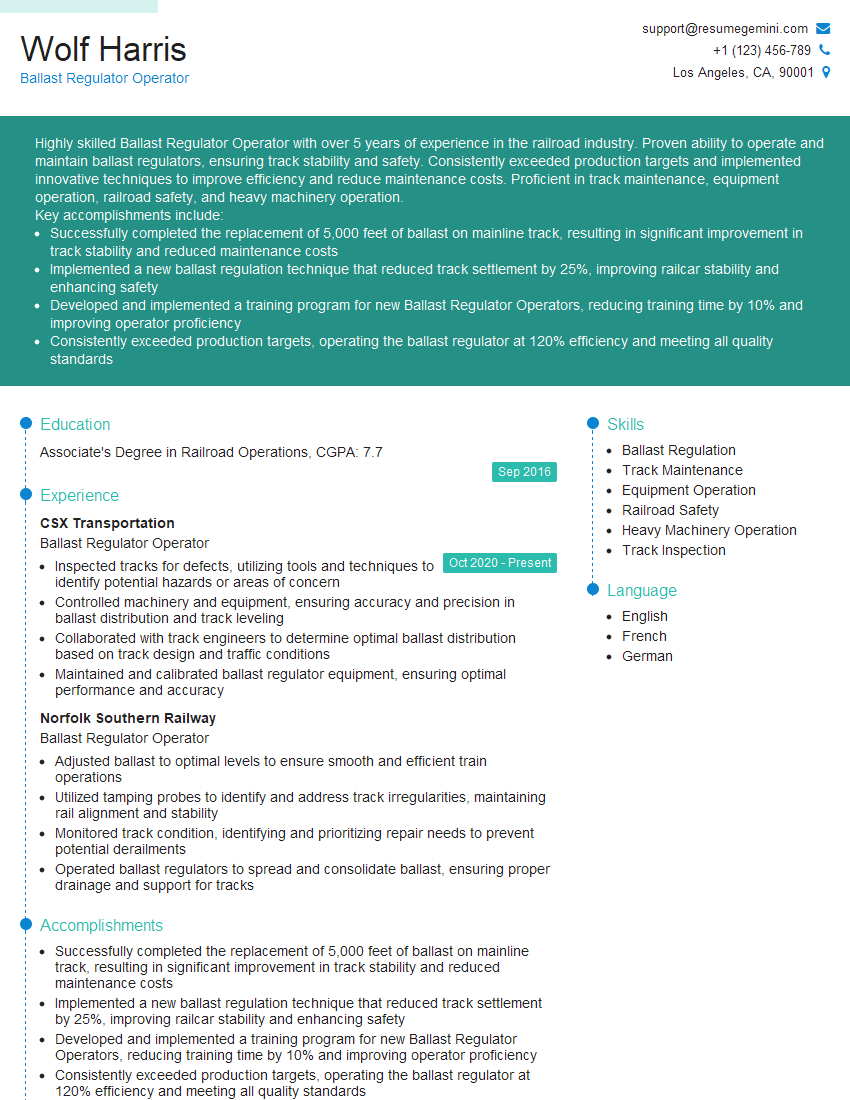
Mastering Tie Tamping Machine Operation opens doors to rewarding careers in railway maintenance and infrastructure development, offering opportunities for advancement and specialization. To maximize your job prospects, create an ATS-friendly resume that showcases your skills and experience effectively. ResumeGemini is a trusted resource to help you build a professional and impactful resume that gets noticed by recruiters. We provide examples of resumes tailored to Tie Tamping Machine Operation to guide you through the process. Take the next step towards your dream career – craft a compelling resume today!


Explore more articles
Users Rating of Our Blogs
Share Your Experience
We value your feedback! Please rate our content and share your thoughts (optional).
What Readers Say About Our Blog
Very informative content, great job.
good