Unlock your full potential by mastering the most common Tillage and Soil Management interview questions. This blog offers a deep dive into the critical topics, ensuring you’re not only prepared to answer but to excel. With these insights, you’ll approach your interview with clarity and confidence.
Questions Asked in Tillage and Soil Management Interview
Q 1. Explain the principles of conservation tillage.
Conservation tillage, at its core, is a farming approach that minimizes soil disturbance. Instead of the intensive plowing and harrowing of conventional tillage, it aims to leave significant amounts of crop residue on the soil surface. This residue acts as a protective layer, offering numerous benefits. Think of it like leaving a blanket on the soil to protect it from the elements.
- Reduced soil erosion: The residue cover shields the soil from wind and water erosion.
- Improved soil structure: Minimized disturbance means better aggregation and porosity.
- Enhanced water infiltration: The residue reduces surface runoff, allowing water to penetrate the soil more effectively.
- Increased organic matter: Less decomposition of organic matter due to reduced tillage.
- Improved nutrient cycling: Residue decomposition releases nutrients back into the soil, reducing the need for fertilizers.
Examples of conservation tillage practices include no-till farming, strip-till, and ridge-till, each varying in the degree of soil disturbance.
Q 2. Describe different types of tillage equipment and their applications.
Tillage equipment is diverse, ranging from simple tools to complex machinery. The choice depends heavily on the tillage system employed and the specific needs of the field. Here are a few examples:
- Moldboard Plow: A classic tool for conventional tillage, it inverts the soil, burying crop residue and creating a smooth seedbed. It’s effective in weed control but can be quite disruptive to soil structure.
- Disk Harrow: Used for seedbed preparation and weed control, it cuts and mixes the soil with rotating disks. Offers a less intense level of soil disturbance than a moldboard plow.
- Chisel Plow: A subsoiler that breaks up compacted layers below the surface without inverting the soil. Beneficial for improving drainage and root penetration.
- No-till Drill: This specialized planter places seeds directly into the soil without prior tillage, leaving residue undisturbed. Key for no-till farming.
- Strip-till machine: This machine tills only narrow strips where the seed will be planted, leaving the rest of the soil undisturbed. It offers a compromise between no-till and conventional tillage.
The application of each piece of equipment is highly context-dependent. For example, a moldboard plow might be appropriate for heavy clay soils needing significant soil inversion, while a no-till drill is ideal for preserving soil structure and promoting water infiltration.
Q 3. What are the benefits and drawbacks of no-till farming?
No-till farming, a form of conservation tillage, offers significant advantages but also presents certain challenges.
Benefits:
- Reduced soil erosion: The undisturbed soil surface minimizes soil loss from wind and water.
- Improved soil health: Increased organic matter, better water infiltration, and enhanced biodiversity.
- Lower fuel consumption and labor costs: Eliminates the need for multiple tillage passes.
- Reduced greenhouse gas emissions: Less soil disturbance reduces carbon dioxide release.
- Increased water conservation: Improved water infiltration and reduced runoff.
Drawbacks:
- Weed management challenges: Requires effective herbicide management to control weeds.
- Potential for pest and disease buildup: Requires careful crop rotation and integrated pest management strategies.
- Initial establishment difficulties: Transitioning from conventional tillage to no-till can be challenging.
- Higher initial investment: Requires specialized no-till equipment.
- Potential nutrient deficiencies: May require careful nutrient management.
Ultimately, the success of no-till farming hinges on careful planning, appropriate management practices, and a deep understanding of the local soil and climate conditions.
Q 4. How does tillage affect soil structure and water infiltration?
Tillage significantly impacts soil structure and water infiltration. Conventional tillage, with its intensive soil disturbance, often leads to:
- Soil compaction: Heavy machinery can compact the soil, reducing pore space and hindering root growth and water infiltration.
- Loss of soil structure: Plowing destroys soil aggregates, leading to a decline in soil stability.
- Increased surface runoff: The destruction of soil aggregates and the lack of residue cover result in more water runoff and less infiltration.
- Reduced water holding capacity: The degraded soil structure reduces the amount of water that can be stored in the soil.
In contrast, conservation tillage methods aim to improve soil structure and water infiltration by:
- Protecting soil aggregates: Minimizing soil disturbance preserves soil structure and porosity.
- Increasing organic matter: Increased organic matter content improves soil aggregation, water retention, and infiltration.
- Reducing surface runoff: Crop residue cover intercepts rainfall and reduces surface runoff.
- Improving root penetration: Better soil structure allows for deeper root penetration, improving water uptake.
Imagine the difference between a well-organized sponge (conservation tillage) and a smashed sponge (conventional tillage). The former absorbs water much more effectively.
Q 5. Explain the role of cover crops in soil health and tillage management.
Cover crops play a crucial role in improving soil health and facilitating effective tillage management. These are plants grown specifically to improve the soil, not necessarily for harvest. They act as a living mulch, providing several benefits:
- Soil cover protection: Reduce soil erosion by shielding the soil from wind and water.
- Improved soil structure: Their roots help improve soil aggregation and reduce compaction.
- Enhanced water infiltration: Cover crops help increase water infiltration and reduce runoff.
- Nutrient cycling: They scavenge nutrients from the soil, preventing nutrient loss and making them available for subsequent crops.
- Weed suppression: They compete with weeds, reducing weed pressure in the following crop.
- Improved soil fertility: Some cover crops fix nitrogen, enriching the soil.
In relation to tillage, cover crops can be used to minimize the need for tillage. For example, a dense cover crop can provide sufficient ground cover to protect the soil from erosion during periods without a cash crop, reducing the need for tillage for weed control.
Q 6. Discuss the impact of tillage on soil erosion.
Tillage significantly impacts soil erosion. Conventional tillage practices, which expose bare soil, dramatically increase the risk of erosion by wind and water. The removal of crop residue, the disruption of soil structure, and the increased surface runoff all contribute to this risk. Imagine a sandcastle exposed to the waves – it will easily erode. Similarly, tilled soil is more vulnerable.
Conversely, conservation tillage reduces erosion. The undisturbed soil, protected by a layer of crop residue, significantly reduces the vulnerability to wind and water erosion. The intact soil structure and reduced surface runoff further minimize soil loss.
The degree of erosion also depends on factors like soil type, slope, rainfall intensity, and wind speed. However, the impact of tillage remains a significant factor across various conditions. For instance, steep slopes with heavy rainfall are especially susceptible to erosion after intensive tillage.
Q 7. How do you assess soil health before implementing a tillage strategy?
Assessing soil health before implementing any tillage strategy is crucial for success. A thorough assessment should include several key components:
- Visual assessment: Observe the soil color, texture, structure, and the presence of organic matter and earthworms. Healthy soil is typically dark in color, rich in organic matter, and has a good soil structure.
- Soil sampling and laboratory analysis: Collect soil samples from different areas of the field to analyze various parameters such as soil pH, organic matter content, nutrient levels, and texture. This provides a quantitative measure of soil health.
- Water infiltration tests: Measure the rate at which water infiltrates the soil to determine the soil’s drainage capacity and compaction level.
- Soil structure assessment: Assess the soil’s aggregation, stability, and porosity. Good soil structure is crucial for water infiltration, root growth, and aeration.
- Biodiversity assessment: Observe the presence and abundance of soil organisms such as earthworms, bacteria, and fungi. A diverse soil biota indicates a healthy soil ecosystem.
Based on this assessment, a suitable tillage strategy can be developed that aligns with the specific soil conditions and goals. For example, severely compacted soils may require deep tillage, while soils with good structure and high organic matter content may benefit from no-till or conservation tillage.
Q 8. What are the key factors influencing the choice of tillage method?
Choosing the right tillage method is crucial for successful farming and depends on a complex interplay of factors. It’s not a one-size-fits-all approach; instead, it requires careful consideration of your specific context.
- Soil Type: Clay soils, for example, are prone to compaction and require gentler tillage techniques, perhaps reduced tillage or no-till approaches, to avoid creating clods. Sandy soils, on the other hand, might tolerate more aggressive methods.
- Climate: In arid regions, minimal tillage can help conserve soil moisture, while in areas with high rainfall, tillage can be used to improve drainage and reduce erosion. Consider the impact on soil temperature and moisture.
- Crop Type: Different crops have different requirements. A crop like corn, with its robust root system, might tolerate no-till, whereas delicate seedlings might need more careful seedbed preparation.
- Weed Pressure: High weed pressure might necessitate more aggressive tillage to control weeds, while effective weed management strategies in a no-till system may reduce this need.
- Previous Crop: The residue from a previous crop significantly impacts tillage choices. Heavy residue might require special tools or techniques to manage before planting.
- Economic Factors: The cost of equipment, labor, and fuel all play a role in the decision-making process. No-till can reduce fuel consumption and labor compared to conventional tillage.
- Environmental Concerns: Minimizing soil erosion, conserving water, and reducing greenhouse gas emissions are increasingly important considerations.
For instance, a farmer with heavy clay soil in a dry climate might opt for a conservation tillage approach like strip-till to improve water infiltration while minimizing soil disturbance.
Q 9. Describe your experience with precision agriculture techniques in tillage management.
My experience with precision agriculture in tillage management is extensive. I’ve worked on projects integrating GPS-guided machinery, variable-rate tillage, and sensor-based soil monitoring. This allows for targeted tillage based on real-time soil conditions and site-specific needs. For example, we used variable-rate technology to adjust tillage depth based on soil compaction maps generated from electromagnetic induction sensors. This reduced unnecessary tillage in areas with already optimal soil structure, improving efficiency and reducing fuel consumption.
We also implemented sensor-based systems to monitor soil moisture and temperature in real-time. This data informed decisions about the timing and intensity of tillage operations, optimizing conditions for planting and germination. In one project, real-time soil moisture data allowed us to postpone tillage in a field experiencing unexpectedly high moisture levels, preventing soil compaction and improving the overall structure of the field.
Q 10. How do you manage soil compaction caused by tillage?
Managing soil compaction caused by tillage is a critical aspect of sustainable soil management. The key is to minimize compaction in the first place, and then employ strategies to alleviate existing compaction. Prevention is always better than cure.
- Reduce Tillage Intensity: Shifting to reduced tillage or no-till practices significantly reduces compaction. Using lighter implements and avoiding tillage when soil moisture is high are key.
- Strategic Tillage: If tillage is necessary, focus it only on areas needing seedbed preparation, avoiding unnecessary passes. Strip-till is a good example; it only tills narrow strips where seeds are placed.
- Subsoiling: For deep compaction, subsoiling can break up compacted layers without disturbing the surface soil. It’s important to select the right subsoiler for soil conditions.
- Cover Crops: Cover crops improve soil structure and reduce compaction by increasing organic matter and improving root penetration. They act as natural soil conditioners.
- Crop Rotation: Rotating crops with differing root systems (e.g., deep-rooted legumes followed by shallow-rooted cereals) helps break up compacted layers naturally. It is essential to break up the compaction before planting sensitive crops.
For instance, a farmer experiencing severe compaction could employ subsoiling in the fall, followed by planting a cover crop such as rye. The next year, they could use no-till or minimal tillage for planting their cash crop, maximizing the benefits of the cover crop and subsoiling.
Q 11. What is the role of organic matter in soil health and tillage practices?
Organic matter is the cornerstone of healthy soil and plays a vital role in interacting with tillage practices. It improves soil structure, water holding capacity, nutrient availability, and biological activity. High organic matter content is like a cushion that helps buffer the negative impacts of tillage.
- Improved Soil Structure: Organic matter acts as a glue, binding soil particles together to form aggregates, leading to better aeration, water infiltration, and drainage. This is especially vital after tillage.
- Enhanced Water Retention: Organic matter enhances the soil’s ability to hold water, reducing the need for frequent irrigation and minimizing the risk of drought stress.
- Increased Nutrient Availability: Organic matter slowly releases nutrients as it decomposes, providing a steady supply of essential nutrients for crops. This reduces reliance on synthetic fertilizers.
- Improved Biological Activity: Organic matter feeds soil organisms, which play a critical role in nutrient cycling and soil health. This is significant when we consider the effects of tillage on soil microbial populations.
For example, no-till farming practices aim to maximize the accumulation of organic matter on the soil surface, leveraging its protective and beneficial effects. This contrast sharply with conventional tillage, which tends to decrease organic matter levels over time.
Q 12. Explain the relationship between tillage and nutrient cycling.
Tillage significantly impacts nutrient cycling. The effects are complex and often depend on the type and intensity of tillage, soil conditions, and climate.
- Nutrient Losses: Intensive tillage can lead to increased nutrient losses through mineralization, volatilization, and leaching. This happens because tillage exposes organic matter to the atmosphere, accelerating its decomposition and releasing nutrients which can then be lost.
- Improved Nutrient Availability: On the other hand, tillage can sometimes improve nutrient availability by increasing soil aeration and water infiltration. This facilitates microbial activity and nutrient cycling.
- Impact on Microbial Communities: Tillage can dramatically alter soil microbial communities, impacting the rates of decomposition, nutrient transformation, and nutrient cycling. The disruption can be positive or negative, depending on how the tillage is implemented and the soil conditions.
- Residue Management: Leaving crop residues on the soil surface after harvest improves nutrient cycling and reduces nutrient loss associated with tillage. This is a core principle in conservation tillage systems.
For example, conventional tillage may lead to increased nitrogen loss through volatilization, especially in warm, dry climates. No-till farming, by contrast, helps to retain more nutrients in the soil profile, minimizing losses.
Q 13. Describe your experience with different types of soil and their response to tillage.
My experience encompasses a wide range of soil types, and their response to tillage varies considerably. Understanding this variation is crucial for effective soil management.
- Clay Soils: These soils are prone to compaction and erosion. Aggressive tillage can create clods and reduce water infiltration. Reduced tillage or no-till is often the preferred approach.
- Sandy Soils: These soils are well-drained but can be prone to nutrient leaching. Tillage might be needed to improve water retention but should be done carefully to avoid further nutrient loss.
- Loamy Soils: These soils offer a good balance of water retention and drainage. They generally respond well to a range of tillage practices, making them quite versatile for different farming methods.
- Organic Soils: These soils are very sensitive to tillage due to their delicate structure and high organic matter content. Minimal tillage or no-till is crucial to avoid soil degradation.
In one project, I worked with a farmer who had a field with heavy clay soil. Traditional plowing led to severe compaction and reduced yields. By switching to strip-till, we were able to improve water infiltration, reduce compaction, and increase yields significantly.
Q 14. How do you monitor and evaluate the effectiveness of a tillage strategy?
Monitoring and evaluating the effectiveness of a tillage strategy involves a multifaceted approach, combining field observations with quantitative data analysis.
- Yield Monitoring: Comparing yields between different tillage treatments provides a direct measure of the system’s effectiveness. This is the most important indicator of success.
- Soil Sampling and Analysis: Regular soil testing helps assess changes in soil organic matter, nutrient levels, and soil structure. This provides insight into the long-term effects of the chosen tillage methods.
- Water Infiltration Measurement: Measuring water infiltration rates helps assess the impact of tillage on soil porosity and water management. This is particularly important in drier regions.
- Soil Compaction Assessment: Penetrometers can measure soil compaction at different depths, providing information about the effectiveness of tillage in reducing compaction.
- Weed Biomass Measurement: Monitoring weed biomass helps evaluate the impact of tillage on weed control. It’s essential to assess weed pressure alongside crop yield.
- Erosion Monitoring: Observing changes in soil erosion provides insight into the long-term sustainability of a chosen tillage system. This can be done through observations and quantitative measurements using tools specifically designed for erosion measurement.
For example, in a field trial comparing no-till and conventional tillage, we monitored yield, soil organic matter, water infiltration, and weed pressure. The results showed that no-till led to increased organic matter, improved water infiltration, and reduced weed pressure, but initially, yields were lower. However, over time, the no-till system matched and eventually surpassed the yields from conventional tillage, demonstrating the importance of long-term evaluation.
Q 15. What are the environmental impacts of different tillage methods?
Tillage methods significantly impact the environment. Conventional tillage, characterized by intensive plowing and harrowing, leads to several negative consequences. It disrupts soil structure, increasing soil erosion and runoff, which carries away valuable topsoil and nutrients, polluting waterways. The increased exposure of soil organic matter to oxygen accelerates decomposition, releasing greenhouse gases like carbon dioxide and nitrous oxide, contributing to climate change. Furthermore, conventional tillage can damage soil biota, reducing soil biodiversity and its ability to function effectively.
In contrast, conservation tillage practices, such as no-till farming and reduced tillage, minimize soil disturbance. These methods help retain soil organic matter, improving soil health and carbon sequestration. They also reduce erosion and runoff, protecting water quality. However, even conservation tillage isn’t without its potential drawbacks. For instance, increased residue on the soil surface in no-till systems can sometimes impede planting and may increase pest and disease pressure if not managed properly.
Consider this example: A farmer using conventional tillage on a sloping field experiences significant soil erosion after a heavy rainfall event, leading to sedimentation in a nearby stream. A farmer employing no-till farming on a similar field experiences considerably less erosion, maintaining soil health and water quality.
Career Expert Tips:
- Ace those interviews! Prepare effectively by reviewing the Top 50 Most Common Interview Questions on ResumeGemini.
- Navigate your job search with confidence! Explore a wide range of Career Tips on ResumeGemini. Learn about common challenges and recommendations to overcome them.
- Craft the perfect resume! Master the Art of Resume Writing with ResumeGemini’s guide. Showcase your unique qualifications and achievements effectively.
- Don’t miss out on holiday savings! Build your dream resume with ResumeGemini’s ATS optimized templates.
Q 16. Discuss the economic considerations of various tillage practices.
Economic considerations in tillage practices are multifaceted. Conventional tillage, while initially appearing less expensive due to familiarity and readily available machinery, incurs higher long-term costs. These include increased fuel consumption, higher machinery depreciation, and the need for more fertilizers and pesticides to compensate for soil degradation. The reduced yields due to erosion and nutrient loss further add to the economic burden.
Conservation tillage, on the other hand, offers long-term economic benefits. Reduced fuel consumption and machinery wear-and-tear translate to lower operating costs. Improved soil health leads to enhanced water retention and nutrient availability, potentially reducing the need for fertilizers and irrigation, thus saving money. Increased yields resulting from improved soil structure and healthier plants also contribute to higher profitability. However, initial investments in specialized equipment may be higher for conservation tillage.
Imagine two farmers, one using conventional tillage and the other no-till. The conventional farmer might have lower upfront costs but faces higher expenses over time due to erosion and soil degradation. The no-till farmer, with an initial investment in specialized equipment, sees lower costs over the long term, coupled with higher yields and healthier soil.
Q 17. How do you integrate soil testing results into tillage decisions?
Soil testing is crucial for making informed tillage decisions. Tests provide vital information about soil pH, nutrient levels (nitrogen, phosphorus, potassium, etc.), organic matter content, and texture. This data helps determine the appropriate tillage method and the need for amendments. For example, soils low in organic matter might benefit from no-till practices to enhance carbon sequestration. Soils with high nutrient levels may require less fertilizer input, regardless of tillage method. Conversely, soils with low nutrient levels might need fertilizer application before planting, even with no-till systems.
The process involves collecting representative soil samples, sending them to a certified lab for analysis, and interpreting the results. Based on the results, we can modify tillage practices to optimize nutrient use, reduce erosion, and improve overall soil health. If the soil test indicates low phosphorus, for example, we might incorporate phosphorus-rich fertilizers or choose a tillage method that promotes better phosphorus uptake by plants.
For instance, a soil test revealing low organic matter and high erosion risk suggests the adoption of no-till or reduced-till farming, coupled with cover cropping to increase organic matter and stabilize the soil. A soil test demonstrating sufficient nutrient levels might allow for a reduction in fertilizer use, regardless of the tillage method employed.
Q 18. Explain your understanding of soil erosion control measures related to tillage.
Soil erosion control is paramount in tillage management. Conventional tillage significantly increases erosion risk due to the exposure of bare soil. Conservation tillage minimizes this risk. Effective control measures include:
- No-till farming: Leaves crop residue on the soil surface, providing a protective cover against wind and water erosion.
- Reduced tillage: Minimizes soil disturbance, reducing erosion compared to conventional tillage.
- Cover cropping: Planting cover crops during fallow periods protects the soil and improves its structure.
- Contour farming: Planting crops along the contours of slopes slows down water runoff.
- Terracing: Creating level platforms on slopes reduces erosion by intercepting water flow.
- Windbreaks: Planting trees or shrubs to reduce wind velocity and its erosive effects.
For example, in regions prone to wind erosion, establishing windbreaks is crucial. In areas with high rainfall and steep slopes, terracing or contour farming would be more suitable.
Q 19. Describe your experience with water management in relation to tillage.
Water management is closely tied to tillage. Conventional tillage often leads to increased surface runoff and reduced water infiltration, decreasing water availability for plants. Conservation tillage, on the other hand, enhances water infiltration and retention, improving water use efficiency. No-till systems, in particular, create a more porous soil structure, allowing water to penetrate deeper.
My experience involves working with farmers to improve water management through the implementation of practices such as:
- Mulching: Applying mulch to the soil surface helps retain moisture and reduce evaporation.
- Improved drainage systems: Installing subsurface drainage to manage excess water in poorly drained soils.
- Water harvesting techniques: Implementing methods like rainwater harvesting to supplement irrigation.
For instance, in a region with limited rainfall, we might recommend no-till farming combined with mulching to maximize water retention and minimize evaporation.
Q 20. How do you address the challenges of weed management in no-till systems?
Weed management in no-till systems presents challenges because the lack of soil disturbance can allow weed seeds to germinate more easily. However, several strategies can address this:
- Careful weed seed management: Implementing practices like crop rotation to disrupt weed life cycles.
- Herbicide application: Employing pre-emergent and post-emergent herbicides judiciously, minimizing herbicide resistance development.
- Cover cropping: Utilizing competitive cover crops to suppress weed growth.
- Mechanical weed control: Employing tools like row cultivators or specialized no-till weeders.
- Integrated weed management: Combining multiple approaches for a comprehensive strategy.
For instance, a farmer might use a pre-emergent herbicide in the fall followed by a post-emergent herbicide in the spring to control weeds, combined with a cover crop to suppress weeds between crops.
Q 21. What are the best practices for managing residue in conservation tillage?
Residue management is crucial in conservation tillage. Proper management ensures effective weed suppression, soil protection, and improved soil health. Best practices include:
- Maintaining adequate residue cover: Sufficient residue is key to erosion control and weed suppression. Ideally, around 30% residue cover is recommended for most situations, though this can vary regionally.
- Strategic residue distribution: Even distribution of residue is critical for uniform crop emergence and growth.
- Residue decomposition management: Monitoring the decomposition rate of the residue to prevent nutrient imbalances and ensure sufficient residue remains for soil protection throughout the growing season. This might involve incorporating microbial inoculants or adjusting planting dates.
- Proper tillage equipment selection: Using equipment that efficiently manages crop residue without excessive soil disturbance.
- Combining residue with other practices: Integrating cover cropping or other soil management practices with conservation tillage can further optimize residue management.
For example, a farmer might use a roller-crimper to flatten cover crops and incorporate them into the soil, adding organic matter and improving soil structure while still retaining a surface mulch.
Q 22. How do you adapt tillage practices to different climate conditions?
Adapting tillage practices to different climates is crucial for optimal soil health and crop yields. The key is understanding how climate factors like rainfall, temperature, and soil type influence soil structure and water content.
- Arid and Semi-arid Climates: In drier regions, conservation tillage methods like no-till or minimum tillage are preferred. These techniques minimize soil disturbance, reducing evaporation and preserving soil moisture. For example, using a strip-till system can improve water infiltration in dryland farming by focusing tillage only in narrow seed rows.
- Humid Climates: Humid regions often benefit from more intensive tillage, such as moldboard plowing, which can improve drainage in heavier soils. However, even in humid climates, the trend is moving towards reduced tillage to minimize erosion and improve soil organic matter. Choosing the right tillage implements, like chisel plows or subsoilers, that cause less soil disruption is critical.
- Cold Climates: In colder regions, tillage should be timed to avoid working the soil when it’s too wet or frozen, as this can lead to soil compaction and damage. Spring tillage might be delayed until the soil has warmed up enough to allow for proper seedbed preparation.
Ultimately, the best approach involves careful observation of soil conditions and the specific crop being grown. Soil testing and weather forecasting are vital tools for making informed decisions about tillage practices in any climate.
Q 23. Explain your experience with GPS guidance and automation in tillage operations.
My experience with GPS guidance and automation in tillage has significantly enhanced efficiency and precision. GPS-guided tractors allow for precise control of implement depth and overlap, reducing overlaps (saving time and fuel) and ensuring uniform tillage.
For example, I’ve used auto-steer systems on tractors equipped with RTK (Real-Time Kinematic) GPS for several years. This allows for centimeter-level accuracy, dramatically reducing the need for manual corrections and enabling operations even at night or in low visibility conditions.
Automation extends beyond steering. Variable-rate technology, controlled by GPS mapping and sensor data, allows for adjusting tillage intensity based on specific soil conditions (e.g., applying more tillage to compacted areas). This precision approach minimizes fuel and equipment wear while optimizing soil health. I’ve also used systems that automatically adjust implement depth based on real-time feedback from sensors measuring soil resistance.
The result? Increased productivity, lower operating costs, and improved environmental stewardship. These technologies reduce soil compaction and improve the overall efficacy of tillage operations.
Q 24. Discuss your knowledge of soil fertility management in relation to tillage.
Soil fertility management is intrinsically linked to tillage. Tillage practices directly influence nutrient cycling, availability, and losses.
- Nutrient Cycling: Tillage can accelerate the decomposition of organic matter, releasing nutrients into the soil solution. However, excessive tillage can also lead to nutrient loss through volatilization (e.g., nitrogen), leaching (e.g., nitrates), and erosion.
- Nutrient Availability: No-till systems, for example, often improve nutrient availability by building up soil organic matter which acts as a nutrient reservoir. The improved soil structure in no-till systems enhances nutrient retention and makes them more accessible to plant roots.
- Nutrient Losses: Conventional tillage, especially intensive methods, can increase nutrient losses through erosion. This is particularly problematic for phosphorus and potassium, which are immobile in the soil.
Therefore, effective soil fertility management requires careful consideration of the chosen tillage system. Regular soil testing, targeted fertilizer application (including organic amendments), and cover cropping are crucial for maintaining and improving soil fertility regardless of tillage practices. For example, in a no-till system, efficient nutrient management often involves placing fertilizer bands close to the seed row to maximize its uptake by the crop.
Q 25. How do you determine the appropriate tillage depth for a specific situation?
Determining the appropriate tillage depth requires a holistic approach considering several factors. It’s not a one-size-fits-all solution.
- Soil Type: Sandy soils require less tillage depth than clay soils, which can be prone to compaction at shallower depths.
- Soil Compaction: Heavily compacted soils may require deeper tillage to break up the compacted layer and improve water infiltration. However, deep tillage can also damage soil structure in certain soil types.
- Crop Requirements: Different crops have different root systems, and the tillage depth should be adjusted accordingly to avoid damaging roots or to provide adequate root penetration.
- Weed Control: Deep tillage can bring weed seeds from lower layers to the surface, potentially increasing weed pressure.
- Erosion Risk: Deep tillage in erodible soils increases the risk of soil loss.
In practice, I often use a combination of visual inspection of the soil profile, soil testing for compaction, and knowledge of the local soil and climatic conditions. I may also employ soil penetrometers to quantify soil compaction and guide tillage depth decisions. A trial-and-error approach, carefully monitoring the impact on soil and crop yields in subsequent years, is often essential for optimizing tillage depth.
Q 26. What are your experiences with variable-rate tillage?
Variable-rate tillage (VRT) involves adjusting tillage intensity based on spatial variations in soil conditions. This is typically done using GPS-guided implements and sensors that measure soil properties such as compaction, moisture, and organic matter content in real-time.
My experience shows that VRT offers several benefits. It allows for site-specific management, minimizing excessive tillage in areas that don’t require it, conserving fuel and reducing equipment wear. It can also improve crop yields by optimizing soil conditions across the field. For example, in areas with high compaction, deeper tillage might be employed, whereas shallower tillage might suffice in less compacted areas.
Implementing VRT requires specialized equipment and software, which can represent a significant initial investment. However, the long-term cost savings from optimized fuel consumption and reduced wear and tear often outweigh the initial costs, especially on large farms. Data analysis and interpretation are critical to making effective use of VRT.
Q 27. Describe your understanding of the long-term impacts of different tillage systems.
Different tillage systems have profound and long-term impacts on soil health and ecosystem services.
- Conventional Tillage: Intensive tillage practices like moldboard plowing can lead to soil erosion, loss of soil organic matter, reduced water infiltration, increased soil compaction (over time), and damage to soil structure. These effects can negatively impact long-term soil fertility and crop yields.
- Conservation Tillage: Reduced or no-till systems generally lead to improved soil health indicators such as higher soil organic matter, enhanced water infiltration and retention, reduced erosion, and improved biodiversity. The increased soil organic matter improves nutrient cycling and water holding capacity, contributing to more sustainable agriculture.
- Long-term Considerations: The effects of tillage are cumulative. Improper tillage can cause irreversible soil degradation over decades, while sustainable tillage practices can result in long-term improvements in soil health and productivity. This makes understanding the long-term implications of tillage choices paramount for sustainable land management.
Monitoring key soil indicators such as organic matter content, soil structure, and water infiltration over several years is vital to assess the long-term impact of tillage systems. This allows for timely adjustments in practices and helps farmers make informed decisions for long-term sustainability.
Q 28. How do you stay updated on the latest advancements in tillage and soil management technologies?
Staying updated in this rapidly evolving field requires a multi-pronged approach.
- Peer-reviewed Publications: I regularly read scientific journals focusing on soil science, agronomy, and agricultural engineering to access cutting-edge research findings on tillage and soil management.
- Conferences and Workshops: Attending professional conferences and workshops allows for direct interaction with researchers, manufacturers, and fellow professionals, enabling the exchange of knowledge and insights on new technologies and best practices.
- Industry Publications and Trade Shows: Industry magazines, online resources, and trade shows offer information on the latest equipment, technologies, and software available in the field.
- Networking: Maintaining a strong network with other professionals in the field is invaluable for staying informed about new developments and best practices. This includes actively participating in professional organizations.
- On-farm experimentation: I also dedicate time to conducting small-scale experiments and trials on my own to assess the efficacy of new techniques and technologies under local conditions.
Continuous learning is key to staying ahead of the curve in this dynamic field. Embracing a combination of these methods allows me to constantly update my knowledge and integrate the latest advancements into my work.
Key Topics to Learn for Tillage and Soil Management Interview
- Soil Physics: Understanding soil texture, structure, porosity, and water holding capacity. Practical application: Analyzing soil samples to determine optimal tillage practices.
- Tillage Methods: Conventional tillage, conservation tillage (no-till, reduced tillage), and their environmental impacts. Practical application: Evaluating the suitability of different tillage methods for various soil types and crops.
- Soil Erosion and Conservation: Identifying erosion risks and implementing erosion control measures (e.g., cover cropping, contour farming). Practical application: Designing a sustainable tillage plan to minimize soil erosion.
- Nutrient Management: Optimizing nutrient application techniques based on soil testing and crop requirements. Practical application: Developing a fertilizer plan that maximizes crop yields while minimizing environmental impact.
- Soil Health Indicators: Understanding and interpreting key indicators of soil health (e.g., organic matter content, microbial biomass). Practical application: Assessing the effectiveness of different tillage and management practices on soil health.
- Sustainable Soil Management Practices: Integrating principles of sustainability into tillage and soil management decisions. Practical application: Developing a long-term soil management plan that ensures both productivity and environmental stewardship.
- Precision Agriculture Technologies: Utilizing GPS, sensors, and data analysis for site-specific tillage and nutrient management. Practical application: Implementing variable-rate technology to optimize resource use.
- Problem-Solving in Tillage and Soil Management: Diagnosing and addressing soil-related problems such as compaction, nutrient deficiencies, and soil degradation. Practical application: Developing strategies to improve soil conditions and crop productivity.
Next Steps
Mastering tillage and soil management is crucial for a successful career in agriculture and related fields. A strong understanding of these principles opens doors to diverse opportunities and positions you as a valuable asset in the industry. To maximize your job prospects, invest time in crafting an ATS-friendly resume that effectively highlights your skills and experience. ResumeGemini is a trusted resource that can help you build a professional and impactful resume. They provide examples of resumes tailored specifically to Tillage and Soil Management, ensuring your qualifications shine.
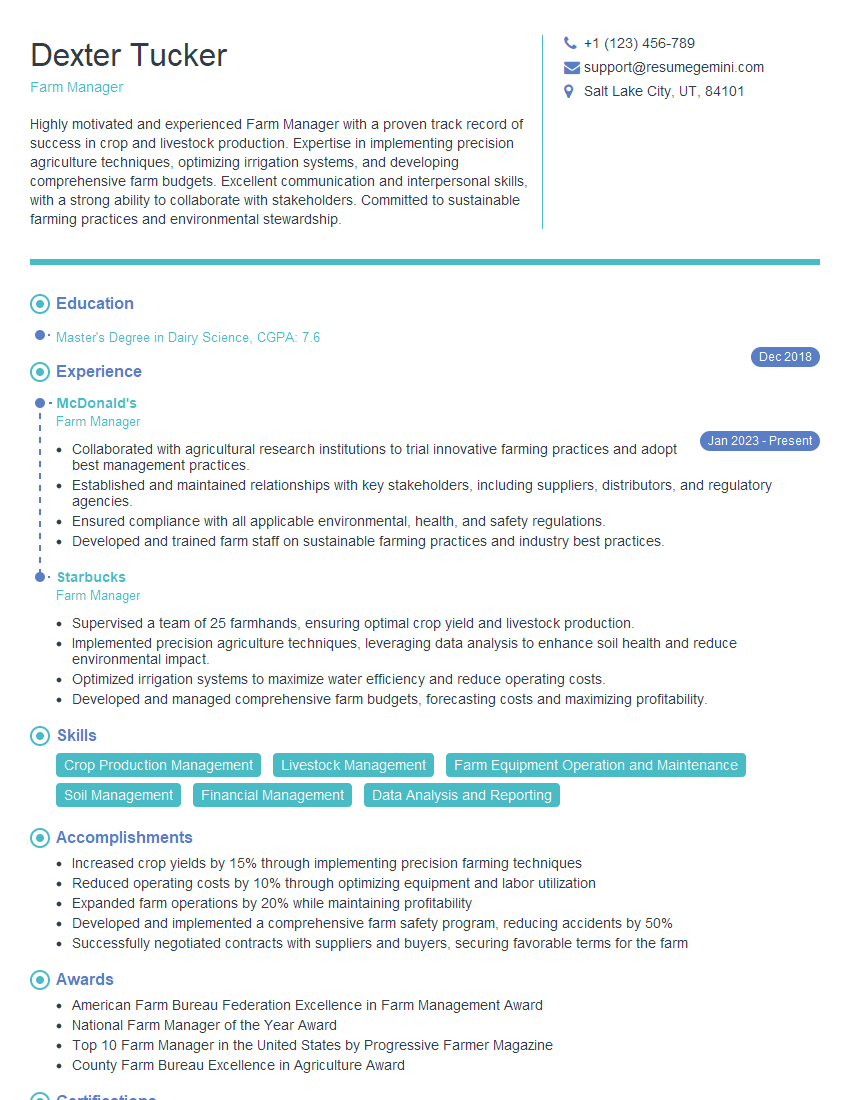
Farm Manager Resume Sample
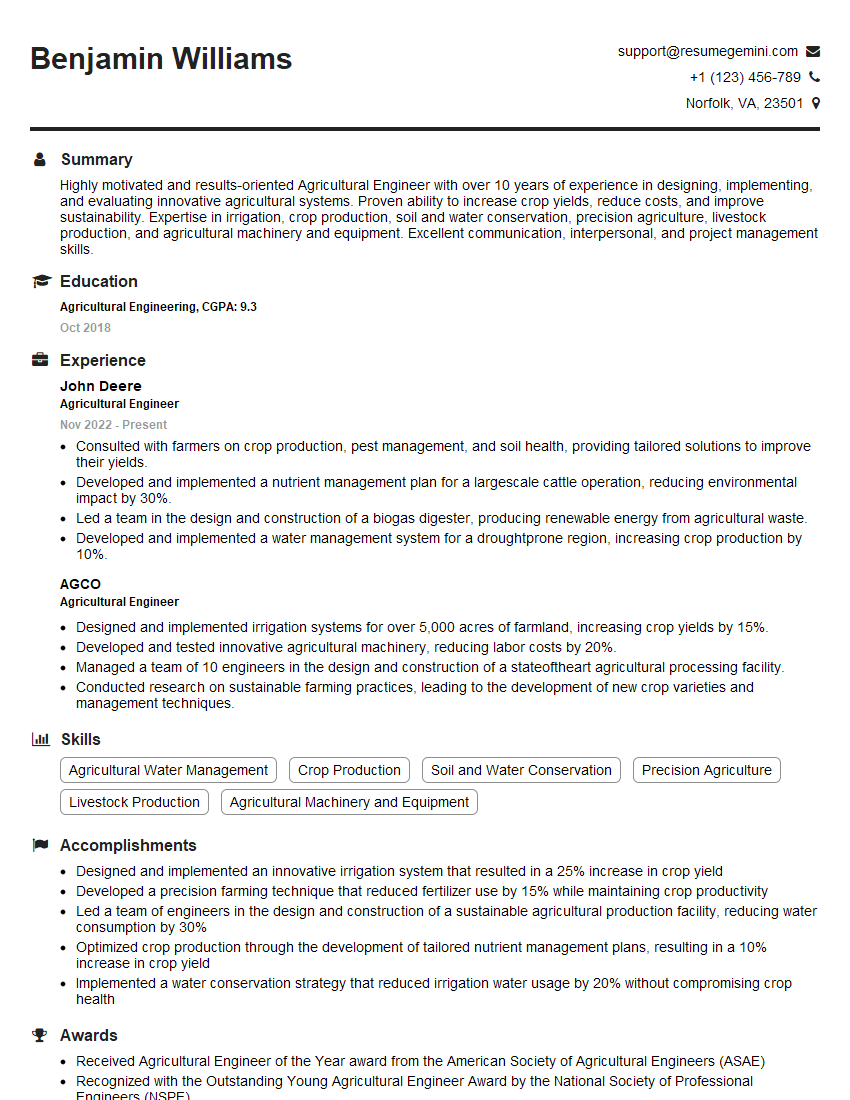
Agricultural Engineer Resume Sample
Environmental Consultant Resume Sample
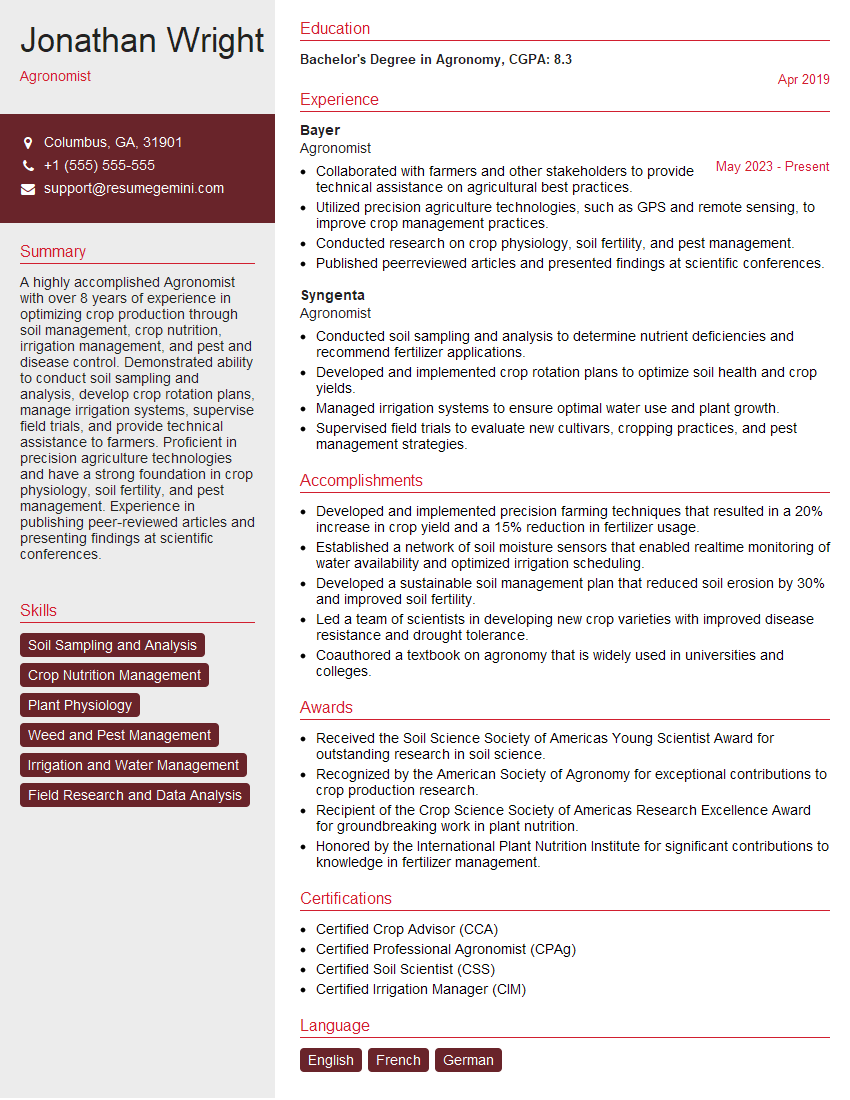
Agronomist Resume Sample

Soil Scientist Resume Sample
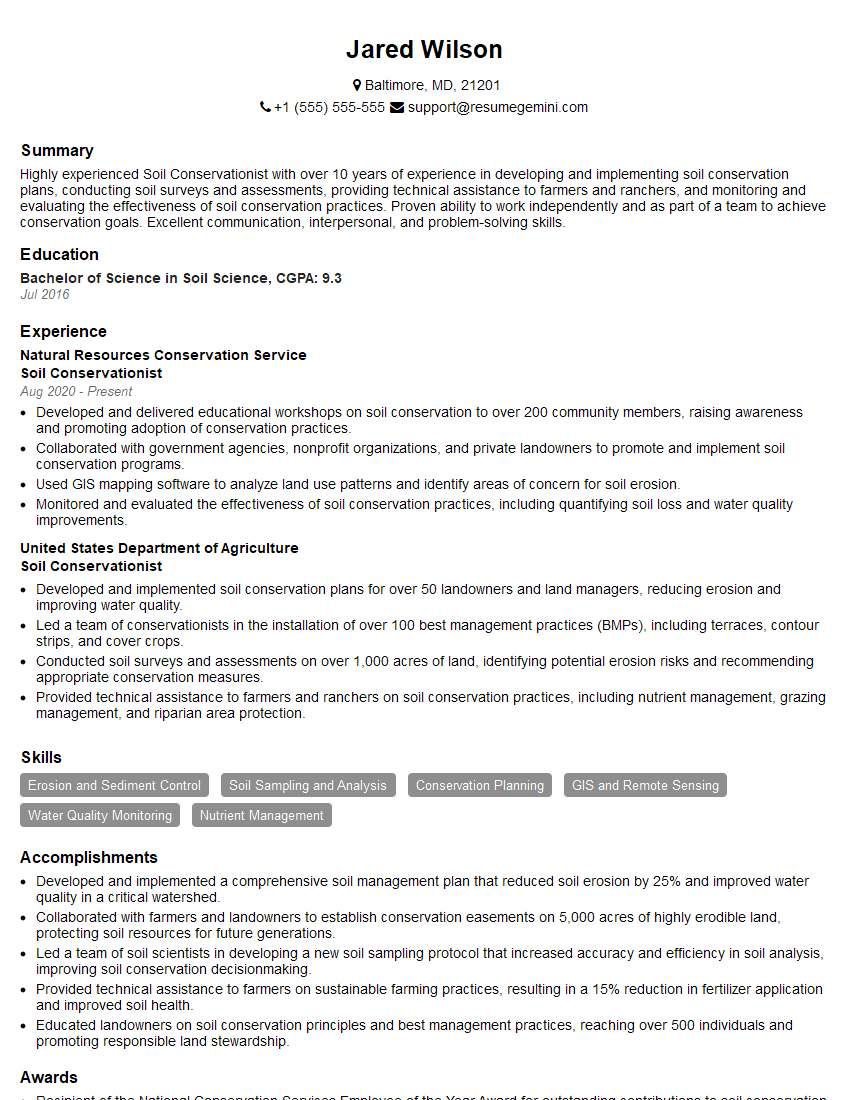
Soil Conservationist Resume Sample
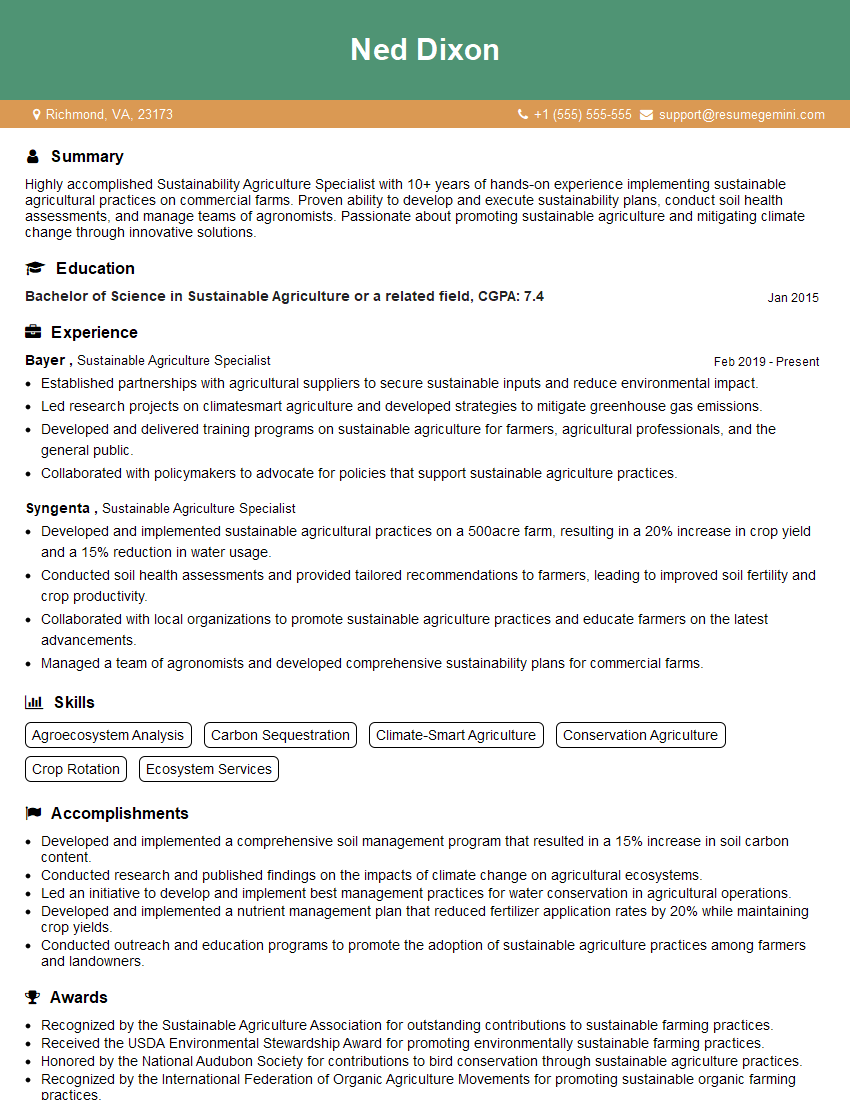
Sustainable Agriculture Specialist Resume Sample
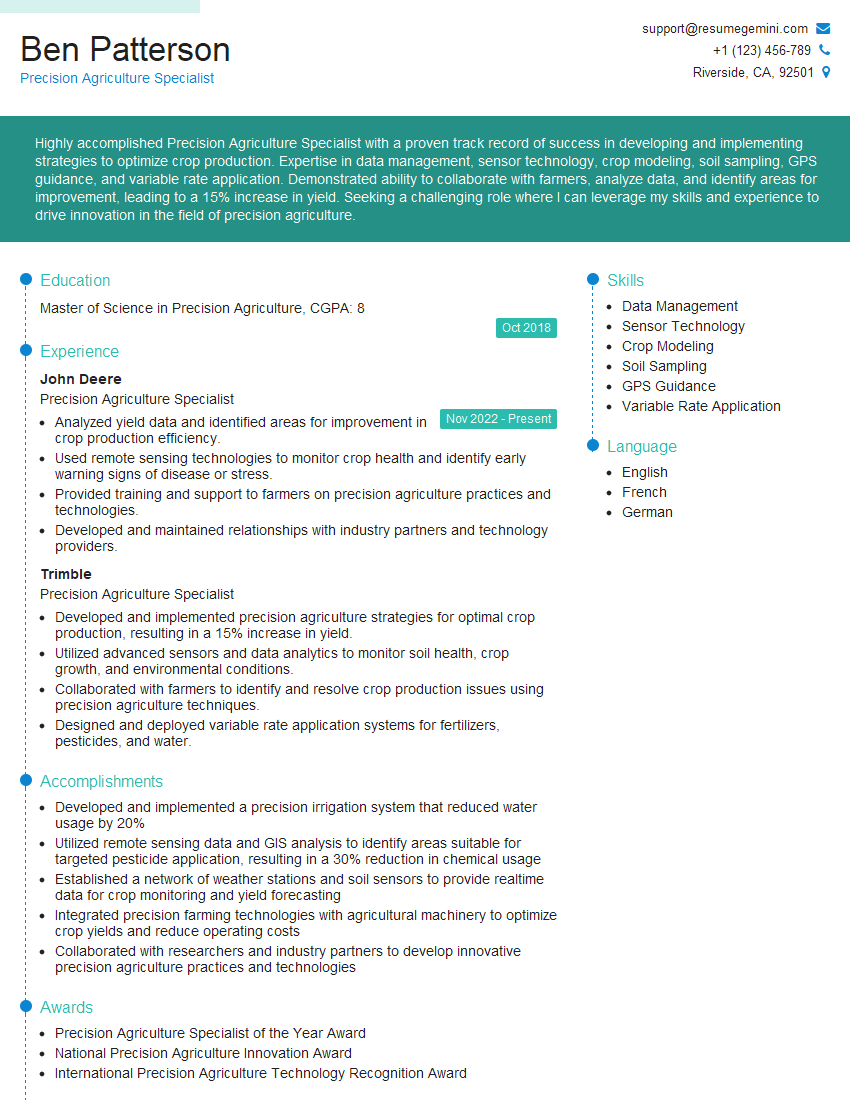
Precision Agriculture Specialist Resume Sample
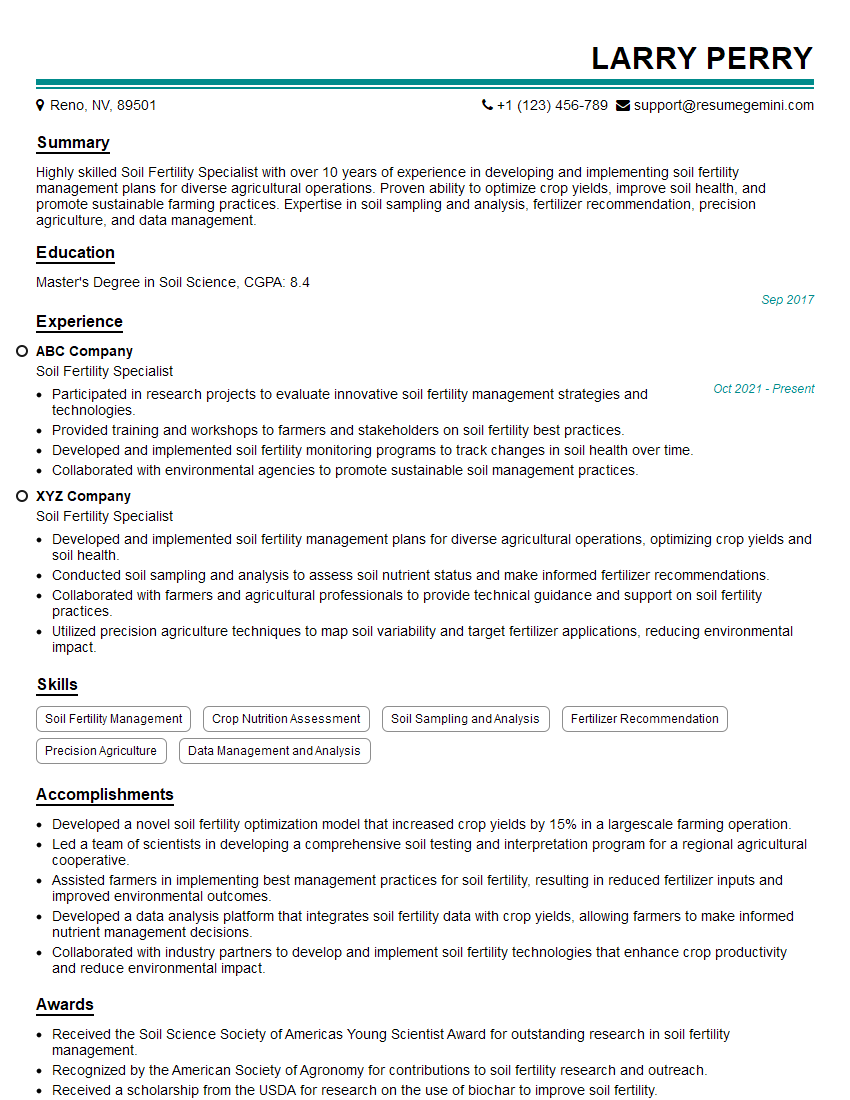
Soil Fertility Specialist Resume Sample
Explore more articles
Users Rating of Our Blogs
Share Your Experience
We value your feedback! Please rate our content and share your thoughts (optional).
What Readers Say About Our Blog
Very informative content, great job.
good