Preparation is the key to success in any interview. In this post, we’ll explore crucial Tissue storage interview questions and equip you with strategies to craft impactful answers. Whether you’re a beginner or a pro, these tips will elevate your preparation.
Questions Asked in Tissue storage Interview
Q 1. Describe the different methods of tissue preservation.
Tissue preservation aims to maintain the structural and molecular integrity of tissues over time, enabling their use in research, diagnostics, or transplantation. Several methods exist, each with its advantages and limitations.
- Formalin Fixation: This is a common method involving immersion of the tissue in formalin (a formaldehyde solution). It cross-links proteins, preventing degradation but can also alter antigenicity and make some molecules inaccessible for analysis. Think of it like preserving a specimen in amber – it’s protected, but not in its completely natural state.
- Cryopreservation: This method involves freezing the tissue at very low temperatures (-80°C or lower), typically using a cryoprotective agent (CPA) like DMSO to prevent ice crystal formation which can damage cell membranes. This is akin to flash-freezing food to maintain quality, but much more precise and at significantly lower temperatures.
- Dehydration and Embedding: For histological analysis, tissues are often dehydrated using graded alcohols, cleared using a solvent like xylene, and then embedded in paraffin wax. This allows for thin sectioning for microscopic examination. This is like creating a meticulously preserved, three-dimensional model of the tissue.
- Other methods: These include freeze-drying (lyophilization), which removes water through sublimation, and using specialized preservation fluids designed to maintain specific cellular components for particular research goals.
The choice of method depends heavily on the intended use of the tissue. For instance, if you need to perform immunohistochemistry (staining with antibodies), formalin fixation might compromise your results. Cryopreservation might be better suited for such studies because it better preserves antigens.
Q 2. Explain the importance of maintaining a sterile environment during tissue processing.
Maintaining sterility during tissue processing is paramount to prevent contamination with bacteria, fungi, or other microorganisms. Contamination can lead to inaccurate results in research, compromise the viability of tissue for transplantation, and even pose biohazard risks. Imagine trying to build a precise clock with rusty gears – the contamination will significantly interfere with the functionality and reliability.
Sterile procedures involve using aseptic techniques such as working in laminar flow hoods, employing sterile instruments and reagents, and using appropriate personal protective equipment (PPE). Regular monitoring for contamination through microbial cultures is also critical. Proper sterilization of equipment (autoclaving, radiation) is an essential step in preventing contamination in any tissue processing protocol.
For example, in a transplant center, non-sterile tissue could lead to serious infections in the recipient, highlighting the importance of meticulous aseptic practices at each step, from collection and processing to storage.
Q 3. What are the critical quality control measures for tissue storage?
Critical quality control measures for tissue storage ensure the quality, integrity, and traceability of the samples throughout their lifespan. This is fundamental to the reliability of any downstream application.
- Temperature Monitoring: Constant monitoring of storage temperature (freezers, cryogenic tanks) using calibrated sensors and alarms is essential to guarantee the integrity of cryopreserved tissues. Any deviation from the target temperature must be immediately investigated and documented.
- Inventory Management: A robust, well-documented inventory system is crucial to track each sample’s location, processing date, source, and any associated metadata. This helps to easily locate and trace samples and also ensures proper rotation of stocks (FIFO – First In, First Out).
- Regular Audits: Regular internal and external audits assess adherence to established protocols and ensure compliance with relevant regulations and guidelines. This includes review of temperature logs, maintenance records, and staff training records.
- Sample Quality Assessment: Depending on the tissue type and intended use, quality control might involve tests for viability, sterility, and presence of specific biomarkers. These tests ensure the tissue meets its specifications.
Failure in any of these areas can compromise the validity of research results or the safety of transplanted tissues, emphasizing the importance of robust and proactive quality control.
Q 4. How do you ensure the integrity of stored tissue samples?
Ensuring the integrity of stored tissue samples involves a multi-faceted approach aimed at preserving their biological and physical characteristics. This involves preventing degradation from factors like temperature fluctuations, enzymatic activity, and oxidation.
- Optimal Storage Conditions: Maintaining stable and appropriate temperature and humidity is essential. Cryopreserved tissues need ultra-low temperatures, while other methods may require specific humidity levels to prevent desiccation.
- Cryoprotective Agents (CPAs): Using appropriate CPAs during cryopreservation is crucial to minimize ice crystal formation and protect cellular structures from damage during freezing and thawing.
- Proper Packaging: Appropriate containers and packaging materials should prevent sample damage, leakage, and contamination. Cryovials with O-rings are commonly used for cryopreserved samples.
- Regular Monitoring: Consistent monitoring of storage conditions, sample integrity (visual inspection, if possible), and documentation is essential to promptly identify and address potential issues.
For example, improper handling during thawing can rapidly degrade a tissue sample. Therefore, following standardized thaw protocols is crucial to maintain quality.
Q 5. Describe your experience with cryopreservation techniques.
My experience with cryopreservation techniques spans over [Number] years, encompassing various tissue types such as [List Tissue Types, e.g., blood cells, skin, bone marrow]. I’m proficient in all stages, from sample preparation and the selection of appropriate cryoprotective agents (CPAs) to the controlled-rate freezing process using programmable freezers and liquid nitrogen storage. I have extensive experience optimizing CPA concentrations and freezing protocols to maximize cell viability post-thaw for specific tissue types.
For instance, I was involved in a project where we developed a novel cryopreservation protocol for a particularly sensitive cell type. This involved extensive experimentation with different CPAs, freezing rates, and thawing methods to achieve an acceptable level of post-thaw viability, improving upon existing methods and significantly enhancing the success rate of cryopreservation for that cell type.
My experience includes troubleshooting cryopreservation issues like ice crystal formation, which often requires adjusting the freezing rate or CPA concentration. I am adept at interpreting post-thaw viability assays to assess the effectiveness of different cryopreservation strategies.
Q 6. What are the regulatory requirements for tissue storage in your region?
Regulatory requirements for tissue storage in [Your Region – Replace with Specific Region, e.g., the United States] are stringent and are primarily governed by [Mention Relevant Regulatory Bodies and Acts, e.g., the FDA, the AATB standards for tissue banks]. These regulations encompass various aspects of tissue banking, including donor screening, tissue processing, testing for infectious agents, storage conditions, quality control, labeling, and record-keeping. Strict adherence to these regulations is crucial to ensure the safety and quality of tissues for use in research, clinical applications, or transplantation.
These guidelines cover aspects like the traceability of the entire process (from donor to recipient), the necessity for meticulous record keeping, and comprehensive quality control measures to ensure compliance. Non-compliance can lead to severe penalties, including fines and even suspension or revocation of operating licenses.
Staying updated on the evolving regulatory landscape is vital. We regularly participate in relevant training and workshops to remain compliant and implement best practices.
Q 7. How do you manage inventory in a tissue bank?
Managing inventory in a tissue bank requires a robust system to track and manage a large number of samples, each with specific metadata. We use a sophisticated Laboratory Information Management System (LIMS) that integrates barcoding, sample tracking, and database management. Each sample is uniquely identified, and its location, processing history, and associated metadata are meticulously recorded in the LIMS.
The LIMS facilitates inventory management functions such as:
- Sample Tracking: Real-time tracking of sample location within the storage facility (freezers, liquid nitrogen tanks).
- Automated Alerts: Automated alerts for temperature deviations, approaching expiration dates, or low inventory levels.
- Audit Trails: Detailed audit trails of all sample handling and processing activities.
- Reporting: Generation of reports on inventory levels, sample usage, and quality control results.
We also implement a First-In, First-Out (FIFO) system to ensure that older samples are used first to minimize storage time. Regular inventory checks and physical verification against the database are conducted to maintain accuracy and identify any discrepancies.
Q 8. Explain the process of tissue retrieval and distribution.
Tissue retrieval and distribution is a critical process that ensures the safe and efficient transfer of tissues from the point of collection to the point of use or storage. It involves a carefully orchestrated series of steps, beginning with the careful excision of the tissue sample during surgery or biopsy. This is often performed by a trained pathologist or surgeon who understands the importance of maintaining tissue integrity.
Following retrieval, the tissue is meticulously processed. This might involve washing, sectioning, fixation (using chemicals like formalin to preserve the tissue structure), and potentially embedding in paraffin wax for easier sectioning and microscopic examination. Then, it’s crucial to package the tissue appropriately to prevent damage or contamination during transportation. Specialized containers are used, often with appropriate temperature control for sensitive tissues.
Distribution then depends on the ultimate destination. This could be another laboratory for further analysis, a biobank for long-term storage, or a research facility. Chain-of-custody documentation, including precise identification and tracking, is essential throughout the entire process to maintain the integrity and provenance of the sample. This documentation often involves barcodes or RFID tags and detailed logging in a secure database.
For example, consider the retrieval and distribution of a breast biopsy sample. After surgical removal, the sample is immediately placed in a formalin-filled container. It is then transported on ice to a histology laboratory for processing. After embedding and sectioning, slides are prepared for microscopic examination by a pathologist. Throughout the process, a unique identifier ensures the correct sample reaches its destination and maintains its association with the patient’s medical record.
Q 9. What are the common challenges in long-term tissue storage?
Long-term tissue storage presents several formidable challenges. One primary concern is the degradation of tissue over time. Even with optimal storage conditions, cellular and molecular components can break down, affecting the quality and reliability of any subsequent analyses. This degradation can manifest in many ways, including structural damage, RNA degradation, and protein denaturation.
Another significant challenge is maintaining the sterility and integrity of the samples. Microbial contamination can compromise the quality and render the tissue unusable. Environmental factors, like temperature fluctuations and exposure to light, can also negatively impact the tissue. Finally, ensuring consistent and reliable long-term storage conditions across the lifespan of the sample can be difficult and expensive, requiring regular monitoring, maintenance, and potentially costly upgrades of storage equipment.
For instance, imagine a biobank storing tissue samples for decades. They must vigilantly monitor temperature and humidity levels and routinely test for microbial contamination. They must also deal with potential issues such as power outages or equipment malfunctions, which could severely compromise the integrity of stored tissue samples.
Q 10. How do you address potential contamination issues during tissue processing?
Contamination is a major threat to the integrity of tissue samples. Our approach employs a multi-layered strategy to minimize this risk. Firstly, we maintain strict aseptic techniques throughout the entire process, from retrieval to storage. This involves using sterile instruments, gloves, and work surfaces. The environment itself is carefully controlled, often with laminar flow hoods or clean rooms to reduce airborne contamination.
Secondly, we utilize effective sterilization methods for instruments and containers. This might involve autoclaving, which uses high-pressure steam to kill microbes, or chemical sterilization using agents like ethylene oxide. Thirdly, rigorous quality control measures are employed. Regular environmental monitoring and testing of samples for microbial contamination are essential. In case of contamination, we have protocols for handling and disposing of compromised samples in a safe and compliant manner to prevent cross-contamination.
For example, before processing any tissue, all instruments are rigorously autoclaved and validated for sterility. The workstation is cleaned with appropriate disinfectants, and we operate under a laminar flow hood to maintain a sterile environment. Following processing, samples are immediately sealed in airtight, sterile containers.
Q 11. Describe your experience with different types of tissue storage containers.
My experience encompasses a wide range of tissue storage containers, each with its strengths and limitations. For short-term storage, cryovials are commonly used, providing a convenient and robust system for storing tissues at -80°C or in liquid nitrogen. These are typically made of polypropylene, chosen for its resistance to breakage and chemical inertness.
For longer-term archiving and large-scale storage, we use specialized cryogenic storage freezers and tanks. These systems offer highly stable temperatures and are often equipped with sophisticated monitoring systems to alert us to any deviations from ideal storage conditions. We also utilize specific containers designed for formalin fixation which ensure optimal tissue preservation during the fixation process. Furthermore, specialized containers with specific gas mixtures are employed for long-term storage of certain tissue types.
The selection of the container type always depends on the tissue type, the required storage duration, and the intended downstream applications. For instance, highly sensitive tissues might need specialized containers with enhanced barriers to prevent oxygen ingress. The choice needs to always be optimized to maintain sample integrity over the long-term.
Q 12. What are the best practices for labeling and tracking tissue samples?
Precise labeling and tracking of tissue samples are paramount. We utilize a standardized labeling system that includes a unique identifier for each sample. This identifier is consistently used across all stages, from collection to analysis. Information included on the label typically consists of a unique barcode, patient identification (de-identified whenever possible), tissue type, date of collection, and any relevant processing information.
We utilize a laboratory information management system (LIMS) to track samples. The LIMS database stores all sample-related information, allowing us to track its location, processing steps, and analysis results. This system is crucial for ensuring traceability and managing the entire lifecycle of each sample. Maintaining meticulously detailed records is critical for fulfilling regulatory requirements and preventing any confusion or misidentification of samples.
Consider a clinical trial involving thousands of samples. Our LIMS accurately tracks each sample’s progress, ensuring that samples from specific patients are correctly associated with their corresponding data. This prevents errors and facilitates data analysis.
Q 13. How do you ensure the traceability of tissue samples?
Traceability of tissue samples is ensured through a combination of robust labeling, comprehensive documentation, and sophisticated tracking systems. Every sample receives a unique identifier that accompanies it throughout its journey. This identifier is consistently recorded in all associated paperwork and electronic databases, enabling accurate reconstruction of its history at any point.
Chain-of-custody documentation records the movement of each sample. This documentation records the location, date, time, and individuals involved at each transfer point. This ensures complete traceability and accountability. In the event of any query or discrepancy, we can use this information to promptly and confidently investigate and clarify the situation.
For example, if we need to locate a specific sample from a study conducted several years ago, our LIMS can quickly retrieve all information associated with that sample, from collection and processing to storage location and any analyses performed.
Q 14. Explain your understanding of Good Tissue Practices (GTP).
Good Tissue Practices (GTP) represent a set of guidelines and best practices aimed at ensuring the quality, integrity, and reliability of tissues used in research and clinical applications. GTP encompasses all aspects of tissue handling, from initial collection to final disposal. It mirrors the principles of Good Clinical Practices (GCP) and Good Manufacturing Practices (GMP) but is specifically tailored for the unique challenges and requirements of tissue processing and storage.
Key aspects of GTP include meticulous sample collection procedures, maintaining accurate and comprehensive documentation, employing appropriate processing and storage methods, and ensuring the traceability of samples. Adherence to GTP minimizes the risk of contamination, degradation, or misidentification and enhances the reliability and reproducibility of research findings. They often include stringent requirements for ethical consent and handling of patient identifiable information.
For a research project relying on human tissue samples, adherence to GTP is crucial for demonstrating compliance, minimizing the risk of compromised results, and upholding the ethical standards of the research project. This includes clear documentation of consent processes and proper handling of potentially identifiable patient data.
Q 15. How do you handle tissue sample discrepancies or errors?
Handling tissue sample discrepancies or errors requires a meticulous and systematic approach. It starts with immediate identification of the discrepancy – this could involve a mismatch in labels, missing information on a requisition form, or an unexpected finding during processing. We follow a strict protocol that begins with a thorough review of all associated documentation: the original requisition, the processing log, and the storage location records.
If the discrepancy is minor, such as a slight labelling error, we correct it immediately, documenting the change and the reason for the correction. For more significant discrepancies, a formal investigation is launched involving cross-checking with other samples from the same patient or batch. We may even involve the original ordering physician for clarification.
In cases where the error is irreconcilable, rendering the sample unusable, we document the error thoroughly, including the steps taken to investigate and the final resolution. This documentation is crucial for maintaining data integrity and preventing future errors. We use a robust error tracking system to identify trends and implement corrective actions. For instance, if recurring labelling errors occur, we might review and improve our labelling protocols or provide additional training to staff. The ultimate aim is to ensure the accuracy and reliability of our tissue samples, which are crucial for research and clinical applications.
Career Expert Tips:
- Ace those interviews! Prepare effectively by reviewing the Top 50 Most Common Interview Questions on ResumeGemini.
- Navigate your job search with confidence! Explore a wide range of Career Tips on ResumeGemini. Learn about common challenges and recommendations to overcome them.
- Craft the perfect resume! Master the Art of Resume Writing with ResumeGemini’s guide. Showcase your unique qualifications and achievements effectively.
- Don’t miss out on holiday savings! Build your dream resume with ResumeGemini’s ATS optimized templates.
Q 16. Describe your experience with tissue quality assessment methods.
Tissue quality assessment is paramount in ensuring the integrity and reliability of stored samples. My experience encompasses a wide range of methods, beginning with visual inspection for macroscopic abnormalities like discoloration or damage. Beyond visual assessment, we employ more sophisticated techniques.
Histological analysis, involving the microscopic examination of tissue sections stained with various dyes, helps assess cellular morphology and identify any signs of degradation or artifact. Immunohistochemistry (IHC) is routinely used to detect specific proteins, assessing the viability and preservation of cellular components critical for downstream analysis. Furthermore, we employ assays to assess nucleic acid quality, such as DNA or RNA integrity, using techniques like qPCR or gel electrophoresis. These assessments are crucial to determine the suitability of a sample for specific research applications. For example, RNA integrity is paramount for gene expression studies, while DNA integrity is crucial for genomic analyses.
We also meticulously record all quality control measures, providing a comprehensive audit trail that guarantees the quality and traceability of each sample. This rigorous approach ensures that researchers receive tissue samples of the highest quality, leading to more reliable and meaningful results.
Q 17. What are the different types of tissue banks?
Tissue banks vary considerably in their structure, purpose, and scope. They can be broadly categorized into:
- Research tissue banks: These primarily focus on providing tissues for scientific research, often specializing in specific diseases or tissue types. Their operations are governed by robust quality control measures and often adhere to strict regulatory guidelines.
- Clinical tissue banks: These are integrated with healthcare systems and focus on providing tissues for clinical applications, such as transplantation or diagnostic purposes. These banks often prioritize patient care and adhere to stringent ethical and regulatory standards.
- Commercial tissue banks: These banks supply tissues to commercial entities, such as pharmaceutical companies or research organizations. They must adhere to commercial regulations and often maintain high-quality standards to satisfy client demands.
- Specialized tissue banks: Some banks specialize in particular tissue types, like blood, bone marrow, or cord blood, necessitating specialized handling and storage techniques tailored to the specific needs of the tissue.
The differences among these types lie primarily in their regulatory oversight, primary purpose (research vs. clinical), and tissue sourcing methods. Each type demands specialized expertise in handling, processing, and storage to ensure the integrity and appropriate use of the tissues.
Q 18. Explain the role of documentation in tissue storage.
Documentation is the cornerstone of responsible tissue storage and management. It provides a complete and auditable record of every step involved in the tissue’s lifecycle, from procurement to final disposition. Meticulous documentation ensures traceability and quality control, minimizing the risk of errors and facilitating efficient retrieval of samples.
This encompasses a wide range of documents, including: patient consent forms (obtained with full ethical approval), tissue requisition forms, detailed processing logs, quality control reports, and storage location records. A unique identifier is assigned to each sample, creating a chain of custody that can be followed throughout its entire journey. The documentation process must be standardized and strictly followed to minimize inconsistencies and ensure data accuracy.
For instance, if a researcher needs a specific tissue sample, the documentation allows us to quickly and reliably locate it. Similarly, if a question about sample handling or processing arises, we can refer back to the detailed records for clarification. Without robust documentation, tissue banks are vulnerable to errors, inefficiencies, and ultimately, a compromise in the reliability of research findings or clinical outcomes. This underscores the critical role documentation plays in maintaining the integrity of the tissue bank operation.
Q 19. How do you manage data related to tissue samples?
Managing data related to tissue samples necessitates a robust and secure system that ensures data integrity, confidentiality, and accessibility. We typically employ a Laboratory Information Management System (LIMS) or a specialized Tissue Bank Information System (TBIS) designed specifically for managing tissue sample data.
These systems allow for efficient tracking of samples through their lifecycle. This includes comprehensive metadata associated with each sample: patient demographics (with appropriate anonymization or de-identification), disease diagnosis, tissue type, date of collection, processing methods, storage conditions, quality control data, and any associated research or clinical applications.
Data security is paramount. We use robust access control measures, ensuring only authorized personnel can access sensitive patient data. Regular data backups are performed to protect against data loss. Moreover, we maintain a rigorous data validation process to detect and rectify any inconsistencies or errors. This holistic approach guarantees that our tissue sample data is accurate, reliable, and secure, fulfilling both ethical and operational requirements.
Q 20. Describe your experience with tissue bank information systems (TBIS).
My experience with Tissue Bank Information Systems (TBIS) is extensive. I’ve worked with several systems, both commercially available and custom-built solutions, tailoring the software to manage the unique characteristics of our tissue bank. A well-designed TBIS is crucial for streamlined operations, improving the quality control, sample management and data analysis processes.
These systems often integrate with LIMS to allow for seamless data transfer and management. Key features of the TBIS I’ve utilized include sample tracking, inventory management, quality control monitoring, and reporting functionalities. For instance, a TBIS allows us to generate reports on sample availability, utilization, and quality, which are vital for resource allocation and decision-making. Moreover, it enhances auditability and compliance with regulatory requirements by providing a complete and traceable record of every sample. The ability to generate custom reports tailored to specific research needs or clinical inquiries is a significant advantage.
In a practical context, imagine needing to locate a specific sample with particular characteristics – a TBIS makes this process vastly more efficient than manual searching. It also allows for better inventory management, preventing sample loss or degradation due to improper storage or expiration. This sophisticated system is fundamental to the effective and ethical operation of a modern tissue bank.
Q 21. What are the ethical considerations related to tissue storage?
Ethical considerations in tissue storage are paramount, demanding strict adherence to guidelines and regulations. The cornerstone is informed consent; every individual must provide explicit and voluntary consent for their tissue to be collected and used. This consent must clearly outline the purpose of the storage, potential uses of the tissue, and the individual’s rights regarding access and control of their data and tissue samples.
Confidentiality is another key principle; strict measures must be in place to protect patient privacy, including anonymization or de-identification of data whenever possible. Data security protocols are crucial to prevent unauthorized access or disclosure of sensitive information. Furthermore, equitable access to stored tissues is important, preventing bias in research or clinical applications. Transparency is also vital; the procedures and policies of the tissue bank should be clearly defined and readily accessible to researchers and the public.
Finally, the appropriate disposal or destruction of tissues at the end of their useful life is important, adhering to relevant regulations. Failure to address these ethical considerations can lead to significant legal, ethical, and reputational ramifications for the tissue bank. Therefore, robust ethical frameworks and rigorous oversight are essential to ensure responsible and ethical tissue storage and use.
Q 22. How do you manage the disposal of tissue samples?
Tissue sample disposal is a critical aspect of tissue banking, governed by strict ethical and regulatory guidelines. The process begins with a thorough review of the sample’s intended use and any remaining research value. If further use is deemed impossible, disposal follows a carefully documented protocol, often involving autoclaving to render the tissue biologically inert, followed by incineration or other approved methods that comply with local and national regulations. This ensures the safe and environmentally sound elimination of potentially infectious or hazardous materials. We maintain meticulous records of every step, including the date, method, and responsible personnel involved in the disposal process. For example, if a sample is deemed unsuitable for its original research purpose due to degradation, we would first assess if it could be used for other research (e.g., for quality control studies of preservation techniques). Only after exhaustive assessment would we proceed to the regulated disposal process.
Q 23. Explain the concept of chain of custody in tissue banking.
Chain of custody in tissue banking refers to the meticulous documentation and tracking of a tissue sample from its origin (e.g., surgical resection) through all stages of processing, storage, and ultimately, use or disposal. This unbroken chain is crucial for maintaining the integrity and authenticity of the sample, ensuring its traceability throughout its entire lifecycle. Any deviation or break in the chain can compromise the sample’s validity, potentially invalidating research findings or clinical applications. The documentation typically includes detailed information such as the donor’s identification (with appropriate anonymization where needed), collection date and time, processing steps, storage location, and transfer records to different individuals or laboratories. Imagine it like a carefully guarded package with a detailed shipping manifest – every handover is recorded, guaranteeing the sample’s integrity.
Q 24. What are your strategies for preventing tissue degradation?
Preventing tissue degradation is paramount to maintaining the quality and utility of stored samples. Our strategies involve a multi-pronged approach, focusing on minimizing exposure to factors that can accelerate degradation. This includes:
- Optimal Storage Conditions: Maintaining precise temperature control (e.g., cryogenic freezing for long-term storage), humidity, and light exposure depending on the tissue type.
- Appropriate Preservation Methods: Using suitable cryoprotective agents to minimize ice crystal formation during freezing and thawing, or chemical fixatives to preserve tissue morphology and prevent enzymatic degradation.
- Sterile Processing Techniques: Employing aseptic techniques throughout the processing pipeline to prevent microbial contamination, which can significantly affect tissue integrity.
- Regular Quality Control: Periodic monitoring of stored samples to detect any signs of degradation or contamination, including visual inspection and assessment of relevant biochemical markers.
For example, we use liquid nitrogen freezers with sophisticated monitoring systems to ensure the consistent temperature required for long-term cryopreservation of many tissues. We also rigorously validate our cryopreservation protocols to minimize the formation of ice crystals which can damage cell structures.
Q 25. Describe your problem-solving approach when dealing with technical issues during tissue processing.
Our problem-solving approach for technical issues during tissue processing is systematic and data-driven. It typically follows these steps:
- Identify the problem: Thoroughly document the specific issue, its context (e.g., which stage of processing), and any observable anomalies.
- Analyze the root cause: Investigate potential causes, such as equipment malfunction, procedural errors, or contamination. We may review existing logs, instrument calibration data, or quality control reports.
- Develop solutions: Based on the root cause analysis, we propose and implement solutions, ranging from minor adjustments to procedures to major equipment repairs or replacements. We may consult with manufacturers or other experts for advice.
- Validate the solution: We rigorously test the implemented solution to ensure it effectively resolves the issue and does not introduce new problems. This may involve repeated processing of control samples.
- Document and prevent recurrence: All findings, solutions, and corrective actions are meticulously documented to facilitate future troubleshooting and prevent similar issues. This may involve revising standard operating procedures or implementing new quality control checks.
For instance, if we experience inconsistent freezing rates in our cryopreservation system, we would meticulously check the system’s calibration, the integrity of the cryoprotective agents, and the consistency of our freezing protocols. The problem-solving approach aims for continuous improvement and error prevention.
Q 26. How do you stay current with advancements in tissue storage technology?
Staying current with advancements in tissue storage technology requires a multi-faceted approach. We actively participate in relevant professional organizations, attend conferences and workshops, and subscribe to leading scientific journals and industry publications. We also maintain professional networks and collaborate with researchers and other professionals in the field. Furthermore, we regularly review and update our standard operating procedures and technologies based on the latest scientific literature and technological developments. This includes examining novel cryopreservation methods, automated processing systems, and improved quality control techniques. For example, we recently evaluated a new cryopreservation system that uses computer-controlled freezing protocols for improved cell viability.
Q 27. What is your experience with specific tissue types (e.g., bone, skin, etc.)?
My experience encompasses a broad range of tissue types, including bone, skin, adipose tissue, and various organ tissues. Each tissue type presents unique challenges and requires specific processing and storage techniques to maintain its integrity. For instance, bone tissue often requires special decalcification procedures before storage and analysis, while skin requires meticulous attention to prevent desiccation and preserve its structural components. Adipose tissue, being highly susceptible to lipolysis (fat breakdown), needs rapid processing and specific cryopreservation techniques to minimize degradation. I have personally managed projects requiring extensive experience with each of these tissue types, including navigating their unique technical and regulatory requirements.
Q 28. How do you ensure compliance with all relevant regulations and standards?
Ensuring compliance with all relevant regulations and standards is an unwavering priority. This involves maintaining a robust quality management system (QMS) that covers all aspects of tissue acquisition, processing, storage, and distribution. We strictly adhere to local, national, and international guidelines and regulations, including those related to human subjects research, biosafety, and tissue banking. This includes following guidelines such as those provided by the FDA (in the US) or equivalent regulatory bodies in other countries. Regular audits, both internal and external, are conducted to verify compliance and identify areas for improvement. Our staff receives regular training on relevant regulations and best practices. We also maintain meticulous records to demonstrate adherence to regulatory requirements. We actively seek updates on changes to regulations and promptly incorporate those into our QMS to maintain ongoing compliance.
Key Topics to Learn for Tissue Storage Interview
- Tissue Processing Techniques: Understanding various methods like fixation, embedding, sectioning, and staining, and their impact on tissue integrity and analysis.
- Cryopreservation and Cryoprotective Agents: Learn the principles of cryopreservation, the role of cryoprotective agents, and the challenges associated with long-term storage of tissues at ultra-low temperatures. Practical application includes understanding how to select appropriate cryoprotective agents based on tissue type and desired storage duration.
- Storage Containers and Equipment: Familiarity with different storage containers (e.g., cryovials, cassettes), freezers (e.g., -80°C freezers, liquid nitrogen tanks), and associated equipment (e.g., automated storage systems) and their functionalities.
- Quality Control and Assurance: Understanding the importance of maintaining optimal storage conditions, implementing quality control measures (temperature monitoring, inventory management), and ensuring compliance with regulatory guidelines.
- Inventory Management Systems: Explore different inventory management systems used in tissue banks and their role in tracking, retrieval, and maintaining the chain of custody for stored tissues.
- Regulatory Compliance: Knowledge of relevant regulations and guidelines governing tissue storage, handling, and distribution (e.g., HIPAA, FDA regulations). Practical application includes understanding the documentation and procedures needed to ensure compliance.
- Troubleshooting and Problem Solving: Be prepared to discuss common issues encountered in tissue storage (e.g., freezer malfunctions, contamination, tissue degradation) and how to address them effectively.
- Ethical Considerations: Understand ethical implications of tissue storage, including informed consent, privacy, and data security.
Next Steps
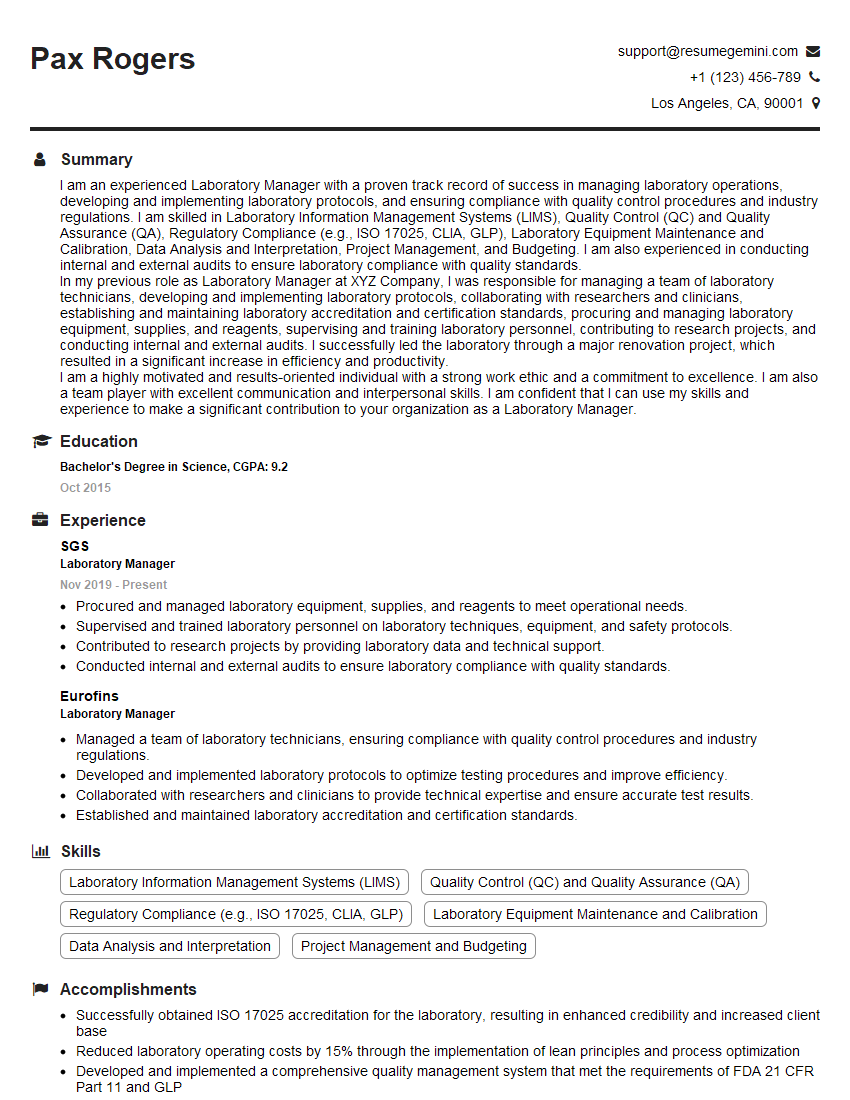
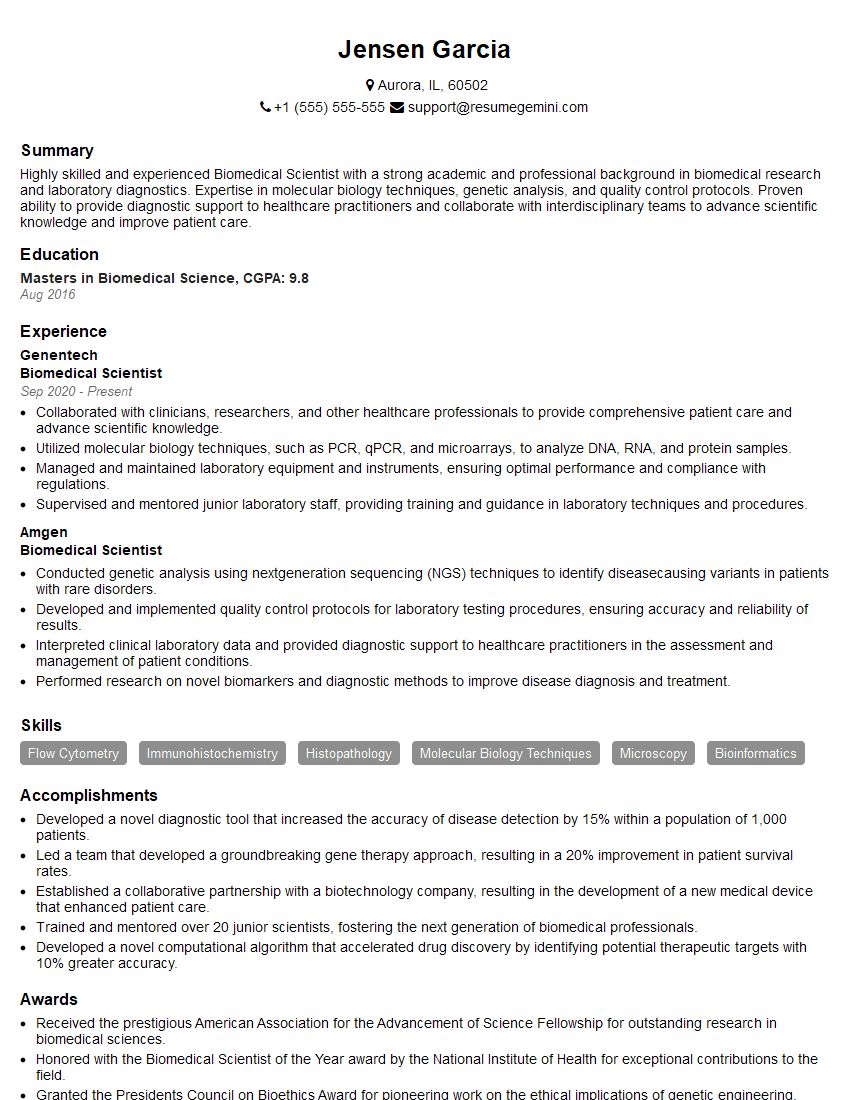
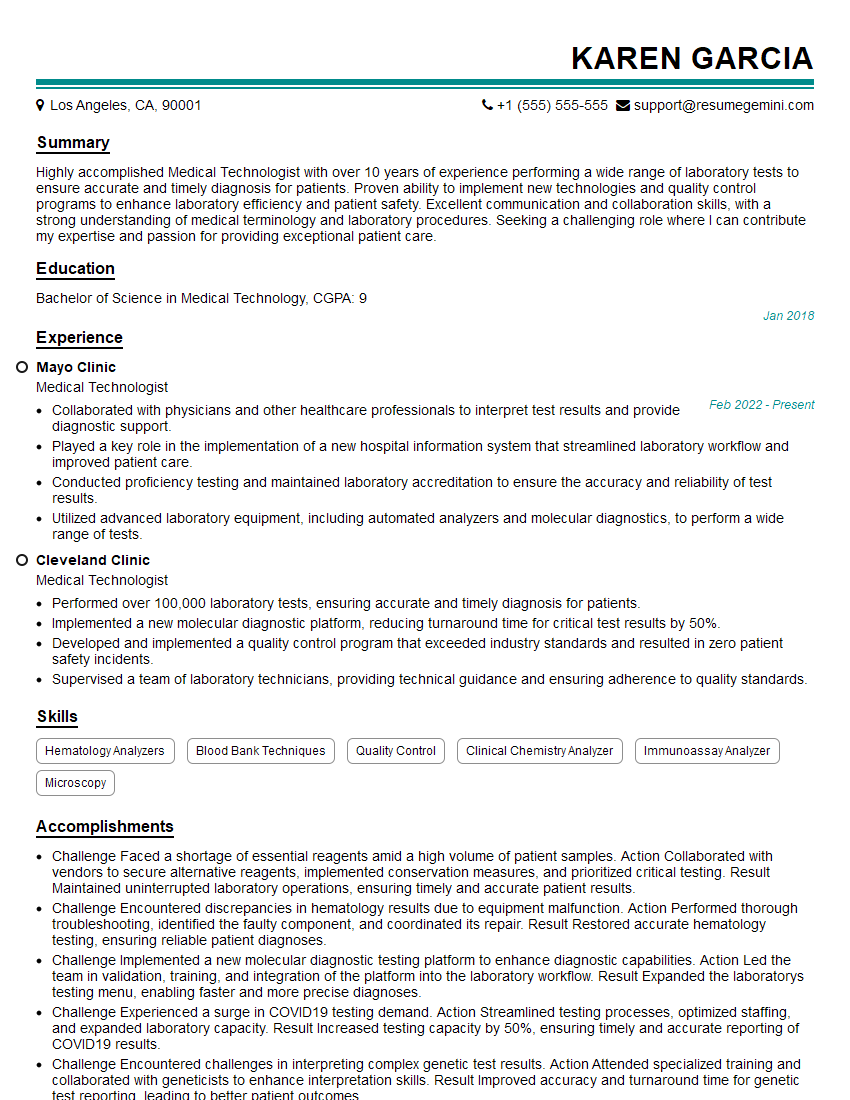
Mastering tissue storage techniques is crucial for advancing your career in biomedical research, healthcare, or related fields. A strong understanding of these principles will make you a highly valuable asset to any organization handling sensitive biological materials. To significantly boost your job prospects, creating an ATS-friendly resume is essential. ResumeGemini is a trusted resource to help you build a professional and impactful resume that highlights your skills and experience effectively. Examples of resumes tailored to the tissue storage field are available to guide you. Invest time in crafting a compelling resume; it’s your first impression on potential employers.


Explore more articles
Users Rating of Our Blogs
Share Your Experience
We value your feedback! Please rate our content and share your thoughts (optional).
What Readers Say About Our Blog
good