Preparation is the key to success in any interview. In this post, we’ll explore crucial Tobacco Stripping interview questions and equip you with strategies to craft impactful answers. Whether you’re a beginner or a pro, these tips will elevate your preparation.
Questions Asked in Tobacco Stripping Interview
Q 1. Describe the different methods used for tobacco stripping.
Tobacco stripping, the process of removing leaves from the stalk, is primarily done using two methods: hand stripping and machine stripping. Hand stripping, a labor-intensive but often preferred method for higher-quality tobacco, involves carefully removing each leaf individually by hand. This allows for meticulous selection and grading of leaves based on their quality and maturity. Machine stripping, on the other hand, utilizes automated equipment to remove leaves more quickly. While efficient for large-scale operations, it can sometimes cause leaf damage, impacting quality. The choice between these methods depends on factors such as the type of tobacco, desired quality, and available resources.
- Hand Stripping: Think of it like carefully picking ripe fruit from a tree – each leaf requires individual attention.
- Machine Stripping: This is like using a harvesting machine in a large field – fast and efficient, but less delicate.
Q 2. What are the key quality characteristics you look for in tobacco leaves during stripping?
During stripping, I look for several key quality characteristics. Firstly, color is crucial; mature leaves have specific hues depending on the type of tobacco. For example, in flue-cured tobacco, a golden brown is desired. Secondly, I assess size and shape; larger, well-formed leaves generally command higher prices. Thirdly, texture is important; leaves should be pliable and free from blemishes or damage. Finally, the overall condition of the leaf, including the presence of diseases or insects, is carefully evaluated. We utilize grading scales to quantify these attributes for consistent quality assessment across batches.
Q 3. How do you ensure efficiency and accuracy during the stripping process?
Efficiency and accuracy in stripping are paramount. For hand stripping, well-trained personnel are key. We conduct regular training sessions to ensure consistent techniques are used, minimizing damage and maximizing speed. For machine stripping, regular maintenance of equipment is critical. We regularly check machine settings and make adjustments to optimize leaf removal without damaging them. Furthermore, employing a well-structured workflow, appropriate workspaces and careful quality control checks at each stage ensures a smooth, effective process. For instance, we might use a two-person system: one stripping and the other immediately grading and sorting the leaves.
Q 4. Explain the importance of proper handling and storage of stripped tobacco leaves.
Proper handling and storage are vital for maintaining the quality and preventing degradation of stripped tobacco leaves. Immediately after stripping, leaves should be handled gently to avoid bruising. They are then carefully graded and sorted based on quality characteristics. Storage is crucial – leaves are typically cured in controlled environments to ensure optimal moisture levels, protecting them from mold or other damage. Proper ventilation and temperature control are essential to preserve the tobacco’s characteristics. Improper storage can lead to significant losses through discoloration, rot, and undesirable flavor changes.
Q 5. What are the common challenges faced during tobacco stripping, and how do you address them?
Common challenges in tobacco stripping include leaf breakage, inconsistencies in leaf quality, and weather-related delays. Leaf breakage can be mitigated through careful handling and appropriate machine settings. Inconsistencies are addressed through rigorous grading and sorting, and skilled workers can adapt to variations within a batch. Weather delays are handled through careful planning and possibly through the use of weather-protective storage facilities. For example, we’ve implemented a system of timed curing processes to accommodate unpredictable weather patterns and optimize leaf preservation.
Q 6. Describe your experience with different types of tobacco plants and their stripping requirements.
My experience spans various tobacco types, including flue-cured, burley, and oriental tobaccos. Each type presents unique stripping requirements. Flue-cured tobacco, known for its golden color, requires careful handling to avoid leaf damage due to its relatively delicate nature. Burley tobacco, which is tougher, allows for slightly more robust stripping methods. Oriental tobacco, prized for its aromatic qualities, needs extremely careful handling due to its smaller leaf size and higher susceptibility to damage. Understanding the specific characteristics of each type informs the stripping methods and equipment used for optimal results. We tailor our techniques to each tobacco variety for the best quality yield.
Q 7. How do you identify and handle damaged or diseased tobacco leaves during stripping?
Identifying and handling damaged or diseased leaves is crucial for maintaining the overall quality of the harvest. Damaged leaves – those with tears, bruises, or discoloration – are identified visually during stripping and promptly removed. Diseased leaves, showing signs of mold, pests, or other diseases, are also immediately separated. These rejected leaves are typically disposed of to prevent contamination of the healthy tobacco. This stringent quality control process throughout the stripping ensures the end product meets the highest standards and is free from defects.
Q 8. What safety measures do you follow while stripping tobacco?
Safety is paramount in tobacco stripping. We treat it as a non-negotiable aspect of the job. My approach focuses on preventing injuries and maintaining a healthy work environment.
- Personal Protective Equipment (PPE): We always wear gloves to protect our hands from the tobacco’s dust and potential irritants. Eye protection is crucial to prevent eye irritation from dust particles or accidental injuries. In some cases, we also use dust masks, particularly when working in dusty conditions or with large quantities of tobacco.
- Ergonomics: We maintain proper posture and take regular breaks to prevent muscle strain and fatigue. Stripping can be physically demanding, so adopting good ergonomic practices is key to preventing long-term issues. We utilize tools and work surfaces designed to minimize strain.
- Housekeeping: Maintaining a clean and organized workspace is vital. Clutter can lead to trips and falls. We regularly sweep the floor and dispose of waste appropriately.
- Emergency Preparedness: We’re all familiar with our workplace’s emergency procedures and the location of first-aid kits and emergency exits. We report any accidents or injuries immediately.
For example, I once noticed a colleague was experiencing discomfort due to improper posture. We adjusted their workstation and took a short break, emphasizing the importance of ergonomic techniques for long-term health.
Q 9. How do you maintain the quality and integrity of the tobacco leaves throughout the stripping process?
Maintaining tobacco leaf quality and integrity during stripping is critical for the final product’s value. It requires careful attention to detail and specific techniques.
- Gentle Handling: We handle the tobacco leaves with care, avoiding harsh movements or excessive force that could damage or bruise them. Think of it like handling delicate silk – gentleness is key.
- Proper Separation: We meticulously separate the leaves from the stalk, ensuring each leaf remains intact. Any damaged leaves are separated and handled accordingly. This prevents further damage to other leaves and maintains the overall quality of the product.
- Cleanliness: We maintain a clean working area to prevent contamination. Any dirt or debris could affect the quality and color of the cured tobacco leaves. This is often overlooked, but critically important.
- Storage Conditions: After stripping, we ensure the leaves are stored in a cool, dry, and well-ventilated area to prevent moisture damage, mold, and mildew. Proper storage is crucial for maintaining quality for extended periods.
Imagine a prized painting: Every brushstroke matters, and the same principle applies to handling tobacco leaves. The slightest mishandling can have a significant impact on the final product’s appearance and quality.
Q 10. Explain the importance of teamwork and collaboration in a tobacco stripping team.
Teamwork is essential in tobacco stripping. A cohesive team can significantly increase productivity and maintain quality.
- Efficient Workflow: Each team member has a defined role, contributing to a smooth and efficient workflow. This ensures that all processes are handled with precision.
- Shared Knowledge: Team members share their expertise and experiences, creating a supportive learning environment where everyone continually improves their skills. This shared knowledge helps us improve efficiency and address challenges effectively.
- Problem-Solving: When faced with challenges or unexpected issues, a collaborative team can brainstorm solutions and make decisions more effectively.
- Motivation and Morale: A supportive team fosters a positive work environment that boosts motivation and morale, resulting in higher quality work and improved productivity. We frequently encourage and support each other.
For example, during a particularly busy season, our team seamlessly adjusted roles to ensure a steady workflow, demonstrating our ability to adapt and support each other.
Q 11. How do you adapt to changes in workload or production demands during stripping?
Adapting to changing workloads is a routine aspect of tobacco stripping. Our adaptability stems from experience and teamwork.
- Prioritization: We prioritize tasks based on urgency and importance, ensuring that the most crucial steps are completed efficiently. This involves effectively managing our time and resources.
- Flexibility: We are flexible and willing to adjust our roles or workload as needed. This ensures we meet the demands even under pressure.
- Communication: Open communication within the team and with supervisors is crucial for efficiently managing changing demands. Keeping everyone informed helps to avoid bottlenecks and confusion.
- Overtime Management: We are prepared to work overtime when needed to meet deadlines without compromising quality. This flexibility is vital during peak seasons.
During one particularly busy week, we efficiently adjusted our schedules and roles to meet a higher than anticipated order volume, ensuring all tobacco leaves were processed to the highest standards. Our flexibility and teamwork ensured successful completion of the job.
Q 12. What is your understanding of the post-stripping processing steps?
Post-stripping processes are crucial for preserving the tobacco’s quality and preparing it for further processing or sale.
- Grading and Sorting: After stripping, the leaves are graded and sorted based on quality, size, and color. This ensures consistent quality for different tobacco products.
- Curing and Drying: Leaves undergo further curing and drying to reduce moisture content, preserving the leaves for longer periods and enhancing the desirable qualities for smoking.
- Baling and Packaging: Once cured and dried, the leaves are baled and packaged for storage, transport, or sale. The packaging materials and methods are chosen to preserve quality and prevent contamination.
- Quality Control Checks: Throughout the post-stripping process, regular quality checks are conducted to ensure that the tobacco meets the required standards. This maintains consistency and minimizes losses.
These post-stripping steps are as essential as the stripping process itself. They’re crucial to delivering a high-quality end product. Understanding these steps is important for every stripper.
Q 13. How do you ensure compliance with industry regulations and standards during stripping?
Compliance with industry regulations is crucial in tobacco stripping. This ensures safety, quality, and ethical practices.
- Workplace Safety Regulations: We strictly adhere to all workplace safety regulations, including the use of PPE and proper handling procedures. Our adherence to these regulations protects both the workers and the product.
- Tobacco Quality Standards: We follow established tobacco quality standards to ensure that the stripped leaves meet the required specifications. These standards maintain the quality of tobacco across the industry.
- Environmental Regulations: We comply with environmental regulations related to waste disposal and handling to protect the environment. Proper waste management is a responsibility we take seriously.
- Record Keeping: We maintain accurate records of all stripping activities, including quantities, quality assessments, and any issues encountered. This ensures traceability and accountability.
Regular training sessions keep us up-to-date on the latest regulations and best practices, demonstrating our commitment to compliance.
Q 14. Describe your experience with using different stripping tools and equipment.
My experience encompasses various stripping tools and equipment. I’m proficient with both traditional and modern methods.
- Traditional Hand Stripping: I’m adept at hand stripping, using tools like knives and specialized stripping implements. This method emphasizes care and precision. I can efficiently utilize these techniques for different tobacco varieties.
- Mechanical Strippers: I have experience operating mechanical strippers, which increase efficiency. I understand the maintenance and operation of these machines, ensuring optimal performance and preventing damage. I find mechanical strippers especially useful for high-volume work.
- Automated Systems: While my experience primarily focuses on manual and semi-automated methods, I understand the basic principles and benefits of fully automated tobacco stripping systems. This helps me in discussions regarding future industry trends and technological advancements.
My versatility with different tools and equipment allows me to adapt to various situations and optimize the stripping process based on the specific requirements of the tobacco being handled. Knowing the capabilities and limitations of each approach is essential.
Q 15. How do you maintain your work area clean and organized during stripping?
Maintaining a clean and organized workspace during tobacco stripping is crucial for efficiency, safety, and quality. Think of it like a surgeon preparing for an operation – a clean environment minimizes the risk of contamination and ensures a smooth process.
Regular sweeping and cleaning: I regularly sweep the floor to remove debris like fallen leaves and dust. I also wipe down all surfaces, especially the stripping table and equipment, with a damp cloth.
Designated areas for materials: I have specific areas for harvested tobacco, stripped leaves, stems, and other byproducts. This prevents mixing and makes the process more efficient. It’s like having your kitchen organized with separate areas for raw ingredients, cooking utensils, and finished dishes.
Waste disposal: I use designated bins for different types of waste, facilitating proper disposal and recycling where possible. This keeps the area clean and prevents clogging or contamination.
Personal hygiene: I maintain good personal hygiene, ensuring I’m always working with clean hands and wearing appropriate clothing to prevent contamination of the tobacco.
Career Expert Tips:
- Ace those interviews! Prepare effectively by reviewing the Top 50 Most Common Interview Questions on ResumeGemini.
- Navigate your job search with confidence! Explore a wide range of Career Tips on ResumeGemini. Learn about common challenges and recommendations to overcome them.
- Craft the perfect resume! Master the Art of Resume Writing with ResumeGemini’s guide. Showcase your unique qualifications and achievements effectively.
- Don’t miss out on holiday savings! Build your dream resume with ResumeGemini’s ATS optimized templates.
Q 16. How do you identify and report any equipment malfunctions or safety hazards?
Identifying and reporting equipment malfunctions and safety hazards is paramount. Ignoring even a minor issue can escalate into a major problem. I treat every hazard as a potential disaster waiting to happen.
Regular equipment checks: Before starting each shift, I carefully inspect all equipment for any signs of damage or malfunction. This includes checking blades for sharpness, conveyor belts for wear, and ensuring all safety guards are in place.
Immediate reporting: If I identify any malfunction or safety hazard, I immediately report it to my supervisor. I don’t wait or attempt a DIY repair. My priority is safety.
Documentation: I maintain detailed records of all reported issues, including the nature of the problem, the time and date of reporting, and the corrective actions taken. This helps track equipment maintenance and identify recurring issues.
For example, a malfunctioning conveyor belt could lead to a significant backlog. A dull blade can cause inefficient stripping and even injuries. Prompt reporting avoids such scenarios.
Q 17. What is your experience with different tobacco varieties and their specific stripping needs?
My experience spans various tobacco varieties, each with unique stripping characteristics. Just like different fruits require different techniques for peeling, so too do different tobacco types.
Burley: Burley tobacco, known for its thicker leaves, requires a more robust stripping technique. It might need more careful handling to avoid tearing.
Brightleaf: Brightleaf tobacco tends to be more delicate. It requires a gentler approach to preserve the leaf integrity during stripping.
Oriental: Oriental tobacco, with its smaller leaves, needs precision to strip efficiently without damaging the leaves.
I adapt my stripping technique to each variety. This includes adjusting the pressure applied, the speed of stripping, and the way I handle the leaves to optimize the yield and maintain leaf quality.
Q 18. How do you contribute to improving the efficiency and productivity of the stripping process?
Improving efficiency and productivity in tobacco stripping involves continuous refinement of techniques and collaboration with the team. It’s like a well-oiled machine, where each part contributes to the overall performance.
Ergonomic improvements: I suggest adjustments to workstations to enhance ergonomics, reducing strain and fatigue and boosting productivity. For example, I might suggest repositioning tools or using better supportive equipment.
Process optimization: I look for ways to streamline the stripping process, identifying bottlenecks and suggesting improvements. This might involve adjusting workflows or improving the organization of the workspace.
Teamwork: I actively collaborate with my team to share best practices and identify areas for improvement. A shared understanding and a sense of teamwork always boost productivity.
Training and knowledge sharing: I actively participate in and contribute to training sessions, sharing my experience and knowledge with newer team members.
Q 19. Describe your experience with quality control checks during tobacco stripping.
Quality control is central to tobacco stripping. It ensures the final product meets the required standards. Think of it as a chef tasting the dish before serving; regular checks ensure quality.
Visual inspection: I visually inspect each batch of stripped leaves for any defects, such as damage, discoloration, or impurities.
Sorting and grading: I sort and grade the leaves according to their size, color, and quality. This ensures consistent quality throughout the final product.
Moisture content checks: Depending on the process requirements, I might perform checks to ensure the leaves have the right moisture content.
Documentation: I maintain thorough records of all quality control checks, noting any issues or deviations from the standards.
For instance, identifying and removing damaged leaves during the stripping process ensures that only high-quality leaves are used in the final product, improving the overall quality of the tobacco.
Q 20. How do you handle variations in leaf size and maturity during stripping?
Handling variations in leaf size and maturity is a key skill in tobacco stripping. It’s about adapting your technique to each leaf. Just like a tailor adjusts the pattern to different body sizes, I adjust my technique.
Size adjustments: I adjust my stripping technique to accommodate variations in leaf size. Larger leaves may require a more forceful approach, while smaller leaves need a gentler touch.
Maturity considerations: I handle mature and immature leaves differently. Mature leaves tend to be more robust, while immature leaves need extra care to avoid damaging them.
Selective stripping: I often employ selective stripping, removing only the mature and high-quality leaves while leaving the immature ones to develop further.
For example, a poorly handled immature leaf might be damaged beyond use, while a robust stripping technique can efficiently process mature leaves without damage.
Q 21. What are your strengths and weaknesses concerning tobacco stripping?
My strengths lie in my precision, efficiency, and adaptability in tobacco stripping. I’m quick to learn new techniques, and I always strive to maintain the highest standards of quality. I’m a team player and enjoy sharing my knowledge.
However, like everyone, I have areas for improvement. While I’m proficient, I’m always looking for opportunities to enhance my speed and reduce hand fatigue, especially during long shifts. I’m actively seeking training to further develop my efficiency and ergonomics.
Q 22. How do you prioritize tasks and manage your time effectively during stripping?
Prioritizing tasks during tobacco stripping involves a blend of strategic planning and adaptability. I begin by assessing the overall workload, considering factors like the quantity of tobacco to be processed, the urgency of specific orders, and the available resources (both human and equipment). I then employ a prioritization matrix, focusing on tasks with the highest value and the tightest deadlines. For instance, if a premium grade of tobacco needs to be processed quickly for a specific client, that takes precedence. I also build in buffer time for unforeseen delays, like equipment malfunctions or unexpectedly difficult leaf conditions. Finally, I constantly monitor progress and adjust my plan as needed throughout the day. This flexible approach ensures efficient workflow and on-time delivery.
Q 23. Describe your experience with working in a fast-paced environment during peak harvesting seasons.
Peak harvesting seasons are undeniably fast-paced. I thrive in this environment because I’ve developed several key strategies. Firstly, clear communication is paramount. I work closely with my team, ensuring everyone understands their roles and responsibilities. Secondly, efficient organization is key. We maintain a streamlined process, from the initial sorting of the tobacco leaves to the final packing and storage. This involves careful planning of workspace and optimizing the use of equipment. Thirdly, I’m always ready to adapt. Unexpected issues arise – weather delays, equipment breakdowns – and I focus on finding quick, effective solutions. For example, during one particularly busy season, a crucial machine malfunctioned. Instead of panicking, I immediately rallied the team, re-organized the workflow to temporarily bypass the broken machine, and contacted maintenance for a speedy repair, minimizing downtime. My experience in these high-pressure situations has built my resilience and problem-solving skills.
Q 24. How do you maintain your physical stamina and endurance during long hours of stripping?
Maintaining physical stamina during long hours of stripping requires a holistic approach. It’s not just about physical strength; it’s about mindful habits. Firstly, proper hydration is crucial. I ensure I drink plenty of water throughout the day. Secondly, I prioritize regular breaks. These breaks aren’t just for rest; they involve stretching to prevent muscle strain and maintain good posture. Thirdly, a balanced diet plays a vital role. I consume nutrient-rich foods to fuel my body and prevent fatigue. Fourthly, prioritizing sleep is non-negotiable. Adequate rest is essential for recovery and optimal performance. Finally, I regularly incorporate physical activity outside of work to improve overall fitness and endurance. It’s a commitment to self-care that directly impacts my ability to perform effectively and safely for extended periods.
Q 25. What are your career goals related to tobacco stripping and processing?
My career goals in tobacco stripping and processing are focused on continuous improvement and leadership. I aim to further develop my expertise in grading and sorting high-quality tobacco, potentially taking on supervisory roles to mentor and train others. I’m particularly interested in learning about advanced tobacco processing techniques and exploring opportunities for automation or efficiency improvements within the industry. Ultimately, I envision myself as a respected leader in the field, contributing to the sustainability and growth of the tobacco processing industry while maintaining high standards of quality and ethical practices.
Q 26. Describe a time you faced a challenge during tobacco stripping and how you overcame it.
One time, I encountered a significant challenge with a large batch of tobacco leaves that had been affected by an unusual fungal infection. This impacted the leaves’ texture and color, making them difficult to grade accurately. My initial approach was to carefully separate the affected leaves, but this proved slow and inefficient. I then decided to consult with more experienced colleagues and researched the specific fungus online. This research revealed effective cleaning and treatment methods. We implemented these methods, carefully separating and treating the affected leaves before grading, improving the consistency and accuracy of the final product. This experience taught me the importance of teamwork, research, and adaptability in overcoming unforeseen challenges.
Q 27. How do you ensure the accurate grading and sorting of stripped tobacco leaves?
Accurate grading and sorting of stripped tobacco leaves is paramount. This involves a meticulous process, starting with a thorough understanding of the different grades based on factors such as leaf size, color, texture, and maturity. I use a combination of visual inspection and tactile assessment to determine the appropriate grade for each leaf. Consistency is maintained through standardized grading protocols. We regularly calibrate our sorting methods to ensure accuracy. Furthermore, to minimize errors, we employ a system of double-checking, where multiple individuals review the sorted leaves, ensuring accuracy and minimizing inconsistencies. This multi-layered approach guarantees the highest quality of sorted tobacco, meeting the client’s specific requirements.
Q 28. What are your salary expectations for this Tobacco Stripping position?
My salary expectations for this Tobacco Stripping position are commensurate with my experience and skills, and aligned with the industry standard for similar roles in this region. Considering my proven track record of efficiency, accuracy, and leadership potential, I am confident in requesting a competitive salary that reflects my value to your organization.
Key Topics to Learn for Tobacco Stripping Interview
- Understanding Tobacco Leaf Grades and Qualities: Learn to differentiate between various grades of tobacco leaves based on size, color, and maturity. This knowledge is crucial for efficient stripping and maximizing yield.
- Mastering the Stripping Process: Familiarize yourself with the different stripping techniques, including hand stripping and machine-assisted methods. Understand the importance of speed and accuracy in maintaining quality.
- Maintaining Quality and Yield: Explore strategies for minimizing leaf damage during stripping. Learn how to identify and handle defects effectively, contributing to a higher-quality final product.
- Safety Procedures and Regulations: Understand and be prepared to discuss workplace safety protocols specific to tobacco stripping, including handling of equipment and materials.
- Production Efficiency and Optimization: Explore methods for increasing efficiency and output while maintaining quality standards. This might include understanding workflow optimization and best practices.
- Troubleshooting Common Issues: Learn to identify and address common problems encountered during the stripping process, demonstrating problem-solving skills.
- Post-Stripping Handling and Processing: Understand the procedures followed after stripping, including sorting, curing, and preparing the tobacco for further processing.
Next Steps
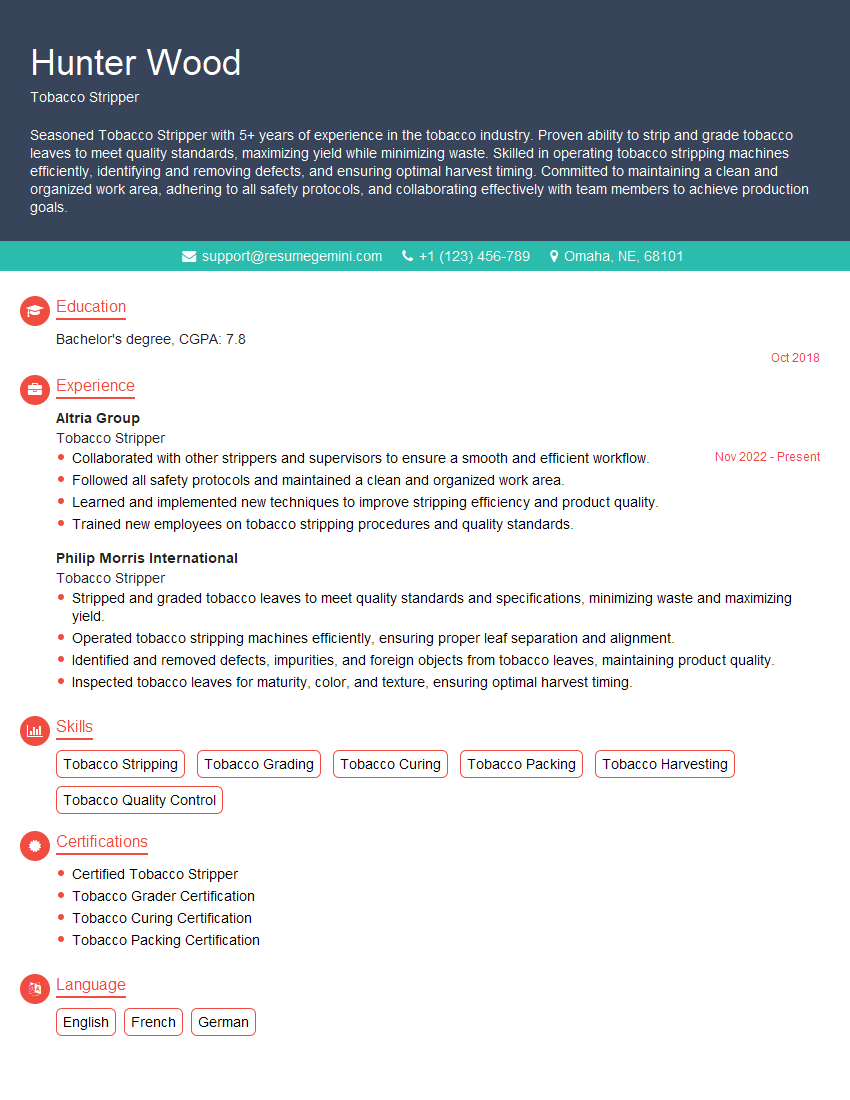
Mastering tobacco stripping opens doors to a rewarding career with opportunities for advancement and specialization within the agricultural and tobacco industries. To maximize your job prospects, focus on creating an ATS-friendly resume that highlights your skills and experience effectively. ResumeGemini is a trusted resource that can help you build a professional resume tailored to the specific requirements of tobacco stripping positions. Examples of resumes tailored to this field are available to guide you. Invest time in crafting a strong resume—it’s your first impression on potential employers.

Explore more articles
Users Rating of Our Blogs
Share Your Experience
We value your feedback! Please rate our content and share your thoughts (optional).
What Readers Say About Our Blog
Very informative content, great job.
good