Cracking a skill-specific interview, like one for Tool Design and Modification, requires understanding the nuances of the role. In this blog, we present the questions you’re most likely to encounter, along with insights into how to answer them effectively. Let’s ensure you’re ready to make a strong impression.
Questions Asked in Tool Design and Modification Interview
Q 1. Explain your experience with various CAD/CAM software used in tool design.
My experience with CAD/CAM software spans over a decade, encompassing a wide range of industry-standard tools. I’m proficient in SolidWorks, Autodesk Inventor, and Siemens NX, utilizing their capabilities for everything from initial concept sketching to generating CNC machining programs. For example, in a recent project involving a complex injection molding tool, I leveraged SolidWorks’ advanced surfacing tools to create the intricate mold cavity geometry, then seamlessly transitioned to its CAM module to generate efficient 5-axis milling programs. My experience with NX further extends to its robust simulation capabilities, allowing for thorough verification of tool performance before physical prototyping.
In another project involving a progressive die, I used Autodesk Inventor’s powerful assembly modeling features to manage the numerous components and ensure smooth interaction. The integrated CAM features in Inventor streamlined the process of generating toolpath for the various stamping operations. Understanding the strengths and weaknesses of each software allows me to choose the most appropriate tool for a specific job, optimizing design and manufacturing efficiency.
Q 2. Describe your process for designing a new tooling component from scratch.
Designing a new tooling component begins with a thorough understanding of its function within the larger system. I start with a detailed analysis of the part to be manufactured, considering material properties, tolerances, and desired surface finish. This is followed by sketching and brainstorming, often using digital sketching tools within my chosen CAD software. I then move to 3D modeling, meticulously creating the component’s geometry, including all critical features and dimensions. This process involves iterative design refinement, constantly evaluating manufacturability and cost-effectiveness. For example, if designing a punch for a press brake, I carefully consider the punch’s geometry to minimize bending forces and ensure consistent part quality. I’d incorporate features like radii and chamfers to reduce stress concentrations and improve tool lifespan.
Following the 3D modeling, I perform simulations (FEA, where appropriate) to verify the structural integrity and predict potential failure points under operating conditions. Finally, I generate detailed manufacturing drawings with all necessary annotations for the shop floor. This includes dimensions, tolerances, material specifications, surface finish requirements, and heat treatments, if necessary.
Q 3. How do you ensure the manufacturability of your tool designs?
Ensuring manufacturability is paramount; it’s integrated throughout the entire design process. I consider factors such as material selection, machining processes, available equipment at the manufacturing facility, and cost implications at each stage. For instance, designing a complex undercut in a die casting tool might require specialized machining techniques and potentially increase the cost. To mitigate this, I might explore alternative design solutions that eliminate the undercut or use simpler machining processes. This includes using standard tooling components wherever possible and adhering to established manufacturing practices and design guidelines. The use of Design for Manufacturing (DFM) principles is crucial. Regular communication with manufacturing engineers and machinists is also key to ensuring designs are realistically manufacturable.
I often utilize design reviews, involving both the design and manufacturing teams, to identify and resolve potential manufacturability issues early in the process. This collaborative approach prevents costly redesigns and delays later on. For example, a thorough review might highlight that a particular feature is difficult or impossible to machine with the available equipment, leading to a timely and cost-effective redesign.
Q 4. What are your preferred methods for tolerance analysis in tooling?
Tolerance analysis is critical for ensuring the functional accuracy and reliability of tools. I employ a combination of methods, starting with a thorough review of part drawings and specifications to identify critical dimensions and tolerances. I use statistical methods, such as tolerance stack-up analysis, to determine the overall tolerance of the assembled tool. This involves considering the individual tolerances of each component and their cumulative effect on the final assembly. For example, in a stamping die, the tolerances of the punch, die, and stripper plates must be carefully controlled to ensure accurate part formation.
Software tools are invaluable in this process. Many CAD packages provide built-in tolerance analysis features that automatically calculate tolerance stacks and identify potential problems. Geometric Dimensioning and Tolerancing (GD&T) principles are meticulously applied to clearly specify the acceptable variations in the geometry of the tool components. This ensures clear communication between design, manufacturing, and quality control teams.
Q 5. Explain your experience with different types of tooling materials and their applications.
My experience encompasses a broad range of tooling materials, each selected based on the specific application requirements. For example, high-speed steel (HSS) is widely used for cutting tools due to its high hardness and wear resistance. Carbide is preferred for applications requiring even greater wear resistance and hardness, like in high-volume stamping dies. Tool steels, such as A2 and D2, offer a balance of hardness, toughness, and machinability, making them suitable for a variety of applications. In recent projects, I’ve also worked with advanced materials like ceramic and cermet for high-temperature applications and specialized polymers for specific tooling needs like jigs and fixtures.
The selection of material considers several factors, including the required hardness, toughness, wear resistance, corrosion resistance, and cost. The properties of the material being processed also dictate the appropriate tooling material. For instance, machining a hard material like titanium requires a much harder tooling material, such as carbide, compared to machining aluminum which can be done with HSS or even specialized aluminum cutting tooling materials. Choosing the right material directly impacts the tool’s lifespan and overall manufacturing efficiency.
Q 6. How do you handle design changes and revisions during the tool design process?
Design changes are a common occurrence, and I manage them using a structured approach. Any modification request undergoes a thorough review to assess its impact on the overall design, manufacturability, and cost. I utilize the CAD software’s revision control features to track changes, ensuring that all stakeholders are informed and that the latest design revision is readily accessible. This includes documenting the reason for the change, its impact analysis, and any necessary updates to manufacturing drawings and related documentation.
A change control process is crucial for minimizing disruption and errors. This typically involves a formal request, review by relevant parties, approval, and implementation, with documentation at each stage. For example, if a customer requests a minor dimensional change, I will assess if it can be easily incorporated without affecting other components. If it requires significant modification, I will propose alternative solutions that might be more cost-effective or result in faster turnaround time. The transparency and collaborative nature of this process ensure that changes are implemented smoothly and effectively.
Q 7. Describe your experience with Finite Element Analysis (FEA) in tool design.
Finite Element Analysis (FEA) is a powerful tool that I frequently use to predict the structural behavior of tooling components under various loading conditions. This helps in identifying potential failure points, optimizing designs for strength and durability, and preventing costly failures during operation. I use FEA software to simulate the stresses and strains within a tool during operation, analyzing factors such as pressure, temperature, and impact forces. For example, I might use FEA to analyze the stress distribution in a large forging die to ensure it can withstand the high forces involved without yielding or fracturing.
The results of an FEA analysis guide design modifications. Identifying areas of high stress allows me to optimize the geometry, potentially adding reinforcement or modifying material selection. This iterative process of FEA analysis and design refinement ensures that the tooling is robust and reliable, minimizing the risk of failure and maximizing its lifespan. In a recent project involving a high-speed punching die, FEA helped to optimize the die’s design by identifying and mitigating areas of high stress concentration, ultimately reducing the risk of premature failure and ensuring the die’s longevity.
Q 8. How do you manage project timelines and budgets for tool design projects?
Managing project timelines and budgets for tool design projects requires a proactive and organized approach. It starts with a thorough understanding of the project scope, which includes defining deliverables, functionalities, and performance requirements. This detailed scope forms the basis for a Work Breakdown Structure (WBS), breaking down the project into smaller, manageable tasks.
Once the WBS is established, I utilize critical path method (CPM) scheduling techniques to identify task dependencies and critical paths. This allows for accurate estimation of project duration and identification of potential bottlenecks. We then assign resources and costs to each task, creating a detailed budget. Regular monitoring using Gantt charts and Earned Value Management (EVM) is crucial to track progress against the schedule and budget. Any deviations are promptly addressed through change management processes, involving stakeholders and adjusting the plan accordingly. For example, on a recent automotive stamping die project, we identified a potential delay in material delivery. By proactively communicating with the supplier and exploring alternative sourcing options, we managed to mitigate the delay and stay within the allocated timeline.
Contingency planning is also integral. Unexpected issues like design revisions or tooling failures are inevitable. Allocating a percentage of the budget and timeline to unforeseen circumstances helps to avoid cost overruns and schedule slips. This proactive approach ensures projects are completed efficiently, within budget, and to the client’s satisfaction.
Q 9. Explain your understanding of GD&T (Geometric Dimensioning and Tolerancing) and its application in tooling.
Geometric Dimensioning and Tolerancing (GD&T) is a standardized symbolic language used on engineering drawings to precisely define the size, form, orientation, location, and runout of features. It’s essential for tooling because it ensures that the tools manufactured will create parts that meet the specified tolerances, leading to proper assembly and functionality. Without GD&T, ambiguity in the design can lead to costly rework or even unusable tools.
In tooling, GD&T plays a critical role in defining the tolerances required for the tool itself and the parts it will produce. For example, a stamping die might require precise location of punch and die features to ensure consistent part geometry. GD&T symbols like position, perpendicularity, and runout will define the allowable deviations for these features. Similarly, in injection molding, the cavity dimensions must be controlled tightly using GD&T to ensure parts within acceptable dimensional tolerances. Understanding datum references and feature control frames is critical in translating design intent into manufacturable tooling.
I have extensive experience applying GD&T principles using ASME Y14.5 standards. This includes reviewing drawings for proper GD&T application, communicating tolerances to manufacturing, and using GD&T analysis software to ensure manufacturability.
Q 10. Describe your experience with different types of tooling processes, such as stamping, molding, or machining.
My experience spans several tooling processes, including stamping, molding, and machining. Each process presents unique challenges and requires specific design considerations.
- Stamping: I’ve designed progressive dies, blanking dies, and forming dies for various applications. This involves considering material properties, die strength, and springback effects during the design phase. I have expertise in selecting appropriate materials for the die components, designing robust die structures to withstand high pressures, and utilizing finite element analysis (FEA) to predict and mitigate potential issues.
- Molding (Injection & Compression): My experience includes designing molds for plastic and rubber parts. This entails considering factors like mold flow analysis (MFA) to optimize part filling, designing cooling systems for consistent part quality, and selecting appropriate materials for the mold components based on part geometry and production volume. I’ve worked extensively with different mold bases and runners, understanding the impact of each on the final product.
- Machining: I’ve been involved in designing fixtures and cutting tools for CNC machining operations. This includes selecting proper materials and coatings for cutting tools, designing efficient machining strategies, and ensuring the rigidity of fixtures to minimize vibrations and improve part accuracy.
In each of these processes, I emphasize designing for manufacturability, considering the capabilities and limitations of the manufacturing processes and equipment. This ensures the design is not only functional but also cost-effective and efficient to produce.
Q 11. How do you collaborate with manufacturing engineers and other stakeholders during the tool design process?
Collaboration is paramount in tool design. I foster strong working relationships with manufacturing engineers, process engineers, quality engineers, and other stakeholders throughout the entire design process. Open communication and regular meetings are key. We utilize collaborative design software and platforms to ensure everyone has access to the latest design revisions and can contribute their expertise.
Early involvement of manufacturing engineers is crucial to identify potential manufacturing issues early on, avoiding costly rework later. For instance, in a recent project involving a complex injection mold, collaborating with the manufacturing engineers allowed us to identify and address potential moldability issues, such as air traps and weld lines, during the design phase, resulting in significant cost and time savings.
Regular design reviews are conducted with stakeholders to ensure alignment on design goals, discuss potential challenges, and obtain timely feedback. This iterative process allows for continuous improvement and minimizes conflicts or misunderstandings that could arise later in the project.
Q 12. Describe your experience in troubleshooting tooling issues and implementing corrective actions.
Troubleshooting tooling issues requires a systematic approach combining analytical skills and practical experience. I typically follow these steps:
- Identify the Problem: Thoroughly document the issue, including observations, measurements, and any relevant data. This may involve collecting samples of defective parts or analyzing production data.
- Analyze the Root Cause: Use various methods like Pareto analysis, 5 Whys, or fishbone diagrams to identify the underlying cause of the problem. This often involves examining the tool design, manufacturing process, and material properties.
- Develop Solutions: Based on the root cause analysis, develop potential solutions and evaluate their feasibility and cost-effectiveness. This might include design modifications, process adjustments, or material substitutions.
- Implement and Verify: Implement the selected solution and rigorously verify its effectiveness through testing and data analysis. This often involves working closely with manufacturing to implement the changes and monitor the results.
- Document Corrective Actions: Document all corrective actions taken and their effectiveness to prevent similar issues from recurring in the future. This may involve updating design specifications, creating standard operating procedures (SOPs), or improving training programs.
For example, I once encountered a problem with inconsistent part dimensions in a stamping die. Through a systematic investigation involving dimensional analysis of the die and part measurements, we identified a slight misalignment of the punch and die. Correcting the alignment resolved the issue, highlighting the importance of precise tolerances and regular die maintenance.
Q 13. What are your preferred methods for creating and managing design documentation?
Creating and managing design documentation is crucial for effective communication and project management. My preferred methods involve using a combination of Computer-Aided Design (CAD) software and Product Lifecycle Management (PLM) systems. CAD software, such as SolidWorks or Creo, are used for creating 3D models, 2D drawings, and simulations. PLM systems, like Teamcenter or Windchill, provide centralized storage, version control, and collaborative access to design data, ensuring that all stakeholders have access to the most up-to-date information.
The documentation includes detailed 3D models, 2D drawings with complete GD&T specifications, material lists (BOM), assembly instructions, and quality control plans. A robust naming convention and file management system are essential to maintain order and easy retrieval of information. This systematic approach ensures clarity, consistency, and traceability throughout the product lifecycle.
Q 14. How do you ensure the safety and ergonomics of your tool designs?
Ensuring the safety and ergonomics of tool designs is a top priority. This starts in the conceptual design phase, where potential hazards are identified and mitigated. For example, designing for easy access to maintenance points minimizes the risk of injuries. Implementing safety features such as guards and interlocks on tools is crucial to protect operators from moving parts or hazardous conditions. Ergonomic considerations include designing tools with appropriate handles, reducing repetitive movements, and optimizing reach distances to reduce operator fatigue and risk of musculoskeletal disorders (MSDs). I actively use ergonomic design principles and guidelines, consulting relevant standards and best practices during the design process. This ensures that tools are not only efficient but also safe and comfortable for operators to use.
In addition to design, I emphasize operator training on safe tool usage and maintenance procedures. Regular safety inspections and risk assessments are conducted to identify and address any potential hazards throughout the tool’s lifecycle.
Q 15. Describe your experience with different types of tooling fixtures and their applications.
My experience encompasses a wide range of tooling fixtures, each designed for specific applications. Think of fixtures as the ‘hands’ that hold a workpiece during manufacturing processes, ensuring accuracy and repeatability. For example, I’ve extensively worked with:
Welding fixtures: These precisely locate and hold components during welding, preventing distortion and ensuring consistent weld quality. I’ve designed fixtures for everything from simple sheet metal welds to complex robotic welding applications, often incorporating quick-release mechanisms for efficient operation. One project involved designing a fixture for welding intricate car chassis components, where precise alignment was critical for structural integrity.
Machining fixtures: These fixtures secure workpieces during machining operations, such as milling, drilling, and turning. Designing these requires careful consideration of clamping forces, rigidity, and accessibility for the cutting tools. I recall a project where we redesigned a fixture to reduce machining time by optimizing the workpiece orientation and simplifying toolpath programming.
Assembly fixtures: These fixtures guide and hold components during assembly, ensuring proper alignment and repeatability. A recent project involved designing a fixture for assembling a complex electronic device, where precise placement of tiny components was crucial.
Inspection fixtures: These fixtures hold parts for accurate measurements and quality control. They ensure consistent positioning for reliable inspection data, contributing to the overall quality and efficiency of the manufacturing process. I was involved in developing a fixture to inspect the dimensional accuracy of critical engine components.
The selection of the fixture type and design depends heavily on the specific manufacturing process, the geometry of the workpiece, and the desired level of precision. My experience allows me to quickly assess the optimal fixture type for any given application.
Career Expert Tips:
- Ace those interviews! Prepare effectively by reviewing the Top 50 Most Common Interview Questions on ResumeGemini.
- Navigate your job search with confidence! Explore a wide range of Career Tips on ResumeGemini. Learn about common challenges and recommendations to overcome them.
- Craft the perfect resume! Master the Art of Resume Writing with ResumeGemini’s guide. Showcase your unique qualifications and achievements effectively.
- Don’t miss out on holiday savings! Build your dream resume with ResumeGemini’s ATS optimized templates.
Q 16. Explain your experience in selecting appropriate tooling materials based on application requirements.
Selecting the right tooling material is crucial for tool longevity, performance, and cost-effectiveness. It’s a balancing act – choosing a material that can withstand the stresses of the application without being prohibitively expensive. My approach involves:
Understanding the application requirements: This includes the material being machined or processed, the forces involved, the operating temperature, and the required surface finish. For example, machining hardened steel requires a much tougher tool material than machining aluminum.
Considering material properties: I assess factors like hardness, toughness, wear resistance, and thermal conductivity. For high-speed machining, thermal conductivity is particularly important to prevent tool damage from heat buildup.
Evaluating cost-effectiveness: While high-performance materials like carbide and ceramics offer superior wear resistance, they can be expensive. The selection process often involves a trade-off between initial cost and tool life. Sometimes, a less expensive material with proper coatings can offer a cost-effective solution.
Experience and data: My past experience and access to material property databases guide my selections. I can predict tool life and performance based on material choice and process parameters.
For instance, in one project, we replaced a high-speed steel tool with a coated carbide tool, significantly increasing tool life and reducing overall machining time, despite the higher initial cost of the carbide tool. The return on investment was considerable.
Q 17. How do you balance design optimization with cost considerations in your tool design work?
Balancing design optimization and cost is a critical aspect of tool design. It’s often an iterative process involving trade-offs. I use several strategies:
Finite Element Analysis (FEA): FEA simulations help optimize the tool’s geometry for strength and stiffness, minimizing material usage while ensuring the tool can withstand operating loads. This allows for material savings without compromising performance.
Design for Manufacturing (DFM): DFM principles ensure the tool is easy and cost-effective to manufacture. I consider factors like manufacturability, assembly, and material selection during the design phase to avoid costly fabrication and assembly challenges.
Value engineering: This systematic approach analyzes all aspects of the design to identify cost reduction opportunities without sacrificing functionality or performance. It may involve simplifying the design, using alternative materials, or modifying manufacturing processes.
Material selection optimization: As mentioned earlier, selecting cost-effective materials without compromising performance is key. This often involves considering various material options and comparing their performance and cost.
For example, in one project, we used FEA to optimize the design of a forging die, reducing its weight by 15% without compromising strength. This led to significant savings in material costs and reduced energy consumption during the forging process.
Q 18. What are your methods for evaluating and improving tool design efficiency?
Evaluating and improving tool design efficiency involves a multi-faceted approach. I employ several methods:
Data analysis: Tracking key performance indicators (KPIs) such as tool life, cycle time, and production yield provides crucial data for identifying areas for improvement. This data informs design modifications and process optimizations.
Process capability studies: These studies help identify process variations and their impact on tool performance. Understanding process variations allows for the development of more robust and reliable tools.
Design of experiments (DOE): DOE helps to systematically investigate the effects of different design parameters on tool performance. This allows for optimization of design parameters to achieve the best possible performance.
Root cause analysis (RCA): When tool failures occur, RCA helps identify the root cause of the failure, preventing future occurrences. This may involve examining failed tools, analyzing process data, and investigating operator feedback.
Continuous improvement methodologies (e.g., Lean, Six Sigma): Applying these methodologies helps to identify and eliminate waste in the tool design and manufacturing processes, leading to increased efficiency and reduced costs.
For instance, by analyzing tool failure data, we identified a specific machining parameter that was contributing to premature tool wear. By adjusting this parameter, we extended tool life by 20%, resulting in significant cost savings.
Q 19. Describe your experience with reverse engineering existing tooling components.
Reverse engineering existing tooling components is a common task, often necessary when original designs are unavailable or when modifications are required. My approach involves a structured process:
Dimensional measurement: Using precision measuring instruments, such as CMMs (Coordinate Measuring Machines) and optical scanners, I accurately capture the dimensions and geometry of the component.
Material analysis: Determining the material composition is crucial for understanding the component’s properties and for selecting appropriate replacement materials. This might involve metallurgical testing or chemical analysis.
3D modeling: Based on the dimensional data, I create a 3D model of the component using CAD software. This model provides a digital representation of the part, which can then be analyzed and modified.
Functional analysis: Understanding the component’s function within the larger tooling system is crucial for successful reverse engineering. This might involve reviewing assembly drawings, studying the tooling process, and observing the component in operation.
Documentation: Creating detailed drawings and specifications is essential for future use and manufacturing. This ensures that the reverse-engineered component can be easily reproduced.
In one instance, we reverse-engineered a critical component of a stamping die that was no longer manufactured. This allowed us to repair the die and avoid costly downtime.
Q 20. How do you stay current with the latest advancements in tool design and manufacturing technologies?
Staying current in the rapidly evolving field of tool design and manufacturing requires continuous learning. I employ several strategies:
Professional development courses and conferences: Attending industry conferences and taking specialized courses keeps me updated on the latest design software, manufacturing techniques, and materials.
Trade publications and journals: I regularly read industry publications and journals to learn about new technologies and best practices.
Online resources and webinars: Numerous online resources, including webinars and professional organizations’ websites, offer valuable information and training.
Networking with peers: Discussing challenges and solutions with colleagues and experts helps to share knowledge and expand understanding.
Hands-on experience: Participating in projects involving new technologies and materials provides invaluable practical experience.
For example, recently I completed a course on additive manufacturing techniques, which expanded my design possibilities and allowed me to explore new approaches to tool design and fabrication.
Q 21. Explain your experience with different types of tooling simulations and their applications.
Tooling simulations are invaluable for predicting tool performance, identifying potential issues, and optimizing designs before physical prototypes are created. My experience includes several types of simulations:
Finite Element Analysis (FEA): As mentioned earlier, FEA predicts the stress and strain distribution in a tool under various loading conditions, helping optimize its geometry and material selection for strength and durability.
Computational Fluid Dynamics (CFD): CFD simulations are used to analyze fluid flow, particularly in applications involving casting, molding, or other fluid-based processes. This helps optimize tool designs to ensure proper flow and prevent defects.
Machining simulations: These simulations predict the cutting forces, tool wear, and surface finish during machining operations. This allows for optimization of cutting parameters and prevention of tool failures.
Mold filling simulations: For injection molding tools, these simulations predict how the molten plastic will fill the mold cavity, helping to optimize the design to prevent defects such as air traps or short shots.
In one project, using machining simulation software allowed us to predict and avoid a potential tool chatter issue, saving time and resources by preventing costly rework.
Q 22. How do you ensure the quality and reliability of your tool designs?
Ensuring the quality and reliability of tool designs is paramount. It’s a multifaceted process that begins with a robust design process and extends through rigorous testing and validation. I employ several key strategies:
- Finite Element Analysis (FEA): Before even considering manufacturing, I use FEA to simulate the tool’s performance under various loads and conditions. This helps predict potential failure points and optimize the design for strength and durability. For instance, in designing a stamping die, FEA helps determine the optimal thickness of the die components to withstand the immense forces involved.
- Material Selection: Choosing the right materials is crucial. I carefully consider the tool’s application, the materials it will interact with, and the operating environment. For example, a tool used in high-temperature applications would require a material with a high melting point and resistance to oxidation, like Inconel.
- Tolerance Analysis: Precise tolerances are essential for proper functionality and interchangeability. I perform rigorous tolerance analysis to ensure that all components fit together correctly and function as intended, minimizing the risk of assembly problems or premature wear. This often involves using GD&T (Geometric Dimensioning and Tolerancing) principles.
- Prototyping and Testing: Physical prototypes are invaluable. I typically create and test several prototypes to identify and address any design flaws before committing to full-scale production. Testing involves subjecting the prototype to real-world conditions, recording data, and iteratively refining the design based on the results. This might include impact testing, fatigue testing, or wear testing, depending on the application.
- Design for Manufacturing (DFM): This critical step considers the manufacturing process from the outset. It ensures that the design is manufacturable efficiently and cost-effectively, using appropriate machining techniques and materials readily available to the chosen manufacturer.
By combining these strategies, I significantly reduce the risk of design failures and ensure that the tools I design are reliable and consistently meet the required performance standards.
Q 23. Describe your experience with working with various manufacturing processes and how it informs your tool design choices.
My experience spans various manufacturing processes, including machining (CNC milling, turning, EDM), casting (investment casting, die casting), forging, and additive manufacturing (3D printing). Understanding these processes is critical because it directly impacts design choices.
- Machining: When designing for machining, I consider factors such as accessibility for cutting tools, minimizing complex geometries that add to machining time and cost, and selecting appropriate material allowances for finishing. For example, I’ll design features with generous radii to avoid sharp corners, which can cause tool breakage.
- Casting: Casting processes necessitate designs that consider draft angles, core placement, and the ability to remove the casting from the mold easily. Design decisions here include optimizing wall thicknesses to prevent cracking and ensuring proper venting to avoid trapped air during the casting process.
- Forging: For forging, I design parts considering material flow during the forming process, ensuring sufficient stock for final dimensions, and minimizing the risk of flaws like cracks or inclusions. This often involves careful consideration of grain flow and optimized part geometry to reduce material wastage and improve mechanical properties.
- Additive Manufacturing: 3D printing allows for complex geometries previously impossible with traditional methods. I leverage this by designing tools with intricate internal channels for cooling or integrated sensors. However, I also need to account for the layer-by-layer build process, considering support structures and surface finish.
This breadth of experience allows me to choose the most appropriate manufacturing process for a given tool, optimizing for cost, lead time, and performance. It is crucial for selecting materials, dimensions, tolerances, and overall design for optimal manufacturing efficiency and outcome.
Q 24. How do you handle conflicting design requirements during the design process?
Conflicting design requirements are common. My approach involves a structured process to balance competing needs:
- Clearly Define Requirements: The first step is to thoroughly document all requirements, identifying which are critical and which are less important (e.g., using a weighted prioritization matrix). This clarity prevents misunderstandings and keeps the focus on the most important aspects.
- Trade-off Analysis: Once requirements are clearly defined, I perform a trade-off analysis, examining the implications of compromising on one requirement to meet another. This often involves creating multiple design options and evaluating their performance against each requirement. For example, increasing the tool’s strength might compromise its weight, requiring a trade-off decision.
- Compromise and Iteration: Ultimately, some compromise is often necessary. I strive to find a design that meets the most critical requirements while minimizing the impact on the less critical ones. This process usually involves several iterations, refining the design based on feedback and analysis.
- Documentation and Communication: It’s essential to clearly document all design decisions, including any compromises made and their rationale. Open communication with stakeholders is key to ensure everyone understands and accepts the final design.
This systematic approach ensures that design decisions are data-driven and well-justified, resulting in a robust and optimized tool design, even when faced with conflicting requirements.
Q 25. Describe your experience with design review processes and their role in quality assurance.
Design review processes are crucial for quality assurance. I’ve participated in numerous formal design reviews, employing a structured approach.
- Formal Review Meetings: These meetings involve cross-functional teams, including engineers, manufacturing personnel, and quality control representatives. This ensures a diverse range of perspectives are considered.
- Checklists and Templates: Using standardized checklists helps ensure consistency and completeness in reviewing design drawings, specifications, and analysis results. A structured review process also includes pre-determined review criteria.
- Issue Tracking and Resolution: Any identified issues are documented, assigned to responsible individuals, and tracked to closure. This ensures all concerns are addressed before proceeding to the next design phase.
- Design for Manufacturability (DFM) and Design for Assembly (DFA) Reviews: These reviews are critical for identifying potential manufacturing or assembly challenges early in the design process, preventing costly rework later. This may involve creating a prototype to test assembly processes and identify potential areas for improvement.
Through these processes, design reviews act as a critical quality gate, ensuring that designs are thoroughly vetted, potential problems are identified and mitigated early, and the final design meets all requirements.
Q 26. What metrics do you use to assess the success of your tool designs?
Assessing the success of a tool design involves a range of metrics, extending beyond simple functionality:
- Performance Metrics: These quantify the tool’s performance against its intended application. Examples include cycle time, production rate, accuracy, and surface finish for a machining tool. For a stamping die, it might be the number of parts produced before failure.
- Durability and Reliability: Mean Time Between Failures (MTBF) and overall tool life are crucial indicators of reliability. Data collected from testing and field use informs these metrics.
- Cost-Effectiveness: The total cost of ownership, including manufacturing cost, maintenance, and replacement, is a key factor. We track costs and compare against similar tools to understand cost-efficiency.
- Manufacturing Efficiency: This involves metrics like material utilization, scrap rates, and machining time. A successful design minimizes waste and maximizes efficiency.
- Safety: Tool safety is paramount. A successful design incorporates safety features and minimizes the risk of operator injury.
By tracking and analyzing these metrics, I gain valuable insights to continuously improve future tool designs and make data-driven decisions for optimal performance, longevity and cost-effectiveness.
Q 27. Explain your approach to problem-solving in a high-pressure tool design environment.
Problem-solving in a high-pressure environment demands a structured and efficient approach:
- Clearly Define the Problem: Before jumping to solutions, I carefully define the problem, gathering all relevant information and data. This involves precisely defining the failure or issue and identifying all contributing factors.
- Brainstorm Solutions: I utilize brainstorming techniques, engaging with colleagues to generate a wide range of potential solutions. This ensures diverse perspectives and innovative solutions are explored.
- Prioritize and Evaluate Solutions: Based on feasibility, cost, and effectiveness, I prioritize the potential solutions. This involves analyzing the potential impact of each solution on the overall project and its constraints.
- Rapid Prototyping and Testing: When possible, I build and test prototypes to quickly validate solutions. This allows for fast iteration, helping to determine the viability and effectiveness of the solution before large-scale implementation.
- Root Cause Analysis: After implementing a solution, I perform a root cause analysis to understand the underlying causes of the problem and prevent future occurrences. This critical step improves future tool design and reliability.
This approach ensures that problems are addressed efficiently and effectively, minimizing downtime and maintaining project momentum even under pressure.
Q 28. How do you adapt your design approach based on different types of manufacturing equipment?
Adapting the design approach based on manufacturing equipment is critical for optimal results. Different equipment has different capabilities and limitations.
- CNC Machining: When designing for CNC machining, I’ll optimize geometries for efficient machining strategies, considering tool paths, cutter selection, and material removal rates. Complex curves and features are easily incorporated, but I’ll also ensure accessibility for the tooling.
- Injection Molding: Injection molding designs focus on draft angles, parting lines, and ejection mechanisms. The design must consider flow patterns within the mold and ensure consistent material distribution.
- Sheet Metal Fabrication: Designing for sheet metal fabrication necessitates careful consideration of bend radii, flange dimensions, and material thickness. The design should minimize the need for complex forming operations. It is critical to select materials and geometries appropriate for the tooling and forming process used.
- 3D Printing (Additive Manufacturing): Designs for 3D printing can leverage complex geometries and internal structures but must consider support structures, layer adhesion, and material properties specific to the chosen 3D printing technology.
Understanding the capabilities and limitations of each machine ensures that the tool design is not only functional but also manufacturable efficiently and cost-effectively with the selected equipment. It avoids problems arising from mismatch of design and tooling capabilities.
Key Topics to Learn for Tool Design and Modification Interview
- Design Principles: Understanding fundamental design principles like ergonomics, material selection, and manufacturing processes (e.g., casting, machining, forging).
- CAD Software Proficiency: Demonstrating expertise in relevant CAD software (e.g., SolidWorks, AutoCAD) and your ability to create and modify 2D and 3D models.
- Tolerance Analysis and GD&T: Knowledge of geometric dimensioning and tolerancing (GD&T) and how to apply it to ensure precise tool functionality and interchangeability.
- Material Science and Selection: Understanding the properties of various materials (metals, polymers, composites) and selecting the appropriate material for specific tool applications, considering factors like strength, durability, and cost.
- Finite Element Analysis (FEA): Experience using FEA software to simulate tool performance under various loads and conditions, optimizing design for strength and longevity.
- Tool Life and Wear: Understanding factors affecting tool life, including wear mechanisms, lubrication, and cooling techniques. Ability to propose modifications to extend tool life.
- Manufacturing Processes and Tooling: Familiarity with various manufacturing processes (e.g., stamping, injection molding) and how tooling design directly impacts product quality and efficiency.
- Modification Strategies: Experience in identifying areas for improvement in existing tools, proposing cost-effective modifications, and implementing changes to improve performance or address failures.
- Troubleshooting and Problem-Solving: Demonstrating a systematic approach to identifying the root cause of tool failures and proposing solutions based on engineering principles.
- Project Management and Communication: Ability to manage tool design and modification projects effectively, including collaboration with cross-functional teams and clear communication of technical details.
Next Steps
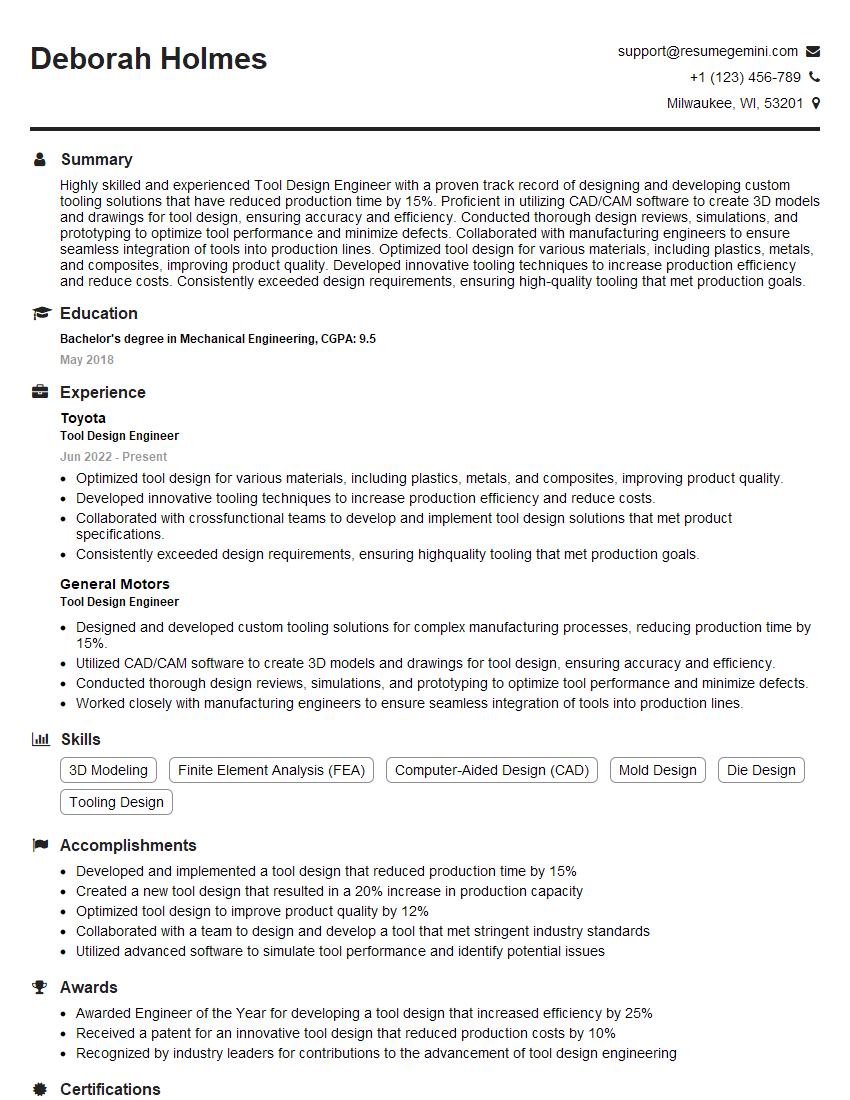
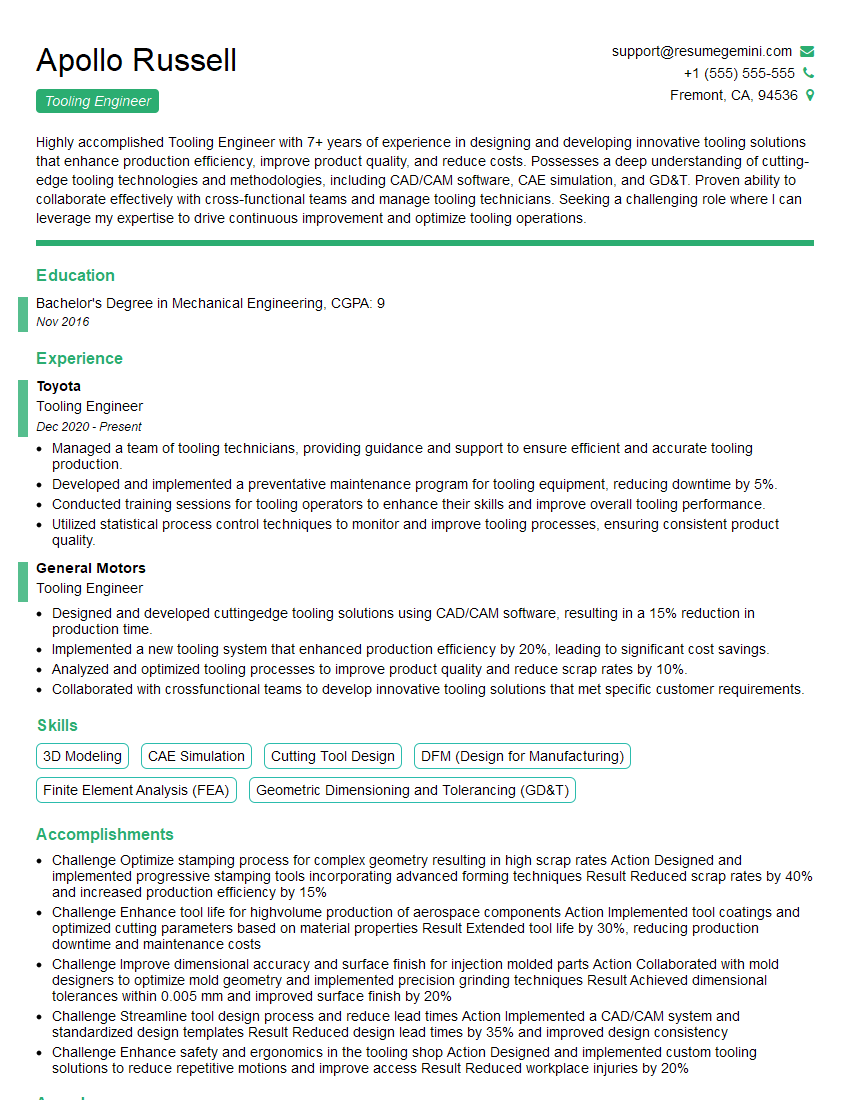
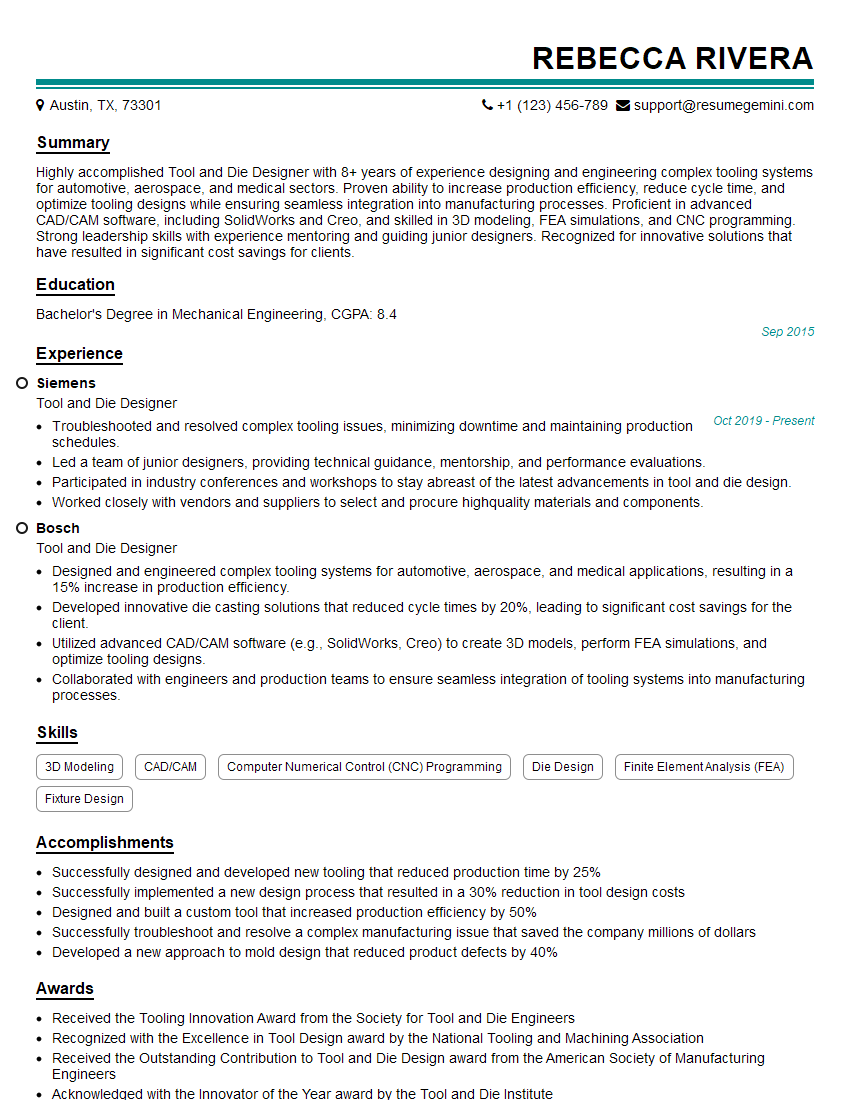
Mastering Tool Design and Modification opens doors to exciting career advancements, offering opportunities for specialization, leadership roles, and higher earning potential. To maximize your job prospects, it’s crucial to create a compelling and ATS-friendly resume that showcases your skills and experience effectively. ResumeGemini is a trusted resource to help you build a professional resume that stands out. They provide examples of resumes tailored to Tool Design and Modification to guide you in creating a winning application. Take the next step towards your dream career today!
Explore more articles
Users Rating of Our Blogs
Share Your Experience
We value your feedback! Please rate our content and share your thoughts (optional).