Cracking a skill-specific interview, like one for Tractor and Implement Operation, requires understanding the nuances of the role. In this blog, we present the questions you’re most likely to encounter, along with insights into how to answer them effectively. Let’s ensure you’re ready to make a strong impression.
Questions Asked in Tractor and Implement Operation Interview
Q 1. Describe your experience operating various types of tractors.
My experience encompasses a wide range of tractors, from smaller, versatile utility tractors ideal for orchard work and smaller acreage farms, to large, high-horsepower models used for extensive field operations like plowing and planting large-scale crops. I’ve operated both wheeled and tracked tractors, each with unique advantages. Wheeled tractors offer better maneuverability on paved roads and less soil compaction in certain conditions. Tracked tractors excel in muddy or hilly terrains due to their superior traction. I’m proficient with various transmission types, including manual, semi-automatic, and fully automatic, and I’m comfortable adjusting tractor settings to optimize performance for different tasks and conditions. For example, I’ve adjusted wheel weights and tire pressure to maximize traction while minimizing soil compaction during heavy tillage work.
Specifically, I have extensive experience operating John Deere 8000 series tractors for large-scale planting and harvesting, Case IH Magnum tractors for heavy tillage and pulling large implements, and Kubota BX series tractors for more delicate work around orchards and vineyards. This diverse experience has given me a well-rounded understanding of tractor capabilities and limitations across various applications.
Q 2. Explain the different types of tillage implements and their applications.
Tillage implements are tools used to prepare the soil for planting. They broadly fall into several categories:
- Moldboard Plows: These invert and pulverize the soil, creating a clean seedbed. They’re effective in controlling weeds and incorporating organic matter but can lead to increased soil erosion if not managed properly. I’ve used moldboard plows extensively for preparing fields for corn and soybean planting.
- Disc Harrows: These cut and pulverize the soil using rotating discs. They’re more suitable for lighter soils and are often used for seedbed preparation after plowing or for weed control. They’re less effective at deeper soil preparation compared to moldboard plows.
- Chisel Plows: These have shanks that penetrate the soil to break up compaction layers, improving water infiltration. They’re less aggressive than moldboard plows and often used in conservation tillage systems. I’ve found them particularly useful in preparing fields that have experienced compaction after heavy equipment use.
- Subsoilers: These break up hardpans and compacted layers deep in the soil profile. They significantly improve drainage and root penetration. They’re vital in areas with naturally compacted soil.
- Rotary Tillers: These use rotating blades to finely pulverize the soil, creating a very fine seedbed. They are better suited for smaller areas and vegetable gardens than for large-scale farming.
The choice of tillage implement depends on factors such as soil type, climate, crop being planted, and the farmer’s conservation goals. For instance, in areas prone to erosion, conservation tillage techniques utilizing reduced tillage implements like chisel plows or no-till drills are preferred.
Q 3. How do you maintain and troubleshoot tractor and implement systems?
Maintaining and troubleshooting tractor and implement systems requires a proactive and systematic approach. Regular preventative maintenance is crucial. This includes:
- Daily Checks: Before each use, I inspect fluids (engine oil, hydraulic fluid, coolant, fuel), tire pressure, belts, and safety systems. I also visually inspect implements for damage or wear.
- Scheduled Maintenance: This involves tasks like changing oil and filters, lubricating moving parts, and inspecting critical components according to the manufacturer’s recommendations. I maintain meticulous records of all maintenance activities.
- Troubleshooting: If a problem arises, I follow a logical process. First, I identify the symptom. Then, I consult the owner’s manual and other resources (technical manuals, online forums) to determine potential causes. I systematically check the relevant systems, using diagnostic tools when necessary. For example, if a hydraulic implement isn’t functioning, I’d check for leaks, low fluid level, blocked filters, and faulty hydraulic components.
I’m experienced in using diagnostic tools such as pressure gauges, multimeters, and computer-based diagnostic systems to identify and resolve more complex issues. For example, I can use a diagnostic code reader to troubleshoot electronic control modules on modern tractors.
Q 4. What safety procedures do you follow when operating agricultural machinery?
Safety is paramount. My procedures include:
- Pre-operational Checks: Thoroughly inspecting the tractor and implement for any defects, ensuring all guards and safety devices are in place and functioning correctly.
- Personal Protective Equipment (PPE): Always wearing appropriate PPE, including hearing protection, safety glasses, and sturdy work boots.
- Awareness of Surroundings: Maintaining constant awareness of my surroundings, including other people, animals, obstacles, and potential hazards.
- Safe Operating Practices: Never operating machinery when fatigued or under the influence of drugs or alcohol. Following all manufacturer’s instructions and safety guidelines. Avoiding sudden movements and maintaining a safe speed appropriate to the conditions.
- Communication: Using appropriate signaling devices (lights, hand signals) to communicate with others in the work area.
- Emergency Procedures: Knowing the location of emergency shut-off switches and having a plan in case of an emergency.
I emphasize safe practices not only for my own safety but also for the safety of others working in the vicinity. A safe work environment is essential for both efficiency and avoiding accidents.
Q 5. Describe your experience with GPS-guided equipment and precision agriculture.
I have significant experience with GPS-guided equipment and precision agriculture techniques. I’m proficient in operating tractors and implements equipped with GPS guidance systems, including auto-steer systems that allow for hands-free operation. This allows for improved accuracy in tasks such as planting, spraying, and fertilizing, reducing overlap and maximizing input efficiency.
I’m familiar with various precision agriculture technologies, including variable rate technology (VRT) for applying inputs based on soil conditions or yield maps. I understand how to collect and interpret data from yield monitors and sensors to improve management decisions. This experience has enabled me to significantly improve the efficiency and sustainability of farming operations by reducing the use of inputs like seeds, fertilizers and pesticides and optimizing crop yields.
For example, I’ve used RTK GPS systems (Real Time Kinematic) to achieve centimeter-level accuracy in planting, ensuring consistent seed spacing and depth for optimal germination. I’m also experienced with using data management software to analyze yield maps and optimize fertilizer application rates in subsequent seasons.
Q 6. How do you adjust implement settings for varying soil conditions?
Adjusting implement settings for varying soil conditions is crucial for optimal performance and efficient operation. Factors like soil type, moisture content, and compaction significantly influence the necessary adjustments.
- Depth: In harder, drier soils, shallower depths may be necessary to avoid excessive wear on implements and reduce fuel consumption. In softer, wetter soils, deeper depths may be possible for improved soil preparation. This is often controlled through hydraulic settings on the implement.
- Speed: Slower speeds are generally used in heavier, more challenging soils to ensure proper tillage and reduce stress on the tractor and equipment. Faster speeds can be employed in lighter, easier-to-work soils.
- Implement Angle: The angle of implements like moldboard plows can be adjusted to optimize soil inversion and pulverization. This is usually adjusted manually on older implements and hydraulically on modern equipment.
- Working Width: For some implements, the working width can be altered to match field conditions and optimize productivity.
Regular monitoring of soil conditions and making timely adjustments is key. Visual inspection of the tilled soil is vital, and additional methods like soil probes can help in assessing compaction levels. For instance, I’ve adjusted the depth of my chisel plow to address compaction layers discovered using a soil probe.
Q 7. Explain the proper techniques for operating a combine harvester.
Operating a combine harvester requires a methodical approach, emphasizing both safety and efficiency. Key steps include:
- Pre-harvest Checks: Inspecting the combine for any mechanical issues, ensuring proper oil levels, fuel levels, and the functionality of all components like the header, threshing cylinder, and cleaning system.
- Header Adjustment: Setting the header height and cutting width appropriately for the crop height and field conditions. The header should be properly leveled and the cutting height adjusted to prevent ground loss and uneven cutting.
- Threshing and Separating Adjustments: Adjusting the concave clearance, cylinder speed, and rotor speed to optimize threshing and grain separation based on the crop’s moisture content and maturity. This prevents grain losses and minimizes grain damage.
- Cleaning System Adjustments: Adjusting the sieves and fan speed to optimize grain cleaning, removing chaff and other debris while minimizing grain loss. This typically involves adjusting the sieve openings and fan air velocity.
- Monitoring Performance: Continuously monitoring the combine’s performance, paying close attention to grain loss indicators and making adjustments as needed. Checking grain quality and moisture content regularly is critical.
- Post-harvest Cleaning: Thoroughly cleaning the combine after each use, removing any accumulated chaff or debris, and conducting routine maintenance to minimize wear and tear.
Experience plays a key role in optimizing combine settings based on the specific crop and environmental conditions. Continuous monitoring and small adjustments throughout the harvesting process are essential for maximizing yield and minimizing grain loss.
Q 8. What are the common causes of tractor malfunctions and how do you address them?
Tractor malfunctions stem from various sources, broadly categorized as mechanical, electrical, or hydraulic issues. Mechanical problems might include worn-out belts, failing bearings in the transmission or PTO (Power Take-Off), or engine problems like low compression or fuel delivery issues. Electrical problems can range from faulty wiring and blown fuses to malfunctioning sensors or the entire electrical system. Hydraulic failures could involve leaks in hoses or cylinders, pump failures, or problems with the control valves.
Addressing Mechanical Issues: Regular preventative maintenance, including lubrication, is key. For instance, I always meticulously check and replace worn belts before they fail, preventing costly downtime. Diagnosing mechanical issues often involves listening for unusual noises, checking fluid levels, and visually inspecting components. A systematic approach, starting with the most likely causes, is crucial.
Addressing Electrical Issues: Troubleshooting electrical problems starts with checking fuses and wiring for damage. A multimeter is invaluable for checking voltage and continuity. I’ve often found that seemingly complex electrical issues are caused by a simple loose connection or a corroded terminal. In more serious cases, consulting a wiring diagram is essential.
Addressing Hydraulic Issues: Hydraulic system checks involve inspecting hoses for leaks, checking fluid levels, and listening for unusual noises from the pump. Leaking hoses are addressed immediately by replacement. Low fluid levels can indicate a leak that needs investigation and repair. A faulty hydraulic pump will often require professional attention.
In any case, safety is paramount. Before undertaking any repair, always disconnect the power source to prevent accidents. If unsure about a particular repair, seeking professional help is always the best approach.
Q 9. How do you ensure the safe and efficient transport of agricultural machinery?
Safe and efficient transport of agricultural machinery requires meticulous preparation and adherence to road safety regulations. This includes ensuring the machinery is properly secured to the trailer, lights and indicators are functioning correctly, and the overall weight doesn’t exceed legal limits. I always use appropriate tie-down straps and ensure the load is evenly distributed to prevent swaying during transportation. Additionally, I make sure the equipment is cleaned to avoid dropping debris and maintain visibility. Before setting off, I perform a thorough safety check, including tire pressure and braking systems. If transporting over long distances, I plan for regular rest stops to avoid fatigue.
For example, when transporting a large combine harvester, I utilize specialized trailers designed for heavy equipment, and I employ multiple securement points to prevent any movement. I always ensure the trailer’s lights are in perfect working order and comply with all regulations. I document all transportation procedures for insurance and regulatory compliance.
Q 10. Describe your experience with different types of planters and their operation.
My experience encompasses a wide range of planters, from simple grain drills to sophisticated precision planters. Grain drills are suitable for broadcasting seeds, while precision planters allow for precise seed placement and spacing. I’ve operated both air and vacuum planters, each with its own strengths and weaknesses. Air planters use airflow to meter and place seeds, while vacuum planters use suction to draw seeds into the planting mechanism.
Air Planters: These offer high planting speeds but can be sensitive to seed size variations and wind conditions. I’ve learned that proper calibration and careful monitoring are crucial for consistent seed distribution.
Vacuum Planters: These are generally more consistent in seed placement and less susceptible to wind, but can be more challenging to maintain and are usually less efficient at higher planting speeds. I’ve found that regular cleaning and maintenance of the vacuum system are crucial for their effective operation.
Precision Planters: These are essential for optimizing yield by ensuring the correct number of seeds are planted at the ideal depth and spacing. They often incorporate GPS technology for greater accuracy and allow for variable rate planting to account for soil variations. My experience with precision planters includes setting up the GPS, calibrating the planting units and monitoring the operation in real time. I am proficient in using software associated with these planters to generate reports and track progress.
Choosing the right planter depends on the crop, field conditions, and desired precision. I carefully assess these factors before selecting a planter for any job, and meticulously calibrate the equipment to ensure optimal performance.
Q 11. How do you perform pre-operational checks on a tractor and implements?
Pre-operational checks are critical for safe and efficient operation. They involve a thorough inspection of both the tractor and implements before starting any work. For the tractor, I check fluid levels (engine oil, coolant, transmission fluid, hydraulic fluid), tire pressure, belts, and hoses. I inspect the battery terminals for corrosion and the lights and indicators. I also test the brakes and steering to ensure they’re functioning correctly. A critical step is checking the PTO engagement mechanism and safety features.
For implements, the checks vary depending on the type. For example, with a plow, I’d inspect the plowshares for wear and tear and ensure they’re properly adjusted. With a planter, I’d verify seed and fertilizer levels, check the planting mechanism, and ensure proper calibration. For a baler, I’d check the pickup mechanism, belts, and knives. Always refer to the implement’s operating manual for a detailed checklist of inspections specific to the machine.
My approach is systematic. I follow a checklist, moving through each step methodically. This helps ensure nothing is overlooked. This is a fundamental step that saves time and prevents potential breakdowns in the field.
Q 12. What are the different types of balers and their applications?
Balers are used to compress cut and dried forage into bales for easier storage and handling. The two main types are round balers and square balers.
Round Balers: These produce large cylindrical bales, typically 4 to 6 feet in diameter. They’re generally faster and better suited for larger operations, but the bales can be more difficult to handle and store. They are ideal for large-scale hay production.
Square Balers: These create rectangular bales of uniform size, making them easier to stack and store. They are often preferred for smaller operations or when precise bale size is critical. These are better for smaller farms or operations focusing on ease of handling.
There are variations within each type, such as small square balers, large square balers, and variable-chamber round balers that adjust bale size based on crop density. The choice depends on factors like the volume of material being baled, the available storage space, and handling capacity. My experience includes operating all of these types, and I’m proficient in adjusting settings to optimize bale density and shape for each type of forage.
Q 13. How do you handle equipment failures in the field?
Handling equipment failures in the field requires a calm and systematic approach. My first step is always safety; ensuring the area is secure and no one is at risk. Then, I assess the nature of the failure. Is it something minor that can be fixed on-site, or does it require more extensive repair? For minor issues, like a broken belt or a clogged chute, I have the necessary tools and parts to make repairs quickly. I’ve always carried a well-stocked toolbox for common repairs.
For more significant failures, I first attempt to diagnose the problem, often referencing the owner’s manual or contacting a mechanic for guidance. If the repair can’t be completed in the field, I’ll secure the equipment, make sure it’s clearly visible to avoid accidents, and arrange for transport to a repair shop. Proper documentation is critical – I take photos and make notes of the issue and steps taken to fix it.
Prevention is also key. By diligently performing routine maintenance and adhering to operational procedures, I minimize the risk of equipment failure. This proactive approach saves significant time and prevents major disruptions.
Q 14. What is your experience with hydraulic systems on tractors and implements?
Hydraulic systems are integral to modern tractors and implements. My experience includes working with a variety of hydraulic systems, from simpler open-center systems to more sophisticated closed-center systems with load-sensing capabilities. I understand the basic principles of hydraulics, including fluid flow, pressure, and the role of valves, pumps, and cylinders.
I’m familiar with troubleshooting hydraulic issues, such as leaks, slow response times, and lack of power. I can inspect hoses and fittings for leaks, check fluid levels and quality, and identify faulty components. My experience includes diagnosing issues by tracing the hydraulic lines and pinpointing the source of the problem – this could involve anything from a simple leak to a more complex issue requiring specialized equipment or mechanic intervention. This knowledge allows me to efficiently resolve the issues that arise while operating farm equipment and perform regular maintenance to prevent potential problems.
Safety is always a priority when working with hydraulic systems. I am aware of the potential hazards, including high-pressure fluid jets and moving parts. I always follow safety protocols when working with hydraulic components and avoid potentially unsafe situations. Knowing the safe operating pressures of different systems is critical in maintaining functionality and ensuring safe operation.
Q 15. Explain your understanding of PTO (Power Take-Off) systems.
A Power Take-Off (PTO) system is a mechanism that allows a tractor’s engine power to be transferred to external implements, such as mowers, balers, or pumps. Think of it as a power outlet for your tractor. It typically involves a driveshaft extending from the tractor’s transmission, rotating at a specific speed (usually 540 or 1000 RPM), to power the implement. This rotary power is then used to drive the implement’s components.
There are two main types: Independent PTO allows the PTO to operate independently of the tractor’s transmission, meaning you can engage the PTO even when the tractor is stationary or moving slowly. This is crucial for tasks like operating a stationary baler. Live PTO, on the other hand, is directly linked to the tractor’s transmission, meaning it operates only when the tractor is moving. This is suitable for implements that need to be synchronized with the tractor’s speed, such as a tiller or a mower.
Proper PTO engagement and disengagement are crucial for safety. Always ensure the PTO is disengaged before making any adjustments or leaving the tractor. Also, understand the specific requirements of each implement regarding PTO speed and engagement.
Career Expert Tips:
- Ace those interviews! Prepare effectively by reviewing the Top 50 Most Common Interview Questions on ResumeGemini.
- Navigate your job search with confidence! Explore a wide range of Career Tips on ResumeGemini. Learn about common challenges and recommendations to overcome them.
- Craft the perfect resume! Master the Art of Resume Writing with ResumeGemini’s guide. Showcase your unique qualifications and achievements effectively.
- Don’t miss out on holiday savings! Build your dream resume with ResumeGemini’s ATS optimized templates.
Q 16. How do you manage fuel efficiency while operating agricultural machinery?
Fuel efficiency is vital in agricultural operations. Managing it effectively translates to significant cost savings and environmental responsibility. Here are some key strategies I employ:
- Proper Maintenance: Regular maintenance, including clean air filters, properly inflated tires, and correctly adjusted engine, are crucial. A well-maintained engine burns fuel more efficiently. Think of it like regularly servicing your car; it runs smoother and consumes less fuel.
- Optimal Operating Techniques: Avoid lugging the engine by matching the tractor’s gear to the load. Avoid high RPMs unless absolutely necessary. Smooth operation minimizes fuel consumption. Imagine driving a car – you wouldn’t constantly accelerate and brake aggressively.
- Correct Implement Selection and Use: Using the right implement for the job and operating it correctly is crucial. Using a heavier implement than necessary or an improperly adjusted implement wastes fuel.
- Field Conditions: Wet or muddy fields significantly increase fuel consumption. If possible, avoid operating in these conditions or utilize techniques like controlled traffic farming to minimize compaction.
- Fuel Type: Using the correct fuel type recommended by the manufacturer is critical for optimal engine performance and fuel economy.
Q 17. What is your experience with different types of sprayers and their calibration?
My experience encompasses various sprayer types, from boom sprayers commonly used for herbicides and pesticides to airblast sprayers used in orchards and vineyards. I’m also familiar with self-propelled sprayers offering increased precision and efficiency. Accurate calibration is paramount for effective spraying and preventing wastage.
Calibration involves determining the sprayer’s output – how much spray solution it delivers per unit area (e.g., gallons per acre). I utilize established procedures: measuring the amount of spray solution delivered over a known distance and time, then calculating the application rate. This usually involves measuring the output of each nozzle individually to ensure uniformity. Regular calibration ensures consistent application and prevents over- or under-application, maximizing effectiveness and minimizing environmental impact. Factors influencing calibration include nozzle type, pressure, and travel speed, all of which I meticulously adjust depending on specific field conditions and the application requirements.
Q 18. Describe your knowledge of tractor hitches and implement attachments.
Tractor hitches and implement attachments are fundamental to efficient agricultural operations. I have extensive experience with various hitch types, including three-point hitches (the most common), quick-hitches for rapid implement changes, and drawbar hitches used for heavier implements. Understanding the specific requirements of each implement and the correct hitch configuration is vital for safe and efficient operation.
For example, three-point hitches use top and bottom links along with a central draft link to connect implements to the tractor. Proper adjustment of these links is critical for correct implement depth and stability. I’m also well-versed in various implement attachments, including those utilizing PTO power (as discussed earlier), hydraulic attachments (controlling implement functions like raising and lowering), and specialized attachments for specific tasks.
Q 19. How do you maintain accurate records of equipment usage and maintenance?
Maintaining accurate equipment usage and maintenance records is essential for efficient farm management and decision-making. I use a combination of digital and paper-based systems. I record fuel consumption, operational hours, maintenance activities (including parts replaced and their costs), and any repairs. This data informs future decisions concerning maintenance schedules, fuel budgeting, and equipment replacement.
Digital record-keeping using farm management software is becoming increasingly prevalent, allowing easy access to data and providing comprehensive reports. However, I also maintain a paper-based logbook as a backup to ensure data integrity. This detailed record-keeping helps me identify potential problems early, optimize maintenance schedules, and track equipment costs precisely, which are essential for efficient resource allocation.
Q 20. What is your experience with various types of irrigation equipment?
My experience includes various irrigation systems, including center pivot, drip irrigation, and surface irrigation. Center pivot systems are highly efficient for large-scale irrigation, while drip irrigation offers precision water application to individual plants, reducing water waste and increasing efficiency. Surface irrigation, although less efficient, is sometimes more cost-effective for specific crops and terrains.
I understand the principles of water management, including water application rates, soil types, and crop water requirements, and use this knowledge to optimize irrigation scheduling. For example, using soil moisture sensors to monitor water levels before triggering an irrigation cycle can significantly reduce water consumption and improve efficiency. Proper maintenance of irrigation systems, including cleaning and repairing components, is crucial for their longevity and optimal performance.
Q 21. Explain your understanding of soil conservation practices related to tillage.
Soil conservation practices related to tillage are crucial for maintaining soil health and preventing erosion. Minimizing tillage (no-till or reduced tillage) is a key strategy. No-till farming leaves crop residue on the soil surface, protecting it from erosion and improving soil structure. This also improves water infiltration and reduces runoff.
Reduced tillage involves minimal soil disturbance, still allowing for weed control and seedbed preparation. Contour farming, planting along the contours of the land, prevents water erosion. Cover cropping, planting crops specifically to improve soil health, can improve soil structure, increase water infiltration, and reduce erosion. Crop rotation also improves soil health and reduces the need for intensive tillage. These methods reduce soil compaction, improve water and nutrient retention, and promote a healthier soil ecosystem leading to increased yields and long-term sustainability.
Q 22. How do you adapt your operation to varying weather conditions?
Adapting tractor and implement operations to varying weather conditions is crucial for efficiency and crop health. My approach involves a multi-faceted strategy, starting with pre-emptive planning. Before any fieldwork, I consult weather forecasts to anticipate potential challenges like rain, extreme temperatures, or strong winds.
For rain, I prioritize tasks that are less sensitive to moisture, like tillage or fertilizer application on well-drained soils. If rain is imminent, I’ll cease operations to prevent soil compaction and equipment damage. I may also adjust my work schedule to capitalize on brief breaks in the weather.
In extreme heat, I’ll modify my workday to avoid the hottest parts of the day. This might involve starting earlier or finishing later, taking more frequent breaks, and ensuring adequate hydration. For very hot days, I’ll consider implementing strategies to cool the engine as well.
Strong winds can significantly impact sprayer operation, leading to drift and uneven application. I’ll either delay spraying until wind speeds subside or modify techniques, such as reducing speed and adjusting the boom height, to mitigate drift. I also use wind-monitoring tools to inform my decisions.
Finally, I always monitor soil conditions. Wet soil can cause compaction, while dry soil can lead to reduced efficiency. My decisions about operations are heavily influenced by the current condition of the soil and its suitability for the given task.
Q 23. What is your experience with operating equipment in challenging terrain?
Operating equipment in challenging terrain requires a blend of skill, experience, and sound judgment. My experience encompasses working on steep slopes, rocky fields, and areas with significant obstacles. Safe and effective operation in these conditions hinges on careful planning and precise execution.
Slope management is key. I adjust my speed and implement techniques like contour plowing to prevent soil erosion and minimize the risk of rollovers. I always maintain awareness of the tractor’s center of gravity and avoid sudden movements. When working on hillsides, I avoid traversing them at steep angles to maintain stability.
Navigating obstacles requires patience and situational awareness. I carefully inspect the field before starting work to identify potential hazards like rocks, ditches, or trees. I’ll use a combination of low gears and precise steering to navigate around these without damaging the equipment or crops. Sometimes, it’s necessary to adjust my route or even utilize different implements suited to the specific challenges.
Maintaining traction in challenging conditions is vital. I use the appropriate tires for the terrain and adjust the differential lock as needed to maintain optimal grip. In extreme cases, adding weights to the tractor might be necessary to improve stability and traction. My experience has taught me to carefully assess the terrain and adjust my strategies accordingly for efficient and safe operation.
Q 24. Describe your experience with crop monitoring and data analysis.
Crop monitoring and data analysis play a vital role in optimizing yields and resource management. My experience involves utilizing various methods, from visual inspections to sophisticated technology.
Visual inspections remain crucial for early detection of disease, pest infestations, or nutrient deficiencies. I regularly walk fields to assess plant health, noting patterns or anomalies that might signal issues. This hands-on approach allows for prompt intervention when needed.
Technological tools enhance the effectiveness of monitoring. I’m proficient in using GPS-guided machinery for precise application of inputs. Furthermore, I utilize yield monitors to track the productivity of different areas within the field. This data is invaluable in making informed decisions about future planting strategies.
Data analysis helps to interpret the information gathered. I use software to analyze yield maps, identify areas with suboptimal performance, and assess the effectiveness of various management practices. This data-driven approach allows for targeted interventions and optimization of resource allocation.
For example, identifying a low-yield area on a yield map might prompt a soil test, to detect nutrient deficiencies, or a closer examination for pests or disease, leading to a corrective action in that specific zone.
Q 25. How familiar are you with different types of fertilizers and their application?
Understanding different types of fertilizers and their application is critical for achieving optimal crop growth. My experience encompasses working with various fertilizer types, including granular, liquid, and slow-release formulations. Each type has unique characteristics that must be considered during application.
Granular fertilizers are commonly applied using spreaders, requiring careful calibration to ensure even distribution. I meticulously calibrate the spreader before each application, ensuring the correct rate is applied based on soil test recommendations and crop needs. Irregular application can lead to nutrient imbalances, potentially affecting crop yields negatively.
Liquid fertilizers are often applied through irrigation systems or sprayers, which necessitates understanding the compatibility of fertilizers with other chemicals and the proper nozzle settings for uniform application. Accurate calibration and appropriate pressure settings are crucial to prevent damage to crops.
Slow-release fertilizers provide a sustained nutrient supply, reducing the frequency of applications. This approach requires careful consideration of the release rate and the timing of application to ensure nutrients are available when the crop needs them most. It minimizes nutrient loss due to leaching or volatilization.
Beyond the type of fertilizer, I understand the importance of soil testing to determine nutrient levels and tailor fertilizer application to specific crop needs. This ensures efficient resource use and minimizes environmental impact.
Q 26. What safety measures do you implement when working with hazardous materials?
Safety is paramount when working with hazardous materials. My approach to handling these materials is guided by a strict adherence to safety protocols and best practices. This begins with thorough training and a comprehensive understanding of the potential risks associated with each material.
Personal Protective Equipment (PPE) is crucial. This includes wearing appropriate clothing, gloves, eye protection, and respirators, as required by the specific hazard. I ensure all PPE is in good condition before starting any task involving hazardous materials.
Proper storage and handling are equally important. I follow all instructions for storing and handling chemicals, ensuring they are kept in designated areas, away from ignition sources and other incompatible materials. I meticulously check labels and follow the manufacturer’s instructions for mixing and application.
Spill response is also a key aspect of safety. I am trained in proper spill cleanup procedures, knowing how to contain, neutralize, and dispose of spills according to regulations. This involves using absorbent materials, and in the case of large spills, following emergency procedures.
Emergency preparedness is paramount. I am familiar with emergency procedures, including knowing the location of safety equipment like eyewash stations and fire extinguishers. I also understand how to contact emergency services if necessary. Regular safety training is essential to maintaining a safe work environment.
Q 27. Describe your experience with preventative maintenance schedules.
Preventative maintenance is crucial for ensuring the reliability and longevity of agricultural equipment. My approach involves a structured and comprehensive maintenance schedule that is meticulously followed.
Daily inspections are the foundation of my maintenance routine. I thoroughly inspect the tractor and implements before each use, checking fluid levels (oil, coolant, fuel), tire pressure, and belts for wear and tear. I also check for leaks, unusual noises, and other indicators of potential problems.
Regular maintenance intervals are scheduled based on the manufacturer’s recommendations. This may include changing oil and filters, lubricating moving parts, and inspecting components for wear. I maintain detailed records of all maintenance activities, noting dates, services performed, and any issues identified. This helps in tracking the condition of the equipment and predicting potential problems.
Seasonal maintenance is also implemented, which may involve more extensive servicing, such as preparing equipment for winter storage or performing a complete overhaul before the peak growing season. This proactive approach ensures that the equipment is always ready for operation when needed. I utilize checklists and logs to ensure consistency and completeness in maintenance tasks.
A well-maintained machine is not only more reliable but also more fuel-efficient and productive, leading to increased profitability and reduced downtime. By prioritizing preventative maintenance, I ensure the smooth running of operations and the long-term health of the equipment.
Q 28. How do you prioritize tasks and manage time effectively in a fast-paced environment?
Effective task prioritization and time management are essential in the fast-paced world of agriculture. My approach combines planning, organization, and flexibility.
Prioritization begins with clearly defining objectives. I identify the most critical tasks that directly impact crop yield and farm profitability. This often involves considering deadlines, weather forecasts, and equipment availability.
Planning and scheduling are crucial. I develop a detailed work schedule, allocating specific time slots for various tasks, considering factors such as soil conditions, weather, and crop needs. This organized approach helps ensure that tasks are completed efficiently and on time.
Flexibility is key. Unforeseen circumstances, such as equipment breakdowns or adverse weather, can disrupt even the best-laid plans. I remain adaptable, adjusting my schedule and priorities as needed to minimize delays and maximize productivity. This often involves re-evaluating tasks and assigning priorities dynamically.
Utilizing technology can also greatly assist in time management. GPS-guided machinery allows for efficient field coverage, reducing overlap and saving time. Software programs help manage schedules and track progress, further enhancing efficiency.
Ultimately, successful time management in agriculture is a balance of planning, prioritization, flexibility, and the use of available tools and technology to ensure maximum efficiency and effectiveness.
Key Topics to Learn for Tractor and Implement Operation Interview
- Tractor Mechanics and Maintenance: Understanding basic engine operation, hydraulic systems, and preventative maintenance procedures. This includes troubleshooting common mechanical issues.
- Implement Operation and Adjustment: Knowing how to safely and effectively operate various implements such as plows, planters, harvesters, and sprayers. This also involves understanding how to adjust implements for optimal performance in different conditions.
- Precision Agriculture Techniques: Familiarity with GPS-guided systems, yield monitoring, and variable rate technology. Understanding how these technologies improve efficiency and reduce costs.
- Safety Procedures and Regulations: Thorough knowledge of all relevant safety protocols, including pre-operational checks, emergency procedures, and compliance with industry regulations.
- Soil and Crop Management: Understanding the impact of different soil types and conditions on equipment operation and crop yields. This includes knowledge of appropriate tillage practices and fertilizer application techniques.
- Data Interpretation and Analysis: Ability to interpret data from various sources (yield monitors, GPS systems, etc.) to make informed decisions about equipment operation and farm management.
- Troubleshooting and Problem-Solving: Demonstrating the ability to identify and resolve mechanical issues, operational challenges, and implement malfunctions efficiently and safely.
Next Steps
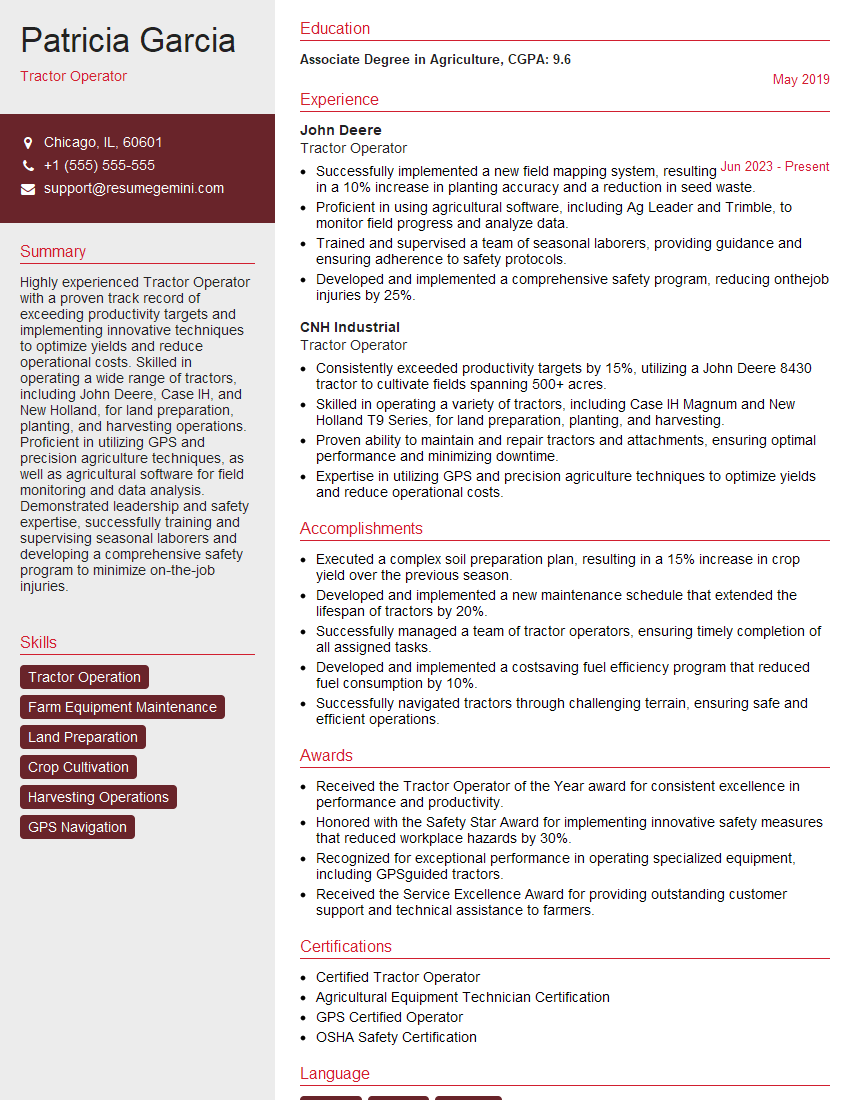
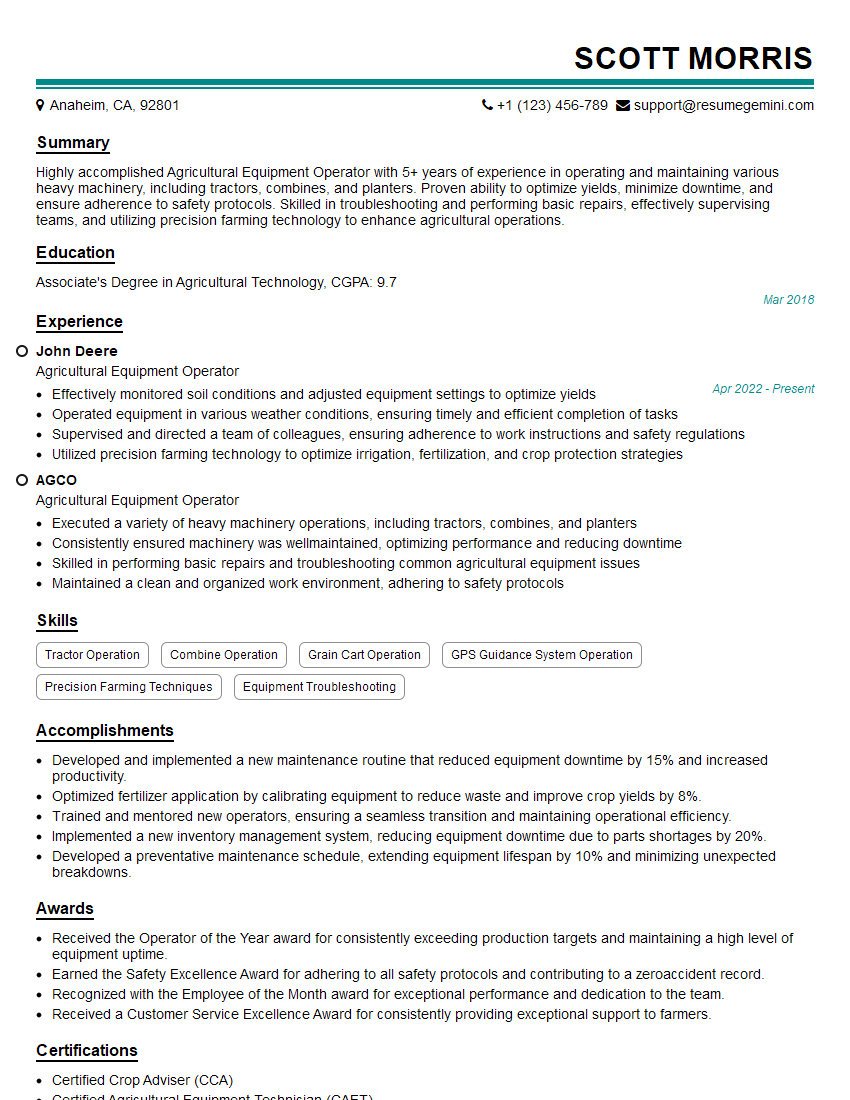
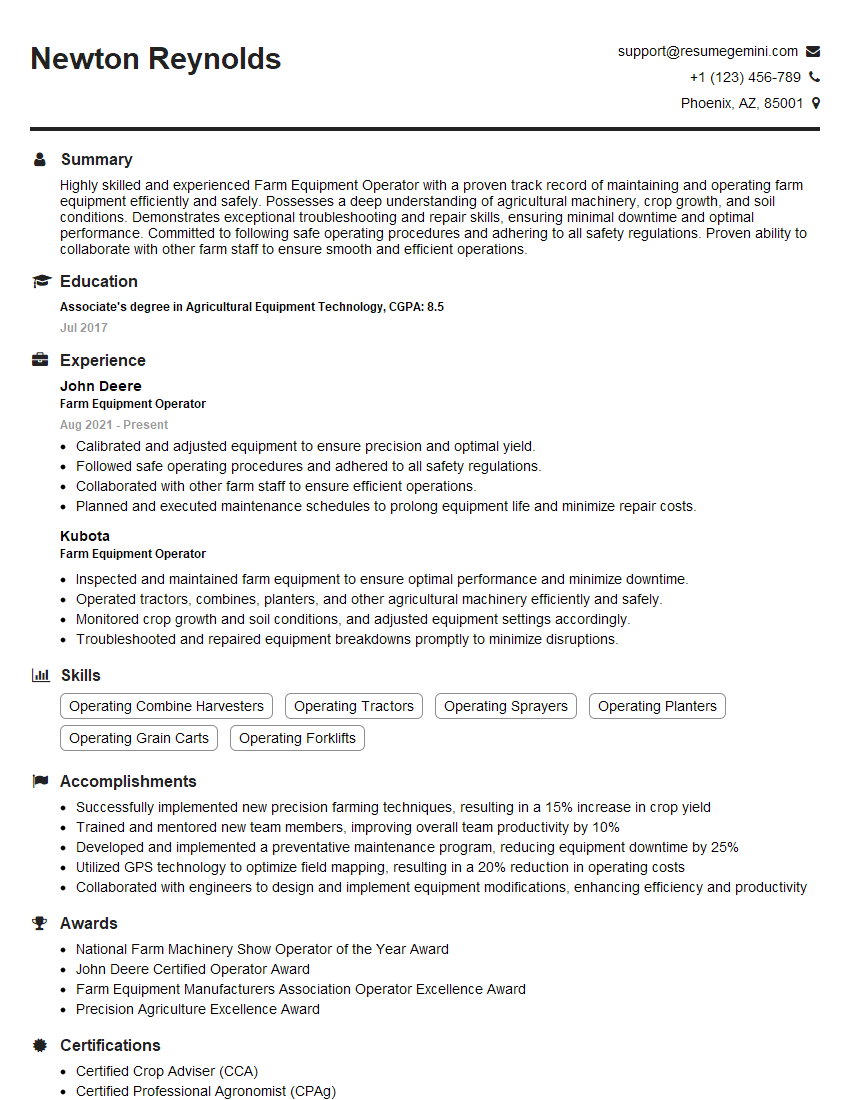
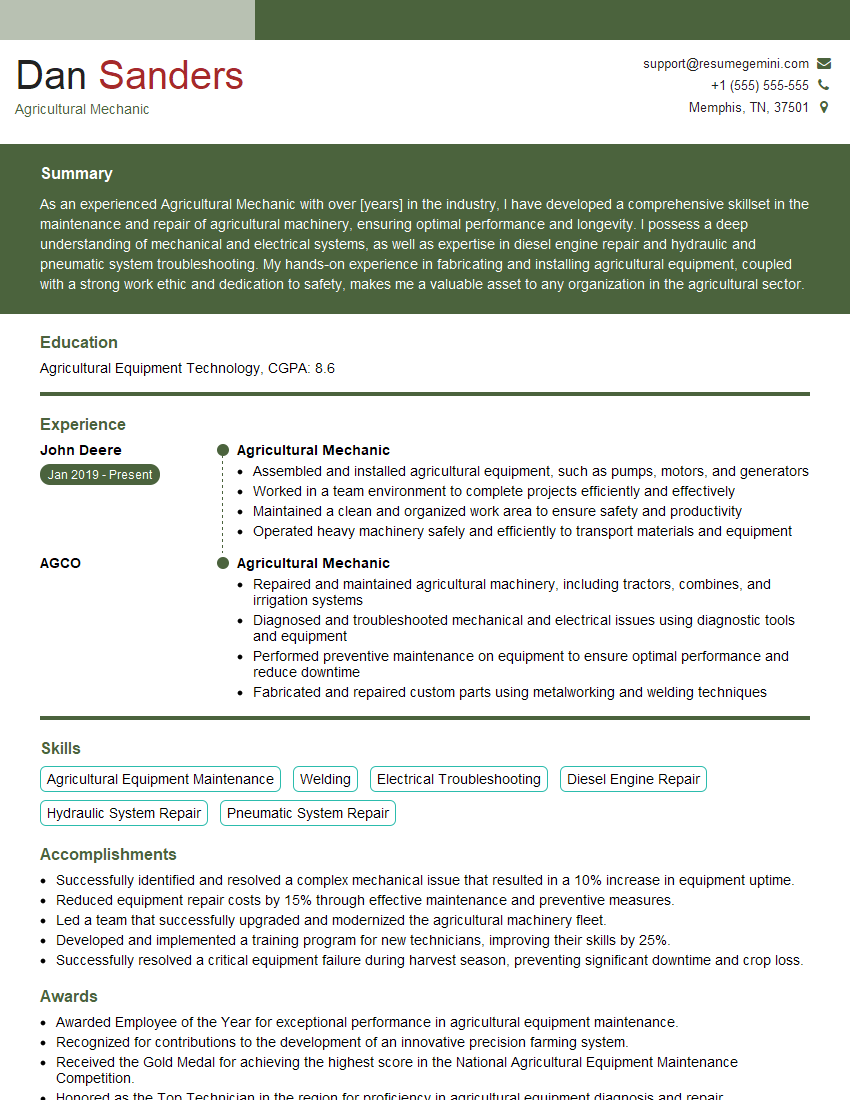
Mastering Tractor and Implement Operation is crucial for a successful and rewarding career in agriculture. It opens doors to diverse roles with increasing responsibility and earning potential. To maximize your job prospects, it’s essential to present your skills and experience effectively. Building an ATS-friendly resume is key to getting your application noticed by recruiters. ResumeGemini is a trusted resource that can help you craft a professional and impactful resume, ensuring your qualifications shine. Examples of resumes tailored to Tractor and Implement Operation are available to guide you through the process.


Explore more articles
Users Rating of Our Blogs
Share Your Experience
We value your feedback! Please rate our content and share your thoughts (optional).
What Readers Say About Our Blog
Hello,
we currently offer a complimentary backlink and URL indexing test for search engine optimization professionals.
You can get complimentary indexing credits to test how link discovery works in practice.
No credit card is required and there is no recurring fee.
You can find details here:
https://wikipedia-backlinks.com/indexing/
Regards
NICE RESPONSE TO Q & A
hi
The aim of this message is regarding an unclaimed deposit of a deceased nationale that bears the same name as you. You are not relate to him as there are millions of people answering the names across around the world. But i will use my position to influence the release of the deposit to you for our mutual benefit.
Respond for full details and how to claim the deposit. This is 100% risk free. Send hello to my email id: [email protected]
Luka Chachibaialuka
Hey interviewgemini.com, just wanted to follow up on my last email.
We just launched Call the Monster, an parenting app that lets you summon friendly ‘monsters’ kids actually listen to.
We’re also running a giveaway for everyone who downloads the app. Since it’s brand new, there aren’t many users yet, which means you’ve got a much better chance of winning some great prizes.
You can check it out here: https://bit.ly/callamonsterapp
Or follow us on Instagram: https://www.instagram.com/callamonsterapp
Thanks,
Ryan
CEO – Call the Monster App
Hey interviewgemini.com, I saw your website and love your approach.
I just want this to look like spam email, but want to share something important to you. We just launched Call the Monster, a parenting app that lets you summon friendly ‘monsters’ kids actually listen to.
Parents are loving it for calming chaos before bedtime. Thought you might want to try it: https://bit.ly/callamonsterapp or just follow our fun monster lore on Instagram: https://www.instagram.com/callamonsterapp
Thanks,
Ryan
CEO – Call A Monster APP
To the interviewgemini.com Owner.
Dear interviewgemini.com Webmaster!
Hi interviewgemini.com Webmaster!
Dear interviewgemini.com Webmaster!
excellent
Hello,
We found issues with your domain’s email setup that may be sending your messages to spam or blocking them completely. InboxShield Mini shows you how to fix it in minutes — no tech skills required.
Scan your domain now for details: https://inboxshield-mini.com/
— Adam @ InboxShield Mini
Reply STOP to unsubscribe
Hi, are you owner of interviewgemini.com? What if I told you I could help you find extra time in your schedule, reconnect with leads you didn’t even realize you missed, and bring in more “I want to work with you” conversations, without increasing your ad spend or hiring a full-time employee?
All with a flexible, budget-friendly service that could easily pay for itself. Sounds good?
Would it be nice to jump on a quick 10-minute call so I can show you exactly how we make this work?
Best,
Hapei
Marketing Director
Hey, I know you’re the owner of interviewgemini.com. I’ll be quick.
Fundraising for your business is tough and time-consuming. We make it easier by guaranteeing two private investor meetings each month, for six months. No demos, no pitch events – just direct introductions to active investors matched to your startup.
If youR17;re raising, this could help you build real momentum. Want me to send more info?
Hi, I represent an SEO company that specialises in getting you AI citations and higher rankings on Google. I’d like to offer you a 100% free SEO audit for your website. Would you be interested?
Hi, I represent an SEO company that specialises in getting you AI citations and higher rankings on Google. I’d like to offer you a 100% free SEO audit for your website. Would you be interested?
good