Feeling uncertain about what to expect in your upcoming interview? We’ve got you covered! This blog highlights the most important Measurement and Instrumentation interview questions and provides actionable advice to help you stand out as the ideal candidate. Let’s pave the way for your success.
Questions Asked in Measurement and Instrumentation Interview
Q 1. Explain the difference between accuracy and precision in measurement.
Accuracy and precision are crucial concepts in measurement, often confused but distinct. Accuracy refers to how close a measurement is to the true value. Think of it like hitting the bullseye on a dartboard – a highly accurate measurement is very close to the center. Precision, on the other hand, describes the repeatability of a measurement. It’s how close multiple measurements are to each other, regardless of their proximity to the true value. Imagine consistently hitting the same spot on the dartboard, but that spot is far from the bullseye; that’s high precision but low accuracy. A measurement can be precise without being accurate, and vice-versa. For example, a poorly calibrated scale might consistently give readings that are all 0.5 kg too high (high precision, low accuracy), while a more haphazard measurement process might yield wildly varying results, some close to the true value, some far off (low precision, potentially variable accuracy).
Q 2. Describe various types of sensors and their applications.
Sensors are the backbone of any measurement system, converting physical phenomena into measurable signals. There’s a vast array, categorized by the physical quantity they measure.
- Temperature Sensors: Thermocouples (based on the Seebeck effect), Resistance Temperature Detectors (RTDs), and Thermistors (changes in resistance with temperature) are common examples. Applications range from industrial process control to weather monitoring.
- Pressure Sensors: Strain gauge pressure transducers, piezoelectric sensors (using pressure-induced charge), and capacitive sensors are widely used. Examples include monitoring tire pressure, blood pressure measurement, and industrial process control.
- Flow Sensors: These measure the rate of fluid flow, utilizing various principles like differential pressure (e.g., orifice plates), ultrasonic waves (measuring transit time), or electromagnetic induction. Applications include managing water distribution networks and monitoring blood flow in medical devices.
- Light Sensors: Photodiodes and phototransistors convert light intensity into electrical signals. Applications include light meters, automatic lighting systems, and optical fiber communication.
- Accelerometers: These measure acceleration and are crucial in inertial navigation systems, smartphones (for orientation and motion sensing), and automotive safety systems.
This is just a small sample; many specialized sensors exist for diverse applications like gas detection, humidity measurement, and more. The choice of sensor depends entirely on the specific measurement requirement, its accuracy, cost, and environmental conditions.
Q 3. What are common sources of error in measurement systems?
Measurement errors are inevitable, stemming from various sources. These can broadly be categorized as:
- Systematic Errors: These are consistent and repeatable, often due to instrument calibration errors, environmental factors (temperature, humidity), or inherent biases in the measurement process. For instance, a consistently miscalibrated scale introduces a constant offset to all readings.
- Random Errors: These are unpredictable and fluctuate randomly around the true value. They are typically caused by noise in the measurement signal, slight variations in the measurement process, or environmental fluctuations. For example, tiny vibrations affecting a delicate weighing instrument.
- Gross Errors: These are large, infrequent errors usually resulting from human mistakes (incorrect readings, miscalculations), equipment malfunction, or data entry errors. An example might be accidentally recording a reading in the wrong units.
Understanding error sources is crucial for minimizing their impact and improving the overall quality of measurements. Techniques like proper instrument calibration, environmental control, and statistical analysis help mitigate these issues.
Q 4. How do you calibrate a measurement instrument?
Instrument calibration is a critical process to ensure accuracy. It involves comparing the instrument’s readings to known standards (traceable to national or international standards). The steps typically involve:
- Preparation: Ensure the instrument is properly prepared – powered up, warmed up, and stable.
- Standard Selection: Choose appropriate calibration standards with traceable accuracy and uncertainty.
- Comparison: Compare the instrument’s readings to the standard at multiple points across its measurement range.
- Adjustment (if necessary): Adjust the instrument’s internal settings (if possible) to match the standard.
- Documentation: Thoroughly document all calibration steps, results, and any adjustments made. This includes the date, time, standard used, and the resulting calibration curve or correction factors.
Calibration frequency depends on the instrument type, usage, and the required accuracy. Regular calibration maintains accuracy and reduces the chances of systematic errors.
Q 5. Explain the concept of uncertainty analysis in measurement.
Uncertainty analysis is the process of quantifying the uncertainty associated with a measurement result. It acknowledges that no measurement is perfectly precise; there will always be some degree of uncertainty. This uncertainty stems from several sources, including instrument limitations, random errors, and systematic errors. Uncertainty is expressed quantitatively, often using a confidence interval (e.g., ±0.1 mm with 95% confidence). In essence, uncertainty analysis provides a measure of the reliability of the measurement result. It involves combining different uncertainty components (e.g., using root-sum-of-squares methods) to arrive at an overall uncertainty value. This is critical for ensuring that the measurement data is fit for its intended purpose. This is particularly important in scientific research, industrial quality control, and regulatory compliance.
Q 6. What is a transducer? Give examples and explain their function.
A transducer is a device that converts energy from one form to another. In measurement, it typically converts a physical quantity (like pressure, temperature, or light) into an electrical signal that can be easily measured and processed. Think of it as a translator between the physical world and the electronic world.
- Example 1: Thermocouple: This converts temperature differences into voltage. The voltage is then measured to determine the temperature.
- Example 2: Strain Gauge: This converts mechanical strain (deformation) into a change in electrical resistance. This change is measured to determine the amount of strain or force applied.
- Example 3: Photodiode: This converts light intensity into an electrical current. The current is then measured to determine the light intensity.
Transducers are essential components in a wide range of measurement instruments, allowing for the accurate and efficient acquisition of data from various physical systems.
Q 7. Discuss different signal conditioning techniques.
Signal conditioning is crucial in measurement systems to modify the raw sensor signal into a form suitable for processing and analysis. This often involves:
- Amplification: Increasing the magnitude of a weak signal to make it more easily measurable. This is often necessary with low-level sensor outputs.
- Filtering: Removing unwanted noise or interfering signals from the sensor output. This improves signal clarity and reduces errors.
- Linearization: Converting a non-linear sensor output into a linear response. Many sensors don’t produce a perfectly linear output, and linearization improves the accuracy and ease of interpretation.
- Isolation: Protecting the measurement system from potential damage by isolating the sensor signal from the rest of the circuitry. This is especially important in noisy environments or when dealing with high voltages.
- Conversion: Converting the signal from one form to another (e.g., analog-to-digital conversion using an ADC). This allows for digital processing and storage of the measurement data.
Appropriate signal conditioning techniques are vital for accurate, reliable measurement and data acquisition. The choice of techniques depends heavily on the specific sensor used and the application’s requirements.
Q 8. Explain the concept of data acquisition systems (DAS).
A Data Acquisition System (DAS) is a collection of hardware and software components designed to measure, record, and process physical signals from various sources. Think of it as a sophisticated translator, converting real-world phenomena (like temperature, pressure, or voltage) into digital data that a computer can understand and analyze. A typical DAS includes sensors to acquire the signals, signal conditioning units to prepare them for processing, an analog-to-digital converter (ADC) to convert analog signals into digital form, and a computer with software to manage the entire process and display the results.
For example, imagine a system monitoring the temperature in a chemical reactor. Sensors placed inside the reactor would continuously measure the temperature. This analog temperature signal is then amplified and filtered by a signal conditioning unit to improve the signal quality. An ADC then converts this into a digital signal that is stored and analyzed by a computer using dedicated software. This data can be used to control the reactor’s operating parameters and to ensure safe and efficient operation.
Q 9. How do you select appropriate measurement instruments for a specific application?
Selecting the right measurement instrument is crucial for accurate and reliable data. It involves a careful consideration of several factors. First, identify the measurand—the physical quantity you want to measure (e.g., temperature, pressure, flow rate). Then, determine the required accuracy, precision, and resolution. Consider the range of values you expect to measure and the environment the instrument will operate in. The instrument’s cost, ease of use, and maintenance requirements must also be evaluated.
For example, measuring the temperature of a furnace requires a high-temperature thermocouple with an appropriate accuracy class, while measuring room temperature might only need a simple thermometer. Similarly, measuring the flow rate of a highly viscous liquid requires a different instrument compared to measuring the flow of a low-viscosity fluid. Finally, always check for instrument traceability and calibration standards to ensure reliable data.
Q 10. Describe different types of data logging systems and their capabilities.
Data logging systems automatically record measurements over time. Several types exist, each with unique capabilities.
- Simple data loggers: These are compact devices with limited memory and usually record data to internal storage. They are suitable for simple applications with a low data rate.
- Multi-channel data loggers: These can simultaneously monitor multiple signals from different sensors and are commonly used in applications with many variables to monitor.
- Networked data loggers: These can transmit data over a network (e.g., Ethernet, WiFi) to a central computer for real-time monitoring and analysis. This enables remote monitoring and control of processes.
- Programmable data loggers: These provide more flexibility by allowing users to customize data acquisition parameters (sampling rate, trigger conditions, etc.). They are suitable for complex applications with specific data acquisition requirements.
The choice of system depends on factors such as the number of channels, the sampling rate required, storage capacity, and communication capabilities. For instance, a simple temperature logger in a refrigerator might suffice for basic temperature monitoring, whereas a multi-channel networked system is needed for complex environmental monitoring in a large facility.
Q 11. What are the advantages and disadvantages of different types of signal transmission (e.g., analog, digital)?
Both analog and digital signal transmission have advantages and disadvantages:
- Analog Transmission: This involves transmitting a continuous signal that directly represents the measured quantity. Advantages: Simple circuitry, easy to understand. Disadvantages: Susceptible to noise, limited accuracy and precision, difficult to transmit over long distances without significant signal degradation.
- Digital Transmission: This involves converting the measured quantity into a digital code (e.g., binary) before transmission. Advantages: Noise immunity, high accuracy and precision, easy to transmit over long distances, allows for data processing and manipulation. Disadvantages: Requires analog-to-digital conversion, complex circuitry.
Think of it like this: Analog transmission is like sending a whispered message – easily distorted. Digital transmission is like sending a clearly encoded message – resistant to interference.
Q 12. Explain the concept of signal-to-noise ratio (SNR).
The signal-to-noise ratio (SNR) is a measure of the strength of the desired signal relative to the background noise. It is expressed in decibels (dB) and is calculated as 20log10(Signal amplitude/Noise amplitude). A higher SNR indicates a stronger signal relative to noise, leading to more accurate measurements. A low SNR can mask the desired signal, making accurate measurements difficult.
For example, a high SNR in audio recording ensures that the music is clear and not obscured by background hiss or hum. In medical imaging, a high SNR is vital for clear and detailed images. Improving SNR often involves techniques such as signal filtering, averaging multiple measurements, or using more sensitive sensors.
Q 13. How do you troubleshoot a malfunctioning measurement instrument?
Troubleshooting a malfunctioning instrument starts with a systematic approach. First, check the obvious: power supply, connections, and calibration. Then, verify the sensor is functioning correctly by comparing its readings to a known standard or a secondary instrument. Examine the signal conditioning circuitry for any issues like loose connections or component failures. If the issue persists, check the data acquisition system’s software and settings to rule out any software glitches.
A helpful technique is to use a known good signal as input. For instance, if you have a temperature sensor, you could immerse it in an ice bath (0°C) to see if the reading matches the expected value. If the problem still persists, detailed diagnostic procedures (specific to the instrument’s manual) should be consulted. Consulting the manufacturer’s support documentation and seeking professional help if needed are also critical steps.
Q 14. What are the safety precautions you must follow while working with measurement instruments?
Safety is paramount when working with measurement instruments. Always follow the manufacturer’s safety instructions. This includes understanding the instrument’s operating limits and never exceeding them. Be aware of potential hazards associated with the measured quantity and the environment (high voltage, high temperature, hazardous chemicals, etc.). Use appropriate personal protective equipment (PPE), such as safety glasses, gloves, and hearing protection. Proper grounding and electrical safety procedures must always be followed, especially when dealing with high-voltage equipment. In case of any doubt or uncertainty, always consult safety guidelines and seek guidance from experienced personnel.
For instance, when working with high-voltage equipment, ensure proper grounding and insulation are in place. Similarly, when measuring high temperatures, use appropriate thermal protection and handling methods. A mindful and cautious approach to safety is essential to prevent accidents and injuries.
Q 15. Explain the importance of traceability in calibration.
Traceability in calibration is paramount because it ensures the reliability and accuracy of your measurements. It’s like a chain of custody for your measuring instruments, linking their accuracy back to internationally recognized standards. This chain establishes a clear and unbroken path that proves your instrument’s readings are accurate and comparable to those of other calibrated instruments worldwide.
Imagine a scenario where you’re measuring the weight of a product for quality control. If your scale isn’t properly calibrated, you’ll get inaccurate readings. If that scale’s calibration isn’t traceable back to national or international standards, you can’t confidently trust the accuracy of your entire quality control process. Traceability provides the necessary evidence that your measurements are reliable and fit for their intended purpose. This is often achieved using calibration certificates that detail the calibration history and the uncertainty associated with the measurements.
- National Standards: Calibration often begins by referencing national standards maintained by organizations like NIST (National Institute of Standards and Technology) in the US or similar institutions in other countries.
- Calibration Laboratories: Accredited calibration laboratories use traceable standards to calibrate instruments, issuing certificates that detail the traceability chain.
- Internal Calibration: Within a company, internal calibration procedures should also be traceable to the external calibrations, creating a complete chain.
Career Expert Tips:
- Ace those interviews! Prepare effectively by reviewing the Top 50 Most Common Interview Questions on ResumeGemini.
- Navigate your job search with confidence! Explore a wide range of Career Tips on ResumeGemini. Learn about common challenges and recommendations to overcome them.
- Craft the perfect resume! Master the Art of Resume Writing with ResumeGemini’s guide. Showcase your unique qualifications and achievements effectively.
- Don’t miss out on holiday savings! Build your dream resume with ResumeGemini’s ATS optimized templates.
Q 16. Describe your experience with different types of measurement software.
My experience with measurement software spans various platforms and applications. I’ve worked extensively with LabVIEW for complex data acquisition and analysis, particularly in developing custom solutions for automated testing and control systems. It’s powerful for its graphical programming environment and extensive instrument driver support. For simpler applications and data logging, I’ve utilized readily available software packages like DASYLab and Agilent’s VEE, appreciating their user-friendly interfaces. I’m also proficient in using dedicated software supplied with specific instruments, such as those offered by Keysight for oscilloscopes and multimeters. This ensures I can optimally leverage the capabilities of each device. Furthermore, I have experience with data processing and analysis using statistical software such as Minitab and JMP to interpret measurement data effectively.
For example, I once used LabVIEW to build a system that monitored and controlled multiple sensors in a chemical process, collecting and analyzing data in real-time to optimize the process. The graphical programming nature of LabVIEW allowed for quick prototyping and modifications to meet the evolving needs of the project. In another instance, using Agilent’s VEE, I developed a streamlined measurement process for testing the performance of electronic components on a production line, significantly improving efficiency and data management.
Q 17. How do you handle conflicting data from multiple measurement instruments?
Conflicting data from multiple instruments is a common challenge in measurement. My approach involves a systematic investigation to identify the root cause of the discrepancy. It begins with verifying the calibration status of all instruments involved. Outdated or improperly calibrated instruments are a major source of error.
Next, I examine the measurement techniques used. Were consistent procedures followed? Were there environmental factors that could influence the measurements (temperature, humidity, electromagnetic interference)? I carefully review the specifications and limitations of each instrument to check if the measurements are even within their operating range. Statistical analysis, including examining the variability of the data, helps to determine if one instrument consistently produces outliers. If the discrepancies persist, further investigation, which might involve instrument maintenance or even replacement, could be necessary. Documentation of this entire process is critical for maintaining data integrity and traceability.
A practical example: While measuring pressure in a pipeline, we observed inconsistent readings from two different pressure transducers. After verifying their calibrations, we discovered that one transducer was operating outside its specified temperature range. Addressing this environmental factor resolved the conflict.
Q 18. What are your experiences with different types of industrial communication protocols (e.g., Profibus, Modbus)?
I possess practical experience with various industrial communication protocols, including Profibus, Modbus, and Ethernet/IP. My experience involves configuring and troubleshooting these protocols in industrial automation settings. I understand the differences in their capabilities, including data transmission speeds, addressing schemes, and error handling mechanisms.
Profibus, for example, is known for its high speed and reliability in demanding industrial environments, often used in complex automation systems. Modbus, on the other hand, is simpler and widely adopted for its ease of implementation and compatibility across different vendors’ equipment. I’ve worked on integrating sensors and actuators using these protocols, ensuring seamless communication between various devices within a control system.
For instance, in a recent project, I used Modbus to integrate a series of temperature sensors and actuators into a distributed control system (DCS). This involved configuring the Modbus addresses for each device, establishing communication links, and developing software routines to read and interpret data from these devices. The choice of Modbus was driven by the need for simple, cost-effective integration within the system.
Q 19. Describe your experience with statistical process control (SPC).
Statistical Process Control (SPC) is a crucial tool for monitoring and improving process capability. I’m proficient in using control charts (X-bar and R charts, p-charts, c-charts, etc.) to identify trends and variations in measurement data, helping detect process instability and potential quality problems before they become significant issues. My experience includes designing and implementing SPC charts, analyzing data to detect assignable causes of variation, and using these insights to implement process improvements.
A key aspect of my SPC expertise is understanding the importance of distinguishing between common cause variation (inherent to the process) and special cause variation (indicative of specific issues). I’ve used this knowledge to implement corrective actions and prevent defects in manufacturing processes. For example, in a manufacturing process, using X-bar and R charts helped identify a significant increase in the variance of a key dimension, pinpointing a worn-out machine part as the root cause. Replacing this part brought the process back under control.
Q 20. How do you ensure data integrity in measurement systems?
Data integrity in measurement systems is paramount. My approach focuses on several key areas: First, instrument calibration and traceability are fundamental. Regularly calibrated and traceable instruments are less likely to produce erroneous data. Second, proper documentation of all measurements, including date, time, operator, instrument used, and any relevant environmental conditions, is essential. This creates an auditable trail and facilitates data verification.
Third, robust data acquisition and storage systems are crucial. Data should be protected against unauthorized access, modification, or deletion. This often involves using secure databases and implementing appropriate access control mechanisms. Finally, regular data backups and recovery procedures are vital to safeguard against data loss. I am experienced in implementing these practices, including using version control systems for data management and ensuring compliance with relevant regulations such as 21 CFR Part 11 (if applicable).
Q 21. Explain your understanding of different types of error compensation techniques.
Error compensation techniques are crucial for improving the accuracy of measurements. These techniques aim to mitigate systematic errors, those consistent biases that affect all measurements. Several methods exist, depending on the nature of the error.
- Linearization: If the error is a known function of the input, a mathematical correction can be applied to linearize the response. For example, a non-linear sensor may be linearized through curve fitting to its calibration data.
- Offset Correction: This compensates for constant errors (e.g., a zero offset). By measuring a known zero point and subtracting this value from subsequent measurements, you correct for the consistent error.
- Temperature Compensation: Many sensors are temperature-sensitive. Temperature compensation involves using a temperature sensor to measure ambient temperature and applying a correction factor to account for its effect on the primary measurement.
- Software Correction: Sophisticated algorithms can be used to compensate for various errors based on sensor models or experimental calibration data. These techniques might involve filtering noise or applying complex mathematical models to correct for nonlinear behavior.
A common example is temperature compensation in thermocouples. The voltage output of a thermocouple is non-linear and temperature-dependent. By using a second-order polynomial or a lookup table, the output voltage can be corrected to give a much more accurate temperature reading.
Q 22. Discuss your experience with automated testing and measurement systems.
My experience with automated testing and measurement systems spans several years and various industries. I’ve worked extensively with systems incorporating data acquisition (DAQ) hardware, such as National Instruments (NI) devices, alongside software packages like LabVIEW and TestStand. These systems allowed for automated data collection, analysis, and reporting, significantly improving efficiency and reducing human error. For instance, in a project involving the testing of automotive sensors, I designed and implemented a fully automated test bench using NI hardware and LabVIEW. This system automatically calibrated sensors, applied various stimuli, collected sensor readings, compared them to expected values, and generated comprehensive test reports, saving considerable time and resources compared to manual testing.
I’m proficient in developing custom test sequences and algorithms for automated systems. This includes handling various sensor types, dealing with real-time data acquisition and processing, and implementing sophisticated data validation and analysis techniques. A recent project involved developing an automated system for testing the accuracy of a high-precision pressure sensor. The system automatically compensated for temperature variations and drift, ensuring high accuracy and repeatability in the results.
Q 23. Describe your experience with PLC programming related to measurement and control.
My PLC programming experience is primarily focused on integrating measurement and control systems. I am proficient in several PLC programming languages, including ladder logic (LD) and structured text (ST). I’ve worked with various PLC brands such as Siemens, Allen-Bradley, and Schneider Electric. In a manufacturing environment, I programmed PLCs to monitor and control process variables like temperature, pressure, and flow rate using data from various sensors. For example, I developed a PLC program for a chemical process plant that monitored tank levels using ultrasonic sensors, controlled valve positions to maintain the desired level, and provided real-time alerts for potential overflows or underflows.
I understand the importance of safety and reliability in PLC programming, particularly within industrial settings. I am familiar with implementing safety features, such as emergency stop circuits and interlocks, to ensure the safe operation of the controlled process. Example: IF (Emergency_Stop_Button = ON) THEN Stop_All_Motors; END_IF; This simple code snippet demonstrates a basic safety function.
Q 24. What is your experience with designing and implementing measurement systems?
Designing and implementing measurement systems involves a systematic approach. It starts with clearly defining the measurement objectives, identifying the measurand (the quantity to be measured), and selecting appropriate sensors and transducers based on accuracy, precision, range, and environmental conditions. Careful consideration must also be given to signal conditioning, noise reduction, and data acquisition.
For example, in a project to measure the vibration levels of a large industrial motor, I first selected accelerometers suitable for the frequency range and magnitude of expected vibrations. The signals from the accelerometers were then amplified and filtered to reduce noise before being digitized by a DAQ system. Finally, the data was analyzed using signal processing techniques to identify the frequency components and amplitudes of the vibrations. This data then provided key insights into the motor’s condition and helped prevent potential failures. I also have experience in designing custom circuits for signal conditioning when off-the-shelf solutions are inadequate.
Q 25. Explain your understanding of various types of flow measurement devices.
Flow measurement is crucial in many industries, and different devices are suited to different applications. The choice depends on factors such as the fluid’s properties (viscosity, density, etc.), flow rate range, accuracy requirements, and cost constraints.
- Differential Pressure Flow Meters: These, like orifice plates, venturi meters, and flow nozzles, measure the pressure drop across a restriction in the pipe. They are relatively inexpensive but can have higher pressure losses.
- Positive Displacement Flow Meters: These meters, such as rotary vane and oval gear meters, directly measure the volume of fluid passing through them. They offer high accuracy but are generally more expensive and suitable for lower flow rates.
- Velocity Flow Meters: These, including ultrasonic and electromagnetic flow meters, measure the velocity of the fluid and calculate the flow rate based on the pipe’s cross-sectional area. Ultrasonic flow meters are non-invasive and can handle highly corrosive or abrasive fluids. Electromagnetic flow meters are particularly suitable for conductive fluids.
- Area Flow Meters: These, such as rotameters, measure flow rate based on the area of the fluid passage. They are simple and visually intuitive but are less accurate than other methods.
Selecting the right flow meter involves careful consideration of the specific application and its constraints. For example, a high-accuracy positive displacement meter might be preferred for precise chemical dispensing, while an ultrasonic flow meter might be the better choice for measuring the flow of a slurry in a pipeline due to its non-invasive nature.
Q 26. How do you handle large datasets obtained from measurement systems?
Handling large datasets from measurement systems often involves using specialized software and techniques. The process typically starts with data cleaning to remove outliers and erroneous readings. Then, depending on the analysis goals, data visualization and statistical analysis tools are employed.
I’m proficient in using tools like MATLAB, Python (with libraries like NumPy, Pandas, and Scikit-learn), and specialized data analysis software. For example, I’ve used Python with Pandas to process terabytes of sensor data from a wind turbine monitoring system, identifying patterns and anomalies that could indicate potential maintenance issues. Data compression techniques, like lossless compression algorithms (e.g., gzip), are often employed to reduce storage needs and improve processing efficiency. Database management systems (DBMS) like SQL and NoSQL databases can store and manage large datasets effectively. Cloud-based storage and processing solutions are also frequently utilized for their scalability and cost-effectiveness.
Q 27. Describe your experience with different types of temperature measurement techniques.
Temperature measurement techniques vary widely, each with its strengths and limitations. The choice of technique depends on factors such as the temperature range, required accuracy, application environment, and cost considerations.
- Thermocouples: These are widely used for their wide temperature range and relative robustness. They produce a voltage proportional to the temperature difference between the thermocouple junction and a reference junction.
- Resistance Temperature Detectors (RTDs): These offer high accuracy and stability but typically have a narrower temperature range than thermocouples. They rely on the change in electrical resistance of a metal with temperature.
- Thermistors: These are ceramic semiconductor devices that exhibit a large change in resistance with temperature. They offer high sensitivity but are more susceptible to self-heating than RTDs.
- Infrared (IR) Thermometers: These measure temperature by detecting the infrared radiation emitted by an object. They are non-contact and can measure temperatures at a distance, making them suitable for high-temperature or hazardous environments.
For instance, in a food processing plant, RTDs might be used for precise temperature control in ovens, while thermocouples might be used for monitoring the temperature of high-temperature industrial processes. IR thermometers would be ideal for checking the surface temperature of machinery without direct contact.
Q 28. Explain your experience with pressure measurement and different types of pressure transducers.
Pressure measurement is essential in many applications, and various transducers are available to cater to different needs. Pressure transducers convert pressure into an electrical signal that can be easily processed and interpreted.
- Strain Gauge Pressure Transducers: These are based on the principle that the resistance of a strain gauge changes when subjected to strain caused by pressure. They are widely used due to their good accuracy, reliability, and relatively low cost.
- Capacitive Pressure Transducers: These measure pressure by detecting the change in capacitance between two plates as the pressure changes the distance between them. They offer high sensitivity and fast response times.
- Piezoresistive Pressure Transducers: These use the change in resistance of a semiconductor material under pressure. They are known for their small size and high sensitivity.
- Piezoelectric Pressure Transducers: These generate a charge proportional to the applied pressure. They are typically used for dynamic pressure measurements.
The selection of a suitable pressure transducer depends on the application’s requirements, including pressure range, accuracy, response time, and environmental conditions. For example, a strain gauge transducer might be appropriate for measuring relatively static pressure in a water pipeline, whereas a piezoelectric transducer might be necessary for measuring rapidly changing pressure in a combustion engine.
Key Topics to Learn for Measurement and Instrumentation Interview
- Sensor Technology: Understanding different sensor types (resistive, capacitive, inductive, optical, etc.), their operating principles, and limitations. Practical application: Analyzing sensor data to optimize industrial processes.
- Signal Conditioning: Mastering techniques for amplifying, filtering, and converting signals from sensors into usable data. Practical application: Designing a circuit to reduce noise and improve signal-to-noise ratio in a measurement system.
- Data Acquisition Systems (DAQ): Familiarity with hardware and software components of DAQ systems, including A/D and D/A converters, and data logging techniques. Practical application: Implementing a real-time monitoring system for a critical parameter.
- Instrumentation Amplifiers: Understanding their purpose, characteristics, and application in high-precision measurements. Practical application: Designing an amplifier for a biomedical sensor.
- Calibration and Error Analysis: Mastering calibration procedures and methods for identifying and minimizing measurement errors. Practical application: Developing a calibration protocol for a pressure sensor.
- Measurement Uncertainty: Understanding the concepts of accuracy, precision, resolution, and their impact on measurement quality. Practical application: Evaluating the uncertainty of a measurement system.
- Digital Signal Processing (DSP): Basic understanding of digital signal processing techniques for signal analysis and enhancement. Practical application: Implementing a digital filter to remove noise from a sensor signal.
- Transducers and Actuators: Understanding the principles and applications of various transducers and actuators in measurement and control systems. Practical application: Selecting appropriate transducers for a specific measurement task.
- Industrial Communication Protocols: Familiarity with common industrial communication protocols (e.g., Modbus, Profibus, Ethernet/IP) for data transmission and integration. Practical application: Designing a network for connecting multiple sensors and actuators.
- Troubleshooting and Maintenance: Understanding common problems encountered in measurement and instrumentation systems and their solutions. Practical application: Diagnosing and resolving issues in a malfunctioning data acquisition system.
Next Steps
Mastering Measurement and Instrumentation opens doors to exciting and rewarding careers in various industries. A strong foundation in these principles significantly enhances your employability and paves the way for career advancement. To maximize your job prospects, creating an ATS-friendly resume is crucial. ResumeGemini is a trusted resource that can help you build a professional and impactful resume tailored to your skills and experience. Examples of resumes specifically tailored for Measurement and Instrumentation professionals are available to guide you. Take the next step towards your dream career today!
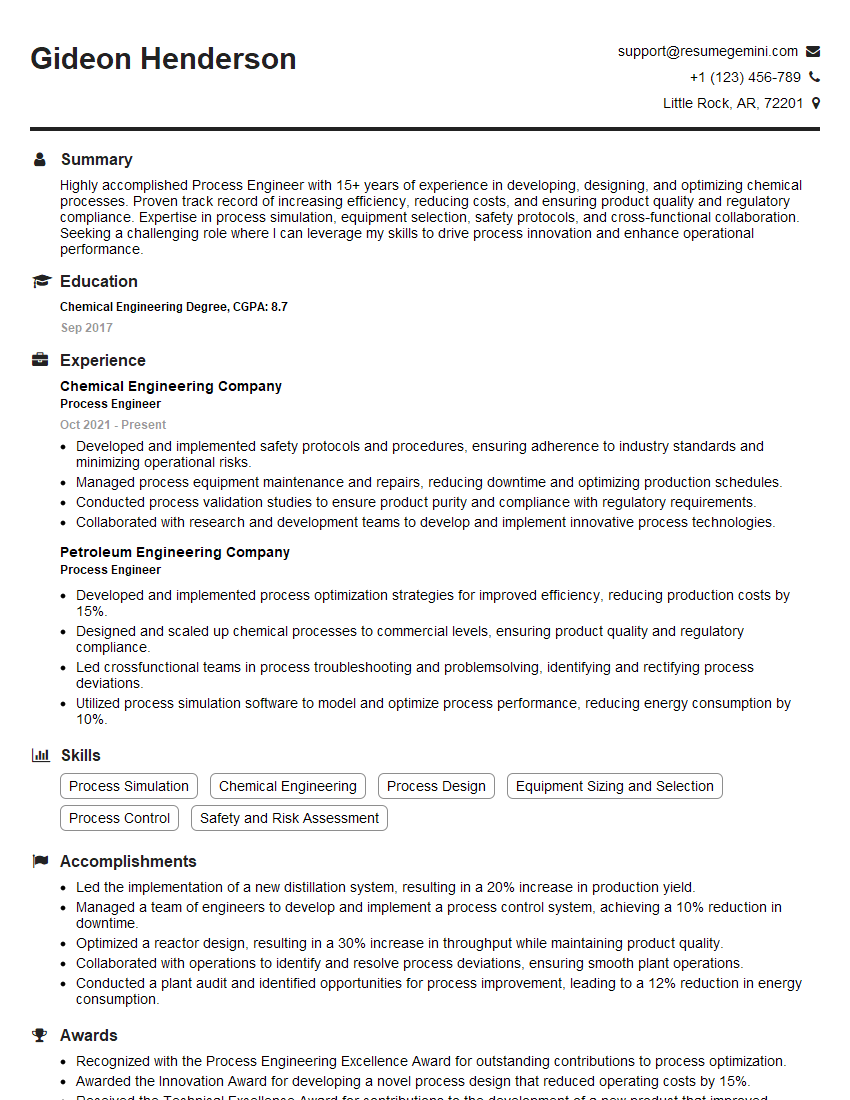
Process Engineer Resume Sample
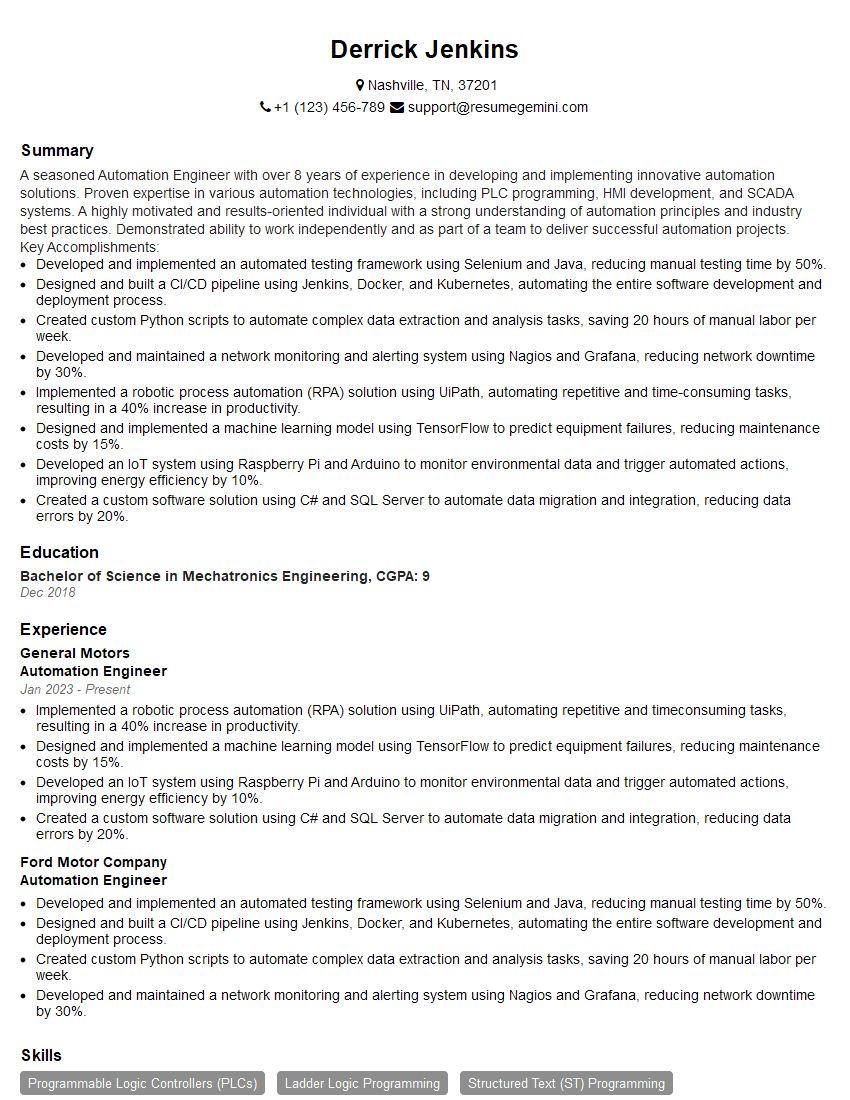
Automation Engineer Resume Sample
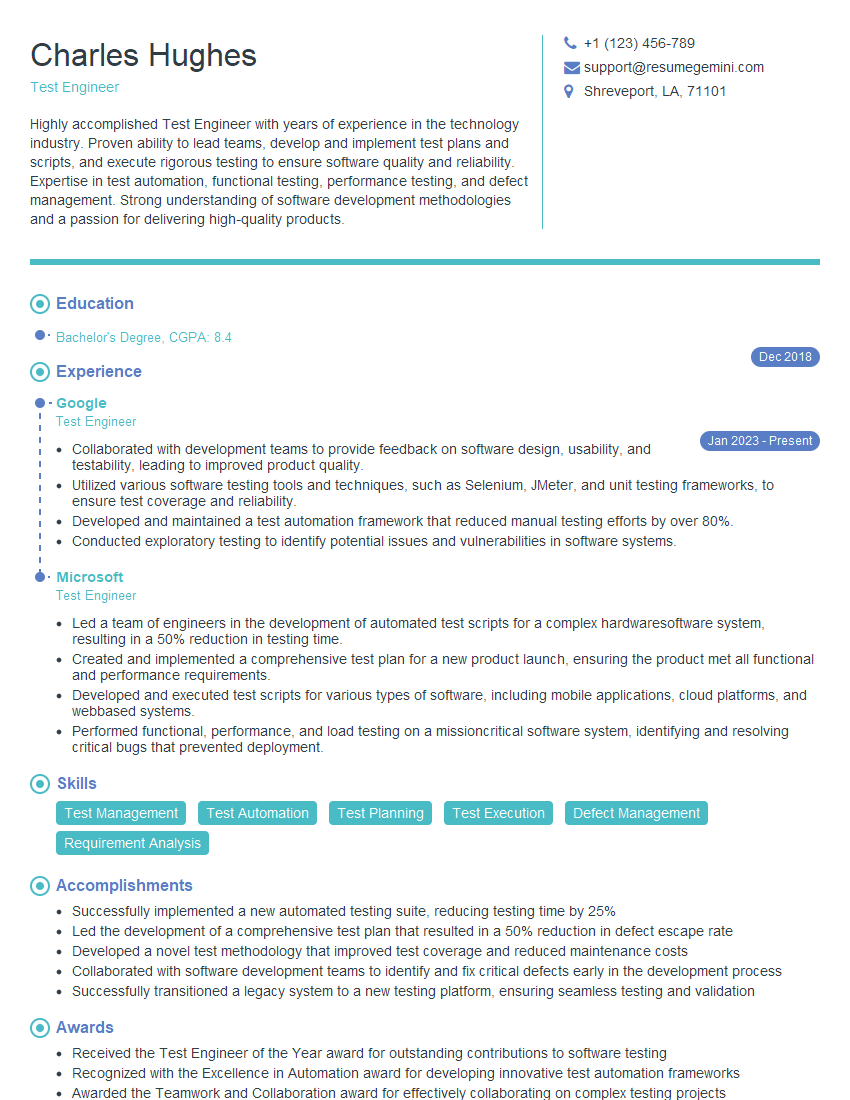
Test Engineer Resume Sample
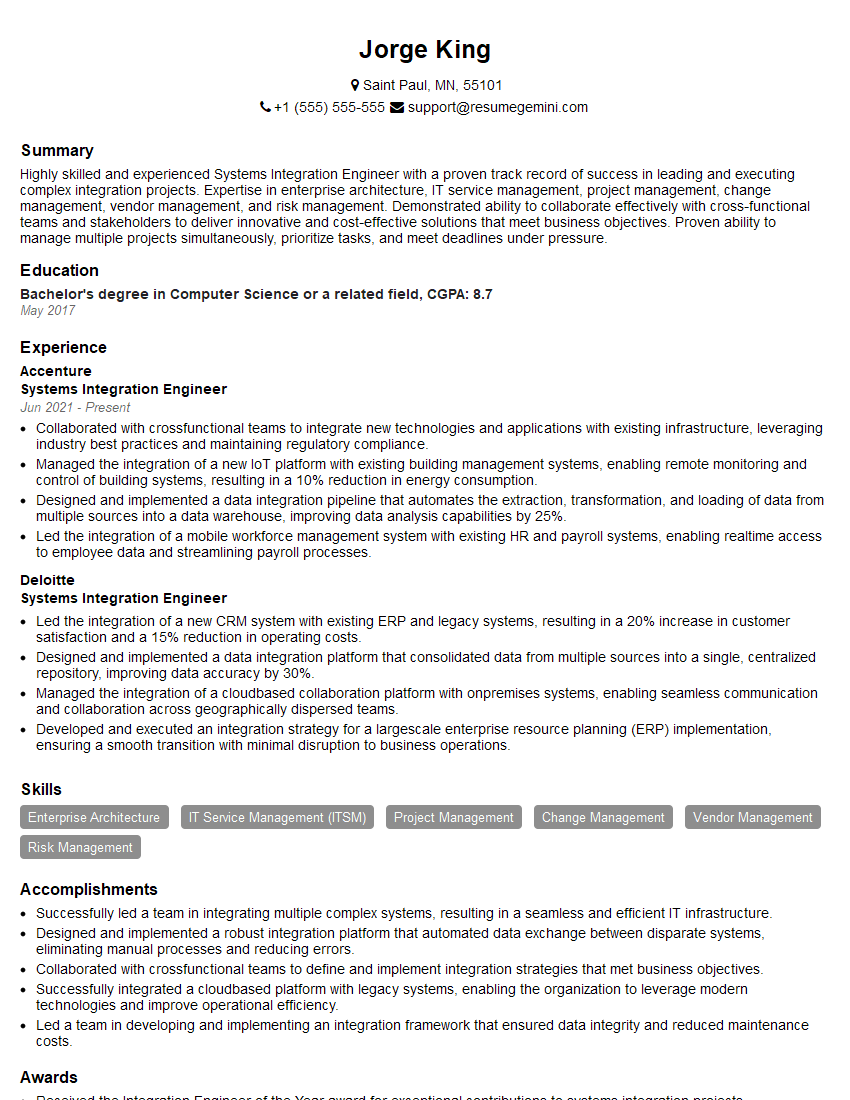
Systems Integration Engineer Resume Sample
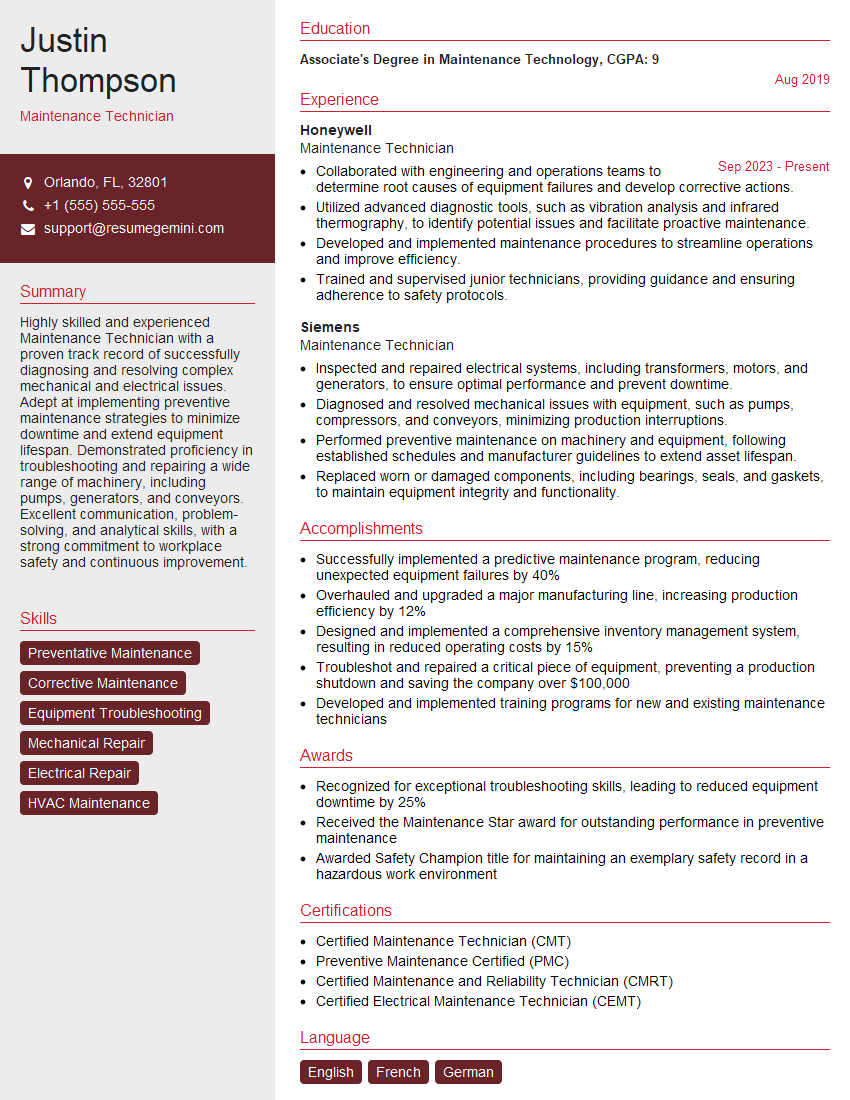
Maintenance Technician Resume Sample
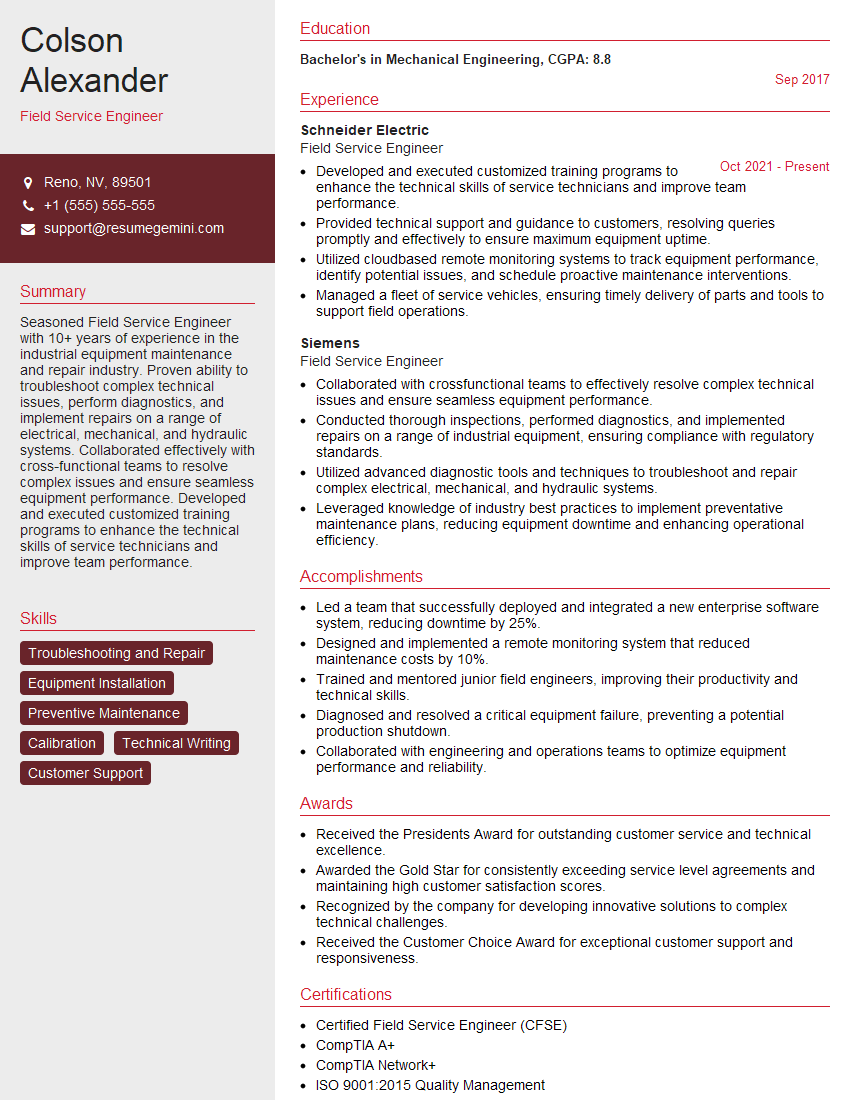
Field Service Engineer Resume Sample
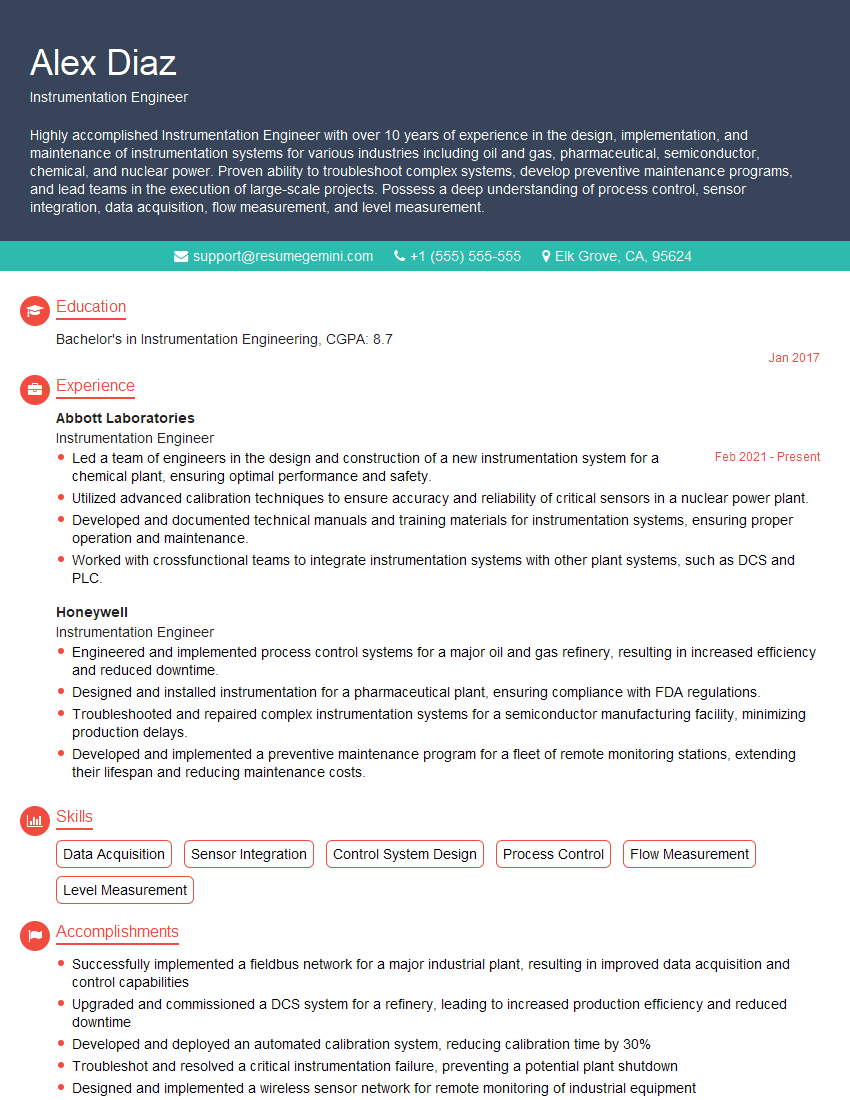
Instrumentation Engineer Resume Sample
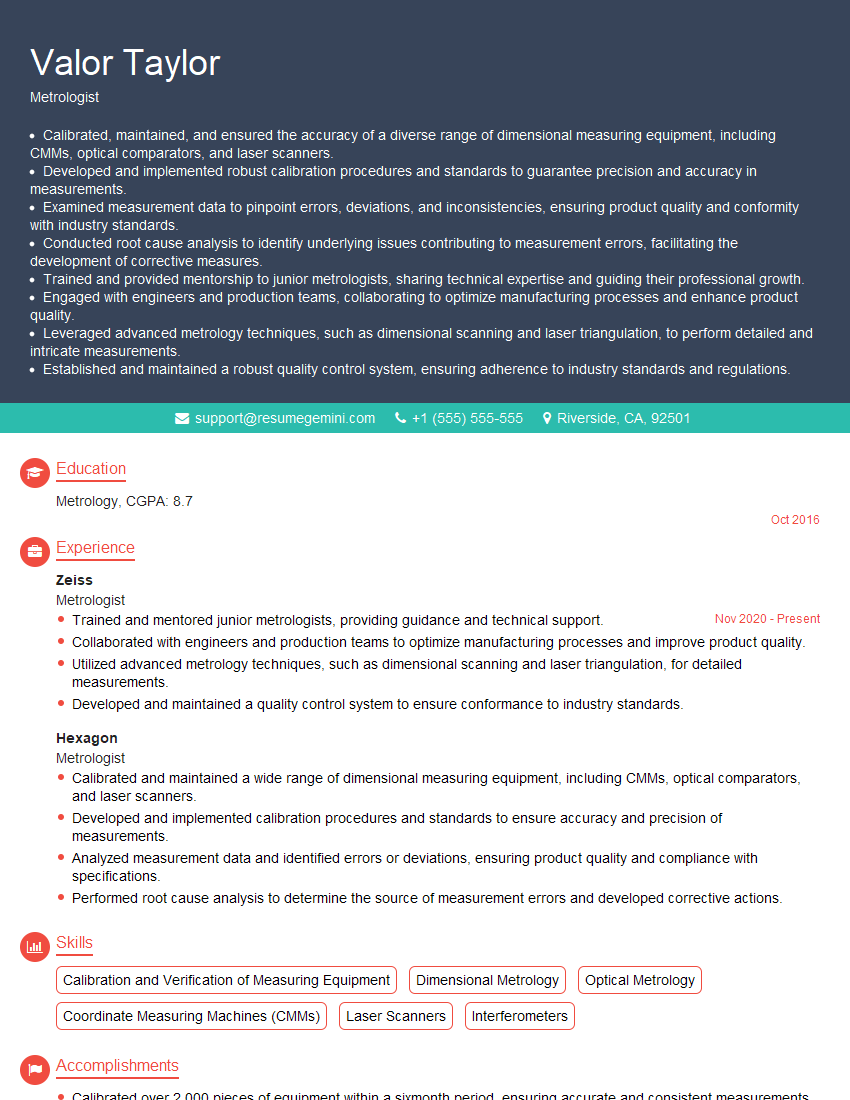
Metrologist Resume Sample
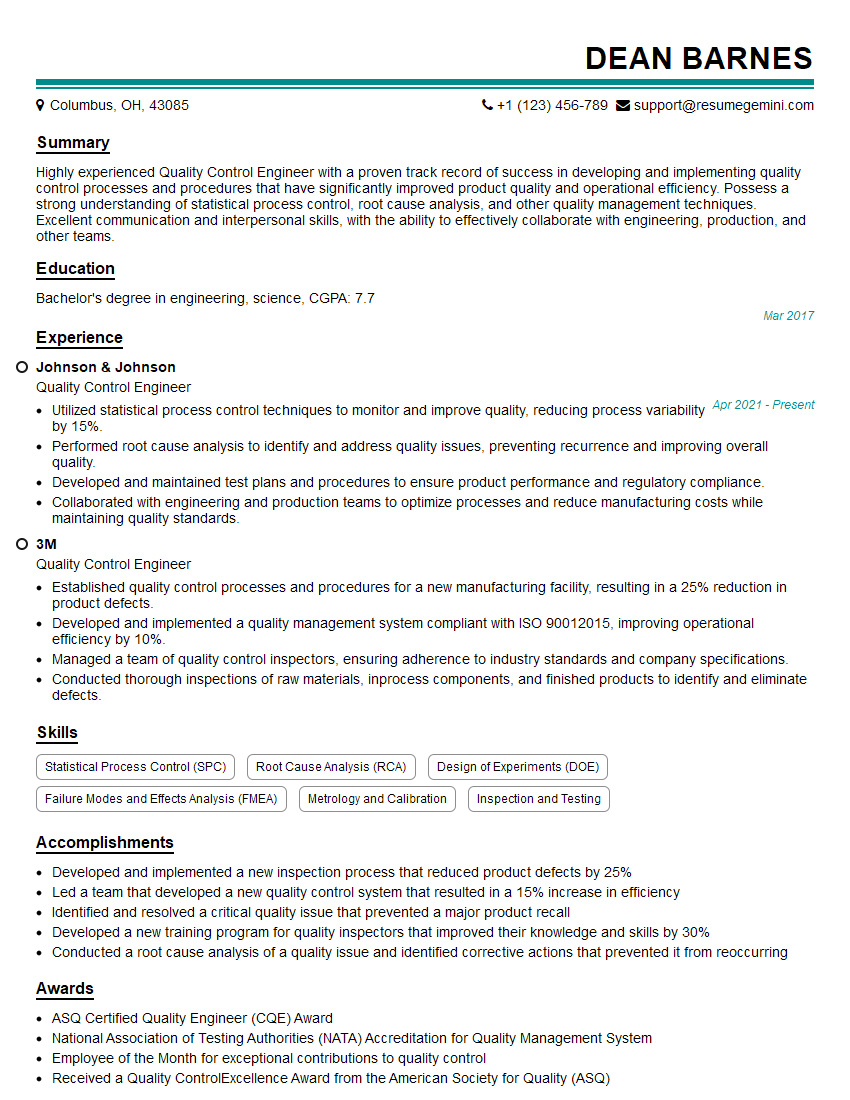
Quality Control Engineer Resume Sample
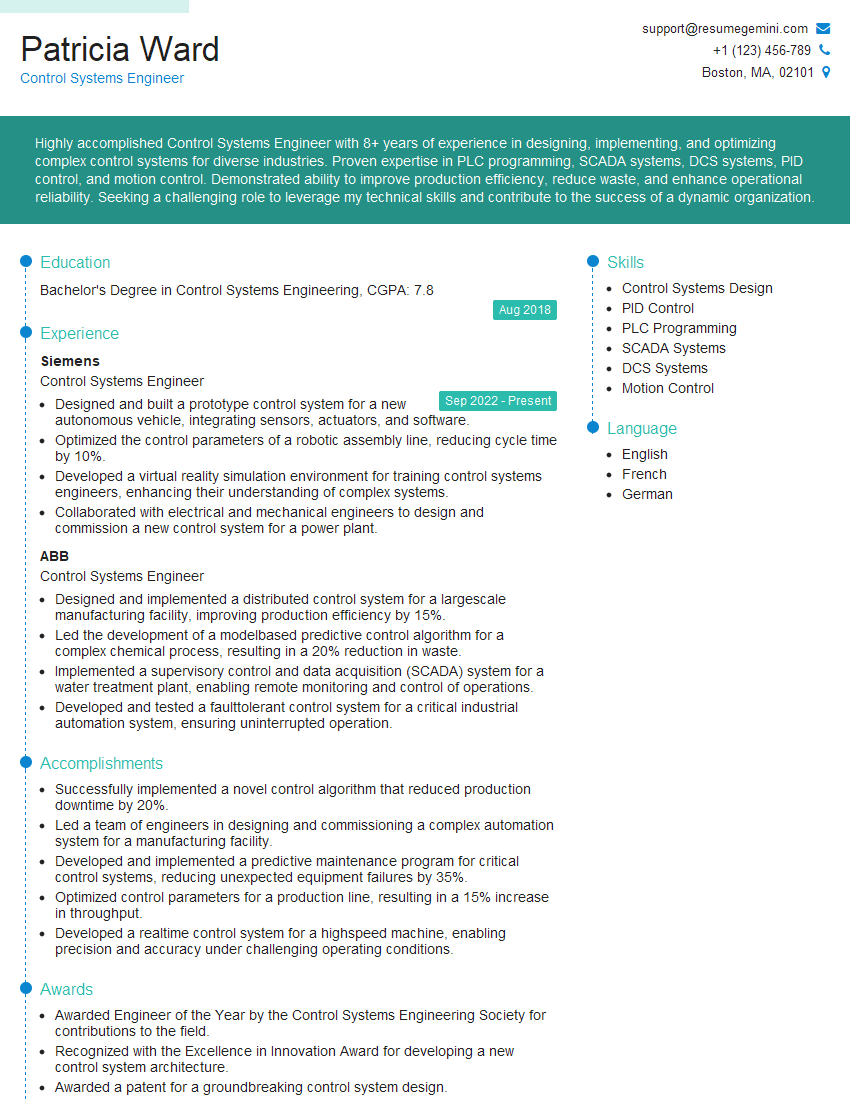
Control Systems Engineer Resume Sample
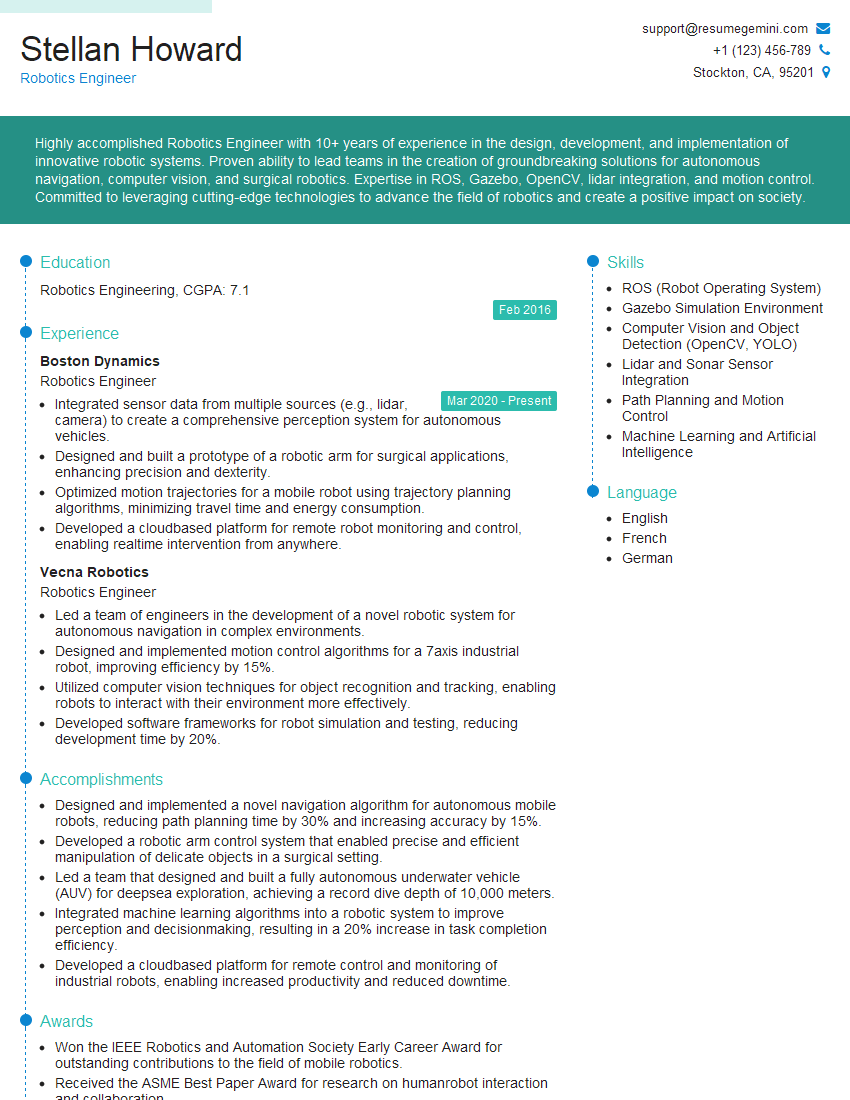
Robotics Engineer Resume Sample
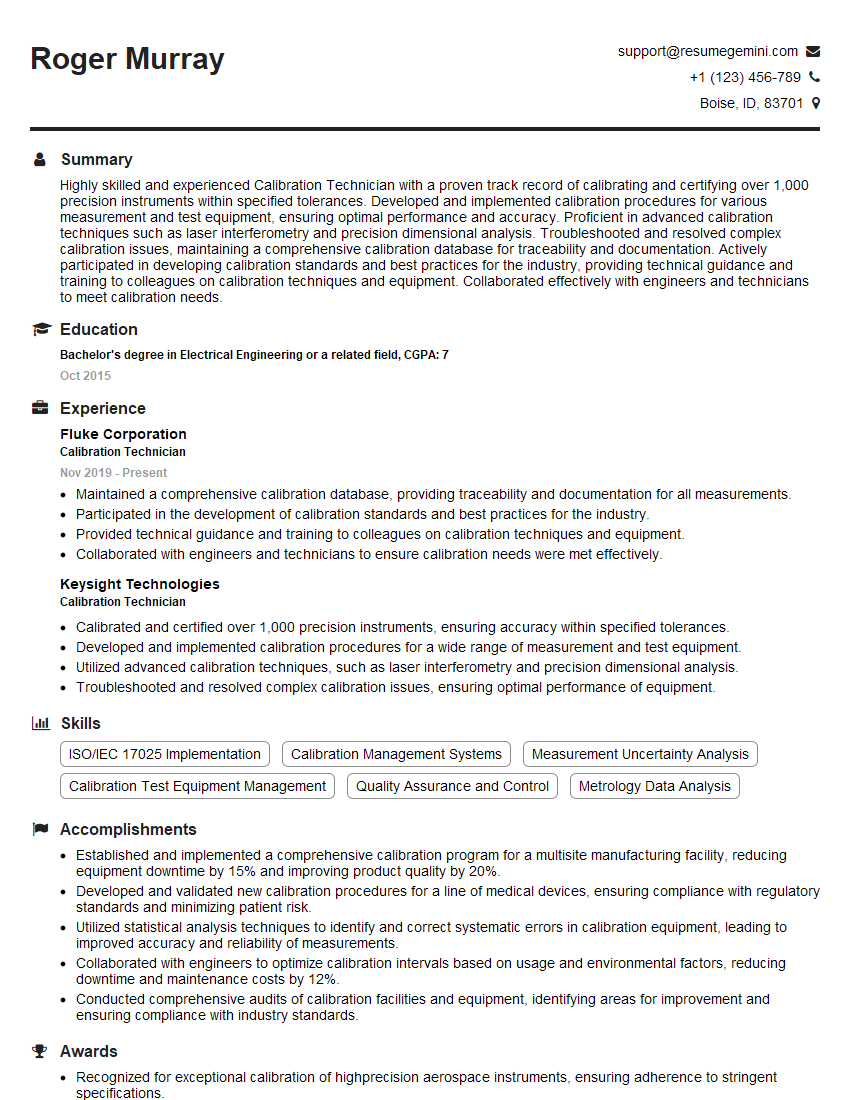
Calibration Technician Resume Sample
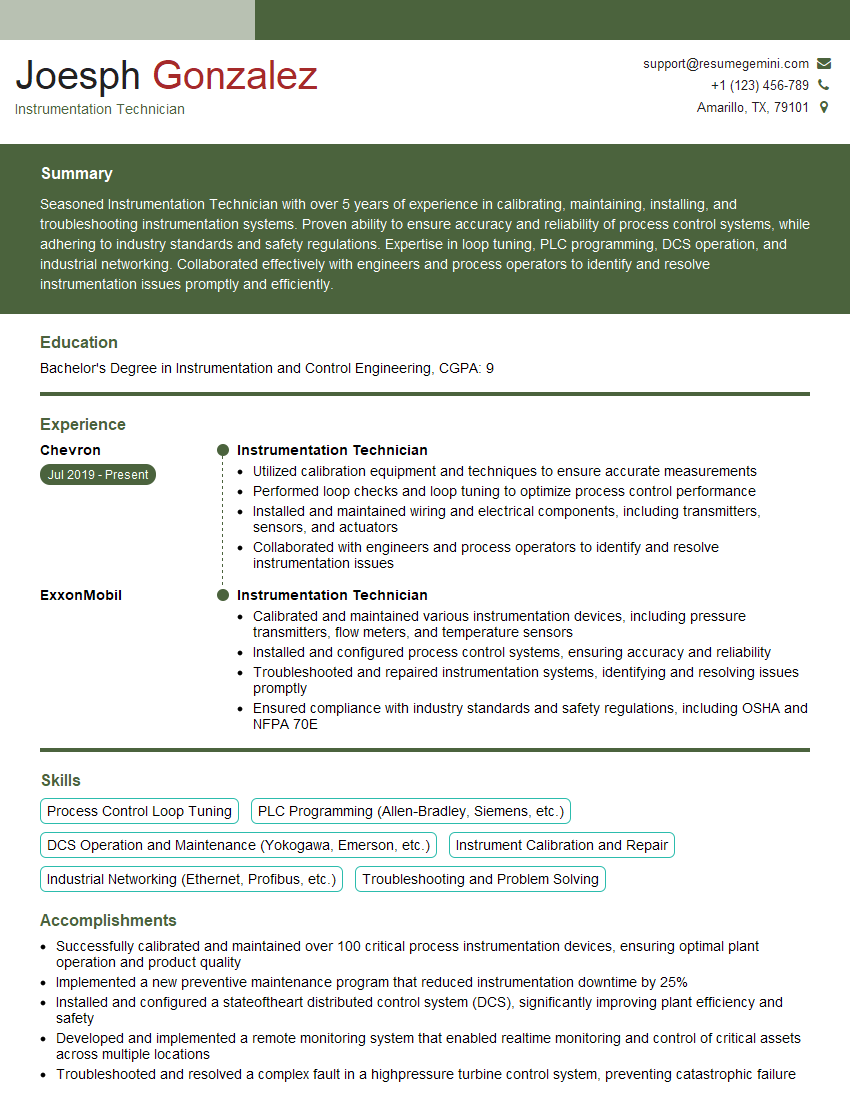
Instrumentation Technician Resume Sample
Explore more articles
Users Rating of Our Blogs
Share Your Experience
We value your feedback! Please rate our content and share your thoughts (optional).
What Readers Say About Our Blog
Very informative content, great job.
good