Interviews are more than just a Q&A session—they’re a chance to prove your worth. This blog dives into essential Traffic Signal Design and Timing interview questions and expert tips to help you align your answers with what hiring managers are looking for. Start preparing to shine!
Questions Asked in Traffic Signal Design and Timing Interview
Q 1. Explain the difference between actuated and fixed-time traffic signal control.
The core difference between actuated and fixed-time traffic signal control lies in how they determine signal timing. Fixed-time control uses a pre-programmed schedule, cycling through green, yellow, and red phases at set intervals regardless of traffic volume or demand. Think of it like a regular train schedule – it runs the same way every time, whether the train is full or empty. This is simple and requires less sophisticated equipment, making it suitable for locations with consistent, predictable traffic flow, like low-volume residential areas.
Actuated control, on the other hand, is responsive to real-time traffic conditions. Detectors embedded in the roadway detect the presence and volume of vehicles. The signal timing then adjusts dynamically to prioritize traffic flow based on actual demand. Imagine a smart traffic system responding to rush hour – giving more green time to the direction with more vehicles. This results in better traffic flow and reduced congestion, especially in areas with fluctuating traffic demands.
In essence, fixed-time is like a set playlist, while actuated is like a DJ adjusting the music based on the crowd’s reaction.
Q 2. Describe the various types of traffic signal controllers and their applications.
Traffic signal controllers come in various types, each suited for specific applications:
- Local controllers: These are self-contained units managing a single intersection. They are relatively simple and cost-effective, ideal for smaller intersections with low traffic volumes.
- Master controllers: Used for coordinating traffic signals across multiple intersections along a corridor, optimizing traffic flow throughout the network. They significantly reduce congestion by minimizing stops and synchronizing green waves for smoother traffic movement.
- Adaptive controllers: These advanced controllers use sophisticated algorithms to analyze real-time traffic data and adjust signal timing in response to changing conditions. They leverage data from various sources (e.g., detectors, cameras, GPS) and utilize AI for optimization. These are increasingly used in urban areas with complex traffic patterns.
- Centralized traffic management systems (CTMS): These systems are the most sophisticated, overseeing a large network of intersections and integrating data from various sources for traffic monitoring and control. They provide centralized oversight, real-time monitoring, and advanced traffic management capabilities.
The choice of controller depends on factors such as the number of intersections, traffic volume, network complexity, and budget. For example, a small town might use local controllers, while a major city would utilize a CTMS for efficient management of its extensive traffic network.
Q 3. What are the key performance indicators (KPIs) used to evaluate traffic signal effectiveness?
Key performance indicators (KPIs) for evaluating traffic signal effectiveness include:
- Delay: The average time vehicles spend waiting at the intersection. Lower delay indicates better signal performance.
- Queue length: The maximum length of vehicles waiting in line. Long queues suggest inefficient signal timing.
- Stop rate: The percentage of vehicles that come to a complete stop at the intersection. High stop rates indicate congestion and inefficiency.
- Saturation flow rate: The number of vehicles that can pass through an intersection during a green phase under ideal conditions. This helps assess the intersection’s capacity.
- Level of service (LOS): A qualitative measure based on delay, queue length, and other factors, categorized from A (free flow) to F (forced flow, severe congestion).
- Intersection conflict points: Analyzing the frequency and severity of conflicts between different vehicle movements (left turns, right turns, through movements) to identify areas for improvement.
By tracking these KPIs, engineers can identify bottlenecks, evaluate signal timing effectiveness, and justify improvements.
Q 4. How do you determine the appropriate cycle length for a traffic signal?
Determining the appropriate cycle length is crucial for efficient signal operation. It’s a balance between providing sufficient green time for each movement and minimizing delays. There’s no single formula, but common methods include:
- Webster’s method: A widely used approach that considers saturation flow rates, critical lane volumes, and lost time (time lost during phase changes). The formula is relatively straightforward, providing a starting point for cycle length determination.
- HCM (Highway Capacity Manual) methodology: A more comprehensive method outlined in the HCM, offering detailed guidelines and considerations for various intersection types and traffic conditions. It involves analyzing various factors and uses iterative calculations to refine the cycle length.
- Software-based optimization: Traffic signal timing software packages use sophisticated algorithms to optimize cycle length based on real-time traffic data and simulations, offering a refined and data-driven approach.
The chosen method depends on the complexity of the intersection and the available data. After determining the initial cycle length, field observations and adjustments are often needed to fine-tune the timing for optimal performance.
Q 5. Explain the concept of offset optimization in traffic signal timing.
Offset optimization is the process of coordinating the timing of traffic signals at multiple intersections along a corridor to create a smooth, continuous flow of traffic – a “green wave.” By adjusting the time difference (offset) between signals, vehicles can progress through multiple intersections with minimal stops, reducing delay and improving overall traffic efficiency.
Imagine a series of traffic lights along a road. Without offset optimization, a vehicle might encounter red lights at several intersections. With optimal offsets, the lights would turn green just as the vehicle arrives, creating a continuous green wave. This is particularly effective during peak hours when optimizing the flow is crucial. Achieving optimal offsets requires careful analysis of traffic speeds, distances between intersections, and desired progression speeds. Advanced software packages often employ sophisticated algorithms to determine optimal offsets, considering various traffic scenarios and parameters.
Q 6. What are the common software tools used for traffic signal design and timing?
Several software tools are used for traffic signal design and timing. Some popular examples include:
- SYNCHRO: A widely used software package offering comprehensive capabilities for signal timing design, analysis, and optimization.
- TRANSYT: Another powerful tool known for its advanced traffic simulation capabilities, allowing for detailed analysis of traffic flow under various scenarios.
- PASSER: Primarily focuses on signal timing analysis for pedestrian movements, ensuring safety and efficiency for pedestrians.
- Several other proprietary and open-source programs: Many traffic engineering firms and research institutions have also developed specialized software tools for their specific needs.
These tools typically allow for importing traffic data, simulating traffic flow under different scenarios, optimizing signal timing parameters, and evaluating the effectiveness of design changes. They significantly enhance the efficiency and accuracy of traffic signal design and optimization processes.
Q 7. Describe your experience with traffic signal hardware and its maintenance.
My experience encompasses the full lifecycle of traffic signal hardware, from installation and commissioning to maintenance and upgrades. I’m proficient with various hardware components including:
- Controllers: I have experience with both local and master controllers, familiar with their programming, configuration, and troubleshooting.
- Detectors: I understand the principles of operation of inductive loop detectors, video detection systems, and radar detectors, and can diagnose and resolve issues related to their performance.
- Signal heads and cabinets: I am skilled in inspecting, maintaining, and replacing signal heads (LEDs, incandescent), ensuring they meet operational standards and are functioning correctly. I can also perform preventative maintenance on signal cabinets, checking electrical connections, power supplies, and grounding.
- Communication systems: I am familiar with various communication protocols used for traffic signal control and monitoring (e.g., fiber optics, cellular communication). This is crucial for managing and monitoring traffic systems, and for timely responses to incidents.
Preventative maintenance is key to ensuring reliability and safety. This includes regular inspections, cleaning, testing of equipment, and addressing issues before they escalate. Reactive maintenance is also critical in addressing failures, but preventive measures reduce the frequency of emergency repairs and associated downtime. A proactive approach to maintenance, coupled with thorough understanding of the technology, leads to more efficient, reliable, and safer traffic systems.
Q 8. How do you handle conflicts between different traffic movements at an intersection?
Managing conflicting traffic movements at intersections is the core of traffic signal design. It’s all about prioritizing movements to maximize safety and efficiency. We achieve this through a combination of signal phasing and timing.
Imagine a four-way intersection. We wouldn’t want to give all directions a green light simultaneously; that would be a recipe for disaster! Instead, we create phases. A phase is a period where specific movements are given a green light while others are held at red. For example, one phase might give a green light to northbound and southbound traffic, while the next phase would allow eastbound and westbound traffic to proceed.
Careful consideration must be given to the timing of these phases – this is where the ‘timing’ aspect comes in. The duration of green, yellow, and red intervals are adjusted based on traffic volumes, pedestrian demand, and geometric factors of the intersection. For example, a higher volume of traffic on one approach would warrant a longer green time for that approach. Sophisticated software packages help us simulate and optimize these timings, ensuring we minimize delays and conflict points.
Conflict points are areas where opposing or conflicting movements share the same space. Effective phasing eliminates these conflicts; the design aims to allow only one movement to proceed through the intersection within each phase, ensuring a safe and efficient movement of traffic.
Q 9. Explain the process of conducting a traffic signal warrant analysis.
A traffic signal warrant analysis determines whether installing a traffic signal is justified at a particular intersection. It’s a crucial step, as signals aren’t always the best solution. Sometimes, a roundabout or other traffic calming measures are more appropriate.
The process typically involves several steps:
- Data Collection: This includes collecting traffic counts (pedestrian and vehicle), accident data, and assessing geometric features of the intersection.
- Warrant Application: We apply various warrants (criteria) established by organizations like the Institute of Transportation Engineers (ITE). These warrants consider factors like traffic volume, pedestrian volume, and accident history. Examples include minimum vehicle volume warrants, pedestrian volume warrants, and accident warrants. Meeting a single warrant often justifies a signal.
- Analysis & Justification: We evaluate the collected data against the ITE warrants, making a reasoned judgment on whether or not a signal is needed. We look for trends, patterns, and critical thresholds. The aim is to support the proposal with evidence-based data.
- Reporting & Recommendation: This involves preparing a comprehensive report presenting the data analysis, warrant results, and a clear recommendation whether or not to proceed with traffic signal installation. The report should objectively justify the decision.
Failing to conduct a proper warrant analysis can lead to unnecessary signal installations, increasing costs and potentially causing more problems than it solves. A well-executed analysis saves public funds and improves traffic flow overall.
Q 10. What are the different types of pedestrian signals and their applications?
Pedestrian signals are vital for ensuring pedestrian safety. Different types cater to varying needs:
- Push-button pedestrian signals: These require pedestrians to activate the signal before crossing. They’re commonly used at less busy intersections where pedestrian activation ensures optimal signal timing. They are cost-effective and energy-saving because they are only operational when needed.
- Pre-timed pedestrian signals: These have fixed pedestrian signal timings, independent of vehicle movements. This is appropriate for high pedestrian volumes or areas with significant pedestrian demand, ensuring adequate crossing time regardless of vehicle traffic conditions.
- Leading pedestrian intervals (LPIs): This gives pedestrians a ‘head start’ before conflicting vehicle movements are given a green light. This is a significant safety improvement, providing pedestrians with a clear view of the intersection before vehicles begin to move.
- Pedestrian countdown timers: These timers show pedestrians the remaining time before the walk signal turns red. These are extremely useful, enhancing pedestrian safety and awareness of the remaining crossing time.
The choice of pedestrian signal type depends on several factors, including pedestrian volume, the presence of vulnerable road users (children, elderly), and the overall traffic characteristics of the intersection. For example, a busy shopping street would benefit from pre-timed signals with countdown timers, whereas a quiet residential street might only need push-button signals.
Q 11. How do you incorporate bicycle traffic considerations into traffic signal design?
Incorporating bicycle traffic is essential in modern traffic signal design. Ignoring cyclists can lead to dangerous situations. We do this through several key strategies:
- Dedicated bicycle signals: These provide cyclists with their own dedicated signal phases, often in conjunction with pedestrian phases. This separates bicycle movements from vehicular traffic, significantly improving safety.
- Bicycle detection systems: These systems detect the presence of cyclists approaching the intersection, triggering a signal change when needed. This ensures cyclists are not overlooked in low-traffic situations.
- Protected left turns for bicycles: Often combined with dedicated signals, this allows cyclists to make protected left turns safely, minimizing the risk of conflicts with oncoming vehicles.
- Extended pedestrian crossing times: Allowing longer crossing times can benefit cyclists, especially those carrying heavy loads.
- Bicycle lanes and infrastructure: While not directly a traffic signal aspect, proper bicycle infrastructure is essential. Clear markings, designated lanes, and safe crossings are crucial for effective integration of cyclists in the traffic system.
The specific approach depends on the context, such as the volume of bicycle traffic, street design, and cyclist behavior in the area. A comprehensive design approach will ensure seamless integration of all modes of transportation within the traffic system.
Q 12. Describe your experience with adaptive traffic control systems.
I have extensive experience with adaptive traffic control systems (ATCS). These systems use real-time data to dynamically adjust signal timings, optimizing traffic flow and reducing congestion. They are far superior to traditional fixed-time signals.
My experience includes working with various ATCS platforms, from designing and deploying the systems to analyzing performance data and making adjustments. One project involved implementing an ATCS for a major arterial road in a densely populated urban area. The system used detectors to monitor traffic volumes and speeds, adjusting signal timings in real-time to minimize delays and improve throughput. This resulted in a significant reduction in congestion, travel times, and vehicle emissions.
Another aspect of my experience lies in the data analysis component of ATCS. We leverage performance indicators like delay, stops, and queue lengths, which are analyzed to further optimize the system’s effectiveness. ATCS is not a ‘set it and forget it’ solution; we continuously monitor performance to ensure optimal functioning and make necessary adjustments to adapt to changes in traffic patterns or unforeseen circumstances.
Q 13. What are the challenges of designing traffic signals in urban environments?
Urban traffic signal design presents unique challenges compared to rural settings. The key challenges include:
- High traffic volumes and densities: Managing high volumes of vehicles, pedestrians, and cyclists simultaneously requires sophisticated signal phasing and timing strategies.
- Conflicting land uses: Urban areas often have mixed land uses – residential, commercial, and industrial – which can lead to complex and unpredictable traffic patterns that necessitate advanced signal control methods.
- Limited space: Urban environments often lack space for wide intersections or dedicated turning lanes, requiring creative design solutions to accommodate all movements safely.
- Pedestrian and bicycle considerations: High pedestrian and bicycle volumes necessitate careful consideration of pedestrian crossings, protected bicycle lanes, and dedicated signal phases.
- Accessibility needs: Designing for users with disabilities, including providing accessible pedestrian signals and crosswalks, is paramount.
- Stakeholder coordination: Urban projects involve multiple stakeholders (residents, businesses, transit agencies), requiring effective communication and collaboration.
Overcoming these challenges requires advanced planning, data-driven decision-making, and strong collaboration among various stakeholders.
Q 14. How do you address safety concerns in traffic signal design?
Safety is the paramount concern in traffic signal design. We address safety concerns through various strategies:
- Proper phasing and timing: Careful signal design prevents conflicts between movements, reducing the potential for crashes.
- Clear and visible signage and markings: Ensuring clear and visible traffic signals, lane markings, and pedestrian crossings is essential for communication and safety.
- Adequate pedestrian crossing times: Providing sufficient time for pedestrians to cross safely is crucial, especially for elderly and disabled individuals.
- Leading pedestrian intervals (LPIs): These give pedestrians a head start before conflicting vehicular movements are given a green light.
- Pedestrian countdown timers: These help pedestrians manage their crossing time effectively.
- High-visibility signals: Using high-intensity LEDs and other visibility-enhancing measures ensures that signals are easily visible in all conditions.
- Appropriate signal locations: Locating signals strategically ensures optimal visibility and prevents conflicts.
- Accident data analysis: Analyzing accident data helps identify high-risk locations and inform design improvements.
A safety audit is often conducted before and after implementation to ensure the design meets safety requirements. Continuously monitoring and improving safety through data analysis and feedback loops ensures that intersections remain safe for all users.
Q 15. Explain the concept of traffic signal coordination along a corridor.
Traffic signal coordination along a corridor, also known as signal progression, aims to optimize traffic flow by synchronizing the green light timing across multiple intersections. Imagine a series of traffic lights along a major road; effective coordination ensures vehicles can travel at a consistent speed, minimizing stops and delays. This is achieved by strategically adjusting the cycle length (the total time for one complete sequence of green, yellow, and red lights) and offset (the timing difference between the green lights at consecutive intersections). A well-coordinated system allows for a ‘green wave,’ where vehicles encounter green lights at each intersection, promoting smoother and faster travel. Poor coordination, conversely, results in stop-and-go traffic, increasing congestion, fuel consumption, and emissions.
For example, consider a 3-intersection corridor. If the distance between each intersection is consistent, a simple offset might be used. However, in reality, distances vary, requiring sophisticated software (like Synchro or TRANSYT) to model traffic flow and determine optimal offsets. This software considers various factors including speed limits, traffic volumes, and desired level of service.
Career Expert Tips:
- Ace those interviews! Prepare effectively by reviewing the Top 50 Most Common Interview Questions on ResumeGemini.
- Navigate your job search with confidence! Explore a wide range of Career Tips on ResumeGemini. Learn about common challenges and recommendations to overcome them.
- Craft the perfect resume! Master the Art of Resume Writing with ResumeGemini’s guide. Showcase your unique qualifications and achievements effectively.
- Don’t miss out on holiday savings! Build your dream resume with ResumeGemini’s ATS optimized templates.
Q 16. Describe your experience with traffic data collection and analysis methods.
My experience in traffic data collection and analysis is extensive. I’ve employed a range of methods, from traditional manual counts using clickers to advanced automated techniques. Manual counts provide a good understanding of traffic patterns during specific periods, but they are labor-intensive and limited in scope. Automated methods offer a significant advantage in terms of data volume and frequency. I’ve utilized various technologies including:
- Video image processing: Analyzing video footage from strategically placed cameras to automatically count vehicles, classify vehicle types, and measure speeds.
- Loop detectors: These are inductive loops embedded in the pavement that detect the presence and passage of vehicles, providing data on volume, occupancy, and speed. I am experienced in troubleshooting and calibrating these detectors for optimal performance.
- Radar detectors: These devices use radar technology to detect vehicles, often providing more robust data than loop detectors, particularly in challenging weather conditions.
The collected data is then analyzed using software packages like Synchro, which allows for modeling traffic flow, simulating signal timing plans, and evaluating the effectiveness of different traffic management strategies. I also utilize statistical analysis to identify trends, patterns, and anomalies in traffic behavior.
Q 17. What are the different types of detectors used in traffic signal systems?
Traffic signal systems utilize a variety of detectors to monitor traffic conditions and trigger signal changes. The choice of detector depends on factors like budget, application, and environmental conditions. Common types include:
- Inductive loop detectors: These are embedded in the pavement and detect the presence of vehicles through changes in inductance. They are relatively inexpensive and reliable but prone to damage and require pavement cutting for installation.
- Video image processing detectors: These systems use cameras and image processing algorithms to detect vehicles. They are versatile and can provide additional information such as vehicle classification and speed. However, they are more complex and computationally intensive.
- Radar detectors: These use radar technology to detect vehicles, offering good performance in various weather conditions and without requiring pavement work. However, they can be more expensive than loop detectors.
- Ultrasonic detectors: These use ultrasonic waves to detect vehicles. They are often used for pedestrian detection or in situations where inductive loops are not feasible.
In some advanced systems, a combination of detectors is employed for improved accuracy and redundancy.
Q 18. How do you calibrate and verify the accuracy of traffic signal detectors?
Calibrating and verifying the accuracy of traffic signal detectors is crucial for ensuring the effectiveness of the signal system. This involves both regular maintenance and periodic testing. For inductive loop detectors, this typically includes checking the loop integrity, signal strength, and ensuring proper grounding. Testing involves verifying the detector’s response to known vehicle passages. Discrepancies may indicate issues like broken wires, deteriorated loops, or interference from other sources. I use specialized testing equipment to measure loop inductance and signal quality. For video and radar detectors, calibration involves adjusting thresholds and parameters to optimize the system’s sensitivity and accuracy, often using test vehicles and comparing the detector counts to manual counts.
Verification involves comparing detector data to independent traffic counts collected using manual methods or other detection technologies. Significant discrepancies indicate the need for recalibration or repair. Regular maintenance and testing, documented meticulously, are essential for reliable system performance and safety.
Q 19. Explain your understanding of the Highway Capacity Manual (HCM).
The Highway Capacity Manual (HCM) is a comprehensive guide used for evaluating the operational performance of roadways and intersections. It provides methodologies for analyzing traffic flow, estimating capacity, and determining levels of service (LOS). The LOS is a qualitative measure of operating conditions, ranging from A (free flow) to F (extremely congested). The HCM considers various factors such as traffic volume, vehicle types, lane configurations, and signal timing. It provides equations and procedures for calculating key performance indicators like delay, queue length, and saturation flow rate. I regularly utilize the HCM in my work to assess existing traffic conditions, predict the impacts of proposed improvements, and design traffic control systems that meet specified LOS targets.
For example, when designing a new intersection or evaluating the need for signal improvements at an existing intersection, I use HCM methodologies to determine the appropriate signal timing plan and the predicted levels of service under various traffic scenarios. This helps in making data-driven decisions about resource allocation and project justification.
Q 20. How do you incorporate transit signal priority into traffic signal design?
Incorporating Transit Signal Priority (TSP) improves the efficiency and reliability of transit services by giving buses and trains preferential treatment at traffic signals. This is usually accomplished through various technologies, such as:
- Dedicated bus lanes: Providing exclusive lanes for buses to bypass congested areas.
- Actuated controllers with priority settings: These controllers can extend green signals or shorten red signals for transit vehicles based on real-time detection of their approach.
- Closed-circuit television (CCTV) monitoring systems: These systems visually identify and prioritize transit vehicles.
The design process for TSP involves careful coordination with transit authorities, analysis of transit routes and schedules, and selection of appropriate technologies and strategies. The goal is to reduce transit delays without significantly impacting other traffic flows. This requires careful modeling and simulation to ensure the optimal balance is achieved. It’s vital to consider the potential impacts on other traffic users and avoid creating unintended congestion in other areas due to adjustments made to give priority to transit.
Q 21. What are the considerations for designing traffic signals for special events?
Designing traffic signals for special events requires a proactive approach to manage the increased traffic volume and altered traffic patterns. This typically involves temporary changes to signal timing, lane configurations, and even traffic routing. Detailed planning, in conjunction with event organizers and local authorities, is crucial. Factors to consider include:
- Expected traffic volume and flow patterns: Accurate forecasts are essential for making informed decisions about signal timing and lane closures.
- Pedestrian and bicycle traffic: Special provisions must be made to accommodate increased pedestrian and bicycle activity around the event venue.
- Emergency access: Maintaining adequate access for emergency vehicles is paramount.
- Pre-event planning and communication: Clear communication to the public about planned traffic changes and alternate routes is critical to minimize congestion and frustration.
For example, a large concert might necessitate temporary lane closures, adjusted signal timings to prioritize egress from the venue after the event, and increased police presence to manage pedestrian crossings and traffic flow. Post-event analysis is vital to refine strategies for future events and to assess the effectiveness of the implemented measures.
Q 22. Describe your experience with traffic simulation software.
Throughout my career, I’ve extensively used various traffic simulation software packages, including Synchro, VISSIM, and CORSIM. My proficiency extends beyond basic operation; I’m adept at building complex models that accurately represent real-world traffic conditions, incorporating factors like vehicle types, driver behavior, and pedestrian movements. For instance, in a recent project involving a highway interchange redesign, I used VISSIM to model different design options, comparing their impact on congestion, delays, and emissions. This allowed stakeholders to visualize the consequences of various decisions before committing to a specific design. I’m also experienced in calibrating and validating simulation models using field data, ensuring the accuracy and reliability of the results. This involves comparing simulated traffic flow patterns with real-world observations and adjusting model parameters as needed to achieve a good fit. My experience also includes using these simulations to analyze the effectiveness of adaptive traffic signal control strategies, which are designed to optimize signal timing based on real-time traffic conditions.
Q 23. How do you evaluate the effectiveness of traffic signal improvements?
Evaluating the effectiveness of traffic signal improvements involves a multi-faceted approach. It’s not just about looking at one metric, but rather a holistic assessment. We typically begin by defining key performance indicators (KPIs) before implementing changes. These KPIs might include: reduced delay, improved journey times, increased safety (fewer accidents), reduced fuel consumption, and decreased emissions. After implementation, we gather data through various methods: loop detectors embedded in the road surface provide real-time data on traffic flow, while video cameras offer visual confirmation and allow analysis of pedestrian behavior. We then use this post-implementation data and compare it to pre-implementation baseline data. Statistical analysis helps determine whether the observed improvements are statistically significant, ruling out the possibility that changes are due simply to random fluctuations. This might involve comparing average travel times, queue lengths, or accident rates before and after the changes. Software like Synchro can be used to analyze this data and generate reports. Finally, we also consider qualitative feedback from the public and stakeholders through surveys and interviews, incorporating community perceptions into the overall assessment.
Q 24. What are some common errors to avoid in traffic signal design?
Several common errors can significantly impact the effectiveness of traffic signal design. One prevalent mistake is inadequate data collection. Using outdated or incomplete traffic counts can lead to suboptimal signal timings and potentially exacerbate congestion. Another common pitfall is neglecting pedestrian needs. Failing to adequately consider pedestrian crossings, timing, and safety can lead to conflicts with vehicles and create unsafe conditions. Overly complex signal designs, with numerous phases and complicated phasing sequences, can also confuse drivers and increase the risk of errors. Furthermore, failing to consider future growth and development is crucial; designs should accommodate projected traffic increases to prevent the need for frequent and costly redesigns in the future. Finally, neglecting the integration with other transportation systems, like public transit, can create bottlenecks and reduce the overall efficiency of the transportation network.
Q 25. Explain your experience working with stakeholders in the design process.
Effective stakeholder engagement is paramount in traffic signal design. I believe in a collaborative approach, ensuring open communication with all relevant parties throughout the entire process. This includes local residents, businesses, emergency services, public transportation operators, and other government agencies. Early and consistent communication is key. We use a variety of methods such as public forums, workshops, and online surveys to gather input and address concerns. For example, in a recent project near a school, we held several community meetings to discuss concerns about pedestrian safety during peak school hours. These meetings allowed us to gather valuable feedback, leading to the implementation of measures like pedestrian countdown timers and school crossing patrols. This collaborative approach fosters trust, ensures that the design meets community needs, and increases the likelihood of project success and public acceptance. Active listening and responding to concerns are crucial for building strong relationships and resolving potential conflicts proactively.
Q 26. How do you stay updated on the latest advancements in traffic signal technology?
Staying current in the rapidly evolving field of traffic signal technology requires a multifaceted approach. I regularly attend conferences and workshops organized by professional bodies like the Institute of Transportation Engineers (ITE). I also actively participate in online forums and webinars, engaging with colleagues and experts to discuss emerging trends and best practices. Moreover, I actively follow industry publications such as journals and technical reports, as well as relevant government agency websites for updates on new technologies and regulations. Subscription to relevant newsletters and professional development courses keeps me abreast of the newest advancements in areas such as adaptive traffic control systems (ATCS), connected vehicle technologies, and artificial intelligence (AI) applications in traffic management. This commitment to continuous learning ensures that I’m at the forefront of current knowledge and can apply the most effective and innovative solutions to the challenges I face.
Q 27. Describe a challenging traffic signal design project you worked on and how you overcame the challenges.
One challenging project involved redesigning the traffic signal system at a complex intersection near a major hospital. The existing system was causing significant congestion and delays during peak hours, leading to ambulance delays and impacting patient care. The challenges were numerous: high traffic volumes, numerous conflicting movements, and the presence of pedestrians and cyclists. To overcome these challenges, we employed a phased approach. First, we conducted extensive data collection using video cameras and detectors to better understand the traffic flow patterns. Then, we utilized microsimulation software (VISSIM) to model various signal timing strategies, exploring different cycle lengths, green splits, and phasing sequences. This allowed us to optimize signal timing and minimize conflicts. We also collaborated closely with hospital administrators and emergency services to accommodate their specific needs and concerns. The implementation of an adaptive traffic control system further enhanced the system’s responsiveness to real-time conditions, reducing delays and improving overall system efficiency. The success of this project resulted in significantly reduced congestion, improved ambulance response times, and enhanced safety for all road users. The project highlighted the importance of combining advanced modeling techniques with effective stakeholder engagement to achieve optimal outcomes.
Q 28. What are the ethical considerations in traffic signal design?
Ethical considerations are central to traffic signal design. The primary ethical imperative is to ensure the safety and well-being of all road users, including drivers, pedestrians, cyclists, and transit users. This involves designing systems that minimize accidents, reduce injuries, and promote equitable access to the transportation network for all members of the community. Another crucial aspect is fairness and equity. Traffic signal designs should not discriminate against specific user groups. For example, the design should ensure that pedestrian crossings are accessible to individuals with disabilities and that adequate time is provided for pedestrians to cross safely. Furthermore, environmental considerations are crucial. Minimizing delays and promoting efficient traffic flow reduces fuel consumption and greenhouse gas emissions. Finally, transparency and accountability are vital. Decision-making processes should be transparent, and the rationale behind design choices should be clearly communicated to the public to ensure public trust and participation.
Key Topics to Learn for Traffic Signal Design and Timing Interview
- Signal Timing Optimization Techniques: Understanding and applying various optimization methods like Webster’s method, actuated control strategies, and adaptive control systems. Consider the practical application of these methods in different traffic scenarios (e.g., heavily congested intersections vs. low-volume intersections).
- Intersection Design and Geometric Considerations: Analyzing intersection geometry, lane configurations, and sight distances to ensure safe and efficient signal operation. Explore how design choices impact signal timing and overall traffic flow.
- Traffic Flow Theory and Modeling: Grasping fundamental traffic flow concepts like capacity, density, speed-density relationships, and queuing theory. Understand how these theories inform signal design and performance analysis.
- Traffic Signal Hardware and Software: Familiarity with different types of traffic signal controllers, detection systems (e.g., loop detectors, video detection), and communication protocols. Understanding how these components interact is crucial.
- Safety Analysis and Evaluation: Understanding methods for evaluating the safety performance of signalized intersections, including collision analysis and conflict studies. Know how to identify and mitigate safety concerns.
- Pedestrian and Bicycle Considerations: Designing signals that prioritize pedestrian and bicycle safety, including considerations for crossing times, signal phasing, and accessibility.
- Performance Measurement and Evaluation: Understanding key performance indicators (KPIs) for evaluating signal performance, such as delay, stops, queue length, and level of service. Knowing how to interpret and utilize this data is essential.
- Traffic Simulation and Modeling Software: Experience using software tools such as Synchro, Transyt, or similar for modeling traffic flow and evaluating signal timing plans. Be prepared to discuss your experience and skills with these tools.
Next Steps
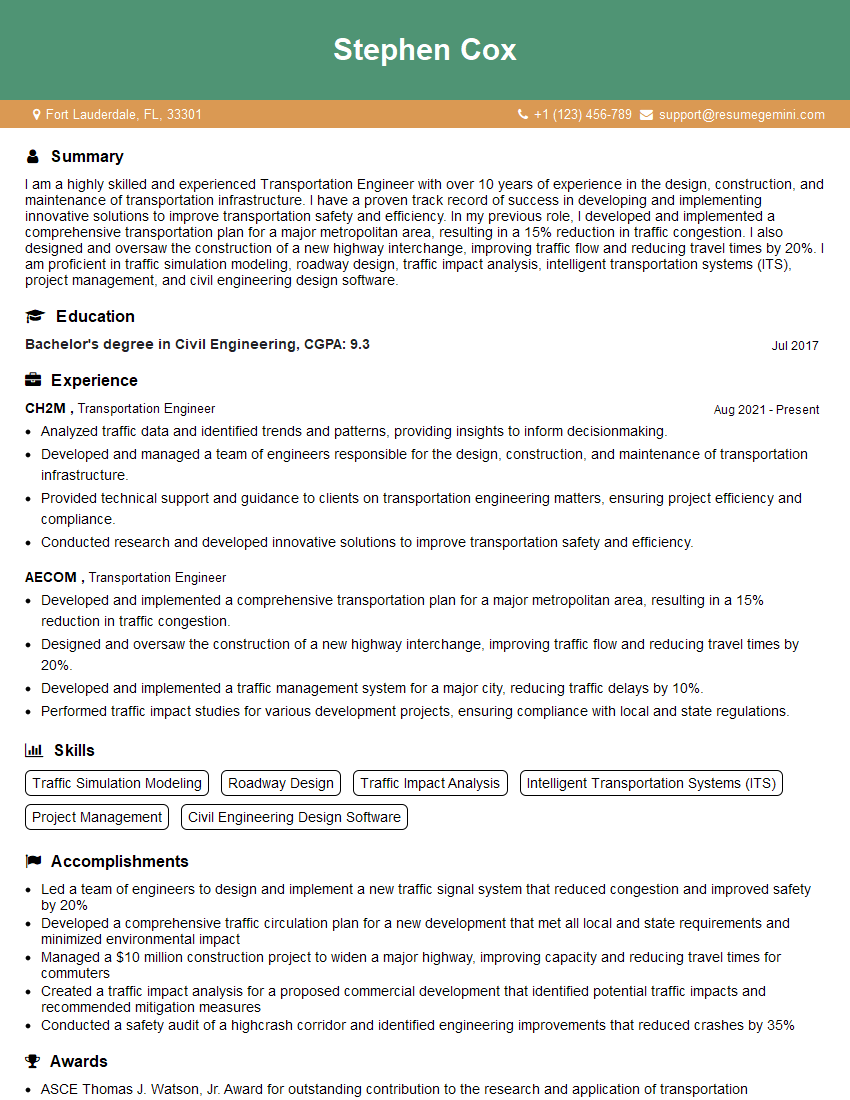
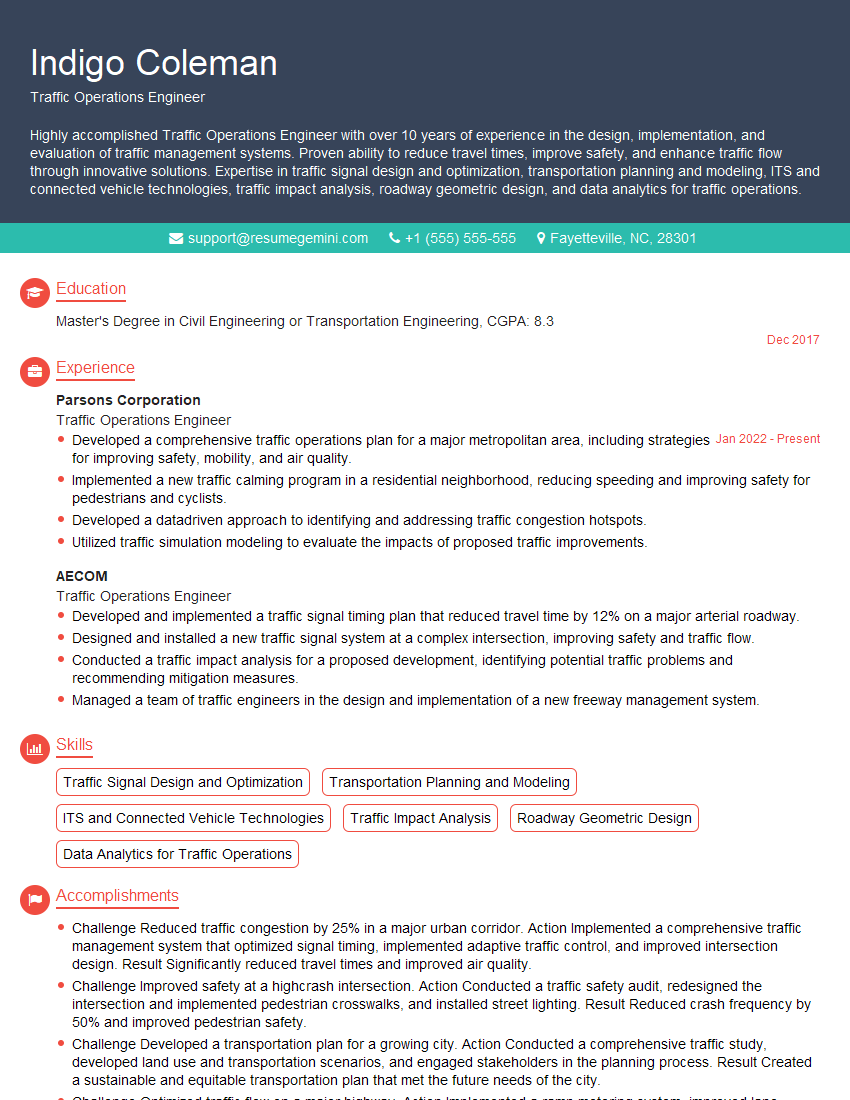
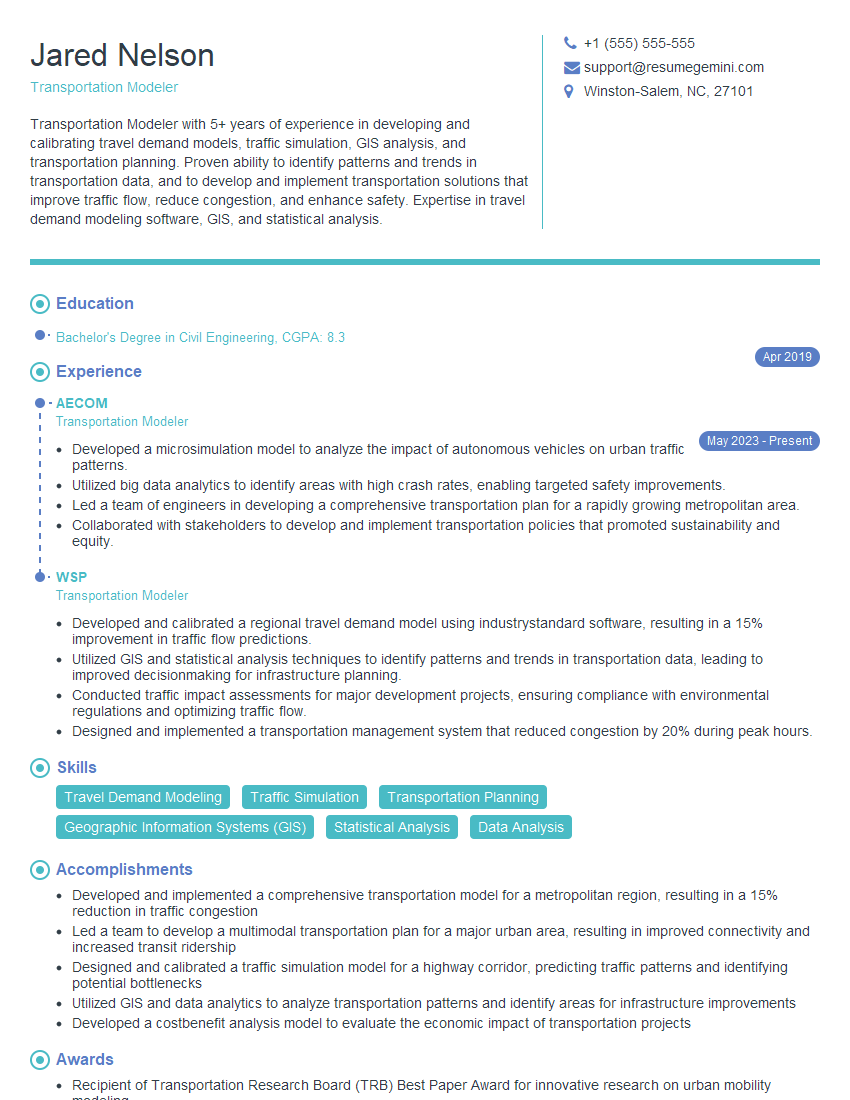
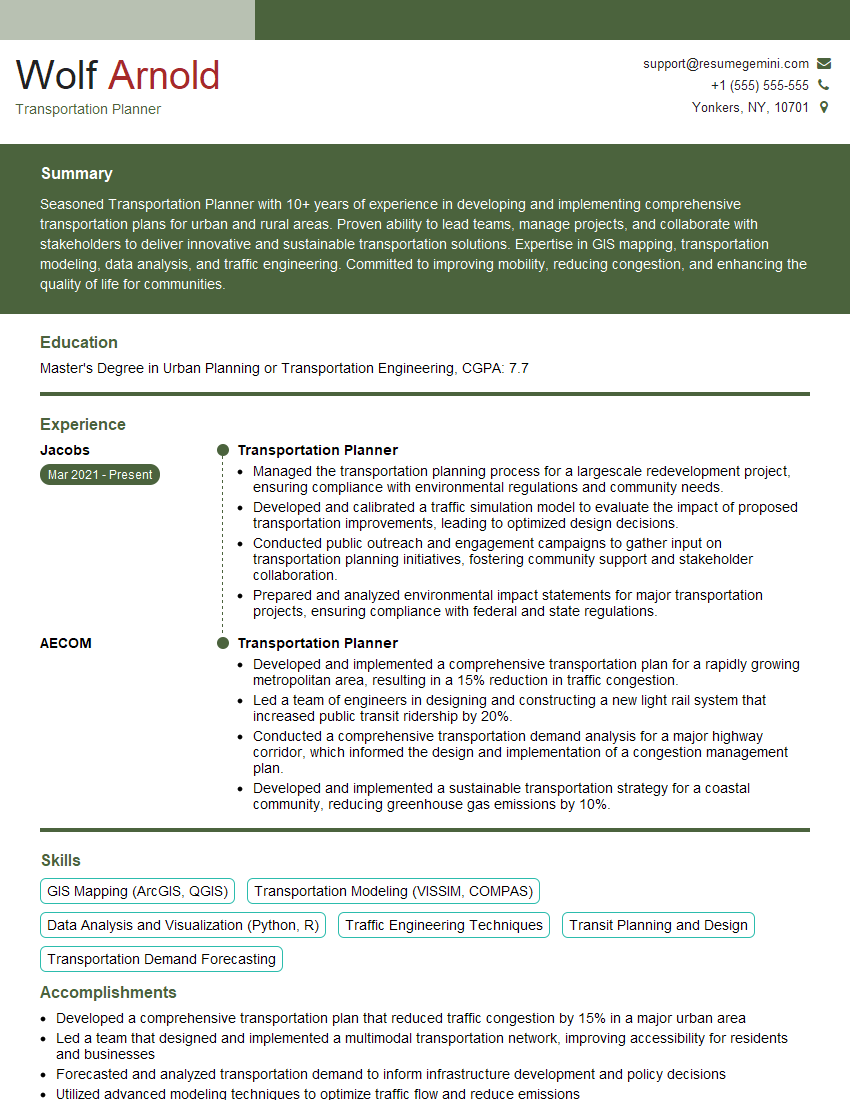
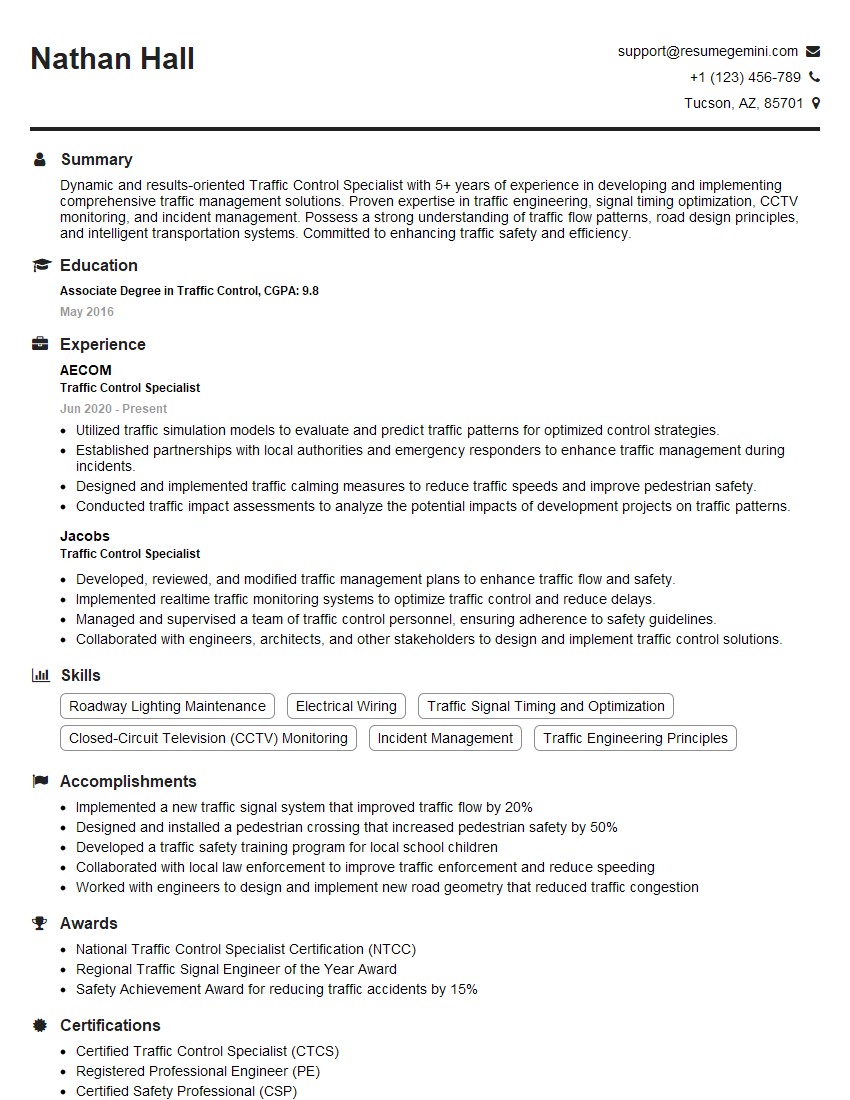
Mastering Traffic Signal Design and Timing opens doors to rewarding careers with significant impact on community infrastructure and safety. A strong understanding of these principles is highly valued by employers. To enhance your job prospects, creating an ATS-friendly resume is paramount. ResumeGemini is a trusted resource to help you build a professional and impactful resume that highlights your skills and experience effectively. ResumeGemini provides examples of resumes tailored to Traffic Signal Design and Timing, guiding you in crafting a document that showcases your capabilities to potential employers.


Explore more articles
Users Rating of Our Blogs
Share Your Experience
We value your feedback! Please rate our content and share your thoughts (optional).
What Readers Say About Our Blog
Very informative content, great job.
good