The right preparation can turn an interview into an opportunity to showcase your expertise. This guide to Transformer and Substation Maintenance interview questions is your ultimate resource, providing key insights and tips to help you ace your responses and stand out as a top candidate.
Questions Asked in Transformer and Substation Maintenance Interview
Q 1. Explain the different types of transformers and their applications.
Transformers are essential components in power systems, converting voltage levels to match the needs of transmission, distribution, and utilization. They are broadly classified based on their core construction, application, and cooling methods.
- Power Transformers: These are large, high-power transformers used in substations to step-up voltage for long-distance transmission and step-down voltage for distribution networks. Think of them as the ‘voltage converters’ of the power grid. For example, a 500 kV to 220 kV step-down power transformer at a major substation.
- Distribution Transformers: Smaller transformers located near consumers, stepping down voltage from the distribution network to the utilization voltage (e.g., 11 kV to 400 V). These are the transformers you often see on power poles or in underground vaults.
- Instrument Transformers: These transformers are used for measurement and protection purposes.
- Current Transformers (CTs): Measure high currents safely by stepping them down to lower levels for metering and protection relays.
- Potential Transformers (PTs): Measure high voltages safely by stepping them down to lower levels for metering and protection relays.
- Autotransformers: These have a single winding with a common tap, providing a simple and cost-effective way to step-up or step-down voltage. They are commonly found in applications requiring voltage regulation.
- Isolation Transformers: These transformers provide galvanic isolation between the primary and secondary circuits, ensuring electrical safety by preventing ground faults from propagating. They’re crucial in sensitive equipment like medical devices.
The choice of transformer type depends on the specific application requirements, considering factors like voltage levels, power rating, efficiency, cost, and safety.
Q 2. Describe the process of transformer oil testing and analysis.
Transformer oil testing is crucial for maintaining the transformer’s reliability and preventing catastrophic failures. The process involves several tests analyzing the oil’s dielectric strength, chemical composition, and physical properties.
- Dielectric Strength Test: Measures the oil’s ability to withstand high voltage without breakdown. A low dielectric strength indicates contamination or degradation, increasing the risk of insulation failure.
- Interfacial Tension Test: Measures the oil’s ability to repel water. High interfacial tension indicates good quality oil. Water contamination can significantly reduce the oil’s dielectric strength.
- Dissolved Gas Analysis (DGA): This test analyzes gases dissolved in the oil. Different gases (e.g., hydrogen, methane, ethane) indicate different types of faults within the transformer (e.g., overheating, partial discharges, arcing).
- Acid Number Test: Measures the acidity of the oil. Increased acidity suggests degradation and potential corrosion of transformer components.
- Moisture Content Test: Determines the amount of water present in the oil. Excessive moisture reduces the oil’s dielectric strength and can cause corrosion.
The results of these tests are carefully analyzed to assess the transformer’s condition and determine the need for maintenance or replacement of the oil. Regular testing, often as part of a preventative maintenance program, helps avoid costly repairs or unplanned outages.
Q 3. What are the common causes of transformer failures?
Transformer failures can have severe consequences, leading to power outages and equipment damage. The most common causes include:
- Overheating: Excessive load currents, inadequate cooling, or faults within the transformer can cause overheating, leading to insulation degradation and eventual failure. Think of it like constantly overloading a circuit breaker – it eventually fails.
- Insulation Failure: Ageing, moisture, or contamination can weaken the transformer’s insulation, making it vulnerable to breakdown under high voltage stress.
- Overvoltage: Lightning strikes or switching surges can cause overvoltages that exceed the transformer’s insulation strength, leading to immediate failure.
- Short Circuits: Internal short circuits can develop due to insulation failure or manufacturing defects, resulting in excessive currents and potentially damaging the windings.
- Tap Changer Failure: Problems with the tap changer, used to adjust voltage output, can lead to poor voltage regulation or complete failure.
- External Factors: Physical damage, contamination from the environment, or poor installation practices can contribute to transformer failures.
Understanding these causes is critical for implementing effective preventative maintenance strategies to extend the lifespan of transformers.
Q 4. How do you diagnose a faulty transformer?
Diagnosing a faulty transformer requires a systematic approach combining visual inspection, testing, and data analysis.
- Visual Inspection: Check for external damage, loose connections, leaks, or unusual noises.
- Temperature Monitoring: Monitor winding and oil temperatures using temperature sensors. Excessive temperatures indicate potential problems.
- Dissolved Gas Analysis (DGA): Analyzing gases dissolved in the oil provides valuable clues about the type and location of internal faults.
- Insulation Resistance Test: Measures the insulation resistance of the windings. Low resistance indicates insulation degradation.
- Frequency Response Analysis (FRA): FRA measures the transformer’s frequency response, identifying changes in winding condition that could indicate damage.
- Short-Circuit Test: Performed to determine the transformer’s impedance and identify potential short circuits.
The interpretation of test results requires expertise. Often, a combination of tests is necessary for accurate diagnosis. For example, high levels of acetylene in DGA coupled with low insulation resistance could suggest arcing within the transformer.
Q 5. Explain the different types of substation protection schemes.
Substation protection schemes are designed to safeguard the equipment and personnel from various faults and abnormal operating conditions. They rely on a combination of protective relays, circuit breakers, and other devices to rapidly isolate faulty sections of the power system.
- Differential Protection: Compares currents entering and leaving a protected zone (e.g., a transformer). Any significant difference indicates an internal fault.
- Overcurrent Protection: Detects excessive currents due to short circuits or overload conditions.
- Distance Protection: Measures the impedance to the fault location. It’s effective for protecting long transmission lines.
- Busbar Protection: Protects the main busbars in the substation from faults.
- Transformer Protection: Includes differential protection, overcurrent protection, and buchholz relay protection (detects gas buildup within the transformer tank).
- Ground Fault Protection: Detects ground faults, protecting both equipment and personnel.
The specific protection scheme employed depends on the substation’s configuration, voltage level, and criticality. A comprehensive protection scheme employs multiple layers of protection to ensure redundancy and reliability.
Q 6. Describe the function of a protective relay.
Protective relays are the ‘brains’ of the substation protection system. They constantly monitor various parameters of the power system (e.g., current, voltage, impedance, frequency) and compare them against pre-defined thresholds.
When an abnormality is detected, the relay initiates a trip signal to the associated circuit breaker, causing it to interrupt the power flow and isolate the faulty section. Think of them as the ‘safety officers’ of the power system, always vigilant and ready to react to dangerous situations. They act incredibly fast, within milliseconds, minimizing damage and ensuring system stability.
Different types of relays are designed to detect specific faults (e.g., overcurrent, distance, differential). The choice of relay depends on the application and the type of protection required.
Q 7. How do you test and maintain protective relays?
Testing and maintaining protective relays are critical for ensuring their proper functioning and the safety of the power system. This involves both routine testing and periodic maintenance.
- Routine Testing: This includes checking the relay’s operating status, verifying the settings, and performing simulated fault injections to ensure correct operation. This often involves using specialized testing equipment to mimic fault conditions.
- Periodic Maintenance: This involves thorough inspections of the relay’s internal components, cleaning contacts, and replacing worn parts. It may also include calibrating the relay to ensure accuracy and proper response times.
- Calibration: Relays need to be periodically calibrated to maintain accuracy in their measurements and to ensure timely response in the event of a fault.
- Software Updates: Modern relays often have firmware that needs to be updated periodically to address bugs, improve functionality, and add new features.
Regular testing and maintenance of protective relays ensure they perform their critical functions reliably, preventing equipment damage, power outages, and ensuring the safety of personnel. Failure to properly maintain relays can lead to serious consequences.
Q 8. What are the safety precautions when working on high voltage equipment?
Working with high-voltage equipment demands the utmost caution. A single mistake can be catastrophic. Safety precautions begin long before any physical work starts, with thorough planning and risk assessment. This includes understanding the specific hazards present, like arc flash, electric shock, and potential energy release from stored capacitors.
- Lockout/Tagout (LOTO): This is paramount. Before *any* work, the power must be completely de-energized, and physical locks and tags must be applied to prevent accidental re-energization. Multiple people should be involved in this process, with verification at each step.
- Personal Protective Equipment (PPE): This includes insulated gloves, rubber boots, arc flash suits (rated for the specific voltage level), safety glasses, and hard hats. The appropriate PPE is determined by a comprehensive risk assessment.
- Grounding: Proper grounding is critical to safely dissipate any residual charge. This involves connecting the equipment to a known ground point using appropriately rated grounding rods and conductors before commencing any work.
- Training and Competency: Only trained and authorized personnel with proven competence should work on high-voltage equipment. Regular refresher training is essential.
- Permit-to-Work Systems: Formal permit-to-work systems ensure that all safety procedures are followed and documented before, during, and after the work. This provides a clear audit trail.
- Emergency Response Plan: A well-defined emergency response plan including first aid, evacuation procedures, and contacting emergency services should be readily available and understood by all personnel.
Think of it like this: Working on high-voltage equipment is like handling a loaded firearm – utmost respect and adherence to safety protocols are non-negotiable. A failure to follow these precautions can lead to severe injury or death.
Q 9. Explain the importance of grounding in substation maintenance.
Grounding in substation maintenance is absolutely crucial for safety and equipment protection. It’s the process of connecting an electrical component or system to the earth, providing a low-resistance path for fault currents to flow to the ground. This prevents dangerous voltage buildup and protects personnel and equipment from electrical hazards.
- Personnel Safety: Grounding prevents electrical shock by ensuring that any accidental contact with energized equipment will result in a safe current path to the ground, minimizing the risk of injury or death.
- Equipment Protection: Grounding provides a path for fault currents to flow, preventing voltage surges and overvoltages that can damage sensitive equipment like transformers and circuit breakers. It helps to minimize the extent of damage during faults.
- System Stability: Grounding helps maintain system stability by quickly clearing fault currents, reducing the risk of cascading failures and widespread power outages.
Imagine a faulty wire touching the ground; without grounding, the entire substation could become energized. Grounding ensures that fault currents are quickly discharged to the earth, preventing this dangerous scenario. It’s the ultimate safety net.
Q 10. Describe the different types of circuit breakers used in substations.
Substations utilize various circuit breaker types, each suited for specific applications and voltage levels. The choice depends on factors like interrupting capacity, speed, and maintenance requirements.
- Air Circuit Breakers (ACBs): These are relatively simple and cost-effective, using air as the interrupting medium. They are commonly used in lower voltage applications. However, their interrupting capacity is limited compared to other types.
- Vacuum Circuit Breakers (VCBs): VCBs use a vacuum within the interrupting chamber. The vacuum enhances the interrupting capability and minimizes arc formation, resulting in less maintenance. They are frequently used in medium-voltage applications.
- Oil Circuit Breakers (OCBs): Older technology, OCBs use oil as the interrupting medium. While effective, they pose environmental concerns due to oil leakage and fire hazards. Their use is declining.
- Sulfur Hexafluoride (SF6) Circuit Breakers: SF6 gas is an excellent insulating and arc-quenching medium. SF6 circuit breakers offer high interrupting capacity and are used in high-voltage applications. However, SF6 is a potent greenhouse gas, leading to increased environmental awareness and a search for greener alternatives.
Each type has its strengths and weaknesses. The selection process involves careful consideration of cost, reliability, environmental impact, and the specific needs of the substation.
Q 11. How do you troubleshoot a faulty circuit breaker?
Troubleshooting a faulty circuit breaker requires a systematic approach. Safety is paramount – always follow LOTO procedures before commencing any diagnostic work.
- Visual Inspection: Start with a thorough visual inspection for any obvious signs of damage, such as loose connections, burnt components, or leaks (in oil or SF6 breakers).
- Check Control Circuits: Examine the control circuits for proper operation. This often involves checking relays, sensors, and actuators to ensure they are functioning correctly.
- Test Protective Relays: If the breaker trips unexpectedly, test the protective relays that control the breaker to see if they’re operating within their parameters.
- Measure Insulation Resistance: Measure the insulation resistance of the breaker using a megohmmeter to identify any insulation problems. Low insulation resistance can indicate internal damage.
- Check Operating Mechanism: Verify the proper operation of the breaker’s mechanical mechanism, such as the closing and tripping springs and contacts.
- Partial Discharge Testing (PD): For high-voltage breakers, PD testing can identify potential insulation weaknesses before they cause a failure.
- Examine Breaker’s Trip History: Review the breaker’s trip history for patterns or trends that might indicate a recurring problem.
If the problem cannot be identified through these tests, specialized diagnostic equipment or the assistance of a qualified technician or manufacturer might be required. Remember that safety always comes first.
Q 12. What is the role of SCADA in substation operation and maintenance?
Supervisory Control and Data Acquisition (SCADA) systems are the nervous system of modern substations. They provide real-time monitoring, control, and data acquisition capabilities, improving efficiency, safety, and reliability.
- Real-time Monitoring: SCADA continuously monitors critical parameters such as voltage, current, temperature, and breaker status, providing operators with a comprehensive overview of the substation’s operation.
- Remote Control: Operators can remotely control circuit breakers, switches, and other substation equipment, allowing for efficient operation and quick response to faults.
- Data Acquisition and Analysis: SCADA systems collect vast amounts of data, enabling advanced data analytics to improve maintenance scheduling, predict potential equipment failures, and optimize substation performance.
- Alarm Management: SCADA systems automatically generate alarms for abnormal conditions, alerting operators to potential problems that require immediate attention. This improves response times and prevents larger outages.
- Improved Reliability: By proactively identifying and addressing potential problems, SCADA helps improve substation reliability and reduce downtime.
Imagine a vast network of sensors and actuators communicating with a central control system. SCADA acts as that system, providing comprehensive insights and enabling proactive management of the substation. Without SCADA, operating and maintaining a modern substation would be a much more challenging and less efficient endeavor.
Q 13. Explain the process of commissioning a new substation.
Commissioning a new substation is a multi-stage process that ensures the facility is built to specifications, operates safely, and meets performance requirements. It’s a critical phase requiring rigorous testing and documentation.
- Pre-commissioning: This involves thorough inspection and testing of individual equipment, checking for proper installation, wiring, and functionality before integration into the overall system.
- System Integration Testing: Once all equipment is installed, system integration tests verify the seamless interaction between components and the overall system’s functionality. This includes testing protective relays and control systems.
- Protection Relay Testing: This crucial step verifies that the protective relays operate correctly to protect the substation equipment from faults. It is often performed by specialized technicians.
- Powering Up and Performance Testing: The substation is energized and comprehensive performance tests are conducted to validate voltage levels, current flows, and overall system stability under various operating conditions.
- Control System Verification: This involves testing the SCADA system and other control systems to ensure they function as designed. This involves simulations and testing various operational scenarios.
- Documentation and Handover: All test results, commissioning reports, and operational manuals are meticulously documented. Once the commissioning process is complete, the substation is handed over to the operating company.
Commissioning is like a thorough final examination for the new substation – ensuring everything functions perfectly before it goes live. A poorly commissioned substation can be unsafe and unreliable.
Q 14. Describe different types of insulators used in substations.
Substations utilize a variety of insulators to provide electrical isolation and prevent current leakage. The choice of insulator depends on voltage level, environmental conditions, and space constraints.
- Porcelain Insulators: These are traditional, cost-effective insulators with good mechanical and electrical properties. They are commonly used in lower voltage applications.
- Glass Insulators: Glass insulators offer excellent dielectric strength and resistance to pollution. They are suitable for higher voltage applications and harsh environments.
- Polymer Insulators: These are increasingly popular due to their lightweight, high strength-to-weight ratio, and hydrophobic properties. They perform exceptionally well in polluted environments and are used in various voltage levels.
- Composite Insulators: These combine the advantages of multiple materials, such as fiberglass, polymers, and silicone rubber. They are designed to be very strong, lightweight, and resistant to environmental factors.
Insulators are like the unsung heroes of the substation. They silently withstand the high voltages and environmental stresses, preventing power outages and ensuring safe operation.
Q 15. What are the common causes of substation equipment failures?
Substation equipment failures stem from a variety of causes, broadly categorized into environmental factors, aging components, and operational stresses. Let’s explore some common culprits:
- Environmental Factors: These include lightning strikes, which can induce high voltage surges damaging insulation; extreme weather conditions like heat, cold, and humidity that can accelerate degradation of materials; and contamination from dust, salt, and pollutants, leading to flashovers and insulation breakdown. Imagine the stress on a transformer winding during a prolonged heatwave – the increased temperature significantly reduces its lifespan.
- Aging Components: Over time, insulation degrades, contacts corrode, and mechanical parts wear out. Think of it like an aging car – regular maintenance can extend its life, but eventually parts will need replacing. In substations, this translates to deteriorated bushings, aging transformers with weakened windings, and worn-out circuit breaker contacts.
- Operational Stresses: Overloads, frequent switching operations, and harmonic distortion can contribute to equipment failures. For instance, repeated switching of a circuit breaker can cause excessive wear on its mechanism, leading to premature failure. Similarly, prolonged operation above the rated capacity can overheat a transformer, causing significant damage.
Understanding these causes allows for proactive maintenance strategies to mitigate risks and extend the operational life of the equipment.
Career Expert Tips:
- Ace those interviews! Prepare effectively by reviewing the Top 50 Most Common Interview Questions on ResumeGemini.
- Navigate your job search with confidence! Explore a wide range of Career Tips on ResumeGemini. Learn about common challenges and recommendations to overcome them.
- Craft the perfect resume! Master the Art of Resume Writing with ResumeGemini’s guide. Showcase your unique qualifications and achievements effectively.
- Don’t miss out on holiday savings! Build your dream resume with ResumeGemini’s ATS optimized templates.
Q 16. How do you perform preventative maintenance on transformers?
Preventative maintenance on transformers is crucial for ensuring reliability and safety. It involves a multi-faceted approach combining regular inspections, testing, and servicing. A well-structured program typically includes:
- Visual Inspections: Regular checks for loose connections, oil leaks, physical damage, and signs of overheating (discoloration, bulging). Think of this as a quick health check-up.
- Oil Analysis: This is a critical aspect. Oil samples are taken and analyzed for dissolved gas content, water content, and dielectric strength. The presence of certain gases can indicate internal faults such as arcing or overheating. It’s like taking a blood test to reveal underlying issues.
- DGA (Dissolved Gas Analysis): This test specifically checks for gases like methane, ethane, and acetylene, which can pinpoint the location and type of fault within the transformer.
- Insulation Resistance Testing: This checks the integrity of the transformer’s insulation system, revealing any weakening that could lead to breakdown. This helps prevent unexpected failures by identifying insulation degradation.
- Tap Changer Operation Verification: Ensuring smooth and accurate operation of the tap changer is vital for voltage regulation.
- Transformer Winding Resistance Testing: This helps in identifying any changes in resistance that could indicate winding damage.
- Bushing Inspection and Testing: Bushings are critical components that can fail over time, potentially leading to flashovers. Hence, their condition must be carefully monitored.
The frequency of these activities depends on factors like transformer size, age, and operating conditions, but a regular schedule of inspections, testing, and potentially servicing ensures optimal performance and longevity.
Q 17. How do you perform preventative maintenance on circuit breakers?
Preventative maintenance for circuit breakers focuses on ensuring reliable operation and preventing catastrophic failures. The maintenance schedule varies with the type of breaker (e.g., oil, air, SF6), but common procedures include:
- Visual Inspection: Checking for loose connections, corrosion, damage to the mechanism, and cleanliness of the surrounding area. A clean and organized environment reduces the risk of flashovers.
- Contact Inspection and Cleaning: Examining the condition of contacts for wear, pitting, or corrosion. Cleaning ensures good electrical contact and minimizes resistance.
- Mechanism Operation Test: Manually or automatically operating the breaker to verify smooth operation and proper latching. This mimics the breaker’s operation to identify potential problems before they impact the grid.
- Insulation Resistance Testing: Measuring the insulation resistance to detect any degradation that could compromise safety and reliability. This ensures the circuit breaker can withstand high voltage without causing damage.
- Pressure Testing (for SF6 breakers): Regularly checking the pressure of the SF6 gas to ensure it’s within the specified range. This guarantees optimal performance and prevents leakage, which can damage the environment.
- Oil Level Check (for oil circuit breakers): Maintaining the correct oil level is essential for cooling and insulation.
These checks, performed according to a scheduled maintenance plan, significantly reduce the likelihood of unexpected failures and ensure the continuous and safe operation of the circuit breaker.
Q 18. Describe the process of transformer tap changing.
Transformer tap changing is a process used to adjust the turns ratio of a transformer, thereby regulating the output voltage. This is essential for maintaining a consistent voltage level at the load end, despite variations in the supply voltage or load demand.
There are two main types of tap changers: On-load tap changers (OLTCs) and off-load tap changers. OLTCs allow for tap changes while the transformer remains energized, minimizing service interruptions. Off-load tap changers require de-energizing the transformer before any tap changes can be made.
The process typically involves:
- Selecting the desired tap position: This is usually done using a control system that adjusts the tap position based on pre-defined parameters or operator input.
- Switching sequence: A carefully choreographed sequence of switching operations moves the tap selector to the new position while ensuring no short circuits or large voltage spikes occur. This sophisticated mechanism ensures a smooth voltage adjustment without interrupting the power flow.
- Verification: After the tap change, the new voltage level is verified to ensure it’s within the acceptable range.
Tap changing is a critical operation that requires precise control and monitoring to ensure the safety and reliability of the power system.
Q 19. Explain the importance of regular inspection and maintenance of substation equipment.
Regular inspection and maintenance of substation equipment are paramount for ensuring grid reliability, preventing costly outages, and enhancing safety. Think of it as preventive healthcare for your power system.
The importance stems from several key factors:
- Preventing Catastrophic Failures: Regular maintenance identifies potential problems before they escalate into major outages. This is akin to catching a small fire before it becomes a major inferno.
- Improving Operational Efficiency: Well-maintained equipment operates more efficiently, reducing energy losses and improving overall system performance. This is similar to regularly servicing a car engine to ensure optimal fuel efficiency.
- Reducing Downtime: By addressing minor issues promptly, maintenance minimizes the frequency and duration of outages, reducing financial losses and disruptions to service.
- Ensuring Safety: Regular inspection identifies potential hazards, such as loose connections, damaged insulation, and overheating, preventing accidents and injuries.
- Extending Equipment Lifespan: Proper maintenance extends the lifespan of expensive substation equipment, reducing the need for costly replacements.
A comprehensive maintenance program, tailored to the specific equipment and environmental conditions, is a crucial investment in grid reliability and safety.
Q 20. What are the different types of faults that can occur in a power system?
Power system faults can be broadly classified into three main categories: faults involving the earth (ground faults), faults between phases (interphase faults), and faults between phases and the earth (phase-to-ground faults).
Let’s break down each type:
- Ground Faults: These occur when one or more phases come into contact with the earth. This can be caused by insulation failure, lightning strikes, or tree branches contacting lines. A single-line-to-ground fault involves one phase and the ground; a double-line-to-ground fault involves two phases and the ground.
- Interphase Faults: These faults occur between two or more phases without involving the earth. They can result from damaged insulation, conductor movement, or external forces like wind causing damage.
- Phase-to-Ground Faults: These are a combination of ground and phase faults, involving one or more phases and the earth simultaneously. These can be single or double line to ground faults.
Beyond these primary classifications, faults can further be characterized as temporary or permanent, based on their duration. Furthermore, the severity and location of the fault will dictate the impact on the power system.
Q 21. How do you identify and isolate a fault in a power system?
Identifying and isolating a fault in a power system is a critical process that requires a combination of protective relaying, monitoring systems, and skilled personnel. Here’s a step-by-step overview:
- Fault Detection: Protective relays, strategically placed throughout the power system, continuously monitor voltage and current levels. When an abnormality is detected (like a significant current imbalance or drop in voltage), the relay initiates a trip signal.
- Fault Location: Advanced monitoring systems use various techniques (distance protection, differential protection) to pinpoint the location of the fault. This could involve analyzing the waveforms of the fault current to determine the impedance between the fault location and the relay.
- Circuit Breaker Tripping: Once the fault is located, the appropriate circuit breakers are tripped to isolate the faulty section of the power system from the rest of the grid, preventing further damage and ensuring safety. This is like isolating a patient’s infected limb to prevent the spread of infection.
- Fault Investigation: After the fault is isolated, a team of technicians investigates the cause of the fault. This may involve visual inspections, testing equipment, and analyzing fault recorder data to determine what happened.
- Restoration of Service: Once the fault is repaired, the isolated section is re-energized, restoring power to the affected area. This involves a careful process of testing to ensure safety before the lines are reconnected.
The speed and efficiency of this process are critical for minimizing service interruptions and preventing cascading failures. The entire process relies on a robust protective system and a well-trained team to ensure rapid fault clearing and restoration of service.
Q 22. Describe the procedure for safely de-energizing a substation.
De-energizing a substation is a critical procedure requiring meticulous safety protocols to prevent electrical shock, arc flash, and equipment damage. It’s a multi-step process involving lockout/tagout procedures, verification, and testing.
- Preparation: The first step involves thorough planning, including identifying all equipment to be de-energized, reviewing schematics, and obtaining necessary permits. The crew must be briefed on the specific procedures and potential hazards.
- Lockout/Tagout (LOTO): This is the cornerstone of safe de-energization. Each circuit breaker and disconnect switch controlling the equipment must be locked and tagged out by authorized personnel. Multiple locks, ideally with different individuals’ locks, ensure that no one can inadvertently energize the equipment.
- Verification: After LOTO, the voltage must be verified with appropriate insulated testing equipment to confirm that the circuit is truly de-energized. This is often done multiple times, at various points in the circuit.
- Grounding: Once de-energized, the equipment is grounded using properly sized and insulated grounding rods and clamps. This provides an additional safety measure by providing a path to earth for any residual charge.
- Permit-to-Work System: A formal permit-to-work system is typically implemented, documenting every step of the process, including who performed the work, timestamps, and verification readings. This ensures accountability and traceability.
- Post-Work Verification: After maintenance, the grounding is removed, the locks are released sequentially (with verification at each step), and the equipment is carefully re-energized under supervision.
Imagine this like defusing a bomb – each step requires extreme precision and careful attention to detail to avoid any risk.
Q 23. Explain the concept of impedance and its role in transformer operation.
Impedance is the total opposition to the flow of current in an AC circuit. It’s a combination of resistance and reactance (inductive and capacitive). In a transformer, impedance plays a crucial role in determining voltage regulation, short-circuit current, and the transformer’s ability to handle fault conditions.
Resistance represents the energy dissipated as heat. Reactance, on the other hand, represents the energy stored in the magnetic or electric fields.
In transformers, impedance is usually expressed as a percentage of the rated impedance. A higher percentage impedance indicates a higher opposition to current flow. This is important because a higher impedance limits the short-circuit current during a fault, protecting the transformer and other equipment in the system. For example, a transformer with a higher impedance value will experience a smaller short-circuit current during a fault compared to a transformer with a lower impedance value.
Impedance is also a factor in voltage regulation – the ability of the transformer to maintain a constant output voltage under varying load conditions. Higher impedance transformers exhibit poorer voltage regulation but better short-circuit current limitation. The selection of the appropriate transformer impedance depends on the specific application and system requirements.
Q 24. What is the significance of vector groups in transformer connections?
Vector groups in transformer connections define the phase displacement between the primary and secondary windings. They’re crucial for ensuring proper parallel operation of transformers and correct voltage phase relationships within a power system. Vector groups are represented using a letter-number code (e.g., Dyn11, Yd11).
The letter indicates the winding connection (Y for wye, D for delta, Z for zig-zag), and the number represents the phase shift between the primary and secondary voltages. For instance, Dyn11 indicates a delta-connected primary, a wye-connected secondary, and a 30-degree phase shift. Mismatched vector groups can lead to circulating currents, overheating, and even damage to the transformer or other equipment.
Imagine vector groups as a type of alignment mechanism. You wouldn’t connect two gears that have different teeth arrangements without causing issues; similarly, inconsistent vector groups in transformers can result in significant problems. Careful consideration of the vector group is essential during transformer selection and installation to guarantee compatibility with the existing power system.
Q 25. Describe different types of bushing used in transformers.
Transformer bushings are crucial components that provide electrical insulation and a safe pathway for conductors to pass through the tank. Several types exist, each suited for different voltage levels and applications:
- Porcelain Bushings: These are traditionally used, providing excellent dielectric strength and are relatively inexpensive. However, they are more susceptible to damage from mechanical stress and environmental factors.
- Epoxy Bushings: Epoxy resin bushings offer improved mechanical strength, better resistance to moisture and pollution, and are lighter than porcelain bushings. They are commonly used in higher voltage applications.
- Oil-Filled Bushings: In these bushings, the insulation is partially filled with oil, which helps to dissipate heat and improve dielectric strength. They’re often found in large power transformers.
- Composite Bushings: These use a combination of materials, often including polymers and silicone rubber, providing excellent dielectric strength, water resistance, and tracking resistance. They offer a good balance of performance and cost.
The choice of bushing depends on factors like voltage level, environmental conditions, and budget. A poorly chosen bushing could lead to insulation failure, arcing, and potential system outages. Regular inspection and maintenance of bushings are essential for ensuring system reliability and safety.
Q 26. How do you interpret transformer nameplate data?
A transformer nameplate contains vital information about the transformer’s characteristics and operational parameters. Interpreting this data accurately is crucial for safe and efficient operation. The nameplate usually includes:
- Rated Voltage (Primary & Secondary): The voltage at which the transformer is designed to operate.
- Rated Power (kVA or MVA): The maximum apparent power the transformer can handle without overheating.
- Frequency: The operating frequency of the power system (e.g., 50 Hz or 60 Hz).
- Impedance (%): Indicates the total opposition to current flow, important for short-circuit current calculations.
- Vector Group: Specifies the phase relationship between the primary and secondary windings.
- Cooling Type: Indicates the transformer cooling method (e.g., ONAN, ONAF, ODAF).
- Connection Type (Primary & Secondary): Indicates whether the windings are connected in wye (Y) or delta (Δ).
- Tap Changer Position: Indicates the present tap setting. Tap changers allow voltage adjustment.
Understanding this information allows for appropriate sizing, protection, and operation of the transformer within its specified limits. Incorrect interpretation might lead to overloading, improper protection, and ultimately, equipment failure.
Q 27. Explain the principles of power system stability.
Power system stability refers to the ability of a power system to maintain synchronism between generators after a disturbance. It’s essential for reliable power supply. Several aspects are considered:
- Angle Stability: The ability of synchronous generators to maintain synchronism (rotor angle) following a large disturbance, such as a fault. Loss of synchronism leads to cascading outages.
- Frequency Stability: The system’s ability to maintain frequency within acceptable limits after a disturbance. A significant frequency deviation can lead to instability and equipment damage.
- Voltage Stability: The system’s ability to maintain acceptable voltage levels after a disturbance. Voltage collapse can lead to widespread outages.
Maintaining stability requires careful planning, design, and operation of the power system. Factors influencing stability include generator inertia, transmission system strength, load characteristics, and control systems. System protection and automation schemes play a vital role in preventing instability and ensuring system resilience.
Think of it like a tightrope walker – maintaining balance is essential. In a power system, maintaining stability involves managing the delicate balance between generation and load, reacting to disturbances quickly, and preventing cascading failures.
Q 28. What are the environmental considerations for substation maintenance?
Environmental considerations are paramount in substation maintenance. They include:
- Oil Management: Transformer oil can be a significant environmental hazard. Proper oil sampling, leak detection, and disposal are critical to preventing soil and groundwater contamination. Using environmentally friendly biodegradable oils is becoming increasingly common.
- PCB Contamination: Polychlorinated biphenyls (PCBs) were once used in transformer oils but are now banned due to their toxicity and persistence in the environment. Careful handling and disposal of transformers containing PCBs are essential.
- Waste Management: Proper disposal of hazardous wastes generated during maintenance, such as used oil, contaminated materials, and batteries, is crucial. Compliance with relevant environmental regulations is mandatory.
- Noise Pollution: Transformers and other substation equipment can generate significant noise. Noise mitigation measures, like sound barriers or acoustic enclosures, might be required to minimize environmental impact.
- Air Quality: Arc flash incidents and other events can release harmful gases into the atmosphere. Proper ventilation and safety protocols help mitigate this risk.
Ignoring these environmental considerations can result in fines, legal action, and reputational damage. Responsible environmental stewardship is essential for sustainable substation operation and maintenance.
Key Topics to Learn for Transformer and Substation Maintenance Interview
- Transformer Maintenance: Understanding transformer types (power, distribution, instrument), testing procedures (oil analysis, winding resistance tests, insulation resistance tests), preventative maintenance schedules, and common failure modes.
- Substation Maintenance: Knowledge of substation components (circuit breakers, transformers, insulators, busbars), safety protocols (lockout/tagout procedures, arc flash safety), inspection techniques, and maintenance strategies for various equipment.
- Practical Applications: Describe real-world scenarios involving troubleshooting transformer failures, performing preventative maintenance on substation equipment, interpreting diagnostic test results, and managing maintenance budgets effectively.
- Electrical Safety: Demonstrate a thorough understanding of high-voltage safety practices, personal protective equipment (PPE) requirements, and relevant safety regulations (OSHA, NEC).
- Troubleshooting and Diagnostics: Explain your approach to diagnosing faults in transformers and substations, including the use of diagnostic tools and techniques. Be prepared to discuss problem-solving methodologies.
- Relay Protection and Control Systems: Familiarize yourself with the principles of relay protection, different types of relays, and their applications in substations. Understand basic control systems and their integration with substation equipment.
- Documentation and Reporting: Discuss the importance of accurate record-keeping, maintenance logs, and reporting procedures within a substation maintenance program.
Next Steps
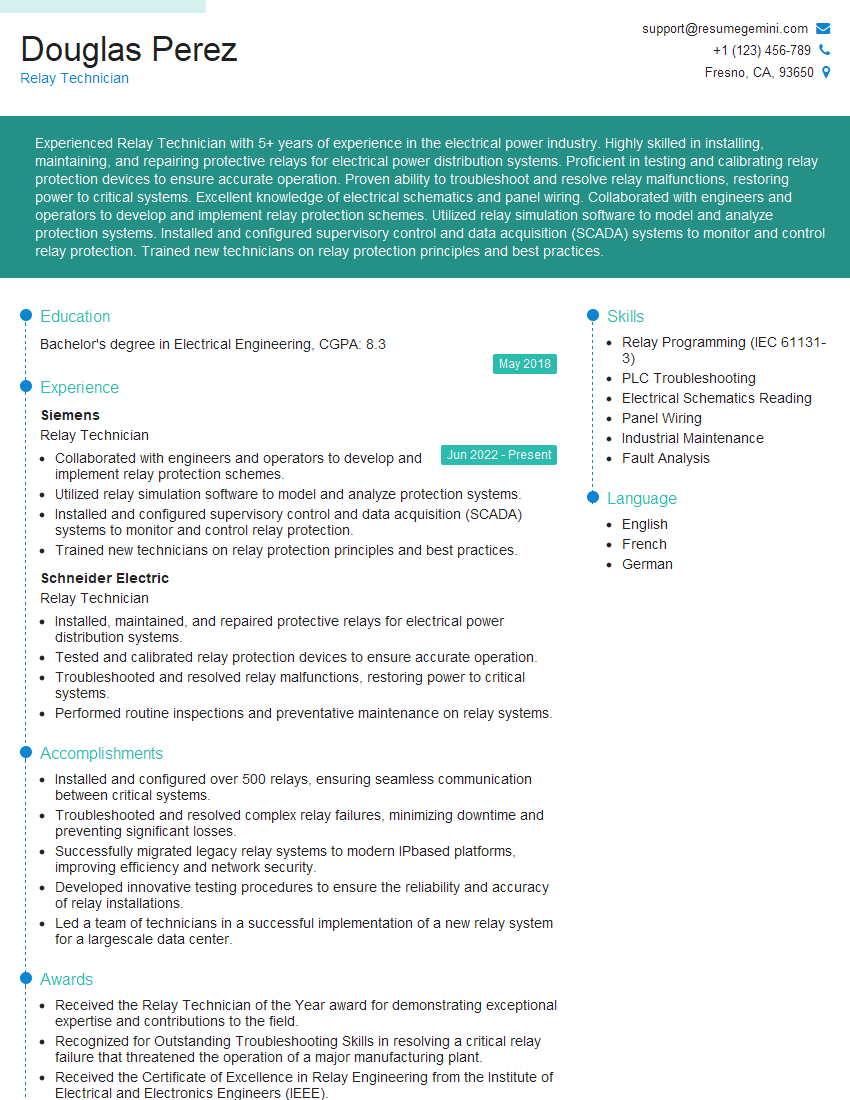
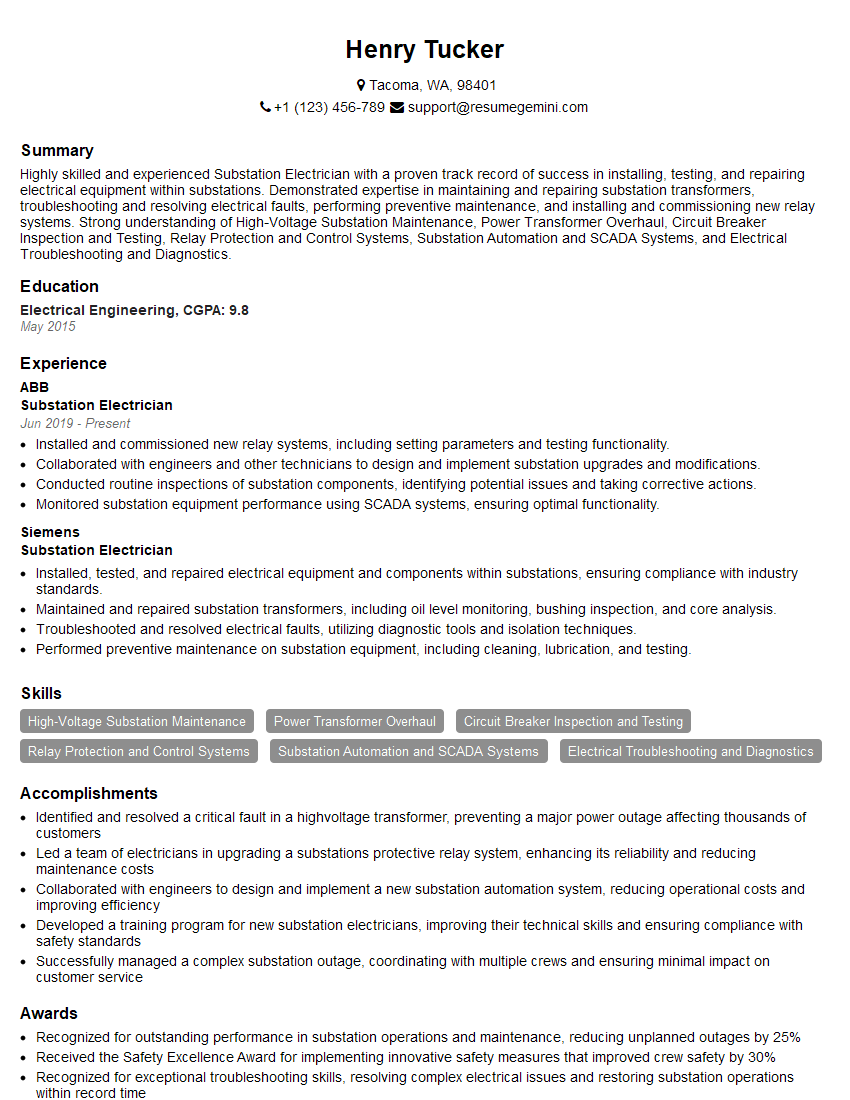
Mastering Transformer and Substation Maintenance opens doors to exciting career opportunities with significant growth potential in the energy sector. A strong understanding of these critical areas demonstrates technical expertise and commitment to safety, making you a highly desirable candidate. To significantly enhance your job prospects, focus on crafting an ATS-friendly resume that highlights your skills and experience effectively. ResumeGemini is a trusted resource that can help you build a professional and impactful resume tailored to the energy industry. Examples of resumes specifically tailored for Transformer and Substation Maintenance roles are available to guide you. Invest the time to create a compelling resume – it’s your first impression and a critical step in landing your dream job.
Explore more articles
Users Rating of Our Blogs
Share Your Experience
We value your feedback! Please rate our content and share your thoughts (optional).
What Readers Say About Our Blog
Very informative content, great job.
good