Feeling uncertain about what to expect in your upcoming interview? We’ve got you covered! This blog highlights the most important Travel and Hotel Coordination interview questions and provides actionable advice to help you stand out as the ideal candidate. Let’s pave the way for your success.
Questions Asked in Travel and Hotel Coordination Interview
Q 1. What software programs are you proficient in for travel booking and management?
Proficiency in travel booking and management software is crucial for efficiency and accuracy. I’m highly skilled in several leading programs. These include Sabre GDS, Amadeus GDS, Galileo GDS (all major Global Distribution Systems), and several Customer Relationship Management (CRM) systems such as Salesforce and Zoho CRM, which I use for client communication and itinerary management. I also have extensive experience with online booking tools like Travelport and TravelClick, which are invaluable for comparing pricing and availability across various suppliers. Finally, I’m proficient in Microsoft Office Suite (Excel, Word, Outlook), which I utilize for data analysis, report generation, and communication. My expertise across these platforms ensures seamless travel planning and management.
Q 2. Describe your experience with Global Distribution Systems (GDS).
Global Distribution Systems (GDS) are the backbone of the travel industry, acting as central databases containing real-time information on flights, hotels, and other travel services from various suppliers. My experience with GDS encompasses using Sabre, Amadeus, and Galileo to access and book flights, hotels, and rental cars. I can efficiently search for availability, compare prices, and make reservations across multiple airlines and hotels simultaneously. This allows me to find the best options for my clients, including comparing different fare classes and accommodation types. For example, I recently used Amadeus to secure discounted business class flights for a corporate client by leveraging my knowledge of fare rules and availability across various airlines. This saved the client a significant amount of money while ensuring they received the best possible service.
Q 3. How do you handle unexpected travel disruptions, such as flight cancellations or hotel overbookings?
Unexpected travel disruptions are inevitable. My approach prioritizes immediate action and client communication. If a flight is cancelled, I first confirm the situation with the airline and then explore alternative flight options, considering factors like flight times, layovers, and cost. I will always actively seek compensation for affected passengers as per their airline’s policies. If a hotel is overbooked, I immediately contact the hotel and work towards securing alternative accommodations of comparable or superior quality. Transparency with the client is key; I keep them updated every step of the way, explaining the situation and the actions I’m taking. I use a combination of my GDS knowledge and personal relationships with hotels and airlines to resolve these issues efficiently and minimize inconvenience. Think of it like being a travel firefighter—putting out problems before they burn out of control!
Q 4. Explain your process for negotiating hotel rates and securing group discounts.
Negotiating hotel rates and securing group discounts is a skill honed over years of experience. My process begins with thorough research to understand the hotel’s pricing structure and identify potential discounts. I then establish contact with the hotel’s sales department, outlining the group size, dates of stay, and any specific requirements. I present a professional proposal highlighting the potential revenue generation for the hotel and leverage my established network of contacts in the industry to negotiate favorable rates. I often present multiple scenarios, outlining the value proposition of securing our business. This includes highlighting things like guaranteed occupancy, potential for additional revenue streams (F&B, etc.), and long-term partnership opportunities. For example, I recently negotiated a 20% discount for a 50-person group by offering a guaranteed minimum stay and committing to utilizing the hotel’s conference facilities. It’s about building a relationship and showing the hotel the value we offer.
Q 5. What strategies do you employ to optimize travel costs while maintaining quality?
Optimizing travel costs without compromising quality requires a multifaceted approach. I utilize several strategies including flexible travel dates, comparing prices across multiple platforms (GDS, online travel agencies), and leveraging airline and hotel loyalty programs. I also consider factors like baggage fees, in-flight meals, and airport transfer costs to provide a comprehensive cost analysis. For example, choosing a slightly less central hotel with comparable amenities can often result in significant savings. Additionally, booking flights and accommodations well in advance often secures better rates. The key is finding the sweet spot where value and cost are aligned with the client’s needs and preferences. It’s about being savvy without sacrificing comfort or convenience.
Q 6. How do you manage multiple travel arrangements simultaneously and prioritize tasks effectively?
Managing multiple travel arrangements simultaneously requires meticulous organization and prioritization. I employ a combination of project management techniques and technology. I utilize a CRM system to track bookings, deadlines, and client communication for each traveler or group. I prioritize tasks based on urgency and importance, focusing on those with the closest deadlines or highest potential for disruption. This involves creating detailed checklists, setting reminders, and regularly reviewing my workload. Think of it like conducting an orchestra—each instrument (booking) requires attention, but the conductor (me) ensures a harmonious outcome. Effective time management and clear communication are essential to avoid conflicts and ensure all arrangements are handled efficiently.
Q 7. Describe your experience with different booking platforms (e.g., Expedia, Booking.com).
I have extensive experience with various booking platforms, including Expedia, Booking.com, and others. Each platform has its strengths and weaknesses, and I understand how to leverage each to best serve my clients. Expedia is excellent for a broad overview and comparison of flights and hotels, while Booking.com often has competitive hotel rates and user reviews. I use these platforms as valuable tools in my overall strategy, supplementing my GDS access and direct supplier relationships. I don’t rely solely on any single platform but rather strategically use a mix to ensure I’m finding the best deals and most suitable options for the client’s specific requirements. The key is understanding the nuances of each platform and selecting the most appropriate one for each task.
Q 8. How familiar are you with travel insurance and its various components?
Travel insurance is a crucial component of any well-planned trip, protecting travelers from unforeseen circumstances. It’s essentially an insurance policy that covers various potential issues that might arise before, during, or after a journey.
Components typically include:
- Trip Cancellation/Interruption: Covers costs associated with canceling or cutting short a trip due to illness, injury, or other covered reasons (e.g., severe weather, family emergency).
- Medical Expenses: Covers medical bills incurred while traveling, often including emergency medical evacuation.
- Baggage Loss/Delay: Compensates for lost, stolen, or delayed luggage.
- Emergency Assistance Services: Provides 24/7 access to help with things like lost passports, medical referrals, and emergency transportation.
- Other potential coverages: Some policies may include coverage for flight delays, missed connections, rental car damage, and even personal liability.
Example: Imagine a client’s flight is canceled due to a sudden volcanic eruption. With comprehensive travel insurance, their prepaid non-refundable flights, accommodation, and other trip expenses could be reimbursed.
Q 9. Explain your understanding of travel regulations and visa requirements.
Understanding travel regulations and visa requirements is paramount for successful trip coordination. This involves being aware of the specific rules and documentation needed for entry and travel within a particular country or region. These regulations vary widely based on factors such as nationality, purpose of travel (tourism, business, etc.), and duration of stay.
Key aspects I consider include:
- Passport validity: Ensuring passports are valid for at least six months beyond the intended stay.
- Visa requirements: Researching and assisting clients with obtaining necessary visas, which often involves providing guidance on application procedures, required documents, and potential processing times.
- Entry/exit stamps: Understanding the importance of proper entry and exit stamps to avoid issues during subsequent travels.
- Health regulations: Checking for any mandatory vaccinations or health certificates required for entry into a destination.
- Customs regulations: Informing clients about customs rules and restrictions regarding items allowed into a country (e.g., limits on liquids, prohibited items).
Example: For a client traveling to Brazil, I would ensure they have the necessary visa (if required for their nationality), a valid passport, and any recommended vaccinations. I’d also inform them of Brazilian customs regulations, highlighting any restrictions on bringing specific items into the country.
Q 10. How do you ensure accurate and timely information is provided to clients regarding their travel arrangements?
Providing accurate and timely information to clients is a cornerstone of my approach. I utilize a multi-pronged strategy ensuring clarity and efficiency.
My methods include:
- Detailed confirmation documents: I generate comprehensive itineraries outlining all aspects of the trip, including flight details, accommodation information, activity schedules, and contact details.
- Regular communication updates: I proactively communicate with clients, providing updates on any changes in their itinerary or relevant travel advisories.
- Multiple communication channels: I offer clients multiple ways to contact me, whether it’s email, phone, or a dedicated messaging app.
- Utilizing technology: I leverage travel management systems and online platforms to provide clients with real-time updates on flight statuses and other travel information.
- Personalized service: I take the time to address any specific client concerns and answer their questions thoroughly.
Example: If a flight is delayed, I immediately contact the client with the updated information, suggesting alternative arrangements and providing reassurances.
Q 11. Describe your experience with managing travel itineraries for large groups.
Managing travel itineraries for large groups demands meticulous planning and exceptional organizational skills. My experience includes coordinating group trips ranging from corporate retreats to educational tours.
Key strategies I employ:
- Master itinerary creation: Designing a detailed, centralized itinerary that accounts for each group member’s needs and preferences.
- Negotiating group rates: Securing discounted rates for flights, accommodations, and group activities.
- Managing logistics: Overseeing all logistical aspects including ground transportation, airport transfers, and activity bookings.
- Communication and coordination: Establishing clear communication channels among group members, suppliers, and myself to ensure seamless execution.
- Contingency planning: Developing backup plans to address potential issues such as flight cancellations or unforeseen circumstances.
Example: I recently coordinated a trip for a corporate team of 50 people to Europe. This involved securing group flights, booking hotels with multiple rooms, arranging private transportation for airport transfers and excursions, and coordinating meals and activities for the entire group.
Q 12. How do you handle client complaints or emergencies during travel?
Handling client complaints or emergencies is an unavoidable aspect of the travel industry. My approach prioritizes swift, empathetic responses and effective problem-solving.
My approach involves:
- Active listening: I patiently listen to the client’s concerns to fully understand the situation.
- Empathetic communication: I acknowledge the client’s frustration and assure them of my commitment to resolving the issue.
- Problem identification: I work to identify the root cause of the problem, whether it’s a logistical issue, a supplier error, or an unforeseen event.
- Solution implementation: I develop and implement solutions, often involving direct communication with suppliers, airlines, or other relevant parties to rectify the problem.
- Follow-up and documentation: I follow up with the client to ensure the issue is fully resolved and document the situation for future reference.
Example: If a client experiences a lost luggage issue, I immediately contact the airline’s baggage services, provide the client with updates, and assist with filing a claim for compensation.
Q 13. What are your preferred methods for communication with clients and suppliers?
Effective communication is vital for seamless travel coordination. I utilize a combination of methods for communicating with both clients and suppliers.
My preferred methods include:
- Email: For formal communication, itinerary details, and confirmations.
- Phone: For urgent matters, complex discussions, or when a personal touch is needed.
- Messaging apps (e.g., WhatsApp, Slack): For quick updates, informal communication, and real-time responses during travel.
- Project management tools (e.g., Asana, Trello): For large group trips or complex arrangements, ensuring transparency and collaborative document sharing.
- Video conferencing: For in-depth planning sessions with clients or suppliers.
Example: I use email to send detailed itineraries to clients, WhatsApp to promptly address their concerns while they’re traveling, and project management tools for collaborative planning for large group bookings.
Q 14. How do you stay up-to-date on industry trends, changes in regulations, and new technologies?
Staying abreast of industry trends, regulatory changes, and technological advancements is crucial in this dynamic field. I employ a multi-faceted approach.
My strategies include:
- Industry publications and websites: I regularly read travel industry publications and websites to keep up with the latest news and trends.
- Professional development courses: I participate in workshops and training sessions to enhance my skills and knowledge.
- Networking: I actively network with fellow travel professionals to exchange information and insights.
- Government websites and travel advisories: I consult government websites and travel advisories to stay informed about regulatory changes and safety updates.
- Technology adoption: I explore and implement new technologies, such as travel management systems, to improve efficiency and enhance client service.
Example: To stay updated on changes in visa requirements, I regularly check the websites of relevant embassies and consulates, and I subscribe to newsletters from reputable travel industry organizations.
Q 15. Describe your experience with creating and managing travel budgets.
Creating and managing travel budgets requires a meticulous approach. It begins with understanding the client’s needs and constraints – are we looking at a luxury trip, a budget-friendly excursion, or something in between? Once the scope is defined, I meticulously research potential costs for flights, accommodation, activities, ground transportation, meals, and incidentals. I use budgeting software to create a detailed breakdown, often incorporating contingency funds for unexpected expenses (like flight delays or sudden medical needs). I then present this budget to the client for approval, ensuring transparency and allowing for revisions before finalizing the plan. For example, I recently managed a budget for a corporate retreat for 20 employees. By negotiating group rates for flights and accommodation, and carefully selecting cost-effective activities, I was able to stay well within the allocated budget, even adding a team-building activity without exceeding the initial limits.
I regularly monitor expenses throughout the trip, using expense tracking tools to ensure we’re on track and identify any potential overruns early. This proactive approach prevents unpleasant surprises at the end of the trip and allows for timely adjustments. I always provide the client with regular updates on spending and keep them informed of any potential changes to the budget.
Career Expert Tips:
- Ace those interviews! Prepare effectively by reviewing the Top 50 Most Common Interview Questions on ResumeGemini.
- Navigate your job search with confidence! Explore a wide range of Career Tips on ResumeGemini. Learn about common challenges and recommendations to overcome them.
- Craft the perfect resume! Master the Art of Resume Writing with ResumeGemini’s guide. Showcase your unique qualifications and achievements effectively.
- Don’t miss out on holiday savings! Build your dream resume with ResumeGemini’s ATS optimized templates.
Q 16. What is your experience with creating detailed travel itineraries including transportation, accommodation, and activities?
Crafting detailed itineraries is a crucial part of my role. I begin by understanding the client’s preferences – are they interested in historical sites, adventure activities, relaxation, or a mix? This understanding dictates the activities included. Once the overall itinerary is established, I carefully select transportation options, factoring in time efficiency, cost, and client comfort. For example, for a family vacation in Europe, I might suggest high-speed rail for longer distances and local transport for shorter ones. I meticulously research and book accommodation, ensuring it aligns with the client’s budget and preferences (e.g., location, amenities, proximity to attractions). I also book any necessary tours and activities in advance, securing the best prices and ensuring availability, especially during peak seasons. Finally, I provide the client with a comprehensive itinerary, including booking confirmations, maps, and contact information for all vendors. Think of it like creating a well-choreographed dance – every step is planned and executed in harmony to provide a seamless experience.
Q 17. How do you handle last-minute changes or requests from clients?
Last-minute changes are part and parcel of the travel industry. My approach is to remain calm and proactive. I immediately assess the impact of the change – is it feasible? What are the potential costs or logistical challenges? I communicate promptly with the client, explaining the implications of the change and exploring potential solutions. Often, this involves contacting airlines, hotels, or other vendors to rebook flights, change accommodation, or adjust activity schedules. For example, if a client needs to change their flight due to a family emergency, I’ll work tirelessly to secure a new flight at the best possible price, even if it means incurring some additional costs. Transparency and clear communication are crucial during these stressful moments, ensuring the client feels supported and that their needs are being addressed.
Q 18. What methods do you use to track travel expenses and reconcile invoices?
Tracking expenses and reconciling invoices is a critical aspect of responsible travel management. I use dedicated expense tracking software to meticulously record all transactions, categorizing them by type (flights, accommodation, activities etc.). This ensures accuracy and allows for easy reporting. Upon receipt of invoices, I meticulously cross-check them against my records, ensuring accuracy in charges and services rendered. Any discrepancies are immediately addressed with the relevant vendor. I then prepare a comprehensive expense report for the client, outlining all transactions, including supporting documentation (e.g., receipts, invoices). This detailed report provides complete transparency and ensures accountability in the management of travel funds. This ensures accurate financial records and streamlines the reconciliation process.
Q 19. How would you handle a situation where a client is unhappy with their hotel accommodations?
Client satisfaction is paramount. If a client is unhappy with their hotel accommodations, my first step is to listen empathetically and understand the nature of their dissatisfaction. Is it cleanliness, noise levels, the location, or something else? Once I understand the issue, I immediately contact the hotel to explain the situation and advocate on behalf of the client. I try to work with the hotel to find a mutually agreeable solution, such as a room change, a credit on the bill, or an upgrade. If the hotel is unresponsive or unable to resolve the issue to the client’s satisfaction, I may explore alternative accommodation options. For example, I once had a client who found their hotel room to be significantly smaller than described online. I contacted the hotel immediately and, after explaining the situation and showing the online description discrepancy, managed to secure them a complimentary upgrade to a larger room with a better view.
Q 20. How do you build and maintain strong relationships with hotel suppliers and other travel vendors?
Building strong relationships with hotel suppliers and other travel vendors is essential for securing the best deals and providing exceptional service. I achieve this through consistent communication, demonstrating professionalism and reliability. I make it a point to personally thank vendors for their services, leaving positive feedback when deserved. This not only fosters positive working relationships but also increases the likelihood of receiving preferential treatment and better rates in the future. For example, I maintain regular contact with preferred hotel partners, attending industry events and networking whenever possible. This allows me to build trust and develop long-term relationships that benefit both parties.
Q 21. What is your experience with different types of travel (business, leisure, group)?
My experience encompasses diverse travel types, including business, leisure, and group travel. Business travel often requires a focus on efficiency and cost-effectiveness, with an emphasis on convenient locations, reliable transportation, and fast Wi-Fi. Leisure travel, on the other hand, focuses on creating memorable experiences tailored to individual preferences. Group travel involves managing larger bookings, coordinating logistics for multiple travelers, and ensuring everyone’s needs are met. For example, I recently managed a large incentive trip for a tech company, incorporating team-building activities, luxury accommodations, and personalized excursions, while also keeping within a strict budget. This required meticulous planning, coordination with multiple vendors, and effective communication with the group participants.
Q 22. Describe your experience with creating and managing travel risk assessments.
Creating and managing travel risk assessments is crucial for ensuring the safety and well-being of travelers. It involves identifying potential hazards, analyzing their likelihood and severity, and implementing mitigation strategies. This process is iterative, requiring continuous monitoring and updates.
My approach involves a structured framework. First, I identify potential risks based on the destination, travel dates, traveler profiles (age, health conditions, etc.), and the purpose of the trip. This could include political instability, natural disasters, health concerns (like outbreaks or required vaccinations), crime rates, and transportation safety. Next, I analyze the likelihood and potential impact of each risk using various resources, such as government travel advisories, reputable news sources, and specialized risk assessment tools. For example, if a trip is planned to a region prone to earthquakes, I’d evaluate the frequency of such events and their potential consequences (damage to infrastructure, accessibility challenges). Finally, I develop mitigation strategies, like purchasing travel insurance, ensuring appropriate emergency contact information is readily available, and providing travelers with detailed safety guidelines and emergency procedures. Regular review and updates are essential, especially given the dynamic nature of global events.
For instance, during the recent surge in global health concerns, I adapted risk assessments to include comprehensive protocols for health screenings, quarantine procedures, and contingency plans for travel disruptions. I also proactively communicated with travelers and provided them with updated information and resources to help them make informed decisions.
Q 23. How familiar are you with corporate travel policies and procedures?
I have extensive experience working with corporate travel policies and procedures. I understand that these policies are designed to ensure compliance, cost-effectiveness, and traveler safety while adhering to legal and ethical requirements. They often encompass areas such as booking procedures, expense reporting, travel insurance mandates, preferred vendors, and acceptable travel classes.
My familiarity extends to understanding the nuances of different corporate cultures and the variations in policy implementation across organizations. I’m adept at interpreting and applying these policies to various travel scenarios, ensuring all arrangements align with company guidelines. This involves confirming booking details against policy limitations (e.g., maximum spend on flights or hotels), processing expense reports according to company protocols, and providing travelers with clear instructions on policy adherence.
For example, I’ve worked with companies that have strict preferred vendor lists for hotels and airlines. My role involved negotiating better rates within those lists and ensuring that all bookings adhered to those requirements. I’ve also assisted with the development and refinement of travel policies, drawing on my experience to recommend improvements and streamline processes.
Q 24. What is your experience with travel sustainability and responsible travel practices?
Sustainability and responsible travel practices are paramount in my approach to travel coordination. I believe in minimizing the environmental impact of travel and promoting ethical tourism. This includes considering factors such as carbon emissions from flights, water consumption in hotels, and waste generation during trips.
My strategies involve selecting eco-friendly transportation options whenever possible (like trains over flights for shorter distances), prioritizing accommodations with sustainability certifications (e.g., LEED certification), encouraging the use of public transportation at destinations, and promoting local businesses and experiences to support the local economy and culture. I also educate travelers on responsible travel behaviors, like reducing waste, conserving water, and respecting local customs and environments.
For example, I recently assisted a client in planning a business trip where we opted for a carbon-offsetting program to compensate for the unavoidable emissions from their flights. We also chose hotels that actively implemented waste reduction and energy-saving initiatives. This demonstrates my commitment to aligning travel arrangements with environmentally and socially responsible practices.
Q 25. How do you utilize technology to streamline travel arrangements?
Technology plays a vital role in streamlining travel arrangements. I leverage various tools and platforms to enhance efficiency and accuracy. This includes Global Distribution Systems (GDS), online booking tools, and travel management platforms.
I use GDS like Amadeus and Sabre to access real-time flight and hotel availability, compare pricing, and make bookings efficiently. Online booking tools allow for quick and easy reservations, while travel management platforms offer centralized management of itineraries, expenses, and traveler information. These platforms often integrate with corporate travel policies and provide reporting features to monitor spending and compliance. I also utilize mobile applications for itinerary access, flight tracking, and communication with travelers.
For instance, I’ve implemented a system using a travel management platform that automatically sends itinerary updates, travel advisories, and emergency contact information directly to travelers’ mobile devices. This ensures timely communication and reduces the risk of missed information.
Q 26. Describe your proficiency in creating and managing travel documents (tickets, confirmations, invoices).
Creating and managing travel documents is a crucial aspect of my role. This includes generating and distributing tickets (flight, train, etc.), hotel confirmations, visa applications (where needed), and invoices. Accuracy and timeliness are paramount in this process to prevent travel disruptions and ensure smooth operations.
I utilize various software and systems to generate these documents, ensuring all details are correct and easily accessible to travelers. This includes using automated email systems to distribute itineraries and confirmations, and integrating with accounting systems for invoice generation and processing. I maintain a meticulous filing system, both physical and digital, to keep records of all travel documents. This allows for easy retrieval of information when needed, particularly crucial for expense reporting and auditing purposes.
For example, I developed a standardized template for travel itineraries that includes all essential details, like flight numbers, hotel addresses, contact information, and emergency procedures. This consistency ensures clarity and minimizes errors.
Q 27. How do you handle sensitive client information and maintain confidentiality?
Handling sensitive client information and maintaining confidentiality is a top priority. I strictly adhere to data privacy regulations, such as GDPR and CCPA, and company policies regarding data security. This involves using secure systems for storing and transmitting sensitive data, restricting access to authorized personnel only, and adhering to strict password protocols.
I never share client information with unauthorized individuals or third parties without explicit consent. I use encrypted channels for communication and ensure all electronic data is protected with appropriate firewalls and antivirus software. All paper documents containing sensitive information are securely stored and disposed of according to company policies. I also regularly review and update security protocols to ensure they align with the latest best practices.
For example, all client data is stored on a secured server with restricted access, and I always use strong, unique passwords for all accounts. I regularly participate in company training sessions to remain updated on data security best practices and emerging threats.
Q 28. Describe your problem-solving approach when faced with complex travel arrangements.
My approach to problem-solving in complex travel arrangements is systematic and proactive. I start by clearly defining the problem, identifying the root cause, and gathering all relevant information. Then, I brainstorm potential solutions and evaluate their feasibility, considering factors such as cost, time, and risk.
My problem-solving steps generally involve: 1) Understanding the issue: What exactly is the challenge? 2) Gathering information: What details are relevant? 3) Exploring solutions: What are the possible options? 4) Evaluating options: What are the pros and cons of each solution? 5) Selecting and implementing a solution: What’s the best approach, and how can it be executed? 6) Monitoring results: Did the solution resolve the issue?
For example, I once encountered a situation where a flight was canceled just hours before departure, impacting a crucial business meeting. I immediately explored alternative flight options, contacted the client to keep them updated, and secured a replacement flight on a different airline while re-booking the hotel to accommodate the schedule change. Throughout the process, I prioritized communication and transparency, keeping the client informed every step of the way. Clear communication and a calm, proactive approach were key to mitigating the impact of the disruption.
Key Topics to Learn for Travel and Hotel Coordination Interview
- Itinerary Planning & Management: Understanding the intricacies of creating detailed itineraries, including flight bookings, ground transportation, accommodation, and activity scheduling. Practical application includes optimizing travel routes for cost-effectiveness and time efficiency.
- Hotel Negotiation & Booking: Mastering the art of negotiating favorable rates and securing preferred hotel accommodations based on budget, group size, and specific requirements. This involves understanding contract terms and conditions and managing potential issues proactively.
- Budgeting & Expense Management: Developing and managing travel budgets effectively, tracking expenses, and providing accurate financial reporting. Practical application includes using budgeting tools and implementing cost-saving strategies.
- Vendor Management & Communication: Building and maintaining strong relationships with travel vendors (airlines, hotels, car rental agencies), ensuring clear communication, and resolving any arising discrepancies. This includes negotiation skills and conflict resolution.
- Risk Management & Contingency Planning: Identifying and mitigating potential travel disruptions, such as flight delays, cancellations, or unforeseen circumstances. Practical application involves developing comprehensive contingency plans and proactively addressing potential risks.
- Technology & Software Proficiency: Demonstrating familiarity with relevant travel management systems (GDS, online booking platforms), CRM software, and other relevant tools to streamline the coordination process. Explore specific software used in your target roles.
- Customer Service & Communication Skills: Highlighting excellent communication, interpersonal, and problem-solving skills to effectively interact with clients, vendors, and internal stakeholders. Showcasing your ability to handle stressful situations gracefully.
Next Steps
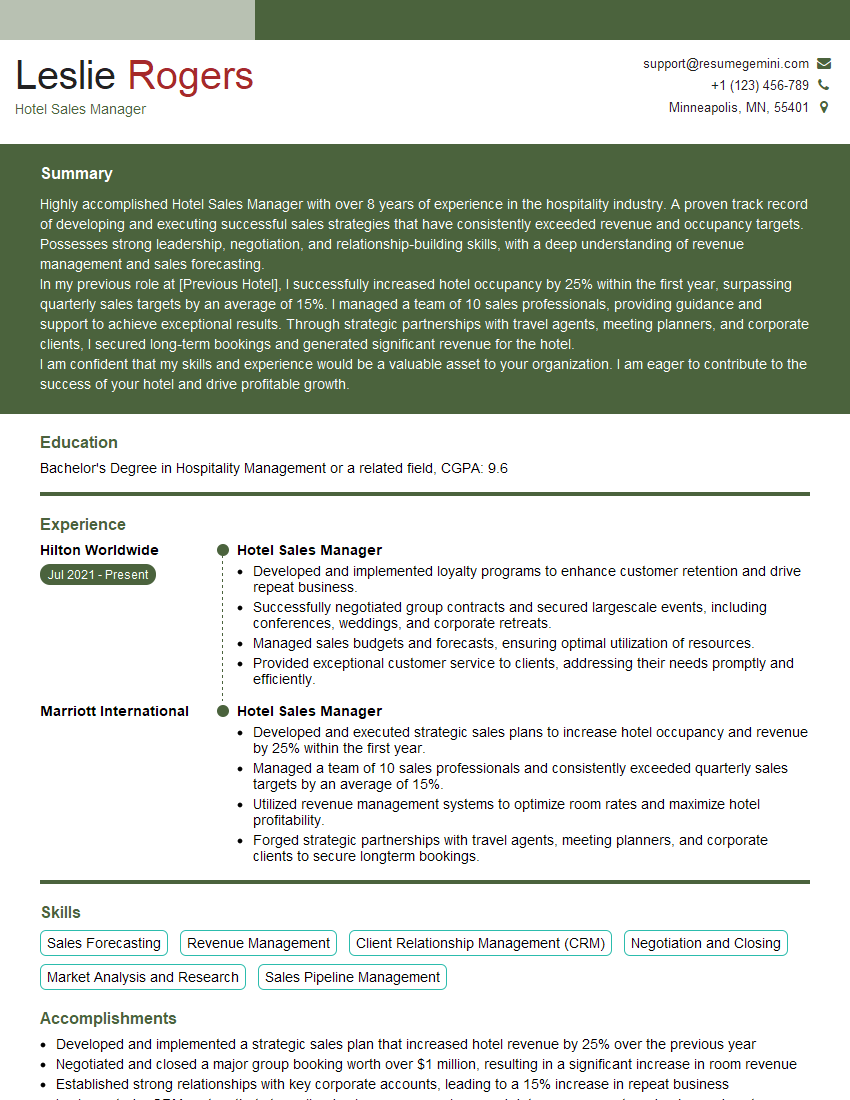
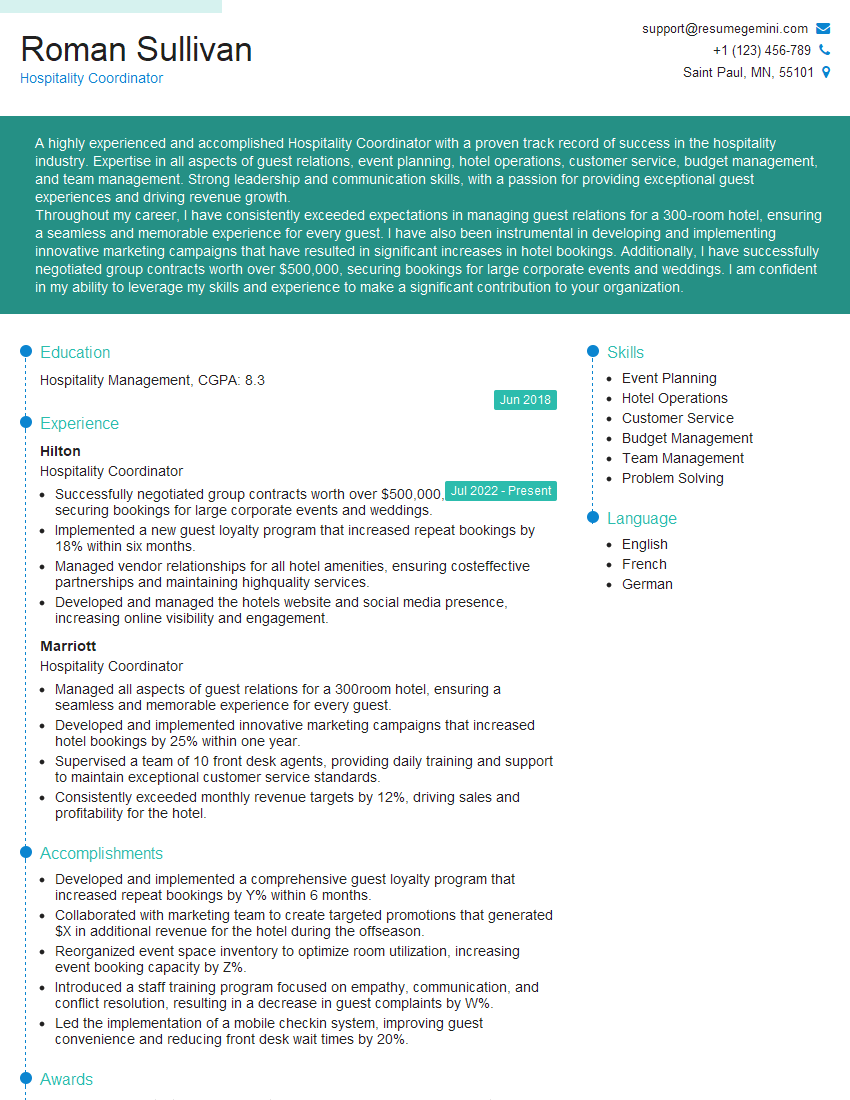
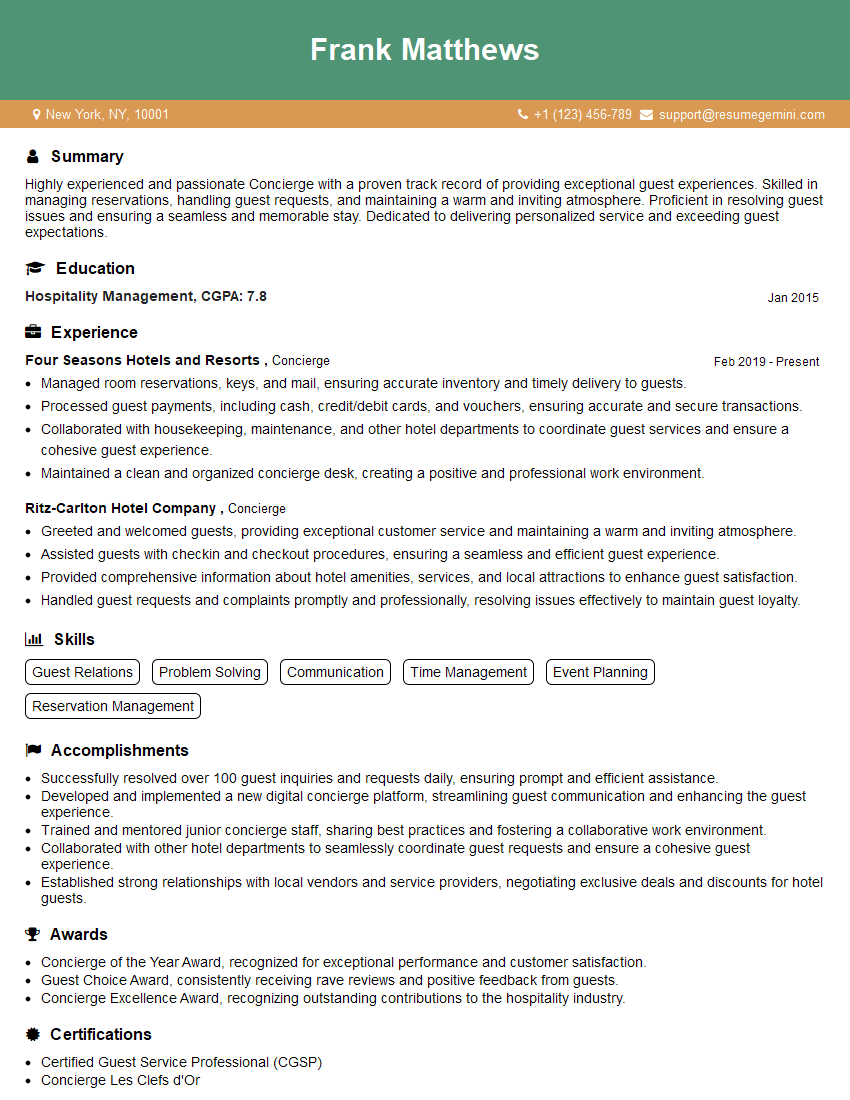
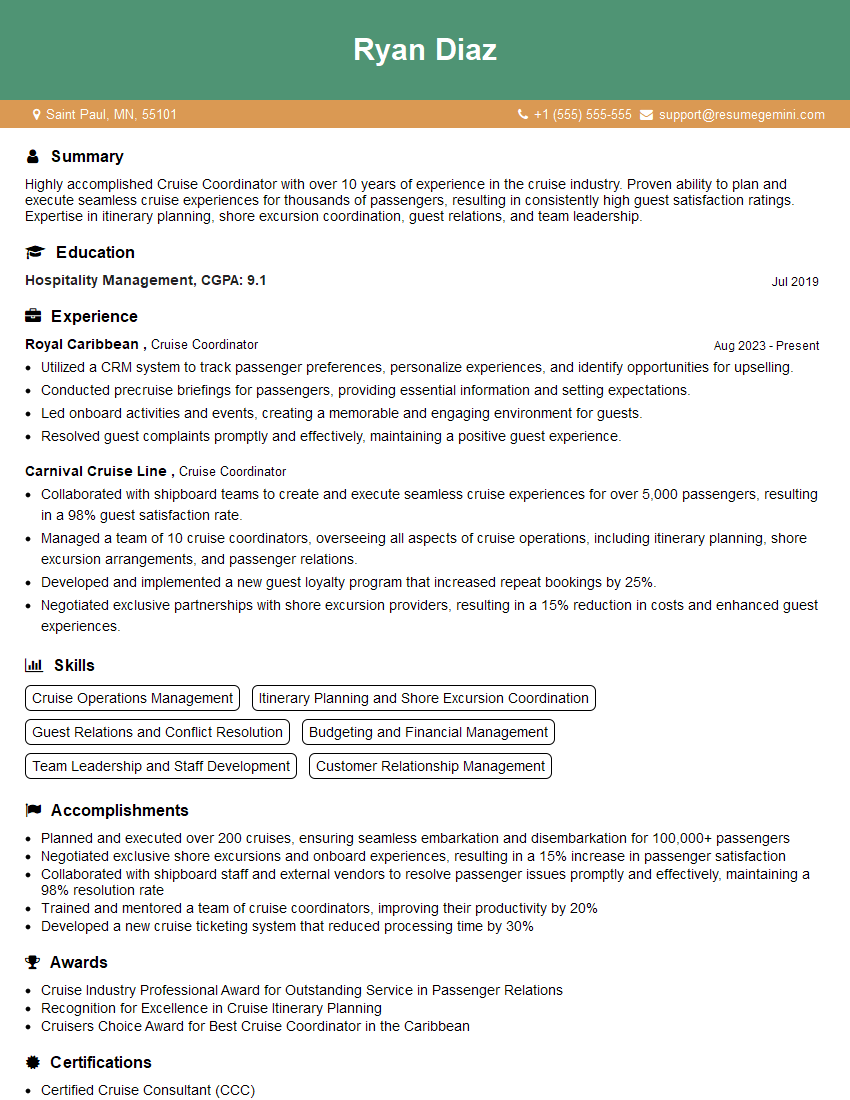
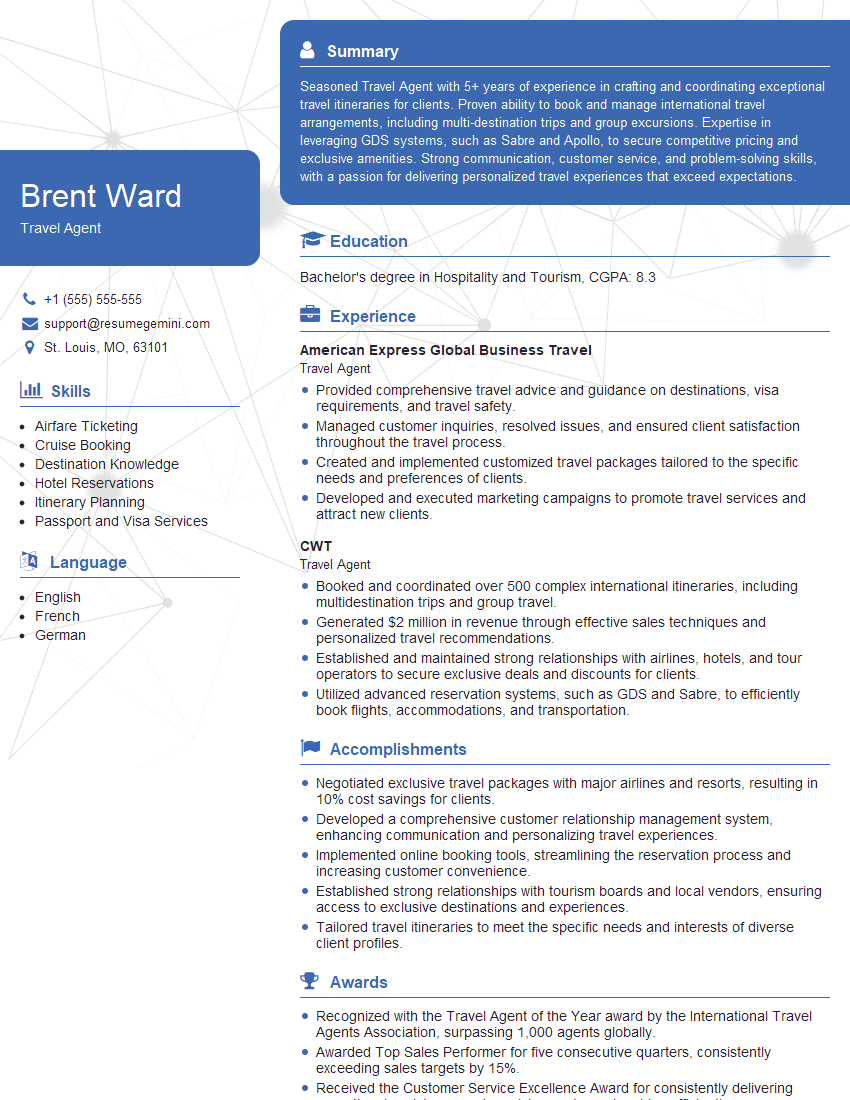
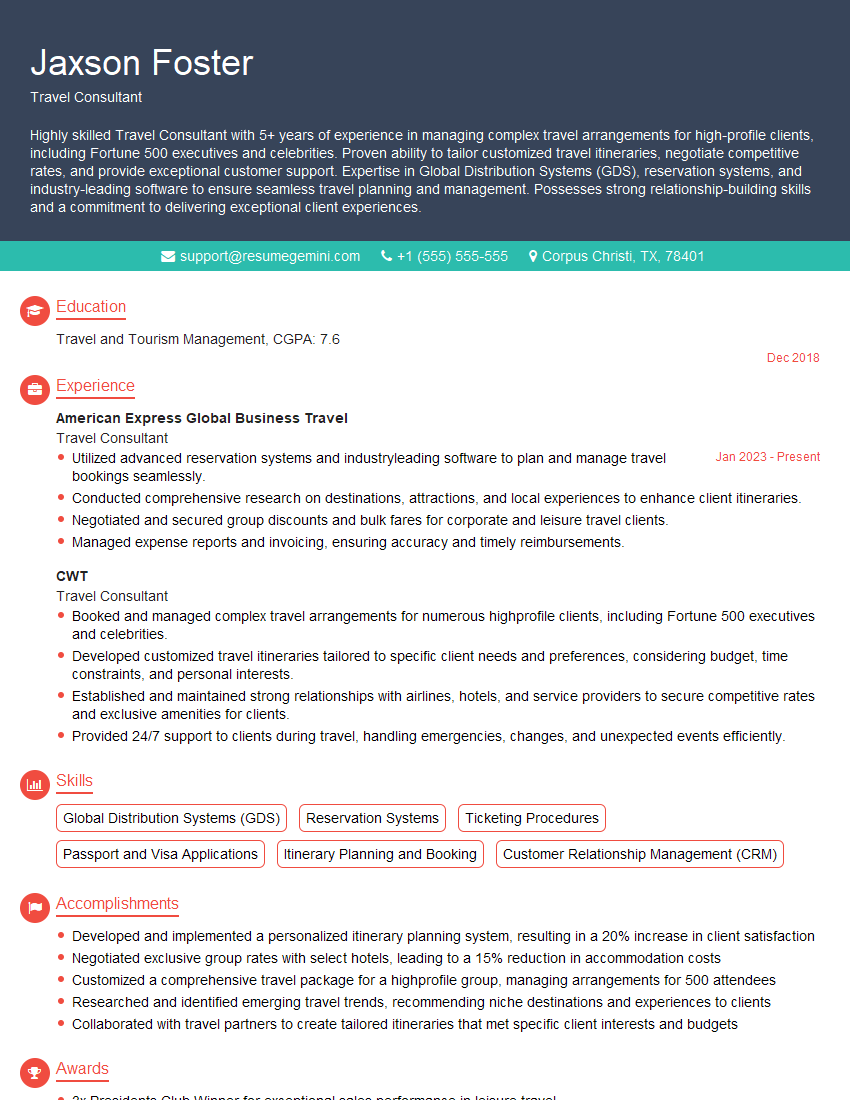
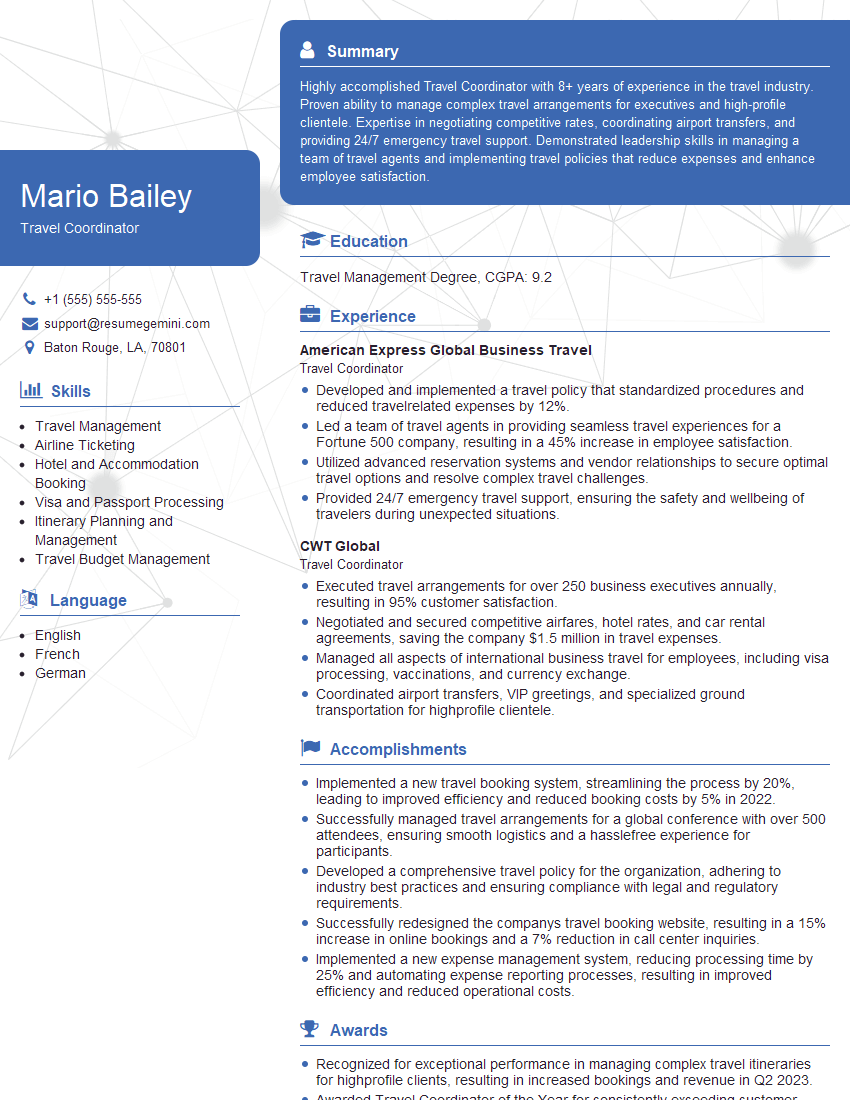
Mastering Travel and Hotel Coordination opens doors to exciting career opportunities in diverse industries, offering significant growth potential. An ATS-friendly resume is crucial to maximizing your job prospects. To ensure your resume effectively showcases your skills and experience, we strongly recommend using ResumeGemini. ResumeGemini offers a streamlined process for building professional resumes, and we provide examples of resumes specifically tailored to Travel and Hotel Coordination to help you get started.
Explore more articles
Users Rating of Our Blogs
Share Your Experience
We value your feedback! Please rate our content and share your thoughts (optional).
What Readers Say About Our Blog
Very informative content, great job.
good