Cracking a skill-specific interview, like one for Tree Felling and Processing, requires understanding the nuances of the role. In this blog, we present the questions you’re most likely to encounter, along with insights into how to answer them effectively. Let’s ensure you’re ready to make a strong impression.
Questions Asked in Tree Felling and Processing Interview
Q 1. Describe your experience with different tree felling techniques.
My experience encompasses a wide range of tree felling techniques, tailored to the specific tree, environment, and desired outcome. I’m proficient in both conventional felling methods and more specialized approaches.
- Humboldt felling: This technique is ideal for trees with lean, allowing controlled direction using wedges and precise cuts. I’ve used this successfully many times on slopes to avoid property damage.
- Open-face felling: A common technique for most trees, involving a back cut and a felling cut. Safety is paramount here; I always assess the hinge wood carefully.
- Directional felling: Using wedges and specialized cuts to guide the tree’s fall precisely, crucial in confined spaces or near structures. For example, I once had to fell a large oak adjacent to a power line using this technique.
- Notching and felling: For large, complex trees, I incorporate notching to improve control and reduce risk of splitting or uncontrolled fall.
The choice of technique isn’t arbitrary; it’s a decision based on a thorough risk assessment and understanding of the tree’s characteristics and the surrounding environment. I’m adept at adapting my approach as needed.
Q 2. Explain the importance of pre-felling assessments.
Pre-felling assessments are absolutely critical for safety and efficiency. They’re not just a formality; they’re the foundation upon which the entire operation is built. A thorough assessment involves:
- Tree inspection: Assessing the tree’s health, including signs of disease, decay, or structural weakness. Cracks, leaning, or dead branches are major red flags.
- Site analysis: Evaluating the surrounding area for hazards like power lines, buildings, other trees, and slopes. Understanding the terrain is crucial for predicting the tree’s fall path.
- Wind conditions: Wind speed and direction significantly impact the fall, requiring careful consideration and potential delays if conditions are unsuitable.
- Soil conditions: Assessing the soil’s stability is crucial, as unstable ground can increase the risk of the tree falling unexpectedly or causing damage.
A detailed assessment allows for a customized felling plan that minimizes risks and maximizes efficiency. Skipping this step is akin to driving a car without checking the brakes – incredibly dangerous.
Q 3. How do you identify potential hazards during a tree felling operation?
Identifying potential hazards is an ongoing process throughout the operation. I constantly scan the environment, looking for:
- Obstacles in the fall path: This includes buildings, vehicles, other trees, power lines, and even underground utilities.
- Unstable ground: Areas with loose soil, steep slopes, or recent excavations pose significant risks.
- Weather conditions: High winds, rain, or snow can significantly impact tree stability and the felling process.
- Hidden hazards: Unexpected obstacles like buried pipes or rocks can cause unforeseen problems.
- Tree health issues: Decay, disease, or structural weaknesses in the tree itself can lead to unpredictable behavior during felling.
I use a combination of visual inspection, ground-penetrating radar (where necessary), and communication with the team to thoroughly identify and mitigate all potential hazards. Safety is a continuous process.
Q 4. What safety measures do you implement when using chainsaws?
Chainsaw safety is non-negotiable. My safety procedures are rigorous and unwavering:
- Personal Protective Equipment (PPE): This includes chainsaw chaps, safety helmet with face shield, gloves, and hearing protection. I never compromise on PPE.
- Chainsaw maintenance: Regular sharpening and maintenance ensure optimal performance and reduce the risk of kickback. A well-maintained saw is a safe saw.
- Proper felling techniques: Following established procedures for felling, including using wedges and properly positioning myself, is critical to avoid accidents. I always have a designated escape route.
- Clear communication: Maintaining clear and consistent communication with my team is vital. Before each cut, I confirm everyone’s position and safety.
- Emergency preparedness: Knowing what to do in case of an emergency, including first aid and communication protocols, is essential. We have a fully stocked first-aid kit on-site.
I view chainsaw safety as an ongoing investment in my well-being and the well-being of my team. It’s not just about following rules; it’s about developing a safety-conscious mindset.
Q 5. Describe your experience with different types of felling equipment.
My experience with felling equipment extends beyond chainsaws. I’m proficient in using:
- Chainsaws (various sizes and types): From small, lightweight saws for smaller trees to larger, more powerful saws for larger jobs. I choose the appropriate saw based on the tree size and job requirements.
- Wedges (wood and metal): Essential for controlling the direction of a tree’s fall, especially in challenging situations.
- Climbing gear: For accessing and felling trees that are difficult to reach from the ground.
- Hydraulic felling heads (on occasion): These are powerful tools for large-scale operations, but I always ensure proper training and safety protocols are followed before using them.
- Winches and rigging equipment: For managing and controlling the movement of felled trees, particularly in challenging terrain or situations where the tree needs to be moved.
I’m comfortable and confident in using a wide range of equipment and adapting my techniques as needed.
Q 6. How do you determine the best felling direction for a tree?
Determining the best felling direction requires careful consideration of numerous factors:
- Tree lean: The natural lean of the tree is often the best indicator of its fall direction.
- Obstacles: The presence of obstacles like buildings, power lines, or other trees dictates where the tree cannot fall.
- Wind conditions: Wind speed and direction can influence the tree’s trajectory during the fall.
- Ground conditions: The stability of the ground and potential for soil erosion must be considered.
- Hinge wood: The hinge wood, the uncut portion of the tree between the back cut and the felling cut, controls the direction of the fall and needs careful consideration.
I visualize the tree’s fall path, considering all these factors, to identify the safest and most efficient felling direction. It’s a spatial reasoning exercise as much as it is technical skill. I’ve often had to adjust my planned felling direction on the spot based on unexpected factors discovered during the operation.
Q 7. Explain your understanding of tree anatomy and its relevance to felling.
Understanding tree anatomy is fundamental to safe and efficient felling. Knowing how the wood grain, branch structure, and stress points interact is essential for making precise cuts and predicting the tree’s behavior during the fall.
- Wood grain: The direction and density of the wood grain affect the strength and resistance of the wood during felling. Understanding this helps in determining the best location for cuts and avoiding splitting.
- Branch structure: Large branches can disrupt the fall or create hazards during felling. Assessing the branch structure informs the felling strategy.
- Stress points: Identifying stress points, such as cracks, rot, or other weaknesses, is critical for predicting the tree’s behavior and selecting a safe felling technique.
- Hinge wood: The hinge wood is the uncut section of the tree that controls the direction of the fall and needs careful management.
For instance, recognizing decay in a tree’s base might influence my choice of technique; using a more controlled felling strategy, maybe even opting for sectional felling, to minimize risks. It’s not just about cutting down a tree; it’s about understanding its structure and using this knowledge to control its fall safely.
Q 8. How do you handle unexpected situations during a felling operation?
Unexpected situations during felling are commonplace. My approach prioritizes safety and risk mitigation. For example, if wind picks up unexpectedly during a felling operation, I immediately halt the process and reassess the situation. This involves checking the wind speed and direction, reevaluating the escape routes, and potentially adjusting the felling technique to account for the changed conditions. If a tree unexpectedly leans or hangs up during the fall, I have extensive experience in using various rigging techniques, such as placing additional support lines or utilizing a winch to safely bring it down. The key is to never compromise safety; a controlled stop and reassessment is always the best option than attempting a risky maneuver.
Another example might involve encountering unforeseen obstacles like hidden underground utilities or unexpected terrain changes. A thorough pre-felling site assessment is crucial to minimize such surprises, but if they do occur, I’d immediately halt operations and inform the relevant stakeholders. I have a well-established protocol for contacting utility companies or consulting with a surveyor before proceeding.
Q 9. Describe your experience with rigging and lowering large trees.
Rigging and lowering large trees requires a deep understanding of physics and tree mechanics. My experience encompasses a wide range of techniques, including the use of various ropes, pulleys, and winches. I’m proficient in creating different rigging systems, adapting them to the specific tree’s characteristics, its surroundings, and the available equipment. For instance, I’ve worked on lowering exceptionally large trees in densely populated areas using specialized rigging techniques that minimize the risk of damage to surrounding structures or people. This might involve creating a multi-point rigging system to control the tree’s descent, using a snatch block for leverage, or employing a progressive lowering technique to manage momentum. Safety is paramount; I always double-check my knots and rigging points before beginning any lowering operation.
I’ve also used various specialized tools like climbing spurs and ropes to access and prepare trees for efficient rigging and lowering, especially in challenging terrains or when dealing with complex branch structures.
Q 10. What are the common causes of tree felling accidents, and how can they be prevented?
Tree felling accidents often stem from a combination of factors, including inadequate planning, improper technique, equipment failure, and environmental conditions. Common causes are:
- Incorrect felling technique: Not accounting for the tree’s lean, tension wood, or the presence of obstacles can lead to unpredictable falls.
- Failure to assess risk: Failing to identify hazards such as overhead power lines, unstable ground, or nearby structures increases the risk.
- Equipment malfunction: Using faulty or improperly maintained equipment, such as chainsaws or rigging gear, can lead to accidents.
- Lack of training or experience: Inexperienced workers are more likely to make mistakes.
- Adverse weather conditions: High winds, rain, or snow can significantly increase the risks involved.
Prevention relies on meticulous planning, proper training, and adherence to safety protocols. This involves conducting a thorough risk assessment, utilizing proper equipment, following established felling techniques, and ensuring all team members are trained and experienced. Regular equipment checks and maintenance are crucial, as is weather monitoring. Implementing clear communication protocols within the team and adhering to a strict safety code are paramount.
Q 11. Explain your knowledge of different types of wood and their properties.
My knowledge of wood types encompasses both their physical properties and their suitability for various applications. I understand the differences between hardwoods and softwoods, recognizing that hardwoods generally possess higher density, strength, and durability, making them ideal for structural applications. Examples include oak, maple, and ash. Softwoods, like pine and fir, are typically lighter, softer, and easier to work with, often used in construction and for pulp and paper production.
Beyond the broad classification, I’m familiar with specific properties of many individual species. For example, I know that cedar is naturally resistant to decay, making it valuable for exterior applications, whereas redwood is known for its strength and dimensional stability. This detailed knowledge helps me assess a tree’s suitability for specific purposes post-felling and during the planning stage, assisting in waste management decisions and planning for repurposing.
Q 12. How do you manage debris and waste after a tree felling operation?
Managing debris and waste after a felling operation is crucial for safety and environmental responsibility. My approach involves a systematic process. Firstly, I ensure a safe working environment by clearing the immediate area of potentially hazardous debris. Larger logs are then processed into manageable sizes – often for sale or for use on-site, reducing waste. Smaller branches and twigs are chipped or shredded for mulch or biomass fuel. Any remaining waste that cannot be reused or repurposed is disposed of responsibly, often in accordance with local regulations and environmental guidelines. I typically work with recycling centers or waste management companies to ensure appropriate and environmentally conscious handling of the unusable debris. This minimizes environmental impact while maximizing the value of the felled wood.
For example, in one project, we used the smaller branches to create a habitat for local wildlife, transforming waste into a positive environmental contribution.
Q 13. What is your experience with using personal protective equipment (PPE)?
Personal Protective Equipment (PPE) is non-negotiable in my line of work. My standard PPE includes a high-visibility vest, safety helmet with face shield, chainsaw chaps, safety gloves, and steel-toed boots. I also use hearing protection, especially when using power tools. For specific tasks, such as climbing or working at heights, additional PPE like harnesses and lanyards are employed. I regularly inspect all my PPE to ensure it’s in good condition and properly fitted. Damaged or worn-out PPE is immediately replaced. I also regularly undergo safety training sessions to ensure I’m up-to-date on the best practices for PPE use and safety regulations. My adherence to PPE usage is unwavering; it’s a core component of my safety culture, protecting me and my colleagues from potential hazards.
Q 14. Describe your experience with maintaining and repairing felling equipment.
Maintaining and repairing felling equipment is vital for safety and operational efficiency. I perform regular checks on all equipment, including chainsaws, winches, ropes, and rigging gear, before each operation. This includes checking for sharpness and wear on chainsaw blades, inspecting ropes for fraying or damage, testing winches for proper function, and ensuring all safety mechanisms are in place. I’m proficient in basic maintenance tasks like sharpening chainsaw blades, lubricating moving parts, and replacing worn components. For more complex repairs, I work with qualified technicians to ensure repairs are carried out safely and effectively.
I maintain a detailed log of all maintenance and repairs, including dates, tasks performed, and any identified issues. This helps in tracking equipment lifespan, predicting potential failures, and ensuring our equipment remains in peak operating condition at all times. This proactive approach minimizes downtime, reduces the risk of accidents, and extends the life of our valuable equipment.
Q 15. How do you ensure the safety of the surrounding environment during felling?
Ensuring the safety of the surrounding environment during tree felling is paramount. It involves a multifaceted approach starting long before the saw ever touches wood. We begin with a thorough site assessment, identifying potential hazards like power lines, buildings, other trees, and even the terrain itself. This assessment dictates the felling strategy – which direction the tree will fall, the use of rigging equipment, and the placement of safety zones.
For example, if a tree is close to a house, we’ll prioritize a felling direction away from the structure, perhaps using specialized techniques like a directional felling notch to guide the tree’s fall. We always establish a safety zone, a perimeter cleared of personnel and equipment, well beyond the expected fall zone of the tree and any potential branches. This safety zone is clearly marked, often with warning tape and personnel are actively monitoring the area throughout the operation. After felling, we carefully assess the area for any debris or hazards that might pose risk and clear them to prevent accidents.
Career Expert Tips:
- Ace those interviews! Prepare effectively by reviewing the Top 50 Most Common Interview Questions on ResumeGemini.
- Navigate your job search with confidence! Explore a wide range of Career Tips on ResumeGemini. Learn about common challenges and recommendations to overcome them.
- Craft the perfect resume! Master the Art of Resume Writing with ResumeGemini’s guide. Showcase your unique qualifications and achievements effectively.
- Don’t miss out on holiday savings! Build your dream resume with ResumeGemini’s ATS optimized templates.
Q 16. Explain your understanding of relevant safety regulations and standards.
My understanding of safety regulations and standards is comprehensive and constantly updated. I am familiar with OSHA (Occupational Safety and Health Administration) guidelines, ANSI (American National Standards Institute) standards for tree care operations, and any relevant state or local regulations. These regulations cover aspects like personal protective equipment (PPE), including helmets, safety harnesses, eye protection, and chainsaw chaps. They also specify safe operating procedures for chainsaws, rigging equipment, and working at heights. Regular training and certifications are crucial to staying abreast of these constantly evolving standards. For example, I’m certified in safe chainsaw operation and have completed advanced training in rope access techniques, which is essential for handling challenging felling scenarios.
Beyond formal regulations, I place a strong emphasis on a proactive safety culture. This includes daily safety briefings with my team, pre-job risk assessments, and regular equipment inspections. We constantly evaluate our procedures to ensure they adhere to the highest safety standards and are adapted to the specific challenges of each job site.
Q 17. How do you communicate effectively with your team during a felling operation?
Effective communication is the cornerstone of safe and efficient tree felling operations. We use a combination of visual signals (hand signals are crucial in noisy environments), verbal communication, and designated communication channels (e.g., radios) to ensure everyone understands the plan and their role. Before any felling begins, we have a detailed briefing covering the felling strategy, safety zones, escape routes, and potential hazards. During the operation, concise and clear communication is vital, with clear signals to indicate the tree’s direction of fall or warnings about potential dangers.
For instance, a simple hand signal might indicate the direction of fall, while radio communication would be used to alert the team to unexpected events like a change in wind direction or a potential snag. Establishing clear roles and responsibilities helps prevent confusion and ensures that everyone knows their part in the process. Open communication channels ensure any problems or concerns can be addressed immediately. Regular debriefs after the operation reinforce learning and help identify areas for improvement.
Q 18. Describe your problem-solving skills in relation to challenging felling scenarios.
Challenging felling scenarios require a systematic approach to problem-solving. My process typically begins with a thorough reassessment of the situation. This might involve using specialized equipment, such as a climbing harness and ropes for difficult angles, or employing techniques like rigging to control the direction and speed of a tree’s fall. For instance, if a large tree is leaning precariously over a power line, I would not attempt a direct felling. Instead, I might utilize specialized rigging techniques to carefully lower sections of the tree in a controlled manner, minimizing the risk to the power line and workers.
I always consider multiple solutions, weighing the risks and benefits of each. This includes seeking input from experienced colleagues when necessary. Documentation plays a key role – thorough records of the site assessment, felling plan, and any modifications made due to unforeseen circumstances are essential for analysis, improving future operations, and for any potential legal or insurance requirements.
Q 19. How do you handle difficult clients or unexpected requests?
Handling difficult clients or unexpected requests requires strong communication and diplomacy. I begin by actively listening to their concerns and understanding their needs. Then, I clearly explain the technical aspects of the job, highlighting any limitations or potential risks involved. If an unexpected request arises, I assess its feasibility and safety implications. I’ll always prioritize safety and offer alternative solutions if the original request is unsafe or impractical.
For example, if a client insists on a felling technique that compromises safety, I would explain the risks involved and offer a safer alternative, supported by professional reasoning. Maintaining open communication, transparency, and professional courtesy is crucial in navigating these situations. Documenting all agreements and any deviations from the original plan is essential to ensure clarity and avoid misunderstandings.
Q 20. What is your experience with working at heights?
I have extensive experience working at heights, both in tree climbing and utilizing rope access techniques. My training and certifications ensure I am proficient in using safety harnesses, ropes, and other specialized equipment for working at elevated heights. This experience involves not only the physical skills required for climbing and maneuvering in trees but also the safety awareness required to mitigate risks associated with height and potential falls. I am very comfortable with both traditional tree climbing techniques and more advanced rope access methods, which are crucial for situations involving particularly tall or complex trees.
Safety is paramount in my work at heights. I always perform thorough inspections of my equipment before commencing any work, and I adhere strictly to safety protocols. I am also familiar with various rescue techniques and emergency procedures in case of a fall or other incidents at height. This includes knowing how to use climbing gear effectively for self-rescue as well as for assisting a team member.
Q 21. Describe your experience with emergency procedures in case of accidents.
Emergency procedures are a critical component of my training and experience. We conduct regular drills to practice our response to various scenarios, including falls, chainsaw injuries, and equipment malfunctions. This involves knowing how to administer first aid, summon emergency medical services, and secure the site to prevent further incidents. Communication protocols during emergencies are particularly important; maintaining calm and clear communication can be life-saving.
For example, our team is trained to use specific radio codes to communicate emergencies, and we have designated roles and responsibilities for providing first aid, calling for help, and managing the scene until emergency services arrive. Post-incident reviews are crucial; analyzing what went well and what could be improved helps enhance our emergency preparedness and prevents future accidents.
Q 22. How do you deal with weather-related challenges during tree felling?
Weather is a paramount concern in tree felling. High winds, heavy rain, snow, and ice significantly impact safety and operational efficiency. My approach involves a multi-pronged strategy. First, I meticulously check weather forecasts before commencing any operation, paying close attention to wind speed and direction, precipitation, and potential for lightning. Second, I adjust the felling plan based on the forecast. This might involve postponing the work entirely if conditions are too hazardous, selecting a different felling technique to mitigate risks (e.g., using a directional felling technique to steer the tree away from hazards), or modifying the felling angle. Third, I ensure the team has appropriate safety gear and understands the heightened risks associated with adverse weather. For example, in icy conditions, we’d use additional safety lines and increased spacing between crew members. Finally, I’m always prepared to stop work immediately if conditions unexpectedly deteriorate, prioritizing safety above all else. I remember one instance where we had to postpone a large-scale felling operation due to unexpectedly high winds – a decision that prevented a potentially serious accident.
Q 23. What are the different types of cuts used in tree felling?
Several types of cuts are used in tree felling, each designed for a specific purpose and situation. The most common are:
- Hinge Cut: This is the primary cut, creating a hinge that controls the direction of the tree’s fall. It’s a combination of a face cut and a back cut.
- Face Cut: Made on the side of the tree in the direction of the fall, this cut is shallower than the back cut and creates the hinge. The angle and depth of this cut are crucial for controlling the fall.
- Back Cut: Made opposite the face cut, this cut is deeper and removes the remaining wood to sever the tree.
- Bore Cut: Used to fell trees with a significant lean, this cut is made to create a hinge away from the lean.
- Open-faced Cut: This involves making the face cut and then making a separate back cut entirely through the tree on the opposite side; this is risky and used in controlled environments.
Choosing the right cut depends on factors like tree species, size, lean, and surrounding obstructions. The precise dimensions and angles of these cuts are essential for safe and controlled felling. Improper execution can lead to unpredictable falls and potential injury or property damage. Training and experience are critical for mastering these techniques.
Q 24. Explain your understanding of tree diseases and their impact on felling.
Tree diseases significantly impact felling operations in several ways. Diseases weaken the tree’s structure, making it more prone to failure during felling. This necessitates extra caution and potentially different felling techniques to minimize risk. For instance, a tree affected by root rot might have compromised structural integrity, requiring a more controlled felling approach to prevent unexpected breakage. Furthermore, certain diseases might cause the tree to become brittle or rot internally, making it difficult to predict its behavior during the felling process. Some diseases, like Dutch Elm disease, cause rapid decay, while others like oak wilt, may cause internal weakening without significant external signs. Recognizing the signs of common tree diseases is crucial for safety. Before felling any tree, I always assess it for visible signs of disease, and when necessary, consult with arborists or other specialists for a thorough assessment. This allows us to plan for potentially dangerous situations and implement appropriate safety measures.
Q 25. Describe your experience with working in various terrain conditions.
My experience encompasses diverse terrain conditions, from flat, open areas to steep slopes, rocky outcrops, and swampy lowlands. Each presents unique challenges. On steep slopes, the risk of uncontrolled rolling or sliding of the felled tree is significant, necessitating careful planning, including using specialized equipment like winches and rigging systems. Rocky terrain requires meticulous assessment of potential hazards, such as undermining the tree’s root system. In swampy areas, ground stability is a major concern, and specialized equipment or techniques might be needed to access and fell the tree safely. I am proficient in using various equipment and techniques adapted to these varying conditions. For example, I’ve used high-lift loaders to access trees in difficult-to-reach locations and have implemented specialized felling techniques to manage the risks associated with unstable ground. I always prioritize safety by conducting thorough site assessments and communicating risks to the team before beginning work.
Q 26. How do you ensure the long-term health of trees after pruning or felling?
Ensuring long-term tree health post-pruning or felling involves several key practices. For pruning, proper techniques are vital to minimize stress and prevent disease entry. Clean cuts, using sharp tools to avoid tearing, and the application of wound sealant on larger cuts are essential. Proper pruning also stimulates healthy growth by removing diseased or dead branches, reducing competition, and shaping the tree. Following felling, the stump should be treated to prevent the spread of diseases and pest infestations. This can involve grinding the stump below ground level, applying herbicide to prevent regrowth, or other appropriate methods depending on the context. Careful planning to minimize soil compaction and root damage during the felling process also contributes to the long-term health of neighboring trees. Additionally, responsible site cleanup and replanting initiatives can aid the ecosystem’s recovery and support the growth of new trees. In many cases, we work with clients to establish a plan for tree regeneration and ongoing forest management.
Q 27. What software or technology do you use to plan and execute felling operations?
Technology plays an increasingly significant role in planning and executing felling operations. I utilize specialized software for creating detailed site maps, assessing tree positions and risks, and planning felling paths. This often includes software that incorporates LiDAR or drone imagery for precise three-dimensional mapping. We use this data to simulate the fall path of trees, identifying potential hazards and determining the best felling techniques. This software enhances safety and efficiency by allowing us to pre-plan the entire operation and anticipate potential problems before beginning work on site. In addition to software, we also use various technological tools such as laser rangefinders for precise measurements, GPS for site mapping, and specialized felling equipment equipped with advanced safety features. I also rely on communication devices to maintain constant contact with the team during the operation and ensure efficient collaboration.
Q 28. Describe your experience with documenting work performed and maintaining accurate records.
Accurate documentation is fundamental for accountability and legal compliance. After every operation, I meticulously document all aspects of the work. This includes detailed site maps showing the location of felled trees, the techniques used, any unforeseen challenges encountered, and the measures taken to address them. We also maintain detailed records of equipment used, personnel involved, and any safety incidents. This documentation is essential for insurance purposes, audits, and future reference. Digital record-keeping is a significant part of our process. We use software to generate reports, track inventory, and store all relevant documentation. This system not only ensures accuracy but also allows for easy access to information when needed. I also take detailed photographs and videos to supplement written reports. These provide a visual record of the operation, including pre-felling assessments and post-felling site conditions. This comprehensive documentation ensures that all work is properly recorded and easily accessible, fulfilling legal and professional requirements.
Key Topics to Learn for Your Tree Felling and Processing Interview
- Tree Assessment and Selection: Understanding tree species, health, and potential hazards; applying safe felling techniques based on tree characteristics and surrounding environment.
- Felling Techniques: Mastering various felling methods (e.g., directional felling, notch cuts, back cuts); practical application of different saw types and their maintenance for optimal performance and safety.
- Safety Regulations and Procedures: Deep understanding of relevant safety regulations and best practices; demonstrating knowledge of personal protective equipment (PPE) and its proper use; outlining emergency procedures and hazard mitigation strategies.
- Limbing and Bucking: Efficient and safe techniques for limb removal and log sectioning; understanding the impact of log size and shape on processing efficiency.
- Equipment Operation and Maintenance: Demonstrating familiarity with chainsaws, skidders, and other relevant equipment; outlining preventative maintenance procedures and troubleshooting common mechanical issues.
- Log Processing and Handling: Understanding different log processing techniques (e.g., debarking, sawing); safe and efficient methods for log handling and transportation.
- Environmental Considerations: Awareness of environmental regulations and best practices for minimizing environmental impact; understanding sustainable forestry principles.
- Problem-Solving and Decision-Making: Describing your approach to problem-solving in challenging situations; showcasing your ability to make quick, informed decisions in high-pressure environments.
Next Steps: Building Your Career in Tree Felling and Processing
Mastering tree felling and processing opens doors to a rewarding career with opportunities for advancement and specialization. To maximize your job prospects, creating a strong, ATS-friendly resume is crucial. This ensures your qualifications are effectively communicated to potential employers. We highly recommend using ResumeGemini to build a professional and impactful resume. ResumeGemini offers a streamlined process and provides examples of resumes specifically tailored to the Tree Felling and Processing industry, helping you present your skills and experience in the best possible light. Take the next step towards your dream career today!

Arborist Resume Sample

Forestry Technician Resume Sample
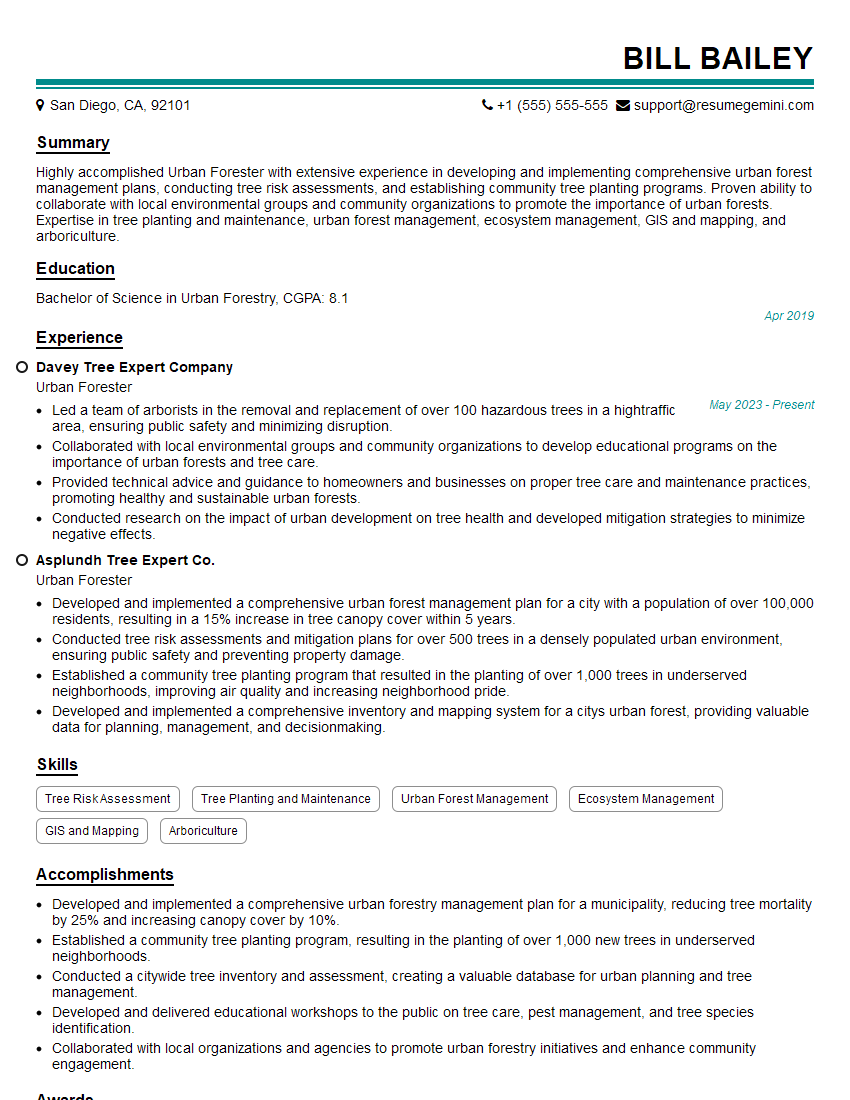
Urban Forester Resume Sample

Groundskeeper Resume Sample
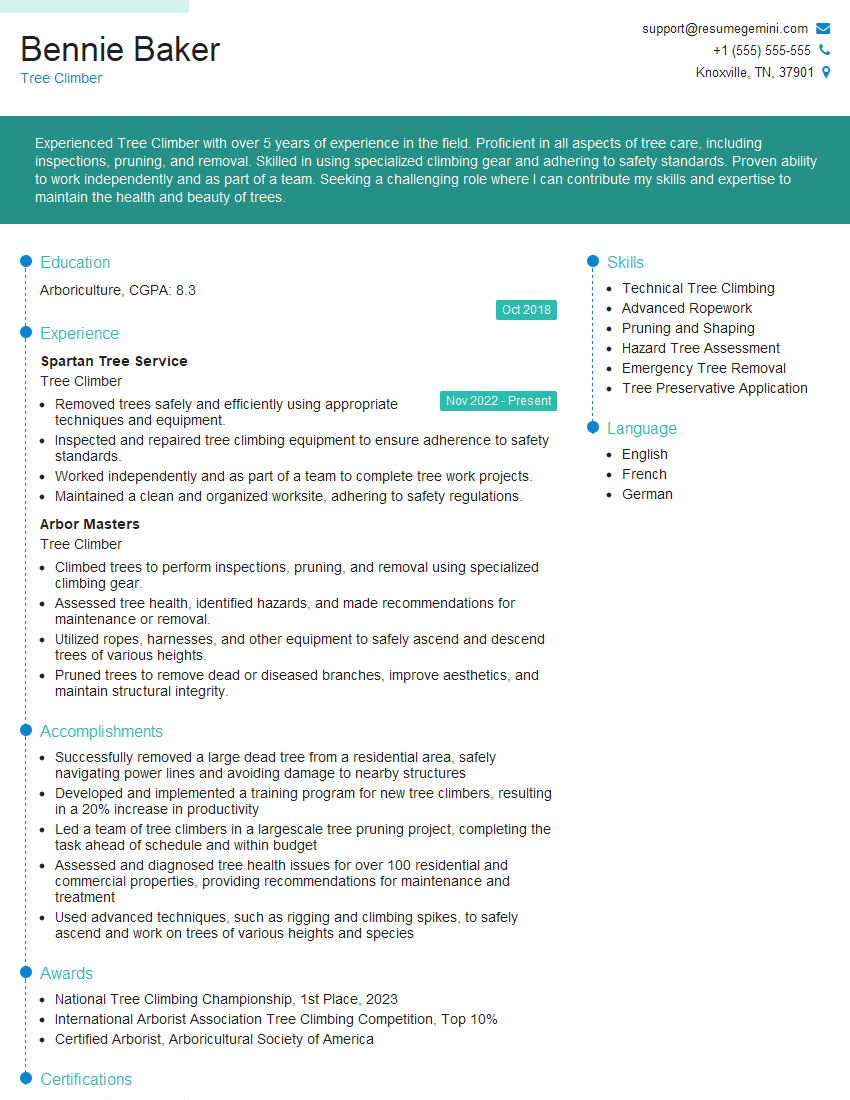
Tree Climber Resume Sample

Tree Surgeon Resume Sample
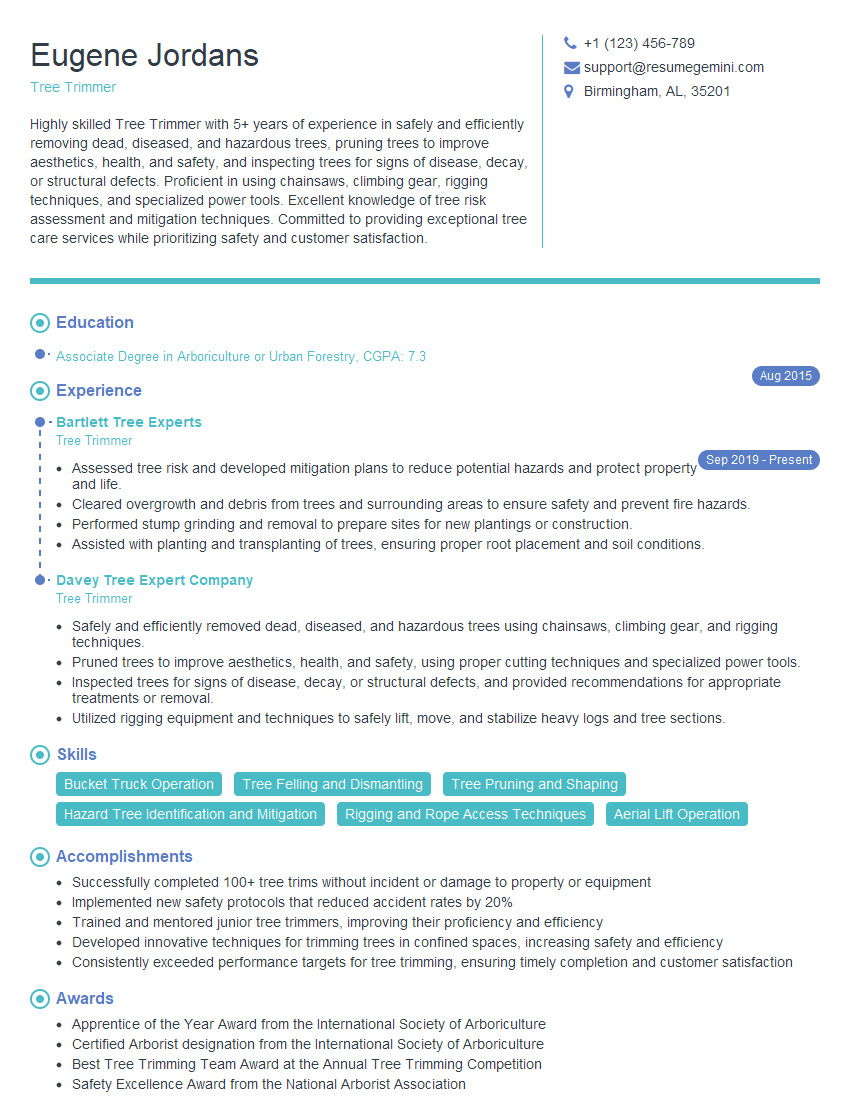
Tree Trimmer Resume Sample

Logger Resume Sample

Timber Feller Resume Sample
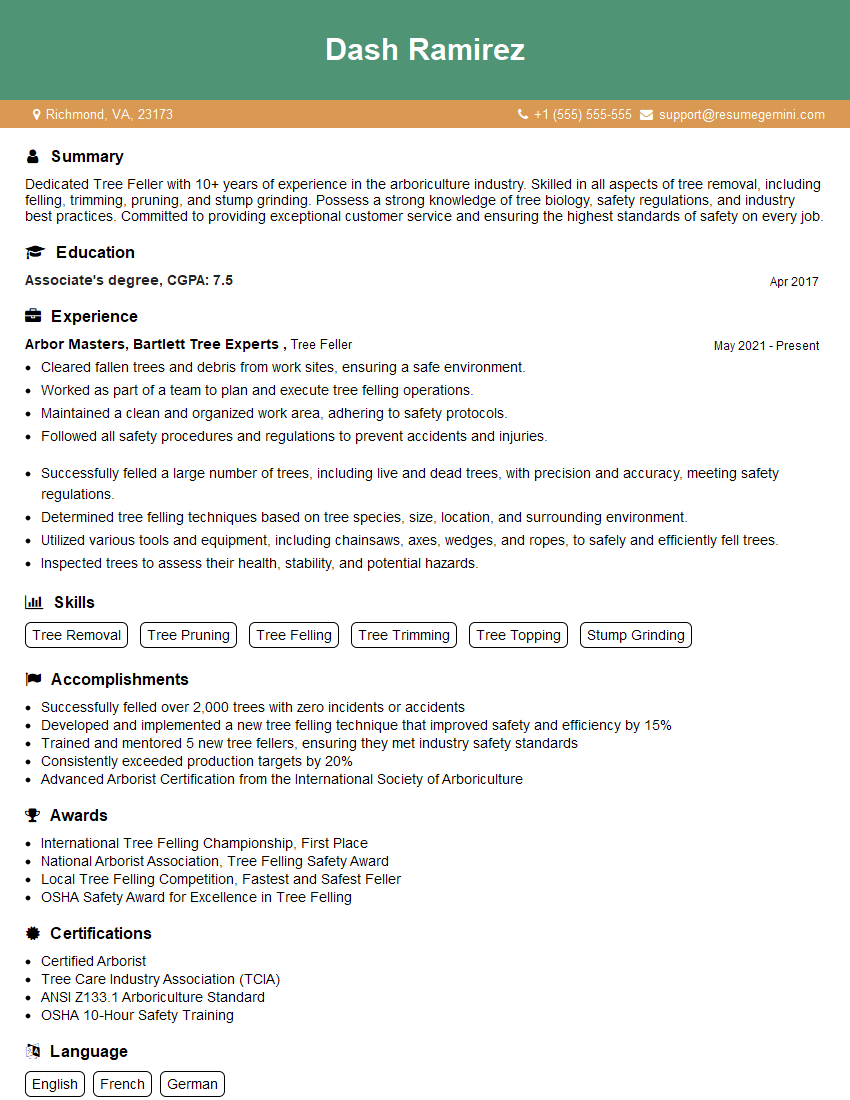
Tree Feller Resume Sample

Utility Arborist Resume Sample
Explore more articles
Users Rating of Our Blogs
Share Your Experience
We value your feedback! Please rate our content and share your thoughts (optional).
What Readers Say About Our Blog
Very informative content, great job.
good