Cracking a skill-specific interview, like one for Tree Preservation and Conservation, requires understanding the nuances of the role. In this blog, we present the questions you’re most likely to encounter, along with insights into how to answer them effectively. Let’s ensure you’re ready to make a strong impression.
Questions Asked in Tree Preservation and Conservation Interview
Q 1. Describe the different types of tree pruning techniques and their applications.
Tree pruning is a crucial aspect of tree care, aiming to improve tree health, structure, and safety. Different techniques cater to specific needs.
- Crown Cleaning: Removing dead, diseased, or crossing branches to improve tree aesthetics and health. Think of it like a haircut – removing the split ends. This is essential for preventing disease spread and structural weakness.
- Crown Thinning: Reducing the density of the crown by selectively removing branches, improving light penetration and reducing wind resistance. Imagine thinning the branches of a dense shrub to let sunlight reach the lower parts.
- Crown Reduction: Shortening branches to reduce the overall size of the crown. This is often done for clearance purposes near buildings or power lines. This should be done judiciously as it can be stressful to the tree.
- Crown Lifting: Raising the lower branches of a tree to increase clearance below. This might be needed for pedestrian walkways or vehicle access.
- Deadwooding: Removing dead branches, regardless of their position in the crown, to enhance tree safety and prevent decay.
The application of each technique depends on the tree species, its condition, and the specific objective. For example, crown reduction is often used on large street trees to prevent them from interfering with power lines, while crown thinning might be used on a mature oak to improve its wind resistance and prevent branch failure.
Q 2. Explain the process of conducting a tree risk assessment.
A tree risk assessment involves a systematic evaluation of the potential for a tree to cause harm. It’s not about simply looking at a tree; it’s about understanding the potential hazards it poses. We use a multi-step process:
- Visual Inspection: A thorough examination of the tree’s structure, including the trunk, branches, roots, and surrounding environment. We look for signs of decay, disease, damage, and structural defects.
- Data Collection: Measuring key parameters like tree height, crown spread, and trunk diameter. We also consider factors such as the tree’s location (near buildings, roads, or power lines), the soil conditions, and the local climate.
- Risk Analysis: Evaluating the likelihood and potential consequences of failure. This involves considering the probability of a branch or the entire tree failing and the potential damage that could result. We use established risk matrices that combine likelihood and consequence scores to determine the overall risk level.
- Report Generation: Documenting the assessment findings, including photographs and detailed descriptions of any identified hazards. We’ll recommend mitigation strategies, such as pruning, cabling, or removal, based on the assessed risk.
For example, a large, leaning tree near a playground would require a higher level of attention than a small, healthy tree in an open field. The potential for harm in the playground scenario demands swift action. Risk assessments are essential for proactive tree management to ensure public safety.
Q 3. What are the common diseases and pests affecting trees in your region, and how are they managed?
The specific diseases and pests affecting trees vary by region and environmental conditions. In my region [Specify your region here, e.g., the Pacific Northwest], some common problems include:
- Dutch Elm Disease: A fungal disease that affects elm trees, often leading to rapid decline and death. Management involves removing infected trees, preventing the spread of the disease through proper sanitation practices, and using resistant elm varieties.
- Oak Wilt: Another fungal disease that affects oak trees, causing leaf discoloration and eventual death. Management focuses on prevention through sanitation, avoiding wounding of trees during the growing season, and fungicide treatment in some cases.
- Emerald Ash Borer: An invasive beetle that attacks ash trees, causing significant damage and often leading to tree death. Management strategies include monitoring for infestations, removing infested trees, and using biological control agents.
- Root Rot: Various fungal pathogens can cause root rot, weakening trees and making them more susceptible to wind damage. Good soil drainage and avoiding overwatering are crucial for prevention.
Management strategies often involve a combination of methods, including preventative measures, disease detection and monitoring, and treatment options such as chemical controls or biological control agents (introducing beneficial insects or fungi). Proper tree care practices, such as regular fertilization and watering, can also significantly improve a tree’s resistance to disease and pest attacks.
Q 4. How do you determine the appropriate tree species for a specific site?
Selecting the right tree species for a specific site is crucial for its long-term survival and health. It’s like choosing the right plant for a particular windowsill – the wrong choice will wither and die.
Several factors influence this decision:
- Climate: Temperature, rainfall, and sunlight exposure greatly influence tree growth. A tree suited to a hot, arid climate won’t thrive in a cold, wet environment.
- Soil conditions: Soil type, drainage, pH, and nutrient levels are critical. A tree needing well-drained soil won’t survive in clay soil.
- Space availability: The mature size of the tree should be considered, ensuring it has enough room to grow without causing problems for infrastructure or other trees.
- Local regulations: Some areas have restrictions on the types of trees that can be planted.
- Aesthetic considerations: The tree’s shape, size, color, and overall aesthetic appeal should be considered to fit the landscape.
For example, a drought-tolerant species like a mesquite would be suitable for an arid climate, while a maple would be a better choice for a moist, temperate climate. Thorough site assessment and consideration of these factors are essential for successful tree planting.
Q 5. What are the legal and regulatory aspects of tree preservation in your area?
Tree preservation laws and regulations vary significantly by jurisdiction. In my area [Specify your area], [Describe the key legislation, e.g., local ordinances that protect significant trees on private and public land; state laws concerning protected species]. These laws often include:
- Protected tree lists: Identifying specific species that are protected due to their ecological importance or rarity.
- Permitting requirements: Requiring permits for the removal or significant pruning of protected trees.
- Replacement requirements: Mandating the planting of replacement trees when protected trees are removed.
- Penalties for violations: Imposing fines or other penalties for non-compliance with regulations.
Understanding these regulations is essential for anyone involved in tree management, including developers, arborists, and homeowners. Non-compliance can result in significant legal consequences. Often, a consultation with a local arborist experienced in the legal aspects of tree preservation is necessary.
Q 6. Describe your experience with tree planting and establishment techniques.
My experience in tree planting and establishment encompasses various techniques tailored to different species and site conditions. Proper planting technique significantly impacts a tree’s survival and future growth.
- Site Preparation: This begins with analyzing the soil’s composition, pH, and drainage to ensure it’s suitable for the chosen species. Amending the soil with organic matter or other amendments might be necessary.
- Planting Techniques: This involves careful excavation of the planting hole, ensuring it’s large enough and the root ball is not damaged. The tree should be planted at the correct depth – the root flare should be visible above the ground. Proper watering is critical immediately after planting.
- Staking and Guying: Staking provides support for newly planted trees, especially larger specimens, protecting them from wind damage. Guying utilizes ropes or cables anchored to stakes to provide additional support.
- Watering and Mulching: Regular watering is vital during the establishment phase to ensure adequate hydration. Applying a mulch layer helps retain soil moisture, suppress weeds, and regulate soil temperature.
- Post-Planting Care: Regular monitoring for signs of disease, pest infestation, or other problems is crucial, along with appropriate treatments as needed. This might include fertilization or further irrigation.
I’ve been involved in numerous projects ranging from large-scale reforestation efforts to individual tree plantings on residential properties. Success in tree planting requires careful planning, appropriate techniques, and ongoing maintenance.
Q 7. Explain the importance of soil health in tree preservation.
Soil health is paramount for tree preservation. A healthy soil provides the necessary nutrients, water, and aeration for optimal tree growth and resilience. It’s the foundation upon which the tree builds its life.
Several aspects of soil health are crucial:
- Nutrient Availability: Soil needs to provide essential nutrients like nitrogen, phosphorus, and potassium for tree growth. Regular soil testing can help determine nutrient deficiencies and guide fertilization practices.
- Water Retention and Drainage: The soil should retain enough water for tree growth but also drain well to prevent root rot. Soil compaction can inhibit water infiltration and aeration.
- Soil Structure and Aeration: Well-structured soil allows for adequate root penetration and oxygen exchange. Compacted soil restricts root growth and can lead to stress.
- Soil Biology: A diverse soil microbiome supports nutrient cycling and disease suppression. Healthy soil contains beneficial microorganisms that assist in nutrient uptake and protect against pathogens.
- Organic Matter Content: Organic matter enhances soil structure, improves water retention, and provides nutrients. Adding compost or other organic materials can improve soil health significantly.
Improving soil health often involves practices like adding compost, cover cropping, reducing soil compaction, and avoiding the use of harmful chemicals. Regular soil testing and monitoring are also crucial to ensure optimal soil conditions for tree health and longevity.
Q 8. How do you identify and address tree root damage?
Identifying and addressing tree root damage requires a keen eye and understanding of tree biology. Damage can manifest in several ways, from visible surface cracks and exposed roots to subtle changes in tree health like leaf discoloration or reduced growth. We assess damage through a combination of visual inspection and, if necessary, more advanced techniques.
Visual Inspection: This involves carefully examining the root flare (the area where the trunk meets the roots) for signs of compaction, girdling (roots encircling the trunk), or physical damage from construction, landscaping, or pest infestation. We look for cracks in the soil, exposed roots, or changes in soil drainage patterns near the tree. For example, noticing a sudden dip in the ground next to a tree might indicate root damage from sewer line work.
Advanced Techniques: In cases where visual inspection is insufficient, we may use root mapping techniques such as ground-penetrating radar (GPR) or air spade excavation to accurately assess the extent of root damage. GPR creates a non-invasive subsurface image of root systems, allowing us to pinpoint problematic areas without harming the roots. Air spade excavation is a minimally invasive method to gently expose sections of the root system for careful examination.
Addressing Damage: Treatment depends on the severity and type of damage. Minor damage often only needs root pruning, ensuring careful cuts are made with sterilized tools to prevent infection. Severe damage might require more complex strategies like root grafting, soil aeration, or even structural support systems to prevent the tree from toppling over. Re-establishment of healthy soil conditions around the root system is crucial, sometimes involving the addition of soil amendments to improve aeration and water drainage.
Q 9. What are the benefits of urban forestry?
Urban forestry offers a multitude of benefits for city dwellers and the environment. Think of it as a symbiotic relationship where healthy trees improve the quality of life for people and, in turn, people benefit trees by protecting them.
Environmental Benefits: Trees absorb carbon dioxide, reduce air pollution, and regulate temperatures, creating a more comfortable and healthier urban environment. They also help to manage stormwater runoff, mitigating the risk of flooding. Increased biodiversity, supporting wildlife habitats within the city, is another key benefit.
Economic Benefits: Studies show that trees increase property values, improve business attraction, and boost tourism. Well-maintained urban forests reduce the need for energy consumption through natural shade and windbreaks, thus saving money on energy bills.
Social Benefits: Trees improve the aesthetic quality of urban spaces, creating more attractive and enjoyable places for people to live, work, and relax. They offer significant psychological benefits, reducing stress and promoting well-being. Think about how much more pleasant a park is with healthy, mature trees compared to one devoid of vegetation.
Q 10. How do you assess the structural integrity of a tree?
Assessing a tree’s structural integrity is a critical aspect of tree risk management. We use a combination of visual assessment and sometimes more specialized tools and techniques. It’s similar to a building inspector evaluating a house; they check for cracks, leaning, and other potential problems.
Visual Inspection: This involves examining the trunk, branches, and root system for signs of decay, cracks, cavities, leaning, or other structural defects. We look for signs of disease, insect infestation, and past damage. For example, a large branch with extensive decay could be a serious risk.
Instrumentation: In some instances, more objective measurements are needed. This might involve using instruments such as a resistograph (to assess wood density and decay) or a sonic tomograph (to create a three-dimensional image of the tree’s internal structure) to determine the extent of internal decay. These tools provide a more quantitative assessment, supporting our visual observations.
Risk Assessment: Finally, the data collected from visual inspection and instrumentation are combined to provide a comprehensive risk assessment of the tree. This involves considering the tree’s location (near buildings, roads, power lines), the potential consequences of failure, and the likelihood of failure to determine the appropriate management strategy, ranging from pruning to removal.
Q 11. What are the different methods for protecting trees during construction?
Protecting trees during construction requires careful planning and execution. The goal is to minimize root damage and protect the tree’s overall health.
Root Protection Zones (RPZs): Establishing a defined RPZ around the tree’s drip line (the area covered by the tree’s branches) is paramount. Heavy machinery and construction activities should be strictly prohibited within this zone. The size of the RPZ depends on the tree’s size and species.
Construction Fencing: Fencing around the tree and the RPZ helps to prevent accidental damage from construction traffic and equipment. Signage indicating the presence of protected trees enhances awareness among workers.
Mulching and Soil Amendments: Applying a layer of mulch within the RPZ helps retain moisture, suppress weeds, and protect the roots from compaction. Soil amendments can improve soil structure and drainage, promoting healthy root growth.
Tree Protection Measures: Depending on the specific construction activity, additional measures might be necessary, such as using root barriers, installing tree guards to protect the trunk from damage, or employing specialized techniques for excavation near tree roots. Consider, for instance, using air spade excavation around tree roots to avoid damaging them with heavy machinery.
Q 12. Describe your experience with tree inventory and mapping techniques.
My experience with tree inventory and mapping techniques is extensive, encompassing both traditional and modern methods. Accurate and detailed data on urban trees is essential for effective management and conservation strategies. Think of it like creating a detailed map for a city, but instead of buildings, we map trees.
Traditional Methods: These involve field surveys, where we manually measure trees’ diameter at breast height (DBH), height, and crown spread, and record the species. This data is then plotted on a map, either manually or using GIS software.
Modern Techniques: I’m proficient in using Geographic Information Systems (GIS) software for creating digital tree inventories. This involves integrating field data with aerial imagery, lidar data, and other remote sensing data to create high-resolution maps of urban forests. This is like having a bird’s-eye view of all the trees in an area and understanding their spatial distribution.
Data Analysis: Beyond mapping, I have experience analyzing inventory data to assess tree health, diversity, and overall condition of the urban forest. This allows for informed decision-making in tree planting, maintenance, and removal programs.
Q 13. Explain your understanding of tree protection orders.
Tree Protection Orders (TPOs) are legal instruments that protect individual trees or groups of trees from being damaged or removed without permission from the local authority. They’re crucial for preserving valuable trees, especially those with significant ecological, historical, or amenity value. Think of them as legal guardians for specific trees.
Purpose: TPOs are issued to prevent the unauthorized felling or damage of trees considered significant. These trees are often specified based on their size, species, age, location, or contribution to the local environment.
Process: The process usually involves an application to the local authority, followed by a survey and assessment of the tree’s value and condition. If the tree is deemed worthy of protection, a TPO is issued, and any proposed work that might affect the tree requires approval.
Implications: Once a TPO is in place, work cannot be carried out on the tree, or in its vicinity, without obtaining consent. This consent usually involves a detailed method statement showing how the tree will be protected during the work. Failure to comply can result in legal penalties. Therefore, developers and landowners should always check if a TPO exists before carrying out any work near a tree.
Q 14. What are the environmental impacts of tree removal?
The removal of trees has significant environmental impacts, affecting various ecological processes and impacting human well-being. Think of it as a ripple effect; removing one tree can have widespread consequences.
Loss of Biodiversity: Trees provide habitat for a wide range of organisms, from insects and birds to mammals and fungi. Removing them results in a direct loss of habitat and can lead to a decline in biodiversity.
Increased Carbon Dioxide Levels: Trees absorb carbon dioxide, and their removal contributes to an increase in atmospheric carbon dioxide levels, exacerbating climate change.
Soil Erosion and Degradation: Tree roots help bind the soil, preventing erosion. Tree removal can leave the soil exposed to wind and water, leading to erosion and loss of topsoil fertility.
Changes in Microclimate: Trees influence local temperature and humidity levels, providing shade and reducing wind speed. Their removal can lead to increased temperatures and decreased humidity, creating a less comfortable and potentially hotter urban environment.
Reduced Stormwater Management: Tree canopies intercept rainfall and reduce surface runoff. Their removal can lead to increased runoff and an increased risk of flooding.
Q 15. How do you develop a tree management plan?
Developing a comprehensive tree management plan is crucial for ensuring the long-term health and safety of trees, and it’s a process that requires careful consideration of numerous factors. It’s much like creating a detailed blueprint for a building project, but instead of bricks and mortar, we’re working with living organisms.
- Inventory and Assessment: This initial step involves a thorough assessment of all trees on the property, noting species, size, health, location relative to structures and utilities, and any existing damage or disease. We use specialized software and techniques for accurate measurements and identification.
- Risk Assessment: This identifies potential hazards, such as weak branches, root problems, or proximity to buildings. This informs prioritization of work and helps to prevent accidents or property damage.
- Goal Setting: We work closely with the client to define their objectives. Are they aiming to improve tree health, enhance aesthetics, mitigate risks, or prepare for future development? Clearly defined goals guide the entire planning process.
- Treatment Recommendations: Based on the assessment and goals, we outline specific treatments, which might include pruning, fertilization, pest and disease management, or removal of hazardous trees. This is where expertise in specific tree species and their unique needs is essential.
- Implementation and Monitoring: The plan details how treatments will be carried out, including timelines, resources, and personnel. Regular monitoring is vital to track progress, identify any unforeseen issues, and make adjustments as needed. It’s like regular check-ups for the health of your trees.
- Documentation: A detailed record of all assessments, treatments, and monitoring data is maintained. This provides valuable historical information for future management decisions.
For example, in a recent project for a school, we developed a plan that prioritized the pruning of overhanging branches near the playground, improving safety, while also incorporating a fertilization program to enhance the overall health of the mature oak trees on the campus.
Career Expert Tips:
- Ace those interviews! Prepare effectively by reviewing the Top 50 Most Common Interview Questions on ResumeGemini.
- Navigate your job search with confidence! Explore a wide range of Career Tips on ResumeGemini. Learn about common challenges and recommendations to overcome them.
- Craft the perfect resume! Master the Art of Resume Writing with ResumeGemini’s guide. Showcase your unique qualifications and achievements effectively.
- Don’t miss out on holiday savings! Build your dream resume with ResumeGemini’s ATS optimized templates.
Q 16. Describe your experience using tree care equipment.
My experience with tree care equipment spans over 15 years, encompassing a wide range of tools and machinery. Safety is paramount, so I’ve always prioritized proper training and certification in the use of all equipment. This includes:
- Chainsaws: I’m proficient with various models, from smaller hand-held saws for pruning to larger models for felling larger trees. I understand the importance of proper maintenance, sharpening, and safety procedures, including wearing all necessary Personal Protective Equipment (PPE).
- Chippers and Shredders: Experience with various sizes, from those used for smaller branches to large-capacity units for larger debris. Understanding safety protocols to avoid jams and injury are crucial.
- Aerial Lifts and Cranes: I’m familiar with operating and inspecting these to ensure safe access for high-level pruning or removal of hazardous limbs. Understanding weight limits and proper rigging techniques is critical.
- Other Equipment: My experience also includes the use of climbing gear (ropes, harnesses, etc.), hand tools (saws, loppers, etc.), and specialized equipment for soil testing and root management.
I’ve consistently followed all manufacturer guidelines and safety regulations to ensure the safety of myself and others on the job site. Regular maintenance of equipment is a non-negotiable part of my routine.
Q 17. What are the key considerations for selecting appropriate tree protection measures?
Selecting appropriate tree protection measures requires a holistic approach, considering various factors. It’s akin to designing a personalized shield for each tree based on its unique vulnerabilities.
- Tree Species and Age: Different species have varying sensitivities to environmental stressors. Young, newly planted trees require more protection than established mature trees.
- Site Conditions: Factors like soil type, proximity to construction, and exposure to wind or sun all influence the choice of protection.
- Type of Threat: Are we protecting from physical damage (construction, vehicles), pest infestation, or environmental factors (desiccation)?
- Protection Methods: Options include tree guards (plastic or metal), root barriers, mulching, pruning, and structural support. The choice depends on the specific threat and the tree’s needs.
- Aesthetics: While functionality is paramount, the chosen protection methods should also be aesthetically acceptable, especially in residential or public areas.
For instance, when protecting young saplings during a construction project, we might use sturdy tree shelters and root barriers to safeguard them from heavy machinery and compaction. For mature trees near a construction site, we might employ fencing or strategically placed barriers to prevent accidental damage.
Q 18. How do you communicate effectively with clients and stakeholders about tree care?
Effective communication is the cornerstone of successful tree care. It’s not just about explaining technical details; it’s about building trust and ensuring clients understand the process and rationale behind our recommendations.
- Active Listening: I begin by carefully listening to the client’s concerns and needs, asking clarifying questions to ensure a complete understanding of their goals.
- Clear and Concise Explanations: I explain complex concepts in simple, non-technical terms, avoiding jargon whenever possible. Visual aids such as diagrams or photos can greatly enhance understanding.
- Transparency and Honesty: I’m upfront about potential challenges, risks, and costs associated with different options. This builds trust and allows clients to make informed decisions.
- Written Reports: I provide comprehensive written reports detailing our assessments, recommendations, and proposed treatments. This serves as a valuable reference document for the client and facilitates ongoing communication.
- Regular Updates: I keep clients informed throughout the process, providing updates on progress and addressing any concerns they may have. This fosters a collaborative approach to tree care.
For example, I recently worked with a homeowner who was concerned about the health of their large oak tree. Through clear communication, I explained the potential risks and benefits of various treatments and guided them towards the best course of action for their specific situation.
Q 19. Explain the principles of sustainable forestry.
Sustainable forestry is all about managing forests in a way that meets the needs of the present without compromising the ability of future generations to meet their own needs. It’s a balancing act between utilizing forest resources and preserving their ecological integrity.
- Biodiversity Conservation: Maintaining a diversity of tree species and other organisms within the forest ecosystem. This ensures resilience against pests, diseases, and climate change.
- Soil Health: Protecting soil quality through sustainable harvesting practices that minimize erosion and maintain nutrient levels. Healthy soil is the foundation of a healthy forest.
- Water Management: Conserving water resources and minimizing the impact of forestry activities on water quality. This includes avoiding practices that lead to increased runoff or pollution.
- Climate Change Mitigation: Forests play a critical role in carbon sequestration (absorbing CO2 from the atmosphere). Sustainable forestry practices help maintain and enhance this vital function.
- Economic Viability: Sustainable forestry should also be economically viable, ensuring the long-term sustainability of the forestry industry and the communities that depend on it.
An example of sustainable forestry is selective logging, where only mature trees are harvested, leaving younger trees to grow and maintain forest structure and diversity. This contrasts with clear-cutting, which removes all trees in an area, often resulting in negative environmental consequences.
Q 20. Describe your experience working with different tree species.
My experience working with various tree species is extensive, ranging from common urban trees like maples and oaks to more specialized species. This includes a deep understanding of their growth habits, disease susceptibility, and specific care requirements.
- Oaks (Quercus spp.): I’m familiar with various oak species, their susceptibility to oak wilt, and the importance of proper pruning techniques to minimize risk.
- Maples (Acer spp.): I understand the needs of different maple species, from their fertilization requirements to their susceptibility to diseases like anthracnose.
- Pines (Pinus spp.): My experience encompasses managing pine species, dealing with issues such as pine beetle infestations and the proper pruning techniques for these conifers.
- Other Species: Beyond these common species, I have experience with various other trees, including birch, elm, sycamore, and many others. This diverse knowledge allows me to provide appropriate care for a wide range of tree types.
This expertise allows me to tailor my approach to the specific needs of each tree, ensuring the best possible outcome for its health and longevity. For instance, understanding the unique characteristics of different species allows me to effectively diagnose problems and develop targeted treatment plans.
Q 21. How do you mitigate the risks associated with large trees near buildings?
Mitigating risks associated with large trees near buildings is critical for ensuring safety and preventing property damage. It’s a situation requiring a careful assessment and proactive management strategy. Think of it as creating a safety net for both the tree and the structure.
- Regular Inspections: Conducting thorough inspections to identify potential hazards such as decay, structural weaknesses, or root issues. This should be done annually, or more frequently for high-risk trees.
- Pruning: Careful pruning to remove dead, diseased, or weak branches that could fall and damage the building. This needs to be done by qualified arborists using proper techniques.
- Root Management: Monitoring root growth to ensure it’s not damaging the building’s foundation. This may involve root pruning or other techniques to redirect growth.
- Structural Support: In some cases, installing cables or other structural support systems to reinforce weak branches or the entire tree to increase stability.
- Tree Removal: In extreme cases, when the risk is too high, safe tree removal may be the only option. This requires specialized techniques to prevent damage to the surrounding buildings.
For example, if a large tree shows signs of significant decay in its trunk, we might recommend cabling to support the affected areas or even recommend its removal depending on the level of risk to the nearby building. The decision is always data-driven and prioritizes safety.
Q 22. What are the key indicators of tree stress or decline?
Identifying tree stress or decline involves a holistic assessment, looking beyond just obvious symptoms. We examine a range of indicators, often categorized into visual, physiological, and environmental factors.
- Visual Indicators: These are the most readily apparent. Examples include changes in leaf color (chlorosis – yellowing, or necrosis – browning), reduced leaf density (thinning crown), dieback (dead branches), presence of cankers (sunken, discolored areas on bark), unusual growth patterns (witches’ brooms), and fruiting anomalies. For instance, a normally lush oak showing significant leaf browning and wilting in summer could indicate drought stress or a fungal infection.
- Physiological Indicators: These require more in-depth investigation. We might measure growth rate (using increment borers to assess radial growth), assess stem health (checking for decay using a resistograph), and analyze leaf samples for nutrient deficiencies or pest infestations. A slow growth rate compared to similar trees in the area, especially in combination with visual symptoms, can signal underlying problems.
- Environmental Indicators: The surrounding environment plays a crucial role. We consider factors like soil compaction (which restricts root growth), pollution levels (air and soil), proximity to construction sites (potential root damage), and changes in water availability (drought or flooding). For example, a tree near a busy road might show signs of stress due to salt spray from winter de-icing or air pollution.
By combining these observations, we can develop a comprehensive understanding of the tree’s health and identify the underlying causes of stress.
Q 23. How do you address conflicts between tree preservation and development projects?
Balancing tree preservation and development necessitates proactive communication and collaboration between arborists, developers, and stakeholders. The key is early engagement and a thorough assessment of the site.
- Site Assessment: This involves detailed mapping of existing trees, identifying their species, size, health, and root zones. We use GIS software (discussed later) to visualize this data effectively.
- Impact Assessment: We evaluate the potential impact of the development on each tree, considering the extent of root disturbance, changes in soil drainage, and potential damage from construction activities.
- Mitigation Strategies: Based on the assessment, we recommend appropriate mitigation measures. This can involve relocating trees, root protection during construction (using root barriers or trenching techniques), structural pruning to reduce crown size and weight, or even soil improvement to enhance tree health. In some cases, carefully planned tree removal and replanting might be the most viable option.
- Negotiation and Compromise: Often, successful conflict resolution involves negotiation. We work to find mutually agreeable solutions that minimize tree loss while enabling the project to proceed. This can include redesigning the project to avoid key trees, adjusting building footprints, or incorporating green spaces to compensate for tree removal.
The ultimate goal is to achieve a balance between development needs and the ecological value provided by the trees.
Q 24. Explain your understanding of tree genetics and propagation techniques.
Understanding tree genetics is fundamental to effective propagation. This involves knowledge of species-specific characteristics, genetic variation within a species, and the mechanisms of inheritance.
- Genetic Diversity: High genetic diversity is vital for resilience against diseases and pests, and adapting to climate change. We often utilize seed sources from geographically diverse populations to enhance genetic variability.
- Propagation Techniques: These techniques vary depending on the species and desired outcome. Common methods include:
- Seed Propagation: Collecting seeds from healthy parent trees, stratifying them (treating them to break dormancy), and sowing them under optimal conditions. This approach is often cost-effective for mass propagation.
- Vegetative Propagation: This involves cloning existing trees using cuttings, grafting, or air layering. This ensures genetic uniformity and faster growth compared to seed propagation, and it’s particularly useful for preserving desirable traits.
- Clonal Propagation: This method uses tissue culture or other cloning methods to produce genetically identical plants, providing consistent quality and characteristics, especially useful for rare or endangered species.
Choosing appropriate propagation techniques is crucial for establishing healthy, genetically robust tree populations.
Q 25. What are your experience and knowledge of using GIS software in the context of tree management?
GIS (Geographic Information System) software is an indispensable tool in tree management. I have extensive experience using ArcGIS and QGIS to manage, analyze, and visualize tree data.
- Data Collection: We use GIS to record the location, species, size, health status, and other relevant information of individual trees. This might involve field surveys using GPS devices or importing data from existing databases.
- Data Analysis: GIS allows for spatial analysis of tree data. We can identify patterns in tree distribution, assess the risk of tree failure, and model the impact of development on existing trees. For example, we can overlay tree locations with proposed building footprints to assess potential conflicts.
- Visualization and Reporting: GIS creates maps, reports, and other visualizations to communicate complex tree data to stakeholders. This is crucial for decision-making related to tree preservation, planting schemes, and risk management.
- Data Management: GIS provides a centralized system for managing tree data, improving data accessibility and reducing redundancy.
My experience with GIS has significantly improved the efficiency and accuracy of tree management projects, leading to better informed decisions and improved tree health.
Q 26. Describe your experience with different soil types and their impact on tree health.
Soil type significantly impacts tree health. Different soil characteristics affect water retention, nutrient availability, drainage, and root development, directly influencing the tree’s ability to thrive.
- Sandy Soils: Well-drained but poor water retention and nutrient-holding capacity. Trees in sandy soils often need more frequent watering, especially during dry periods. Amendments like compost can help improve nutrient content.
- Clay Soils: Poor drainage leading to waterlogged conditions that can suffocate roots. Clay soils often require modification to improve drainage through aeration or the addition of organic matter.
- Loamy Soils: Ideal soil type for most trees, offering a good balance of drainage, water retention, and nutrient availability.
- Soil pH: The acidity or alkalinity of the soil significantly influences nutrient uptake. Soil testing is essential to determine the pH and amend accordingly (e.g., adding lime to raise the pH or sulfur to lower it).
I regularly conduct soil tests to assess conditions and make informed decisions about tree planting and maintenance. Understanding soil conditions helps us select appropriate tree species and implement proper soil management practices to ensure tree health and vigor.
Q 27. Explain your experience in using arboricultural safety practices and regulations.
Arboricultural safety is paramount. My experience encompasses a thorough understanding and strict adherence to all relevant safety regulations and best practices.
- Risk Assessment: Before undertaking any tree work, a thorough risk assessment is mandatory. This includes evaluating potential hazards such as falling branches, power lines, and unstable ground.
- Personal Protective Equipment (PPE): Proper PPE, including hard hats, safety glasses, gloves, high-visibility clothing, and appropriate climbing equipment, is essential.
- Safe Work Practices: This includes employing appropriate techniques for pruning, felling, and other tree work, utilizing specialized equipment and tools correctly, and following all relevant safety protocols.
- Emergency Procedures: It’s crucial to have a clear understanding of emergency procedures, including first aid, emergency communication, and rescue techniques.
- Regulations and Standards: I am familiar with and comply with all relevant occupational safety and health regulations and industry best practices (e.g., ANSI Z133).
Safety is not just a priority – it’s a non-negotiable aspect of every arboricultural operation. My commitment to safety has ensured a strong track record of incident-free tree management operations.
Q 28. How do you stay current with advancements in tree preservation and conservation?
Staying current in this rapidly evolving field requires continuous learning and engagement.
- Professional Organizations: I’m an active member of professional organizations like the International Society of Arboriculture (ISA), attending conferences, workshops, and webinars to learn about the latest research, techniques, and regulations.
- Scientific Literature: I regularly read scientific journals and publications to stay abreast of advancements in tree physiology, pathology, and conservation.
- Online Resources and Databases: I utilize online resources and databases to access information on tree species, diseases, and best management practices.
- Continuing Education: I actively participate in continuing education courses to maintain and enhance my professional certifications and skills.
- Networking: I engage with other arborists and professionals to exchange knowledge and best practices.
Continuous learning ensures that I can provide the most effective and up-to-date tree preservation and conservation services.
Key Topics to Learn for Tree Preservation and Conservation Interview
- Tree Biology and Physiology: Understanding tree growth, health, and responses to environmental stressors. This includes knowledge of different tree species and their unique characteristics.
- Tree Risk Assessment: Practical application of assessing tree health and identifying potential hazards, including methods for assessing structural stability and disease susceptibility.
- Conservation Techniques: Explore various methods for preserving and conserving trees and forests, such as habitat restoration, sustainable forestry practices, and pest and disease management.
- Legislation and Regulations: Familiarity with local, regional, and national laws and regulations pertaining to tree protection and conservation.
- Sustainable Urban Forestry: Understanding the challenges and opportunities of managing trees in urban environments, including planning, planting, and maintenance strategies.
- Data Analysis and Reporting: Ability to collect, analyze, and interpret data related to tree health, growth, and environmental impact; creating reports to communicate findings effectively.
- Problem-solving and Decision-Making: Developing strategies to address challenges related to tree preservation, such as dealing with invasive species, climate change impacts, and urban development pressures.
- Communication and Collaboration: Effectively communicating technical information to diverse audiences, including landowners, developers, and the public; working collaboratively with stakeholders to achieve conservation goals.
Next Steps
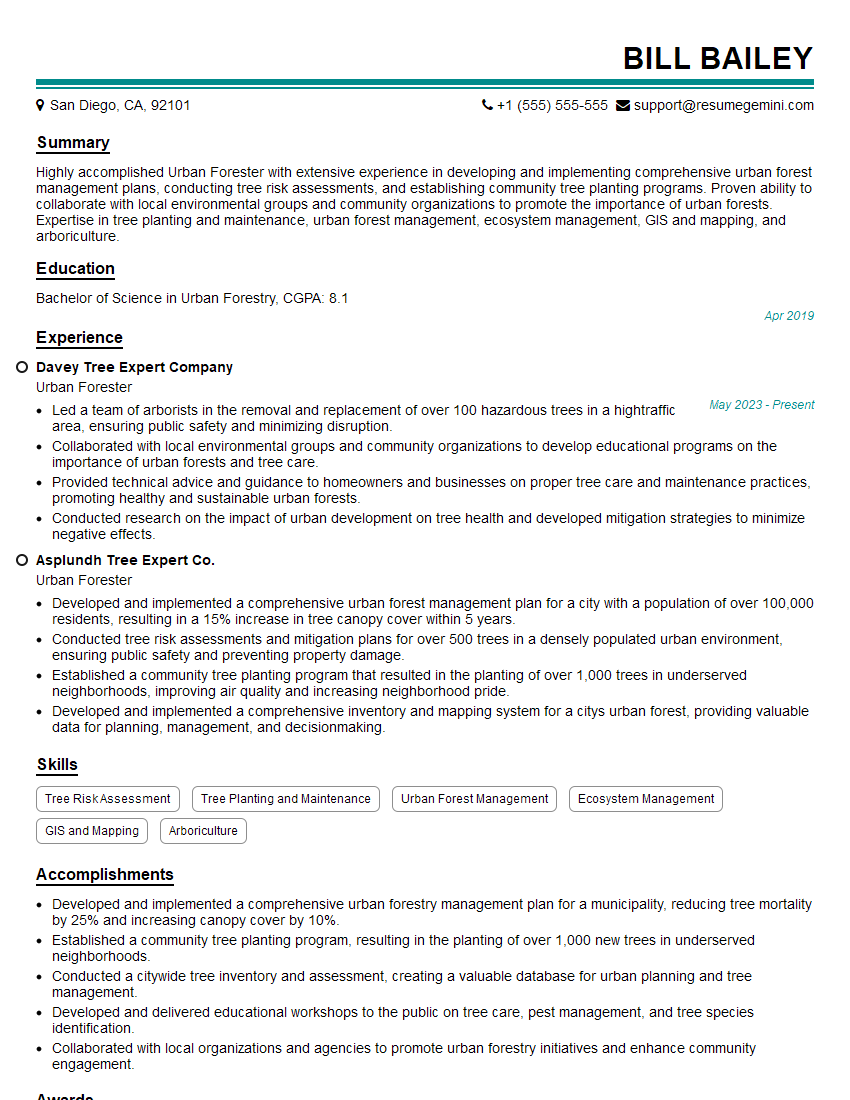
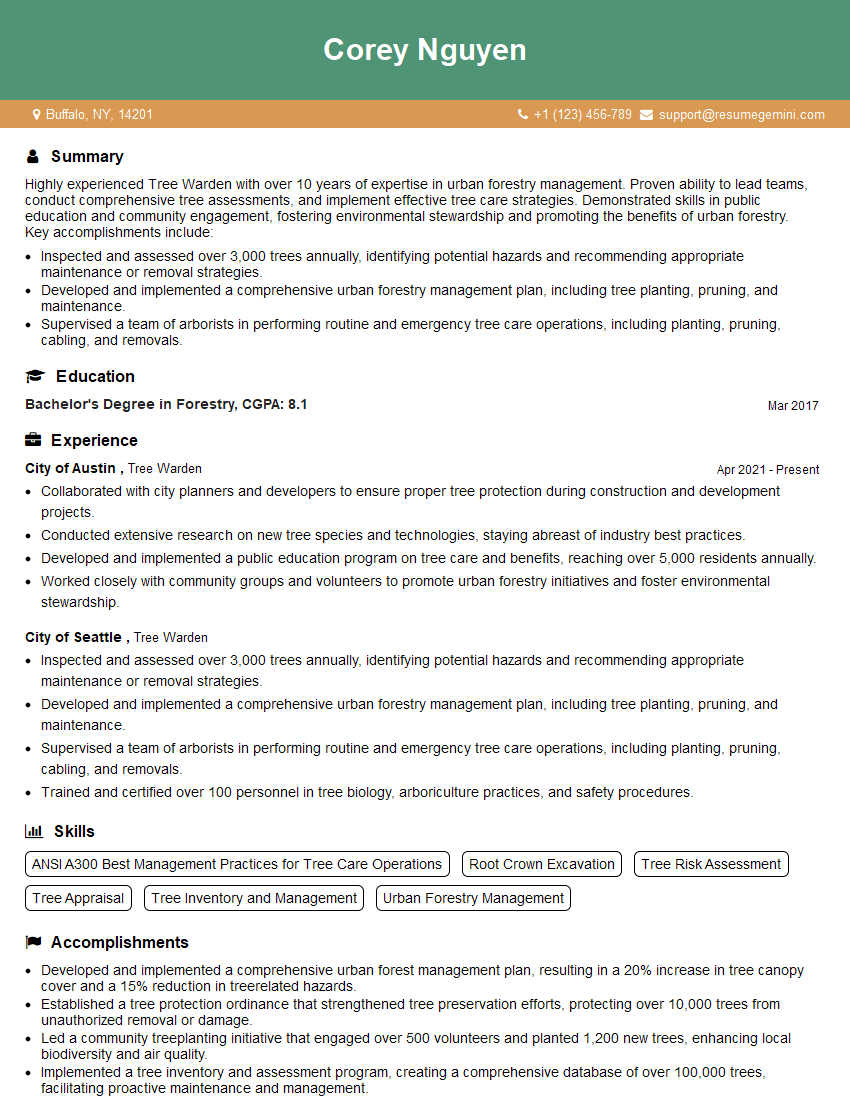
Mastering Tree Preservation and Conservation opens doors to a rewarding career with significant impact on the environment and community. A strong foundation in these areas is highly sought after by employers. To significantly increase your job prospects, creating a professional and ATS-friendly resume is crucial. ResumeGemini is a trusted resource that can help you build a compelling resume tailored to highlight your skills and experience. We provide examples of resumes specifically designed for Tree Preservation and Conservation professionals to help you craft the perfect application. Take the next step towards your dream career – build your resume with ResumeGemini today!



Explore more articles
Users Rating of Our Blogs
Share Your Experience
We value your feedback! Please rate our content and share your thoughts (optional).
What Readers Say About Our Blog
Very informative content, great job.
good