Feeling uncertain about what to expect in your upcoming interview? We’ve got you covered! This blog highlights the most important Tree Shaping interview questions and provides actionable advice to help you stand out as the ideal candidate. Let’s pave the way for your success.
Questions Asked in Tree Shaping Interview
Q 1. Describe your experience with different tree shaping techniques.
My experience encompasses a wide range of tree shaping techniques, tailored to the specific species, age, and desired aesthetic of the tree. This includes:
- Thinning: Selectively removing branches to improve light penetration and air circulation within the crown. For example, I thinned a dense oak recently, improving its overall health and reducing the risk of disease.
- Raising the crown: Removing lower branches to increase clearance under the canopy, often needed for pedestrian or vehicular traffic. I once raised the crown of a maple near a house to prevent damage from branches scraping the roof during storms.
- Reducing crown volume: Carefully shortening branches to reduce the overall size of the crown, usually to lessen wind resistance or alleviate structural stress. This is a delicate process requiring careful planning to avoid harming the tree. For instance, we reduced the crown of a large willow overhanging a powerline, maintaining its shape while ensuring public safety.
- Heading cuts (used sparingly and only for specific situations): Cutting back a branch to a stub, generally avoided as it can lead to weak growth and disease susceptibility. I only use this as an absolute last resort, often in emergency situations to remove a hazardous branch quickly, followed by proper pruning later.
- Pollarding: A drastic technique involving the repeated removal of the entire crown’s growth above a designated point. While effective for managing very fast-growing trees, it requires expertise and is aesthetically less desirable than other techniques.
Each technique demands a nuanced understanding of tree biology and mechanics to ensure the tree’s long-term health and structural integrity.
Q 2. Explain the importance of proper pruning cuts.
Proper pruning cuts are crucial for minimizing tree stress and preventing disease. The objective is to make clean cuts that heal quickly and avoid leaving stubs or ragged edges.
- Three-cut method for larger branches: This technique prevents bark tearing. First, an undercut is made on the underside of the branch. Second, a top cut is made a few inches beyond the undercut. Finally, the remaining stub is cut flush with the branch collar (the slightly swollen area where the branch joins the trunk).
- Flush cuts for smaller branches: Smaller branches can be cleanly removed in a single cut just outside the branch collar.
- Avoid stubs: Leaving stubs encourages decay and weak growth. The cut should be made just outside the branch collar allowing for proper callus formation.
Incorrect cuts can leave wounds vulnerable to pathogens, leading to decay and structural weakness. I always prioritize clean cuts to maintain the tree’s overall health.
Q 3. How do you identify and address common tree diseases affecting shape?
Identifying and addressing tree diseases affecting shape requires a keen eye for symptoms and knowledge of common pathogens. I use a combination of visual inspection and, where necessary, laboratory testing to diagnose diseases.
- Visual inspection: I look for signs of cankers (sunken or discolored areas on the bark), wilting leaves, dieback, unusual growth patterns, and the presence of insects or fungi.
- Laboratory testing: For complex cases, I may send samples to a laboratory for pathogen identification, confirming my visual assessment.
- Disease-specific treatment: Treatments vary depending on the disease, ranging from pruning infected branches to applying fungicides or insecticides. Proper sanitation is always crucial to preventing the spread of diseases. For example, removing fallen leaves and disinfecting tools.
Early detection and prompt action are essential in mitigating the impact of tree diseases on the overall shape and health of the tree. I regularly monitor trees for signs of disease and employ preventative measures wherever possible.
Q 4. What safety measures do you prioritize during tree shaping?
Safety is paramount in tree shaping. My priority is always the safety of myself, my crew, and the surrounding environment. This is achieved through:
- Proper personal protective equipment (PPE): This includes hard hats, safety glasses, hearing protection, gloves, and high-visibility clothing.
- Safe work practices: This involves careful planning, risk assessment, and the use of appropriate equipment and techniques.
- Regular equipment inspection and maintenance: Ensuring that all tools and equipment are in good working order.
- Proper tree assessment: Determining the stability of the tree and potential hazards before beginning any work. We use climbing gear for larger trees or rope and pulley systems for efficient and safe branch removal.
- Public safety awareness: Erecting warning signs and taking steps to protect the public during tree shaping operations.
Safety is not just a precaution; it’s an integral part of my professional ethos.
Q 5. Explain the principles of crown reduction and crown lifting.
Crown reduction and crown lifting are two distinct techniques used to modify a tree’s crown shape. Both require careful planning and execution to avoid damaging the tree.
- Crown reduction: This involves reducing the overall size of the crown to control its height and spread. It is achieved by selectively removing branches, maintaining the natural shape of the tree as much as possible. It’s crucial to avoid excessive reduction, which can weaken the tree and lead to a disfigured appearance.
- Crown lifting: This focuses on raising the lower branches of a tree to increase clearance. This is often done to allow for traffic flow underneath the canopy. It involves removing branches at varying heights to achieve the desired clearance while maintaining the tree’s natural form. Cuts should be made at branch unions, aiming for natural branching points to minimize tree stress.
Both techniques must consider the tree species, structural integrity, and the desired aesthetic outcome. They are not interchangeable and require a thorough understanding of arboricultural principles for successful implementation.
Q 6. How do you determine the appropriate time of year for pruning?
The ideal time for pruning depends largely on the species of tree and the specific goals of the pruning. However, general guidelines exist.
- Dormant season pruning (late winter/early spring): This is generally the best time to prune most deciduous trees because the tree is dormant, minimizing sap flow and reducing the risk of disease. The cuts heal more quickly during this time.
- Growing season pruning: Some species are better pruned during the growing season, such as certain conifers or those with specific disease concerns. This is best done after spring growth flushes and can target specific problems.
Avoiding pruning during periods of active growth reduces stress on the tree and prevents excessive sap loss. Understanding the specific needs of each tree is vital for appropriate timing.
Q 7. Describe your experience with different types of pruning tools.
My experience includes using a variety of pruning tools, each suited for different tasks. This includes:
- Hand pruners: These are used for cutting small branches up to about an inch in diameter. Bypass pruners provide a clean cut, minimizing damage.
- Loppers: For larger branches (up to 2 inches in diameter), loppers provide leverage and a clean cut. They can be bypass or anvil style.
- Pruning saws: These are used for branches that are too large for loppers. They come in various designs, including bow saws and folding saws, suitable for different applications and access points.
- Chainsaws: For very large branches or trees requiring removal, chainsaws are essential but demand high levels of skill and safety precautions.
- Pole saws: These extend the reach of the pruner, allowing for the removal of higher branches without climbing. They are generally used in conjunction with pruning saws.
Choosing the right tool for the job is essential for both efficiency and safety. I maintain all my tools regularly to ensure they are sharp and in good working order.
Q 8. How do you assess the risk of tree failure before shaping?
Assessing the risk of tree failure before shaping involves a thorough visual inspection and, in many cases, more in-depth assessments. We look for several key indicators. Think of it like a doctor’s checkup for a tree.
- Structural defects: We check for cracks, cavities, leaning, dead branches, or any signs of decay in the trunk, branches, or root system. A large cavity, for instance, significantly weakens the structural integrity of the tree.
- Species and age: Certain tree species are inherently more prone to failure than others. Older trees, regardless of species, naturally become more vulnerable due to age-related weakening.
- Environmental factors: Recent storms, soil conditions, and the presence of competing root systems all influence a tree’s stability. A tree growing in saturated soil might have weaker root support.
- Target area: Proximity to buildings, power lines, or pedestrian areas increases the severity of potential damage in the event of failure. A tree near a house obviously presents greater risk than one in a remote field.
Often, a visual inspection is sufficient for smaller trees or routine shaping. For larger, riskier trees, we might use specialized tools like a resistograph to assess wood density and identify internal decay. In complex cases, we might consult with arboricultural specialists to perform a comprehensive risk assessment and recommend appropriate mitigation strategies.
Q 9. Explain the difference between heading and thinning cuts.
Heading and thinning cuts are two fundamental techniques in tree shaping, but they serve very different purposes. Imagine shaping a tree as sculpting a living organism.
- Thinning cuts: These cuts remove entire branches back to a lateral branch or the trunk. This reduces the density of the crown, improving air circulation and light penetration. It’s like carefully removing smaller branches to reveal the beautiful shape of a larger tree. It reduces the weight of the crown and helps to minimize stress on remaining branches.
- Heading cuts: These cuts remove only a portion of a branch, leaving a stub. Heading cuts are generally discouraged because they often result in weak branch unions, decay, and potential future structural failure. They are essentially the equivalent of an amputation – we strive to avoid them.
The key difference lies in the goal. Thinning enhances the tree’s health and long-term structural stability, while heading often leads to problems. We prioritize thinning cuts unless there’s an overriding safety concern or specific aesthetic goal requiring a more aggressive approach.
Q 10. How do you handle difficult or dangerous tree shaping situations?
Difficult or dangerous tree shaping situations demand careful planning and adherence to safety protocols. Safety is paramount. I always approach these situations with a structured methodology.
- Thorough assessment: Start with a comprehensive assessment of the tree and its surroundings, including potential hazards. What are the access issues? Is there a risk of falling branches? Are there power lines or structures nearby?
- Risk mitigation: Implement appropriate safety measures like using harnesses, ropes, and appropriate cutting equipment. Consider using aerial lifts if necessary.
- Specialized techniques: Employ advanced techniques like rigging or directional felling for difficult removals. This might involve using ropes and pulleys to carefully lower branches or sections of the tree.
- Teamwork: For complex situations, working with a skilled team is crucial. Everyone must be aware of their responsibilities and communicate effectively.
- Consultation: In exceptionally challenging situations, we may seek further advice from experienced arborists or consultants.
One example was a large oak overhanging a busy street. We used a combination of aerial lift, rigging, and directional felling to safely remove branches while minimizing disruption.
Q 11. What are the key considerations when shaping trees near power lines?
Shaping trees near power lines is a high-risk activity requiring strict adherence to safety regulations and best practices. It’s not something to be taken lightly.
- Utility company coordination: Always contact the local power company before commencing work. They may have specific requirements or need to de-energize lines.
- Specialized equipment and training: Use insulated tools and employ techniques to minimize the risk of accidental contact with power lines.
- Distance maintenance: Maintain a safe distance between the tree and power lines to reduce the risk of accidental contact during pruning.
- Proper pruning techniques: Employ techniques to maintain adequate clearance between the tree and power lines. This might involve raising the lower canopy and selectively removing branches that pose a risk.
- Regular inspections: Schedule regular inspections to monitor tree growth and ensure continued clearance.
Never attempt to work near power lines without proper training and safety precautions. The risk of serious injury or death is very real.
Q 12. How do you plan and execute a large-scale tree shaping project?
Planning and executing a large-scale tree shaping project demands meticulous organization and attention to detail. Consider it like orchestrating a complex symphony.
- Site assessment: A thorough assessment of the site is crucial to identify the scope of work, potential challenges, and resource requirements.
- Detailed plan: Develop a detailed plan outlining the methodology, timelines, and resources required for each phase of the project. This includes tree inventories, risk assessments, and detailed pruning plans for each tree.
- Resource allocation: Secure the necessary resources, including personnel, equipment, and materials. Consider the logistics of moving equipment and safely disposing of debris.
- Safety plan: Develop and implement a comprehensive safety plan that considers potential hazards and mitigates risks.
- Supervision: Effective supervision of the workforce is vital to ensure that the work is carried out according to the plan and safety protocols are followed.
- Quality control: Implement quality control measures to ensure that the work meets the required standards and is carried out to a high level of quality.
A recent large-scale project involved shaping trees in a large park. We utilized GIS mapping to inventory trees, developed a detailed schedule, and coordinated with park management to minimize disruption to park users.
Q 13. Describe your experience with cabling and bracing techniques.
Cabling and bracing are essential techniques used to strengthen weakened or structurally compromised trees. They’re like providing a tree with extra support.
- Cabling: This involves installing high-strength cables between branches or between the trunk and major branches to enhance their stability. We use specialized tools to ensure proper tension and attachment.
- Bracing: This involves installing rigid supports, often made of steel or wood, between branches or between the trunk and branches to provide additional support. We carefully select the bracing method based on the size and type of tree and the specific structural deficiency.
Choosing between cabling and bracing depends on factors such as the tree’s size, the type of structural defect, and the desired level of support. Cabling is generally preferred for smaller branches or to address flexible weaknesses, while bracing is better suited to larger branches or more significant structural issues. The proper techniques are crucial to avoiding damage to the tree and ensuring long-term effectiveness.
Q 14. How do you manage tree wounds to promote healing?
Proper wound management is crucial for promoting healing and minimizing the risk of infection and decay in trees. It’s akin to applying a bandage to a wound.
- Minimizing wound size: The first step is to minimize the size of the wound during pruning. Clean cuts promote faster healing.
- Proper pruning techniques: Use sharp, clean tools to make cuts that are smooth and flush with the branch collar.
- Avoid wound dressings: Contrary to popular belief, applying wound dressings or sealants is generally discouraged in most cases as they can trap moisture and hinder the natural healing process. The tree’s natural defense mechanisms are usually sufficient. Exception to this rule would be certain cases of extensive damage.
- Tree health and vitality: Maintaining the overall health and vigor of the tree is critical for proper wound healing. Proper fertilization and irrigation can support the tree’s natural healing processes.
I’ve seen many examples where improper pruning techniques lead to prolonged healing periods and increased vulnerability to decay. The goal is to aid the tree in closing the wound, not to artificially seal it.
Q 15. What are the ethical considerations in tree shaping?
Ethical tree shaping prioritizes the long-term health and safety of the tree and the surrounding environment. It’s about responsible stewardship, not just aesthetics. This means avoiding practices that weaken the tree, making it vulnerable to disease or storm damage. For example, over-pruning, which removes too much foliage or improperly cuts branches, is unethical as it stresses the tree and can lead to its decline. Similarly, shaping a tree into unnatural forms solely for visual appeal, ignoring its natural growth patterns, is also unethical.
Ethical considerations also encompass the safety of workers and the public. Using appropriate safety gear, following safe work practices, and ensuring the work area is properly secured are paramount. Finally, consideration should be given to the impact on wildlife. Trees provide habitat and food sources; insensitive shaping can disrupt these ecosystems.
Career Expert Tips:
- Ace those interviews! Prepare effectively by reviewing the Top 50 Most Common Interview Questions on ResumeGemini.
- Navigate your job search with confidence! Explore a wide range of Career Tips on ResumeGemini. Learn about common challenges and recommendations to overcome them.
- Craft the perfect resume! Master the Art of Resume Writing with ResumeGemini’s guide. Showcase your unique qualifications and achievements effectively.
- Don’t miss out on holiday savings! Build your dream resume with ResumeGemini’s ATS optimized templates.
Q 16. How do you handle customer requests that conflict with best practices?
When a customer’s request conflicts with best practices, open and honest communication is key. I explain the potential negative consequences of their request, using clear, non-technical language. For example, if a customer wants to dramatically reduce the size of a tree to fit a specific view, I would explain how this could severely weaken the tree, increasing vulnerability to pests, diseases, or wind damage. I’d offer alternative solutions that achieve a similar aesthetic result while respecting the tree’s health. This might involve selective pruning to shape the canopy rather than drastic size reduction, or suggesting a different tree species better suited to the desired size and location.
If the customer remains insistent on a practice I deem harmful, I will clearly document the risks and have them sign a waiver acknowledging those risks. In extreme cases, I might decline the job, prioritizing the tree’s well-being over potentially compromising my professional ethics.
Q 17. Describe your knowledge of different tree species and their pruning requirements.
My knowledge of different tree species and their pruning requirements is extensive. For example, I understand that Oaks are susceptible to oak wilt and require careful pruning techniques to avoid spreading this disease. The best time to prune an Oak is during the dormant season to minimize the risk. Conversely, Maple trees often bleed sap when pruned in the spring, so pruning is best done in late summer or early fall. I know that different species have varying tolerances to pruning, and aggressive pruning can be detrimental to some while others are more resilient. I am also familiar with the pruning needs of fruit trees, emphasizing proper fruiting wood selection and thinning to promote fruit production. The information I use is based on extensive research and years of practical experience. I constantly update my knowledge through continuing education and industry publications to stay current with best practices.
Q 18. How do you manage a team during a tree shaping project?
Managing a tree shaping team requires clear communication, delegation, and safety protocols. Before starting a project, I clearly outline the goals, tasks, and timelines to each team member. I delegate tasks based on individual skills and experience. Safety is paramount; I ensure everyone understands and follows safety regulations, proper use of equipment, and emergency procedures. Regular check-ins help monitor progress, address challenges promptly, and maintain high morale. I encourage open communication, so team members feel comfortable reporting any concerns or problems. I foster a collaborative environment where everyone feels valued and their contributions are recognized.
For example, on a large project, I might assign one crew to handle the larger branches using aerial lifts, another to perform detailed shaping with hand tools, and a third to clean up the debris. Effective communication between these crews is critical for efficient and safe work flow.
Q 19. What are the common legal and regulatory considerations in tree shaping?
Legal and regulatory considerations in tree shaping are crucial. Depending on location, permits might be required for work on specific tree types or in protected areas. Some jurisdictions have ordinances regarding tree height, setbacks, and pruning techniques. It’s essential to understand local regulations before undertaking any work, to avoid legal issues and fines. Liability insurance is also critical; I have adequate coverage to protect both myself and my clients from potential damages or injuries. I always obtain proper permissions from landowners before commencing work and carefully document all aspects of the project.
Q 20. How do you maintain your tools and equipment?
Maintaining tools and equipment is a non-negotiable aspect of safe and effective tree shaping. I regularly inspect and sharpen my hand tools, ensuring they’re in top condition. Power tools are cleaned and maintained according to the manufacturer’s instructions. This includes checking for any damage, replacing worn parts promptly, and lubricating moving components. For aerial lifts and climbing equipment, I adhere to rigorous inspection schedules, and have them serviced by qualified technicians at regular intervals. Proper maintenance extends the lifespan of my equipment, improves safety, and ensures consistently high-quality workmanship.
Q 21. Describe your experience using aerial lifts and climbing equipment.
I have extensive experience using both aerial lifts and climbing equipment, holding all necessary certifications and licenses. My experience with aerial lifts includes selecting the appropriate lift for the job, performing pre-operational checks, and operating the lift safely and efficiently. With climbing equipment, I’m proficient in various climbing techniques, including using ropes, harnesses, and ascenders, as well as performing thorough equipment inspections before and after each use. Safety is paramount, and I always prioritize safe working practices. I’ve successfully completed numerous projects requiring both aerial lift and climbing techniques, maintaining a perfect safety record throughout my career. I regularly attend safety refresher courses to stay updated on the latest best practices and regulations.
Q 22. How do you ensure the long-term health and vitality of trees after shaping?
Ensuring the long-term health and vitality of trees after shaping is paramount. It’s not just about aesthetics; it’s about promoting the tree’s natural defenses and resilience against disease, pests, and environmental stressors. This involves several key strategies:
Proper Pruning Techniques: Using clean cuts that minimize the risk of disease entry is crucial. We always make cuts just outside the branch collar, the slightly swollen area at the base of the branch, avoiding the risk of bark inclusion.
Wound Protection: While generally not recommended for large cuts due to the potential for trapping moisture, small wounds can be protected with a sealant specifically designed for trees to prevent fungal infections. However, the tree’s natural ability to compartmentalize decay should be prioritized. Over-sealing can actually hinder this process.
Stress Reduction: Over-shaping can weaken a tree. We carefully assess the tree’s overall health and the amount of foliage removed to minimize stress. Avoid removing more than 25% of the tree’s canopy in a single pruning event.
Post-Pruning Care: Watering, particularly after significant shaping, helps the tree recover more quickly. Fertilization, if needed, can help support growth and overall health, but soil testing should inform the decision.
Monitoring: Regular inspection after shaping allows for early detection of any issues, such as disease or pest infestation, facilitating timely intervention.
Q 23. What is your experience with tree shaping in various soil types?
My experience encompasses a wide range of soil types, and each presents unique challenges. In well-drained sandy soils, root systems often spread widely and require careful consideration during excavation or root pruning. We might adjust techniques to avoid extensive root damage. Clay soils, conversely, can lead to compaction and poor drainage, necessitating different strategies, possibly including aeration techniques before and after shaping. In rocky soils, root development is constrained, demanding careful pruning to avoid compromising the tree’s stability. For example, on a recent project involving Japanese Maples in heavy clay, we implemented a slow-release fertilizer to encourage strong root growth and prevent compaction. We also ensured that the soil drainage was improved to avoid waterlogging which would weaken the roots and make them more vulnerable to disease.
Q 24. How do you adapt your techniques to different tree sizes and shapes?
Adaptability is key. Shaping a small sapling differs drastically from managing a mature, established tree. For saplings, the focus is often on establishing a strong central leader and branch structure. We employ techniques that will help them grow into strong specimens, removing competing leaders and branches. Mature trees often require more nuanced approaches, focusing on maintaining balance, removing deadwood, and improving overall health and aesthetic appeal. Pruning cuts need to be adjusted accordingly, using appropriate tools (hand pruners for smaller branches, loppers and saws for larger branches and limbs). For a large, mature oak, structural pruning would be heavily emphasized, while for a smaller flowering crabapple, selective shaping might be more appropriate. The overall goal is a balance of long-term structural integrity with a desirable aesthetic form.
Q 25. Describe a challenging tree shaping project you’ve completed and the outcome.
One challenging project involved a large, mature oak tree on a residential property that was severely leaning towards a house. The client wanted to preserve the tree but feared it might fall. It required a combination of structural pruning and cabling techniques. We strategically removed some of the heavier branches on the leaning side to reduce the weight and stress on the trunk. Additionally, we installed strong cables to provide additional support and counterbalance the lean. The project required careful planning, specialized equipment, and precise execution to avoid damaging the tree or the nearby house. The outcome was a significantly improved level of stability and reduced risk of failure while maintaining the overall appearance and health of the tree. It’s a project I’m particularly proud of, as it perfectly illustrated the combination of artistry and engineering required in our work.
Q 26. What are some common mistakes to avoid during tree shaping?
Common mistakes to avoid include:
Incorrect Pruning Cuts: Improper cuts can lead to disease and damage. Always make clean cuts just outside the branch collar.
Over-Pruning: Removing too much foliage at once stresses the tree and leaves it vulnerable. Remember the 25% rule.
Topiary Mistakes: In artistic shaping, improper techniques can lead to an unhealthy tree or an unsightly result. Proper pruning is paramount for maintaining health while shaping.
Ignoring Structural Weaknesses: Neglecting structural issues can result in branch failure or tree collapse. Correcting issues promptly is crucial.
Ignoring Soil Conditions: Failing to assess soil type before shaping can lead to challenges. Prepare the soil as necessary for optimal root health.
Q 27. How do you stay up-to-date with the latest advancements in tree shaping techniques?
Staying current is crucial in our field. I actively participate in professional organizations such as the International Society of Arboriculture (ISA), attending conferences, workshops, and webinars. I also regularly review peer-reviewed journals and trade publications focusing on arboriculture and tree care, to understand the latest research on pruning techniques, disease management, and the use of new tools and technology.
Q 28. How do you contribute to the sustainability of urban forestry practices?
My contribution to urban forestry sustainability is multifaceted. It involves promoting proper tree selection for urban environments, selecting species suitable to our climate and soil conditions. This ensures the trees can thrive with minimal intervention. Proper shaping and maintenance techniques minimize the need for extensive interventions later. By educating homeowners and property managers on tree care, I empower them to make informed decisions that promote long-term tree health and sustainability. The goal is healthy, thriving urban forests, improving air quality, and increasing property values.
Key Topics to Learn for Tree Shaping Interview
- Tree Traversal Algorithms: Understanding Breadth-First Search (BFS), Depth-First Search (DFS), pre-order, in-order, and post-order traversal. Practical application: Efficiently searching for nodes within a tree structure, such as finding specific data or validating tree properties.
- Binary Trees and Binary Search Trees (BSTs): Defining characteristics, properties, and operations (insertion, deletion, search). Practical application: Implementing efficient search algorithms, optimizing data storage and retrieval.
- Binary Heaps and Priority Queues: Understanding heap properties (min-heap, max-heap) and their application in priority queues. Practical application: Efficiently managing tasks based on priority, implementing scheduling algorithms.
- Tree Balancing Algorithms: Understanding the concepts behind self-balancing trees like AVL trees and Red-Black trees. Practical application: Maintaining optimal tree performance for search, insertion, and deletion operations, preventing skewed trees.
- Trie Data Structure: Understanding Trie implementation and its application in auto-complete and efficient string searching. Practical application: Building auto-suggest features or searching large dictionaries of words.
- Graph Representation and Tree Relationship: Understanding how trees can be represented as graphs and applying graph algorithms to solve tree-related problems. Practical application: Analyzing network structures, finding shortest paths.
- Tree Algorithms Complexity Analysis: Analyzing the time and space complexity of different tree algorithms. Practical application: Optimizing algorithm performance and selecting the most efficient approach for a given problem.
Next Steps
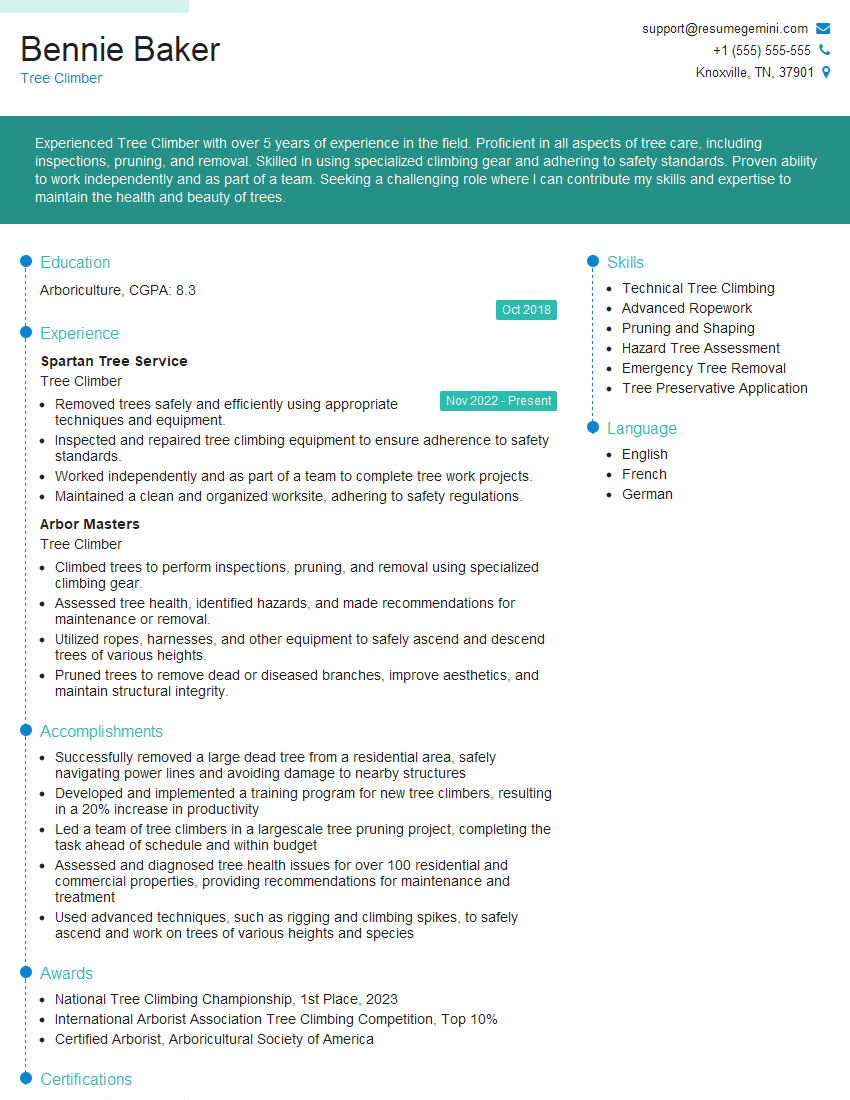
Mastering tree shaping concepts is crucial for advancing your career in software engineering and related fields. A strong understanding of tree structures and algorithms is highly valued by employers. To significantly improve your job prospects, create an ATS-friendly resume that highlights your skills and experience effectively. We recommend using ResumeGemini, a trusted resource, to build a professional and impactful resume. Examples of resumes tailored to Tree Shaping are available to help you create a compelling application.

Explore more articles
Users Rating of Our Blogs
Share Your Experience
We value your feedback! Please rate our content and share your thoughts (optional).
What Readers Say About Our Blog
Very informative content, great job.
good