Cracking a skill-specific interview, like one for Tree Trimming Equipment Operation, requires understanding the nuances of the role. In this blog, we present the questions you’re most likely to encounter, along with insights into how to answer them effectively. Let’s ensure you’re ready to make a strong impression.
Questions Asked in Tree Trimming Equipment Operation Interview
Q 1. Describe your experience operating a bucket truck.
Operating a bucket truck requires a high level of skill and awareness. My experience spans over eight years, encompassing various models and working conditions. I’m proficient in all aspects, from pre-operation checks (including fluid levels, tire pressure, and overall structural integrity) to safe operation and secure positioning. I’m adept at maneuvering the truck in tight spaces, utilizing the boom’s articulating capabilities to reach challenging branches safely and effectively. For instance, I recently used a 65-foot bucket truck to trim overhanging branches near power lines, requiring precise control and understanding of the truck’s limitations. I always prioritize safety by assessing the ground conditions and potential obstacles before extending the boom. My experience also includes working with different types of terrain and weather conditions, adapting my techniques to maintain both efficiency and safety.
Q 2. What safety procedures do you follow when operating a chainsaw?
Chainsaw safety is paramount. My routine always begins with a thorough pre-operation check, inspecting the chain for sharpness and wear, ensuring the chain brake is functional, and verifying proper fuel and oil levels. I always wear the appropriate personal protective equipment (PPE), which includes chaps, gloves, eye protection, hearing protection, and a hard hat. Before each cut, I conduct a thorough risk assessment, identifying escape routes and potential hazards like overhead power lines or unstable branches. I use proper cutting techniques, such as using a felling wedge to direct the fall of a tree and maintaining a safe distance from the falling limb. Regular maintenance, including chain sharpening and bar lubrication, is crucial for preventing kickbacks and maintaining efficiency. Thinking of it like this: imagine driving a car; you wouldn’t drive without checking the tires, so why would you use a chainsaw without checking the chain?
Q 3. Explain the different types of pruning cuts and when to use each.
Pruning cuts are crucial for tree health and safety. There are several types:
- Thinning cuts: Removing entire branches to reduce density and improve air circulation. These are particularly important to reduce the risk of disease and improve light penetration.
- Heading cuts: Shortening a branch, which can weaken the branch and increase the risk of disease if not done correctly. Generally avoided as it promotes excessive branching.
- Reduction cuts: A multi-cut process used to shorten a large branch without leaving a stub. This involves making an undercut and then a top cut, with a final cut removing the branch collar.
- Cleaning cuts: Removing dead, diseased, or crossing branches. These cuts help to maintain the tree’s structure and prevent the spread of disease.
The choice of cut depends on the tree’s species, its overall health, and the goals of the pruning. For example, thinning cuts are ideal for promoting air circulation in densely packed branches, while reduction cuts are necessary when significantly reducing branch size. Overuse of heading cuts can severely damage the tree’s health, making them a cut to generally avoid.
Q 4. How do you identify and address potential hazards in tree trimming operations?
Identifying and addressing hazards is an integral part of my job. My hazard identification process begins with a comprehensive site survey before commencing work. This involves identifying potential hazards such as overhead power lines, underground utilities, unstable ground, nearby structures, and any weather-related concerns. I always maintain a safe distance from power lines, employing spotters when needed. Unstable trees or branches are assessed for risk of falling and appropriate measures are taken. I use proper signaling and communication with my team throughout operations, preventing accidents through clear and constant communication.
For example, during a recent job, I noticed a decaying branch, posing a risk of falling. I used appropriate climbing gear and pruning techniques to safely remove it, ensuring the safety of myself and the surrounding area.
Q 5. What is your experience with different types of chippers?
My experience with chippers includes both small, self-propelled units and larger, truck-mounted models. I’m familiar with different types, including horizontal, vertical, and drum chippers. My expertise covers the safe operation of each type, including understanding the differences in feeding techniques and safety precautions. Smaller units are more maneuverable, ideal for smaller jobs, whereas larger units have a significantly higher throughput, suitable for larger-scale projects. I’m proficient in maintaining these machines, including blade sharpening, ensuring proper discharge chute functioning, and performing preventative maintenance. Knowledge of different chipping styles is important to achieve optimal output and efficient waste removal.
Q 6. Describe your experience using aerial lifts for tree trimming.
I have extensive experience using various aerial lifts, including boom lifts and scissor lifts, for tree trimming. My skills include safely operating these lifts, adhering to manufacturer guidelines and safety regulations. Understanding weight limitations, boom reach, and operational capacity is crucial. I’m proficient in securing the lift, attaching safety harnesses, and using the lift controls efficiently and accurately. For instance, during a recent project, I used a boom lift to access high branches of a large oak tree, meticulously removing branches without damaging the tree or the surrounding environment.
Q 7. How do you maintain and inspect tree trimming equipment?
Maintaining and inspecting tree trimming equipment is a critical aspect of safety and efficiency. My maintenance routine begins with a daily inspection, checking all equipment for wear and tear, loose bolts, damaged parts, and fluid levels (for equipment with engines or hydraulic systems). I ensure all safety guards are in place and functional before operation. This includes checking chainsaws for chain sharpness and proper lubrication, ensuring the proper functioning of the brakes, and verifying the overall condition of the bar. For aerial lifts, I check hydraulic fluid levels, inspect the boom for damage, and test all controls. Regular servicing, according to manufacturer recommendations, is performed to prevent costly repairs and downtime. Proper maintenance not only enhances safety but also prolongs the lifespan of the equipment.
Q 8. What are the signs of a potentially dangerous tree?
Identifying a potentially dangerous tree involves assessing several factors. Think of it like a medical checkup for a tree – you’re looking for symptoms of underlying problems. Obvious signs include:
- Visible decay or rot: Large cavities, fungal growth (mushrooms at the base or conks on the trunk), or soft, spongy wood indicate internal weakness and potential failure.
- Leaning or tilting: A tree leaning significantly, especially towards structures or areas where people gather, poses a serious risk of falling.
- Cracks or splits in the trunk or branches: These are structural weaknesses that compromise the tree’s stability, particularly during storms or high winds. A large vertical crack running up the trunk is a major red flag.
- Dead or dying branches: Extensive deadwood is a clear indication of stress or disease, making the tree unstable. These dead branches can easily break off and cause damage.
- Overgrown or unbalanced crown: An excessively large crown that is disproportionate to the trunk, or one that is heavily weighted on one side, can lead to instability.
- Signs of insect infestation or disease: Look for unusual discoloration, leaf loss, or insect activity, which can weaken the tree’s structural integrity.
For example, I once assessed a large oak tree near a school. It had a significant lean and several large, dead branches hanging precariously. The combination of these factors made it a high-risk tree requiring immediate removal.
Q 9. Explain your understanding of proper rigging techniques for tree removal.
Proper rigging is crucial for safe and efficient tree removal. It’s all about controlled lowering, not just chopping and hoping for the best. Think of it as a carefully planned ballet, not a demolition derby. The key elements include:
- Selecting the appropriate ropes and hardware: This depends on the tree’s size, weight, and the surrounding environment. We use high-strength synthetic ropes designed for arboriculture, along with appropriately rated shackles, pulleys, and other hardware. Improper equipment can be catastrophic.
- Strategic placement of rigging points: The goal is to create a balanced and controlled lowering of the tree sections. This involves careful assessment of the tree’s structure to identify strong, stable points for attaching ropes. We often use climbing ropes and specialized equipment to access these points.
- Proper knotting techniques: Secure, reliable knots are essential. We use specific arborist knots known for their strength, holding power, and ease of release. A poorly tied knot can lead to catastrophic failure.
- Systematic dismantling: The tree is usually sectioned into manageable pieces before lowering. This requires careful cuts and strategic placement of ropes to control the direction and movement of each piece.
- Communication and teamwork: Effective communication with ground crew members is critical to ensure everyone is aware of the lowering process and potential hazards. Clear hand signals and verbal communication are paramount.
For example, when removing a large pine, we might use a three-point rigging system, with ropes attached to the main trunk and strategically placed branches, to control the descent of large sections. This ensures that we avoid damage to surrounding property and ensure worker safety.
Q 10. How do you handle unexpected situations during tree trimming?
Unexpected situations are a reality in tree trimming. Maintaining composure and utilizing a systematic approach is essential. My approach involves:
- Assessing the situation quickly and accurately: This involves identifying the nature of the problem and its potential impact on safety and the overall operation.
- Communicating with the team: This ensures everyone understands the changing situation and can take appropriate action.
- Developing a revised plan: This requires adapting the original plan to address the unexpected event while ensuring safety remains the top priority. Sometimes it might mean stopping work entirely.
- Implementing the revised plan: This involves carrying out the new plan safely and efficiently.
- Documenting the incident: After the event, we meticulously document what happened, the corrective actions taken, and lessons learned. This helps prevent similar situations in the future.
For instance, if a branch unexpectedly snaps while we are working, the immediate priority is to ensure everyone’s safety. We would then reassess the remaining tree and implement a new strategy to safely remove the affected section and any other potentially hazardous parts.
Q 11. What is your experience with rope and climbing techniques?
My experience with rope and climbing techniques is extensive. I am a certified arborist with years of experience in using climbing gear and techniques. This includes:
- Different climbing systems: I’m proficient in using various systems, including single-rope technique (SRT), double-rope technique (DRT), and occasionally even assisted climbing techniques where necessary for larger trees.
- Knot tying: I’m adept at tying a wide range of climbing and rigging knots – clove hitches, bowlines, figure-eights, and many specialized arborist knots — ensuring the utmost safety and efficiency.
- Harness and safety gear usage: I am fully trained in the proper use and inspection of all safety equipment, including harnesses, lanyards, ascenders, and descenders. Regular inspection and maintenance is a cornerstone of my safety protocols.
- Fall protection techniques: Safety is paramount. My skills include techniques for controlled descents, emergency procedures for falls, and maintaining situational awareness to mitigate risks.
This includes everything from working on smaller trees in residential settings to larger, more complex operations in urban environments. I am very comfortable and confident in my ability to utilize these skills safely and effectively.
Q 12. Describe your knowledge of different tree species and their pruning requirements.
Understanding tree species and their pruning requirements is fundamental to safe and effective tree care. Different species have varying structural characteristics, growth habits, and sensitivities. For instance:
- Oak trees: These are known for their strong, durable wood but can be susceptible to diseases and are sensitive to heavy pruning. Pruning should generally be kept to a minimum and should focus on removing dead, damaged, or diseased branches.
- Maple trees: These trees can have vigorous growth and need regular pruning to maintain their shape and prevent overcrowding. They are relatively tolerant of pruning but should not be pruned during active sap flow.
- Pine trees: Prudent pruning of pines focuses primarily on removing dead, damaged, or crossing branches. Avoid excessive pruning, as this can damage the tree’s overall health.
- Fruit trees: Pruning fruit trees focuses on maintaining a balanced structure to maximize fruit production. This involves removing competing branches, shaping the canopy, and encouraging air circulation.
My experience spans many species, and I always research the specific pruning needs of a tree based on its species and overall condition before commencing work. A ‘one size fits all’ approach is simply inadequate when dealing with the diverse needs of different trees.
Q 13. How do you ensure the safety of yourself and others during tree trimming operations?
Ensuring the safety of myself and others is my top priority. My safety procedures are comprehensive and follow industry best practices:
- Risk assessment: Before any work begins, a thorough risk assessment is conducted, identifying potential hazards and developing strategies to mitigate them.
- Proper use of personal protective equipment (PPE): This includes helmets, eye protection, gloves, high-visibility clothing, and appropriate footwear. All PPE is regularly inspected and maintained.
- Communication and coordination: Clear communication between the entire crew is crucial, using standardized signals and verbal instructions. We establish clear roles and responsibilities for each team member.
- Emergency response planning: We have detailed emergency response procedures in place, including communication protocols, first aid, and emergency contact information.
- Regular equipment inspection and maintenance: All equipment, including saws, ropes, harnesses, and other tools, is regularly inspected and maintained to ensure it’s in optimal working condition.
- Weather monitoring: Work is often suspended during inclement weather, such as high winds, thunderstorms, or heavy rain. Safety is always prioritized over scheduling.
For example, before commencing any work near power lines, we will coordinate with the utility company and follow strict safety protocols to ensure the integrity of the lines and safety of workers. We never compromise on safety, regardless of project size or deadline.
Q 14. What is your experience with using different types of climbing gear?
My experience with climbing gear is extensive and encompasses a variety of equipment. I’m familiar with:
- Climbing harnesses: I use different types of harnesses suited to the specific tasks, ensuring proper fit and comfort for extended periods.
- Ropes: I have experience with various types of ropes, including dynamic and static ropes, each with specific strengths and applications.
- Ascenders and descenders: I’m proficient in using different ascenders and descenders to ascend and descend trees safely and efficiently.
- Carabiners and other connecting hardware: I am very familiar with various types of carabiners and other connecting hardware, including their limitations and how to use them correctly.
- Helmets and other PPE: I always use appropriate PPE and ensure it’s in good condition and appropriately fitted.
I regularly inspect all my gear to ensure it’s in perfect working order, checking for any wear and tear that might compromise safety. My understanding and experience with different climbing gear allows me to select and utilize the most appropriate equipment for each specific task and environment.
Q 15. How do you calculate the risk associated with a particular tree trimming job?
Calculating the risk associated with tree trimming involves a thorough risk assessment considering several factors. Think of it like a checklist – you wouldn’t climb a ladder without checking its stability, right? Similarly, we evaluate the tree’s condition, the environment, and the work itself.
- Tree Condition: We assess the tree’s health (disease, decay), structural integrity (lean, cracks, deadwood), and the presence of hazards like overhanging branches or power lines. For instance, a large, leaning oak with visible decay poses a higher risk than a healthy young maple.
- Environmental Factors: This includes weather conditions (wind, rain, ice), the surrounding terrain (slope, obstacles), and proximity to buildings or people. Working near power lines is a significant risk and requires specialized precautions.
- Work Procedures: The chosen methods of cutting and the equipment used also affect risk. Improper rigging techniques or the use of faulty equipment dramatically increase risk. For example, using an improperly sharpened chainsaw significantly increases the chance of kickback.
We use this assessment to develop a safe work plan, selecting appropriate techniques, Personal Protective Equipment (PPE), and equipment. Risk mitigation strategies like using aerial lifts instead of climbing or employing spotters are incorporated based on the calculated risk.
Career Expert Tips:
- Ace those interviews! Prepare effectively by reviewing the Top 50 Most Common Interview Questions on ResumeGemini.
- Navigate your job search with confidence! Explore a wide range of Career Tips on ResumeGemini. Learn about common challenges and recommendations to overcome them.
- Craft the perfect resume! Master the Art of Resume Writing with ResumeGemini’s guide. Showcase your unique qualifications and achievements effectively.
- Don’t miss out on holiday savings! Build your dream resume with ResumeGemini’s ATS optimized templates.
Q 16. What are the different types of cutting tools used in tree trimming?
Tree trimming utilizes a variety of cutting tools, each suited for different tasks. The choice depends on factors such as branch size, access, and desired cut type. Imagine a surgeon selecting the right instrument for a procedure; precision is key here.
- Hand Saws: Bow saws and pruning saws are excellent for smaller branches and precise cuts, allowing for great control in delicate situations. They’re essential for shaping and creating clean cuts.
- Chainsaws: These are workhorses for larger branches and limbs. We use various sizes, from smaller, lightweight models for smaller work to larger saws for larger limbs. Proper maintenance and safety precautions are crucial, including using appropriate safety gear like chaps and helmets.
- Pole Saws: These extendable saws are perfect for high branches that are otherwise difficult to reach, increasing safety by reducing the need for climbing.
- Pruning Shears & Loppers: Used for smaller twigs and branches, these provide precise cuts on smaller diameter materials, essential for maintaining the tree’s overall health and shape.
Each tool requires specific training and proficiency to use safely and effectively. We regularly maintain and sharpen our tools to ensure they perform optimally and minimize the risk of accidents.
Q 17. Explain your understanding of tree biology and its relevance to trimming.
Understanding tree biology is fundamental to safe and effective tree trimming. It’s like knowing the anatomy of a patient before surgery; you need to understand how the tree functions to work with it correctly.
- Growth Habits: Knowing how a tree grows, where its branches originate, and how it responds to pruning is vital for making informed cuts. Improper pruning can lead to weak branch development, disease susceptibility, or even tree death.
- Branch Structure: Understanding branch collar, branch bark ridge, and included bark is crucial to make correct pruning cuts that promote healing and reduce the risk of disease entry. Removing the branch collar, for example, can leave an opening for disease and decay.
- Species-Specific Considerations: Different tree species have varying growth patterns and responses to pruning. What works for an oak might harm a maple. For example, some trees are more tolerant of heavy pruning than others.
- Physiological Processes: Understanding photosynthesis, nutrient transport, and wound response helps predict how a tree will react to pruning. Making large cuts or wounds, particularly during times of high stress, can increase the risk of disease.
Applying this knowledge allows us to trim trees in a way that promotes their long-term health, structural integrity, and aesthetic appeal. It’s a critical component of responsible tree care.
Q 18. Describe your experience working with different types of soil and terrain.
My experience encompasses a wide range of soil and terrain types. Just like a builder needs to understand the foundation, we need to understand the ground to work safely and effectively.
- Soil Types: I’ve worked in clay, sandy, rocky, and loamy soils. Each presents unique challenges. Clay can be difficult to dig in, while rocky soil requires specialized equipment. Sandy soil can be unstable, posing a risk to equipment and personnel.
- Terrain: I’ve worked on level ground, steep slopes, and uneven surfaces. Slopes increase the risk of equipment instability and accidents. Uneven terrain requires careful planning and potentially specialized equipment to ensure safety.
- Access Challenges: I’ve navigated difficult access points, including narrow passages, dense undergrowth, and waterlogged areas. These situations call for creative problem-solving and, sometimes, the use of specialized equipment like tracked vehicles or winches.
Adapting to these variables is a critical aspect of my job. Safety is always paramount, and my experience allows me to assess the risks associated with each situation and plan accordingly. This includes using appropriate equipment and employing safety measures to protect myself and my team.
Q 19. How do you plan and execute a complex tree trimming project?
Planning and executing a complex tree trimming project requires a systematic approach. It’s like orchestrating a symphony; each element must work together harmoniously.
- Initial Assessment: This involves a thorough site survey, including tree assessments, risk identification, and analysis of the surrounding environment. Photography and detailed sketches are essential tools for record-keeping and communication.
- Project Design: Based on the assessment, we develop a detailed plan, outlining the scope of work, including the type of cuts, the methods used, and the sequence of operations. This might include drawings, diagrams, or 3D models for complex projects.
- Resource Allocation: This step involves selecting the appropriate equipment, tools, and personnel. Safety equipment is always a top priority.
- Execution: The work is carried out according to the plan, with close supervision and communication between team members. Regular safety checks and risk assessments ensure things remain on track.
- Post-Project Review: After the job is complete, we conduct a thorough review, evaluating the success of the plan and identifying areas for improvement. This allows for continuous learning and refinement of our processes.
Clear communication, meticulous planning, and a commitment to safety are crucial for success in these projects. Each project is unique, requiring adaptability and a comprehensive understanding of the factors involved.
Q 20. What are the legal and regulatory requirements for tree trimming in your area?
Legal and regulatory requirements for tree trimming vary by location but generally involve permits, safety regulations, and environmental considerations. Ignoring these can lead to legal consequences and potential harm.
- Permits: In many areas, permits are required before trimming trees, especially those near power lines or protected areas. These permits often involve inspections and approvals.
- Safety Regulations: Occupational Safety and Health Administration (OSHA) guidelines and other relevant regulations govern the use of equipment, personal protective equipment (PPE), and safe work practices. We follow strict adherence to all applicable regulations.
- Environmental Regulations: Regulations related to protected species, endangered habitats, and environmental impact assessments may apply, especially for large-scale projects. We ensure our practices minimize impact and comply with all relevant laws.
- Property Lines: Understanding property lines and obtaining necessary permissions from landowners before trimming trees that cross boundaries is crucial.
Staying up-to-date on relevant laws and regulations is essential for responsible tree trimming practices. We regularly review updates and attend professional development courses to ensure our work remains compliant.
Q 21. Describe a time you had to troubleshoot a malfunctioning piece of equipment.
During a large-scale project, our aerial lift experienced a sudden malfunction – the hydraulic system failed mid-operation. The situation demanded quick thinking and problem-solving.
- Safety First: The immediate priority was the safety of the operator. We carefully lowered the boom using the emergency manual override system, ensuring a slow and controlled descent.
- Assessment: Once the operator was safely on the ground, we assessed the situation. A visual inspection revealed a leak in a hydraulic line.
- Troubleshooting: We checked the hydraulic fluid level and pressure, but the leak was the clear culprit. We had spare hydraulic lines, so we isolated the failed line and made the repair.
- Verification: After the repair, we thoroughly tested the system, ensuring all functions were restored. We performed multiple lift and lower tests.
- Documentation: The entire incident, including the troubleshooting steps, repair details, and safety measures taken, was documented for future reference.
This incident highlights the importance of regular equipment maintenance, having backup systems, and the ability to effectively troubleshoot under pressure. Safety is always the paramount concern.
Q 22. How do you deal with difficult customers or challenging job sites?
Dealing with difficult customers or challenging job sites requires a calm, professional approach. My strategy focuses on clear communication, active listening, and finding mutually beneficial solutions. For example, if a customer is unhappy with the initial assessment, I’ll patiently explain my reasoning, showing them photos or diagrams to illustrate the tree’s condition and the necessary work. If the job site presents obstacles like difficult terrain or limited access, I’ll carefully assess the situation, adapting my techniques and equipment as needed. This might involve using smaller, more maneuverable equipment or employing rigging techniques to safely overcome access limitations. I always prioritize safety and transparency, keeping the customer informed every step of the way. Ultimately, building trust and demonstrating expertise helps resolve even the most challenging situations.
Q 23. What are your strategies for preventing injuries on the job?
Preventing injuries is paramount in tree trimming. My approach is multifaceted and starts with thorough pre-job planning, including a detailed risk assessment of the work site. This assessment considers factors like tree condition, weather conditions, terrain, and the presence of power lines. I always utilize the proper personal protective equipment (PPE), including safety harnesses, helmets, eye protection, and chainsaw chaps. Furthermore, I regularly inspect my equipment, ensuring everything is in optimal working order. Before starting any work, I brief my team on safety protocols and the specific hazards associated with the job. We practice safe climbing techniques, employing proper rope handling and securing methods. Finally, regular training on safety procedures, including emergency response, is crucial for maintaining a high standard of safety on the job.
Q 24. Describe your experience with using GPS or other mapping technologies in tree trimming.
I have extensive experience using GPS technology and mapping software in tree trimming operations. This technology is invaluable for efficient job planning and site assessment. For example, using GPS mapping tools, I can accurately determine the location of trees needing trimming, measure distances, and plan the most efficient routes for equipment and personnel. Software like ArcGIS or Google Earth Pro allows for detailed analysis of tree canopies, identifying potential hazards and enabling optimal trimming strategies. This technology ensures we minimize damage to surrounding property and enhances job safety by allowing for a clearer understanding of the work area beforehand.
Q 25. What are your skills in using hand tools for tree pruning?
My hand tool skills are highly developed and essential for precision pruning and shaping. I’m proficient with a wide range of tools, including loppers, hand saws (bow saws, pruning saws), and various types of shears. I understand the importance of selecting the appropriate tool for each task, ensuring clean cuts that promote healthy tree growth. For example, I use loppers for smaller branches, pruning saws for larger limbs, and specialized shears for delicate pruning tasks. Proper sharpening and maintenance of these tools is critical to ensuring efficient and safe operation. My experience includes shaping trees using hand tools to achieve aesthetically pleasing and structurally sound results.
Q 26. How do you maintain your physical fitness for this demanding job?
Maintaining physical fitness is crucial for this demanding job. My routine involves regular cardiovascular exercise, such as running or cycling, to build endurance. Strength training, focusing on core strength and upper body strength, is essential for safe climbing and handling equipment. I also incorporate flexibility exercises to prevent injuries and maintain range of motion. A balanced diet and adequate rest are equally important components of my fitness regime. I view maintaining my physical condition not only as a requirement for the job but also as a way to prevent injuries and ensure long-term career sustainability.
Q 27. What are your long-term career goals in the tree care industry?
My long-term career goals involve progressing within the tree care industry. I aspire to enhance my expertise in arboriculture, potentially pursuing certifications to broaden my skill set and professional standing. I am interested in gaining experience in more complex tree care operations, such as advanced pruning techniques and hazard tree removal. In the future, I see myself in a leadership role, possibly supervising a team of arborists and contributing to the overall growth and safety standards of the industry.
Q 28. What are your salary expectations for this position?
My salary expectations are commensurate with my experience and skills in the tree trimming industry. I’ve researched industry standards and believe a salary within the range of [Insert Salary Range] reflects the value I bring to this role. However, I am open to discussing this further based on a detailed description of the responsibilities and benefits package.
Key Topics to Learn for Tree Trimming Equipment Operation Interview
- Equipment Operation & Maintenance: Understanding the mechanics, safe operation, and routine maintenance procedures for various tree trimming equipment (e.g., chainsaws, chippers, aerial lifts). This includes pre-operational checks, troubleshooting common issues, and knowing when to seek professional repair.
- Safety Procedures & Regulations: Demonstrating a thorough understanding of OSHA regulations and industry best practices for safe tree trimming operations. This includes personal protective equipment (PPE) usage, hazard identification, and emergency response protocols.
- Tree Biology & Pruning Techniques: Knowledge of tree anatomy, growth habits, and proper pruning techniques to ensure tree health and safety. This involves understanding different cutting angles, branch selection, and the impact of pruning on tree vigor.
- Worksite Assessment & Planning: Ability to assess a worksite, identify potential hazards, and develop a safe and efficient work plan. This includes understanding site limitations, weather conditions, and potential obstacles.
- Problem-Solving & Decision-Making: Experience in troubleshooting equipment malfunctions, adapting to unexpected situations, and making sound judgments in dynamic work environments. This involves explaining how you’ve addressed challenges in previous roles.
- Advanced Techniques (if applicable): Depending on the specific role, you might be asked about specialized techniques like climbing, rigging, or using specific types of equipment. Research the job description carefully to identify any advanced skills they may emphasize.
Next Steps
Mastering Tree Trimming Equipment Operation opens doors to a rewarding career with excellent growth potential. Advancement opportunities can include supervisory roles, specialized training, and higher earning potential. To maximize your job prospects, create a compelling and ATS-friendly resume that highlights your skills and experience. ResumeGemini is a trusted resource that can help you build a professional resume tailored to the specific requirements of the job. Examples of resumes tailored to Tree Trimming Equipment Operation are available to help you craft the perfect application.

Arborist Resume Sample

Forestry Technician Resume Sample
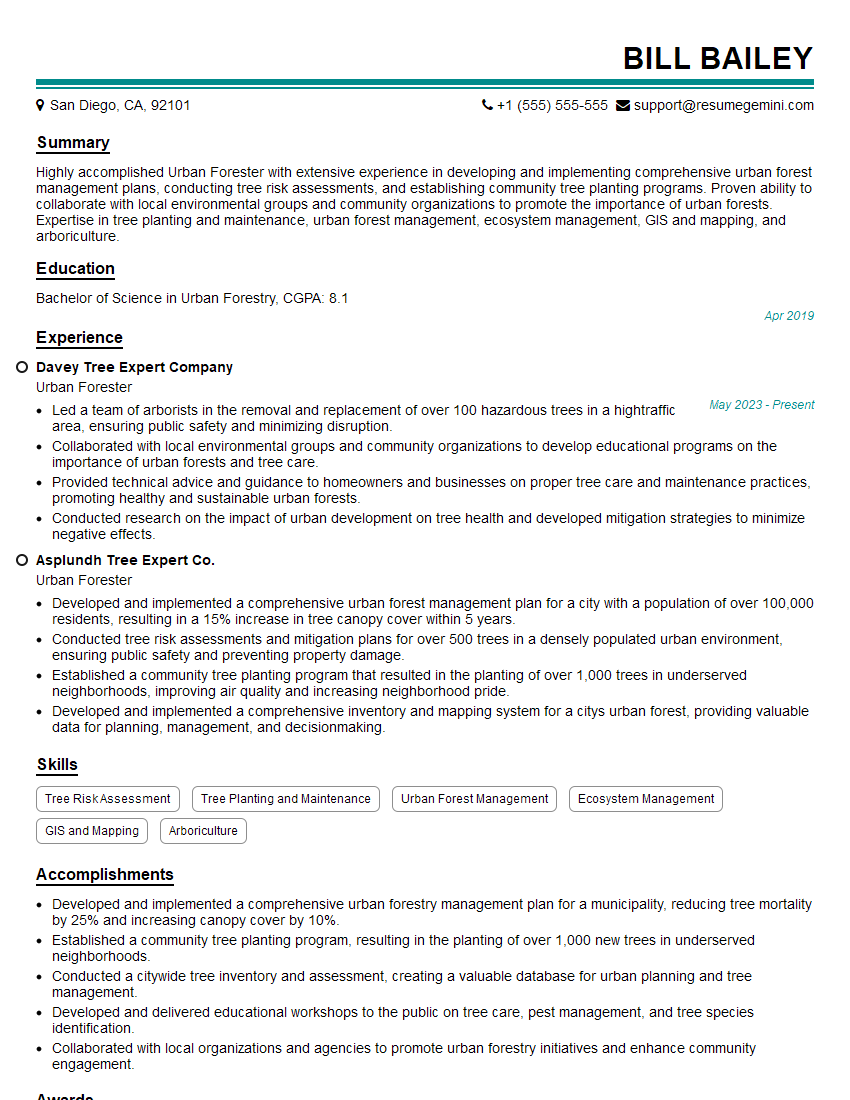
Urban Forester Resume Sample

Equipment Operator Resume Sample

Groundskeeper Resume Sample

Landscape Technician Resume Sample

Tree Climber Resume Sample

Tree Surgeon Resume Sample
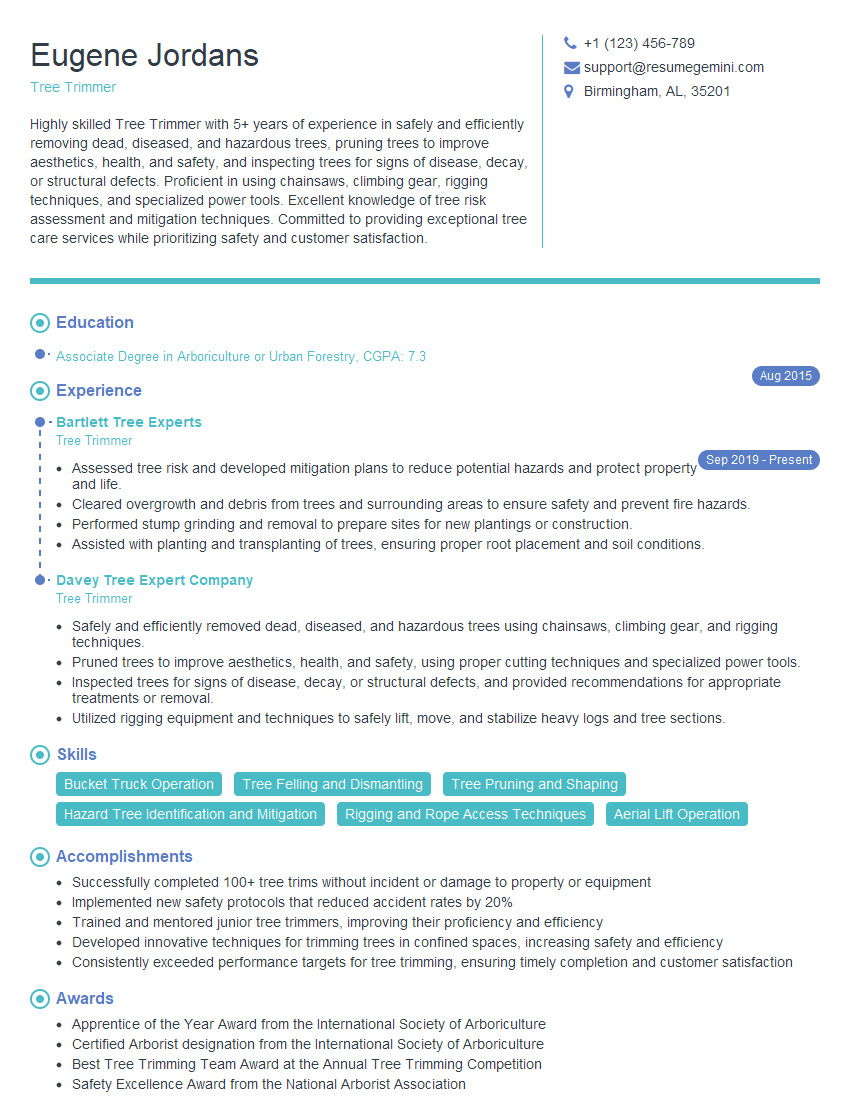
Tree Trimmer Resume Sample

Utility Arborist Resume Sample
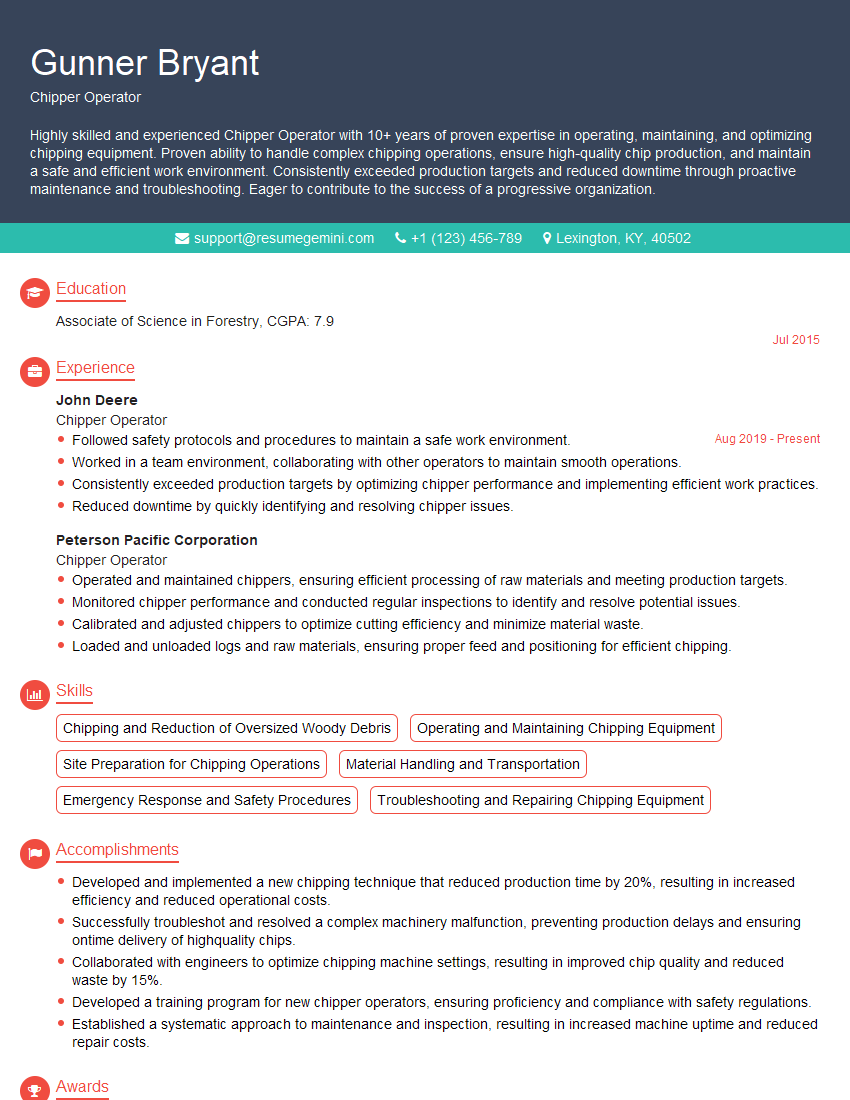
Chipper Operator Resume Sample

Heavy Equipment Operator Resume Sample
Explore more articles
Users Rating of Our Blogs
Share Your Experience
We value your feedback! Please rate our content and share your thoughts (optional).
What Readers Say About Our Blog
Very informative content, great job.
good