Interviews are opportunities to demonstrate your expertise, and this guide is here to help you shine. Explore the essential Trenching and Compaction interview questions that employers frequently ask, paired with strategies for crafting responses that set you apart from the competition.
Questions Asked in Trenching and Compaction Interview
Q 1. Explain the different types of trench boxes and their applications.
Trench boxes are protective structures used in trenching and excavation to safeguard workers from cave-ins. Several types exist, each suited to different soil conditions and job requirements.
- Aluminum Trench Boxes: Lightweight and easy to handle, making them ideal for smaller jobs and less demanding soil conditions. However, they may not be suitable for extremely heavy loads or very unstable soil.
- Steel Trench Boxes: Stronger and more durable than aluminum boxes, suitable for challenging soil conditions and heavier loads. They are more expensive and require more effort to move.
- Hydraulic Trench Boxes: These adjustable boxes offer flexibility in adapting to various trench widths and depths. They are often preferred for projects where trench dimensions might change frequently.
- Shoring Systems: These aren’t technically ‘boxes’ but are crucial protective systems. They involve installing support structures (like sheet piling or soldier piles) along the trench walls to prevent collapse. They are often used for deeper or wider trenches, or in unstable soil.
Application Example: A contractor working on a small water line repair in relatively stable soil might use an aluminum trench box. For a large sewer project in potentially unstable clay, a steel trench box or shoring system would be necessary.
Q 2. Describe the process of soil compaction and the factors influencing it.
Soil compaction is the process of mechanically increasing the density of soil by reducing the volume of voids (air pockets) between soil particles. This improves the soil’s bearing capacity and stability, crucial for foundations, roads, and other infrastructure. The process typically involves using heavy equipment to apply pressure to the soil.
Several factors influence compaction:
- Soil Type: Clay soils, with their fine particles, are generally more difficult to compact than sandy soils. The water content plays a significant role; too much or too little water can hinder compaction.
- Compaction Equipment: Different equipment (rollers, vibratory plates, tampers) offer varying compaction energies. The type of equipment chosen depends on the soil type, depth of compaction needed, and project scale.
- Compaction Energy: This refers to the force and number of passes required to achieve the desired density. Insufficient compaction leads to settlement and instability, while excessive compaction can cause soil damage.
- Moisture Content: The optimal moisture content (OMC) varies depending on the soil type. At OMC, soil particles can move past each other most efficiently during compaction, achieving maximum density. Too dry, and the particles won’t move. Too wet, and water takes up volume and prevents full compaction.
- Lift Thickness: The height of soil layered before compaction (the lift) also matters; thicker lifts require more compaction effort.
Example: Imagine building a highway. The base layer might need higher compaction effort than the top layer using different types of rollers and assessing the soil’s moisture content regularly.
Q 3. What are the safety regulations regarding trenching and excavation?
Trenching and excavation safety regulations are stringent and vary by location but generally emphasize protecting workers from cave-ins, falling objects, and struck-by hazards.
- Trench Protection: Workers must be protected from cave-ins using trench boxes, shoring, or sloping (cutting back the trench walls to a safe angle).
- Atmospheric Monitoring: In confined spaces, the air must be regularly tested for hazardous gases (methane, carbon monoxide, etc.).
- Safe Access and Egress: Proper ladders or ramps must be provided for safe entry and exit from trenches.
- Personal Protective Equipment (PPE): Workers must wear hard hats, safety glasses, and appropriate footwear.
- Competent Person: A designated competent person must inspect the site regularly to ensure compliance with safety regulations.
- Emergency Response Plan: A plan should be in place to deal with emergencies, including potential cave-ins.
Violation Example: Failure to provide adequate trench protection resulting in a worker injury would be a serious safety violation with potentially severe legal and financial consequences.
Q 4. How do you determine the appropriate compaction effort for different soil types?
Determining appropriate compaction effort involves understanding the soil’s properties and project requirements. It’s typically done through a combination of methods:
- Soil Testing: Laboratory tests (like Proctor compaction tests) determine the optimal moisture content (OMC) and maximum dry density (MDD) for a given soil type. These values are crucial for setting compaction targets.
- Field Density Tests: These tests (like sand cone or nuclear density gauge methods) measure the in-place density of the compacted soil. This allows for comparison against the lab-determined MDD and ensures the desired compaction has been achieved.
- Specification Requirements: Project specifications often dictate the required compaction level (expressed as a percentage of MDD). For example, a specification might require 95% of MDD.
- Experience and Judgement: Experienced compaction operators can judge the required effort based on their knowledge of soil behavior and visual cues. However, this should always be complemented by field density testing.
Example: If soil testing shows an OMC of 15% and MDD of 1.8 g/cm³, a project specification of 95% compaction would require achieving a field density of at least 1.71 g/cm³ (1.8 * 0.95).
Q 5. What are the signs of unstable soil conditions in a trench?
Signs of unstable soil conditions in a trench can be subtle or obvious, and immediate action is crucial upon detection. Common indicators include:
- Visible Cracks or Settlement: Cracks in the trench walls or surrounding ground indicate potential instability.
- Loose or Saturated Soil: Soil that is easily crumbled or excessively wet is significantly more prone to collapse.
- Spalling or Shearing: Small pieces of soil breaking away from the trench walls is a warning sign.
- Water Seepage: Significant water inflow into the trench may indicate unstable groundwater conditions.
- Recent Rainfall or Heavy Saturation: High water content in the soil increases instability.
- Changes in Soil Conditions: A previously stable trench showing new signs of instability necessitates re-evaluation.
Action: If any of these signs are observed, work must immediately stop. The trench should be inspected by a competent person, and appropriate protective measures (shoring, sloping, or abandoning the trench) implemented before work resumes. Failure to do so could result in a catastrophic cave-in.
Q 6. Explain the different types of compaction equipment and their uses.
A variety of compaction equipment exists, each tailored to different soil types, compaction depths, and project scales.
- Smooth-Wheel Rollers: These rollers use their weight to compact the soil. Suitable for base courses and large areas of granular soil.
- Vibratory Rollers: These rollers use both weight and vibration to achieve higher compaction density, often used for cohesive soils.
- Pneumatic Rollers: These rollers have inflatable tires that provide better compaction of uneven surfaces and less dense materials.
- Sheepsfoot Rollers: Their tamping feet are excellent for compacting cohesive soils, especially clays, to significant depths.
- Plate Compactors: These are smaller, handheld or walk-behind machines ideal for compacting smaller areas and confined spaces.
- Rammers/Tampers: These are used for very localized compaction or for areas inaccessible to larger equipment.
Example: A large highway project would likely use smooth-wheel and vibratory rollers for base courses and pneumatic rollers for sub-base materials. Smaller projects, like utility trenches, might use plate compactors.
Q 7. How do you ensure proper compaction in confined spaces?
Ensuring proper compaction in confined spaces requires careful planning and the use of appropriate equipment. The challenges include limited access and the difficulty of achieving uniform compaction.
- Select Appropriate Equipment: Smaller compaction equipment, like plate compactors or rammers, is essential for navigating confined spaces.
- Layer Thickness Adjustment: Reduce lift thicknesses to accommodate the smaller compaction equipment and achieve uniform compaction.
- Multiple Passes: More passes of the compaction equipment might be needed to achieve the desired density in confined areas.
- Manual Compaction: In some very confined areas, manual hand tampers might be the only feasible option.
- Careful Monitoring: Regular field density tests are crucial to ensure adequate compaction levels, especially given the challenges of working in confined spaces.
Example: Compacting backfill around a utility pipe in a narrow trench requires using a plate compactor with careful attention to avoiding damage to the pipe. Regular testing verifies the compaction.
Q 8. What are the common causes of trench collapses and how can they be prevented?
Trench collapses are a serious hazard on construction sites, primarily caused by unstable soil conditions. Think of it like building a sandcastle – if the sand is too loose, the castle will fall. Similarly, trenches can collapse if the soil isn’t properly supported.
- Water saturation: Rain or groundwater can significantly weaken soil, reducing its shear strength and making it prone to collapse. Imagine soaking a sandcastle – it becomes much less stable.
- Unsupported soil: Trenches deeper than 5 feet (depending on soil type and local regulations) require shoring, sloping, or other support systems. This is like adding supports to your sandcastle to prevent it from collapsing.
- Vibrations: Heavy machinery operating near a trench can cause soil vibrations, leading to instability. Think of a jackhammer next to your sandcastle – it would likely cause tremors and potential collapse.
- Improper excavation techniques: Undercutting or over-excavation can weaken the trench walls, increasing the risk of collapse. This is like digging too aggressively around your sandcastle’s base.
Prevention involves a multi-pronged approach:
- Soil analysis: Conduct a thorough soil investigation to determine its type and properties before excavation begins. This helps in selecting appropriate support systems.
- Proper shoring/sloping: Implement appropriate shoring (e.g., trench boxes, sheet piling) or sloping (reducing the angle of the trench walls) based on soil conditions and trench depth. This is like strategically adding supports to ensure stability.
- Water management: Install dewatering systems to remove excess water from the trench and surrounding area. This keeps the soil dry and strong.
- Regular inspection: Regularly inspect the trench for signs of instability, such as cracks or bulging, and take corrective actions promptly. Think of this as regularly checking your sandcastle for weaknesses.
- Worker training: Ensure that all workers are properly trained in safe trenching practices.
Q 9. Describe the process of performing a soil density test.
A soil density test, often called a compaction test, measures the degree of compaction achieved in a soil layer. This is crucial for ensuring the structural integrity of foundations and pavements. We use the standard Proctor test or the Modified Proctor test, depending on the project requirements.
The process generally involves these steps:
- Sample collection: Collect undisturbed soil samples from the compacted area. The sample should represent the compacted soil.
- Preparation: Weigh the soil sample and prepare it to the appropriate moisture content specified by the test.
- Compaction: Place the soil in a cylindrical mold and compact it using a standard hammer and number of blows specified in the Proctor method used.
- Weighing and calculation: Weigh the compacted soil and calculate the dry unit weight, which represents the mass of dry soil per unit volume.
- Moisture content determination: Determine the moisture content of the compacted soil.
- Plotting the curve: Repeat steps 3-5 for different moisture contents, plot the dry unit weight against moisture content. The maximum dry unit weight (MDD) is the highest dry unit weight on the curve.
- Optimum moisture content: Determine the optimum moisture content (OMC), the moisture content at which the MDD is achieved.
These values (MDD and OMC) are critical design parameters to ensure proper compaction during construction.
Q 10. How do you interpret soil compaction test results?
Interpreting soil compaction test results involves comparing the achieved dry unit weight (obtained from the field) with the maximum dry unit weight (MDD) obtained from the laboratory compaction test. The result is expressed as a percentage of compaction.
Percentage of Compaction = (Field Dry Unit Weight / Maximum Dry Unit Weight) * 100
A higher percentage of compaction indicates better soil density. For example, a 95% compaction indicates that the soil has achieved 95% of its maximum possible density. Specifications typically define the minimum acceptable percentage of compaction, which is crucial for the project’s success. A low percentage indicates insufficient compaction, potentially leading to settlement or instability of structures built on that soil. Conversely, over-compaction (though less common) can also lead to issues such as reduced bearing capacity.
It’s important to consider the optimum moisture content (OMC). The field moisture content should ideally be close to the OMC to achieve the best compaction with the least effort. If the field moisture content is too high or too low, it will be more difficult (and more costly) to achieve the desired density.
Q 11. What are the limitations of different compaction methods?
Various compaction methods exist, each with its limitations. For instance:
- Vibratory rollers: Effective for granular soils but less so for cohesive soils; can cause damage to utilities if not operated carefully.
- Sheepsfoot rollers: Excellent for cohesive soils, but less efficient for granular soils; can be slow and less maneuverable.
- Pneumatic rollers: Suitable for a variety of soils, but more expensive than other methods; high rolling pressure might damage the surface if over-used.
- Plate compactors: Well-suited for smaller areas and confined spaces; however, they are less efficient for large areas.
The choice of compaction method depends on factors such as soil type, required density, project constraints, and budget. For example, using a sheepsfoot roller on sandy soil would be inefficient and less effective than using a vibratory roller. Conversely, using a plate compactor for large-scale highway projects would be extremely time-consuming and impractical.
Q 12. How do you handle unexpected ground conditions during trenching?
Unexpected ground conditions during trenching are a common challenge. These can include encountering underground utilities, rock formations, or unexpected soil types that necessitate changes in the excavation plan.
My approach involves:
- Immediate halt of operations: Safety is paramount. Stop work immediately upon encountering an unexpected condition.
- Assessment and investigation: Carefully assess the situation to determine the nature and extent of the unexpected condition. This may involve using ground-penetrating radar or other investigation techniques.
- Develop a revised plan: Based on the assessment, develop a revised excavation plan, which may include using different excavation techniques, support systems, or even redesigning the trench layout.
- Notify relevant parties: Inform the project manager, client, and any other relevant parties about the situation and the revised plan.
- Implement revised plan safely: Implement the revised plan, ensuring worker safety throughout the process. This may involve additional safety precautions.
- Document everything: Document all unexpected conditions, assessments, and revised plans. This documentation is essential for project control and avoiding future similar problems.
For example, discovering an unexpected large rock formation during trench excavation would require a revised plan that might include employing rock breaking equipment or adjusting the trench alignment to avoid the rock altogether.
Q 13. Describe your experience with different types of soil.
Throughout my career, I’ve worked extensively with various soil types, each presenting unique challenges and requiring different approaches to trenching and compaction.
- Sandy soils: Relatively easy to excavate but prone to collapse if not properly compacted. Requires careful consideration of water management and proper compaction techniques, like vibratory rollers.
- Clayey soils: Can be very cohesive and difficult to excavate, requiring specialized equipment. Compaction is crucial to prevent settlement; methods like sheepsfoot rollers are often employed.
- Silty soils: Can behave like either sandy or clayey soils, depending on their moisture content. Careful attention to moisture content during compaction is essential.
- Rocky soils: Require specialized excavation techniques, such as rock breaking. Compaction isn’t a primary concern, but ensuring proper support around excavated areas is crucial.
- Organic soils: Weak and compressible, requiring specialized excavation and support systems. Compaction is often ineffective and alternative foundation solutions may be needed.
My experience allows me to adapt my approach to each soil type, ensuring the efficiency and safety of the project. Understanding these differences is crucial for successful project completion.
Q 14. How do you ensure the safety of workers in a trenching operation?
Worker safety is my top priority in every trenching operation. It’s not just about following regulations; it’s about fostering a safety-conscious culture on the site.
- Compliance with OSHA regulations: Strict adherence to all relevant OSHA regulations for trenching and excavation is essential. This includes requirements for shoring, sloping, atmospheric monitoring, and personal protective equipment (PPE).
- Pre-excavation planning: Thorough planning includes identifying potential hazards, selecting appropriate support systems, and developing a detailed safety plan.
- Regular inspections: Daily inspections of the trench and surrounding areas are crucial to identify and address potential hazards promptly.
- Emergency response plan: A comprehensive emergency response plan should be in place to deal with accidents or collapses, including clear communication protocols and rescue procedures.
- Worker training and communication: Workers must be thoroughly trained in safe trenching practices, including hazard recognition, emergency procedures, and the proper use of PPE. Open communication is critical to ensure everyone understands safety protocols.
- Atmospheric monitoring: Regular monitoring of the trench atmosphere for hazardous gases is important, particularly in confined spaces.
Safety isn’t just a checklist; it’s a commitment. By emphasizing safety in every aspect of the operation, we create a work environment where everyone goes home safe at the end of the day.
Q 15. What are your responsibilities as a trenching and compaction supervisor?
As a trenching and compaction supervisor, my responsibilities encompass the entire lifecycle of a project, from initial planning to final completion. This includes ensuring worker safety, adhering to all relevant regulations, managing resources efficiently, and delivering a high-quality finished product. Specifically, my duties involve:
- Pre-planning and design: Reviewing project plans, identifying potential hazards, and selecting appropriate trenching and compaction methods.
- Site supervision: Overseeing the excavation of trenches, ensuring adherence to safety regulations (like proper shoring and sloping), and monitoring compaction efforts.
- Equipment management: Maintaining and troubleshooting compaction equipment, scheduling maintenance, and ordering necessary parts.
- Quality control: Performing regular inspections to ensure proper compaction levels are achieved and documenting findings. This often involves using density testing equipment.
- Safety management: Enforcing safety protocols, conducting regular safety meetings, and responding effectively to any incidents or near misses. This includes ensuring proper Personal Protective Equipment (PPE) is used.
- Team management: Supervising and coordinating the work of the trenching and compaction crew, providing training and guidance as needed.
- Logistics management: Managing the procurement and delivery of materials, equipment, and supplies to the jobsite.
For example, on a recent pipeline project, I was responsible for ensuring that all trenches were excavated to the correct depth and width, properly shored, and compacted to the required density before pipe installation. This involved close collaboration with the engineering team, the excavation crew, and the compaction equipment operators.
Career Expert Tips:
- Ace those interviews! Prepare effectively by reviewing the Top 50 Most Common Interview Questions on ResumeGemini.
- Navigate your job search with confidence! Explore a wide range of Career Tips on ResumeGemini. Learn about common challenges and recommendations to overcome them.
- Craft the perfect resume! Master the Art of Resume Writing with ResumeGemini’s guide. Showcase your unique qualifications and achievements effectively.
- Don’t miss out on holiday savings! Build your dream resume with ResumeGemini’s ATS optimized templates.
Q 16. Describe your experience with trench shoring and support systems.
My experience with trench shoring and support systems is extensive. I’m proficient in various methods, including:
- Sloping/Benching: This involves creating a sloped or benched trench wall to reduce the risk of collapse. The angle of the slope depends on the soil type and other factors. I’ve managed projects where this was the most cost-effective and practical solution.
- Shoring: This method uses temporary supports, such as timber shoring, sheet piling, or hydraulic shoring, to stabilize trench walls. I’m experienced in selecting the appropriate shoring system based on soil conditions and trench depth, ensuring proper installation and inspection.
- Shielding: This involves using a protective structure, such as a trench box or trench shield, to protect workers from cave-ins. I understand the limitations of each type of shield and ensure their proper selection and usage.
One project involved a deep trench in unstable soil. We opted for a combination of hydraulic shoring and a trench box, ensuring worker safety and project completion without incident. Proper shoring is crucial, and I always prioritize safety by verifying calculations and inspections at every step of the process.
Q 17. How do you manage the logistics of a trenching and compaction project?
Managing the logistics of a trenching and compaction project requires meticulous planning and coordination. This includes:
- Resource allocation: Determining the necessary equipment, personnel, and materials, and ensuring their timely availability.
- Material procurement: Ordering and scheduling the delivery of soil, aggregates, and other materials to the jobsite. This requires anticipating needs and considering potential delays.
- Equipment maintenance: Scheduling routine maintenance and repairs for compaction equipment to minimize downtime.
- Transportation and storage: Coordinating the transportation of materials and equipment to the jobsite and ensuring their safe storage.
- Waste management: Developing a plan for the disposal of excavated soil and other waste materials in compliance with environmental regulations.
For instance, on a large-scale road construction project, I developed a detailed schedule for material deliveries, ensuring that sufficient aggregates were available for compaction at each stage of the process. This involved close communication with suppliers and careful monitoring of material usage to avoid delays and ensure smooth workflow.
Q 18. What are the environmental considerations for trenching and compaction?
Environmental considerations are paramount in trenching and compaction projects. Key aspects include:
- Soil erosion and sedimentation: Implementing measures to prevent soil erosion and sedimentation during trench excavation and compaction. This might involve using silt fences, sediment basins, or other erosion control measures.
- Water pollution: Preventing the contamination of groundwater and surface water from spills or runoff of fuels, oils, or other hazardous materials. Appropriate spill containment and cleanup procedures are crucial.
- Air quality: Minimizing dust generation during excavation and compaction activities. This can be achieved through the use of water sprays, dust suppressants, or other dust control measures.
- Waste management: Proper disposal of excavated soil and other waste materials in accordance with local and national regulations.
- Noise pollution: Minimizing noise pollution from equipment operations, particularly in residential areas. This might involve using quieter equipment or scheduling work during less sensitive times.
For example, on a recent project near a sensitive wetland area, we implemented a comprehensive erosion and sediment control plan to protect the ecosystem. This included the use of silt fences, straw bales, and regular inspections to ensure the plan’s effectiveness.
Q 19. How do you maintain and troubleshoot compaction equipment?
Maintaining and troubleshooting compaction equipment is crucial for efficiency and safety. My approach includes:
- Regular inspections: Conducting daily pre-operational inspections to check for any damage, leaks, or malfunctions. This is documented and addressed promptly.
- Preventive maintenance: Following a scheduled maintenance program to replace filters, lubricants, and other components as needed. This minimizes breakdowns and extends equipment lifespan.
- Troubleshooting: Diagnosing and repairing mechanical and electrical problems as they arise. This often involves understanding hydraulic systems, engine components, and electrical circuits.
- Operator training: Ensuring that equipment operators are properly trained to operate and maintain the equipment. This includes understanding proper operation techniques and recognizing early signs of malfunction.
For example, I recently diagnosed a problem with a vibrating roller’s hydraulic system by systematically checking fluid levels, pressure gauges, and hoses, eventually finding a leaking seal. The quick fix minimized downtime and prevented further damage.
Q 20. What are the different methods for measuring soil moisture content?
Several methods exist for measuring soil moisture content, each with its own advantages and limitations:
- Gravimetric method: This involves weighing a sample of soil, drying it in an oven, and then weighing it again. The difference in weight represents the amount of water lost. It’s accurate but time-consuming.
- Time domain reflectometry (TDR): This uses electromagnetic pulses to measure the dielectric constant of the soil, which is related to soil moisture content. It’s fast and non-destructive, but the equipment is expensive.
- Neutron probe: This method uses a neutron source to measure the amount of hydrogen in the soil, which is related to soil moisture content. It’s useful for in-situ measurements in the field but requires specialized training and safety precautions due to the radiation source.
- Moisture meter: These hand-held devices use various sensors (capacitive, gypsum blocks, etc.) to measure moisture content. They’re relatively inexpensive and easy to use but their accuracy depends greatly on the sensor type and calibration.
The choice of method depends on the project’s specific needs, the level of accuracy required, and available resources. For routine quality control on a compaction project, a moisture meter might suffice. For research or precise measurements, the gravimetric method or TDR might be preferred.
Q 21. Explain the importance of proper compaction in construction.
Proper compaction is crucial in construction for several reasons:
- Increased stability: Compaction reduces the void spaces in the soil, making it more stable and less prone to settlement. This prevents cracking in pavements, foundations, and other structures.
- Improved bearing capacity: Compacted soil can support heavier loads, which is critical for foundations and roadways.
- Reduced permeability: Compaction reduces the permeability of the soil, preventing water infiltration and minimizing erosion.
- Enhanced durability: Properly compacted soil contributes to the long-term durability and lifespan of constructed elements.
- Cost savings: Avoiding settlement issues and ensuring structural integrity through compaction prevents costly repairs and replacements later in the project.
Imagine building a house on poorly compacted soil. Over time, the foundation could settle unevenly, causing cracks in the walls and other structural problems. Proper compaction ensures a stable foundation, preventing such costly issues. It’s a fundamental step toward a structurally sound and long-lasting project.
Q 22. How do you ensure the quality control of compaction work?
Ensuring quality control in compaction involves a multi-pronged approach focusing on pre-compaction planning, real-time monitoring, and post-compaction verification. It’s like baking a cake – you need the right ingredients (planning), the right oven temperature (monitoring), and a final taste test (verification) to ensure a perfect result.
- Pre-compaction planning: This includes defining the required compaction level (usually expressed as a percentage of maximum dry density, or MDD, determined through laboratory testing), selecting the appropriate compaction equipment based on soil type and project requirements, and establishing clear quality control procedures.
- Real-time monitoring: This involves regularly checking the moisture content of the soil using a moisture meter, monitoring the number of roller passes, and visually inspecting the compacted surface for any irregularities like potholes or soft spots. We often use nuclear gauges to quickly measure density in-situ.
- Post-compaction verification: This crucial step uses density tests (using a sand cone method or nuclear gauge) to verify that the specified compaction has been achieved across different locations of the compacted area. Failure to meet the required density necessitates further compaction efforts.
Documentation is key. We maintain detailed records of all tests, equipment used, and observations to ensure traceability and accountability.
Q 23. Describe your experience with different types of compaction rollers.
My experience encompasses a wide range of compaction rollers, each suited for different soil conditions and project scales. Think of them as specialized tools in a toolbox.
- Smooth-wheeled rollers: These are excellent for compacting cohesive soils like clays, providing even pressure distribution across the surface. I’ve used them extensively on road construction projects.
- Pneumatic-tired rollers: Their versatility is their strength. The air pressure can be adjusted for different soil types, making them adaptable to both cohesive and granular materials. I’ve found them especially useful for base courses in highway projects.
- Vibratory rollers: These are powerful machines used for compacting granular materials like sands and gravels, utilizing vibration to increase density efficiently. Their effectiveness in achieving high compaction levels is significant, and I frequently use them for subbase compaction.
- Sheep’s foot rollers: These rollers have projecting feet, making them ideal for compacting highly cohesive clays or challenging soil conditions where penetration is needed. They’re less commonly used now, but critical for specific applications.
Selecting the right roller for the job is crucial for achieving optimal compaction and avoiding costly rework. Factors like soil type, desired density, and project constraints all influence the choice.
Q 24. What are the potential risks associated with improper compaction?
Improper compaction can lead to a cascade of serious problems, impacting both the project’s immediate success and its long-term viability. Think of it like building a house on a weak foundation; the consequences can be catastrophic.
- Settlement and cracking: Insufficient compaction results in settling, creating uneven surfaces and potentially causing cracking in pavements, foundations, or other structures built on the compacted layer. This leads to costly repairs and maintenance issues.
- Differential settlement: This occurs when different parts of a compacted layer settle at different rates, leading to structural damage and potential failure. Imagine a slightly sunken area in a roadway—that’s differential settlement.
- Increased susceptibility to erosion: Poorly compacted soil is more prone to erosion by wind and water, leading to damage and potential environmental hazards. This is especially important in areas prone to flooding.
- Reduced bearing capacity: A less dense layer will bear less weight, leading to potential failure of structures built on it. This could result in significant structural damage or collapse.
The financial and safety risks associated with inadequate compaction are considerable, highlighting the need for meticulous adherence to established procedures.
Q 25. How do you address conflicts or issues that arise during a trenching and compaction project?
Conflicts on a trenching and compaction project can range from equipment malfunctions to disagreements over specifications. Effective conflict resolution requires a calm, professional approach focused on finding mutually acceptable solutions.
- Identify the core issue: Clearly define the source of the conflict—is it a scheduling problem, a communication breakdown, or a dispute over methodologies?
- Gather all relevant information: This includes reviewing plans, specifications, test results, and talking to all involved parties to get their perspectives.
- Facilitate open communication: Create a safe space for all parties to express their concerns without interruption. Active listening is crucial.
- Explore possible solutions collaboratively: Brainstorm solutions together, weighing their pros and cons. Focus on finding solutions that align with project goals and safety standards.
- Document the agreement: Once a solution is reached, document it clearly, outlining responsibilities and timelines. This helps to avoid future misunderstandings.
I prioritize a collaborative approach, aiming to resolve conflicts constructively and maintain positive working relationships. Sometimes, involving a senior manager or project engineer can aid in mediation when necessary.
Q 26. What is your experience with using compaction control systems?
Compaction control systems, such as those employing GPS and automated compaction monitoring, significantly enhance quality control and efficiency. Think of them as advanced navigation and monitoring systems for your compaction efforts.
My experience involves using systems that incorporate sensors on compaction equipment to measure compaction levels in real-time. This data is then transmitted wirelessly to a central system, providing continuous monitoring and feedback. This eliminates the need for frequent manual testing and allows for immediate adjustments if compaction levels fall below the required specifications.
These systems generate detailed reports, providing valuable insights into compaction efficiency and helping to identify areas requiring further attention. The improved data allows for better planning of future projects, leading to cost savings and increased project predictability.
Q 27. How do you communicate effectively with workers and supervisors?
Effective communication is the cornerstone of any successful project. I approach communication with a focus on clarity, respect, and active listening, remembering that everyone is working towards a common goal.
- Clear instructions: I ensure that instructions are clear, concise, and easy to understand, avoiding technical jargon whenever possible. I frequently use visual aids and demonstrations to illustrate complex procedures.
- Regular communication: I maintain open lines of communication, providing regular updates and addressing concerns promptly. Daily toolbox talks are vital for ensuring everyone is on the same page.
- Active listening: I listen attentively to workers and supervisors, considering their viewpoints and suggestions. This demonstrates respect and fosters a collaborative environment.
- Constructive feedback: I provide both positive and constructive feedback regularly, focusing on continuous improvement. I always frame feedback in a positive and helpful way.
By fostering open and respectful communication, I encourage a positive work environment that promotes productivity, safety, and a shared sense of accomplishment.
Q 28. Describe a time you had to solve a problem related to trenching or compaction.
On a large highway project, we encountered unexpectedly high water content in a section of the subgrade. This severely hampered compaction efforts, resulting in consistently low density readings despite numerous roller passes. The project was at risk of significant delays.
We initially tried increasing the number of roller passes, but this proved ineffective and inefficient. Then we analyzed the soil’s properties more thoroughly, identifying the high moisture content as the primary issue. To address this:
- Temporary suspension of compaction: We paused compaction work in the affected area to prevent further issues.
- Improved drainage: We implemented temporary drainage measures to lower the water table.
- Soil stabilization: We added lime to the soil to improve its drainage and increase its bearing capacity.
- Re-compaction: Once the moisture content was reduced to acceptable levels, we re-compacted the area, achieving the required density. Regular moisture content testing was carried out to ensure success.
This experience highlighted the importance of thorough site investigation, adaptability, and proactive problem-solving in overcoming unexpected challenges during trenching and compaction projects. The success demonstrated the value of a flexible approach and the importance of teamwork in overcoming adversity.
Key Topics to Learn for Trenching and Compaction Interview
- Trenching Techniques: Understanding various trenching methods (e.g., hand excavation, machine excavation), their applications, and safety regulations.
- Soil Classification and Properties: Knowing how different soil types affect trench stability and compaction requirements. This includes practical experience identifying soil types in the field.
- Compaction Methods and Equipment: Familiarity with different compaction equipment (e.g., rollers, vibratory plates) and their appropriate use for various soil conditions. Understanding compaction testing methods (e.g., Proctor test).
- Safety Regulations and Procedures: Demonstrating knowledge of OSHA regulations and best practices for trench safety, including shoring, sloping, and protective measures.
- Quality Control and Assurance: Understanding the importance of proper compaction to achieve desired density and stability. This includes explaining quality control procedures and troubleshooting techniques.
- Project Planning and Management: Demonstrating an understanding of the role of trenching and compaction within larger construction projects, including scheduling and resource allocation.
- Problem-Solving and Troubleshooting: Being able to discuss how to identify and address common problems encountered during trenching and compaction operations, such as unstable soil conditions or equipment malfunctions.
- Environmental Considerations: Understanding the environmental impact of trenching and compaction and best practices for minimizing disruption.
Next Steps
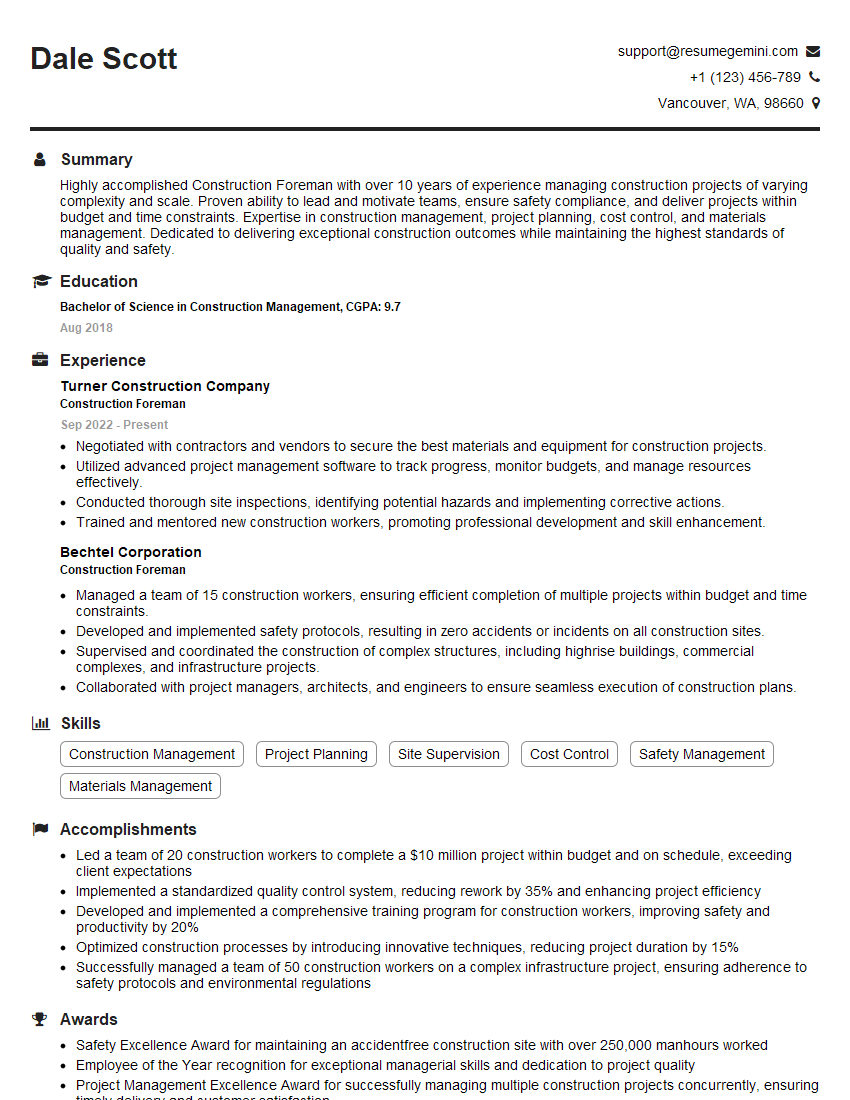
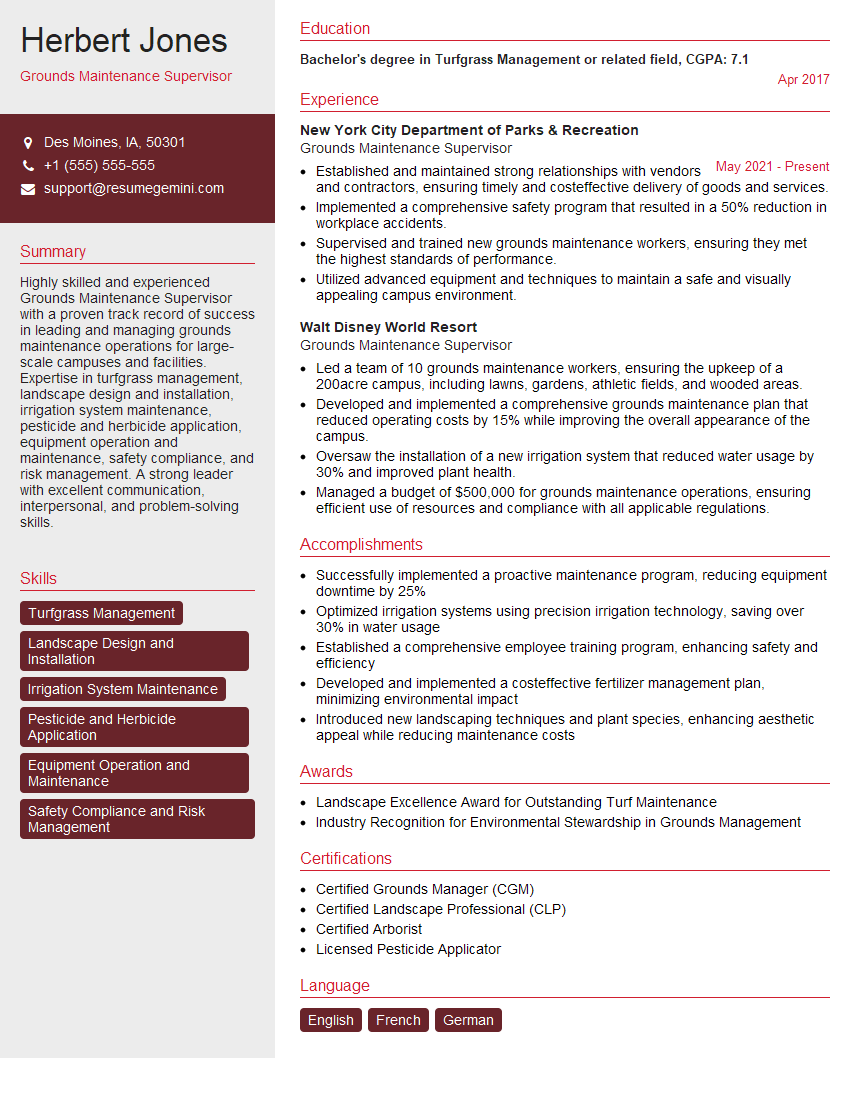
Mastering trenching and compaction opens doors to a rewarding career with excellent growth potential in the construction industry. This specialized skillset is highly sought after, leading to competitive salaries and diverse project opportunities. To maximize your job prospects, it’s crucial to present your expertise effectively. Creating an ATS-friendly resume is key to getting your application noticed by recruiters and hiring managers. We strongly recommend using ResumeGemini to build a professional and impactful resume tailored to your experience. ResumeGemini provides examples of resumes specifically designed for individuals in Trenching and Compaction roles to help you craft a winning application.



Explore more articles
Users Rating of Our Blogs
Share Your Experience
We value your feedback! Please rate our content and share your thoughts (optional).
What Readers Say About Our Blog
Very informative content, great job.
good