Cracking a skill-specific interview, like one for Trend Research and Forecasting, requires understanding the nuances of the role. In this blog, we present the questions you’re most likely to encounter, along with insights into how to answer them effectively. Let’s ensure you’re ready to make a strong impression.
Questions Asked in Trend Research and Forecasting Interview
Q 1. Explain your understanding of different forecasting methodologies (e.g., time series analysis, regression, qualitative methods).
Forecasting methodologies are crucial for understanding future trends. They can be broadly categorized into quantitative and qualitative approaches. Quantitative methods use numerical data to predict future outcomes, while qualitative methods rely on expert opinions and subjective assessments.
- Time Series Analysis: This method analyzes historical data points over time to identify patterns and trends. Techniques include moving averages, exponential smoothing, and ARIMA modeling. For instance, predicting future sales based on past sales data utilizes this approach. We can identify seasonality or cyclical trends within the data to improve accuracy.
- Regression Analysis: This involves identifying relationships between a dependent variable (what we want to predict) and one or more independent variables. For example, we might predict house prices (dependent) based on size, location, and age (independent). Linear regression is a common technique, but more complex models like multiple regression or polynomial regression can be applied.
- Qualitative Methods: These methods involve gathering and analyzing subjective data. Examples include Delphi method (expert panels), scenario planning (creating possible future scenarios), and market research (customer surveys). These are helpful when historical data is limited or unreliable, such as predicting the adoption rate of a new technology.
The choice of methodology depends on the data availability, the nature of the trend, and the desired level of accuracy. Often, a hybrid approach combining quantitative and qualitative techniques yields the best results.
Q 2. Describe your experience using statistical software for trend analysis (e.g., R, Python, SPSS).
I have extensive experience leveraging statistical software for trend analysis. My proficiency spans various packages, including R, Python (with libraries like Pandas, NumPy, and Scikit-learn), and SPSS.
In R, I frequently utilize packages like forecast for time series modeling, ggplot2 for data visualization, and tseries for time series analysis. Python offers similar functionalities with its extensive libraries. For instance, I’ve used Scikit-learn’s regression models to build predictive models and Pandas for data manipulation and cleaning. SPSS, with its user-friendly interface, is beneficial for exploratory data analysis and basic statistical tests.
For example, in a recent project analyzing consumer spending habits, I used Python’s Pandas to clean and process the transactional data, then employed Scikit-learn’s linear regression to model spending patterns based on demographic and economic indicators. The results were visualized using Matplotlib to provide actionable insights to the client. The selection of the software depends largely on the specific analytical tasks and personal preference, but all three offer valuable capabilities for trend analysis.
Q 3. How do you identify and validate key assumptions in forecasting models?
Validating key assumptions is paramount for reliable forecasting. Ignoring them can lead to inaccurate predictions. The assumptions depend heavily on the chosen methodology.
- Time Series Analysis: Assumptions often include stationarity (constant statistical properties over time), independence of errors (residuals from the model are not correlated), and normality of errors (residuals follow a normal distribution). These are checked using statistical tests like the Augmented Dickey-Fuller test for stationarity and visual inspection of residual plots.
- Regression Analysis: Key assumptions include linearity (relationship between variables is linear), independence of errors, homoscedasticity (constant variance of errors), and normality of errors. These can be verified via residual plots, tests for heteroscedasticity (like the Breusch-Pagan test), and normality tests.
If assumptions are violated, we need to address them. This may involve data transformations (e.g., log transformation for non-normality), using alternative models, or incorporating additional variables to account for non-linearity. It’s an iterative process ensuring the model is robust and reliable.
Q 4. How do you handle outlier data points when conducting trend analysis?
Outliers can significantly skew results in trend analysis. Handling them requires careful consideration. Simply removing them isn’t always the best approach.
- Investigation: First, investigate the reason behind the outlier. Is it a data entry error? A genuine anomaly? Or an indicator of a new trend?
- Winsorizing/Trimming: If deemed an error or a truly exceptional data point not representative of typical behavior, I might use Winsorizing (replacing extreme values with less extreme ones) or trimming (removing a certain percentage of extreme values) to mitigate their impact. The choice depends on the nature of the data and the magnitude of the outlier.
- Robust Methods: Robust statistical methods, less sensitive to outliers, can be used. For instance, using robust regression techniques minimizes the influence of outliers on model parameter estimations.
- Separate Analysis: In some cases, separate analyses with and without outliers might provide a more comprehensive understanding of the trend and the impact of exceptional events.
Documentation is vital. The method used for outlier handling should always be clearly documented to ensure transparency and reproducibility.
Q 5. Explain your approach to data cleaning and preprocessing for trend research.
Data cleaning and preprocessing are critical before trend analysis. This ensures the data is accurate, consistent, and suitable for analysis. My approach is systematic:
- Data Inspection: I begin with visual inspection (histograms, box plots, scatter plots) and summary statistics to identify missing values, outliers, inconsistencies, and data types.
- Handling Missing Data: Depending on the extent and pattern of missing data, I use appropriate imputation techniques (mean/median imputation, regression imputation, or more sophisticated methods like k-nearest neighbors). The method chosen depends on the nature of the data and the reason for missingness.
- Data Transformation: If the data doesn’t meet the assumptions of the chosen forecasting method (e.g., non-normality), transformations like log transformation or standardization might be applied.
- Outlier Treatment: This step, as described in the previous answer, involves careful investigation and appropriate handling methods.
- Data Consistency: I ensure data consistency by checking for inconsistencies in units, formats, and naming conventions. I resolve any discrepancies and standardize the data accordingly.
Thorough documentation of all cleaning and preprocessing steps ensures the process is auditable and reproducible.
Q 6. Describe a time you had to analyze conflicting data sources. How did you resolve the discrepancies?
In a project analyzing the impact of social media marketing on brand sentiment, I encountered conflicting data from two sources: a social media listening tool and customer surveys. The listening tool showed a predominantly positive sentiment, whereas the surveys revealed a more mixed response.
To resolve this, I systematically investigated the discrepancies. First, I checked the methodologies of both data sources – the listening tool’s algorithm, the survey design, and the sample populations. The listening tool focused solely on social media mentions, while the survey captured a broader customer base, including those less active on social media. This explained some of the discrepancy.
Next, I analyzed the data in more detail. I segmented the social media data by platform, sentiment intensity, and topic, finding that while overall sentiment was positive, some negative sentiment existed on specific platforms or concerning particular aspects of the brand. This aligned more with the survey results. I then weighed the data based on the sample sizes and reliability of each source. Ultimately, I presented a more nuanced picture of brand sentiment, acknowledging both positive and negative aspects and justifying the weighting based on my analysis of methodology and data quality.
Q 7. How do you assess the accuracy of your forecasting models?
Accuracy assessment is crucial for evaluating forecast reliability. Methods depend on the forecasting technique used and the nature of the data.
- Metrics: Common metrics include Mean Absolute Error (MAE), Mean Squared Error (MSE), Root Mean Squared Error (RMSE), and Mean Absolute Percentage Error (MAPE). MAE and RMSE measure the average magnitude of forecast errors, while MAPE expresses error as a percentage of the actual values. The choice of metric depends on the specific context and priorities.
- Visual Inspection: Visualizing forecasts against actual values (e.g., using time series plots) provides a quick assessment of model performance. This helps identify systematic biases or periods of poor performance.
- Statistical Tests: Statistical tests can be used to assess the statistical significance of forecast accuracy. For instance, we might compare the forecast accuracy of different models using hypothesis tests.
- Backtesting: A crucial step is backtesting, where we use historical data to simulate future predictions and compare them with actual outcomes. This allows us to evaluate the model’s performance under different conditions.
It’s important to remember that no forecasting model is perfect. The goal is to develop a model that balances accuracy, robustness, and interpretability. The accuracy assessment provides valuable feedback for refining the model and improving future predictions.
Q 8. What metrics do you use to measure the success of a trend analysis project?
Measuring the success of a trend analysis project goes beyond simply predicting the future; it’s about understanding the value delivered to stakeholders. I use a multi-faceted approach, focusing on both the accuracy of the forecasts and the impact of the insights generated.
- Accuracy Metrics: I assess forecast accuracy using metrics like Mean Absolute Error (MAE), Root Mean Squared Error (RMSE), and Mean Absolute Percentage Error (MAPE). Lower values indicate higher accuracy. For example, a low MAPE suggests that the percentage difference between the predicted and actual values is small. I also compare the forecast against a baseline (e.g., a naive forecast) to determine the added value of the analysis.
- Impact Assessment: The real success lies in how the insights are used. This is measured by tracking the actions taken based on the analysis. For example, did the forecast lead to better inventory management, resulting in cost savings? Did it inform a successful product launch? I use qualitative feedback from stakeholders, such as surveys or interviews, to gauge the impact of the analysis on decision-making.
- Timeliness and Relevance: A perfectly accurate forecast delivered too late is useless. I measure the timeliness of the analysis in relation to the decision-making timeline and ensure the analysis remains relevant within the context of rapidly changing market dynamics.
Combining these quantitative and qualitative measures allows for a comprehensive evaluation of the project’s success, ensuring that the analysis delivers tangible value.
Q 9. Explain the difference between leading, lagging, and coincident indicators.
Leading, lagging, and coincident indicators are all economic indicators used to understand the current state and future direction of an economy, but they differ in their timing relative to economic changes.
- Leading Indicators: These indicators change *before* a significant economic shift. They predict future trends. Examples include consumer confidence index, building permits (predicting future construction activity), and stock market prices. Think of them as early warning signs.
- Lagging Indicators: These indicators change *after* an economic shift has already occurred. They confirm trends that are already underway. Examples include unemployment rate (often rises after a recession has begun), interest rates (often adjusted after inflation changes), and the average duration of unemployment. They provide confirmation and historical context.
- Coincident Indicators: These indicators move *at the same time* as the overall economy. They reflect the current state of the economy. Examples include GDP, industrial production, and personal income. They give a snapshot of the present economic situation.
Understanding the difference is critical for effective forecasting. Combining leading, lagging, and coincident indicators provides a more comprehensive and robust prediction than relying on any single type.
Q 10. How do you incorporate qualitative data (e.g., social media sentiment, expert opinions) into your forecasting?
Incorporating qualitative data enriches the forecasting process, adding a human element to the quantitative analysis. It helps to understand the ‘why’ behind the numbers.
- Social Media Sentiment Analysis: I use tools to analyze social media data (Twitter, Facebook, etc.) to gauge public opinion regarding a specific trend. For example, analyzing sentiment around a new product launch can provide early insights into customer reception and potential market success.
- Expert Interviews and Surveys: I conduct interviews with industry experts and use surveys to gather qualitative information. This allows me to understand nuances that might be missed by quantitative data alone. For example, an expert interview might reveal regulatory changes that could impact a trend’s trajectory.
- Qualitative Data Integration: I typically incorporate qualitative data through a mixed-methods approach. This involves combining quantitative methods (statistical analysis of sales figures, market share, etc.) with qualitative data to create a more holistic view. For instance, if sales data shows a declining trend but social media suggests a surge in positive sentiment, it hints at a deeper underlying story that needs investigation.
The key is to use appropriate qualitative data collection methods, rigorously analyze the data, and integrate it effectively into the quantitative forecasting model to create a more nuanced and robust prediction.
Q 11. Describe your experience with scenario planning and its role in trend forecasting.
Scenario planning is a crucial tool in trend forecasting, especially when dealing with high uncertainty. It moves beyond simple point forecasts and considers multiple possible futures.
My approach to scenario planning involves:
- Identifying Key Uncertainties: I start by identifying the key factors that could significantly impact the trend. These might include geopolitical events, technological breakthroughs, or shifts in consumer behavior.
- Developing Plausible Scenarios: Based on these uncertainties, I develop several plausible scenarios, ranging from optimistic to pessimistic. For example, in forecasting the electric vehicle market, scenarios might include rapid adoption, slow adoption, or even a decline due to unforeseen technological challenges.
- Analyzing Implications: For each scenario, I analyze its potential implications for the trend and develop corresponding strategies. This allows businesses to prepare for various outcomes and adapt their plans accordingly.
- Monitoring and Updating: The scenarios aren’t static; I continuously monitor the environment and update the scenarios as new information becomes available. This ensures the forecasts remain relevant and adaptable.
Scenario planning helps organizations to be more resilient and adaptable to unexpected changes. It transforms reactive decision-making to proactive planning, ultimately enabling better risk management and strategic decision-making.
Q 12. How do you present complex data and findings to both technical and non-technical audiences?
Presenting complex data clearly and effectively to diverse audiences requires a tailored approach.
- For Technical Audiences: I focus on the details, using precise terminology and sophisticated visualizations (e.g., statistical graphs, heatmaps, and detailed charts). I will emphasize methodological rigor and technical details, including statistical significance and confidence intervals. The goal is to convey deep understanding and allow for critical analysis.
- For Non-Technical Audiences: I use simpler language, avoiding jargon and technical terms. I leverage compelling visuals such as infographics, dashboards, and storytelling techniques to convey the key findings in an engaging manner. The focus is on clarity, impact, and actionable insights rather than technical intricacies.
- Tools and Techniques: My presentation style involves a combination of approaches. I frequently use presentation software like PowerPoint or Google Slides, coupled with data visualization tools like Tableau or Power BI to create engaging and insightful dashboards and reports. I often incorporate interactive elements to allow for deeper exploration of the data by the audience.
Adaptability is key. I tailor my communication style, language, and visuals to the specific audience, ensuring the message is both understood and impactful regardless of their technical expertise.
Q 13. What are some common biases that can affect trend analysis, and how do you mitigate them?
Several biases can significantly distort trend analysis, leading to inaccurate predictions. It’s crucial to be aware of them and actively mitigate their influence.
- Confirmation Bias: This involves favoring information that confirms pre-existing beliefs and dismissing contradictory evidence. Mitigation involves actively seeking out dissenting opinions and critically evaluating all available data, regardless of personal biases.
- Availability Bias: This involves overestimating the likelihood of events that are easily recalled, often due to recent or vivid occurrences. Mitigation includes systematically reviewing a broad range of data sources, avoiding reliance on anecdotal evidence, and using statistical methods to objectively assess probabilities.
- Anchoring Bias: This occurs when initial judgments heavily influence subsequent estimations, even if irrelevant. Mitigation involves using multiple data points and establishing independent benchmarks rather than relying on a single initial figure.
- Survivorship Bias: This involves focusing only on successful cases and ignoring failures, leading to an overly optimistic view. Mitigation involves a comprehensive analysis that includes both successful and unsuccessful examples to provide a more balanced perspective.
By being aware of these biases and employing rigorous methodological practices, I strive to minimize their influence on my analysis, ensuring the predictions are as objective and accurate as possible.
Q 14. Describe your experience with various data visualization tools and techniques.
My experience spans a wide range of data visualization tools and techniques, chosen based on the specific needs of the project and the audience.
- Tableau and Power BI: These are industry-leading Business Intelligence (BI) tools that I regularly use to create interactive dashboards, reports, and visualizations. They allow for data exploration, creating dynamic charts, maps, and other visual representations of trends.
- Python Libraries (Matplotlib, Seaborn, Plotly): For more customized visualizations and advanced statistical analysis, I use Python libraries like Matplotlib, Seaborn (for statistical graphics), and Plotly (for interactive web-based visualizations). This allows for greater flexibility and control over data representation.
- Data Visualization Principles: Beyond the tools, my expertise includes the underlying principles of effective data visualization: choosing the right chart type for the data, using clear and concise labels, avoiding unnecessary clutter, and telling a compelling story with the data.
My approach is to select the tools and techniques that best communicate the insights derived from the data, while ensuring the visualizations are both aesthetically pleasing and highly informative.
Q 15. Explain your understanding of different trend life cycles (e.g., adoption curve, innovation diffusion).
Understanding trend life cycles is crucial for effective forecasting. Two key models illuminate this: the adoption curve and the innovation diffusion curve. Both illustrate how a trend progresses through a population over time, but they emphasize different aspects.
The adoption curve, often visualized as a bell curve, focuses on the rate of adoption among consumers. It typically identifies five groups: Innovators (early adopters of new ideas), Early Adopters (opinion leaders who influence others), Early Majority (cautious but eventually adopt), Late Majority (skeptical and adopt only when the trend is widespread), and Laggards (resistant to change and adopt last or not at all).
The innovation diffusion curve, similarly showing adoption over time, focuses on the spread of an innovation across a market. It highlights the cumulative adoption rate, showing how quickly the innovation gains traction. This curve often demonstrates an S-shaped growth pattern, starting slowly, accelerating rapidly in the middle, and eventually plateauing.
Example: Consider the adoption of smartphones. Innovators were the tech enthusiasts who bought the first models. Early adopters were influencers and professionals who saw the practical benefits. The early and late majorities were the average consumers adopting over time, and laggards might still use feature phones. The diffusion curve shows the overall market penetration of smartphones over the years.
Career Expert Tips:
- Ace those interviews! Prepare effectively by reviewing the Top 50 Most Common Interview Questions on ResumeGemini.
- Navigate your job search with confidence! Explore a wide range of Career Tips on ResumeGemini. Learn about common challenges and recommendations to overcome them.
- Craft the perfect resume! Master the Art of Resume Writing with ResumeGemini’s guide. Showcase your unique qualifications and achievements effectively.
- Don’t miss out on holiday savings! Build your dream resume with ResumeGemini’s ATS optimized templates.
Q 16. How do you stay up-to-date on current trends and industry best practices?
Staying current in trend research requires a multifaceted approach. I actively leverage several strategies:
- Industry Publications & Reports: I regularly subscribe to and read publications such as The Economist, Harvard Business Review, and industry-specific journals, along with reports from firms like Gartner and Forrester.
- Conferences & Webinars: Attending industry conferences and webinars provides direct access to leading experts and the latest research findings. Networking with peers also expands my knowledge base.
- Social Media Monitoring: I utilize social media platforms like Twitter and LinkedIn to monitor conversations, track hashtags relevant to specific industries, and observe emerging trends in real-time.
- Data Analytics Platforms: Platforms like Google Trends, SEMrush, and social listening tools provide valuable insights into search volume, social media sentiment, and topic popularity.
- Competitive Analysis: Analyzing the strategies and approaches of leading companies in various sectors helps to anticipate future trends and identify potential disruptions.
This combination of structured research and active monitoring enables me to stay informed and adapt to evolving trends.
Q 17. Describe your experience working with large datasets.
I have extensive experience working with large datasets, employing various techniques for data cleaning, transformation, and analysis. My experience includes handling datasets ranging from millions to billions of rows, using tools such as SQL, Python (with libraries like Pandas and NumPy), and R.
For instance, in a recent project analyzing consumer purchasing behavior, I worked with a dataset containing over 50 million transactions. I used SQL to query and filter the data, Python with Pandas to clean and process it, and statistical methods to identify patterns and predict future purchasing trends. I also employed data visualization techniques to present findings effectively to stakeholders.
My expertise also extends to handling various data types, including categorical, numerical, and temporal data, and dealing with missing values and outliers.
Q 18. How do you prioritize different trends based on their potential impact?
Prioritizing trends is a crucial skill. I use a framework that incorporates several factors:
- Impact Potential: This considers the potential effect on the market, industry, or business. Trends with high potential for significant change are prioritized.
- Time Horizon: Trends are categorized by their likely lifespan – short-term, mid-term, or long-term. This helps align forecasting efforts with business objectives.
- Data Availability: Trends require sufficient data to support analysis and prediction. Trends lacking sufficient data may be de-prioritized until more information becomes available.
- Resource Allocation: The resources required for analysis and forecasting (time, tools, personnel) are considered. Higher-impact trends that can be effectively addressed are prioritized.
- Alignment with Business Goals: Trends are evaluated based on their relevance to specific business goals and objectives. This ensures that forecasting efforts directly support strategic decision-making.
A weighted scoring system can be applied to objectively prioritize trends based on these criteria.
Q 19. Describe your experience using specific forecasting software (mention any relevant software).
My experience encompasses several forecasting software packages. I’m proficient in using SAS Forecast Studio, R with packages like forecast and tseries, and Python with libraries such as statsmodels and pmdarima. The choice of software depends on the specific forecasting task and the characteristics of the data.
For example, SAS Forecast Studio is excellent for handling large datasets and offers a range of advanced time series models. R and Python provide greater flexibility and customization, allowing me to build complex models and incorporate custom algorithms.
# Example R code for ARIMA forecasting library(forecast) fit <- auto.arima(data) forecast <- forecast(fit, h=12) # Forecast 12 periods ahead plot(forecast)
Q 20. How do you handle unexpected changes or disruptions to your forecast?
Handling unexpected disruptions requires a flexible and adaptable approach. My strategy involves:
- Monitoring for Anomalies: Continuously monitoring the data for unexpected deviations from the forecast is crucial. This often involves implementing early warning systems.
- Scenario Planning: Developing multiple scenarios that account for potential disruptions (e.g., economic downturns, technological breakthroughs, regulatory changes) allows for contingency planning.
- Model Adjustment: When disruptions occur, the forecasting model may need to be adjusted to incorporate new information and reflect the altered circumstances. This may involve updating parameters or using different model types.
- Real-time Data Incorporation: Integrating real-time data streams allows for faster adaptation to changes and improves forecast accuracy.
- Communication & Transparency: Open communication about forecast revisions and uncertainties is essential to maintain stakeholder confidence.
A robust forecasting process should anticipate and address unforeseen events, making it more resilient and accurate.
Q 21. Explain your understanding of causal inference and how it relates to trend analysis.
Causal inference plays a vital role in trend analysis by going beyond mere correlation to identify the underlying causes of trends. Instead of simply observing that two variables are related, causal inference aims to determine if one variable actually *causes* a change in the other.
In trend analysis, this is crucial because understanding the *why* behind a trend provides a deeper understanding and allows for more accurate prediction. For example, observing a rise in sales of electric vehicles is just a correlation. Causal inference might reveal that factors such as government subsidies, falling battery prices, and increased consumer awareness of environmental concerns are the underlying causes driving this trend.
Techniques like regression analysis, instrumental variables, and randomized controlled trials can be employed to establish causality. However, it's important to acknowledge that establishing true causality can be challenging, especially in complex systems with many interacting variables. Careful design of the study, rigorous data analysis, and a critical assessment of potential confounding factors are essential.
Q 22. How do you determine the appropriate forecasting horizon for a given project?
Determining the appropriate forecasting horizon is crucial for effective trend analysis. It's not a one-size-fits-all answer; it depends heavily on the specific project goals, the nature of the trends being analyzed, and the inherent volatility of the data. A longer horizon is suitable when dealing with long-term strategic planning, like predicting market saturation for a new product. Shorter horizons are better for tactical decisions like inventory management, where rapid changes are expected.
Consider these factors:
- Data Availability: The further into the future you project, the less reliable your data becomes. If you only have a year's worth of historical data, a five-year forecast will be inherently more uncertain.
- Trend Stability: If the trend is relatively stable, a longer horizon might be feasible. However, for rapidly evolving trends (like technology trends), a shorter horizon is advisable to minimize forecasting errors.
- Project Objectives: Are you planning a major capital investment (requiring a long horizon), or managing weekly sales (requiring a short horizon)? The project's needs dictate the length.
- Forecast Accuracy Requirements: The desired level of accuracy impacts horizon selection. Higher accuracy demands often necessitate shorter forecasting horizons.
Example: A fashion retailer forecasting demand for summer clothing might use a horizon of 6-12 months, while a telecom company predicting long-term network capacity needs might utilize a 5-10 year horizon.
Q 23. Describe your experience with A/B testing and its application in trend analysis.
A/B testing is an invaluable tool for trend analysis, particularly in understanding consumer behavior and preferences. It allows us to test different hypotheses about what drives trends, without needing extensive and potentially expensive market research. Instead of relying solely on surveys or qualitative data, A/B testing provides quantitative, real-world evidence of the effectiveness of different approaches.
In my experience, I've used A/B testing to assess the impact of various marketing campaigns on website traffic, conversion rates, and customer engagement. For instance, we might test different versions of a website landing page (A/B testing of website copy, imagery, layout) to see which design generates more leads or sales. This can help us to identify elements of effective marketing or emerging trends in consumer response to marketing messages. Analysis of the results helps refine strategies and tailor marketing efforts towards increasingly effective approaches and also points to potential shifting preferences.
The results from A/B tests are analyzed using statistical methods to determine if the differences observed between the test groups are statistically significant, thus reducing the risk of drawing incorrect conclusions based on chance.
Q 24. How do you incorporate ethical considerations into your trend research?
Ethical considerations are paramount in trend research. Biases can easily creep into the process, leading to misleading or discriminatory outcomes. My approach incorporates ethical principles at every stage:
- Data Privacy: I ensure all data collected and used adheres to relevant privacy regulations (GDPR, CCPA, etc.). Anonymization and aggregation techniques are employed to protect individual identities.
- Bias Awareness: I'm acutely aware of potential biases in data sources and analytical methods. This involves actively seeking diverse datasets and using techniques to mitigate bias (e.g., weighting data to account for underrepresentation of certain groups).
- Transparency: My reports clearly state the data sources, methodologies, and limitations of the analysis. This ensures transparency and allows others to scrutinize the findings.
- Responsible Use of Forecasts: I caution against making overly deterministic claims based on forecasts. The inherent uncertainties are always highlighted, emphasizing that the forecast is a tool for informed decision-making, not a guarantee of the future.
- Social Impact: I consider the potential social consequences of the trends being analyzed. For example, if a forecast predicts a surge in demand for a resource, I investigate potential environmental or societal implications.
By embedding these ethical considerations into my workflow, I strive to ensure that my trend research is both accurate and responsible.
Q 25. How do you measure the uncertainty associated with your forecasts?
Measuring the uncertainty associated with forecasts is crucial for responsible decision-making. We can't simply present a single point estimate; stakeholders need to understand the range of possible outcomes. Several methods help quantify this uncertainty:
- Confidence Intervals: Instead of a single point forecast, we provide a range (e.g., a 95% confidence interval) within which the actual value is likely to fall. This shows the level of precision associated with the forecast.
- Prediction Intervals: Similar to confidence intervals, prediction intervals consider both the inherent uncertainty in the model and the variability of future data points.
- Scenario Planning: We develop forecasts under different possible scenarios (e.g., best-case, worst-case, most-likely case) to explore the range of potential outcomes given varying assumptions.
- Sensitivity Analysis: This helps determine how sensitive the forecast is to changes in input variables. If small changes in inputs lead to large changes in the forecast, it signals high uncertainty.
- Ensemble Forecasting: Utilizing several different models to generate independent forecasts and combining them to create a final forecast which incorporates diverse perspectives reduces bias and offers a holistic viewpoint of uncertainty
By using these techniques, we provide stakeholders with a more realistic picture of the uncertainty surrounding our forecasts, allowing them to make better decisions.
Q 26. Explain your experience with different types of forecasting errors (e.g., bias, variance).
Forecasting errors are inevitable. Understanding the types of errors is key to improving forecasting accuracy. Bias refers to a systematic overestimation or underestimation of the actual value. Variance refers to the dispersion or variability of the errors around the mean.
- Bias: A consistently positive bias (always overestimating) might indicate a flawed model or incorrect assumptions. A consistently negative bias (always underestimating) can have similar causes. For example, if a model consistently overestimates sales due to a failure to account for seasonal effects, this is bias.
- Variance: High variance indicates erratic errors, where some forecasts are wildly inaccurate while others are quite close. This can stem from unpredictable events or an overly sensitive model. For example, if a model for predicting crop yields has high variance, it might be due to weather being unpredictable.
- Mean Absolute Error (MAE): This metric measures the average absolute difference between the forecast and the actual value.
- Root Mean Squared Error (RMSE): This is similar to MAE but gives more weight to larger errors.
- Mean Absolute Percentage Error (MAPE): This expresses errors as a percentage of the actual values, making it easier to compare accuracy across different scales.
Analyzing these errors helps identify weaknesses in the forecasting methodology and suggests areas for improvement.
Q 27. How do you communicate the limitations of your forecasting models to stakeholders?
Communicating the limitations of forecasting models is just as important as presenting the forecasts themselves. It builds trust and prevents unrealistic expectations. My approach includes:
- Clearly Stating Assumptions: I explicitly detail the underlying assumptions of the model. This allows stakeholders to assess the validity of the forecast in light of their knowledge of the real world.
- Highlighting Uncertainties: As discussed earlier, confidence intervals, scenario planning, and sensitivity analyses help quantify and communicate the uncertainties inherent in the forecast.
- Explaining Data Limitations: I discuss the quality and limitations of the data used in the model. For instance, if data is scarce or subject to biases, this needs to be transparently communicated.
- Defining the Scope: The forecast's applicability is clearly defined. It is important to define what the model can and cannot accurately predict.
- Using Visual Aids: Charts and graphs effectively communicate uncertainty (e.g., showing confidence intervals) and make complex information easier to understand.
By openly acknowledging limitations, I foster a more realistic and productive dialogue with stakeholders.
Q 28. Describe a time you had to revise your forecast based on new information. How did you approach this?
In a project forecasting consumer demand for a new type of smart home device, we initially projected strong growth based on pre-orders and early market research. However, during the product launch, a major competitor released a similar device at a significantly lower price. This new information fundamentally altered the market dynamics.
My response involved several steps:
- Data Integration: We quickly incorporated sales data for the competitor's product into our analysis.
- Model Adjustment: The initial model was revised to incorporate price elasticity of demand – showing how sensitive demand is to price changes. This was a key factor not originally considered.
- Scenario Development: We developed multiple scenarios to reflect different potential market share outcomes given the competitor's pricing and our own pricing strategies.
- Stakeholder Communication: We transparently communicated the revised forecast and its implications, explaining the rationale behind the changes.
- Contingency Planning: Together with the marketing and product development teams, we explored ways to mitigate the impact of the competitor's device, including adjustments to our marketing campaign and potential price reductions.
This experience reinforced the importance of continuous monitoring, adaptability, and open communication in the trend research and forecasting process. The ability to rapidly revise forecasts based on new data is critical for effective decision-making in a dynamic environment.
Key Topics to Learn for Trend Research and Forecasting Interview
- Trend Identification & Analysis: Understanding methodologies for identifying emerging trends across various sectors (e.g., consumer behavior, technology, social media). This includes qualitative and quantitative data analysis techniques.
- Forecasting Models & Techniques: Familiarity with different forecasting models (e.g., time series analysis, regression analysis, scenario planning) and their practical applications in predicting future trends. Be prepared to discuss the strengths and weaknesses of each.
- Data Collection & Interpretation: Understanding various data sources (e.g., market research reports, social listening tools, competitor analysis) and the ability to critically evaluate and interpret data to inform forecasts.
- Visualizing & Communicating Findings: Mastering the art of presenting complex data and forecasts in a clear, concise, and compelling manner using visuals like charts, graphs, and presentations.
- Strategic Implications of Trends: Demonstrating the ability to translate trend insights into actionable strategic recommendations for businesses and organizations. This includes understanding the impact of trends on various aspects of a business.
- Technological Tools & Platforms: Familiarity with relevant software and tools used in trend research and forecasting (e.g., data analysis software, market research databases). Mention specific tools you're proficient in.
- Ethical Considerations: Understanding and addressing potential ethical implications related to data collection, interpretation, and the use of forecasting in decision-making.
Next Steps
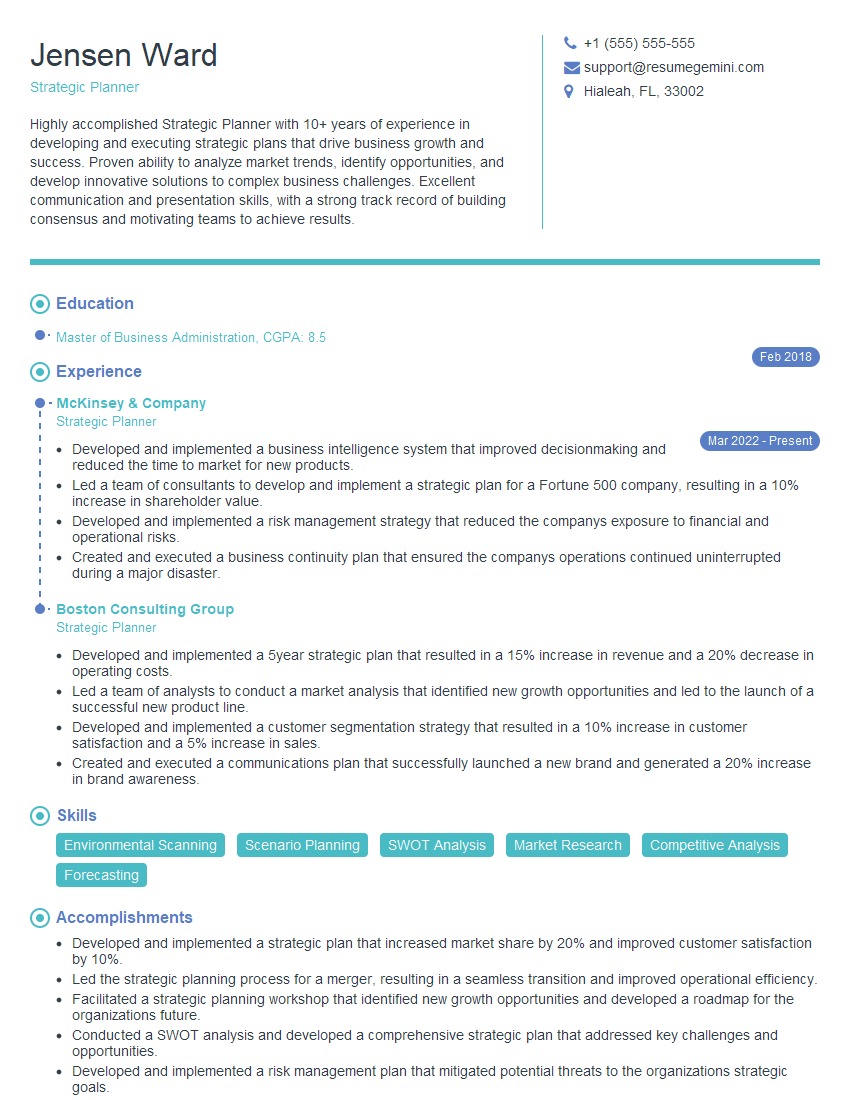
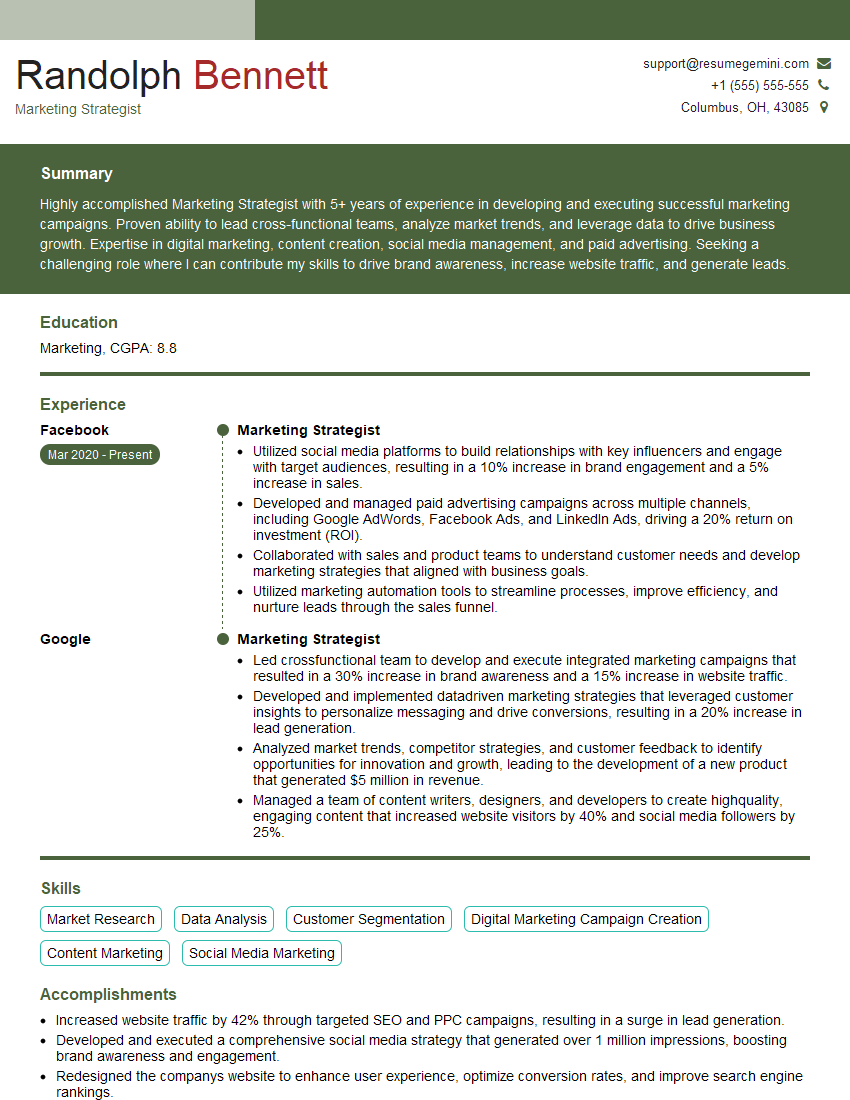
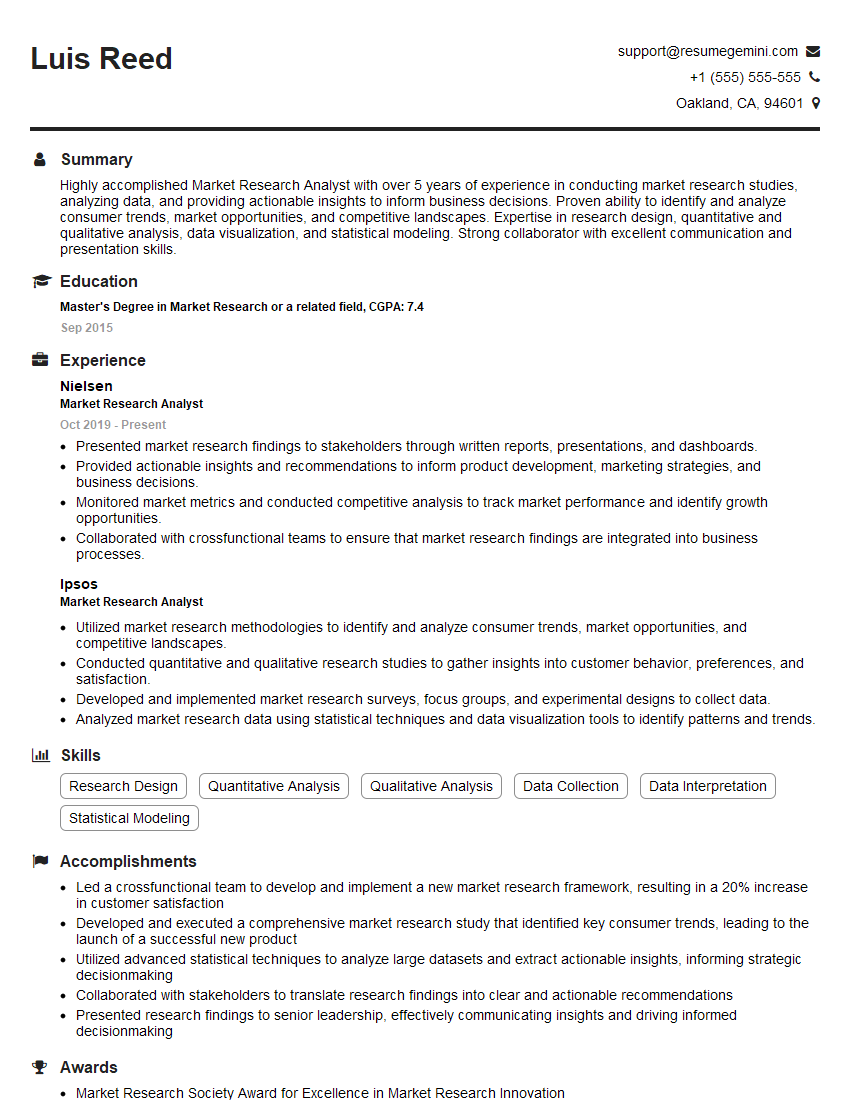
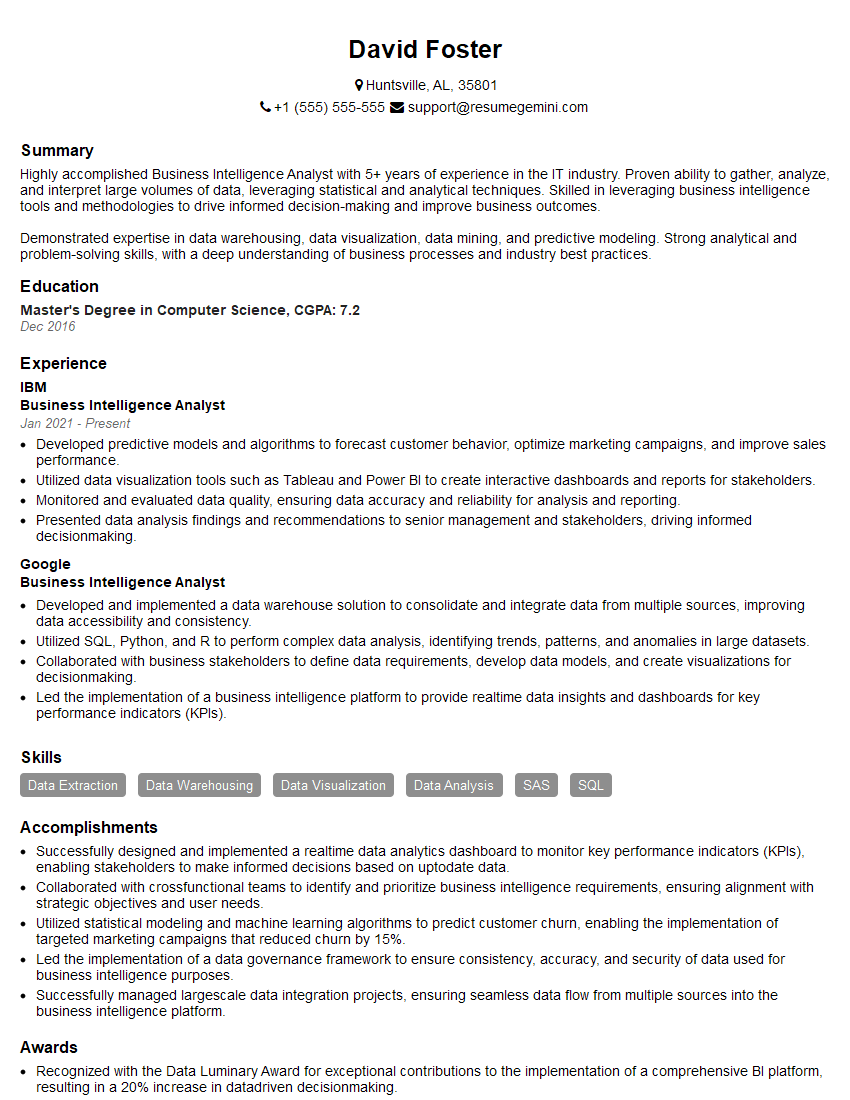
Mastering Trend Research and Forecasting is crucial for career advancement in today's dynamic business landscape. The ability to anticipate and adapt to change is highly valued across numerous industries. To significantly increase your job prospects, focus on creating an ATS-friendly resume that effectively highlights your skills and experience. ResumeGemini is a trusted resource to help you build a professional and impactful resume. They offer examples of resumes tailored specifically to Trend Research and Forecasting roles to give you a head start. Take advantage of these resources to showcase your capabilities and land your dream job.
Explore more articles
Users Rating of Our Blogs
Share Your Experience
We value your feedback! Please rate our content and share your thoughts (optional).
What Readers Say About Our Blog
Very informative content, great job.
good