Cracking a skill-specific interview, like one for Trimming Operation, requires understanding the nuances of the role. In this blog, we present the questions you’re most likely to encounter, along with insights into how to answer them effectively. Let’s ensure you’re ready to make a strong impression.
Questions Asked in Trimming Operation Interview
Q 1. What types of trimming equipment are you familiar with?
My experience encompasses a wide range of trimming equipment, from hand tools to automated systems. Hand tools include various types of shears, knives, and punches, each suited for different materials and precision levels. For example, I’m proficient with rotary trimmers for precise cuts on delicate materials and guillotine trimmers for high-volume, straight cuts. I’m also experienced with automated trimming systems, such as those used in industrial settings for things like printed circuit board (PCB) fabrication. These systems often incorporate CNC (Computer Numerical Control) technology for high precision and repeatability. My familiarity extends to understanding the nuances of each type of equipment, including their maintenance requirements and limitations.
- Hand Tools: Shears (various types), Knives (e.g., utility knives, X-ACTO knives), Punches
- Automated Systems: Rotary Trimmers, Guillotine Trimmers, CNC-controlled Trimming Machines
Q 2. Describe your experience with different trimming techniques.
My trimming technique selection depends heavily on the material being trimmed and the desired outcome. For delicate materials like fabrics or paper, I utilize hand shears with a gentle, controlled motion to avoid tearing. For tougher materials like plastics or metals, I may employ more robust tools like punches or automated systems. I’m skilled in various techniques, including:
- Straight Trimming: Achieving perfectly straight edges using guillotines or rulers and knives.
- Contour Trimming: Carefully following irregular shapes and patterns using hand shears or rotary trimmers, often requiring a keen eye for detail and precision.
- Deburring: Removing excess material or sharp edges after other processes, often requiring specialized tools and meticulous technique.
- Automated Trimming: Programming and operating CNC trimming machines to achieve high accuracy and repeatability in high-volume production.
I adapt my approach based on the project’s specific requirements and always prioritize precision and quality.
Q 3. How do you ensure consistent trim quality?
Maintaining consistent trim quality hinges on several factors. Firstly, meticulous calibration and regular maintenance of the equipment are paramount. I regularly check the sharpness of blades, ensuring they’re properly aligned and free from defects. Secondly, I employ standardized procedures and jigs where possible to ensure uniformity. For instance, using pre-cut templates or jigs guides my hand movements, making it easier to achieve consistent results. Thirdly, I incorporate regular quality checks throughout the process, using measuring instruments to verify dimensions and inspect for flaws. A final, crucial step is maintaining a consistent work environment – adequate lighting, comfortable posture, and minimizing distractions all contribute to improved accuracy and reduced errors.
Q 4. Explain your process for identifying and correcting trimming errors.
Identifying trimming errors begins with careful visual inspection after each step. I look for inconsistencies in the cut, such as jagged edges, unevenness, or deviations from the intended dimensions. Measuring tools are employed for precise verification. Once an error is identified, I analyze its cause – was it due to a dull blade, an incorrect setting, or a procedural flaw? Depending on the error type, I take corrective action. For example, if the blade is dull, I replace or sharpen it. If a setting was incorrect, I adjust it and re-run the process. If a procedural flaw is identified, I review and update my procedure to prevent future recurrence. Documentation of the error, its cause, and the corrective action taken is critical for continuous improvement.
Q 5. What safety procedures do you follow during trimming operations?
Safety is my top priority. I strictly adhere to all relevant safety regulations and company protocols. This includes wearing appropriate personal protective equipment (PPE) such as safety glasses, gloves, and hearing protection, particularly when operating power tools. Before starting any operation, I thoroughly inspect the equipment for any defects or hazards. I also maintain a clean and organized workspace to minimize trip hazards and accidents. Proper handling and disposal of sharp objects and waste materials are paramount. In cases involving potentially hazardous materials, I follow specific handling procedures and dispose of them in accordance with regulations. Regular safety training and refresher courses are essential for maintaining up-to-date safety knowledge.
Q 6. How do you maintain trimming equipment?
Regular maintenance is crucial for extending the lifespan of trimming equipment and maintaining its accuracy. This involves daily checks of blades for sharpness and alignment, cleaning the equipment after use to remove debris, and lubricating moving parts as necessary. Periodically, more thorough maintenance is required, which might include replacing worn parts, sharpening or replacing blades, and calibration checks. I maintain detailed records of all maintenance activities, including the date, type of maintenance, and any issues encountered. This documentation is crucial for tracking equipment performance and anticipating future maintenance needs. Following the manufacturer’s recommended maintenance schedule is paramount.
Q 7. How do you handle large-scale trimming projects?
Large-scale trimming projects demand meticulous planning and efficient execution. I start by thoroughly reviewing the project specifications, including material types, quantities, tolerances, and deadlines. This involves breaking down the project into smaller, manageable tasks and assigning them to team members, if applicable. The next stage is to select the appropriate equipment and tools, ensuring their capabilities align with the project’s requirements. Efficient workflow, including the optimal layout of the workspace and the use of automated systems where feasible, is vital for maximizing productivity. Regular quality checks and communication throughout the project are essential for ensuring adherence to specifications and timely completion. Thorough documentation, including progress reports and quality control records, keeps everyone informed and maintains traceability.
Q 8. Describe your experience with automated trimming systems.
My experience with automated trimming systems spans over eight years, encompassing various technologies from basic CNC-controlled systems to advanced robotic arms with integrated vision systems. I’ve worked extensively with systems from manufacturers like [Manufacturer Name 1] and [Manufacturer Name 2], gaining proficiency in their programming, maintenance, and troubleshooting. For example, I once led a project to integrate a vision system with a trimming machine for a high-volume automotive part, improving accuracy and reducing waste by 15%. This involved configuring the vision system to identify the part’s precise edges, programming the robot to follow the vision system’s guidance, and implementing robust error handling routines. Another significant project involved the implementation of a fully automated trimming cell for a medical device manufacturer, where precision and repeatability were critical. This involved meticulous programming and calibration of the robotic arm to ensure sub-millimeter accuracy.
I am also familiar with various software platforms used to program and control these systems, including [Software Name 1] and [Software Name 2], and possess expertise in troubleshooting mechanical, electrical, and software issues that arise during operation.
Q 9. How do you measure trimming accuracy?
Trimming accuracy is measured using a variety of methods, depending on the application and the material being trimmed. Common methods include:
- Dimensional Measurement: Using calibrated tools like calipers, micrometers, or coordinate measuring machines (CMMs) to measure the dimensions of the trimmed part against the specified tolerances. This is particularly important for precision parts.
- Visual Inspection: Examining the trimmed part visually under magnification to assess the quality of the cut, checking for burrs, inconsistencies, or deviations from the desired shape. This is often a quick and effective method for identifying obvious defects.
- Weight Measurement: In some applications, the weight of the trimmed material is compared to the expected weight based on design specifications. Any significant deviation can indicate a trimming error.
- Optical Measurement Systems: Advanced systems like laser scanners or vision systems provide high-precision measurements of the trimmed part’s geometry and surface finish. This method is highly accurate and can detect even minor deviations.
The specific method used is determined by the required level of accuracy and the resources available. For instance, a high-precision aerospace component would require CMM measurement, while a simple wooden craft project may only need visual inspection.
Q 10. What are the common challenges in trimming operations, and how do you address them?
Common challenges in trimming operations include:
- Tool Wear: Blades and cutting tools dull over time, leading to inaccurate cuts and increased material waste. We mitigate this by implementing a preventative maintenance schedule, including regular blade sharpening or replacement, and monitoring tool performance using sensors.
- Material Variations: Inconsistencies in the material’s thickness, density, or hardness can impact trimming accuracy and consistency. Addressing this involves careful material selection and quality control, as well as adjusting the trimming parameters based on material properties.
- Jamming and Breakages: Materials can become jammed in the trimming mechanism, or tools can break due to excessive force or defects. We address this through careful machine setup, regular maintenance, and using appropriate cutting tools for each material.
- Safety Hazards: Trimming operations often involve sharp tools and high-speed machinery, posing safety risks to operators. This is addressed through strict adherence to safety protocols, including the use of appropriate personal protective equipment (PPE), machine guarding, and regular safety training.
Proactive monitoring, regular maintenance, and operator training are crucial for minimizing these challenges and ensuring efficient, safe operation.
Q 11. How do you prioritize tasks in a fast-paced trimming environment?
In a fast-paced trimming environment, task prioritization is critical. I utilize a combination of methods to ensure efficiency and meet deadlines. I employ a Kanban system to visually manage workflow, allowing for a clear overview of current tasks and bottlenecks. This helps to identify urgent jobs and allocate resources accordingly. Additionally, I use a prioritized task list, categorized by urgency and importance, using methods such as MoSCoW (Must have, Should have, Could have, Won’t have) analysis to determine the order of execution. This allows for flexible adaptation to changing priorities and unexpected events. Furthermore, efficient communication with the team is essential to ensure everyone is aware of priorities and potential roadblocks are addressed quickly.
Q 12. Describe your experience with quality control processes related to trimming.
My experience with quality control in trimming involves a multi-faceted approach. It starts with pre-trimming inspections of the raw materials to identify defects before processing. During the trimming process, regular checks are conducted on the output to identify and correct any deviations from specifications. This includes both automated checks using sensors and cameras, as well as manual visual inspections. Post-trimming, we utilize statistical process control (SPC) charts to monitor key metrics like dimension accuracy, waste rates, and defect rates, allowing us to identify trends and potential issues early on. A thorough final inspection of the trimmed parts often involves dimensional measurements and visual inspection, ensuring conformance to quality standards before shipment. Documentation of all quality control checks is essential for traceability and compliance with industry standards.
Q 13. How do you adapt to different trimming materials and applications?
Adapting to different trimming materials and applications requires a flexible approach. My experience includes working with a wide range of materials, from soft plastics and textiles to hard metals and composites. The key is understanding the material properties and selecting the appropriate trimming method and tooling. For instance, a delicate fabric requires a different approach than a rigid metal sheet. I adjust machine parameters such as cutting speed, pressure, and blade angle to optimize the process for each material. This knowledge is complemented by my ability to quickly learn and adapt to new materials and processes using resources such as material datasheets and manufacturer specifications.
Q 14. Explain your experience with different types of trimming blades or tools.
My experience encompasses various trimming blades and tools, including:
- Rotary blades: Used for a wide range of materials, requiring careful selection based on material hardness and thickness.
- Punching dies: Ideal for precise shapes and high-volume production. I have experience selecting and maintaining dies for various applications.
- Laser cutters: Provide high precision and versatility but require careful parameter adjustments for different materials.
- Shearing blades: Used for clean cuts on sheet materials, often requiring specialized lubrication and maintenance.
- Ultrasonic trimming tools: Used for delicate materials to avoid damage. I understand the principle of ultrasonic vibration and its application in precise cutting.
The choice of blade or tool is determined by factors such as material type, desired precision, production volume, and cost considerations. Understanding the strengths and limitations of each type is essential for efficient and effective trimming.
Q 15. How do you troubleshoot issues with trimming equipment?
Troubleshooting trimming equipment involves a systematic approach. First, I always prioritize safety, ensuring the machine is powered down and locked out before any inspection. Then, I follow a process of observation, investigation, and repair. I start by visually inspecting for obvious problems like loose connections, damaged blades, or blockages. If the problem isn’t immediately apparent, I’ll check the machine’s operational manuals and any diagnostic tools it may have.
For example, if a trimming machine is producing uneven cuts, I might check the blade alignment, tension, and sharpness. If a motor is failing to start, I would check the power supply, fuses, and the motor itself for any signs of damage or overheating. If the issue persists after these initial checks, I’ll consult with experienced colleagues or maintenance personnel to get further assistance. Documentation is crucial; I carefully record each step, findings, and solutions in a logbook for future reference and preventative maintenance.
Ultimately, effective troubleshooting requires a blend of practical skills, theoretical knowledge of the machine’s mechanics, and a methodical approach. This is further enhanced by access to technical documentation and experienced support.
Career Expert Tips:
- Ace those interviews! Prepare effectively by reviewing the Top 50 Most Common Interview Questions on ResumeGemini.
- Navigate your job search with confidence! Explore a wide range of Career Tips on ResumeGemini. Learn about common challenges and recommendations to overcome them.
- Craft the perfect resume! Master the Art of Resume Writing with ResumeGemini’s guide. Showcase your unique qualifications and achievements effectively.
- Don’t miss out on holiday savings! Build your dream resume with ResumeGemini’s ATS optimized templates.
Q 16. What are the key performance indicators (KPIs) for a trimming operator?
Key Performance Indicators (KPIs) for a trimming operator are critical for assessing efficiency and quality. These KPIs can be broadly categorized into productivity, quality, and safety metrics. Productivity metrics might include units trimmed per hour, material waste percentage, and machine downtime. Quality metrics focus on the precision and consistency of the trimming, such as the accuracy of cuts (measured in millimeters or inches), the number of defects per unit, and adherence to specifications. Safety KPIs track accident rates, near misses, and compliance with safety protocols.
For instance, in a textile trimming operation, a high units-trimmed-per-hour rate indicates high productivity, but this must be balanced against defect rates. A low defect rate shows high-quality work, while a low accident rate ensures a safe work environment. Regular monitoring and analysis of these KPIs provide valuable insights for continuous improvement and performance management.
Q 17. How do you improve your efficiency in trimming operations?
Improving efficiency in trimming operations requires a multifaceted approach focusing on both the operator’s skills and the operational environment.
- Ergonomics and workflow optimization: Ensuring a well-organized workspace and efficient workflow reduces unnecessary movements and wasted time. This might involve optimizing the placement of tools and materials or streamlining the trimming process itself.
- Skill enhancement: Continuous training and development are vital. Improved sharpness of blades and understanding the nuances of different materials significantly influence efficiency. Mastering the machine’s controls and capabilities maximizes output.
- Preventative Maintenance: Regular maintenance prevents unexpected downtime and ensures consistent performance. This includes regularly sharpening blades, lubricating moving parts, and conducting routine inspections.
- Process optimization: Analyzing the trimming process can reveal bottlenecks and areas for improvement. This may involve optimizing cutting patterns, using more efficient tools, or adjusting machine settings.
- Technology adoption: Implementing automated or semi-automated systems, whenever feasible, can drastically boost efficiency and reduce human error.
For example, in a large-scale operation, implementing a computerized cutting system could significantly reduce material waste and improve accuracy. In a smaller operation, a simple change like optimizing the work surface setup can reduce unnecessary movements and improve overall efficiency.
Q 18. Describe your experience with using various software or systems related to trimming operations.
My experience with software and systems related to trimming operations is extensive. I’m proficient in using Computer-Aided Design (CAD) software to interpret cutting patterns and ensure accurate trimming. This includes experience with programs such as AutoCAD and specialized CAM (Computer-Aided Manufacturing) software used to program automated cutting machines. I’m also familiar with various inventory management systems for tracking materials and ensuring appropriate stock levels are maintained. Furthermore, I’m adept at using data acquisition systems to collect and analyze performance data (like the KPIs mentioned earlier), enabling continuous process improvement.
In one previous role, I used a specialized software program to manage and track the trimming of different fabrics for a high-end clothing manufacturer. The software integrated with the cutting machines, providing real-time feedback on cutting speed, material usage, and defect rates. This allowed for efficient monitoring and optimization of the trimming process.
Q 19. What are your strengths and weaknesses as a trimming operator?
My strengths as a trimming operator include my precision, attention to detail, and problem-solving abilities. I pride myself on consistently meeting deadlines and producing high-quality work. I am a quick learner and readily adapt to new technologies and processes. I’m also a strong team player and communicate effectively with colleagues and supervisors.
One area where I continually strive for improvement is time management under pressure. While I handle pressure well, optimizing my workflow to maintain speed without compromising quality is an ongoing goal. To address this, I’m focusing on techniques like prioritizing tasks effectively and utilizing breaks strategically to maintain focus and prevent fatigue.
Q 20. How do you handle difficult or demanding clients or supervisors?
Handling difficult clients or supervisors requires a proactive and professional approach. I prioritize clear and open communication, ensuring I understand their concerns and expectations. I actively listen to their feedback, and if there are disagreements, I attempt to find mutually acceptable solutions through collaborative problem-solving. I always maintain a respectful and professional demeanor, even in challenging situations. Documentation of all communication and agreements is crucial.
For example, if a client is unhappy with a batch of trimmed materials, I would first review the specifications and my work to identify any potential issues. I would then calmly explain my findings, offer potential solutions, and collaboratively work towards a resolution that satisfies the client’s needs while adhering to quality standards and company policies.
Q 21. Describe a time when you had to adapt to a sudden change in trimming requirements.
In one instance, we experienced a sudden and unexpected change in material specifications. A new type of fabric with different cutting properties was introduced without much notice. This initially caused challenges as the existing trimming procedures and blade settings were not optimized for this new material. To adapt quickly, I collaborated with my colleagues and supervisors to test different blade types and settings to find the optimal configuration for the new fabric.
We carefully documented our findings and shared our improved techniques with other operators to ensure consistency. Through teamwork and rapid experimentation, we successfully integrated the new fabric into our trimming process with minimal disruption and maintaining our high quality standards. This experience highlighted the importance of adaptability, teamwork, and efficient communication in responding to unexpected changes in the workplace.
Q 22. How do you contribute to a team effort in a trimming environment?
In a trimming environment, teamwork is crucial for efficiency and quality. My contribution focuses on several key areas. First, I actively participate in pre-job briefings, offering insights based on my experience to optimize the trimming process. Second, I readily assist colleagues when needed, sharing my expertise in different trimming techniques or troubleshooting equipment issues. Third, I maintain open communication, promptly reporting any challenges or potential problems that could affect the team’s overall productivity. For example, during a recent project involving intricate fabric trimming, I noticed a colleague struggling with a new trimming machine. I immediately offered assistance, showing them a more efficient technique, which ultimately saved time and improved the quality of the trims.
Furthermore, I believe in proactive collaboration. I anticipate potential bottlenecks and suggest solutions before they become major issues. This collaborative approach not only ensures smooth workflow but also fosters a positive and supportive team environment. Think of it like a well-oiled machine – each part plays a vital role, and when they work together harmoniously, the output is exceptional.
Q 23. How do you maintain a clean and organized work area during trimming operations?
Maintaining a clean and organized workspace is paramount for safety and efficiency in trimming operations. My approach involves a multi-pronged strategy. Firstly, I follow the 5S methodology (Sort, Set in Order, Shine, Standardize, Sustain) to organize my immediate work area. This includes regularly sorting through materials, ensuring tools are properly stored and readily accessible, and keeping the area free of debris. Secondly, I consistently clean up after each task, removing scraps, disposing of waste properly, and wiping down equipment to prevent cross-contamination or potential damage. Thirdly, I actively contribute to maintaining overall workplace cleanliness by reporting any spills or hazards to the supervisor immediately.
For instance, after trimming a batch of plastic parts, I immediately sweep the floor, properly dispose of the plastic shavings in designated containers, and clean the trimming machine with a suitable solvent, ensuring it is ready for the next task. This proactive approach not only maintains a safe and efficient workspace but also prevents potential accidents and equipment malfunctions.
Q 24. What are your salary expectations for this trimming operator position?
My salary expectations are in line with the market rate for experienced trimming operators with my skillset and experience in this region. I am open to discussing a comprehensive compensation package that reflects my contributions and aligns with the company’s overall compensation structure. I’ve researched similar roles and believe a salary range of [Insert Salary Range] would be appropriate, considering my expertise in [Mention Specific Expertise e.g., precision trimming of delicate fabrics, high-volume production trimming, etc.]. I’m confident my skills and experience will significantly contribute to your team’s success.
Q 25. Are you comfortable working overtime or on weekends if needed?
Yes, I am comfortable working overtime or on weekends if needed to meet project deadlines or handle urgent tasks. I understand that in a production environment, flexibility is sometimes essential. I’ve worked in similar roles previously and have experience managing my time efficiently, even under pressure. I am committed to meeting project demands and contributing to the team’s success, regardless of scheduling requirements.
Q 26. Describe your experience with various trimming materials, such as fabrics, plastics, or metals.
My experience with various trimming materials is extensive. I’ve worked extensively with fabrics, ranging from delicate silks and fine knits to heavy-duty canvas and leathers, utilizing different trimming techniques appropriate for each material to avoid damage or distortion. I have a strong understanding of various cutting tools and machines to achieve precise and consistent results. With plastics, I’ve worked on various types, including rigid plastics requiring specialized tools and flexible materials demanding precise control to prevent tearing. In metal trimming, I have experience with both sheet metal and wire, understanding the importance of safety precautions and the use of appropriate tools for different thicknesses and types of metal. For example, I have successfully handled delicate lace trimming for high-end apparel, requiring extreme precision and care, as well as high-speed trimming of plastic components in automotive manufacturing.
Q 27. What are your career goals related to trimming operations?
My career goals in trimming operations are focused on continuous improvement and skill enhancement. I aim to become a highly proficient and versatile trimming operator, mastering various techniques and technologies. I’m keen to expand my knowledge of new materials and processes and to contribute to innovative trimming solutions. Long-term, I aspire to potentially take on a supervisory role, where I can share my expertise and mentor others, contributing to the overall success of the trimming team. I am also interested in exploring opportunities for professional development, such as specialized training courses or certifications in advanced trimming techniques.
Q 28. Do you have any questions for me about this trimming operator position?
Yes, I have a few questions. First, could you describe the typical daily tasks and responsibilities involved in this position? Second, what opportunities for professional development or advancement are available within the company? Third, what are the company’s safety protocols and training programs for trimming operators?
Key Topics to Learn for Trimming Operation Interview
- Understanding Trimming Techniques: Explore various trimming methods, including manual, automated, and specialized techniques. Consider the advantages and disadvantages of each in different contexts.
- Material Knowledge: Develop a strong understanding of the materials commonly trimmed (e.g., fabrics, plastics, metals). Know their properties and how these properties affect trimming techniques and outcomes.
- Equipment and Tool Proficiency: Familiarize yourself with the various tools and machinery used in trimming operations. This includes their functionality, safety procedures, and maintenance requirements.
- Quality Control and Inspection: Understand the importance of quality control in trimming. Learn about inspection methods, defect identification, and how to ensure consistent, high-quality results.
- Safety Protocols and Regulations: Master the safety procedures and regulations relevant to trimming operations to ensure a safe and productive work environment.
- Process Optimization and Efficiency: Explore strategies to improve the efficiency of trimming operations, such as workflow optimization, waste reduction, and process improvement methodologies.
- Troubleshooting and Problem-Solving: Develop your ability to identify and resolve common problems encountered during trimming operations. This includes understanding potential causes of defects and implementing corrective actions.
- Production Planning and Scheduling: Gain an understanding of how trimming operations fit into the larger production process and how efficient scheduling impacts overall output.
Next Steps
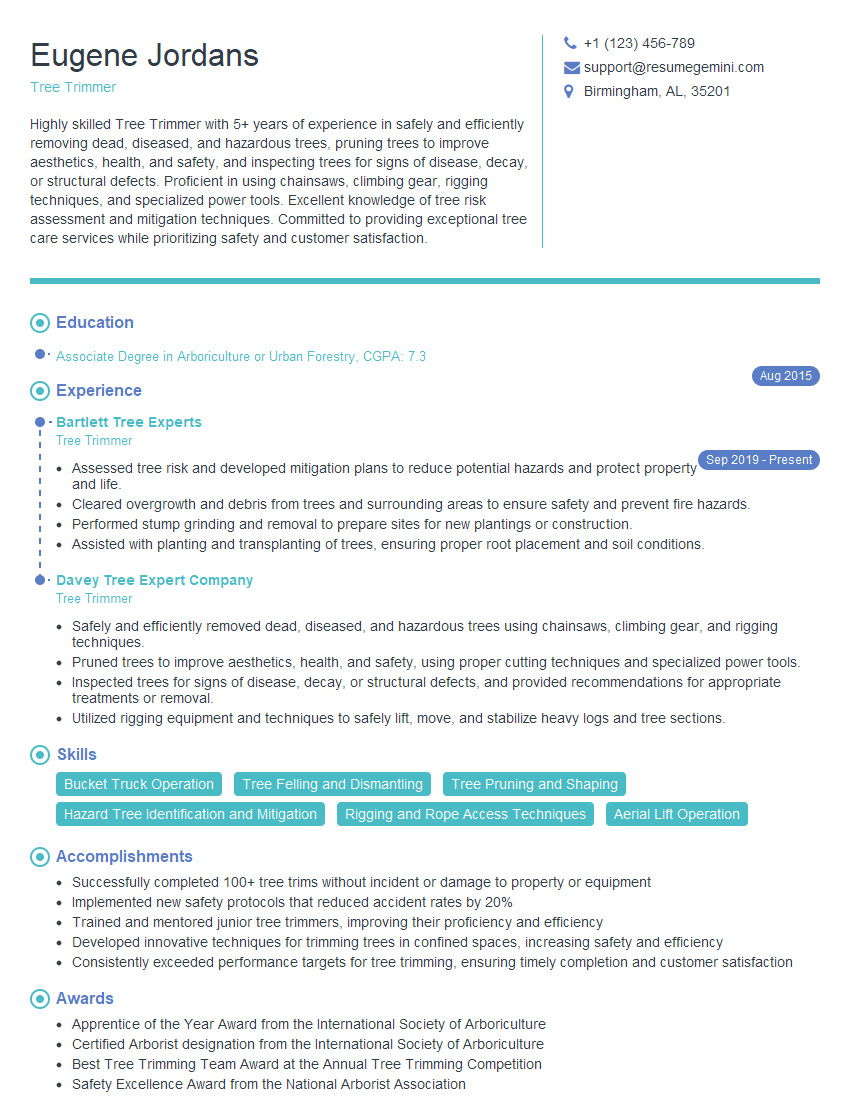
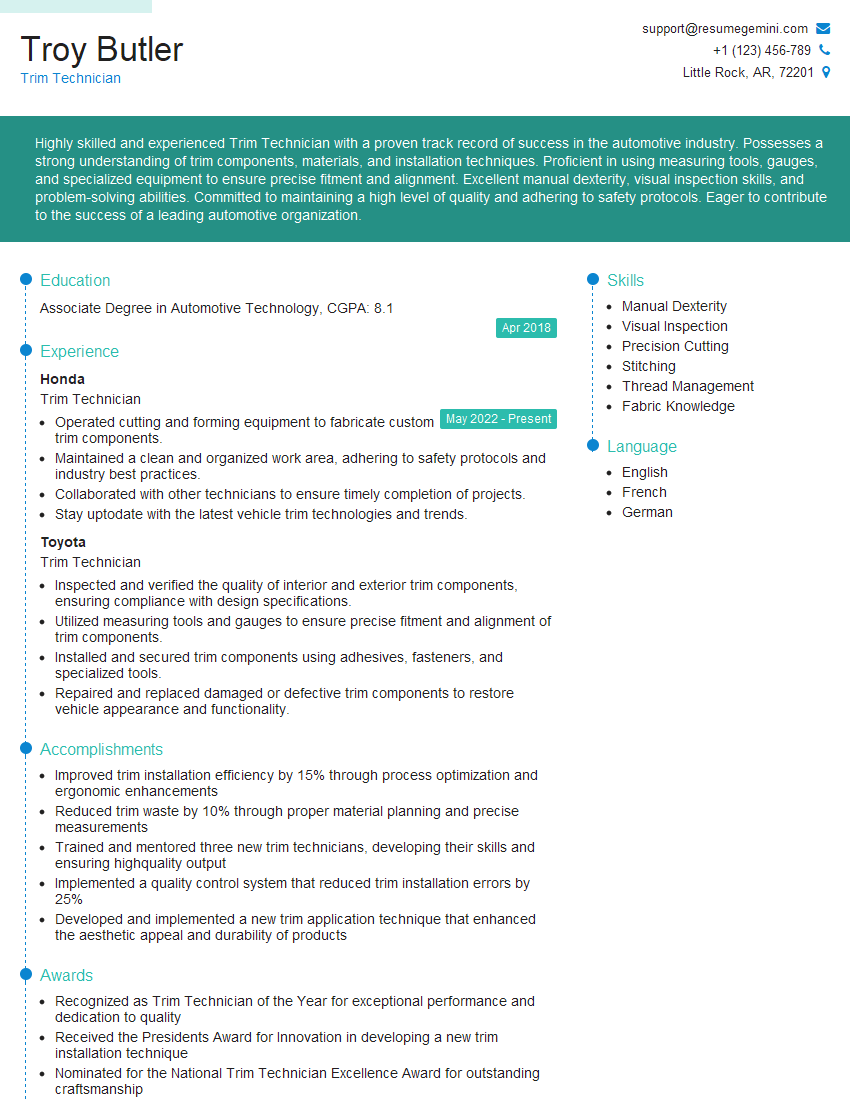
Mastering Trimming Operation skills opens doors to exciting career opportunities and advancements within manufacturing and related industries. A strong understanding of these techniques demonstrates valuable practical skills and attention to detail, highly sought after by employers. To maximize your job prospects, it’s crucial to create an ATS-friendly resume that highlights your expertise effectively. ResumeGemini is a trusted resource for building professional, impactful resumes. We provide examples of resumes tailored to Trimming Operation roles to help you showcase your skills and experience in the best possible light.

Explore more articles
Users Rating of Our Blogs
Share Your Experience
We value your feedback! Please rate our content and share your thoughts (optional).
What Readers Say About Our Blog
Very informative content, great job.
good