Are you ready to stand out in your next interview? Understanding and preparing for Trolling and Longlining Techniques interview questions is a game-changer. In this blog, we’ve compiled key questions and expert advice to help you showcase your skills with confidence and precision. Let’s get started on your journey to acing the interview.
Questions Asked in Trolling and Longlining Techniques Interview
Q 1. Explain the difference between trolling and longlining techniques.
Trolling and longlining are both fishing techniques used to catch pelagic (open ocean) fish, but they differ significantly in their approach. Trolling involves dragging lures or bait behind a moving boat, mimicking the movement of prey fish. Longlining, on the other hand, uses a long main line with many shorter branch lines (snoods) and baited hooks suspended from it, creating a vast fishing area. Think of trolling as a ‘casting’ method, while longlining is more like setting a massive, underwater trap.
Q 2. Describe the types of fishing gear used in trolling and longlining.
Trolling Gear: This typically includes fishing rods and reels, designed to withstand the force of pulling lures through the water. Lures can range from artificial plugs and spoons to feathered jigs and even live bait. Downriggers, devices that lower lures to specific depths, are often used.
Longlining Gear: A longline system comprises a main line, often miles long, from which hundreds or even thousands of branch lines with baited hooks are suspended. These branch lines, or snoods, are attached to the main line at regular intervals using clips or swivels. Strong, high-tensile-strength line is crucial, along with heavy-duty floats and weights to maintain the appropriate depth and position of the hooks. Specialized gear is needed for setting and hauling the line.
Q 3. What are the optimal water conditions for each technique?
Trolling: Optimal conditions depend on the target species. Generally, calm to moderately rough seas with clear to slightly cloudy water are ideal. Strong currents can make trolling more challenging, but sometimes they can concentrate fish. Water temperature also plays a significant role in fish behavior and lure selection.
Longlining: Longlining is less affected by surface conditions than trolling. However, strong currents can make setting and retrieving the line extremely difficult. The depth and temperature of the water column are crucial for targeting specific species. For example, tuna longlining often operates in deeper, cooler waters than trolling for surface-feeding species.
Q 4. How do you select appropriate bait or lures for trolling?
Bait and lure selection for trolling is critical. Factors to consider include the target species, water temperature, clarity, and depth. Mimicking natural prey is key. For example, when targeting salmon, a lure that resembles a smaller fish in size, color, and action will be more effective. Experimentation is vital; keeping a log of successful lures and conditions helps refine your strategy. You might start with common lures like spoons, plugs, and diving lures, and gradually refine your choices based on the reaction of the fish.
Q 5. How do you determine the appropriate hook size and type for longlining?
Hook size and type for longlining depend heavily on the target species. Larger fish require larger, stronger hooks that can withstand the strain of the fight. Circle hooks are widely preferred in commercial longlining because they minimize injury to non-target species and increase the likelihood of a secure hook set. The hook material (e.g., stainless steel, high carbon steel) should also be selected based on the fish’s strength and the environment (saltwater vs. freshwater).
For instance, a large tuna would necessitate a much larger and stronger hook than a smaller cod. The point sharpness and barb strength should also be considered. A dull hook can easily pull free.
Q 6. Explain the process of setting and retrieving a longline.
Setting a longline is a complex process requiring careful planning and execution. The main line is usually deployed from a vessel, often with the assistance of specialized equipment. Buoys mark the ends and crucial points along the line. The branch lines are spaced evenly, and weights and floats are used to maintain the desired depth and keep the lines off the seabed. Once deployed, the line is allowed to soak for a period of time, allowing fish to locate and take the bait. Retrieving the line is laborious, often involving winches and hand-pulling of individual branch lines to prevent entanglement. Each branch line is carefully examined for fish, and the catch is carefully removed before the hooks are reset.
Q 7. Describe different trolling strategies (e.g., downrigger trolling, high-speed trolling).
Trolling strategies vary greatly based on the targeted species and their behavior.
- Downrigger Trolling: This involves using a downrigger to lower lures to specific depths, enabling anglers to target fish at various levels in the water column. This is especially effective when fish are not feeding on the surface.
- High-Speed Trolling: This technique employs fast trolling speeds to cover a wider area, often targeting fast-moving pelagic species like tuna. This method requires strong rods, reels, and lures.
- Planer Board Trolling: Planer boards are devices that spread lures out to the sides of the boat, significantly increasing the coverage area and allowing for the use of multiple lines simultaneously.
- Spread Trolling: This utilizes multiple lures at varying depths and positions behind the boat to increase the chances of attracting fish, allowing for the targeting of various fish species present at the same location.
Each strategy requires careful consideration of lure selection, speed, depth, and the targeted species’ behavior.
Q 8. How do you manage gear maintenance and repair during a fishing trip?
Gear maintenance is crucial for successful trolling and longlining. We’re talking about the difference between a productive trip and a costly disaster. My approach is proactive and preventative, starting long before the trip even begins.
Pre-trip Inspection: Before leaving the dock, I meticulously check all lines, hooks, lures, and any electronic equipment for damage or wear. This includes examining the line for fraying, inspecting hooks for sharpness, and testing the functionality of my downriggers and other equipment.
Onboard Repair Kit: I carry a comprehensive repair kit that includes various line sizes, different types of hooks, pliers, crimpers, splicing tools, and electrical tape. This allows me to handle most minor repairs at sea.
Regular Checks During Fishing: Throughout the fishing trip, I regularly check the gear for signs of damage, entanglement, or wear. I’ll adjust settings on my downriggers as needed and monitor my lines for any unusual tension or drag, which could indicate snags or other problems.
Daily Maintenance: At the end of each fishing day, I thoroughly clean and inspect all gear. Lines are rinsed with freshwater, hooks are sharpened, and lures are checked for damage. This prevents corrosion and extends their lifespan significantly.
Professional Maintenance: More extensive repairs or servicing of equipment like motors and reels are done professionally by specialists. I ensure these vital parts receive regular scheduled maintenance between trips.
For example, once, I had a main line snap during a longline operation. Thankfully, I had extra line and splicing tools on board, and was able to quickly repair the line, minimizing any loss of time or catch.
Q 9. What are the common challenges faced in trolling and longlining?
Trolling and longlining present several unique challenges. Weather is a major factor, with storms potentially causing gear loss or even endangering the crew. We also face gear entanglement, often with other fishing gear or debris found in the ocean. Then there’s the constant vigilance needed to monitor lines and equipment, particularly over long periods. Another significant challenge is managing bycatch (explained more in the next question).
Weather-Related Challenges: Sudden storms can severely damage gear or make it impossible to retrieve lines safely. We use weather forecasts to plan our routes and even adjust the fishing plan to avoid hazardous conditions.
Gear Entanglement: Lines can tangle, especially with other fishing gear in busy waters. This necessitates regular monitoring of lines and quick response to address any snags.
Bycatch: Unintentional capture of non-target species is a serious concern, requiring careful selection of gear and fishing techniques. (See answer to question 4 for more detail.)
Gear Loss: Heavy seas, strong currents, and snags can lead to loss of gear, representing a significant financial and environmental impact. Strong line and proper placement of gear is paramount to minimize this.
For instance, one time we encountered a large patch of kelp that tangled our longline considerably. It took several hours to carefully untangle the line and recover the gear, highlighting the patience and problem-solving skills needed in this profession.
Q 10. How do you ensure sustainable fishing practices when using these techniques?
Sustainable fishing practices are paramount. We employ several strategies to minimize our environmental impact. The key is selective fishing and reducing bycatch.
Selective Gear: Using gear designed to target specific species minimizes bycatch. Circle hooks, for example, reduce the likelihood of hooking non-target species. We also select appropriate hook sizes to match the target species, reducing harm to smaller fish.
Monitoring Catch: We meticulously record all catches, including bycatch, species composition, and sizes. This data allows us to assess the effectiveness of our strategies and make necessary adjustments to improve selectivity.
Bycatch Reduction: We use methods to reduce bycatch, such as setting gear at depths and times that avoid sensitive habitats and non-target species. This might involve adjusting the fishing depth or the bait used.
Responsible Fish Handling: We handle and release fish carefully to minimize injuries. We immediately release any bycatch or undersized fish to ensure they can survive the experience. This includes using appropriate handling techniques and making sure the fish are returned quickly to the water.
Compliance with Regulations: We adhere to all relevant regulations, including size limits, catch quotas, and protected areas. This is absolutely vital for sustainable fishing.
For example, in an area known for sea turtle bycatch, we carefully adjusted our longline depths and bait to minimize the risk of entanglement.
Q 11. Explain your understanding of bycatch and mitigation strategies.
Bycatch refers to the unintentional capture of non-target species during fishing operations. It’s a serious problem, impacting marine ecosystems and fish populations. It’s a major concern for sustainability.
Types of Bycatch: Bycatch can include fish, seabirds, marine mammals, sea turtles, and invertebrates. The impact varies depending on the species and the amount caught.
Mitigation Strategies: Many techniques are used to reduce bycatch. These include:
- Using modified fishing gear such as circle hooks, which reduce hooking mortality.
- Employing different fishing techniques, such as fishing at different depths or times to avoid sensitive habitats and certain species.
- Implementing strict bycatch monitoring programs to track and analyze the bycatch data.
- Implementing escape gaps in fishing nets that allow certain sizes and types of species to escape.
- Implementing real-time monitoring systems on board to alert the crew of certain species or environmental factors that may increase bycatch.
Importance of Mitigation: Minimizing bycatch is essential for maintaining the health of marine ecosystems and sustaining fish stocks for future generations. It’s a key element in responsible fishing practices.
We had an instance where we significantly reduced seabird bycatch by deploying our longlines at night, when these birds are less active. We also made sure our gear was set quickly to avoid leaving it on the surface for extended periods.
Q 12. Describe your experience with GPS navigation and fish finders.
GPS navigation and fish finders are indispensable tools for modern fishing. They significantly increase efficiency and safety.
GPS Navigation: We rely on GPS for precise navigation, especially during longline operations where we need to set lines in specific locations and follow precise routes. It helps us avoid hazards and efficiently cover fishing grounds. It records our exact fishing locations for future reference.
Fish Finders: Fish finders use sonar technology to detect fish schools and other underwater structures. This allows us to target areas with higher concentrations of fish, improving our fishing efficiency. Knowing the depth and structure of the ocean floor is invaluable for finding likely places to set our lines.
Integration: Many modern systems integrate GPS and fish finders, providing a comprehensive picture of our location, the underwater environment, and potential fishing areas. We can overlay this with chart data to identify potential hazards as well.
For example, using our fish finder, we once located a large school of tuna below a thermal front, a key element to increase the success of our fishing operations.
Q 13. How do you interpret weather forecasts and adjust fishing plans accordingly?
Weather forecasting is critical for safety and efficiency in both trolling and longlining. We regularly consult multiple sources for the most accurate predictions.
Sources: We use a combination of meteorological services, specialized marine weather apps, and satellite imagery to gather data. We look at wind speed and direction, wave height, currents, and potential storm systems.
Planning: Before heading out, we carefully study the forecast and plan our fishing schedule accordingly. We can postpone a trip if conditions are too dangerous or adjust our fishing locations to avoid bad weather.
In-Trip Adjustments: Throughout the fishing trip, we monitor weather updates closely. If conditions deteriorate, we may need to adjust our strategies, shorten our fishing duration, or even return to port prematurely to avoid problems.
Safety First: Our primary concern is safety. We always prioritize crew safety over fishing productivity. If the weather becomes unsafe, we will never hesitate to return to port.
One time, a sudden change in wind direction was forecast mid-trip. We quickly repositioned our longlines to a sheltered area, which protected our gear and the crew from severe weather.
Q 14. What is your experience with fish handling and preservation techniques?
Proper fish handling and preservation are crucial for maintaining quality and ensuring the best value for our catch.
Handling: We handle fish gently and quickly to minimize stress. If we intend to release the fish back into the water, we do so as rapidly and carefully as possible to ensure their survival. If keeping the fish, we properly bleed and ice the catch immediately to maintain freshness.
Preservation: Our preservation techniques depend on the intended use of the fish. For immediate consumption, we store fish in ice slush. For longer storage, we may use a blast freezer to rapidly freeze the fish, preserving both quality and reducing the possibility of spoilage.
Hygiene: We maintain strict hygiene protocols during handling and preservation to prevent contamination and spoilage. Cleanliness is paramount to quality and safety.
Storage: Proper storage is key; we store fish on ice at appropriate temperatures in well-ventilated containers to avoid spoilage.
For example, when we catch a large haul of tuna, we immediately bleed and ice them individually, using a large capacity ice chest to ensure that the temperatures remain consistently cold to retain freshness and quality.
Q 15. Describe your knowledge of different species targeted by trolling and longlining.
Trolling and longlining target a wide variety of species, depending on the location, time of year, and the specific gear used. Understanding the target species is crucial for selecting the right bait, hooks, and fishing techniques.
- Trolling: This technique often targets pelagic (open ocean) species like tuna (bluefin, yellowfin, albacore), marlin (blue, white, striped), swordfish, and various species of salmon. The type of lure and its presentation heavily influences which species are attracted. For example, a fast-trolled lure might attract a fast-swimming tuna, while a slower-moving lure might be more effective for a mahi-mahi.
- Longlining: This method is incredibly versatile and is used to catch a broader range of species, including tuna (various species), swordfish, halibut, sharks, and even some deep-sea species. The type of bait and the depth at which the longline is set determine the target species. For instance, using squid bait at shallower depths might target tuna, while using a different bait at greater depths might target swordfish.
My experience encompasses targeting numerous species across various ocean regions, requiring adaptable strategies and a thorough understanding of species-specific behavior and habitat preferences.
Career Expert Tips:
- Ace those interviews! Prepare effectively by reviewing the Top 50 Most Common Interview Questions on ResumeGemini.
- Navigate your job search with confidence! Explore a wide range of Career Tips on ResumeGemini. Learn about common challenges and recommendations to overcome them.
- Craft the perfect resume! Master the Art of Resume Writing with ResumeGemini’s guide. Showcase your unique qualifications and achievements effectively.
- Don’t miss out on holiday savings! Build your dream resume with ResumeGemini’s ATS optimized templates.
Q 16. How do you manage a fishing crew and ensure safety?
Managing a fishing crew requires strong leadership, communication, and a relentless focus on safety. It’s not just about catching fish; it’s about ensuring everyone returns home safe.
- Pre-trip Briefing: Before each trip, a thorough briefing covers the day’s plan, safety procedures (emergency protocols, man overboard drills), equipment checks, and the roles and responsibilities of each crew member. This is crucial for preventing accidents.
- Clear Communication: Effective communication is paramount, especially in challenging conditions. We use clear, concise language and establish a system for reporting any issues or concerns immediately. Miscommunication at sea can have catastrophic consequences.
- Enforcing Safety Regulations: Strict adherence to safety regulations, including the proper use of personal protective equipment (PPE) like life jackets and harnesses, is non-negotiable. Regular inspections and training ensure everyone understands and follows these procedures.
- Teamwork and Respect: Building a strong team dynamic based on mutual respect and trust is essential for a safe and productive work environment. A collaborative atmosphere encourages crew members to look out for each other and report any potential hazards.
I’ve led crews in various situations, from calm waters to challenging storms. My emphasis on proactive safety measures has resulted in a strong safety record throughout my career.
Q 17. What is your experience with regulatory compliance in commercial fishing?
Regulatory compliance is paramount in commercial fishing. Ignorance of or non-compliance with regulations can result in hefty fines, license suspension, or even criminal charges. I have extensive experience navigating the complexities of various national and international fishing regulations.
- Catch Limits and Quotas: I meticulously track our catches to ensure we remain within established quotas for each species. Exceeding quotas can lead to severe penalties.
- Gear Restrictions: We use gear that adheres to regulations regarding hook size, net mesh size, and bycatch reduction devices. These regulations are designed to protect vulnerable species and habitats.
- Reporting Requirements: Accurate and timely reporting of catches, fishing locations, and gear used is crucial. We maintain detailed logs and submit them to the appropriate authorities as required.
- Vessel Inspections: I ensure the vessel is maintained to meet all safety and operational standards to pass regular inspections carried out by regulatory bodies. This ensures the vessel’s seaworthiness and compliance with all applicable laws.
Throughout my career, I have prioritized strict adherence to all applicable regulations, maintaining a clean record and contributing to sustainable fishing practices.
Q 18. Explain your understanding of fishing quotas and licensing.
Fishing quotas and licensing are fundamental aspects of fisheries management, designed to conserve fish stocks and prevent overfishing. They work in tandem to control fishing activity.
- Fishing Quotas: These are limits on the total allowable catch (TAC) for a particular species in a specific area during a defined period. Quotas are set based on scientific assessments of fish stocks to ensure sustainable fishing practices. Exceeding quotas has significant legal and financial repercussions.
- Fishing Licenses: Commercial fishing vessels require licenses to operate legally. Licenses are often species-specific, meaning a vessel might have a license for tuna but not for halibut. Licensing also often includes restrictions on gear types, fishing areas, and the overall fishing effort allowed. Licensing helps track fishing activity and assists in enforcing quotas.
Understanding and adhering to both quotas and licensing requirements is essential for responsible and legal commercial fishing operations. I have extensive experience in obtaining and maintaining the necessary licenses and meticulously tracking our catches to stay within established quotas.
Q 19. How do you identify and respond to emergencies at sea?
Emergency response at sea requires preparedness, quick thinking, and a well-rehearsed emergency action plan. Every second counts.
- Man Overboard: A detailed man overboard recovery procedure is practiced regularly. This includes immediately deploying a life raft, marking the location, and using the vessel’s resources for a swift rescue.
- Fire Response: Knowing the location of fire extinguishers and how to use them effectively is critical. We also practice fire drills and have emergency escape routes clearly marked.
- Medical Emergencies: A well-stocked first-aid kit is essential, and crew members receive first-aid training. Communication with emergency services is crucial, utilizing VHF radio and satellite communication systems.
- Severe Weather: Monitoring weather forecasts and taking appropriate action (seeking shelter, adjusting the fishing plan) is crucial. Knowing the vessel’s capabilities and limitations in challenging conditions is equally important.
My experience encompasses managing various emergency scenarios, including medical emergencies, equipment failures, and severe weather events. Our preparedness and swift response have always resulted in favorable outcomes, ensuring crew safety and minimizing damage.
Q 20. Describe your experience with knot tying and rigging.
Knot tying and rigging are fundamental skills in fishing. The strength and reliability of your knots directly impact your catch and safety.
- Essential Knots: I am proficient in various knots, including the Palomar knot (for single hooks), the Albright knot (for joining lines of different diameters), the Bimini twist (for creating a stronger leader), and various other knots for attaching swivels, lures, and other gear.
- Rigging Techniques: Proper rigging ensures your gear functions correctly and withstands the stress of fighting large fish. This includes selecting appropriate line strength, using proper swivels and leaders to minimize line twist and breakage, and understanding how to create effective trolling and longline configurations.
- Maintenance and Inspection: Regularly inspecting and maintaining all rigging and gear is crucial for preventing failures at sea, which can have implications for both the catch and the safety of the crew. This includes checking lines for wear and tear and replacing any damaged or weakened components immediately.
My extensive experience in knot tying and rigging ensures our gear is always prepared for the challenges of fishing, maximizing our catch while minimizing risk.
Q 21. What is your experience with maintaining fishing logs and records?
Maintaining accurate fishing logs and records is crucial for regulatory compliance, business management, and analyzing fishing success. These logs serve as a detailed record of fishing activities.
- Daily Log Entries: Each day’s fishing activity is meticulously documented, including location, time, gear used, species caught, catch weights, and any other relevant information. This information is essential for analyzing catch patterns and identifying potential areas for improvement.
- Regulatory Reporting: The logs provide the data necessary to comply with various reporting requirements mandated by fisheries management agencies, ensuring adherence to regulations and avoiding potential penalties.
- Business Management: Fishing logs also serve as valuable tools for business management, providing data on income, expenses, and overall profitability. This detailed information helps make informed decisions to improve fishing efficiency and business practices.
- Data Analysis: The collected data allows for thorough analysis of different fishing strategies, identification of successful techniques, and optimization of future fishing trips. This continuous improvement is vital for maintaining profitability and sustainability.
Throughout my career, I’ve been responsible for maintaining detailed and accurate fishing logs, ensuring compliance with regulations while also using this data to refine fishing strategies and improve business performance.
Q 22. How do you calculate catch rates and fishing efficiency?
Calculating catch rates and fishing efficiency involves a nuanced understanding of several factors. Catch rate is simply the amount of fish caught per unit of effort. Fishing efficiency, however, considers the catch rate in relation to the resources used (fuel, time, crew, gear).
Catch Rate Calculation: A common formula is:
Catch Rate = Total Weight of Fish Caught / Fishing EffortFishing effort can be measured in various ways – number of fishing days, number of sets of gear, or total hours spent fishing. For example, if we catch 1000 kg of tuna in 10 hours of trolling, the catch rate is 100 kg/hour.
Fishing Efficiency Calculation: This is more complex. A simple approach could be:
Fishing Efficiency = (Total Weight of Fish Caught / Total Cost) * 100Total cost includes fuel, bait, crew wages, gear maintenance, and vessel operating costs. A higher efficiency percentage indicates better resource utilization. For example, if we caught 1000kg of tuna with a total cost of $5000, the efficiency would be 20%. Analyzing efficiency requires meticulous record-keeping and understanding of variable costs.
Factors affecting both metrics include weather conditions, gear type, target species behavior, and the experience of the crew. Regularly calculating and monitoring these provides crucial insights for optimizing fishing operations and profitability.
Q 23. Describe your experience with onboard processing and sorting of fish.
My experience with onboard processing and sorting is extensive, encompassing both troll-caught and longline-caught species. Onboard processing generally begins with sorting the catch by species and size. This is crucial for market value and regulatory compliance. For instance, separating different sizes of tuna ensures they’re sold into appropriate market segments.
After sorting, depending on the vessel and species, the catch may undergo gutting, cleaning, and even initial freezing or processing into fillets. I’m proficient in using various processing tools, ensuring that the fish are handled carefully to maintain quality and prevent damage. Efficient onboard processing minimizes spoilage and extends shelf-life, maximizing the economic return.
Hygiene and sanitation are paramount. Maintaining a clean and organized working environment is essential to prevent bacterial contamination. Strict adherence to food safety regulations is crucial, and I’m experienced in all relevant protocols. I’ve worked on vessels with varying degrees of processing capabilities, from basic gutting and icing to more advanced fillet production and freezing. My adaptable skillset allows me to effectively contribute to any onboard processing setup.
Q 24. How do you manage and resolve conflicts among crew members?
Conflict resolution onboard a fishing vessel is crucial for safety and productivity. A harmonious crew works better and safer. My approach focuses on open communication, understanding the underlying issues, and finding mutually acceptable solutions.
I believe in addressing conflicts promptly and directly, but always with respect. I will often facilitate a calm conversation between the involved parties, encouraging them to express their viewpoints and find common ground. Sometimes, a simple clarification of expectations or roles can solve the problem. If the conflict escalates, clear, firm, but fair mediation is essential, and potentially, clear disciplinary measures might need to be taken. I’ve handled conflicts ranging from minor disagreements to more serious issues related to safety protocols or workload distribution, always prioritizing safety and maintaining a positive work environment.
I find that establishing clear lines of authority and responsibilities from the outset helps prevent many conflicts. Open and regular communication through daily briefings and informal chats help build teamwork and foster a sense of camaraderie. Ultimately, a strong team culture minimizes the incidence of conflict.
Q 25. How do you ensure the quality and safety of the catch?
Ensuring the quality and safety of the catch requires careful attention to detail throughout the entire process, from the moment the fish are hooked to when they reach the market.
- Proper Handling: Minimizing stress and damage to the fish during capture and handling is critical. This includes using appropriate gear, proper hooking techniques, and avoiding excessive time out of the water.
- Rapid Chilling: Rapid chilling or icing of the catch is vital to slow down bacterial growth and prevent spoilage. The sooner the fish is chilled after capture, the better its quality.
- Hygiene and Sanitation: Maintaining impeccable hygiene onboard prevents contamination. Regular cleaning and disinfection of equipment and workspaces are crucial.
- Temperature Monitoring: Consistent monitoring of storage temperatures is essential to guarantee the fish remains at safe temperatures throughout the entire process.
- Compliance: Adherence to all relevant food safety regulations and traceability protocols ensures safe and legally compliant products.
Through meticulous attention to these aspects, we can ensure high-quality, safe seafood products are delivered to consumers, maintaining the reputation of the industry.
Q 26. Describe your experience working with different types of fishing vessels.
My experience spans a variety of fishing vessels, from small, family-owned troll boats to larger longline vessels. This experience has given me a broad understanding of different fishing techniques and operational procedures. I’ve worked on vessels equipped with different technologies, including advanced navigation systems, fish finders, and processing equipment.
Working on smaller vessels instilled in me a strong sense of teamwork and resourcefulness. On larger vessels, I learned about complex operational procedures and specialized equipment. Adaptability is key in this industry; I’m comfortable working within any crew dynamic and adapting to different vessel sizes and capabilities. My experience has also included working with various gear types, including different kinds of hooks, lines, and nets, optimizing my techniques for maximum efficiency and minimal environmental impact.
Q 27. What are your salary expectations?
My salary expectations are commensurate with my experience and skills, and reflect the industry standards for a skilled professional in my position. I’m open to discussing a competitive compensation package that reflects my contributions to the success of the operation. My primary concern is to find a rewarding position with the opportunity to contribute my expertise to a successful and sustainable fishing enterprise.
Q 28. What are your long-term career goals within the fishing industry?
My long-term career goals involve continued growth within the fishing industry, potentially transitioning into a leadership role. I am particularly interested in contributing to sustainable fishing practices and promoting responsible management of our ocean resources. This might involve pursuing further training or certifications in fisheries management or sustainable aquaculture. Ultimately, I aspire to contribute to the long-term health and sustainability of the industry while maximizing its economic benefits.
Key Topics to Learn for Trolling and Longlining Techniques Interview
- Gear Selection and Maintenance: Understanding the different types of fishing gear used in trolling and longlining, their appropriate applications, and routine maintenance procedures to ensure optimal performance and longevity.
- Knot Tying and Rigging: Mastering various knot tying techniques crucial for secure line connections, and the ability to rig different types of lures and baits for specific target species.
- Water Depth and Current Considerations: Analyzing water depth, current speed, and direction to effectively deploy gear and maximize catch rates. This includes understanding how these factors influence lure presentation and bait behavior.
- Fish Behavior and Target Species: Knowledge of the behavior and habitat preferences of various fish species commonly targeted through trolling and longlining, allowing for strategic gear placement and retrieval.
- GPS and Navigation: Utilizing GPS technology for precise navigation, route planning, and marking productive fishing grounds. Understanding how to interpret navigational charts and utilize electronic charting systems.
- Safety Procedures and Regulations: Adherence to all relevant safety protocols and fishing regulations, including emergency procedures and reporting requirements.
- Sustainable Fishing Practices: Understanding and applying sustainable fishing techniques to minimize environmental impact and ensure the long-term health of fish stocks. This includes minimizing bycatch and adhering to size and catch limits.
- Troubleshooting and Problem Solving: Diagnosing and resolving common issues encountered during trolling and longlining operations, such as gear malfunctions, line snags, and unexpected weather conditions.
- Data Recording and Analysis: Maintaining accurate records of catches, fishing locations, and environmental conditions to inform future fishing strategies and optimize results.
Next Steps
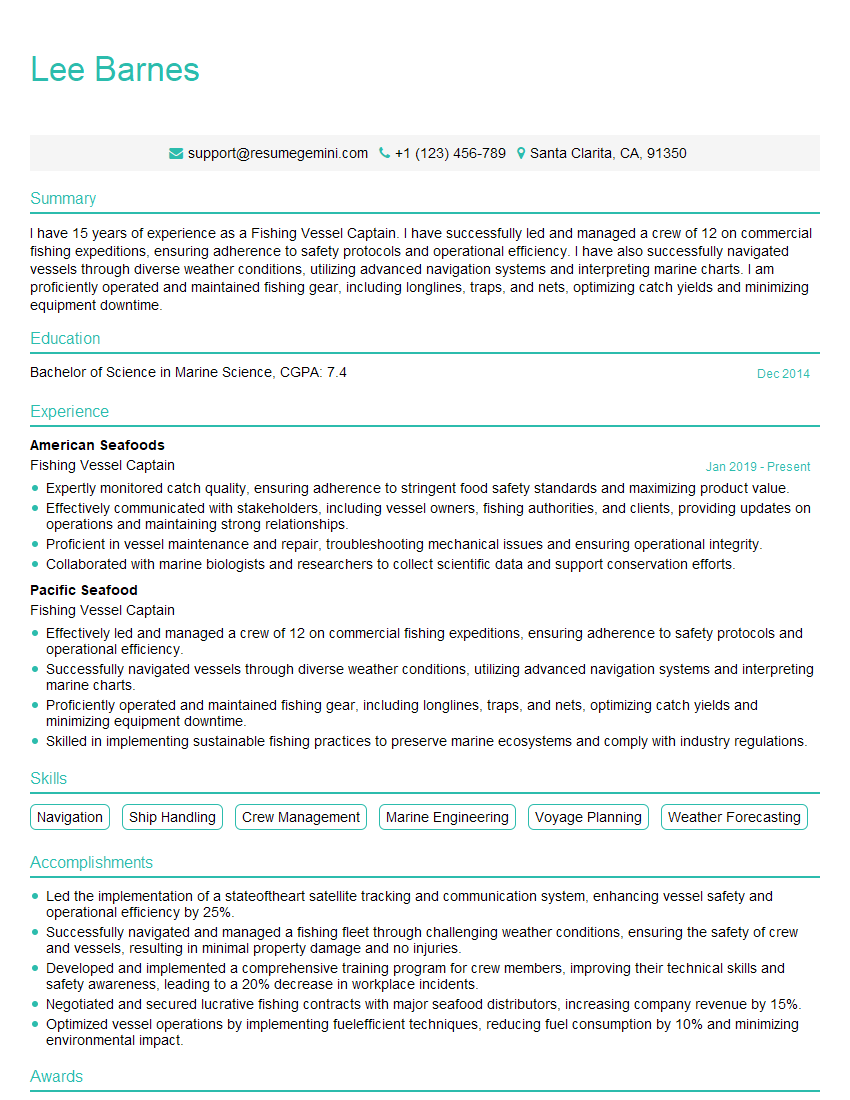
Mastering trolling and longlining techniques is crucial for career advancement in the fishing industry, opening doors to more challenging and rewarding roles. A well-crafted resume is your key to unlocking these opportunities. To make a strong first impression, focus on creating an ATS-friendly resume that highlights your skills and experience effectively. ResumeGemini is a trusted resource that can help you build a professional and impactful resume tailored to the specific demands of the fishing industry. Examples of resumes tailored to Trolling and Longlining Techniques are available to guide you in this process.
Explore more articles
Users Rating of Our Blogs
Share Your Experience
We value your feedback! Please rate our content and share your thoughts (optional).
What Readers Say About Our Blog
Very informative content, great job.
good