Preparation is the key to success in any interview. In this post, we’ll explore crucial Troubleshooting and Repair of Hoisting Equipment interview questions and equip you with strategies to craft impactful answers. Whether you’re a beginner or a pro, these tips will elevate your preparation.
Questions Asked in Troubleshooting and Repair of Hoisting Equipment Interview
Q 1. Describe your experience troubleshooting faulty hoist brakes.
Troubleshooting faulty hoist brakes requires a systematic approach. First, I’d visually inspect the brake system for obvious issues like worn brake pads, damaged linings, or loose connections. Then, I’d check the brake mechanism itself – looking for signs of binding, sticking, or leakage in hydraulic or pneumatic systems. A common problem is insufficient brake pressure. In that case, I’d investigate the power source (hydraulic pump, air compressor) and the lines for leaks or blockages. For example, I once worked on a hoist where a small crack in a hydraulic line was causing a gradual pressure loss, resulting in inconsistent braking. To diagnose this, I used a pressure gauge to measure the hydraulic pressure, pinpoint the leak using leak detection fluid, and repair or replace the damaged line. Finally, testing the brake functionality under controlled conditions is crucial, gradually applying the load to check for consistent and reliable stopping power.
- Visual Inspection: Check for wear and tear.
- Mechanism Check: Inspect for binding or sticking.
- Pressure Test: Verify adequate pressure in hydraulic or pneumatic systems.
- Functionality Test: Gradually apply load to check braking consistency.
Q 2. Explain the process of diagnosing and repairing a malfunctioning hoist motor.
Diagnosing a malfunctioning hoist motor begins with a safety check, ensuring the power is completely disconnected. Then, I would visually inspect the motor for external damage, loose connections, or overheating signs. Using a multimeter, I’d check the voltage supply, motor winding resistance (to check for shorts or opens), and current draw (to check for overloading). A high current draw might indicate a faulty bearing or winding problem. If the motor doesn’t respond to voltage, the problem may be with the power supply or the motor’s internal components. If the motor is overheating, I’d look at ventilation issues or bearing wear. For instance, I once worked on a hoist where the motor was overheating due to a clogged ventilation fan. Replacing the fan resolved the issue. Repairing a hoist motor might involve replacing brushes (in DC motors), winding repair (by specialized technicians), or a complete motor replacement depending on the extent of the damage.
- Safety First: Ensure power is disconnected.
- Visual Inspection: Check for external damage.
- Electrical Tests: Use a multimeter to check voltage, resistance, and current.
- Mechanical Inspection: Check for bearing wear or ventilation issues.
- Repair/Replacement: Decide whether to repair or replace based on cost and feasibility.
Q 3. How do you identify and address issues with hoisting equipment load limits?
Addressing issues with hoisting equipment load limits starts with confirming the manufacturer’s specified load capacity. This information is usually found on a data plate affixed to the equipment. Exceeding load limits is extremely dangerous and can cause catastrophic failure. I’d meticulously check the hoist’s structural components for any signs of damage or deformation that might suggest overloading in the past. This includes inspecting the hooks, chains, cables, and the hoisting mechanism itself. Regularly scheduled inspections and maintenance, including non-destructive testing if necessary, play a vital role in preventing overloading incidents. Load cells or other load monitoring devices are valuable tools for tracking the weight being lifted in real time, providing an early warning system. If overload protection is installed, I’d test its functionality to ensure it’s operating correctly and is set according to the equipment’s specifications. Finally, operator training is crucial to emphasize safe load handling practices and adherence to load limits.
- Verify Load Capacity: Check the manufacturer’s specifications.
- Structural Inspection: Look for signs of damage or deformation.
- Regular Inspections and Maintenance: Preventative measures are crucial.
- Load Monitoring: Use load cells or other monitoring devices.
- Operator Training: Emphasize safe loading practices.
Q 4. What safety procedures do you follow when inspecting hoisting equipment?
Safety is paramount when inspecting hoisting equipment. I always begin by ensuring the equipment is de-energized and locked out to prevent accidental starts. I would use appropriate personal protective equipment (PPE), including safety glasses, gloves, and steel-toed boots. A thorough visual inspection is conducted, looking for any signs of damage, wear, or corrosion on all components, from the hooks and cables to the motor and control systems. I’d check the alignment of pulleys and sheaves, ensuring smooth operation and preventing premature wear. If the hoist has any safety features like limit switches or overload protection devices, I’d meticulously test them to ensure they’re functioning correctly. Documentation is key – I’d carefully record my findings, noting any defects or needed repairs. Following a standardized checklist is essential to maintain consistency and ensure nothing is overlooked. This systematic approach, combined with a strong safety focus, is essential for a safe and effective inspection.
- Lockout/Tagout: De-energize and secure the equipment.
- Personal Protective Equipment (PPE): Wear appropriate safety gear.
- Visual Inspection: Thoroughly check all components for damage.
- Safety Device Testing: Verify the functionality of safety mechanisms.
- Documentation: Record findings and necessary repairs.
Q 5. How familiar are you with different types of hoisting equipment (e.g., overhead cranes, elevators, winches)?
My experience encompasses a wide range of hoisting equipment. I’m proficient with overhead cranes, including gantry cranes and jib cranes, understanding their various configurations and control systems. I’m familiar with different types of elevators, from hydraulic to traction, and I understand the complexities of their safety systems and regulatory compliance. Winches, both electric and manual, are also within my area of expertise; I’m experienced in their maintenance and repair, including issues with cable drums and braking systems. My background also includes working with specialized hoisting equipment found in various industries such as construction, manufacturing, and marine applications. I understand the unique challenges and safety considerations associated with each type of equipment and the specific maintenance needs they require. Each type has its particular nuances, but the core principles of safe operation and preventative maintenance remain constant.
Q 6. Explain your experience with hoisting equipment lubrication and maintenance schedules.
Lubrication is crucial for the longevity and safe operation of hoisting equipment. I follow manufacturer-recommended lubrication schedules and use the specified lubricants for each component. This usually involves lubricating bearings, gears, chains, and other moving parts at regular intervals. I’m familiar with different types of lubricants, including grease and oils, and their application methods. Ignoring proper lubrication can lead to premature wear, friction, overheating, and ultimately, equipment failure. Over-lubrication can be just as problematic as under-lubrication, potentially leading to contamination and attracting debris. For instance, I worked on a hoist where improper lubrication caused premature bearing failure. I established a detailed lubrication schedule with the client, using the correct type and amount of grease for the bearings. This significantly improved the equipment’s lifespan and reliability. Regular maintenance schedules also include inspections to assess the condition of the lubricants and ensure effective lubrication.
- Follow Manufacturer Recommendations: Use specified lubricants and schedules.
- Lubricate Moving Parts: Bearings, gears, chains, etc.
- Proper Lubricant Selection: Use appropriate grease or oil.
- Avoid Over-Lubrication: Prevent contamination.
- Regular Inspections: Check lubricant condition.
Q 7. Describe your experience working with hoisting equipment control systems.
I have extensive experience working with a variety of hoisting equipment control systems, ranging from simple manual controls to sophisticated PLC-based systems. I understand the function of limit switches, overload protection devices, and emergency stop mechanisms. My troubleshooting skills cover electrical schematics, wiring diagrams, and programmable logic controllers (PLCs). For instance, I recently diagnosed a malfunction in a hoist’s PLC-controlled system that caused intermittent stopping. By examining the PLC’s program and using diagnostic tools, I identified a faulty input from a limit switch causing the erratic behavior. Replacing the faulty limit switch resolved the issue. I’m also familiar with various types of motor controllers, including AC and DC drives, and their role in regulating hoist speed and torque. My expertise covers both troubleshooting and preventative maintenance for these systems, ensuring safe and reliable operation.
- Understanding of Control Systems: Familiarity with various control technologies.
- Troubleshooting Skills: Diagnostics for electrical circuits and PLCs.
- Safety Device Expertise: Limit switches, overload protection, emergency stops.
- Motor Control Systems: Knowledge of AC and DC drives.
- Preventative Maintenance: Regularly scheduled checks and maintenance procedures.
Q 8. How do you troubleshoot electrical faults in hoisting equipment?
Troubleshooting electrical faults in hoisting equipment requires a systematic approach, prioritizing safety. First, always ensure the power is completely disconnected before any inspection or repair. Then, I would use a combination of visual inspection, multimeter testing, and potentially more specialized equipment depending on the complexity of the system.
A visual inspection might reveal obvious issues like loose connections, damaged wiring, or burned components. I’d look closely at the motor windings, control circuits, limit switches, and emergency stop circuits. A multimeter allows me to check voltage, current, and resistance at various points in the circuit to identify breaks, shorts, or incorrect voltage levels. For example, if the hoist motor doesn’t run, I’d check for power at the motor terminals. If power is present but the motor doesn’t turn, the problem might be within the motor itself or a faulty control circuit.
More complex situations might require specialized testing equipment like insulation resistance testers to check the integrity of motor windings or clamp meters to measure current draw accurately. Understanding the hoist’s electrical schematic is crucial to tracing the electrical path and pinpointing the fault. Documentation of every step and finding is critical, not just for future reference but also for safety and regulatory compliance.
Q 9. What are common causes of hoisting equipment malfunctions and their solutions?
Hoisting equipment malfunctions stem from various sources. Mechanical issues include worn or broken gears, damaged sheaves (pulleys), frayed ropes or chains, and malfunctioning brakes. Electrical problems, as discussed previously, encompass faulty motors, control circuits, or wiring issues. Hydraulic system problems, common in heavier-duty hoists, can involve leaks, pump failure, or contamination of the hydraulic fluid. Finally, operator error can contribute to malfunctions.
- Worn Gears/Sheaves: Solution: Replace worn components. Regular lubrication is preventative.
- Frayed Ropes/Chains: Solution: Replace damaged components. Implement regular inspections.
- Malfunctioning Brakes: Solution: Inspect and adjust or replace brake components. Regular testing is vital.
- Hydraulic Leaks: Solution: Identify the leak source, replace seals or components. Ensure proper fluid level and cleanliness.
- Operator Error: Solution: Provide thorough training and emphasize safe operating procedures.
Solving these issues always begins with careful diagnosis. One needs to consider the specific symptoms presented by the malfunction and then systematically eliminate potential causes.
Q 10. Explain your experience with hydraulic systems in hoisting equipment.
My experience with hydraulic systems in hoisting equipment is extensive. I’ve worked on a wide range of systems, from smaller, self-contained hydraulic units in smaller hoists to larger, more complex systems used in industrial cranes. I’m proficient in troubleshooting hydraulic leaks, diagnosing pump failures, and assessing the condition of hydraulic cylinders and valves.
I’ve personally handled situations involving leaks in hydraulic lines, requiring me to trace the leak, identify the faulty component (often a seal or fitting), and then replace it using the correct tools and procedures. I’ve also diagnosed instances where pump pressure was insufficient, identifying problems such as air in the system, pump wear, or valve malfunctions. In one particular instance, a hydraulic crane’s lift capacity was significantly reduced. After a thorough inspection, I discovered a slow leak in the main hydraulic cylinder. Replacing the cylinder seal resolved the problem, restoring the crane’s full lifting capacity. Understanding hydraulic schematics and pressure readings are critical in this domain.
Q 11. How do you perform a thorough inspection of hoisting equipment’s safety features?
A thorough inspection of hoisting equipment’s safety features is paramount. This involves more than a cursory visual check. It’s a systematic process that should cover all aspects related to safety.
- Brakes: Inspect brake linings for wear, test brake engagement and release, and verify the integrity of the brake system’s components.
- Limit Switches: Check the proper operation of limit switches to prevent over-travel. Verify their correct wiring and functioning.
- Emergency Stop: Test the emergency stop system to ensure it immediately halts all operations regardless of the hoist’s position. This should be tested from multiple points.
- Load Indicators: Verify the accuracy of load indicators and check for damage. Ensure they are visible and easily readable.
- Safety Hooks and Shackles: Inspect hooks for cracks, deformations or excessive wear. Verify shackles are properly secured.
- Warning Systems: Test any visual or audible warning systems, such as load limit warnings or malfunction alarms.
Documentation of each inspection is critical. Any defects must be reported and rectified before the equipment is put back into service. A clear record ensures accountability and demonstrates commitment to safety.
Q 12. Describe your experience with preventative maintenance on hoisting equipment.
Preventative maintenance is the cornerstone of reliable and safe hoisting equipment operation. My approach involves a scheduled maintenance program tailored to the specific equipment and its usage. This is not simply reactive maintenance. It anticipates potential issues and prevents them before they cause failures or accidents.
This program includes regular lubrication of moving parts like gears, chains, and sheaves. Visual inspections for wear and tear on ropes, chains, and hooks are crucial. Regular testing of the braking system is mandatory. Electrical components are checked for loose connections, corrosion, and damage. Hydraulic systems are inspected for leaks and fluid levels are checked and topped off when needed. Documentation of all tasks performed, including dates and findings, is meticulously maintained, ensuring a history of the equipment’s condition.
For instance, I’ve successfully implemented preventative maintenance programs that have extended the operational lifespan of several hoisting systems, drastically reducing downtime and repair costs. This approach promotes efficiency and safety in the long term.
Q 13. How do you handle emergency situations involving malfunctioning hoisting equipment?
Handling emergency situations involving malfunctioning hoisting equipment requires immediate and decisive action, prioritizing safety above all else. The first step is to immediately activate the emergency stop system to halt any potentially dangerous movement.
Next, I would secure the area, preventing access to anyone other than essential personnel. Then, I’d assess the situation – what type of malfunction has occurred, and what are the immediate risks? Based on this assessment, the appropriate emergency response procedures are followed. This could range from contacting emergency services to initiating a more controlled shutdown and implementing the proper lockout/tagout procedures to prevent accidental re-energizing of the system. Once the immediate danger is mitigated, a thorough investigation can determine the root cause of the malfunction to prevent future occurrences. Clear and concise communication is key during the entire emergency response process.
Q 14. How do you interpret hoisting equipment schematics and manuals?
Interpreting hoisting equipment schematics and manuals is fundamental to effective troubleshooting and repair. Schematics provide a visual representation of the equipment’s components and their interconnections, crucial for tracing electrical pathways or identifying the hydraulic system’s flow. Manuals offer detailed specifications, operational procedures, and troubleshooting guides.
I start by carefully reviewing the schematic to understand the overall system architecture and the relationship between different components. For instance, if a problem occurs with the hoist’s movement, I can trace the electrical signals from the control panel to the motor using the schematic. Similarly, in a hydraulic system, the schematic shows the fluid path, enabling quick identification of possible leak points. The manual provides critical information, such as component specifications, torque values, and safety procedures. Using both tools together provides a complete understanding of the system, allowing for efficient problem-solving and precise repairs.
Q 15. Explain your experience with different types of hoisting equipment ropes and cables.
My experience encompasses a wide range of hoisting equipment ropes and cables, including wire ropes, fiber ropes (like nylon and polyester), and synthetic fiber ropes. Understanding the differences is crucial for safe operation and maintenance. Wire ropes, for instance, are known for their high strength but are susceptible to fatigue and corrosion. Regular inspections for broken wires, corrosion, and kinking are paramount. I’ve worked extensively with different wire rope constructions – 6×19, 6×36, etc. – each suited for specific applications and load capacities. Fiber ropes offer flexibility and are less prone to corrosion, but they are susceptible to abrasion and UV degradation. I’ve personally dealt with incidents where improper selection of rope led to failures, highlighting the importance of understanding material properties and selecting the right rope for the job. For example, using a nylon rope for heavy lifting in a harsh environment would be a recipe for disaster. Regular inspections, including visual checks and load testing, are critical for all types of hoisting ropes.
Career Expert Tips:
- Ace those interviews! Prepare effectively by reviewing the Top 50 Most Common Interview Questions on ResumeGemini.
- Navigate your job search with confidence! Explore a wide range of Career Tips on ResumeGemini. Learn about common challenges and recommendations to overcome them.
- Craft the perfect resume! Master the Art of Resume Writing with ResumeGemini’s guide. Showcase your unique qualifications and achievements effectively.
- Don’t miss out on holiday savings! Build your dream resume with ResumeGemini’s ATS optimized templates.
Q 16. How do you ensure compliance with safety regulations during hoisting equipment maintenance?
Safety is my top priority. Compliance with regulations like OSHA (in the US) or equivalent standards in other regions is non-negotiable. This begins with thorough pre-maintenance inspections to identify potential hazards. We use lockout/tagout procedures to ensure the equipment is completely de-energized before any work commences. All maintenance personnel are required to wear appropriate PPE, including safety helmets, gloves, and eye protection. Regular training on safety protocols and equipment operation is mandatory. Documentation of all maintenance activities, including inspections and repairs, is essential for demonstrating compliance. I’ve personally been involved in developing and implementing safety training programs for our team, ensuring everyone understands the potential risks and how to mitigate them. We also maintain detailed records of all inspections and repairs, including date, time, personnel involved, and any findings.
Q 17. What are the signs of wear and tear on hoisting equipment components?
Identifying wear and tear requires a keen eye and understanding of the equipment. Common signs include:
- Wire rope: Broken wires, kinking, corrosion, significant reduction in diameter, or lubrication loss.
- Sheaves and drums: Grooving or damage to the sheave grooves, significant wear on the drum surface, or excessive play.
- Hooks: Cracks, bends, distortion, or excessive wear at the hook point.
- Brakes: Reduced braking effectiveness, excessive wear on brake pads or linings, sticking or binding.
- Motor and gears: Unusual noises (grinding, squealing), excessive vibration, overheating, or leakage of fluids.
Q 18. How do you document maintenance and repair work on hoisting equipment?
Meticulous documentation is crucial for tracking maintenance and repairs and for demonstrating compliance. We utilize a computerized maintenance management system (CMMS) to record all work performed. Each entry includes a detailed description of the work, date, time, personnel involved, parts used, and any significant findings. Photographs and videos are often included to document the condition of the equipment before and after repairs. We also maintain a log of all inspections, including dates, findings, and any corrective actions taken. This detailed documentation provides a clear audit trail of the equipment’s history and helps in predicting potential future problems. For example, if we see a pattern of brake pad wear, we can adjust maintenance schedules or investigate the root cause of the excessive wear.
Q 19. Describe your experience with welding and fabrication in hoisting equipment repair.
I’m proficient in various welding and fabrication techniques, including arc welding (SMAW), MIG welding (GMAW), and TIG welding (GTAW). This skill is essential for repairing damaged components on hoisting equipment. I’ve repaired damaged hooks, sheave brackets, and structural components using these techniques. Fabrication skills are also crucial for creating custom parts or modifying existing ones to meet specific needs. For example, I’ve fabricated custom mounting brackets and replacement parts when original components were unavailable or too expensive to replace. Safety is paramount during welding and fabrication, so I always adhere to strict safety protocols, including wearing appropriate PPE and ensuring proper ventilation. All welds are inspected for quality and strength before the equipment is put back into service.
Q 20. How familiar are you with different types of hoisting equipment brakes (e.g., disc, drum)?
I’m familiar with various hoisting equipment brakes, including disc brakes, drum brakes, and electromagnetic brakes. Disc brakes are commonly used in smaller hoists and offer precise control. Drum brakes are more robust and typically used in larger capacity hoists. Electromagnetic brakes provide rapid stopping power and are often used as fail-safe mechanisms. Understanding the strengths and weaknesses of each type is critical for selecting the right brake for a specific application and for effective maintenance. For example, while drum brakes are strong, they require more frequent inspection and maintenance compared to disc brakes. I’ve performed maintenance on all these brake types, including replacing brake pads, adjusting brake mechanisms, and troubleshooting malfunctions. Safety checks and testing are crucial to ensure proper brake function before returning the equipment to service.
Q 21. What are the limitations of different hoisting equipment types?
The limitations of hoisting equipment vary widely depending on the type. For example, overhead cranes have limitations on their lifting capacity and reach. Chain hoists have limitations on their lifting height and speed. Hydraulic hoists are susceptible to fluid leaks and have limited operational temperature ranges. Each type of hoisting equipment has its own limitations in terms of load capacity, lifting height, speed, and operating environment. Understanding these limitations is vital for selecting the appropriate equipment for a particular task and for safe operation. For instance, attempting to exceed the load capacity of a hoist could lead to catastrophic equipment failure. Always consult the manufacturer’s specifications and operating instructions to ensure the equipment is used within its intended limits.
Q 22. How do you assess the structural integrity of hoisting equipment?
Assessing the structural integrity of hoisting equipment is crucial for safety and preventing catastrophic failures. It’s a multi-faceted process that involves visual inspection, non-destructive testing (NDT), and potentially load testing.
Visual Inspection: This is the first step, involving a thorough examination of all components for signs of wear, damage, corrosion, cracks, deformation, or loose connections. I pay close attention to critical areas like the hoisting drum, sheaves, wire ropes, hooks, and structural members. For example, I’d look for broken wires in a wire rope, checking for the number of broken wires within a specified length to determine if it’s within acceptable limits.
Non-Destructive Testing (NDT): This includes methods like ultrasonic testing (UT) to detect internal flaws in metal components, magnetic particle inspection (MPI) to find surface cracks in ferromagnetic materials, and dye penetrant inspection (DPI) to identify surface cracks in non-porous materials. For instance, UT might be used to check the thickness of a hoisting drum to ensure it hasn’t thinned due to wear.
Load Testing: In some cases, a load test is performed to verify the hoist’s capacity and structural integrity under load. This involves applying a controlled load to the hoist, often exceeding its rated capacity by a small percentage, while monitoring its behavior and measuring deformations. This helps verify the safety factors.
Documentation is key. All findings, including photos and detailed reports, are meticulously documented to track the equipment’s condition and create a history for future reference.
Q 23. Explain your experience with troubleshooting hoisting equipment limit switches.
Troubleshooting limit switches is a common task. Limit switches prevent over-travel and ensure the hoist operates within its safe limits. Failures can stem from various causes, including mechanical wear, misalignment, electrical faults, or even simple wiring issues.
Systematic Approach: I always start with a visual inspection, checking for loose connections, damaged wires, or physical obstructions interfering with the switch’s operation. I then use a multimeter to check continuity and voltage across the switch terminals to identify whether the problem is mechanical or electrical. If the switch is mechanically faulty, I would replace it.
Electrical Testing: A multimeter is essential. I test the voltage supply to the switch, the voltage across the switch contacts (when activated), and the continuity of the wiring to ensure that the electrical pathways are sound. For example, if there is no voltage at the switch, the problem is likely a wiring fault or a blown fuse in the control system. If there is voltage, but the circuit isn’t completing, then the switch itself might be at fault.
Mechanical Adjustment: Sometimes, the problem is not a fault in the switch itself, but simply misalignment. I carefully adjust the switch’s position to ensure proper contact with its actuator. This needs careful attention to avoid creating unsafe operating conditions.
I’ve worked on various hoisting systems, from small overhead cranes to large industrial lifts, and the troubleshooting approach remains fundamentally the same: methodical inspection, electrical testing, and careful mechanical adjustment.
Q 24. Describe your experience with using diagnostic tools for hoisting equipment.
Diagnostic tools play a vital role in modern hoisting equipment maintenance. I am proficient with various tools, from simple multimeters to sophisticated data loggers and specialized diagnostic software.
Multimeters: Essential for basic electrical checks, measuring voltage, current, resistance, and continuity. They’re used to identify problems with motors, control circuits, limit switches, and other electrical components.
Data Loggers: These devices record operational parameters such as speed, load, temperature, and current over time. Analyzing this data helps identify trends and patterns indicative of potential problems, like overheating motors or excessive load cycles, enabling preventative maintenance.
Specialized Software: Some modern hoists have built-in diagnostic systems with software interfaces. This software can access fault codes, monitor operational data in real-time, and guide the technician through troubleshooting steps, similar to how OBD-II systems work in cars. For example, some systems can display real-time motor current which is useful for detecting overloading or motor problems.
The selection of diagnostic tools depends on the specific type of hoisting equipment and the nature of the problem. My experience allows me to choose the right tools for effective and efficient diagnosis.
Q 25. How do you prioritize repair tasks on multiple pieces of hoisting equipment?
Prioritizing repair tasks on multiple pieces of hoisting equipment involves a systematic approach that balances urgency, safety, and operational impact.
Safety First: I always prioritize repairs on equipment posing immediate safety risks, such as those exhibiting malfunctions that could lead to injury or damage. For example, a hoist with a known faulty brake system would take precedence.
Criticality of Operation: Equipment vital for production or critical operations is given higher priority than less critical systems. A hoist used in a continuous manufacturing process needs faster attention than a rarely-used hoist.
Severity of Malfunction: The severity of the malfunction impacts priority. A minor issue like a flickering light is lower priority compared to a complete system failure.
Downtime Cost: The cost of downtime associated with a malfunction influences priority. An equipment failure causing a large production loss would be given higher priority.
I often use a simple matrix or spreadsheet to document the issues, their severity, and their associated priorities, allowing for efficient management and tracking of repair activities. This approach helps maximize efficiency while ensuring safety.
Q 26. What are the common causes of hoisting equipment overload and how to prevent them?
Hoisting equipment overload is a significant safety hazard. Common causes include:
Exceeding Rated Capacity: The most common cause is simply lifting a load exceeding the hoist’s rated weight capacity. This can lead to catastrophic failure of structural components.
Improper Load Distribution: Unevenly distributed loads can concentrate stress on certain parts, causing premature wear and failure. For example, a load that’s not centered on the hook can cause excessive stress on one side of the hoisting mechanism.
Sudden Jerks and Shocks: Rapid acceleration or deceleration of the load or unexpected impacts can create dynamic loads far exceeding the static weight of the object, leading to stress and fatigue.
Incorrect Rigging Techniques: Using improper rigging equipment or techniques can lead to load instability and overloading of the hoist. A poorly secured load might shift during lifting, exceeding the load capacity of specific parts.
Prevention Strategies:
Proper Load Calculations: Accurately calculate the weight of the load, including rigging equipment, and ensure it’s well within the hoist’s rated capacity. Always add a safety factor.
Regular Inspections: Conduct regular inspections of the hoist and rigging to identify potential problems early.
Operator Training: Properly train operators to follow safe operating procedures, including proper load handling techniques and awareness of capacity limits.
Load Monitoring Systems: Utilize load cells and other monitoring systems to provide real-time information on the load being lifted.
Q 27. How do you identify and rectify misalignment issues in hoisting equipment?
Misalignment in hoisting equipment can lead to premature wear, reduced efficiency, and increased risk of failure. Identification and rectification require a systematic approach.
Visual Inspection: I start with a visual inspection, checking for uneven wear on sheaves, misaligned wheels, or skewed structural members. I might use a straight edge or level to check for deviations from proper alignment.
Measurement Tools: Precise measurements are crucial. I might use dial indicators, laser levels, or other precision instruments to quantify misalignment and guide corrective actions. For instance, I might use a dial indicator to measure the run-out of a sheave to detect misalignment.
Corrective Actions: Corrective actions may include shimming, adjusting mounting bolts, replacing worn components, or realigning structural elements. This often involves using specialized tools and knowledge to ensure the alignment is accurate and safe.
Operational Testing: After making corrections, I perform operational testing to verify that the alignment issue is resolved and the hoist operates smoothly and safely.
Experience allows me to quickly identify the source of misalignment and choose the appropriate corrective action. For instance, I’ve encountered misalignments due to foundation settling, which required adjustments to the mounting base, and misalignments due to worn sheaves, which required replacement.
Q 28. Describe your experience with troubleshooting hoisting equipment speed control systems.
Hoisting equipment speed control systems are critical for safe and efficient operation. Troubleshooting these systems requires a good understanding of electrical and mechanical components.
Variable Frequency Drives (VFDs): Many modern hoists utilize VFDs to control motor speed. Troubleshooting often involves checking input voltage, output current, and communication signals. Faulty capacitors, transistors, or control logic can all cause speed control issues. I use both multimeters and specialized software to diagnose VFD problems.
Mechanical Brakes: Speed control systems are often interfaced with braking systems. Malfunctions in the brake system can influence the overall speed control. I check brake engagement, release mechanisms, and wear patterns to ensure they are functioning properly. A dragging brake might prevent the hoist from reaching its desired speed.
Potentiometers and Limit Switches: These components regulate speed and ensure safe operation. I check for proper adjustment, continuity, and for any physical damage that might affect their operation.
Control Circuits: Faults within the electrical control circuits can lead to speed control problems. Systematic checks of wiring, relays, and other components using a multimeter are essential. I frequently use wiring diagrams to trace signals.
I approach troubleshooting these systems methodically, starting with the simplest checks (like fuse checks) and progressing to more complex diagnostics. Careful documentation ensures that the fault is properly identified and the repair is effective and safe.
Key Topics to Learn for Troubleshooting and Repair of Hoisting Equipment Interview
- Mechanical Systems: Understanding the components of hoisting equipment (drums, gears, brakes, sheaves, etc.), their functions, and common failure points. This includes analyzing schematics and diagrams.
- Electrical Systems: Diagnosing electrical faults in motors, controls, and safety systems. Practical application involves using multimeters and other diagnostic tools to identify short circuits, open circuits, and other electrical problems.
- Hydraulic and Pneumatic Systems: Troubleshooting hydraulic pumps, cylinders, valves, and pneumatic systems. Practical experience includes identifying leaks, pressure issues, and component failures.
- Safety Regulations and Procedures: Demonstrating a thorough understanding of OSHA (or relevant regional) safety regulations and lockout/tagout procedures for hoisting equipment. This includes practical application of safe work practices.
- Preventive Maintenance: Explaining the importance of routine inspections, lubrication, and preventative maintenance schedules to extend equipment lifespan and prevent failures. Practical knowledge includes documenting maintenance activities and adhering to schedules.
- Troubleshooting Methodologies: Applying systematic troubleshooting approaches, such as using diagnostic charts, flowcharts, and elimination processes to identify and resolve problems efficiently. This includes explaining the decision-making process involved.
- Repair Techniques: Demonstrating knowledge of common repair techniques, including welding, machining, and component replacement. This involves understanding the appropriate repair methods for various materials and situations.
- Common Equipment Types: Familiarity with various types of hoisting equipment (cranes, hoists, winches, etc.) and their specific operational characteristics and maintenance requirements.
Next Steps
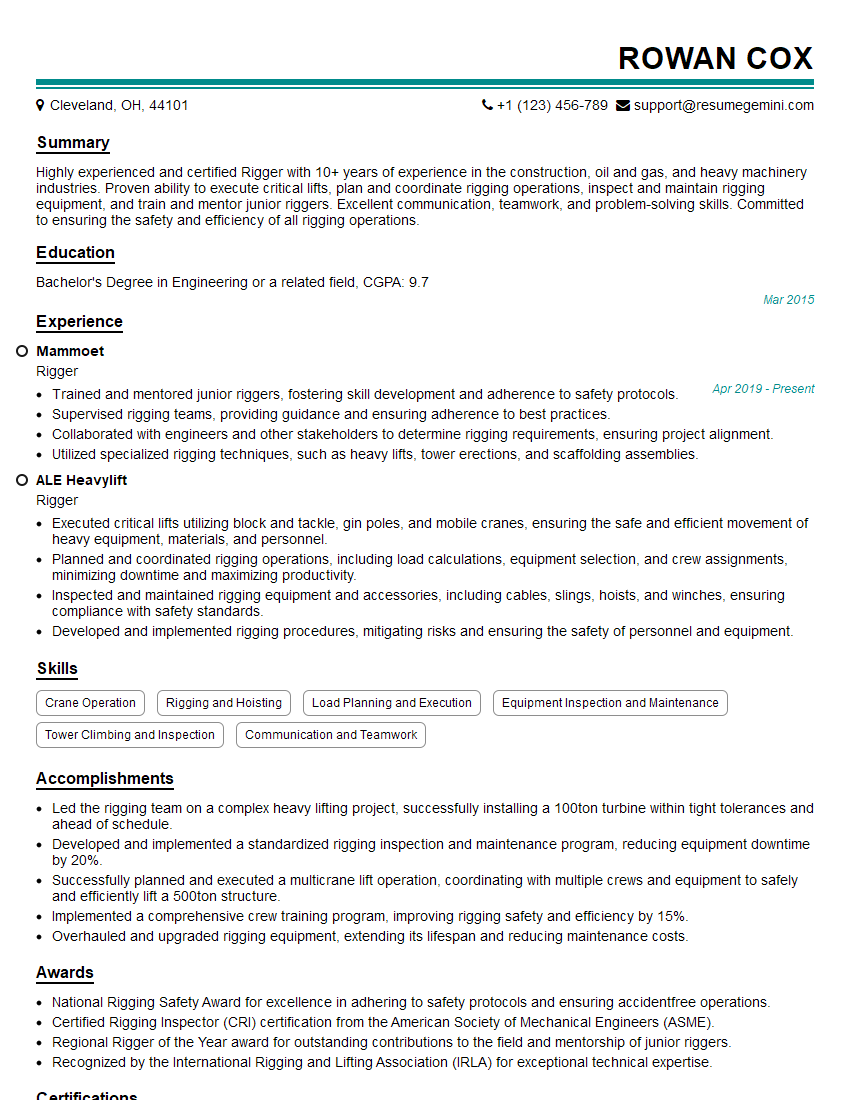
Mastering Troubleshooting and Repair of Hoisting Equipment is crucial for career advancement in this vital industry. It demonstrates a valuable skillset highly sought after by employers, leading to increased job security and higher earning potential. To significantly improve your job prospects, focus on creating an ATS-friendly resume that highlights your technical skills and experience effectively. ResumeGemini is a trusted resource that can help you build a professional and impactful resume tailored to your unique qualifications. Examples of resumes tailored to Troubleshooting and Repair of Hoisting Equipment are available to guide you through the process. Invest the time to create a strong resume – it’s your first impression and a key to unlocking your career aspirations.

Explore more articles
Users Rating of Our Blogs
Share Your Experience
We value your feedback! Please rate our content and share your thoughts (optional).
What Readers Say About Our Blog
Very informative content, great job.
good