Unlock your full potential by mastering the most common Tuning and Maintaining Musical Instruments interview questions. This blog offers a deep dive into the critical topics, ensuring you’re not only prepared to answer but to excel. With these insights, you’ll approach your interview with clarity and confidence.
Questions Asked in Tuning and Maintaining Musical Instruments Interview
Q 1. Explain the process of tuning a piano.
Tuning a piano involves adjusting the tension of each of its 230+ strings to achieve the correct pitch. It’s a meticulous process, often requiring specialized tools and a trained ear. We typically use a tuning hammer and an electronic tuner (or a tuning fork for a more traditional approach) to ensure accuracy.
The process usually starts with tuning a reference note, often A4 (440 Hz), then tuning other notes relative to it using harmonic relationships. This is often done in a specific order, working through octaves and employing various tuning methods depending on the piano’s temperament (e.g., equal temperament). Experienced tuners often rely on their ears to detect slight discrepancies even beyond what electronic tuners pick up, making fine adjustments until the instrument is in perfect harmony. It’s not simply a matter of tightening or loosening each string; a subtle approach is required, considering the interactions between strings.
After the initial tuning, a tuner will frequently re-tune the entire piano multiple times, as the strings settle and stretch slightly. This process is crucial to maintain the piano’s long-term stability and intonation.
Q 2. Describe different types of wood used in string instrument construction and their properties.
The wood used in string instrument construction significantly impacts their sound and longevity. The choice of wood is often a balance of strength, resonance, and aesthetic appeal. Here are a few examples:
- Spruce: Commonly used for the soundboard of violins, violas, and cellos, spruce is known for its lightness and responsiveness. Its ability to vibrate efficiently gives the instrument its rich projection and tone quality. Different spruce varieties, like Sitka or Engelmann, will have slightly different tonal properties.
- Maple: Frequently used for the back, sides, and neck of string instruments, maple offers strength and stiffness. The density of maple influences the instrument’s tone, with tighter-grained maple generally producing a brighter sound.
- Ebony: A prized wood for fingerboards due to its hardness and durability. Ebony provides a smooth, friction-reducing surface for the strings, enhancing playability.
- Rosewood: Historically used for the back and sides of high-end instruments, rosewood is known for its rich warmth and resonance. It is increasingly regulated, limiting its use in new instruments.
The selection of wood is often crucial, and the characteristics of each piece of wood dictate the unique qualities of the resulting instrument. Many makers meticulously select wood for grain patterns, density, and other properties to optimize the sound.
Q 3. How do you identify and repair cracks in a wooden instrument?
Identifying and repairing cracks in wooden instruments requires careful assessment and precise repair techniques. The first step is to determine the extent and cause of the crack. Is it superficial or deep? Is it caused by impact, temperature changes, or dry wood? Careful examination with a bright light can help reveal the full depth and direction of the crack.
For minor cracks, applying a strong, flexible adhesive such as hide glue or a specialized wood glue is often sufficient. The surfaces should be meticulously cleaned and the adhesive carefully applied to ensure a secure bond. Clamping is often necessary to hold the pieces together during the curing period. Sometimes, small wood splints or patches may need to be inserted to reinforce the repair from the inside if the crack is significant.
For more serious cracks, additional steps may be needed, potentially involving a luthier who can assess the situation and use more complex techniques like injecting consolidant into the crack to stabilize it before gluing, or even replacing sections of the instrument’s wood.
The goal of any repair is to restore the instrument’s structural integrity and aesthetic appeal. It’s crucial to choose a conservation-minded approach and use materials that will minimize further damage or negative impacts on the sound.
Q 4. What are the common problems encountered with brass instruments and their solutions?
Brass instruments are prone to several issues, many stemming from their use and exposure to the elements. Here are a few common problems and their solutions:
- Valve Problems: Sticky or sluggish valves are common, often due to corrosion or dirt buildup. Regular cleaning and lubrication are key, using a valve oil designed for brass instruments. In some cases, valves may require replacement.
- Leaks: Leaks can significantly affect the instrument’s tone and playability. They are often found in joints or valve casings. Locating leaks may require a professional evaluation and might involve using specialized leak detection tools.
- Dents and Dings: These affect the instrument’s appearance and may subtly impact the sound. In some cases, minor dents can be carefully tapped out with specialized tools, but significant damage may require professional repair or even replacement.
- Water Key Issues: Water keys are prone to clogging, especially if the instrument isn’t properly cared for after playing. Regular cleaning is essential, using specialized cleaning products designed for brass instruments to prevent buildup and corrosion.
- Lacquer Issues: Lacquer can wear, crack, or chip over time. While a small chip isn’t problematic, more extensive damage may require re-lacquering by a professional.
Regular cleaning, proper storage, and responsible playing habits are key to preventing many common brass instrument problems.
Q 5. Explain the process of voicing a piano.
Voicing a piano is the process of adjusting the hammers to influence the instrument’s tone quality and overall sound. It’s a highly skilled process that involves shaping and modifying the hammers to achieve the desired tonal balance and character.
This involves using specialized tools to carefully needle or file the hammer’s felt surface. The goal is to create a balanced sound across the entire keyboard range, ensuring a consistent and pleasing tone across all notes. This process influences parameters such as the tone’s brightness, warmth, and even the intensity of overtones and harmonics. Voicing can transform a piano’s sound – a dull-sounding piano can be revitalized through careful voicing.
Voicing is an art as much as it is a science. A skilled piano technician will use their ears and expertise to fine-tune the hammers until they achieve the desired sonic palette. It’s a process that often takes time and patience to perfect, and it often needs to be repeated periodically, as the hammers settle in and their felt compresses.
Q 6. How do you regulate the action of a piano?
Regulating a piano involves adjusting the mechanical components that transmit the keystrokes to the hammers, affecting the feel, responsiveness, and evenness of the touch. It’s a crucial step in maintaining a piano’s playability and ensuring a consistent playing experience.
Regulation includes adjusting several key components: The let-off, which is the point at which the key releases the hammer; the drop-distance, the distance the hammer falls before striking the string; and the repetition, affecting how quickly a note can be repeated. Each of these must be precisely adjusted to ensure an optimal playing experience. The action parts are painstakingly adjusted to ensure uniformity across the entire keyboard range.
Proper regulation is critical for a piano’s playability. An improperly regulated piano may feel uneven, difficult to control, or may not respond consistently across the keyboard. Professional regulation ensures that the piano responds precisely and predictably to the pianist’s touch.
Q 7. What are the common issues with violin bridges and how are they addressed?
The violin bridge is a crucial component, transferring string vibrations to the body of the instrument. Several issues can arise:
- Cracks: Cracks can weaken the bridge and impair its ability to transmit vibrations effectively. If the crack is significant, the bridge may need to be replaced.
- Foot slippage: The feet of the bridge may slip, causing buzzing or poor sound projection. This often needs a slight adjustment by a luthier to ensure the bridge is firmly seated.
- Height Issues: An incorrectly positioned bridge can lead to a variety of problems, including uneven tone, poor intonation, and difficulty playing. The height needs to be adjusted so strings are at optimal height above the fingerboard.
- Warping or Damage: Warping or damage can affect the bridge’s shape and function. A warped bridge often needs to be replaced.
Addressing these issues usually involves careful adjustments, often best made by an experienced luthier. They will consider the bridge’s position relative to the soundpost and the instrument’s body, making small but precise adjustments to restore optimal performance.
Q 8. Describe different types of guitar setups and when each is appropriate.
Guitar setups are crucial for playability and tone. They involve adjusting the action (string height), intonation (pitch accuracy across the fretboard), and neck relief (the curvature of the neck). Different playing styles and preferences necessitate different setups.
- Low Action Setup: This involves setting the strings very close to the fretboard. It’s preferred by players who like a fast, effortless feel, ideal for speedy solos and intricate fingerwork. However, it can lead to increased fret buzz if not carefully adjusted.
- High Action Setup: This involves setting the strings further from the fretboard. This is preferred by players who prioritize minimizing fret buzz, especially when using heavier gauge strings or playing aggressively. It provides a more stable feel but can feel less responsive.
- Standard Action Setup: This sits comfortably in the middle, providing a balance between ease of playing and minimized fret buzz. It’s a good starting point for most players.
The appropriate setup depends on the player’s style, the guitar’s construction, and the string gauge used. A professional setup is highly recommended for optimal playability.
Q 9. How do you diagnose and repair fret buzz on a guitar?
Fret buzz is a common issue caused by strings vibrating against the frets. Diagnosing it involves careful observation and methodical troubleshooting.
- Check the Neck Relief: Use a straight edge to check for excessive bow (too much curve) or back bow (too little curve) in the neck. Adjust the truss rod accordingly (a specialized tool within the guitar neck) to correct any issues. Too much relief can cause buzzing across the entire fretboard, while too little can cause buzzing only at the higher frets.
- Assess Action: Measure the string height at the 12th fret using a feeler gauge. If the action is too low, raise it using the bridge adjustment (this varies depending on bridge type). Too-low action is the most frequent cause of fret buzz.
- Inspect Fret Leveling: Uneven frets or high frets can cause buzzing at specific locations. This usually requires professional fret leveling and dressing.
- Check Nut Height: Too-high nut slots can restrict string movement, leading to buzzing at the lower frets. This often requires a professional to file the slots down.
Repairing fret buzz involves addressing the underlying cause. If it’s due to action, the bridge is adjusted. If it’s due to neck relief, the truss rod is adjusted. Fret problems necessitate professional intervention, often requiring specialized tools and expertise.
Q 10. How do you maintain the pads and springs of a clarinet?
Clarinet pads and springs are vital for airtight seals and proper key mechanism function. Maintaining them involves regular cleaning and occasional replacement.
- Pad Cleaning: Use a soft cloth and pad saver to gently clean the pads. Avoid harsh chemicals. Accumulated moisture and dirt can impede sealing, leading to leaks.
- Spring Lubrication: Occasionally, apply a small amount of specialized clarinet key lubricant to the springs to ensure smooth movement. Stiff or sticky keys indicate a need for lubrication.
- Pad Replacement: Over time, pads wear out and lose their elasticity. When pads become cracked, slow to seal, or no longer form an airtight seal, professional replacement is necessary. This should be performed by a skilled technician.
Regular maintenance of pads and springs is crucial for maintaining the clarinet’s intonation and preventing air leaks. Ignoring this can impact the instrument’s sound quality and responsiveness.
Q 11. What are the common problems with valve mechanisms in brass instruments?
Brass instrument valve mechanisms are complex systems that can suffer from various issues.
- Valve Alignment: Misaligned valves can cause sticking or sluggish response. Proper alignment is essential for smooth valve movement.
- Valve Springs: Weak or broken valve springs can impair valve function. Replacing worn-out springs is critical for maintaining responsiveness.
- Valve Slides: Valve slides need to move freely. Corrosion or build-up can cause sticking and prevent smooth action. Cleaning and lubrication can restore functionality.
- Leaks: Air leaks around the valves reduce efficiency and affect the tone. Identifying and sealing these leaks often requires specialized tools and knowledge.
Proper maintenance, including regular cleaning, lubrication, and periodic valve overhaul, are crucial for preventing these problems and ensuring optimal performance. Professional servicing is recommended for significant issues.
Q 12. How do you identify and repair a damaged soundboard on a string instrument?
A damaged soundboard on a string instrument is a serious issue requiring expertise to repair. Identification involves careful visual inspection for cracks, splits, or delamination.
- Assessment of Damage: The extent of the damage determines the repair method. Small cracks might be repaired with glue, while larger damage may require more extensive work, sometimes involving replacing sections of the soundboard.
- Repair Techniques: Methods include crack repair using hide glue, replacing sections with carefully matched wood, and even re-arching the soundboard. These are highly specialized procedures.
- Professional Assistance: Repairing a soundboard is a delicate process requiring significant skill and experience. It’s crucial to seek the services of a qualified luthier (string instrument maker/repairer).
Attempting a soundboard repair without the necessary skills can cause irreversible damage. It’s always best to entrust this to a knowledgeable professional.
Q 13. What are the differences between different types of guitar strings?
Guitar strings vary significantly in material, gauge (thickness), and winding. These factors impact tone, playability, and longevity.
- Material: Common materials include steel, nickel-plated steel, and bronze. Steel strings are bright and clear, while bronze strings offer a warmer tone.
- Gauge: Gauge refers to the string’s diameter. Lighter gauges (thinner strings) are easier to bend and provide a lighter touch, but can break more easily. Heavier gauges (thicker strings) offer a fuller, richer tone but require more effort to play.
- Winding: Wound strings (bass strings) have a metal wrap around a core wire, affecting tone and durability. Plain strings (treble strings) are single-wire.
Choosing the right strings depends on playing style, desired tone, and personal preference. Experimenting with different gauges and materials can help find the optimal setup.
Q 14. Explain the process of cleaning and polishing various instrument finishes.
Cleaning and polishing instrument finishes varies based on the type of finish (e.g., lacquer, shellac, polyurethane).
- Lacquer Finishes: These are delicate and require gentle cleaning with a soft cloth slightly dampened with distilled water. Avoid harsh chemicals or abrasive cleaners.
- Shellac Finishes: These are also sensitive and require similar cleaning methods as lacquer. Use a specialized shellac polish for a higher shine.
- Polyurethane Finishes: These are more durable and can tolerate slightly more aggressive cleaning, but still require gentle treatment.
- Polishing: Use a high-quality instrument polish to restore luster. Apply in thin layers and buff to a shine with a soft cloth. Avoid using excessive pressure.
Always test any cleaning product on an inconspicuous area first. Regular cleaning and polishing will keep the instrument looking its best and protect the finish from damage.
Q 15. Describe your experience with different types of instrument adhesives and their application.
Choosing the right adhesive is crucial in instrument repair, as it directly impacts the longevity and structural integrity of the instrument. Different adhesives are suited for different materials and repair types. My experience encompasses a wide range, including:
- Animal glues (hide glue): Traditionally used for wood, these are reversible, allowing for adjustments or future repairs. I often use hide glue for antique instrument restoration, ensuring authenticity. Its application requires careful temperature control for optimal bonding.
- Synthetic glues (polyvinyl acetate or PVA): These are strong, readily available, and generally water-resistant. They’re suitable for many wood repairs, but less ideal for delicate instruments where reversibility is a major concern. I frequently use PVA for minor cracks and seam repairs on guitars and violins.
- Epoxy resins: Excellent for filling gaps and creating strong bonds, particularly useful in structural repairs, such as broken instrument necks. However, they’re harder to clean up and can be more difficult to remove in the future. I carefully select specific epoxy types based on the material’s compatibility and the required working time.
- Cyanoacrylate (super glue): Very strong and fast-setting, useful for small repairs and bonding small parts. However, it requires extreme precision as it sets almost instantly. I employ this for minor cosmetic repairs or gluing small cracks, always ensuring excess glue is carefully removed.
Application techniques vary depending on the adhesive and the specific repair. This includes surface preparation (cleaning, sanding), accurate application using clamps or weights, and controlled curing time.
Career Expert Tips:
- Ace those interviews! Prepare effectively by reviewing the Top 50 Most Common Interview Questions on ResumeGemini.
- Navigate your job search with confidence! Explore a wide range of Career Tips on ResumeGemini. Learn about common challenges and recommendations to overcome them.
- Craft the perfect resume! Master the Art of Resume Writing with ResumeGemini’s guide. Showcase your unique qualifications and achievements effectively.
- Don’t miss out on holiday savings! Build your dream resume with ResumeGemini’s ATS optimized templates.
Q 16. How do you handle intricate repairs requiring specialized tools?
Intricate repairs demand specialized tools and a high level of precision. For example, repairing a cracked soundboard on a violin requires an array of tools beyond standard woodworking implements. I utilize:
- Microscopic tools: These include fine-tipped tweezers, specialized scalpels, and extremely small clamps for precise glue application and manipulation in tight spaces.
- Specialized clamps: These are crucial to ensuring even pressure across the repair area, preventing warping and ensuring a strong bond. I have a collection of clamps specifically designed for different instrument sections and repair types.
- Custom-made tools: In some cases, I design and fabricate my own tools to address specific repair challenges. For example, I have created a custom clamp for repairing broken pegboxes on string instruments.
- Magnification systems: Microscopes and magnifying glasses are invaluable for detailed work, allowing accurate identification and repair of minuscule cracks or damage.
Each repair presents a unique challenge, requiring adaptability and a toolbox that encompasses a wide range of specialized equipment. This meticulous approach ensures minimal damage and the preservation of the instrument’s structural integrity.
Q 17. What safety precautions do you take when working with musical instruments and tools?
Safety is paramount in my work. I adhere strictly to safety protocols when working with sharp tools, adhesives, and potentially hazardous materials. My safety practices include:
- Eye protection: Safety glasses are always worn when working with tools that could cause eye injury, such as chisels, saws, or when sanding.
- Respiratory protection: I use a dust mask when working with abrasive materials to prevent inhaling harmful particles. Some adhesives also release fumes, necessitating proper ventilation.
- Hand protection: Gloves are worn when handling potentially irritating or corrosive substances, such as certain glues or cleaning agents. Proper hand tools protect from cuts and abrasions.
- Sharp tool maintenance: Tools are kept sharp and in good condition to prevent accidents caused by slips or breakage.
- Workspace organization: My workspace is always clean and organized to minimize tripping hazards and prevent accidental damage to instruments or tools.
Regular tool maintenance and safe handling habits minimize risks and guarantee a safe working environment.
Q 18. What are the ethical considerations regarding instrument repair and restoration?
Ethical considerations are central to my work. My ethical practice is guided by several principles:
- Honesty and transparency: I provide clients with accurate assessments, transparent pricing, and realistic timelines for repairs. I clearly communicate any limitations or potential risks.
- Preservation of originality: I prioritize preserving the instrument’s original materials and craftsmanship whenever possible. Only necessary interventions are undertaken, and any alterations are documented.
- Use of appropriate materials: I select materials that are compatible with the instrument and won’t compromise its structural integrity or tonal qualities. I avoid using substandard or inferior materials.
- Respect for historical significance: When working on antique instruments, I exercise extreme care, employing historically appropriate repair techniques to maintain its historical authenticity.
- Client consent: All proposed repairs and their associated costs are discussed and agreed upon with the client before proceeding.
Maintaining these principles ensures that repairs respect the instrument’s history, value, and artistic integrity, while maintaining the client’s trust and satisfaction.
Q 19. How do you stay up-to-date with the latest advancements in instrument repair techniques?
Staying current in the field of musical instrument repair is crucial. I employ several strategies:
- Professional organizations: I actively participate in professional organizations such as the Violin Society of America and attend their workshops and conferences, which offer opportunities for networking and learning about new techniques and materials.
- Publications and journals: I regularly read specialized publications and journals focused on musical instrument making and repair, keeping abreast of the latest research and advancements.
- Workshops and courses: I regularly participate in workshops and courses led by leading experts in the field to enhance my skills and learn innovative repair techniques.
- Online resources: I access online forums and communities dedicated to instrument repair, sharing knowledge and learning from experienced colleagues worldwide.
- Mentorship: I actively seek mentorship from experienced luthiers and instrument repair specialists, learning from their expertise and real-world experiences.
Continuous learning is integral to providing top-tier repair services and maintaining the highest professional standards.
Q 20. Describe your experience with diagnosing and repairing electronic components in musical instruments.
My experience extends to diagnosing and repairing electronic components in musical instruments, particularly keyboards, guitars with electronic pickups, and other electro-acoustic instruments. This involves a deep understanding of electronics, including:
- Troubleshooting: I systematically troubleshoot electronic issues using multimeters, oscilloscopes, and other diagnostic tools to identify faulty components.
- Component replacement: I’m skilled in replacing faulty components, including capacitors, resistors, integrated circuits, and other electronic parts, often requiring soldering skills.
- Circuit board repair: I can repair damaged circuit boards, which sometimes requires intricate soldering, trace repair, and component level analysis.
- Wiring and soldering: I possess proficiency in working with various types of wires, connectors, and soldering techniques specific to electronic musical instrument repair.
- Pickup and preamplifier repair: I can diagnose and repair issues with electronic pickups and preamplifiers, including signal issues, noise problems, and impedance matching issues.
Repairing electronic components often requires specialized equipment and a strong understanding of circuitry, ensuring that the instrument’s electronic functions are restored to their optimal performance.
Q 21. How do you handle customer communication and expectations regarding repairs?
Effective communication is essential for successful instrument repair. I prioritize clear and transparent communication throughout the process:
- Initial consultation: I begin with a thorough assessment of the instrument, carefully explaining the nature of the damage, possible repair options, and associated costs. I answer all questions and concerns clearly.
- Regular updates: I keep clients informed about the progress of the repair, providing updates at appropriate intervals. This keeps clients informed and alleviates anxiety.
- Realistic expectations: I clearly set expectations regarding the repair timeline and outcome. I discuss any limitations or potential challenges beforehand to avoid disappointments.
- Post-repair communication: After the repair is complete, I carefully test the instrument and discuss the results with the client. I offer follow-up support to address any concerns.
- Professionalism and courtesy: I maintain a professional and courteous demeanor throughout the process, always demonstrating respect and consideration for the client’s instrument and their investment.
This meticulous communication approach fosters trust, enhances the client experience, and ultimately ensures client satisfaction.
Q 22. How do you prioritize multiple repair jobs and manage your workload?
Prioritizing repair jobs involves a blend of urgency, instrument type, and client needs. I use a system that combines a prioritized task list with client communication. Urgency dictates immediate attention – a broken string on a violin about to be played at a concert takes precedence over a routine cleaning. I also factor in the complexity of the repair. A major overhaul of a grand piano will naturally take longer than a simple adjustment to a clarinet. Finally, I maintain open communication with clients, providing estimated timelines and updating them on progress. This helps manage expectations and ensures everyone is informed.
For example, I might use a Kanban board (physical or digital) to visualize the workflow. Urgent jobs are placed in the ‘In Progress’ column, followed by jobs based on complexity and client deadlines. This allows for clear visibility and efficient management of my workload, preventing bottlenecks and ensuring timely completion of all repairs.
Q 23. What is your experience with different types of instrument cases and their maintenance?
My experience with instrument cases spans various materials and designs. Hard-shell cases, typically made of ABS plastic or fiberglass, offer excellent protection against impacts and environmental factors like humidity and temperature fluctuations. However, they can be heavy and expensive. Softshell cases, often constructed from nylon or canvas, are lighter and more portable, but provide less protection. I’m also familiar with hybrid cases that combine elements of both. Maintenance involves regular cleaning (avoiding harsh chemicals), inspecting latches and hinges for wear, and replacing worn-out padding or straps. The type of case greatly influences the instrument’s long-term condition; a poorly maintained case can lead to damage and premature wear on the instrument itself. For instance, a cracked hard-shell case might allow moisture to reach the instrument, causing damage to the wood or metal components.
Q 24. Describe a challenging instrument repair you successfully completed.
One of the most challenging repairs I tackled involved a severely cracked antique cello. The crack ran along the top, affecting the soundboard significantly. Traditional repair methods wouldn’t fully restore the structural integrity or tonal quality. After careful examination, I opted for a combination of techniques. First, I stabilized the crack using a specialized adhesive and meticulously cleaned the area. Then, I applied a thin layer of high-quality wood putty, carefully matching the grain and color of the existing wood. Finally, I used a combination of traditional and modern techniques to ensure there was minimal change to the cello’s original sound. The client was incredibly pleased with the result; the cello’s structural integrity was restored, and its voice was as rich and resonant as ever. This repair required patience, precision, and a deep understanding of the instrument’s construction and acoustics. It highlighted the importance of understanding the history and value of instruments to correctly determine the best course of repair.
Q 25. What are your troubleshooting skills for identifying and resolving instrument problems?
My troubleshooting approach is systematic and combines listening, observation, and testing. I start by carefully listening to the instrument’s sound to pinpoint the problematic area. Visual inspection helps identify physical issues, such as cracks, loose parts, or wear and tear. I then perform targeted tests to isolate the exact cause. For example, if a guitar has buzzing strings, I’ll check the string height, nut slots, and bridge for alignment issues. If a piano is out of tune, I carefully examine the tuning pins and check for any potential issues within the mechanisms, including broken hammers or dampers. Each instrument requires a unique approach; my understanding of their complex mechanisms allows me to systematically diagnose and solve a wide range of problems. I always document my findings thoroughly, creating a trail for future reference if the issue recurs.
Q 26. What software or technology do you utilize for instrument repair and maintenance?
While many aspects of my work are hands-on, I do use technology to aid in efficiency and precision. I use digital calipers for precise measurements during repairs and adjustments, ensuring accuracy down to fractions of a millimeter. Software like CAD (Computer-Aided Design) can be useful for creating custom templates and visualizing complex repairs, especially when dealing with intricate inlays or restorations. I also maintain a digital inventory of parts and suppliers, streamlining ordering and ensuring I have the necessary materials on hand. Digital photography and video recording help document repair processes and share progress with clients.
Q 27. How do you ensure the quality of your work meets professional standards?
Ensuring quality involves a multi-faceted approach. I adhere strictly to established best practices for each instrument type, using high-quality materials and tools. Thorough testing after each repair is crucial. This involves playing the instrument (if applicable), checking for proper intonation, and assessing overall playability and sound quality. Client feedback is highly valued; I encourage open communication and address any concerns promptly. Continuing education and keeping abreast of the latest repair techniques and technologies are also essential for maintaining professional standards. My commitment to precision, attention to detail, and client satisfaction is the foundation of my work, helping me uphold the highest level of professional standards.
Key Topics to Learn for Tuning and Maintaining Musical Instruments Interview
- Acoustics and Sound Production: Understanding the physics of sound, resonance, and how they relate to instrument tuning and maintenance. Practical application: Diagnosing buzzing or dead notes based on understanding vibrational patterns.
- Instrument-Specific Tuning Techniques: Mastering the unique tuning methods for various instruments (e.g., piano temperament, guitar intonation, violin adjustments). Practical application: Demonstrating proficiency in tuning different instrument types accurately and efficiently.
- Maintenance Procedures: Knowing the appropriate cleaning, lubrication, and repair techniques for different instrument types. Practical application: Describing the steps involved in a common repair, like replacing strings or adjusting bridge height.
- Troubleshooting and Problem-Solving: Identifying and resolving common issues such as intonation problems, buzzing strings, or damaged parts. Practical application: Explaining a systematic approach to diagnosing and fixing instrument malfunctions.
- Materials and Tools: Familiarity with the various tools, materials, and equipment used in tuning and maintaining instruments. Practical application: Identifying the correct tools for a specific task and explaining their proper usage.
- Health and Safety: Understanding and implementing safe practices when working with instruments and tools. Practical application: Explaining safety precautions when handling sharp objects or working with potentially hazardous materials.
- Regulatory Compliance: Awareness of any relevant regulations or standards related to instrument repair and maintenance. Practical application: Discussing relevant industry standards or legal requirements related to the profession.
Next Steps
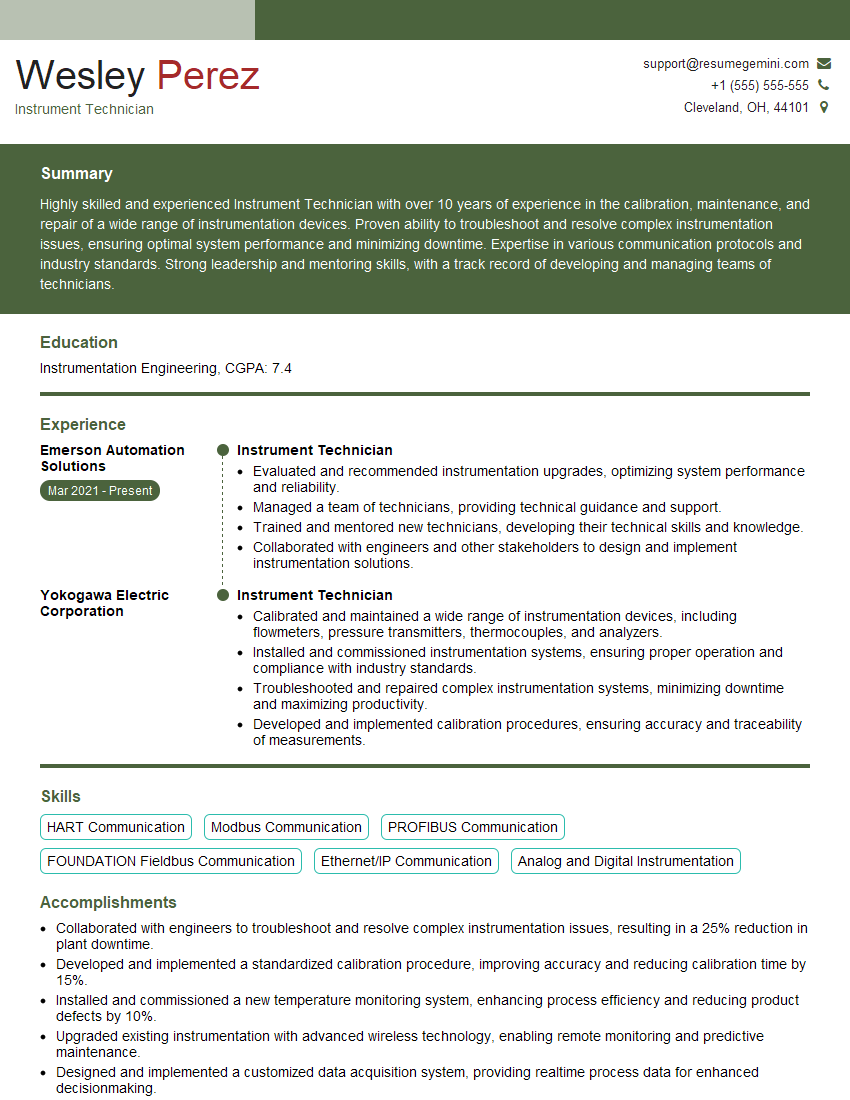
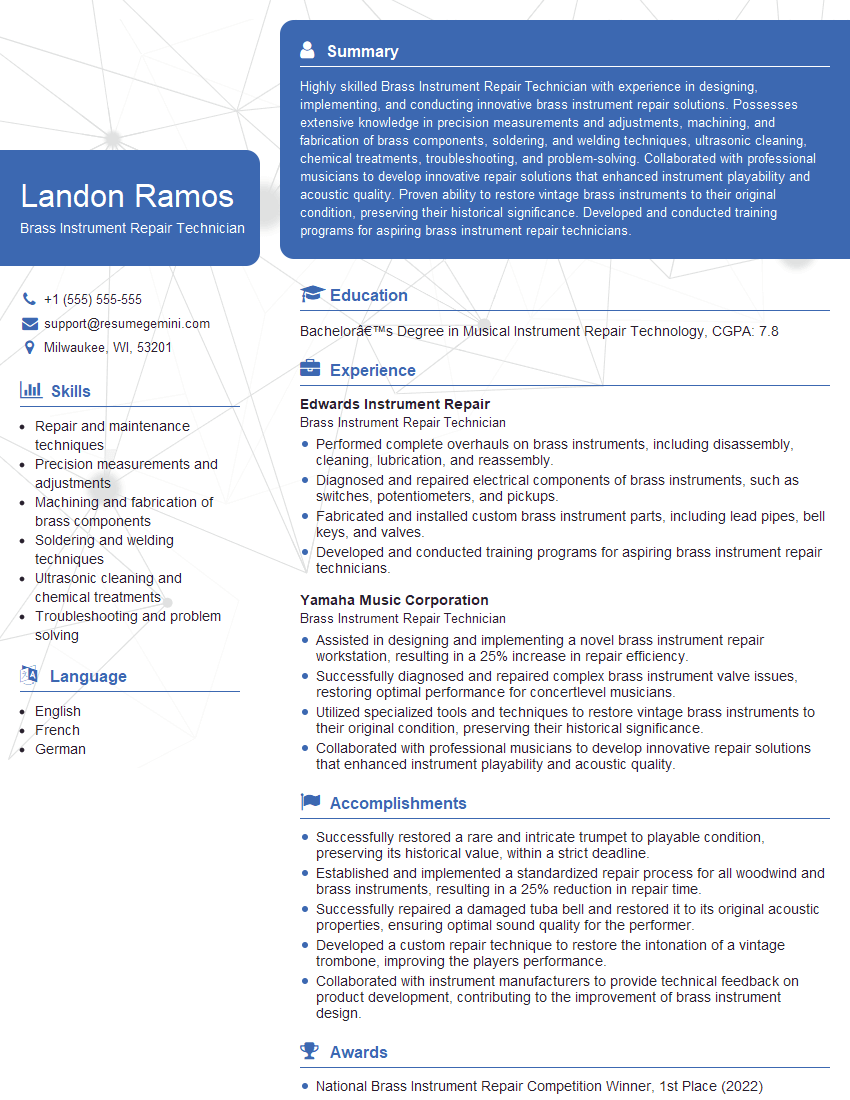
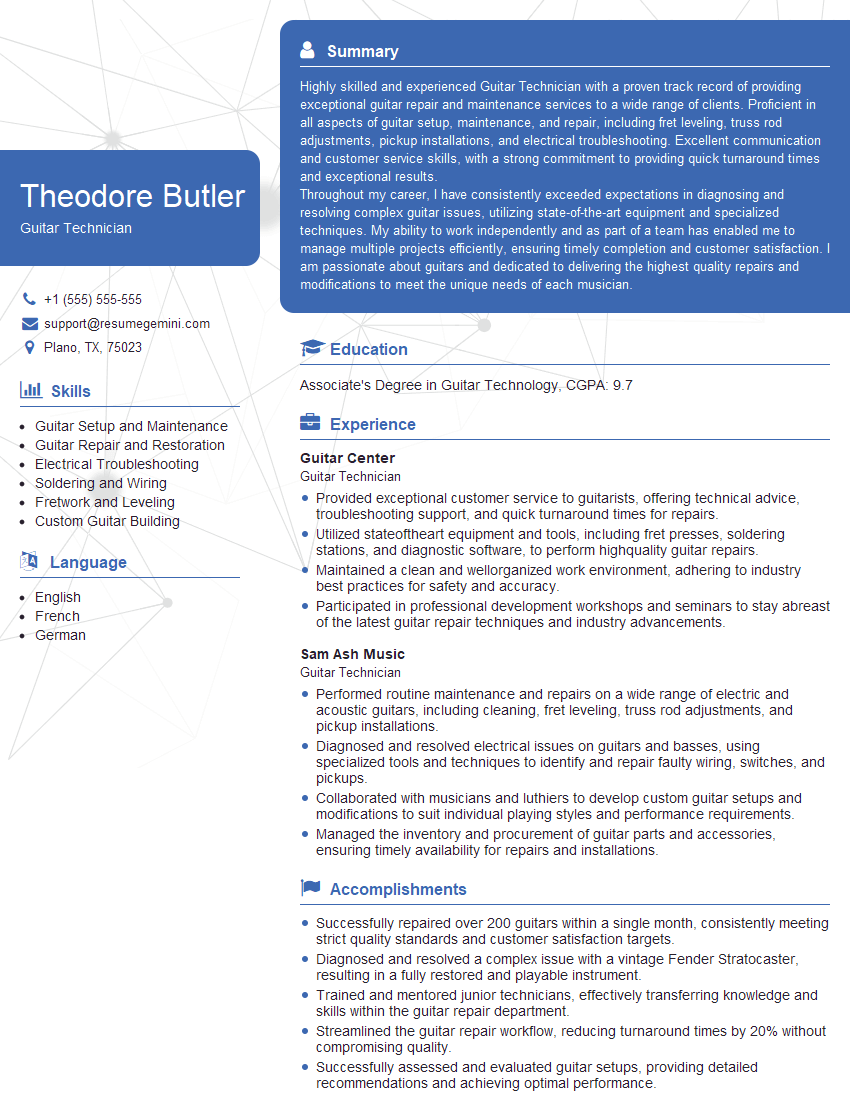
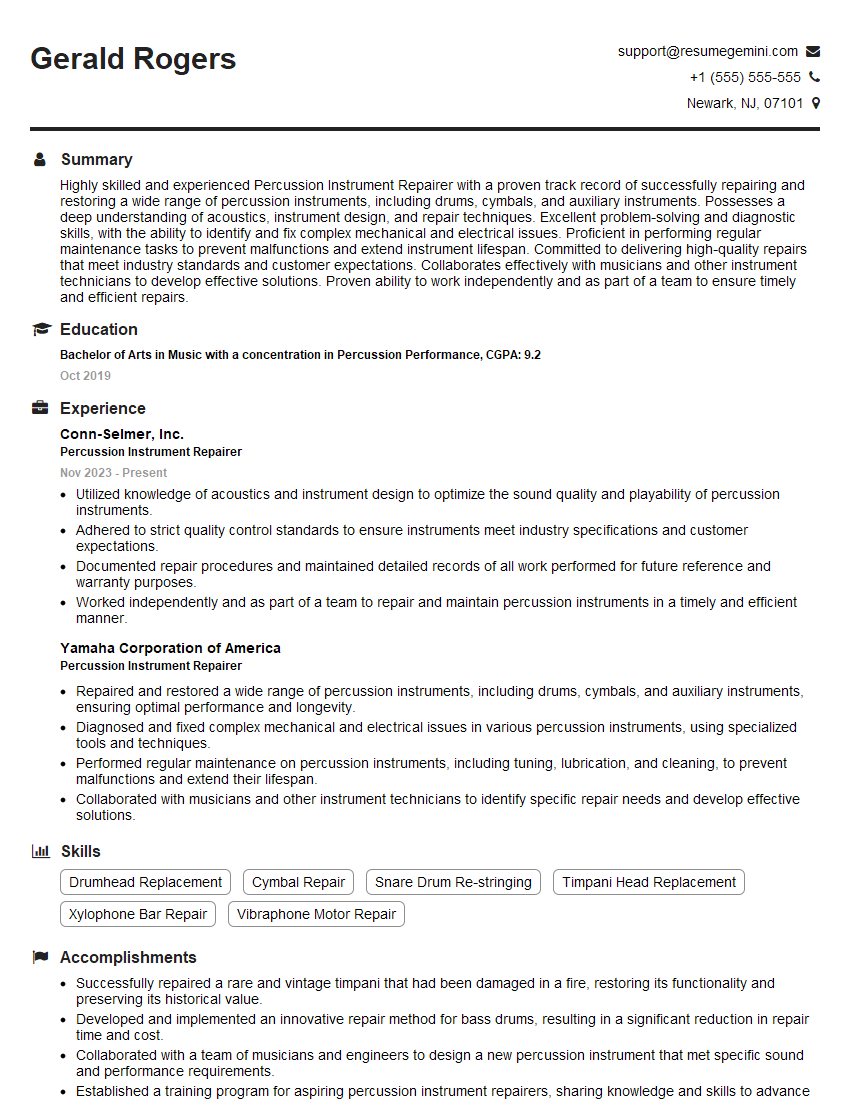
Mastering the art of tuning and maintaining musical instruments opens doors to diverse and rewarding career opportunities. A strong understanding of these skills demonstrates dedication, precision, and problem-solving abilities – highly sought-after qualities in this field. To maximize your job prospects, it’s crucial to present your qualifications effectively. Creating an ATS-friendly resume is key to getting your application noticed by potential employers. ResumeGemini is a trusted resource that can help you build a professional and impactful resume tailored to highlight your expertise in tuning and maintaining musical instruments. Examples of resumes specifically designed for this field are available to help guide you. Take the next step towards your dream career today!


Explore more articles
Users Rating of Our Blogs
Share Your Experience
We value your feedback! Please rate our content and share your thoughts (optional).
What Readers Say About Our Blog
Very informative content, great job.
good