Interviews are more than just a Q&A session—they’re a chance to prove your worth. This blog dives into essential TV and Radio Production interview questions and expert tips to help you align your answers with what hiring managers are looking for. Start preparing to shine!
Questions Asked in TV and Radio Production Interview
Q 1. Describe your experience with different audio recording techniques.
My experience with audio recording techniques spans a wide range, from basic mono recording to complex multi-track setups. I’m proficient in various microphone techniques, understanding the nuances of different microphone types – condenser, dynamic, ribbon – and their applications in diverse recording environments. For instance, I’d use a cardioid condenser mic for capturing crisp vocals in a studio setting, while a shotgun mic would be ideal for capturing dialogue on a bustling film set.
I also have extensive experience with field recording, employing techniques like ambient sound recording to add realism and atmosphere to projects. This involves meticulously planning mic placement to capture the desired soundscape, mitigating unwanted noise through strategic positioning and utilizing techniques like parabolic reflectors to isolate distant sound sources. Furthermore, I am adept at using digital audio workstations (DAWs) for multi-track recording and editing, understanding the importance of proper gain staging and signal flow to achieve optimal audio quality. I have experience with techniques like noise reduction, equalization, and compression to enhance the final audio product. I’ve worked on projects ranging from intimate interviews to large-scale orchestral recordings, adjusting my approach according to the specific needs of each project.
Q 2. Explain your workflow for editing a radio program.
My workflow for editing a radio program is methodical and precise, focusing on clarity and narrative flow. It typically involves these steps:
- Ingestion and Organization: I start by importing all recorded audio files into my chosen DAW (typically Audacity or Adobe Audition). I then meticulously organize the files into a logical structure for easy access.
- Rough Cut: I create a rough assembly, piecing together the essential elements of the program – interviews, music, sound effects – to establish a basic structure and timeline.
- Refinement and Editing: This involves cleaning up the audio, removing unwanted noises and blemishes, applying audio effects like equalization and compression to enhance clarity and balance. This is where I focus on seamless transitions between segments and tightening the overall pacing.
- Adding Music and Sound Effects: Music and sound effects are carefully selected and integrated to enhance the program’s mood and narrative, keeping in mind the pacing and overall feel. This involves making sure the audio levels of these components are balanced with the other elements.
- Mixing and Mastering: Once the elements are in place, I meticulously mix the audio, adjusting levels, panning, and adding final touches to achieve a polished and professional sound. Mastering ensures the audio is optimized for broadcast, considering factors like loudness and dynamic range.
- Export and Delivery: Finally, I export the final audio file in the required format for broadcast, whether it’s a WAV or MP3 file, ensuring it meets the station’s technical specifications.
Q 3. What software are you proficient in for video editing?
My video editing proficiency includes several industry-standard software packages. I’m highly proficient in Adobe Premiere Pro, utilizing its advanced features for nonlinear editing, color correction, and audio mixing. I’m also experienced with Avid Media Composer, which is particularly well-suited for larger-scale productions. My skill set extends to DaVinci Resolve, a powerful tool for color grading and visual effects. I’m comfortable working with various codecs and formats and adapt my software choices to the specific demands of each project, choosing the tool best suited for efficiency and maximizing creative potential.
Q 4. How do you manage a team during a live broadcast?
Managing a team during a live broadcast requires clear communication, proactive planning, and quick problem-solving. Before the broadcast, I emphasize thorough rehearsals and establish clear roles and responsibilities for each team member. During the broadcast, I maintain constant communication through headsets or dedicated communication channels, ensuring everyone is aware of the current status and any potential issues. I utilize a calm and assertive leadership style, guiding the team through unexpected problems efficiently. I’ve learned the value of anticipating potential issues and having backup plans in place. For example, having a secondary camera feed or a backup audio source can minimize the impact of technical failures. Trust and collaboration are key to successful teamwork. A strong sense of collective responsibility is instilled, fostering mutual support and problem-solving.
Q 5. Describe your experience with on-site sound mixing.
On-site sound mixing demands a blend of technical skill and creative judgment. I begin by carefully assessing the location’s acoustics and potential noise sources, planning microphone placement strategically to capture optimal sound while minimizing interference. This often involves using boom mics for dialogue, lavalier mics for talent, and various other microphones for environmental sounds. I use a mixing console to control and balance these various audio sources, adjusting levels and applying equalization and compression in real-time to ensure optimal clarity and balance. In situations with limited resources, my experience allows for resourceful problem-solving, such as creating makeshift windshields or utilizing noise-canceling techniques to overcome environmental challenges. Successful on-site sound mixing also involves coordinating effectively with the camera crew to ensure smooth and synchronized operation. One memorable challenge involved mixing sound during a live outdoor concert with unpredictable wind gusts—this required rapid adjustments to microphone placement and equalization to ensure the audience could clearly hear the music.
Q 6. How do you handle unexpected technical issues during a shoot?
Handling unexpected technical issues requires a combination of preparedness, problem-solving skills, and a calm demeanor. A crucial part of my approach is proactive planning – I always have backup equipment, ensuring redundancy in critical areas like cameras and audio systems. When an issue arises, I focus on a systematic approach: first, identify the problem; second, assess the impact on the shoot; and third, develop and implement a solution. My approach is to remain calm and communicate effectively with the team, clearly outlining the issue and the steps being taken to resolve it. This prevents panic and maintains morale. In situations where a quick fix isn’t possible, I’ll work to mitigate the damage by adjusting the schedule, finding creative workarounds, or adapting the shooting plan as necessary. This might involve shifting to a different camera angle or temporarily halting the production to allow for repairs. I often emphasize the importance of detailed pre-production planning and thorough equipment checks to reduce the likelihood of technical issues. A recent shoot involved a sudden power failure – having backup batteries allowed us to complete the scene with minimal delay.
Q 7. What’s your approach to storyboarding for a television program?
My approach to storyboarding for a television program is highly collaborative and visual. I begin by closely studying the script, identifying key scenes, character interactions, and emotional beats. I then translate this information into a series of sketches or digital drawings, conveying the visual composition of each shot, the camera angles, movement, and lighting. This helps to visualize the flow and pace of the story. The storyboard doesn’t just show what happens; it also communicates the emotional tone and visual style. I use clear and concise annotations to add details about the scene’s setting, characters’ actions, dialogue cues, and technical specifications. This visual roadmap ensures that everyone involved – from the director to the cinematographer to the actors – has a unified vision for the production. I present my storyboard in a way that fosters collaboration, encouraging feedback and input from other team members. This process not only enhances visual communication but also helps avoid potential inconsistencies during filming. I find using digital storyboarding software like Storyboard Pro or Adobe Photoshop to be most effective for my workflow and ease of sharing and collaboration.
Q 8. Explain your understanding of broadcast regulations.
Broadcast regulations are the rules and guidelines governing the content and operation of television and radio stations. These regulations vary by country and are designed to protect the public interest, prevent harmful content, and ensure fair competition. They cover a wide range of aspects, including:
- Content Restrictions: Limits on violence, profanity, hate speech, and sexually explicit material. For example, the FCC in the US has specific guidelines around indecent material broadcast during certain hours.
- Licensing and Ownership: Rules governing who can own and operate broadcast stations, often with limits on the number of stations a single entity can control to prevent monopolies.
- Technical Standards: Specifications for signal quality, broadcast frequencies, and transmission methods to ensure consistent reception and prevent interference.
- Advertising and Sponsorship: Regulations on the amount and type of advertising permitted, often including disclosures of sponsorships and product placement.
- Political Broadcasting: Rules ensuring fair and equal access to airtime for political candidates during elections. This often includes mandated free airtime and equal opportunity provisions.
Understanding and adhering to these regulations is crucial for avoiding fines, license suspension, and reputational damage. Staying updated on changes and seeking legal counsel when necessary are key components of responsible broadcasting.
Q 9. How do you ensure quality control in a post-production environment?
Quality control in post-production is a multi-stage process that aims to deliver a polished, error-free final product. It begins early in the process, during the initial ingest of footage and audio. This includes:
- Ingest and Organization: Properly labeling and organizing all source material is paramount. We use a consistent naming convention and a well-defined project folder structure to prevent any confusion. Think of it like a meticulously organized library – easy to find what you need.
- Editing Quality Checks: Regular reviews of the edit are essential, focusing on continuity, audio sync, picture quality, and adherence to the script or storyboard. We often implement a system of ‘internal reviews’ where different team members check each other’s work.
- Color Correction and Grading: Consistent color across the entire project is crucial. We use calibrated monitors and color grading software to ensure a uniform look.
- Sound Mixing and Mastering: The audio undergoes multiple stages of mixing and mastering to optimize clarity, balance, and overall audio quality. We check for any unwanted noise or distortions.
- Final Review and Export: A final comprehensive review is conducted to identify any remaining issues before the project is exported in the appropriate format for broadcast.
Utilizing professional software, employing standardized workflows and collaborative team communication are integral to our approach to ensure a consistently high standard of quality.
Q 10. Describe your experience with different camera setups.
My experience encompasses a wide range of camera setups, from single-camera shoots to complex multi-camera productions. I’m proficient in:
- Single-camera setups: Common in documentaries and interviews, these involve strategic camera placement to capture compelling visuals. I have experience with various shooting styles, from handheld documentary style to carefully planned cinematic shots. This setup requires more post-production work.
- Multi-camera setups: Frequently used in live events, talk shows, and studio productions. This usually involves coordinating several cameras simultaneously to capture different angles and perspectives. The use of a switcher (video mixing console) is key in this setup. I’ve worked with setups using up to eight cameras, requiring precise planning and excellent communication among the camera operators.
- Remote camera control: Increasingly important with the rise of remote productions, this allows for controlling cameras and adjusting settings remotely. Experience with robotic cameras and dedicated control software has allowed me to participate in productions that span great distances.
- Camera types: I am experienced with a variety of camera types, including DSLR cameras, professional broadcast cameras, and even using smartphone cameras in specific situations, always considering the image quality and production goals.
Understanding the strengths and limitations of different camera setups and selecting the appropriate equipment for each production is a critical skill for efficient and high-quality output.
Q 11. How do you prioritize tasks during a busy production schedule?
Prioritizing tasks during a busy production schedule requires a structured approach. I utilize a combination of techniques, including:
- Project Management Software: Tools like Asana or Trello help in assigning tasks, setting deadlines, and tracking progress. This provides a clear visual representation of the workload.
- Gantt Charts: These charts visually represent project timelines, helping in identifying dependencies between tasks and potential bottlenecks. This helps to avoid delays.
- Daily/Weekly Planning: I start each day by reviewing the schedule and prioritizing tasks based on urgency and importance. The most critical tasks get tackled first.
- Communication and Collaboration: Open communication with the team is key to ensure everyone is on the same page. I address challenges promptly to prevent cascading delays.
- Contingency Planning: Building in buffer time for unexpected issues is vital in managing risk and avoiding stress.
Essentially, it’s about proactively managing the workflow, anticipating potential problems, and maintaining clear communication to stay on track amidst the pressure of deadlines.
Q 12. What’s your approach to working with talent (on-air personalities)?
My approach to working with talent is built on collaboration, respect, and clear communication. It’s all about building a rapport that fosters trust and helps them perform at their best. This includes:
- Pre-Production Meetings: I schedule thorough meetings with the talent to discuss the project goals, their roles, and any specific concerns they may have. This helps establish expectations upfront.
- On-Set Guidance: I provide clear and concise directions, offering support and guidance throughout the production. I also listen to their suggestions and try to incorporate them wherever possible, remembering that the talent brings unique value and perspective.
- Creating a Comfortable Environment: I strive to create a relaxed and professional atmosphere on set, fostering a collaborative environment where they feel comfortable and confident.
- Post-Production Feedback: I provide constructive feedback on their performances after the shoot, focusing on specific areas for improvement while highlighting their strengths.
Ultimately, working effectively with talent is about building a partnership where mutual respect and clear communication lead to exceptional results.
Q 13. Explain your experience with live streaming technologies.
My experience with live streaming technologies is extensive. I am familiar with various platforms and technologies, including:
- Streaming Platforms: I’ve worked with platforms like YouTube Live, Facebook Live, Twitch, and Vimeo Livestream, understanding their unique features and capabilities.
- Encoding and Streaming Software: I am proficient in using software like OBS Studio, Wirecast, and vMix for encoding and streaming high-quality video and audio, making informed decisions based on the production’s needs.
- Live Streaming Protocols: I have a solid understanding of protocols like RTMP (Real-Time Messaging Protocol) and HLS (HTTP Live Streaming) and how they impact stream quality and reliability.
- Hardware: I understand the importance of reliable equipment such as encoders, cameras, and microphones, as well as network connectivity, understanding that a stable internet connection is essential for a flawless live stream.
- Remote Production Workflow: I’ve successfully managed multiple remote live stream productions, utilizing tools for collaboration and remote control.
Live streaming presents unique challenges, especially when dealing with unpredictable technical factors, such as fluctuating internet bandwidth or equipment malfunctions. Having contingency plans and backup solutions in place is crucial.
Q 14. How do you handle feedback from clients or supervisors?
Handling feedback effectively is a vital skill in any creative field. My approach is based on active listening, thoughtful consideration, and clear communication. I:
- Actively Listen: I pay close attention to the feedback, ensuring I fully understand the points raised. This may include asking clarifying questions.
- Consider the Source: I weigh the feedback based on the source’s expertise and perspective. Constructive criticism from a seasoned client is valued differently than a complaint from a disgruntled viewer.
- Document Feedback: I meticulously record all feedback received, using it to identify areas for improvement in future projects.
- Communicate Respectfully: I respond to feedback with professionalism and respect, acknowledging the value of the input, even if I disagree with some points.
- Implement Changes: Where applicable, I implement the suggested changes, ensuring that any necessary alterations align with the overall project goals and maintain a high standard of quality.
Constructive feedback, even if initially perceived as negative, is an invaluable opportunity to grow and improve. Embracing it as a learning process leads to better work in the future.
Q 15. What strategies do you use for effective audio post-production?
Effective audio post-production hinges on a meticulous approach, combining technical skill with artistic sensibility. It’s more than just fixing mistakes; it’s about sculpting the soundscape to enhance the narrative and emotional impact.
- Noise Reduction and Restoration: I utilize advanced noise reduction techniques, carefully balancing noise removal with the preservation of the audio’s natural character. For instance, I might use spectral editing to remove specific frequencies of unwanted hum or hiss without affecting the dialogue or music. I’m proficient with tools like iZotope RX and Adobe Audition.
- Dialogue Editing and Mixing: This involves cleaning up dialogue, synchronizing audio with video, and adjusting levels for optimal clarity. Techniques like ADR (Automated Dialogue Replacement) might be necessary if there’s background noise obscuring lines. Careful attention is paid to ensuring dialogue is well-balanced with music and sound effects.
- Sound Design and Effects: Creating immersive soundscapes is a crucial part of post-production. I collaborate closely with the director and editor to build the sonic world appropriate to the program’s genre and mood. This might involve selecting and modifying sound effects, creating foley (replacing sounds with corresponding ones recorded in a studio), or composing original music.
- Mixing and Mastering: This final stage involves balancing all audio elements to create a cohesive and polished final product. This includes adjusting volume levels, panning audio across the stereo field, and applying subtle dynamic processing to achieve a professional sound.
For example, in a documentary, I might use ambient sounds to create a sense of place, while in a drama, I’d carefully layer sounds to build tension or create emotional moments. The goal is always to make the audio enhance the viewer’s experience, not distract from it.
Career Expert Tips:
- Ace those interviews! Prepare effectively by reviewing the Top 50 Most Common Interview Questions on ResumeGemini.
- Navigate your job search with confidence! Explore a wide range of Career Tips on ResumeGemini. Learn about common challenges and recommendations to overcome them.
- Craft the perfect resume! Master the Art of Resume Writing with ResumeGemini’s guide. Showcase your unique qualifications and achievements effectively.
- Don’t miss out on holiday savings! Build your dream resume with ResumeGemini’s ATS optimized templates.
Q 16. How familiar are you with different microphone types and their applications?
My familiarity with microphone types and their applications is extensive. The choice of microphone depends entirely on the recording environment, desired sound quality, and budget constraints. Different mics excel in different situations.
- Condenser Microphones: Highly sensitive, capturing detail and nuances, ideal for studio recording, voiceovers, and instruments requiring a transparent sound. Large-diaphragm condensers (LDCs) are perfect for vocals and acoustic instruments; Small-diaphragm condensers (SMDs) excel in capturing crisp, detailed instrument recordings.
- Dynamic Microphones: More robust and resistant to feedback, suitable for live events, field recordings, and loud instruments (e.g., drums, amps). They handle high sound pressure levels without distortion.
- Ribbon Microphones: Known for their warm, smooth sound, often used for recording vocals, guitars, and orchestral instruments. They are more fragile and require careful handling.
- Shotgun Microphones: Highly directional, minimizing ambient noise, ideal for film and television location sound, picking up distant audio sources clearly.
- Lavaliere (Lapel) Microphones: Small, clip-on mics for close-miking talent, providing clear audio without being visually intrusive. Often used in interviews or on-set recording.
In a recent project, we used a combination of shotgun microphones for capturing location audio in a bustling city street, and lavalier mics on the interview subjects to ensure clear dialogue. Choosing the correct microphone makes a significant difference in the overall production value.
Q 17. Describe your understanding of lighting techniques for television.
Lighting for television is crucial; it sets the mood, guides the viewer’s eye, and creates visual interest. Effective lighting is about more than just illuminating the scene—it’s about telling a story.
- Three-Point Lighting: A fundamental technique consisting of a key light (main light source), fill light (softening shadows), and back light (separating the subject from the background). This creates depth and dimension.
- High-Key Lighting: Creates bright, cheerful scenes with minimal shadows, often used in comedies or upbeat situations.
- Low-Key Lighting: Utilizes deep shadows, dramatic contrasts, and creates a moody, suspenseful atmosphere, suitable for thrillers or dramas.
- Color Temperature: Matching color temperatures (measured in Kelvin) of different light sources is essential to maintaining visual consistency. Different light sources have varying color temperatures—tungsten lights are warmer (around 3200K), while daylight is cooler (around 5600K). Proper color correction during post-production is vital to resolve these differences.
- Motivated Lighting: Using lighting to reflect sources within the scene; using a lamp on screen to illuminate the character is an example.
For example, in a courtroom drama, I might employ low-key lighting to heighten the tension and mystery, while a family sitcom might benefit from bright, high-key lighting to convey a positive atmosphere. I use color temperature gels to match lighting sources during filming, thus minimizing issues during post-production.
Q 18. How do you ensure the visual consistency of a television program?
Maintaining visual consistency in a television program is crucial for viewer engagement and credibility. It’s achieved through careful planning and execution at every stage of production.
- Shot Consistency: Maintaining consistent framing, composition, and camera angles throughout helps viewers navigate the narrative smoothly. A consistent style guide with detailed camera shot descriptions is created before production.
- Color Grading and Correction: Achieving a unified look across different scenes and shoots requires careful color grading and correction in post-production. This ensures a consistent tone and aesthetic, despite potential variations in lighting conditions.
- Editing and Continuity: Skilful editing is essential for maintaining continuity and eliminating jarring inconsistencies. This includes checking for accurate matching of costumes, hair, props, and background elements between shots.
- Set Design and Props: Consistency in set design and props strengthens the visual identity of the program. Detailed plans for set dressing are critical, ensuring the same color palettes, style, and elements appear throughout the production.
- Style Guide: A comprehensive style guide is vital to maintain consistency across departments.
For instance, if a character is wearing a specific piece of jewelry in one scene, it must be present in subsequent scenes. Any inconsistency can pull viewers out of the story. I utilize detailed shot lists and storyboards to ensure visual consistency from the planning stages onwards.
Q 19. What is your experience with different video codecs and formats?
My experience with video codecs and formats is broad, encompassing a range of options from older standards to the latest advancements. The choice of codec and format depends heavily on factors like resolution, bitrate, compression efficiency, and intended platform (broadcast television, streaming services, etc.).
- H.264 (AVC): A widely used codec providing a good balance between compression and quality, suitable for various applications, including broadcast and streaming. It’s mature, well-supported, and generally efficient.
- H.265 (HEVC): A newer codec offering higher compression rates at similar quality levels to H.264, resulting in smaller file sizes and reduced bandwidth requirements, particularly beneficial for high-resolution videos. Its adoption is still growing.
- ProRes (Apple ProRes): A family of codecs designed for professional post-production, offering excellent quality with minimal compression. Often used for intermediate editing formats, ensuring maximum quality throughout the editing process.
- DNxHD (Avid DNxHD): Another professional codec commonly used for editing and post-production, providing high-quality compression and excellent compatibility with professional editing systems.
- File Formats: Common video file formats include MOV, MP4, MXF, and AVI. The container format often depends on the codec used.
In a recent project involving 4K footage, we used ProRes for editing, ensuring maximum image quality, then exported the final product in H.265 for streaming platforms to optimize file sizes and reduce storage and bandwidth costs. The choice was carefully made to balance quality, efficiency, and platform requirements.
Q 20. How do you manage deadlines and budgets effectively?
Managing deadlines and budgets effectively in television and radio production demands a proactive and organized approach. It’s a juggling act requiring careful planning and consistent monitoring.
- Detailed Scheduling: Creating a detailed schedule with clear milestones and deadlines for each stage of production is essential. This schedule serves as a roadmap for the entire team.
- Budget Allocation: Developing a comprehensive budget that accounts for all anticipated expenses—personnel, equipment, location fees, post-production—is paramount. Regular budget tracking prevents overspending.
- Resource Management: Efficient management of personnel, equipment, and locations ensures the project progresses according to schedule and budget. This involves careful planning and resource allocation to maximize efficiency.
- Communication and Collaboration: Consistent and clear communication among team members is vital to prevent delays or budget overruns. Regular progress meetings and updated reports are crucial.
- Contingency Planning: Unexpected issues will undoubtedly arise. Having a contingency plan to address potential problems allows for quick responses, minimizing impact on timelines and budgets.
For example, in one fast-paced documentary shoot, we used a project management software to track tasks, deadlines, and budget allocation. Daily briefings ensured transparency and prompt identification of any challenges, preventing small problems from becoming significant delays.
Q 21. Explain your experience with scriptwriting for broadcast media.
My scriptwriting experience for broadcast media spans various genres, including documentaries, news programs, and promotional pieces. Writing for broadcast requires a unique skill set, understanding the constraints and opportunities offered by the medium.
- Concise and Engaging Language: Broadcast scripts prioritize clear, concise language that is easily understood by the intended audience. Complex vocabulary and lengthy sentences are avoided in favor of direct and impactful communication.
- Strong Narrative Structure: Effective broadcast scripts tell compelling stories. They usually follow a clear narrative structure, with a beginning, middle, and end. Visual elements are incorporated into the storytelling process.
- Visual Storytelling: Broadcast scripts often include detailed descriptions of visuals to guide the director, editor, and camera crew. This integration of visual elements enhances the storytelling process, making it richer.
- Adaptation to Format: Writing style is tailored to the specific broadcast format. A news script will differ significantly in style and content compared to a promotional piece. The tone and style are specific to the needs of the project.
- Collaboration: Working closely with producers, directors, and editors is essential for creating a compelling final product. It is a collaborative process, incorporating the expertise of different roles.
For a recent documentary, I collaborated with the director to craft a script that intertwined compelling narration with evocative visuals, building to a powerful climax. Knowing the capabilities and limitations of the medium and adapting to it, are essential for successful scriptwriting in broadcast media.
Q 22. Describe your understanding of different audio mixing consoles.
Audio mixing consoles are the central control units for managing and manipulating audio signals in broadcast and recording environments. They range from small, portable mixers suitable for basic recording to massive, sophisticated consoles used in large-scale productions. The core functionality remains consistent: combining multiple audio inputs, adjusting their levels (gain), equalization (EQ), and dynamics (compression, limiting), and routing them to outputs such as speakers or recording devices.
- Analog Consoles: These classic consoles use physical components to process audio. They are known for their warmth and character, often prized by audiophiles, but can be bulky and expensive to maintain.
- Digital Consoles: These utilize digital signal processing (DSP) for greater flexibility and precision. They offer recall of settings, automation, and integrated effects processing. Examples include Yamaha QL series and Avid S6.
- IP-based Consoles: These cutting-edge consoles rely on network technology for audio routing and control, offering remote access and scalability. This allows for distributed workflows in large productions, such as those incorporating remote studios.
In my experience, choosing the right console depends heavily on the project’s scope and budget. A small-scale podcast might benefit from a compact analog mixer, while a live television broadcast necessitates a larger, feature-rich digital or IP-based console capable of handling numerous channels and complex routing schemes. I’ve worked extensively with both analog and digital systems, understanding their strengths and limitations allows me to make informed choices for optimal audio quality and workflow.
Q 23. How do you incorporate visual effects into your video projects?
Incorporating visual effects (VFX) into video projects involves a multi-stage process, from initial planning through to final compositing. It’s crucial to understand the desired aesthetic and the limitations of the budget and time available.
- Pre-visualization: Storyboarding and planning are essential to establish the shots and effects needed.
- Shooting: Footage needs to be shot with VFX in mind; good composition, green/bluescreen techniques, and appropriate lighting significantly impact the post-production phase.
- Compositing Software: Software like Adobe After Effects, Nuke, or Fusion are vital for combining and manipulating footage, adding effects like keying, rotoscoping, particle effects, and 3D elements.
- Tracking and Stabilization: Often, footage requires stabilization or tracking to accurately integrate CGI elements seamlessly. This can involve tracking markers or sophisticated camera solvers.
- Rendering: The final composite is rendered, this process can be time-consuming and requires powerful hardware.
For example, in a recent documentary, we used After Effects to composite historical photographs seamlessly into present-day footage, creating a powerful juxtaposition. The choice of software, and the skill in using it, profoundly impacts the final product’s visual quality and realism.
Q 24. What is your experience with color grading and correction?
Color grading and correction are critical for ensuring a consistent and aesthetically pleasing visual narrative. Color correction focuses on fixing inconsistencies and inaccuracies in footage, while color grading enhances the mood and artistic style. I am proficient in using professional color grading software like DaVinci Resolve and Adobe Premiere Pro’s color tools.
Color correction involves adjusting aspects such as white balance, exposure, and contrast to make the footage look natural and consistent. Grading, on the other hand, is more creative, involving adjusting color saturation, hue, and tone to achieve a specific look, whether it’s a vibrant, saturated look or a desaturated, moody aesthetic. Think of the difference between restoring a faded photograph to its original colors (correction) versus creating a stylized sepia-toned version (grading).
In a recent music video, we used DaVinci Resolve to grade the footage to match a specific color palette, complementing the song’s mood and themes. This involved working with color wheels, curves, and other tools to finely tune the colors and achieve a specific artistic vision. My experience encompasses both film and broadcast standards, adapting my workflow to diverse styles and projects.
Q 25. Explain your approach to creating engaging content for radio.
Creating engaging radio content requires a deep understanding of audio storytelling and audience engagement. It is less about visuals and more about crafting narratives that are compelling, informative, and easily digestible through the auditory channel alone.
- Strong Scriptwriting: Precise and evocative language is key. Scripts must be concise, with clear pacing and engaging dialogue.
- Sound Design: Careful selection of music, sound effects, and ambient soundscape creates atmosphere and emotion, enhancing the narrative’s impact.
- Voice Talent: The voice is crucial. Choosing the right voice, along with direction and vocal coaching, ensures effective delivery and emotional impact.
- Sound Mixing: Balancing dialogue, music, and effects for clarity and dynamic range is critical for an enjoyable listening experience.
- Audience Awareness: Understanding the target audience and tailoring content to their interests, preferences, and expectations is vital for retention.
For example, in a recent radio drama, I employed a diverse soundscape – from bustling city sounds to the quiet tranquility of a forest – to create mood and emphasize transitions in the storyline. Mastering this balance between a narrative arc and the sonic environment is vital for creating captivating radio drama or even a simple news segment.
Q 26. How do you ensure accessibility in your broadcast productions?
Accessibility in broadcast productions ensures that content is accessible to everyone, regardless of any disability. This involves adhering to specific guidelines and incorporating features that cater to diverse needs.
- Closed Captions and Subtitles: These provide text-based transcripts of audio content for viewers with hearing impairments.
- Audio Description: This narrates visual elements for people with visual impairments, providing context and detail.
- Descriptive Video: This audio commentary describes the visual elements of a video to viewers with visual impairments.
- Appropriate Audio Levels: Ensuring that audio levels are balanced and avoid sudden loud or quiet sections avoids problems for people with hearing sensitivities.
- Consideration for Cognitive Disabilities: Simplifying language, using clear and concise wording, and maintaining consistent formatting can improve accessibility for viewers with cognitive disabilities.
We recently produced a documentary that included closed captions, audio description, and descriptive video. This comprehensive approach ensured the program’s accessibility to a broader audience, fulfilling our commitment to inclusive media creation. Adhering to accessibility standards is not just ethical but increasingly crucial to broadening your content’s reach and inclusivity.
Q 27. Describe your experience with remote broadcasting technologies.
Remote broadcasting technologies have revolutionized the way we produce content, enabling collaboration across geographical distances. My experience includes using various platforms and tools for remote production.
- Cloud-based platforms: Platforms like Zoom, Skype, and specialized broadcast platforms allow for live video conferencing and remote collaboration.
- IP-based audio routing: This allows audio signals to be transported over internet protocols, enabling remote mixing and audio control. This is essential for radio shows and remote interviews.
- Remote control software: This permits the control of studio equipment such as cameras, switchers, and audio consoles from remote locations.
- Secure file transfer: Secure methods for sharing files between remote collaborators and production teams are crucial.
- Live streaming technologies: Tools like OBS Studio and Wirecast facilitate broadcasting live content to various online platforms.
During the pandemic, we successfully produced a daily news program entirely remotely, utilizing a combination of Zoom for interviews and a cloud-based platform for audio mixing. The use of remote broadcasting technology is not only essential for efficiency and cost savings in many cases but also broadens creative possibilities by allowing us to work with talent and resources beyond the usual geographical limits.
Q 28. How do you stay current with industry trends and technologies?
Staying current in a rapidly evolving industry demands continuous learning and engagement. My strategies include:
- Professional Development: Attending industry conferences, workshops, and webinars is crucial to learn about new techniques and technologies.
- Industry Publications: Reading trade magazines and journals keeps me abreast of the latest advancements and trends in production techniques and tools.
- Online Resources: Utilizing online learning platforms and tutorials provide practical guidance and tutorials.
- Networking: Engaging with other professionals in the industry – through online communities, conferences, or informal networks – provides opportunities to share experiences, learn from best practices and discover innovative approaches.
- Experimentation: Hands-on experience with new technologies and workflows is essential to truly grasp their potential and limitations.
For example, I recently completed an online course on advanced color grading techniques in DaVinci Resolve, and I regularly attend industry events to network and learn from leading experts. Continuous professional development is not an option but a necessity in this dynamic field. The willingness to adapt and learn new approaches is key to maintaining a high standard of creative work.
Key Topics to Learn for Your TV and Radio Production Interview
- Storytelling and Narrative Structure: Understanding how to craft compelling narratives for both audio and visual mediums. Consider how different platforms demand different approaches to pacing and information delivery.
- Audio and Visual Production Techniques: Mastering microphone techniques, audio editing software (e.g., Audacity, Adobe Audition), video editing software (e.g., Adobe Premiere Pro, Final Cut Pro), and camera operation. Be ready to discuss your experience and proficiency levels.
- Production Workflow and Management: Familiarity with pre-production planning (scriptwriting, storyboarding, scheduling), production (shooting, recording, on-set management), and post-production (editing, sound mixing, color correction). Discuss your experience collaborating effectively within a team.
- Technical Aspects: Understanding basic broadcast equipment, signal flow, audio levels, video formats, and codecs. Be prepared to discuss troubleshooting common technical issues.
- Broadcast Regulations and Ethics: Familiarity with broadcasting standards, legal considerations, and ethical responsibilities. Show you understand the importance of accuracy and responsible content creation.
- Adaptability and Problem-Solving: The ability to think on your feet, adapt to unexpected challenges, and find creative solutions to technical or logistical problems on set or in the studio is crucial. Prepare examples demonstrating this skill.
Next Steps
Mastering TV and Radio Production opens doors to a dynamic and rewarding career with diverse opportunities. To maximize your job prospects, create a compelling, ATS-friendly resume that showcases your skills and experience effectively. ResumeGemini is a trusted resource that can help you build a professional resume that stands out. We provide examples of resumes tailored specifically to the TV and Radio Production industry to give you a head start. Take the next step towards your dream career – craft a resume that reflects your unique talents and experience.
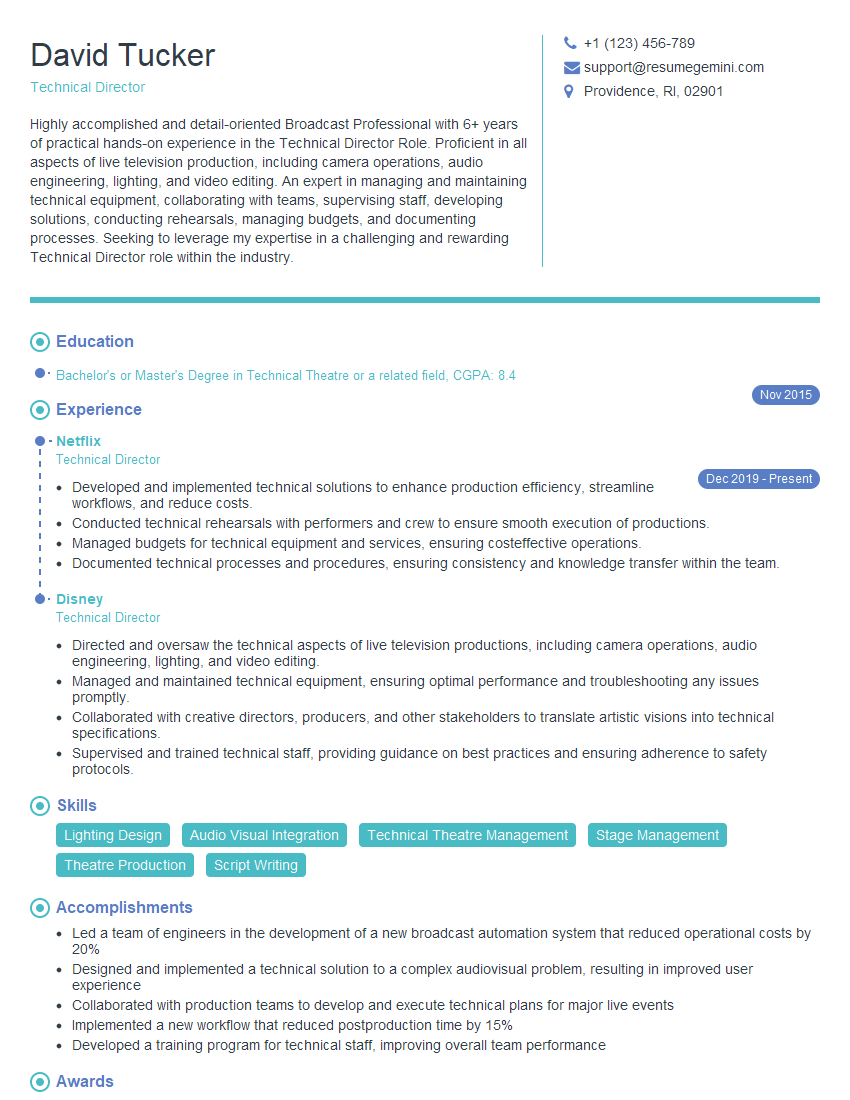
Technical Director Resume Sample
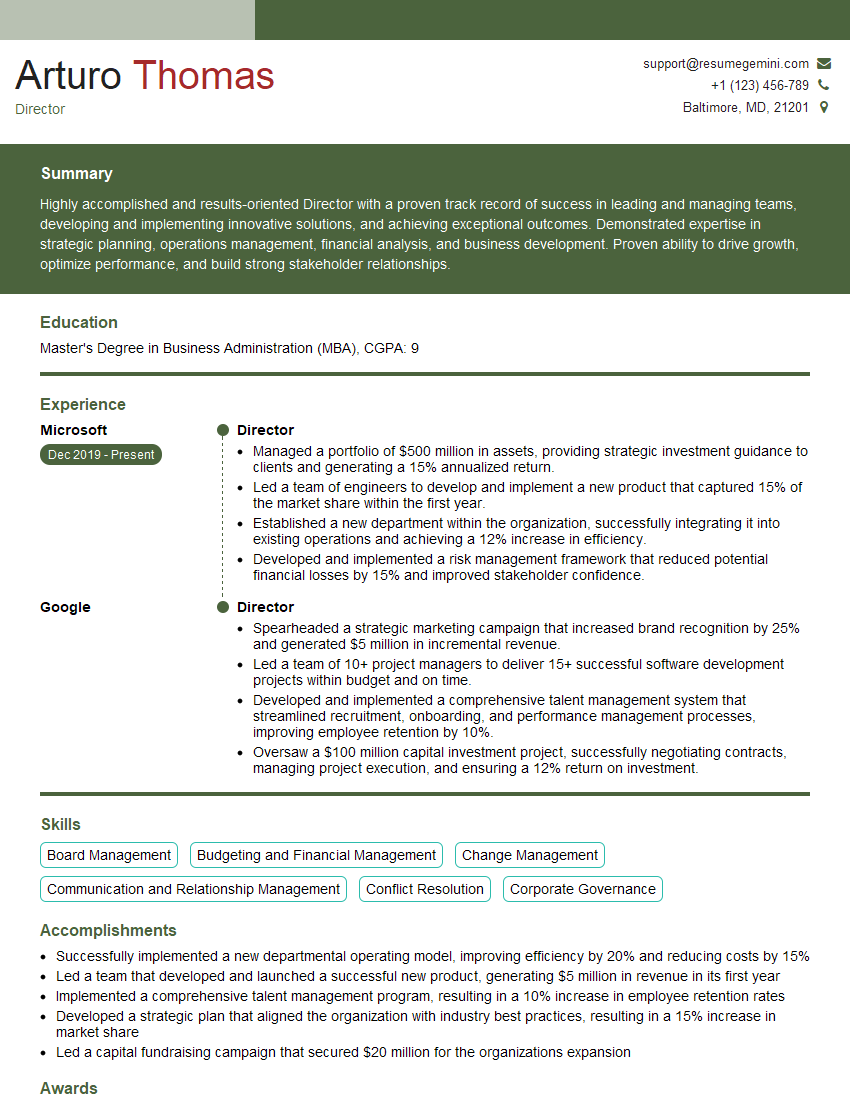
Director Resume Sample
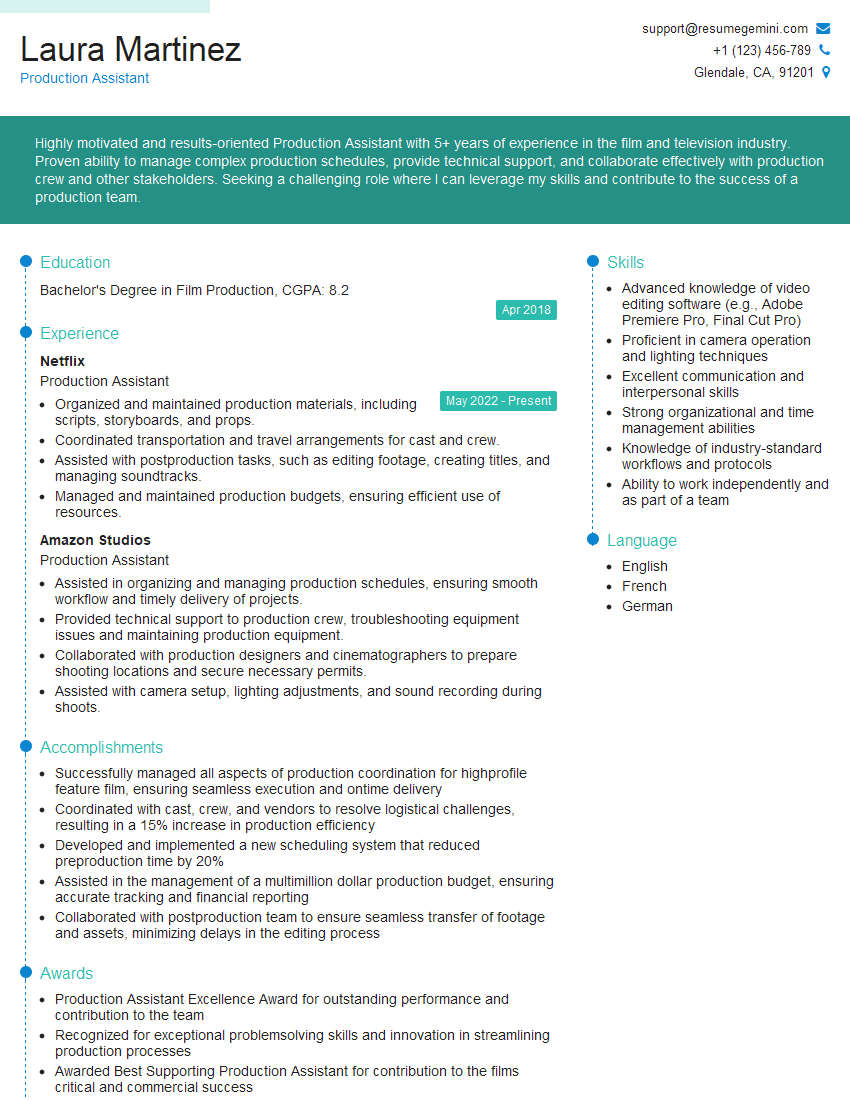
Production Assistant Resume Sample
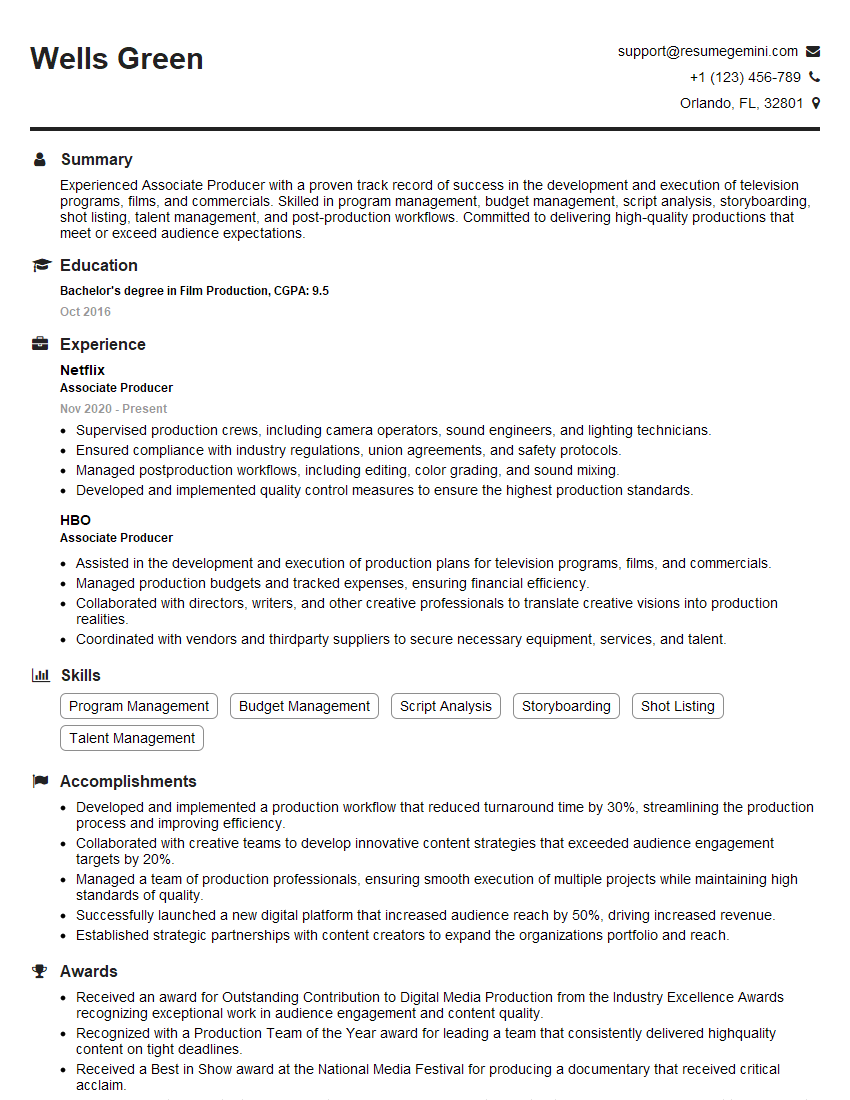
Associate Producer Resume Sample
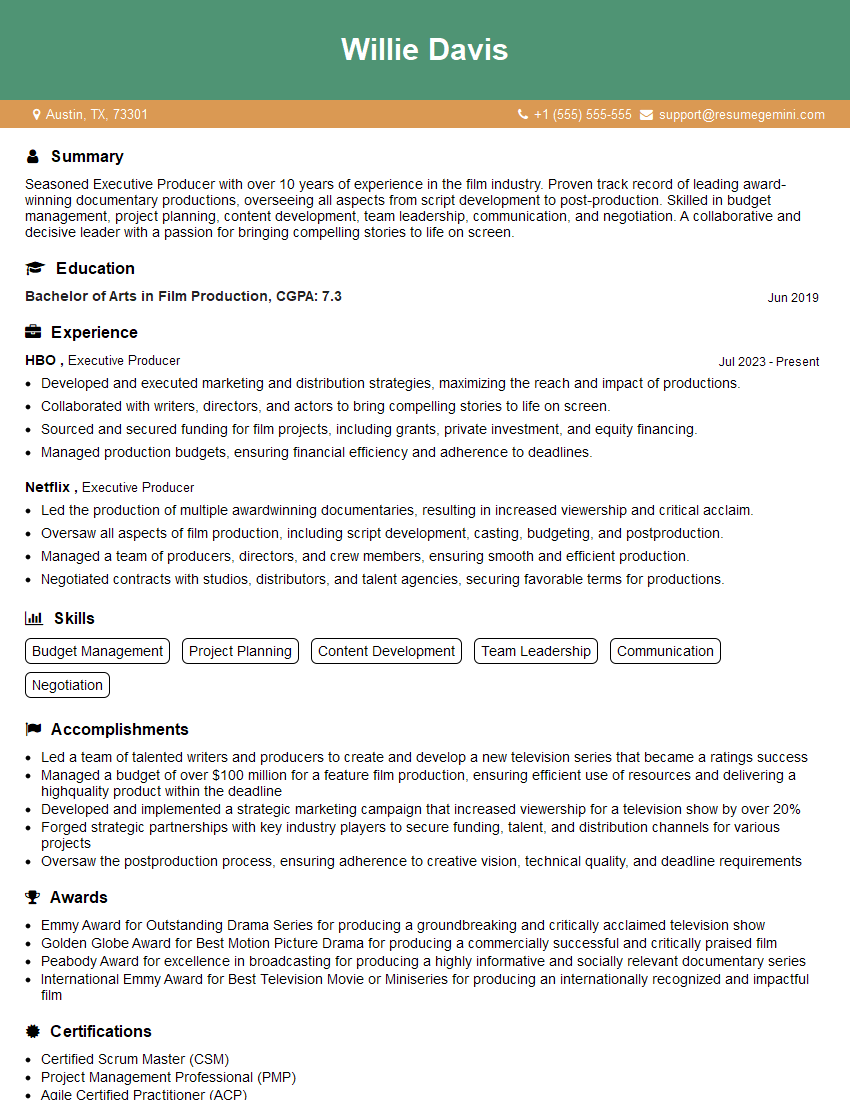
Executive Producer Resume Sample
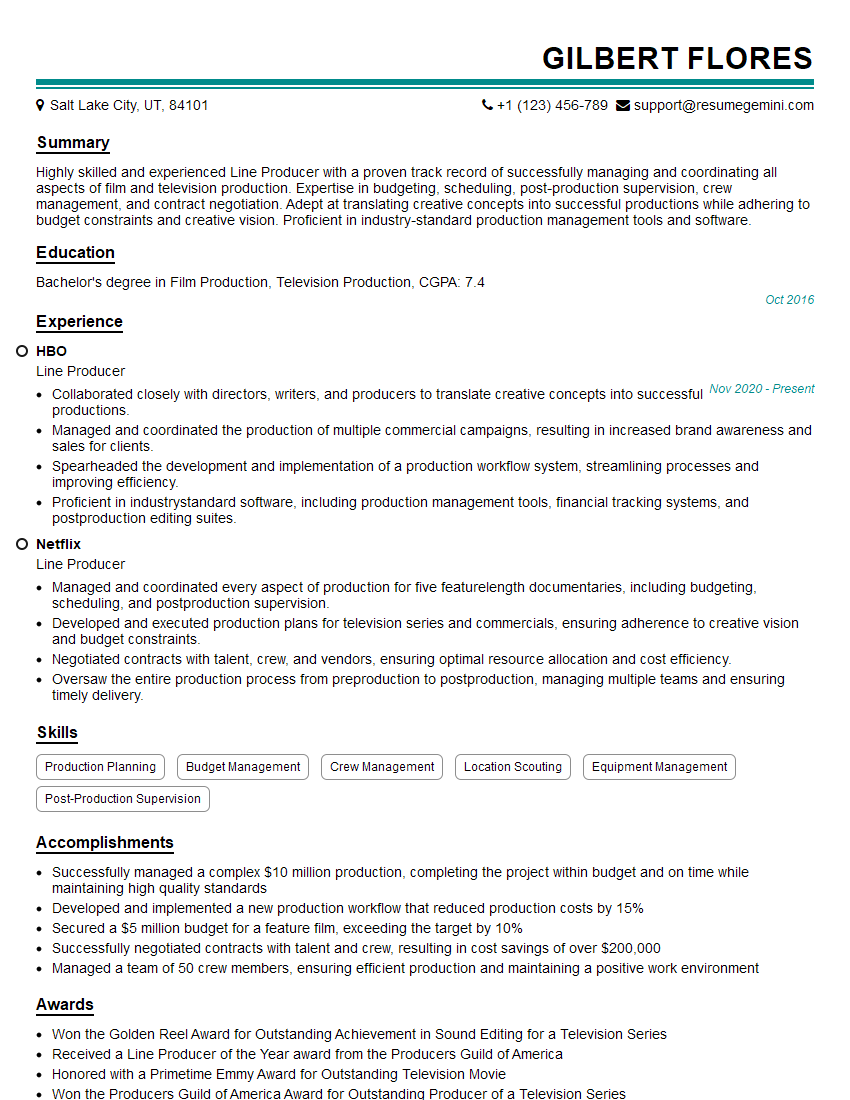
Line Producer Resume Sample
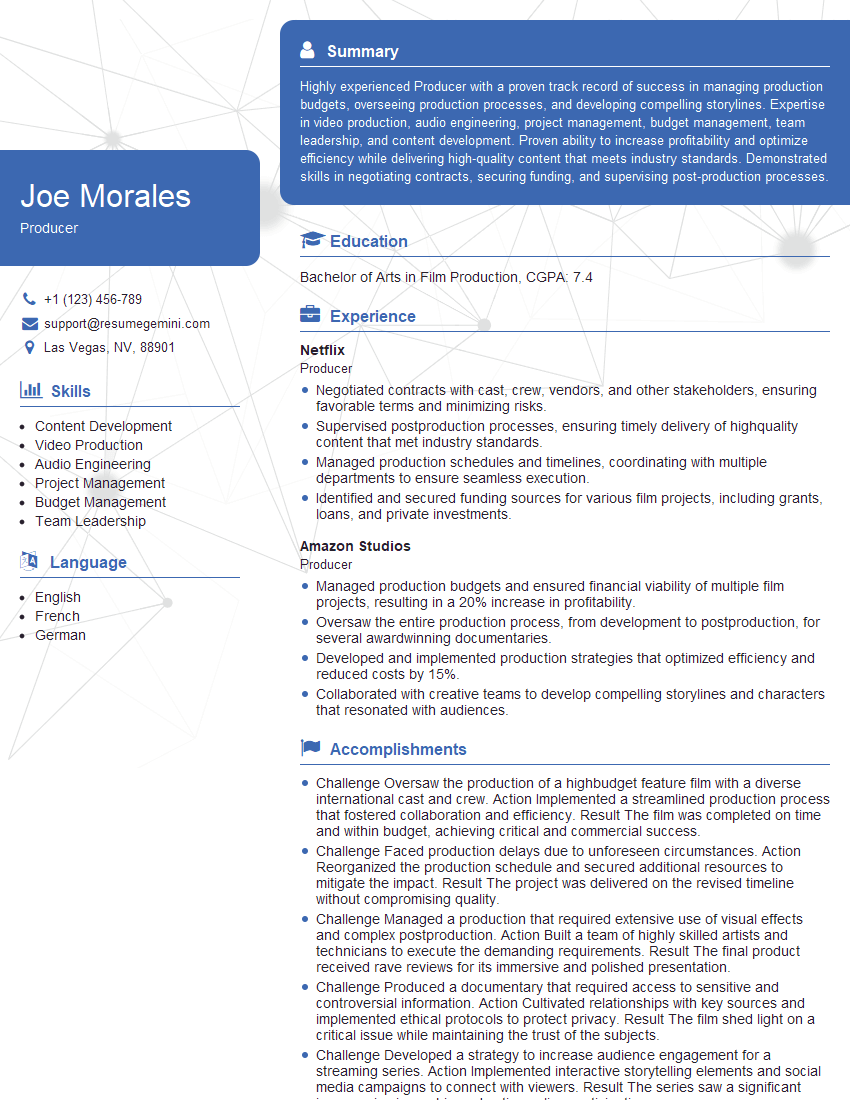
Producer Resume Sample
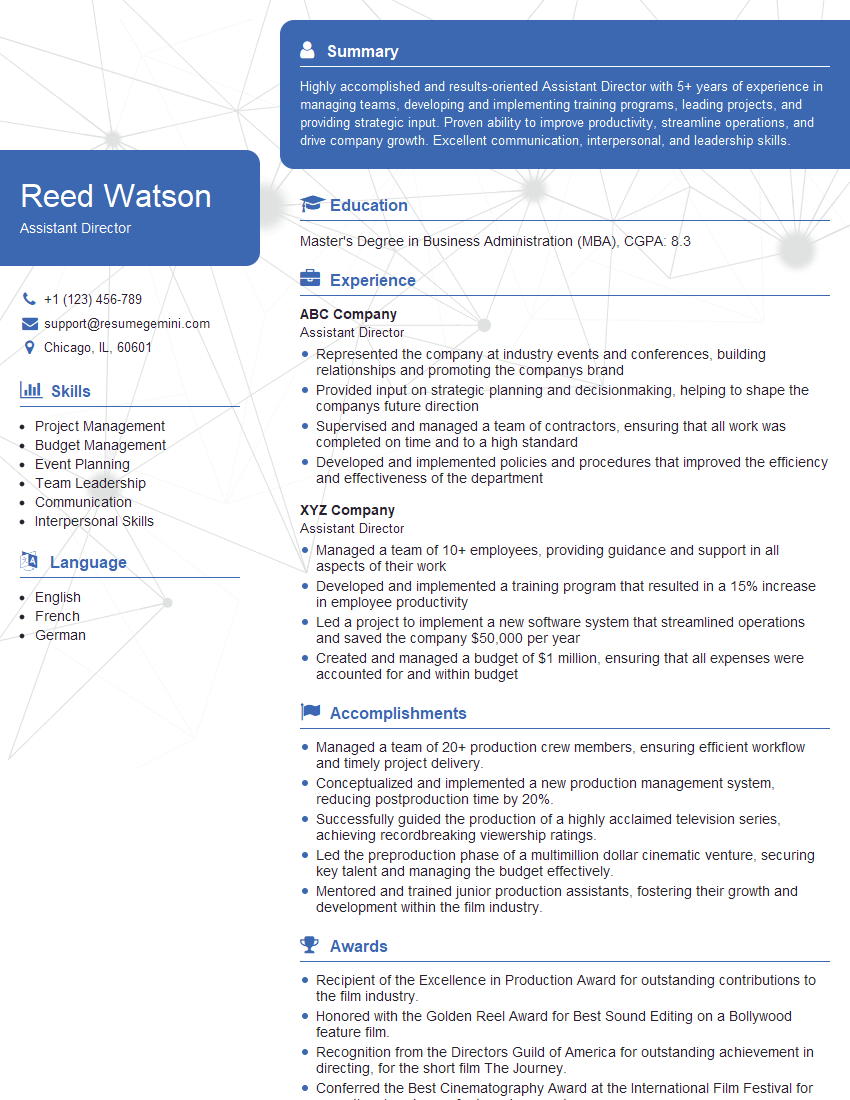
Assistant Director Resume Sample
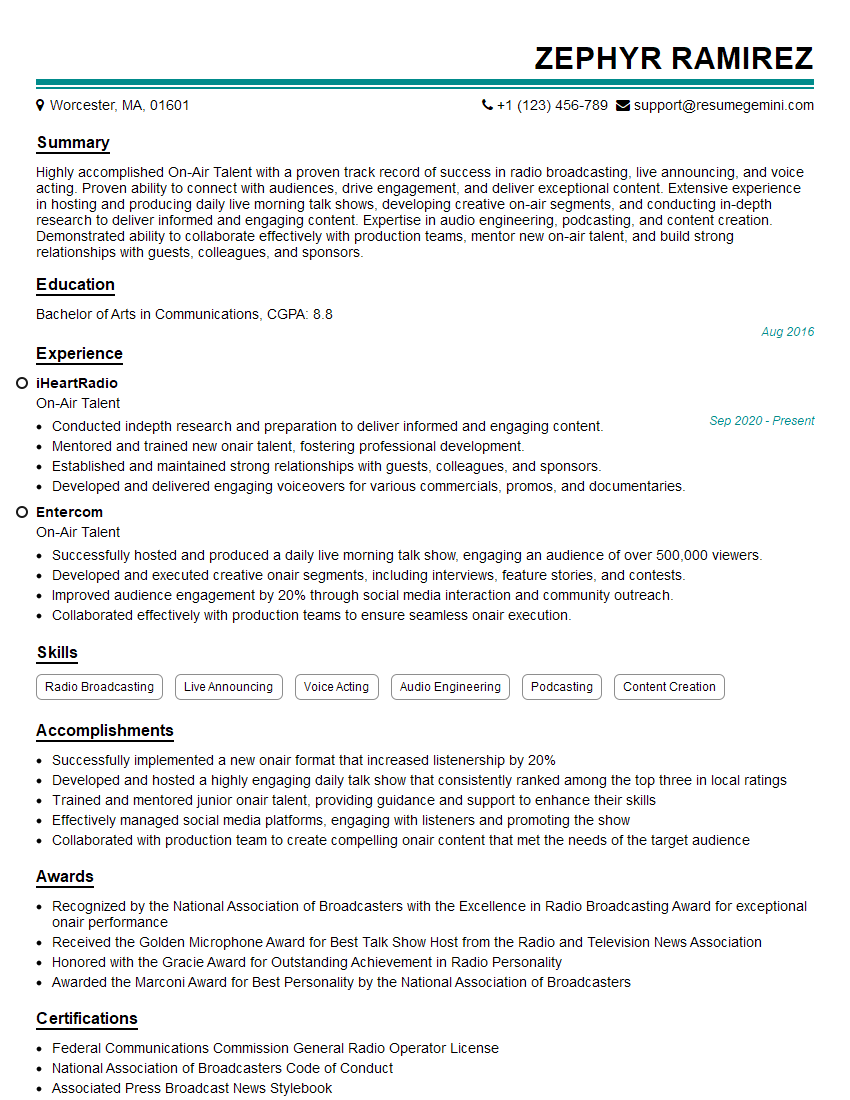
On-Air Talent Resume Sample

Radio Host Resume Sample
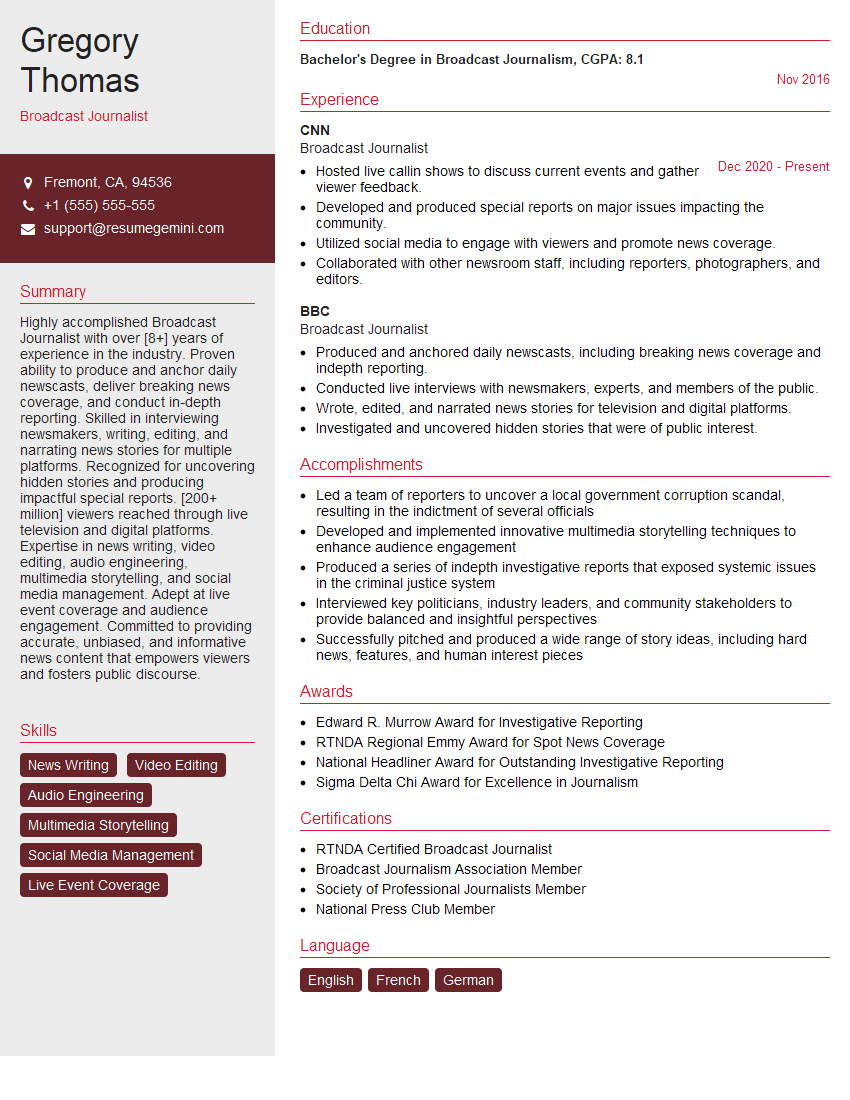
Broadcast Journalist Resume Sample
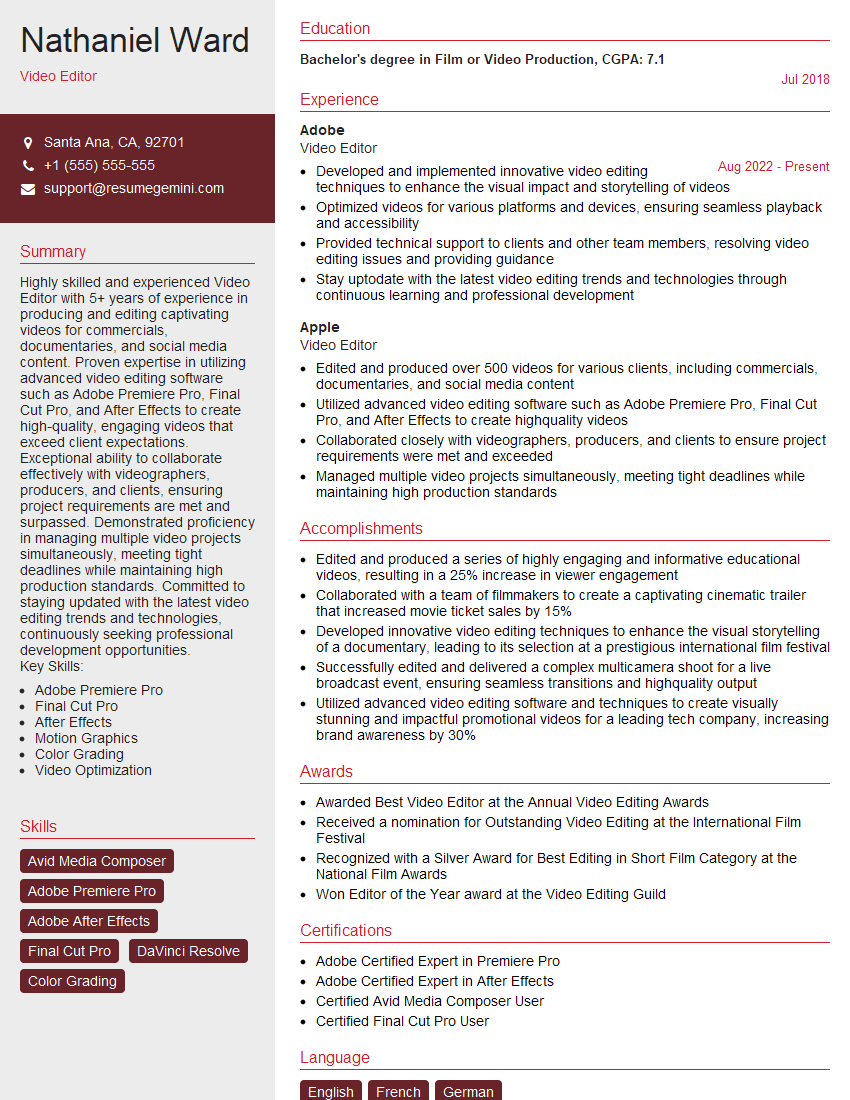
Video Editor Resume Sample
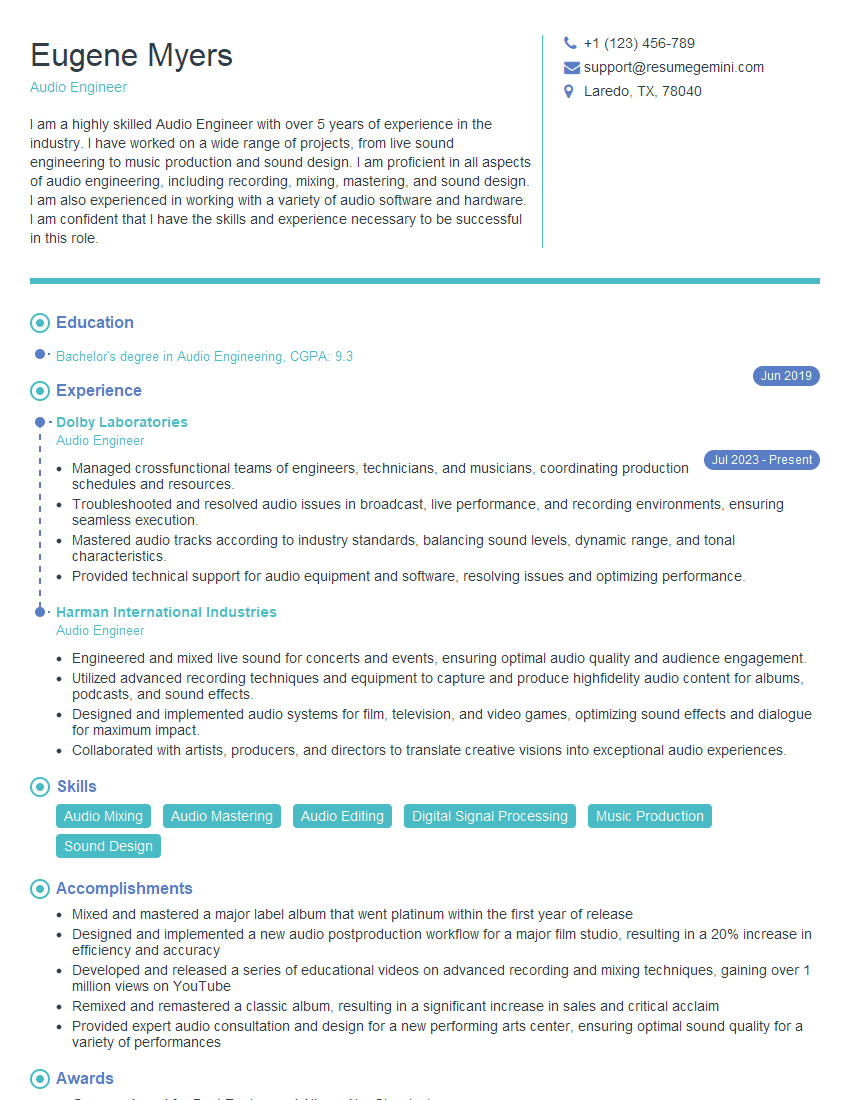
Audio Engineer Resume Sample
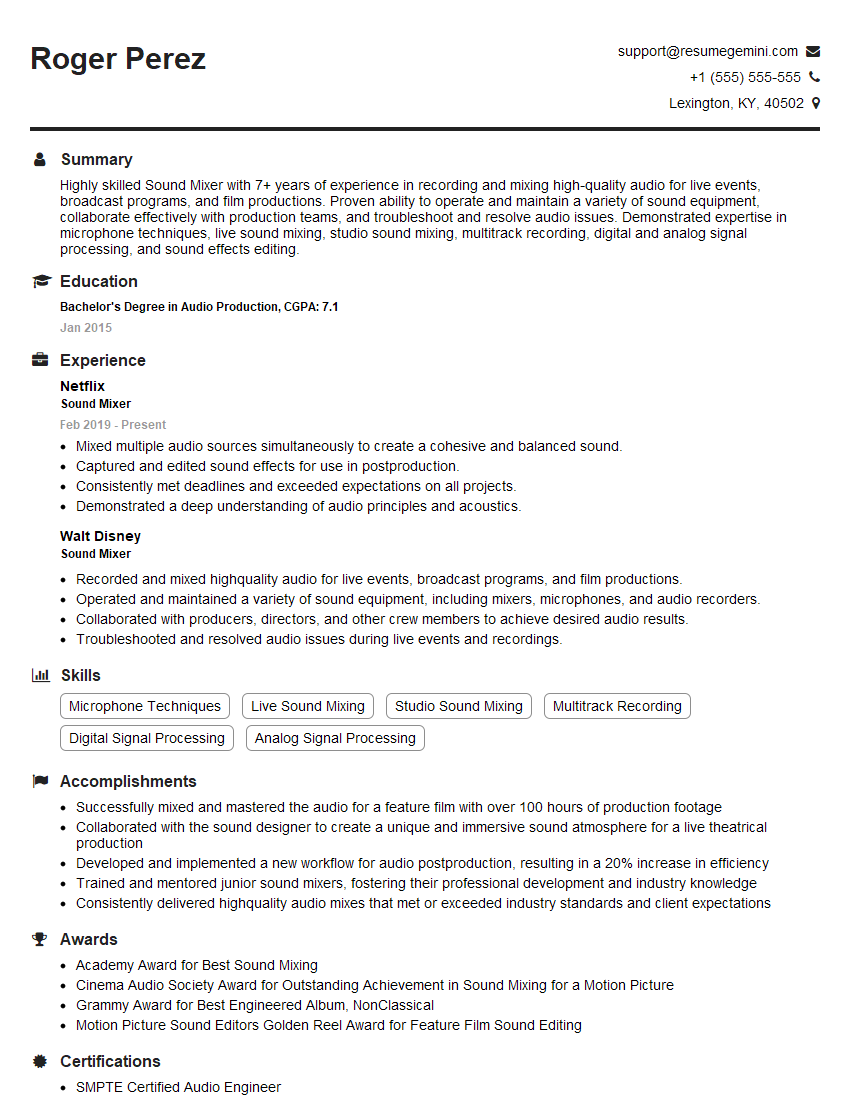
Sound Mixer Resume Sample
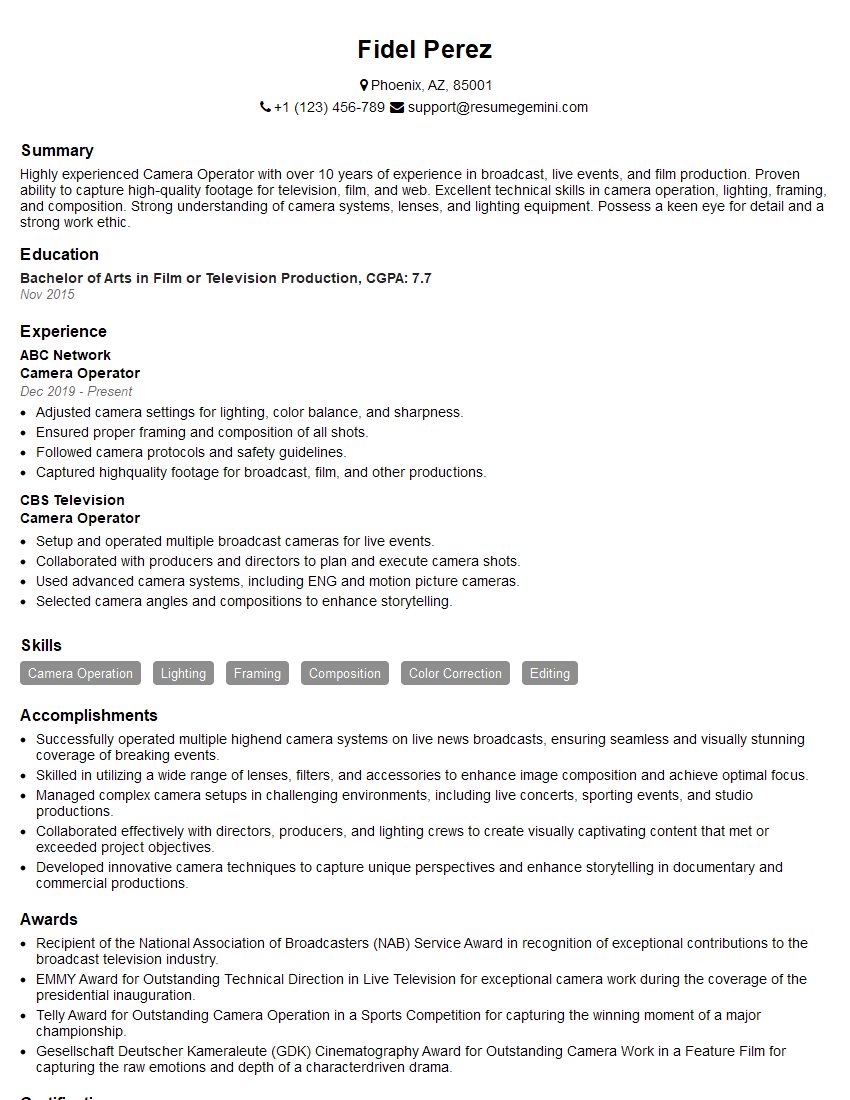
Camera Operator Resume Sample
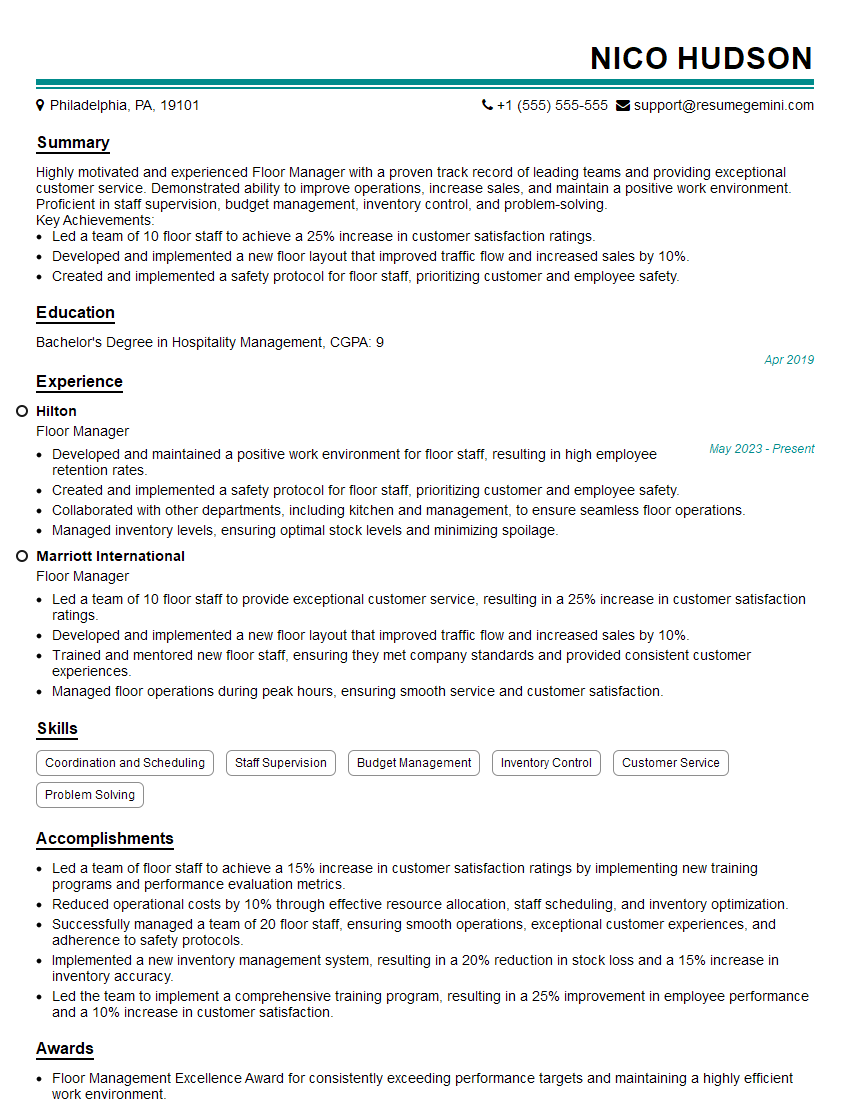
Floor Manager Resume Sample
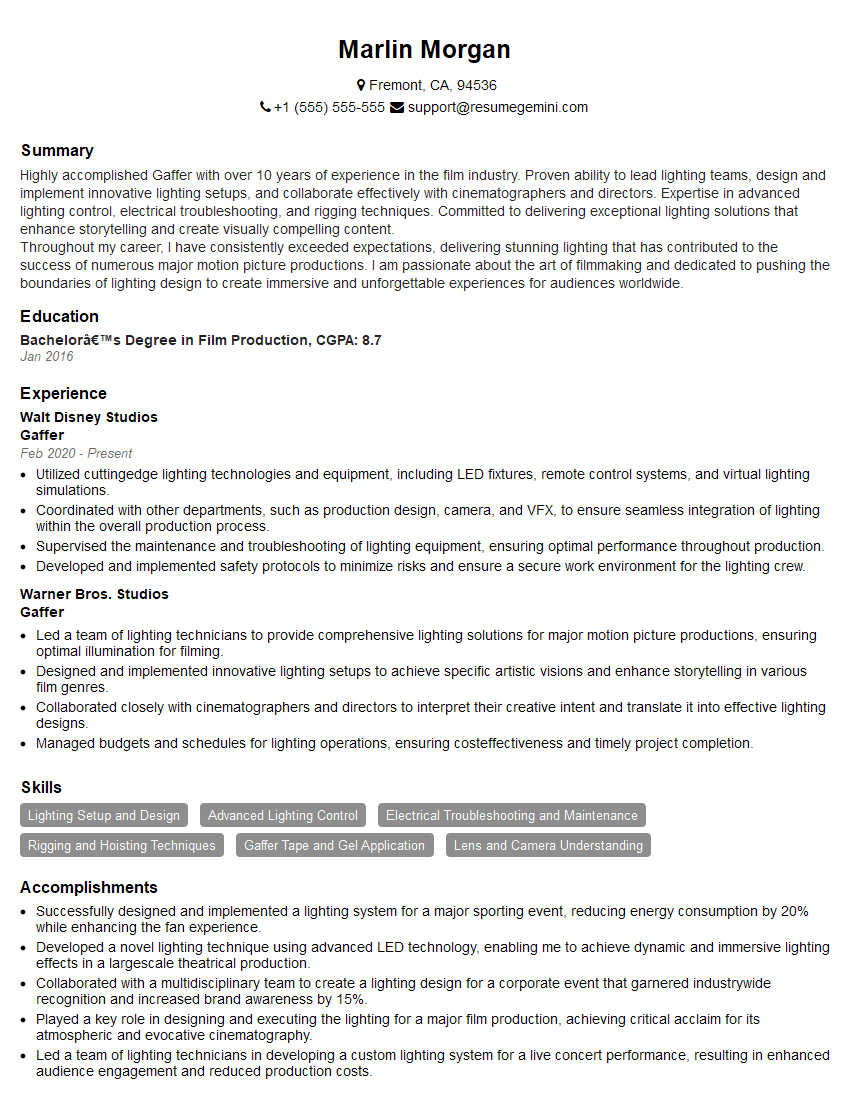
Gaffer Resume Sample
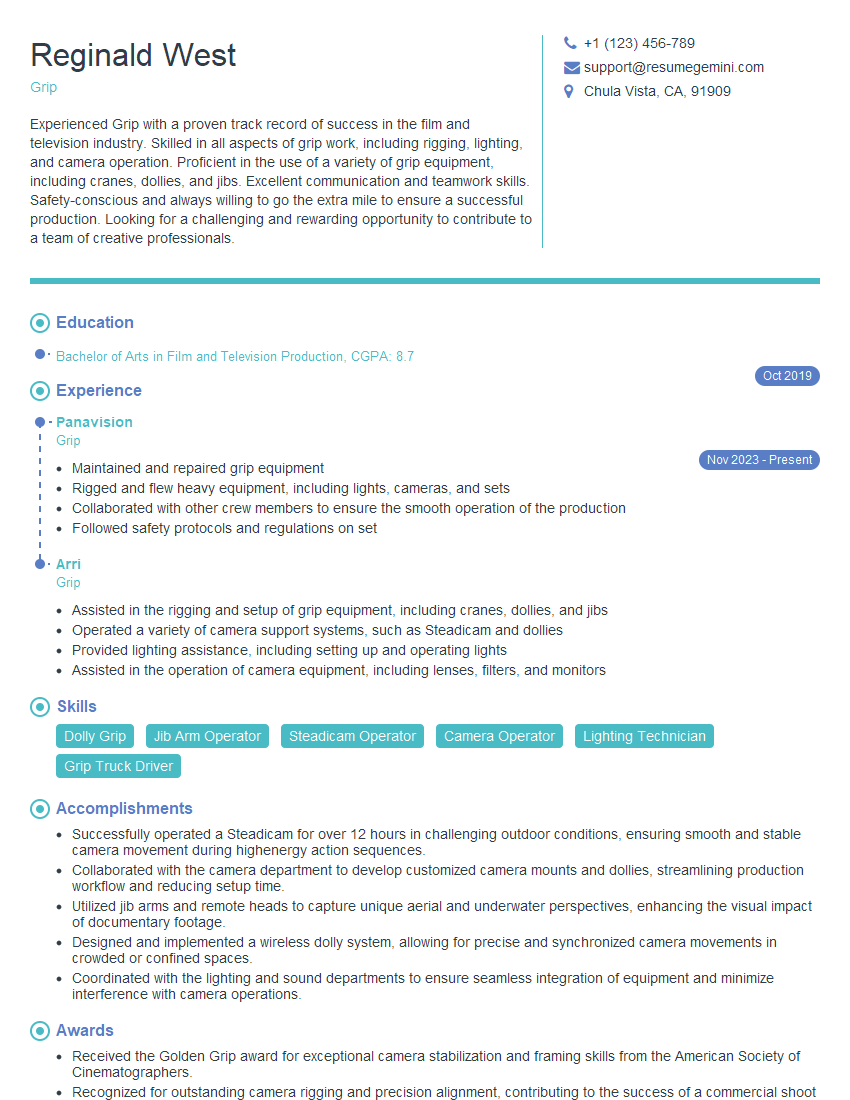
Grip Resume Sample
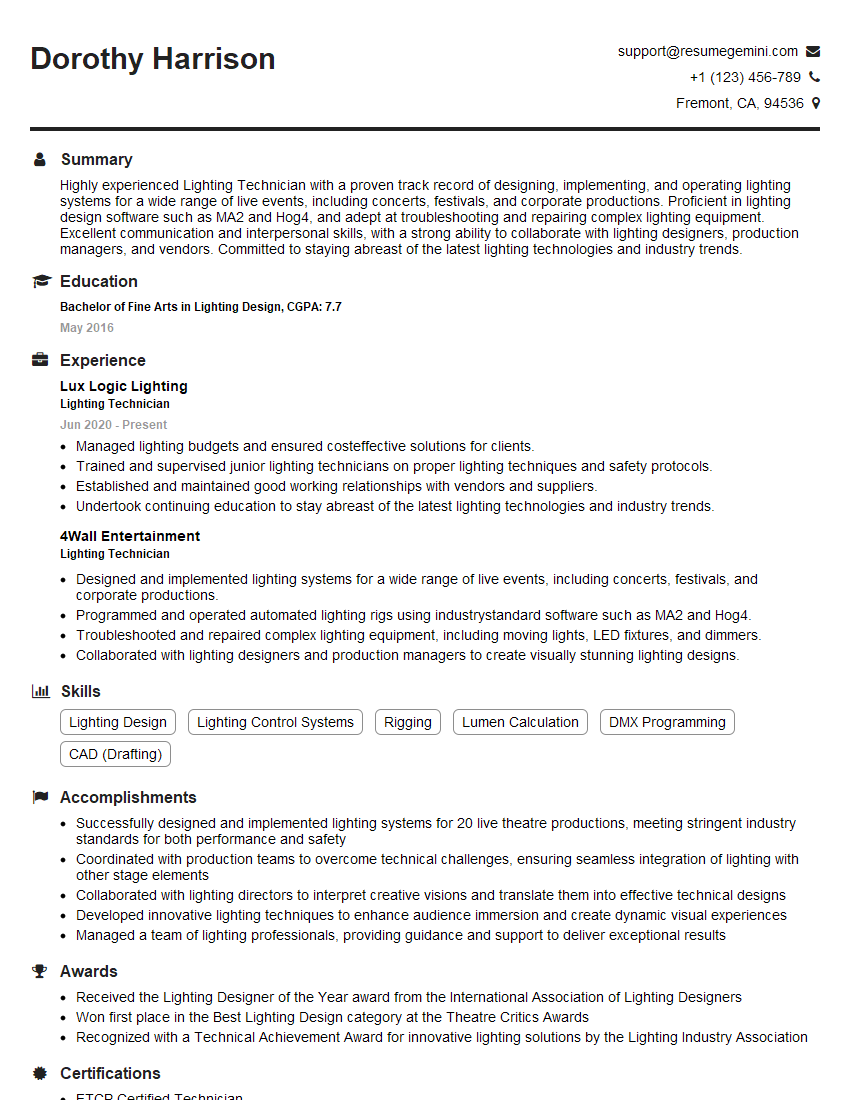
Lighting Technician Resume Sample
Explore more articles
Users Rating of Our Blogs
Share Your Experience
We value your feedback! Please rate our content and share your thoughts (optional).
What Readers Say About Our Blog
Very informative content, great job.
good