Preparation is the key to success in any interview. In this post, we’ll explore crucial Understanding of Airspace Management and Conflict Resolution interview questions and equip you with strategies to craft impactful answers. Whether you’re a beginner or a pro, these tips will elevate your preparation.
Questions Asked in Understanding of Airspace Management and Conflict Resolution Interview
Q 1. Explain the different classes of airspace and their associated regulations.
Airspace is categorized into different classes based on the level of air traffic control service provided and the types of operations permitted. These classifications ensure safety and efficiency. Let’s look at some key classes:
- Class A: This is the highest controlled airspace, typically above 18,000 feet MSL (Mean Sea Level) in the US. Instrument Meteorological Conditions (IMC) are required, and all flights must be under air traffic control’s direction. It’s like a superhighway with strict rules and constant monitoring.
- Class B: Found around major airports, it’s densely controlled airspace extending from the surface to a specified altitude, usually around 10,000 feet. Two-way radio communication and an Instrument Flight Rules (IFR) or Visual Flight Rules (VFR) flight plan are mandatory. Imagine this as a very busy city center with multiple traffic lanes and strict speed limits.
- Class C: Similar to Class B, but with a less extensive controlled area. It’s still densely populated with aircraft and requires two-way radio communication. This is like a suburban area with higher traffic density compared to rural areas.
- Class D: Controlled airspace usually extending from the surface up to 2,500 feet above the airport elevation. Two-way radio communication is usually required but not always mandated depending on the airport and the operations. Think of this as a smaller town with fewer traffic regulations compared to a big city.
- Class E: Extends from the surface or above Class D, C, or B airspace up to 18,000 feet MSL. While it may have some controlled areas, it’s generally less densely controlled. It’s like a highway with fewer speed limits and less frequent traffic.
- Class G: Uncontrolled airspace below 1,200 feet above ground level (AGL) and uncontrolled above 1,200 feet AGL up to 14,500 feet MSL. Pilots are responsible for seeing and avoiding other aircraft. It’s akin to a country road with no speed limits or traffic signs. Pilots must maintain situational awareness.
Regulations for each class specify requirements for flight plans, communications, pilot qualifications, and separation standards. These are vital for preventing collisions and maintaining order in the sky.
Q 2. Describe the procedures for handling aircraft conflicts in controlled airspace.
Conflict resolution in controlled airspace is a precise, multi-step process. Air traffic controllers (ATCs) use radar and communication to maintain separation between aircraft. When a conflict is detected, ATCs will issue instructions to pilots to alter their altitude, heading, or speed to resolve the situation. This might involve:
- Issuing altitude changes: Directing one aircraft to climb or descend to a different altitude to maintain separation.
- Issuing heading changes: Instructing one aircraft to alter its course to avoid the other aircraft.
- Speed adjustments: Requesting an aircraft to increase or decrease its speed to maintain separation.
- Coordination with other controllers: If the conflict involves multiple controllers’ sectors, they will coordinate their actions to ensure a safe resolution.
Example: If two aircraft are on converging courses and projected to come within less than the required minimum separation, the controller may instruct one aircraft to turn slightly left or right, or to adjust its speed, maintaining constant communication to ensure the instruction is understood and followed.
The procedures are standardized and based on established safety guidelines and separation minima. The ultimate goal is to provide safe and efficient separation between all aircraft in the controlled airspace, minimizing risk of mid-air collisions.
Q 3. How do you prioritize aircraft during periods of high traffic density?
Prioritization during high traffic density is crucial for maintaining safety and efficiency. Controllers employ several strategies based on several factors, including:
- Emergency situations: Aircraft declaring an emergency always receive top priority. This might involve a medical emergency, a mechanical failure, or a hijacking.
- Arrival and departure sequencing: ATCs manage the flow of aircraft arriving and departing airports to minimize delays and conflicts. This involves precise scheduling and coordination with other controllers.
- Aircraft type and performance: Larger, slower aircraft may require more separation than smaller, faster jets. This prioritization accounts for aircraft capabilities and limitations.
- Weather conditions: Severe weather may require prioritizing aircraft to reach safety, leading to potentially diverting flights or expediting landings/departures.
Example: An aircraft reporting an engine failure will be prioritized over an aircraft requesting a routine altitude change. During periods of high traffic density at a busy airport, ATCs will carefully sequence arriving aircraft to minimize delays and prevent conflicts on the final approach. This often involves using radar to predict conflicts and adjust arrival times accordingly.
This prioritization ensures that the safest and most efficient traffic flow is maintained even in periods of high traffic density.
Q 4. What are the common causes of airspace conflicts and how can they be mitigated?
Airspace conflicts stem from various factors. Let’s explore some common causes and their mitigation:
- Pilot error: Misunderstandings of instructions, navigational errors, or inadequate situational awareness are common causes of near-misses. Comprehensive training and robust pilot proficiency checks are essential for mitigation.
- Equipment malfunction: Failures in aircraft navigation or communication systems can lead to conflicts. Regular maintenance, redundancy in systems, and prompt reporting of malfunctions are critical preventative measures.
- Weather conditions: Reduced visibility and turbulent weather can impact aircraft navigation and increase the risk of conflicts. Effective weather forecasting, pre-flight planning, and appropriate traffic management strategies are crucial.
- Air traffic control limitations: High traffic density or limitations in radar coverage can challenge controllers’ ability to maintain separation. Investment in new technology, increased controller staffing, and improved traffic management strategies can enhance efficiency and mitigate risks.
- Unforeseen circumstances: Sudden changes in weather, unexpected emergencies, or other unforeseen events can cause conflicts. Flexible procedures and contingency plans are needed to tackle such situations.
Mitigation Strategies: These range from better pilot training and technological enhancements (like improved radar systems and collision avoidance systems) to refined air traffic management procedures and improved communication protocols between controllers and pilots. Regular safety audits and incident investigations are also vital for identifying areas needing improvement.
Q 5. Explain the role of radar in airspace management.
Radar plays a pivotal role in airspace management by providing real-time information on aircraft positions, altitudes, and speeds. This enhances situational awareness for air traffic controllers, allowing them to:
- Monitor aircraft movements: Track aircraft positions and predict potential conflicts. The data is presented on a screen showing aircraft symbols with their respective data.
- Provide separation: Ensure that sufficient separation is maintained between aircraft, avoiding potential collisions.
- Vector aircraft: Guide aircraft to their destinations by issuing precise instructions on heading and altitude changes.
- Manage traffic flow: Optimize the flow of traffic around airports and in busy airspace sectors.
- Assist in emergency situations: Quickly locate and track aircraft in distress.
Different types of radar systems, such as primary radar (detecting the aircraft’s presence) and secondary radar (receiving transponder data from the aircraft) provide varying levels of detail and capabilities. The information is invaluable for maintaining safety and efficiency in today’s complex airspace environment. Without radar, airspace management would rely far more on estimates and predictions, making safe traffic management extremely challenging.
Q 6. Describe your experience with using air traffic control systems.
Throughout my career, I’ve extensively used various air traffic control systems, including radar systems, flight data processing systems, and communication systems. My experience spans both tower and en-route control environments. I’m proficient in using radar to track aircraft, interpret flight data, issue instructions to pilots, and manage airspace efficiently. I have hands-on experience with [mention specific systems, e.g., ASDE-X, TRACON, en-route automation systems], coordinating with other controllers to ensure seamless transitions between sectors and airports. My experience includes [mention specific scenarios, e.g., managing high-density traffic flows during peak hours, handling weather-related disruptions, assisting with emergency situations]. I’m adept at using these systems to optimize airspace usage and enhance safety. I understand the importance of accurate and timely data and how to apply it to maintain safe separations and efficient traffic flow.
Q 7. How do you handle communication breakdowns with pilots?
Communication breakdowns are a serious concern in aviation. My approach involves a multi-step process:
- Verify understanding: I would first attempt to clarify whether the misunderstanding is on my end or the pilot’s. I’d use simple, clear language to confirm the message’s reception.
- Repeat instructions: If there’s a misunderstanding, I’d repeat instructions slowly and clearly, perhaps using different wording to ensure comprehension. I would also use visual aids such as radar displays to show the pilot my intentions.
- Utilize alternative communication methods: If voice communication is difficult, I would attempt alternative means, such as using written communication via data link.
- Coordinate with other controllers or supervisors: If the problem persists, I’d seek assistance from supervisors or other controllers who might offer new perspectives.
- Document the incident: Regardless of the outcome, I’d meticulously document the communication breakdown, the steps taken to resolve it, and any contributing factors. This is crucial for post-incident analysis and future safety improvements.
Prevention is key. Using clear, concise, and unambiguous language, focusing on active listening, and utilizing visual aids (when applicable) minimize the risk of breakdowns.
Q 8. What are the safety protocols you follow when resolving airspace conflicts?
Airspace conflict resolution prioritizes safety above all else. My primary safety protocols involve a methodical approach, starting with clear communication. I confirm the positions and intentions of all involved aircraft using radar data and pilot reports. Then, I issue precise instructions to maintain separation, using standard phraseology to avoid ambiguity. For example, I might instruct one aircraft to climb to a specific altitude or alter its heading. If the conflict is severe, I may initiate emergency procedures, such as vectoring aircraft away from the conflict zone or issuing instructions for immediate landing. Throughout the process, I meticulously record all communications and actions taken in the event of a post-incident investigation. Continuous monitoring of the situation after the resolution is equally crucial, ensuring the aircraft maintain safe separation. Safety checks and cross-referencing of data from multiple sources are paramount to prevent errors.
Q 9. Explain your understanding of instrument flight rules (IFR) and visual flight rules (VFR).
Instrument Flight Rules (IFR) and Visual Flight Rules (VFR) govern how pilots operate aircraft. IFR operations rely heavily on instruments, allowing pilots to navigate and maintain flight in conditions with low visibility. Pilots operating under IFR are granted specific routes and altitudes by air traffic control and must adhere to detailed procedures. Think of it like driving on a highway with clear lane markings and speed limits – everything is precisely defined. In contrast, VFR operations allow pilots to navigate visually, using landmarks and visual references, provided visibility is sufficient. This is like driving on a back road; you have more flexibility, but you need good visibility. The transition between IFR and VFR depends on weather and aircraft equipment. A pilot may start a flight under VFR but transition to IFR if weather deteriorates, requiring more precision and ATC guidance.
Q 10. How do weather conditions affect airspace management?
Weather significantly impacts airspace management. Reduced visibility due to fog, snow, or rain necessitates reduced traffic flow and stricter separation standards between aircraft. Low cloud ceilings limit the altitude available for VFR operations, potentially forcing pilots to fly IFR or delay their flights. Strong winds can affect aircraft performance and necessitate adjustments to approach procedures. Severe weather events, like thunderstorms, require the implementation of temporary flight restrictions (TFRs) to protect aircraft from hazardous conditions. Air traffic controllers use weather radar and forecasts to anticipate potential problems and proactively manage airspace, often by rerouting flights or implementing ground delays to mitigate risks. Imagine a highway system during a blizzard – fewer cars can safely travel, and speed limits are reduced, much like airspace management during inclement weather.
Q 11. Describe your experience with emergency procedures in air traffic control.
My experience with emergency procedures in air traffic control has involved handling situations like engine failures, medical emergencies on board, and loss of communication with aircraft. The response is swift and highly coordinated. First, I gather information from the pilot or other sources. Then, I prioritize the aircraft’s immediate safety, guiding them to the nearest suitable airport or providing emergency assistance. Simultaneously, I coordinate with emergency services on the ground, providing them with crucial information to prepare for a potential landing or rescue operation. Effective communication is paramount, and I utilize standard emergency procedures and phraseology to ensure clear and concise instructions are relayed. One memorable experience involved guiding a small aircraft with engine failure to a safe landing in a challenging environment. Clear communication and quick thinking were key to ensuring a safe outcome.
Q 12. How do you manage airspace during periods of inclement weather?
During inclement weather, airspace management becomes more complex. We reduce traffic flow, often implementing ground holds or delays to prevent congestion and maintain safe separation. We may close certain airspace sectors temporarily or impose more restrictive separation minima depending on the severity of the weather. Pilots are required to maintain a higher degree of situational awareness and report weather conditions regularly. Air traffic controllers leverage weather radar and forecasts to anticipate changes in weather patterns and to dynamically adjust airspace management plans. The goal is to ensure the continued safe and efficient movement of aircraft while mitigating risks associated with hazardous weather conditions. It’s a dynamic situation that demands constant vigilance and close collaboration with meteorological services.
Q 13. What are the key performance indicators (KPIs) for effective airspace management?
Key Performance Indicators (KPIs) for effective airspace management include: Safety: Measured by the number and severity of incidents or accidents. Capacity: Measured by the number of flights handled safely and efficiently. Punctuality: Measured by average flight delays. Efficiency: Measured by the average handling time per flight. Environmental impact: Measured by fuel consumption and associated emissions. We continuously monitor these KPIs to identify areas for improvement and to ensure our procedures and technologies remain up to the task. Regular audits and analysis of these KPIs are vital for ensuring the safety and efficiency of the airspace system.
Q 14. Explain your understanding of NOTAMs (Notice to Airmen).
NOTAMs, or Notices to Airmen, are essential safety messages that disseminate important information affecting flight operations. They cover a wide range of topics including airport closures, runway repairs, navigational aid outages, and special activities in the airspace, such as military exercises or fireworks displays. Pilots are required to check NOTAMs before each flight to be aware of any potential hazards or operational changes that could impact their flight. NOTAMs are crucial for flight safety because they provide timely alerts that pilots need to make informed decisions about their flights. They’re like roadside alerts that let drivers know about traffic accidents, road closures, or other potential issues.
Q 15. How do you coordinate with other air traffic control facilities?
Coordination between air traffic control (ATC) facilities is crucial for seamless air traffic flow. We use various communication methods, primarily voice communication via dedicated radio frequencies, to hand over aircraft between sectors. This handover involves precise exchange of information including aircraft identification, altitude, speed, heading, and any pertinent flight details. For instance, imagine an aircraft flying from New York to Los Angeles. As it crosses sector boundaries, the controllers in each sector coordinate to ensure a smooth transition, preventing any gaps in supervision. Beyond voice communication, we also leverage digital data exchange systems for more complex scenarios, exchanging flight plans and weather data instantly, ensuring a unified picture of airspace management.
Furthermore, we frequently participate in collaborative meetings and briefings, both virtual and in-person, with neighboring ATC facilities to discuss potential conflicts, coordinate airspace usage, and share best practices in managing high traffic volumes or adverse weather conditions. This collaborative approach ensures proactive risk mitigation and efficient airspace utilization.
Career Expert Tips:
- Ace those interviews! Prepare effectively by reviewing the Top 50 Most Common Interview Questions on ResumeGemini.
- Navigate your job search with confidence! Explore a wide range of Career Tips on ResumeGemini. Learn about common challenges and recommendations to overcome them.
- Craft the perfect resume! Master the Art of Resume Writing with ResumeGemini’s guide. Showcase your unique qualifications and achievements effectively.
- Don’t miss out on holiday savings! Build your dream resume with ResumeGemini’s ATS optimized templates.
Q 16. Describe your experience with using flight planning software.
I have extensive experience using various flight planning software packages, including systems like AFTN (Aeronautical Fixed Telecommunications Network) and more modern, digital flight data processing systems. These systems allow us to efficiently manage flight plans, predict potential conflicts, and optimize routes for fuel efficiency and reduced flight times. For example, I utilize these systems to process hundreds of flight plans daily, validating their details against weather conditions, airspace restrictions, and other pertinent factors.
These tools aren’t simply for inputting data; they provide real-time tracking, allowing us to monitor aircraft progress, make adjustments as needed and even simulate different scenarios for training and contingency planning. A particularly helpful feature is the conflict alert system, which highlights potential near-miss scenarios, allowing for proactive intervention and the implementation of corrective measures to ensure safety.
Q 17. How do you ensure the safety and efficiency of air traffic flow?
Ensuring both safety and efficiency in air traffic flow requires a multi-faceted approach. Safety is paramount, and we achieve this through strict adherence to separation minima (explained in more detail in a later response), continuous monitoring of aircraft positions via radar and other surveillance systems, and prompt resolution of any potential conflicts. Efficiency involves optimizing routes, minimizing delays, and managing traffic flow effectively. This is achieved through techniques like optimized sequencing and spacing of aircraft, strategic allocation of airspace, and proactive communication with pilots.
For example, during peak hours, we might implement flow management programs, strategically delaying departures to avoid congestion and maintain safe separation. We also regularly review our procedures and processes to identify potential bottlenecks and areas for improvement, constantly striving to enhance both safety and efficiency. Imagine it like managing a busy highway system – you need clear guidelines, constant monitoring, and proactive adjustments to keep the flow smooth and prevent accidents.
Q 18. What are the limitations of radar technology in airspace management?
While radar technology is essential for airspace management, it does have limitations. Firstly, radar signals can be affected by weather conditions such as heavy rain or snow, potentially reducing range and accuracy. Secondly, radar systems may have difficulty tracking aircraft at very low altitudes or in mountainous regions, where ground clutter can interfere with the signal. Thirdly, radar can only provide a two-dimensional view (range and bearing), whereas determining an aircraft’s precise altitude requires additional systems like secondary surveillance radar (SSR) or ADS-B (Automatic Dependent Surveillance-Broadcast).
Additionally, radar technology doesn’t detect all aircraft. For example, smaller general aviation aircraft might not be equipped with transponders necessary for secondary radar detection. Therefore, we employ other technologies such as ADS-B, which enhances situational awareness by receiving aircraft position and other data directly from the aircraft, reducing reliance on solely radar-based surveillance. Understanding these limitations is crucial for effective airspace management and requires a multi-sensor approach to ensure a comprehensive view of the airspace.
Q 19. Explain your understanding of separation minima for aircraft.
Separation minima refer to the minimum distances that must be maintained between aircraft to ensure safety. These distances vary depending on factors like the type of aircraft (e.g., the size and capability), altitude, and whether they are using visual or instrument flight rules (VFR or IFR). For instance, IFR separation minima are typically greater than VFR minima, as VFR relies more on the pilot’s visual observation. These separations are defined by regulations and established by ICAO (International Civil Aviation Organization) and individual national aviation authorities. For example, a certain minimum horizontal and vertical separation might be required between two jets flying at different altitudes to avoid collision. A key role as an Air Traffic Controller is to constantly ensure that all aircraft within my airspace maintain the correct separation minima.
Failure to maintain separation minima is a serious safety violation with severe consequences. We use sophisticated tools and systems to continually calculate and monitor these separations, alerting us to any potential breaches and allowing us to take corrective actions promptly. This involves precise calculations and instructions issued to pilots to prevent any conflicts.
Q 20. How do you handle pilot deviations from assigned flight plans?
Pilot deviations from assigned flight plans require immediate attention and careful handling. The first step is to establish communication with the pilot and determine the reason for the deviation. This could range from unforeseen weather conditions, mechanical issues, or a simple navigational error. Based on the reason, we take appropriate actions, which might involve issuing instructions to return to the assigned route or approving a revised flight plan if the deviation is justified and doesn’t compromise safety. In extreme situations, a deviation might necessitate emergency procedures, including diverting the aircraft to a suitable airport.
The communication with the pilot is key; we need to maintain a calm and professional demeanor while effectively guiding them to safety. Documentation of the deviation, the pilot’s explanation, and the actions taken by ATC is crucial for post-incident analysis and potential investigation. Safety and efficiency are equally important, so finding the best solution that incorporates both is crucial.
Q 21. Describe your experience with handling aircraft emergencies.
Handling aircraft emergencies requires swift, decisive action and coordination with multiple parties. My experience includes coordinating emergency responses for various scenarios, including engine failures, loss of communication, and medical emergencies onboard. The initial steps involve establishing clear communication with the pilot, assessing the nature and severity of the emergency, and immediately coordinating with emergency services on the ground, such as emergency medical services (EMS), fire departments, and rescue teams.
We utilize established emergency procedures, prioritizing the safety of the aircraft and passengers. This might include guiding the aircraft to the nearest suitable airport, coordinating emergency landing procedures, and ensuring clear communication between the aircraft, ATC, and ground support teams. One particularly memorable instance involved guiding a small aircraft with engine failure to a safe landing in a field; the coordinated response from multiple teams and the pilot’s skill ensured a successful outcome and no injuries. Detailed post-incident reports are essential for continuous improvement in emergency response procedures and training.
Q 22. How do you manage the workload during peak traffic periods?
Managing workload during peak traffic periods requires a proactive and systematic approach. It’s like conducting an orchestra – each instrument (aircraft) needs careful guidance to avoid collisions and maintain efficiency. We employ several strategies:
- Prioritization: We prioritize aircraft based on urgency (e.g., emergency landings), proximity to conflict, and potential impact on other traffic. This involves constant situational awareness and rapid decision-making.
- Coordination: Close coordination with neighboring sectors and airport towers is crucial. We share traffic information and collaboratively manage the flow of aircraft to alleviate congestion points, much like coordinating traffic flow on a busy highway.
- Delegation: In high-traffic environments, effective delegation of tasks to other controllers is essential. This ensures a balanced workload and maintains safety standards. We use a clear communication system to ensure everyone is aware of their responsibilities.
- Automation Tools: Sophisticated air traffic control systems, like automated sequencing and spacing tools, assist in streamlining operations, freeing up time for critical decision-making. Think of these tools as advanced traffic management systems for the sky.
- Contingency Planning: We have pre-planned strategies for handling unexpected events, like sudden weather changes or equipment malfunctions. This allows us to adapt to changing circumstances and maintain a safe and orderly flow of traffic.
For instance, during a major weather event, we might implement ground delays, reroute flights, or adjust arrival and departure rates to prevent airspace saturation. This involves constant communication with airlines and pilots to adjust schedules and flight plans.
Q 23. Explain your understanding of the principles of risk management in aviation.
Risk management in aviation is paramount. It’s about proactively identifying, assessing, and mitigating hazards that could threaten flight safety. It’s not just about reacting to incidents; it’s about preventing them in the first place. We use a layered approach, much like a safety net with multiple levels of protection:
- Hazard Identification: We continually scan for potential hazards, including weather conditions, equipment malfunctions, pilot error, and unforeseen events. This is akin to a doctor performing a thorough check-up.
- Risk Assessment: Once a hazard is identified, we assess the likelihood and severity of it occurring and its potential impact. This involves using established risk matrices and considering historical data.
- Risk Mitigation: Based on the risk assessment, we implement strategies to reduce or eliminate the hazard. This might involve adjusting flight paths, issuing warnings to pilots, or implementing procedural changes.
- Monitoring and Review: Continuous monitoring of the effectiveness of our risk mitigation strategies is essential. We regularly review incidents and near-misses to identify areas for improvement, similar to a post-operative evaluation in medicine.
For example, if severe thunderstorms are predicted, we might proactively implement traffic management initiatives to reroute aircraft, thereby avoiding potential turbulence and lightning strikes. By using a multi-layered approach, we build a safety net that significantly reduces the probability of serious incidents.
Q 24. What is your experience with different types of air traffic control systems (e.g., en-route, tower)?
My experience encompasses various ATC systems, including en-route, tower, and approach control. Each has unique challenges and responsibilities:
- En-Route Control: This involves managing aircraft over vast geographical areas, focusing on efficient routing, separation, and conflict resolution between aircraft traveling long distances. It’s like managing a large-scale transportation network.
- Tower Control: This is focused on ground movement and aircraft taking off and landing at an airport. It demands very precise coordination, often in a high-pressure environment, handling immediate clearances and clearances.
- Approach Control: This bridges the gap between en-route and tower, guiding aircraft from the en-route structure towards the airport for landing. It requires sophisticated knowledge of navigation systems and procedures.
I’ve worked extensively in all three, allowing me to understand the interconnectedness of the entire system and how each component contributes to overall safety and efficiency. The transition between these different sectors requires a highly adaptable skillset and a thorough understanding of airspace structure.
Q 25. Describe a situation where you had to resolve a conflict with a pilot. What steps did you take?
During a busy afternoon, I had a conflict between two aircraft approaching the same runway. One pilot reported experiencing a minor technical issue impacting his speed, causing a potential spacing violation. My steps were:
- Gather Information: I immediately verified the pilot’s report using radar and confirmed his position and speed. I also checked the other aircraft’s position and speed to assess the severity of the conflict.
- Assess the Situation: I carefully evaluated the risk of collision. Considering the pilot’s reported issue, the distance between the aircraft, and the available time, I determined the potential for conflict was high.
- Issue Instructions: I issued clear and concise instructions to the pilot experiencing the technical issue, instructing him to maintain a specific speed and altitude to maintain safe spacing. I also issued instructions to the other aircraft to adjust its approach slightly.
- Monitor and Adjust: I continued to monitor the two aircraft using radar and communication, making further adjustments as needed to ensure they maintained safe separation and arrived at the airport safely.
- Post-Incident Review: After the incident, I documented the situation, including communication transcripts and radar data, for a post-incident review. This helps identify potential areas for improvement in procedures or training.
The situation highlighted the critical need for clear communication, precise instructions, and the ability to quickly adapt to unforeseen circumstances. Effective conflict resolution in ATC is a balance of decisive action and careful assessment, all while maintaining a calm demeanor to ensure the safety of all involved.
Q 26. How familiar are you with ICAO standards and recommended practices?
I am very familiar with ICAO (International Civil Aviation Organization) standards and recommended practices. They form the cornerstone of global aviation safety and efficiency. My understanding encompasses:
- Annex 2 (Rules of the Air): This governs the rules and procedures for all aspects of flight, including flight planning, navigation, and communication.
- Annex 10 (Aeronautical Telecommunications): This establishes standards for communication systems used in air traffic management, including radio frequencies and data link technologies.
- Annex 11 (Air Traffic Services): This outlines the requirements for air traffic services, including air traffic control procedures, airspace management, and flight information services.
- Annex 14 (Aerodromes): This details the standards for airport infrastructure, including runways, taxiways, and signage.
These standards are fundamental to my daily work, ensuring consistent and predictable procedures across different countries and airspaces. Knowing and applying these standards contributes significantly to maintaining a safe and efficient aviation system worldwide.
Q 27. How do you stay current with changes in aviation regulations and technology?
Staying current with changes in aviation regulations and technology is crucial. It’s a continuous learning process, similar to a doctor keeping abreast of the latest medical advancements. My strategies include:
- Regulatory Updates: I regularly review notices to airmen (NOTAMs), regulatory updates from ICAO and national aviation authorities, and industry publications to stay informed about changes in regulations and procedures. This keeps me up to date with new rules, amendments and best practices.
- Technology Training: I participate in recurrent training programs, workshops, and seminars to familiarize myself with new technologies like advanced radar systems, data link communications, and automation tools. Regular training is crucial to adapting to new tech and processes.
- Industry Conferences and Publications: Attending industry conferences and reading trade journals allows me to stay informed about technological advances and best practices in airspace management. Connecting with colleagues and professionals at conferences broadens knowledge.
- Professional Networks: I actively engage with professional networks and online communities to exchange knowledge and share best practices with other air traffic controllers. Networking provides insights and discussions from other professionals.
By consistently engaging in these activities, I ensure that my knowledge and skills remain current, allowing me to effectively manage airspace and contribute to the ongoing improvement of aviation safety.
Key Topics to Learn for Understanding of Airspace Management and Conflict Resolution Interview
- Airspace Structures and Classifications: Understanding different airspace classes (e.g., Class A, B, C, D, E, G), their associated regulations, and the implications for flight operations. Consider practical examples of how these classifications impact flight planning and pilot decision-making.
- Air Traffic Control Procedures: Familiarize yourself with standard operating procedures for communication, coordination, and conflict resolution between air traffic controllers and pilots. Explore real-world scenarios requiring quick thinking and effective communication under pressure.
- Conflict Detection and Resolution Techniques: Learn various methods for identifying potential conflicts, such as using radar data and predicting aircraft trajectories. Practice applying conflict resolution strategies, considering the impact of different resolution options on safety and efficiency.
- Weather’s Impact on Airspace Management: Understand how meteorological conditions affect airspace utilization and flight safety. Explore how weather patterns influence decision-making processes related to flight routing, delays, and cancellations.
- Emergency Procedures and Contingency Planning: Review protocols for handling emergencies, such as aircraft malfunctions, severe weather, or security threats. Understand how these procedures integrate with airspace management to ensure safety and minimize disruption.
- Airspace Management Technologies: Explore the use of technologies such as radar systems, data links, and automation tools in supporting efficient and safe airspace management. Consider how these technologies contribute to conflict avoidance and resolution.
- Regulations and Compliance: Understand the relevant national and international regulations governing airspace management and conflict resolution. Be prepared to discuss compliance requirements and potential consequences of non-compliance.
Next Steps
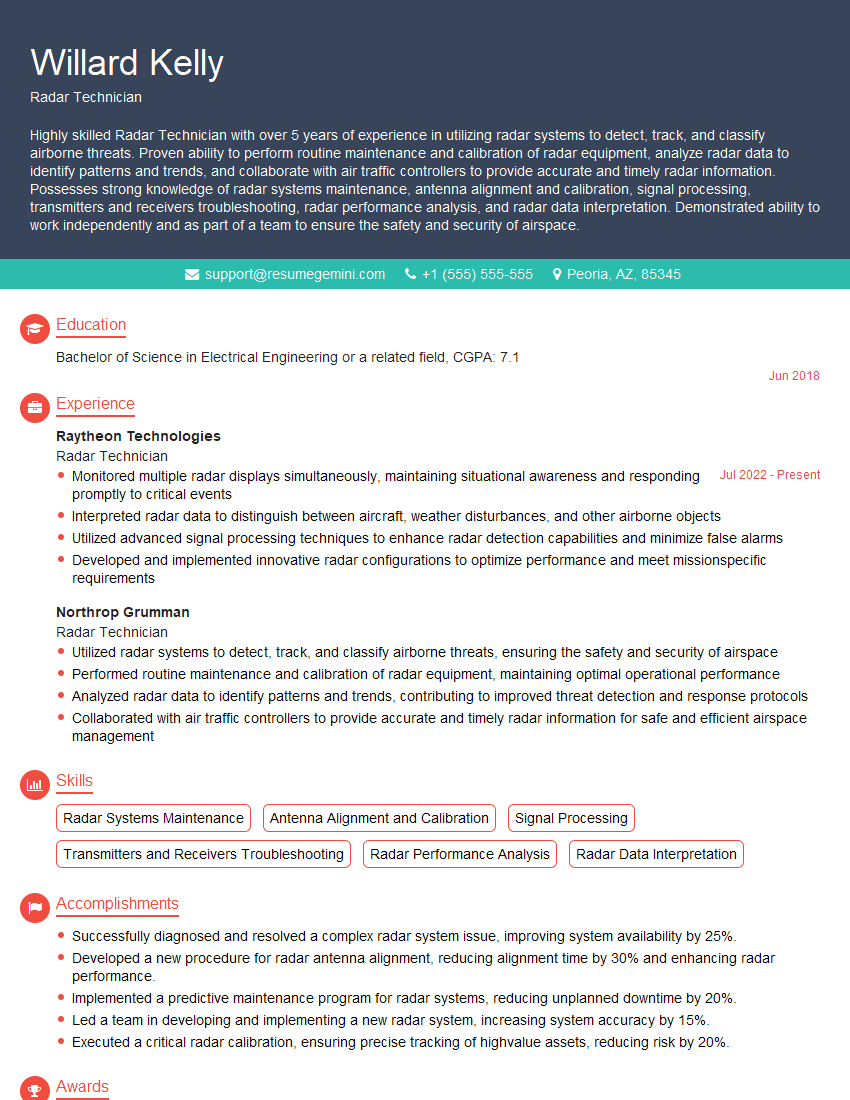
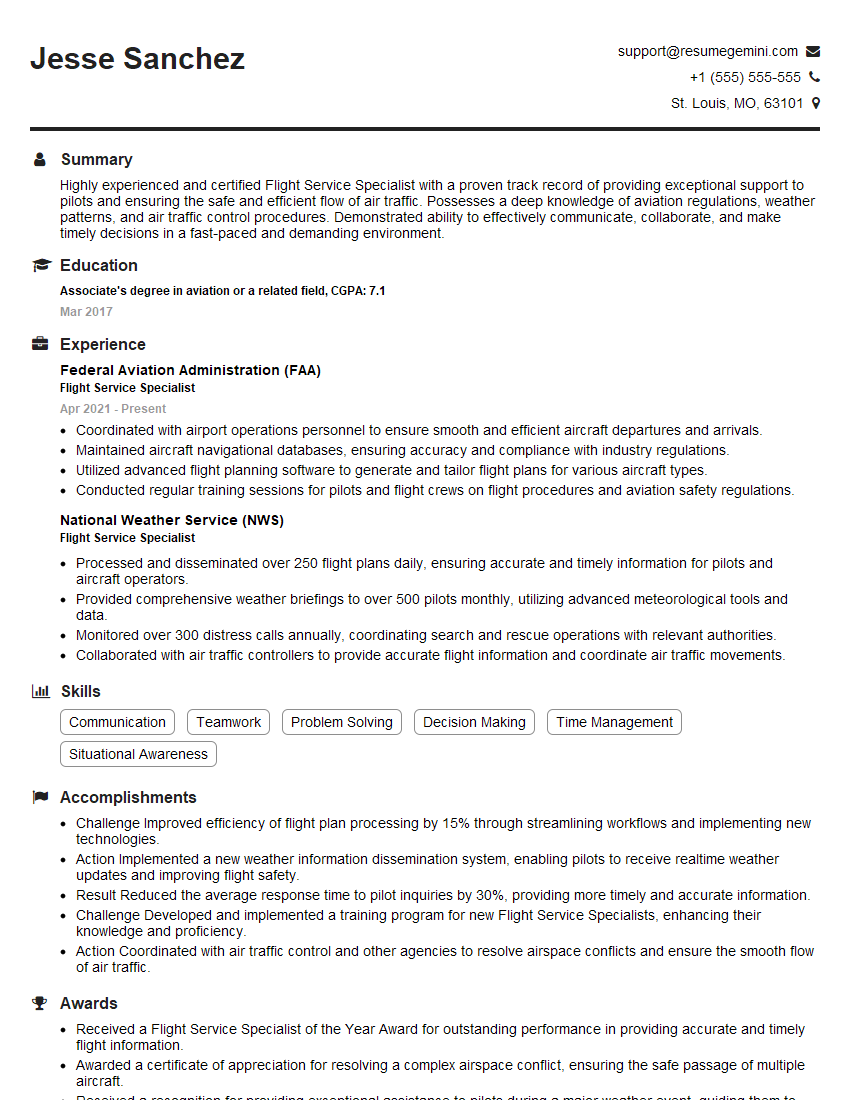
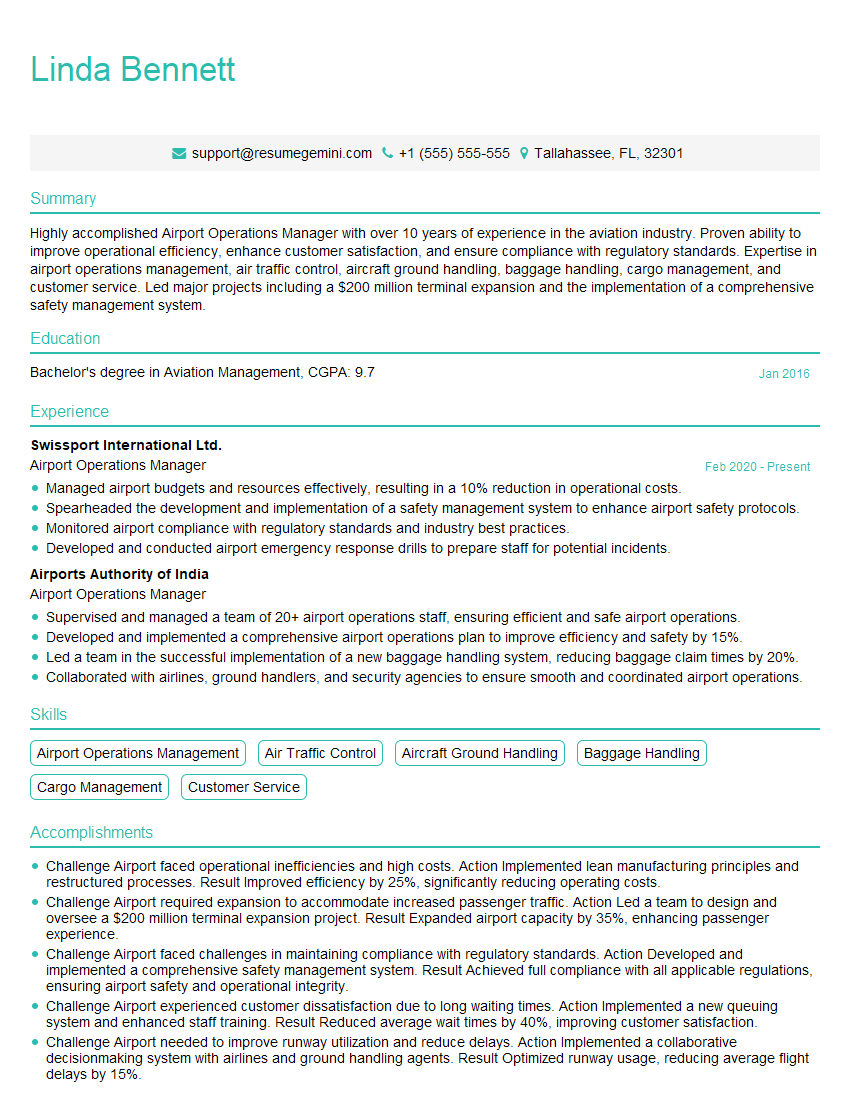
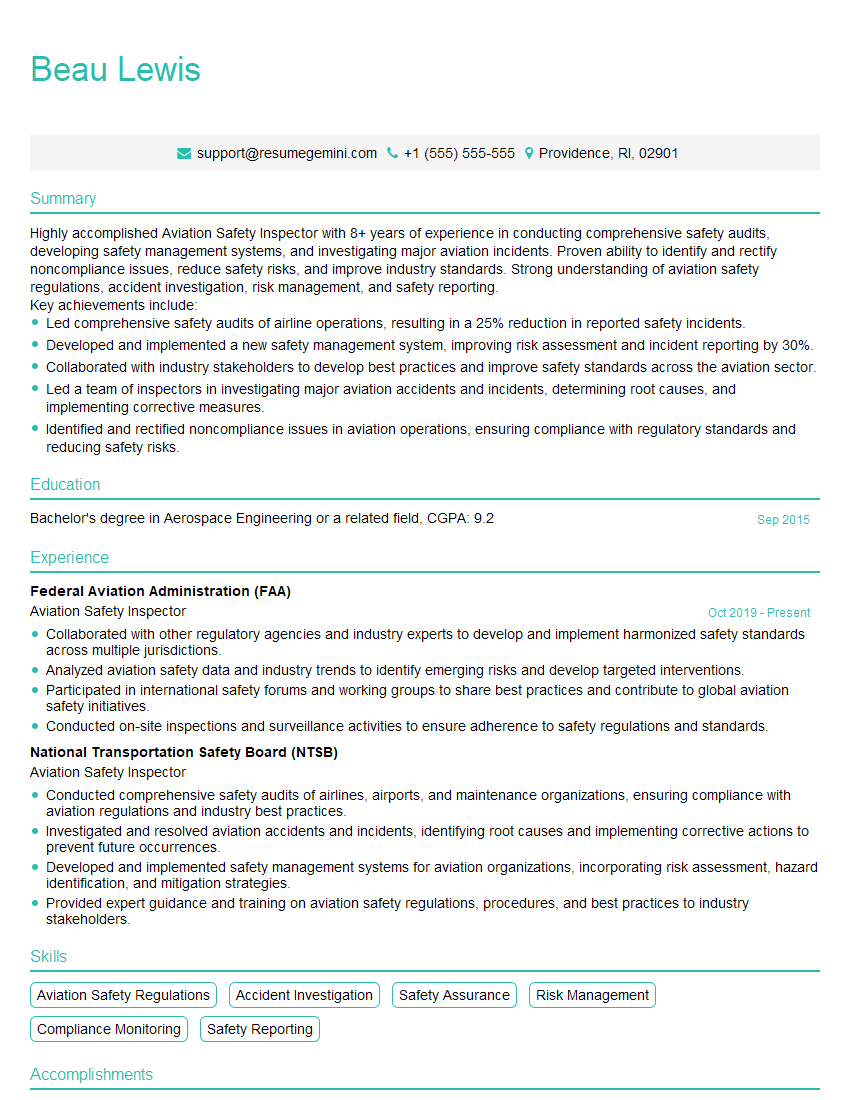
Mastering Understanding of Airspace Management and Conflict Resolution is crucial for career advancement in the aviation industry. It demonstrates a commitment to safety and efficiency, opening doors to exciting opportunities and showcasing your expertise. To enhance your job prospects, create an ATS-friendly resume that effectively highlights your skills and experience. ResumeGemini is a trusted resource that can help you build a professional and impactful resume, ensuring your qualifications stand out to potential employers. Examples of resumes tailored to Understanding of Airspace Management and Conflict Resolution are available to guide you through the process.
Explore more articles
Users Rating of Our Blogs
Share Your Experience
We value your feedback! Please rate our content and share your thoughts (optional).
What Readers Say About Our Blog
Very informative content, great job.
good