Unlock your full potential by mastering the most common Understanding of Different Fabric Types interview questions. This blog offers a deep dive into the critical topics, ensuring you’re not only prepared to answer but to excel. With these insights, you’ll approach your interview with clarity and confidence.
Questions Asked in Understanding of Different Fabric Types Interview
Q 1. Explain the difference between natural and synthetic fibers.
The fundamental difference between natural and synthetic fibers lies in their origin. Natural fibers are derived from plants or animals. Think of the soft cotton from a cotton plant, the luxurious silk from a silkworm cocoon, or the warm wool from a sheep. These fibers are biodegradable and often possess unique properties stemming from their natural composition. Synthetic fibers, on the other hand, are created artificially through chemical processes. Polyester, nylon, and acrylic are prime examples. Synthetic fibers are often more durable and less prone to natural degradation, but their production can have environmental implications. The choice between natural and synthetic fibers often depends on the desired properties of the final fabric, along with considerations of sustainability and cost.
Q 2. Describe the properties of cotton, wool, silk, and linen.
Let’s explore the properties of four key natural fibers:
- Cotton: A plant-based fiber known for its softness, breathability, and absorbency. It’s comfortable to wear, relatively inexpensive, and widely used in apparel. However, it wrinkles easily and can shrink after washing.
- Wool: An animal fiber sourced from sheep, wool is prized for its warmth, moisture-wicking ability, and natural elasticity. It’s naturally crease-resistant and durable but can be more expensive and require specialized cleaning.
- Silk: A luxurious fiber produced by silkworms, silk boasts unmatched smoothness, luster, and drape. It’s incredibly soft against the skin and regulates temperature well, but it’s delicate, prone to damage, and commands a high price.
- Linen: Derived from the flax plant, linen is known for its strength, durability, and breathability. It’s a highly absorbent fiber that feels cool against the skin, perfect for warm climates. However, linen tends to wrinkle easily and requires careful handling.
Q 3. What are the advantages and disadvantages of using polyester in apparel?
Polyester is a versatile synthetic fiber offering several advantages and disadvantages in apparel:
- Advantages: Durable, wrinkle-resistant, quick-drying, inexpensive, and resists stretching and shrinking. It’s also resistant to many stains and mildew. This makes it ideal for sportswear, outdoor apparel, and budget-friendly clothing.
- Disadvantages: Not as breathable as natural fibers, it can feel clammy or uncomfortable in hot weather. It’s also less absorbent and can retain odors. Furthermore, its synthetic nature contributes to environmental concerns regarding its production and disposal.
For example, while a polyester t-shirt might be great for a workout due to its quick-drying properties, it might not be the best choice for a summer dress due to its lack of breathability.
Q 4. How does the weave structure of a fabric affect its drape and durability?
The weave structure significantly influences a fabric’s drape and durability. Drape refers to how the fabric hangs and flows, while durability relates to its strength and resistance to wear and tear. A tightly woven fabric will generally have a stiffer drape and be more durable due to the close arrangement of yarns. Loosely woven fabrics offer a softer, more fluid drape, but might be less durable. For example, a tightly woven canvas will be sturdy and hang relatively stiffly, perfect for a bag, while a loosely woven chiffon will drape beautifully but be more delicate.
Q 5. Explain the difference between a plain weave, twill weave, and satin weave.
These are three fundamental weave structures:
- Plain Weave: The simplest structure where the warp (lengthwise) and weft (crosswise) yarns interlace in an over-one-under-one pattern. This creates a balanced, relatively strong fabric with a smooth surface. Examples include cotton shirting and basic linens.
- Twill Weave: Characterized by diagonal lines created by the weft yarns passing over two or more warp yarns before going under one. This creates a stronger, more durable fabric with a distinctive texture. Denim is a classic example.
- Satin Weave: Features long floats (yarns that lie on the surface) creating a glossy, lustrous surface with a smooth, silky hand. It’s less durable than plain or twill weaves because of the longer floats, which are more prone to snagging. Examples include satin sheets and lingerie fabrics.
Q 6. What is the difference between knit and woven fabrics?
The key difference lies in how the yarns are interlocked:
- Woven fabrics are created by interlacing warp and weft yarns at right angles, forming a strong, structured material. The fabric has a distinct grain and is often more durable than knit fabrics.
- Knit fabrics are made by looping yarns together in a series of interconnected rows. This produces a more flexible, stretchy material that can drape differently than woven fabrics. Knit fabrics often have more give and tend to stretch easily.
Think of a tightly woven shirt versus a stretchy jersey knit t-shirt; the differences in drape, flexibility, and overall feel are directly related to their construction.
Q 7. How do you identify different types of fibers using a burn test?
The burn test can help identify fiber types, but should be performed with caution. Always exercise safety precautions and perform the test in a controlled environment. Here’s a simplified overview:
- Natural Fibers: Cotton burns readily with a yellowish flame, smelling like burning paper. Wool and silk burn slowly with a burning hair smell, leaving a crisp ash. Linen also burns readily, but may be more difficult to distinguish from cotton.
- Synthetic Fibers: Polyester melts and forms a hard bead, while nylon melts and forms a sticky ball. Acrylic melts readily, often creating a hard bead, similar to polyester, however the smell is different. These synthetics usually do not have a strong smell, unlike natural fibers.
Important Note: The burn test provides clues, but should be used in conjunction with other methods for accurate identification. It’s best used to differentiate between broad fiber categories, and not for precise identification of blends or specific types.
Q 8. Describe the characteristics of a high-quality fabric.
High-quality fabric is characterized by a combination of factors impacting its durability, drape, feel, and appearance. It’s not just about the fiber content, but how the fibers are processed and the fabric is finished.
- Fiber Quality: Superior fibers, like long-staple cotton or fine merino wool, result in smoother, stronger, and more luxurious fabrics. Think of the difference between using premium ingredients versus cheaper substitutes in a recipe – the final product’s quality is noticeably affected.
- Yarn Construction: The way yarns are spun affects the fabric’s strength and texture. Tightly spun yarns produce denser fabrics, more resistant to wear and tear. A loosely spun yarn might feel softer but be less durable.
- Weave Structure: The way yarns are interwoven (plain weave, twill, satin, etc.) significantly impacts the fabric’s properties. A tightly woven fabric, like a high-quality canvas, will be more durable than a loosely woven fabric like a voile.
- Dyeing and Finishing: Colorfastness, proper pre-treatment, and finishing processes (like mercerization for cotton) add to the longevity and aesthetic appeal of the fabric. Imagine a beautifully dyed garment fading quickly after a few washes – that indicates poor-quality dyeing.
- Evenness and Consistency: High-quality fabrics demonstrate uniformity in their texture, weight, and color. Defects like slubs (thickened areas) or inconsistent dyeing are signs of inferior quality.
Ultimately, a high-quality fabric feels luxurious, drapes well, is durable, and retains its appearance even after multiple washings and wear.
Q 9. Explain the concept of fabric weight and its significance in garment construction.
Fabric weight, usually measured in ounces per square yard (oz/sq yd) or grams per square meter (gsm), refers to the mass of the fabric per unit area. It’s a crucial factor in garment construction because it significantly impacts drape, hand feel, and the overall structure of the garment.
- Drape: Lighter weight fabrics, such as chiffon or georgette, tend to drape softly and flow gracefully, ideal for flowing dresses or blouses. Heavier fabrics like denim or canvas hold their shape well and are better suited for structured garments like jackets or sturdy pants.
- Hand Feel: The weight directly influences the tactile feel of the fabric. A lightweight fabric feels delicate, whereas a heavier fabric feels substantial and potentially more warm or luxurious.
- Structure and Support: Heavier fabrics provide better structure and support for garments, preventing sagging or wrinkling. Conversely, lighter fabrics may require more careful construction and might be prone to wrinkling.
- Seasonality: Fabric weight selection is important for seasonal clothing. Lightweight fabrics are suited for summer garments, and heavier fabrics are preferable for winter wear to provide warmth and insulation.
For instance, a lightweight silk would be unsuitable for a winter coat, while a heavy wool would be too warm for a summer dress. Choosing the appropriate fabric weight is essential for both the aesthetic appeal and functionality of the garment.
Q 10. What is the difference between a yarn and a thread?
While often used interchangeably, yarn and thread have distinct differences. Yarn is a continuous strand of fibers twisted or spun together, forming the basic building block of fabrics. Thread, on the other hand, is a highly refined and finished yarn, specifically prepared for sewing and embroidery.
- Fiber Composition: Both yarn and thread can be made from various fibers (cotton, silk, wool, synthetic), but thread typically undergoes additional processing to enhance its strength, smoothness, and evenness.
- Strength and Durability: Thread is designed to withstand the stress of sewing and is generally stronger and more durable than the raw yarn from which it is made.
- Finish: Thread often undergoes treatments like sizing (a starch-like coating) to improve its sewability and reduce friction, unlike yarn intended for weaving which may not be so treated.
- Twisting: Both are twisted but thread usually has a more uniform twist and a tighter structure.
Think of it this way: yarn is the raw material, and thread is the finished product, specifically engineered for sewing applications.
Q 11. How does fabric dyeing impact the final appearance and properties of a garment?
Fabric dyeing profoundly impacts a garment’s final appearance and properties. It’s not merely about adding color; the dyeing process affects the fabric’s texture, durability, and even its ability to resist fading and shrinking.
- Color: The most obvious impact is the addition of color, influencing the overall aesthetic and creating the desired look of the garment. Different dyes create different shades and depths of color.
- Texture: Some dyeing processes can alter the fabric’s texture. For example, certain dyeing techniques can enhance the softness or create a unique surface effect.
- Durability: The quality of the dye and the dyeing process are crucial for colorfastness. A high-quality dye will resist fading and maintain its vibrancy even after multiple washes.
- Shrinkage: The dyeing process can sometimes cause shrinkage; proper pre-treatment and careful dyeing techniques are essential to minimize this.
- Hand Feel: Dyeing can subtly affect the hand feel of the fabric, making it softer or stiffer depending on the type of dye and process used.
Consider a high-quality cotton shirt that retains its bright color after numerous washes versus a cheap shirt that fades quickly. The difference lies primarily in the quality of the dye and dyeing process used.
Q 12. Explain the different types of fabric finishes and their purpose.
Fabric finishes are treatments applied to the fabric after it’s been woven or knitted, enhancing its properties for specific purposes. These finishes can dramatically alter a fabric’s look, feel, and functionality.
- Calendering: This process uses rollers to press the fabric, giving it a smooth, glossy surface. Think of the smooth finish on a crisp cotton shirt.
- Mercerization: This treatment improves cotton’s luster, strength, and absorbency by treating it with an alkali solution. It gives a more luxurious feel to cotton fabrics.
- Sanforizing: This pre-shrinking process reduces the likelihood of a garment shrinking after washing. It’s particularly useful for cotton garments.
- Water Repellency: This treatment makes the fabric resistant to water, often found in outdoor clothing or umbrellas. It helps protect the garment from moisture damage.
- Flame Retardancy: This finish makes the fabric less flammable, crucial in clothing designed for safety or used in specific environments.
- Softening: Treatments like enzyme washing or silicone treatments create a softer hand feel, enhancing the comfort of the garment.
The choice of finish depends entirely on the intended use of the fabric. A durable finish might be ideal for workwear, while a soft finish would be better for a delicate evening dress.
Q 13. What are the common fabric defects and how can they be identified?
Fabric defects can significantly impact the quality and appearance of a garment. Identifying these defects early in the production process is crucial for quality control.
- Slubs: Thickened areas in the yarn that create an uneven texture.
- Neps: Small entangled fibers creating tiny knots on the surface.
- Holes and Tears: These are self-explanatory and indicate damage to the fabric.
- Broken Ends: Broken yarn threads interrupting the weave or knit structure.
- Skewness: Uneven or distorted alignment of the weave.
- Color Variations: Inconsistent dyeing resulting in uneven color distribution.
- Weaving Defects: Issues like mispicks (incorrect interlacing of yarns) or floats (yarn loops on the surface).
Identifying these defects usually involves visual inspection, but specialized equipment can help detect subtle imperfections. Careful attention to detail is essential to ensure the highest quality standards are met.
Q 14. Describe the impact of fabric shrinkage on garment construction.
Fabric shrinkage is the reduction in fabric dimensions after washing or exposure to moisture. It poses a significant challenge in garment construction because it can lead to ill-fitting and misshapen garments.
- Pre-Shrinking: To mitigate shrinkage, many fabrics undergo pre-shrinking treatments like sanforizing before garment construction. This reduces shrinkage after washing.
- Pattern Adjustments: Even with pre-shrinking, some shrinkage can still occur. Pattern makers often account for this by adding extra ease (extra fabric) to the pattern to allow for post-washing shrinkage.
- Garment Distortion: Uneven shrinkage can distort the shape of the garment, leading to warping or puckering.
- Quality Control: Proper testing and quality control measures are crucial to ensure fabrics have minimal shrinkage rates.
Imagine a beautifully tailored shirt shrinking significantly after the first wash, making it unwearable. This is a direct result of fabric shrinkage and highlights the importance of considering this factor throughout the garment production process.
Q 15. How do different fabric types respond to different cleaning methods?
Different fabrics react dramatically differently to various cleaning methods. Understanding fiber content is paramount. Natural fibers like cotton and linen are generally more durable and can withstand machine washing, though delicate items may require hand washing. However, wool and silk, also natural fibers, are extremely sensitive and often require professional dry cleaning to avoid shrinking or damage. Synthetic fabrics like polyester and nylon are typically more resilient and can tolerate machine washing at higher temperatures, but always check the care label.
- Cotton & Linen: Machine washable, but may shrink slightly with high heat.
- Wool & Silk: Often require dry cleaning; hand washing is sometimes possible with specialized detergents.
- Polyester & Nylon: Generally machine washable and durable, but high heat can damage some types.
- Blends: The cleaning method depends on the dominant fiber. A blend of 60% cotton and 40% polyester will likely be machine washable, but may need lower temperatures than pure cotton.
For example, imagine washing a delicate silk scarf in a machine – it’s a recipe for disaster! Always check the care label and treat each fabric according to its individual needs. The label is your best friend!
Career Expert Tips:
- Ace those interviews! Prepare effectively by reviewing the Top 50 Most Common Interview Questions on ResumeGemini.
- Navigate your job search with confidence! Explore a wide range of Career Tips on ResumeGemini. Learn about common challenges and recommendations to overcome them.
- Craft the perfect resume! Master the Art of Resume Writing with ResumeGemini’s guide. Showcase your unique qualifications and achievements effectively.
- Don’t miss out on holiday savings! Build your dream resume with ResumeGemini’s ATS optimized templates.
Q 16. What is the role of fabric testing in quality control?
Fabric testing is crucial for quality control, ensuring consistency and meeting performance standards. Various tests assess properties like tensile strength (how much force the fabric can withstand before breaking), abrasion resistance (its durability against rubbing), colorfastness (how well the dye holds up to washing and light), shrinkage (how much it reduces in size after washing), and drape (how the fabric falls).
Imagine a clothing manufacturer producing thousands of shirts. Without fabric testing, they might end up with a batch of shirts that shrink significantly after washing or have colors that fade quickly. These tests allow them to identify and address potential problems early in the production process, saving time, money, and preventing customer dissatisfaction.
Common tests include:
- Tensile Strength Test: Measures the fabric’s strength and resistance to tearing.
- Abrasion Resistance Test: Determines how well the fabric can withstand rubbing and wear.
- Colorfastness Test: Assesses the dye’s resistance to washing, light, and rubbing.
By rigorously testing fabrics, manufacturers can maintain consistent quality, meet customer expectations, and safeguard their brand reputation.
Q 17. Explain the concept of fabric drape and its importance in design.
Fabric drape refers to the way a fabric hangs or falls. It’s the way the fabric’s weight and texture influence its form when not supported. This is a critical design element influencing the overall look and feel of a garment. A stiff fabric, like a heavy linen, will have a very different drape from a flowing silk, which will create a much softer, more fluid form. Drape is determined by factors such as fiber type, yarn construction, fabric weave, and finishing treatments.
Consider a formal gown: a fabric with excellent drape, like silk charmeuse or chiffon, is essential for achieving the desired elegant, flowing silhouette. In contrast, a structured jacket might require a fabric with less drape, providing a sharper, more tailored look.
Understanding drape allows designers to choose fabrics that complement the silhouette and style of the garment. It’s a crucial design decision that significantly influences the final aesthetic appeal. A poor choice in fabric drape can ruin the whole look and feel of a design, while a well-chosen fabric drape can make a garment truly stand out.
Q 18. How does fiber length affect the properties of a yarn?
Fiber length significantly impacts yarn properties. Longer fibers generally produce stronger, smoother, and more lustrous yarns. Shorter fibers, on the other hand, tend to result in weaker, coarser yarns that are more prone to breakage. The length also influences the yarn’s ability to be spun into finer counts (higher numbers indicating finer yarns). Imagine trying to build a rope with short, weak strands versus long, strong ones – the long strands make a much more durable rope. Similarly, long fibers in yarn create a more resilient and better quality fabric.
Examples:
- Long Staple Cotton: Produces yarns with superior strength, softness, and luster. This translates into higher-quality fabrics with a smoother hand.
- Short Staple Cotton: Results in coarser, weaker yarns often used in lower-cost fabrics.
Fiber length is often categorized as staple length, and its measurement directly impacts the cost and quality of the final product. Longer staple fibers are more expensive due to the difficulty in harvesting and processing them, but they also result in a more luxurious and durable fabric.
Q 19. Describe the different types of fabric blends and their uses.
Fabric blends combine different fibers to leverage their individual advantages. This creates fabrics with unique properties that aren’t achievable with a single fiber. Common blends include cotton/polyester (for durability and wrinkle resistance), wool/polyester (for warmth and wrinkle resistance), and linen/cotton (for strength and breathability).
Examples of fabric blends and their uses:
- Cotton/Polyester: Commonly used in shirts and trousers. The cotton provides comfort and absorbency, while the polyester adds durability and wrinkle resistance.
- Wool/Polyester: Often found in suits and coats. Wool offers warmth and softness, while polyester enhances durability and helps reduce wrinkles.
- Linen/Cotton: Used in bedding and summer clothing. Linen provides breathability and a crisp texture, while cotton enhances softness and durability.
- Silk/Cotton: A luxurious blend offering the smoothness and drape of silk with the durability of cotton. This is popular in higher-end shirts and blouses.
The percentages of each fiber in the blend influence the final fabric properties. A higher percentage of one fiber will impart more of that fiber’s characteristics to the overall fabric.
Q 20. How do you determine the appropriate fabric for a particular garment?
Selecting the right fabric for a garment involves careful consideration of several factors:
- Intended Use: A summer dress requires a breathable fabric like cotton or linen, while a winter coat needs a warm, insulating fabric like wool or fleece.
- Desired Aesthetic: The drape, texture, and weight of the fabric contribute to the overall look and feel of the garment. A formal gown might call for a luxurious silk, while a casual shirt could use a simpler cotton.
- Care Instructions: Consider the ease of care. A fabric requiring dry cleaning might be unsuitable for a frequently worn item.
- Budget: Fabric costs vary widely depending on fiber type, quality, and construction.
- Seasonality: Lightweight fabrics are suitable for warmer months, whereas heavier fabrics are better suited for cooler weather.
For instance, designing a performance athletic top would prioritize moisture-wicking properties, choosing a synthetic blend like polyester or nylon. In contrast, a tailored suit would require a fabric with structure and drape, such as wool or a wool blend.
The process often involves sourcing fabric swatches and draping them to assess their drape and suitability before committing to a larger order. This ensures the selected fabric aligns perfectly with the design vision.
Q 21. Explain the importance of understanding fiber content labels.
Understanding fiber content labels is essential for consumers and professionals alike. These labels provide crucial information about the fabric’s composition, enabling informed choices about garment care, durability, and suitability for different purposes. The information provides details on the fiber types (e.g., cotton, wool, polyester) and their percentages in the fabric. This impacts how the garment should be cared for; knowing the fabric is 100% cotton allows you to wash it at home, whereas a delicate silk garment will require professional cleaning.
For example, a label stating “60% cotton, 40% polyester” informs us that the garment is a blend, possessing some properties of both cotton (breathability, absorbency) and polyester (durability, wrinkle resistance). This information is crucial for selecting appropriate cleaning methods and anticipating the garment’s performance over time.
Furthermore, accurate fiber content labels are critical for regulatory compliance. Many countries have laws mandating truthful labeling to prevent consumer deception.
In summary, fiber content labels empower consumers to make well-informed purchase decisions and to care for their clothing correctly, maximizing its lifespan.
Q 22. Discuss the sustainable sourcing of fabrics.
Sustainable sourcing of fabrics focuses on minimizing the environmental and social impact throughout the textile supply chain. It’s about choosing materials and production methods that are kinder to the planet and fairer to the people involved.
- Organic Cotton: Grown without harmful pesticides and fertilizers, reducing water pollution and soil degradation. I’ve worked with several brands that prioritize organic cotton for its superior quality and ethical production.
- Recycled Fibers: Utilizing pre-consumer and post-consumer waste to create new fabrics, reducing landfill waste and conserving resources. For example, recycled polyester from plastic bottles is becoming increasingly popular.
- Sustainable Cellulose-Based Fibers: Tencel and Modal are examples of fabrics made from sustainably harvested wood pulp, often using closed-loop processes to minimize water usage and chemical waste. I’ve personally seen the impressive efficiency of Tencel production facilities.
- Responsible Sourcing of Other Materials: This includes ensuring fair wages and safe working conditions for farmers and workers involved in the production of silk, wool, and other natural fibers. Traceability programs are crucial here.
- Reduced Water Consumption and Energy Use: Adopting innovative technologies and processes to minimize water and energy usage throughout the production process is also key. I’ve been involved in projects assessing water usage in different fabric production methods.
Ultimately, sustainable sourcing demands a holistic approach, considering the entire lifecycle of the fabric – from raw material to disposal or recycling – and prioritizing transparency and accountability.
Q 23. What is the difference between a warp and weft yarn?
Imagine weaving a rug: the warp yarns are the lengthwise threads, forming the foundation of the fabric, while the weft yarns are the crosswise threads that are woven over and under the warp yarns to create the fabric’s structure and texture.
- Warp yarns are usually stronger and more tightly spaced to provide stability and strength to the fabric.
- Weft yarns can be of varying types and thicknesses, influencing the texture and drape of the final fabric.
Think of it like building a wall: the warp yarns are the vertical supports (strong and sturdy), while the weft yarns are the bricks that fill in the spaces and determine the wall’s final appearance. The interaction between warp and weft influences the fabric’s characteristics—from its durability to its softness.
Q 24. How do different fabric finishes affect the hand feel of a garment?
Fabric finishes significantly impact the hand feel, which refers to the way a fabric feels to the touch. Different finishes alter the fabric’s properties, resulting in diverse sensations.
- Mercerization: A treatment for cotton that enhances its luster, strength, and dye affinity, resulting in a smoother and silkier feel.
- Calendering: Pressing the fabric under high pressure to create a smooth or glossy finish. This can result in a crisp, almost stiff feel, often seen in high-end shirtings.
- Sanforizing: Pre-shrinking the fabric to prevent shrinkage after washing, maintaining its shape and size. This results in a more stable and predictable hand feel.
- Stonewashing: A process of tumbling the fabric with pumice stones to create a softer, more worn-in look and feel, often used for denim.
- Softening agents: Chemicals applied to make the fabric softer and more pliable. The choice of agent affects the softness and drape significantly.
Consider a simple cotton t-shirt: an untreated one may be somewhat rough, while a mercerized or stonewashed version will feel much softer and smoother. The finish is crucial in determining the overall quality and feel of the garment.
Q 25. Explain the challenges associated with working with delicate fabrics.
Working with delicate fabrics, such as silk, lace, chiffon, or cashmere, presents several challenges due to their inherent fragility and sensitivity.
- Susceptibility to Damage: These fabrics can easily snag, tear, or be damaged during handling, cutting, sewing, and laundering. Careful handling and specialized techniques are essential.
- Specialized Equipment and Techniques: Fine needles, sharp shears, and appropriate sewing machine settings are crucial to prevent damage. Specific pressing techniques may also be required.
- Difficulty in Pattern Matching and Seam Finishing: The transparency and delicate nature of some fabrics make pattern matching and seam finishing more challenging and time-consuming.
- Increased Labor Cost: The extra care and precision required to work with delicate fabrics increase labor costs.
- Shrinkage and Colorfastness Issues: Proper pre-treatment and laundering are critical to prevent shrinkage and color loss. Testing is crucial here.
For instance, sewing silk requires a delicate touch and specialized needles to avoid creating holes or snags. The challenge lies in balancing aesthetics and durability—achieving a beautiful garment without compromising its structural integrity.
Q 26. Describe your experience with different fabric testing methods.
My experience encompasses a range of fabric testing methods to assess quality, performance, and suitability for various applications. This includes:
- Tensile Strength Testing: Measures the fabric’s resistance to pulling forces, indicating its durability and strength.
- Abrasion Resistance Testing: Evaluates the fabric’s resistance to wear and tear, crucial for garments subjected to friction.
- Colorfastness Testing: Determines the fabric’s resistance to fading or color bleeding due to washing, light exposure, or rubbing.
- Shrinkage Testing: Measures the fabric’s tendency to shrink after washing or dry cleaning, ensuring consistent sizing.
- Drape Testing: Assesses the fabric’s ability to hang and fall gracefully, an important consideration for garments like dresses or skirts.
In my previous role, I utilized these tests to ensure quality control in production and to select appropriate fabrics for different product lines. For example, I used abrasion resistance testing to choose the right fabric for a children’s line of clothing expected to withstand frequent wear and tear.
Q 27. How do you stay updated on the latest trends in fabric technology?
Staying current in the dynamic field of fabric technology requires a multi-pronged approach.
- Industry Publications and Journals: I regularly read publications like Textile World and others focused on material science and textile innovation to stay abreast of technological advancements and emerging trends.
- Trade Shows and Conferences: Attending industry events like Première Vision and Techtextil allows me to network with experts, see new materials firsthand, and gain insights into the latest technologies.
- Online Resources and Databases: I utilize online databases and websites dedicated to textile research and development to access scientific literature and technical information.
- Collaboration with Suppliers and Manufacturers: Maintaining close relationships with fabric suppliers and manufacturers allows me access to their innovative developments and allows me to learn about their sustainability initiatives.
- Continuing Education: Participating in workshops, seminars, and online courses focused on textile technology keeps my knowledge and skills sharp.
These methods allow me to combine theoretical knowledge with practical experience, ensuring I’m always at the forefront of this evolving field.
Q 28. What are some emerging sustainable fabric alternatives?
Several emerging sustainable fabric alternatives offer promising solutions for a more environmentally conscious textile industry.
- Mushroom Leather (Mycelium): A vegan leather alternative grown from mycelium, the root structure of mushrooms. It’s biodegradable and requires fewer resources than traditional leather production.
- Pineapple Leather (Piñatex): A textile made from pineapple leaf fibers, a waste product of the pineapple industry. It’s a sustainable and relatively low-impact material.
- Orange Fiber: A fabric created from citrus juice byproducts, offering a sustainable and luxurious alternative to traditional fabrics.
- Seaweed Fabrics: Seaweed is being explored as a source of sustainable fibers, offering a renewable and biodegradable option.
- Bacterial Cellulose: Produced using bacteria, this material offers unique properties, including high strength and biocompatibility.
These innovations represent a significant shift towards a more circular and environmentally friendly textile industry, minimizing waste and utilizing readily available resources. I am actively researching the potential applications of these materials in various garments and designs.
Key Topics to Learn for Understanding of Different Fabric Types Interview
- Fiber Classification: Natural fibers (cotton, wool, silk, linen) vs. synthetic fibers (polyester, nylon, rayon, acrylic). Understand their properties, strengths, weaknesses, and common blends.
- Fabric Construction: Learn the differences between woven, knitted, non-woven, and other fabric constructions. Analyze how construction impacts drape, durability, and texture.
- Fabric Properties: Master key characteristics such as drape, hand, weight, absorbency, strength, elasticity, wrinkle resistance, and shrinkage. Be prepared to discuss how these properties relate to end-use applications.
- Fabric Finishes: Explore various finishing techniques (e.g., mercerization, dyeing, printing, water-repellent treatments) and their impact on fabric performance and aesthetics. Understand the implications of different finishes for garment care.
- Fabric Testing and Quality Control: Familiarize yourself with common fabric testing methods used to assess quality and performance. Understand how to interpret test results and identify potential problems.
- Sustainable and Ethical Sourcing: Demonstrate awareness of environmentally friendly and ethically produced fabrics. Be prepared to discuss the importance of sustainable practices in the textile industry.
- Application to Specific Industries: Consider how different fabric types are suited for apparel, home furnishings, technical textiles (e.g., medical, automotive), and other relevant sectors.
Next Steps
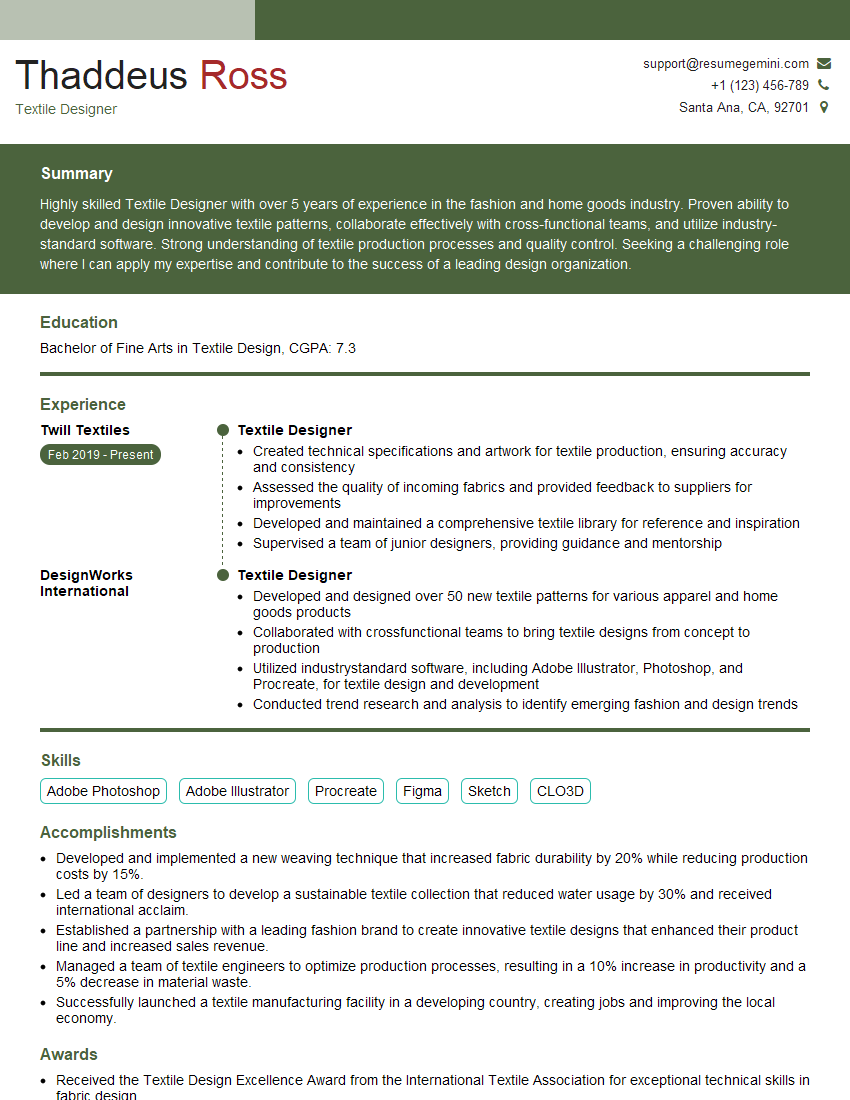
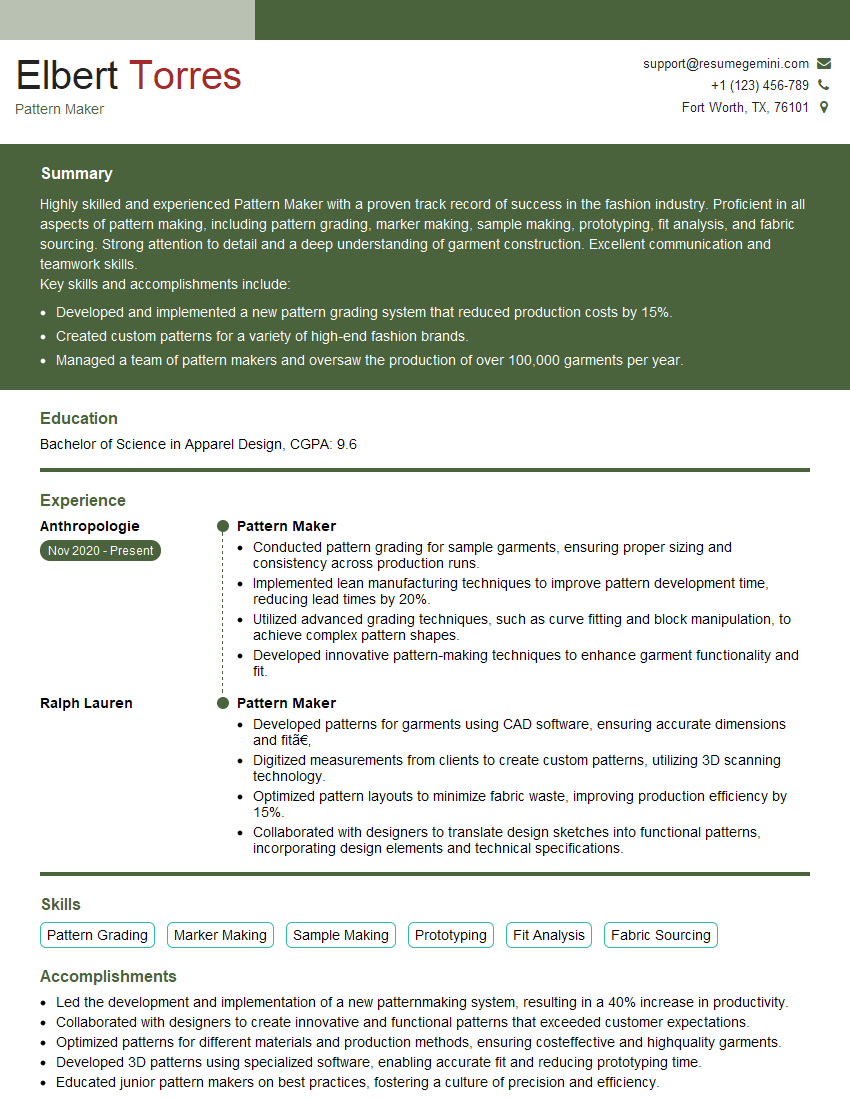
Mastering your understanding of different fabric types is crucial for career advancement in the textile, fashion, and design industries. A strong grasp of these concepts demonstrates technical expertise and problem-solving skills highly valued by employers. To boost your job prospects, create an ATS-friendly resume that effectively highlights your skills and experience. ResumeGemini is a trusted resource to help you build a professional and impactful resume. Examples of resumes tailored to showcasing expertise in Understanding of Different Fabric Types are available to help guide you.





Explore more articles
Users Rating of Our Blogs
Share Your Experience
We value your feedback! Please rate our content and share your thoughts (optional).
What Readers Say About Our Blog
Very informative content, great job.
good