Interviews are more than just a Q&A session—they’re a chance to prove your worth. This blog dives into essential Understanding of Film Scoring Techniques interview questions and expert tips to help you align your answers with what hiring managers are looking for. Start preparing to shine!
Questions Asked in Understanding of Film Scoring Techniques Interview
Q 1. Explain the difference between leitmotifs and musical themes.
While both leitmotifs and musical themes contribute to a film’s score, they differ significantly in their function. A musical theme is a broader concept, referring to any recurring melodic idea or musical phrase that carries a specific mood or atmosphere. Think of the main title theme of a film – that’s a musical theme. It’s often associated with the overall tone of the film or a particular aspect of it.
A leitmotif, on the other hand, is a much more specific type of musical theme. It’s a short, distinctive musical phrase that is consistently associated with a particular character, object, idea, or emotion throughout the film. It acts as a kind of musical shorthand, instantly reminding the audience of that specific element whenever it’s played. For instance, in Wagner’s operas, leitmotifs represent characters or ideas, and their recurrence throughout the opera guides the listener through the narrative.
Think of it this way: a musical theme is like a chapter heading, while a leitmotif is a recurring keyword within that chapter, instantly reminding you of its specific meaning. The difference is crucial in creating depth and coherence in a film score.
Q 2. Describe your approach to scoring a dramatic action sequence.
Scoring a dramatic action sequence requires a careful balance of intensity, precision, and emotional impact. My approach starts with a thorough understanding of the scene’s pacing and emotional arc. I’d begin by analyzing the visuals – what is the camera focusing on? What is the emotional progression? Is it a relentless chase, a moment of desperate struggle, or a triumph against the odds?
Then, I’d select instruments and musical textures that reflect the action’s energy. Powerful percussion, driving rhythms, and soaring strings are common choices for this genre. However, I’d avoid a relentless wall of sound; dynamic changes are crucial. Moments of quiet or subdued intensity can often heighten tension more effectively than constant bombast.
I’d also employ techniques like rhythmic variations to mimic the rhythm of the action itself. For example, a quick, staccato rhythm can suggest a rapid-fire gunfight, whereas slower, more sustained notes might underscore a tense standoff. The use of counterpoint – independent melodic lines simultaneously – can create a sense of complexity and urgency.
Finally, the overall sound design needs to be considered. Sound effects often work in tandem with the score to create a powerful and immersive experience. This ensures the music complements rather than competes with the other elements of the sequence. The goal is a harmonious blend that amplifies the cinematic impact.
Q 3. How do you incorporate source music into a film score effectively?
Incorporating source music effectively involves a delicate balancing act. The goal is to seamlessly integrate pre-existing music into the film’s narrative without disrupting the flow or undermining the original score. The key is thoughtful selection and subtle manipulation.
Firstly, the choice of source music should be driven by narrative considerations. It needs to be thematically appropriate and contribute to the scene’s mood and atmosphere. A poorly chosen track can jar the viewer out of the immersive experience.
Secondly, I would often subtly alter the source music to fit the scene’s needs. This could involve adjusting the tempo, adding or removing sections, changing the instrumentation through mixing, or even creating a unique arrangement. The goal isn’t to hide the fact it’s source music, but to mold it seamlessly into the overall sonic landscape. A sudden shift to a different style of music could feel jarring, so smooth transitions are key.
Finally, the volume and placement of the source music within the mix must be considered carefully. It shouldn’t overpower the dialogue or the original score. Often, the source music is used as a diegetic element (meaning it’s a sound that exists within the film’s world), such as a radio playing in the background. In such cases, its volume and clarity are crucial to maintaining realism.
Q 4. What are some common challenges in film scoring, and how do you overcome them?
Film scoring presents numerous challenges, often arising from time constraints, budget limitations, and creative differences. One common challenge is meeting tight deadlines. Film projects often have incredibly short turnaround times, demanding efficient workflow management and sometimes, working long hours. Overcoming this requires meticulous planning, efficient use of composing software and sometimes, a talented team of assistants.
Another challenge is balancing creative vision with directorial input. Finding common ground and translating the director’s vision into a musical score can require extensive communication and compromise. Active listening and iterative feedback loops are essential.
Budgetary limitations can also affect the scale and complexity of a score. Finding creative solutions to achieve a rich and emotional score within a limited budget involves resourcefulness and prioritizing the most impactful musical moments. Clever use of existing sample libraries and efficient orchestration can make a huge difference.
Finally, technical difficulties with software, hardware, or even communication can arise. Having a contingency plan for technical issues and being adaptable is crucial. A reliable backup system and proficiency with various software are vital.
Q 5. Discuss the importance of tempo and rhythm in conveying emotion in film music.
Tempo and rhythm are fundamental to conveying emotion in film music. Tempo, the speed of the music, directly impacts the audience’s perception of a scene. A fast tempo can suggest excitement, urgency, or even chaos, while a slow tempo evokes feelings of calm, reflection, or sadness.
Rhythm, the pattern of stressed and unstressed beats, also plays a vital role. A steady, regular rhythm can create a sense of stability and order, while a more irregular or syncopated rhythm might communicate tension, anxiety, or unpredictability.
For example, a slow, melancholic melody played in a slow tempo with a simple, regular rhythm might accompany a poignant farewell scene. Conversely, a fast-paced action sequence might feature a fast tempo and complex, driving rhythm, utilizing syncopation and polyrhythms to increase tension and excitement. The interplay between tempo and rhythm provides a rich and nuanced palette for expressing a wide range of emotions.
Q 6. How do you collaborate with a director to achieve their vision for a film’s score?
Collaboration with a director is paramount to achieving their vision. It’s a process of mutual understanding and creative exchange, not merely fulfilling instructions. I begin by thoroughly studying the film’s script, visuals, and the director’s notes. Often, we’ll have initial discussions to understand their artistic goals, their interpretation of the film’s emotional landscape, and the specific impact they want the music to have on the audience.
I’ll then compose several thematic sketches and mock-ups, incorporating elements we’ve discussed. This allows for early feedback and iterative refinement. Regular screenings of the film with temporary music tracks are crucial for assessing how the score fits with the visuals and dialogue. The feedback process is iterative; it is rare that the first draft of any piece of music works perfectly in context.
Open communication is vital. I actively seek their input at every stage, making adjustments to reflect their vision. The goal is a collaborative process where both the director and I are equally invested in crafting a score that effectively enhances the film’s narrative and emotional impact.
Q 7. What software and hardware are you proficient with for film scoring?
My film scoring workflow relies heavily on both software and hardware. In terms of software, I’m highly proficient in Digital Audio Workstations (DAWs) like Logic Pro X and Ableton Live. These allow me to compose, arrange, edit, mix, and master my scores. I also utilize notation software like Sibelius and Finale for creating detailed orchestral scores.
For hardware, I rely on a powerful computer with a high-end audio interface, ensuring low-latency recording and playback. High-quality studio monitors are essential for accurate sound reproduction. Depending on the project, I might also utilize various MIDI keyboards and controllers for inputting musical ideas, and a range of microphones for recording acoustic instruments.
Furthermore, I’m adept at using virtual instruments and sample libraries that allow me to create realistic orchestral and other sounds without the need for a full orchestra. I believe in maintaining an adaptable workflow, leveraging both technology and traditional approaches to achieve the optimal outcome for each project.
Q 8. Describe your experience with orchestral scoring and sample libraries.
My experience with orchestral scoring spans over fifteen years, encompassing both traditional orchestral arrangements and the extensive use of sample libraries. I began my career working with live orchestras, which instilled in me a deep understanding of instrumentation, dynamics, and the nuances of live performance. This foundation is crucial, even when working with virtual instruments. Sample libraries, such as Spitfire Audio, Vienna Symphonic Library, and EastWest Hollywood Orchestra, have become indispensable tools, offering incredible flexibility and control. They allow me to experiment with a vast range of instruments and sonic textures, something that would be logistically impossible and prohibitively expensive with a live orchestra for every project. I’m adept at blending the realism of orchestral samples with the creative possibilities afforded by synthesis and sound design to achieve unique and evocative soundscapes.
For example, in a recent project involving a fantasy film, I used Spitfire Audio’s Albion One library for the sweeping orchestral moments, combined with custom-designed sound effects to create the mystical feel of the magical world. This allowed me to achieve a rich, layered sound without the constraints of a traditional recording session. My proficiency encompasses not just the technical aspects of using these libraries, but also the artistic skill of shaping and sculpting their sonic potential to fit the narrative and emotional arc of the film.
Q 9. How do you create a sense of place or atmosphere using music?
Creating a sense of place or atmosphere through music relies on a nuanced understanding of musical elements and their psychological impact on the listener. The key is to evoke specific emotions and associations that complement the visuals and narrative. This is achieved through careful consideration of several factors:
- Instrumentation: The choice of instruments dramatically shapes the atmosphere. For example, a scene set in a bustling city might feature bright brass and driving percussion, while a quiet forest scene could be underscored by woodwinds and strings with a slower tempo.
- Harmony and Melody: Major keys often suggest happiness and optimism, while minor keys frequently create feelings of sadness, tension, or mystery. The melodic contours – whether they ascend, descend, or remain static – also contribute to the overall feeling. A rising melody might suggest hope, while a falling one could convey despair.
- Tempo and Rhythm: Fast tempos generate excitement and energy, while slow tempos instill calmness or suspense. Rhythmic patterns can also significantly impact the atmosphere. A driving, repetitive rhythm could feel urgent, while a more complex, irregular rhythm might convey unease.
- Dynamics: The subtle shifts in volume (crescendos and diminuendos) can create tension and release, drawing the audience’s attention to particular moments in the film. A gradual crescendo can build anticipation, whereas a sudden forte can create a shocking impact.
For instance, in a scene depicting a desolate wasteland, I might employ a sparse instrumentation consisting of low, droning strings and dissonant harmonies, played at a slow tempo with subtle dynamic shifts to enhance the sense of emptiness and isolation. Conversely, a vibrant, bustling market scene might be underscored with lively, upbeat rhythms, bright brass fanfares, and a faster tempo.
Q 10. Explain your process for composing music to picture.
My process for composing music to picture is iterative and deeply collaborative. It typically begins with a thorough review of the film’s footage, paying close attention to the narrative arc, emotional beats, and director’s vision. I then create a detailed spotting sheet – a document that synchronizes musical cues with specific scenes or moments in the film. This provides a framework for the composition process.
I usually start by composing a ‘temp track’ – a preliminary musical guide using existing music or samples that captures the emotional essence of each scene. This temp track helps me to establish a rhythm and tone for the score and assists the director in visualizing the music’s impact. I then begin to compose original music, often working in short sections at a time, ensuring that each piece aligns perfectly with the on-screen action and dialogue.
Throughout the composition process, I regularly share my work with the director and other key members of the production team to gather feedback and incorporate their input. This is crucial, because the final score is a collaborative effort. After final approval, I orchestrate the music, prepare the parts for the musicians (or virtual instruments), and supervise the recording and mixing sessions. The process involves repeated revisions and refinement until the music perfectly complements the film.
Q 11. How do you handle revisions and feedback on your film score?
Handling revisions and feedback is an integral and often iterative aspect of film scoring. I view feedback not as criticism but as an opportunity to refine the score and better serve the film’s narrative. My approach involves active listening and careful consideration of the feedback received. I work closely with the director and producers to understand their specific concerns and suggestions.
I maintain detailed notes on all feedback received, creating a record of changes and revisions made. This document ensures transparency and allows for easy reference when further revisions are needed. I often present multiple revised versions, offering various options and solutions to address the feedback, fostering collaborative problem-solving. It’s crucial to communicate clearly and professionally throughout the revision process, ensuring that all parties understand the rationale behind the changes and the overall goals for the score. The goal is to create a score that is both artistically satisfying and perfectly aligns with the director’s vision.
Q 12. How do you balance the music with the dialogue and sound effects?
Balancing music with dialogue and sound effects is a crucial aspect of film scoring. The music should enhance and complement the other audio elements, never overpowering or competing with them. This requires a delicate balance and a deep understanding of sonic layering and dynamics. My approach involves careful consideration of the sonic landscape of each scene.
During quieter moments with significant dialogue, the music might recede into the background, providing subtle underscoring that enhances the emotional impact of the words. During more action-packed scenes, the music might become more prominent, but it should still allow the sound effects and dialogue to remain intelligible. This might involve strategic use of dynamic range, creating space for the other audio elements. I often employ techniques like ducking – automatically lowering the music volume when dialogue or significant sound effects occur – to ensure clarity. The key is to use the music to amplify the emotions and atmosphere without distracting from the other elements that drive the narrative.
Q 13. Describe your understanding of different musical styles and genres.
My understanding of musical styles and genres is broad and encompasses classical, orchestral, jazz, electronic, world music, and various hybrid genres. This versatility enables me to adapt my approach to any project, crafting scores that resonate with the specific aesthetic and emotional needs of the film.
My expertise in classical music provides a solid foundation in orchestration, harmony, and counterpoint, while my knowledge of jazz influences my approach to improvisation and rhythmic complexity. I have also incorporated elements of electronic and world music to create unique soundscapes. I’m comfortable working in diverse styles, from the romantic grandeur of a period drama to the gritty urban textures of a crime thriller. The ability to blend different genres effectively is crucial for creating a score that is both innovative and appropriate to the film’s context.
Q 14. What are your strategies for creating a memorable and impactful score?
Creating a memorable and impactful film score involves a multifaceted approach that prioritizes narrative integration, emotional resonance, and musical ingenuity. Several key strategies contribute to achieving this goal.
- Thematic Development: Developing strong and recurring musical themes that represent key characters, locations, or ideas creates unity and cohesion throughout the score. These themes act as musical signposts, guiding the listener through the narrative and strengthening emotional connections.
- Emotional Resonance: The music should mirror and amplify the emotions conveyed on-screen, creating a powerful emotional connection with the audience. This requires a deep understanding of music psychology and how different musical elements can elicit specific emotional responses.
- Musical Innovation: While adhering to the film’s narrative and stylistic requirements, incorporating original and creative musical ideas adds a layer of distinctiveness and memorability. This might involve experimenting with unusual instrumentation, harmonies, or rhythmic patterns.
- Subtlety and Restraint: Sometimes, less is more. Overly bombastic or sentimental music can be distracting. A skillful composer knows when to use subtle musical cues to enhance the emotional impact without overshadowing the visuals or dialogue.
For instance, a simple, recurring motif associated with a protagonist’s journey can leave a lasting impression, even if it’s not a highly complex musical passage. The key lies in creating a musical experience that enhances the overall impact of the film in a meaningful and subtle way, leaving a lasting impression on the audience long after the credits roll.
Q 15. How do you manage your time and workflow when scoring a film?
Scoring a film is a marathon, not a sprint. Effective time management is crucial. My workflow begins with a detailed understanding of the film’s narrative and emotional arc. I break down the project into manageable cues, assigning realistic deadlines to each. This often involves creating a Gantt chart or using project management software to track progress. I prioritize cues that are central to the film’s emotional climaxes or key plot points. Then, I dedicate specific time blocks for composition, orchestration, recording, and mixing. Regular check-ins with the director ensure alignment and allow for flexibility. Finally, I build in buffer time to handle unexpected delays or revisions. Think of it like building a house – you need a solid foundation (understanding the film), a detailed blueprint (the cue sheet), and a phased construction plan (the workflow) to ensure timely completion.
Career Expert Tips:
- Ace those interviews! Prepare effectively by reviewing the Top 50 Most Common Interview Questions on ResumeGemini.
- Navigate your job search with confidence! Explore a wide range of Career Tips on ResumeGemini. Learn about common challenges and recommendations to overcome them.
- Craft the perfect resume! Master the Art of Resume Writing with ResumeGemini’s guide. Showcase your unique qualifications and achievements effectively.
- Don’t miss out on holiday savings! Build your dream resume with ResumeGemini’s ATS optimized templates.
Q 16. Explain your experience with spotting sessions.
Spotting sessions are incredibly valuable. They’re collaborative meetings where the director, editor, and I review the film scene by scene, identifying where music is needed and discussing the desired emotional tone and style. I bring preliminary musical ideas, and we discuss the tempo, instrumentation, and overall feel. For example, in one project, a tense scene was initially envisioned with a bombastic orchestral score. During the spotting session, we realised a more subtle, suspenseful approach with solo cello and sparse percussion would create a stronger impact, generating a more visceral response from the viewer. The feedback during these sessions is invaluable, guiding my creative process towards the film’s overall vision. It’s a dance of creative collaboration, turning a director’s vision into musical reality.
Q 17. What is your process for creating a cue sheet?
Creating a cue sheet is a meticulous process that requires precision. It’s essentially the roadmap for the entire score. It lists each musical cue, specifying its starting and ending points in the film (typically in timecode), the duration, the instrumentation, and any specific instructions. For example, a cue might be listed as follows: “Cue 1: Main Title – 00:00:00-00:01:30 – Orchestra – Tempo: 80 bpm – Lyrical, majestic feel.” This level of detail is critical for the musicians, the editor, and the mixing engineer. Accurate cue sheets prevent confusion and ensure a smooth post-production workflow. They ensure everyone is ‘on the same page’ and that the music precisely aligns with the film’s imagery and pacing. Imagine it as the detailed instructions to assemble a complex machine; without it, chaos ensues.
Q 18. Discuss your experience with different types of musical instruments.
My experience spans a wide range of instruments. I’m proficient in orchestral instrumentation – strings, woodwinds, brass, percussion – and have also worked extensively with various solo instruments, such as piano, guitar, cello, and harp. Understanding the nuances of each instrument is key to crafting an effective score. For example, the ethereal quality of a solo harp can create a sense of magic, while the raw power of a brass section can evoke intense emotion. My expertise extends beyond traditional instruments; I’m also comfortable incorporating electronic sounds and synthesizers, blending them seamlessly with acoustic instrumentation to achieve unique sonic textures. This versatility allows me to adapt to different film genres and stylistic demands.
Q 19. How familiar are you with music copyright and licensing?
Music copyright and licensing are paramount. I have a thorough understanding of copyright law and the various licensing options available for using pre-existing music or creating original compositions for film. Understanding mechanical licenses, synchronization licenses, and master use licenses is crucial for avoiding legal complications. I work closely with music publishers and clearing houses to secure necessary permissions. Transparency and accurate documentation are vital to ensure the project adheres to all legal requirements. Ignoring this aspect can lead to significant legal problems and financial liabilities for everyone involved in the production.
Q 20. What are some of your favorite film scores and why?
Among my favourite film scores are Bernard Herrmann’s score for Psycho, for its innovative use of strings to create suspense, and John Williams’s score for Star Wars, for its iconic melodies and masterful orchestration. I admire Herrmann’s ability to create such a chilling atmosphere with relatively simple instrumentation, and Williams’s skill in crafting memorable themes that become synonymous with the film itself. These scores are masterful examples of how music can enhance and elevate storytelling, seamlessly blending with the narrative to create a profound emotional impact. Each exemplifies a unique approach to film scoring, showcasing the versatility and power of the medium.
Q 21. How do you adapt your scoring style to different genres (e.g., comedy, horror, drama)?
Adapting my scoring style to different genres is essential. A comedic film might require light, playful music, perhaps incorporating quirky instrumentation or unexpected rhythmic shifts. Horror films often demand dissonant harmonies, unsettling soundscapes, and a build-up of tension through carefully crafted dynamics. Dramas call for emotionally resonant melodies, often utilizing strings and other instruments that can convey a wide range of feelings. The key is to understand the specific emotional needs of each scene and genre and choose the musical elements that best serve that purpose. The style of scoring for a whimsical children’s film is starkly different from a gritty war drama, requiring a flexible and adaptable approach.
Q 22. Discuss your experience working within budget constraints.
Working within budget constraints is crucial in film scoring. It requires a strategic approach that balances artistic vision with fiscal responsibility. My experience involves careful planning from the outset, starting with a detailed analysis of the project’s budget and identifying potential cost-saving measures without compromising quality.
- Pre-Production Planning: I meticulously plan the instrumentation and recording sessions to minimize unnecessary expenses. For instance, opting for a smaller ensemble might be sufficient for certain scenes rather than a full orchestra.
- Efficient Scoring Techniques: I leverage my proficiency in virtual instruments and sample libraries to reduce costs associated with live orchestral recordings. This allows for flexibility and experimentation during the composition phase, without incurring significant expenses.
- Collaboration and Negotiation: Open communication with producers and sound designers is key. I actively participate in discussions to determine the optimal balance between artistic requirements and budget limitations, exploring creative solutions to stay within the allocated funds.
- Creative Problem-Solving: I’ve had instances where a particular musical element, like a choir, was deemed too expensive. In such cases, I creatively explored alternatives such as layering synthesized choral sounds to achieve a comparable effect, preserving the artistic intent.
Ultimately, managing the budget effectively requires a deep understanding of both the creative process and the financial realities of film production. It’s about making informed decisions and demonstrating resourcefulness.
Q 23. Describe your understanding of dynamic range and its use in film scoring.
Dynamic range in film scoring refers to the difference between the quietest and loudest parts of the music. Mastering dynamic range is essential for creating emotional impact and engaging the audience. A wide dynamic range allows for subtle nuances and powerful crescendos, while a narrow range can sound flat and uninteresting.
Consider a scene where a character is alone, contemplating a difficult decision. A quiet, intimate score with a narrow dynamic range might perfectly capture the introspection. In contrast, a dramatic action sequence demands a much wider dynamic range, utilizing powerful swells and dramatic contrasts to heighten the sense of urgency and danger. Think of the iconic scores of John Williams – his use of dynamic range is masterful.
In practice, I utilize various techniques to control dynamic range. This includes:
- Careful Orchestration: The choice of instruments and their arrangement directly influences the dynamic potential. A solo violin can offer delicate intimacy, while a full orchestra can unleash overwhelming power.
- Mixing and Mastering: This crucial stage allows for fine-tuning the overall dynamic curve. Compression and limiting techniques are carefully applied to avoid clipping (distortion) while maintaining a wide enough range for emotional impact.
- Dynamic Marking: Using appropriate dynamic markings (pianissimo, mezzo-forte, fortissimo etc.) in the score provides clear instructions to the performers and the mixing engineer regarding the intended dynamic levels.
Effective manipulation of dynamic range isn’t just about loud and soft; it’s about crafting a musical landscape that enhances the emotional arc of the film.
Q 24. Explain your proficiency in music notation software.
I am highly proficient in several music notation software packages, including Sibelius, Finale, and Dorico. My expertise extends beyond basic notation entry; I’m adept at utilizing advanced features for complex scoring and orchestration.
- Score Organization: I utilize features like multi-staff notation, layering, and advanced formatting to ensure a clear and readable score, regardless of complexity.
- Playback and Editing: I use the software’s playback capabilities extensively for refining the composition, identifying inconsistencies, and testing different instrumentations.
- Exporting and Collaboration: I’m skilled in exporting scores in various formats (MusicXML, PDF) for efficient collaboration with musicians and other team members.
- Templates and Customizations: To streamline my workflow, I utilize custom templates tailored to specific projects, ensuring consistency and efficiency.
For example, I recently used Sibelius’s advanced playback features to create a detailed mock-up of a large orchestral score, allowing the director to hear a preview of different instrumental combinations before making final decisions about the orchestration. This saved considerable time and resources during the production phase.
Q 25. How do you handle deadlines and pressure in a fast-paced production environment?
Deadlines and pressure are inherent aspects of film scoring. My approach involves meticulous planning, efficient workflow management, and a proactive mindset.
- Detailed Scheduling: I create a detailed timeline, breaking down the project into manageable tasks with realistic deadlines. This prevents feeling overwhelmed and ensures a steady progress towards the final delivery.
- Prioritization: I prioritize tasks based on their importance and urgency, focusing on the most critical elements first. This ensures that the core aspects of the score are completed on time, even if minor details are adjusted later.
- Communication: Open communication with the director and producers is crucial. This allows for timely feedback and adjustments, preventing significant delays or rework.
- Stress Management: I employ techniques such as time management, delegation (where appropriate), and breaks to prevent burnout and maintain focus under pressure.
In a recent fast-paced project with a tight deadline, I used agile project management techniques, breaking the score into smaller segments and delivering each segment promptly. This allowed for continuous feedback and adjustment, ensuring the final product aligned with the director’s vision despite the tight timeframe.
Q 26. What’s your approach to working with a temp score?
A temp score is a temporary placeholder score used during the editing process. My approach to working with a temp score is to treat it as a valuable guide rather than a constraint.
I begin by carefully analyzing the temp score. I listen to how it interacts with the picture, identifying its strengths and weaknesses. I analyze its emotional impact, its pacing, and how it contributes to the narrative. This analysis helps inform my own compositional approach.
My goal isn’t to simply replicate the temp score. Instead, I aim to capture its essence—the emotional core it conveys—while adding my unique stylistic and artistic contributions. I might borrow some of its thematic ideas or rhythmic patterns, but I’ll re-imagine them within my own compositional language. Essentially, the temp score serves as a springboard for my creativity, allowing me to build upon its foundation while creating something entirely new and original.
Open communication with the director throughout this process is key. I present my work in stages, gathering feedback to ensure that my score achieves the desired emotional impact and supports the narrative effectively.
Q 27. How do you ensure consistency in your score’s sound and style?
Maintaining consistency in sound and style throughout a film score is crucial for creating a cohesive and immersive experience. My approach is multifaceted:
- Central Theme Development: I establish key thematic elements early on. These motifs become the building blocks of the score, reappearing in various forms (variations, transformations) across different scenes, providing a sense of unity.
- Consistent Instrumentation: I carefully select the instruments based on the overall aesthetic. This consistency in instrumentation helps unify the score and provides a recognizable sonic signature.
- Mood Boards and Style Guides: I create visual or auditory style guides to define the sonic palette of the score. This helps me remain focused on the desired aesthetic throughout the composing process.
- Regular Reviews and Self-Editing: I regularly review my work throughout the composition phase to identify and rectify any inconsistencies in style or instrumentation. This iterative approach ensures a consistent quality.
Imagine a score where the first act is a lush, romantic orchestral piece while the third act suddenly switches to harsh industrial sounds. That lack of cohesion would disrupt the audience’s experience. Consistent style and sound prevent such jarring shifts, creating a more unified and powerful impact.
Q 28. Explain your understanding of the relationship between picture editing and music editing.
Picture editing and music editing are inextricably linked. Picture editing establishes the visual rhythm and pacing of the film, while music editing shapes the emotional impact and flow of the auditory experience. A strong film score complements and enhances the visual narrative, not overshadowing it.
My work involves close collaboration with the picture editor. I receive the edited picture with its temporary sound design and actively engage with the editor to understand their creative choices and the underlying emotional intentions of each scene. I might ask questions such as:
- What’s the emotional arc of this scene?
- What feeling should the music evoke?
- What’s the intended pace and rhythm?
Once the score is composed, the music editor works with me to refine and place the music precisely within the film. This might include adjustments to timing, tempo, and dynamic levels to perfectly align with the visual flow. The music editor’s technical expertise ensures a seamless integration between picture and sound, creating a cohesive and powerful cinematic experience. It is a synergistic relationship where the visual and the auditory elements inform and enhance each other.
Key Topics to Learn for Understanding of Film Scoring Techniques Interview
- Musical Form and Structure: Understanding how musical forms (sonata form, theme and variations, etc.) are applied in film scoring to create narrative impact and emotional resonance. Consider analyzing specific examples from films.
- Harmony and Orchestration: Analyzing the use of harmony (major/minor keys, dissonance, consonance) and orchestration (instrument selection, layering, texture) to enhance specific scenes and moods. Be prepared to discuss how different instrumental combinations evoke different emotions.
- Rhythm and Meter: Explain the role of rhythm and meter in conveying tension, excitement, or tranquility. How does the score’s rhythmic structure reflect the pacing and action on screen?
- Melody and Motive: Discuss the use of leitmotifs (recurring musical themes associated with characters or ideas) and how melodies are developed throughout a film score to create thematic unity and coherence. Analyze how these musical ideas build upon each other.
- Diegetic vs. Non-Diegetic Sound: Understand the difference and the impact of each on the audience experience. Be ready to discuss how filmmakers use both to create a complete soundscape.
- The Relationship Between Music and Picture: Explain the different approaches to scoring (e.g., underscoring, source music) and how the music interacts with the visuals to enhance the storytelling. Be able to analyze examples of effective and ineffective music choices in relation to the scene.
- Software and Technology: Familiarity with common Digital Audio Workstations (DAWs) like Logic Pro X, Pro Tools, or Ableton Live, and the practical application of music notation software, is beneficial for certain roles.
- Analyzing Existing Scores: Develop your analytical skills by critically examining the scores of renowned film composers. Focus on their techniques and approaches to achieving specific emotional or narrative effects.
Next Steps
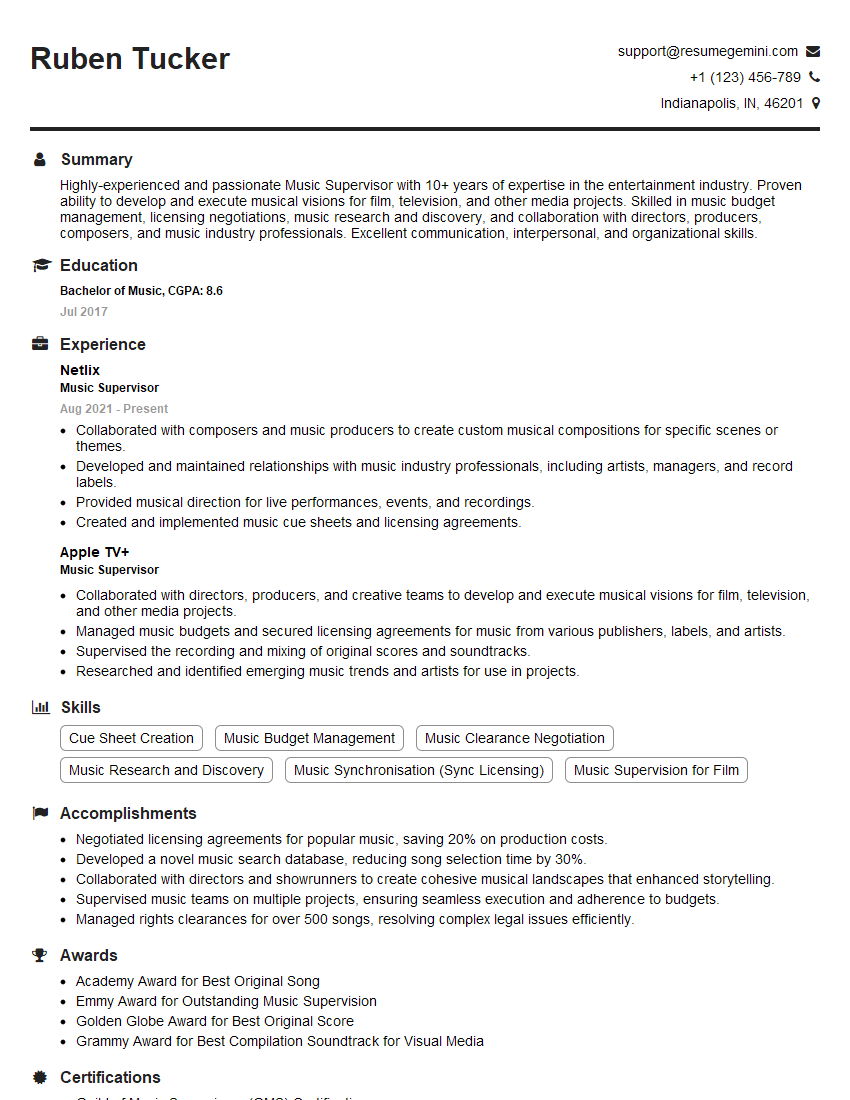
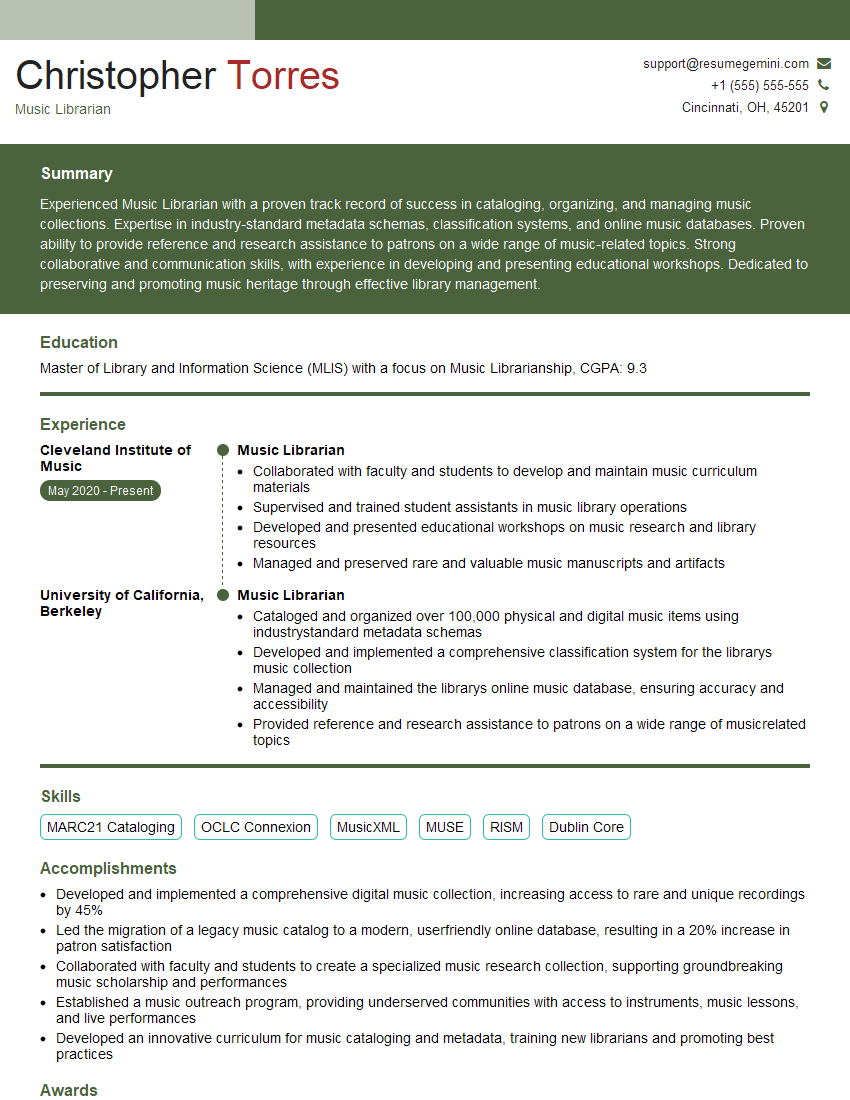
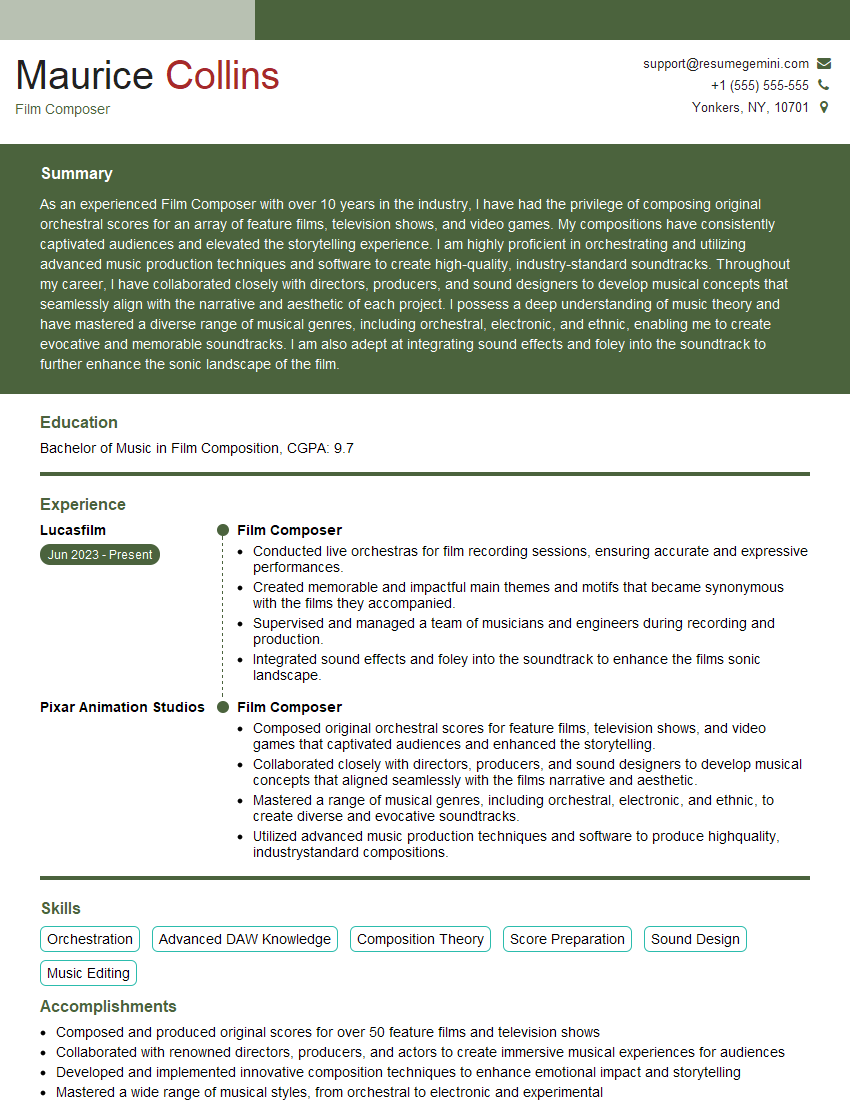
Mastering the art of film scoring techniques is crucial for career advancement in the film industry, opening doors to exciting opportunities in composition, sound design, and music production. A strong resume is your key to unlocking these opportunities. Crafting an ATS-friendly resume is essential for maximizing your visibility to potential employers. We recommend using ResumeGemini, a trusted resource, to build a professional and impactful resume that highlights your skills and experience. ResumeGemini provides examples of resumes tailored to Understanding of Film Scoring Techniques, ensuring your application stands out.
Explore more articles
Users Rating of Our Blogs
Share Your Experience
We value your feedback! Please rate our content and share your thoughts (optional).
What Readers Say About Our Blog
Very informative content, great job.
good