Cracking a skill-specific interview, like one for Understanding of garment construction principles, requires understanding the nuances of the role. In this blog, we present the questions you’re most likely to encounter, along with insights into how to answer them effectively. Let’s ensure you’re ready to make a strong impression.
Questions Asked in Understanding of garment construction principles Interview
Q 1. Explain the difference between a French seam and a flat felled seam.
Both French seams and flat-felled seams are strong, durable seam finishes, ideal for areas experiencing significant stress or for garments requiring a clean, professional finish. However, they differ significantly in their construction and resulting appearance.
French Seam: A French seam encloses the raw edges completely. It involves sewing the garment pieces together with a narrow seam allowance, then trimming the seam allowance, turning the fabric inside out, and sewing a second seam that encloses the raw edges of the first seam. This results in a very neat, almost invisible seam, perfect for lightweight fabrics and garments where the seam’s appearance is paramount. Think of delicate blouses or lingerie, where you want a flawless finish.
Flat-felled Seam: A flat-felled seam is also strong and durable but creates a more visible, slightly raised seam on the right side of the garment. This seam is constructed by sewing two pieces of fabric together with a seam allowance, then pressing the seam open. One seam allowance is then folded over the other and stitched down. The result is a strong seam with a clean, finished edge on the inside and a neat, slightly raised seam on the outside. This is a great choice for sturdy fabrics and garments like jeans or workwear where durability is key.
In short: Choose French seams for neatness and delicacy; choose flat-felled seams for durability and a more structured finish.
Q 2. Describe the various types of darts used in garment construction.
Darts are crucial for shaping garments to fit the body’s curves. Several types exist, each serving a specific purpose:
- Standard Darts: These are the most common, usually shaped like a triangle or inverted triangle, used to shape the bust, waist, and hip areas. They provide shaping from a flat pattern to a 3D form.
- Waist Darts: Shape the waistline for a fitted silhouette. They can be single or double darts, depending on the design and fabric.
- Bust Darts: Shape the bust area, often found on blouses, dresses, and jackets. The placement and shape depend on the size and style.
- Shoulder Darts: These darts are typically located on the shoulder area to create a more fitted and shaped sleeve cap. They contribute to better shoulder fit and comfort.
- Princess Seams: Functionally equivalent to darts but constructed differently. They run from shoulder to hem, creating shape, and offering visual interest as a design element.
- Vertical Darts: Run from the neckline or shoulder to the hem, mainly for shaping the body of a garment. They add more vertical definition.
The choice of dart type depends largely on the garment’s style and the desired fit. Consider a tailored blazer, for instance; it might incorporate a combination of shoulder, bust, and waist darts for a perfect fit.
Q 3. What are the key considerations when selecting fabrics for a specific garment?
Fabric selection is critical for a successful garment. Key considerations include:
- Fiber Content: Natural fibers like cotton, linen, and silk have different drape, texture, and breathability. Synthetics like polyester and nylon offer durability and wrinkle resistance. Blends combine the best of both worlds.
- Weight: Heavier fabrics like wool or denim are suitable for outerwear, while lightweight fabrics like chiffon or silk are better for dresses or blouses. Fabric weight impacts drape, structure and suitability for various garments.
- Drape: How the fabric falls and hangs. Stiff fabrics hold their shape well, while soft fabrics drape more freely. This impacts garment design and desired silhouette.
- Texture: The surface of the fabric; smooth, rough, or textured. Texture influences the garment’s visual appeal and feel.
- Stretch: Some fabrics have stretch, which can provide comfort and enhance fit. Stretchy fabrics have particular considerations such as seam selection.
- Shrinkage: Pre-washing fabric is essential to prevent unexpected shrinkage after garment construction.
- Color and Pattern: The overall aesthetic impact on the final look.
For example, designing a summer dress, you’d prioritize lightweight, breathable fabrics like cotton or linen with good drape and a pleasing color or print.
Q 4. How do you ensure accurate pattern grading for different sizes?
Accurate pattern grading is essential for creating a consistent fit across multiple sizes. This involves systematically adjusting the pattern pieces to accommodate the body’s changing proportions as the size increases or decreases. The process usually involves:
- Understanding Grading Rules: Every pattern company or designer might have its own set of grading rules, determining how much each part of the pattern changes based on size.
- Using Grading Software: Many companies use specialized CAD (Computer-Aided Design) software that automates much of the grading process. These programs allow the designer to input grading rules and automatically adjust the pattern.
- Manual Grading: For smaller operations or bespoke work, manual grading is done using rulers, curves, and precise measurements. This demands strong mathematical skills and a high level of precision.
- Checking and Adjusting: After grading, it’s critical to check the proportions of all pieces and ensure all lines and curves are smooth, and no distortions have occurred. This may involve manually adjusting certain points.
- Test Garments: Creating a test garment in each graded size is crucial to identify any issues and make further adjustments.
In a professional setting, a slight error in grading could mean a whole production run of ill-fitting garments; therefore, precision and thorough testing are paramount.
Q 5. Explain the process of creating a muslin mock-up.
Creating a muslin mock-up is a vital step in garment construction. A muslin mock-up is a test garment made from inexpensive muslin fabric, which closely replicates the final garment. It allows you to check the fit, style, and construction before using your expensive final fabric.
The process generally involves:
- Preparing the Pattern: Prepare your pattern pieces in your desired size, adding seam allowances.
- Cutting the Muslin: Cut all the pattern pieces from the muslin. It’s important to use sharp shears to ensure clean, accurate cuts.
- Sewing the Muslin: Sew the muslin pieces together, using a basic stitch to construct the garment. Don’t finish the seams; focus on fitting and construction.
- Fitting the Mock-up: Try on the muslin garment and check for fit issues like tightness, looseness, or any other discrepancies. Note down all adjustments.
- Making Adjustments: Pin or mark all necessary adjustments directly onto the muslin. Be precise with measurements and markings.
- Transferring Adjustments: Once all the adjustments are made and verified, carefully transfer them to your original pattern pieces.
The mock-up prevents costly mistakes by identifying fit problems and construction issues early in the design process. Without it, time and fabric can be wasted.
Q 6. Describe different types of closures used in garments (zippers, buttons, hooks etc.)
Garment closures are critical for functionality and aesthetics. Several types exist, each suitable for different garments and styles:
- Zippers: Versatile and widely used, zippers are available in various lengths, colors, and styles (invisible, metal, plastic). Ideal for dresses, skirts, jackets, and pants.
- Buttons: Provide a classic and customizable closure option. Buttons can range in style, size, and material from simple shank buttons to decorative pieces. Widely used on shirts, blouses, jackets, and coats.
- Hooks and Eyes: Typically used as secondary closures for a more refined finish or to secure the garment’s opening. Commonly found on dresses, blouses, and jackets.
- Snaps: Small, easy-to-fasten closures ideal for casual garments, children’s clothing, and where ease of use is critical. These are often seen on shirts, pants, and outerwear.
- Buckles: Sturdy and functional, best suited for belts, bags, and outerwear with straps.
- Drawstrings: Used for gathering and adjusting the garment’s fit, typically found in sweatpants, hoodies, and drawstring bags.
- Velcro: Convenient and easy to use, often employed in children’s clothing and athletic wear.
The closure choice depends on the garment’s style, intended use, and the desired level of formality.
Q 7. What are common fitting issues and how are they resolved?
Common fitting issues are a frequent challenge in garment construction. Some of the most prevalent problems and their solutions include:
- Tightness across the bust or waist: This often requires easing the seam, making adjustments to the darts, or increasing the seam allowance in the relevant areas. You could also consider using a more flexible fabric.
- Gaping at the neckline or armholes: This may be corrected by adjusting the seam allowances, reshaping the neckline, or adding extra fabric in the problematic area.
- Pulling across the shoulders: This indicates a shoulder seam that is too high or low; it requires adjusting the shoulder seam line on the pattern.
- Excess fabric in the body: This often requires adjustments to the darts or reducing the seam allowances. Sometimes, pattern adjustments or a different design style might be necessary.
- Sleeve fit issues: Ill-fitting sleeves often require altering the sleeve cap height, sleeve width, or the armhole size. It might involve using different types of sleeves or sleeve construction methods.
Addressing fitting issues often involves a combination of pattern adjustments, seam alterations, and sometimes re-evaluating the garment’s design or the choice of fabric.
Troubleshooting fitting issues requires a keen eye for detail and a thorough understanding of garment construction principles.
Q 8. How do you interpret a technical drawing or spec sheet?
Interpreting a technical drawing or spec sheet is fundamental to garment construction. It’s like reading a recipe for a garment. The drawing provides a visual representation of the garment’s design, including its shape, dimensions, and construction details. The spec sheet complements the drawing by providing written specifications such as fabric type, measurements, seam allowances, and construction techniques. I approach this by first analyzing the overall design, noting key features like darts, pleats, pockets, and closures. Then, I meticulously review the measurements, ensuring I understand the grading system (sizing) used. Next, I examine the construction details, paying close attention to seam allowances, stitching types, and any special instructions. For instance, a note might specify using a French seam for a specific area to enhance durability and neatness. Finally, I carefully check for any annotations or symbols which explain construction details or special requirements. This systematic approach ensures there’s no ambiguity and I can accurately recreate the garment.
Example: A technical drawing might show a princess seam dress. The spec sheet would specify the fabric as silk charmeuse, list measurements for each size, detail a 5/8 inch seam allowance throughout, and indicate the use of a blind stitch for hemming.
Q 9. Explain the importance of seam finishing techniques.
Seam finishing techniques are crucial for producing high-quality, durable garments. They prevent fraying, enhance the garment’s appearance, and add to its overall lifespan. Imagine a beautifully sewn garment unraveling at the seams – that’s what proper seam finishing prevents. There are numerous techniques, each with its purpose. For example, a serger (overlock) stitch provides a neat, stretchy finish, ideal for knits. Zigzag stitching can also prevent fraying but is less durable than serging. Pinking shears create a serrated edge that minimizes fraying, although it’s less effective than stitching. French seams are excellent for fine fabrics, completely encasing the raw edges. Bound seams are also durable and provide a clean finish. The choice of technique depends on the fabric type, garment style, and desired aesthetic. For instance, I would choose a French seam for a high-end silk blouse but a serged seam for a casual cotton t-shirt. Ignoring seam finishing leads to a poorly constructed garment, diminishing its value and longevity.
Q 10. What are the different types of stitching used in garment construction?
Garment construction utilizes a variety of stitching techniques, each suited to specific tasks and fabrics. Basic stitches include straight stitch (for seams and topstitching), zigzag stitch (for finishing seams and attaching elastic), and overlock stitch (for neat seam finishes on knits). More specialized stitches include blind stitch (for hemming), topstitch (for decorative and structural purposes), and saddle stitch (for hand-sewing leather and heavy fabrics). The choice of stitch depends largely on the fabric type, desired durability, and aesthetic outcome. A straight stitch is great for most seams on woven fabrics, while a zigzag stitch is preferred for preventing fraying on knit fabrics. Decorative stitches can add a unique visual element, like in quilting or embroidery. Using the wrong stitch can compromise the garment’s quality and appearance. For example, using a straight stitch on a stretchy knit will cause it to break easily.
Q 11. How do you identify and troubleshoot common sewing machine problems?
Troubleshooting sewing machine problems requires a systematic approach. I always start by identifying the symptom – is the machine not stitching at all? Are the stitches uneven? Is the fabric jamming? Once the problem is identified, I proceed with a methodical troubleshooting process. This might involve checking the bobbin, ensuring it’s properly wound and inserted; checking the needle, making sure it’s the correct type and inserted correctly; verifying proper tension settings; cleaning the machine (lint and dust can cause issues); and checking the timing (which may require specialized knowledge or professional assistance). For instance, if the stitches are skipping, I would first check the needle for damage and then adjust the tension. If the fabric is jamming, I’d check the feed dogs and foot pressure. A simple process of elimination, combined with basic knowledge of the machine’s mechanics is usually sufficient for minor issues. More complex problems often require professional servicing.
Q 12. Describe the process of creating a professional pattern from a sketch.
Creating a professional pattern from a sketch involves several steps. First, I thoroughly analyze the sketch, noting all design details, proportions, and features. Next, I create a basic block pattern – a foundation pattern based on the client’s measurements. This block acts as a starting point. Then, I manipulate the block pattern to match the design sketch, adding darts, shaping seams, and making adjustments to achieve the desired silhouette. This often involves drafting and redrawing, using precision tools such as rulers, curves, and French curves. I may use digital pattern design software to assist in this process, which allows for easier grading (sizing) and adjustments. Once the pattern is complete, I carefully test it by creating a muslin toile (a test garment in inexpensive fabric) before cutting into the final fabric. The toile allows for accurate fitting and necessary adjustments before committing to the final garment. This iterative process ensures the final pattern yields a well-fitting garment that accurately reflects the original sketch.
Q 13. What are the different types of interfacing and their applications?
Interfacing is a supporting fabric used to add structure, stability, and body to a garment. There are several types, each with different properties and applications. Woven interfacing, made from cotton, linen, or silk, provides crispness and shape retention, ideal for collars and cuffs. Fusible interfacing, with a heat-sensitive adhesive, simplifies application. Knit interfacing provides stretch and drape, suitable for knit garments. Non-woven interfacing is lightweight and widely used in a variety of applications. The choice of interfacing depends on the fabric weight, the garment construction, and the desired level of stiffness. For example, I might use a heavyweight woven interfacing for a structured collar on a wool coat but a lightweight fusible interfacing for a delicate collar on a silk blouse. Using the wrong interfacing will result in a poorly structured garment; for example, using a stiff interfacing on a flowing silk would ruin the drape.
Q 14. How do you ensure consistent quality control throughout the garment production process?
Consistent quality control is paramount in garment production. I implement a multi-stage approach. First, I carefully review the technical drawing and spec sheet to ensure clarity and accuracy before production begins. During production, regular quality checks are conducted at key stages, from fabric inspection to pattern cutting, sewing, and finishing. This often involves using checklists and standardized procedures to ensure consistency. Defects are identified and addressed immediately to prevent further issues. Finally, a thorough final inspection is carried out before packaging and shipment. This involves carefully checking the garment’s fit, stitching quality, and overall finish. Throughout this process, I encourage open communication and teamwork to address any problems quickly and effectively. Maintaining meticulous records, including detailed documentation of any adjustments or corrections made, is essential for tracking quality and addressing recurring problems. Implementing these processes ensures high standards and increases customer satisfaction.
Q 15. Explain the difference between woven and knit fabrics and their implications on construction.
Woven and knit fabrics differ fundamentally in their construction, leading to significant implications for garment design and construction. Woven fabrics are created by interlacing two sets of yarns at right angles – the warp (lengthwise) and weft (crosswise). This creates a stable, strong structure with a distinct grain. Knit fabrics, on the other hand, are made by interlocking loops of a single yarn, resulting in a more flexible and drapable material.
Implications for Construction:
- Woven Fabrics: Tend to fray easily, requiring careful seam finishing. They hold their shape well and are suitable for structured garments like tailored jackets or shirts. Seams need to be aligned with the fabric grain for best results. Pattern matching can be more crucial.
- Knit Fabrics: Stretch and have a tendency to distort, requiring special seam finishes such as serging or overlocking to prevent unraveling. Suitable for less structured garments like t-shirts or leggings. Seams can sometimes be more forgiving regarding grain alignment, but careful attention is still needed to prevent puckering.
Think of it like this: woven fabric is like a tightly woven wall, strong and stable, while knit fabric is like a net, flexible and adaptable. This fundamental difference dictates how you would approach the design and construction of a garment.
Career Expert Tips:
- Ace those interviews! Prepare effectively by reviewing the Top 50 Most Common Interview Questions on ResumeGemini.
- Navigate your job search with confidence! Explore a wide range of Career Tips on ResumeGemini. Learn about common challenges and recommendations to overcome them.
- Craft the perfect resume! Master the Art of Resume Writing with ResumeGemini’s guide. Showcase your unique qualifications and achievements effectively.
- Don’t miss out on holiday savings! Build your dream resume with ResumeGemini’s ATS optimized templates.
Q 16. Describe your experience with various types of sewing machines (e.g., industrial vs. domestic).
My experience encompasses both industrial and domestic sewing machines. I’m proficient with various industrial models, including single-needle, double-needle, coverstitch, and overlock machines. I understand the nuances of high-speed sewing, precise stitch regulation, and the maintenance requirements of these powerful machines. For example, I’ve extensively used the Juki DDL-8700 single-needle machine for mass production runs, appreciating its speed and durability. I also have experience with domestic sewing machines, and understand their limitations in terms of speed and durability, but value their versatility for smaller projects and prototyping. I can adapt my technique to each machine to maximize efficiency and quality.
Q 17. What are the advantages and disadvantages of different types of seam construction?
Different seam constructions offer various advantages and disadvantages:
- French Seam: Provides a clean, professional finish, ideal for high-end garments. However, it’s time-consuming and adds bulk.
- Flat-felled Seam: Strong, durable, and ideal for workwear or outerwear. It’s bulky but robust.
- Serged/Overlocked Seam: Prevents fraying and is quick. It can be less neat than French or flat-felled seams but is excellent for stretchy fabrics.
- Zigzag Seam: A simple, quick finish, but it’s less durable than other options.
The choice of seam construction depends on the fabric type, garment style, desired durability, and production timeline. For example, a French seam would be ideal for a high-end silk blouse, while a serged seam would be more appropriate for a jersey t-shirt.
Q 18. How familiar are you with different CAD pattern making software?
I have extensive experience with various CAD pattern making software, including Pattern Design, Optitex, and Lectra Modaris. I’m comfortable creating, grading, and manipulating patterns using these programs, and I understand how to generate various types of markers to optimize fabric usage. My expertise extends to utilizing the advanced features of these programs for things like 3D visualization and virtual prototyping, which aids in quicker design iterations and problem-solving.
Q 19. How do you manage time constraints and deadlines in a fast-paced production environment?
Managing time constraints in a fast-paced production environment requires a systematic approach. I prioritize tasks based on urgency and importance, and I use project management tools to track progress. Effective communication with the team is crucial to identify potential delays and allocate resources efficiently. I’m adept at breaking down large tasks into smaller, manageable steps, and I’m not afraid to delegate tasks when necessary. Proactive problem-solving is crucial to preventing delays and ensuring on-time delivery.
For instance, on a recent project with a tight deadline, I identified a potential bottleneck in the cutting process. By working closely with the cutting room manager and re-organizing the fabric layout, we were able to expedite the process and meet the deadline without compromising quality.
Q 20. Describe your experience working with different types of trims and embellishments.
My experience with trims and embellishments is extensive. I’ve worked with a wide variety of materials including zippers (both metal and plastic), buttons, interfacings, laces, embroideries, appliqués, and various types of ribbons and cords. I understand the importance of selecting appropriate trims based on fabric type, garment style, and overall aesthetic. I’m skilled in applying these trims neatly and efficiently, ensuring that the finished product is visually appealing and well-constructed. My knowledge extends to understanding the durability and care requirements of various trims to avoid potential issues with longevity and washability.
Q 21. Explain your understanding of different garment construction methods (e.g., flat-bed sewing vs. curved sewing).
Garment construction methods vary depending on the garment type and desired outcome. Flat-bed sewing is ideal for producing flat, two-dimensional pieces like shirts or skirts. This method allows for easy alignment and is often used in mass production. Curved sewing, on the other hand, is suitable for garments with three-dimensional shapes, such as jackets or trousers. Specialized machines, often industrial, are employed for this, allowing for more complex shaping and seaming along curves. Understanding the strengths and limitations of each method is crucial for efficient and accurate garment construction. The choice depends on the complexity of the garment and the desired level of precision and efficiency.
Q 22. How would you address a quality issue discovered during production?
Addressing a quality issue during production requires a systematic approach. First, I’d meticulously document the defect, including its location, type, and frequency. This might involve taking photographs, detailed notes, and even collecting sample pieces. Then, I’d analyze the root cause. Is it a material flaw? A machine malfunction? An error in the pattern or cutting process? I’d involve the relevant teams – production, quality control, and potentially even the sourcing team if the issue stems from materials. We’d brainstorm solutions, which could range from minor adjustments to the production line to a complete rework of affected garments. Crucially, we’d implement corrective actions to prevent recurrence, potentially updating standard operating procedures or investing in new equipment. For example, if inconsistent stitching is discovered, we might recalibrate sewing machines or provide additional training to operators. The key is a collaborative and data-driven approach, ensuring the problem is solved effectively and efficiently, while maintaining a high standard of quality.
Q 23. What are some common problems encountered during the fitting process?
Common fitting problems often stem from pattern inaccuracies or inconsistencies in the manufacturing process. One frequent issue is sizing inconsistencies; a garment might fit well on one body type but not another, even within the same size range. Ease – the extra fabric allowance for comfort and movement – can also be a problem; too little and the garment feels restrictive; too much, and it looks sloppy. Another common issue is drape; the way the fabric falls and hangs on the body needs to be carefully considered. A fabric that drapes beautifully on a mannequin might look entirely different on a person. Problems with the garment’s construction, like uneven seams or incorrect placement of darts or gathers, can also significantly impact the fit. Finally, issues can arise from the choice of fabric itself; a fabric with poor recovery might stretch and lose its shape, impacting the overall fit.
Q 24. Describe your process for troubleshooting a pattern that isn’t fitting correctly.
Troubleshooting a poorly fitting pattern involves a methodical process. I begin by analyzing the fit on the body form, identifying specific areas of tension or excess fabric. This often involves detailed measurements, comparing the garment’s measurements to the wearer’s measurements. I’d then examine the pattern pieces themselves, looking for potential errors in drafting or grading (sizing). Are the seam allowances correct? Are the darts correctly placed and sized? Is the grainline accurate? I use this information to make targeted adjustments to the pattern. Small adjustments, such as easing in curves or lengthening a particular area, can make a significant difference. I’d then create a new muslin (a test garment made from inexpensive fabric), repeating the fitting process until the pattern fits smoothly. Remember, this is an iterative process; I might need to adjust the pattern multiple times before achieving the desired fit. Tools like pattern design software can assist in making these adjustments precisely.
Q 25. How do you stay updated on current trends in garment construction and technology?
Staying current in garment construction requires a multi-pronged approach. I regularly attend industry trade shows and conferences, networking with other professionals and seeing the latest innovations in machinery and materials. I subscribe to relevant industry publications and follow leading designers and brands on social media to understand the latest trends. Many online resources provide valuable information, including tutorials and webinars on new techniques and technologies. Furthermore, I actively participate in professional organizations and attend workshops, fostering continuous learning and ensuring my skills remain up-to-date. For example, I recently completed a course on sustainable textile production, incorporating this knowledge into my design process. This constant engagement keeps my knowledge relevant and ensures I stay at the forefront of the industry’s advancements.
Q 26. What is your experience with different types of production processes (e.g., mass production vs. bespoke)?
My experience encompasses both mass production and bespoke garment making. In mass production, the focus is on efficiency and scalability. This involves working with standardized patterns, grading systems, and production lines to create large quantities of garments consistently. Quality control is paramount, ensuring adherence to specific tolerances and standards. In contrast, bespoke garment making centers around individual client needs and preferences. Each garment is unique, requiring meticulous attention to detail, personalized fittings, and handcrafted techniques. The design and pattern making process is far more flexible and iterative, requiring a higher level of creative problem-solving. Understanding the unique demands and advantages of each approach is critical for successful garment production, regardless of the scale.
Q 27. Describe a time you had to problem-solve a complex garment construction issue.
Once, I faced a complex challenge with a structured jacket featuring intricate princess seams and a fitted waist. The fabric was a heavy brocade, prone to puckering. During initial fittings, the seams were constantly pulling, causing significant distortion. After analyzing the problem, I realized the pattern grading for the princess seams hadn’t accounted adequately for the fabric’s stiffness. I implemented several strategies: I adjusted the pattern, adding seam allowances in strategic locations to accommodate the fabric’s tendency to pull. I also utilized different seam finishes, choosing techniques that minimized bulk while providing sufficient strength and preventing fraying. Finally, I adjusted the construction sequence, ensuring certain seams were sewn before others to ease the fitting process. This involved careful consideration of the fabric’s drape and its behavior during manipulation. Through these combined efforts, we achieved the desired fit and finish, successfully resolving the complex construction issue.
Q 28. What is your preferred method for documenting garment construction details?
My preferred method for documenting garment construction details is a combination of techniques. I use detailed technical drawings, including accurate measurements, seam allowances, and construction notes. These drawings are supported by digital pattern files, allowing for easy modification and replication. I also include detailed written instructions that clearly outline each step of the construction process, including diagrams where necessary. Photography plays a critical role, particularly when documenting special techniques or intricate details. This multi-faceted approach ensures comprehensive documentation, enabling precise reconstruction of the garment and facilitating the communication of design and construction information to others.
Key Topics to Learn for Understanding of Garment Construction Principles Interview
- Pattern Making & Draping: Understanding the principles of pattern creation, including drafting, grading, and manipulating patterns to achieve desired garment shapes. Practical application: Analyzing existing patterns and identifying potential fit issues.
- Fabric Selection & Properties: Knowledge of different fabric types (knits, wovens, etc.), their properties (drape, stretch, weight), and how these impact garment construction techniques. Practical application: Choosing the appropriate fabric for a specific garment design and construction method.
- Seams & Seam Finishes: Mastery of various seam types (e.g., French seams, flat felled seams) and their appropriate applications based on fabric type and garment style. Practical application: Selecting the most durable and aesthetically pleasing seam finish for a given garment.
- Construction Techniques: Understanding various methods of garment assembly, including techniques for collars, sleeves, pockets, and closures (zippers, buttons, etc.). Practical application: Troubleshooting construction problems and adapting techniques based on design specifications.
- Fit & Alterations: Knowledge of standard body measurements and how to assess and adjust patterns for proper fit. Practical application: Identifying and correcting fit issues in a completed garment.
- Technical Specifications & Production: Understanding technical design packages, production processes, and quality control measures. Practical application: Interpreting technical drawings and specifications to construct garments accurately.
Next Steps
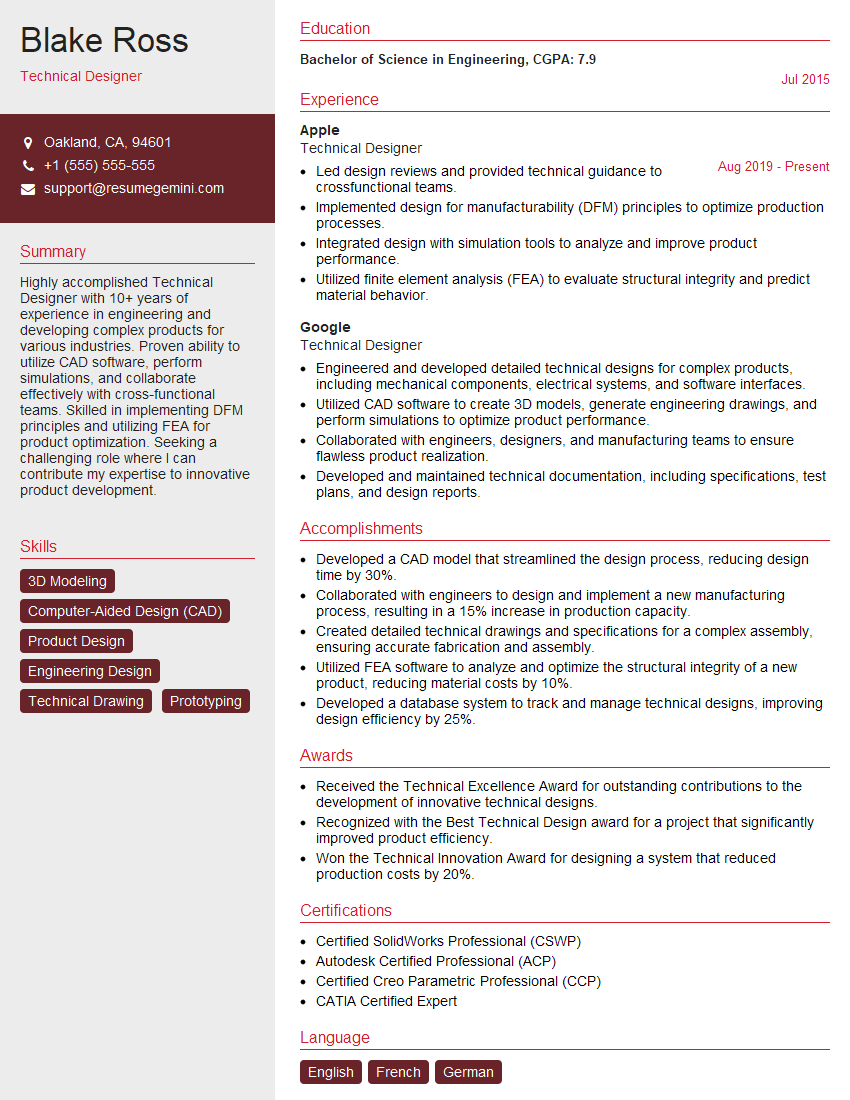
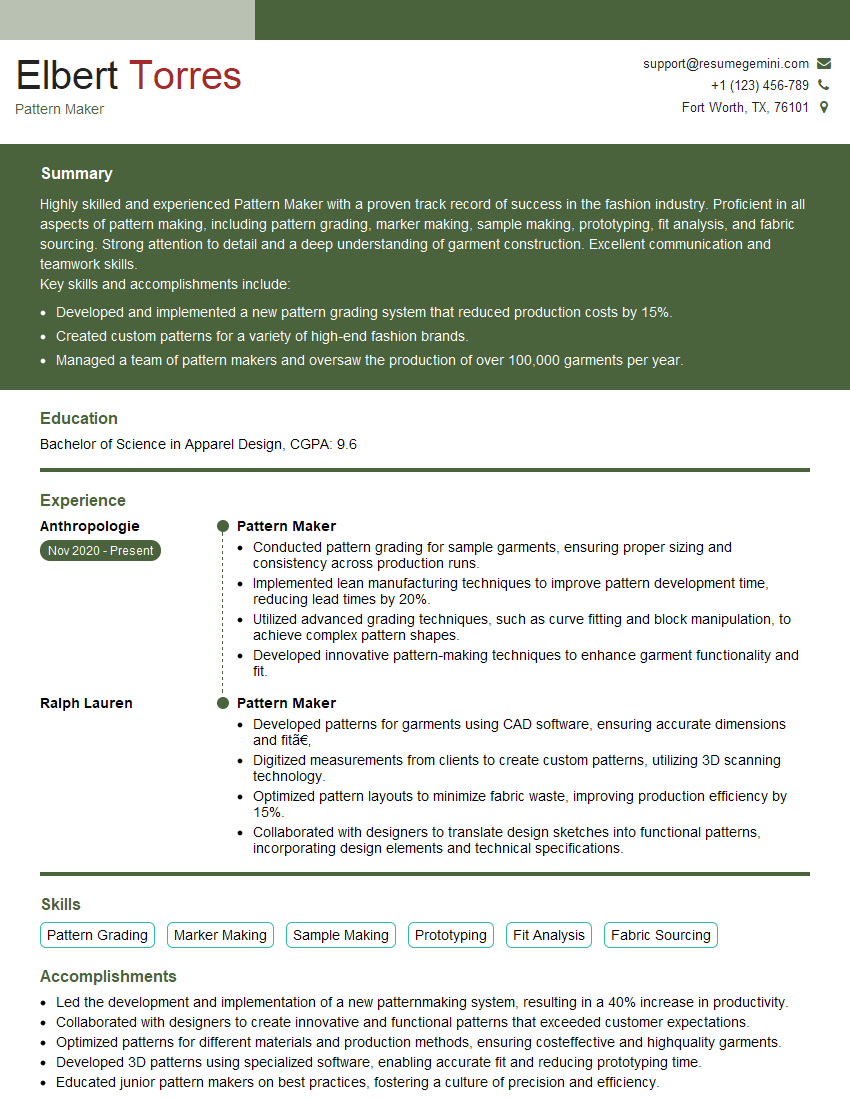
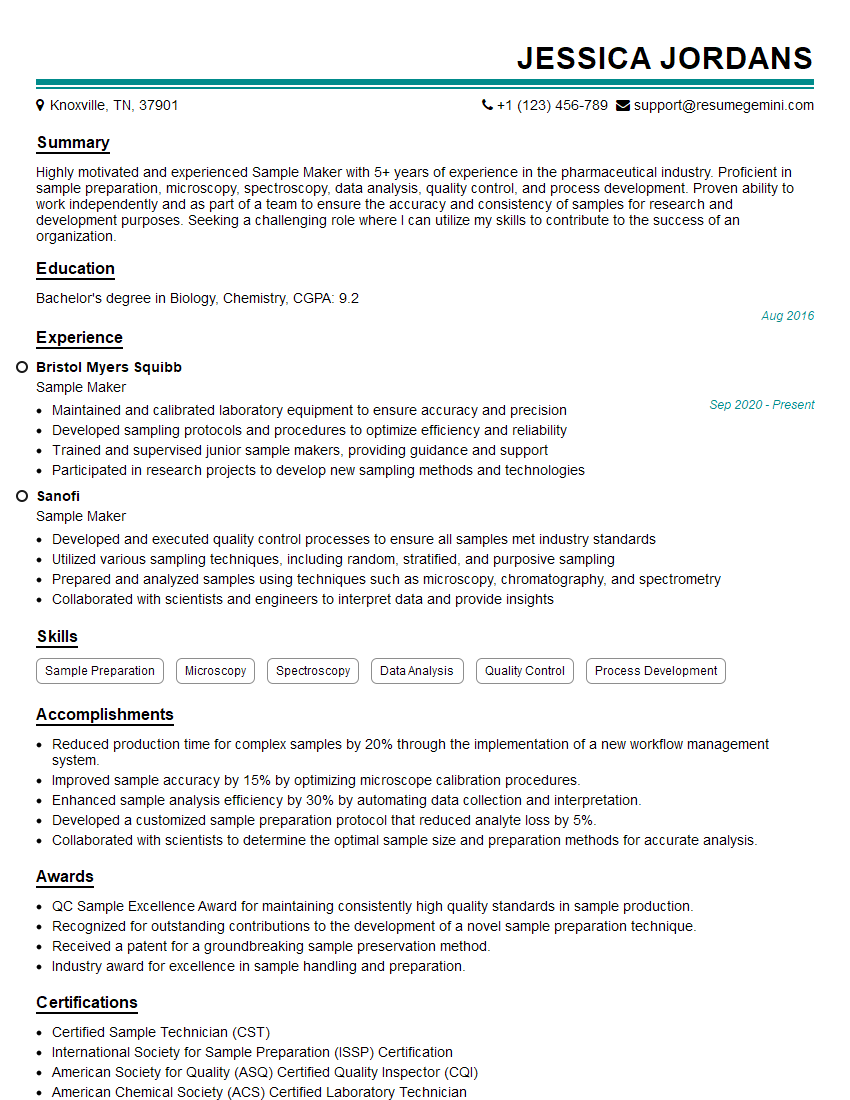
Mastering garment construction principles is crucial for career advancement in the fashion industry. A strong understanding of these concepts will significantly enhance your skills and open doors to a wider range of opportunities. To maximize your job prospects, it’s essential to create a professional and ATS-friendly resume that highlights your expertise. ResumeGemini is a trusted resource for building impactful resumes, helping you present your skills effectively to potential employers. Examples of resumes tailored to showcasing expertise in garment construction principles are available through ResumeGemini to help you build a compelling application.
Explore more articles
Users Rating of Our Blogs
Share Your Experience
We value your feedback! Please rate our content and share your thoughts (optional).
What Readers Say About Our Blog
Very informative content, great job.
good