Unlock your full potential by mastering the most common Understanding of Glass Construction Techniques interview questions. This blog offers a deep dive into the critical topics, ensuring you’re not only prepared to answer but to excel. With these insights, you’ll approach your interview with clarity and confidence.
Questions Asked in Understanding of Glass Construction Techniques Interview
Q 1. Explain the differences between annealed, tempered, and laminated glass.
The differences between annealed, tempered, and laminated glass lie primarily in their strength, safety, and manufacturing processes. Think of it like this: annealed glass is like regular bread, tempered glass is like a very hard cracker, and laminated glass is like a sandwich.
- Annealed Glass: This is the most common and basic type. It’s cooled slowly after manufacturing, resulting in relatively low strength. When it breaks, it shatters into sharp, jagged pieces. It’s inexpensive, but not ideal for applications requiring high safety or impact resistance. Think of windows in older homes.
- Tempered Glass (or toughened glass): This glass is heated to a high temperature and then rapidly cooled. This process creates significant internal stress, making it four to five times stronger than annealed glass. When it breaks, it shatters into small, relatively harmless, granular pieces, minimizing injury risk. You’ll find this in car side windows, shower doors, and storefront applications.
- Laminated Glass: This consists of two or more layers of glass bonded together with a layer of polyvinyl butyral (PVB) interlayer. Even if the glass breaks, the PVB holds the fragments together, preventing shattering and offering significant protection. It’s also excellent at blocking sound and ultraviolet (UV) light. You see this in car windshields and high-security applications.
Q 2. Describe the process of installing a curtain wall system.
Installing a curtain wall system is a complex process requiring precision and a skilled team. It’s essentially constructing a building’s exterior walls using a framework of aluminum or steel, filled with glass panels. The process generally involves these steps:
- Fabrication: The glass panels and aluminum framing are precisely fabricated off-site according to the building’s design. This ensures accuracy and efficiency.
- Substructure Installation: A robust supporting structure is attached to the building’s core. This acts as the foundation for the curtain wall system, distributing weight and withstanding wind loads.
- Panel Installation: The pre-fabricated panels are hoisted into position and carefully secured to the substructure. This often involves specialized lifting equipment and precise alignment to ensure a seamless, leak-free exterior.
- Sealing and Waterproofing: High-quality sealants and gaskets are crucial to prevent water penetration and air leakage. These are applied meticulously to each panel joint.
- Inspection and Testing: After installation, rigorous inspections and tests (e.g., air and water leakage tests) are conducted to ensure the system’s integrity and performance.
Imagine building a giant Lego structure—each panel is carefully fitted into place and sealed to create a strong, weatherproof shell.
Q 3. What are the safety precautions when working with glass at heights?
Working with glass at heights presents significant risks. Safety should be paramount. Here are essential precautions:
- Fall Protection: Always use appropriate fall protection systems, such as harnesses, anchor points, and safety nets, complying with relevant safety regulations.
- Scaffolding and Access Equipment: Ensure scaffolding and other access equipment are properly erected, inspected, and stable. Regular checks are needed to maintain safety standards.
- Proper Lifting Techniques: Use appropriate lifting equipment and techniques to prevent glass breakage or accidents during handling. Never lift glass beyond your physical capacity.
- Personal Protective Equipment (PPE): Always wear safety glasses, gloves, and hard hats to prevent injuries from falling debris or sharp edges. Safety shoes with good traction are also essential.
- Weather Conditions: Avoid working in high winds, rain, or other hazardous weather conditions that could increase the risk of accidents.
- Training and Supervision: All workers should receive proper training on safe handling procedures and work under competent supervision.
A lapse in safety can have catastrophic consequences. Prioritizing safety is not just a protocol; it’s a moral imperative.
Q 4. How do you ensure proper sealing and waterproofing in glass installations?
Proper sealing and waterproofing are crucial for preventing water damage, air leakage, and energy loss in glass installations. This is achieved through a combination of techniques:
- High-Quality Sealants: Employing durable, weather-resistant sealants specifically designed for exterior applications is critical. The choice of sealant should depend on the specific materials and environmental conditions.
- Compression Gaskets: These are used to create a tight seal between the glass and the framing system. They provide a secondary barrier against water infiltration.
- Proper Joint Design: The design of the joint between the glass and frame plays a significant role in preventing leaks. This involves ensuring proper drainage channels and minimizing gaps.
- Flashing and Weather Barriers: Installing flashing and other weather barriers behind the glass helps divert water away from the building’s interior.
- Regular Inspection and Maintenance: Regular inspections can help identify and repair any minor leaks or damage before they escalate into major problems.
Think of it like caulking a bathtub; a small crack can lead to significant problems if left unattended.
Q 5. What are the common types of glass used in building construction?
Many types of glass are used in building construction, each with unique properties:
- Float Glass: The most common type, produced by floating molten glass on a bed of molten tin, resulting in a smooth, flat surface.
- Annealed Glass (already discussed): The basic form of float glass.
- Tempered Glass (already discussed): Significantly stronger than annealed glass.
- Laminated Glass (already discussed): Offers safety and sound insulation.
- Insulated Glass Units (IGUs): Two or more panes of glass separated by a spacer filled with air or inert gas to improve insulation.
- Low-Emissivity (Low-E) Glass: Coated with a microscopically thin layer to reduce heat transfer, improving energy efficiency.
- Solar Control Glass: Designed to reflect solar heat, reducing cooling loads.
- Patterned Glass: Features textures or patterns for decorative purposes or privacy.
Q 6. Explain the concept of thermal breaks in glass construction.
Thermal breaks are crucial in glass construction, especially in curtain wall systems and windows. They are designed to reduce the transfer of heat through the framing system, improving energy efficiency and occupant comfort. Imagine a metal spoon in a hot cup of tea; the metal transfers heat rapidly. A thermal break acts as an insulator, preventing this rapid transfer.
They are typically made of materials with low thermal conductivity, such as polyamide or fiberglass. These materials are inserted into the metal framing, separating the inner and outer metal components. This creates a significant barrier to heat flow, preventing heat from the outside from entering the building in summer or escaping in winter. By minimizing heat transfer, thermal breaks significantly reduce energy consumption and improve the building’s overall performance.
Q 7. How do you handle glass breakage during installation?
Glass breakage during installation is a serious concern, but manageable with proper procedures:
- Safety First: Immediately clear the area and ensure the safety of all personnel. Any broken glass should be treated as hazardous waste.
- Assess the Damage: Determine the extent of the damage and identify the cause of the breakage. This will aid in preventing similar incidents.
- Secure the Area: Secure the area to prevent further damage or accidents. This may involve temporarily erecting barriers.
- Dispose of Broken Glass Safely: Collect and dispose of the broken glass according to local regulations. Use appropriate protective gear.
- Replace or Repair: Depending on the extent of the damage, the glass may need to be replaced or repaired. This step needs to follow the manufacturer’s guidelines.
- Document the Incident: Thoroughly document the incident, including the cause, extent of damage, and actions taken to address the situation. This information is vital for future preventative measures.
Preventing breakage through careful handling and proper equipment use is always the best approach.
Q 8. What are the different types of glass sealants and their applications?
Glass sealants are crucial for preventing water ingress and maintaining the integrity of glass structures. The choice of sealant depends heavily on the application and environmental conditions. Here are some common types:
- Silicone Sealants: Highly versatile, offering excellent adhesion to various substrates like glass, metal, and stone. They’re flexible, durable, and resistant to weathering, making them ideal for exterior applications such as window frames and curtain walls. However, they can be susceptible to UV degradation over extended periods, especially in direct sunlight.
- Polyurethane Sealants: Known for their high strength and elasticity, these sealants provide excellent resistance to movement and vibration. They are frequently used in structural glazing applications where significant stress is involved. Different types offer varying degrees of UV resistance.
- Butyl Sealants: Primarily used in insulating glass units (IGUs), butyl sealants provide an airtight and watertight seal between the glass panes. Their excellent adhesion and elasticity make them suitable for long-term performance within the IGU.
- Polysulfide Sealants: Historically popular, these sealants are highly flexible and resistant to many chemicals. They are still sometimes used in challenging applications, but newer sealants often offer better performance.
Selecting the right sealant involves considering factors such as the substrate material, environmental exposure, required movement capacity, and the desired lifespan of the seal.
Q 9. Describe the process of insulating glass unit (IGU) fabrication.
Insulating Glass Unit (IGU) fabrication is a precise process critical to energy efficiency and comfort. It involves assembling two or more sheets of glass with a desiccant-filled spacer to create an air or gas-filled cavity. Here’s a breakdown of the process:
- Glass Cleaning: The glass sheets undergo rigorous cleaning to remove any dust, debris, or contaminants that could affect the seal’s integrity. This is typically done using automated cleaning systems.
- Spacer Application: A perimeter sealant, usually butyl, is applied to the edge of the glass. A warm-edge spacer bar (often containing a desiccant) is then positioned around the perimeter. This spacer creates the cavity between the panes and helps prevent condensation.
- Secondary Sealant Application: A secondary sealant, like structural silicone, is applied over the butyl and spacer to ensure a durable and airtight seal. This sealant is often UV resistant.
- Assembly: The two glass sheets with the spacer and sealant are carefully assembled, ensuring there are no air gaps.
- Gas Filling (Optional): For improved energy performance, the cavity may be filled with an inert gas like argon or krypton, further reducing heat transfer.
- Quality Control: The finished IGU undergoes rigorous quality checks, including pressure testing to ensure airtightness and structural integrity.
Improper fabrication can lead to IGU failure, manifested as fogging (condensation) or even leaks, highlighting the importance of precise and controlled manufacturing procedures.
Q 10. Explain the importance of proper glass cleaning and maintenance.
Proper glass cleaning and maintenance are crucial for extending the lifespan of glass structures and maintaining their aesthetic appeal. Neglect can lead to various issues, including reduced transparency, structural damage, and accelerated degradation. Think of it like regular car maintenance; it prevents more significant problems down the line.
- Regular Cleaning: Regular cleaning removes dirt, grime, and pollutants that can accumulate and degrade the glass surface. This is particularly important for exterior glass, which is exposed to the elements.
- Appropriate Cleaning Agents: Avoid abrasive cleaners and harsh chemicals that can scratch the glass surface or damage coatings. Use soft cloths or specialized glass cleaning solutions.
- Careful Handling: Avoid using excessive pressure or abrasive tools when cleaning to prevent scratches. Pay attention to sharp edges or points which could damage the cleaning tool.
- Water Spot Prevention: For exterior glass, consider using a water repellent coating to prevent water spots from forming. This improves visibility and reduces cleaning frequency.
- Professional Cleaning: For high-rise buildings or large-scale glass installations, periodic professional cleaning is often necessary to maintain safety and access.
Regular maintenance prevents the accumulation of dirt and debris, ensures optimal visibility, and protects the glass from premature damage.
Q 11. What are the different methods for securing glass panels in a frame?
Securing glass panels in a frame requires careful consideration of the glass type, frame material, and the overall structural design. Several methods are employed:
- Silicone Glazing: A structural silicone sealant adheres the glass directly to the frame, providing a strong and weathertight seal. This method is common in curtain walls and large-scale glazing.
- Mechanical Fasteners: Clamps, clips, or screws are used to hold the glass in place. This method requires precise drilling and careful consideration of the stress points to avoid glass breakage.
- Glazing Beads: Small, decorative beads are used to hold the glass in place within the frame. This is a more traditional method, often used in smaller windows and doors.
- Point-Fixed Systems: The glass is supported at discrete points using specialized fittings, allowing for expansion and contraction due to temperature changes. This is common in modern architectural designs.
The chosen method depends on several factors: the size and weight of the glass, the frame material, aesthetic considerations, and the expected load and environmental conditions.
Q 12. How do you calculate the load-bearing capacity of a glass structure?
Calculating the load-bearing capacity of a glass structure is a complex engineering task that requires specialized software and expertise. It involves several factors:
- Glass Type and Thickness: Different glass types (e.g., annealed, tempered, laminated) have different strength properties. Thicker glass naturally supports heavier loads.
- Frame Design: The frame’s material, geometry, and connection points significantly influence the overall load-bearing capacity.
- Support System: The type and arrangement of supports (e.g., point supports, continuous supports) directly impact load distribution.
- Loading Conditions: The anticipated loads (e.g., wind, snow, dead load) and their distribution across the glass surface are crucial.
- Safety Factors: Engineering codes require safety factors to account for uncertainties and variations in materials and construction.
Specialized finite element analysis (FEA) software is typically used to simulate load distribution and stress within the glass structure, ensuring it meets required safety standards. This is definitely not something to attempt without advanced engineering knowledge. Improper calculations can have catastrophic consequences.
Q 13. What are the common problems associated with glass installations?
Common problems associated with glass installations can range from minor aesthetic issues to serious structural defects. Here are some examples:
- Leaks: Improper sealing around frames or faulty IGU seals can lead to water ingress, causing damage to the building structure and interior finishes.
- Condensation: Failure of the IGU seal or improper gas filling can lead to condensation within the cavity, reducing energy efficiency and impairing visibility.
- Glass Breakage: Poor handling, improper installation, or excessive loads can cause glass breakage, posing a safety hazard.
- Defective Sealants: Use of low-quality sealants or improper application can lead to premature failure, resulting in leaks or condensation.
- Crazing: Fine cracks can develop on the glass surface due to thermal stress or chemical attack.
Many of these problems are preventable through careful planning, selection of high-quality materials, and meticulous installation practices. Regular inspections can also help identify and address minor issues before they escalate.
Q 14. How do you troubleshoot a leaking window or door?
Troubleshooting a leaking window or door requires a systematic approach to identify the source of the leak. Here’s a step-by-step process:
- Visual Inspection: Carefully examine the window or door frame for any visible cracks, gaps, or damaged sealant.
- Water Testing: If the leak is intermittent, use a water hose to simulate rainfall, observing closely where the water enters.
- Sealant Inspection: Closely examine the sealant around the frame for any signs of cracking, shrinkage, or degradation.
- IGU Inspection (if applicable): Check the IGU for any signs of fogging or condensation, indicating a seal failure.
- Frame Inspection: Inspect the frame for any warping, damage, or gaps that could be allowing water to penetrate.
- Repair or Replacement: Depending on the findings, the problem might be addressed by simply resealing cracks, replacing damaged sealants, or potentially replacing the entire window or door unit.
If you are unable to locate the source of the leak, it is always best to consult a qualified glazier or window repair professional. Attempting complex repairs without the necessary expertise can lead to further damage.
Q 15. What are the relevant building codes and standards for glass construction?
Building codes and standards for glass construction vary by location but generally focus on safety and performance. Key considerations include structural integrity, impact resistance, fire safety, and energy efficiency. For example, the International Building Code (IBC) provides a framework, with specific requirements often dictated by local authorities. These codes often specify minimum glass thicknesses for various applications (e.g., storefront glazing vs. skylights), requirements for laminated or tempered glass in high-risk areas, and guidelines for anchoring and sealing systems to ensure proper wind load resistance. Standards like ASTM (American Society for Testing and Materials) provide detailed specifications for glass types, testing methods, and performance characteristics, which building codes often reference.
Compliance is crucial; non-compliance can lead to project delays, legal issues, and safety hazards. We always start a project by thoroughly reviewing all applicable codes and standards for the specific location to ensure our designs and specifications are compliant. For instance, in a high-rise building, we’d carefully consider wind loads and seismic activity, adhering to relevant codes and using specialized glass and framing to withstand these forces.
Career Expert Tips:
- Ace those interviews! Prepare effectively by reviewing the Top 50 Most Common Interview Questions on ResumeGemini.
- Navigate your job search with confidence! Explore a wide range of Career Tips on ResumeGemini. Learn about common challenges and recommendations to overcome them.
- Craft the perfect resume! Master the Art of Resume Writing with ResumeGemini’s guide. Showcase your unique qualifications and achievements effectively.
- Don’t miss out on holiday savings! Build your dream resume with ResumeGemini’s ATS optimized templates.
Q 16. Describe your experience with different types of glazing systems.
My experience encompasses a wide range of glazing systems, from simple single-glazed units to complex insulated glass units (IGUs) and structurally glazed facades. I’ve worked extensively with curtain wall systems, using both stick-built and unitized construction methods. I’m also familiar with various types of spandrel panels, which often incorporate fritted glass for aesthetic and solar control purposes. My experience also includes working with laminated glass, essential for safety and security applications like blast-resistant glazing and skylights. I have specific expertise in designing and installing structural silicone glazing systems, where the glass itself acts as a load-bearing element, offering sleek, modern aesthetics and maximizing natural light.
For example, in a recent project, we used a double-skin facade system, a complex IGU system, featuring two layers of glass with an air cavity for superior thermal insulation and noise reduction. Each layer was chosen based on specific performance requirements, such as solar heat gain control and visible light transmission. Understanding the strengths and limitations of each system is crucial for successful project outcomes. The choice also depends on the budget, aesthetics, and performance targets.
Q 17. How do you choose the appropriate type of glass for a specific application?
Selecting the right glass for a specific application involves considering numerous factors. The primary consideration is always safety. For areas with high impact risk, tempered or laminated glass is mandatory. Next, performance characteristics like thermal insulation (U-value), solar heat gain coefficient (SHGC), and visible light transmittance (VLT) are essential. These factors influence energy efficiency, glare control, and indoor comfort. For example, a low-E coating can significantly improve a building’s energy performance by reducing heat transfer.
Aesthetics also play a significant role. The choice of glass type impacts the building’s visual appeal, including color, reflectivity, and transparency. Consider the overall architectural design and the surrounding environment. Budgetary constraints are another crucial factor impacting material selection. Lastly, specific environmental factors such as wind load, seismic activity, and potential for vandalism influence glass selection. It’s a careful balancing act between safety, performance, aesthetics, budget and environmental factors.
Q 18. Explain your knowledge of various glass processing techniques.
My knowledge of glass processing techniques is extensive, encompassing everything from basic cutting and grinding to advanced heat-strengthening and laminating processes. I’m familiar with the fabrication of insulated glass units (IGUs), involving precise spacing and sealing techniques to maintain optimal performance. I’ve worked with various coatings, including low-E coatings that enhance energy efficiency, and fritted glass that provides aesthetic appeal and solar control. I understand the importance of quality control throughout each step of the process, from initial glass selection to final installation.
For instance, in the creation of laminated glass, we use a precise process involving interleaving a polyvinyl butyral (PVB) interlayer between glass plies. The PVB provides strength and safety, preventing shattering and reducing noise. Heat-strengthening improves the glass’s strength compared to annealed glass, enhancing its ability to withstand thermal stress. These processes are critical for meeting the demands of various projects, ensuring both safety and performance.
Q 19. What are the environmental considerations in glass construction?
Environmental considerations are paramount in glass construction. The embodied carbon of the glass itself is a key concern. Using recycled glass content in the manufacturing process helps mitigate this impact. The selection of low-E coatings and efficient glazing systems significantly reduces energy consumption for heating and cooling. Moreover, the choice of framing materials also impacts environmental performance; using sustainably sourced materials, for example, is very important.
Beyond the materials, the construction process must minimize waste. Careful planning and precise fabrication help reduce material scrap. Proper disposal and recycling of construction waste are also critical steps. The overall lifecycle assessment of the glass system, from manufacturing to disposal, must be considered to minimize its environmental footprint. We always prioritize sustainable practices, from material selection to waste management, to ensure environmentally responsible construction.
Q 20. Describe your experience with working with different types of glass hardware.
My experience includes working with a wide array of glass hardware, including various types of anchors, fasteners, and sealants. I’m proficient in using both mechanical and structural silicone glazing systems, understanding the implications of each for installation and long-term performance. I understand the importance of selecting hardware compatible with the chosen glass type, framing system, and environmental conditions. For instance, stainless steel hardware offers excellent corrosion resistance in coastal environments, whereas certain types of anchors are specifically designed for use with tempered glass.
Choosing the right hardware is crucial for structural integrity, water tightness, and aesthetic appeal. The selection process involves considering factors like load capacity, corrosion resistance, and ease of installation. The use of high-quality, durable hardware contributes significantly to the longevity and performance of the entire glazing system.
Q 21. How do you manage a project involving multiple glass installation teams?
Managing multiple glass installation teams requires meticulous planning and coordination. A clear project schedule with defined milestones and deliverables is essential. Regular communication and on-site meetings are necessary to ensure everyone is aligned and any potential conflicts are resolved promptly. Clear roles and responsibilities for each team are outlined to avoid overlap or confusion.
Detailed drawings and specifications must be provided to all teams, and regular quality control checks are implemented throughout the installation process. A comprehensive safety plan must be in place, addressing potential hazards specific to glass handling and installation. Open communication, proactive problem-solving, and effective team leadership are critical for successful project completion. I regularly leverage project management software to track progress, manage resources, and ensure seamless collaboration across all teams.
Q 22. Explain your experience using CAD software in glass design and fabrication.
My experience with CAD software in glass design and fabrication spans over 10 years. I’m proficient in various programs, including AutoCAD, Revit, and specialized glass design software like Glass Weaver. I use these tools throughout the entire process, from initial design and 2D/3D modeling to generating fabrication drawings and CNC machining instructions. For instance, in a recent project involving a curved glass facade, I used Revit to model the building’s geometry precisely, then imported that model into Glass Weaver to design and analyze the optimal glass panels, considering stress points, thermal performance, and the required structural supports. This allowed us to accurately estimate materials, minimize waste, and ensure a flawless installation. I also utilize these programs for creating detailed shop drawings that the fabrication team relies upon for accurate cutting, tempering, and laminating.
Beyond the technical aspects, I use CAD to effectively communicate design concepts to clients, allowing them to visualize the final product and providing opportunities for collaborative design refinements. For example, I can create realistic renderings showing the finished glass structure integrated into the surrounding architecture, enhancing client understanding and approval.
Q 23. How do you ensure the quality control of the glass installation process?
Quality control in glass installation is paramount. My approach is multi-faceted and begins even before the glass arrives on site. This includes meticulously reviewing fabrication drawings, verifying the quality of materials received (checking for defects in the glass itself and ensuring proper tempering and lamination), and implementing rigorous pre-installation checks. On-site, we meticulously inspect each panel for damage before installation. During installation, we adhere to strict procedures to prevent breakage and ensure proper sealing and structural integrity. This includes using specialized lifting equipment, employing experienced installers, and constantly monitoring the work for any deviation from plans. After installation, a final inspection is conducted, including checking for proper alignment, seal integrity, and overall aesthetic appeal. Documentation is key; we maintain detailed records of all inspections and any corrective actions taken. Any discrepancies are reported immediately and addressed promptly. This methodical approach minimizes risks and guarantees a high-quality, safe final product.
Q 24. What are some innovative technologies used in modern glass construction?
Modern glass construction is rapidly evolving, with numerous innovative technologies transforming the industry. One significant advancement is the use of Smart Glass, which allows for dynamic control of light transmission and privacy. Electrochromic glass, for example, changes its tint based on electrical signals, reducing glare and energy consumption. Another important area is the development of self-cleaning glass coated with photocatalytic materials that break down dirt and pollutants when exposed to sunlight. Furthermore, advances in lamination techniques have led to stronger, more durable glass units capable of withstanding greater loads and impacts. Finally, the use of Building Information Modeling (BIM) in conjunction with advanced CAD software enhances the accuracy and efficiency of the entire process, from design to fabrication and installation. These technologies, among others, are pushing the boundaries of what’s possible with glass, leading to more sustainable, efficient, and aesthetically pleasing structures.
Q 25. Explain your experience with glass restoration and repair.
My experience in glass restoration and repair involves handling a variety of issues, from minor scratches and chips to significant structural damage. We use a range of techniques, depending on the type of glass and the extent of the damage. For minor scratches, specialized polishing compounds can often restore the surface. For larger chips or cracks, we may utilize resin injection techniques to stabilize the crack and prevent further propagation. In cases of severe damage, replacement of the affected glass panel may be necessary. This often requires careful measurements, custom fabrication, and precise installation to ensure a seamless blend with the existing structure. One project involved restoring an antique stained-glass window. This required a delicate approach, using traditional techniques and specialized materials to repair the damaged sections while preserving the historical integrity of the piece. Thorough documentation and photographic records are essential throughout the entire restoration process.
Q 26. How do you handle different types of glass substrates?
Handling different glass substrates requires a thorough understanding of their properties and the appropriate handling techniques. We work with various types, including annealed, tempered, laminated, insulated glass units (IGUs), and specialty glasses like low-iron or patterned glass. Annealed glass, the most basic type, requires careful handling to avoid breakage. Tempered glass, which is much stronger, needs specialized tools and techniques to cut and install. Laminated glass, composed of multiple layers bonded together, offers enhanced safety and security. IGUs require special attention during installation to prevent moisture ingress. Each type demands a tailored approach, from the selection of appropriate tools and equipment to the implementation of specific installation procedures. For example, cutting tempered glass requires diamond-tipped tools and precise scoring to avoid shattering, whereas installing IGUs necessitates meticulous sealing to prevent condensation.
Q 27. What are the challenges you’ve faced in complex glass projects?
Complex glass projects often present unique challenges. One project involved creating a double-curved glass facade for a high-rise building. The challenges included the precise fabrication of the curved glass panels, ensuring their structural integrity under wind load, and developing a safe and efficient installation method. Another involved integrating intricate stained-glass elements into a modern structure. This demanded precise coordination with the architects and the stained-glass artisans to ensure the elements were structurally sound and aesthetically integrated with the overall design. Accurate modeling in CAD software and close collaboration with the fabrication team were crucial for overcoming these challenges. Addressing these complexities often involves careful planning, innovative solutions, and close collaboration with various stakeholders throughout the project lifecycle.
Q 28. Explain your experience with safety compliance measures in glass handling.
Safety is an absolute priority in glass handling. Our team is rigorously trained in safe handling procedures, including the use of personal protective equipment (PPE) such as gloves, safety glasses, and steel-toe boots. We utilize specialized lifting equipment and harnesses to safely move large glass panels, and we follow strict procedures to prevent breakage during transport and installation. Regular safety meetings and training sessions are conducted to ensure all team members are aware of potential hazards and the necessary safety precautions. We also maintain detailed safety records, report any incidents promptly, and regularly review our safety procedures to identify and mitigate potential risks. Compliance with all relevant safety regulations and building codes is essential throughout the entire process.
Key Topics to Learn for Understanding of Glass Construction Techniques Interview
- Types of Glass: Understanding the properties and applications of various glass types (e.g., annealed, tempered, laminated, insulated glazing units (IGUs)). This includes knowing their strengths, weaknesses, and suitability for different projects.
- Glazing Systems: Familiarize yourself with different methods of installing glass, including curtain walls, window systems, and storefront systems. Consider the implications of different framing materials and sealant types.
- Glass Fabrication and Processing: Learn about processes like cutting, grinding, polishing, and heat treatment. Understanding these processes will help you appreciate the complexities of glass handling and manufacturing tolerances.
- Structural Calculations and Engineering: Grasp the fundamental principles of structural design related to glass, including load calculations, stress analysis, and deflection considerations. This is crucial for ensuring the safety and stability of glass structures.
- Health and Safety Regulations: Be aware of relevant safety regulations and best practices related to handling, installing, and maintaining glass. This demonstrates your commitment to safe working practices.
- Energy Efficiency and Sustainability: Understand how different glass types and systems impact energy performance. This includes knowledge of thermal properties, solar control, and U-values.
- Troubleshooting and Problem Solving: Prepare to discuss common problems encountered during glass construction and the effective strategies used to resolve them. Showcase your problem-solving skills and practical experience.
- Code Compliance and Building Regulations: Familiarity with relevant building codes and regulations pertaining to glass installation and design is crucial for ensuring projects meet legal requirements.
Next Steps
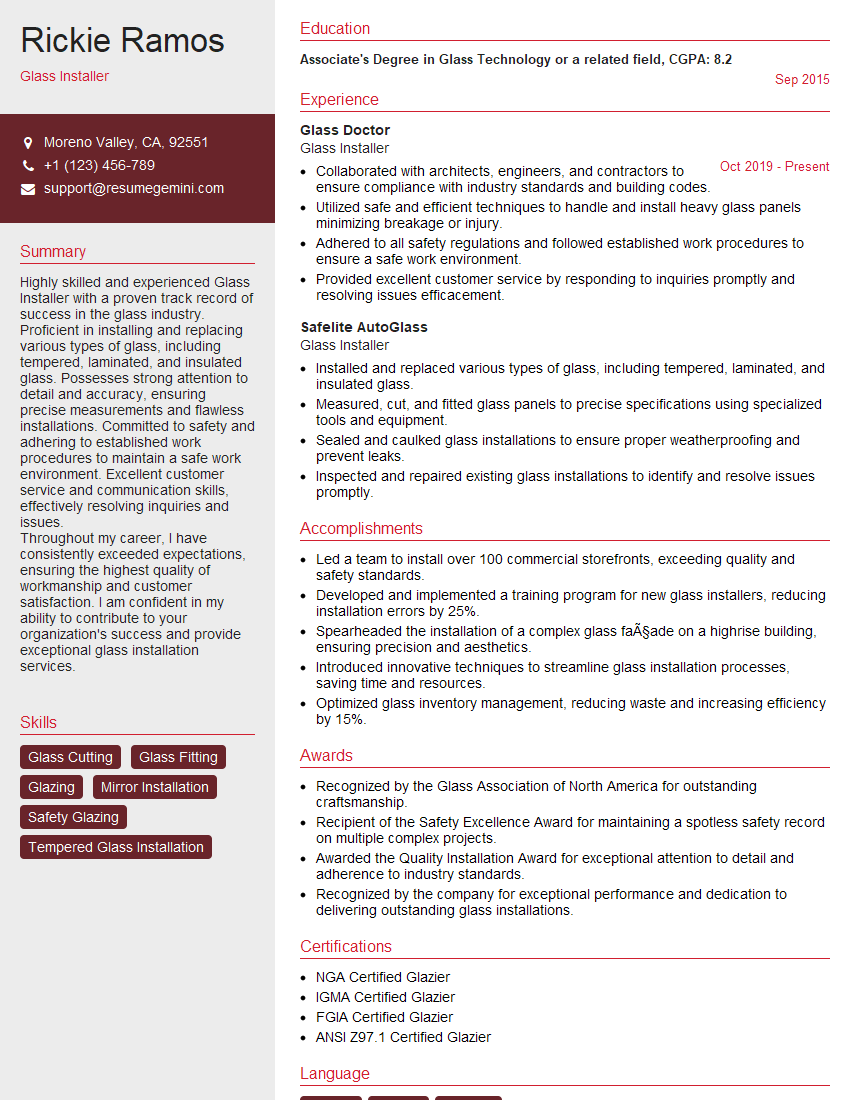
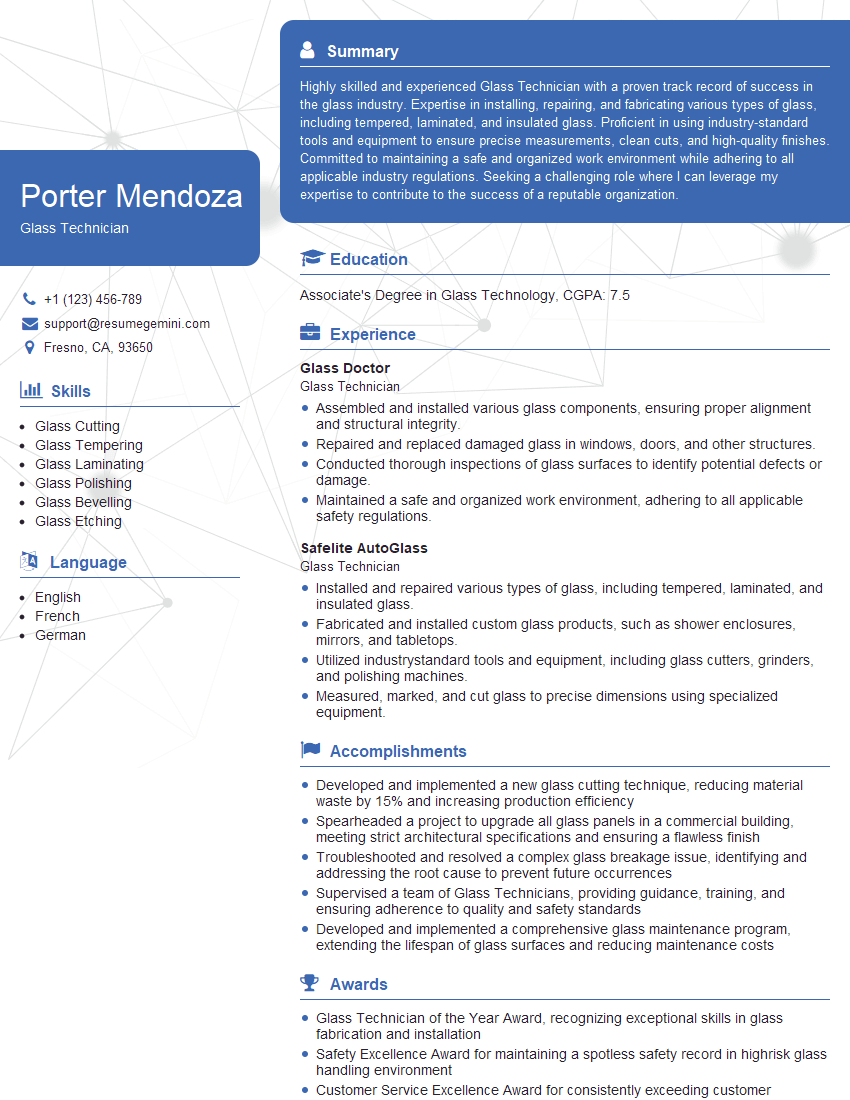
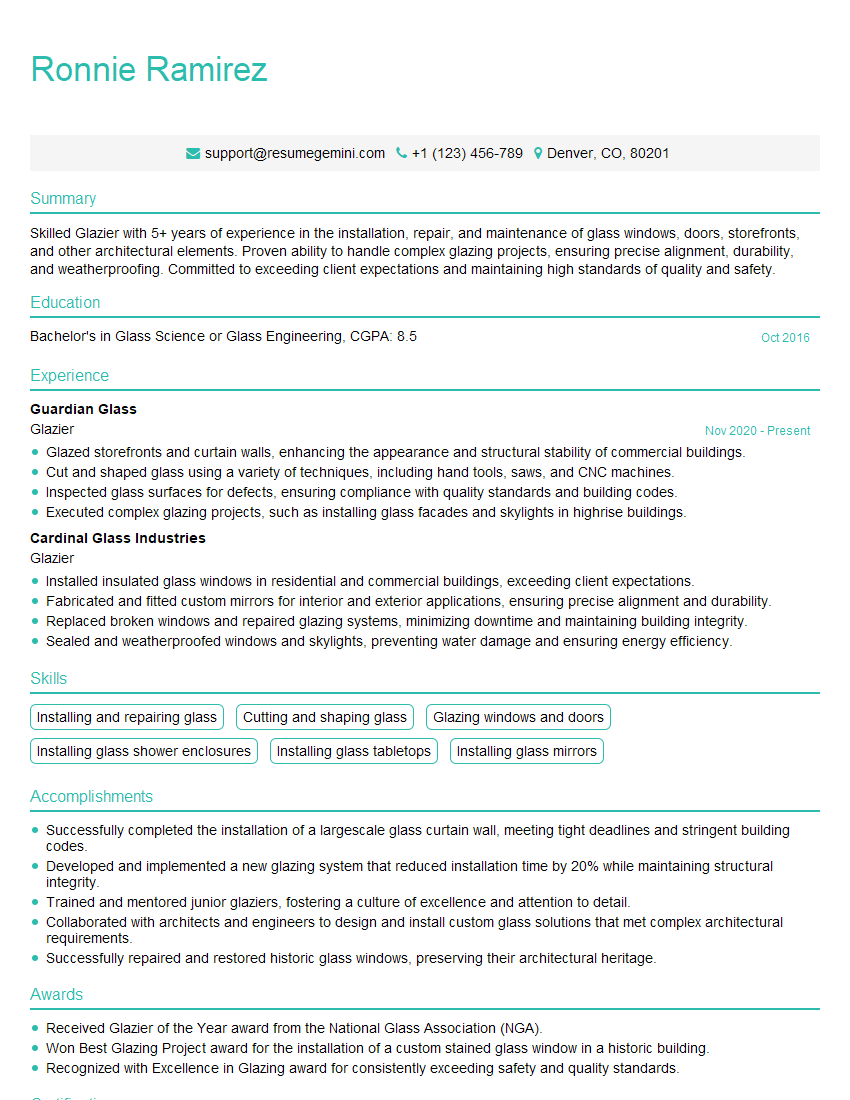
Mastering Understanding of Glass Construction Techniques is key to advancing your career in the construction and architectural industries. A strong understanding of these techniques demonstrates expertise and opens doors to more challenging and rewarding opportunities. To maximize your job prospects, focus on creating an ATS-friendly resume that highlights your skills and experience effectively. ResumeGemini is a trusted resource to help you build a professional and impactful resume. We provide examples of resumes tailored to Understanding of Glass Construction Techniques to guide you in crafting a compelling application.
Explore more articles
Users Rating of Our Blogs
Share Your Experience
We value your feedback! Please rate our content and share your thoughts (optional).
What Readers Say About Our Blog
Very informative content, great job.
good