Are you ready to stand out in your next interview? Understanding and preparing for understanding of paper types and their properties interview questions is a game-changer. In this blog, we’ve compiled key questions and expert advice to help you showcase your skills with confidence and precision. Let’s get started on your journey to acing the interview.
Questions Asked in understanding of paper types and their properties Interview
Q 1. Explain the difference between coated and uncoated paper.
The core difference between coated and uncoated paper lies in the surface treatment. Uncoated paper has a natural, porous surface, which absorbs ink readily. This results in a matte finish and a slightly textured feel. Think of the paper you use for sketching or drawing – that’s likely uncoated. Coated paper, on the other hand, receives a layer of coating (clay, calcium carbonate, or polymers) during manufacturing. This coating creates a smooth, non-porous surface that minimizes ink absorption. The result is a glossy or semi-gloss finish, vibrant colors, and sharper images. Magazine pages and brochures are often printed on coated paper to showcase high-quality images.
- Uncoated: Absorbent, matte finish, textured feel, suitable for writing and drawing.
- Coated: Non-absorbent, glossy or semi-gloss finish, smooth feel, ideal for high-quality printing.
Q 2. What are the key properties of offset printing paper?
Offset printing paper needs specific properties to ensure smooth printing and a high-quality final product. Key properties include:
- Smoothness: A smooth surface is crucial to prevent ink from feathering or blurring. This ensures sharp, clean text and images.
- Opacity: High opacity prevents ink from showing through from the other side, crucial for double-sided printing.
- Brightness: Brightness impacts the vibrancy of colors. Higher brightness generally leads to more vibrant colors.
- Caliper (Thickness): The thickness needs to be suitable for the printing press and the desired final product. Too thin can lead to jams or poor image quality.
- Weight: The weight of the paper should be appropriate to create a professional product; too light may appear flimsy, while too heavy may add unnecessary weight and expense.
- Moisture Content: Consistent moisture content is crucial for proper ink transfer and reduces the risk of paper jams during printing.
These properties work together to ensure that ink is transferred properly to create a well-defined and visually appealing printed product. For example, a glossy magazine uses a coated paper with high brightness, smoothness, and opacity to showcase the sharp colors and images.
Q 3. Describe the characteristics of different paper weights (e.g., 20lb, 80lb).
Paper weight, often expressed in pounds (lb), refers to the weight of a ream (500 sheets) of paper of a standard size (typically 17×22 inches). It’s important to understand that weight correlates directly to thickness and strength.
- 20lb: This is a very lightweight paper, often used for inexpensive flyers, leaflets, or low-quality printing. It’s thin and relatively translucent.
- 80lb: This is a much heavier paper, often used for brochures, business cards, or high-quality printing. It’s significantly thicker and more durable than 20lb paper, providing a more substantial feel.
Think of it like this: 20lb paper is like a flimsy tissue, whereas 80lb paper is more like a sturdy card. The weight choice depends heavily on the intended use and the desired impression. A business card on 20lb paper would feel cheap, while a brochure on 80lb would convey a sense of quality.
Q 4. What is the basis weight of paper and how is it measured?
Basis weight is a fundamental measure of paper weight. It represents the weight in grams of one square meter of paper. It’s standardized to allow for comparison across different paper sizes and types. For example, a paper with a basis weight of 80gsm (grams per square meter) will weigh 80 grams for every square meter of paper, regardless of its final dimensions. The basis weight is determined by weighing a precisely cut sample of paper and calculating the weight per unit area. This ensures consistency and allows for accurate comparisons between different paper stocks.
Q 5. Explain the impact of paper fiber type (e.g., wood pulp, cotton) on paper properties.
The type of fiber used significantly influences paper properties.
- Wood Pulp: Most commonly used, wood pulp fibers are relatively short and produce papers that are less strong and more absorbent than those made from longer fibers. It’s often used for newsprint or less expensive papers.
- Cotton: Cotton fibers are longer and stronger, resulting in papers with higher durability, smoothness, and opacity. These papers tend to be more expensive and are often used for high-quality products such as fine art paper or high-end stationery.
For example, a fine art print requires cotton paper for its strength and ability to accept various inks and mediums without feathering or bleeding. Conversely, a newspaper would utilize wood pulp paper for its cost-effectiveness, even though it’s less durable.
Q 6. How does paper caliper affect printability?
Paper caliper, or thickness, directly impacts printability. A thicker caliper (higher gsm) generally means a stiffer, more durable sheet which can handle the pressures of offset printing without buckling or tearing. However, excessively thick paper can cause problems in the printing press, leading to jams or poor ink transfer. Conversely, a thinner caliper might result in ink show-through or the paper itself being easily damaged during the printing process. Finding the optimal caliper is crucial for ensuring smooth and efficient printing.
Q 7. What is paper opacity and how is it important in printing?
Paper opacity refers to the ability of the paper to prevent ink from showing through to the other side. High opacity is essential for printing, particularly in double-sided documents. Low opacity (high show-through) results in a messy and unprofessional final product. The level of opacity is influenced by factors like the type of fiber used, the paper’s weight, and the manufacturing process. For instance, high-quality papers such as those used in books or magazines will have higher opacity, ensuring that the text and images printed on one side do not interfere with those on the other.
Q 8. Describe different paper finishes (e.g., gloss, matte, textured).
Paper finishes significantly impact the look and feel of a printed piece. They describe the surface texture and how light interacts with the paper. Think of it like choosing a fabric – some are smooth, others rough, and each has a different drape.
- Gloss: This finish has a high-sheen, smooth surface. It provides vibrant, sharp colors and excellent image reproduction, making it ideal for high-impact applications like brochures and magazines. However, it can show fingerprints and imperfections easily.
- Matte: A non-reflective, smooth surface, matte finishes reduce glare, making them suitable for reading intensive material like books or reports. They offer a more elegant and sophisticated look compared to gloss.
- Textured: These finishes provide a tactile experience beyond the visual. They can range from subtly textured to heavily embossed, creating a distinct feel and look. Examples include linen, laid, and watermark finishes. They often add a premium feel to invitations or packaging.
- Uncoated: This is a natural finish with no additional coating applied. It’s absorbent and provides a rustic, natural look, perfect for applications like letterheads or notepads.
The choice of finish depends heavily on the intended use and desired aesthetic. A glossy magazine cover demands a different finish than a delicate wedding invitation.
Q 9. Explain the concept of paper brightness and its measurement.
Paper brightness refers to how much light the paper reflects. It’s crucial for print quality as it affects the vibrancy and clarity of colors. Higher brightness generally means whiter paper, resulting in brighter images. It’s measured using a reflectance spectrophotometer, which measures the percentage of light reflected at a specific wavelength (usually 457nm). This is then reported as a percentage, often called the ISO brightness or CIE brightness.
Think of it like comparing two white walls: one might appear slightly yellowish, while the other is a pure, bright white. The one appearing purer white will have a higher brightness measurement. Brightness is particularly important in high-quality printing where color accuracy is critical, like in photography or marketing materials.
Q 10. What is paper sizing and why is it important?
Paper sizing is the process of treating paper to reduce its absorbency. This is done by applying a sizing agent, typically starch or synthetic polymers, to the paper fibers. The goal is to prevent ink from feathering or bleeding into the paper, ensuring sharp, clear print. It also improves the paper’s resistance to water and makes it smoother, improving printability.
Imagine trying to write on a piece of blotting paper; the ink would spread uncontrollably. Sizing prevents this by creating a barrier on the paper’s surface, similar to how a waterproof coating protects fabric. Without proper sizing, printed images would be blurry and indistinct, especially with water-based inks.
Q 11. How does moisture content affect paper properties?
Moisture content significantly affects paper properties. Paper is hygroscopic, meaning it absorbs moisture from the surrounding environment. High moisture content causes paper to expand, leading to dimensional instability – it can become wavy or curl. This can cause problems during printing, leading to misalignment or jamming. Conversely, low moisture content makes paper brittle and prone to tearing or cracking.
Think of a wooden door in a humid climate; it expands and might even stick. Similarly, paper absorbs moisture, causing expansion and potentially affecting its use in printing or packaging. Controlling moisture content is crucial for consistent print quality and preventing defects. Printing facilities often use climate-controlled environments to maintain optimal paper moisture.
Q 12. Describe different paper manufacturing processes.
Paper manufacturing involves several processes, broadly categorized into two main methods:
- Wood-based Pulp Manufacturing: This is the most common method. Wood chips are treated with chemicals to separate the fibers (pulping), cleaned, and refined to create a slurry. This slurry is then formed into a sheet on a machine, pressed to remove water, and dried, resulting in a paper sheet.
- Recycled Paper Manufacturing: This process uses recovered paper as the raw material. The paper is repulped, cleaned, and refined before going through the same sheet formation, pressing, and drying process as wood-based pulp.
Variations exist within these methods, such as the type of pulping process (mechanical or chemical), the use of different additives, and the type of paper machine used. The choice of manufacturing process impacts the paper’s cost, strength, and environmental impact.
Q 13. What are the common paper defects and their causes?
Paper defects can significantly impact print quality and usability. Common defects include:
- Holes and Pin Holes: Caused by imperfections in the papermaking process, affecting the paper’s integrity.
- Wrinkles and Creases: Result from improper handling, storage, or excessive moisture.
- Broken Fibers: Weaken the paper, resulting in tears or reduced strength.
- Slitting Defects: Imperfections created during the cutting process.
- Caliper Variations: Uneven thickness across the paper sheet, causing problems in printing.
- Cockling: A type of warping that gives the paper an uneven surface.
The causes are often related to the papermaking process, handling, or storage conditions. Proper quality control throughout the supply chain is essential to minimize defects.
Q 14. Explain the role of paper in different printing processes (e.g., offset, digital).
The type of paper plays a crucial role in different printing processes. Different papers have varying absorbency, surface smoothness, and thickness, affecting ink adhesion and print quality.
- Offset Printing: Uses coated papers (gloss or matte) for best results. Coated papers provide a smooth, non-porous surface that allows for sharp images and vivid colors. The coating also helps prevent ink absorption, ensuring even ink distribution.
- Digital Printing: More versatile in paper choices, but the paper’s absorbency and surface finish still matter. For instance, uncoated papers may work better for inkjet printing due to the higher ink absorption.
Understanding the properties of various paper types and their interaction with different printing methods is critical for selecting the correct paper and achieving the desired print quality. Incorrect paper choice can lead to printing failures, color inconsistencies, and unsatisfactory final products.
Q 15. How do you assess the quality of paper?
Assessing paper quality involves a multifaceted approach, considering several key properties. Think of it like judging a fine wine – you need to examine various aspects to get the full picture.
- Brightness: Measured using a reflectance scale, this indicates how much light the paper reflects. Higher brightness generally means a whiter, cleaner look, but it doesn’t always correlate with overall quality.
- Opacity: This measures how much light passes through the paper. High opacity is crucial for preventing show-through, especially important for documents or printed materials.
- Smoothness: This impacts the printing quality and feel. A smooth surface allows for crisp, clear images, while a textured surface might be preferred for certain artistic applications.
- Tensile Strength: This indicates how much force the paper can withstand before tearing. Essential for packaging or durable documents.
- Grammage (Weight): Expressed in grams per square meter (gsm), this reflects the paper’s thickness and density. Higher grammage typically means a heavier, more substantial feel.
- Fiber Type: The type of wood pulp used (e.g., softwood, hardwood) impacts the paper’s strength, smoothness, and color.
Professionals often use specialized instruments to measure these properties precisely. However, a simple visual inspection can also reveal a lot about paper quality: look for inconsistencies in color, texture, or thickness. A high-quality paper will typically feel even, smooth, and sturdy.
Career Expert Tips:
- Ace those interviews! Prepare effectively by reviewing the Top 50 Most Common Interview Questions on ResumeGemini.
- Navigate your job search with confidence! Explore a wide range of Career Tips on ResumeGemini. Learn about common challenges and recommendations to overcome them.
- Craft the perfect resume! Master the Art of Resume Writing with ResumeGemini’s guide. Showcase your unique qualifications and achievements effectively.
- Don’t miss out on holiday savings! Build your dream resume with ResumeGemini’s ATS optimized templates.
Q 16. What are the environmental considerations in paper selection?
Environmental considerations are paramount in paper selection, particularly regarding sustainability and responsible sourcing. Choosing eco-friendly paper minimizes the environmental impact of production and disposal.
- Recycled Content: Opting for paper with a high percentage of post-consumer recycled fiber reduces reliance on virgin wood pulp, conserving forests and reducing waste.
- Forest Certification: Look for certifications like the Forest Stewardship Council (FSC) label, guaranteeing responsible forestry practices that protect biodiversity and prevent deforestation.
- Chlorine-Free Bleaching: Traditional bleaching processes use chlorine, which produces harmful dioxins. Choose papers bleached with chlorine-free (TCF) or elemental chlorine-free (ECF) methods.
- Carbon Footprint: Consider the total carbon emissions associated with the paper’s production, transportation, and disposal. Look for papers with lower carbon footprints.
- Energy Efficiency: The manufacturing process significantly impacts energy consumption. Choose papers produced using renewable energy sources whenever possible.
In a professional setting, specifying these criteria in procurement guidelines helps ensure sustainable choices across the organization. Choosing sustainably sourced paper not only reduces environmental damage but also strengthens a company’s commitment to corporate social responsibility.
Q 17. Explain the difference between recycled and virgin paper.
The core difference lies in the source material. Virgin paper is made from wood pulp derived from trees that have been harvested specifically for paper production. Recycled paper, on the other hand, utilizes fibers from previously used paper products that have been collected and processed for reuse.
- Virgin Paper: Offers consistent quality and often has brighter whiteness. However, its production contributes to deforestation and requires significant energy.
- Recycled Paper: A more sustainable choice as it conserves resources and reduces waste. While the quality can vary, advancements in recycling technologies have significantly improved the properties of recycled paper, making it suitable for many applications.
Imagine building a house: virgin paper is like using new lumber – it’s fresh, consistent, but uses up natural resources. Recycled paper is like using reclaimed wood – it’s sustainable, might have slight variations, but is environmentally friendly.
Q 18. How does paper grammage affect the cost?
Grammage, or weight, directly impacts the cost of paper. Heavier paper (higher gsm) requires more raw materials and energy to produce, making it more expensive.
Think of it like buying fabric: a lightweight cotton fabric is cheaper than a heavy-duty canvas. Similarly, a lightweight 80gsm paper for printing flyers will be much cheaper than a 300gsm cardstock for business cards or brochures. The thicker and sturdier the paper, the higher the cost per unit.
The relationship isn’t strictly linear; the price also depends on other factors such as the type of fiber, the finishing process (coated or uncoated), and market demand. However, grammage remains a significant driver of paper cost.
Q 19. Describe different types of paper used in packaging.
Packaging applications demand diverse paper types, each tailored to specific needs regarding strength, printability, and barrier properties.
- Kraft Paper: A strong, brown paper commonly used for corrugated boxes, bags, and other heavy-duty packaging due to its high tensile strength.
- Cardboard: Made from multiple layers of paperboard, offering rigidity and protection for various products. Corrugated cardboard is especially prevalent in shipping.
- Paperboard: A thicker, stiffer type of paper, used for folding cartons, boxes, and displays. It offers good printability and can be coated for added protection.
- Coated Paperboard: Paperboard with a coating applied to one or both sides, enhancing its smoothness, printability, and barrier properties (e.g., resisting grease or moisture).
- Specialty Papers: Includes papers with added properties, such as grease resistance (for food packaging), water resistance, or specific barrier coatings.
The choice depends on the product’s nature, its weight, and the required level of protection during shipping and handling. A fragile item will need more robust packaging than a sturdy one.
Q 20. What are the considerations for choosing paper for food packaging?
Choosing paper for food packaging requires stringent considerations to ensure food safety and regulatory compliance.
- Food-Grade Materials: The paper must be manufactured using food-safe inks, adhesives, and coatings, free from harmful chemicals that could leach into the food.
- Barrier Properties: The paper should provide adequate protection against moisture, grease, and oxygen to maintain food quality and prevent spoilage. Coated papers are often necessary.
- Regulatory Compliance: Packaging materials must meet the regulatory standards and labeling requirements of the relevant food safety authorities (e.g., FDA in the US, EFSA in Europe).
- Recyclability: Selecting recyclable paper promotes environmental sustainability and aligns with growing consumer preference for eco-friendly packaging.
For example, packaging for oily snacks requires grease-resistant paper, while bakery goods might necessitate moisture-resistant packaging. Proper selection ensures food safety, extends shelf life, and adheres to legal requirements.
Q 21. Explain the relationship between paper strength and its applications.
Paper strength is directly related to its applications. Higher strength allows for use in more demanding scenarios.
- Low Strength Paper: Suitable for applications like printing flyers or brochures where durability isn’t critical. Think of tissue paper or lightweight printing paper.
- Medium Strength Paper: Used for documents, envelopes, and lighter-weight packaging where moderate strength is required. Standard copy paper falls into this category.
- High Strength Paper: Essential for packaging heavy goods, carrying bags, or applications needing resistance to tearing or puncture. Kraft paper and many types of cardboard belong here.
For instance, a paper bag needs high tensile strength to carry groceries without tearing, while a cereal box requires sufficient burst strength to resist collapsing under the weight of the cereal. The choice of paper is a balance between functionality and cost: stronger papers are usually more expensive but necessary for certain applications.
Q 22. How does paper porosity affect ink absorption?
Paper porosity, essentially the amount of tiny holes and spaces within the paper structure, directly impacts ink absorption. Think of it like a sponge: a more porous paper, like newsprint, has larger pores, allowing ink to quickly soak in and spread. This results in less vibrant colors and potentially feathering (ink bleeding beyond the intended lines). Conversely, a less porous paper, such as coated paper, has a tighter structure, leading to sharper prints with more vivid colors and reduced feathering. The ink sits on the surface rather than penetrating deep into the fibers.
For example, a newspaper uses highly porous paper for speed and cost-effectiveness; the ink is absorbed quickly, enabling rapid printing. However, this leads to less defined images. Conversely, a high-quality art print uses a low-porosity paper to ensure the vibrancy and sharpness of the colors are retained.
Q 23. What is the role of paper in color management?
Paper plays a crucial role in color management. Its brightness, color temperature (the relative warmth or coolness of the white point), and surface texture all influence how colors are perceived. A paper with a high brightness will reflect more light, potentially making colors appear brighter and more saturated. Conversely, a duller paper will absorb more light, making colors appear less intense. The surface texture can also affect how light interacts with the ink, leading to different color reproduction.
For example, a glossy paper will reflect light differently than a matte paper, altering the perception of color saturation. Color management profiles (specific color settings associated with each paper type) are used in printing to compensate for these variations, ensuring color accuracy across different papers and printing devices.
Q 24. What are the different paper testing methods?
Various tests assess different paper properties. These include:
- Brightness: Measured using a reflectometer, this indicates the paper’s ability to reflect light, influencing perceived color.
- Opacity: Determined by measuring the amount of light transmitted through the paper, indicating how well it prevents ink from showing through on the other side.
- Porosity: Assessed through techniques such as Gurley porosity testing, measuring the rate of air flow through the paper, directly related to ink absorption.
- Tensile strength: Measuring the paper’s resistance to tearing and breaking, ensuring durability.
- Smoothness: Evaluated using techniques like Bendtsen roughness or Parker Print Surf, indicating the smoothness of the surface affecting print quality.
- Weight and Thickness: Basic measurements reflecting the paper’s density and substance.
The choice of testing method depends on the specific application and desired properties.
Q 25. How do you select the appropriate paper for a specific printing project?
Selecting the right paper for a printing project involves a detailed assessment of several factors:
- Print Method: Offset printing, inkjet, laser, etc., each requires specific paper properties.
- Intended Use: Brochures require durability, while newsprint prioritizes speed and cost-effectiveness.
- Image Quality: High-resolution images demand high-quality paper with smooth surfaces and low porosity.
- Budget: The cost of paper significantly impacts project expenses.
- Aesthetic Considerations: The desired texture, finish (matte, gloss, etc.), and color of the paper contribute to the overall aesthetic.
For instance, a high-end photography book will utilize a thick, archival-quality paper with a smooth, matte or satin finish, while a simple flyer might use a less expensive, uncoated stock.
Q 26. Discuss the sustainability aspects of different paper grades.
Sustainability in paper production is increasingly important. Factors to consider include:
- Fiber Source: Papers made from recycled fibers have a lower environmental impact than those made from virgin wood pulp. The source of virgin pulp (sustainably managed forests) also matters greatly.
- Manufacturing Processes: Processes that minimize water and energy consumption are more sustainable.
- Certifications: Look for certifications like FSC (Forest Stewardship Council) indicating responsible forestry practices.
- Paper Grade: Thicker papers often consume more resources in production.
- Post-consumer Recycled Content: The percentage of recycled fiber contributes significantly to sustainability.
Choosing recycled paper reduces deforestation and minimizes waste. However, the quality of recycled paper can vary, influencing its suitability for certain print applications.
Q 27. Explain the role of coatings in improving paper properties.
Coatings significantly enhance paper properties. They are applied to the paper surface to improve printability, durability, and aesthetics. Common coatings include:
- Gloss coatings: Provide a shiny surface, enhancing image vibrancy and sharpness.
- Matte coatings: Offer a less reflective, softer surface, reducing glare and ideal for text-heavy documents.
- UV coatings: Provide a protective layer, increasing resistance to scratches and water damage.
- Clay coatings: Improve smoothness and print quality, commonly found in coated papers.
Coatings improve ink holdout (preventing ink from spreading) and increase smoothness, improving the overall print quality. They also offer protection against wear and tear.
Q 28. What are the challenges in sourcing sustainable paper?
Sourcing sustainable paper presents several challenges:
- Certification Verification: Ensuring the authenticity and reliability of sustainability certifications can be complex.
- Cost: Sustainable papers often command higher prices than conventional options.
- Availability: The supply of certain types of sustainable paper might be limited.
- Quality Consistency: The quality of recycled paper can be variable, requiring careful selection for specific applications.
- Transparency in Supply Chains: Tracing the entire supply chain to verify sustainable practices throughout can be difficult.
Overcoming these challenges requires diligent research, careful supplier selection, and a willingness to pay a premium for truly sustainable options. Collaboration across the industry is crucial for improving transparency and expanding the availability of sustainable materials.
Key Topics to Learn for Understanding Paper Types and Their Properties Interview
- Paper Fiber Types: Understanding the properties of different fibers (wood pulp, cotton, bamboo, etc.) and their impact on paper characteristics like strength, smoothness, and opacity.
- Paper Weight and Basis Weight: Learn how to interpret basis weight and its correlation to paper thickness, stiffness, and printability. Understand the practical implications for different printing methods and applications.
- Paper Finishes: Explore various finishes like coated, uncoated, matte, gloss, and textured papers. Discuss their impact on print quality, color reproduction, and the overall aesthetic appeal.
- Paper Grades and Applications: Familiarize yourself with different paper grades (e.g., bond, cover, index, newsprint) and their suitable applications in printing, packaging, and other industries. Understand the trade-offs involved in choosing a particular grade.
- Paper Testing and Measurement: Gain a basic understanding of common paper testing methods used to assess properties like tensile strength, burst strength, tear resistance, and brightness. Be prepared to discuss the significance of these measurements.
- Sustainability and Environmental Impact: Discuss the environmental considerations associated with paper production and the growing importance of recycled and sustainably sourced paper. Understand certifications and eco-friendly practices.
- Problem-Solving Scenarios: Consider practical scenarios where understanding paper properties is crucial. For example, selecting the appropriate paper for a high-quality brochure versus a large-volume newsletter.
Next Steps
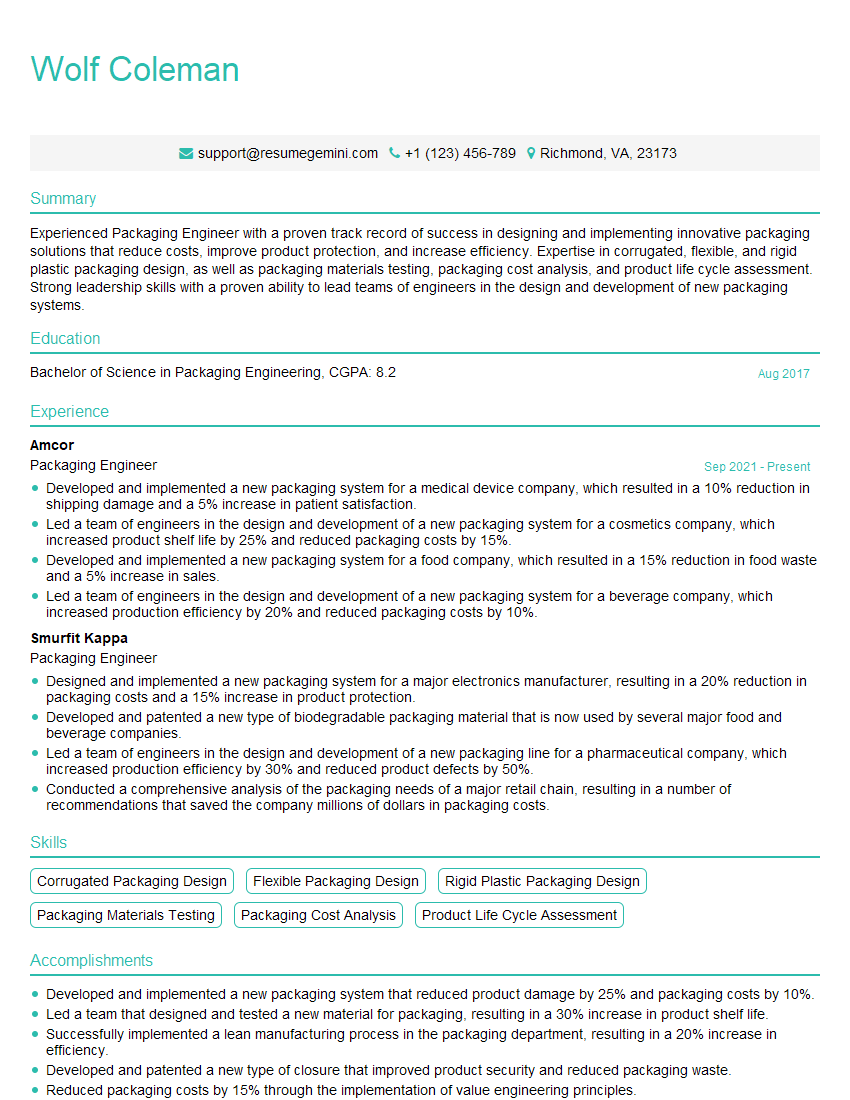
Mastering the understanding of paper types and their properties is crucial for career advancement in various fields, including printing, packaging, publishing, and design. A strong grasp of these concepts demonstrates technical proficiency and problem-solving skills highly valued by employers. To maximize your job prospects, create an ATS-friendly resume that clearly showcases your expertise. ResumeGemini is a trusted resource to help you build a professional and impactful resume that highlights your skills effectively. Examples of resumes tailored to demonstrating expertise in paper types and their properties are available within ResumeGemini to guide you.
Explore more articles
Users Rating of Our Blogs
Share Your Experience
We value your feedback! Please rate our content and share your thoughts (optional).
What Readers Say About Our Blog
Very informative content, great job.
good