Are you ready to stand out in your next interview? Understanding and preparing for Understanding of Plant Spirit Medicine interview questions is a game-changer. In this blog, we’ve compiled key questions and expert advice to help you showcase your skills with confidence and precision. Let’s get started on your journey to acing the interview.
Questions Asked in Understanding of Plant Spirit Medicine Interview
Q 1. Describe the process of identifying and ethically sourcing plant medicines.
Ethically sourcing plant medicines is paramount. It involves a deep respect for the plant, its ecosystem, and the indigenous communities who may hold traditional knowledge about its use. The process begins with identification, which requires precise botanical knowledge to avoid misidentification – a critical safety concern. This often involves consulting experienced herbalists, botanists, or field guides with detailed illustrations and descriptions. Accurate identification minimizes the risk of using toxic look-alikes.
Ethical sourcing focuses on sustainability and fair trade practices. This means obtaining plants from reputable sources that prioritize conservation, avoid overharvesting, and ensure fair compensation for those involved in collection and cultivation. Wildcrafting should only be done sustainably, with a deep understanding of the plant’s life cycle and ecological impact. Cultivation, when possible, is often a more sustainable alternative. Supporting local growers and cooperatives who practice sustainable harvesting is another key aspect. For example, sourcing vanilla from farms that protect the pollinating bees would be part of this ethical sourcing model. Tracking the origins of the plants and ensuring transparency throughout the supply chain is also crucial.
Q 2. Explain the concept of plant spirit medicine and its philosophical underpinnings.
Plant spirit medicine views plants not merely as chemical entities, but as sentient beings possessing unique energies and consciousness. It’s a holistic approach recognizing the plant’s inherent power to heal on physical, emotional, and spiritual levels. The philosophical underpinnings often draw from animism – the belief that spirits inhabit natural objects – and indigenous traditions that emphasize a reciprocal relationship between humans and nature. It’s about building a relationship with the plant, understanding its essence, and respectfully working with its energy to facilitate healing. For example, a shaman might engage in ceremony to connect with the spirit of a plant before harvesting or using it medicinally.
This approach goes beyond simply extracting chemicals; it incorporates intuitive understanding, energetic attunement, and spiritual practices. The effectiveness isn’t solely based on scientific analysis but also on the practitioner’s connection to the plant and the individual receiving the medicine. It acknowledges that healing involves more than the physical body; it considers the interconnectedness of mind, body, and spirit.
Q 3. What are the key differences between Western and Traditional plant medicine approaches?
Western plant medicine, rooted in scientific reductionism, primarily focuses on isolating and analyzing the active chemical compounds of plants to understand their pharmacological effects. Efficacy is determined through rigorous clinical trials and double-blind studies. The approach tends to be mechanistic, aiming to understand how specific chemicals interact with the body at a cellular level. This often leads to the development of pharmaceuticals derived from plant compounds.
Traditional plant medicine approaches, conversely, are often holistic and incorporate the whole plant, considering its energetic properties and the relationship between the plant and the patient. Knowledge is often passed down through generations, integrating cultural practices and spiritual beliefs. Treatment may involve the entire plant – leaves, roots, bark, etc. – and consider various factors like the patient’s constitution and the energetic qualities of the plant. Empirical observation and traditional knowledge guide the use of plants in these systems. For instance, Traditional Chinese Medicine uses a vast array of plant-based remedies based on thousands of years of observation and experience.
Q 4. Discuss the potential interactions between plant medicines and pharmaceutical drugs.
Potential interactions between plant medicines and pharmaceutical drugs can be significant and sometimes dangerous. Plant medicines can contain numerous active compounds that interact with pharmaceutical drugs in unpredictable ways. These interactions can range from mild to severe, enhancing or inhibiting the effects of the drugs, creating additive or synergistic effects, or even causing toxicity.
For example, some herbs can increase the metabolism of certain drugs, reducing their effectiveness. Others might inhibit liver enzymes, leading to increased drug levels and potential toxicity. St. John’s Wort, for example, is known to interact with many medications, including antidepressants and birth control pills. It’s crucial for anyone taking pharmaceutical drugs to consult with a healthcare professional before using plant medicines to avoid potentially harmful interactions. Detailed knowledge of both the plant medicine and the pharmaceutical drug, including its mechanism of action and potential metabolic pathways, is necessary to assess potential interactions.
Q 5. How do you assess the safety and efficacy of a plant medicine?
Assessing the safety and efficacy of a plant medicine requires a multi-faceted approach. Traditional methods rely on generations of documented use and observation, looking for patterns of efficacy and adverse effects within a specific community. However, this is insufficient for modern standards.
Scientific methods involve preclinical studies (in vitro and animal models) to investigate the plant’s chemical composition and potential effects. Human clinical trials, following strict protocols, then assess safety and efficacy in controlled settings. This includes double-blind, placebo-controlled studies to minimize bias. Important considerations include the dosage, route of administration, and potential toxicity. It is vital to understand the potential for allergic reactions, interactions with other substances, and long-term effects. The lack of extensive clinical trials for many plant medicines highlights the need for cautious use and careful monitoring.
Q 6. Explain the process of preparing a plant medicine for therapeutic use.
Preparing a plant medicine for therapeutic use depends on the plant and the intended method of use. This might involve several steps. First, proper identification of the plant is crucial, as mentioned earlier. Then, harvesting needs to be done sustainably and respectfully, often at a specific time of year or under particular conditions.
Preparation methods vary widely. They may include:
- Infusion (tea): Steeping plant material in hot water.
- Decoction: Simmering plant material in water for a longer period to extract more potent compounds.
- Tincture: Extracting plant compounds using alcohol.
- Ointment or salve: Combining plant extracts with oils or fats for topical application.
- Capsules or tablets: Processing dried plant material into standardized doses.
Accurate measurements, careful processing, and proper storage are essential to ensure the medicine’s potency and safety. Each method offers different advantages in terms of extracting specific compounds and offering different delivery systems. The preparation should align with the medicinal properties of the plant and the intended therapeutic outcome.
Q 7. What are the common contraindications and side effects associated with plant medicines?
Contraindications and side effects vary widely among plant medicines, depending on the plant species, preparation method, dosage, and individual patient factors. Some general considerations include:
- Allergies: Allergic reactions can range from mild skin irritation to severe anaphylaxis.
- Drug interactions: As discussed, interactions with pharmaceutical drugs can significantly impact efficacy and safety.
- Toxicity: Certain plants contain toxic compounds that can cause serious health problems, even at low doses. Improper identification or preparation can significantly increase this risk.
- Pregnancy and breastfeeding: Many herbs are contraindicated during pregnancy or breastfeeding.
- Existing health conditions: Certain plant medicines may exacerbate existing health problems. For example, some herbs can affect blood pressure or blood clotting.
It’s crucial to thoroughly research a plant medicine’s potential side effects and contraindications before use, and consult with a qualified healthcare practitioner, particularly if you have pre-existing conditions or are taking other medications. Many plants, while generally safe, can have potentially serious consequences if misused.
Q 8. How do you determine the appropriate dosage and administration route for a plant medicine?
Determining the appropriate dosage and administration route for plant medicine is a crucial aspect of safe and effective practice. It’s not a one-size-fits-all approach; it requires careful consideration of several factors.
- Patient Factors: Age, weight, overall health, existing medical conditions, and any potential drug interactions are paramount. A child will require a significantly smaller dose than an adult. A person with liver or kidney impairment may need a reduced dose to avoid toxicity.
- Plant Factors: The potency of the plant varies depending on growing conditions, harvesting time, and processing methods. A standardized extract offers greater consistency than using raw herbs, which can fluctuate in potency.
- Desired Effect: The intended outcome – whether it’s pain relief, immune support, or digestive aid – dictates the dosage. A low dose may be sufficient for mild symptoms, while a higher dose might be necessary for more acute conditions (always within safe parameters).
- Administration Route: Different routes (oral, topical, etc.) impact absorption and efficacy. Oral ingestion is common for tinctures and teas, while salves are applied topically for skin issues.
Example: When prescribing St. John’s Wort for mild depression, I’d start with a low dose of a standardized extract and carefully monitor the patient’s response, adjusting the dosage as needed, always emphasizing patient monitoring for potential side effects. For topical use, such as with calendula salve on minor burns, I’d provide instructions for application frequency and quantity based on the size of the affected area.
Q 9. Describe your experience with different plant medicine preparation methods (e.g., tinctures, decoctions, salves).
My experience encompasses a wide array of plant medicine preparation methods, each with its unique properties and applications.
- Tinctures: These alcohol-based extracts preserve the plant’s active compounds, resulting in a potent and shelf-stable medicine. I frequently use them for internal applications, offering concentrated doses in a convenient liquid form. For example, a motherwort tincture is excellent for supporting the nervous system.
- Decoctions: These are water-based extractions made by simmering the plant material. They are ideal for extracting compounds from tougher plant parts like roots and bark. A decoction of echinacea root can be used to boost immunity.
- Salves: These topical ointments combine plant extracts with a base like beeswax or shea butter. They’re perfect for treating skin conditions. For instance, a comfrey salve is often used to promote healing of wounds and bruises.
- Infusions (Teas): Steeping herbs in hot water offers a simple, gentle method for enjoying the benefits of plants. Chamomile tea is a well-known example of this, promoting relaxation and sleep.
Beyond these, I’m also familiar with other preparations like hydrosols (floral waters), oils, and powders. Each method offers a unique therapeutic profile; careful selection depends on the patient’s needs and the plant’s specific constituents.
Q 10. How do you counsel patients on the use and potential risks of plant medicines?
Counseling patients involves more than just prescribing plant medicines. It’s a holistic process built on education, empowerment, and shared decision-making.
- Detailed Explanation: I thoroughly explain the plant’s properties, intended effects, and potential risks. This ensures informed consent and fosters trust.
- Potential Interactions: I meticulously discuss possible interactions with other medications, supplements, or even foods, highlighting potential contraindications.
- Monitoring for Adverse Effects: I provide clear instructions on how to monitor for any adverse reactions and what steps to take if they occur. Open communication is critical here.
- Realistic Expectations: I emphasize that plant medicines may take time to work and that effects can be subtle. I help patients manage their expectations.
- Lifestyle Considerations: I encourage lifestyle changes that complement the plant medicine’s therapeutic actions. This may involve dietary adjustments, stress reduction techniques, or exercise.
Example: When using elderberry for immune support, I’d emphasize that it’s supportive, not a cure-all, and may not be effective in all cases. I would also explain potential mild side effects, such as nausea, and advise patients to discontinue use and contact me if these occur. Building this relationship ensures responsible and safe usage.
Q 11. What are the ethical considerations involved in using plant spirit medicine?
Ethical considerations in plant spirit medicine are multifaceted and require a deep commitment to responsible practice.
- Sustainability: Wildcrafting must be done sustainably, avoiding overharvesting and ensuring the preservation of plant populations. Responsible sourcing, including working with ethical suppliers, is essential.
- Accurate Identification: Precise plant identification is crucial to avoid accidental ingestion of toxic species. This requires profound botanical knowledge and careful verification.
- Informed Consent: Patients must provide fully informed consent, understanding the potential benefits and risks involved. This requires transparency and open communication.
- Respect for Indigenous Knowledge: When working with plants traditionally used by Indigenous cultures, it’s vital to acknowledge and respect their knowledge and practices, avoiding appropriation.
- Avoiding Misrepresentation: Claims about the efficacy of plant medicines should be based on evidence and avoid exaggerated or misleading statements.
Example: I ensure that the herbs I use are sourced sustainably and ethically. If a patient is considering a plant with a history in Indigenous medicine, I’d take the time to educate them on the cultural significance and appropriate use.
Q 12. Explain your understanding of plant energetics and how it informs your practice.
Plant energetics, also known as energetic botany, views plants through the lens of their vibrational properties, how they interact with the human energetic field and how this information can be applied to healing.
- Energetic Qualities: Plants possess unique energetic qualities: warming or cooling, moistening or drying, etc. These qualities influence their therapeutic effects. For example, chamomile is considered cooling and calming, useful for anxiety, while ginger is warming and stimulating, often used for digestive issues.
- Energetic Balancing: The practice aims to use plants to balance energetic imbalances within the body, promoting overall well-being. If a patient presents with excess heat and inflammation, a cooling herb might be prescribed.
- Intuitive Assessment: While not replacing scientific evidence, plant energetics sometimes incorporates intuition and observation to assess a patient’s energetic state and choose suitable plants.
- Integration with other practices: I integrate this perspective with other modalities, considering the whole person, not just the physical symptoms. It adds another layer of understanding when selecting appropriate plants.
Example: If a patient presents with symptoms of anxiety (restlessness, rapid heartbeat), I might consider their energetic constitution before choosing a calming herb. An individual with a predominantly “hot” constitution might benefit from a cooling herb like skullcap, while someone with a “cold” constitution might respond better to a warming herb like ginger. This holistic approach adds depth to my practice.
Q 13. Discuss your knowledge of specific plant families and their medicinal properties.
My knowledge of plant families and their medicinal properties is extensive, built upon years of study and practical experience.
- Lamiaceae (Mint Family): This family includes herbs like rosemary, lavender, and mint. These are known for their aromatic oils and their use in supporting respiratory health, relaxation, and digestion.
- Asteraceae (Daisy Family): This family includes echinacea, chamomile, and calendula. Echinacea is well-known for its immune-supporting properties; chamomile promotes relaxation and digestive ease; and calendula is widely used topically for wound healing.
- Rosaceae (Rose Family): This family includes rosehips, hawthorn, and strawberries. Rosehips are rich in Vitamin C; hawthorn berries are used to support cardiovascular health; and strawberries are rich in antioxidants.
- Apiaceae (Carrot Family): This family includes fennel, parsley, and dill. These are often used to support digestion and have various culinary and medicinal applications.
Understanding the specific properties of individual plants within each family allows me to choose the most appropriate herb or combination of herbs for a specific condition. For instance, I might combine herbs from the Asteraceae and Lamiaceae families to support both immune function and relaxation during times of stress.
Q 14. Describe your approach to diagnosing and treating common ailments using plant medicines.
My approach to diagnosing and treating common ailments using plant medicines is holistic and individualized, considering the patient’s unique circumstances and the specific energetic and physical presentation of their condition.
- Detailed History: I begin with a thorough history, including symptoms, lifestyle factors, diet, and other relevant information.
- Careful Assessment: I assess the patient’s overall condition, considering their energetic constitution and the specific needs of their body.
- Plant Selection: I select plants that address the root cause of the problem, not just the symptoms. This might involve using single herbs or carefully formulated blends.
- Dosage and Administration: I meticulously determine the appropriate dosage and administration method, considering the patient’s individual factors.
- Monitoring and Adjustment: I monitor the patient’s progress and make adjustments to the treatment plan as necessary.
Example: For a patient experiencing mild anxiety and insomnia, I would not simply reach for a single calming herb like valerian. After gathering a detailed history, and considering their energetic constitution, I might prescribe a blend of herbs that addresses both the anxiety and the insomnia, perhaps combining lavender, chamomile, and lemon balm. Continuous monitoring and discussion with the patient will be key to determine effectiveness and safety. Always remember that plant medicine is just one tool in a broader approach to health and wellness. Referring to a medical professional for more serious conditions is crucial.
Q 15. How do you incorporate plant spirit medicine into a holistic healthcare plan?
Incorporating plant spirit medicine into a holistic healthcare plan requires a nuanced understanding of the individual and their needs. It’s not simply about adding herbs to a treatment plan; it’s about integrating the plant’s energetic and medicinal properties to support the body’s natural healing processes. I start by conducting a thorough assessment, considering physical symptoms, emotional state, lifestyle factors, and spiritual beliefs.
For example, if a patient is experiencing anxiety, I might incorporate calming herbs like chamomile or lavender, alongside other modalities like acupuncture or counseling. The plant medicine doesn’t stand alone but works synergistically with other aspects of the holistic plan. The selection of plants is always tailored to the individual’s constitution and the specific imbalances they are experiencing.
It’s crucial to remember the importance of mindful preparation and administration of the plant medicine. This might involve specific rituals or intentions set before using the plant, ensuring the patient understands the purpose and potential effects.
Career Expert Tips:
- Ace those interviews! Prepare effectively by reviewing the Top 50 Most Common Interview Questions on ResumeGemini.
- Navigate your job search with confidence! Explore a wide range of Career Tips on ResumeGemini. Learn about common challenges and recommendations to overcome them.
- Craft the perfect resume! Master the Art of Resume Writing with ResumeGemini’s guide. Showcase your unique qualifications and achievements effectively.
- Don’t miss out on holiday savings! Build your dream resume with ResumeGemini’s ATS optimized templates.
Q 16. Explain your understanding of the regulatory landscape surrounding plant medicines.
The regulatory landscape surrounding plant medicines is complex and varies significantly across jurisdictions. In many countries, the legal status of plant medicines ranges from unregulated to strictly controlled. Some plants are freely available, while others require prescriptions or are subject to import restrictions. This creates challenges for both practitioners and patients.
For instance, some traditional remedies might not have undergone rigorous scientific testing, leading to uncertainty regarding their safety and efficacy. Further complicating matters, the definition of ‘plant medicine’ itself can be ambiguous, encompassing everything from commercially produced extracts to traditional preparations.
As a practitioner, I prioritize working within the legal framework of my region, ensuring transparency and safety in my practice. This includes staying informed about changes in regulations and educating my patients about potential legal implications of using specific plants. It is essential to always source plants from reputable suppliers and to clearly communicate with patients about potential risks and benefits.
Q 17. Describe your experience with different plant medicine traditions (e.g., Ayurveda, Traditional Chinese Medicine).
My experience encompasses various plant medicine traditions, including Ayurveda and Traditional Chinese Medicine (TCM). In Ayurveda, I’ve learned about the concept of doshas (Vata, Pitta, Kapha) and how different herbs can balance these energies within the body. For example, turmeric is widely used to reduce inflammation and support Pitta dosha.
In TCM, I’ve explored the principles of Yin and Yang, and the use of herbs to restore balance and harmony. I’ve seen firsthand the effectiveness of herbal formulas in addressing specific conditions, such as using ginseng to boost energy or licorice root to soothe the digestive system.
Understanding these different traditions provides a richer, more holistic perspective. Each system offers unique insights into plant properties and their applications, allowing for a more personalized approach to treatment.
Q 18. How do you assess a patient’s suitability for plant medicine therapies?
Assessing a patient’s suitability for plant medicine therapies requires a comprehensive evaluation. I begin by gathering a detailed medical history, including current medications, allergies, and any pre-existing conditions.
A key element is understanding the patient’s lifestyle and beliefs. Certain plants might interact negatively with prescription drugs, while others may not align with a patient’s spiritual or ethical values. For example, some plants are contraindicated during pregnancy or breastfeeding.
The assessment also involves a thorough discussion of expectations and realistic outcomes. Plant medicine is not a quick fix, and managing expectations is crucial for successful treatment. The process is collaborative; it’s essential to ensure the patient feels empowered and informed throughout.
Q 19. Describe your methods for documenting and tracking patient progress using plant medicine.
Documentation and tracking patient progress are paramount for responsible practice. I use a combination of methods to meticulously record patient information, including detailed case histories, treatment plans, and progress notes.
I regularly document the type and quantity of plant medicine administered, the patient’s response to the treatment, any observed side effects, and adjustments made to the plan. This information is stored securely and confidentially, adhering to relevant data protection regulations.
I also employ visual aids such as charts and graphs to track key metrics, making it easier to visualize changes over time. Regular follow-up appointments provide opportunities for ongoing assessment and adjustments to the treatment plan, based on the patient’s progress. This systematic approach enables me to monitor efficacy and make informed decisions about treatment.
Q 20. What resources do you use to stay current on the latest research and developments in plant medicine?
Staying current with the latest research and developments is essential in plant medicine. I utilize a variety of resources to maintain my expertise, including peer-reviewed journals, professional conferences, and reputable online databases.
I actively participate in professional organizations related to herbal medicine and attend workshops and seminars led by experienced practitioners and researchers. This ensures I’m up-to-date with new findings, evolving safety guidelines, and emerging therapies.
I also critically assess the information I encounter, distinguishing between anecdotal evidence and robust scientific research. This rigorous approach helps me integrate the latest knowledge safely and effectively into my practice.
Q 21. How do you handle situations where a patient experiences adverse effects from plant medicine?
When a patient experiences adverse effects from plant medicine, my priority is immediate assessment and intervention. I carefully evaluate the nature and severity of the reaction, taking into account the specific plant involved, the dosage administered, and any other contributing factors.
Depending on the severity of the reaction, I may recommend discontinuing the plant medicine, adjusting the dosage, or providing supportive care. In severe cases, immediate medical attention may be necessary.
Open and honest communication with the patient is crucial. I explain the potential causes of the adverse effects and the steps being taken to address them. I also document all aspects of the event meticulously, learning from each experience to improve future practice and enhance patient safety. Thorough record-keeping is pivotal to preventing similar incidents and informing future treatment strategies.
Q 22. Describe your experience working with different types of plant materials (e.g., roots, leaves, flowers).
My experience with plant materials spans over two decades, encompassing a wide range of plant parts. I’ve worked extensively with roots, leaves, flowers, barks, seeds, and resins, each requiring a unique approach to harvesting, processing, and preparation. Roots, for instance, often require more elaborate cleaning and sometimes even specific drying techniques to preserve their active constituents. Leaves, being more delicate, demand careful handling to prevent bruising or damage, affecting the potency of the medicine. Flowers, particularly those used for essential oils, require precise timing for harvest to maximize their aromatic compounds. My work has involved both wildcrafting and cultivating these plants, ensuring sustainable and ethical practices are maintained.
- Roots: I’ve worked with the powerful roots of Echinacea, known for its immune-boosting properties, employing careful digging techniques to minimize disruption to the ecosystem. Proper drying and storage are crucial for preserving the root’s potent active compounds.
- Leaves: Mint leaves, abundant in menthol, require swift processing after harvesting to prevent enzymatic breakdown. The delicate balance of drying to maintain freshness and potency is crucial for their therapeutic effectiveness.
- Flowers: Calendula flowers, famous for their anti-inflammatory and wound-healing properties, need careful handling during harvest and meticulous drying to preserve their vibrant color and potent medicinal compounds.
Q 23. Explain your understanding of the chemical constituents of plant medicines and their therapeutic actions.
Understanding the chemical constituents of plant medicines is fundamental to their safe and effective use. My expertise encompasses a broad knowledge of phytochemistry, the study of plant-derived chemicals. These constituents, often acting synergistically, contribute to a plant’s therapeutic effects. For example, the anti-inflammatory actions of turmeric stem from curcuminoids, while the analgesic effects of willow bark are attributed to salicin, a precursor to aspirin.
- Alkaloids: Morphine from opium poppies, known for its potent pain-relieving properties, is an example of an alkaloid. Understanding the specific alkaloid profile is essential for safe and effective dosing.
- Glycosides: Digoxin, extracted from foxglove, a cardiac glycoside, is crucial in treating certain heart conditions. Precise dosages are critical due to its potent effects on the heart.
- Flavonoids: Flavonoids found in many plants, such as quercetin in onions, are known for their antioxidant and anti-inflammatory properties. Their diverse actions contribute to the plant’s overall therapeutic effect.
It’s vital to understand that the concentration and interactions of these compounds can vary depending on the plant’s growing conditions, harvesting time, and processing methods. Therefore, meticulous attention to these factors is paramount.
Q 24. How do you maintain accurate records of the plant medicines you use and their sources?
Maintaining accurate records is non-negotiable in plant medicine. My system involves detailed documentation for every plant used, covering every stage from source to preparation. I utilize a combination of digital and physical records. Each entry includes:
- Botanical Name: Precise scientific name (e.g., Sambucus nigra) to avoid confusion.
- Common Name: Vernacular name(s) for easy reference.
- Source: Specific location (wildcrafted or cultivated), including GPS coordinates if wildcrafted.
- Harvest Date: Precise date of collection.
- Preparation Method: Detailed description of how the plant material was processed (e.g., drying, tincture preparation, decoction).
- Storage Conditions: Specific conditions for maintaining potency and preventing degradation (e.g., airtight container, cool, dark place).
- Batch Number: Unique identifier for traceability.
This comprehensive approach ensures traceability and allows for careful monitoring of the plant’s quality and consistency over time. This rigorous record-keeping is vital for quality control, efficacy evaluation, and legal compliance.
Q 25. How do you ensure the quality and purity of the plant medicines you use?
Ensuring quality and purity is paramount. My approach involves a multi-pronged strategy:
- Source Selection: I carefully select reputable suppliers or personally wildcraft from pristine, uncontaminated locations, avoiding areas with potential pollution or pesticide use.
- Botanical Identification: I verify the plant’s identity through meticulous identification, using botanical keys and comparison with reference materials, to ensure accuracy and avoid misidentification.
- Proper Harvesting and Handling: Careful harvesting techniques, including avoiding over-harvesting to ensure sustainability, and minimizing damage during collection and processing.
- Storage and Preservation: Maintaining proper storage conditions – temperature, humidity, and light exposure – to prevent degradation and maintain potency.
- Testing (when possible): When feasible, employing laboratory analysis to verify purity and identify the presence of active compounds and potential contaminants. This can include tests for heavy metals or pesticide residues.
This rigorous process ensures the safety and efficacy of the plant medicines I use, minimizing risks and maximizing benefits for my patients.
Q 26. Describe your experience with using plant medicines to address specific health conditions (e.g., anxiety, inflammation).
I’ve utilized plant medicines to address various health conditions, always employing a holistic approach and considering individual patient needs and conditions. These aren’t standalone treatments but components of a personalized approach.
- Anxiety: Chamomile and lavender, known for their calming effects, can be used in teas or aromatherapy to alleviate anxiety symptoms. It’s important to note that these are complementary approaches and should not replace professional mental health support.
- Inflammation: Turmeric, with its curcuminoids, and ginger, containing gingerols and shogaols, exhibit potent anti-inflammatory effects and can be used to support the body’s natural healing processes. Again, these should be considered supportive treatments, not replacements for conventional medical care.
- Sleep Disturbances: Valerian root, known for its sedative effects, can aid in improving sleep quality for some individuals. However, interactions with other medications need to be carefully considered.
It’s crucial to emphasize that these examples represent supportive therapies, and their efficacy can vary significantly depending on the individual. A thorough understanding of the patient’s condition and medical history is essential.
Q 27. Explain your approach to educating patients about the proper use and storage of plant medicines.
Patient education is a cornerstone of my practice. My approach involves clear, straightforward communication, avoiding jargon, and tailoring information to individual understanding levels. I focus on:
- Proper Dosage and Administration: Detailed instructions on how much to take, how often, and the best method of administration (e.g., tea, tincture, capsule).
- Potential Side Effects and Interactions: Open discussion about possible side effects and potential interactions with other medications or supplements. This involves collaborating with the patient’s physician where necessary.
- Storage and Handling: Clear guidance on proper storage conditions to maintain the potency and safety of the medicine. This includes appropriate temperature, light exposure, and container type.
- Expected Outcomes and Timeframes: Realistic expectations regarding the timeframe for potential benefits and the likely outcomes of the treatment. This avoids unrealistic promises and fosters trust.
I provide written materials to reinforce verbal instructions, and I encourage ongoing dialogue and follow-up to address any concerns or questions.
Q 28. Describe a challenging case involving plant medicine and how you successfully navigated it.
One challenging case involved a patient with chronic fatigue syndrome who had tried various conventional treatments without significant relief. She expressed interest in exploring plant-based options. After a thorough assessment, including reviewing her medical history and current medications, I suggested a customized herbal formula incorporating adaptogens, such as Ashwagandha and Rhodiola, known for their ability to support the body’s response to stress and fatigue.
The challenge lay in balancing the adaptogens’ potential stimulating and calming effects to avoid exacerbating her symptoms. We started with low doses and closely monitored her response, adjusting the formula based on her feedback and observations. It was a collaborative process, involving regular check-ins, detailed symptom tracking, and open communication. Ultimately, the customized approach yielded significant improvements in her energy levels and overall well-being, demonstrating the power of a personalized, patient-centered approach within the context of plant-based medicine. The process highlighted the importance of careful assessment, close monitoring, and flexible adjustments based on individual responses.
Key Topics to Learn for Understanding of Plant Spirit Medicine Interview
- Ethnobotany and Traditional Uses: Understanding the historical and cultural contexts of plant medicine across diverse traditions. This includes exploring different approaches to plant identification and preparation.
- Plant Chemistry and Pharmacology: Knowledge of the active compounds in medicinal plants, their mechanisms of action, and potential interactions with other substances. Consider exploring dosage and preparation methods from a scientific perspective.
- Ethical Considerations and Sustainability: Addressing the responsible harvesting and use of medicinal plants, including sustainable practices and the impact on biodiversity. This involves understanding the ethical implications of commodifying traditional knowledge.
- Safety and Contraindications: Deep understanding of potential risks associated with plant medicine, including toxicity, allergic reactions, and interactions with other medications. This also involves responsible assessment of patient suitability.
- Clinical Applications and Case Studies: Exploring successful applications of plant-based therapies, supported by relevant case studies and research. Consider analyzing the efficacy and limitations of different approaches.
- Modern Research and Scientific Validation: Familiarity with current research on the efficacy and safety of plant-based medicines. This includes understanding the scientific methodologies used to study plant compounds.
- Spiritual and Energetic Aspects (if applicable): If the role involves this aspect, understanding the spiritual and energetic perspectives on plant medicine is crucial. This includes exploring the connection between plant and practitioner.
Next Steps
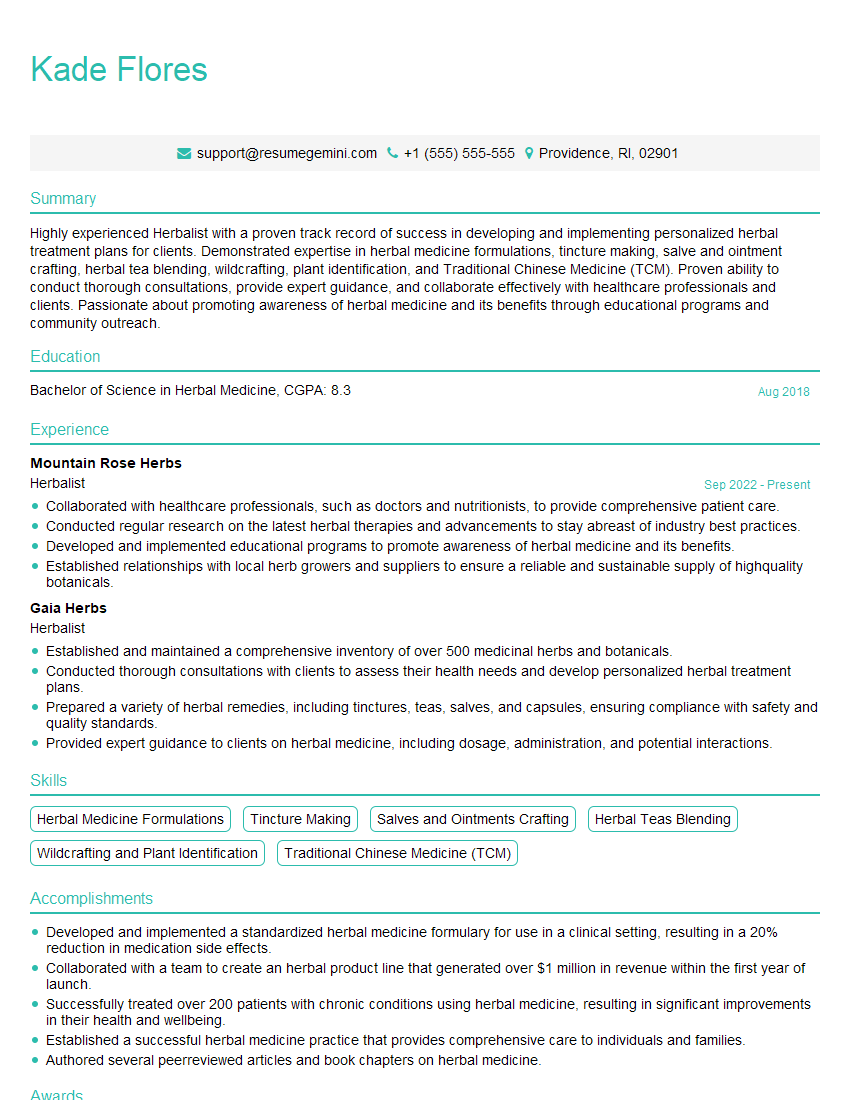
Mastering the understanding of Plant Spirit Medicine opens doors to exciting and fulfilling careers in fields ranging from herbalism and natural medicine to research and education. To significantly increase your chances of landing your dream job, crafting a compelling and ATS-friendly resume is paramount. ResumeGemini is a trusted resource to help you build a professional resume that showcases your skills and experience effectively. ResumeGemini provides examples of resumes tailored to the Understanding of Plant Spirit Medicine field to guide your process, ensuring your application stands out.
Explore more articles
Users Rating of Our Blogs
Share Your Experience
We value your feedback! Please rate our content and share your thoughts (optional).
What Readers Say About Our Blog
Very informative content, great job.
good