Cracking a skill-specific interview, like one for Understanding of printing materials and substrates, requires understanding the nuances of the role. In this blog, we present the questions you’re most likely to encounter, along with insights into how to answer them effectively. Let’s ensure you’re ready to make a strong impression.
Questions Asked in Understanding of printing materials and substrates Interview
Q 1. Explain the difference between coated and uncoated paper.
The core difference between coated and uncoated paper lies in the surface treatment. Uncoated paper has a natural, porous surface, offering a slightly textured feel. Think of your everyday notebook paper – that’s uncoated. Coated paper, on the other hand, receives a layer of coating (typically clay or polymers) during manufacturing, creating a smoother, non-porous surface. This coating enhances the paper’s brightness, improves ink holdout (preventing ink feathering), and allows for sharper, more vibrant colors. Magazine paper is a prime example of coated paper.
In short:
- Uncoated: Porous, textured surface, good for applications where absorbency is desired (e.g., drawing, watercolor), less vibrant colors.
- Coated: Smooth, non-porous surface, ideal for high-quality printing (e.g., brochures, magazines), sharper images and vibrant colors, less absorbent.
Q 2. What are the common types of printing inks and their properties?
Several types of printing inks cater to different printing processes and substrate needs. Here are some common types:
- Solvent-based inks: These inks use solvents to dissolve the pigment and bind it to the substrate. They offer excellent color vibrancy and durability, often found in flexographic printing and screen printing. However, they have strong odors and environmental concerns.
- Water-based inks: Environmentally friendly, these inks use water as a solvent, resulting in lower VOC (volatile organic compound) emissions. They are commonly used in offset lithography and some digital printing processes. They may have slightly lower vibrancy compared to solvent-based inks.
- UV (Ultraviolet) curable inks: These inks cure instantly upon exposure to UV light. This quick drying time is a major advantage in high-speed printing, offering a durable, scratch-resistant finish. They’re popular in screen printing and some digital printing methods.
- Vegetable-based inks: Made from renewable resources, these inks are increasingly popular for their eco-friendliness. They often offer a softer color palette but are excellent for environmentally conscious printing.
The choice of ink depends heavily on the printing process, the substrate, and the desired print quality and environmental impact. For example, a glossy magazine will likely use solvent-based or UV inks for vibrant colors and durability, whereas a simple flyer might use water-based inks for a more cost-effective and eco-friendly solution.
Q 3. Describe the advantages and disadvantages of various printing processes (offset, digital, screen, etc.).
Different printing processes each have their own strengths and weaknesses:
- Offset Lithography: High-volume, cost-effective for large print runs. Excellent for high-quality, consistent color reproduction. However, it involves significant setup time and cost for smaller runs.
- Digital Printing: Ideal for short runs and personalized printing. Fast turnaround times and easy to make revisions. Typically more expensive per unit for larger print runs and may have lower color gamut than offset.
- Screen Printing: Versatile process capable of printing on a wide variety of substrates, including textiles and unusual materials. Excellent for bold, opaque colors and high-quality artwork. Can be slow for large runs.
- Flexography: Ideal for high-volume printing on flexible materials like plastic films and packaging. Cost-effective for large runs. Can utilize water-based or solvent-based inks.
Imagine printing business cards: Digital printing might be perfect for a small business needing 100 cards, while offset would be chosen for a large corporation needing 10,000. A custom t-shirt design, however, would likely utilize screen printing for its versatility and ability to print directly on fabric.
Q 4. How does the choice of substrate affect the final print quality?
The substrate plays a crucial role in determining the final print quality. The paper’s texture, absorbency, and coating significantly influence the ink’s appearance and longevity. For instance, printing high-resolution images on uncoated paper might result in ink feathering and a less vibrant outcome compared to printing on coated paper. A rough-textured paper will display a different image quality compared to a smooth, glossy finish. The substrate’s thickness also matters; thinner substrates can wrinkle or crease more easily, affecting the overall print appearance.
Consider this: A high-quality photograph printed on thick, glossy photo paper will look dramatically different than the same photograph printed on thin, matte paper. The glossy paper will enhance vibrancy and sharpness, while the matte paper will create a softer, more subdued effect. The choice is driven by the desired aesthetic and the context of the printed material.
Q 5. What are the key considerations when selecting a substrate for a specific application?
Substrate selection depends heavily on the application. Key considerations include:
- Print Method: Different printing processes work best with specific substrates. Offset printing generally requires coated paper, whereas screen printing can handle a much wider range of materials.
- Durability Requirements: Will the print be subjected to handling, weather exposure, or other stresses? This dictates whether you need a durable substrate like a waterproof synthetic material or a more delicate paper.
- Aesthetics: The desired look and feel – matte, glossy, textured – will influence the choice of substrate. A wedding invitation calls for elegant paper, unlike a shipping label.
- Budget: Cost is a primary factor. Specialty papers and synthetic substrates are generally more expensive than standard paper.
- Environmental Impact: The increasing demand for sustainable materials makes recycled paper or eco-friendly substrates a key consideration for many projects.
For example, a high-end fashion catalog would likely use a heavy, high-gloss coated stock to present the images in their best light, while a utilitarian instruction manual might utilize a more inexpensive, durable uncoated stock.
Q 6. Explain the concept of color gamut and its relevance to printing.
The color gamut represents the range of colors a particular printing device or process can reproduce. It’s essentially the spectrum of colors that are achievable. Think of it as a painter’s palette; a larger palette allows for more color variations. The color gamut of a digital display (like your computer monitor) is significantly wider than that of most printing processes. This difference leads to color discrepancies between what you see on screen and what you get in the printed output.
Understanding color gamut is crucial because it prevents unrealistic color expectations. A vibrant color displayed on your screen might not be fully reproducible in print. Professional printers use color management systems and calibrated monitors to minimize these discrepancies, but some degree of variation is almost always unavoidable.
Q 7. How do you handle color discrepancies between a digital proof and the final printed piece?
Color discrepancies between a digital proof and the final printed piece can stem from several factors, including different color gamuts (as previously discussed), variations in the printing process, and even lighting conditions. Addressing these discrepancies requires a systematic approach:
- Verify Proofing Method: Ensure that the digital proof is created using a calibrated monitor and a suitable color management system (CMS) that accurately represents the intended print colors.
- Soft Proofing: Use software to simulate the final print output, helping identify potential color issues before printing.
- Color Calibration: Regularly calibrate printing equipment to ensure consistent color reproduction.
- Test Prints: Conduct test prints using a controlled environment to compare the color values with the digital proof and adjust accordingly.
- Communicate with the Printer: Maintain clear communication with the printing facility, outlining specific color expectations and providing accurate color profiles to minimize discrepancies.
- Adjust Design: When necessary, make subtle adjustments to the digital file, based on results of test prints to achieve a suitable color match.
Often, a slight color variation is unavoidable, especially given the difference in color reproduction between a screen and printed media. However, by meticulously following these steps, you can significantly reduce these discrepancies and ensure a more consistent result.
Q 8. What are common substrate issues and how are they addressed?
Substrate issues can significantly impact print quality and project success. Common problems include inconsistencies in surface texture (affecting ink adhesion), warping or curling (due to moisture content or improper handling), and variations in color absorption (leading to uneven print density).
- Addressing Texture Issues: Pre-printing treatments like priming or surface coating can improve ink adhesion on uneven substrates. Selecting the right paper for the printing technique is also critical; for example, rough textured papers work better with screen printing than offset lithography.
- Warping and Curling: Proper storage conditions (controlled temperature and humidity) are vital. Acclimating the substrate to the printing environment before printing helps prevent this issue. Using substrates with lower moisture content reduces warping.
- Color Absorption: Test prints on a sample of the substrate are crucial. This allows for adjustments in ink formulation and print settings to ensure uniform color across the final print.
For instance, I once encountered a project where the chosen recycled paper had inconsistent absorbency, resulting in blotchy ink. By switching to a coated recycled paper and adjusting the ink density, we achieved a uniform print.
Q 9. Describe your experience with different types of paper finishes (e.g., matte, gloss, textured).
My experience encompasses a wide range of paper finishes, each influencing the final aesthetic and feel of a printed piece.
- Matte finishes provide a subtle, non-reflective surface, ideal for text-heavy documents or projects where readability is paramount. They offer a more natural, less glossy look and feel.
- Gloss finishes deliver vibrant colors and sharp images due to their high reflectivity. This is perfect for showcasing high-quality photos or designs, but may be less readable for substantial amounts of text.
- Textured finishes add a tactile dimension to the printed material, offering unique visual and textural interest. Think linen, felt, or canvas textures. These are great for adding a premium feel to invitations, packaging, or high-end brochures.
Choosing the right finish is crucial. A glossy brochure might be perfect for a vibrant product launch, whereas a matte finish might be more suitable for a sophisticated business report.
Q 10. What are the environmental considerations when selecting printing materials?
Environmental considerations are paramount in material selection. Choosing sustainable and eco-friendly options reduces the environmental footprint of a project.
- Recycled content: Opting for papers with high post-consumer recycled content minimizes the demand for virgin pulp, conserving forest resources.
- Forest certification: Look for certifications like FSC (Forest Stewardship Council) which ensure the paper comes from responsibly managed forests.
- Chlorine-free bleaching: Avoid papers bleached with elemental chlorine, as this process generates harmful dioxins.
- Vegetable-based inks: These inks are biodegradable and non-toxic, minimizing environmental impact compared to petroleum-based inks.
- Substrate weight and size: Minimizing paper waste through efficient design and optimized print sizes is also crucial.
For example, in a recent project, we opted for a recycled, FSC-certified paper with vegetable-based inks, significantly reducing the project’s environmental impact.
Q 11. How do you ensure color consistency across different print runs?
Color consistency is maintained through a multi-faceted approach, paying close attention to each step of the print process.
- Color Management System (CMS): Using a robust CMS ensures consistent color profiles across different devices (scanner, monitor, printer). This involves profiling equipment and using color space conversion techniques (like converting from sRGB to CMYK) effectively.
- Proofing: Soft proofs (digital mock-ups) and hard proofs (printed samples) allow for verification of color accuracy before mass production. This helps in identifying and correcting color discrepancies early on.
- Standardized ink and substrate: Using the same inks and substrates across different print runs prevents variations caused by differing materials.
- Regular calibration: Print equipment needs regular calibration to maintain consistent output. This is critical for maintaining accurate color reproduction.
I remember a case where meticulous color management was key in a large-scale print campaign for a multinational company. We created a comprehensive color profile and conducted rigorous proofing at every stage, which resulted in impeccable color consistency across thousands of printed materials.
Q 12. Explain the process of selecting the appropriate substrate for packaging applications.
Substrate selection for packaging is crucial, as it directly impacts the product’s protection, shelf appeal, and overall brand experience. The choice depends on several factors:
- Product type and contents: Fragile items need robust substrates offering protection against impacts, while food items require food-grade materials.
- Shelf life and storage conditions: The substrate should be suitable for the intended storage environment and protect the product from degradation.
- Printing method: The substrate needs to be compatible with the chosen printing technique (flexography, offset, digital).
- Branding and aesthetics: Substrate choice affects the final look and feel of the packaging, influencing brand perception.
- Sustainability and cost: Eco-friendly materials and cost-effectiveness are significant considerations.
For instance, a luxury perfume might use a heavy-weight, textured paperboard with foil stamping, while a snack food might use a more cost-effective, recyclable film.
Q 13. What is your understanding of different paper weights and their suitability for various printing methods?
Paper weight, measured in GSM (grams per square meter), significantly affects print quality and printability. Higher GSM indicates thicker, heavier paper.
- Lightweight papers (e.g., 60-80 GSM): These are suitable for applications where bulk and weight are minimal, such as leaflets or flyers. They are usually not suited for high-quality printing or applications needing significant durability.
- Medium-weight papers (e.g., 90-120 GSM): These are commonly used for office stationery, brochures, and direct mail. They offer a good balance between weight, feel, and printability.
- Heavyweight papers (e.g., 130 GSM and above): These are ideal for applications demanding durability and quality, such as postcards, book covers, and high-end packaging. They are more resistant to bending and tearing.
Different printing methods have different paper weight requirements. For example, offset printing can handle a wider range of paper weights, while screen printing might be more suitable for thinner substrates.
Q 14. Describe your experience with specialty substrates such as vinyl, canvas, or metallic papers.
My experience with specialty substrates is extensive. Each offers unique properties and lends itself to specific applications.
- Vinyl: Durable and waterproof, vinyl is excellent for outdoor signage, banners, and vehicle wraps. Its versatility allows for vibrant colors and high-resolution images.
- Canvas: Providing a rich texture and artistic feel, canvas is frequently used for fine art reproductions, gallery wraps, and high-end packaging. The unique texture enhances the overall visual and tactile experience.
- Metallic papers: These substrates add a luxurious look to packaging, invitations, and business cards. The shimmering effect captures attention and elevates the perceived value of the printed item.
I recall a project involving a large-format mural printed on vinyl for a building facade. The durability and weather resistance of vinyl were critical in ensuring the longevity and visual impact of the artwork. Working with these substrates requires an understanding of their specific handling and printing techniques, ensuring the best results.
Q 15. How do you manage the costs associated with different printing materials?
Managing costs associated with printing materials requires a multifaceted approach. It starts with understanding the project’s budget and specifications. Different materials inherently have different price points. For instance, high-quality, thick cardstock will be more expensive than standard printer paper.
To control costs, I employ several strategies:
- Material Selection based on Need: Choosing the most appropriate material for the job is key. Don’t use premium materials when standard ones will suffice. For example, if a flyer is intended for a quick distribution and doesn’t require longevity, selecting a less expensive paper stock is justifiable.
- Negotiating with Suppliers: Building strong relationships with reliable suppliers allows for better pricing and potentially bulk discounts. Regular orders often qualify for negotiated rates.
- Waste Reduction: Careful planning of the print job minimizes material waste. This includes accurate estimations of quantities needed and utilizing efficient imposition (layout) techniques during prepress.
- Exploring Alternative Materials: Sometimes, exploring less expensive yet suitable alternatives can be cost-effective. For instance, recycled paper can offer a significant cost reduction without compromising print quality significantly.
- Software for Cost Estimation: Using specialized software helps generate accurate cost estimates for the entire printing process, including the materials, prepress, and printing itself, thus avoiding budget overruns.
By combining these methods, I ensure that the project stays within budget without compromising on the quality expected.
Career Expert Tips:
- Ace those interviews! Prepare effectively by reviewing the Top 50 Most Common Interview Questions on ResumeGemini.
- Navigate your job search with confidence! Explore a wide range of Career Tips on ResumeGemini. Learn about common challenges and recommendations to overcome them.
- Craft the perfect resume! Master the Art of Resume Writing with ResumeGemini’s guide. Showcase your unique qualifications and achievements effectively.
- Don’t miss out on holiday savings! Build your dream resume with ResumeGemini’s ATS optimized templates.
Q 16. What are the limitations of different printing materials?
Limitations of printing materials are diverse and depend heavily on the material itself and the intended application. Here are some common limitations:
- Paper: Paper is susceptible to moisture damage, tearing, and fading over time, especially uncoated paper. The choice of paper weight influences its durability and printability. Lighter weight papers can be more prone to wrinkles and show-through (ink appearing on the reverse side).
- Cardstock: While more durable than paper, cardstock can be more challenging to fold and print on certain machines. Heavier cardstock might require specialized equipment.
- Vinyl: Vinyl is durable and weather-resistant but can be expensive and challenging to work with, requiring specialized cutters and printers. It may not be suitable for detailed fine art printing.
- Textiles: Textiles offer unique printing opportunities but limitations exist in terms of ink absorption, colour accuracy, and washing durability. The ink type needs to be carefully chosen to avoid fading or cracking.
- Metals: Printing on metal surfaces demands specialized inks and processes and is generally more expensive than other substrates.
Understanding these limitations is crucial for successful material selection. It allows for realistic expectations and avoids potential issues down the line.
Q 17. Explain the relationship between ink density and substrate absorbency.
Ink density and substrate absorbency are intimately related. Absorbency refers to a substrate’s ability to soak up ink. High absorbency leads to ink being absorbed quickly, potentially resulting in a duller, less vibrant print, and possibly some feathering or bleed of the ink. This is because the ink is not sitting on the surface, but is instead penetrating the material. Low absorbency, conversely, means the ink sits on the surface, leading to a more vivid print with sharper details and richer colours. However, low absorbency can also lead to issues such as smearing or smudging if the ink isn’t properly set.
Think of it like painting: porous wood (high absorbency) will soak up paint, resulting in a less saturated colour compared to a smooth, sealed surface (low absorbency) where the paint remains more vibrant on the surface.
To manage this relationship, the ink density (amount of ink used) needs to be adjusted according to the substrate. High absorbency substrates might require higher ink density to achieve desired vibrancy, while low absorbency materials might need less ink to prevent smudging. The choice of ink type also influences this relationship. For example, specialized inks are often used to enhance vibrancy on low absorbency materials.
Q 18. How does the substrate affect the durability of the printed product?
The substrate significantly impacts the durability of the printed product. A robust substrate provides a more durable final product, while a flimsy substrate is prone to damage. For example, printing on a thick, heavy cardstock results in a sturdy, long-lasting business card, whereas printing the same design on thin paper will produce a far less resilient product that easily tears or creases.
Different substrates have different characteristics affecting durability:
- Water Resistance: Coated papers and plastics offer better water resistance than uncoated paper.
- Scratch Resistance: Certain plastics and metals are far more scratch-resistant than paper or cardstock.
- UV Resistance: Some substrates and inks are designed to resist fading from ultraviolet light, extending the life of outdoor signage or labels.
- Chemical Resistance: Some specialized substrates can withstand exposure to certain chemicals, making them suitable for industrial labels or packaging.
Careful material selection is thus critical. The intended use and the expected lifespan of the printed material must be considered when selecting the appropriate substrate.
Q 19. What are the different types of adhesives used in the printing industry?
The printing industry utilizes a variety of adhesives depending on the application and materials involved. The choice of adhesive is crucial for the quality and longevity of the final product.
- Pressure-Sensitive Adhesives (PSA): These are common in labels, stickers, and other self-adhesive products. They adhere on contact with pressure and are available in different strengths and tack levels (initial stickiness).
- Hot Melt Adhesives: These are applied as molten liquids and solidify upon cooling. They are used for packaging, bookbinding, and other applications requiring strong bonding.
- Water-Based Adhesives: These are environmentally friendly and used for applications where solvent-based adhesives are unsuitable. They provide a good balance between cost and performance.
- Solvent-Based Adhesives: These are strong and offer good adhesion to various materials but often have strong odors and environmental concerns.
- UV-Curable Adhesives: These adhesives are cured using ultraviolet light, providing fast bonding and high strength, often used in specialized applications.
Choosing the correct adhesive requires considering factors such as the substrate materials involved, the required bond strength, the environmental conditions the product will be exposed to, and any potential health and safety regulations.
Q 20. Describe your experience with prepress workflows and their impact on material selection.
My experience with prepress workflows is extensive and deeply influences material selection. Prepress encompasses all the steps before the actual printing process, including file preparation, colour management, and proofing. A thorough understanding of this workflow is crucial because it informs the choice of materials and prevents potential issues later on.
For example:
- Colour Profiles: Different substrates require specific colour profiles to ensure colour accuracy. Knowing the material’s colour profile in advance allows me to accurately prepare the files for printing, eliminating unexpected colour shifts.
- Resolution and Image Quality: The resolution of the artwork and the substrate’s ability to reproduce fine details are closely linked. If using a low-resolution image on a high-quality substrate, the result will be disappointing. Conversely, using a high-resolution image on a coarse substrate is wasteful.
- Material Properties: Understanding substrate properties such as absorbency, texture, and opacity guides the selection of inks and printing techniques. This often involves creating test prints to fine-tune the process.
- Imposition and Finishing: Prepress planning includes imposition (arranging pages for efficient printing) and considering the finishing processes (folding, cutting, binding). The substrate’s suitability for these processes is a key factor in material selection. For instance, heavy cardstock might require a more powerful cutting machine.
Prepress workflows and material selection are inseparable; one informs the other, ensuring an efficient and high-quality print job. A well-planned prepress workflow minimizes waste and maximizes the potential of the chosen materials.
Q 21. What software or tools do you use to manage and select printing materials?
Managing and selecting printing materials often involves a combination of software and tools. There isn’t one single software that does everything, rather a suite of programs and resources are used.
- Color Management Software (e.g., Adobe Acrobat Pro, X-Rite i1Profiler): This ensures colour consistency across different stages of production, from design to print.
- RIP Software (Raster Image Processor): RIP software processes digital files for output to the printer, taking into account the printer’s settings and the substrate being used.
- Project Management Software (e.g., Asana, Trello): Helps track the printing project’s progress, including material sourcing and costs.
- Supplier Databases and Online Platforms: Access to online databases helps compare and source different printing materials from various suppliers.
- Spreadsheet Software (e.g., Microsoft Excel, Google Sheets): Used to track material costs, inventory, and other related data.
Beyond software, physical tools like colorimeters and densitometers aid in the accurate measurement of colour and ink density, especially helpful when verifying printed samples. These tools are indispensable for maintaining quality control and ensuring accurate reproduction of colours across different substrates.
Q 22. Explain the importance of understanding the paper grain direction.
Understanding paper grain is crucial for achieving high-quality prints and avoiding issues like unwanted distortion or tearing. Paper grain refers to the direction of the wood fibers in the paper pulp. These fibers are aligned during the papermaking process, creating a directional strength. Printing with the grain (running the print direction parallel to the fiber direction) results in less fiber disruption and smoother ink absorption, leading to cleaner lines and fewer wrinkles. Printing against the grain weakens the paper, increasing the risk of tearing, especially during finishing processes like folding or scoring.
Think of it like brushing your hair: It’s much easier to brush with the grain than against it. Similarly, printing with the grain allows the ink to settle more easily, leading to a sharper image. Ignoring grain direction can lead to noticeable print defects, particularly with longer prints or heavier papers. Identifying the grain direction is simple – just lightly rub the paper’s surface; the smoother direction is the grain.
Q 23. How do you identify and resolve print defects related to the substrate?
Substrate-related print defects stem from the paper’s or material’s inherent properties. Identifying these requires a systematic approach. First, I’d visually inspect the print for common problems such as: mottling (uneven ink distribution), picking (ink pulling fibers from the paper), show-through (ink visible on the reverse side), or cockling (waviness in the paper). I would then assess the substrate’s characteristics—its weight, coating type, moisture content, and overall quality.
Resolving these defects requires understanding the root cause. For example, if I see picking, it could indicate the ink is incompatible with the substrate’s surface or the paper is too absorbent. I’d test alternative inks, adjust print settings (like pressure or drying time), or consider a different substrate. Mottling might point to inconsistencies in the substrate’s coating or the print’s press settings (like ink viscosity or roller pressure). Addressing show-through may necessitate using a heavier paper or a different ink opacity.
In short, problem-solving involves a combination of observation, understanding the materials, and adjusting printing parameters. Often, a series of tests is required to pinpoint the optimal settings for a given substrate.
Q 24. What are some common problems encountered with UV curing inks?
UV curing inks offer many advantages like instant drying and vibrant colors. However, they present some unique challenges. One common issue is uneven curing, leading to tacky or sticky areas on the print. This often stems from insufficient UV light exposure, incorrect ink viscosity, or the substrate absorbing UV light.
Another problem is curing inconsistencies that cause issues with adhesion or create an uneven gloss effect. Substrates can affect how well UV inks cure. Some materials may block UV penetration, leading to areas where the ink doesn’t cure properly. Also, incorrect ink mixing or improper machine maintenance (faulty UV lamps) can significantly impact the curing process.
Finally, UV inks can be more sensitive to temperature and humidity, affecting their curing and potentially leading to defects. Therefore, careful control of the printing environment is crucial. Solving these issues often involves optimizing UV exposure, adjusting the ink formulation or viscosity, properly maintaining the printing equipment, and choosing suitable substrates.
Q 25. Describe your experience with different types of finishing techniques (lamination, embossing, etc.) and their effect on the substrate.
I have extensive experience with various finishing techniques. Lamination adds a protective layer to the print, enhancing durability and providing a gloss or matte finish. It can significantly affect the substrate by improving its resistance to moisture, scratches, and UV degradation. However, choosing an incompatible lamination film can create issues like bubbling or delamination. Embossing adds a three-dimensional texture, enhancing visual appeal. This process physically modifies the substrate’s surface, impacting its overall rigidity and creating the desired texture.
Other techniques like die-cutting create precise shapes, and foiling adds metallic or colored accents. Each technique influences the substrate differently, and choosing the right method depends on the desired final product and the substrate’s capabilities. For example, a delicate substrate might not withstand aggressive embossing, while a sturdy substrate can handle more extensive processing. I always carefully consider the interplay between finishing and substrate selection to ensure the optimal outcome.
Q 26. How do you stay up-to-date with the latest advancements in printing materials and technologies?
Staying current in this rapidly evolving field requires a multifaceted approach. I regularly attend industry trade shows and conferences like drupa or local print industry events. These events provide hands-on exposure to new materials and technologies.
I also subscribe to industry publications, both print and digital, and follow leading suppliers and manufacturers of printing materials. Participating in online forums and professional networks allows me to connect with other experts and learn about emerging trends and best practices. Finally, I actively seek out training courses and workshops focusing on new developments in printing substrates and technologies. Continuous learning is essential for staying at the forefront of this dynamic field.
Q 27. What is your experience with sustainable and eco-friendly printing materials?
Sustainability is a growing concern in the printing industry, and I have significant experience working with eco-friendly materials. This includes using recycled paper, vegetable-based inks, and substrates made from sustainable sources like bamboo or hemp.
I’m familiar with certifications like FSC (Forest Stewardship Council) which ensure responsible forest management. Choosing these materials impacts the environmental footprint of the print job significantly, reducing waste and supporting responsible resource management. However, it is crucial to remember that sustainable options may not always be a direct replacement; they may have different performance characteristics which need to be considered during the print job planning and execution. Balancing sustainability with print quality and client expectations is a key part of my process.
Q 28. How would you handle a situation where the client’s requested substrate is unsuitable for the chosen printing method?
If a client requests a substrate unsuitable for the chosen printing method, my first step would be a clear and professional conversation. I’d explain the limitations of the chosen substrate and the potential consequences, such as poor print quality, color inconsistencies, or damage during the printing process. I would offer alternative substrates that would produce superior results. I would provide examples of past projects using these alternative materials to demonstrate their capabilities.
If the client insists on the original choice despite the risks, I’d document the concerns thoroughly. I’d ensure that the client signs a waiver acknowledging the potential problems and accepts responsibility for any resulting print defects. I would still strive for the best possible outcome given the limitations, but I prioritize transparency and setting realistic expectations to ensure a satisfactory client experience.
Key Topics to Learn for Understanding of Printing Materials and Substrates Interview
- Paper Types and Properties: Understanding different paper types (coated, uncoated, bond, etc.), their weight, texture, and suitability for various printing methods (offset, digital, screen printing).
- Ink and its Interaction with Substrates: Knowledge of different ink types (water-based, solvent-based, UV-curable), their properties, and how they adhere to various substrates. This includes understanding issues like bleed, dot gain, and color consistency.
- Substrate Selection for Different Applications: Matching the right substrate (paper, cardstock, vinyl, canvas, etc.) to the desired print job, considering factors like durability, cost, and aesthetic requirements. Examples include choosing the appropriate material for brochures, posters, or packaging.
- Finishing Techniques and their Impact on Substrates: Familiarity with post-print finishing techniques like lamination, embossing, die-cutting, and their effects on different substrates. Understanding how these techniques enhance the final product.
- Color Management and Profile Matching: Understanding color spaces (CMYK, RGB), color profiles, and how they impact the final printed output on different substrates. Troubleshooting color discrepancies.
- Sustainability and Eco-Friendly Printing: Knowledge of environmentally friendly printing materials and processes, including recycled paper options and sustainable ink choices. Understanding the implications for cost and print quality.
- Troubleshooting Common Printing Issues: Identifying and resolving problems related to ink adhesion, substrate compatibility, and color accuracy. Practical experience in diagnosing and solving these issues is highly valuable.
Next Steps
Mastering the understanding of printing materials and substrates is crucial for career advancement in the printing and graphic design industries. A strong understanding of these concepts demonstrates technical expertise and problem-solving skills, significantly enhancing your job prospects. To make your qualifications shine, create an ATS-friendly resume that highlights your skills and experience effectively. ResumeGemini is a trusted resource to help you build a professional resume that stands out. We provide examples of resumes tailored to showcasing expertise in understanding printing materials and substrates, helping you present your qualifications in the best possible light.

Print Production Manager Resume Sample

Print Buyer Resume Sample

Packaging Engineer Resume Sample

Printing Sales Representative Resume Sample

Packaging Specialist Resume Sample

Prepress Manager Resume Sample
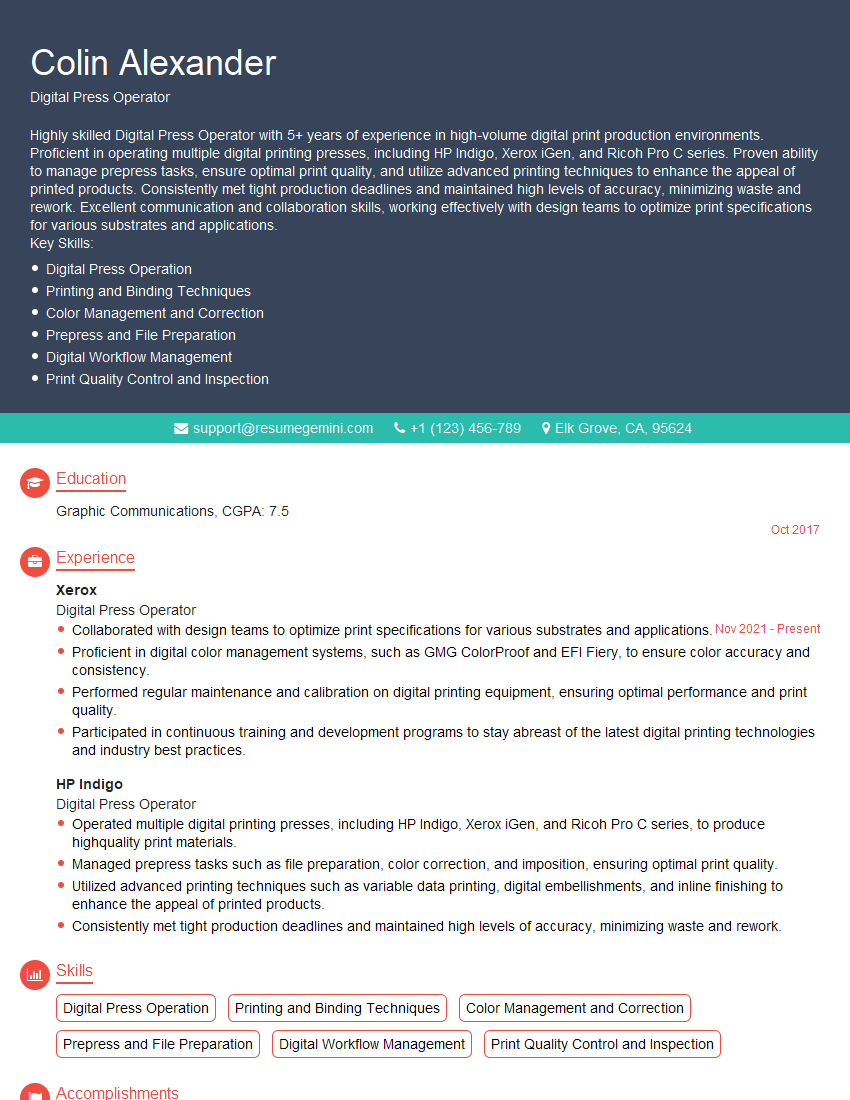
Digital Press Operator Resume Sample

Prepress Technician Resume Sample
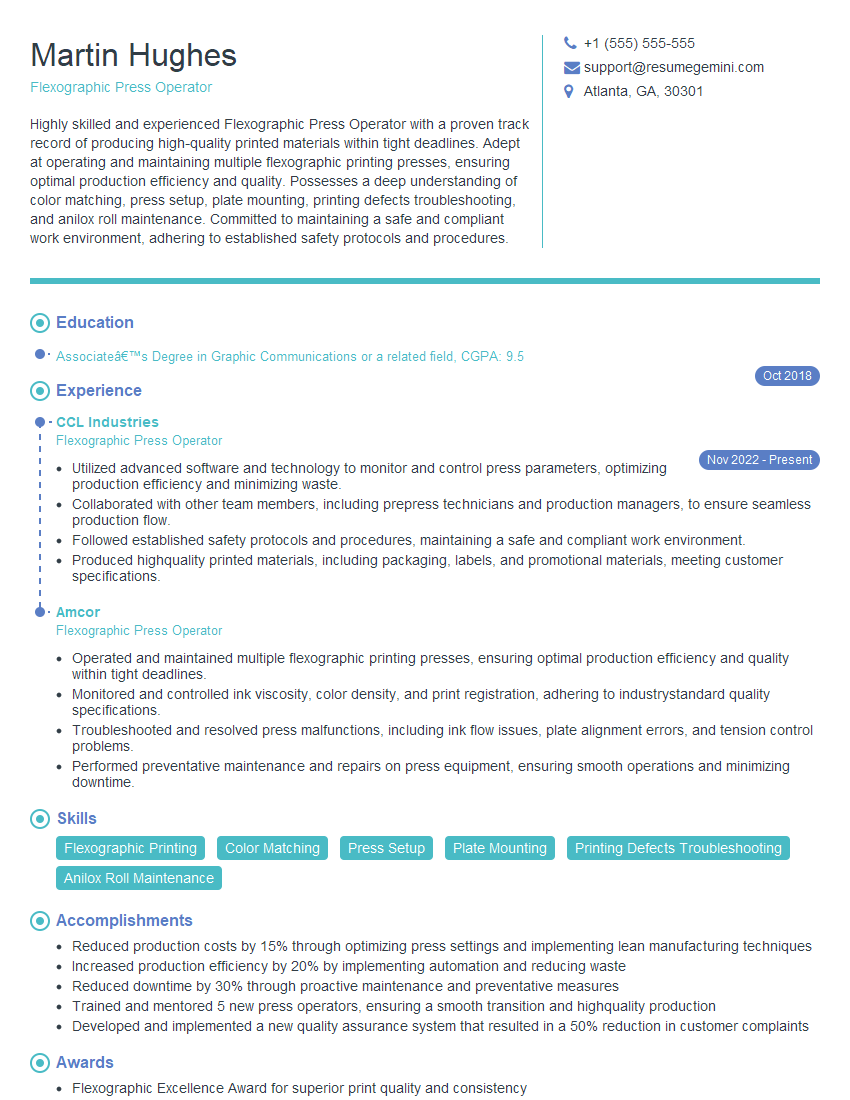
Flexographic Press Operator Resume Sample

Offset Press Operator Resume Sample

Print Finisher Resume Sample
Explore more articles
Users Rating of Our Blogs
Share Your Experience
We value your feedback! Please rate our content and share your thoughts (optional).
What Readers Say About Our Blog
Very informative content, great job.
good