Every successful interview starts with knowing what to expect. In this blog, we’ll take you through the top Understanding of software engineering principles and best practices interview questions, breaking them down with expert tips to help you deliver impactful answers. Step into your next interview fully prepared and ready to succeed.
Questions Asked in Understanding of software engineering principles and best practices Interview
Q 1. Explain SOLID principles and provide examples of their application.
SOLID principles are five design principles intended to make software designs more understandable, flexible, and maintainable. Think of them as guidelines for writing clean, robust code that’s easy to adapt to changing requirements. Let’s break them down:
- Single Responsibility Principle (SRP): A class should have only one reason to change. Imagine a
Userclass responsible for both managing user data and sending emails. This violates SRP. It’s better to separate these concerns intoUserandEmailServiceclasses. - Open/Closed Principle (OCP): Software entities (classes, modules, functions) should be open for extension, but closed for modification. This means you should be able to add new functionality without altering existing code. A good example is using interfaces and polymorphism. You could define an
ILoggerinterface with implementations forConsoleLogger,FileLogger, etc. Adding a new logger only requires creating a new class implementing the interface. - Liskov Substitution Principle (LSP): Subtypes should be substitutable for their base types without altering the correctness of the program. If you have a
Birdclass and aPenguinclass (a subtype ofBird),Penguinshould behave like aBirdin all contexts. IfPenguincan’t fly (unlike most birds), this violates LSP. - Interface Segregation Principle (ISP): Clients should not be forced to depend upon interfaces they don’t use. Instead of one large interface, create several smaller, more specific interfaces. Imagine a
Workerinterface with methods forwork(),eat(), andsleep(). ARobotmight only implementwork(), making a large interface inefficient and inflexible. - Dependency Inversion Principle (DIP): High-level modules should not depend on low-level modules. Both should depend on abstractions. Abstractions should not depend on details. Details should depend on abstractions. This promotes loose coupling. Instead of a
PaymentProcessordirectly depending onCreditCard, both should depend on anIPaymentMethodinterface, allowing for easy addition of other payment methods like PayPal.
Following SOLID principles leads to more maintainable, testable, and scalable code. It’s like building with Lego bricks – individual, well-defined parts that can be easily combined and rearranged.
Q 2. Describe the difference between Agile and Waterfall methodologies.
Agile and Waterfall are two contrasting software development methodologies. Waterfall is a linear, sequential approach, while Agile is iterative and incremental.
- Waterfall: Each phase (requirements, design, implementation, testing, deployment, maintenance) must be completed before the next begins. It’s like a waterfall cascading downwards. Changes are difficult and expensive to implement once a phase is finished. It’s best suited for projects with stable requirements.
- Agile: Emphasizes flexibility and collaboration. Projects are broken down into short iterations (sprints), typically 1-4 weeks. Each sprint produces a working increment of software. Feedback is continuously gathered and incorporated, allowing for adaptation to changing requirements. Agile is excellent for projects with evolving needs and where client collaboration is crucial. Popular Agile frameworks include Scrum and Kanban.
Think of it this way: Waterfall is like building a house according to a detailed blueprint, while Agile is like building with Lego, adapting and improving the design as you go.
Q 3. What are design patterns and when would you use them? Give examples.
Design patterns are reusable solutions to commonly occurring problems in software design. They’re not finished code, but rather templates or blueprints that guide you in structuring your code. They improve code readability, maintainability, and reusability.
- Singleton: Ensures that a class has only one instance and provides a global point of access to it. Useful for managing resources like database connections or logging.
- Factory: Creates objects without specifying their concrete classes. Useful when you need to create different types of objects based on some criteria. For example, a
VehicleFactorycould createCarorMotorcycleobjects. - Observer: Defines a one-to-many dependency between objects. When one object changes state, all its dependents are notified and updated automatically. Useful for event handling and UI updates.
- Strategy: Defines a family of algorithms, encapsulates each one, and makes them interchangeable. Useful when you have multiple algorithms that perform the same task but with different approaches. Imagine different sorting algorithms (bubble sort, quicksort) implemented as strategies.
You’d use design patterns when facing recurring problems that have well-established, proven solutions. They help you avoid reinventing the wheel and writing less efficient or less maintainable code.
Q 4. Explain the concept of version control and its importance.
Version control is a system that records changes to a file or set of files over time so that you can recall specific versions later. Think of it as a detailed history of your project’s evolution.
Importance:
- Tracking Changes: Allows you to see who made what changes, when, and why.
- Collaboration: Enables multiple developers to work on the same project simultaneously without overwriting each other’s work.
- Rollback: Provides the ability to revert to previous versions if needed.
- Branching and Merging: Supports parallel development and the integration of new features.
- Backup and Recovery: Acts as a secure backup of your project.
Git is the most popular version control system. Using it is essential for professional software development, ensuring that project history is well-maintained and allowing for easy collaboration and recovery.
Q 5. How do you handle technical debt?
Technical debt is the implied cost of rework caused by choosing an easy (limited) solution now instead of using a better approach that would take longer. It’s like taking a shortcut – it saves time initially, but can lead to problems down the line.
Handling Technical Debt:
- Identify and Prioritize: Regularly assess your codebase to identify areas with technical debt. Prioritize based on impact and risk. High-impact, high-risk debt should be addressed first.
- Refactoring: Incrementally improve the codebase by refactoring – restructuring the code without changing its functionality. This often involves breaking down large functions, improving naming conventions, and simplifying complex logic.
- Testing: Thorough testing is essential before and after refactoring to ensure that changes don’t introduce bugs.
- Documentation: Documenting technical debt clearly helps future developers understand the trade-offs made and facilitates better decision-making.
- Strategic Planning: Allocate time for addressing technical debt as part of your development process. Don’t let it accumulate uncontrollably.
Properly managing technical debt is crucial for long-term project sustainability. It’s about finding a balance between delivering quickly and building a robust, maintainable codebase.
Q 6. What are the key aspects of clean code?
Clean code is code that is easy to understand, easy to change, and easy to maintain. It’s about writing code that’s readable and understandable to others (and your future self!).
- Meaningful Names: Choose names that clearly convey the purpose of variables, functions, and classes.
- Keep it Simple: Avoid overly complex logic and structures. Strive for simplicity and readability.
- Functions and Methods Should Be Small and Focused: Each function or method should perform a single, well-defined task.
- Comments Should Explain Why, Not What: Code should be self-explanatory. Comments should clarify design decisions or complex logic.
- Consistency: Follow consistent coding style guidelines throughout the project.
- Error Handling: Implement proper error handling to gracefully handle unexpected situations.
Clean code is not just about aesthetics; it’s about reducing the cost of maintenance and improving developer productivity. It’s an investment in the long-term health of your project.
Q 7. Explain the difference between testing methodologies (unit, integration, system).
Testing methodologies aim to ensure the quality and reliability of software. They differ in scope and focus:
- Unit Testing: Tests individual components (functions, classes, modules) in isolation. It verifies that each component works correctly on its own. Think of it as testing the individual bricks before building the wall.
- Integration Testing: Tests the interaction between different components or modules. It ensures that they work together correctly. This is like testing that the bricks fit together and form a stable wall.
- System Testing: Tests the entire system as a whole. It verifies that all components work together to meet the specified requirements. This is the final test, ensuring the entire wall stands and functions as expected.
Each testing methodology plays a crucial role in software development. A comprehensive testing strategy typically involves all three, providing a layered approach to quality assurance.
Q 8. Describe your experience with code reviews.
Code reviews are an integral part of software development, acting as a quality assurance mechanism and a knowledge-sharing opportunity. My experience encompasses both conducting and receiving reviews, utilizing various tools like GitHub, GitLab, and Bitbucket. I focus on reviewing code for correctness, readability, maintainability, and adherence to coding standards and best practices.
For example, in a recent project, I identified a potential race condition in a multi-threaded component during a code review, preventing a critical bug before it reached production. I not only point out issues but also suggest improvements and offer explanations, fostering a collaborative learning environment. My review process generally involves checking for:
- Functionality: Does the code work as intended?
- Efficiency: Is the code optimized for performance?
- Readability: Is the code easy to understand and maintain?
- Security: Are there any potential security vulnerabilities?
- Maintainability: Is the code well-structured and easy to modify?
- Adherence to standards: Does the code follow the team’s coding style guide?
I believe in constructive feedback, aiming to help developers improve their skills while ensuring high-quality code.
Q 9. How do you approach debugging complex software issues?
Debugging complex software issues requires a systematic and methodical approach. I usually start by reproducing the bug consistently. Then I employ a combination of techniques:
- Reproduce the bug: This is the crucial first step. If I can’t reliably reproduce the bug, fixing it becomes significantly harder. I’ll often create a minimal reproducible example.
- Isolate the problem: I use logging, debugging tools, and print statements to pinpoint the exact location of the error. Binary search techniques, where I progressively narrow down the area of the code responsible for the bug, are often invaluable.
- Analyze the logs and stack traces: Examining error messages, stack traces, and logs helps me understand the sequence of events leading to the problem.
- Use debugging tools: Debuggers such as gdb, LLDB, or IDE-integrated debuggers allow step-by-step execution and inspection of variables and program state.
- Employ rubber duck debugging: Explaining the problem to someone (or even a rubber duck) often reveals overlooked details.
- Consult documentation and search for similar issues online: Community forums and documentation can often provide solutions to common problems.
For instance, in a recent project involving a memory leak, I used a memory profiler to identify the specific function causing the leak and subsequently optimized memory management to resolve the issue.
Q 10. What are some common software design anti-patterns to avoid?
Software design anti-patterns are common mistakes that can lead to poor code quality, maintainability, and scalability. Some notable examples include:
- God Object/Giant Class: A class that does too much. This leads to tight coupling, making the code hard to understand, test, and maintain. Instead, follow the Single Responsibility Principle.
- Spaghetti Code: Code with a tangled and confusing control flow. This makes it extremely difficult to understand and modify. Refactoring into smaller, well-defined functions is crucial.
- Blob: Similar to God Object, but often refers to a large, monolithic function.
- Duplicate Code: Repeating the same code in multiple places. This violates the DRY (Don’t Repeat Yourself) principle. Extract the duplicated code into a reusable function or class.
- Feature Envy: A method in one class that accesses the data of another class more than its own. This indicates potential for refactoring into a different class.
- Data Clumps: Groups of data that consistently appear together throughout the application. This suggests that they might belong in a dedicated class or struct.
Avoiding these anti-patterns requires careful planning, adherence to design principles like SOLID, and regular code reviews.
Q 11. Explain the importance of code documentation.
Code documentation is essential for maintainability, collaboration, and knowledge transfer within a software development team. Well-documented code is easier to understand, modify, and debug. It also speeds up onboarding for new team members and prevents knowledge silos. Documentation includes:
- Comments: Explain the purpose and logic of complex code sections. Avoid explaining the obvious.
- Docstrings: Describe the purpose, parameters, return values, and exceptions of functions and classes. (Python’s style, for example).
- API documentation: Provides comprehensive information about the software’s public interfaces. Tools like Swagger or OpenAPI help create and manage API documentation.
- Readme files: Explain how to build, run, and use the software.
- Design documents: Outline the overall architecture and design choices of the software.
Without proper documentation, maintaining and extending a software project becomes significantly more challenging. Imagine trying to understand a large codebase without any comments – it would be like deciphering an ancient text.
Q 12. How do you handle conflicts within a development team?
Conflicts are inevitable in any team environment. My approach to handling conflicts focuses on open communication and finding mutually agreeable solutions. I believe in:
- Active listening: Understanding each person’s perspective and concerns is crucial. I ensure everyone feels heard.
- Empathy: Putting myself in the other person’s shoes helps me understand their motivations and concerns.
- Focus on the problem, not the person: Keeping the discussion centered on the issue at hand, rather than resorting to personal attacks.
- Collaborative problem-solving: Working together to find a solution that addresses everyone’s concerns. Brainstorming can be particularly helpful here.
- Compromise: Sometimes, finding a perfect solution isn’t possible. Reaching a compromise that everyone can live with is a realistic outcome.
- Escalation (when necessary): If the conflict cannot be resolved within the team, I involve a project manager or other senior member for mediation.
For instance, I once resolved a conflict between two developers with differing opinions on the best design approach by organizing a collaborative design session, where we worked together to reach a consensus.
Q 13. Describe your experience with different software development life cycles (SDLCs).
I have experience with various Software Development Life Cycles (SDLCs), including Waterfall, Agile (Scrum and Kanban), and iterative development models.
- Waterfall: A sequential approach where each phase must be completed before the next begins. Suitable for projects with well-defined requirements and minimal changes expected.
- Agile (Scrum): An iterative and incremental approach focused on delivering working software in short sprints. It emphasizes collaboration, flexibility, and continuous improvement. I’ve used Scrum extensively in projects where requirements were likely to evolve.
- Agile (Kanban): A visual system for managing workflow, emphasizing continuous delivery and limiting work in progress. Useful for teams needing a more flexible approach than Scrum’s defined sprints.
- Iterative Development: The software is developed in iterations, with each iteration building upon the previous one. Feedback from each iteration informs the development of subsequent iterations. This model works well in projects with evolving requirements.
My choice of SDLC depends on the project’s size, complexity, and the client’s needs. I am comfortable adapting my approach to best suit the specific requirements of each project.
Q 14. What is Continuous Integration/Continuous Deployment (CI/CD)?
Continuous Integration/Continuous Deployment (CI/CD) is a set of practices that automate the process of building, testing, and deploying software.
Continuous Integration (CI) focuses on automating the integration of code changes from multiple developers into a shared repository. Each integration is verified by an automated build and test process, detecting integration issues early. This helps reduce integration problems and speeds up the development process.
Continuous Deployment (CD) extends CI by automating the release of software to production environments. Once the code passes the automated tests, it’s automatically deployed, enabling frequent and reliable software updates.
CI/CD pipelines typically involve tools like Jenkins, GitLab CI, or CircleCI to automate the various stages of the process. Benefits include faster release cycles, reduced risks, improved code quality, and quicker feedback loops.
For example, in a recent project, implementing a CI/CD pipeline allowed us to deploy new features multiple times a day, significantly reducing the time it took to deliver value to our users. We used automated tests to catch integration errors early, improving overall software quality and developer productivity.
Q 15. Explain your understanding of microservices architecture.
Microservices architecture is a design approach where a large application is structured as a collection of small, independent, and loosely coupled services. Think of it like building with LEGOs – instead of one giant, monolithic structure, you create many smaller, specialized bricks that can be assembled and reassembled to form different applications or functionalities.
Each microservice focuses on a specific business function, such as user authentication, order processing, or payment processing. These services communicate with each other, often through APIs like REST or gRPC. This contrasts with monolithic architectures where all components are tightly coupled within a single application.
- Independent Deployments: Each microservice can be deployed, updated, and scaled independently, allowing for faster release cycles and more flexibility.
- Technology Diversity: Different microservices can use different technologies best suited for their specific tasks, enhancing efficiency and innovation.
- Improved Fault Isolation: If one microservice fails, it doesn’t necessarily bring down the entire application. The impact is localized.
Example: An e-commerce platform might have separate microservices for user accounts, product catalog, shopping cart, order management, and payment processing. Each service can be developed, deployed, and scaled independently, ensuring resilience and agility.
Career Expert Tips:
- Ace those interviews! Prepare effectively by reviewing the Top 50 Most Common Interview Questions on ResumeGemini.
- Navigate your job search with confidence! Explore a wide range of Career Tips on ResumeGemini. Learn about common challenges and recommendations to overcome them.
- Craft the perfect resume! Master the Art of Resume Writing with ResumeGemini’s guide. Showcase your unique qualifications and achievements effectively.
- Don’t miss out on holiday savings! Build your dream resume with ResumeGemini’s ATS optimized templates.
Q 16. How do you ensure code scalability and maintainability?
Ensuring code scalability and maintainability requires a multi-pronged approach focusing on design, architecture, and coding practices. It’s like building a house – you need a strong foundation and well-organized rooms to make it easy to live in and expand later.
- Modular Design: Break down the application into independent modules with well-defined interfaces. This reduces dependencies and makes it easier to modify or replace parts without affecting the entire system.
- Consistent Coding Style: Adhering to a consistent coding style, using linters and formatters, makes the code easier to understand and maintain. It’s like having a consistent architectural style throughout the house, making it easy to navigate.
- Automated Testing: Comprehensive unit, integration, and end-to-end tests ensure that changes don’t introduce bugs and maintain the application’s functionality. This is like having regular inspections to ensure the house’s structure is sound.
- Refactoring: Regularly refactor the code to improve its design, readability, and performance. This is like regularly renovating and improving parts of the house to maintain its quality.
- Version Control: Using a robust version control system (like Git) allows for tracking changes, collaboration, and easy rollback in case of issues.
- Proper Documentation: Clear and concise documentation is crucial for understanding the codebase and making changes smoothly. This is like having a detailed blueprint of your house.
Example: Using design patterns like Dependency Injection helps decouple components, making testing and maintenance easier. // Example of dependency injection in Java public class MyClass { private final MyDependency dependency; public MyClass(MyDependency dependency) { this.dependency = dependency; } // ... }
Q 17. What are the benefits of using a layered architecture?
Layered architecture organizes an application into distinct layers, each with specific responsibilities. Think of it as a layered cake – each layer has a specific function, and they work together to create the complete dessert.
- Improved Modularity: Each layer is independent and can be developed, tested, and maintained separately.
- Enhanced Reusability: Components within a layer can be reused across different parts of the application.
- Simplified Maintenance: Changes in one layer are less likely to affect other layers, reducing the risk of introducing bugs.
- Better Abstraction: Layers hide implementation details, allowing developers to focus on higher-level concerns.
Example: A typical three-tier architecture has a presentation layer (user interface), a business logic layer (processing data), and a data access layer (database interaction). Changes to the database (data access layer) won’t directly impact the user interface (presentation layer).
Q 18. Explain the importance of security in software development.
Security is paramount in software development. A vulnerable application can lead to data breaches, financial losses, and reputational damage. It’s like building a house with strong locks and a secure alarm system – you wouldn’t want intruders to easily access your belongings.
- Authentication and Authorization: Securely verifying user identities and controlling access to resources are crucial.
- Input Validation: Sanitizing user inputs to prevent injection attacks (like SQL injection or cross-site scripting) is essential.
- Data Encryption: Protecting sensitive data both in transit and at rest is vital. This involves using encryption algorithms and secure storage mechanisms.
- Regular Security Audits and Penetration Testing: Proactively identifying and addressing vulnerabilities is critical.
- Secure Coding Practices: Following secure coding guidelines helps prevent common vulnerabilities.
- Deployment Security: Securing the application’s infrastructure, including servers and networks, is also paramount.
Example: Using HTTPS for secure communication, implementing multi-factor authentication for enhanced security, and regularly updating software libraries to patch known vulnerabilities.
Q 19. How do you handle performance bottlenecks in an application?
Handling performance bottlenecks involves identifying the source of the slowdown and implementing solutions to improve efficiency. It’s like diagnosing a car’s problem – you need to pinpoint the issue before fixing it.
A systematic approach includes:
- Profiling and Monitoring: Use profiling tools to identify performance bottlenecks – slow database queries, inefficient algorithms, network latency, etc. Monitoring tools track application performance over time, helping you spot trends and potential issues.
- Code Optimization: Improve the efficiency of algorithms and data structures to reduce processing time. This might involve using more efficient algorithms or optimizing database queries.
- Database Tuning: Optimize database queries, indexes, and schema to improve data retrieval speed.
- Caching: Store frequently accessed data in cache to reduce database load and improve response times.
- Load Balancing: Distribute traffic across multiple servers to handle increased load and improve responsiveness.
- Asynchronous Processing: Process long-running tasks asynchronously (in the background) to prevent blocking the main application thread.
- Hardware Upgrades: If necessary, upgrade hardware (CPU, RAM, storage) to handle increased load.
Example: A slow database query might be optimized by adding indexes to relevant columns, using appropriate joins, or rewriting the query for better efficiency.
Q 20. What are some common database design principles?
Database design principles aim to create a database that is efficient, scalable, and easy to maintain. It’s like designing a well-organized library – you need a logical structure for easy access and retrieval of information.
- Normalization: Reduces data redundancy and improves data integrity by organizing data into multiple related tables. This prevents data anomalies and inconsistencies.
- Data Integrity: Ensuring data accuracy, consistency, and validity through constraints and validation rules.
- ACID Properties: Guaranteeing atomicity, consistency, isolation, and durability of database transactions for reliable data management.
- Indexing: Creating indexes to speed up data retrieval by improving search performance.
- Data Modeling: Creating a clear and concise representation of the data structure and relationships between different entities.
- Scalability: Designing the database to handle increasing amounts of data and user traffic efficiently.
Example: Normalizing a table with redundant address information into separate tables for customers and addresses, thereby reducing redundancy and improving data integrity.
Q 21. Explain your experience with different databases (SQL, NoSQL).
I have extensive experience with both SQL and NoSQL databases. The choice between them depends on the specific needs of the application.
SQL Databases (Relational Databases): SQL databases, like MySQL, PostgreSQL, and SQL Server, are well-suited for applications requiring strong data consistency, complex relationships between data, and ACID properties. They are excellent for structured data and applications that require transactions and complex queries. I’m proficient in writing SQL queries, designing relational schemas, and optimizing database performance.
NoSQL Databases (Non-Relational Databases): NoSQL databases, like MongoDB, Cassandra, and Redis, are better suited for applications requiring high scalability, flexibility in data models, and high availability. They are ideal for unstructured or semi-structured data, handling large volumes of data, and supporting high write throughput. I have experience with document databases (MongoDB), key-value stores (Redis), and wide-column stores (Cassandra), adapting my approach based on the specific requirements.
Example: An e-commerce application might use a relational database (SQL) for managing customer information and orders, where data integrity and relationships are crucial, while using a NoSQL database (like MongoDB) for storing product reviews or user preferences, which are less structured and require high scalability.
Q 22. What are your preferred tools for software development?
My preferred tools depend heavily on the project’s needs and the development phase. However, I have a strong proficiency in a core set of tools that I regularly utilize. For version control, I primarily use Git, leveraging platforms like GitHub and GitLab for collaborative development and code management. For Integrated Development Environments (IDEs), I’m comfortable with both IntelliJ IDEA and VS Code, choosing one based on the project’s language and framework. For testing, I often employ Jest and Mocha for JavaScript projects, and pytest for Python. My database interaction tools typically include SQL clients like DBeaver or DataGrip. Finally, Docker and Kubernetes are essential for containerization and orchestration, enabling efficient deployment and scaling.
Beyond these core tools, I’m adaptable and proficient with other tools depending on specific project requirements. The key is choosing the right tools for the job to maximize efficiency and maintain high code quality.
Q 23. Describe a time you had to learn a new technology quickly.
During a recent project, we needed to integrate a new payment gateway with minimal documentation. The deadline was tight, and the team lacked prior experience with this specific gateway. I took the initiative to quickly familiarize myself with the gateway’s API documentation, focusing on core functionalities. I started by identifying key endpoints and understanding the request/response structures. Then, I wrote several small test scripts to verify my understanding of the API calls. The next step was writing automated integration tests to ensure seamless integration with our existing system. Through this iterative process of reading, testing, and integrating, I was able to successfully integrate the payment gateway well before the deadline. This experience highlighted the importance of focused learning, effective testing, and iterative development.
Q 24. How do you prioritize tasks in a fast-paced development environment?
Prioritizing tasks in a fast-paced environment requires a structured approach. I typically use a combination of techniques including MoSCoW method (Must have, Should have, Could have, Won’t have), Eisenhower Matrix (Urgent/Important), and Agile principles like story pointing and sprint planning. I begin by clarifying dependencies between tasks and assessing their impact on the overall project goals. The MoSCoW method helps to categorize tasks based on their criticality, guiding me to focus on the ‘Must-have’ items first. The Eisenhower Matrix aids in identifying urgent tasks needing immediate attention, alongside important tasks requiring proactive scheduling. Agile methodologies allow for dynamic task adjustments based on feedback and changing priorities, fostering flexibility and adaptability in a fast-paced environment. Finally, regular communication with the team is vital to ensure everyone is aligned and to proactively address any roadblocks.
Q 25. Explain your understanding of RESTful APIs.
RESTful APIs (Representational State Transfer Application Programming Interfaces) are a set of architectural constraints for designing networked applications. They utilize HTTP methods (GET, POST, PUT, DELETE) to perform actions on resources identified by unique URLs. Key features include:
- Statelessness: Each request contains all the information needed to process it, independent of previous requests.
- Client-Server Architecture: The client makes requests, and the server responds, promoting loose coupling.
- Cacheability: Responses can be cached to improve performance.
- Uniform Interface: Uses standard HTTP methods and URIs for consistency.
- Layered System: Clients interact with multiple layers without knowing the underlying details.
- Code on Demand (Optional): The server can extend client functionality by sending executable code.
For example, a REST API to manage blog posts might use GET /posts to retrieve all posts, GET /posts/{id} to retrieve a specific post, POST /posts to create a new post, PUT /posts/{id} to update a post, and DELETE /posts/{id} to delete a post. The use of HTTP methods and clear URIs makes REST APIs intuitive and easy to understand.
Q 26. What are some common security vulnerabilities and how to prevent them?
Common security vulnerabilities include:
- SQL Injection: Malicious SQL code is inserted into user inputs to manipulate database queries. Prevention involves parameterized queries and input sanitization.
- Cross-Site Scripting (XSS): Malicious scripts are injected into websites, affecting other users. Prevention includes proper output encoding and using a Content Security Policy (CSP).
- Cross-Site Request Forgery (CSRF): Tricking users into performing unwanted actions on a website. Prevention involves using CSRF tokens.
- Authentication and Authorization Issues: Weak passwords, insecure authentication mechanisms, and insufficient access control can lead to unauthorized access. Prevention involves strong password policies, multi-factor authentication, and role-based access control.
- Insecure Direct Object References (IDOR): Directly accessing objects without proper authorization. Prevention involves proper authorization checks before accessing objects.
Preventing these vulnerabilities requires a layered security approach, including secure coding practices, regular security audits, and using appropriate security tools and frameworks.
Q 27. Explain your experience with different testing frameworks.
I have experience with several testing frameworks, tailoring my choice to the project’s needs and programming language. For unit testing in JavaScript, I extensively use Jest, appreciating its ease of use, rich features, and excellent mocking capabilities. In Python, pytest is my go-to framework for its flexibility and extensive plugin ecosystem. For integration testing, I’ve used tools like Postman to test RESTful APIs, validating responses and ensuring data integrity. For end-to-end (E2E) testing, Selenium or Cypress are often employed, depending on the project’s web technology stack. My experience extends to writing effective test cases using Test-Driven Development (TDD) and Behavior-Driven Development (BDD) methodologies, focusing on code coverage and maintainable test suites. The selection of a testing framework is driven by project needs, development language and maintainability considerations.
Q 28. Describe your approach to solving a complex algorithmic problem.
My approach to solving a complex algorithmic problem involves a structured, iterative process:
- Understanding the Problem: I begin by carefully reading and analyzing the problem statement, clarifying any ambiguities and identifying constraints.
- Breaking Down the Problem: I break down the problem into smaller, more manageable subproblems. This often involves drawing diagrams or creating flowcharts to visualize the problem’s structure.
- Algorithm Design: I select appropriate data structures and algorithms based on the subproblems and their complexities. I consider time and space complexity, choosing the most efficient solution within the constraints. Often, I start with a brute-force solution before optimizing it.
- Code Implementation: I translate the chosen algorithm into code, using comments to clarify the logic. I prioritize clean, well-documented, and readable code.
- Testing and Validation: I meticulously test the solution using various test cases, including edge cases and boundary conditions. I use debugging techniques to identify and fix errors.
- Optimization (if needed): Based on the test results and performance analysis, I may further optimize the algorithm to improve efficiency or reduce resource consumption.
For instance, when solving a graph traversal problem, I might start with a simple Breadth-First Search (BFS) or Depth-First Search (DFS) before considering more advanced algorithms like Dijkstra’s algorithm or A* search, depending on the specific requirements.
Key Topics to Learn for Understanding of Software Engineering Principles and Best Practices Interview
- Software Design Principles: Understand SOLID principles, design patterns (e.g., Singleton, Factory, Observer), and their practical application in building robust and maintainable software. Consider how these principles impact code readability, testability, and scalability.
- Version Control (Git): Master branching strategies (e.g., Gitflow), merging, conflict resolution, and using Git for collaborative development. Be prepared to discuss your experience with Git workflows and best practices for managing code changes.
- Testing and Quality Assurance: Familiarize yourself with different testing methodologies (unit, integration, system, acceptance testing), test-driven development (TDD), and the importance of writing clean, well-documented tests. Understand how to choose appropriate testing strategies based on project needs.
- Software Development Life Cycle (SDLC): Understand various SDLC methodologies (Agile, Waterfall, Scrum) and their implications for project management and team collaboration. Be ready to discuss your experience with different SDLC approaches and their advantages and disadvantages.
- Clean Code Principles: Practice writing clean, readable, and maintainable code. Understand the importance of code style guides, commenting, and refactoring. Be prepared to discuss your approach to writing high-quality, well-documented code.
- Databases and Data Modeling: Understand relational databases (SQL), NoSQL databases, and data modeling techniques. Be able to discuss database design principles, normalization, and query optimization.
- Software Architecture: Understand different architectural patterns (microservices, monolithic, layered) and their trade-offs. Be able to discuss the considerations involved in choosing an appropriate architecture for a given project.
- Security Best Practices: Understand common security vulnerabilities and how to mitigate them. This includes topics such as input validation, authentication, authorization, and secure coding practices.
Next Steps
Mastering software engineering principles and best practices is crucial for career advancement in this rapidly evolving field. A strong understanding of these concepts demonstrates your commitment to building high-quality, reliable, and scalable software. To increase your chances of landing your dream role, create an ATS-friendly resume that effectively showcases your skills and experience. ResumeGemini is a trusted resource that can help you build a professional and impactful resume. Examples of resumes tailored to highlight expertise in software engineering principles and best practices are available to guide you. Invest the time to craft a compelling resume; it’s your first impression on potential employers.
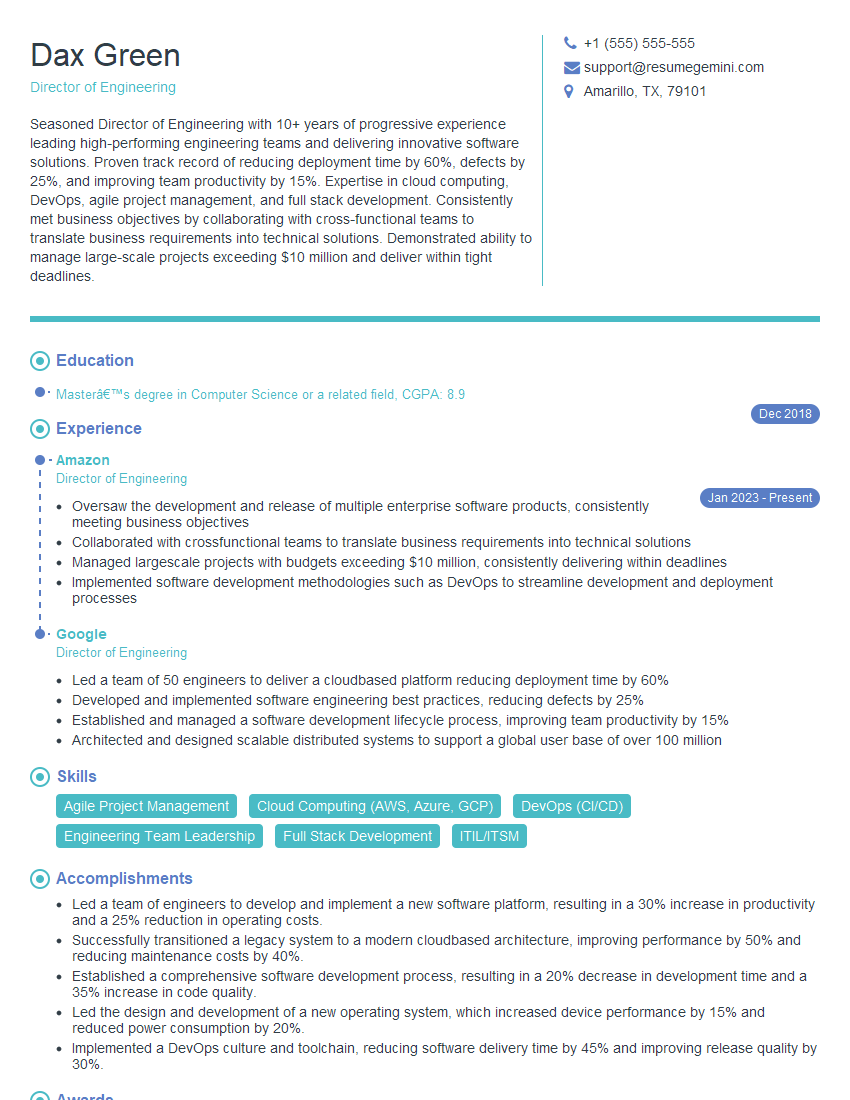
Director of Engineering Resume Sample
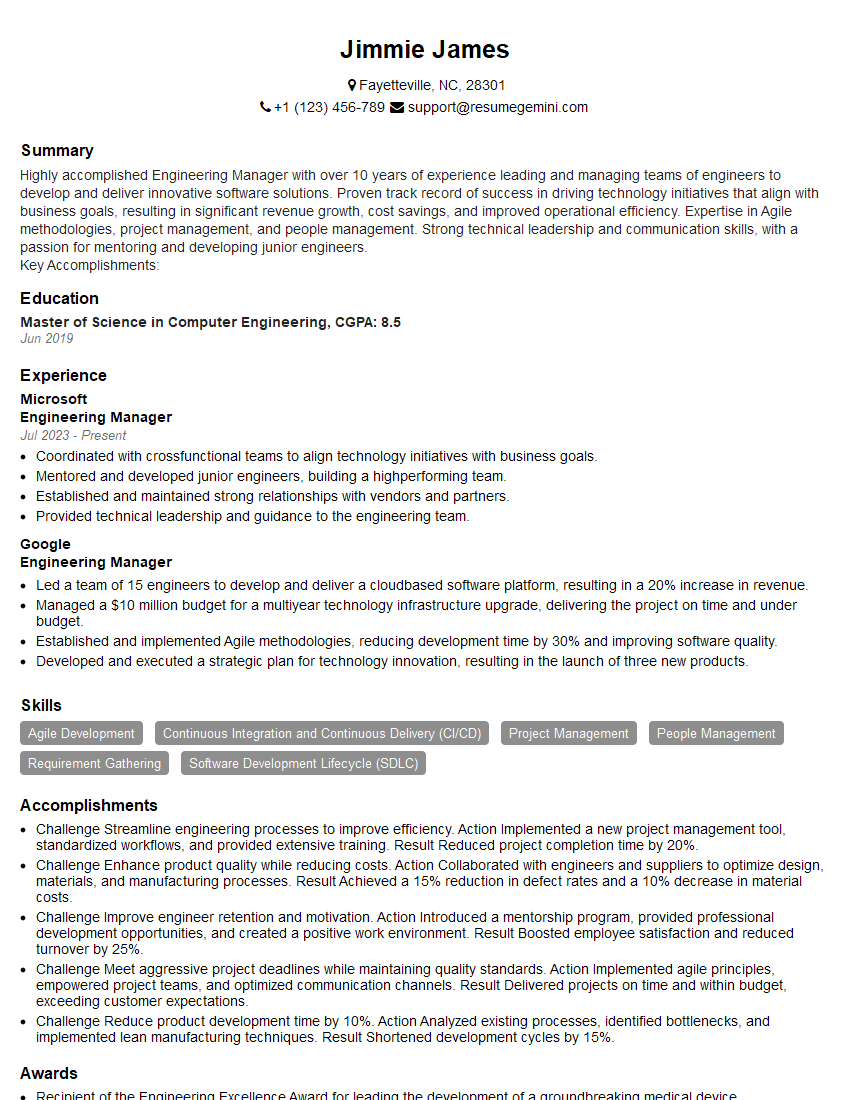
Engineering Manager Resume Sample
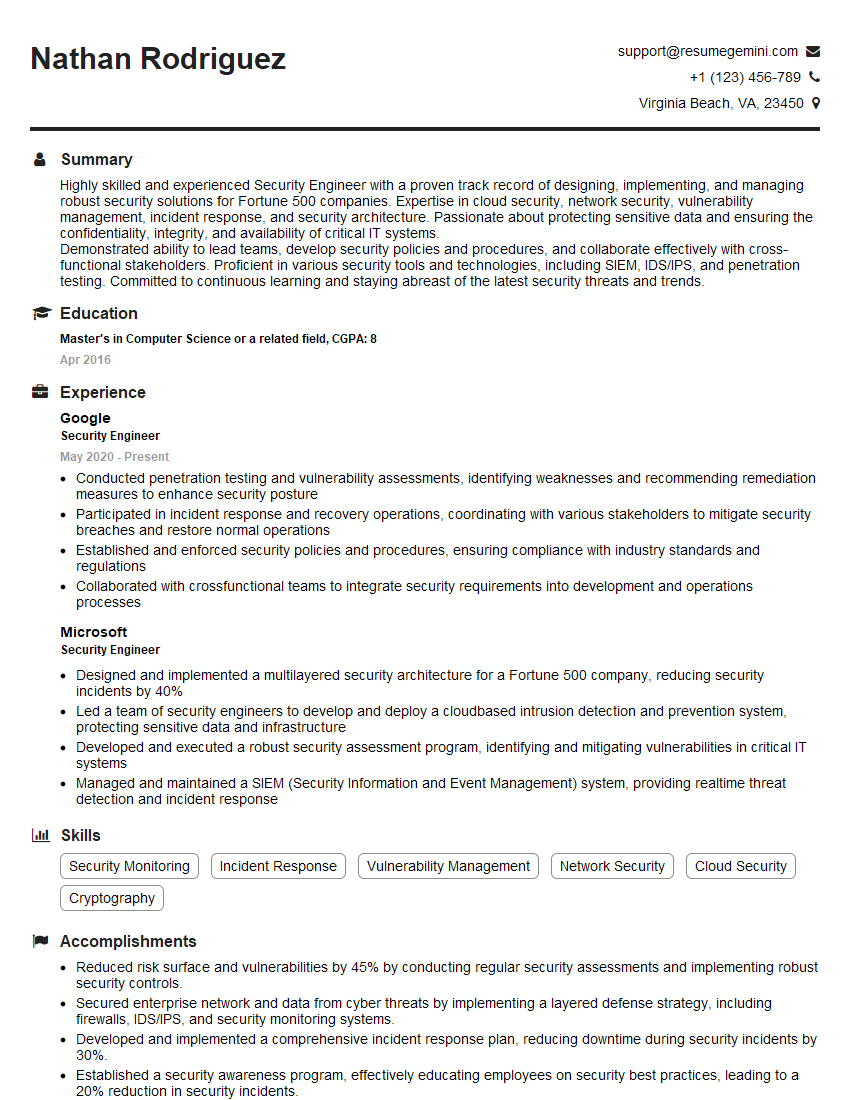
Security Engineer Resume Sample
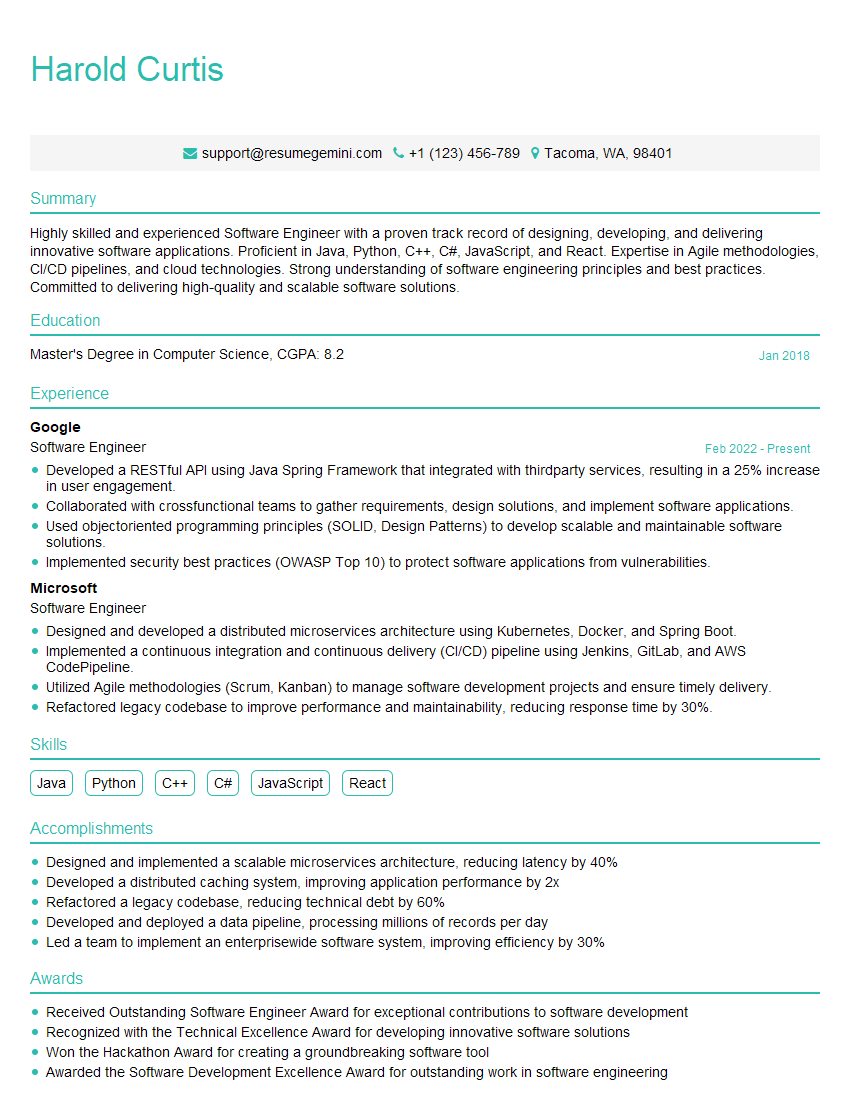
Software Engineer Resume Sample
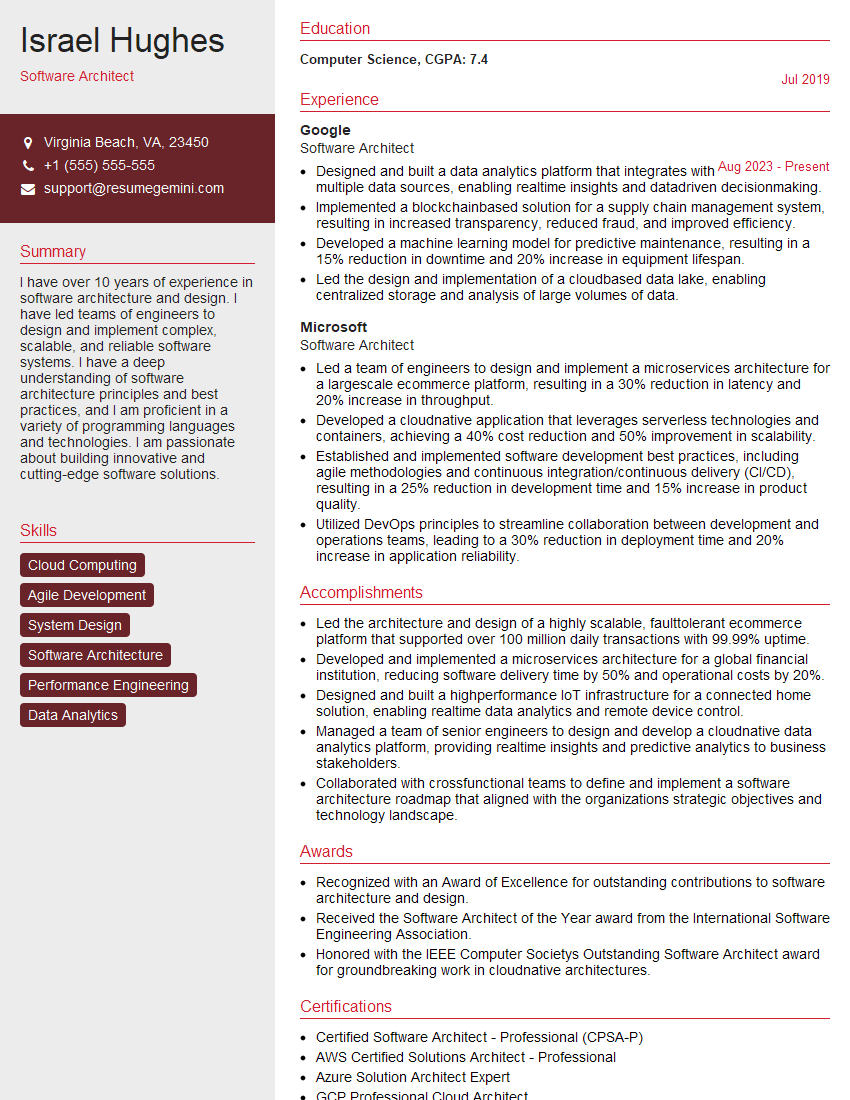
Software Architect Resume Sample
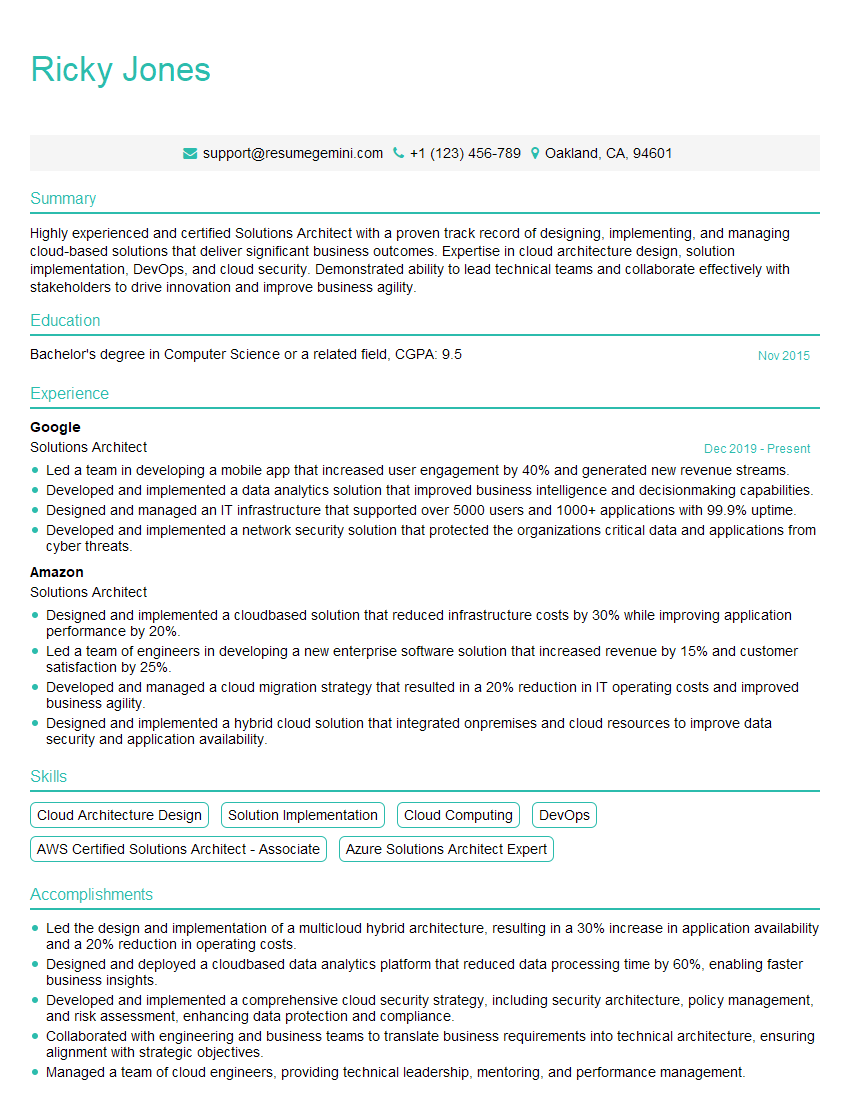
Solutions Architect Resume Sample
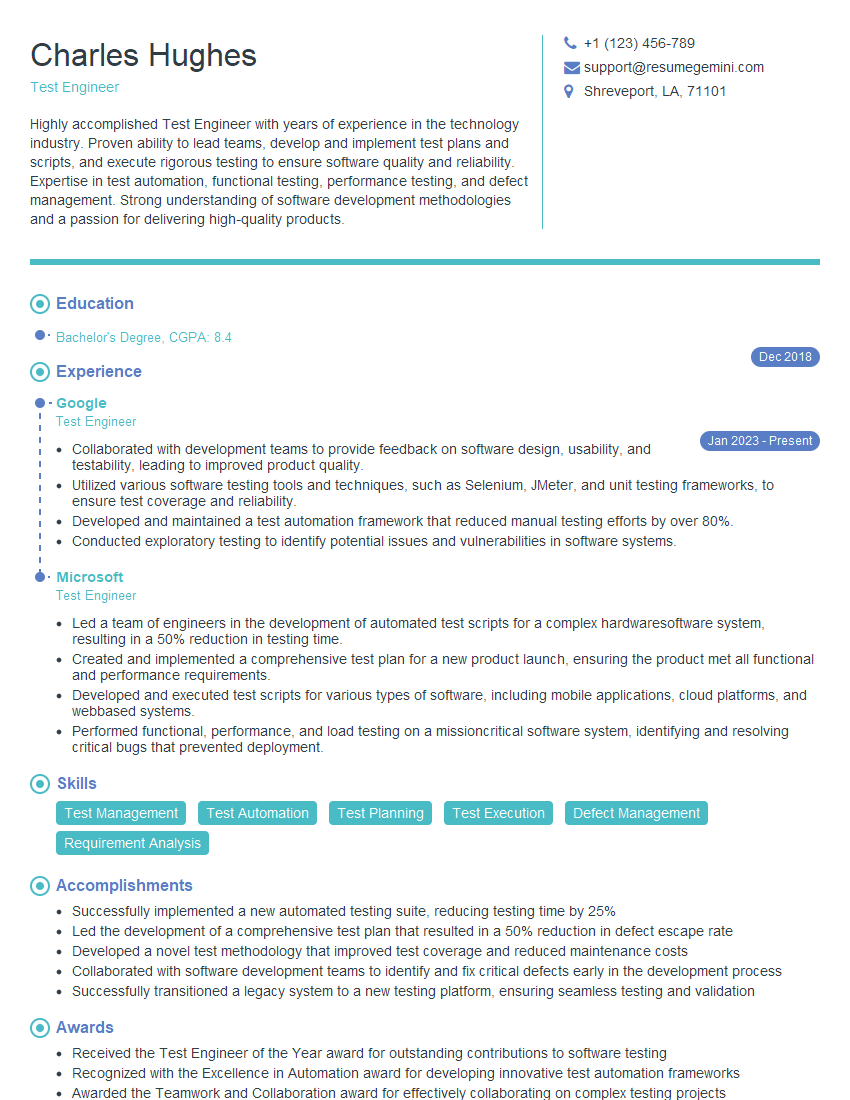
Test Engineer Resume Sample

Senior Software Engineer Resume Sample
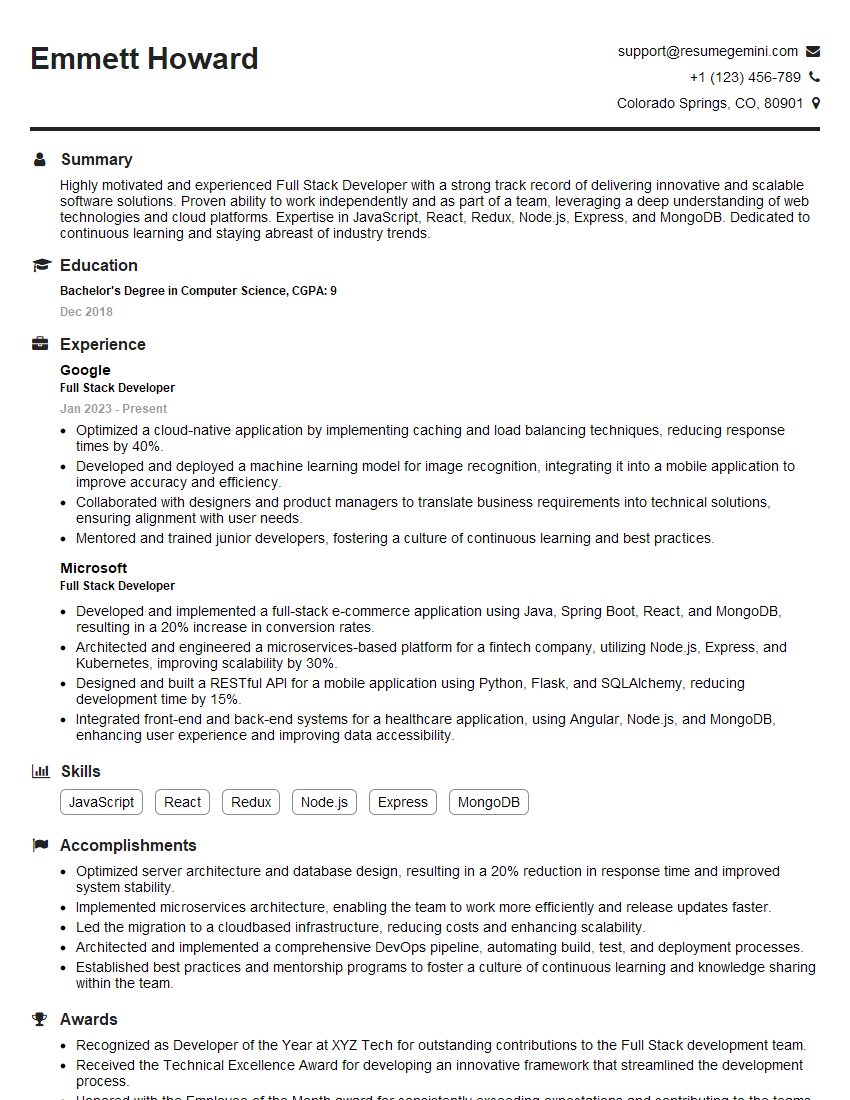
Full Stack Developer Resume Sample
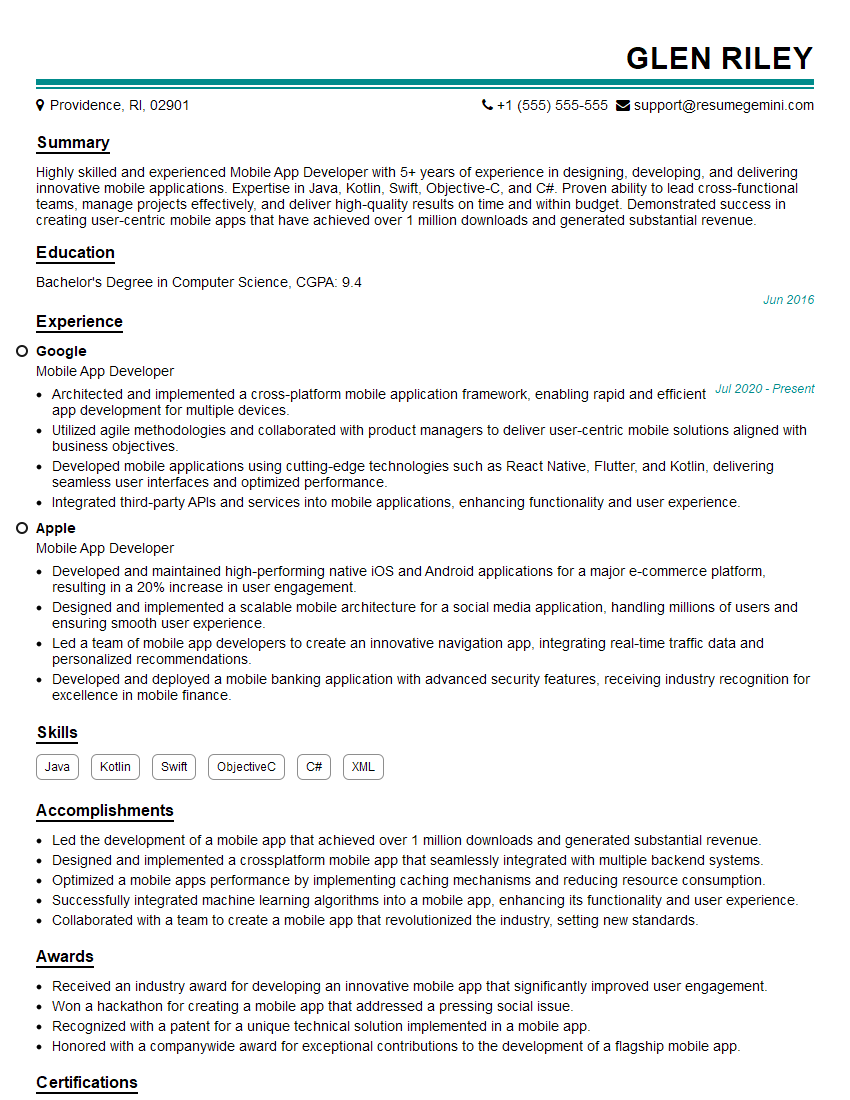
Mobile App Developer Resume Sample
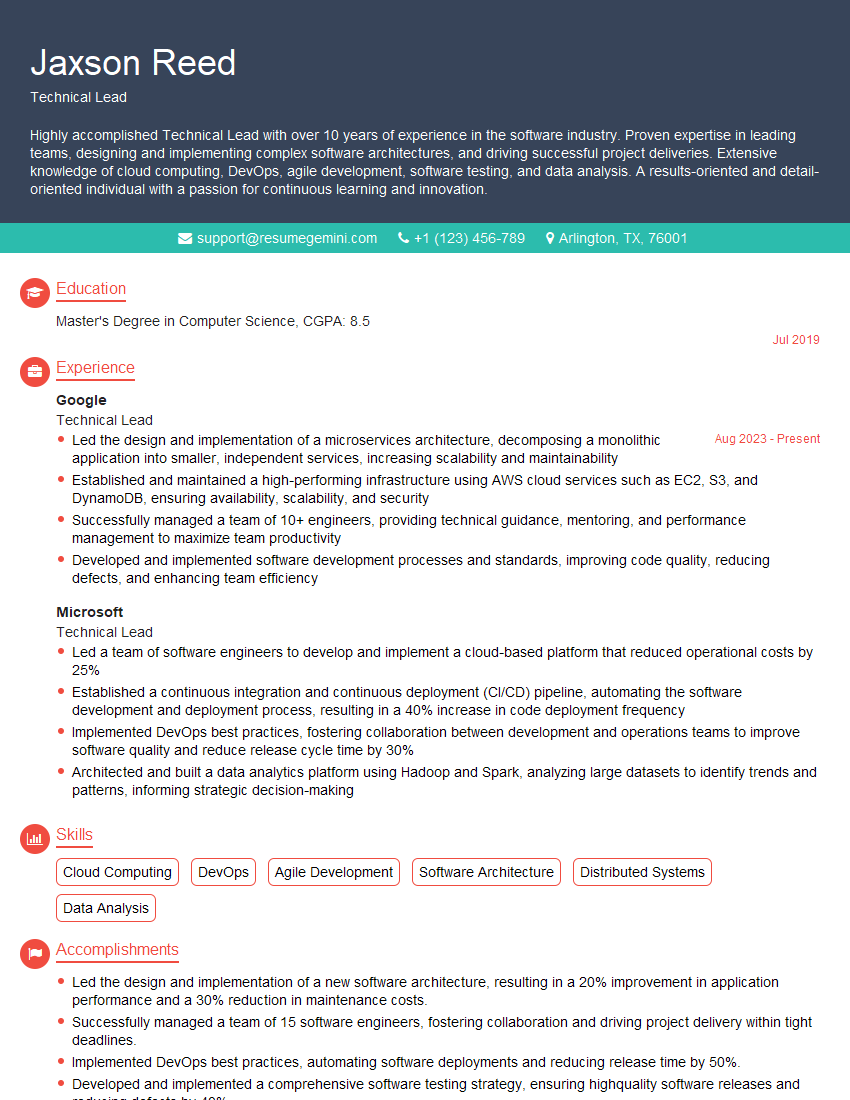
Technical Lead Resume Sample
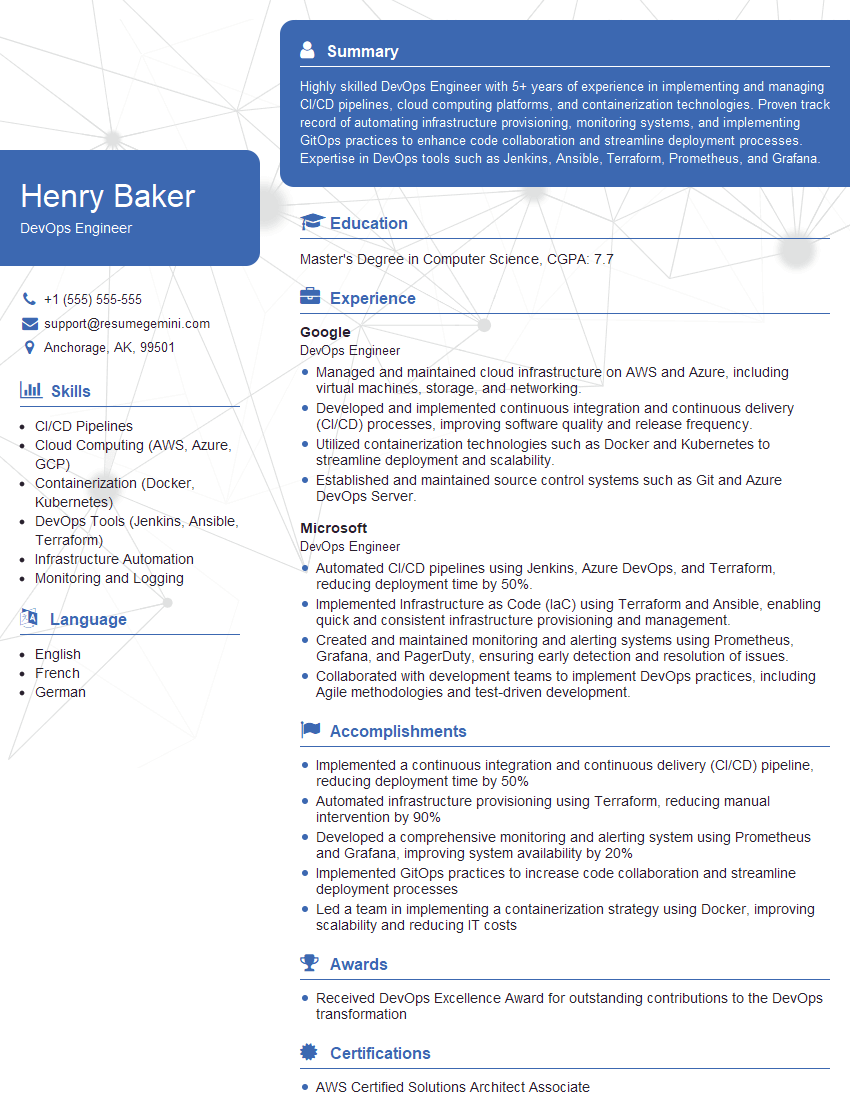
DevOps Engineer Resume Sample
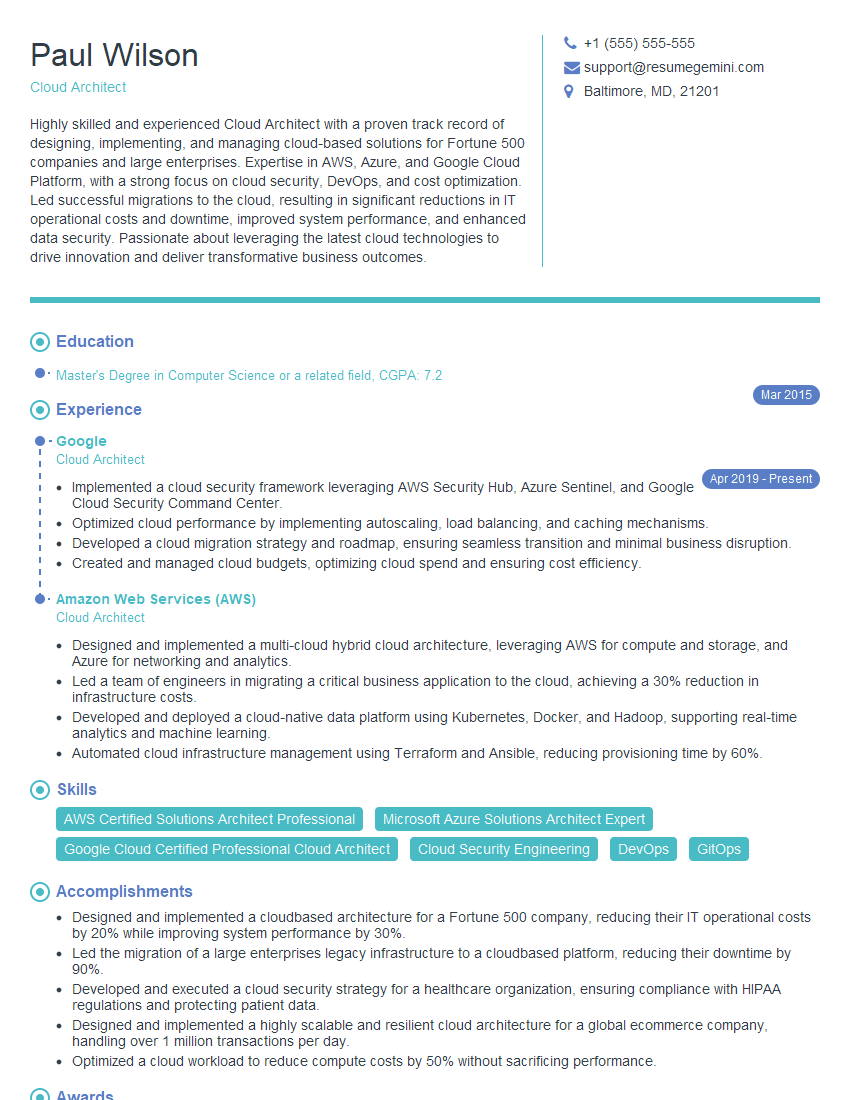
Cloud Architect Resume Sample
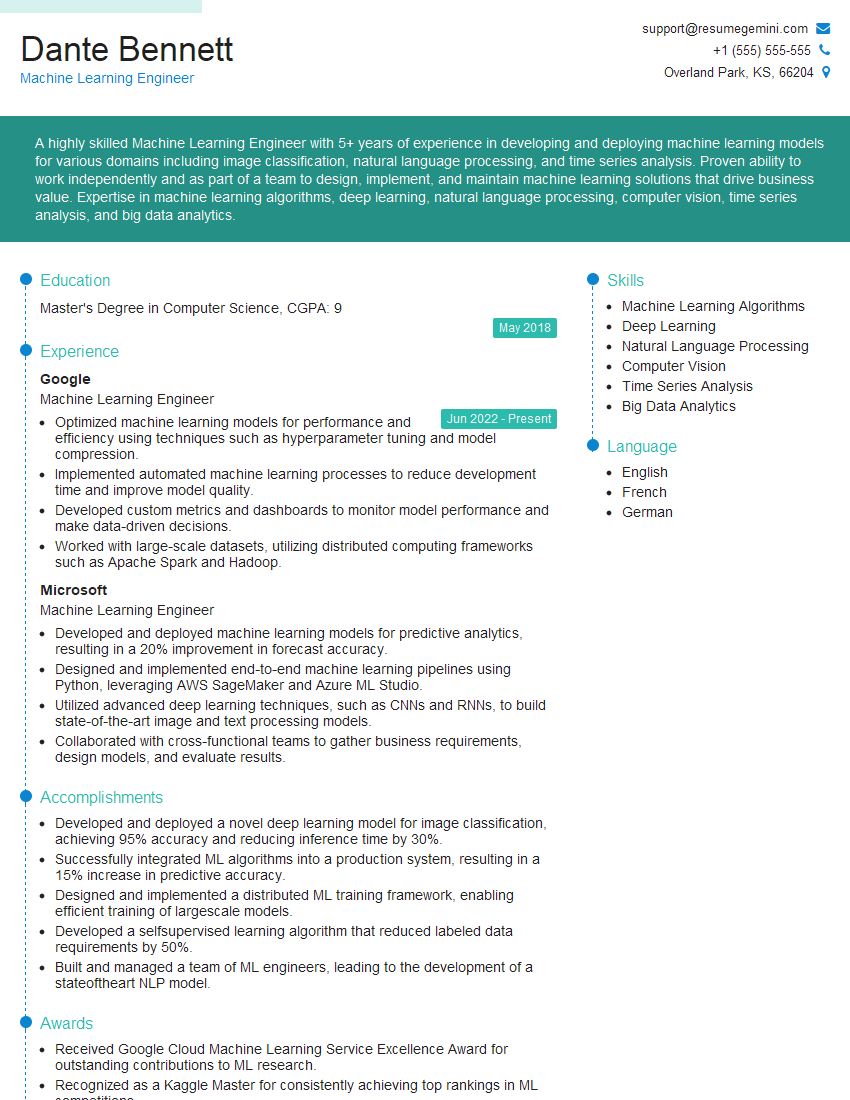
Machine Learning Engineer Resume Sample
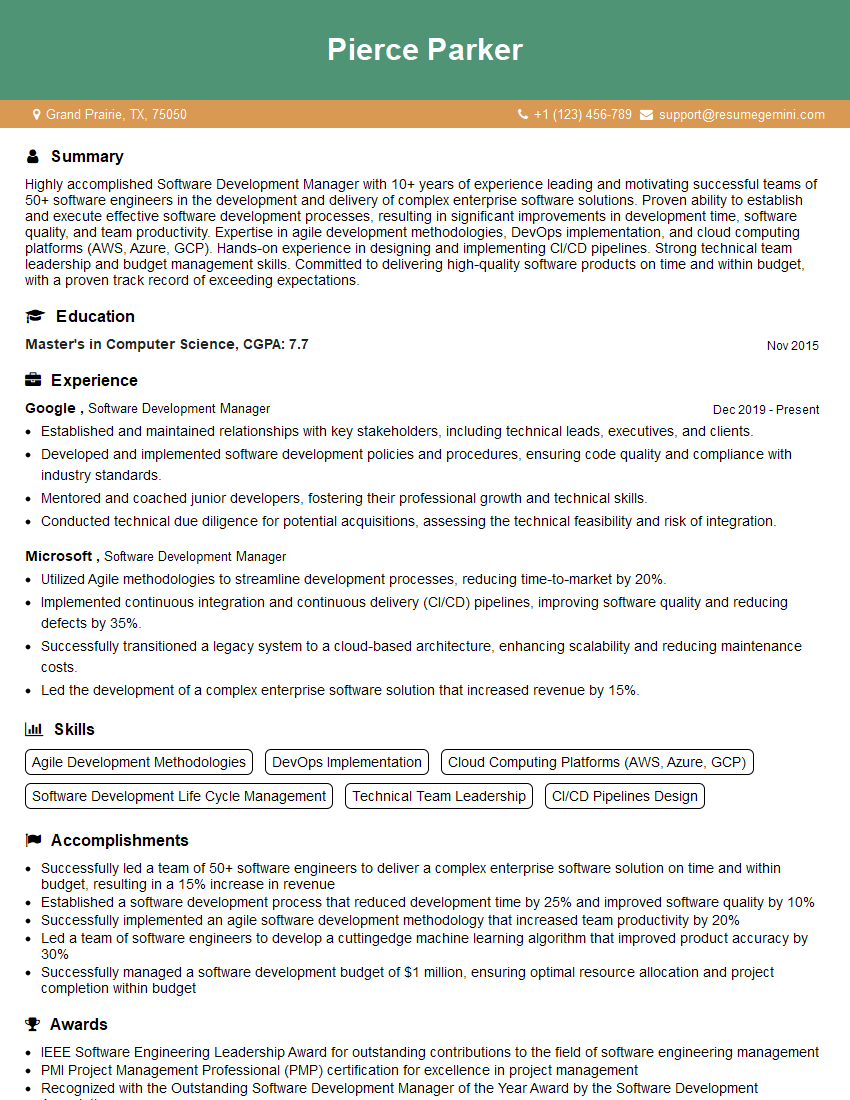
Software Development Manager Resume Sample
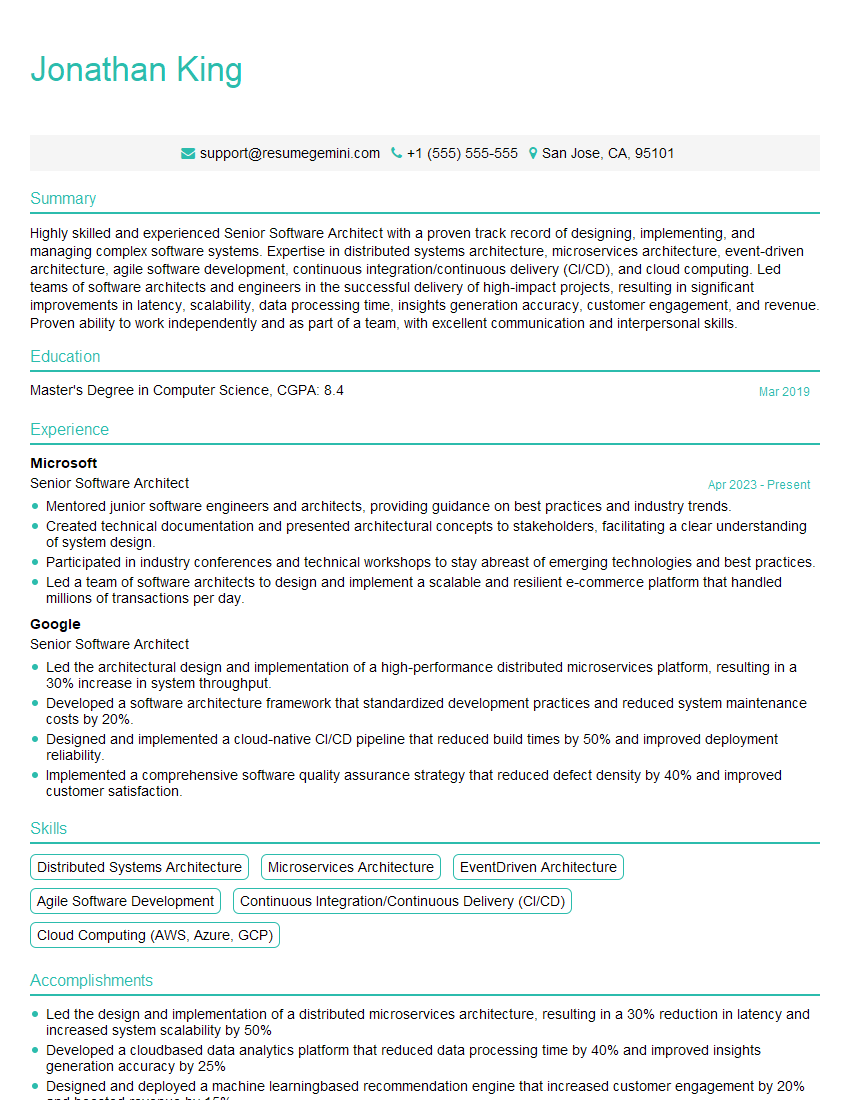
Senior Software Architect Resume Sample
- Director of Engineering
- Engineering Manager
- Security Engineer
- Software Engineer
- Software Architect
- Solutions Architect
- Test Engineer
- Senior Software Engineer
- Full Stack Developer
- Mobile App Developer
- Technical Lead
- DevOps Engineer
- Cloud Architect
- Machine Learning Engineer
- Software Development Manager
- Senior Software Architect
Explore more articles
Users Rating of Our Blogs
Share Your Experience
We value your feedback! Please rate our content and share your thoughts (optional).
What Readers Say About Our Blog
Hello,
we currently offer a complimentary backlink and URL indexing test for search engine optimization professionals.
You can get complimentary indexing credits to test how link discovery works in practice.
No credit card is required and there is no recurring fee.
You can find details here:
https://wikipedia-backlinks.com/indexing/
Regards
NICE RESPONSE TO Q & A
hi
The aim of this message is regarding an unclaimed deposit of a deceased nationale that bears the same name as you. You are not relate to him as there are millions of people answering the names across around the world. But i will use my position to influence the release of the deposit to you for our mutual benefit.
Respond for full details and how to claim the deposit. This is 100% risk free. Send hello to my email id: [email protected]
Luka Chachibaialuka
Hey interviewgemini.com, just wanted to follow up on my last email.
We just launched Call the Monster, an parenting app that lets you summon friendly ‘monsters’ kids actually listen to.
We’re also running a giveaway for everyone who downloads the app. Since it’s brand new, there aren’t many users yet, which means you’ve got a much better chance of winning some great prizes.
You can check it out here: https://bit.ly/callamonsterapp
Or follow us on Instagram: https://www.instagram.com/callamonsterapp
Thanks,
Ryan
CEO – Call the Monster App
Hey interviewgemini.com, I saw your website and love your approach.
I just want this to look like spam email, but want to share something important to you. We just launched Call the Monster, a parenting app that lets you summon friendly ‘monsters’ kids actually listen to.
Parents are loving it for calming chaos before bedtime. Thought you might want to try it: https://bit.ly/callamonsterapp or just follow our fun monster lore on Instagram: https://www.instagram.com/callamonsterapp
Thanks,
Ryan
CEO – Call A Monster APP
To the interviewgemini.com Owner.
Dear interviewgemini.com Webmaster!
Hi interviewgemini.com Webmaster!
Dear interviewgemini.com Webmaster!
excellent
Hello,
We found issues with your domain’s email setup that may be sending your messages to spam or blocking them completely. InboxShield Mini shows you how to fix it in minutes — no tech skills required.
Scan your domain now for details: https://inboxshield-mini.com/
— Adam @ InboxShield Mini
Reply STOP to unsubscribe
Hi, are you owner of interviewgemini.com? What if I told you I could help you find extra time in your schedule, reconnect with leads you didn’t even realize you missed, and bring in more “I want to work with you” conversations, without increasing your ad spend or hiring a full-time employee?
All with a flexible, budget-friendly service that could easily pay for itself. Sounds good?
Would it be nice to jump on a quick 10-minute call so I can show you exactly how we make this work?
Best,
Hapei
Marketing Director
Hey, I know you’re the owner of interviewgemini.com. I’ll be quick.
Fundraising for your business is tough and time-consuming. We make it easier by guaranteeing two private investor meetings each month, for six months. No demos, no pitch events – just direct introductions to active investors matched to your startup.
If youR17;re raising, this could help you build real momentum. Want me to send more info?
Hi, I represent an SEO company that specialises in getting you AI citations and higher rankings on Google. I’d like to offer you a 100% free SEO audit for your website. Would you be interested?
Hi, I represent an SEO company that specialises in getting you AI citations and higher rankings on Google. I’d like to offer you a 100% free SEO audit for your website. Would you be interested?
good