Are you ready to stand out in your next interview? Understanding and preparing for Criminal Psychology interview questions is a game-changer. In this blog, we’ve compiled key questions and expert advice to help you showcase your skills with confidence and precision. Let’s get started on your journey to acing the interview.
Questions Asked in Criminal Psychology Interview
Q 1. Explain the difference between criminal profiling and investigative psychology.
While both criminal profiling and investigative psychology aim to understand criminal behavior, they differ significantly in their scope and methodology. Criminal profiling is a narrower technique focusing on creating a behavioral profile of an unknown offender based on evidence from crime scenes. It attempts to predict the offender’s characteristics like demographics, personality, and habits. Think of it as creating a ‘sketch’ of the perpetrator. Investigative psychology, on the other hand, is a broader field encompassing various psychological principles applied to criminal investigations. It utilizes data analysis, statistical modeling, and psychological theories to understand crime patterns, offender behavior, and victim selection. It goes beyond individual cases to look at larger trends and patterns in criminal activity. Investigative psychology might examine the geographical distribution of crimes committed by a serial offender to determine their operational base, a task beyond the scope of a typical criminal profile.
Q 2. Describe the various methods used in offender profiling.
Several methods are used in offender profiling, each with its strengths and limitations. Deductive profiling starts with the crime scene characteristics and deduces the offender’s characteristics logically. For example, a meticulously planned and executed crime might suggest an organized offender. Inductive profiling uses a statistical analysis of known offenders to predict characteristics of an unknown offender. This approach relies on large datasets and comparisons of past crimes and offenders. Geographical profiling analyzes the spatial patterns of crimes to identify the offender’s most likely area of operation, based on the assumption offenders operate near their home base. Behavioral investigative advice, often used in ongoing investigations, provides advice to law enforcement on investigative strategies and communication techniques, potentially adjusting strategies based on the evolving profile of the offender. Finally, psychological autopsy is used in cases of suicide or sudden death to understand the circumstances and mindset of the deceased, often relevant in seemingly criminal circumstances.
Q 3. Discuss the psychological factors contributing to violent crime.
Violent crime is a complex phenomenon with multiple contributing psychological factors. Biological factors, such as genetic predispositions, hormonal imbalances, and neurological damage, can increase the risk of violent behavior. Psychological factors, like antisocial personality disorder, psychopathy, and childhood trauma (leading to emotional dysregulation and heightened aggression), play a crucial role. Social factors, including poverty, social isolation, exposure to violence, and lack of social support, significantly increase the likelihood of involvement in violent crime. The interaction of these biological, psychological, and social factors is essential to understanding the etiology of violent crime. For instance, an individual with a genetic predisposition towards aggression might exhibit violent behavior if exposed to severe childhood trauma and a neglectful social environment.
Q 4. What are the key elements of a successful risk assessment?
A successful risk assessment involves several key elements. It needs to be objective, relying on evidence rather than subjective opinions. It should be comprehensive, considering a range of factors, including past behavior, psychological evaluations, social context, and the presence of risk factors. Structured methods, using validated risk assessment tools, improve consistency and reduce bias. Dynamic factors, aspects that can change over time, such as substance abuse or employment status, should be continually monitored. Finally, a risk assessment should propose management strategies tailored to the individual’s needs to mitigate identified risks. For example, a risk assessment for a convicted offender might include evaluations for substance abuse and anger management programs, followed by regular check-ins and monitoring during parole.
Q 5. How do you evaluate the credibility of witness testimony?
Evaluating witness testimony requires a critical and multi-faceted approach. We need to assess the witness’s memory, considering factors like the duration of the event, the witness’s emotional state, and potential for memory distortion. Perception is key—were there any obstacles to clear observation, such as poor lighting or distance? Suggestibility, the degree to which the witness’s account has been influenced by external factors (e.g., leading questions), needs careful consideration. Finally, the witness’s credibility must be evaluated – are there inconsistencies in their statements or prior accounts that raise concerns about their reliability? This evaluation often involves corroborating their account with physical evidence and other witness statements.
Q 6. Explain the concept of ‘false confessions’ and how they occur.
A false confession is an admission of guilt to a crime that the individual did not commit. These can occur through various mechanisms. Coerced-compliant confessions result from intense interrogation pressure, where the suspect confesses to escape the stressful situation, even knowing they are innocent. Coerced-internalized confessions are a more insidious type; prolonged and manipulative interrogation can lead the suspect to believe they actually committed the crime, despite having no memory of it. Voluntary false confessions are rare but can occur due to a desire for notoriety, a need to protect someone else, or a mental health condition. Understanding the psychological factors leading to false confessions is vital in ensuring the fairness of justice and preventing wrongful convictions. Techniques like videotaping interrogations and implementing safeguards against coercive tactics can help mitigate the risk.
Q 7. Describe different types of interviewing techniques used in forensic settings.
Forensic settings use various interviewing techniques. Structured interviews follow a standardized format, ensuring consistency and minimizing bias. Cognitive interviews aim to improve memory recall by guiding the witness through the event using specific techniques that reconstruct context and improve recall. Reid Technique, a controversial method, employs accusatory and manipulative tactics to obtain confessions. While effective in obtaining confessions, it carries a significant risk of eliciting false confessions. PEACE model, a more investigative approach, emphasizes building rapport, engaging the suspect, and exploring their perspective, focusing on obtaining information rather than solely on securing a confession. The choice of interviewing technique depends on the specific context and the aim of the interview, prioritizing ethical considerations and the accuracy of information obtained.
Q 8. What ethical considerations are paramount in criminal psychology practice?
Ethical considerations in criminal psychology are paramount, guiding our actions and ensuring the well-being of all involved. They center around confidentiality, informed consent, competence, and avoiding conflicts of interest. Confidentiality, similar to doctor-patient privilege, protects the privacy of clients, even if their disclosures involve criminal activity, unless legally mandated to disclose (e.g., a threat of imminent harm). Informed consent means individuals must understand the nature of the assessment or treatment before agreeing to participate. Competence necessitates that we only provide services within our expertise, acknowledging limitations and seeking supervision when needed. Avoiding conflicts of interest means ensuring our personal biases or relationships don’t compromise objectivity or the client’s best interests. For instance, a psychologist should not be involved in the evaluation of a close family member. These ethical guidelines are crucial to maintaining public trust and ensuring justice is served fairly.
Q 9. How do you apply psychological theories to understand criminal behavior?
Understanding criminal behavior requires integrating various psychological theories. For example, learning theories, such as social learning theory, emphasize the role of observation and imitation in acquiring criminal behavior. We might observe how a child learns aggressive behavior by witnessing violence at home, leading to criminal actions later. Cognitive theories examine the thought processes and decision-making of offenders. For instance, individuals with distorted thinking patterns, like a lack of empathy or a tendency to minimize their actions, are more prone to criminal behavior. Personality theories, such as the trait theory, suggest consistent personality traits, such as impulsivity or psychopathy, increase the risk of criminality. A person with high impulsivity might commit crimes without considering consequences. Finally, biological theories explore the influence of genetics, brain structure, and neurotransmitters on criminal behavior. Research has linked certain genes and brain dysfunctions to increased aggression and impulsivity. By considering these multiple theoretical perspectives, we create a more comprehensive understanding of the complex factors contributing to criminal behavior.
Q 10. Discuss the role of cognitive biases in criminal investigations.
Cognitive biases significantly impact criminal investigations, potentially leading to wrongful convictions or missed clues. Confirmation bias, for example, involves favoring information confirming pre-existing beliefs, causing investigators to overlook contradictory evidence. Imagine a detective who believes the suspect is guilty; they might interpret ambiguous evidence as incriminating, ignoring exculpatory details. Anchoring bias occurs when initial information heavily influences subsequent judgments. If a witness initially provides a faulty description, investigators might struggle to objectively assess later information. Availability heuristic refers to overestimating the likelihood of events easily recalled, leading to misjudgments about the crime’s nature or offender profile. A recent highly publicized case might influence an investigator’s assessment of a new case, leading to erroneous conclusions. Recognizing and actively mitigating these biases is critical for objective investigations. Techniques such as structured interviews, blind testing, and collaborative review of evidence can help to minimize their effects.
Q 11. Explain the impact of trauma on criminal behavior.
Trauma has a profound impact on criminal behavior. Exposure to abuse, neglect, or violence during childhood or adulthood can lead to significant emotional and psychological distress, increasing the risk of criminal involvement. Trauma can disrupt the development of healthy coping mechanisms, leading to self-destructive behaviors, substance abuse, and aggression. Post-Traumatic Stress Disorder (PTSD) and other trauma-related disorders are frequently observed in incarcerated individuals. For example, someone who experienced severe childhood abuse might resort to violence to cope with anger and fear, or they might engage in self-harm or substance abuse. Understanding the role of trauma in criminal behavior is crucial for effective intervention and rehabilitation. Treatment programs that address trauma, such as trauma-focused therapy, are essential for helping offenders develop healthier coping strategies and reduce recidivism.
Q 12. How do you assess the mental state of a defendant?
Assessing a defendant’s mental state is a complex process requiring a multi-faceted approach. It often involves a clinical interview where the psychologist explores the defendant’s history, current mental state, and any symptoms suggestive of a mental disorder. Psychological tests, such as intelligence tests, personality assessments, and neuropsychological evaluations, might be administered to gain further insights. Review of medical records and collateral information from family, friends, or treating professionals is essential for a comprehensive understanding. The goal is to determine the defendant’s competency to stand trial (understanding charges and assisting in defense) and their criminal responsibility (sanity at the time of the offense). This process is informed by legal standards and requires careful documentation and adherence to ethical guidelines. For example, if a defendant displays symptoms of psychosis, the psychologist might recommend a psychiatric evaluation to confirm the diagnosis and assess its impact on the defendant’s criminal behavior.
Q 13. What are the challenges in working with offenders in correctional settings?
Working with offenders in correctional settings presents unique challenges. The environment is often characterized by high levels of stress, violence, and mistrust. Offenders may exhibit resistance to treatment, display manipulation tactics, or struggle with substance abuse issues. The psychologist must establish rapport in a potentially hostile environment, addressing safety concerns and building trust. Many offenders struggle with mental health issues like depression, anxiety, or personality disorders, requiring careful assessment and treatment planning. Resource limitations, such as limited access to therapy or medication, can also hinder treatment efforts. Maintaining confidentiality, while complying with institutional policies, is a critical ethical concern. Working effectively in correctional settings requires strong interpersonal skills, resilience, and a clear understanding of the challenges faced by both offenders and correctional staff.
Q 14. Discuss the role of rehabilitation in the criminal justice system.
Rehabilitation plays a critical role in the criminal justice system, aiming to reduce recidivism and improve public safety. It focuses on addressing the underlying factors contributing to criminal behavior, such as substance abuse, mental health disorders, and lack of skills or education. Rehabilitation programs can include individual and group therapy, substance abuse treatment, vocational training, and educational opportunities. The goal is to equip offenders with the tools and resources they need to successfully reintegrate into society. A multi-disciplinary approach, involving psychologists, social workers, and other professionals, is often necessary to create tailored treatment plans. The effectiveness of rehabilitation programs is often evaluated based on recidivism rates and positive changes in behavior and psychological functioning. Research shows that well-designed rehabilitation programs can significantly reduce the likelihood of future criminal offenses, leading to improved community safety and a more just society.
Q 15. Explain the concept of ‘learned helplessness’ and its relevance to criminal behavior.
Learned helplessness is a psychological condition where an individual, after experiencing repeated traumatic or aversive events over which they have no control, develops a belief that they are powerless to change their circumstances. This sense of helplessness can lead to passivity and a lack of effort, even when opportunities for escape or improvement arise. In the context of criminal behavior, learned helplessness can manifest in several ways. For instance, individuals raised in abusive or neglectful environments might internalize a belief that violence or criminal activity is inevitable and that they have no agency to escape their situation. This learned helplessness might then lead to engagement in similar behaviors as they perceive no alternative and no way to positively impact their lives.
For example, a child consistently subjected to physical abuse might grow up believing they deserve the abuse or that they are incapable of escaping it. This can lead to them perpetuating cycles of violence in their adult relationships or becoming involved in criminal activities as a perceived means of control or self-preservation, even though such actions are ultimately destructive. The key here is the perceived lack of control; it’s not about inherent personality flaws but about learned responses to inescapable adversity.
Career Expert Tips:
- Ace those interviews! Prepare effectively by reviewing the Top 50 Most Common Interview Questions on ResumeGemini.
- Navigate your job search with confidence! Explore a wide range of Career Tips on ResumeGemini. Learn about common challenges and recommendations to overcome them.
- Craft the perfect resume! Master the Art of Resume Writing with ResumeGemini’s guide. Showcase your unique qualifications and achievements effectively.
- Don’t miss out on holiday savings! Build your dream resume with ResumeGemini’s ATS optimized templates.
Q 16. Describe the different types of personality disorders and their association with crime.
Several personality disorders are associated with an increased risk of criminal behavior. It’s crucial to remember that having a personality disorder doesn’t automatically mean someone will commit a crime, but certain traits can increase the likelihood.
- Antisocial Personality Disorder (ASPD): Characterized by a disregard for and violation of the rights of others. Individuals with ASPD often show a pattern of deceitfulness, impulsivity, irritability, and aggression. Their lack of empathy and remorse makes criminal behavior more likely.
- Narcissistic Personality Disorder (NPD): Individuals with NPD have an inflated sense of self-importance, a need for admiration, and a lack of empathy. Criminal behavior can stem from a sense of entitlement and a willingness to exploit others to achieve their goals. They might engage in fraud, theft, or other crimes to maintain their perceived superiority.
- Borderline Personality Disorder (BPD): Characterized by instability in mood, interpersonal relationships, and self-image. While not directly associated with criminality in the same way as ASPD or NPD, individuals with BPD might engage in impulsive, self-destructive behaviors, which could inadvertently lead to criminal charges.
It’s important to note that these are just some examples, and the relationship between personality disorders and crime is complex. Many factors, including socioeconomic circumstances and environmental influences, contribute to criminal behavior.
Q 17. How do you manage the stress associated with working in forensic psychology?
Working in forensic psychology can be intensely stressful. The nature of the work—dealing with crime scenes, victims, perpetrators, and often traumatic material—requires robust coping mechanisms. My strategies include:
- Maintaining professional boundaries: It’s vital to separate my work life from my personal life. This involves actively setting limits and not bringing work-related stress home.
- Utilizing supervision and peer support: Regular supervision allows me to discuss challenging cases and process the emotional impact of the work with experienced professionals. Peer support groups provide a safe space to share experiences and receive emotional support.
- Self-care: This is paramount. I prioritize exercise, a healthy diet, sufficient sleep, and engaging in activities that bring me joy and relaxation outside of work. Mindfulness techniques can also be very helpful in managing stress.
- Seeking professional help when needed: It’s crucial to recognize when I need additional support and to seek professional help from a therapist or counselor if the stress becomes overwhelming. This isn’t a sign of weakness but rather a commitment to maintaining my own well-being and ensuring I can continue to provide high-quality services.
Q 18. What are the key differences between psychopathy and antisocial personality disorder?
While both psychopathy and antisocial personality disorder (ASPD) share some overlapping traits, they are distinct concepts. ASPD is a diagnosis defined by a pattern of antisocial behavior and disregard for social norms. Psychopathy, while often considered a subset of ASPD, is a more complex construct characterized by a specific constellation of personality traits.
- Empathy and Remorse: Individuals with ASPD may show a limited capacity for empathy, but psychopaths often demonstrate a profound lack of empathy and remorse. They can appear superficially charming but lack genuine emotional depth.
- Impulsivity vs. Manipulation: ASPD is often marked by impulsivity and recklessness. Psychopathy involves more calculated and manipulative behaviors; psychopaths are often adept at planning and controlling their actions to achieve their goals.
- Callousness: Both psychopathy and ASPD involve callous disregard for the feelings of others; however, the callousness in psychopathy is typically more pronounced and pervasive.
- Diagnosis: ASPD is diagnosed based on observable behaviors, while psychopathy is assessed using psychometric instruments like the Hare Psychopathy Checklist-Revised (PCL-R), which evaluates personality traits.
In essence, psychopathy represents a more severe and pervasive form of antisocial behavior compared to ASPD. Not all individuals with ASPD are psychopaths, but most psychopaths meet the criteria for ASPD.
Q 19. Describe the stages involved in the development of a criminal profile.
Developing a criminal profile involves a systematic process. While the exact stages can vary slightly depending on the methodology used, a typical approach includes:
- Data Assessment: This initial stage involves carefully reviewing all available information about the crime, including crime scene details, victim characteristics, witness statements, and any forensic evidence.
- Crime Scene Analysis: A thorough analysis of the crime scene is crucial, focusing on the physical evidence, the offender’s behavior at the scene, and the selection of the victim and location.
- Offender Behavior Analysis: This stage involves interpreting the actions of the offender at the crime scene, attempting to infer their motivations, skills, and personality traits.
- Profile Construction: Based on the analysis of the crime and offender behavior, a profile is constructed, outlining the likely characteristics of the offender, including their demographics, personality, and behavioral patterns.
- Profile Evaluation: The profile is constantly reviewed and refined as new information becomes available. It’s a dynamic process, not a static document.
It’s important to note that criminal profiling is a probabilistic process. The goal isn’t to identify a single suspect with absolute certainty, but to narrow down the field of potential suspects and provide investigative leads.
Q 20. How do you handle cases involving highly sensitive information?
Handling highly sensitive information requires strict adherence to ethical guidelines and legal regulations. My approach involves:
- Maintaining Confidentiality: I am bound by professional ethical codes and legal obligations to maintain the confidentiality of all information obtained during the course of my work, except where legally required to disclose it.
- Data Security: I employ robust security measures to protect sensitive information, including secure storage of physical and electronic files, strong passwords, and encryption of data as needed.
- Limited Access: Access to sensitive information is restricted to authorized individuals on a need-to-know basis.
- Compliance with Regulations: I am thoroughly familiar with relevant legal and regulatory frameworks governing the handling of sensitive information and ensure strict adherence to all applicable laws and guidelines. This often involves HIPAA and other data protection legislation.
- Documentation: All activities involving sensitive information are meticulously documented to maintain an audit trail and ensure accountability.
Protecting the privacy and confidentiality of individuals is paramount in my work, and I am committed to adhering to the highest ethical and legal standards.
Q 21. Explain your understanding of the insanity defense.
The insanity defense is a legal defense used in criminal cases where the defendant argues that they were not criminally responsible for their actions due to a severe mental illness at the time of the offense. It’s not a claim of innocence but rather a claim that the defendant lacked the requisite mens rea (guilty mind) to be held criminally liable. The specific legal standards for the insanity defense vary by jurisdiction but often involve demonstrating that the defendant, due to a mental disease or defect, was unable to appreciate the wrongfulness of their actions.
For example, an individual experiencing a psychotic break might commit a violent act without understanding that their actions are morally wrong or illegal. The insanity defense attempts to account for situations where a person’s mental state significantly impairs their ability to understand the consequences of their actions. It’s a complex legal and psychological issue, requiring thorough evaluation by forensic psychologists to assess the defendant’s mental state at the time of the crime.
It’s important to note that the insanity defense is rarely successful, and the burden of proof usually rests on the defense to demonstrate the defendant’s insanity beyond a reasonable doubt. Successful application of the defense requires careful evaluation of the defendant’s mental state, medical records, and witness testimony to establish the link between mental illness and the criminal act.
Q 22. Discuss the limitations of lie detection techniques.
Lie detection techniques, while valuable investigative tools, are far from foolproof. Their limitations stem from several factors. Firstly, physiological responses measured by polygraphs (like heart rate and skin conductance) aren’t uniquely indicative of deception. Anxiety, nervousness, or even the inherent discomfort of the testing situation can produce similar responses in innocent individuals. This leads to a high rate of false positives, where truthful individuals are incorrectly identified as liars.
Secondly, countermeasures – techniques used by individuals to manipulate their physiological responses – can significantly impact accuracy. Experienced liars might employ techniques like controlling their breathing or mentally focusing on distracting stimuli to mask their deception. This makes it difficult for examiners to distinguish true deception from successfully masked responses.
Thirdly, the interpretation of polygraph results is subjective. Different examiners may interpret the same physiological data differently, leading to inconsistent results. There’s also the issue of contextual factors; the meaning of a particular physiological response depends heavily on the surrounding circumstances and the individual’s baseline physiological state. For example, a sudden rise in heart rate could be due to anxiety related to lying or a pre-existing medical condition.
Finally, the lack of standardization in polygraph administration and scoring further compromises reliability. Variations in equipment, testing protocols, and examiner expertise contribute to inconsistencies in results. Therefore, polygraph results should never be considered conclusive evidence in isolation but rather as one piece of a larger puzzle within a broader investigation.
Q 23. What are the legal and ethical implications of using psychological assessments in court?
The use of psychological assessments in court presents significant legal and ethical challenges. Legally, the admissibility of such evidence hinges on its scientific validity and reliability. Courts require that the assessments be conducted by qualified professionals using established, scientifically sound methods. The assessment’s methodology, its limitations, and the qualifications of the examiner are subject to rigorous scrutiny. If deemed unreliable or lacking scientific basis, the assessment may be excluded as evidence.
Ethically, concerns center on issues of confidentiality, informed consent, and potential biases. Experts must ensure that participants understand the purpose of the assessment, the potential implications of their participation, and the limits of confidentiality. They must also be mindful of potential biases, such as cultural or gender biases, that could influence their interpretations and conclusions. Furthermore, ethical considerations include ensuring that the assessment does not unduly influence or coerce the participant, and maintaining objectivity in formulating their report and testimony.
A critical concern is the potential for misuse of psychological information. For example, using assessments to predict future dangerousness is fraught with ethical and practical challenges due to the inherent difficulty in accurately predicting future behavior. The potential for misinterpretations, leading to unjust outcomes, necessitates caution and ethical responsibility in applying psychological assessments in legal contexts. A balance needs to be struck between the pursuit of justice and the protection of individual rights.
Q 24. How do social and environmental factors influence criminal behavior?
Social and environmental factors play a profoundly significant role in shaping criminal behavior. This isn’t to excuse criminal acts, but to understand the complex interplay of influences that contribute to them. For instance, factors like poverty, lack of educational opportunities, and exposure to violence can increase the likelihood of involvement in criminal activity.
Growing up in disadvantaged neighborhoods with limited access to resources and positive role models can create a breeding ground for antisocial behavior. This might involve exposure to gangs, drug abuse, and a general lack of social support. The lack of opportunities for legitimate employment and upward mobility can drive individuals towards criminal activities as a means of survival or achieving a sense of status.
Furthermore, social learning theory suggests that individuals learn behaviors through observation and imitation. Exposure to violence, either in the home or community, can normalize aggressive behaviors and increase the likelihood of engaging in criminal acts. Peer influence is also a crucial factor. Association with delinquent peers can significantly increase the risk of criminal behavior, particularly during adolescence, due to the powerful influence of peer pressure and group dynamics.
These factors don’t determine criminality definitively, as individual resilience and personal choices play a crucial role. However, recognizing the significant impact of social and environmental factors is vital in developing effective crime prevention strategies that address the root causes of criminal behavior, rather than just focusing on punishment.
Q 25. Explain the concept of ‘broken windows’ theory and its implications.
The ‘broken windows’ theory posits that visible signs of disorder and crime, such as broken windows, graffiti, and vandalism, create an environment that encourages further crime. The theory suggests that if minor offenses are left unchecked, they signal a lack of social control, leading to a deterioration of the neighborhood and a rise in more serious crimes. It implies that addressing minor infractions promptly can prevent the escalation to more significant criminal activity. This is because the sight of unattended disorder signals that norms are not enforced, emboldening potential offenders.
Imagine a building with a single broken window. If left unrepaired, it sends a message that no one cares about the property, potentially leading to more vandalism and ultimately more serious crimes. Conversely, promptly repairing the window suggests that the community values order and is actively preventing further deterioration. The implication is that a proactive approach to addressing minor offenses, even seemingly insignificant ones, can create a sense of order and deter more serious crime.
The theory has been both praised and criticized. While it has influenced policing strategies like zero-tolerance policing, which focuses on strict enforcement of minor offenses, such approaches have faced criticism for potentially disproportionately targeting marginalized communities and escalating conflicts with law enforcement. The effectiveness of the ‘broken windows’ theory remains a subject of ongoing debate and research, with its implementation requiring careful consideration of ethical and social justice implications.
Q 26. Describe your experience with case management in a forensic setting.
In my experience managing cases in a forensic setting, the process involves a multi-faceted approach. It starts with a thorough assessment of the individual’s psychological state, including conducting interviews, reviewing relevant documentation (medical, legal, social), and possibly administering psychological tests. The aim is to develop a comprehensive understanding of their background, current mental state, and the factors that may have contributed to their involvement in the legal system.
Case management also entails collaboration with various stakeholders – lawyers, judges, correctional officers, and social workers. This involves providing expert reports, presenting evidence in court, and participating in treatment planning. For example, I’ve worked with individuals facing charges related to substance abuse, recommending tailored treatment programs and monitoring their progress. With individuals experiencing mental health crises, the management focus shifts to crisis intervention and stabilization, advocating for appropriate mental health care within the legal framework.
A key aspect of forensic case management is risk assessment. This involves evaluating the likelihood of future offending or harm to self or others. Based on the assessment, recommendations are made concerning appropriate security measures, treatment plans, and supervision strategies. Throughout the process, ethical considerations are paramount, ensuring the individual’s rights are respected and their dignity is maintained. Data privacy and confidentiality are strictly adhered to in all aspects of the case management process. Documentation is meticulous and comprehensive, providing a clear record of all interactions, assessments, and recommendations.
Q 27. How do you maintain objectivity and impartiality in your professional practice?
Maintaining objectivity and impartiality is crucial in criminal psychology. It’s a cornerstone of ethical practice and vital for ensuring that justice is served fairly. I achieve this through several strategies. First, I actively engage in self-reflection, recognizing my own biases and potential blind spots. We all have preconceived notions; acknowledging them is the first step in mitigating their influence on my professional judgment. I regularly review my own values and beliefs to ensure they don’t cloud my assessments or interpretations.
Second, I adhere to rigorous scientific methods in conducting assessments and forming conclusions. I rely on empirically supported techniques and avoid relying on personal intuition or speculation. The data itself guides my interpretations, minimizing subjective influence. I also rigorously document all aspects of my work, including the methodologies employed, the data collected, and my reasoning in reaching conclusions. This transparency enhances scrutiny and accountability.
Third, I’m committed to continuous professional development. Staying abreast of the latest research and best practices in the field keeps my knowledge current and refines my approach. This ensures that my assessments and interpretations are based on the most up-to-date and reliable scientific evidence. Finally, I engage in regular peer supervision and consultation to receive feedback on my work and challenge my assumptions, further ensuring objectivity and impartiality in my analyses and recommendations. It’s a constant, ongoing process of refinement.
Q 28. Discuss the role of technology in modern criminal investigations.
Technology has revolutionized modern criminal investigations, providing powerful tools for evidence gathering, analysis, and communication. Digital forensics, for instance, is crucial in examining computers, smartphones, and other electronic devices for evidence of criminal activity. Techniques such as data recovery, network analysis, and malware detection are invaluable in uncovering digital footprints of crimes.
DNA analysis has dramatically improved the accuracy and efficiency of criminal investigations. DNA profiling allows for the identification of suspects from biological evidence found at crime scenes, significantly enhancing the likelihood of apprehending offenders and exonerating the innocent. Surveillance technologies, such as CCTV cameras and facial recognition software, are also increasingly used in crime prevention and detection. These tools provide a visual record of events, assisting in identifying suspects and reconstructing crime scenes.
Geographic profiling, utilizing spatial analysis techniques and geographic information systems (GIS), helps investigators predict the likely location of offenders based on the spatial patterns of their crimes. This can narrow down the search area and assist in focusing investigative resources. Furthermore, advancements in data analytics and artificial intelligence (AI) are facilitating the analysis of large datasets, identifying patterns and connections that might not be apparent through traditional investigative methods. Databases containing criminal records, DNA profiles, and other relevant information are crucial tools in supporting investigations and connecting crimes.
However, it is crucial to acknowledge the ethical considerations associated with these technological advancements. Concerns regarding privacy, bias in algorithms, and the potential for misuse need to be carefully addressed to ensure responsible and ethical application of technology in criminal investigations.
Key Topics to Learn for Criminal Psychology Interview
- Criminal Profiling: Understanding the process of constructing behavioral profiles of unknown offenders based on crime scene evidence and investigative data. Practical application: analyzing case studies to deduce offender characteristics.
- Psychological Assessment & Evaluation: Mastering various assessment tools and techniques used to evaluate offenders’ mental states, risk factors, and treatment needs. Practical application: interpreting psychological test results within a forensic context.
- Forensic Interviewing: Developing expertise in conducting effective and ethical interviews with witnesses, victims, and suspects, adhering to legal and ethical guidelines. Practical application: applying appropriate questioning techniques to elicit accurate and reliable information.
- Victimology: Understanding the role of victims in criminal events, including risk factors, vulnerability, and coping mechanisms. Practical application: analyzing victim characteristics to inform investigative strategies.
- Correctional Psychology: Gaining knowledge of the psychological aspects of incarceration, rehabilitation, and risk management within correctional settings. Practical application: developing and implementing treatment plans for offenders.
- Legal and Ethical Considerations: Understanding the legal framework governing forensic psychology, including confidentiality, privileged communication, and expert testimony. Practical application: navigating ethical dilemmas faced in forensic settings.
- Violent Crime & Aggression: Exploring theories and research on the causes and correlates of violence, aggression, and antisocial behavior. Practical application: applying theoretical models to understand and predict violent crime.
- Cognitive Behavioral Therapy (CBT) in Forensic Settings: Understanding the application of CBT techniques in working with offenders and victims. Practical application: designing and implementing CBT-based interventions for various offender populations.
Next Steps
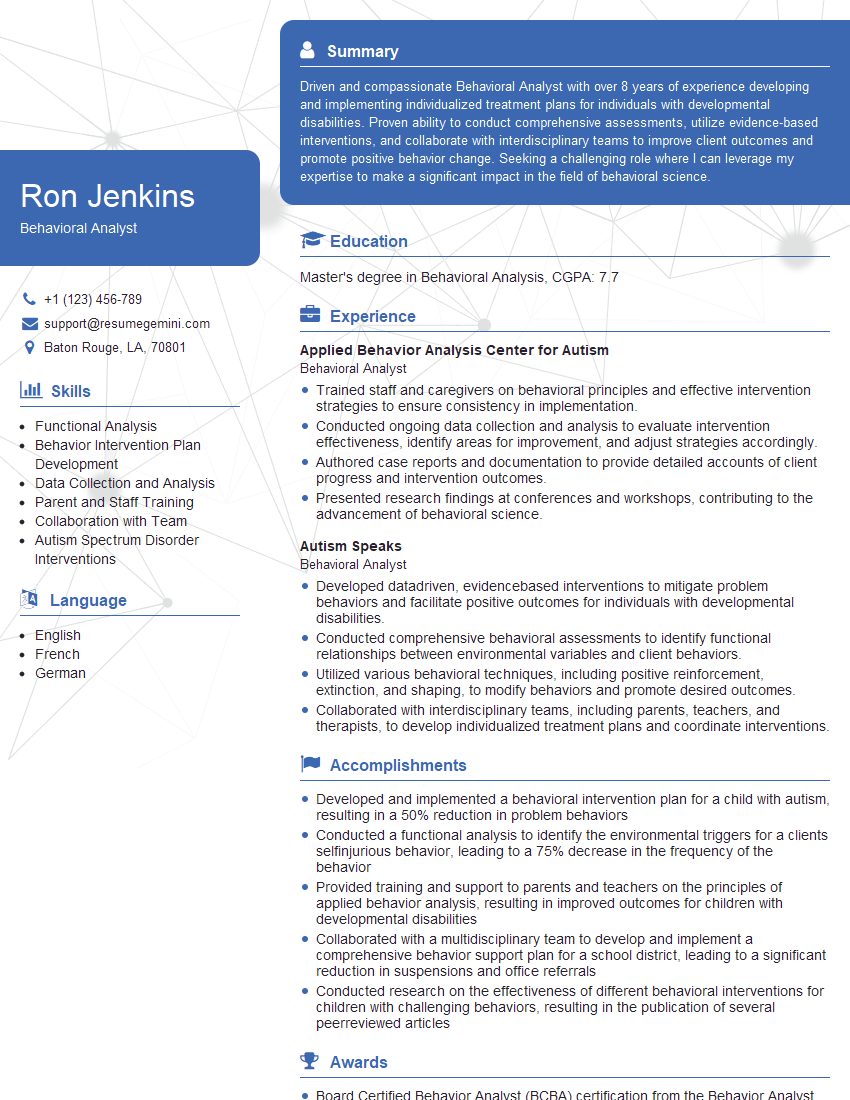
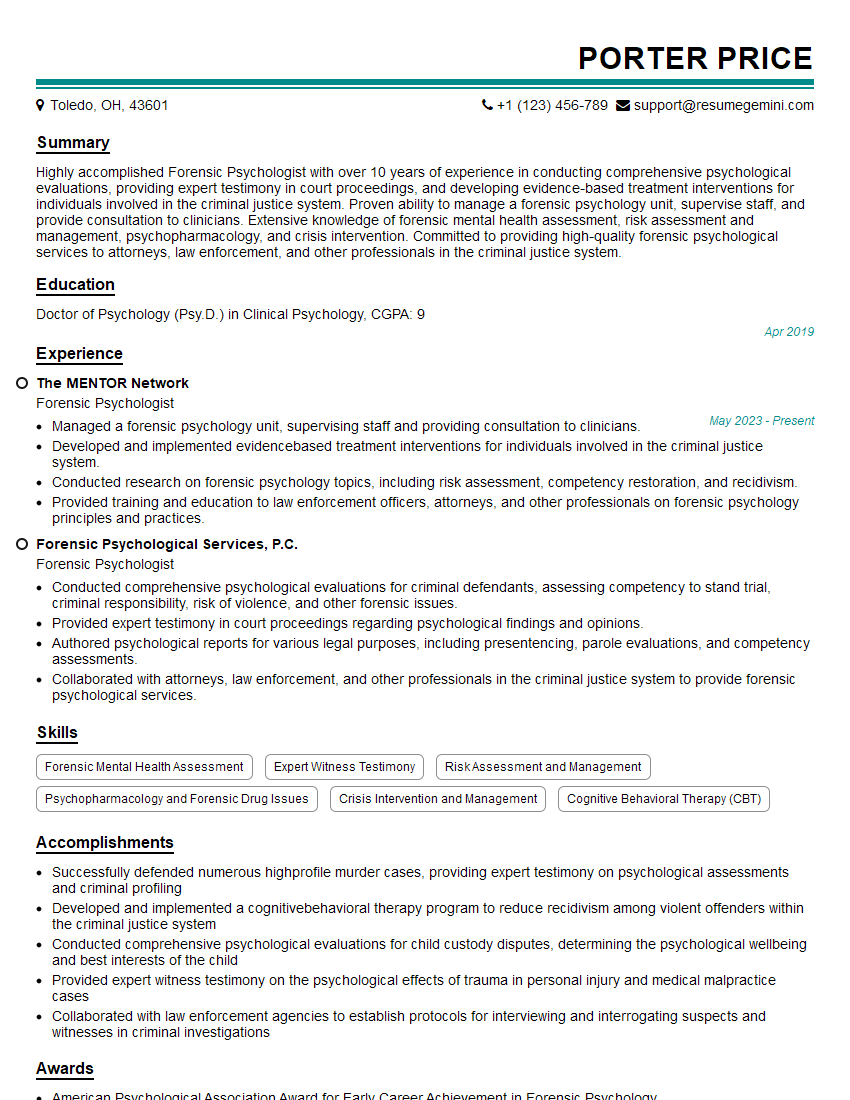
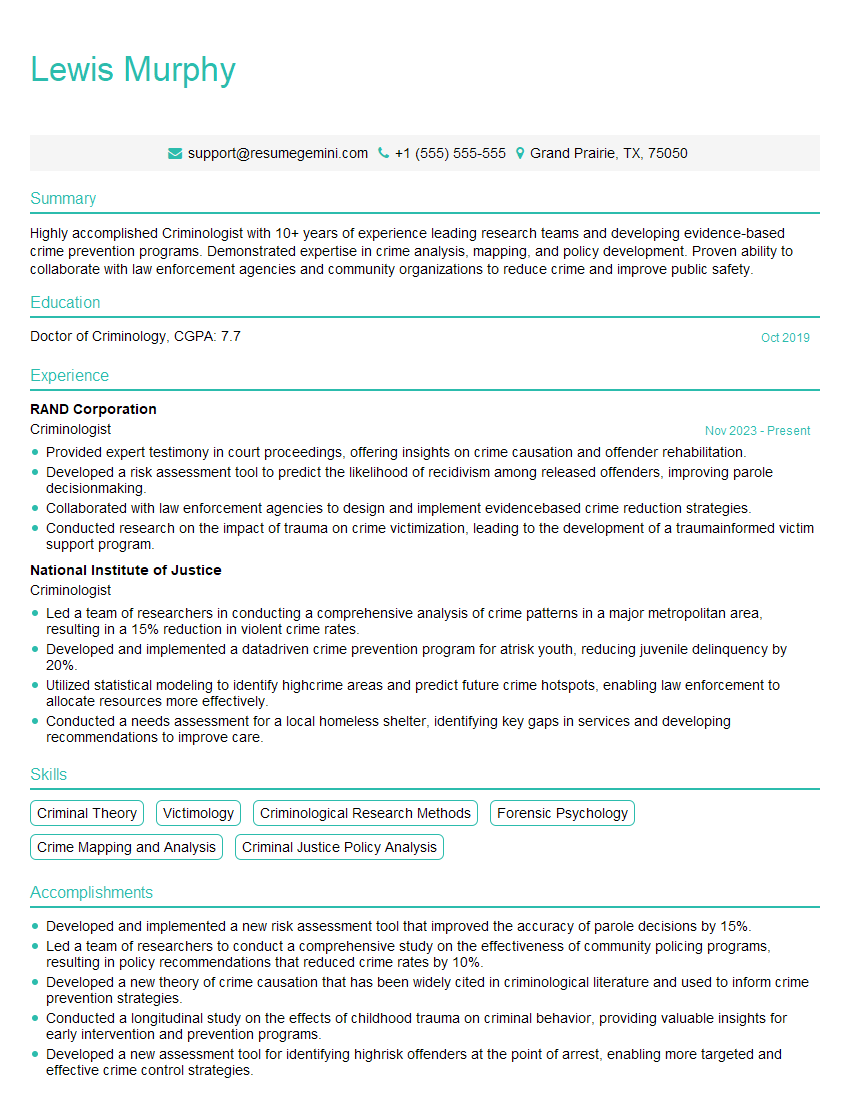
Mastering Criminal Psychology opens doors to a rewarding career in law enforcement, forensic science, corrections, or private practice. To maximize your job prospects, a strong, ATS-friendly resume is crucial. ResumeGemini is a trusted resource to help you build a professional and impactful resume that highlights your skills and experience effectively. Examples of resumes tailored specifically to Criminal Psychology are available, giving you a head start in showcasing your qualifications to potential employers.




Explore more articles
Users Rating of Our Blogs
Share Your Experience
We value your feedback! Please rate our content and share your thoughts (optional).
What Readers Say About Our Blog
Very informative content, great job.
good