Are you ready to stand out in your next interview? Understanding and preparing for Understanding of solar industry best practices interview questions is a game-changer. In this blog, we’ve compiled key questions and expert advice to help you showcase your skills with confidence and precision. Let’s get started on your journey to acing the interview.
Questions Asked in Understanding of solar industry best practices Interview
Q 1. Explain the different types of solar panels and their applications.
Solar panels, also known as photovoltaic (PV) panels, come in several types, each with its own strengths and applications. The most common are:
- Monocrystalline Silicon: These panels are made from a single silicon crystal, resulting in high efficiency (typically 18-22%) and a sleek, black appearance. They’re ideal for space-constrained installations where maximizing power output is crucial, like rooftops in urban areas.
- Polycrystalline Silicon: Made from multiple silicon crystals, these panels are less efficient (around 15-17%) than monocrystalline but are generally cheaper. Their blueish appearance is often seen in larger-scale solar farms due to their cost-effectiveness.
- Thin-Film Solar Panels: These panels use a thin layer of photovoltaic material deposited on a substrate like glass or plastic. They are lightweight, flexible, and can be integrated into building materials, making them suitable for aesthetically sensitive projects or unusual surfaces. Efficiency is generally lower (around 8-13%), but their flexibility offers design advantages.
- Perovskite Solar Cells: This emerging technology boasts high efficiency potential and is cost-effective to manufacture. However, they are still under development and their long-term durability is being researched. They offer exciting possibilities for flexible and transparent solar applications.
The choice of panel type depends on factors such as budget, available space, aesthetic preferences, and the specific energy needs of the application. For instance, a homeowner with limited roof space might opt for high-efficiency monocrystalline panels, while a large-scale solar farm might prioritize the cost-effectiveness of polycrystalline panels.
Q 2. Describe the process of designing a solar PV system for a residential building.
Designing a residential solar PV system involves a systematic approach:
- Energy Audit and Demand Assessment: Analyze the homeowner’s energy consumption patterns over the past year. This determines the system’s required energy output.
- Site Assessment: Evaluate the roof’s orientation, shading from trees or buildings, and structural integrity. South-facing roofs in the Northern Hemisphere (North-facing in the Southern Hemisphere) generally receive optimal sunlight.
- Panel Selection and Sizing: Choose the appropriate panel type (considering efficiency, cost, and aesthetics) and determine the number of panels needed to meet the energy demand. Factors like panel efficiency and available roof space are crucial here.
- Inverter Selection: The inverter converts DC electricity from the panels to AC electricity used in homes. Its capacity must match the total power output of the panels.
- Mounting System Design: Select a mounting system compatible with the roof type and panel orientation. This ensures the panels are securely and efficiently installed.
- Wiring and Connection Design: Plan the routing of cables from the panels to the inverter and the connection to the home’s electrical panel. This should comply with local electrical codes.
- Permitting and Approvals: Obtain necessary permits and approvals from local authorities before beginning installation.
- Installation and Commissioning: The system is installed by qualified professionals, and its performance is tested to ensure optimal operation.
For example, a homeowner using 800 kWh per month might need a system generating around 1 kWp (kilowatt-peak) for every 100 kWh consumed monthly, leading to an approximate 8 kWp system. However, this is a simplification; shading analysis, panel efficiency and other factors need to be taken into account for a detailed design.
Q 3. What are the key factors to consider when sizing a solar inverter?
Sizing a solar inverter correctly is critical for system performance and safety. Key factors include:
- Total Panel Power Output (kWp): The inverter’s capacity must be equal to or slightly greater than the total power generated by the solar panels. Undersizing can limit the system’s output, while oversizing is inefficient and may lead to unnecessary costs.
- Input Voltage and Current: The inverter must be compatible with the voltage and current produced by the solar panels. Mismatch can damage the inverter or reduce performance.
- MPPT (Maximum Power Point Tracking): This technology maximizes energy extraction from the panels, especially important under varying sunlight conditions. More MPPT trackers allow better optimization for panels in different shading conditions.
- Efficiency: Higher efficiency inverters mean less energy loss during the conversion process, resulting in greater cost savings in the long run.
- Safety Features: The inverter should include features like overcurrent protection and ground fault detection to prevent damage and ensure safe operation.
- Grid Compatibility: The inverter should comply with local grid codes and standards to ensure seamless integration with the utility grid.
For instance, if a system has 7 kWp of panels, an 8 kW inverter might be a suitable choice, leaving some headroom for future expansion. Choosing an inverter with multiple MPPT trackers is advisable for larger systems or those with significant shading.
Q 4. How do you calculate the energy yield of a solar PV system?
Calculating the energy yield of a solar PV system requires considering several factors:
- Panel Power Output (kWp): The peak power output of the installed panels.
- Annual Solar Irradiance (kWh/m²/year): The amount of solar energy received at the location per square meter per year. This data is available from online resources or meteorological services.
- System Losses (Percentage): Include losses due to shading, temperature effects, soiling (dirt accumulation), inverter efficiency, and wiring losses. These can range from 10% to 20% or even higher depending on the system.
- Panel Tilt and Azimuth: The angle of the panels and their orientation relative to the sun. This is crucial for maximizing energy capture.
The calculation can be approximated as follows:
Annual Energy Yield (kWh) ≈ (Panel Power Output (kWp) * Annual Solar Irradiance (kWh/m²/year) * Panel Area (m²) * Derating Factor)
The derating factor accounts for system losses. For example, with a 10 kWp system, an irradiance of 1500 kWh/m²/year, a panel area of 20m², and a derating factor of 0.8 (representing 20% loss), the annual energy yield would be approximately:
Annual Energy Yield ≈ (10 kWp * 1500 kWh/m²/year * 20 m² * 0.8) = 240,000 kWh
This is a simplified calculation, and more sophisticated software tools are often used to account for variations in solar irradiance throughout the year and other factors.
Q 5. Explain the concept of net metering and its benefits.
Net metering is a billing mechanism that allows solar energy system owners to send excess electricity generated by their system back to the power grid and receive credits on their utility bill. Instead of simply generating your own power and not needing grid power, you can essentially sell excess power back to the grid.
Benefits:
- Reduced Electricity Bills: Homeowners can significantly reduce or even eliminate their electricity bills by using the solar power they generate and receiving credit for the excess.
- Increased Return on Investment: Net metering accelerates the return on investment for solar PV systems by generating additional income from the excess electricity exported to the grid.
- Environmental Benefits: Reduces reliance on fossil fuel-based electricity generation, contributing to a cleaner environment.
- Grid Stability: Net metering can help to stabilize the grid by providing distributed generation.
For example, if a homeowner generates 1000 kWh of electricity in a month and consumes only 700 kWh, they receive credits for the remaining 300 kWh, reducing their bill significantly. The specifics of net metering policies vary by location; some have limitations on the amount of excess energy that can be exported or the duration of net metering agreements.
Q 6. Describe the different types of solar mounting systems.
Solar mounting systems are crucial for securely attaching solar panels to roofs or ground structures. They vary depending on the installation location and roof type:
- Roof-Mounted Systems:
- Racking Systems: These use metal frameworks to hold panels at the desired angle. They are versatile and suitable for various roof types but require roof penetration.
- Tile-Integrated Systems: These systems integrate seamlessly with the existing roof tiles, minimizing aesthetic impact and potential for leaks.
- Ballasted Systems: These use weights to secure panels without roof penetration. Suitable for flat roofs but require more space due to the ballast weight.
- Ground-Mounted Systems:
- Ground Mounts: These use posts or racks to elevate the panels above the ground. Ideal for open areas and large-scale solar farms.
- Carport Mounts: Panels are mounted on structures that also serve as carports. This combines solar energy generation with shaded parking.
The choice of mounting system depends on several factors, including roof type, available space, budget, and local building codes. Each system requires careful planning and professional installation to ensure the panels are securely mounted and function optimally. For example, a homeowner with a pitched asphalt shingle roof might use a racking system, while a business with a large flat roof might opt for a ballasted system or ground-mounted array.
Q 7. What are the safety precautions for working with solar panels and inverters?
Working with solar panels and inverters requires adherence to strict safety precautions:
- Lockout/Tagout Procedures: Always disconnect the system from the power source before performing any maintenance or repair work. Use proper lockout/tagout procedures to prevent accidental energization.
- Personal Protective Equipment (PPE): Wear appropriate PPE, including safety glasses, gloves, and insulated tools. This protects against electrical shocks, cuts, and other hazards.
- High-Voltage Awareness: Solar panels and inverters operate at high voltages, which can be lethal. Never touch exposed wires or terminals unless the system is completely de-energized.
- Ground Fault Circuit Interrupters (GFCIs): Ensure all electrical circuits are protected by GFCIs to prevent electrical shocks.
- Fire Safety: Be aware of potential fire hazards associated with electrical work and have appropriate fire suppression equipment available.
- Working at Heights: If working on rooftops, use appropriate fall protection equipment.
- Proper Training and Certification: Only qualified and trained personnel should work on solar panel and inverter systems. Relevant certifications demonstrate competency and adherence to safety standards.
Failing to adhere to these safety precautions can lead to serious injury or death. Always prioritize safety and follow best practices when working with solar energy systems. Regular inspections and maintenance by qualified technicians are also essential for ensuring ongoing safety.
Q 8. How do you troubleshoot common issues in solar PV systems?
Troubleshooting solar PV systems involves a systematic approach. It starts with observing the symptoms – is the entire system down, or just a portion? Are there error codes displayed on the inverter? A multimeter is your best friend here. We begin with safety – always disconnect the system from the grid before any hands-on work.
Common issues include:
- Low power output: This could be due to shading, dirty panels, faulty wiring, or a malfunctioning inverter. We’d check panel voltage and current individually, inspect for shading, and test the wiring continuity. A thermal imaging camera can quickly identify hot spots indicating faulty cells or wiring.
- Inverter issues: Inverter errors are often displayed on a screen; these codes guide troubleshooting. They might indicate overheating, grid problems, or internal faults. Checking the inverter’s cooling system and ensuring proper grid connection is crucial.
- Faulty panels: Individual panels can fail. Using a multimeter, we check voltage and current output of each panel. A significantly lower output than expected indicates a potential problem with that specific panel. Bypass diodes within the panel should allow the rest of the string to function even if one panel is faulty.
- Wiring problems: Loose connections or damaged wiring are common causes. Visual inspection and checking for continuity with a multimeter are essential here.
Remember, safety is paramount. If you’re not comfortable working with electricity, consult a qualified solar technician.
Q 9. Explain the importance of solar panel cleaning and maintenance.
Solar panel cleaning and maintenance are crucial for optimal system performance and longevity. Dirt, leaves, bird droppings, and snow significantly reduce energy production. Think of it like this: a dirty windshield reduces visibility, similarly, a dirty panel reduces sunlight absorption.
Regular cleaning, ideally every 3-6 months depending on the environment, involves using soft water (avoiding harsh chemicals) and a soft-bristled brush or sponge. High-pressure water can damage the panels. Inspecting for any physical damage, loose connections, or signs of corrosion is equally important. Regular maintenance checks can prevent costly repairs down the line and maximize the return on investment.
For larger systems, professional cleaning services might be more efficient and safer. They have the equipment and expertise to handle larger areas effectively and safely.
Q 10. What are the different types of batteries used in solar energy storage systems?
Several battery technologies are used in solar energy storage systems, each with its own advantages and disadvantages:
- Lead-acid batteries: These are mature technology, relatively inexpensive, and readily available. However, they have a shorter lifespan and lower energy density compared to other options.
- Lithium-ion batteries: These are increasingly popular due to their high energy density, longer lifespan, and faster charging/discharging rates. Different chemistries exist within lithium-ion, such as LFP (Lithium Iron Phosphate), NMC (Nickel Manganese Cobalt), and NCA (Nickel Cobalt Aluminum), each offering varying performance characteristics and costs. LFP is known for its safety and long lifespan, while NMC and NCA offer higher energy density but might be more expensive.
- Flow batteries: These are suitable for large-scale energy storage. They are typically more expensive than other options but offer very long lifespans and high cycling capabilities, making them suitable for grid-scale applications.
The best choice depends on factors such as budget, energy needs, and application (residential, commercial, or utility-scale).
Q 11. Describe the process of commissioning a solar PV system.
Commissioning a solar PV system is a crucial final step that ensures the system is operating as designed and meets safety standards. It’s a thorough inspection and testing process, typically involving several stages:
- Visual Inspection: A detailed visual inspection of all components, including panels, wiring, racking, inverters, and mounting hardware. This verifies proper installation and identifies any obvious defects.
- Electrical Testing: This involves measuring voltage, current, and resistance at various points within the system to confirm proper functionality and ensure safety standards are met.
- Performance Testing: This involves checking the system’s energy production under various conditions. Data loggers monitor system performance and compare it to the expected output.
- Safety Testing: This includes verifying grounding, insulation, and overcurrent protection to ensure the system’s safety.
- Documentation: Detailed documentation of the commissioning process, including test results, system diagrams, and any identified issues or adjustments. This is essential for warranty purposes.
Once all tests are passed and the system is deemed safe and operational, the commissioning report is generated, concluding the process. Any necessary adjustments are made, documented, and re-tested.
Q 12. What are the key components of a solar PV system?
A typical solar PV system consists of the following key components:
- Solar Panels (Photovoltaic Modules): These convert sunlight into direct current (DC) electricity.
- Mounting System: This structure securely attaches the solar panels to the roof or ground.
- Wiring and Connectors: These connect the panels together and to the other system components.
- Inverter: This converts the DC electricity from the panels into alternating current (AC) electricity compatible with the grid.
- Metering System: This monitors energy production and consumption.
- Disconnects: These are safety switches allowing the system to be isolated during maintenance or emergencies.
- (Optional) Battery Storage: This stores excess energy generated during the day for use at night or during periods of low sunlight.
The size and complexity of these components will vary greatly depending on the specific requirements of the solar PV system.
Q 13. What are the environmental benefits of solar energy?
Solar energy offers significant environmental benefits:
- Reduced Greenhouse Gas Emissions: Unlike fossil fuels, solar energy produces no greenhouse gas emissions during operation, significantly mitigating climate change.
- Reduced Air and Water Pollution: Solar energy avoids the air and water pollution associated with fossil fuel extraction, processing, and combustion.
- Conservation of Natural Resources: Solar energy relies on a readily available and renewable resource, reducing our dependence on finite fossil fuels.
- Reduced Land Degradation: While solar farms require land, their environmental impact is far less compared to coal mining or oil drilling.
By reducing our reliance on fossil fuels, solar energy contributes to a cleaner, healthier environment for future generations.
Q 14. What are the economic benefits of solar energy?
Solar energy offers a range of economic benefits:
- Reduced Electricity Bills: Solar panels generate electricity, reducing or even eliminating reliance on the grid, leading to lower energy costs.
- Increased Property Value: Homes and businesses with solar panels often have increased property values.
- Government Incentives: Many governments offer financial incentives like tax credits and rebates to encourage solar energy adoption.
- Energy Independence: Solar energy reduces dependence on fluctuating energy prices and unreliable energy sources.
- Job Creation: The solar industry is a rapidly growing sector, creating numerous jobs in manufacturing, installation, and maintenance.
The long-term economic advantages of solar energy can outweigh the initial investment, making it a financially sound choice for both homeowners and businesses.
Q 15. How do you ensure compliance with safety and building codes during solar installation?
Ensuring safety and compliance during solar installations is paramount. We begin by meticulously reviewing all relevant building codes and electrical safety regulations specific to the project location. This involves understanding local permitting requirements, fire codes related to rooftop penetrations, and electrical connection standards. Our team is extensively trained in OSHA safety protocols and utilizes proper Personal Protective Equipment (PPE) throughout the entire process. Before any installation begins, we perform a thorough site survey to identify potential hazards, like proximity to power lines or the presence of asbestos. We carefully plan the system layout to minimize risks, including avoiding obstructions and ensuring adequate spacing. Throughout the installation, regular quality checks and safety audits are conducted to maintain adherence to best practices and ensure the safety of our crew and the homeowner. Finally, a rigorous inspection is performed upon completion to certify the system’s compliance before energization. This rigorous approach helps prevent accidents, ensures system longevity, and safeguards our reputation for excellence.
For example, we recently completed a project where we had to coordinate with the local utility company to ensure our grid connection adhered to their specific requirements. This involved detailed documentation, coordination meetings, and on-site inspection. Our proactive approach identified a potential conflict with existing underground cabling, avoiding a costly and dangerous mistake.
Career Expert Tips:
- Ace those interviews! Prepare effectively by reviewing the Top 50 Most Common Interview Questions on ResumeGemini.
- Navigate your job search with confidence! Explore a wide range of Career Tips on ResumeGemini. Learn about common challenges and recommendations to overcome them.
- Craft the perfect resume! Master the Art of Resume Writing with ResumeGemini’s guide. Showcase your unique qualifications and achievements effectively.
- Don’t miss out on holiday savings! Build your dream resume with ResumeGemini’s ATS optimized templates.
Q 16. What are the different types of solar trackers and their advantages?
Solar trackers dynamically adjust the orientation of solar panels throughout the day to maximize sun exposure. Different types exist, each with advantages:
- Single-axis trackers: These rotate around a single axis, typically east-west, following the sun’s movement across the sky. They are cost-effective and relatively simple to maintain, offering a significant energy production increase compared to fixed-tilt systems. Imagine a simple seesaw; the panel tilts to follow the sun’s arc.
- Dual-axis trackers: These rotate around two axes, allowing them to follow the sun’s path throughout the day and even throughout the year. They yield the highest energy production but are more complex, expensive, and require more robust structural support. Think of a robotic arm that precisely points the panel directly at the sun.
- Fixed-tilt systems: These systems maintain a fixed angle, often optimized for the specific latitude of the installation. While less efficient than trackers, they are the most cost-effective and require the least maintenance. They’re a good option when space or budget is limited.
The choice of tracker depends on various factors, including budget, energy yield goals, available land area, and structural considerations. For large-scale solar farms, dual-axis trackers are often preferred despite the higher initial investment due to their significant energy gain. For residential installations, single-axis trackers or fixed-tilt systems might be more practical.
Q 17. Explain the concept of Maximum Power Point Tracking (MPPT).
Maximum Power Point Tracking (MPPT) is a crucial feature of solar inverters. Solar panels don’t produce power at a constant rate; their output varies depending on sunlight intensity and temperature. The MPPT algorithm continuously monitors the solar panel’s voltage and current, identifying the point of maximum power output. It then adjusts the inverter’s input to draw the maximum power possible from the panel at any given moment. Think of it like a skilled driver finding the optimal gear for a car to reach maximum speed at varying uphill and downhill grades.
Without MPPT, the solar panel might not operate at its full potential. The inverter might draw power at a point far from the maximum power point, leading to significant energy loss. MPPT ensures the system is always working near its optimal efficiency, maximizing energy generation.
Q 18. How does weather affect solar energy production?
Weather significantly impacts solar energy production. Sunlight intensity is the primary factor; cloudy days result in lower energy output. The angle of the sun also affects energy production, with direct sunlight resulting in higher efficiency. High temperatures can reduce the efficiency of solar panels, although the impact varies between panel types. Precipitation like rain or snow can temporarily block sunlight, reducing power generation. Snow accumulation can significantly reduce energy output and may require manual clearing. Extreme weather events, such as hailstorms, can damage solar panels, leading to reduced efficiency or complete failure.
We incorporate weather data and forecasting into our system design and performance predictions to provide realistic energy yield estimations to clients. For instance, a system designed for Arizona will have different performance characteristics than one in Seattle due to significant variations in sunlight hours and weather patterns.
Q 19. How do you estimate the cost of a solar PV system?
Estimating the cost of a solar PV system involves several factors. First, we determine the system size (kWp) based on energy consumption needs and available roof space. Then, we consider the cost of solar panels, which depends on their efficiency and brand. The inverter cost depends on the system size and features (like MPPT). Installation labor costs vary based on location, roof complexity, and system size. Permitting fees, interconnection charges (to the grid), and any necessary structural upgrades (e.g., roof reinforcement) are also included. Finally, we factor in any applicable tax credits or incentives. We provide detailed breakdowns of all costs, ensuring transparency and clarity for our clients.
For example, a typical 5kW residential system might cost between $15,000 and $25,000, but this range is highly variable based on the factors listed above. We use sophisticated software to generate accurate cost estimates tailored to each project’s specifics.
Q 20. What are the different financing options for solar energy projects?
Several financing options exist for solar energy projects:
- Cash purchase: This is the most straightforward approach, providing full ownership and control but requiring a significant upfront investment.
- Loans: Traditional bank loans, solar-specific loans, or home equity loans can finance the purchase, spreading the cost over time. Interest rates and loan terms vary.
- Leases/Power Purchase Agreements (PPAs): In a lease, you don’t own the system, but you pay a monthly fee for the energy it generates. A PPA is similar, but the monthly payment is tied to your energy consumption. These options require less upfront capital but may result in higher long-term costs.
- Property Assessed Clean Energy (PACE) financing: This allows you to finance improvements, including solar, through a special assessment on your property tax bill. The loan is repaid over time, typically through the property tax bill.
The best financing option depends on individual circumstances, including financial situation, risk tolerance, and long-term goals. We help our clients explore the various options and choose the one that best suits their needs.
Q 21. Explain the role of a solar energy consultant.
A solar energy consultant acts as a trusted advisor, guiding clients through the entire solar energy process. We assess the client’s energy needs, analyze their property’s suitability for solar, design the optimal system, source components, manage the installation process, and handle all the necessary paperwork and permits. We also help clients explore financing options and navigate the complexities of utility interconnection. Beyond the technical aspects, we educate clients about solar technology, its benefits, and potential drawbacks. We are advocates for our clients, ensuring they make informed decisions and receive high-quality installations. Our goal is to provide a seamless and stress-free experience, empowering clients to embrace clean energy.
For instance, we recently helped a client navigate a complicated permitting process that involved multiple local agencies. Our expertise and proactive approach ensured the project was completed on time and within budget, despite unexpected delays.
Q 22. Describe the process of obtaining permits for a solar installation.
Obtaining permits for a solar installation is a crucial first step, varying significantly by location. It’s like getting a building permit for a house – you need official approval before you can start construction. The process typically involves several stages:
Site Assessment and Design: First, a detailed site assessment is conducted to determine the optimal location and system design. This data is crucial for the permit application.
Permit Application Submission: Next, the application, including detailed system specifications, site plans, electrical diagrams, and structural calculations, is submitted to the relevant authority (typically the city, county, or state). This often involves navigating online portals and potentially dealing with multiple departments (building, electrical, fire).
Review and Approval: The authority reviews the application to ensure it meets all building codes, safety standards, and zoning regulations. This can take several weeks or even months, depending on the backlog and complexity of the project. Expect revisions or clarifications to be requested.
Inspections: Once approved, inspections are scheduled at different stages of the installation. These typically include inspections of the racking system, electrical wiring, and final system connection. Passing these inspections is essential before the system can be energized.
Permit Issuance: Upon successful completion of all inspections, the final permit is issued, authorizing the operation of the solar system.
Example: In California, you might need to navigate the California Energy Commission (CEC) guidelines and obtain permits from both the city and the utility company. It’s always best to consult a licensed solar installer familiar with local regulations, as they handle the permitting process efficiently.
Q 23. How do you ensure quality control during solar installation?
Quality control in solar installations is paramount for safety, efficiency, and longevity. We employ a multi-layered approach:
Pre-Installation Checks: This involves verifying equipment specifications, ensuring proper site preparation, and conducting thorough inspections of the foundation and structural elements.
Installation Adherence to Best Practices: Every stage of installation is strictly monitored against established industry standards and manufacturer guidelines. This includes proper grounding, wiring techniques, and panel mounting procedures.
Regular Inspections: Inspections are performed during and after each stage of installation to identify potential issues early. This minimizes rework and ensures adherence to quality standards. I personally use checklists and photographic documentation for each step.
Testing and Commissioning: Before energizing the system, a thorough testing procedure is followed. This includes checking voltage, current, and overall system performance to ensure everything functions correctly and safely. String tests and system performance testing are imperative.
Post-Installation Monitoring: Even after completion, we use sophisticated monitoring systems (which I will discuss later) to track system performance and proactively identify any potential issues. This ensures long-term reliability.
Example: If we detect a minor mismatch in module voltage during string testing, we immediately investigate and rectify the issue before moving to the next phase, preventing a cascade failure.
Q 24. What are the common challenges faced in the solar industry?
The solar industry, while booming, faces several challenges:
Intermittency and Storage: Solar power’s dependence on sunlight presents challenges. Efficient energy storage solutions are crucial to address the intermittent nature of solar energy and ensure consistent power supply. Battery technology improvements are a key focus area.
Permitting and Regulatory Hurdles: The complex and often time-consuming permitting process is a significant obstacle to project deployment. Streamlining these processes is vital for industry growth.
Supply Chain Issues and Material Costs: Fluctuations in raw material prices (especially polysilicon and certain metals) and supply chain disruptions can impact project costs and timelines. Diversifying supply chains is a key strategy to address these issues.
Land Availability and Siting Challenges: Finding suitable land for large-scale solar projects, particularly in densely populated areas, can be a significant hurdle. This often involves careful consideration of environmental impacts and community engagement.
Grid Integration: Connecting large solar power plants to the existing electrical grid requires careful planning and infrastructure upgrades. Grid stability and efficient energy distribution are crucial aspects.
Example: During a recent project, we experienced delays due to unexpected supply chain issues causing a shortage of specific inverters. We had to proactively find alternative solutions to keep the project on schedule.
Q 25. How do you manage a solar project budget and timeline?
Effective solar project budget and timeline management are critical for success. I use a structured approach:
Detailed Project Scoping and Budgeting: A comprehensive project scope document is prepared early, including a detailed breakdown of all costs (equipment, labor, permits, engineering, etc.). Contingency funds are also included to accommodate unforeseen expenses.
Timeline Development: A realistic project schedule is created, considering all stages, from design and permitting to installation and commissioning. Critical path analysis helps to identify tasks with the longest durations, allowing for better resource allocation and risk mitigation.
Regular Monitoring and Reporting: Progress is tracked regularly against the budget and schedule. Variance analysis is performed to identify any deviations, allowing for prompt corrective action. Detailed reports are generated to keep stakeholders informed.
Risk Management: Potential risks (e.g., weather delays, material shortages) are identified and mitigation strategies are developed. Regular risk assessment and contingency planning are essential.
Communication and Collaboration: Effective communication is crucial, ensuring everyone (client, subcontractors, suppliers) is aware of progress, challenges, and planned actions.
Example: We recently used project management software (like Asana or MS Project) to track our project timeline and budget meticulously. This enabled us to identify a potential cost overrun early, allowing us to negotiate with suppliers and adjust our strategy accordingly.
Q 26. Describe your experience with different solar monitoring systems.
I have experience with a range of solar monitoring systems, from basic to advanced:
Basic Monitoring Systems: These systems typically use simple data loggers to record key parameters like voltage, current, and power output. They provide basic performance data and are often suitable for smaller residential systems. These usually involve simple web interfaces.
Advanced Monitoring Systems: These utilize sophisticated sensors, data acquisition, and cloud-based platforms for comprehensive system monitoring. They offer real-time data visualization, performance analysis, and remote troubleshooting capabilities. These systems are essential for larger commercial and utility-scale projects.
Specific Examples: I’ve worked with systems like SMA Sunny Portal, SolarEdge Monitoring Portal, and Enphase Enlighten. Each platform has its strengths and weaknesses, differing in their features and user interfaces.
Example: Using SolarEdge’s power optimizer data, I once identified a shading issue that was reducing a client’s energy production. This allowed for prompt corrective action and improved system performance.
Q 27. What are the current trends in the solar industry?
Current trends in the solar industry include:
Increased Adoption of Battery Storage: This is driven by the need for grid stability and reliable power supply, particularly during peak demand or outages. The cost of battery storage is decreasing, making it more accessible.
Growth of Floating Solar (Floatovoltaics): This innovative approach utilizes water bodies for solar panel installation, expanding the potential for solar power generation without competing with land usage.
Advancements in Solar Technology: Continued research and development are driving improvements in solar panel efficiency, reducing costs, and increasing their lifespan.
Emphasis on Sustainability and Circular Economy: The industry is focusing on environmentally friendly manufacturing practices and recycling of solar panels to minimize the environmental impact.
Smart Grid Integration and Artificial Intelligence: Utilizing AI and machine learning for optimizing energy production, grid management, and system maintenance.
Example: The increasing adoption of bifacial solar panels, which can capture sunlight from both sides, exemplifies the technological advancements enhancing energy output.
Q 28. What software or tools do you use for solar PV system design and analysis?
For solar PV system design and analysis, I utilize a variety of software and tools:
PVsyst: A widely used software for detailed system design, performance simulation, and energy yield estimation. It allows for accurate modeling of various system components and environmental conditions.
Helioscope: A cloud-based platform that simplifies the design process with user-friendly interfaces and 3D modeling capabilities. It provides accurate shading analysis and performance predictions.
SKM PowerTools for AutoCAD: Used for electrical system design, short circuit calculations, and coordination studies, ensuring compliance with electrical codes.
Specialized Software from Inverter Manufacturers: Many inverter manufacturers offer their own design and simulation software, providing detailed compatibility information and performance data.
Example: Using PVsyst, I recently modeled a complex rooftop system, considering factors like shading from nearby trees and building orientations, resulting in an optimized system design.
Key Topics to Learn for Understanding of Solar Industry Best Practices Interview
- Solar Panel Technology: Understanding different panel types (monocrystalline, polycrystalline, thin-film), their efficiency ratings, and limitations. Practical application: Comparing panel options for a specific project based on cost, performance, and environmental impact.
- System Design and Engineering: Mastering the principles of solar system design, including array sizing, string design, and inverter selection. Practical application: Troubleshooting a system experiencing underperformance due to shading or mismatch.
- Safety Regulations and Compliance: Deep knowledge of relevant safety codes, permitting processes, and best practices for installation and maintenance. Practical application: Identifying and mitigating potential safety hazards on a solar installation site.
- Installation and Commissioning: Understanding the practical aspects of solar system installation, including mounting, wiring, and commissioning procedures. Practical application: Performing a thorough system check post-installation to ensure optimal performance.
- Operations and Maintenance (O&M): Familiarize yourself with routine maintenance tasks, troubleshooting techniques, and performance monitoring strategies. Practical application: Developing an effective O&M plan to maximize system lifespan and efficiency.
- Financial Models and Project Analysis: Understanding the financial aspects of solar projects, including return on investment (ROI) calculations, energy production estimations, and financing options. Practical application: Evaluating the financial viability of a solar project proposal.
- Emerging Technologies and Trends: Stay updated on the latest advancements in solar technology, such as energy storage solutions (batteries), smart inverters, and innovative PV materials. Practical application: Discussing the potential benefits and challenges of integrating new technologies into solar projects.
Next Steps
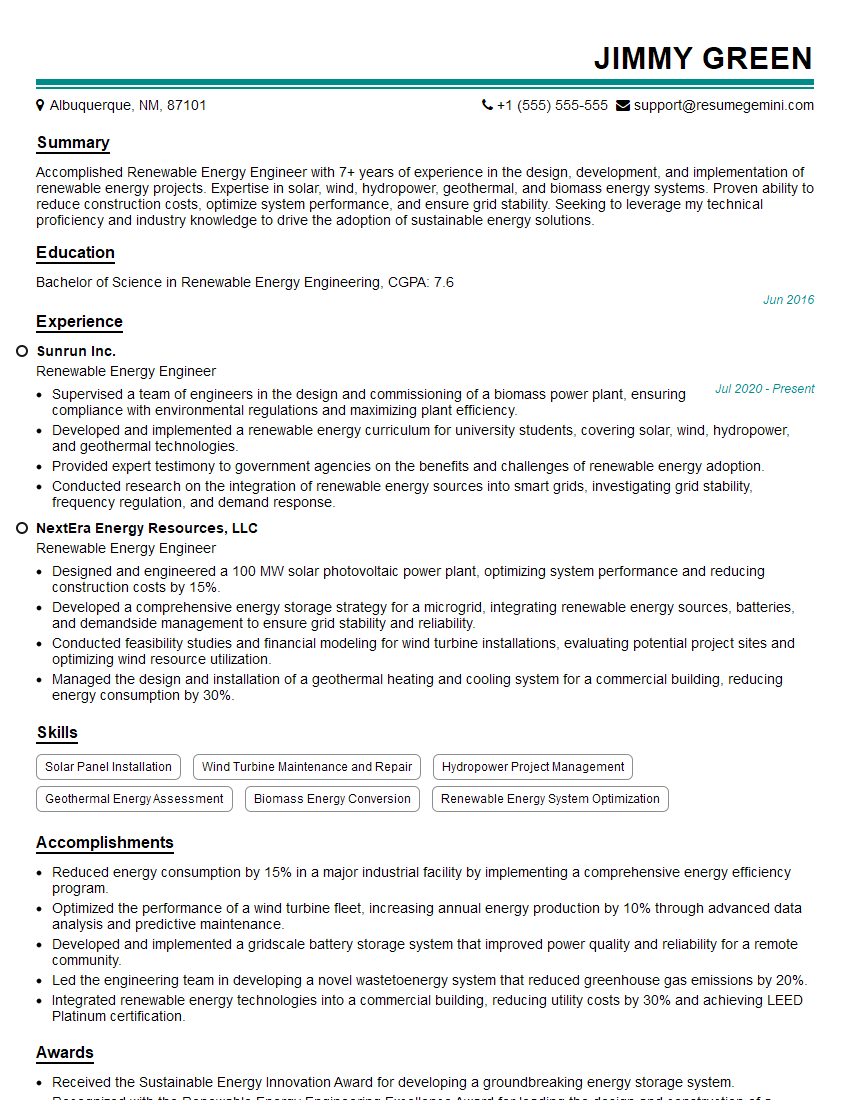
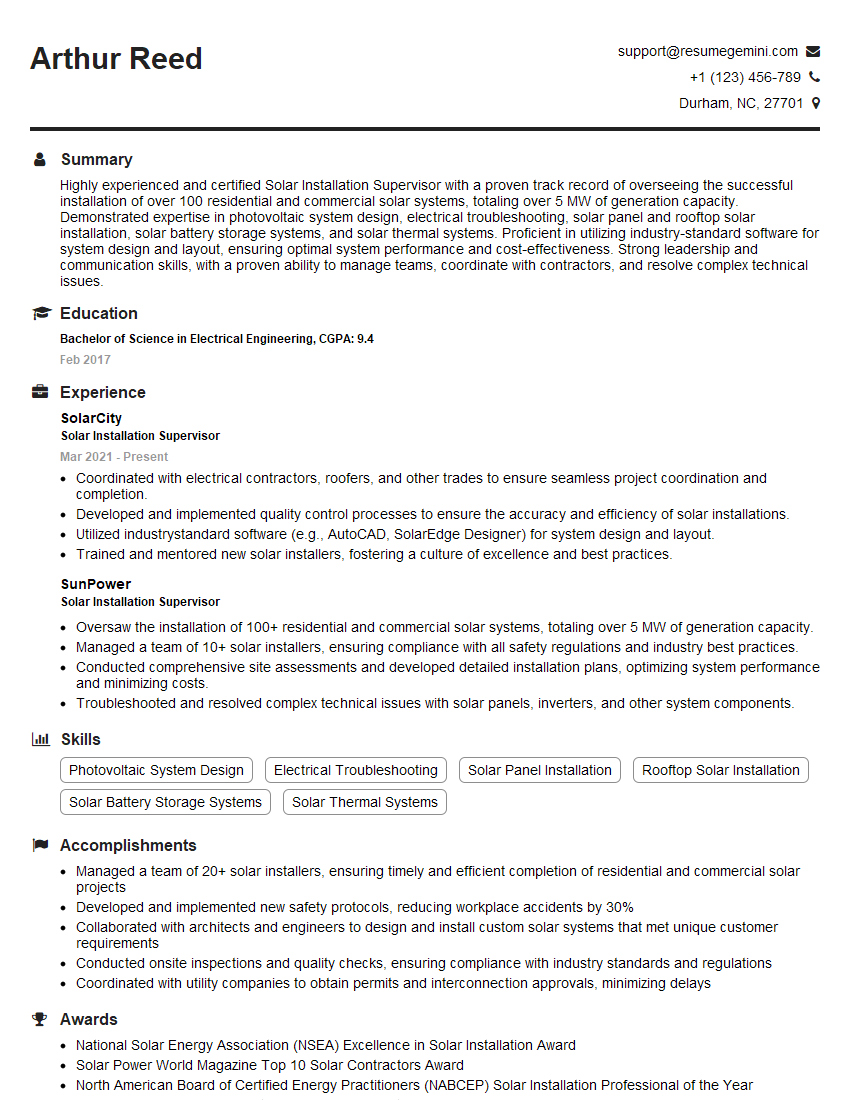
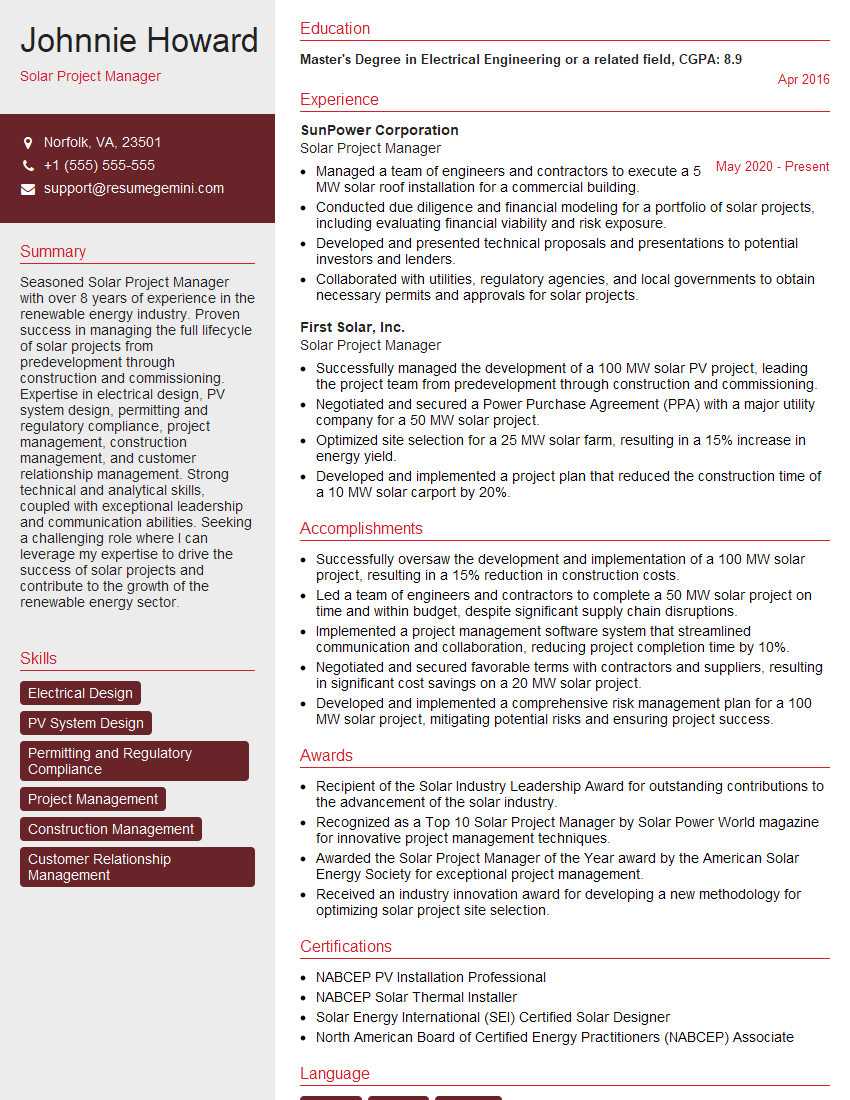
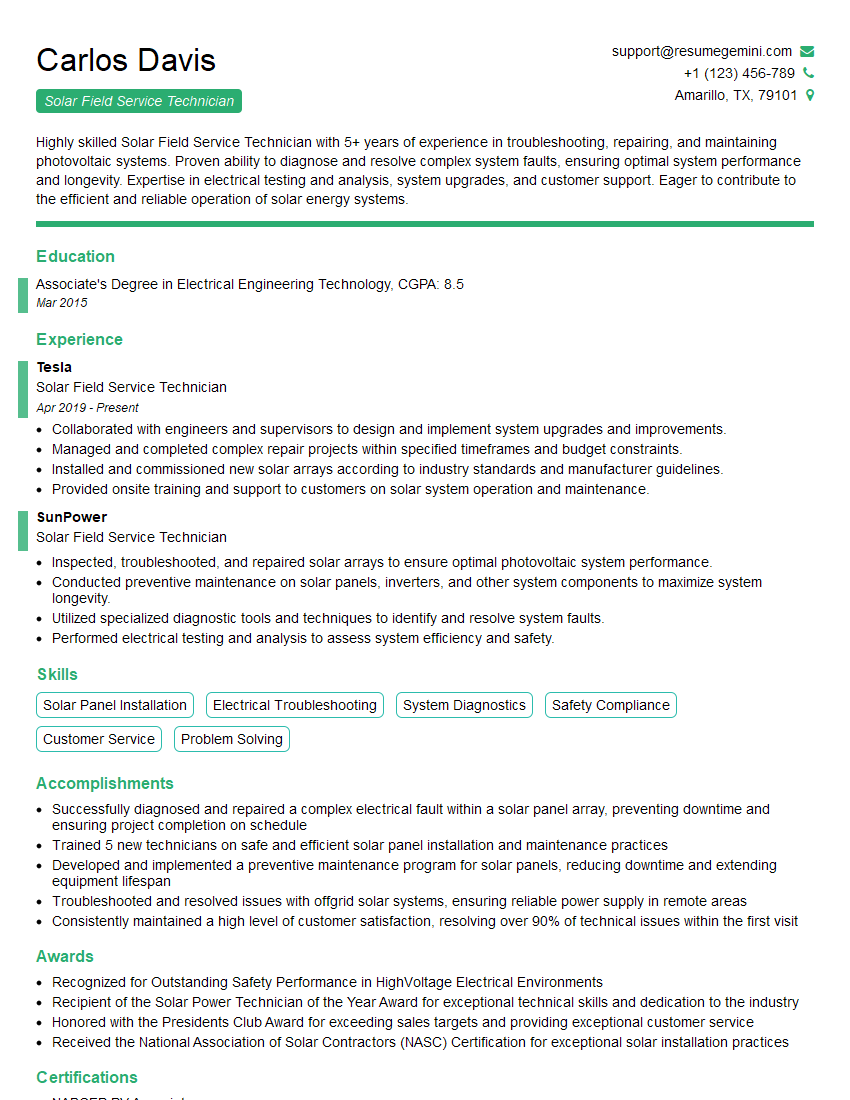
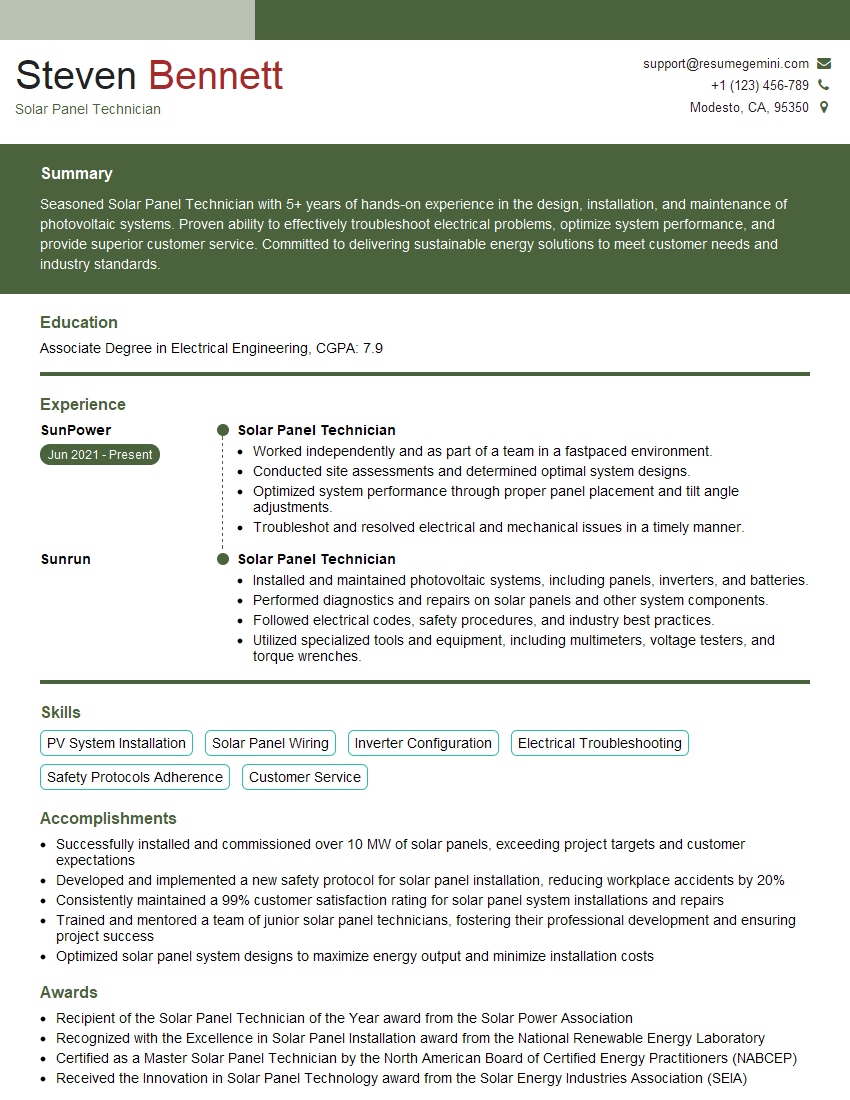
Mastering solar industry best practices is crucial for career advancement. A strong understanding of these concepts demonstrates your expertise and commitment to the field, making you a highly desirable candidate. To further enhance your job prospects, create an ATS-friendly resume that highlights your skills and experience effectively. ResumeGemini is a trusted resource to help you build a professional and impactful resume. Examples of resumes tailored to showcase expertise in solar industry best practices are available to guide you through the process. Take the next step towards your dream solar career today!

Explore more articles
Users Rating of Our Blogs
Share Your Experience
We value your feedback! Please rate our content and share your thoughts (optional).
What Readers Say About Our Blog
Very informative content, great job.
good